Overview
Personality represents one of the most fascinating and clinically relevant domains within Psychology, encompassing the enduring patterns of thoughts, feelings, and behaviors that distinguish individuals from one another. For the MCAT, understanding Personality Psychology extends beyond memorizing trait lists—it requires comprehending how personality develops, how it influences health behaviors, patient-physician interactions, and treatment adherence, and how various theoretical frameworks conceptualize human individuality. The Personality MCAT content bridges multiple disciplines, connecting biological substrates (genetics, neurotransmitters), psychological processes (cognition, emotion), and social contexts (culture, relationships) into an integrated understanding of what makes each person unique.
The MCAT Psychological, Social, and Biological Foundations of Behavior section frequently tests personality through passage-based questions that require students to apply theoretical frameworks to clinical scenarios, research studies, or behavioral observations. Questions may ask test-takers to distinguish between trait and psychodynamic perspectives, identify how personality assessments inform medical practice, or explain how personality factors influence health outcomes such as stress resilience, coping strategies, or disease progression. Understanding personality theory provides essential context for interpreting patient behavior, predicting treatment compliance, and recognizing how individual differences shape the healthcare experience.
Within the broader Development and Personality unit, personality concepts interconnect with developmental psychology (how personality forms across the lifespan), social psychology (how personality influences and is influenced by social contexts), and biological psychology (genetic and neurological bases of temperament). Mastering personality theory equips students to analyze complex behavioral scenarios from multiple theoretical perspectives—a critical skill for both MCAT success and future clinical practice where understanding patient individuality directly impacts care quality and therapeutic relationships.
Learning Objectives
- [ ] Define Personality using accurate Psychology terminology
- [ ] Explain why Personality matters for the MCAT
- [ ] Apply Personality to exam-style questions
- [ ] Identify common mistakes related to Personality
- [ ] Connect Personality to related Psychology concepts
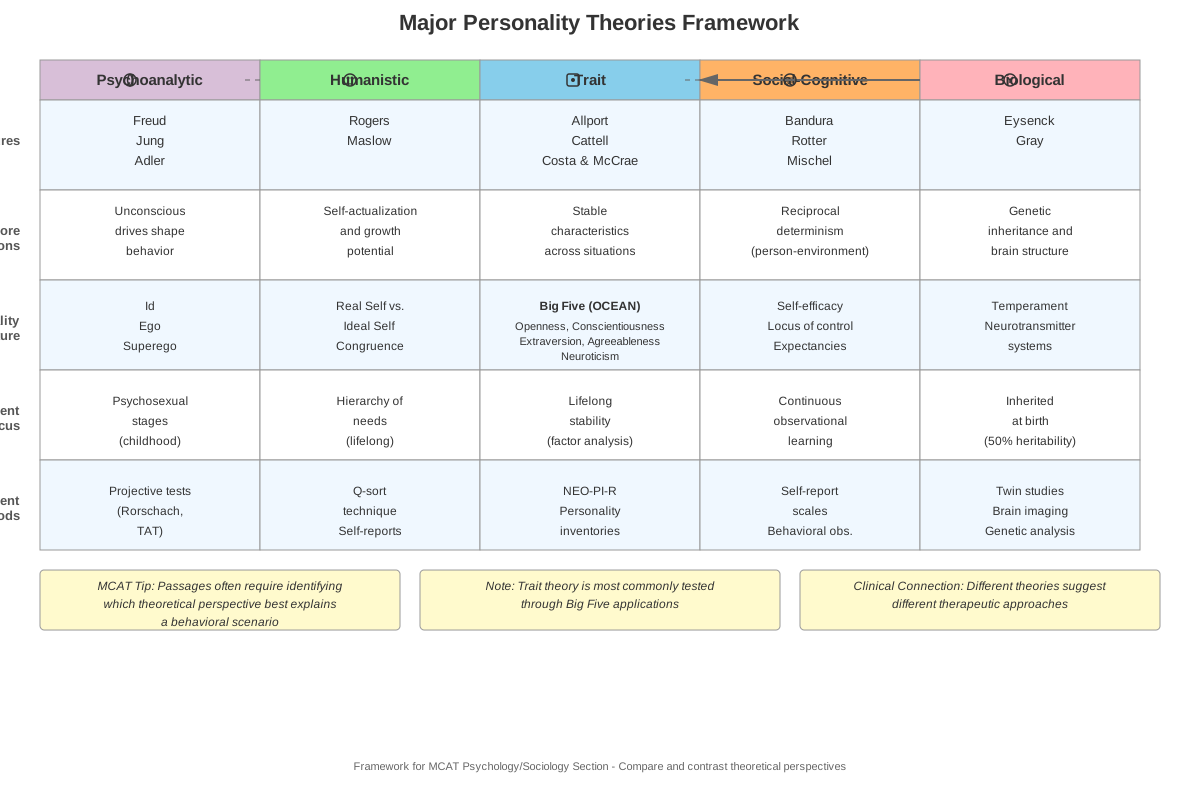
- [ ] Compare and contrast major personality theories (psychoanalytic, humanistic, trait, social-cognitive, biological)
- [ ] Analyze how personality assessment tools are used in clinical and research contexts
- [ ] Evaluate the relative contributions of genetics versus environment in personality development
- [ ] Synthesize personality concepts with health behavior and medical decision-making scenarios
Prerequisites
- Basic psychological terminology: Understanding fundamental concepts like cognition, emotion, and behavior provides the foundation for discussing personality patterns
- Developmental stages: Familiarity with lifespan development helps contextualize when and how personality characteristics emerge and stabilize
- Research methods: Knowledge of correlational studies, longitudinal designs, and validity/reliability concepts enables critical evaluation of personality research
- Biological bases of behavior: Understanding neurotransmitters, brain structures, and genetic inheritance supports comprehension of biological personality theories
- Social psychology fundamentals: Awareness of situational influences on behavior provides contrast to personality's dispositional focus
Why This Topic Matters
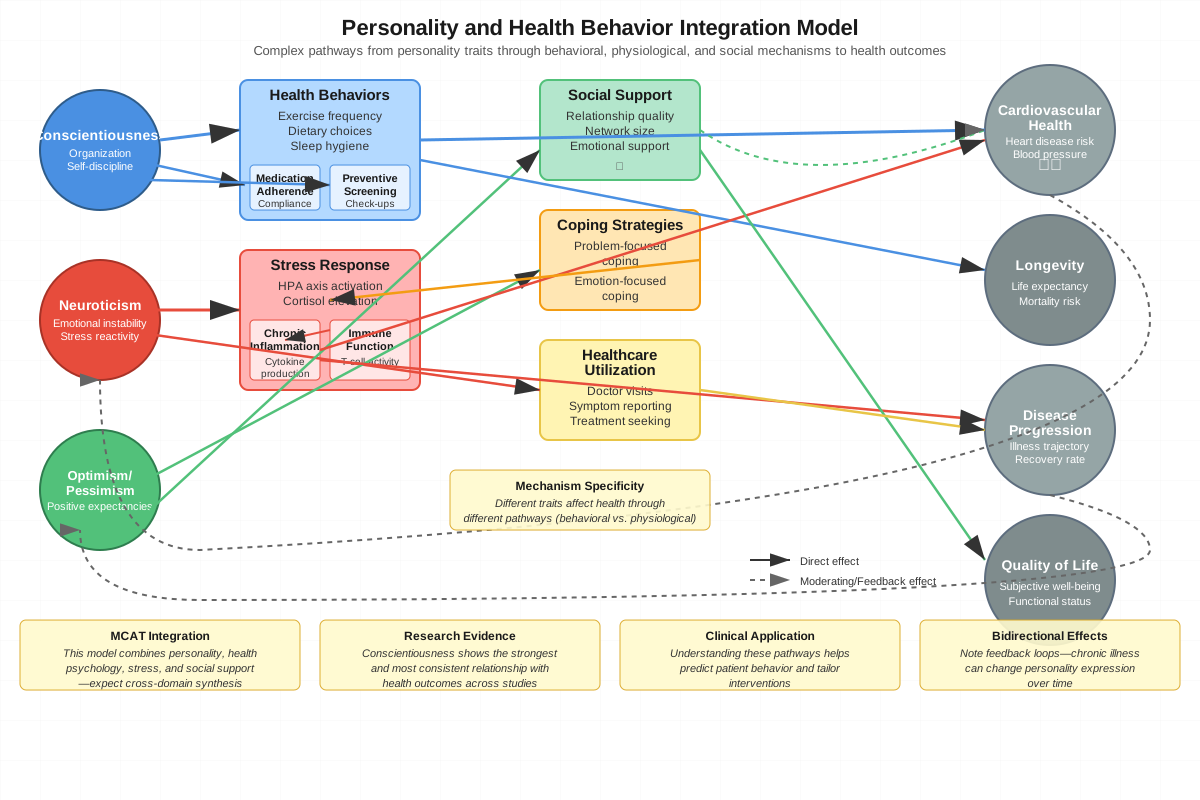
Clinical Significance: Personality profoundly influences health outcomes across multiple domains. Patients with certain personality characteristics show differential adherence to medication regimens, varied responses to stress and illness, and distinct communication patterns with healthcare providers. For example, individuals high in conscientiousness demonstrate better chronic disease management, while those with high neuroticism may experience amplified pain perception and increased healthcare utilization. Understanding personality helps physicians tailor communication strategies, anticipate patient needs, and recognize when personality patterns (particularly personality disorders) may complicate treatment. The biopsychosocial model—central to modern medicine—explicitly incorporates personality as a psychological factor that interacts with biological vulnerabilities and social circumstances to shape health trajectories.
Exam Statistics: Personality appears in approximately 3-5 questions per MCAT administration, typically integrated within passages rather than as standalone discrete questions. The AAMC content outline specifically includes personality theories, assessment methods, and the biological bases of personality within the Psychological, Social, and Biological Foundations of Behavior section. Questions frequently test the ability to distinguish between theoretical perspectives (e.g., identifying whether a scenario reflects trait theory versus psychodynamic interpretation) or to apply personality concepts to research design and interpretation.
Common Exam Contexts: MCAT passages featuring personality often present research studies examining personality-health relationships (e.g., Type A behavior and cardiovascular disease), clinical vignettes requiring personality assessment interpretation, or theoretical debates about personality stability versus change. Questions may ask students to identify which personality theory best explains observed behavior, determine appropriate assessment tools for specific research questions, or analyze how genetic and environmental factors interact in personality development. Passages frequently integrate personality with other psychological concepts such as stress, coping, motivation, or social influence, requiring multidimensional analysis.
Core Concepts
Definition of Personality
Personality is defined as an individual's characteristic patterns of thinking, feeling, and behaving that remain relatively consistent across time and situations. This definition contains three critical components: (1) consistency—personality traits show temporal stability, particularly after age 30; (2) distinctiveness—personality differentiates individuals from one another; and (3) integration—personality encompasses cognitive, emotional, and behavioral dimensions that form a coherent whole. Personality differs from temporary mood states or situational behaviors because it represents enduring dispositions rather than transient responses. The field of Personality Psychology investigates individual differences, personality structure, personality development, and how personality influences life outcomes including relationships, career success, and health.
Major Theoretical Perspectives
Psychoanalytic/Psychodynamic Theory
Originating with Sigmund Freud, psychoanalytic theory conceptualizes personality as shaped by unconscious drives, early childhood experiences, and intrapsychic conflicts between the id (primitive impulses), ego (reality-oriented mediator), and superego (internalized moral standards). Freud proposed five psychosexual stages (oral, anal, phallic, latency, genital) during which libidinal energy focuses on different body zones; unresolved conflicts at any stage produce fixations that influence adult personality. For example, fixation at the anal stage (ages 1-3) may result in either anal-retentive personality (excessive orderliness, rigidity) or anal-expulsive personality (messiness, defiance).
Defense mechanisms—unconscious strategies the ego employs to manage anxiety—represent key psychoanalytic concepts frequently tested on the MCAT. These include:
- Repression: Blocking threatening thoughts from consciousness
- Projection: Attributing one's unacceptable impulses to others
- Displacement: Redirecting emotions from the original source to a safer target
- Sublimation: Channeling unacceptable impulses into socially acceptable activities
- Rationalization: Creating logical explanations for irrational behaviors
- Reaction formation: Expressing the opposite of one's true feelings
Neo-Freudian theorists modified psychoanalytic theory by emphasizing social and cultural factors over biological drives. Carl Jung introduced concepts of the collective unconscious and archetypes. Alfred Adler emphasized the drive for superiority and compensation for inferiority feelings. Karen Horney focused on basic anxiety and interpersonal relationships.
Humanistic Theory
Humanistic psychology, developed by Carl Rogers and Abraham Maslow, emphasizes human potential, self-actualization, and subjective experience. Rogers proposed that personality develops through the interaction between the self-concept (one's beliefs about oneself) and experience. When significant others provide unconditional positive regard—acceptance without conditions—individuals develop congruence between self-concept and experience, leading to psychological health. Conversely, conditional positive regard creates incongruence, where individuals deny or distort experiences that conflict with their self-concept, resulting in psychological distress.
Maslow's hierarchy of needs suggests that personality development involves progressing through increasingly complex motivational levels: physiological needs, safety, love/belonging, esteem, and ultimately self-actualization—realizing one's full potential. Self-actualized individuals exhibit characteristics including reality-centered perception, acceptance of self and others, spontaneity, problem-centering (rather than self-centering), and peak experiences.
Trait Theory
Trait theory conceptualizes personality as composed of stable, measurable characteristics that predict behavior across situations. Unlike psychoanalytic theory's focus on unconscious processes or humanistic theory's emphasis on subjective experience, trait theory employs empirical, quantitative methods to identify personality dimensions.
The Five-Factor Model (Big Five) represents the dominant trait framework, identifying five broad dimensions that capture personality variation:
| Trait | High Scorers | Low Scorers |
|---|---|---|
| Openness to Experience | Imaginative, curious, creative, prefer variety | Conventional, practical, prefer routine |
| Conscientiousness | Organized, disciplined, achievement-oriented, reliable | Spontaneous, careless, disorganized |
| Extraversion | Sociable, assertive, energetic, seek stimulation | Reserved, quiet, prefer solitude |
| Agreeableness | Cooperative, trusting, empathetic, modest | Competitive, skeptical, antagonistic |
| Neuroticism | Anxious, emotionally unstable, prone to negative emotions | Calm, emotionally stable, resilient |
The acronym OCEAN or CANOE helps remember these five factors. Each dimension exists on a continuum, and individuals possess varying levels of each trait. Importantly, the Big Five show cross-cultural validity, genetic heritability (approximately 40-60%), and stability across adulthood, though some change occurs (e.g., conscientiousness and agreeableness tend to increase with age).
Earlier trait theories include Gordon Allport's distinction between cardinal traits (dominant characteristics that define a person), central traits (general characteristics), and secondary traits (situation-specific characteristics), as well as Raymond Cattell's 16 personality factors identified through factor analysis.
Social-Cognitive Theory
Social-cognitive theory, developed by Albert Bandura and Walter Mischel, emphasizes the interaction between personality, behavior, and environment through reciprocal determinism—the bidirectional influence among personal factors (cognition, affect), behavior, and environmental factors. This perspective challenges pure trait theory by highlighting situational influences on behavior while acknowledging individual differences in how people interpret and respond to situations.
Key social-cognitive concepts include:
- Self-efficacy: Beliefs about one's capability to perform specific behaviors or achieve goals; influences motivation, effort, and persistence
- Locus of control: Whether individuals attribute outcomes to internal factors (personal control) versus external factors (luck, fate, powerful others)
- Observational learning: Acquiring behaviors through watching others, demonstrating that personality develops through social experience
- Person-situation interaction: Behavior results from the interplay between personality dispositions and situational demands
Mischel's research on the person-situation debate demonstrated that behavior shows less cross-situational consistency than trait theory predicts, though subsequent research revealed that aggregating behaviors across multiple situations does show trait consistency. This led to the interactionist perspective: both personality traits and situations influence behavior, with certain situations (weak situations) allowing personality expression while others (strong situations) constrain behavior regardless of personality.
Biological Theory
Biological approaches to personality investigate genetic, neurological, and physiological bases of individual differences. Twin studies consistently demonstrate substantial heritability for personality traits (40-60%), with identical twins showing greater personality similarity than fraternal twins even when raised apart. This genetic influence operates through multiple genes (polygenic inheritance) rather than single genes.
Hans Eysenck proposed that personality dimensions have biological bases:
- Extraversion-Introversion: Related to cortical arousal levels; introverts have higher baseline arousal and thus avoid additional stimulation, while extraverts have lower baseline arousal and seek stimulation
- Neuroticism-Stability: Related to limbic system reactivity; high neuroticism reflects greater emotional reactivity to stress
- Psychoticism: Related to testosterone levels and dopamine function; high scorers show aggression, impulsivity, and low empathy
Contemporary biological research links Big Five traits to specific neurotransmitter systems and brain structures. For example, extraversion correlates with dopamine system sensitivity (reward processing), neuroticism with serotonin function (emotional regulation), and conscientiousness with prefrontal cortex activity (executive control).
Temperament—biologically-based emotional and behavioral tendencies evident from infancy—represents the developmental precursor to adult personality. Jerome Kagan's research identified behavioral inhibition (wariness toward novelty) as a stable temperament dimension with distinct physiological correlates (higher heart rate, cortisol reactivity) that predicts later personality traits like introversion and neuroticism.
Personality Assessment
Personality assessment employs various methods to measure individual differences:
Self-report inventories present standardized questions that individuals answer about themselves. The Minnesota Multiphasic Personality Inventory (MMPI) is the most widely used clinical personality test, containing validity scales to detect response biases (lying, exaggeration) and clinical scales assessing psychopathology. The NEO Personality Inventory measures Big Five traits. Advantages include standardization, reliability, and ease of administration; disadvantages include response biases (social desirability, acquiescence) and limited insight into unconscious processes.
Projective tests present ambiguous stimuli that individuals interpret, theoretically revealing unconscious aspects of personality. The Rorschach Inkblot Test asks individuals to describe what they see in inkblots, while the Thematic Apperception Test (TAT) asks individuals to create stories about ambiguous pictures. Projective tests derive from psychoanalytic theory but show questionable reliability and validity compared to self-report measures.
Behavioral assessment involves direct observation of behavior in natural or controlled settings, providing objective data but requiring extensive time and potentially showing reactivity (behavior changes when observed).
Interviews allow flexible, in-depth exploration of personality but introduce interviewer bias and lack standardization unless structured formats are used.
Personality Stability and Change
Research demonstrates that personality shows both stability and change across the lifespan. The stability principle indicates that rank-order consistency (relative positioning of individuals) increases from childhood through adulthood, with greatest stability after age 30. However, mean-level changes occur: conscientiousness and agreeableness increase from young adulthood through middle age (personality maturation), while neuroticism, extraversion, and openness decline slightly.
The maturity principle suggests that personality changes in socially desirable directions as individuals age, possibly due to social role demands (work, marriage, parenthood) that reward responsibility, cooperation, and emotional stability. Significant life events, psychotherapy, and intentional self-change efforts can also produce personality change, challenging the notion of complete personality fixedness.
Concept Relationships
Personality concepts form an interconnected network where theoretical perspectives offer complementary rather than mutually exclusive explanations. Biological theories provide the foundational substrate (genetics, neurotransmitters, brain structures) → which interacts with developmental experiences emphasized by psychoanalytic theory (early childhood) and social-cognitive theory (observational learning) → producing relatively stable trait patterns described by trait theory → which influence how individuals pursue self-actualization (humanistic theory) and respond to situational demands (social-cognitive theory).
The relationship between personality and related psychological domains includes:
- Personality ↔ Development: Temperament in infancy predicts adult personality traits; personality shows developmental changes across the lifespan
- Personality ↔ Social Psychology: Personality influences social behavior (e.g., extraversion predicts social network size), while social experiences shape personality development
- Personality ↔ Abnormal Psychology: Extreme or maladaptive personality patterns constitute personality disorders; personality traits represent risk or protective factors for psychopathology
- Personality ↔ Health Psychology: Personality influences health behaviors (conscientiousness predicts healthy habits), stress responses (neuroticism amplifies stress), and disease outcomes (Type A personality and cardiovascular disease)
- Personality ↔ Biological Psychology: Genetic factors, neurotransmitter systems, and brain structures provide biological bases for personality traits
Assessment methods connect to theoretical perspectives: projective tests derive from psychoanalytic theory's emphasis on unconscious processes, self-report inventories align with trait theory's quantitative approach, and behavioral observation reflects social-cognitive theory's focus on person-situation interactions.
Quick check — test yourself on Personality so far.
Try Flashcards →High-Yield Facts
⭐ Personality is defined as characteristic patterns of thinking, feeling, and behaving that remain relatively consistent across time and situations.
⭐ The Big Five personality traits (OCEAN: Openness, Conscientiousness, Extraversion, Agreeableness, Neuroticism) show cross-cultural validity, genetic heritability of 40-60%, and predict important life outcomes.
⭐ Reciprocal determinism describes the bidirectional influence among personal factors, behavior, and environment in social-cognitive theory.
⭐ Defense mechanisms are unconscious strategies the ego uses to manage anxiety, including repression, projection, displacement, sublimation, rationalization, and reaction formation.
⭐ Self-efficacy refers to beliefs about one's capability to perform specific behaviors, influencing motivation and persistence.
- Psychoanalytic theory emphasizes unconscious drives, early childhood experiences, and conflicts between id, ego, and superego.
- Humanistic theory focuses on self-actualization, unconditional positive regard, and congruence between self-concept and experience.
- Temperament represents biologically-based emotional and behavioral tendencies evident from infancy that predict adult personality.
- Personality shows both stability (increasing rank-order consistency with age) and change (mean-level increases in conscientiousness and agreeableness across adulthood).
- The MMPI is the most widely used clinical personality assessment, containing validity scales to detect response biases.
- Locus of control distinguishes between internal attribution (personal control) and external attribution (external forces) for life outcomes.
- Twin studies demonstrate substantial genetic influence on personality, with identical twins showing greater similarity than fraternal twins.
- Projective tests (Rorschach, TAT) present ambiguous stimuli to reveal unconscious personality aspects but show lower reliability than self-report inventories.
- Eysenck proposed that extraversion relates to cortical arousal levels and neuroticism to limbic system reactivity.
- The person-situation debate concerns whether personality traits or situational factors better predict behavior; the interactionist perspective integrates both.
Common Misconceptions
Misconception: Personality is completely fixed by early childhood and cannot change. → Correction: While personality shows increasing stability with age, research demonstrates mean-level changes across the lifespan (particularly increases in conscientiousness and agreeableness) and the possibility of change through significant life experiences, psychotherapy, and intentional efforts. The stability principle describes rank-order consistency, not absolute unchangeability.
Misconception: The Big Five traits are discrete categories that people either have or don't have. → Correction: Each Big Five dimension exists on a continuum, and all individuals possess varying levels of each trait. People are not "extraverts" or "introverts" but rather fall somewhere along the extraversion-introversion spectrum, with most people near the middle (ambiverts).
Misconception: Psychoanalytic theory and trait theory are competing explanations where only one can be correct. → Correction: Different personality theories address different aspects of personality and operate at different levels of analysis. Biological theories explain underlying mechanisms, psychoanalytic theory addresses unconscious processes and development, trait theory describes personality structure, and social-cognitive theory examines person-situation interactions. These perspectives are complementary rather than mutually exclusive.
Misconception: High self-esteem always leads to positive outcomes. → Correction: While healthy self-esteem correlates with well-being, inflated or unstable self-esteem can produce negative outcomes including aggression when threatened, narcissism, and poor response to criticism. Self-compassion (treating oneself with kindness during failure) may be more beneficial than high self-esteem alone.
Misconception: Personality tests can definitively reveal someone's "true" personality. → Correction: All personality assessments have limitations including response biases (social desirability, self-deception), situational influences on responses, and measurement error. Personality assessment provides useful information about typical patterns but cannot capture the full complexity of an individual or predict behavior with perfect accuracy. Multiple assessment methods and repeated measurements improve accuracy.
Misconception: Introverts are shy and extraverts are confident. → Correction: Introversion-extraversion reflects preferences for stimulation levels and energy sources (introverts recharge through solitude; extraverts through social interaction), not social anxiety or confidence. Introverts can be socially skilled and confident, while extraverts can experience social anxiety. Shyness represents social anxiety, which is distinct from introversion.
Worked Examples
Example 1: Applying Personality Theory to a Clinical Vignette
Vignette: A 45-year-old patient consistently arrives late to appointments, becomes defensive when the physician suggests lifestyle modifications, and attributes his poor health outcomes to "bad genes" and "stress at work beyond my control." When discussing his childhood, he mentions that his parents were highly critical and only showed affection when he achieved academic success.
Question: Which personality concepts best explain this patient's behavior, and how might understanding these concepts improve clinical care?
Analysis:
Step 1: Identify relevant personality concepts in the vignette.
- Defensive response to suggestions → defense mechanism (possibly rationalization or projection)
- External attribution for health outcomes → external locus of control
- Conditional parental affection → relates to humanistic theory (conditional positive regard)
- Pattern of lateness and defensiveness → may reflect trait characteristics (low conscientiousness, high neuroticism)
Step 2: Apply theoretical frameworks.
From a psychoanalytic perspective, the patient's defensiveness may represent defense mechanisms protecting against anxiety about personal responsibility for health problems. His childhood experience of conditional positive regard (only receiving affection for achievement) may have created unconscious conflicts about self-worth.
From a humanistic perspective, conditional positive regard from parents likely created incongruence between self-concept and experience. The patient may have developed a self-concept dependent on external validation, making criticism threatening to his self-concept.
From a social-cognitive perspective, the patient demonstrates external locus of control, attributing outcomes to factors beyond his control rather than personal agency. This belief pattern reduces self-efficacy for health behavior change.
From a trait perspective, the patient may score low on conscientiousness (evidenced by lateness, poor health behaviors) and high on neuroticism (defensive, anxious responses to feedback).
Step 3: Apply to clinical care.
Understanding these personality patterns suggests several clinical strategies:
- Build therapeutic alliance before introducing behavior change to reduce defensiveness
- Frame recommendations in ways that enhance self-efficacy and internal locus of control ("You have the ability to improve your health")
- Provide unconditional positive regard while discussing health behaviors
- Recognize that defensiveness reflects anxiety rather than lack of motivation
- Set small, achievable goals to build self-efficacy gradually
Answer: The patient exhibits external locus of control (social-cognitive theory), defense mechanisms protecting against anxiety (psychoanalytic theory), and possible incongruence from childhood conditional positive regard (humanistic theory). Recognizing these patterns allows the physician to tailor communication strategies, build self-efficacy, and reduce defensiveness, ultimately improving treatment adherence and outcomes.
Example 2: Analyzing a Personality Research Study
Study Description: Researchers administered the NEO Personality Inventory to 500 college students and followed them for 10 years, measuring career success (income, job satisfaction, promotions). Results showed that conscientiousness at age 20 predicted higher income and more promotions at age 30 (r = 0.45, p < 0.001), while neuroticism predicted lower job satisfaction (r = -0.38, p < 0.001). Extraversion showed no significant relationship with any career outcome.
Question: Evaluate this study's design, interpret the findings using personality theory, and identify limitations.
Analysis:
Step 1: Identify study design and methodology.
- Longitudinal design (following participants over time)
- Correlational analysis (examining relationships between variables)
- Standardized personality assessment (NEO measures Big Five traits)
- Objective outcome measures (income, promotions) and subjective measures (job satisfaction)
Step 2: Interpret findings using personality theory.
Conscientiousness predicting career success: This finding aligns with trait theory predictions. Conscientiousness encompasses organization, discipline, achievement orientation, and reliability—characteristics directly relevant to workplace performance. High conscientiousness individuals likely demonstrate better work habits, meet deadlines, and persist through challenges, leading to recognition and advancement. The correlation coefficient (r = 0.45) indicates a moderate-to-strong relationship, explaining approximately 20% of variance in career outcomes.
Neuroticism predicting lower job satisfaction: Neuroticism reflects emotional instability, anxiety, and negative emotionality. High neuroticism individuals may experience greater stress reactivity, focus on negative aspects of work situations, and have difficulty managing workplace challenges, reducing job satisfaction. This demonstrates how personality influences subjective well-being beyond objective outcomes.
Extraversion showing no relationship: This finding might seem surprising since extraversion involves sociability and assertiveness. However, career success depends on job type—extraversion may predict success in sales or management but not in technical or solitary roles. The diverse career paths in this sample may have obscured specific extraversion-career fit relationships.
Step 3: Identify limitations.
- Correlational design: Cannot establish causation; perhaps career success increases conscientiousness rather than vice versa, or third variables (intelligence, socioeconomic status) influence both personality and career outcomes
- Self-report bias: Personality measured through self-report may reflect response biases
- Sample characteristics: College students may not represent the general population; results may not generalize to non-college populations
- Outcome measurement: Career success defined narrowly (income, promotions) may miss other important dimensions (work-life balance, creativity, social contribution)
- Personality stability assumption: The study assumes personality at age 20 remains stable, but some change occurs across young adulthood
Answer: This longitudinal study demonstrates that conscientiousness predicts objective career success while neuroticism predicts subjective job satisfaction, supporting trait theory's claim that personality influences important life outcomes. However, the correlational design prevents causal conclusions, and the college student sample limits generalizability. The findings illustrate how different personality dimensions relate to different outcome types (objective vs. subjective) and highlight the importance of person-environment fit in understanding personality-outcome relationships.
Exam Strategy
Approaching Personality Questions:
- Identify the theoretical perspective: MCAT questions often require distinguishing between personality theories. Look for key phrases:
- Psychoanalytic: "unconscious," "childhood experiences," "defense mechanisms," "id/ego/superego"
- Humanistic: "self-actualization," "unconditional positive regard," "self-concept," "congruence"
- Trait: "stable characteristics," "Big Five," "dimensions," "cross-situational consistency"
- Social-cognitive: "reciprocal determinism," "self-efficacy," "person-situation interaction," "observational learning"
- Biological: "genetic," "heritability," "neurotransmitters," "temperament"
- Watch for integration questions: MCAT frequently tests ability to apply multiple perspectives to the same scenario. A question might present a behavior and ask which theory best explains it, requiring comparison of theoretical frameworks.
- Distinguish personality from related concepts:
- Personality vs. mood: Personality is stable; mood is temporary
- Personality vs. attitude: Personality is broader and more enduring than attitudes toward specific objects
- Personality traits vs. personality disorders: Traits exist on continua; disorders represent extreme, maladaptive patterns causing distress or impairment
- Process of elimination strategies:
- Eliminate options that confuse theoretical perspectives (e.g., attributing defense mechanisms to trait theory)
- Eliminate options that overstate personality's influence (personality interacts with situations; it doesn't determine behavior absolutely)
- Eliminate options that ignore empirical evidence (e.g., claiming personality is entirely learned or entirely genetic)
- Time allocation: Personality questions typically appear in passages requiring 8-10 minutes total. Spend 4-5 minutes reading and annotating the passage, identifying the theoretical framework and key concepts, then 1-1.5 minutes per question. If a question requires comparing multiple theories, allocate slightly more time.
Trigger words for specific concepts:
- "Characteristic pattern" → definition of personality
- "Across situations" → trait theory, cross-situational consistency
- "Early childhood" → psychoanalytic theory
- "Genetic" or "heritability" → biological theory
- "Beliefs about capability" → self-efficacy
- "Unconditional acceptance" → unconditional positive regard
- "OCEAN" or specific trait names → Big Five/trait theory
Memory Techniques
OCEAN Mnemonic for Big Five traits:
- Openness to experience
- Conscientiousness
- Extraversion
- Agreeableness
- Neuroticism
Alternative: CANOE (same traits, different order)
Defense Mechanisms Mnemonic - "PRRDRS":
- Projection: Putting your feelings on others
- Repression: Removing memories from consciousness
- Reaction formation: Reversing your true feelings
- Displacement: Directing emotions elsewhere
- Rationalization: Reasoning away the real reason
- Sublimation: Substituting acceptable outlets
Psychosexual Stages - "Old Age Pensioners Love Grapes":
- Oral (0-1 years)
- Anal (1-3 years)
- Phallic (3-6 years)
- Latency (6-puberty)
- Genital (puberty onward)
Visualization for Reciprocal Determinism: Picture a triangle with "Person" at the top, "Behavior" at bottom left, and "Environment" at bottom right, with double-headed arrows connecting all three points. This represents the bidirectional influences among all three factors.
Locus of Control Memory Aid:
- Internal locus = INside your control (both start with "in")
- External locus = EXternal forces (both start with "ex")
Humanistic Theory - "Rogers' CURE":
- Congruence between self-concept and experience
- Unconditional positive regard
- Real self vs. ideal self
- Empathy and acceptance
Summary
Personality represents the enduring patterns of thoughts, feelings, and behaviors that distinguish individuals, with critical implications for health behaviors, patient-physician interactions, and treatment outcomes. The MCAT tests multiple theoretical perspectives: psychoanalytic theory emphasizes unconscious processes and defense mechanisms; humanistic theory focuses on self-actualization and unconditional positive regard; trait theory describes stable dimensions like the Big Five (OCEAN); social-cognitive theory highlights reciprocal determinism and self-efficacy; and biological theory examines genetic and neurological bases. Personality assessment employs self-report inventories (MMPI, NEO), projective tests (Rorschach, TAT), and behavioral observation, each with distinct advantages and limitations. Research demonstrates that personality shows both stability (increasing with age) and change (maturity principle), with substantial genetic influence (40-60% heritability) and environmental contributions. Success on MCAT personality questions requires distinguishing theoretical perspectives, applying concepts to clinical scenarios, and recognizing how personality interacts with biological, psychological, and social factors to influence behavior and health outcomes.
Key Takeaways
- Personality consists of characteristic patterns of thinking, feeling, and behaving that remain relatively consistent across time and situations
- The Big Five traits (OCEAN: Openness, Conscientiousness, Extraversion, Agreeableness, Neuroticism) represent the dominant trait framework with cross-cultural validity and genetic heritability
- Major theoretical perspectives—psychoanalytic, humanistic, trait, social-cognitive, and biological—offer complementary explanations operating at different levels of analysis
- Reciprocal determinism describes bidirectional influences among personal factors, behavior, and environment in social-cognitive theory
- Defense mechanisms (repression, projection, displacement, sublimation, rationalization, reaction formation) are unconscious strategies for managing anxiety
- Personality shows both stability (increasing rank-order consistency with age) and change (mean-level increases in conscientiousness and agreeableness across adulthood)
- Personality influences health outcomes through effects on health behaviors, stress responses, treatment adherence, and patient-physician communication
Related Topics
Personality Disorders: Extreme, inflexible personality patterns causing significant distress or impairment; organized into three clusters (A: odd/eccentric, B: dramatic/emotional, C: anxious/fearful). Understanding normal personality provides the foundation for recognizing pathological variants.
Identity Development: Erik Erikson's psychosocial stages describe identity formation across the lifespan, with adolescent identity vs. role confusion particularly relevant to personality consolidation. Mastering personality theory enables deeper understanding of identity processes.
Stress and Coping: Personality traits (particularly neuroticism and conscientiousness) influence stress appraisal and coping strategy selection. Understanding personality-stress relationships requires integration of personality concepts with stress theory.
Health Behavior: The relationship between personality and health behaviors (exercise, diet, substance use, medical adherence) represents a key application domain. Personality knowledge enables prediction and intervention for health-relevant behaviors.
Social Cognition: How personality influences and is influenced by social perception, attribution, and interpersonal relationships. Mastering personality provides foundation for understanding individual differences in social cognitive processes.
Practice CTA
Now that you've mastered the core concepts of personality theory, assessment, and applications, reinforce your learning by attempting practice questions and flashcards. Focus on distinguishing between theoretical perspectives, applying concepts to clinical vignettes, and recognizing how personality integrates with biological, psychological, and social factors. Remember that personality questions on the MCAT often require synthesizing multiple concepts—practice identifying which theoretical framework best explains specific scenarios and how different perspectives complement each other. Your ability to flexibly apply personality concepts to diverse contexts will serve you well not only on the MCAT but throughout your medical career as you work with patients whose unique personalities shape their health experiences. You've got this!
Sign up free to keep reading
Create a free AnvayaPrep account to finish this MCAT guide on Personality — plus flashcards and practice questions.