Overview
Basic emotions represent a foundational concept in Psychology that appears regularly on the MCAT, particularly within the Emotion Motivation and Stress unit. These emotions are considered universal, innate, and biologically determined responses that transcend cultural boundaries and appear consistently across human populations worldwide. Understanding basic emotions is crucial for MCAT success because they form the building blocks for more complex emotional experiences and social behaviors that the exam frequently tests through passage-based questions and discrete items.
The study of basic emotions bridges multiple disciplines tested on the MCAT, including evolutionary psychology, neuroscience, and social psychology. Questions may ask test-takers to identify which emotions are considered "basic," explain the evolutionary advantages of specific emotional responses, or analyze how basic emotions influence behavior in experimental or clinical scenarios. The concept also connects directly to facial expression recognition, cross-cultural psychology, and the physiological underpinnings of emotional experience—all high-yield topics for the Psychological, Social, and Biological Foundations of Behavior section.
Mastering basic emotions provides the foundation for understanding more complex psychological phenomena including emotional regulation, mood disorders, social cognition, and stress responses. This topic frequently appears in MCAT passages that describe research studies examining emotional responses across different populations, neuroimaging studies of emotional processing, or clinical vignettes involving patients with emotional dysregulation. A solid grasp of which emotions are considered "basic" and why they hold this designation will enable efficient elimination of incorrect answer choices and accurate interpretation of experimental findings presented in test passages.
Learning Objectives
- [ ] Define Basic emotions using accurate Psychology terminology
- [ ] Explain why Basic emotions matters for the MCAT
- [ ] Apply Basic emotions to exam-style questions
- [ ] Identify common mistakes related to Basic emotions
- [ ] Connect Basic emotions to related Psychology concepts
- [ ] Distinguish between basic emotions and complex emotions with specific examples
- [ ] Describe the evolutionary and cross-cultural evidence supporting the existence of basic emotions
- [ ] Analyze the relationship between basic emotions and their corresponding facial expressions
- [ ] Evaluate research methodologies used to identify and study basic emotions
Prerequisites
- General emotion theory: Understanding that emotions involve physiological arousal, cognitive appraisal, and behavioral expression provides the framework for distinguishing basic from complex emotions
- Evolutionary psychology principles: Recognizing that certain traits persist because they confer survival advantages helps explain why basic emotions are universal
- Cross-cultural psychology concepts: Familiarity with cultural universals versus cultural variations enables comprehension of why basic emotions transcend cultural boundaries
- Basic neuroanatomy: Knowledge of limbic system structures (particularly the amygdala) supports understanding of the biological basis of emotional responses
Why This Topic Matters
Clinical and Real-World Significance
Basic emotions play a critical role in clinical psychology and psychiatry. Disorders such as autism spectrum disorder, alexithymia, and certain personality disorders involve difficulties recognizing or expressing basic emotions. Healthcare providers must accurately identify emotional states in patients to provide appropriate care, making this knowledge essential for future physicians. Additionally, understanding basic emotions informs therapeutic approaches, particularly in cognitive-behavioral therapy where patients learn to identify and regulate emotional responses.
MCAT Exam Statistics
Basic emotions appear in approximately 3-5% of Psychology/Sociology section questions, making it a medium-yield topic. Questions typically appear as:
- Discrete items asking which emotions are considered basic or universal
- Passage-based questions analyzing research studies on cross-cultural emotion recognition
- Application questions requiring identification of basic emotions in clinical vignettes or experimental scenarios
- Comparison questions distinguishing basic emotions from complex emotions or mood states
Common Exam Appearances
The MCAT frequently presents this topic through:
- Research passages describing Paul Ekman's cross-cultural studies of facial expressions
- Experimental designs testing emotion recognition across different populations
- Neuroimaging studies showing amygdala activation in response to emotional stimuli
- Clinical scenarios involving patients with impaired emotional recognition
- Questions about the evolutionary advantages of specific emotional responses
Core Concepts
Definition and Characteristics of Basic Emotions
Basic emotions (also called primary emotions or fundamental emotions) are a limited set of emotions that are considered innate, universal across cultures, and evolutionarily adaptive. These emotions are characterized by several defining features that distinguish them from more complex emotional states.
The key characteristics of basic emotions include:
- Universality: They appear across all human cultures, regardless of socialization or learning
- Distinctive physiological patterns: Each basic emotion produces characteristic patterns of autonomic nervous system activity
- Rapid onset: They emerge quickly in response to specific stimuli without requiring extensive cognitive processing
- Brief duration: Basic emotions typically last seconds to minutes rather than hours or days
- Automatic appraisal: They arise from automatic evaluation of stimuli rather than deliberate reflection
- Distinctive facial expressions: Each basic emotion corresponds to a recognizable facial expression pattern
- Evolutionary basis: They served adaptive functions for human survival and reproduction
The Six (or Seven) Basic Emotions
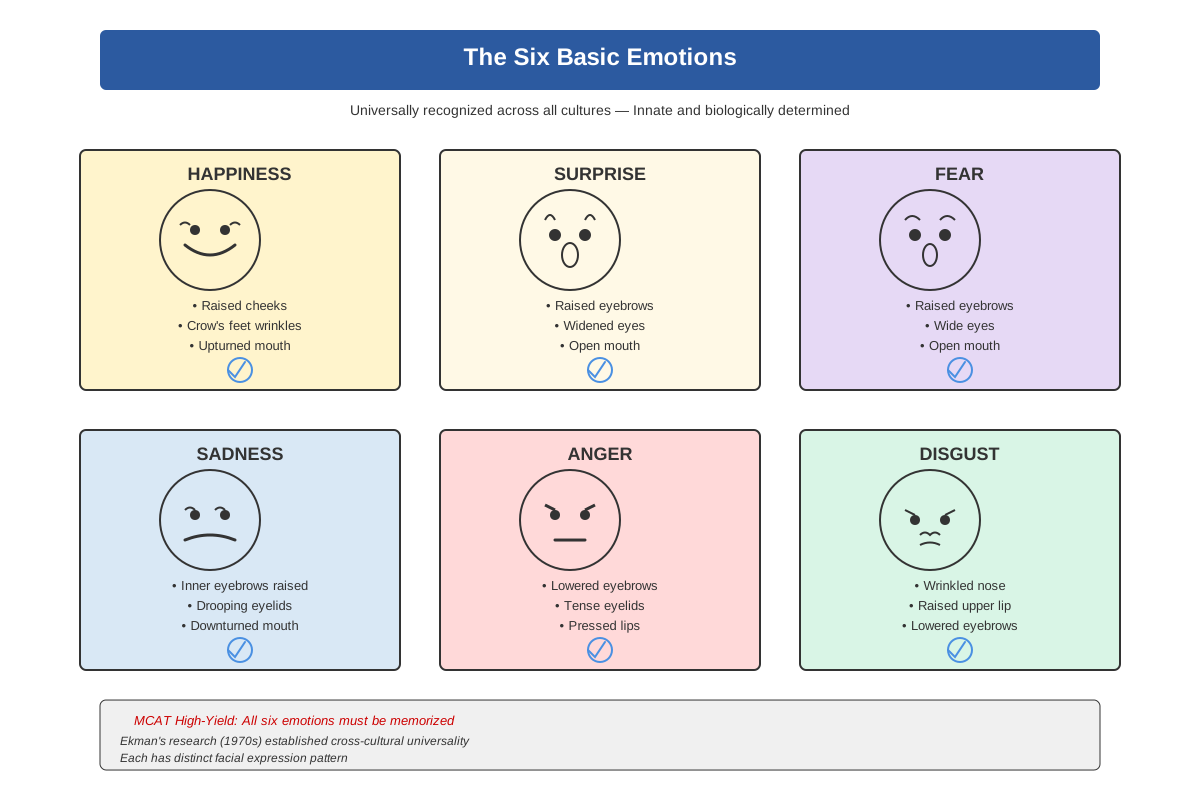
The most widely accepted model of basic emotions comes from psychologist Paul Ekman, whose cross-cultural research in the 1970s identified emotions that were universally recognized through facial expressions. Ekman's original list included six basic emotions:
| Basic Emotion | Adaptive Function | Characteristic Expression | Typical Elicitor |
|---|---|---|---|
| Happiness | Reinforces beneficial behaviors; promotes social bonding | Raised cheeks, crow's feet, upturned mouth corners | Achievement, social connection, pleasure |
| Sadness | Signals loss; elicits social support; promotes withdrawal for recovery | Downturned mouth corners, raised inner eyebrows, drooping eyelids | Loss, separation, failure, disappointment |
| Fear | Mobilizes fight-or-flight response; promotes survival | Widened eyes, raised eyebrows, open mouth | Threat, danger, uncertainty |
| Anger | Mobilizes resources to overcome obstacles; establishes dominance | Lowered brows, tightened lips, flared nostrils | Frustration, injustice, blocked goals |
| Disgust | Prevents ingestion of harmful substances; promotes disease avoidance | Wrinkled nose, raised upper lip, tongue protrusion | Contaminated food, waste, moral violations |
| Surprise | Redirects attention to unexpected stimuli; prepares for rapid response | Raised eyebrows, widened eyes, dropped jaw | Unexpected events, novel stimuli |
Ekman later added a seventh basic emotion:
- Contempt: Signals moral superiority; maintains social hierarchies (characterized by unilateral lip corner raise)
MCAT Tip: The MCAT most commonly references the original six basic emotions. If a question asks about "basic emotions," these six are the safest answer choices.
Theoretical Foundations
The concept of basic emotions emerged from several converging lines of evidence:
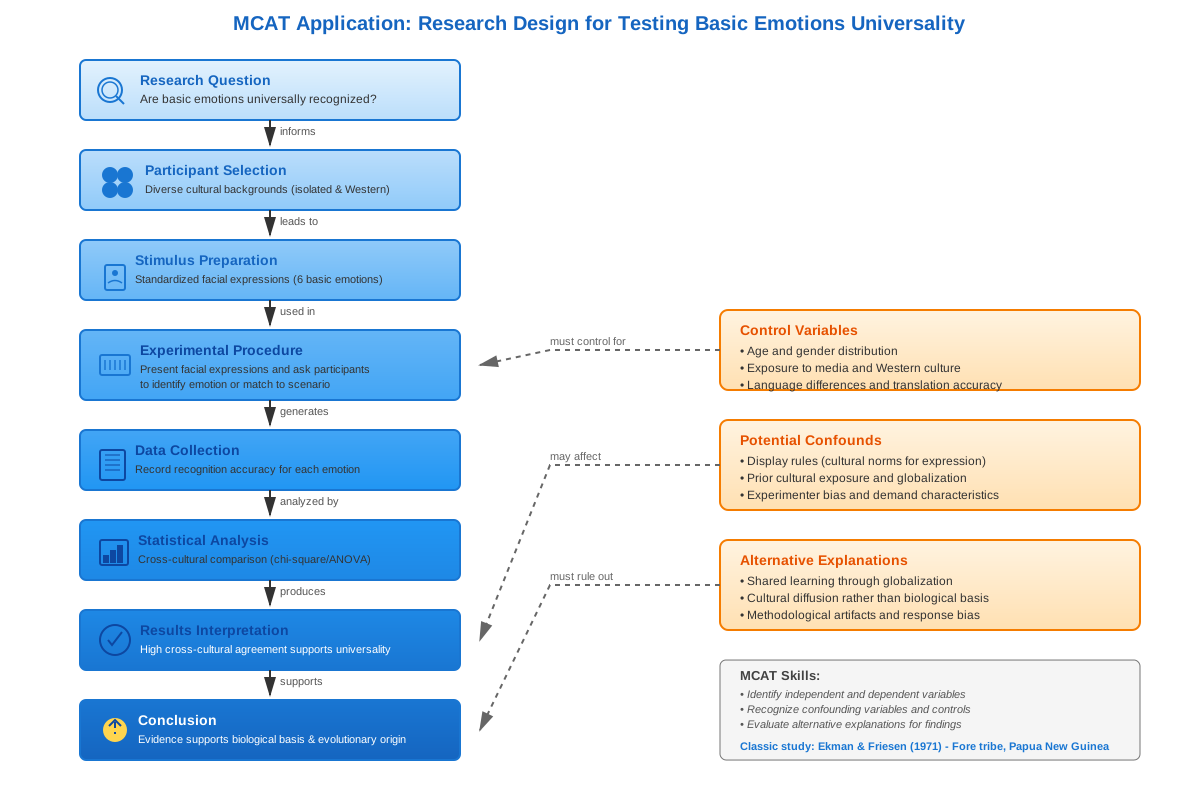
- Cross-cultural research: Ekman's landmark studies showed that people from isolated, preliterate cultures (such as the Fore people of Papua New Guinea) could accurately identify facial expressions of emotions, and that members of these cultures produced the same facial expressions when experiencing these emotions. This demonstrated that these emotions were not learned through cultural transmission.
- Developmental evidence: Infants display facial expressions corresponding to basic emotions before they have opportunities for social learning, suggesting innate emotional programs. Newborns show disgust responses to bitter tastes and distress responses to pain without prior conditioning.
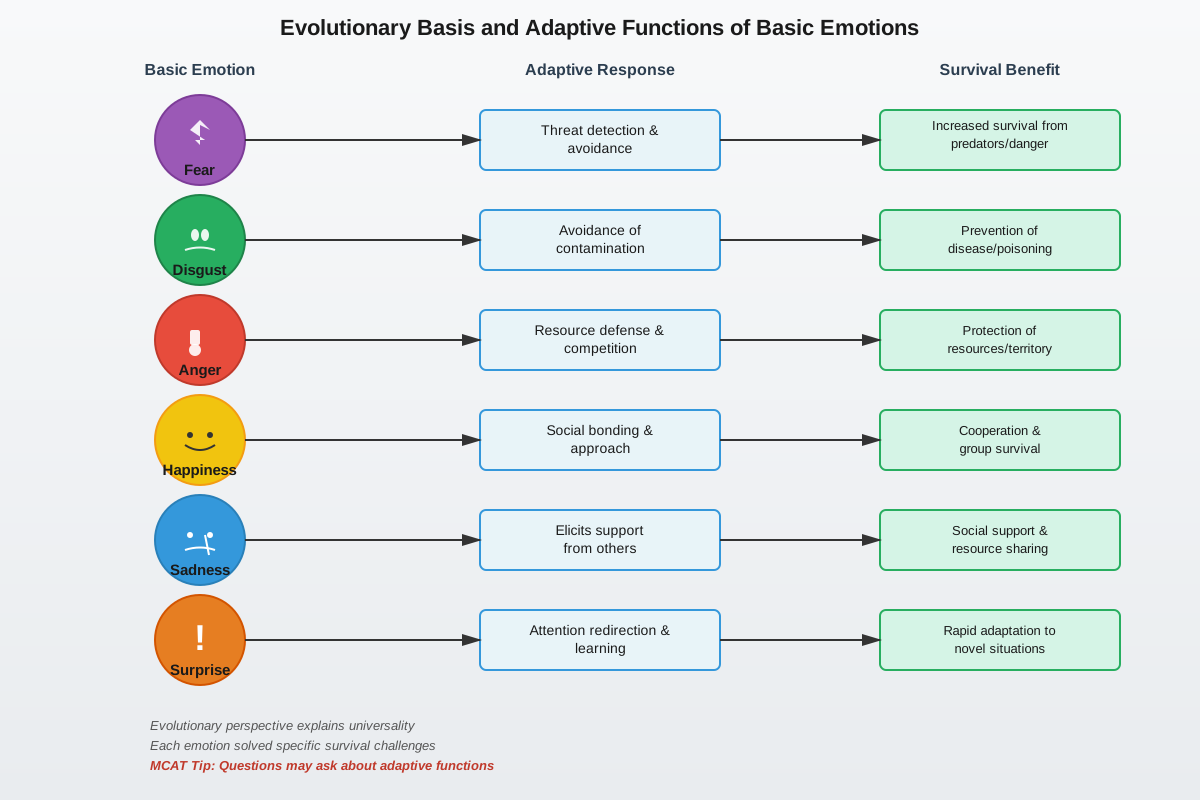
- Evolutionary perspective: Each basic emotion served specific survival functions for our ancestors. Fear enabled rapid escape from predators, disgust prevented consumption of spoiled food, anger facilitated resource competition, and happiness reinforced behaviors that enhanced survival and reproduction.
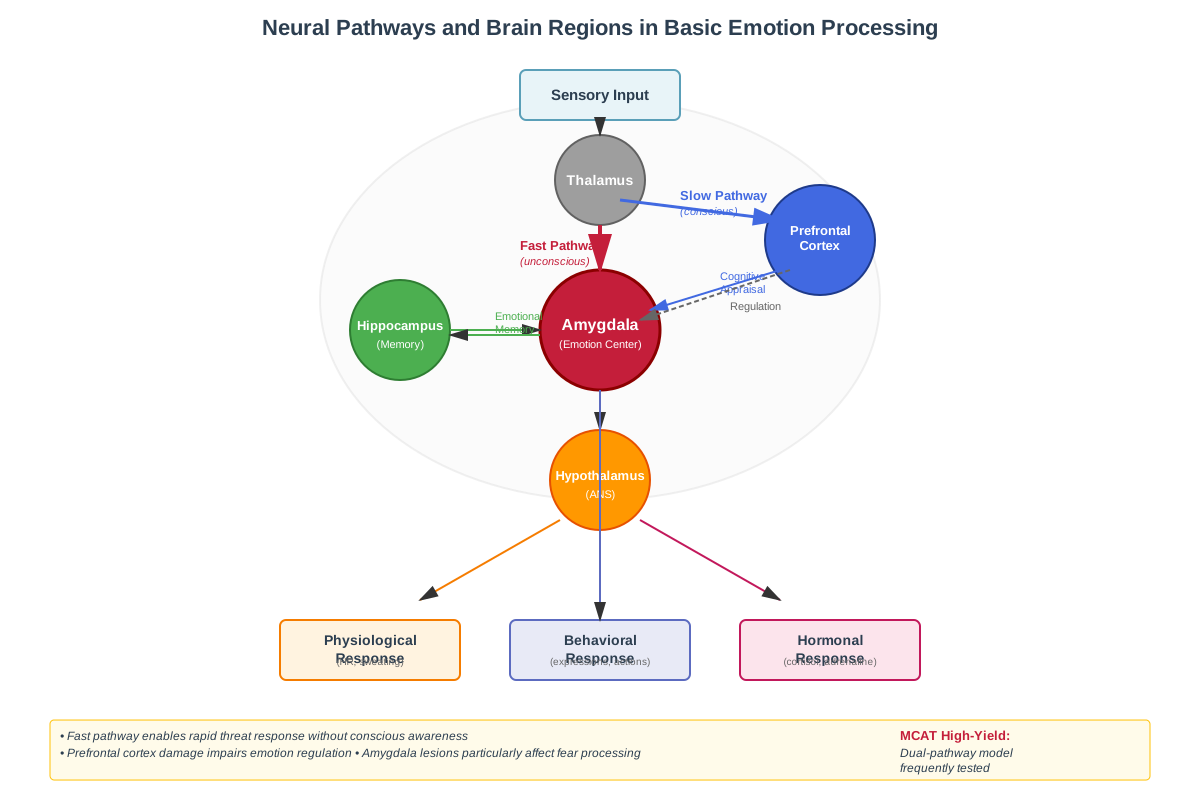
- Neurobiological evidence: Brain imaging studies reveal that basic emotions activate consistent neural circuits, particularly involving the amygdala, which processes emotional significance of stimuli, especially fear-related information.
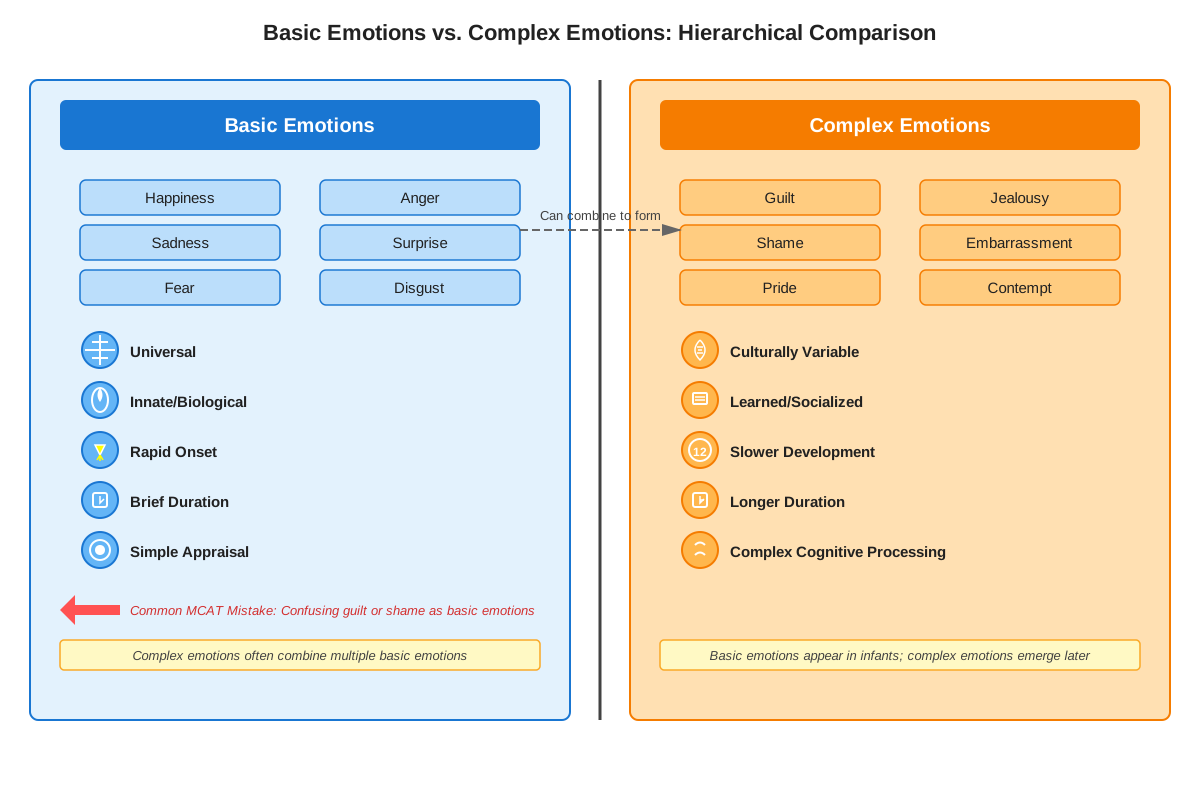
Basic Emotions vs. Complex Emotions
Understanding the distinction between basic and complex emotions is crucial for MCAT success:
Complex emotions (also called secondary emotions or social emotions) are:
- Combinations or blends of basic emotions
- More cognitively sophisticated, requiring self-awareness and social understanding
- More culturally variable in their expression and experience
- Examples include: guilt, shame, pride, embarrassment, jealousy, envy
For instance:
- Jealousy combines fear (of loss), anger (at rival), and sadness (at potential loss)
- Shame involves sadness, fear (of social rejection), and elements of disgust (directed at self)
- Pride combines happiness with elements of contempt (feeling superior to others)
Facial Action Coding System (FACS)
Ekman developed the Facial Action Coding System (FACS), a comprehensive taxonomy of facial muscle movements that produce emotional expressions. This system identifies specific action units (AUs)—individual muscle movements or combinations that create recognizable expressions. For example:
- A genuine smile (Duchenne smile) involves AU6 (orbicularis oculi contraction, creating crow's feet) and AU12 (zygomatic major contraction, raising mouth corners)
- Fear involves AU1+2 (raised inner and outer eyebrows), AU5 (raised upper eyelids), and AU20 (lip stretch)
MCAT Application: Questions may present research using FACS to objectively measure emotional expressions, or ask about distinguishing genuine from fake emotional displays.
Cultural Universality and Display Rules
While basic emotions are universal in their experience and recognition, display rules—culturally specific norms about when, where, and how to express emotions—vary significantly across cultures. For example:
- Many East Asian cultures emphasize emotional restraint in public settings
- Mediterranean cultures may encourage more expressive emotional displays
- The emotion itself (e.g., anger) remains the same, but its outward expression is modulated by cultural learning
This distinction is important for MCAT questions that may ask about cultural differences in emotional expression while maintaining that the underlying basic emotions are universal.
Concept Relationships
Basic emotions serve as the foundation for understanding the broader landscape of emotional psychology tested on the MCAT. The relationships flow as follows:
Basic emotions → Complex emotions: Basic emotions combine and interact to produce more sophisticated emotional experiences. Understanding the basic building blocks enables comprehension of how guilt (sadness + fear + self-directed anger) or nostalgia (happiness + sadness) emerge.
Basic emotions → Emotional expression: Each basic emotion connects to specific patterns of facial expression, body language, and vocal tone. This relationship is bidirectional—the facial feedback hypothesis suggests that producing emotional expressions can influence emotional experience.
Basic emotions → Physiological arousal: Basic emotions trigger characteristic patterns of autonomic nervous system activation, connecting to the broader topic of stress responses and the James-Lange theory of emotion (physiological arousal precedes emotional experience).
Basic emotions → Evolutionary psychology: The adaptive functions of basic emotions connect to broader evolutionary principles, including natural selection, inclusive fitness, and the environment of evolutionary adaptedness (EEA).
Basic emotions → Social cognition: Recognition of basic emotions in others forms the foundation for empathy, theory of mind, and effective social interaction—all tested MCAT concepts.
Basic emotions → Psychopathology: Disruptions in basic emotion processing appear in various disorders (autism spectrum disorder, alexithymia, depression, anxiety disorders), connecting to abnormal psychology content.
Basic emotions → Neuroscience: The neural circuits underlying basic emotions (particularly the amygdala, prefrontal cortex, and insula) connect to broader neuroanatomy and brain function topics.
High-Yield Facts
⭐ The six universally recognized basic emotions are happiness, sadness, fear, anger, disgust, and surprise (Ekman later added contempt as a seventh)
⭐ Basic emotions are characterized by universal facial expressions that are recognized across all cultures, including isolated, preliterate societies
⭐ Paul Ekman's cross-cultural research with the Fore people of Papua New Guinea provided key evidence for the universality of basic emotions
⭐ Basic emotions are innate and appear in infants before significant social learning occurs, supporting their biological basis
⭐ Each basic emotion served an adaptive evolutionary function: fear enabled escape from danger, disgust prevented disease, anger facilitated resource competition, happiness reinforced beneficial behaviors, sadness elicited social support, and surprise redirected attention to novel stimuli
- Basic emotions have rapid onset and brief duration (seconds to minutes) compared to moods (hours to days)
- The amygdala plays a central role in processing basic emotions, particularly fear
- Complex emotions (guilt, shame, pride, jealousy) are combinations of basic emotions and require more cognitive sophistication
- Display rules are culturally specific norms about emotional expression, while the basic emotions themselves are universal
- The Facial Action Coding System (FACS) objectively measures facial muscle movements that produce emotional expressions
- A genuine (Duchenne) smile involves both the zygomatic major muscle (mouth) and orbicularis oculi muscle (eyes), while a fake smile involves only the mouth
- Basic emotions involve automatic appraisal of stimuli, while complex emotions require more deliberate cognitive processing
Quick check — test yourself on Basic emotions so far.
Try Flashcards →Common Misconceptions
Misconception: All emotions are basic emotions if they're commonly experienced.
Correction: Only a small set of emotions (typically six or seven) qualify as "basic" based on specific criteria including universality, distinctive facial expressions, and evolutionary basis. Common emotions like jealousy, guilt, and embarrassment are complex emotions that combine basic emotions with cognitive appraisals.
Misconception: Basic emotions are the same as primary drives like hunger or thirst.
Correction: Basic emotions are distinct from primary drives (motivational states). While both have biological bases, drives relate to physiological needs (homeostasis), whereas basic emotions are responses to environmental stimuli that have adaptive significance. Hunger is a drive; fear is an emotion.
Misconception: If an emotion varies in expression across cultures, it cannot be a basic emotion.
Correction: Basic emotions are universal in their recognition and the capacity to experience them, but display rules (cultural norms about when and how to express emotions) vary across cultures. The emotion itself is universal; its outward expression may be culturally modulated.
Misconception: Basic emotions require conscious awareness and cognitive processing.
Correction: Basic emotions involve automatic appraisal and can occur without conscious awareness. The amygdala can process emotionally significant stimuli (like fearful faces) even when presented subliminally, below the threshold of conscious perception. Complex emotions require more deliberate cognitive processing.
Misconception: More basic emotions have been discovered since Ekman's original research, expanding the list significantly.
Correction: While Ekman added contempt to his original six, the core list has remained relatively stable. Proposed additions (like interest or excitement) typically fail to meet all the criteria for basic emotions, particularly the criterion of distinctive, universally recognized facial expressions.
Misconception: Basic emotions are "simple" or less important than complex emotions.
Correction: "Basic" refers to their fundamental, universal nature—not their simplicity or importance. Basic emotions are evolutionarily ancient, neurologically fundamental, and essential for survival. They form the foundation for all emotional experience and remain crucial throughout life.
Worked Examples
Example 1: Cross-Cultural Research Interpretation
Vignette: A researcher travels to a remote village in the Amazon rainforest where inhabitants have had minimal contact with Western culture. The researcher shows villagers photographs of facial expressions from North American actors and asks them to identify the emotion displayed. The villagers accurately identify expressions of fear, anger, happiness, disgust, sadness, and surprise at rates significantly above chance. The researcher then asks villagers to pose facial expressions for different emotional scenarios, photographs them, and shows these photos to North American participants, who also accurately identify the emotions.
Question: This research design most directly supports which conclusion about emotions?
Analysis:
This question tests understanding of the evidence for basic emotions' universality. Let's break down the key elements:
- Isolated population: The Amazon villagers have minimal Western cultural exposure, ruling out learned recognition through media or cultural transmission
- Bidirectional testing: The study tests both recognition (villagers identifying Western expressions) and production (Westerners identifying villagers' expressions)
- Above-chance accuracy: Both groups successfully identify emotions, not just guess randomly
- Specific emotions listed: The emotions identified (fear, anger, happiness, disgust, sadness, surprise) are the six basic emotions
Answer: This research supports the conclusion that basic emotions are universal and not culturally learned. The bidirectional design (testing both recognition and production across culturally isolated groups) provides strong evidence that these emotions have innate, biological foundations rather than being products of cultural transmission.
Connection to learning objectives: This example demonstrates how to apply knowledge of basic emotions to interpret research designs, a common MCAT question format. It also illustrates why cross-cultural evidence is crucial for establishing which emotions are "basic."
Example 2: Distinguishing Basic from Complex Emotions
Vignette: A psychology student is creating a presentation on emotional development. She includes the following list of emotions that appear in the first year of life: joy (2-3 months), anger (4-6 months), fear (6-8 months), and shame (15-18 months). Her professor notes that one emotion on this list doesn't belong with the others.
Question: Which emotion is the professor likely referring to, and why?
Analysis:
This question requires distinguishing basic emotions from complex emotions based on developmental timing:
- Basic emotions appear early: Joy, anger, and fear appear in the first year, consistent with innate, biologically programmed emotions
- Complex emotions appear later: Shame appears around 15-18 months, requiring:
- Self-awareness (recognizing oneself as separate from others)
- Understanding of social standards
- Ability to evaluate oneself against those standards
- Cognitive requirements: Shame is a self-conscious emotion requiring cognitive sophistication that infants don't possess until the second year of life
Answer: The professor is referring to shame, which is a complex (secondary) emotion rather than a basic emotion. While joy, anger, and fear are basic emotions that appear early due to their innate, universal nature, shame requires self-awareness and understanding of social norms, making it a later-developing complex emotion. Shame actually involves a combination of basic emotions (sadness, fear of rejection) plus cognitive evaluation of the self.
Connection to learning objectives: This example demonstrates how to distinguish basic from complex emotions using developmental evidence and cognitive requirements. It also shows how the MCAT might test this distinction through application to developmental psychology scenarios.
Exam Strategy
Approaching Basic Emotions Questions
When encountering questions about basic emotions on the MCAT:
- Identify the question type:
- Definition questions: "Which of the following are considered basic emotions?"
- Application questions: "The research described provides evidence for which theory of emotion?"
- Distinction questions: "Which emotion in the list is NOT a basic emotion?"
- Use the six-emotion framework: If you must quickly recall basic emotions, remember "HSFADS" (Happiness, Sadness, Fear, Anger, Disgust, Surprise). If an emotion isn't on this list, it's likely complex.
- Look for universality markers: Questions about basic emotions often include phrases like:
- "across all cultures"
- "in isolated populations"
- "in preliterate societies"
- "universally recognized"
- "innate" or "biologically determined"
- Watch for developmental timing: Basic emotions appear in early infancy (first year), while complex emotions emerge later (second year and beyond) when cognitive abilities develop.
Trigger Words and Phrases
Words suggesting basic emotions:
- Universal, cross-cultural, innate, biological, evolutionary, adaptive, automatic, rapid onset, facial expression, Ekman, amygdala
Words suggesting complex emotions:
- Self-conscious, social, learned, cultural variation, cognitive appraisal, self-awareness, secondary, combination
Red flag words (likely indicating NOT a basic emotion):
- Guilt, shame, pride, embarrassment, jealousy, envy, nostalgia, contempt (sometimes included as seventh basic emotion, but less reliably)
Process of Elimination Tips
When eliminating answer choices:
- If a question asks for basic emotions, eliminate any answer including: guilt, shame, pride, embarrassment, jealousy, envy, or other complex emotions
- If a question asks what distinguishes basic from complex emotions, eliminate answers suggesting:
- Basic emotions are learned (they're innate)
- Basic emotions vary across cultures (they're universal)
- Basic emotions require extensive cognitive processing (they're automatic)
- For research interpretation questions, eliminate answers that:
- Attribute cultural differences to the emotions themselves rather than display rules
- Confuse emotion recognition with emotion experience
- Suggest basic emotions are learned through observation
Time Allocation
Basic emotions questions are typically straightforward if you know the core concepts:
- Discrete questions: 30-45 seconds (quick recall of the six basic emotions)
- Passage-based questions: 60-90 seconds (time to read relevant passage sections and apply concepts)
- If you find yourself spending more than 90 seconds, you may be overthinking—return to the fundamental distinction between basic (universal, innate, six emotions) and complex emotions
Memory Techniques
Mnemonics for the Six Basic Emotions
"Happy Students Fear Angry Disgusting Surprises"
- Happiness
- Sadness
- Fear
- Anger
- Disgust
- Surprise
Alternative: "HSFADS" (pronounce as "has fads")—basic emotions are universal, not cultural fads
Visualization Strategy
Create a mental image of a face showing each basic emotion in sequence, like a flip book:
- Happy face (smile with crow's feet)
- Sad face (downturned mouth, drooping eyes)
- Fearful face (wide eyes, raised eyebrows)
- Angry face (furrowed brow, tight lips)
- Disgusted face (wrinkled nose, raised upper lip)
- Surprised face (raised eyebrows, dropped jaw, wide eyes)
Practice mentally cycling through these expressions—this kinesthetic memory can help recall during the exam.
Criteria Acronym: "UBER"
Remember that basic emotions are:
- Universal (across all cultures)
- Biological (innate, not learned)
- Evolutionary (served adaptive functions)
- Recognizable (distinctive facial expressions)
If an emotion doesn't meet all UBER criteria, it's not basic.
Evolutionary Function Memory Aid
Link each basic emotion to its survival function using vivid imagery:
- Fear → Running from a tiger (escape danger)
- Disgust → Spitting out rotten food (avoid disease)
- Anger → Fighting for resources (overcome obstacles)
- Happiness → Celebrating with tribe (reinforce beneficial behaviors)
- Sadness → Crying after loss (elicit social support)
- Surprise → Jumping at sudden noise (redirect attention to novel stimuli)
Summary
Basic emotions represent a core concept in emotion psychology, referring to a limited set of universal, innate emotional responses that transcend cultural boundaries. The six widely accepted basic emotions—happiness, sadness, fear, anger, disgust, and surprise—are characterized by distinctive facial expressions, rapid automatic onset, evolutionary adaptive functions, and recognition across all human cultures, including isolated populations. Paul Ekman's landmark cross-cultural research provided compelling evidence for the universality of these emotions, demonstrating that both recognition and production of emotional expressions occur independently of cultural learning. Basic emotions differ fundamentally from complex emotions (such as guilt, shame, and jealousy), which require more sophisticated cognitive processing, develop later in childhood, and show greater cultural variation. Understanding basic emotions is essential for MCAT success because questions frequently test the ability to distinguish basic from complex emotions, interpret cross-cultural research designs, and connect emotional responses to their evolutionary and neurobiological foundations. The concept bridges multiple testable domains including evolutionary psychology, neuroscience (particularly amygdala function), developmental psychology, and cross-cultural psychology, making it a high-yield topic for comprehensive exam preparation.
Key Takeaways
- The six basic emotions are happiness, sadness, fear, anger, disgust, and surprise—memorize this list as it appears frequently on the MCAT
- Basic emotions are universal, innate, and characterized by distinctive facial expressions that are recognized across all cultures, including isolated populations
- Paul Ekman's cross-cultural research provides the primary evidence for basic emotions' universality, particularly his work with the Fore people of Papua New Guinea
- Each basic emotion served an adaptive evolutionary function that enhanced survival and reproductive success in ancestral environments
- Complex emotions differ from basic emotions in that they require more cognitive sophistication, develop later, combine multiple basic emotions, and show greater cultural variation
- Display rules explain cultural differences in emotional expression while maintaining that the underlying basic emotions themselves are universal
- The amygdala plays a central role in processing basic emotions, particularly fear, connecting this topic to neuroscience content on the MCAT
Related Topics
Theories of Emotion: Understanding basic emotions provides the foundation for exploring competing theories about how emotions arise, including the James-Lange theory (physiological arousal precedes emotion), Cannon-Bard theory (simultaneous arousal and emotion), and Schachter-Singer two-factor theory (arousal plus cognitive label). Mastering basic emotions enables deeper comprehension of these theoretical frameworks.
Emotional Regulation: Once students understand basic emotions, they can explore how individuals modulate emotional experiences and expressions through strategies like cognitive reappraisal, suppression, and distraction—important for understanding mental health and coping mechanisms.
Mood Disorders: Knowledge of basic emotions, particularly sadness and happiness, provides context for understanding depression (persistent sadness) and bipolar disorder (alternating between extreme sadness and happiness/euphoria).
Social Cognition and Empathy: Recognizing basic emotions in others forms the foundation for empathy, theory of mind, and effective social interaction—all tested concepts in MCAT psychology passages.
Stress and Coping: Basic emotions, particularly fear and anger, connect directly to stress responses and the fight-or-flight reaction, enabling integration across the Emotion, Motivation, and Stress unit.
Practice CTA
Now that you've mastered the core concepts of basic emotions, it's time to solidify your understanding through active practice. Complete the associated practice questions to test your ability to distinguish basic from complex emotions, interpret cross-cultural research designs, and apply these concepts to MCAT-style passages. Use the flashcards to reinforce the six basic emotions and their characteristics until recall becomes automatic. Remember: understanding basic emotions isn't just about memorizing a list—it's about recognizing how these fundamental emotional responses appear across diverse question formats and connect to broader psychological principles. Your investment in mastering this medium-yield topic will pay dividends when you encounter emotion-related passages on test day. You've got this!
Sign up free to keep reading
Create a free AnvayaPrep account to finish this MCAT guide on Basic emotions — plus flashcards and practice questions.