Overview
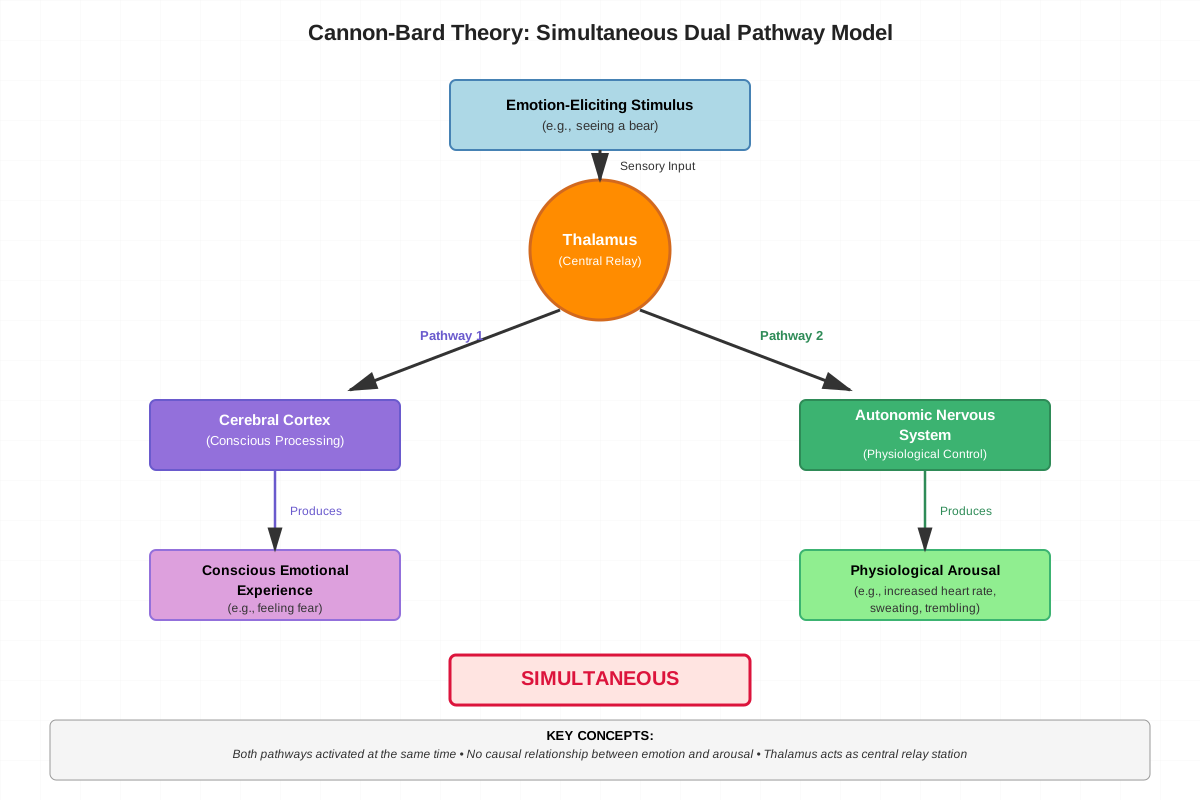
The Cannon-Bard theory represents a pivotal advancement in understanding the physiological and psychological components of emotion. Proposed by Walter Cannon and Philip Bard in the 1920s and 1930s, this theory challenged the prevailing James-Lange theory by suggesting that emotional experience and physiological arousal occur simultaneously and independently, rather than sequentially. According to Cannon-Bard theory, when an individual encounters an emotion-eliciting stimulus, the thalamus sends signals simultaneously to both the cerebral cortex (producing the conscious emotional experience) and the autonomic nervous system (producing physiological arousal). This dual-pathway model fundamentally changed how psychologists conceptualize the relationship between body and mind in emotional processing.
For the MCAT, understanding Cannon-Bard theory Psychology is essential because it appears frequently in questions about Emotion Motivation and Stress, particularly in passages comparing different theories of emotion. The MCAT tests not only definitional knowledge but also the ability to distinguish between competing theories and apply them to novel scenarios. Questions may present experimental findings, clinical vignettes, or neurological case studies that require students to identify which theory best explains the observed phenomena. The Cannon-Bard theory MCAT content typically appears in the Psychological, Social, and Biological Foundations of Behavior section, often integrated with neuroanatomy and autonomic nervous system function.
Within the broader landscape of Psychology, Cannon-Bard theory bridges multiple domains: biological bases of behavior, sensation and perception, and cognition. It connects directly to neuroanatomy (particularly thalamic function), autonomic nervous system physiology, and the ongoing debate about the nature of consciousness and subjective experience. Understanding this theory provides a foundation for comprehending more contemporary models of emotion, including the Schachter-Singer two-factor theory and modern neuroscience approaches to affective processing.
Learning Objectives
- [ ] Define Cannon-Bard theory using accurate Psychology terminology
- [ ] Explain why Cannon-Bard theory matters for the MCAT
- [ ] Apply Cannon-Bard theory to exam-style questions
- [ ] Identify common mistakes related to Cannon-Bard theory
- [ ] Connect Cannon-Bard theory to related Psychology concepts
- [ ] Compare and contrast Cannon-Bard theory with James-Lange and Schachter-Singer theories
- [ ] Describe the neurological pathway involved in Cannon-Bard theory, including the role of the thalamus
- [ ] Analyze experimental evidence that supports or challenges Cannon-Bard theory
Prerequisites
- Basic neuroanatomy: Understanding brain structures, particularly the thalamus, cortex, and limbic system, is essential because Cannon-Bard theory relies on specific neural pathways
- Autonomic nervous system function: Knowledge of sympathetic and parasympathetic divisions is necessary to understand the physiological arousal component
- James-Lange theory: Familiarity with this competing theory provides context for why Cannon-Bard theory was developed as an alternative explanation
- Basic emotion concepts: Understanding what constitutes an emotion (subjective experience, physiological changes, behavioral expression) frames the theoretical debate
- Neural signal transmission: Knowledge of how signals travel through the nervous system helps explain the simultaneous pathway concept
Why This Topic Matters
Cannon-Bard theory has significant clinical and real-world applications in understanding emotional disorders, stress responses, and psychosomatic conditions. In clinical settings, this theory helps explain why patients with certain neurological damage (particularly thalamic lesions) may experience disrupted emotional processing. It also provides a framework for understanding conditions where emotional experience and physiological arousal become dissociated, such as in certain anxiety disorders or alexithymia. The theory's emphasis on central nervous system processing has influenced therapeutic approaches that target brain function directly, including pharmacological interventions and neurofeedback techniques.
On the MCAT, Cannon-Bard theory appears with moderate frequency, typically in 2-4 questions per exam administration. Questions most commonly appear in three formats: (1) direct comparison questions asking students to distinguish between emotion theories, (2) passage-based questions presenting experimental data or case studies requiring theory application, and (3) discrete questions testing knowledge of the neural pathways involved. According to AAMC data, approximately 60% of Cannon-Bard questions appear in passage format, often embedded within broader discussions of stress physiology or neurological function.
Common exam passage contexts include: neurological case studies describing patients with thalamic damage, experimental designs measuring the timing of emotional experience versus physiological arousal, evolutionary psychology discussions about the adaptive value of emotion systems, and clinical vignettes involving emotional processing disorders. The theory frequently appears alongside questions about the autonomic nervous system, making it a high-yield topic that connects multiple testable concepts within the Emotion Motivation and Stress unit.
Core Concepts
Historical Context and Development
The Cannon-Bard theory emerged as a direct challenge to the James-Lange theory, which proposed that physiological arousal precedes and causes emotional experience (we feel afraid because we tremble). Walter Cannon identified several problems with the James-Lange theory through his research in the 1920s. He noted that physiological arousal patterns are often too similar across different emotions to account for the distinct subjective experiences we have. For example, increased heart rate occurs in fear, anger, and excitement, yet these emotions feel qualitatively different. Cannon also observed that artificially inducing physiological arousal (such as through adrenaline injection) does not necessarily produce genuine emotional experience. Philip Bard extended Cannon's work by identifying the specific neural mechanisms involved, particularly the critical role of the thalamus.
The Dual-Pathway Model
The central premise of Cannon-Bard theory is simultaneous processing: when an individual encounters an emotion-eliciting stimulus, two independent processes occur at the same time. The thalamus serves as the critical relay station that receives sensory information about the emotional stimulus. Upon receiving this information, the thalamus simultaneously sends signals along two distinct pathways:
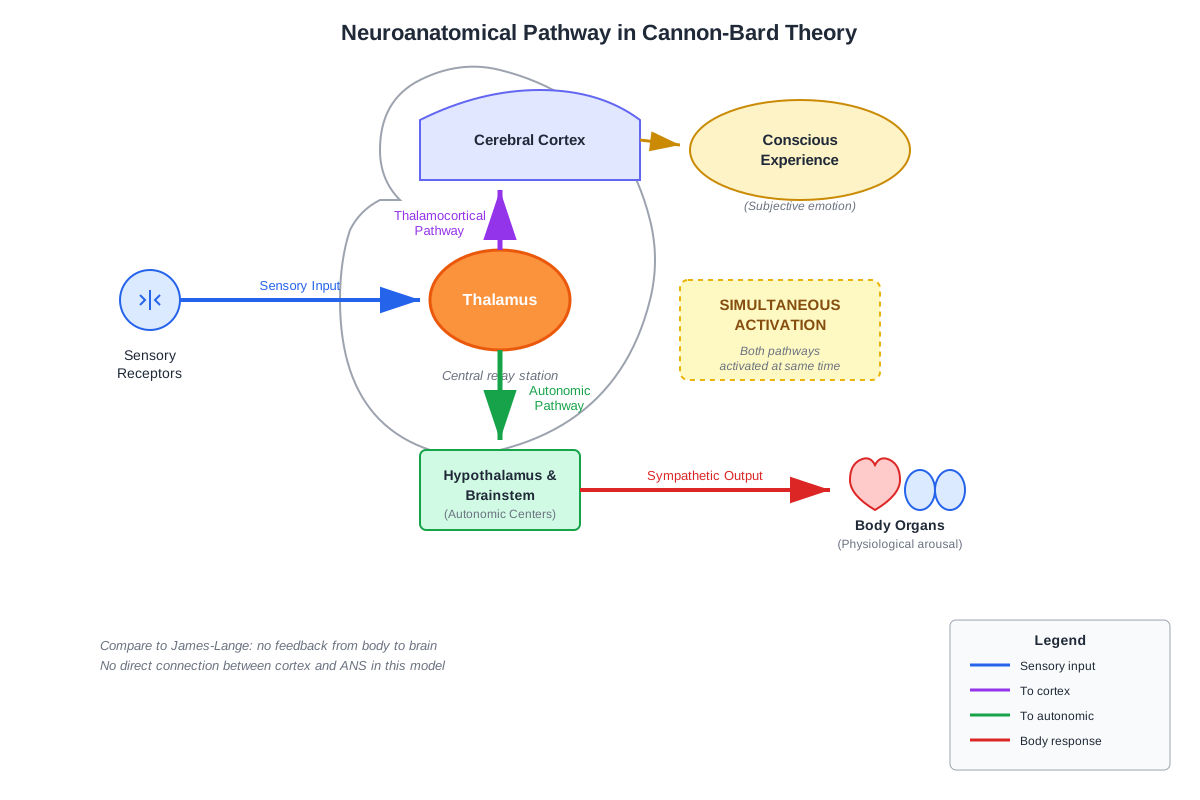
- Cortical pathway: Signals travel from the thalamus to the cerebral cortex, particularly to areas involved in conscious awareness and cognitive processing. This pathway produces the subjective emotional experience—the conscious feeling of fear, joy, anger, or sadness.
- Autonomic pathway: Signals travel from the thalamus to the autonomic nervous system (via the hypothalamus and brainstem), triggering physiological arousal responses such as increased heart rate, sweating, muscle tension, and hormonal release.
The critical distinction from James-Lange theory is that these pathways operate independently and simultaneously. Neither causes the other; both are parallel responses to the same stimulus, coordinated by the thalamus.
Neural Mechanisms
The thalamus functions as the central hub in Cannon-Bard theory. This structure receives sensory input from multiple modalities (visual, auditory, tactile, etc.) and acts as a relay station, directing information to appropriate cortical and subcortical regions. In the context of emotion, the thalamus performs rapid initial processing of potentially significant stimuli before distributing signals to create both conscious awareness and bodily preparation for action.
The cerebral cortex, particularly the prefrontal cortex and anterior cingulate cortex, receives thalamic input and generates the conscious emotional experience. This involves cognitive appraisal, memory integration, and the subjective "feeling" component of emotion. Meanwhile, the hypothalamus and brainstem structures receive simultaneous thalamic signals and activate the sympathetic nervous system, producing the characteristic fight-or-flight response: increased cardiac output, bronchodilation, glucose mobilization, and other physiological changes that prepare the body for action.
Comparison with Other Emotion Theories
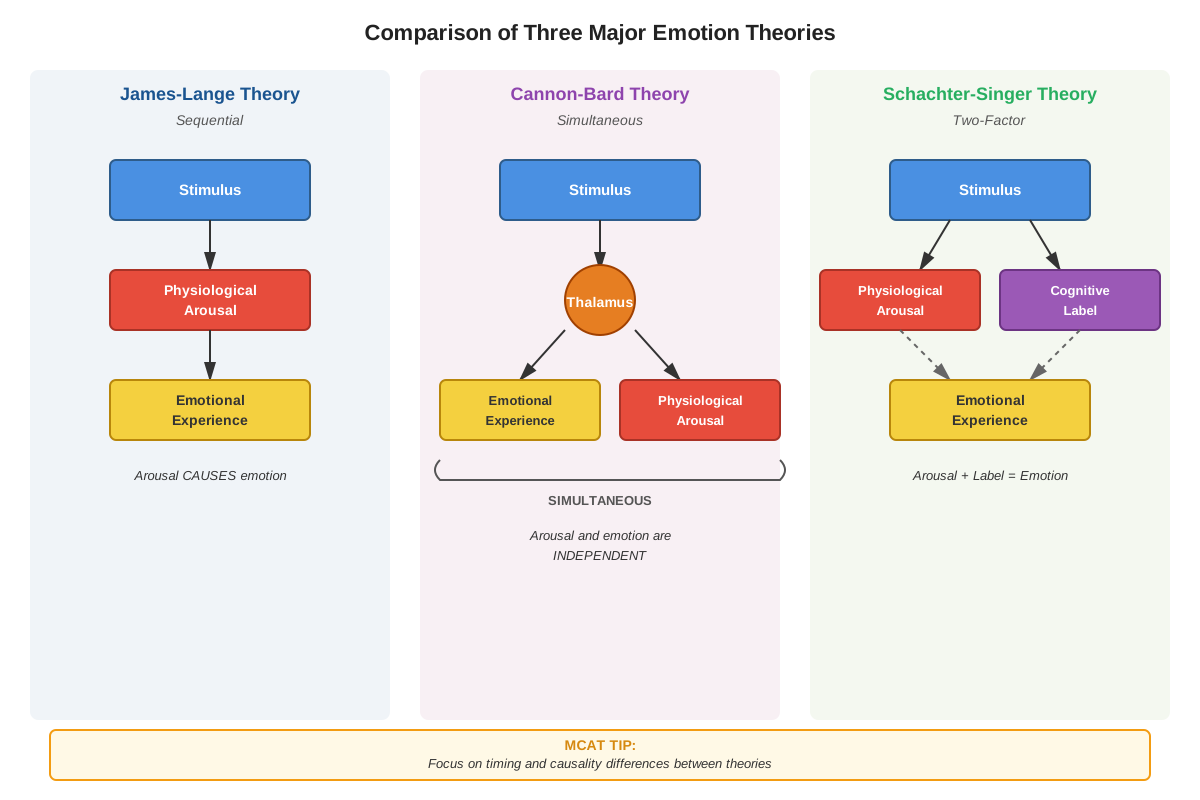
| Theory | Sequence of Events | Key Structure | Causation |
|---|---|---|---|
| James-Lange | Stimulus → Physiological arousal → Emotional experience | Peripheral nervous system | Arousal causes emotion |
| Cannon-Bard | Stimulus → Simultaneous arousal AND emotion | Thalamus | Independent parallel processes |
| Schachter-Singer | Stimulus → Arousal + Cognitive label → Emotion | Cortex (cognition) | Arousal + interpretation = emotion |
This comparison table is essential for MCAT preparation because questions frequently require distinguishing between these theories based on experimental scenarios or clinical presentations.
Experimental Support and Criticisms
Cannon's original research provided several lines of evidence supporting his theory. He demonstrated that animals with severed connections between the viscera and the brain still displayed emotional behaviors, suggesting that feedback from bodily arousal is not necessary for emotional experience. He also showed that the same physiological arousal pattern could accompany different emotions, contradicting the James-Lange prediction that each emotion should have a unique physiological signature.
However, modern neuroscience has revealed limitations in the Cannon-Bard model. Research has shown that the amygdala, not mentioned in the original theory, plays a crucial role in emotional processing, particularly for fear and threat detection. The amygdala can process emotional stimuli even before conscious cortical awareness occurs, suggesting more complex pathways than the simple thalamic relay model. Additionally, the theory underestimates the role of cognitive appraisal in shaping emotional experience, a factor emphasized by later theories like Schachter-Singer.
Physiological Arousal Patterns
The autonomic nervous system activation described in Cannon-Bard theory involves coordinated changes across multiple organ systems. The sympathetic division predominates during emotional arousal, producing: increased heart rate and contractility, elevated blood pressure, pupil dilation, decreased digestive activity, increased respiration rate, piloerection (goosebumps), and release of stress hormones including epinephrine and cortisol. These changes occur within seconds of stimulus detection, demonstrating the rapid parallel processing that Cannon-Bard theory proposes.
Importantly, Cannon-Bard theory acknowledges that while these physiological patterns are similar across emotions, the subjective cortical experience differs based on the specific stimulus context and cognitive processing. This explains how the same racing heart can accompany fear (when facing a threat) or excitement (when anticipating a positive event)—the physiological response is similar, but the cortical interpretation creates distinct emotional experiences.
Concept Relationships
The Cannon-Bard theory connects intimately with multiple concepts within emotion psychology and broader neuroscience. The theory directly builds upon and challenges the James-Lange theory, creating a historical progression in emotion theory development: James-Lange (sequential, peripheral) → Cannon-Bard (simultaneous, central) → Schachter-Singer (cognitive appraisal). Understanding this progression is essential for MCAT success because questions often test the ability to trace theoretical evolution and identify which theory best explains specific phenomena.
Within the theory itself, the relationship flows as follows: Emotional stimulus → Thalamic processing → Parallel pathways → (1) Cortical awareness (subjective emotion) + (2) Autonomic activation (physiological arousal). These components are interdependent in timing but independent in causation—neither causes the other, both result from thalamic coordination.
The theory connects to neuroanatomy through its emphasis on specific brain structures. The thalamus serves as the central node, linking to cortical regions (for conscious experience) and hypothalamic/brainstem regions (for autonomic control). This connects to broader concepts of brain organization and the distinction between cortical (conscious, cognitive) and subcortical (automatic, regulatory) functions.
Cannon-Bard theory also relates to stress physiology because the autonomic activation it describes is identical to the stress response. The theory helps explain why emotional situations trigger the same physiological cascade as physical stressors—both activate the sympathetic nervous system through similar neural pathways. This connection makes Cannon-Bard theory relevant for understanding psychosomatic disorders, where emotional states produce physical symptoms through autonomic activation.
Finally, the theory connects to evolutionary psychology by suggesting that emotions evolved as coordinated responses involving both mental preparation (cortical awareness) and physical preparation (autonomic arousal). This dual preparation would have adaptive value, allowing organisms to simultaneously recognize threats cognitively and prepare physically for action.
High-Yield Facts
⭐ Cannon-Bard theory proposes that emotional experience and physiological arousal occur simultaneously and independently, not sequentially
⭐ The thalamus is the critical structure in Cannon-Bard theory, serving as the relay station that sends simultaneous signals to cortex and autonomic nervous system
⭐ Cannon-Bard theory was developed specifically to address weaknesses in James-Lange theory, particularly the observation that similar physiological arousal accompanies different emotions
⭐ According to Cannon-Bard theory, neither emotional experience nor physiological arousal causes the other—both are parallel responses to the same stimulus
⭐ The theory emphasizes central nervous system (brain) processing rather than peripheral nervous system (body) feedback as the primary mechanism of emotion
- Cannon identified that artificially inducing physiological arousal does not produce genuine emotional experience, contradicting James-Lange predictions
- The cortical pathway in Cannon-Bard theory produces conscious emotional experience through activation of prefrontal and cingulate cortex regions
- The autonomic pathway activates the sympathetic nervous system, producing fight-or-flight responses including increased heart rate, pupil dilation, and stress hormone release
- Modern research has identified limitations in Cannon-Bard theory, particularly its omission of the amygdala's role in emotional processing
- Cannon-Bard theory helps explain why patients with spinal cord injuries (who have reduced bodily feedback) can still experience full emotional responses
- The theory predicts that blocking physiological arousal should not eliminate emotional experience, which has been supported by pharmacological studies using beta-blockers
- Cannon-Bard theory applies to all emotions (fear, joy, anger, sadness), not just negative emotions, making it a comprehensive model
Quick check — test yourself on Cannon Bard theory so far.
Try Flashcards →Common Misconceptions
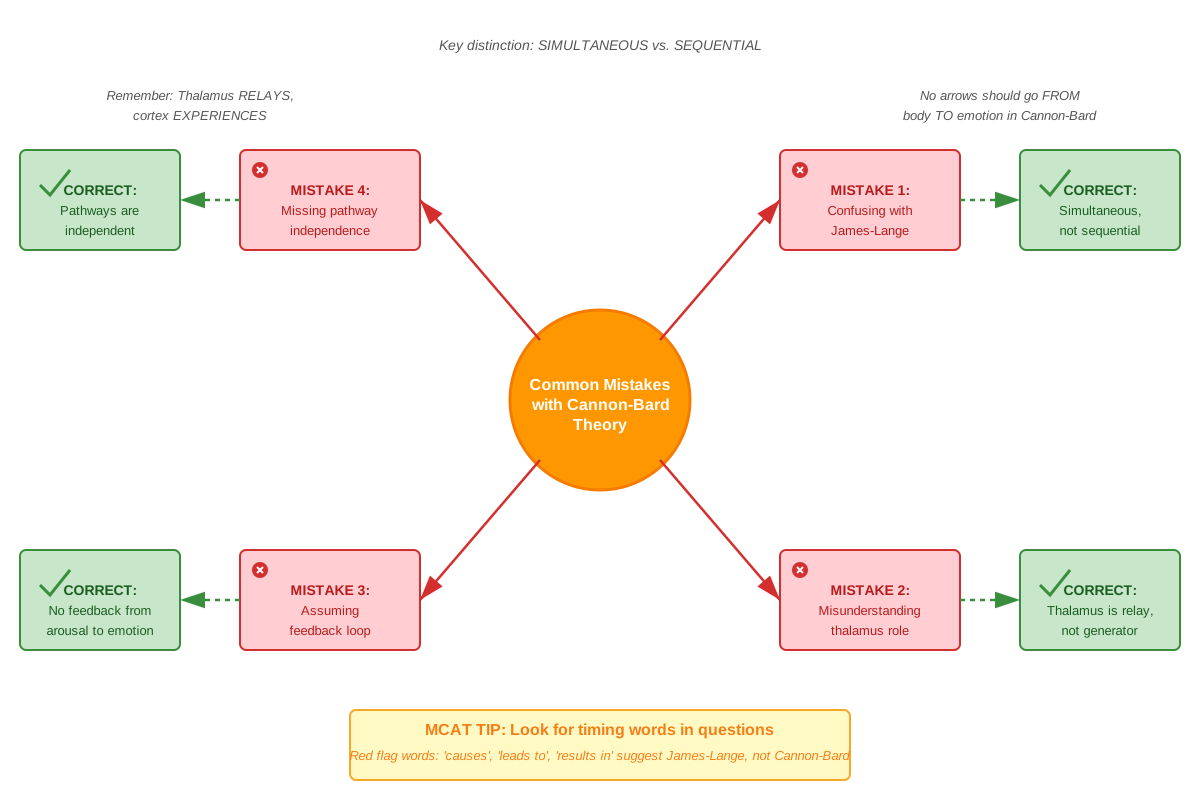
Misconception: Cannon-Bard theory states that emotional experience causes physiological arousal → Correction: Cannon-Bard theory explicitly states that emotional experience and physiological arousal occur simultaneously and independently; neither causes the other. Both are parallel responses coordinated by the thalamus.
Misconception: The thalamus in Cannon-Bard theory only sends signals to the cortex → Correction: The thalamus sends signals along two pathways simultaneously: one to the cortex (producing conscious emotion) and one to the autonomic nervous system via hypothalamus (producing physiological arousal). This dual signaling is the core of the theory.
Misconception: Cannon-Bard theory and James-Lange theory are essentially the same → Correction: These theories are fundamentally different. James-Lange proposes a sequence (stimulus → arousal → emotion), while Cannon-Bard proposes simultaneous parallel processing (stimulus → arousal AND emotion at the same time). This distinction is frequently tested on the MCAT.
Misconception: Cannon-Bard theory has been completely disproven by modern neuroscience → Correction: While modern research has identified limitations (particularly the omission of the amygdala), the core principle of parallel processing remains valid. The theory is incomplete rather than incorrect, and it still provides a useful framework for understanding emotion.
Misconception: According to Cannon-Bard theory, all emotions produce identical physiological responses → Correction: Cannon-Bard theory acknowledges that physiological arousal patterns are similar across emotions (which was part of Cannon's critique of James-Lange), but the theory explains that different emotions arise from different cortical processing of the stimulus, not from different arousal patterns.
Misconception: Cannon-Bard theory applies only to fear and threat responses → Correction: The theory is a general model of emotion that applies to all emotional experiences—positive and negative, high-arousal and low-arousal. The simultaneous processing model works for joy, sadness, anger, fear, and other emotions.
Misconception: The "Bard" in Cannon-Bard refers to a poetic or literary approach to emotion → Correction: Philip Bard was a physiologist who collaborated with Walter Cannon and extended his research by identifying specific neural mechanisms. The theory is named after both researchers, not after any literary concept.
Worked Examples
Example 1: Distinguishing Theories in an Experimental Context
Question: A researcher conducts an experiment where participants are shown frightening images while their heart rate and subjective fear ratings are measured with precise timing. The data shows that increased heart rate and reported fear experience begin at almost exactly the same moment, within 50 milliseconds of each other. Which theory of emotion does this finding best support?
Step 1 - Identify what each theory predicts about timing:
- James-Lange: Physiological arousal should precede emotional experience (heart rate increase should come first)
- Cannon-Bard: Physiological arousal and emotional experience should occur simultaneously
- Schachter-Singer: Physiological arousal should precede cognitive labeling of the emotion
Step 2 - Analyze the experimental finding:
The data shows that heart rate increase and fear experience occur "at almost exactly the same moment" (within 50ms). This indicates simultaneous occurrence rather than a clear sequence.
Step 3 - Match finding to theory:
The simultaneous occurrence of physiological arousal (heart rate) and emotional experience (fear rating) directly supports Cannon-Bard theory's core prediction of parallel processing.
Step 4 - Eliminate alternatives:
- James-Lange is inconsistent because there's no clear precedence of arousal before emotion
- Schachter-Singer is less supported because the finding doesn't address cognitive appraisal or labeling
Answer: This finding best supports Cannon-Bard theory because it demonstrates the simultaneous occurrence of physiological arousal and emotional experience, which is the central prediction of the theory.
Connection to learning objectives: This example demonstrates how to apply Cannon-Bard theory to experimental data (Learning Objective 3) and how to distinguish it from competing theories (Learning Objective 6).
Example 2: Clinical Vignette Application
Question: A patient suffers a stroke that damages their thalamus bilaterally. According to Cannon-Bard theory, what emotional deficits would you predict this patient to experience?
Step 1 - Recall the role of the thalamus in Cannon-Bard theory:
The thalamus is the central relay station that receives emotional stimulus information and simultaneously sends signals to both the cortex (for conscious emotional experience) and the autonomic nervous system (for physiological arousal).
Step 2 - Predict consequences of thalamic damage:
If the thalamus is damaged, it cannot effectively relay emotional information to either pathway. This should disrupt both:
- The cortical pathway → impaired conscious emotional experience
- The autonomic pathway → impaired physiological arousal responses
Step 3 - Formulate specific predictions:
The patient would likely experience:
- Reduced or absent subjective emotional feelings (emotional blunting)
- Diminished physiological responses to emotional stimuli (reduced heart rate changes, less sweating, etc.)
- Both deficits occurring together because both pathways originate from the damaged thalamus
Step 4 - Consider alternative theories:
- James-Lange theory would predict that if peripheral arousal could still occur through other pathways, emotion might be preserved
- Cannon-Bard theory uniquely predicts that thalamic damage disrupts both components simultaneously
Answer: According to Cannon-Bard theory, bilateral thalamic damage should produce both emotional blunting (reduced subjective emotional experience) and diminished autonomic responses to emotional stimuli, because the thalamus is the origin point for both the cortical and autonomic pathways. The patient would show parallel deficits in both emotional experience and physiological arousal.
Connection to learning objectives: This example demonstrates clinical application of Cannon-Bard theory (Learning Objective 2), shows how the theory connects to neuroanatomy (Learning Objective 5), and illustrates the theory's unique predictions compared to alternatives (Learning Objective 6).
Exam Strategy
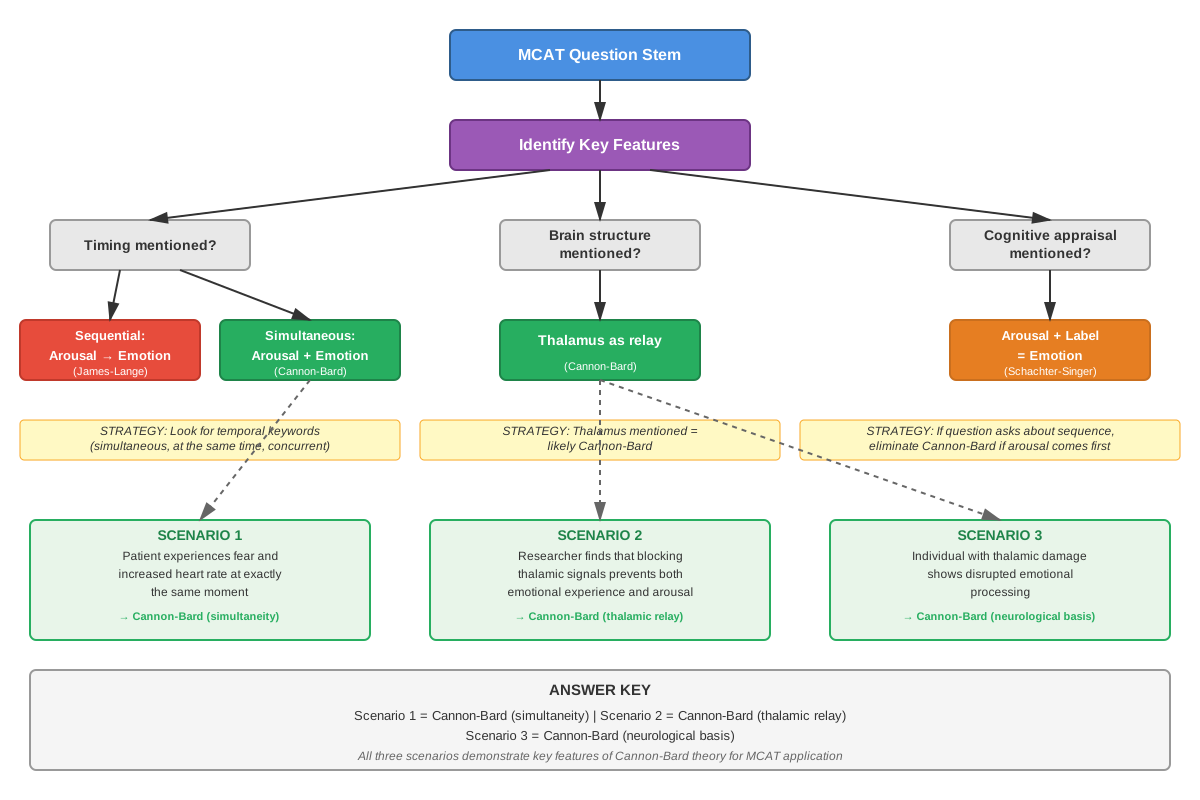
When approaching Cannon-Bard theory MCAT questions, begin by identifying whether the question asks about timing/sequence or about causation. These are the two most common testing angles. For timing questions, look for keywords like "simultaneously," "at the same time," "parallel," or "independent"—these signal Cannon-Bard theory. For causation questions, remember that Cannon-Bard is the only major emotion theory that explicitly denies causation between emotional experience and physiological arousal.
Trigger words and phrases that indicate Cannon-Bard theory:
- "Thalamus" or "thalamic relay"
- "Simultaneous" or "at the same time"
- "Independent pathways"
- "Parallel processing"
- "Neither causes the other"
- "Central nervous system processing"
Trigger words that indicate OTHER theories:
- "Feedback from the body" → James-Lange
- "Cognitive appraisal" or "interpretation" → Schachter-Singer
- "Arousal first, then emotion" → James-Lange
- "Labeling" or "context" → Schachter-Singer
For process-of-elimination strategies, use the sequence test: If a question describes or implies a sequence where one component clearly precedes another, eliminate Cannon-Bard theory. If a question emphasizes cognitive interpretation or labeling, eliminate Cannon-Bard in favor of Schachter-Singer. If a question emphasizes bodily feedback causing emotion, eliminate Cannon-Bard in favor of James-Lange. Cannon-Bard is the correct answer when simultaneity, thalamic processing, or independence of pathways is emphasized.
Exam Tip: When a passage describes neurological damage or experimental manipulation of brain structures, immediately consider Cannon-Bard theory if the thalamus is mentioned. Questions about thalamic function almost always test Cannon-Bard theory on the MCAT.
Time allocation: Cannon-Bard questions typically require 60-90 seconds. Spend 20-30 seconds identifying the key feature being tested (timing, causation, or neural pathway), 20-30 seconds matching that feature to the theory, and 20-30 seconds eliminating wrong answers and confirming your choice. Don't overthink these questions—they usually test straightforward definitional knowledge or simple application.
For passage-based questions, quickly scan for mentions of brain structures (especially thalamus), timing measurements, or experimental manipulations that separate emotional experience from physiological arousal. These passages often present data that supports or challenges different theories, so your task is to match the data pattern to the theory's predictions.
Memory Techniques
Mnemonic for Cannon-Bard theory: "CATS"
- Central (central nervous system, not peripheral)
- At the same time (simultaneous processing)
- Thalamus (key structure)
- Separate pathways (independent cortical and autonomic routes)
Visualization strategy: Picture a traffic signal controller (the thalamus) that receives information about an approaching emergency vehicle (emotional stimulus). The controller simultaneously changes two sets of lights—one for north-south traffic (cortical pathway/emotional experience) and one for east-west traffic (autonomic pathway/physiological arousal). Both lights change at exactly the same moment, neither causes the other, and both are controlled by the central signal controller.
Acronym for comparing theories: "JCS" (James-Lange, Cannon-Bard, Schachter-Singer)
- James-Lange: Just body first (arousal → emotion)
- Cannon-Bard: Concurrent (simultaneous)
- Schachter-Singer: Situation matters (cognitive appraisal)
Memory palace technique: Imagine walking through a building where:
- Entrance (stimulus) → You see something emotional
- Central lobby with two staircases (thalamus) → Information arrives at a central point
- Left staircase (cortical pathway) → Goes up to the "thinking floors" where you consciously feel the emotion
- Right staircase (autonomic pathway) → Goes down to the "mechanical floors" where your body responds
- Both staircases start at the same point and you use them simultaneously → Parallel processing
Rhyme for remembering the key distinction: "Cannon-Bard says don't be jarred, / Both happen together, not one then the other, / The thalamus splits to cortex and brother."
Summary
Cannon-Bard theory fundamentally transformed emotion psychology by proposing that emotional experience and physiological arousal occur simultaneously through parallel pathways originating in the thalamus, rather than sequentially as earlier theories suggested. When an individual encounters an emotion-eliciting stimulus, the thalamus receives this information and immediately sends signals along two independent routes: one to the cerebral cortex (producing conscious emotional experience) and one to the autonomic nervous system (producing physiological arousal). Neither pathway causes the other; both are coordinated responses to the same stimulus. This theory emerged from Walter Cannon's critique of the James-Lange theory, particularly his observation that similar physiological arousal patterns accompany different emotions and that artificial arousal doesn't produce genuine emotion. For MCAT success, students must understand the theory's emphasis on central nervous system processing, recognize the critical role of the thalamus, distinguish Cannon-Bard from competing theories based on timing and causation, and apply the theory to experimental and clinical scenarios involving emotion and neurological function.
Key Takeaways
- Cannon-Bard theory proposes simultaneous, independent occurrence of emotional experience and physiological arousal, coordinated by the thalamus
- The thalamus serves as the central relay station, sending parallel signals to cortex (emotion) and autonomic nervous system (arousal)
- The theory directly challenges James-Lange by denying that physiological arousal causes emotional experience
- Cannon-Bard emphasizes central nervous system (brain) processing rather than peripheral (body) feedback
- On the MCAT, distinguish theories by timing (simultaneous = Cannon-Bard; sequential = James-Lange or Schachter-Singer) and by the role of cognition (minimal in Cannon-Bard; central in Schachter-Singer)
- Modern neuroscience has refined but not refuted Cannon-Bard theory, adding structures like the amygdala while preserving the parallel processing concept
- Clinical applications include understanding emotional deficits following thalamic damage and explaining why spinal cord injury patients retain full emotional experience
Related Topics
James-Lange Theory: Understanding this predecessor theory is essential for appreciating why Cannon-Bard theory was developed and how it differs in proposing simultaneous rather than sequential processing. Mastering Cannon-Bard enables deeper comprehension of the historical evolution of emotion theory.
Schachter-Singer Two-Factor Theory: This theory builds on both James-Lange and Cannon-Bard by adding cognitive appraisal as a necessary component. Understanding Cannon-Bard provides the foundation for comprehending how Schachter-Singer integrated physiological and cognitive elements.
Thalamic Function and Sensory Processing: Deeper study of thalamic anatomy and function illuminates why Cannon and Bard identified this structure as central to emotion. This neuroanatomical knowledge enhances understanding of the theory's biological basis.
Autonomic Nervous System: Detailed knowledge of sympathetic and parasympathetic function explains the physiological arousal component of Cannon-Bard theory and connects emotion to broader stress physiology.
Limbic System and Emotion: Modern understanding of structures like the amygdala, hippocampus, and hypothalamus extends Cannon-Bard theory and shows how contemporary neuroscience has refined early emotion models.
Psychosomatic Disorders: Clinical conditions where emotional states produce physical symptoms can be understood through the autonomic activation pathway described in Cannon-Bard theory.
Practice CTA
Now that you've mastered the core concepts of Cannon-Bard theory, it's time to solidify your understanding through active practice. Challenge yourself with MCAT-style practice questions that require you to distinguish between emotion theories, apply Cannon-Bard principles to experimental scenarios, and analyze clinical vignettes involving neurological damage. Use flashcards to drill the key distinctions between Cannon-Bard, James-Lange, and Schachter-Singer theories until you can instantly identify which theory applies to any given scenario. Remember: understanding emotion theories isn't just about memorizing definitions—it's about developing the analytical skills to apply these frameworks to novel situations, exactly as the MCAT will require. Your investment in mastering this material will pay dividends not only on test day but throughout your medical career as you work to understand the intricate connections between mind, brain, and body. You've got this!
Sign up free to keep reading
Create a free AnvayaPrep account to finish this MCAT guide on Cannon Bard theory — plus flashcards and practice questions.