Overview
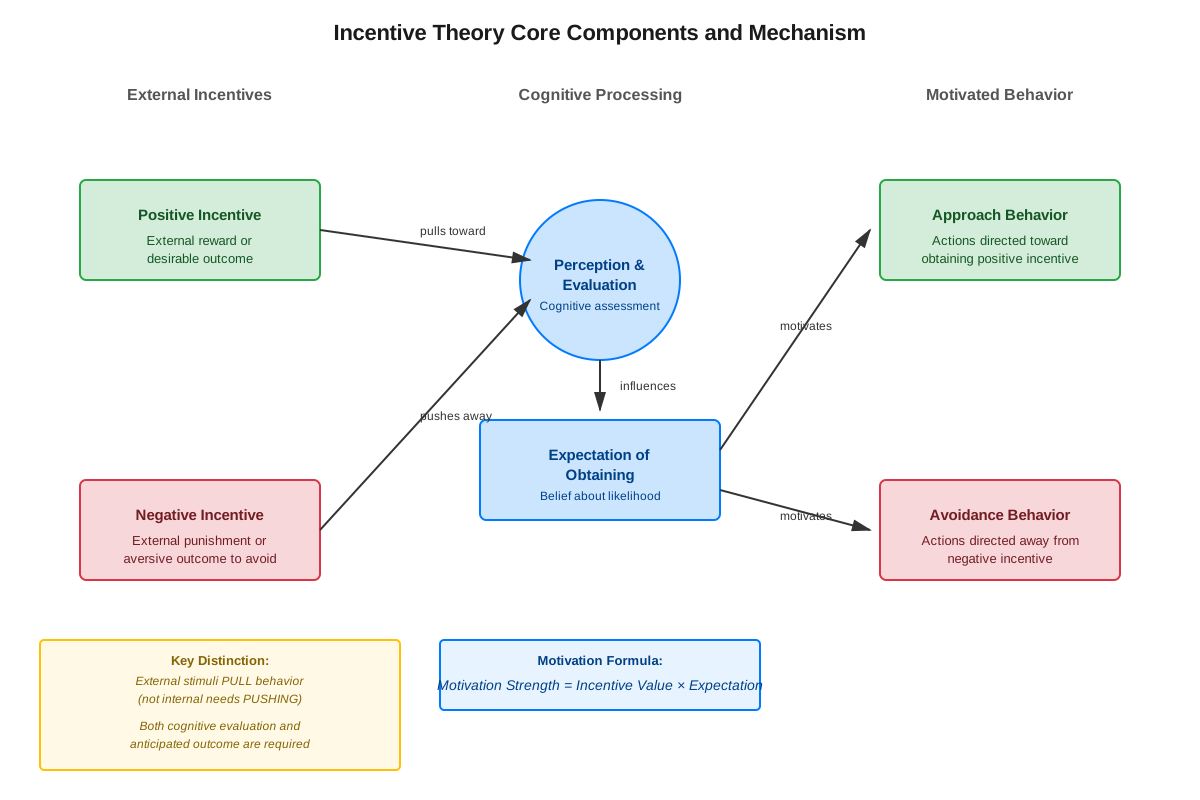
Incentive theory represents a fundamental shift in understanding human motivation by emphasizing the role of external stimuli in driving behavior. Unlike drive-reduction theories that focus on internal physiological needs pushing organisms toward action, incentive theory Psychology proposes that external rewards and punishments pull individuals toward or away from specific behaviors. This theory posits that motivation arises not merely from internal deficits but from the anticipation of positive outcomes (incentives) or the avoidance of negative consequences. The strength of motivation depends on the perceived value of the incentive and the expectation of obtaining it.
Within the context of Emotion Motivation and Stress, incentive theory provides crucial insights into why individuals pursue goals even in the absence of biological needs. For instance, a person who has just eaten a full meal might still be motivated to consume dessert—not because of hunger (a drive), but because of the anticipated pleasure (an incentive). This distinction becomes particularly important when analyzing complex human behaviors that cannot be explained solely through homeostatic mechanisms. The theory integrates cognitive elements by acknowledging that individuals evaluate potential outcomes and make decisions based on expected rewards, connecting motivation to learning, memory, and decision-making processes.
For the MCAT, understanding incentive theory MCAT concepts is essential because questions frequently require students to distinguish between different motivational frameworks and apply them to behavioral scenarios. The exam tests not only definitional knowledge but also the ability to recognize how incentives interact with other psychological constructs such as conditioning, expectancy, and goal-directed behavior. Psychology passages on the MCAT often present research studies or clinical vignettes where students must identify the theoretical framework that best explains observed behaviors, making incentive theory a high-yield topic for achieving competitive scores.
Learning Objectives
- [ ] Define Incentive theory using accurate Psychology terminology
- [ ] Explain why Incentive theory matters for the MCAT
- [ ] Apply Incentive theory to exam-style questions
- [ ] Identify common mistakes related to Incentive theory
- [ ] Connect Incentive theory to related Psychology concepts
- [ ] Distinguish between positive and negative incentives in behavioral scenarios
- [ ] Analyze how incentive value changes based on context and individual differences
- [ ] Evaluate the interaction between incentive theory and other motivational theories
Prerequisites
- Drive-reduction theory: Understanding this contrasting theory helps clarify how incentive theory differs by focusing on external pulls rather than internal pushes
- Classical and operant conditioning: These learning mechanisms explain how incentives acquire their motivational properties through association and reinforcement
- Basic neuroanatomy of reward pathways: Knowledge of dopaminergic systems provides the biological foundation for understanding how incentives affect behavior
- Homeostasis: Familiarity with this concept allows comparison between physiological balance-seeking and goal-directed behavior toward external rewards
Why This Topic Matters
Clinical and Real-World Significance
Incentive theory has profound implications for understanding and modifying human behavior across multiple domains. In clinical psychology, therapists utilize incentive-based interventions to treat conditions ranging from substance use disorders to depression. Understanding what motivates patients—whether monetary rewards, social approval, or personal achievement—enables practitioners to design effective behavioral modification programs. In educational settings, incentive systems (grades, recognition, privileges) shape student engagement and performance. Public health campaigns leverage incentive theory by offering rewards for healthy behaviors such as smoking cessation or weight loss. The theory also explains consumer behavior, workplace productivity, and adherence to medical treatments, making it relevant to multiple MCAT disciplines including sociology and behavioral sciences.
Exam Statistics and Question Types
Incentive theory appears in approximately 3-5% of MCAT Psychology/Sociology section questions, typically integrated within broader passages about motivation, learning, or behavioral change. Questions may present experimental designs comparing incentive-based interventions, clinical vignettes requiring identification of motivational factors, or theoretical scenarios asking students to predict behavior based on incentive manipulation. The topic frequently appears alongside questions about operant conditioning, expectancy-value theory, and goal-setting, requiring students to differentiate between related but distinct concepts.
Common Exam Passage Contexts
MCAT passages featuring incentive theory often include:
- Research studies examining the effects of reward magnitude on task performance
- Clinical trials testing incentive-based interventions for health behavior change
- Sociological analyses of how cultural values influence incentive effectiveness
- Neurobiological investigations of reward processing and dopamine function
- Educational research comparing intrinsic versus extrinsic motivation
- Economic decision-making studies involving risk and reward evaluation
Core Concepts
Definition and Fundamental Principles
Incentive theory is a motivational framework proposing that behavior is primarily driven by the desire to obtain external rewards (positive incentives) or avoid punishments (negative incentives), rather than by internal physiological needs alone. The theory emphasizes the "pull" of environmental stimuli rather than the "push" of internal drives. According to this perspective, the anticipation of a rewarding outcome creates a motivational state that energizes and directs behavior toward goal attainment.
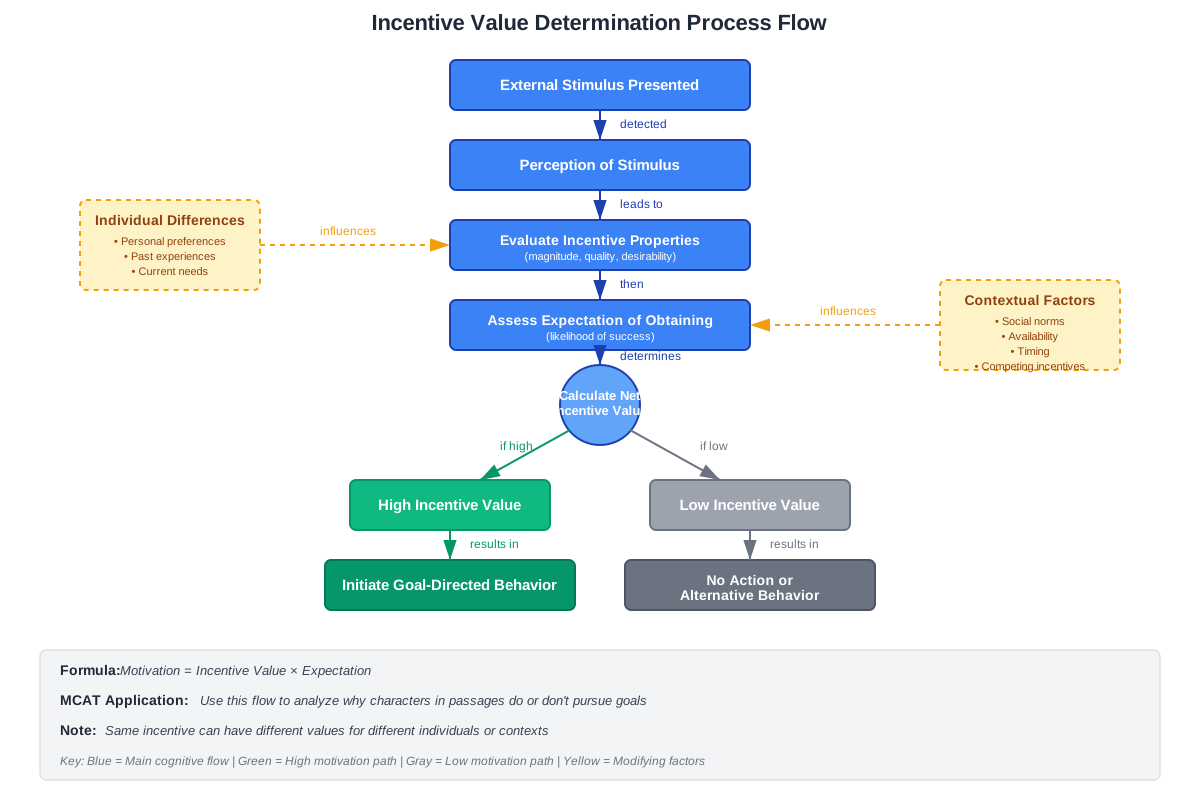
The core principle distinguishes between the incentive (the external object or outcome) and the incentive value (the subjective worth assigned to that incentive by the individual). Incentive value is not fixed; it varies based on individual preferences, past experiences, current physiological states, and contextual factors. For example, money serves as a powerful incentive for most people, but its incentive value increases for someone experiencing financial hardship and decreases for someone who is wealthy.
Positive and Negative Incentives
Incentives can be categorized into two primary types based on their relationship to behavior:
Positive incentives are desirable outcomes that organisms approach and work to obtain. These include:
- Primary reinforcers (food, water, sexual contact)
- Secondary reinforcers (money, grades, social approval)
- Intrinsic rewards (sense of accomplishment, enjoyment)
- Social incentives (praise, recognition, status)
Negative incentives are aversive outcomes that organisms avoid or work to prevent. These include:
- Physical pain or discomfort
- Social rejection or criticism
- Financial loss or penalties
- Failure or embarrassment
The distinction between positive and negative incentives parallels the concepts of positive and negative reinforcement in operant conditioning, but incentive theory focuses on the anticipated outcome rather than the consequence that follows behavior.
Incentive Value and Expectancy
The motivational power of an incentive depends on two critical factors:
- Incentive Value: The subjective desirability or attractiveness of the outcome. This value is influenced by:
- Individual preferences and personality traits
- Cultural and social norms
- Previous experiences with similar incentives
- Current deprivation or satiation states
- Comparison with alternative incentives
- Expectancy: The perceived probability of obtaining the incentive through specific actions. Higher expectancy increases motivation, while low expectancy diminishes it even when incentive value is high.
This relationship is formalized in expectancy-value theory, which proposes that motivation = expectancy × value. Both components must be present for strong motivation; a highly valued incentive with zero expectancy of attainment produces no motivation, just as a certain outcome with no value fails to motivate.
Biological Basis of Incentive Motivation
The neural substrates of incentive motivation involve the mesolimbic dopamine pathway, often called the brain's reward circuit. This pathway includes:
- Ventral tegmental area (VTA): Origin of dopamine neurons
- Nucleus accumbens: Key structure for processing reward and incentive salience
- Prefrontal cortex: Evaluates incentive value and guides goal-directed behavior
- Amygdala: Assigns emotional significance to incentives
Dopamine release in these regions does not simply signal pleasure; rather, it encodes the incentive salience or "wanting" of rewards. This distinction between "wanting" (motivation to obtain) and "liking" (pleasure from consumption) is crucial for understanding addictive behaviors, where dopamine-driven wanting persists even when liking diminishes.
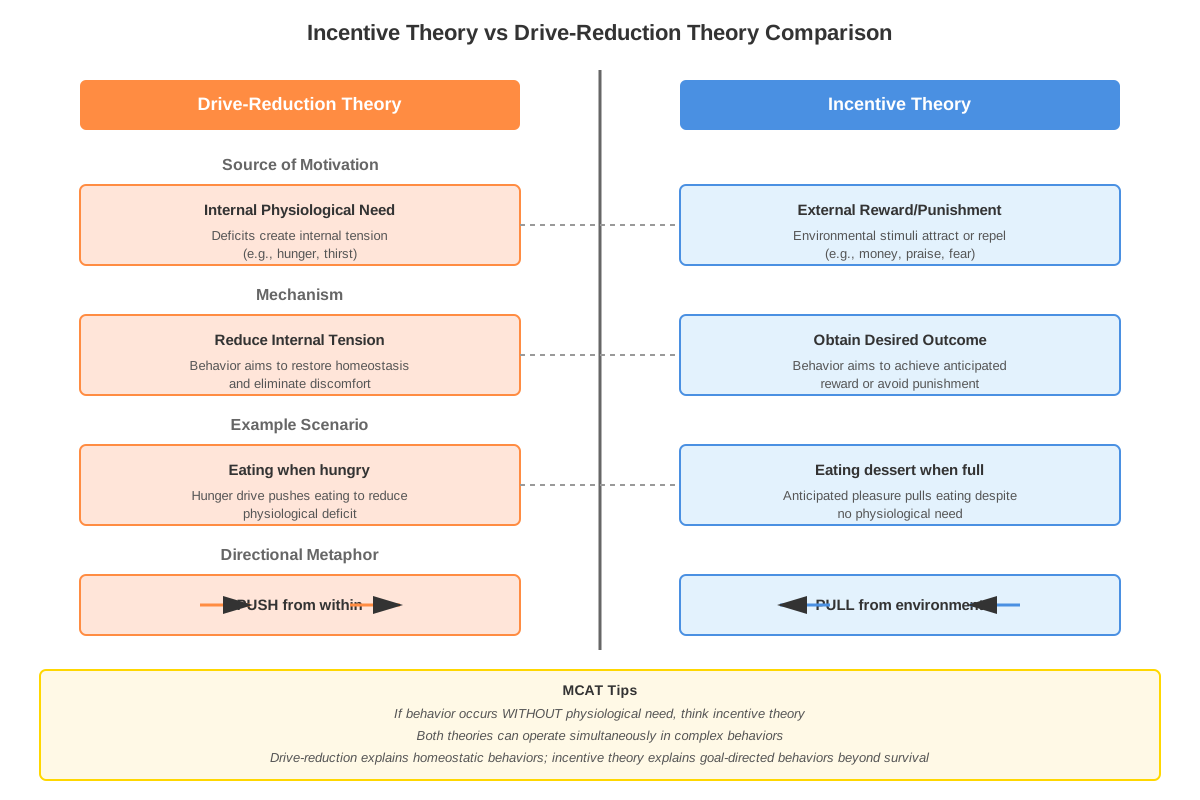
Incentive Theory vs. Drive-Reduction Theory
Understanding the contrast between these theories is essential for MCAT success:
| Feature | Drive-Reduction Theory | Incentive Theory |
|---|---|---|
| Primary focus | Internal physiological needs | External environmental stimuli |
| Mechanism | Tension reduction and homeostasis | Goal pursuit and reward anticipation |
| Direction | Push from within | Pull from without |
| Explains | Behaviors that reduce biological needs | Behaviors that exceed basic needs |
| Limitation | Cannot explain non-homeostatic motivation | Requires learned associations with rewards |
| Example | Eating when hungry to reduce hunger drive | Eating dessert when full because it looks delicious |
Many behaviors involve both drives and incentives working together. For instance, hunger (a drive) makes food more attractive (increases incentive value), while the sight of appetizing food (an incentive) can stimulate appetite even without hunger.
Intrinsic vs. Extrinsic Incentives
Incentives can also be classified based on their source:
Extrinsic incentives are external rewards provided by others or the environment:
- Money, prizes, trophies
- Grades, certificates, credentials
- Praise, recognition, fame
- Avoidance of punishment or criticism
Intrinsic incentives are internal rewards derived from the activity itself:
- Personal satisfaction and enjoyment
- Sense of competence and mastery
- Curiosity and interest
- Alignment with personal values
The overjustification effect demonstrates that providing extrinsic incentives for intrinsically motivated activities can sometimes reduce intrinsic motivation. When people receive external rewards for activities they already enjoy, they may attribute their behavior to the reward rather than their inherent interest, potentially diminishing long-term engagement once rewards cease.
Individual and Cultural Differences in Incentive Value
The effectiveness of specific incentives varies substantially across individuals and cultures:
Individual differences include:
- Personality traits (e.g., high achievers value accomplishment more)
- Age and developmental stage
- Personal history and learned associations
- Current needs and circumstances
Cultural differences include:
- Collectivist cultures may value group harmony and social approval more than individualistic cultures
- Different cultures assign varying importance to material wealth, status, and achievement
- Cultural norms determine which behaviors are rewarded or punished
MCAT questions may present scenarios requiring recognition that incentive effectiveness depends on these contextual factors.
Concept Relationships
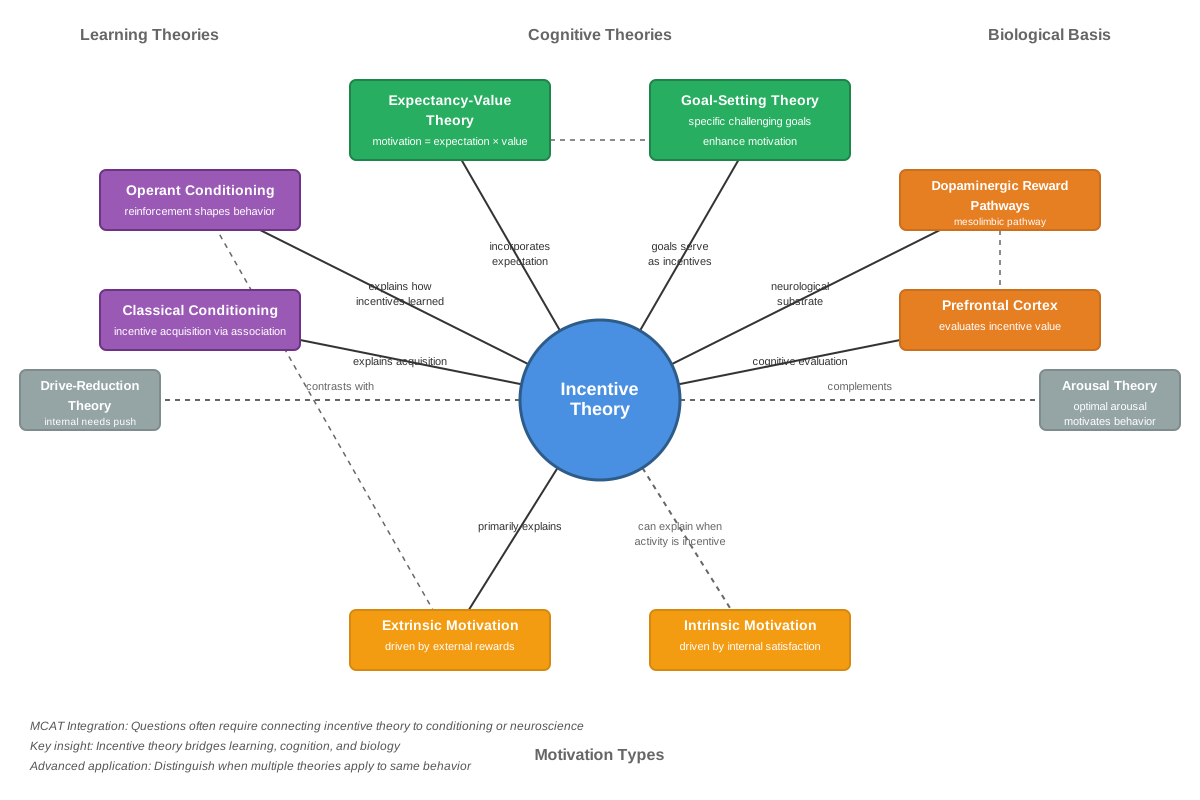
Incentive theory connects to multiple psychological concepts, creating an integrated understanding of motivation and behavior:
Incentive Theory → Operant Conditioning: Incentives function as reinforcers in operant conditioning. Positive incentives serve as positive reinforcers (increasing behavior through reward presentation), while negative incentives relate to punishment and negative reinforcement (increasing behavior through aversive stimulus removal). The learning history with specific incentives determines their motivational power.
Incentive Theory → Expectancy-Value Theory: This relationship is direct and foundational. Expectancy-value theory mathematically formalizes incentive theory by proposing that motivation equals the product of expectancy (probability of success) and value (incentive worth). Both theories emphasize cognitive evaluation of outcomes.
Incentive Theory → Goal-Setting Theory: Incentives often serve as goals that direct behavior. Goal-setting theory extends incentive theory by specifying that specific, challenging goals with clear incentives produce higher performance than vague or easy goals.
Incentive Theory ↔ Drive-Reduction Theory: These theories complement rather than contradict each other. Drives can increase incentive value (hunger makes food more attractive), while incentives can activate drive-like states (seeing food can trigger appetite). Modern understanding integrates both perspectives.
Incentive Theory → Dopamine and Reward Pathways: The biological implementation of incentive motivation occurs through mesolimbic dopamine systems. Understanding this neural basis explains addiction, where drug-related incentives hijack normal reward processing.
Incentive Theory → Self-Determination Theory: This connection addresses the intrinsic-extrinsic incentive distinction. Self-determination theory proposes that intrinsic motivation (driven by internal incentives) produces better outcomes than extrinsic motivation for complex tasks requiring creativity and persistence.
Incentive Theory → Social Psychology: Social incentives (approval, status, belonging) powerfully motivate behavior. Understanding incentive theory helps explain conformity, obedience, and group dynamics where social rewards and punishments shape individual actions.
Quick check — test yourself on Incentive theory so far.
Try Flashcards →High-Yield Facts
⭐ Incentive theory proposes that external rewards and punishments pull behavior rather than internal drives pushing behavior
⭐ Incentive value is subjective and varies based on individual differences, context, and current states of deprivation or satiation
⭐ The mesolimbic dopamine pathway, particularly the nucleus accumbens, mediates incentive motivation and reward anticipation
⭐ Expectancy-value theory formalizes incentive theory: Motivation = Expectancy × Value, requiring both components for strong motivation
⭐ The overjustification effect occurs when extrinsic incentives reduce intrinsic motivation for previously enjoyable activities
- Positive incentives are desirable outcomes organisms approach; negative incentives are aversive outcomes organisms avoid
- Incentive theory better explains behaviors that exceed basic biological needs compared to drive-reduction theory
- Dopamine encodes "wanting" (incentive salience) rather than "liking" (pleasure), explaining addiction where wanting persists without liking
- Cultural and individual differences significantly affect which incentives are most motivating in specific contexts
- Incentives function as reinforcers in operant conditioning, with learned associations determining their motivational power
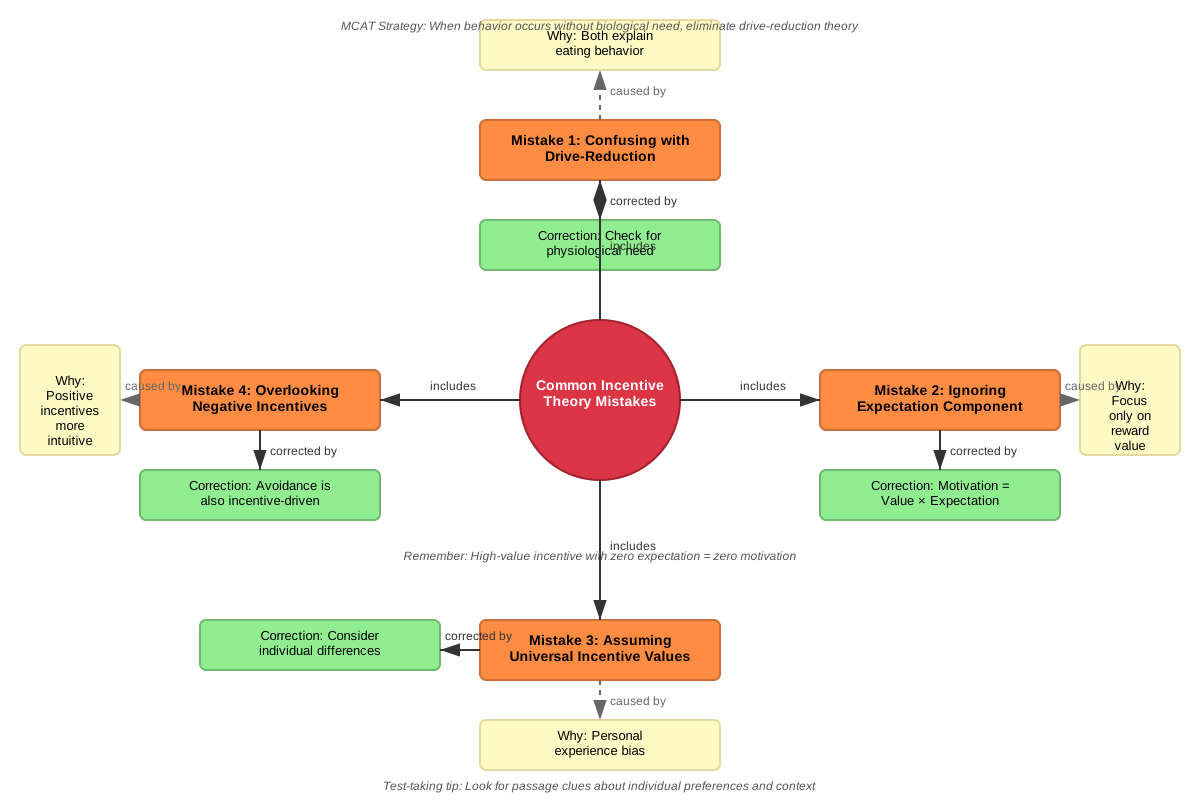
Common Misconceptions
Misconception: Incentive theory and drive-reduction theory are mutually exclusive and contradictory.
Correction: These theories are complementary. Drive-reduction explains homeostatic behaviors driven by internal needs, while incentive theory explains goal-directed behaviors driven by external rewards. Many behaviors involve both mechanisms working together, such as when hunger (drive) increases the incentive value of food.
Misconception: All incentives work equally well for all people in all situations.
Correction: Incentive value is highly subjective and context-dependent. What motivates one person may not motivate another due to individual differences in personality, values, and experiences. Cultural background, current circumstances, and satiation states all influence incentive effectiveness.
Misconception: Dopamine release equals pleasure or happiness.
Correction: Dopamine primarily signals incentive salience or "wanting" rather than "liking." The dopamine system motivates approach behavior and goal pursuit, but the actual pleasure from rewards involves different neurotransmitter systems (e.g., opioids). This distinction explains why addicted individuals continue seeking drugs (high wanting) despite reduced pleasure (low liking).
Misconception: Adding external rewards always increases motivation.
Correction: The overjustification effect demonstrates that providing extrinsic incentives for intrinsically motivated activities can actually decrease motivation. When people attribute their behavior to external rewards rather than inherent interest, removing those rewards may eliminate the behavior entirely.
Misconception: Incentive theory only applies to simple, concrete rewards like food or money.
Correction: Incentive theory encompasses a wide range of motivators including abstract social incentives (approval, status, belonging), achievement incentives (mastery, competence), and intrinsic incentives (curiosity, enjoyment). Complex human behaviors often involve multiple types of incentives operating simultaneously.
Worked Examples
Example 1: Distinguishing Motivational Theories
Scenario: A research study examines why college students attend optional review sessions. Group A students report attending because they feel anxious about the upcoming exam and want to reduce their worry. Group B students report attending because they want to earn the extra credit points offered. Group C students report attending because they find the material genuinely interesting and enjoy learning more about it.
Question: Which motivational theory best explains each group's behavior?
Analysis:
Group A is best explained by drive-reduction theory. These students experience an internal state of tension (anxiety) that creates discomfort. Attending the review session is motivated by the desire to reduce this internal drive state and return to homeostasis. The behavior is pushed by internal discomfort rather than pulled by external rewards.
Group B is best explained by incentive theory. These students are motivated by an external reward (extra credit points) that pulls their behavior. The incentive (points) has value because it contributes to their grade, and they expect to obtain it by attending. This represents extrinsic motivation driven by anticipated external outcomes.
Group C is also explained by incentive theory, but specifically by intrinsic incentives. These students are pulled by the internal rewards of enjoyment and intellectual satisfaction. The activity itself serves as the incentive, demonstrating that incentive theory encompasses both extrinsic and intrinsic motivators.
Key Takeaway: This example illustrates that the same behavior (attending review sessions) can be motivated by different mechanisms. MCAT questions often require identifying which theory best fits the described motivation rather than the observed behavior.
Example 2: Applying Expectancy-Value Principles
Scenario: A pharmaceutical company wants to increase medication adherence among patients with chronic conditions. They design three interventions:
- Intervention A: Patients receive $100 for each month of perfect adherence (high value, high expectancy)
- Intervention B: Patients are entered into a lottery to win $10,000 if they maintain perfect adherence for one year (very high value, very low expectancy)
- Intervention C: Patients receive daily text message reminders emphasizing health benefits (moderate value, high expectancy)
Question: Based on incentive theory and expectancy-value principles, predict which intervention will be most effective and explain your reasoning.
Analysis:
According to expectancy-value theory, motivation = expectancy × value. Both components must be substantial for strong motivation.
Intervention A provides both high expectancy (patients can reasonably expect to earn $100 each month if they adhere) and high value ($100 is meaningful to most people). The monthly timeframe makes the reward feel attainable, and the guaranteed payment (not probabilistic) maximizes expectancy. This intervention should produce strong motivation.
Intervention B offers very high value ($10,000) but very low expectancy. Patients must maintain perfect adherence for an entire year, and even then, they only have a chance of winning. The low probability of success significantly reduces motivation despite the large reward. Many patients may not even attempt adherence because the goal seems unattainable.
Intervention C provides moderate value (health benefits are important but abstract and delayed) with high expectancy (receiving reminders is certain). However, the incentive value of "health benefits" may be insufficient for many patients, especially when those benefits are distant and intangible.
Prediction: Intervention A should be most effective because it optimally balances high expectancy with high value. The monthly structure provides frequent reinforcement, maintaining motivation over time.
Key Takeaway: Effective incentive-based interventions must consider both the value of the incentive and the perceived probability of obtaining it. MCAT questions may present intervention designs and ask students to predict effectiveness based on motivational principles.
Exam Strategy
Approaching MCAT Questions on Incentive Theory
When encountering questions about motivation, use this systematic approach:
- Identify the source of motivation: Is the behavior driven by internal states (drives) or external outcomes (incentives)? Look for language indicating anticipation of rewards or avoidance of punishments.
- Classify the incentive type: Determine whether the scenario involves positive incentives (approach behavior) or negative incentives (avoidance behavior), and whether incentives are intrinsic or extrinsic.
- Evaluate expectancy and value: If the question involves predicting behavior or intervention effectiveness, assess both the perceived probability of obtaining the incentive and its subjective worth to the individual.
- Consider individual and cultural context: Be alert for information about personal characteristics, cultural background, or situational factors that might influence incentive value.
Trigger Words and Phrases
Watch for these key terms that signal incentive theory is relevant:
- "Motivated by the prospect of..."
- "Anticipation of reward"
- "External reward" or "external punishment"
- "Incentive value"
- "Goal-directed behavior"
- "Reward system" or "dopamine pathway"
- "Extrinsic motivation"
- "Pulled toward" (vs. "pushed by" for drives)
Process of Elimination Tips
When choosing between answer choices:
- Eliminate drive-reduction answers if the behavior exceeds basic biological needs or occurs in the absence of deprivation
- Eliminate incentive theory answers if the scenario emphasizes internal tension states or homeostatic imbalance without mention of external outcomes
- Eliminate answers confusing reinforcement with incentive: Reinforcement refers to consequences that follow behavior; incentives are anticipated outcomes that precede behavior
- Eliminate answers that ignore expectancy: If an answer suggests high motivation despite zero probability of success, it likely misapplies incentive theory
Time Allocation Advice
Incentive theory questions typically appear as:
- Discrete questions (30-45 seconds): Quickly identify whether the scenario describes drives or incentives
- Passage-based questions (60-90 seconds): Integrate information from the passage about experimental design or theoretical framework before selecting answers
Don't overthink these questions. If a scenario clearly describes behavior motivated by anticipated external rewards, incentive theory is likely correct even if other theories could partially apply.
Memory Techniques
Mnemonic for Incentive Theory Core Principles
"PAVE" captures essential elements:
- Pull (external stimuli pull behavior, unlike drives that push)
- Anticipation (motivation comes from expecting rewards)
- Value (subjective worth of the incentive matters)
- Expectancy (perceived probability of obtaining the reward)
Visualization Strategy
Picture a carrot on a stick held in front of a person:
- The carrot represents the incentive (external reward)
- The person moving forward represents motivated behavior
- The distance to the carrot represents expectancy (closer = higher expectancy)
- The size and appeal of the carrot represents incentive value
This image captures the "pull" nature of incentive motivation and helps distinguish it from drive-reduction (which would be visualized as discomfort pushing from behind).
Acronym for Types of Incentives
"PENS" for incentive categories:
- Positive (approach rewards)
- Extrinsic (external rewards)
- Negative (avoid punishments)
- Social (approval, status, belonging)
Distinguishing Theories Mnemonic
"Drive PUSHES, Incentive PULLS"
This simple phrase captures the fundamental distinction between drive-reduction theory (internal states push behavior) and incentive theory (external rewards pull behavior).
Summary
Incentive theory represents a crucial framework for understanding motivation on the MCAT, emphasizing that behavior is driven by the anticipation of external rewards or the avoidance of punishments rather than solely by internal physiological needs. The theory proposes that incentives "pull" behavior through their subjective value and the expectancy of obtaining them, contrasting with drive-reduction theory's focus on internal "pushes." Key principles include the distinction between positive and negative incentives, the role of expectancy-value calculations in determining motivation strength, and the biological basis in mesolimbic dopamine pathways. Incentive value varies based on individual differences, cultural context, and current circumstances, making some incentives more effective than others for specific people in particular situations. The overjustification effect demonstrates that extrinsic incentives can sometimes undermine intrinsic motivation. For MCAT success, students must distinguish incentive theory from related concepts like drive-reduction and reinforcement, recognize how expectancy and value interact to produce motivation, and apply these principles to predict behavior in experimental and clinical scenarios.
Key Takeaways
- Incentive theory explains motivation through external rewards and punishments that pull behavior, contrasting with drive-reduction theory's internal pushes
- Motivation strength depends on both incentive value (subjective worth) and expectancy (perceived probability of obtaining the reward)
- The mesolimbic dopamine pathway, especially the nucleus accumbens, mediates incentive motivation by encoding "wanting" rather than "liking"
- Incentives include both extrinsic rewards (money, grades, social approval) and intrinsic rewards (enjoyment, mastery, curiosity)
- The overjustification effect shows that adding extrinsic incentives to intrinsically motivated activities can reduce internal motivation
- Individual and cultural differences significantly influence which incentives are most effective in motivating specific behaviors
- MCAT questions require distinguishing incentive theory from drive-reduction theory and applying expectancy-value principles to predict behavioral outcomes
Related Topics
Operant Conditioning: Incentive theory connects directly to reinforcement principles, as incentives function as reinforcers that shape behavior through consequences. Mastering incentive theory provides foundation for understanding how rewards and punishments modify behavior systematically.
Self-Determination Theory: This advanced motivational framework builds on the intrinsic-extrinsic incentive distinction, proposing that autonomy, competence, and relatedness needs drive optimal motivation. Understanding incentive theory enables deeper analysis of what makes certain incentives more satisfying than others.
Expectancy Theory: This organizational psychology concept formalizes the expectancy-value relationship in workplace contexts, explaining employee motivation through expectancy, instrumentality, and valence. Incentive theory provides the foundational concepts for this applied framework.
Neurobiology of Reward: Detailed study of dopaminergic pathways, including the ventral tegmental area, nucleus accumbens, and prefrontal cortex, explains the biological mechanisms underlying incentive motivation and addiction.
Behavioral Economics: This interdisciplinary field applies incentive theory principles to economic decision-making, examining how people evaluate costs, benefits, and probabilities when choosing between alternatives.
Practice CTA
Now that you've mastered the core concepts of incentive theory, it's time to solidify your understanding through active practice. Complete the practice questions to test your ability to distinguish incentive theory from related concepts, apply expectancy-value principles to novel scenarios, and analyze experimental designs involving motivational interventions. Use the flashcards to reinforce high-yield facts and ensure rapid recall during timed exam conditions. Remember, understanding motivation theory isn't just about memorizing definitions—it's about recognizing how these principles explain real human behavior in the complex scenarios you'll encounter on test day. Your investment in mastering this material will pay dividends across multiple MCAT passages and questions. You've got this!
Sign up free to keep reading
Create a free AnvayaPrep account to finish this MCAT guide on Incentive theory — plus flashcards and practice questions.