Overview
Self-determination theory (SDT) is a comprehensive framework in Psychology that examines human motivation, personality development, and well-being through the lens of innate psychological needs. Developed by psychologists Edward Deci and Richard Ryan in the 1980s, this theory posits that humans possess three fundamental psychological needs—autonomy, competence, and relatedness—that must be satisfied for optimal psychological growth, internalized motivation, and mental health. Unlike traditional behaviorist approaches that emphasize external rewards and punishments, Self-determination theory distinguishes between different types of motivation based on the degree to which behaviors are self-endorsed versus externally controlled. This distinction between intrinsic motivation (engaging in activities for inherent satisfaction) and various forms of extrinsic motivation (engaging in activities for separable outcomes) provides a nuanced understanding of why people behave as they do.
For the MCAT, Self-determination theory represents a critical framework within the Emotion Motivation and Stress unit of the Psychology section. The MCAT frequently tests students' ability to distinguish between intrinsic and extrinsic motivation, identify the three basic psychological needs, and apply SDT principles to clinical scenarios, educational settings, and health behavior change contexts. Questions may present passages about patient adherence to medical treatments, student learning environments, workplace productivity, or lifestyle modifications, requiring test-takers to recognize how autonomy support, competence-building, and social connection influence motivation and outcomes.
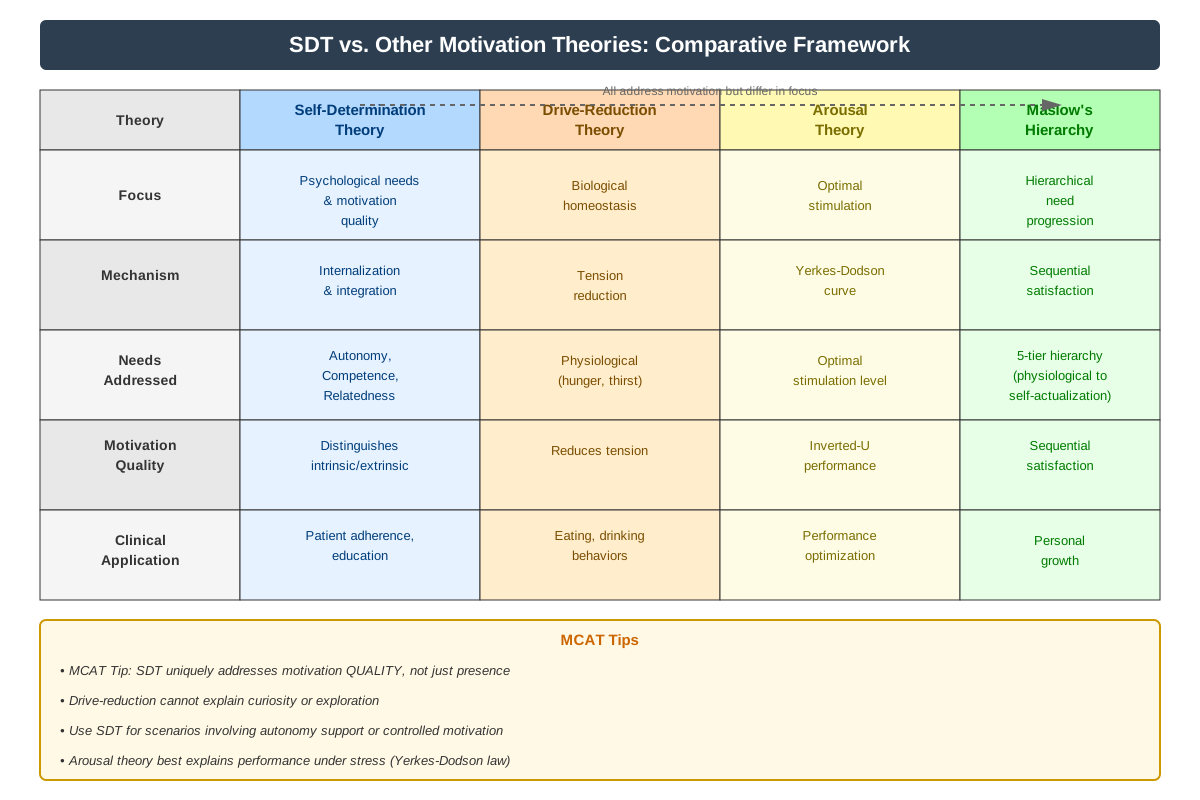
Self-determination theory connects to broader psychological concepts including drive-reduction theory, arousal theory, Maslow's hierarchy of needs, and cognitive evaluation theory. While drive-reduction theory focuses on biological homeostasis and arousal theory emphasizes optimal stimulation levels, SDT specifically addresses psychological needs and the quality of motivation. Understanding SDT enables students to analyze complex motivational scenarios that appear throughout the MCAT's Psychological, Social, and Biological Foundations of Behavior section, particularly in passages examining health behaviors, educational achievement, therapeutic relationships, and social functioning.
Learning Objectives
- [ ] Define Self-determination theory using accurate Psychology terminology
- [ ] Explain why Self-determination theory matters for the MCAT
- [ ] Apply Self-determination theory to exam-style questions
- [ ] Identify common mistakes related to Self-determination theory
- [ ] Connect Self-determination theory to related Psychology concepts
- [ ] Differentiate between the six types of motivation along the self-determination continuum
- [ ] Analyze how environmental factors support or thwart the three basic psychological needs
- [ ] Evaluate the impact of rewards on intrinsic motivation using cognitive evaluation theory principles
Prerequisites
- Basic understanding of motivation theories: Familiarity with the concept that motivation drives behavior provides context for understanding SDT's unique contribution to motivational psychology
- Intrinsic vs. extrinsic motivation distinction: Knowing the fundamental difference between internal and external motivators forms the foundation for SDT's more nuanced motivational continuum
- Behavioral psychology concepts: Understanding reinforcement and punishment helps contrast SDT's organismic approach with traditional behaviorist perspectives
- Basic needs concepts: Awareness that humans have psychological as well as physiological needs contextualizes SDT's focus on autonomy, competence, and relatedness
Why This Topic Matters
Self-determination theory has profound clinical and real-world significance across multiple domains tested on the MCAT. In healthcare settings, SDT principles predict patient adherence to treatment regimens, engagement in preventive health behaviors, and successful lifestyle modifications. Research consistently demonstrates that when healthcare providers support patient autonomy (offering choices, providing rationale for treatments, acknowledging patient perspectives), patients show greater medication adherence, better glycemic control in diabetes, more successful smoking cessation, and improved mental health outcomes. Understanding SDT enables future physicians to create therapeutic relationships that foster internalized motivation rather than mere compliance.
On the MCAT, Self-determination theory appears with moderate frequency in the Psychological, Social, and Biological Foundations of Behavior section, typically accounting for 2-4 questions per exam administration. Questions most commonly appear in two formats: (1) passage-based questions presenting research studies or clinical scenarios requiring identification of SDT components, and (2) discrete questions testing direct knowledge of the three basic needs, types of motivation, or effects of rewards on intrinsic motivation. The AAMC has specifically included SDT in the official content outline under "Individual influences on behavior," making it fair game for explicit testing.
Common exam presentations include passages describing educational interventions (comparing autonomy-supportive vs. controlling teaching styles), workplace motivation studies (examining how job characteristics affect employee engagement), health behavior change programs (analyzing why some interventions produce lasting change while others fail), and developmental psychology research (exploring how parenting styles affect children's motivation and well-being). Test-takers must recognize SDT principles embedded in these contexts and apply theoretical knowledge to predict outcomes, explain mechanisms, or identify which interventions would be most effective according to SDT principles.
Core Concepts
Fundamental Principles of Self-Determination Theory
Self-determination theory is an organismic-dialectical approach to human motivation that views people as active organisms with inherent growth tendencies and innate psychological needs. The theory proposes that humans naturally move toward greater complexity, integration, and coherence in their psychological development, but this natural tendency requires supportive environmental conditions. When the social environment satisfies basic psychological needs, people experience autonomous motivation, effective functioning, and psychological well-being. Conversely, when environments thwart these needs, people experience controlled motivation, diminished performance, and psychological distress.
The theory distinguishes itself from other motivational frameworks by emphasizing the quality rather than merely the quantity of motivation. Traditional approaches often treat motivation as a unitary concept—people are either motivated or not motivated. SDT recognizes that two individuals might be equally motivated to perform a behavior but for very different reasons, and these different reasons have profound implications for persistence, performance quality, and psychological well-being.
The Three Basic Psychological Needs
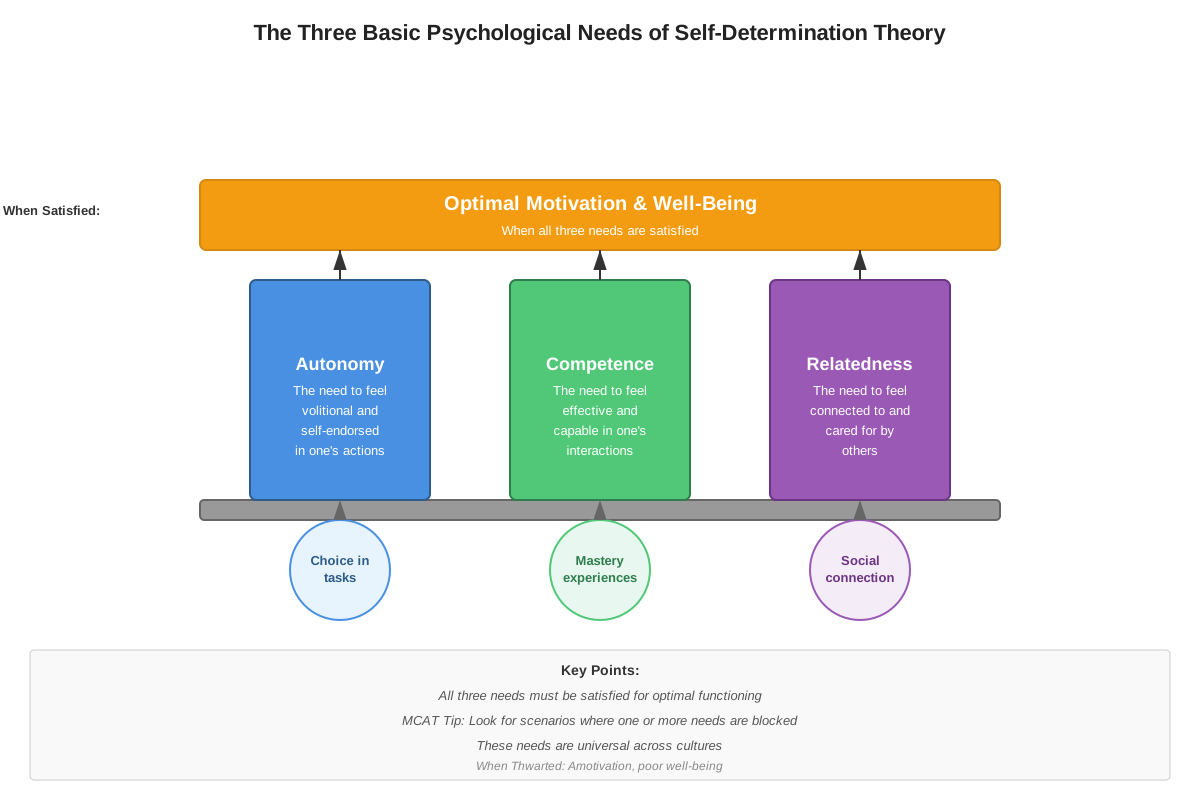
Self-determination theory identifies three innate, universal psychological needs that are essential for optimal functioning across all cultures and developmental stages:
Autonomy refers to the need to experience behavior as volitional and self-endorsed, to be the perceived origin of one's actions rather than a pawn controlled by external forces. Autonomy does not mean independence or separateness from others; rather, it concerns experiencing a sense of willingness and choice in one's actions. When the autonomy need is satisfied, people feel that their behaviors reflect their authentic interests and values. Autonomy is supported by environments that offer choices, provide meaningful rationales for requests, acknowledge feelings and perspectives, and minimize controlling language and pressure. Conversely, autonomy is thwarted by coercion, pressure, controlling rewards, surveillance, and imposed goals.
Competence represents the need to feel effective in producing desired outcomes and experiencing mastery in one's interactions with the environment. People need to feel capable and confident in their abilities to meet environmental challenges. Competence is fostered through optimal challenges (tasks that are neither too easy nor too difficult), positive feedback that is informational rather than controlling, opportunities to develop skills, and environments that provide structure and clear expectations. Competence is undermined by tasks that are too difficult or too easy, negative feedback, lack of structure, and unpredictable environments.
Relatedness encompasses the need to feel connected to others, to experience caring for and being cared for by others, and to have a sense of belonging with individuals and communities. Humans are fundamentally social beings who need warm, trusting relationships and a sense that they matter to others. Relatedness is nurtured through responsive relationships, expressions of care and concern, opportunities for meaningful interaction, and inclusive environments. Relatedness is thwarted by rejection, neglect, interpersonal conflict, and social isolation.
| Basic Need | Definition | Environmental Supports | Thwarting Conditions |
|---|---|---|---|
| Autonomy | Experiencing volition and self-endorsement of behavior | Choice, meaningful rationale, acknowledgment of perspective | Coercion, controlling rewards, pressure, imposed goals |
| Competence | Feeling effective and capable | Optimal challenges, informational feedback, skill development | Tasks too difficult/easy, negative feedback, lack of structure |
| Relatedness | Feeling connected and belonging | Responsive relationships, expressions of care, inclusion | Rejection, neglect, conflict, isolation |
The Self-Determination Continuum
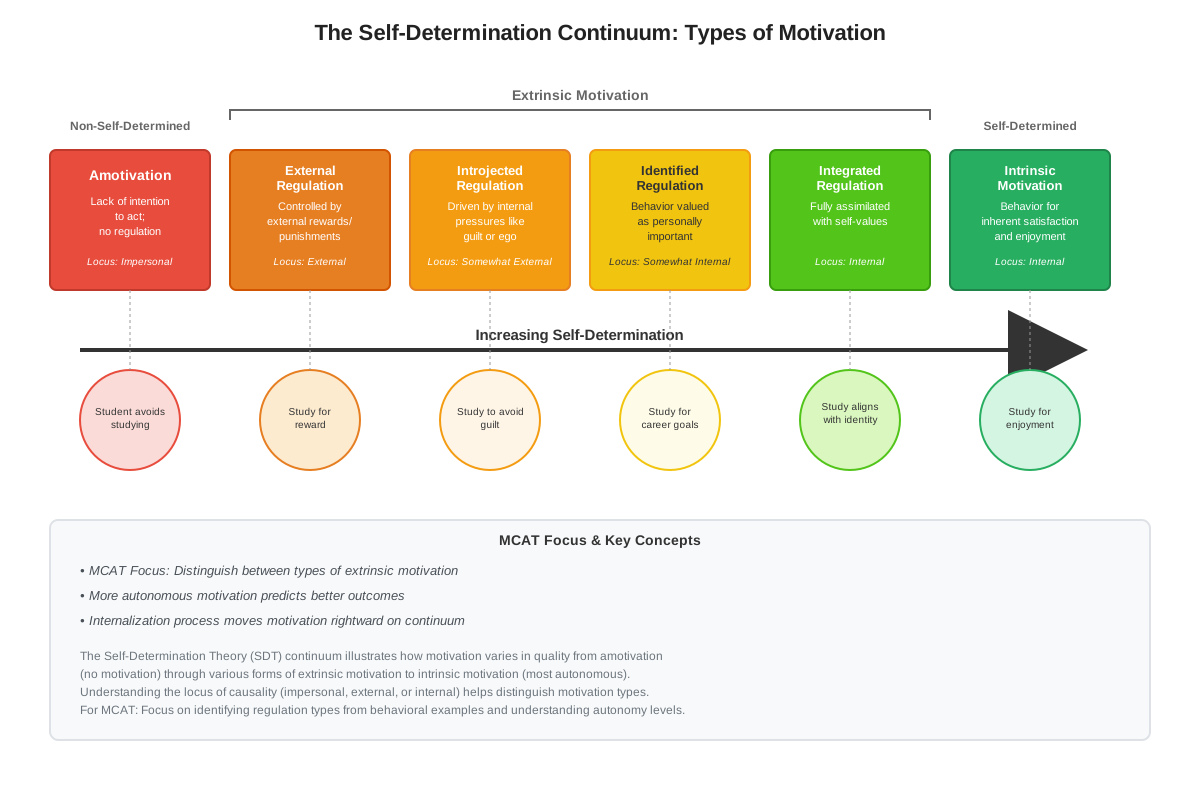
Self-determination theory proposes a continuum of motivation ranging from amotivation (complete lack of motivation) through various forms of extrinsic motivation to intrinsic motivation (the most autonomous form). This continuum reflects the degree to which behaviors are self-determined versus controlled by external contingencies:
Amotivation represents the absence of intention to act. Amotivated individuals either do not act at all or act without intent, going through the motions without purpose. Amotivation results from not valuing an activity, not feeling competent to perform it, or not believing it will yield desired outcomes.
External regulation is the least autonomous form of extrinsic motivation, where behavior is performed to satisfy external demands or obtain externally imposed rewards or avoid punishments. The perceived locus of causality is entirely external. Example: A student studies only to avoid parental punishment or to receive monetary rewards.
Introjected regulation involves taking in external regulations but not fully accepting them as one's own. Behaviors are performed to avoid guilt, shame, or anxiety, or to attain ego enhancements like pride. The regulation has been partially internalized but remains somewhat external to the self. Example: A person exercises to avoid feeling guilty rather than because they value health.
Identified regulation represents a more autonomous form of extrinsic motivation where the person has identified with the value of a behavior and accepted it as personally important. The behavior is performed because it serves valued goals, even if the activity itself is not inherently enjoyable. Example: A medical student studies organic chemistry not because it's fun but because they recognize its importance for their career goals.
Integrated regulation is the most autonomous form of extrinsic motivation, occurring when identified regulations have been fully assimilated with other aspects of the self. The behavior is congruent with one's values and needs, though still performed for instrumental reasons rather than inherent enjoyment. Example: A physician maintains work-life balance because it aligns with their integrated values of professional excellence and family commitment.
Intrinsic motivation represents engaging in activities for inherent satisfaction, enjoyment, or interest rather than for separable consequences. Intrinsically motivated behaviors are performed for their own sake. Example: A researcher conducts experiments because they find the process fascinating and intellectually stimulating.
Cognitive Evaluation Theory
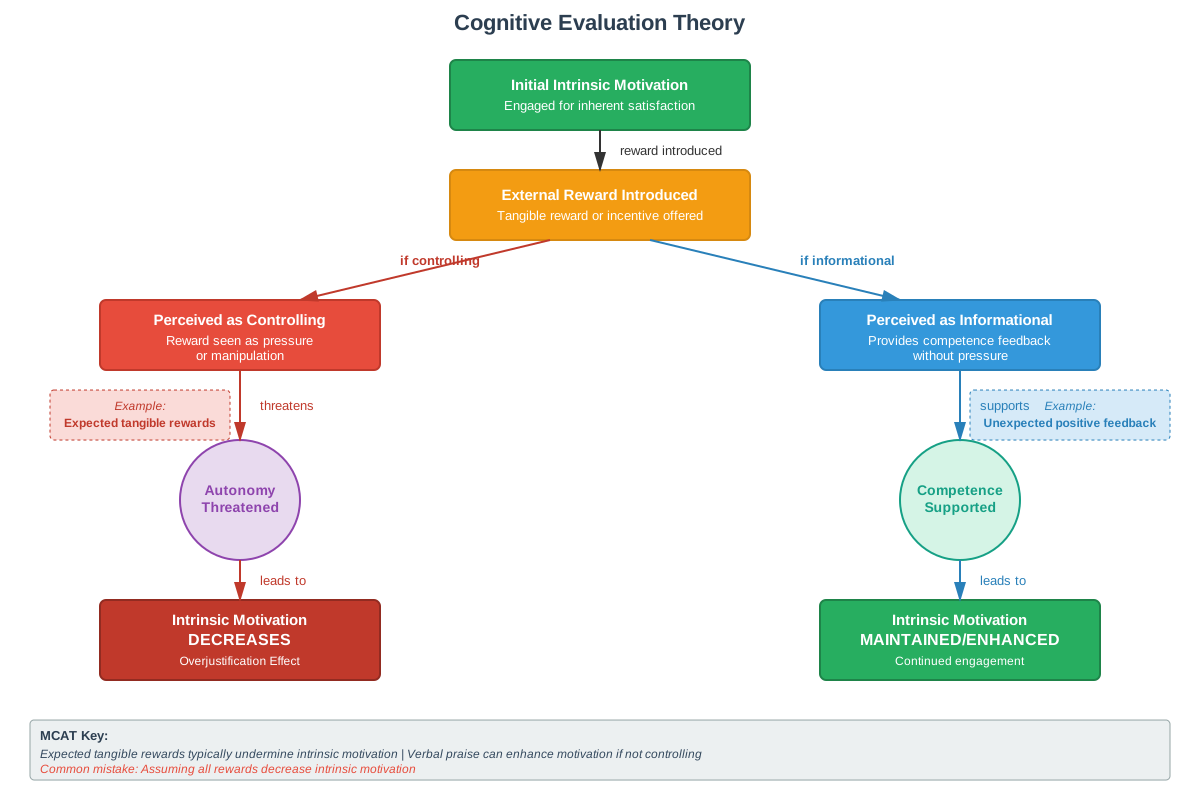
Cognitive evaluation theory (CET) is a sub-theory within SDT that specifically addresses factors affecting intrinsic motivation. CET proposes that external events (rewards, feedback, deadlines) can affect intrinsic motivation through their impact on perceived autonomy and competence. This theory explains the sometimes paradoxical effects of rewards on motivation.
CET distinguishes between the controlling aspect and the informational aspect of external events. When an external event is experienced as controlling (pressuring toward specific outcomes), it diminishes perceived autonomy and decreases intrinsic motivation. When an external event is experienced as informational (providing feedback about competence without pressure), it can enhance perceived competence and maintain or increase intrinsic motivation.
The classic finding from CET research is that tangible rewards expected and contingent on task performance tend to undermine intrinsic motivation—the "overjustification effect." When people receive expected rewards for activities they initially found interesting, they come to see their behavior as externally controlled rather than self-determined, leading to decreased intrinsic motivation once rewards are removed. However, unexpected rewards or verbal praise that is perceived as informational rather than controlling can enhance intrinsic motivation by supporting competence without undermining autonomy.
Organismic Integration Theory
Organismic integration theory (OIT) is another sub-theory of SDT that details the different forms of extrinsic motivation and the contextual factors that promote or hinder internalization and integration of behavioral regulations. Internalization is the process through which individuals transform external regulations into personally endorsed values and self-regulations. Integration refers to the further process by which internalized regulations become fully assimilated with the self.
OIT proposes that internalization occurs most readily when the three basic needs are satisfied. Autonomy support facilitates internalization by helping people understand the personal relevance of behaviors and feel volitional in adopting them. Competence support enables internalization by helping people feel capable of performing the behavior. Relatedness support promotes internalization by creating a sense that the behavior connects one to valued others or communities.
Concept Relationships
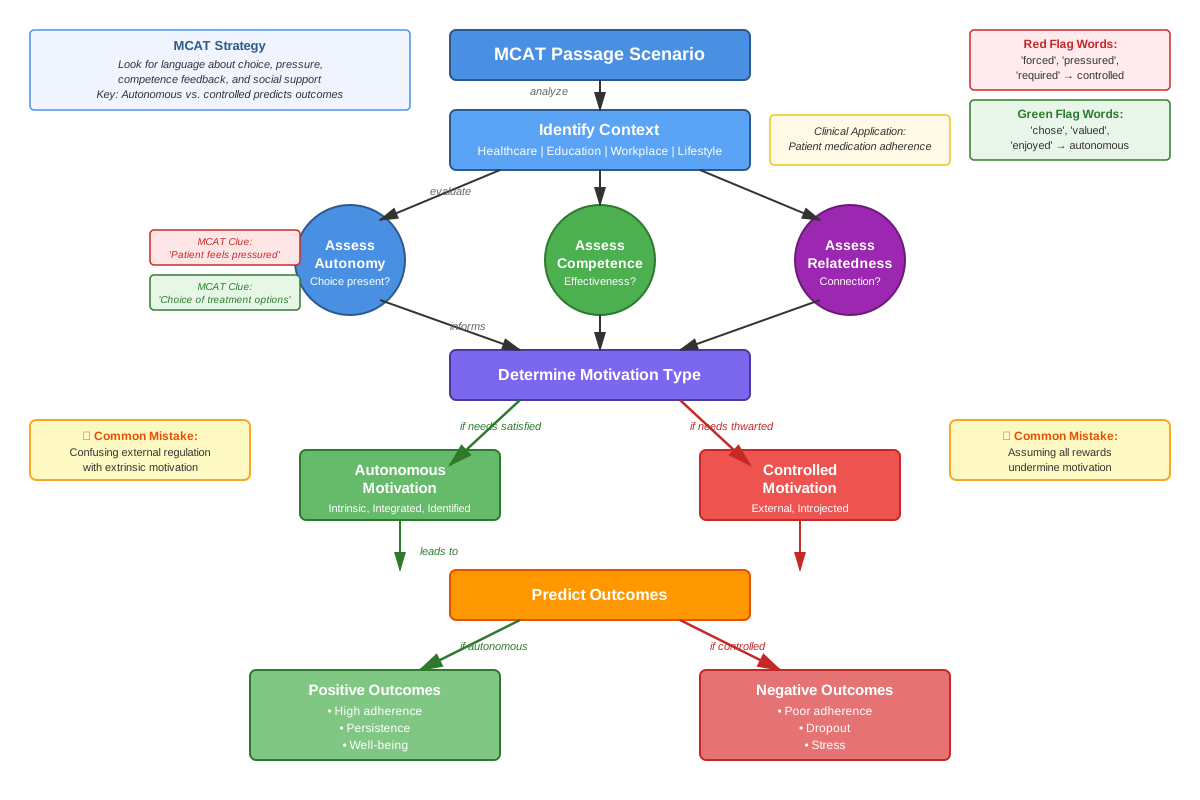
The concepts within Self-determination theory form an integrated framework where the three basic psychological needs serve as the foundation for understanding the quality of motivation along the self-determination continuum. Autonomy, competence, and relatedness → determine the degree of internalization → which produces different types of motivation → which predict behavioral outcomes and well-being.
When environments satisfy all three basic needs, individuals are more likely to internalize external regulations, moving from external regulation toward identified and integrated regulation, or to maintain intrinsic motivation for inherently interesting activities. Conversely, need-thwarting environments prevent internalization, keeping motivation at the level of external or introjected regulation, or leading to amotivation.
Cognitive evaluation theory connects to the broader SDT framework by explaining how external events affect the autonomy and competence needs specifically in the context of intrinsically motivated activities. The controlling versus informational aspects of rewards and feedback → affect perceived autonomy and competence → which influence intrinsic motivation.
Self-determination theory relates to prerequisite concepts by building upon and refining the basic intrinsic-extrinsic motivation distinction. While traditional views treated these as dichotomous categories, SDT reveals a continuum of extrinsic motivation types varying in their degree of self-determination. SDT also connects to Maslow's hierarchy of needs by proposing psychological needs, but differs by emphasizing autonomy, competence, and relatedness as universal and equally important rather than hierarchically arranged.
SDT relates to stress and coping by explaining how need satisfaction versus need frustration affects psychological well-being and stress responses. When basic needs are chronically thwarted, individuals experience greater stress, poorer coping, and increased risk for psychopathology. SDT connects to social psychology through its emphasis on how social contexts and relationships affect motivation and development. The theory also relates to health psychology by explaining health behavior change and maintenance through the lens of autonomous versus controlled motivation.
Quick check — test yourself on Self determination theory so far.
Try Flashcards →High-Yield Facts
⭐ Self-determination theory identifies three universal psychological needs: autonomy (experiencing volition), competence (feeling effective), and relatedness (feeling connected to others).
⭐ Intrinsic motivation involves engaging in activities for inherent satisfaction, while extrinsic motivation involves engaging in activities for separable outcomes.
⭐ The self-determination continuum from least to most autonomous: amotivation → external regulation → introjected regulation → identified regulation → integrated regulation → intrinsic motivation.
⭐ Tangible rewards expected and contingent on task performance typically undermine intrinsic motivation (overjustification effect) by shifting perceived locus of causality from internal to external.
⭐ Autonomy support (providing choice, rationale, and acknowledging perspective) enhances internalization of motivation and promotes autonomous regulation.
- Cognitive evaluation theory explains how external events affect intrinsic motivation through their controlling versus informational aspects.
- Identified regulation occurs when a person recognizes the personal importance of a behavior even if they don't find it inherently enjoyable.
- Introjected regulation involves performing behaviors to avoid guilt or shame or to attain ego enhancements like pride.
- Integrated regulation represents fully assimilated extrinsic motivation that is congruent with one's values and sense of self.
- Environments that satisfy basic psychological needs promote autonomous motivation, effective performance, persistence, creativity, and psychological well-being.
- Need thwarting (actively undermining autonomy, competence, or relatedness) produces more detrimental effects than mere need neglect.
- Relatedness is particularly important for internalization of initially uninteresting activities, as people are motivated to adopt values and behaviors of those to whom they feel connected.
Common Misconceptions
Misconception: Autonomy means independence or not needing others. → Correction: Autonomy refers to experiencing volition and self-endorsement in one's actions, not separateness from others. People can be autonomously dependent on others or autonomously interdependent. Autonomy concerns the quality of motivation (feeling willing) rather than the content of behavior (being independent).
Misconception: Extrinsic motivation is always bad and should be eliminated. → Correction: Not all extrinsic motivation is detrimental. Identified and integrated forms of extrinsic motivation are autonomous and associated with positive outcomes. The goal is not to eliminate extrinsic motivation but to promote internalization so that extrinsically motivated behaviors become more self-determined.
Misconception: All rewards undermine intrinsic motivation. → Correction: Only certain types of rewards undermine intrinsic motivation—specifically, tangible rewards that are expected and contingent on task performance. Unexpected rewards, verbal praise that is informational rather than controlling, and rewards not contingent on specific performance can maintain or even enhance intrinsic motivation by supporting competence without undermining autonomy.
Misconception: The three basic needs are hierarchical, with some needs more important than others. → Correction: Unlike Maslow's hierarchy, SDT proposes that autonomy, competence, and relatedness are equally important and non-hierarchical. All three needs must be satisfied for optimal functioning, and chronic frustration of any single need produces negative consequences.
Misconception: Self-determination theory only applies to Western, individualistic cultures. → Correction: Research across diverse cultures demonstrates that the three basic needs are universal, though their expression and the means of satisfying them may vary culturally. Autonomy, properly understood as volition rather than independence, is valued and beneficial across collectivistic and individualistic cultures alike.
Misconception: Introjected regulation is autonomous because it's internal. → Correction: Introjected regulation involves internal pressure (guilt, shame, ego involvement) but is still considered controlled rather than autonomous motivation because the person has not fully accepted the regulation as their own. The regulation remains somewhat alien to the self despite being internal.
Worked Examples
Example 1: Medical Student Motivation Analysis
Scenario: A medical student, Sarah, studies anatomy through the following pattern: She finds neuroanatomy fascinating and spends extra time exploring brain structures beyond course requirements, often reading additional articles for enjoyment. She studies cardiovascular anatomy primarily because she recognizes its critical importance for clinical practice, though she doesn't find it particularly interesting. She memorizes muscle origins and insertions mainly to avoid the embarrassment of not knowing answers when called on during rounds. She completes online anatomy modules only because they're required and she'll lose points if she doesn't finish them.
Question: Identify the type of motivation Sarah demonstrates for each anatomy topic according to Self-determination theory.
Analysis:
For neuroanatomy, Sarah exhibits intrinsic motivation. She engages with the material for inherent satisfaction and interest, going beyond external requirements. The behavior is performed for its own sake, indicating the most autonomous form of motivation on the self-determination continuum.
For cardiovascular anatomy, Sarah demonstrates identified regulation. She has consciously valued the importance of this knowledge for her professional goals and has accepted studying it as personally important, even though the activity itself isn't inherently enjoyable. This represents autonomous extrinsic motivation because she has internalized the regulation and recognizes its personal relevance.
For muscle anatomy, Sarah shows introjected regulation. Her motivation stems from avoiding negative self-evaluations (embarrassment) rather than from valuing the knowledge itself. The regulation is partially internal but not fully accepted as her own—she's responding to internal pressure rather than genuine endorsement of the behavior's value.
For online modules, Sarah exhibits external regulation. Her behavior is entirely controlled by external contingencies (required completion, point deductions). She has not internalized any value for the activity and would likely discontinue it immediately if external pressures were removed.
Key takeaway: This example illustrates how a single individual can demonstrate different types of motivation for different activities, and how recognizing these differences helps predict persistence, performance quality, and well-being outcomes for each domain.
Example 2: Intervention Design Using SDT Principles
Scenario: A hospital wants to improve patient adherence to diabetes self-management behaviors (blood glucose monitoring, medication adherence, dietary modifications, exercise). Two proposed interventions are being considered:
Intervention A: Patients receive financial incentives ($50/month) for documented blood glucose monitoring, with bonuses for achieving target HbA1c levels. Non-adherent patients receive warning letters emphasizing the serious complications of poor diabetes control.
Intervention B: Patients participate in collaborative goal-setting sessions where they identify personally meaningful reasons for diabetes management, choose from various self-management strategies, receive training to build confidence in their ability to perform behaviors, and join peer support groups.
Question: Using Self-determination theory, predict which intervention is likely to produce better long-term adherence and explain the mechanisms.
Analysis:
Intervention A relies primarily on external regulation through financial incentives and fear-based messaging. While this approach might produce short-term behavior change, SDT predicts poor long-term outcomes because:
- The intervention undermines autonomy by using controlling strategies (contingent rewards, pressure through warning letters) that shift the perceived locus of causality from internal to external
- It does not adequately support competence beyond providing incentives for outcomes
- It neglects relatedness by focusing on individual compliance rather than supportive relationships
- Motivation remains at the external regulation level, predicting discontinuation once incentives are removed
Intervention B aligns with SDT principles and is predicted to produce superior long-term adherence because:
- It supports autonomy through collaborative goal-setting (patient choice), helping patients identify personal meaning (providing rationale), and offering strategy options (choice)
- It enhances competence through skills training that builds self-efficacy for performing diabetes management behaviors
- It fosters relatedness through peer support groups that provide connection and belonging
- These need-supportive conditions promote internalization, moving motivation from external regulation toward identified or integrated regulation
- Autonomous motivation predicts greater persistence, especially when external supports are removed, and is associated with better psychological well-being
Prediction: Intervention B will produce better long-term adherence, higher quality of life, and more sustained behavior change because it satisfies basic psychological needs and promotes autonomous motivation rather than relying on controlled motivation.
Key takeaway: This example demonstrates how to apply SDT principles to evaluate and design interventions, recognizing that approaches supporting autonomy, competence, and relatedness produce more sustainable behavior change than those relying on external control.
Exam Strategy
When approaching MCAT questions on Self-determination theory, first identify whether the question asks about (1) the three basic needs, (2) types of motivation along the continuum, (3) effects of rewards on intrinsic motivation, or (4) application of SDT to predict outcomes. Each requires a different analytical approach.
Trigger words and phrases to recognize SDT questions include: "intrinsic motivation," "autonomous," "self-determined," "internalization," "basic psychological needs," "autonomy support," "controlling," "overjustification," and "quality of motivation." Passages describing educational interventions, workplace programs, health behavior change, or parenting styles frequently test SDT concepts.
For questions about the three basic needs, systematically evaluate whether the scenario involves issues of choice/volition (autonomy), effectiveness/capability (competence), or connection/belonging (relatedness). Remember that all three needs are important—don't assume one is more fundamental than others.
For questions about types of motivation, place the described motivation on the continuum by asking: "Why is the person performing this behavior?" If for inherent enjoyment → intrinsic. If to avoid external punishment or gain external reward → external regulation. If to avoid guilt/shame or gain pride → introjected. If because they value the outcome → identified. If fully aligned with integrated values → integrated. If no intention → amotivation.
For questions about rewards and intrinsic motivation, apply cognitive evaluation theory: Expected tangible rewards contingent on performance typically undermine intrinsic motivation by being experienced as controlling. Unexpected rewards, verbal praise, or informational feedback can maintain or enhance intrinsic motivation by supporting competence without undermining autonomy.
Process-of-elimination strategy: Eliminate answers that confuse autonomy with independence, treat all extrinsic motivation as negative, claim rewards always help or always hurt motivation, or suggest the three needs are hierarchical. Be suspicious of extreme answers that ignore the nuanced continuum of motivation types.
Time allocation: SDT questions typically require 60-90 seconds. Spend 30 seconds identifying which aspect of SDT is being tested, 20-30 seconds analyzing the scenario through that lens, and 20-30 seconds evaluating answer choices. Don't overthink—SDT questions usually have clear correct answers once you've properly identified the type of motivation or need being addressed.
Memory Techniques
Mnemonic for the three basic needs: "ACR" - Autonomy, Competence, Relatedness. Remember: "ACR-oss all cultures, these needs are universal."
Mnemonic for the motivation continuum: "A-E-I-I-I-I" - Amotivation, External, Introjected, Identified, Integrated, Intrinsic. Visualize moving from left (least autonomous) to right (most autonomous) as moving from external control to internal self-determination.
Visualization for autonomy: Picture a person at a steering wheel (autonomy = being in the driver's seat of your own behavior), not a passenger being driven by external forces.
Visualization for competence: Imagine a video game character leveling up—competence is about feeling effective and capable, experiencing mastery and growth.
Visualization for relatedness: Picture interconnected circles or people holding hands—relatedness is about connection and belonging.
Memory aid for overjustification effect: "Expected External Rewards Erode Enjoyment" - When you expect external rewards for something you already enjoy, it can undermine your intrinsic motivation.
Distinguishing introjected from identified: Introjected = "I should" (guilt/shame-based, still somewhat external). Identified = "I want to because it's important" (valued, personally endorsed). The shift from "should" to "want to" marks the transition.
Summary
Self-determination theory provides a comprehensive framework for understanding human motivation by distinguishing between autonomous and controlled forms of motivation and identifying three universal psychological needs—autonomy, competence, and relatedness—that must be satisfied for optimal functioning. The theory proposes a continuum of motivation ranging from amotivation through various forms of extrinsic motivation (external, introjected, identified, integrated) to intrinsic motivation, with more autonomous forms predicting better persistence, performance, and well-being. Cognitive evaluation theory, a sub-theory of SDT, explains how external events like rewards can undermine intrinsic motivation when experienced as controlling but can support it when experienced as informational. For the MCAT, students must be able to identify the three basic needs in scenarios, classify types of motivation along the continuum, predict how different environmental conditions affect motivation quality, and apply SDT principles to health behavior, education, and clinical contexts. Understanding that SDT emphasizes the quality rather than merely the quantity of motivation, and that satisfying basic psychological needs promotes internalization and autonomous motivation, provides the foundation for answering exam questions on this topic.
Key Takeaways
- Self-determination theory identifies three universal psychological needs—autonomy (volition), competence (effectiveness), and relatedness (connection)—that must be satisfied for optimal motivation and well-being
- Motivation exists on a continuum from amotivation through external, introjected, identified, and integrated regulation to intrinsic motivation, with increasing autonomy
- Intrinsic motivation involves engaging in activities for inherent satisfaction; autonomous extrinsic motivation (identified/integrated) involves valuing activities for their instrumental importance
- Expected tangible rewards contingent on performance typically undermine intrinsic motivation (overjustification effect) by shifting perceived causality from internal to external
- Environments that support autonomy (choice, rationale, acknowledgment), competence (optimal challenge, feedback), and relatedness (connection, care) promote internalization and autonomous motivation
- Autonomous motivation predicts greater persistence, higher quality performance, enhanced creativity, and better psychological well-being compared to controlled motivation
- SDT applies across clinical, educational, workplace, and health behavior contexts, making it highly relevant for MCAT passages and questions
Related Topics
Cognitive Evaluation Theory: A sub-theory of SDT specifically addressing how external events affect intrinsic motivation through their impact on perceived autonomy and competence. Mastering SDT provides the foundation for understanding CET's more specific predictions about rewards and feedback.
Maslow's Hierarchy of Needs: Another needs-based theory of motivation that proposes a hierarchy from physiological needs through self-actualization. Understanding SDT's non-hierarchical approach to psychological needs provides contrast with Maslow's hierarchical model.
Operant Conditioning and Reinforcement: Behavioral approaches to motivation emphasizing external rewards and punishments. SDT builds upon and refines these concepts by distinguishing how different types of rewards affect different types of motivation.
Health Behavior Change Models: Frameworks like the Transtheoretical Model and Health Belief Model that explain health behavior adoption and maintenance. SDT provides motivational mechanisms that complement these models.
Attribution Theory: Examines how people explain causes of behavior and outcomes. SDT's concept of perceived locus of causality (internal vs. external) connects to attributional processes.
Social Support and Health: The role of relationships in health and well-being. SDT's relatedness need provides theoretical grounding for understanding social support mechanisms.
Practice CTA
Now that you've mastered the core concepts of Self-determination theory, it's time to solidify your understanding through active practice. Challenge yourself with MCAT-style practice questions that require you to identify the three basic needs in complex scenarios, classify motivation types along the self-determination continuum, and predict outcomes based on SDT principles. Use flashcards to reinforce the distinctions between external, introjected, identified, and integrated regulation—these subtle differences are exactly what the MCAT tests. Remember, understanding SDT isn't just about memorizing definitions; it's about developing the ability to analyze motivational dynamics in clinical, educational, and research contexts. Your investment in truly mastering this framework will pay dividends not only on test day but throughout your medical career as you work to foster autonomous motivation in your future patients. You've got this!
Sign up free to keep reading
Create a free AnvayaPrep account to finish this MCAT guide on Self determination theory — plus flashcards and practice questions.