Overview
The conditioned response (CR) is a cornerstone concept in classical conditioning and represents one of the most fundamental mechanisms through which organisms learn associations between environmental stimuli. In the context of Psychology and specifically Learning and Memory, the conditioned response is the learned reaction that occurs after repeated pairing of a neutral stimulus with an unconditioned stimulus. This learned behavior emerges through associative learning processes first systematically studied by Ivan Pavlov in his famous experiments with dogs, where he demonstrated that a previously neutral stimulus (a bell) could elicit salivation—a response originally triggered only by food.
Understanding the conditioned response is essential for MCAT success because it appears frequently across multiple sections of the exam. In the Psychological, Social, and Biological Foundations of Behavior section, questions routinely test students' ability to distinguish between conditioned and unconditioned responses, identify the components of classical conditioning paradigms, and apply these principles to real-world scenarios including phobia development, therapeutic interventions, and physiological reactions. The conditioned response MCAT questions often embed this concept within clinical vignettes, requiring students to recognize how learned associations influence behavior, emotion, and even immune system functioning.
The conditioned response connects intimately with broader psychological frameworks including behavioral psychology, cognitive processes, neurobiological substrates of learning, and clinical applications in treating anxiety disorders and addiction. Mastery of this concept enables students to understand extinction, spontaneous recovery, generalization, discrimination, and higher-order conditioning—all high-yield topics that build upon the foundational understanding of how conditioned responses form, persist, and can be modified. This topic bridges behavioral neuroscience with clinical psychology, making it particularly valuable for integrated MCAT passages that test interdisciplinary reasoning.
Learning Objectives
- [ ] Define Conditioned response using accurate Psychology terminology
- [ ] Explain why Conditioned response matters for the MCAT
- [ ] Apply Conditioned response to exam-style questions
- [ ] Identify common mistakes related to Conditioned response
- [ ] Connect Conditioned response to related Psychology concepts
- [ ] Distinguish between conditioned responses and unconditioned responses in experimental and clinical scenarios
- [ ] Analyze the temporal relationship between conditioned stimuli and conditioned responses
- [ ] Evaluate how conditioned responses can be extinguished and what factors influence extinction resistance
Prerequisites
- Classical Conditioning Fundamentals: Understanding the basic paradigm of associative learning is essential because conditioned responses only emerge within this framework
- Unconditioned Stimulus (UCS) and Unconditioned Response (UCR): These innate stimulus-response pairs form the foundation upon which conditioned responses are built through association
- Neutral Stimulus Concept: Recognizing stimuli that initially produce no specific response is necessary to understand how they transform into conditioned stimuli
- Basic Neuroanatomy: Familiarity with brain structures involved in learning (amygdala, hippocampus, cerebellum) helps explain the biological basis of conditioned responses
- Stimulus and Response Terminology: Clear understanding of these behavioral psychology terms prevents confusion when analyzing conditioning scenarios
Why This Topic Matters
Clinical and Real-World Significance: Conditioned responses underlie numerous clinically significant phenomena that medical professionals encounter regularly. Phobias develop through classical conditioning when neutral stimuli become associated with fear-inducing experiences, producing conditioned fear responses. Chemotherapy patients often develop conditioned nausea in response to hospital environments or even the sight of the treatment room—a conditioned response that significantly impacts treatment compliance and quality of life. Addiction involves powerful conditioned responses where environmental cues (drug paraphernalia, specific locations) trigger physiological cravings and withdrawal-like symptoms even in the absence of the drug itself. Understanding conditioned responses enables healthcare providers to implement exposure therapy, systematic desensitization, and other evidence-based interventions that leverage extinction principles.
MCAT Exam Statistics: The conditioned response appears in approximately 15-20% of Psychology and Sociology section questions, either as the primary focus or as part of integrated scenarios. Questions typically present experimental designs requiring students to identify which response is conditioned versus unconditioned, analyze graphs showing acquisition and extinction curves, or apply conditioning principles to clinical vignettes. Passage-based questions frequently embed conditioned response concepts within neuroscience research, behavioral therapy outcomes, or psychopharmacology studies. Discrete questions often test definitional knowledge and the ability to distinguish conditioned responses from other learning phenomena.
Common Exam Appearances: MCAT passages present conditioned responses in multiple contexts: (1) experimental psychology studies describing novel conditioning paradigms in animal or human subjects, (2) clinical scenarios involving phobia treatment or addiction recovery, (3) neuroscience research examining the neural circuits underlying learned associations, (4) psychophysiology studies measuring conditioned autonomic responses like heart rate or skin conductance, and (5) developmental psychology contexts exploring how children acquire conditioned emotional responses. Questions may ask students to predict outcomes of conditioning manipulations, interpret data showing response strength over trials, or identify which therapeutic approach would most effectively address problematic conditioned responses.
Core Concepts
Definition and Fundamental Characteristics
A conditioned response is a learned reaction to a previously neutral stimulus that has been repeatedly paired with an unconditioned stimulus. The CR emerges through the process of classical conditioning (also called Pavlovian conditioning) and represents the behavioral, physiological, or emotional output that follows presentation of the conditioned stimulus (CS). Critically, the conditioned response is acquired through experience rather than being innate, distinguishing it fundamentally from unconditioned responses that occur automatically without prior learning.
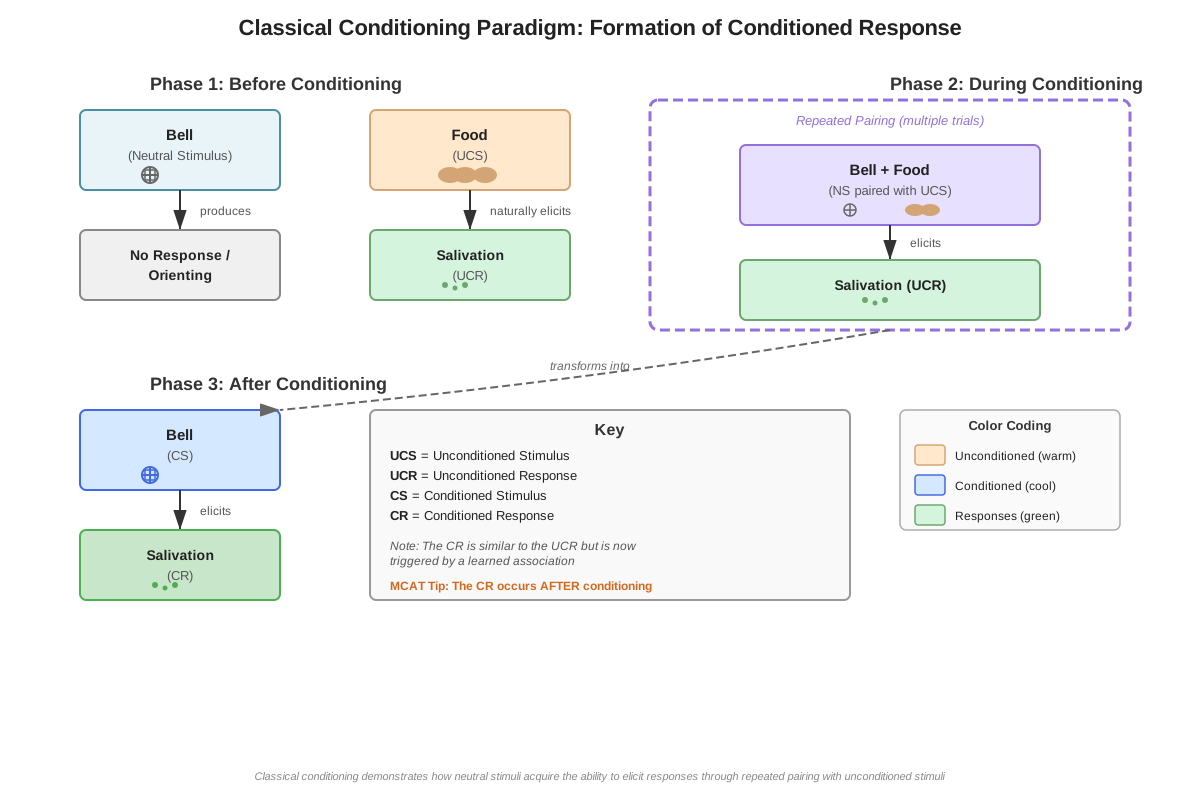
The conditioned response typically resembles the unconditioned response but often differs in magnitude, latency, or specific characteristics. For example, in Pavlov's experiments, dogs naturally salivated (UCR) when presented with food (UCS). After repeatedly pairing a bell (neutral stimulus) with food, the bell alone became a conditioned stimulus that elicited salivation—now a conditioned response. This CR of salivation resembled the UCR but was generally weaker and had a longer latency period between stimulus presentation and response onset.
The Classical Conditioning Paradigm
Understanding conditioned responses requires mastery of the complete classical conditioning sequence:
- Before Conditioning: A neutral stimulus produces no specific response, while an unconditioned stimulus reliably produces an unconditioned response
- During Conditioning (Acquisition): The neutral stimulus is repeatedly presented immediately before or simultaneously with the unconditioned stimulus
- After Conditioning: The previously neutral stimulus has become a conditioned stimulus that now elicits a conditioned response without requiring the unconditioned stimulus
The strength and reliability of the conditioned response depend on several critical factors:
- Temporal contiguity: The CS must occur close in time to the UCS (typically within 0.5-1 second for optimal conditioning)
- Contingency: The CS must reliably predict the UCS occurrence
- Number of pairings: More CS-UCS pairings generally produce stronger conditioned responses
- Stimulus intensity: More intense unconditioned stimuli typically produce more robust conditioning
- Biological preparedness: Some stimulus-response associations form more readily due to evolutionary predispositions
Characteristics That Distinguish Conditioned Responses
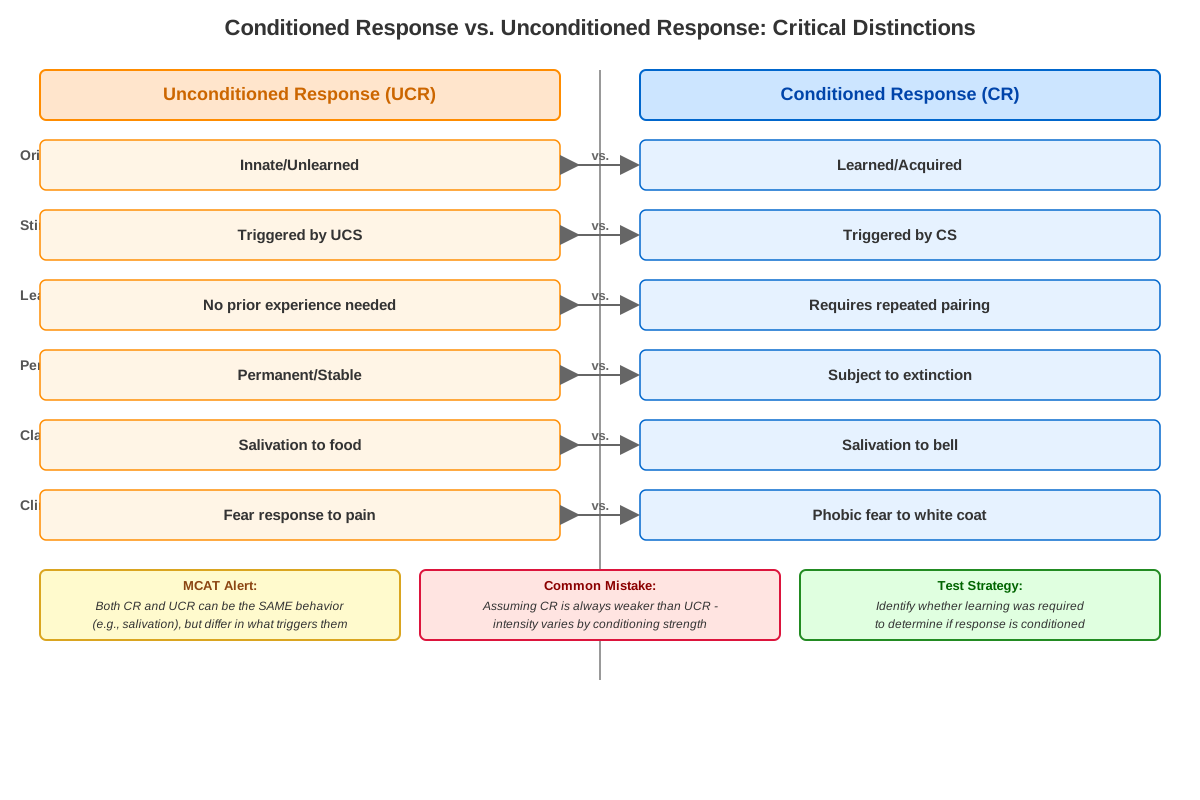
| Feature | Conditioned Response | Unconditioned Response |
|---|---|---|
| Origin | Learned through association | Innate/reflexive |
| Stimulus Required | Conditioned stimulus (previously neutral) | Unconditioned stimulus (biologically significant) |
| Strength | Variable; depends on conditioning history | Consistent and predictable |
| Latency | Typically longer delay between stimulus and response | Usually immediate or very rapid |
| Extinction | Can be extinguished through repeated CS presentation without UCS | Cannot be extinguished (though can be habituated) |
| Generalization | Occurs to stimuli similar to the CS | Occurs to stimuli similar to the UCS |
Acquisition of Conditioned Responses
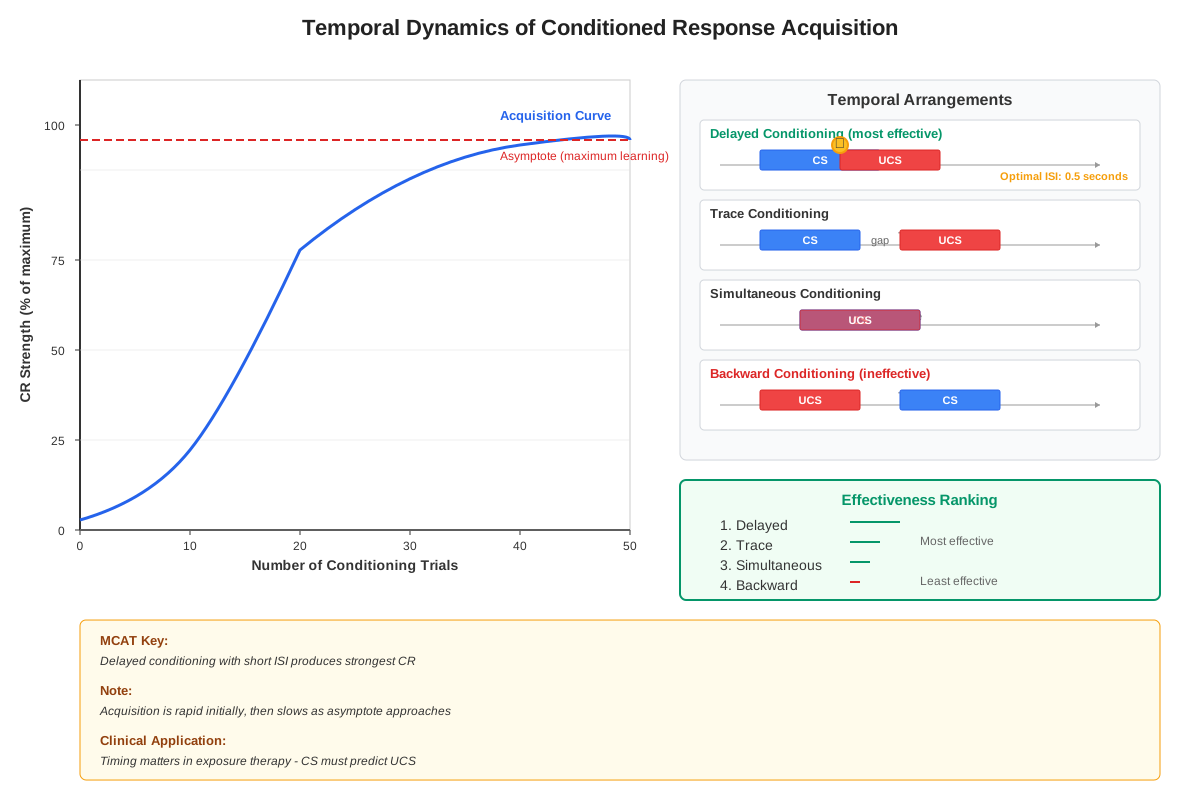
The acquisition phase describes the period during which the conditioned response is initially learned and strengthened. During acquisition, the strength of the CR increases with each CS-UCS pairing, typically following a negatively accelerated learning curve—rapid initial gains that gradually plateau as the response approaches maximum strength. The rate of acquisition varies based on the salience of both stimuli, the temporal relationship between them, and individual differences in learning capacity.
Forward conditioning produces the strongest conditioned responses and occurs when the CS precedes the UCS. Several subtypes exist:
- Delay conditioning: CS begins before UCS and continues until UCS presentation (most effective)
- Trace conditioning: CS ends before UCS begins, leaving a temporal gap (less effective than delay)
- Simultaneous conditioning: CS and UCS presented at exactly the same time (relatively weak conditioning)
- Backward conditioning: UCS precedes CS (generally ineffective and may produce inhibitory conditioning)
Extinction and Spontaneous Recovery
Extinction occurs when the conditioned stimulus is repeatedly presented without the unconditioned stimulus, resulting in gradual weakening and eventual disappearance of the conditioned response. Importantly, extinction does not erase the original learning but rather involves new inhibitory learning that suppresses the CR. Evidence for this comes from several phenomena:
Spontaneous recovery demonstrates that extinguished conditioned responses can reappear after a rest period, even without additional CS-UCS pairings. If a conditioned fear response is extinguished through repeated exposure to the CS alone, the fear response may partially return when the CS is presented after a delay. This has critical implications for therapy—patients who have undergone successful exposure therapy may experience symptom return, requiring booster sessions.
Renewal occurs when an extinguished conditioned response reappears when the organism is returned to the original conditioning context. This context-dependency of extinction explains why addiction treatment patients often relapse when returning to environments where drug use occurred—the conditioned responses to drug-related cues renew in those contexts.
Generalization and Discrimination
Stimulus generalization occurs when conditioned responses are elicited by stimuli similar to the original conditioned stimulus. The strength of the CR typically decreases as stimuli become less similar to the original CS, creating a generalization gradient. For example, if a child develops a conditioned fear response to a white rat, they may also show fear responses to other furry white objects, with response strength decreasing as objects become less similar to the original CS.
Discrimination is the complementary process where organisms learn to respond differently to distinct stimuli. Through discrimination training—reinforcing responses to one stimulus (CS+) while not reinforcing responses to another (CS-)—organisms learn to produce conditioned responses selectively. This ability is crucial for adaptive behavior, preventing overgeneralization that would make responses inappropriately broad.
Types of Conditioned Responses
Conditioned responses span multiple response systems:
Autonomic Conditioned Responses: Changes in heart rate, blood pressure, skin conductance, pupil dilation, and other autonomic nervous system functions can become conditioned. These are particularly relevant in anxiety disorders and stress responses.
Emotional Conditioned Responses: Fear, anxiety, pleasure, and other emotional states can be conditioned to previously neutral stimuli. The famous "Little Albert" experiment demonstrated conditioned fear, while conditioned place preference paradigms show how environments can elicit conditioned positive emotional responses.
Immunological Conditioned Responses: Research has demonstrated that immune system responses can be classically conditioned, with profound implications for understanding placebo effects and psychoneuroimmunology.
Behavioral Conditioned Responses: Observable motor behaviors including approach, avoidance, freezing, and specific motor patterns can all become conditioned responses.
Concept Relationships
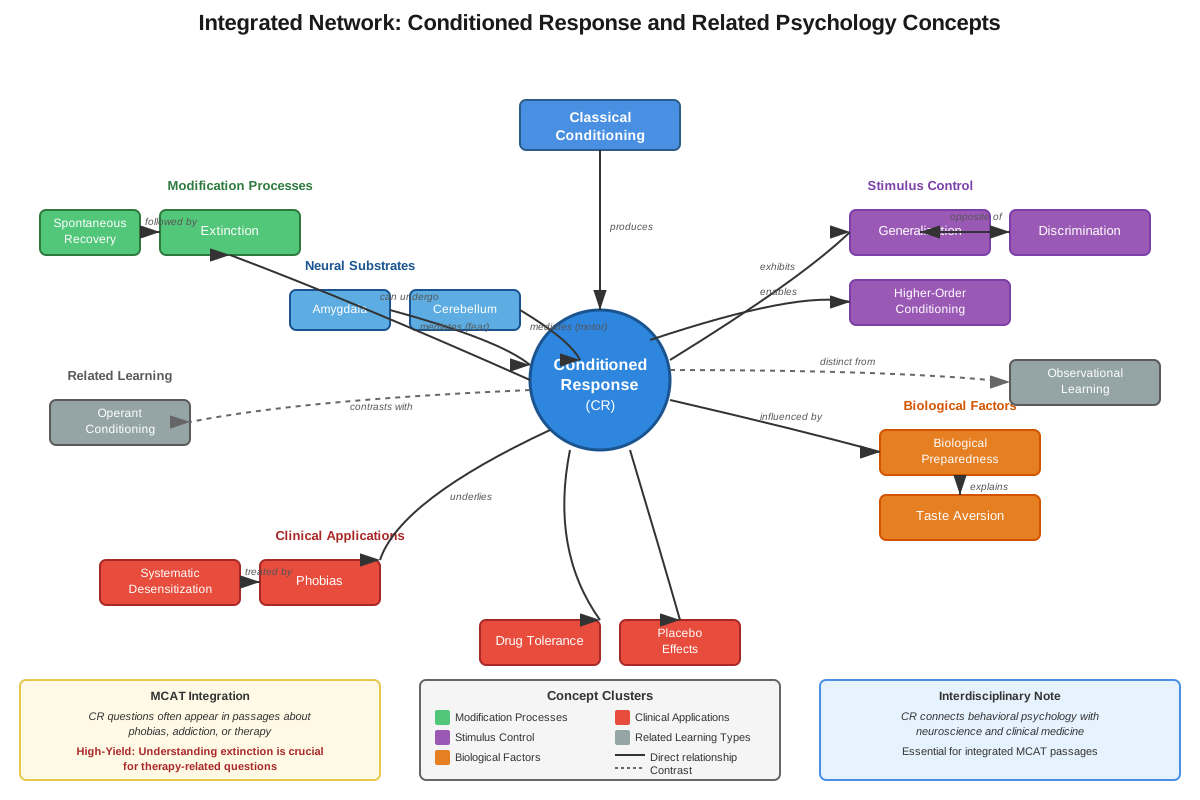
The conditioned response exists within an interconnected network of classical conditioning concepts. The unconditioned stimulus (UCS) and unconditioned response (UCR) form the foundation—these innate stimulus-response pairs provide the biological significance necessary for conditioning to occur. When a neutral stimulus is repeatedly paired with the UCS, it transforms into a conditioned stimulus (CS) that elicits the conditioned response (CR).
This basic framework connects to temporal dynamics: acquisition describes CR strengthening → extinction describes CR weakening → spontaneous recovery demonstrates that extinction doesn't erase learning → renewal and reinstatement show context-dependent return of CRs. These processes form a cycle: Acquisition → Extinction → Recovery → Re-extinction.
The conditioned response concept bridges to stimulus generalization (CR occurs to similar stimuli) and discrimination (CR becomes selective through differential reinforcement). These processes determine the specificity versus breadth of learned associations. Higher-order conditioning extends the framework: an established CS can function like a UCS to condition responses to new neutral stimuli (CS1 → CR, then CS2 + CS1 → CS2 elicits CR).
Neurobiologically, conditioned responses connect to specific brain circuits: the amygdala mediates conditioned fear responses, the cerebellum is critical for conditioned eyeblink responses, and the hippocampus provides contextual information that modulates CR expression. Understanding these neural substrates explains individual differences in conditioning and provides targets for pharmacological interventions.
Clinically, conditioned responses link to phobias (conditioned fear responses), addiction (conditioned craving and withdrawal responses), taste aversion (conditioned nausea), and placebo effects (conditioned physiological responses). Therapeutic interventions including exposure therapy, systematic desensitization, and cue exposure treatment all leverage extinction principles to reduce maladaptive conditioned responses.
High-Yield Facts
⭐ The conditioned response is learned through repeated pairing of a neutral stimulus with an unconditioned stimulus, whereas the unconditioned response is innate and requires no learning.
⭐ Conditioned responses typically resemble unconditioned responses but are usually weaker in magnitude and have longer latencies.
⭐ Extinction of a conditioned response occurs when the CS is repeatedly presented without the UCS, but extinction represents new inhibitory learning rather than erasure of the original association.
⭐ Spontaneous recovery demonstrates that extinguished conditioned responses can reappear after a rest period, proving that extinction does not eliminate the original learning.
⭐ The optimal temporal relationship for conditioning is forward delay conditioning, where the CS begins shortly (0.5-1 second) before the UCS.
- Stimulus generalization causes conditioned responses to occur to stimuli similar to the original CS, with response strength decreasing as similarity decreases.
- Discrimination training allows organisms to produce conditioned responses selectively to specific stimuli while withholding responses to others.
- Conditioned responses can involve autonomic, emotional, immunological, and behavioral response systems.
- Context plays a critical role in CR expression—renewal occurs when extinguished responses return in the original conditioning context.
- Higher-order conditioning allows an established CS to function as a UCS for conditioning new associations, extending the reach of classical conditioning.
- Biological preparedness means some stimulus-response associations (like taste-nausea) condition more readily than others due to evolutionary factors.
- Conditioned emotional responses, particularly fear, can develop after a single intense pairing (one-trial learning) when the UCS is sufficiently aversive.
Quick check — test yourself on Conditioned response so far.
Try Flashcards →Common Misconceptions
Misconception: The conditioned response is identical to the unconditioned response. → Correction: While conditioned responses typically resemble unconditioned responses, they differ in important ways including magnitude (usually weaker), latency (usually longer), and sometimes quality. For example, conditioned drug responses may be opposite to the drug's direct effects (compensatory CRs).
Misconception: Extinction permanently erases the conditioned response. → Correction: Extinction involves new inhibitory learning that suppresses the CR rather than erasing the original CS-UCS association. Evidence includes spontaneous recovery, renewal, and reinstatement, all demonstrating that the original learning persists beneath the extinction learning.
Misconception: The conditioned stimulus must always precede the unconditioned stimulus for conditioning to occur. → Correction: While forward conditioning (CS before UCS) is most effective, simultaneous conditioning can produce weak CRs, and backward conditioning may produce inhibitory conditioning. However, the temporal relationship critically affects conditioning strength.
Misconception: All neutral stimuli are equally likely to become conditioned stimuli. → Correction: Biological preparedness means organisms are predisposed to form certain associations more readily than others. Taste-nausea associations form easily even with long delays (hours), while arbitrary stimulus pairings require close temporal contiguity.
Misconception: Conditioned responses only involve observable behaviors. → Correction: Conditioned responses encompass autonomic changes (heart rate, blood pressure), emotional states, immune system responses, and hormonal changes—many of which are not directly observable but can be measured physiologically.
Misconception: Once a conditioned response is acquired, it remains at constant strength. → Correction: CR strength varies based on factors including time since last CS-UCS pairing, context, presence of competing associations, and physiological state. Conditioned responses can strengthen (through additional pairings), weaken (through extinction), or fluctuate based on contextual factors.
Misconception: The conditioned stimulus causes the unconditioned stimulus to occur. → Correction: The CS predicts or signals the UCS but does not cause it. The CS-UCS relationship is associative (predictive) rather than causal. The organism learns "CS predicts UCS" not "CS causes UCS."
Worked Examples
Example 1: Identifying Conditioned Responses in a Clinical Vignette
Vignette: A patient undergoing chemotherapy for cancer treatment initially experienced severe nausea only during and immediately after receiving the chemotherapy drugs. After several treatment sessions, the patient began feeling nauseous upon entering the hospital parking lot, before even entering the building or receiving any medication. The patient also reports feeling queasy when seeing the nurse who administers the chemotherapy, even when encountering this nurse at a grocery store.
Analysis:
Step 1 - Identify the UCS and UCR: The chemotherapy drugs are the unconditioned stimulus (UCS) because they naturally and automatically produce nausea without any learning. The nausea caused directly by the drugs is the unconditioned response (UCR)—an innate physiological reaction to the toxic effects of chemotherapy.
Step 2 - Identify neutral stimuli that became conditioned stimuli: Initially neutral stimuli that were repeatedly paired with chemotherapy include: the hospital parking lot, the hospital building, the treatment room, and the nurse who administers treatment. Through repeated temporal association with the UCS (chemotherapy drugs), these neutral stimuli became conditioned stimuli (CS).
Step 3 - Identify the conditioned response: The nausea that now occurs in response to the hospital parking lot, before any chemotherapy is administered, is a conditioned response (CR). This learned nausea resembles the UCR but occurs in response to the CS rather than the UCS. The queasy feeling when seeing the nurse in a different context (grocery store) is also a CR, demonstrating that the association has generalized beyond the original conditioning context.
Step 4 - Explain the conditioning process: Through repeated pairings (multiple chemotherapy sessions), the temporal contiguity between environmental cues (hospital, nurse) and the drug-induced nausea created an association. The patient's nervous system learned that these cues predict the aversive experience of chemotherapy-induced nausea, and these cues now elicit anticipatory nausea—a conditioned response.
Step 5 - Identify additional phenomena: The fact that the patient feels nauseous when seeing the nurse at the grocery store demonstrates stimulus generalization—the CR occurs in a context different from the original conditioning environment. This also illustrates why context matters for extinction: successfully extinguishing the CR in a therapist's office might not prevent its occurrence in the hospital setting.
MCAT Application: This example demonstrates how MCAT questions test the ability to distinguish conditioned from unconditioned responses within clinical contexts. Key reasoning involves identifying what is learned versus innate, recognizing temporal relationships, and understanding how conditioning principles explain real medical phenomena that affect treatment compliance.
Example 2: Analyzing an Experimental Design
Experimental Scenario: Researchers conduct a fear conditioning study with rats. In Phase 1, rats hear a tone (neutral stimulus) for 10 seconds, followed immediately by a mild foot shock (UCS) that causes freezing behavior (UCR). This pairing is repeated 10 times. In Phase 2, the tone is presented alone (without shock) repeatedly. Researchers measure the percentage of time rats spend freezing during tone presentation.
Question: Graph A shows freezing behavior during Phase 1, and Graph B shows freezing behavior during Phase 2. Identify the conditioned response and explain the pattern shown in both graphs.
Analysis:
Phase 1 (Acquisition):
- Initially, the tone produces minimal freezing (it's a neutral stimulus)
- The foot shock reliably produces freezing (UCR to UCS)
- Across the 10 trials, freezing behavior during the tone progressively increases
- By trial 10, rats freeze substantially during tone presentation even before shock delivery
- This increasing freezing during the tone represents the conditioned response being acquired
- The CR (freezing to tone) resembles the UCR (freezing to shock) but emerges through learning
Expected Graph A Pattern: A negatively accelerated learning curve showing rapid initial increases in freezing percentage during tone presentation (trials 1-5), with the rate of increase slowing as freezing approaches a plateau (trials 6-10). Trial 1 might show 5% freezing during tone, while trial 10 might show 70% freezing during tone.
Phase 2 (Extinction):
- The tone (CS) is now presented without the shock (UCS)
- This represents extinction training
- Freezing during tone presentation (the CR) progressively decreases
- The CR doesn't disappear immediately but gradually weakens across trials
- Some residual freezing may persist even after many extinction trials
Expected Graph B Pattern: A negatively accelerated extinction curve showing rapid initial decreases in freezing (early extinction trials), with the rate of decrease slowing as freezing approaches baseline levels. The curve mirrors acquisition but in reverse.
Critical Reasoning Points:
- The conditioned response is the freezing behavior that occurs during tone presentation after conditioning
- This CR is learned (not present initially) and resembles the UCR
- Acquisition shows CR strengthening; extinction shows CR weakening
- Neither process is instantaneous—both follow gradual curves
- If researchers tested rats after a rest period (not shown), spontaneous recovery might cause partial return of the CR
MCAT Application: This example illustrates how MCAT passages present experimental data requiring students to identify conditioned responses, distinguish them from unconditioned responses, interpret learning curves, and predict outcomes of conditioning manipulations. Success requires understanding both the conceptual framework and the typical patterns of acquisition and extinction.
Exam Strategy
Approaching MCAT Questions on Conditioned Responses:
Begin by systematically identifying the components of any conditioning scenario: What stimulus naturally produces a response without learning (UCS → UCR)? What stimulus was initially neutral? What pairing occurred? What response now occurs to the previously neutral stimulus (CS → CR)? Creating a mental or written diagram using this framework prevents confusion and ensures accurate identification.
Trigger Words and Phrases:
Watch for phrases indicating learning: "after repeated exposure," "following several pairings," "the patient learned to," "developed an association," or "began to respond to." These signal that a conditioned response is likely involved. Phrases like "naturally," "automatically," "innate," or "reflexive" suggest unconditioned responses. Temporal language ("before," "after," "during," "following") helps identify the conditioning sequence and temporal relationships critical for determining conditioning effectiveness.
Process of Elimination Tips:
When answer choices include both conditioned and unconditioned responses, eliminate options that confuse learned versus innate responses. If a question asks about extinction, eliminate answers suggesting the response is permanently erased or that the original learning is destroyed—extinction involves suppression, not erasure. For questions about optimal conditioning, eliminate backward conditioning options and those with very long delays between CS and UCS. When evaluating therapeutic interventions for conditioned responses, eliminate options that don't involve repeated CS presentation without the UCS (the extinction procedure).
Common Question Formats:
- Component Identification: "In this scenario, what is the conditioned response?" → Identify what is learned and occurs to the CS
- Prediction Questions: "What would happen if the CS were repeatedly presented without the UCS?" → Apply extinction principles
- Comparison Questions: "How does the conditioned response differ from the unconditioned response?" → Note magnitude, latency, and origin differences
- Application Questions: "Which therapeutic approach would most effectively reduce this conditioned fear response?" → Recognize extinction-based interventions
- Experimental Design: "Which procedure would produce the strongest conditioning?" → Evaluate temporal relationships and pairing parameters
Time Allocation:
Conditioned response questions typically require 60-90 seconds. Spend 20-30 seconds carefully reading and identifying components, 20-30 seconds analyzing the specific question requirement, and 20-30 seconds evaluating answer choices. Don't rush the initial identification phase—errors here cascade through the entire question. For passage-based questions, annotate the passage with "UCS," "UCR," "CS," "CR" labels to maintain clarity when answering multiple related questions.
Memory Techniques
The "CUCUCR" Sequence Mnemonic: Remember the classical conditioning sequence as "Can Unicorns Create Unusual Conditioned Responses?" This encodes: Conditioned Stimulus + Unconditioned Stimulus → Conditioned Stimulus → Unconditioned Response → Conditioned Response. The silly imagery of unicorns creating responses makes it memorable.
"LEARNED" Acronym for CR Characteristics:
- Learned (not innate)
- Elicited by CS (not UCS)
- Acquired through pairing
- Resembles UCR
- Needs conditioning trials
- Extinguishable
- Dependent on CS-UCS contingency
Visualization Strategy: Picture a traffic light turning yellow (initially neutral) paired with sudden braking (UCS) that causes forward jerk (UCR). After many experiences, yellow light alone (CS) causes anticipatory muscle tension (CR). Visualize this concrete example whenever abstract conditioning questions appear, substituting the specific stimuli and responses from the question into your mental template.
Temporal Relationship Memory Aid: "Forward Delay Dominates" reminds you that Forward conditioning, specifically Delay conditioning, produces the strongest conditioned responses. Picture a domino effect where the CS domino must fall slightly before the UCS domino for optimal conditioning.
Extinction vs. Erasure Reminder: "Extinction Inhibits, Not Erases" (EINE) helps remember that extinction involves new inhibitory learning rather than erasing the original association. Picture a dimmer switch (inhibition) rather than an eraser (elimination).
Summary
The conditioned response represents the learned behavioral, physiological, or emotional output that emerges when a previously neutral stimulus acquires the ability to elicit a response through repeated pairing with an unconditioned stimulus. This fundamental concept in classical conditioning explains how organisms learn associations between environmental cues and biologically significant events, producing adaptive (and sometimes maladaptive) responses. Conditioned responses differ from unconditioned responses in their learned origin, typically weaker magnitude, and susceptibility to extinction, yet they resemble the unconditioned responses upon which they're based. The acquisition of conditioned responses follows predictable patterns influenced by temporal contiguity, contingency, and biological preparedness, while extinction involves new inhibitory learning that suppresses but doesn't erase the original association—evidenced by spontaneous recovery, renewal, and reinstatement. Understanding conditioned responses is essential for MCAT success, as this concept appears frequently in psychology passages and questions, connects to clinical phenomena including phobias and addiction, and provides the foundation for understanding more complex learning processes including higher-order conditioning, generalization, and discrimination.
Key Takeaways
- The conditioned response is a learned reaction to a conditioned stimulus that emerges through repeated CS-UCS pairings in classical conditioning
- Conditioned responses resemble but differ from unconditioned responses in magnitude, latency, and origin (learned vs. innate)
- Optimal conditioning requires forward temporal relationships with the CS preceding the UCS by approximately 0.5-1 second
- Extinction occurs through repeated CS presentation without the UCS, creating new inhibitory learning rather than erasing the original association
- Spontaneous recovery, renewal, and reinstatement demonstrate that extinguished conditioned responses can return under specific conditions
- Conditioned responses span multiple systems including autonomic, emotional, immunological, and behavioral responses
- Clinical applications include understanding phobia development, addiction cue reactivity, chemotherapy-induced nausea, and the basis for exposure therapy interventions
Related Topics
Operant Conditioning: While classical conditioning (which produces conditioned responses) involves learning associations between stimuli, operant conditioning involves learning associations between behaviors and their consequences. Understanding both forms of associative learning provides comprehensive knowledge of behavioral modification principles.
Biological Bases of Learning: Exploring the neural circuits underlying conditioned responses, including the amygdala's role in fear conditioning and the cerebellum's role in motor conditioning, deepens understanding of how learning occurs at the neurobiological level.
Cognitive Processes in Learning: Modern perspectives recognize that classical conditioning involves cognitive processes including expectancy and predictive learning, not just automatic stimulus-response associations. This connects conditioned responses to broader cognitive psychology frameworks.
Behavioral Therapies: Exposure therapy, systematic desensitization, aversion therapy, and other behavioral interventions directly apply conditioning principles to modify maladaptive conditioned responses, making this clinical application essential for understanding treatment approaches.
Psychopharmacology and Conditioning: Drug tolerance, sensitization, and conditioned compensatory responses demonstrate how conditioning principles interact with pharmacological effects, relevant for understanding addiction and medication effects.
Practice CTA
Now that you've mastered the foundational concepts of conditioned responses, reinforce your learning by attempting practice questions and flashcards focused on this topic. Challenge yourself to identify conditioned responses in complex clinical vignettes, distinguish them from unconditioned responses in experimental scenarios, and apply extinction principles to therapeutic contexts. Active retrieval through practice questions dramatically enhances retention and prepares you for the integrated, application-focused questions you'll encounter on the MCAT. Your investment in understanding this high-yield concept will pay dividends across multiple question types and passages—commit to deliberate practice and watch your confidence and accuracy soar!
Sign up free to keep reading
Create a free AnvayaPrep account to finish this MCAT guide on Conditioned response — plus flashcards and practice questions.