Overview
Interference is a fundamental concept in the psychology of learning and memory that describes how memories can disrupt or impede the retrieval of other memories. This phenomenon occurs when information stored in long-term memory becomes confused with other information, making it difficult to recall specific details accurately. Understanding interference is crucial for comprehending why forgetting occurs and how the organization of memory affects our ability to retrieve information when needed.
For the MCAT, interference represents a high-yield topic that frequently appears in both discrete questions and passage-based items within the Psychology and Sociology section. The exam tests not only definitional knowledge but also the ability to apply interference principles to experimental designs, clinical scenarios, and real-world situations. Questions may present research studies examining memory performance, ask students to predict outcomes based on interference theory, or require differentiation between types of interference and other memory phenomena.
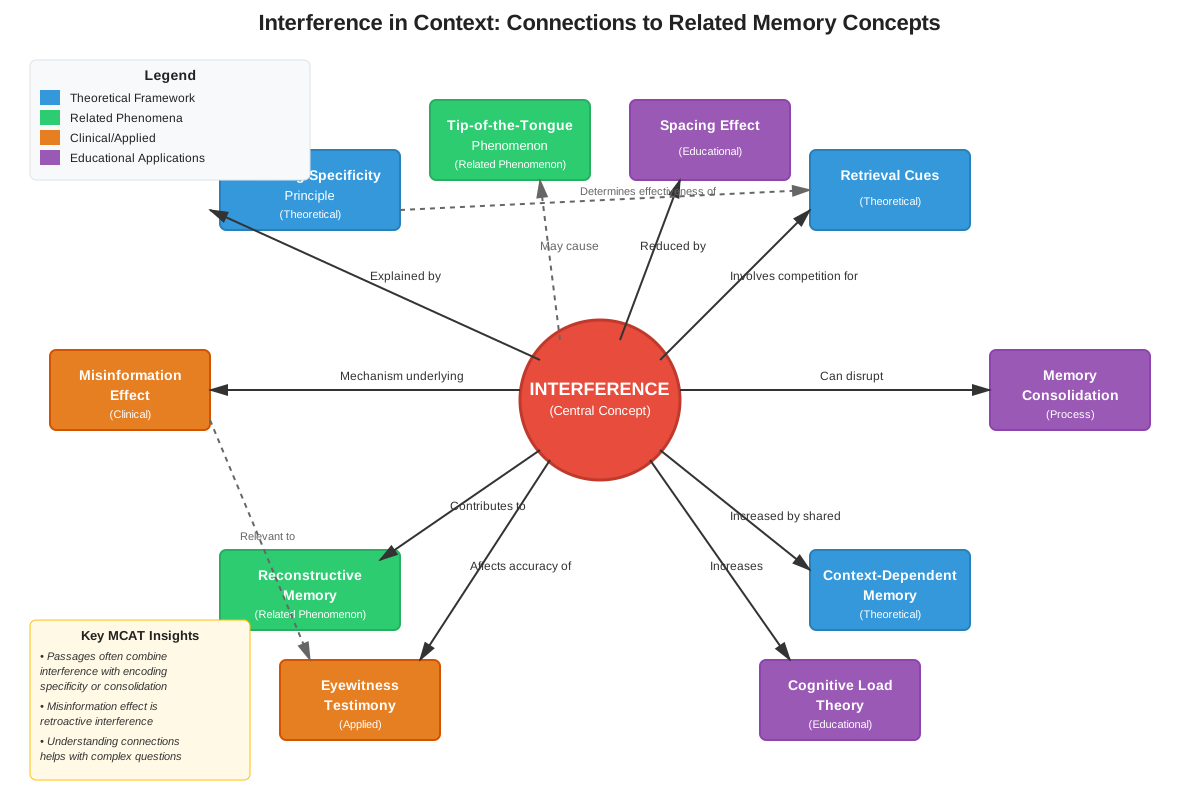
Interference connects to broader themes in cognitive psychology, including encoding specificity, retrieval cues, consolidation processes, and the reconstructive nature of memory. It relates directly to forgetting mechanisms and provides insight into why some memories remain accessible while others become difficult to retrieve. Mastery of this topic enables students to understand the dynamic nature of memory systems and how competing information influences cognitive performance—concepts that appear throughout MCAT passages dealing with learning, education, clinical memory disorders, and experimental psychology research.
Learning Objectives
- [ ] Define Interference using accurate Psychology terminology
- [ ] Explain why Interference matters for the MCAT
- [ ] Apply Interference to exam-style questions
- [ ] Identify common mistakes related to Interference
- [ ] Connect Interference to related Psychology concepts
- [ ] Distinguish between proactive and retroactive interference with specific examples
- [ ] Analyze experimental designs that test interference effects
- [ ] Predict how interference influences memory performance in various contexts
- [ ] Evaluate the relationship between interference and other forgetting mechanisms
Prerequisites
- Memory stages (encoding, storage, retrieval): Interference specifically affects the retrieval stage, so understanding the three-stage model is essential for recognizing when and how interference occurs
- Long-term memory types (declarative vs. procedural): Interference primarily affects declarative memories, particularly episodic information that shares similar features
- Basic learning principles: Understanding how information enters memory systems provides context for why similar information creates competition during retrieval
- Forgetting curves and decay theory: Distinguishing interference from simple time-based decay helps identify the specific mechanism causing retrieval failure
Why This Topic Matters
Interference has profound real-world implications for education, clinical practice, and everyday functioning. Students experience interference when studying similar subjects back-to-back (such as learning Spanish after studying French), which can impair performance on exams. Clinical populations with memory disorders often show exaggerated interference effects, making this concept relevant for understanding conditions like mild cognitive impairment and early-stage dementia. Eyewitness testimony research demonstrates how interference from post-event information can alter memories of crimes, with significant legal implications.
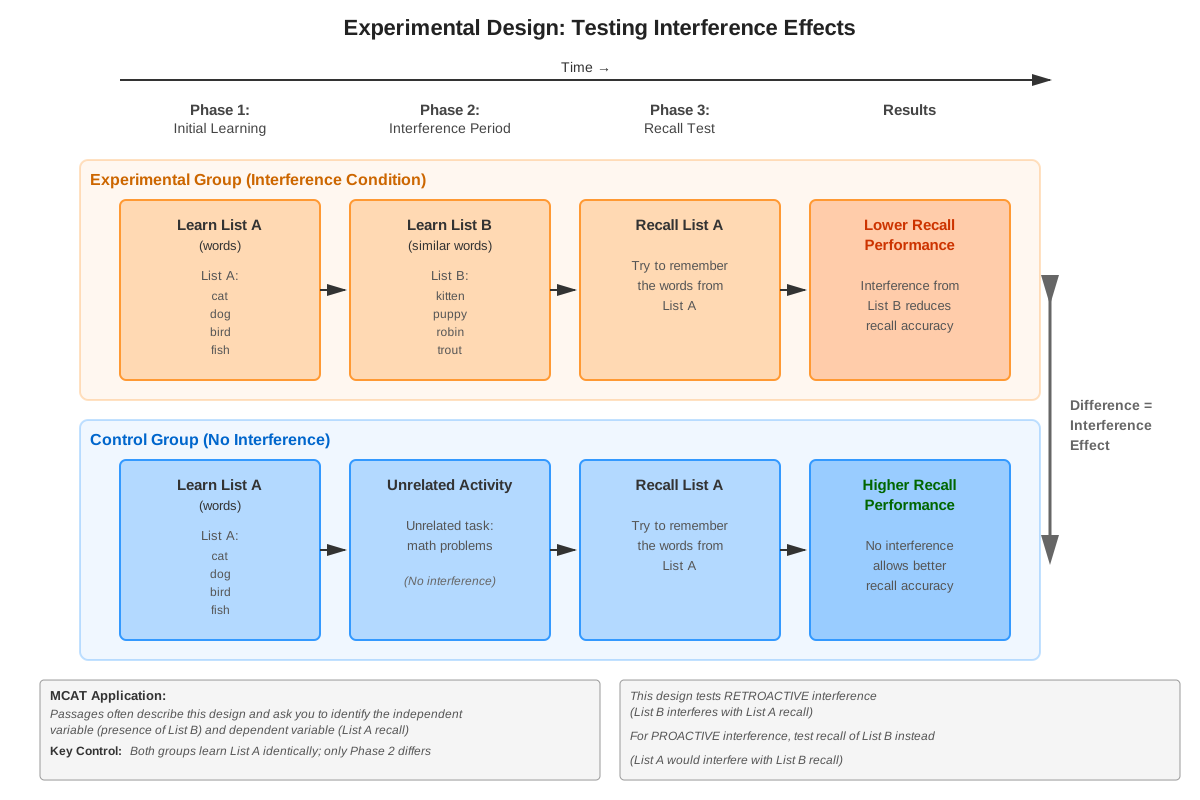
On the MCAT, interference appears in approximately 3-5% of Psychology and Sociology questions, making it a moderately high-frequency topic. The exam tests this concept through multiple question formats: discrete questions asking for definitions or distinctions between types, passage-based questions presenting memory experiments requiring interpretation of results, and application questions where students must predict interference effects in novel scenarios. Research passages frequently describe studies manipulating learning conditions to examine interference, requiring students to identify independent and dependent variables while applying interference theory to explain outcomes.
Common MCAT presentations include: experimental passages comparing memory performance across different learning schedules, clinical vignettes describing patients with retrieval difficulties, scenarios involving skill acquisition where old habits interfere with new learning, and questions about study strategies that minimize interference effects. The exam particularly favors questions requiring differentiation between proactive and retroactive interference, as this distinction tests both conceptual understanding and application skills.
Core Concepts
Definition and Mechanism of Interference
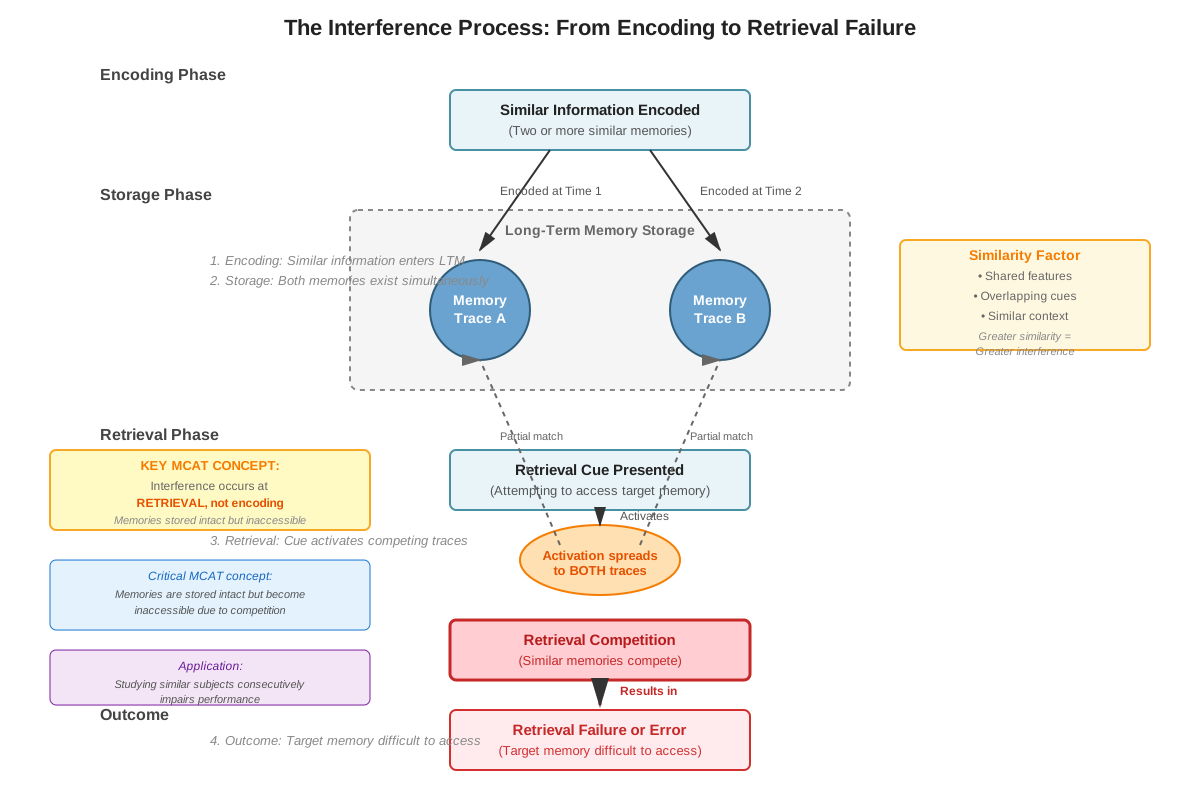
Interference occurs when some memories compete with or disrupt the retrieval of other memories, leading to forgetting or retrieval errors. Unlike decay theory, which attributes forgetting to the passage of time, interference psychology emphasizes that forgetting results from competition between memories rather than simple deterioration. The interference framework proposes that memories sharing similar features, contexts, or retrieval cues create competition during the retrieval process, making it difficult to access the target memory.
The mechanism underlying interference involves retrieval cue overload—when multiple memories are associated with the same retrieval cue, the cue loses its effectiveness in accessing any single memory. For example, if the cue "psychology class" is associated with information from multiple semesters, attempting to retrieve specific content from one semester becomes more difficult as competing associations interfere with targeted retrieval.
Proactive Interference
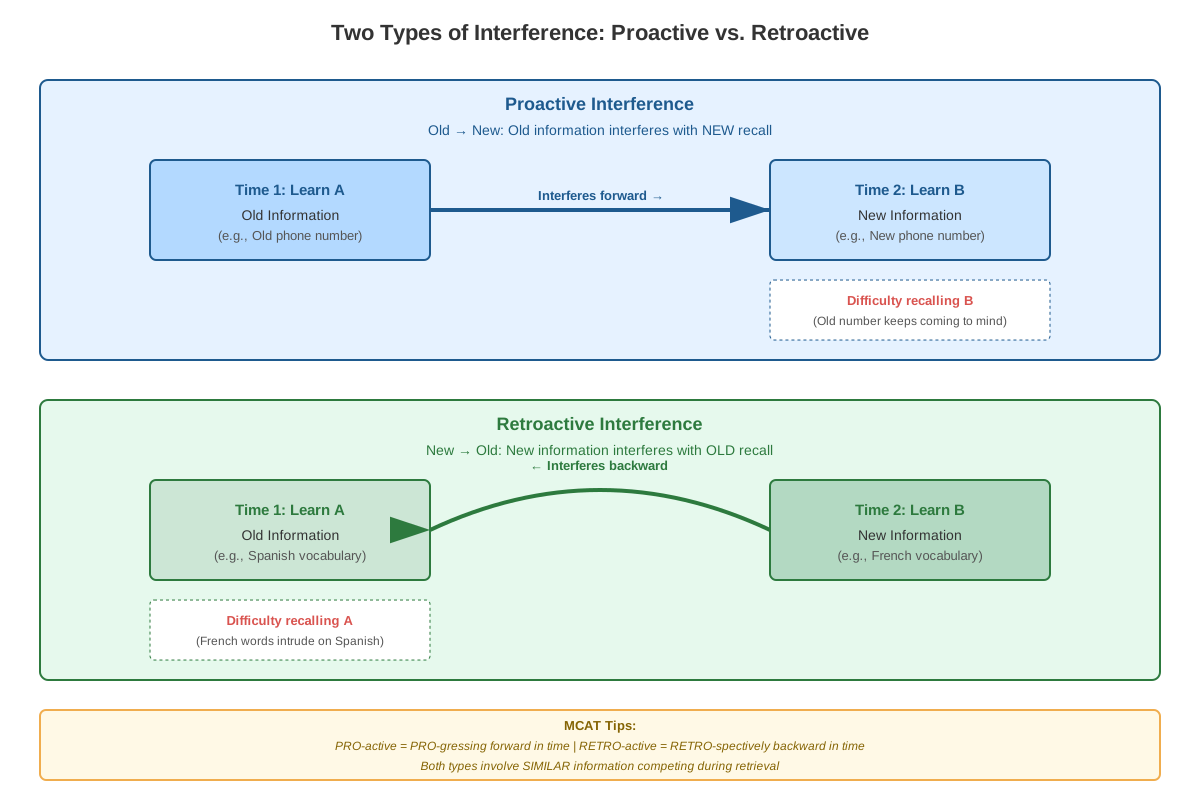
Proactive interference occurs when previously learned information interferes with the ability to learn or recall new information. The prefix "pro-" means "forward," indicating that old memories move forward in time to disrupt new memories. This type of interference demonstrates how established memory traces can create obstacles for encoding or retrieving more recent information.
Classic examples include:
- Difficulty remembering a new phone number because the old number keeps coming to mind
- Calling a new romantic partner by an ex-partner's name
- Writing the previous year when dating documents in January
- Struggling to learn new terminology in a course because older, conflicting definitions interfere
Proactive interference typically increases with the amount of prior learning and the similarity between old and new information. The fan effect relates to proactive interference—as more facts become associated with a single concept, retrieval time for any specific fact increases due to competition among associations.
Retroactive Interference
Retroactive interference occurs when newly learned information interferes with the ability to recall previously learned information. The prefix "retro-" means "backward," indicating that new memories work backward in time to disrupt old memories. This phenomenon shows how recent learning can impair access to established memory traces.
Classic examples include:
- Learning new material in a course makes it harder to remember earlier content
- Studying French after learning Spanish causes confusion when trying to recall Spanish vocabulary
- New passwords making it difficult to remember old passwords
- Updated driving routes interfering with memory of previous routes
Retroactive interference demonstrates that memory is not a static storage system but rather a dynamic process where new information can reorganize or compete with existing memory traces. The strength of retroactive interference depends on the similarity between materials and the time interval between learning sessions.
Comparison of Interference Types
| Feature | Proactive Interference | Retroactive Interference |
|---|---|---|
| Direction | Old → New (forward) | New → Old (backward) |
| What interferes | Previously learned information | Recently learned information |
| What is disrupted | New memory formation/retrieval | Old memory retrieval |
| Common scenario | Old habits disrupting new skills | New learning overwriting old knowledge |
| Temporal pattern | Increases with amount of prior learning | Increases with amount of subsequent learning |
| Clinical relevance | More problematic in older adults with extensive prior knowledge | More evident in active learning situations |
Factors Influencing Interference
Several variables modulate the strength of interference effects:
- Similarity: Greater similarity between materials produces stronger interference. Learning two Romance languages creates more interference than learning Spanish and Mandarin.
- Time intervals: Shorter intervals between learning sessions typically produce stronger interference effects, though very long intervals may allow some recovery from interference.
- Retrieval practice: Testing effect research shows that retrieving information reduces its susceptibility to interference, making tested material more resistant to competition from similar memories.
- Distinctiveness: Unique, distinctive memories suffer less interference than generic, similar memories. The von Restorff effect demonstrates that unusual items are remembered better partly because they experience less interference.
- Context: When learning contexts differ substantially, interference decreases because context serves as an additional retrieval cue that helps discriminate between memories.
Interference in Skill Learning
While interference research traditionally focuses on declarative memory, interference MCAT questions may address procedural learning. Negative transfer occurs when previously learned motor skills or procedures interfere with acquiring new skills—a form of proactive interference in the procedural domain. For example, experienced tennis players learning squash may initially struggle because tennis stroke mechanics interfere with optimal squash technique.
Positive transfer, conversely, occurs when prior learning facilitates new learning, representing the opposite of interference. Understanding this distinction helps identify when interference applies versus when prior knowledge benefits performance.
Interference vs. Other Forgetting Mechanisms
Distinguishing interference from other causes of forgetting is crucial for MCAT success:
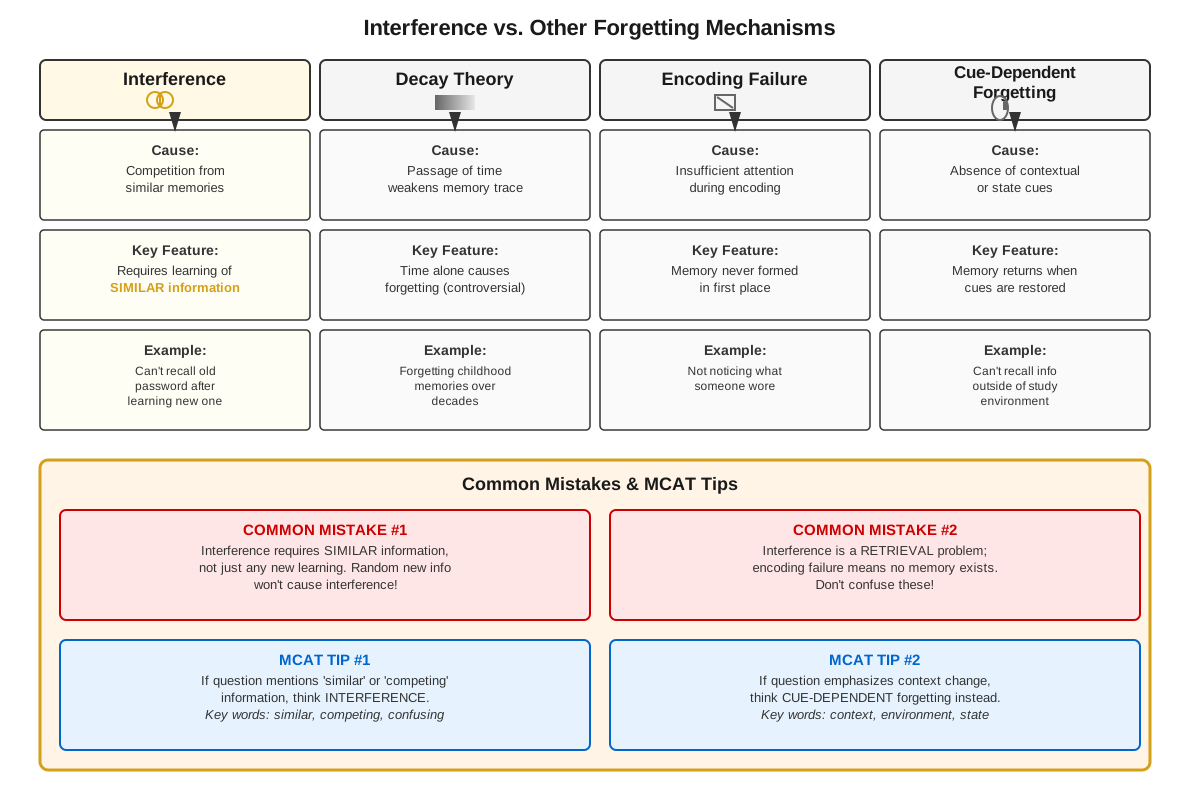
- Decay: Time-based deterioration of memory traces (interference involves competition, not deterioration)
- Retrieval failure: Inability to access stored information due to inadequate cues (interference is a specific cause of retrieval failure)
- Encoding failure: Information never properly entered memory (interference affects already-encoded information)
- Motivated forgetting: Intentional or unconscious suppression of unwanted memories (interference is unintentional)
Concept Relationships
Interference connects to multiple concepts within learning and memory systems. At the foundational level, interference depends on successful encoding—information must first enter long-term memory before it can interfere with other memories. The encoding specificity principle relates to interference because memories encoded with similar cues are more likely to interfere with each other during retrieval.
The relationship flows as follows: Encoding → Storage in long-term memory → Retrieval cue activation → Competition between similar memories → Interference effects → Forgetting or retrieval errors
Interference connects to consolidation processes—newly formed memories undergoing consolidation are particularly vulnerable to interference, which is why sleep (a period with minimal new learning) benefits memory consolidation. The concept also relates to working memory capacity, as interference effects can occur when working memory becomes overloaded with similar information during active processing.
Context-dependent memory and state-dependent memory reduce interference by providing additional retrieval cues that help discriminate between similar memories. When contexts differ, the same nominal cue (like "psychology") becomes functionally different ("psychology in the morning lecture hall" vs. "psychology in the evening study group"), reducing competition.
Interference theory contributed to the development of levels of processing theory—deeply processed, semantically rich memories may be more distinctive and thus less susceptible to interference than shallowly processed memories. The testing effect demonstrates that retrieval practice reduces interference, connecting interference to effective study strategies.
In clinical contexts, interference relates to amnesia (particularly anterograde amnesia, where new learning interferes with itself due to impaired consolidation), cognitive aging (older adults show increased susceptibility to interference), and attention deficits (poor attentional control during encoding creates less distinctive memories more vulnerable to interference).
Quick check — test yourself on Interference so far.
Try Flashcards →High-Yield Facts
⭐ Proactive interference occurs when old information interferes with learning or recalling new information (old → new direction)
⭐ Retroactive interference occurs when new information interferes with recalling old information (new → old direction)
⭐ Interference increases with greater similarity between competing memories
⭐ Interference is a retrieval problem, not an encoding or storage problem—the information remains in memory but becomes difficult to access
⭐ Retrieval practice (testing) reduces susceptibility to interference by strengthening memory traces and making them more distinctive
- The fan effect demonstrates that as more facts become associated with a concept, retrieval time increases due to interference
- Interference effects are typically stronger with shorter time intervals between learning sessions
- Distinctive, unique memories experience less interference than generic, similar memories
- Context changes between learning episodes reduce interference by providing discriminative retrieval cues
- Interference explains why distributed practice (spacing) is more effective than massed practice—spacing reduces interference between similar learning episodes
- Sleep benefits memory consolidation partly by minimizing interference from new learning
- Older adults typically show greater susceptibility to proactive interference due to accumulated prior knowledge
Common Misconceptions
Misconception: Interference and decay are the same thing—both involve memories fading over time.
Correction: Interference involves competition between memories, not time-based deterioration. Decay theory attributes forgetting to time passage, while interference theory attributes forgetting to competition from similar memories. Interference can occur immediately after learning if competing information is presented, whereas decay requires time passage.
Misconception: Proactive interference means new information interferes with old information because "proactive" sounds like "moving forward" to affect the future.
Correction: Proactive interference means OLD information interferes with NEW information. The "pro-" prefix refers to the old information moving forward in time to disrupt new learning. Think "prior information interfering" to remember the correct direction.
Misconception: Interference only affects declarative memory, not procedural memory or skills.
Correction: While interference research focuses primarily on declarative memory, procedural learning also experiences interference through negative transfer, where old motor patterns or procedures interfere with learning new skills. However, procedural memories are generally more resistant to interference than declarative memories.
Misconception: If interference occurs, the original memory is permanently erased or overwritten.
Correction: Interference is primarily a retrieval problem, not a storage problem. The interfered-with memory typically remains in storage but becomes difficult to access due to competition. With appropriate retrieval cues or techniques, interfered-with memories can often be recovered.
Misconception: Studying similar subjects together (like multiple science courses) will always cause interference and should be avoided.
Correction: While studying highly similar material in close succession can cause interference, the relationship is complex. Interleaving (mixing) related topics can actually enhance learning by forcing discrimination between similar concepts, making memories more distinctive and less susceptible to interference. The key is creating distinctiveness rather than avoiding similarity entirely.
Misconception: Retroactive interference is more common and stronger than proactive interference.
Correction: Both types occur frequently, and their relative strength depends on context. In laboratory settings, retroactive interference often appears stronger, but in real-world situations with extensive prior knowledge (like older adults), proactive interference can be more problematic. Neither type is universally stronger.
Worked Examples
Example 1: Experimental Design Analysis
Scenario: Researchers conduct a memory experiment with three groups. Group A learns List 1 (10 words) then rests for 10 minutes before recall. Group B learns List 1, then learns List 2 (10 different words), then recalls List 1. Group C learns List 2, then learns List 1, then recalls List 1. Results show Group A recalls 8/10 words, Group B recalls 5/10 words, and Group C recalls 6/10 words from List 1.
Question: What type(s) of interference does this experiment demonstrate, and what do the results indicate?
Solution:
Step 1: Identify what each group tests
- Group A: Control (no interference)
- Group B: Tests retroactive interference (List 2 learned AFTER List 1 interferes with List 1 recall)
- Group C: Tests proactive interference (List 2 learned BEFORE List 1 interferes with List 1 recall)
Step 2: Compare performance to control
- Group B (5/10) vs. Group A (8/10): 3-word deficit due to retroactive interference
- Group C (6/10) vs. Group A (8/10): 2-word deficit due to proactive interference
Step 3: Interpret results
The experiment demonstrates both types of interference. Retroactive interference (Group B) appears slightly stronger than proactive interference (Group C), as Group B shows greater impairment. Both experimental groups perform worse than the control, confirming that learning similar material creates competition that impairs retrieval.
MCAT Connection: This question type requires identifying independent variables (group assignment/learning sequence), dependent variables (recall performance), and applying interference theory to explain results—a common MCAT passage-based question format.
Example 2: Clinical Application
Scenario: A 68-year-old patient complains that she frequently calls her new doctor by her previous doctor's name, even though she's been seeing the new doctor for six months. She has no other memory complaints and performs normally on cognitive screening tests.
Question: What memory phenomenon best explains this error, and why is it not indicative of pathology?
Solution:
Step 1: Identify the temporal relationship
- Old information: Previous doctor's name (learned first, well-established)
- New information: New doctor's name (learned more recently)
- Error direction: Old name intrudes when trying to use new name
Step 2: Classify the interference type
This represents proactive interference—the previously learned doctor's name (old information) interferes with retrieving and using the new doctor's name (new information). The old → new direction confirms proactive interference.
Step 3: Explain why this is normal
Proactive interference is a normal memory phenomenon, especially when:
- The old information was well-learned and frequently used
- The new and old information are highly similar (both are names associated with "my doctor")
- The retrieval context is similar (medical settings, discussing health)
- The person has extensive prior knowledge (common in older adults)
Step 4: Distinguish from pathology
This is NOT indicative of dementia or pathological memory decline because:
- It's an isolated, context-specific error
- The patient recognizes the error (intact metacognition)
- Other cognitive functions are normal
- The error follows predictable interference patterns
- Similar errors occur in healthy young adults with well-established habits
MCAT Connection: This demonstrates application of interference concepts to clinical scenarios, requiring differentiation between normal memory phenomena and pathological conditions—a key skill for Psych/Soc passages involving patient cases.
Exam Strategy
When approaching MCAT questions on interference, first identify the temporal relationship between information: What was learned first? What was learned second? What is being recalled? Drawing a simple timeline helps visualize the sequence.
Trigger words for proactive interference: "previously learned," "old habits," "prior knowledge," "established patterns," "earlier training." Questions may describe someone struggling to learn something new because old information keeps intruding.
Trigger words for retroactive interference: "newly learned," "recent training," "updated information," "subsequent learning." Questions may describe someone unable to remember old information after learning something new.
Process of elimination strategy: If a question asks about interference but you're unsure of the type, eliminate answers suggesting other forgetting mechanisms first (decay, encoding failure, motivated forgetting). Then determine direction: if old disrupts new, eliminate retroactive; if new disrupts old, eliminate proactive.
For experimental passage questions, create a simple table showing groups, what they learned, when they learned it, and what they recalled. This visual organization makes interference patterns obvious and prevents confusion between conditions.
Time allocation: Discrete interference questions should take 60-90 seconds—they typically test straightforward definitional knowledge or simple application. Passage-based questions may take 90-120 seconds as they require analyzing experimental designs or clinical scenarios before applying interference concepts.
Common trap answers: Watch for options that reverse the interference direction (calling proactive "retroactive" or vice versa), confuse interference with decay, or suggest interference permanently erases memories rather than creating retrieval competition.
Exam Tip: If a question describes TWO learning episodes and asks about memory problems, interference is likely the answer. If it describes ONE learning episode followed by time passage, consider decay or consolidation issues instead.
Memory Techniques
Mnemonic for interference types:
- PROactive = PROblems from the Past (old information interfering)
- RETROactive = RETROspective problems (looking back, can't remember old information)
Directional memory aid:
- PROactive: Previous → Recent (old → new)
- RETROactive: Recent → Earlier (new → old)
Visualization strategy: Picture interference as two people trying to get through a doorway simultaneously—both memories are trying to be retrieved through the same retrieval cue (the doorway), but they block each other. The stronger or more recent memory often wins, causing the other to be temporarily inaccessible.
Acronym for factors increasing interference - SIST:
- Similarity (similar materials interfere more)
- Interval (shorter time intervals increase interference)
- Strength (weaker memories more susceptible)
- Testing (lack of retrieval practice increases vulnerability)
Story technique: Imagine "Professor Pro" (proactive interference) as an elderly professor whose old lectures keep interfering when he tries to teach new material. Then imagine "Professor Retro" (retroactive interference) as a young professor whose new trendy teaching methods make him forget his traditional training.
Summary
Interference represents a fundamental mechanism of forgetting in which memories compete during retrieval, making it difficult to access target information. The two primary types—proactive and retroactive—differ in temporal direction: proactive interference occurs when old information disrupts new learning or recall, while retroactive interference occurs when new information disrupts recall of old information. Unlike decay theory, interference attributes forgetting to competition between similar memories rather than time-based deterioration. The strength of interference depends on similarity between materials, time intervals, retrieval practice, and memory distinctiveness. For the MCAT, students must distinguish between interference types, apply interference theory to experimental designs and clinical scenarios, and differentiate interference from other forgetting mechanisms. Understanding that interference is primarily a retrieval problem—not a storage problem—is crucial, as interfered-with memories typically remain accessible with appropriate cues. This concept connects broadly to memory systems, learning strategies, cognitive aging, and clinical memory disorders.
Key Takeaways
- Interference is competition between memories during retrieval, not time-based memory decay
- Proactive interference: old information interferes with new (old → new direction)
- Retroactive interference: new information interferes with old (new → old direction)
- Greater similarity between memories produces stronger interference effects
- Interference is primarily a retrieval problem—memories remain stored but become difficult to access
- Retrieval practice (testing) and distinctive encoding reduce susceptibility to interference
- MCAT questions test both definitional knowledge and application to experimental designs and clinical scenarios
Related Topics
Encoding Specificity Principle: Understanding how retrieval cues match encoding conditions helps explain why similar memories interfere—they share overlapping cues. Mastering interference provides foundation for understanding how cue specificity affects retrieval success.
Consolidation and Sleep: Memory consolidation processes interact with interference, as newly formed memories are particularly vulnerable to disruption. Sleep benefits consolidation partly by minimizing interference from new learning.
Cognitive Aging: Older adults show characteristic patterns of increased proactive interference due to accumulated prior knowledge. Understanding interference is essential for comprehending age-related memory changes.
Amnesia and Memory Disorders: Clinical memory impairments often involve exaggerated interference effects. Anterograde amnesia patients show severe interference between newly learned information due to impaired consolidation.
Study Strategies and Metacognition: Effective learning techniques like distributed practice and retrieval practice work partly by reducing interference. Understanding interference mechanisms enables evidence-based study strategy selection.
Practice CTA
Now that you've mastered the core concepts of interference, test your understanding with practice questions and flashcards. Focus on distinguishing between proactive and retroactive interference in various scenarios, and practice analyzing experimental designs that test interference effects. Remember: interference is one of the highest-yield topics in learning and memory for the MCAT, and your ability to quickly identify interference types and apply them to novel situations will directly impact your score. Challenge yourself with timed practice to build the speed and accuracy needed for test day success!
Sign up free to keep reading
Create a free AnvayaPrep account to finish this MCAT guide on Interference — plus flashcards and practice questions.