Overview
Amnesia is a profound disruption in the ability to form new memories or recall past experiences, representing one of the most clinically significant and frequently tested topics within the Learning and Memory unit of Psychology on the MCAT. Understanding amnesia requires integrating knowledge of brain structures, memory systems, and the distinction between different types of memory processes. This condition illuminates the fundamental architecture of human memory by demonstrating what happens when specific components fail, making it an invaluable window into normal cognitive function.
For the MCAT, amnesia serves as a critical bridge between neuroanatomy and cognitive psychology. Test-makers frequently use amnesia cases to assess whether students can distinguish between declarative and procedural memory, understand the role of the hippocampus and related structures, and apply theoretical knowledge to clinical scenarios. Questions may present patient vignettes describing memory deficits following brain injury, ask students to predict which memory functions remain intact, or require differentiation between various amnesia subtypes based on symptom patterns.
The study of amnesia connects directly to broader psychological concepts including memory consolidation, the multi-store model of memory, neural plasticity, and the biological basis of behavior. Mastering this topic enables deeper understanding of how temporary information becomes permanent knowledge, why certain memories persist while others fade, and how brain damage selectively impairs specific cognitive functions while sparing others. This knowledge proves essential not only for Psychology/Sociology section questions but also for interpreting research passages and understanding experimental designs that investigate memory function.
Learning Objectives
- [ ] Define Amnesia using accurate Psychology terminology
- [ ] Explain why Amnesia matters for the MCAT
- [ ] Apply Amnesia to exam-style questions
- [ ] Identify common mistakes related to Amnesia
- [ ] Connect Amnesia to related Psychology concepts
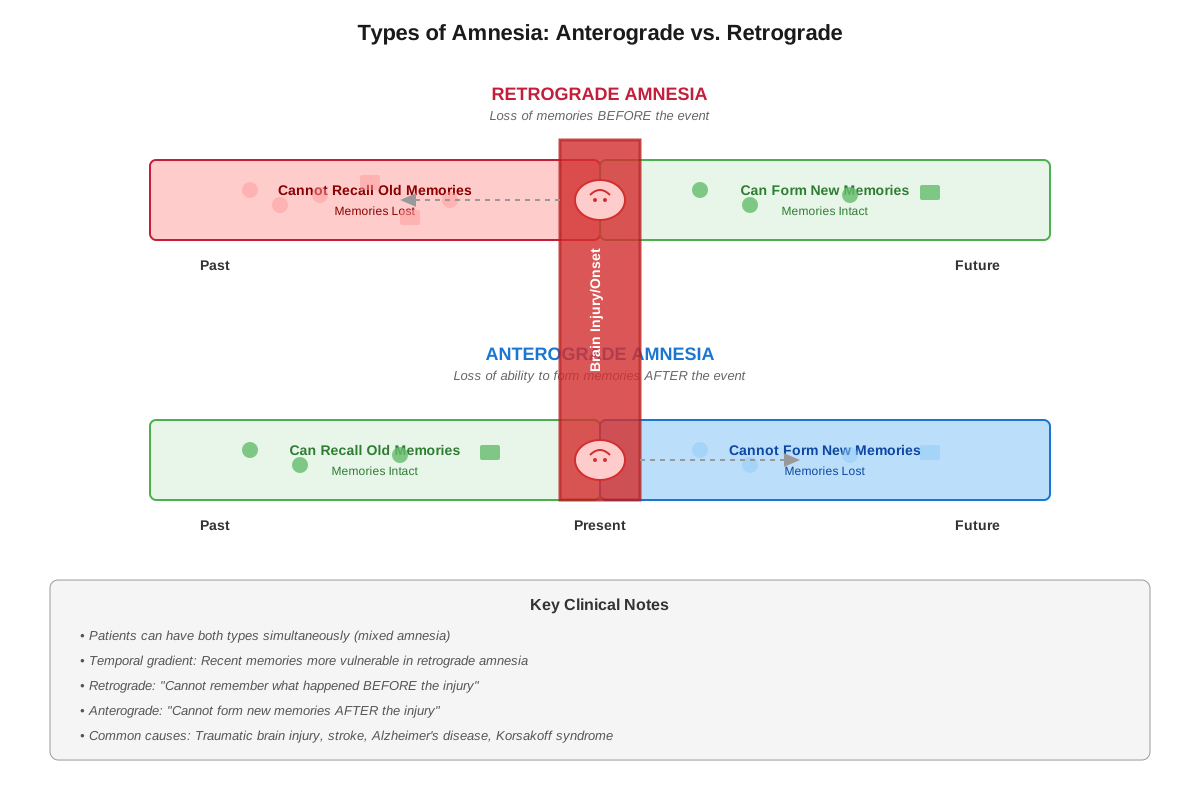
- [ ] Distinguish between anterograde and retrograde amnesia based on clinical presentations
- [ ] Analyze the neuroanatomical basis of different amnesia types and predict functional outcomes
- [ ] Evaluate which memory systems remain functional in various amnesia presentations
Prerequisites
- Memory systems (sensory, short-term/working, long-term): Essential for understanding which specific memory components are disrupted in different amnesia types
- Declarative vs. procedural memory distinction: Critical for recognizing that amnesia typically affects explicit memory while sparing implicit memory
- Hippocampus and medial temporal lobe anatomy: Necessary to understand the neurological basis of most amnesia cases
- Memory encoding, storage, and retrieval processes: Required to identify at which stage memory failure occurs in different amnesia presentations
- Consolidation theory: Foundational for understanding why recent memories are more vulnerable than remote memories in certain amnesia types
Why This Topic Matters
Amnesia represents one of the highest-yield topics within the Psychology section of the MCAT, appearing in approximately 3-5% of Psychology/Sociology questions either directly or as part of broader memory-related passages. The clinical significance of amnesia extends beyond academic interest—it affects millions of individuals worldwide through traumatic brain injury, stroke, Alzheimer's disease, Korsakoff's syndrome, and other neurological conditions. Understanding amnesia provides crucial insights into normal memory function, as studying what breaks reveals how the system normally works.
On the MCAT, amnesia appears in multiple question formats. Passage-based questions frequently present case studies of patients with specific brain lesions, asking students to predict memory deficits or explain preserved functions. Discrete questions may test the ability to distinguish between amnesia types based on brief clinical descriptions. Research-based passages often describe experiments using amnesic patients to investigate memory systems, requiring students to interpret findings and understand experimental logic. The topic also appears in questions about neurodegenerative diseases, substance abuse effects, and psychological trauma.
Real-world applications make this topic particularly relevant for future physicians. Clinicians regularly encounter patients with memory complaints, and distinguishing between normal aging, depression-related cognitive changes, and pathological amnesia requires understanding the patterns and mechanisms described in this guide. Additionally, amnesia research has revolutionized our understanding of memory systems, leading to the discovery that multiple, dissociable memory systems exist in the brain—a fundamental principle in cognitive neuroscience that informs treatment approaches and rehabilitation strategies.
Core Concepts
Definition and Classification of Amnesia
Amnesia is defined as a deficit in memory function caused by brain damage, disease, or psychological trauma, characterized by an inability to form new memories or recall previously established information. Unlike normal forgetting, which occurs gradually and affects all individuals, amnesia represents a pathological disruption of memory processes that significantly impairs daily functioning. The condition can be organic (resulting from physical brain damage) or functional/psychogenic (resulting from psychological factors without apparent structural damage).
The classification of amnesia depends on multiple dimensions: temporal direction (what time period is affected), memory system involved (which type of memory is impaired), and etiology (what caused the condition). This multidimensional classification system allows precise characterization of memory deficits and helps predict functional outcomes and recovery patterns.
Anterograde Amnesia
Anterograde amnesia refers to the inability to form new long-term memories following the onset of amnesia, while memories from before the causative event remain relatively intact. Patients with pure anterograde amnesia can recall their childhood, education, and life events up to the point of injury but cannot create new lasting memories. They may hold information in working memory temporarily (for seconds to minutes) but cannot consolidate this information into long-term storage.
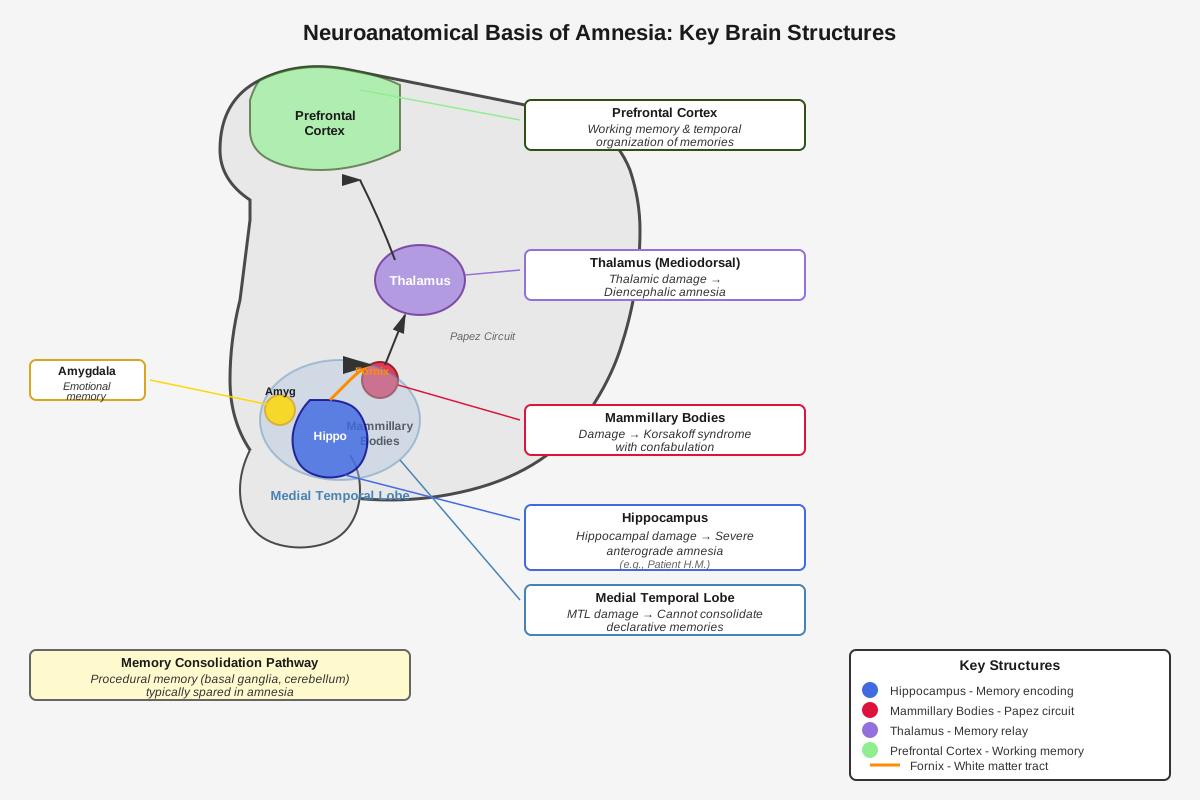
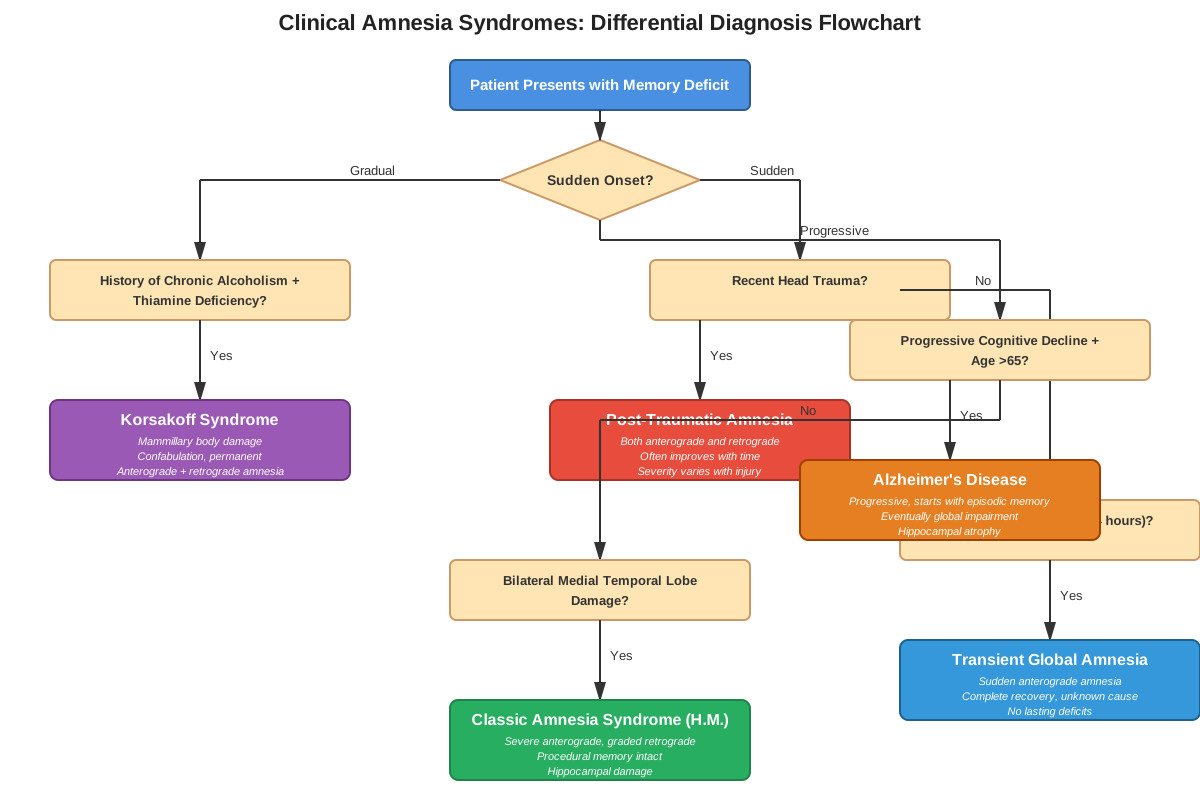
The neurological basis of anterograde amnesia typically involves damage to the hippocampus and surrounding medial temporal lobe structures, including the entorhinal cortex, perirhinal cortex, and parahippocampal cortex. These structures are critical for memory consolidation—the process of transforming temporary, fragile memory traces into stable, long-term representations. The famous patient H.M., who underwent bilateral medial temporal lobe resection to treat epilepsy, exemplified pure anterograde amnesia, demonstrating intact intelligence, personality, and remote memories but complete inability to form new declarative memories.
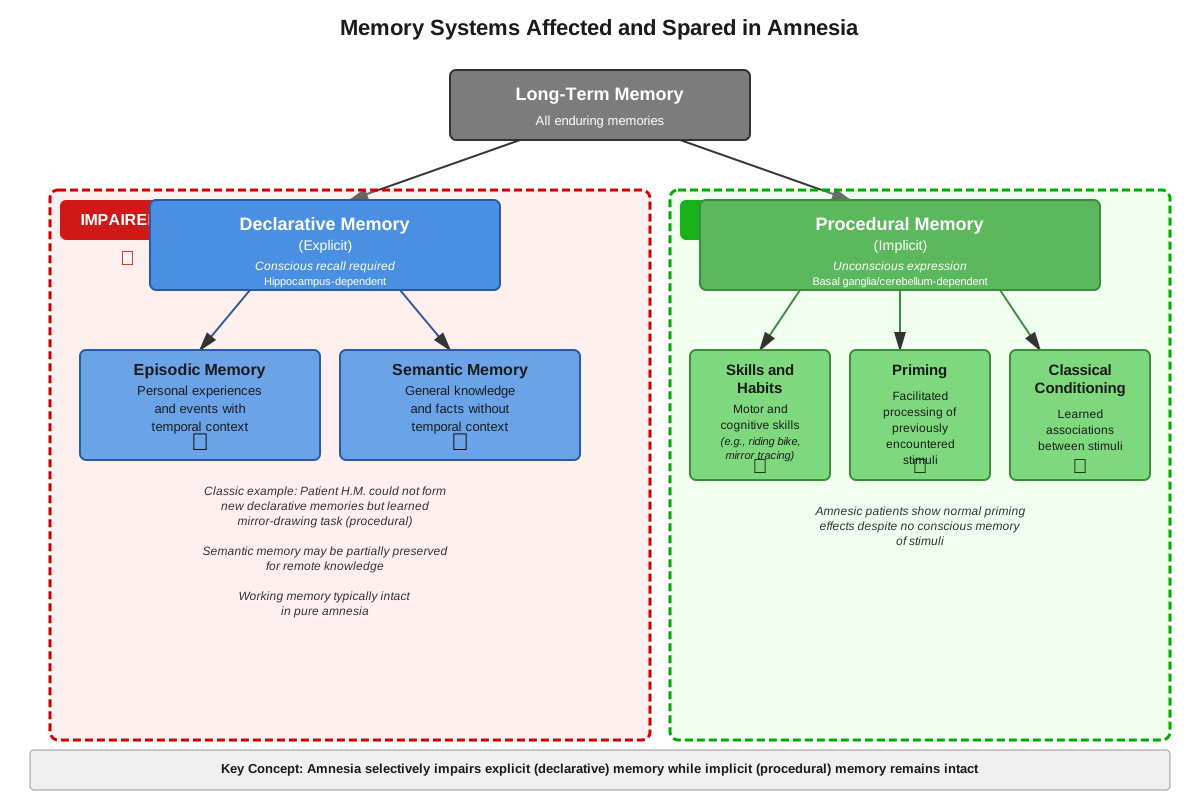
Importantly, anterograde amnesia typically affects declarative (explicit) memory—conscious recollection of facts and events—while sparing procedural (implicit) memory—unconscious learning of skills and habits. Patients can learn new motor skills, show priming effects, and develop conditioned responses despite having no conscious memory of the learning episodes. This dissociation provided crucial evidence that multiple memory systems exist in the brain, operating independently and supported by different neural substrates.
Retrograde Amnesia
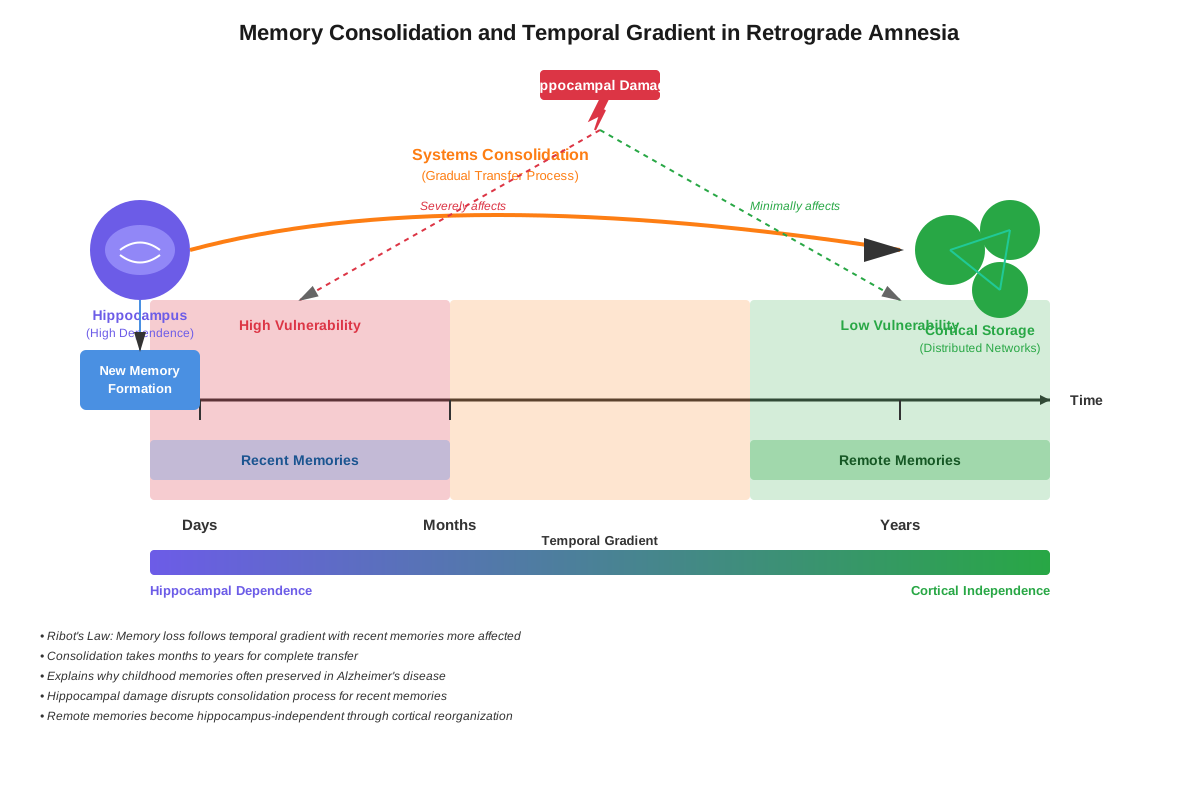
Retrograde amnesia involves the loss of memories that were formed before the onset of amnesia. The temporal extent varies dramatically, from minutes to decades, depending on the cause and severity of brain damage. A characteristic feature is temporal gradient or Ribot's Law: recent memories are typically more vulnerable than remote memories, creating a gradient where memory loss is most severe for events immediately preceding the amnesia-causing event and progressively less severe for more distant memories.
This temporal gradient reflects the time-dependent nature of memory consolidation. Newly formed memories remain dependent on hippocampal structures for an extended period (months to years) during systems consolidation, gradually becoming independent and stored in neocortical regions. Damage to the hippocampus therefore disrupts recent memories still undergoing consolidation while sparing remote memories that have completed the consolidation process and are now represented in distributed cortical networks.
The extent of retrograde amnesia helps localize brain damage and predict recovery. Limited retrograde amnesia (minutes to hours) suggests temporary disruption such as concussion, while extensive retrograde amnesia (years to decades) indicates more severe or widespread damage. Focal retrograde amnesia—selective loss of specific memory categories or time periods—can occur with damage to specialized cortical regions that store particular types of semantic knowledge.
Comparison of Amnesia Types
| Feature | Anterograde Amnesia | Retrograde Amnesia |
|---|---|---|
| Temporal direction | Forward from injury | Backward from injury |
| Primary deficit | Cannot form new memories | Cannot recall old memories |
| Typical cause | Hippocampal damage | Variable; hippocampal or cortical damage |
| Temporal gradient | Not applicable | Usually present (recent > remote) |
| Working memory | Typically intact | Typically intact |
| Procedural memory | Often preserved | Usually preserved |
| Recovery pattern | Limited improvement | Often shows partial recovery |
Causes and Etiologies
Multiple conditions can produce amnesia, each with characteristic patterns:
- Traumatic brain injury (TBI): Produces both anterograde and retrograde amnesia, with retrograde amnesia often showing temporal gradient and partial recovery
- Korsakoff's syndrome: Caused by thiamine (vitamin B1) deficiency, typically from chronic alcoholism; damages mammillary bodies and dorsomedial thalamus; produces severe anterograde amnesia with variable retrograde amnesia and confabulation
- Alzheimer's disease: Progressive neurodegenerative condition beginning with anterograde amnesia and gradually extending retrograde amnesia as disease progresses
- Herpes simplex encephalitis: Viral infection with predilection for temporal lobes; can cause severe anterograde and retrograde amnesia
- Hypoxia/anoxia: Oxygen deprivation selectively damages hippocampal CA1 neurons, producing anterograde amnesia
- Transient global amnesia: Temporary condition of unknown etiology producing sudden anterograde amnesia and limited retrograde amnesia, resolving within 24 hours
- Electroconvulsive therapy (ECT): Can produce temporary retrograde amnesia for recent events
- Dissociative (psychogenic) amnesia: Psychological trauma causing memory loss without structural brain damage; typically affects autobiographical memories related to traumatic events
Memory Systems Affected and Preserved
Understanding which memory systems remain functional in amnesia is crucial for MCAT questions. Declarative memory (explicit, conscious recollection) divides into:
- Episodic memory: Personal experiences and events (severely impaired in most amnesia)
- Semantic memory: General knowledge and facts (variably affected; often better preserved than episodic)
Non-declarative memory (implicit, unconscious) typically remains intact:
- Procedural memory: Motor skills and habits (preserved)
- Priming: Facilitated processing of previously encountered stimuli (preserved)
- Classical conditioning: Learned associations between stimuli (preserved)
- Non-associative learning: Habituation and sensitization (preserved)
This dissociation demonstrates that the hippocampus and medial temporal lobe structures are specifically required for conscious, declarative memory but not for unconscious, procedural forms of learning. The basal ganglia support procedural learning, the amygdala supports emotional conditioning, and the cerebellum supports certain forms of motor learning—all independent of hippocampal function.
Confabulation and Related Phenomena
Confabulation refers to the production of fabricated or distorted memories without conscious intention to deceive. Particularly common in Korsakoff's syndrome, confabulation represents an attempt to fill memory gaps with plausible but inaccurate information. Patients genuinely believe their confabulated memories, distinguishing this from lying. Confabulation likely results from frontal lobe dysfunction affecting memory monitoring and source attribution rather than from the amnesia itself.
Source amnesia (source monitoring failure) involves remembering information but not remembering where, when, or how it was learned. This can occur in amnesia and also in normal individuals, particularly for semantic information that becomes decontextualized over time.
Concept Relationships
The concepts within amnesia form an interconnected network centered on the distinction between memory formation (anterograde) and memory retrieval (retrograde). Both types of amnesia share common neuroanatomical substrates—particularly hippocampal and medial temporal lobe structures—but represent disruption at different stages of memory processing. Anterograde amnesia reflects failure of encoding and consolidation, while retrograde amnesia reflects failure of storage or retrieval of previously consolidated memories.
The temporal gradient in retrograde amnesia connects directly to consolidation theory: recent memories → still dependent on hippocampus → vulnerable to hippocampal damage → lost in retrograde amnesia. Conversely: remote memories → consolidated in cortex → independent of hippocampus → preserved despite hippocampal damage. This relationship explains why the same brain lesion produces both anterograde amnesia (cannot consolidate new memories) and temporally graded retrograde amnesia (disrupts recent memories still consolidating).
The dissociation between declarative and procedural memory in amnesia connects to the broader principle of multiple memory systems. Hippocampal damage → impairs declarative memory → produces amnesia for facts and events. However: basal ganglia intact → preserves procedural memory → allows skill learning despite amnesia. This relationship demonstrates that "memory" is not a unitary function but comprises multiple, neurologically distinct systems that can be selectively impaired.
Amnesia connects to prerequisite concepts through clear pathways: disruption of consolidation (prerequisite) → anterograde amnesia (current topic); hippocampal damage (prerequisite neuroanatomy) → specific amnesia pattern (current topic); declarative vs. procedural distinction (prerequisite) → selective memory impairment (current topic). Understanding these connections enables prediction of functional outcomes from neurological damage and interpretation of experimental findings using amnesic patients.
Quick check — test yourself on Amnesia so far.
Try Flashcards →High-Yield Facts
⭐ Anterograde amnesia is the inability to form new long-term memories after the onset of amnesia, typically caused by hippocampal or medial temporal lobe damage.
⭐ Retrograde amnesia is the loss of memories formed before the onset of amnesia, usually showing a temporal gradient with recent memories more affected than remote memories.
⭐ Amnesia typically impairs declarative (explicit) memory while sparing procedural (implicit) memory, demonstrating dissociable memory systems.
⭐ The hippocampus and medial temporal lobe structures are critical for memory consolidation; damage produces anterograde amnesia and temporally graded retrograde amnesia.
⭐ Korsakoff's syndrome, caused by thiamine deficiency (often from alcoholism), produces severe anterograde amnesia, variable retrograde amnesia, and confabulation.
- Working memory (short-term memory) typically remains intact in amnesia, allowing normal conversation and immediate recall despite inability to form long-term memories.
- The temporal gradient in retrograde amnesia reflects Ribot's Law: recent memories are more vulnerable than remote memories because they are still undergoing consolidation.
- Patient H.M. (Henry Molaison) is the most famous amnesia case, demonstrating pure anterograde amnesia after bilateral medial temporal lobe resection while showing preserved procedural learning.
- Transient global amnesia is a temporary condition producing sudden anterograde amnesia and limited retrograde amnesia that resolves completely within 24 hours.
- Confabulation is the unconscious production of fabricated memories to fill gaps, particularly common in Korsakoff's syndrome due to frontal lobe involvement.
- Semantic memory (general knowledge) is often better preserved than episodic memory (personal experiences) in amnesia.
- Dissociative amnesia is psychologically rather than organically caused, typically affecting autobiographical memories related to trauma without structural brain damage.
Common Misconceptions
Misconception: Amnesia always involves complete memory loss for all types of information.
Correction: Amnesia is typically selective, affecting declarative memory while sparing procedural memory, working memory, and other cognitive functions. Patients can learn new skills, hold conversations, and demonstrate normal intelligence despite severe amnesia for facts and events.
Misconception: Anterograde and retrograde amnesia are mutually exclusive conditions.
Correction: Most amnesia cases involve both anterograde and retrograde components simultaneously. For example, hippocampal damage typically produces anterograde amnesia (cannot form new memories) plus temporally graded retrograde amnesia (cannot recall recent pre-injury memories), while very remote memories remain intact.
Misconception: Retrograde amnesia affects all past memories equally.
Correction: Retrograde amnesia typically shows a temporal gradient following Ribot's Law, with recent memories more severely affected than remote memories. This gradient reflects the time-dependent consolidation process, where recent memories remain hippocampus-dependent while remote memories become cortically consolidated.
Misconception: Amnesia patients cannot learn anything new.
Correction: While amnesic patients cannot consciously remember new facts or events (declarative memory impairment), they can acquire new motor skills, show priming effects, and develop conditioned responses (preserved procedural memory). Patient H.M. learned mirror-drawing skills despite having no memory of practice sessions.
Misconception: Confabulation in amnesia represents intentional lying or deception.
Correction: Confabulation is an unconscious process where patients genuinely believe their fabricated memories. It results from frontal lobe dysfunction affecting memory monitoring rather than from deliberate deception, and patients have no awareness that their memories are inaccurate.
Misconception: All amnesia is permanent and irreversible.
Correction: Recovery depends on etiology. Transient global amnesia resolves completely within 24 hours. Post-traumatic amnesia often shows partial recovery, particularly for retrograde components. However, amnesia from permanent structural damage (e.g., Korsakoff's syndrome, severe TBI) typically shows limited recovery of anterograde memory function.
Misconception: Amnesia affects intelligence and personality.
Correction: Pure amnesia selectively impairs memory while leaving intelligence, personality, language, and other cognitive functions intact. Patient H.M. maintained normal intelligence and personality throughout his life despite profound amnesia, demonstrating that memory is dissociable from other cognitive domains.
Worked Examples
Example 1: Distinguishing Amnesia Types from Clinical Presentation
Vignette: A 45-year-old man is brought to the emergency department after a motor vehicle accident. He sustained a head injury with brief loss of consciousness. Upon awakening, he cannot remember the accident or events from the previous 2 hours. He recognizes his family and recalls his childhood, education, and career. However, over the next several days, he has difficulty remembering conversations from earlier in the day and repeatedly asks the same questions. Which type(s) of amnesia does this patient exhibit?
Analysis:
- Identify temporal direction of memory deficits:
- Cannot remember the accident or 2 hours before = retrograde amnesia (loss of memories before injury)
- Cannot remember recent conversations = anterograde amnesia (cannot form new memories after injury)
- Assess extent and pattern:
- Retrograde amnesia is limited (2 hours), showing temporal gradient
- Remote memories (childhood, education, career) are intact
- Recognition of family indicates preserved semantic/personal knowledge
- Repeated questions indicate failure to consolidate new information
- Determine likely mechanism:
- Head trauma → likely hippocampal/temporal lobe injury
- Brief retrograde amnesia suggests temporary disruption
- Persistent anterograde amnesia suggests structural damage to consolidation mechanisms
Answer: This patient exhibits both post-traumatic retrograde amnesia (limited to 2 hours pre-injury, showing temporal gradient) and anterograde amnesia (inability to form new memories post-injury). The pattern is consistent with hippocampal or medial temporal lobe injury from traumatic brain injury. The limited retrograde component may partially recover, but the anterograde component suggests ongoing consolidation deficit.
MCAT Connection: This example demonstrates the typical pattern following TBI and requires distinguishing between amnesia types based on temporal direction, recognizing that both can coexist, and understanding the neurological basis (hippocampal damage affects both recent memory retrieval and new memory formation).
Example 2: Predicting Preserved Functions in Amnesia
Vignette: A research study examines a patient with severe anterograde amnesia following viral encephalitis that damaged bilateral hippocampal structures. The patient cannot recall meeting the researchers despite multiple sessions. Which of the following abilities would most likely remain intact in this patient?
A) Remembering what he ate for breakfast this morning
B) Learning to solve a puzzle through repeated practice
C) Recalling events from yesterday's testing session
D) Forming new semantic knowledge about current events
Analysis:
- Identify the deficit: Bilateral hippocampal damage → severe anterograde amnesia → cannot form new declarative memories
- Evaluate each option:
- Option A: Remembering breakfast = episodic memory = declarative = requires hippocampus = IMPAIRED
- Option B: Learning puzzle through practice = procedural memory = skill learning = basal ganglia-dependent = PRESERVED
- Option C: Recalling yesterday's events = episodic memory = declarative = requires hippocampus = IMPAIRED
- Option D: New semantic knowledge = declarative memory = requires hippocampus = IMPAIRED
- Apply dissociation principle: Hippocampal damage impairs declarative (explicit) memory but spares procedural (implicit) memory
Answer: B - Learning to solve a puzzle through repeated practice represents procedural memory, which is mediated by the basal ganglia and cerebellum rather than the hippocampus. Despite having no conscious memory of practice sessions, the patient would show improved performance, demonstrating preserved implicit learning. This dissociation between declarative and procedural memory is a hallmark finding in amnesia research.
MCAT Connection: This example tests understanding of multiple memory systems and the ability to predict functional outcomes from neurological damage. MCAT questions frequently present amnesia cases and ask which functions remain intact, requiring knowledge of the declarative/procedural distinction and associated neural substrates.
Exam Strategy
When approaching MCAT questions on amnesia, begin by identifying the temporal direction of the memory deficit: Does the patient have trouble forming new memories (anterograde) or recalling old memories (retrograde)? This fundamental distinction guides all subsequent analysis. Look for trigger phrases such as "cannot remember events after the injury" (anterograde), "cannot recall events before the accident" (retrograde), or "difficulty learning new information" (anterograde).
Next, assess which memory systems are affected. Questions often test whether students understand that amnesia typically impairs declarative/explicit memory while sparing procedural/implicit memory. Watch for scenarios describing patients who can learn new skills despite having no memory of practice sessions—this classic dissociation is high-yield. Trigger phrases include "unconsciously learned," "improved performance without awareness," or "skill acquisition despite amnesia."
For neuroanatomy-based questions, remember that hippocampus and medial temporal lobe damage produces the classic amnesia pattern: anterograde amnesia plus temporally graded retrograde amnesia. If a question describes damage to these structures, predict this specific pattern. Conversely, if a question describes this pattern, infer hippocampal involvement. Other structures produce different patterns: mammillary body/thalamic damage (Korsakoff's syndrome with confabulation), frontal lobe damage (source amnesia and confabulation without severe anterograde amnesia).
Process-of-elimination strategy: When questions ask which function is preserved in amnesia, eliminate options involving conscious recollection of facts or events (declarative memory). The correct answer typically involves unconscious learning (procedural memory, priming, conditioning). When questions ask which function is impaired, eliminate options involving skills, habits, or unconscious processes.
Time allocation: Amnesia questions are typically straightforward if you know the core distinctions. Spend 60-90 seconds identifying the amnesia type and affected memory systems, then quickly evaluate answer choices. Don't overthink—MCAT questions test fundamental principles rather than obscure details. If a passage describes an amnesia case, expect 1-2 questions testing type identification, 1-2 testing preserved/impaired functions, and possibly 1 testing neuroanatomical basis.
Memory Techniques
Mnemonic for Amnesia Types - "AFTER vs. BEFORE":
- Anterograde = After injury (cannot form new memories going forward)
- Retrograde = Rewind/Reverse (cannot recall old memories going backward)
Mnemonic for Preserved Functions - "HIPPOCAMPUS HATES CONSCIOUS MEMORY":
- Hippocampal damage
- Impairs
- Conscious (declarative/explicit) memory
- But Preserves Procedural, Priming, and other implicit memory
Visualization Strategy for Temporal Gradient:
Picture a timeline with the injury point as a dividing line. For retrograde amnesia, imagine memories fading like a gradient, darkest (most affected) near the injury point and progressively lighter (better preserved) moving backward in time. Recent memories are "still wet paint" easily smudged by injury, while remote memories are "dried paint" resistant to damage.
Acronym for Korsakoff's Syndrome - "TAC":
- Thiamine deficiency
- Anterograde amnesia (severe)
- Confabulation
Memory Palace Technique:
Imagine walking through a house where each room represents a memory system:
- Front door (hippocampus) = controls entry of new declarative memories; if broken, new visitors (memories) cannot enter (anterograde amnesia)
- Living room = episodic memories (personal experiences); most vulnerable to damage
- Library = semantic memories (facts); more resistant to damage
- Basement workshop = procedural memories (skills); separate entrance, unaffected by front door damage
Summary
Amnesia represents a pathological disruption of memory function characterized by inability to form new memories (anterograde amnesia) or recall previously established memories (retrograde amnesia). The condition typically results from damage to the hippocampus and medial temporal lobe structures, which are critical for memory consolidation. A fundamental principle is that amnesia selectively impairs declarative (explicit) memory—conscious recollection of facts and events—while sparing procedural (implicit) memory—unconscious learning of skills and habits. This dissociation demonstrates that multiple, neurologically distinct memory systems exist in the brain. Retrograde amnesia typically shows a temporal gradient following Ribot's Law, with recent memories more vulnerable than remote memories due to the time-dependent nature of consolidation. Common causes include traumatic brain injury, Korsakoff's syndrome (thiamine deficiency), neurodegenerative diseases, and viral encephalitis. Understanding amnesia patterns allows prediction of functional outcomes from brain damage and interpretation of memory research, making this a high-yield topic for MCAT success.
Key Takeaways
- Anterograde amnesia is the inability to form new long-term memories after injury, while retrograde amnesia is the loss of memories formed before injury; most cases involve both simultaneously
- Amnesia typically impairs declarative (explicit) memory while preserving procedural (implicit) memory, demonstrating dissociable memory systems supported by different brain structures
- The hippocampus and medial temporal lobe are critical for memory consolidation; damage produces anterograde amnesia and temporally graded retrograde amnesia
- Temporal gradient in retrograde amnesia (recent memories more affected than remote) reflects time-dependent consolidation, where recent memories remain hippocampus-dependent while remote memories become cortically stored
- Working memory and other cognitive functions (intelligence, personality, language) typically remain intact in pure amnesia, demonstrating selective memory impairment
- Korsakoff's syndrome (thiamine deficiency from alcoholism) produces severe anterograde amnesia with confabulation due to mammillary body and thalamic damage
- Understanding which memory systems are preserved versus impaired in amnesia is essential for predicting functional outcomes and interpreting MCAT vignettes
Related Topics
Memory Consolidation: The process by which temporary memory traces become stable long-term representations; understanding consolidation mechanisms explains why amnesia shows temporal gradients and why hippocampal damage produces specific patterns. Mastering amnesia provides foundation for deeper study of consolidation.
Neuroanatomy of Memory Systems: Detailed study of hippocampus, medial temporal lobe structures, basal ganglia, amygdala, and cerebellum; understanding these structures' specific roles explains dissociations seen in amnesia and enables prediction of deficits from localized damage.
Alzheimer's Disease and Dementia: Progressive neurodegenerative conditions beginning with amnesia-like symptoms; understanding amnesia mechanisms provides foundation for comprehending disease progression and distinguishing dementia from focal amnesia.
Implicit vs. Explicit Memory: Deeper exploration of conscious versus unconscious memory systems; amnesia research provided crucial evidence for this distinction, and mastering amnesia enables sophisticated understanding of memory taxonomy.
Memory Encoding and Retrieval: Detailed study of how information enters memory and is later accessed; amnesia represents failure at specific stages, and understanding these processes explains why different brain regions produce different amnesia patterns.
Practice CTA
Now that you have mastered the core concepts of amnesia, reinforce your learning by attempting practice questions and reviewing flashcards focused on this topic. Challenge yourself with MCAT-style vignettes that require distinguishing between amnesia types, predicting preserved functions, and connecting symptoms to neuroanatomical damage. The dissociations and patterns you have learned represent some of the most testable material in the Psychology section—practice applying this knowledge until you can confidently analyze any amnesia scenario within seconds. Your investment in mastering this high-yield topic will pay dividends on test day and throughout your medical career!
Sign up free to keep reading
Create a free AnvayaPrep account to finish this MCAT guide on Amnesia — plus flashcards and practice questions.