Overview
Long term memory represents one of the most critical cognitive systems tested on the MCAT, serving as the foundation for understanding how humans encode, store, and retrieve information over extended periods—from hours to an entire lifetime. Unlike the fleeting nature of sensory and short-term memory systems, long term memory provides the vast storage capacity that allows individuals to maintain knowledge, skills, personal experiences, and semantic information indefinitely. This memory system is not a single, monolithic structure but rather comprises multiple subsystems with distinct characteristics, neural substrates, and functional properties that work in concert to support human cognition and behavior.
For MCAT preparation, mastering long term memory Psychology concepts is essential because this topic appears frequently across multiple contexts within the Psychological, Social, and Biological Foundations of Behavior section. Questions may test understanding of memory consolidation processes, the distinction between explicit and implicit memory systems, the role of various brain structures (particularly the hippocampus and cerebral cortex), or the application of memory principles to clinical scenarios involving amnesia, dementia, or learning disorders. The AAMC consistently includes passages that require students to differentiate between memory types, understand encoding specificity, or analyze experimental designs investigating memory phenomena.
Within the broader Learning and Memory unit, long term memory represents the culmination of information processing that begins with sensory input and progresses through attention, encoding, and consolidation stages. This topic connects intimately with concepts such as working memory capacity, retrieval cues, forgetting mechanisms, and the biological substrates of memory formation. Understanding long term memory provides the conceptual framework necessary for analyzing how experiences shape behavior, how knowledge is organized in semantic networks, and how memory failures manifest in both normal aging and pathological conditions—all high-yield areas for MCAT examination.
Learning Objectives
- [ ] Define Long term memory using accurate Psychology terminology
- [ ] Explain why Long term memory matters for the MCAT
- [ ] Apply Long term memory to exam-style questions
- [ ] Identify common mistakes related to Long term memory
- [ ] Connect Long term memory to related Psychology concepts
- [ ] Distinguish between explicit (declarative) and implicit (non-declarative) memory systems with specific examples
- [ ] Describe the neuroanatomical structures involved in different types of long term memory formation and retrieval
- [ ] Analyze how encoding specificity, retrieval cues, and consolidation processes affect long term memory performance
- [ ] Evaluate experimental designs and clinical cases involving long term memory dysfunction
Prerequisites
- Sensory memory and short-term memory: Understanding the multi-store model of memory is essential because long term memory represents the final storage stage after information passes through earlier memory systems
- Basic neuroanatomy: Familiarity with brain structures (hippocampus, amygdala, cerebellum, basal ganglia, prefrontal cortex) enables comprehension of the neural substrates underlying different memory types
- Attention and encoding processes: Knowledge of how information initially enters memory systems is necessary to understand what ultimately becomes consolidated into long term storage
- Basic learning principles: Classical and operant conditioning concepts provide context for understanding procedural and implicit memory formation
Why This Topic Matters
Long term memory concepts have profound clinical and real-world significance that extends far beyond academic psychology. Clinically, understanding long term memory systems is essential for diagnosing and treating conditions such as Alzheimer's disease (which initially affects episodic memory while sparing procedural memory), anterograde amnesia following hippocampal damage, and dissociative disorders. Healthcare professionals must understand how different memory systems can be selectively impaired or preserved to provide appropriate patient care, develop rehabilitation strategies, and communicate effectively with patients and families about memory-related conditions.
From an MCAT examination perspective, long term memory appears with high frequency across multiple question formats. Statistical analysis of recent MCAT administrations indicates that memory-related questions constitute approximately 8-12% of the Psychological, Social, and Biological Foundations of Behavior section, with long term memory specifically featured in 4-6 discrete questions per exam and appearing in 2-3 passage-based question sets. Questions typically assess the ability to distinguish between memory types, identify brain regions associated with specific memory functions, analyze experimental results from memory studies, or apply memory principles to clinical vignettes.
Common MCAT passage contexts include: research studies comparing memory performance under different encoding or retrieval conditions; clinical cases describing patients with selective memory impairments following brain injury or disease; neuroimaging studies showing differential brain activation during various memory tasks; and developmental or aging studies examining how memory systems change across the lifespan. Discrete questions frequently test definitional knowledge (distinguishing semantic from episodic memory), neuroanatomical associations (hippocampus with explicit memory formation), or application scenarios (identifying which memory system would be used in specific situations).
Core Concepts
Definition and Characteristics of Long Term Memory
Long term memory refers to the memory system responsible for storing information over extended periods, ranging from hours to an entire lifetime, with essentially unlimited capacity. Unlike short-term or working memory, which maintains information for seconds to minutes and has severe capacity limitations (approximately 7±2 items), long term memory can store vast amounts of information indefinitely without apparent capacity constraints. The process of transferring information from short-term to long term storage is called consolidation, which involves structural and biochemical changes in neural networks, particularly through long-term potentiation (LTP) mechanisms in the hippocampus and cortical regions.
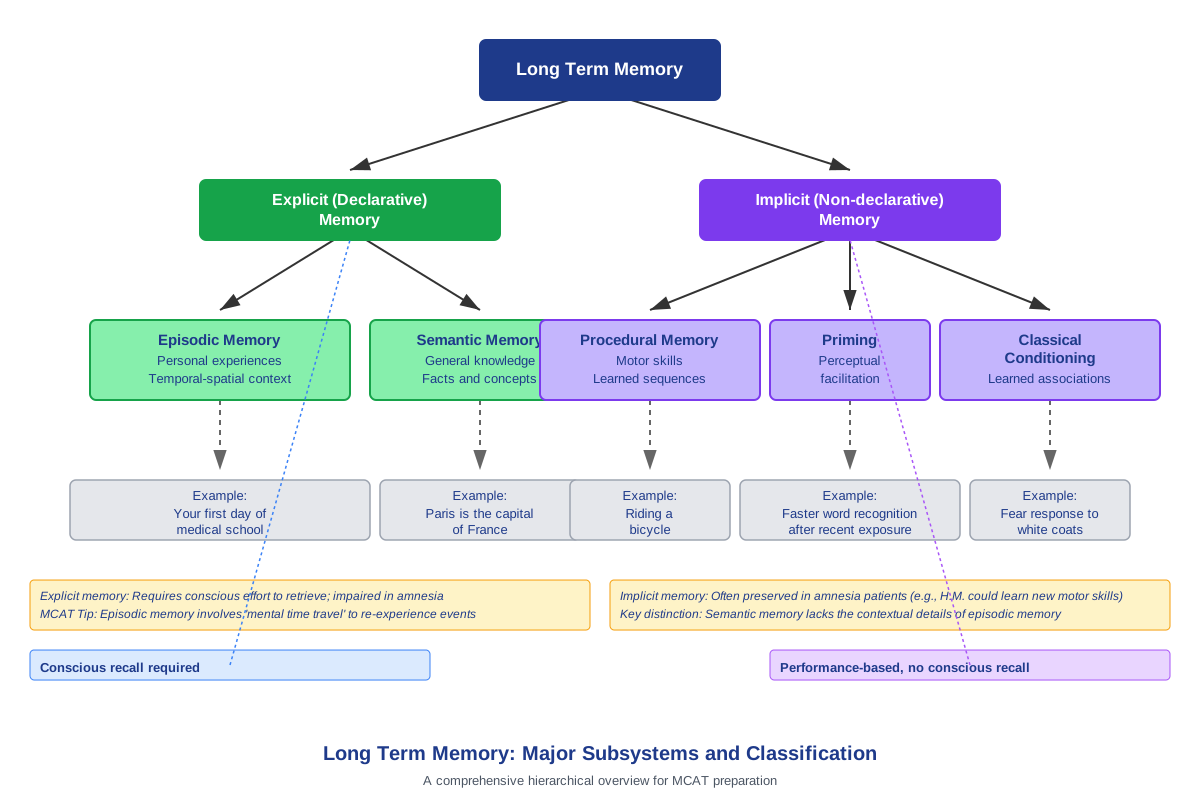
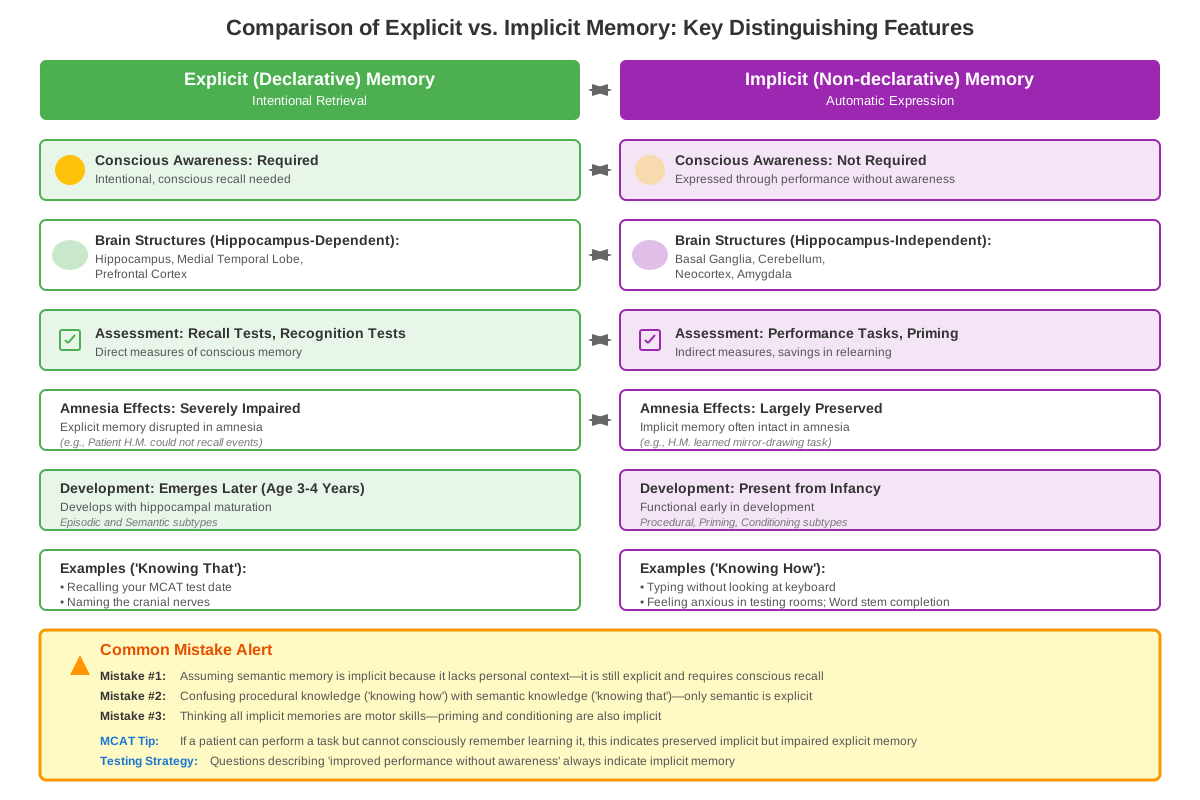
Long term memory is not a unitary system but comprises multiple subsystems that differ in their content, conscious accessibility, brain substrates, and susceptibility to various forms of amnesia. The primary distinction separates explicit (declarative) memory—conscious, intentional recollection of facts and events—from implicit (non-declarative) memory—unconscious influences of past experiences on current behavior and performance.
Explicit (Declarative) Memory
Explicit memory, also termed declarative memory, encompasses all memories that can be consciously recalled and verbally expressed ("declared"). This system divides into two major subtypes with distinct characteristics and neural substrates:
Episodic memory stores personally experienced events situated in specific temporal and spatial contexts—the "what, where, and when" of personal experiences. Examples include remembering your first day of medical school, what you ate for breakfast yesterday, or the details of a vacation trip. Episodic memories are characterized by autonoetic consciousness (self-knowing awareness) and mental time travel—the subjective sense of re-experiencing past events. The hippocampus plays a critical role in encoding and consolidating episodic memories, with the medial temporal lobe system (including entorhinal, perirhinal, and parahippocampal cortices) supporting the binding of multiple features into coherent episodes. Episodic memory is particularly vulnerable to disruption in conditions like Alzheimer's disease, temporal lobe epilepsy, and normal aging.
Semantic memory contains general knowledge about the world, including facts, concepts, vocabulary, and meanings that are not tied to specific learning episodes. Examples include knowing that Paris is the capital of France, understanding what a "cell membrane" is, or recognizing that dogs are mammals. Unlike episodic memory, semantic memory involves noetic consciousness (knowing without re-experiencing) and lacks the contextual details of when or where the information was learned. While semantic memory formation initially requires hippocampal involvement, consolidated semantic knowledge becomes increasingly independent of the hippocampus and is distributed across neocortical regions, particularly in the lateral temporal cortex. This explains why patients with hippocampal damage can retain previously learned semantic knowledge while being unable to form new episodic memories.
Implicit (Non-Declarative) Memory
Implicit memory, also called non-declarative memory, encompasses all forms of memory that influence behavior without conscious awareness or intentional recollection. These memory systems operate automatically and are typically assessed through performance measures rather than explicit recall or recognition tests. Implicit memory includes several distinct subsystems:
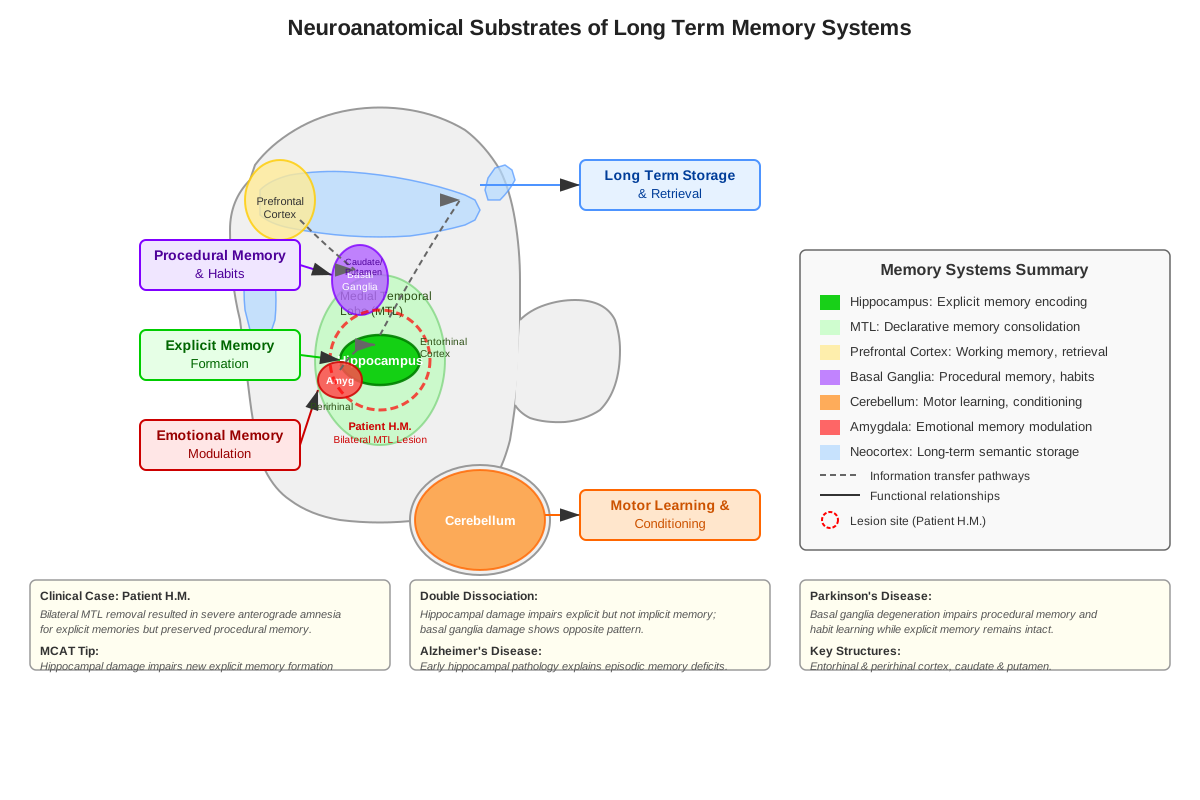
Procedural memory stores skills, habits, and motor sequences acquired through practice and repetition. Examples include riding a bicycle, typing on a keyboard, playing a musical instrument, or performing surgical procedures. Procedural memories are characterized by gradual acquisition through repeated practice, automatic execution once learned, and difficulty in verbally describing the specific steps involved. The neural substrates of procedural memory involve the basal ganglia (particularly the striatum) for habit learning and motor sequences, and the cerebellum for motor skill learning and timing. Critically, procedural memory remains intact in patients with hippocampal damage who cannot form new explicit memories, as demonstrated by patient H.M., who could learn new motor skills despite profound anterograde amnesia for explicit information.
Priming refers to changes in the ability to identify or process stimuli as a result of prior exposure, without conscious memory of that exposure. For example, after seeing the word "doctor" in a list, individuals are faster to complete the word stem "doc___" with "doctor" rather than "document," even if they don't consciously remember seeing "doctor" in the original list. Priming can be perceptual (based on physical features) or conceptual (based on meaning) and involves changes in cortical processing efficiency in regions responsible for representing the primed stimuli. Priming remains intact in amnesia, demonstrating its independence from explicit memory systems.
Classical conditioning (associative learning) involves forming associations between stimuli or between stimuli and responses. While simple forms of classical conditioning (like fear conditioning) can occur without hippocampal involvement, the amygdala plays a crucial role in emotional conditioning, and the cerebellum is essential for eyeblink conditioning. Conditioned responses can be expressed without conscious awareness of the conditioning contingencies, qualifying classical conditioning as a form of implicit memory.
Memory Consolidation and Storage
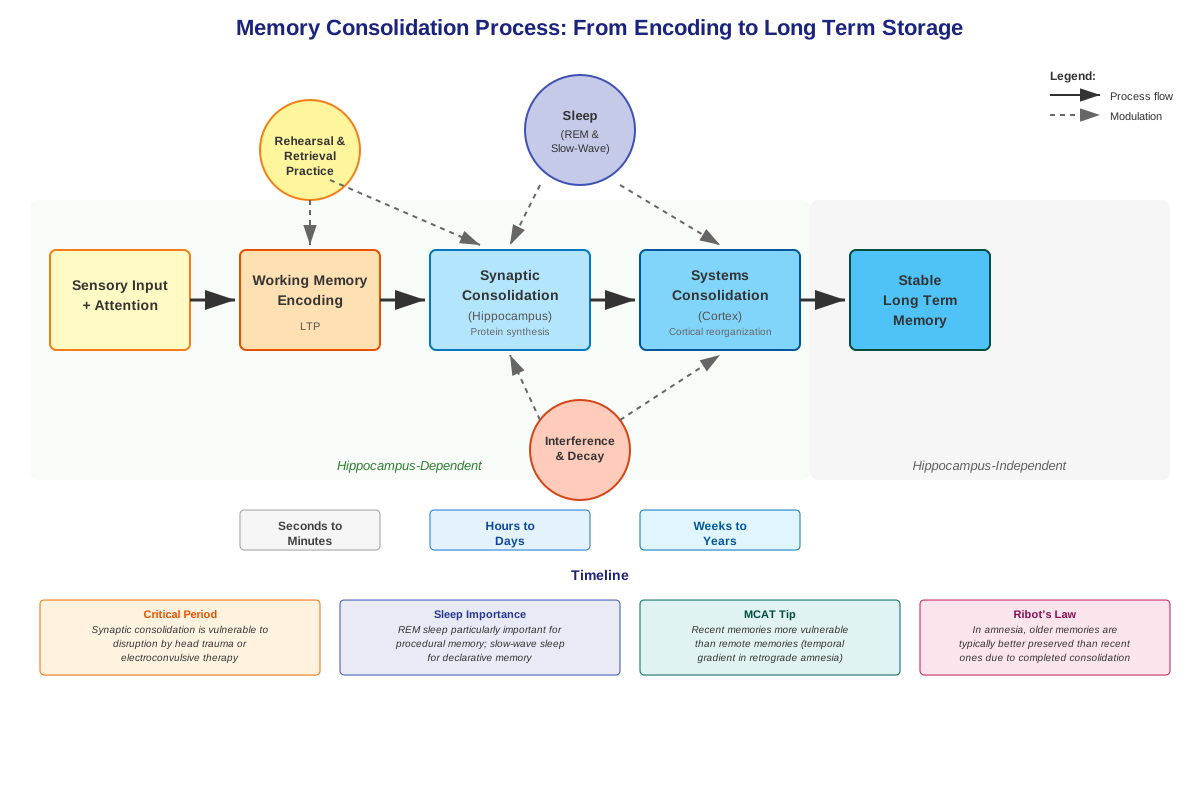
Consolidation refers to the time-dependent processes that stabilize and strengthen memory traces after initial encoding. Two types of consolidation operate on different timescales:
Synaptic consolidation occurs within hours after learning and involves molecular and cellular changes at synapses, including protein synthesis, receptor modifications, and structural changes in dendritic spines. This process implements long-term potentiation (LTP)—the persistent strengthening of synaptic connections following high-frequency stimulation—which is considered the primary cellular mechanism underlying memory formation. Disruption of protein synthesis or LTP during the consolidation window can prevent memory formation, explaining why certain drugs or electroconvulsive therapy administered shortly after learning can cause retrograde amnesia for recent events.
Systems consolidation occurs over weeks to years and involves the gradual reorganization of memory representations from hippocampal-dependent to cortical-dependent storage. According to the standard consolidation theory, episodic memories initially require the hippocampus for retrieval but become progressively independent as they are repeatedly reactivated and integrated into neocortical networks. This explains the temporal gradient of retrograde amnesia, where hippocampal damage typically impairs recent memories more than remote memories. However, the multiple trace theory proposes that episodic memories always require hippocampal involvement for detailed retrieval, while only the semantic aspects become hippocampally independent.
Encoding Specificity and Retrieval
The encoding specificity principle states that memory retrieval is most effective when the conditions at retrieval match the conditions present during encoding. This principle explains several important phenomena:
Context-dependent memory occurs when memory performance improves when the physical or environmental context at retrieval matches the encoding context. Classic studies demonstrated that divers who learned word lists underwater recalled more words when tested underwater than on land, and vice versa.
State-dependent memory refers to improved retrieval when the internal physiological or psychological state at retrieval matches the encoding state. For example, information learned while in a particular mood or under the influence of a substance may be better recalled in that same state.
Transfer-appropriate processing suggests that memory performance depends on the overlap between cognitive processes engaged during encoding and retrieval. When the retrieval test requires the same type of processing used during encoding (e.g., semantic processing during both encoding and retrieval), performance improves compared to mismatched processing types.
Retrieval Processes and Cues
Retrieval from long term memory can occur through different processes:
Recall requires generating information from memory without external cues (e.g., essay questions, free recall tasks). Recall is generally more difficult than recognition and is more sensitive to retrieval cue effectiveness.
Recognition involves identifying previously encountered information among alternatives (e.g., multiple-choice questions). Recognition can be based on familiarity (a sense that something has been encountered before) or recollection (retrieval of specific contextual details about the prior encounter).
Retrieval cues are stimuli that facilitate access to stored memories. Effective retrieval cues are those that were encoded along with the target information. The cue-dependent forgetting theory proposes that many apparent memory failures result not from loss of stored information but from inadequate retrieval cues.
Comparison Table: Memory Systems
| Feature | Episodic Memory | Semantic Memory | Procedural Memory | Priming |
|---|---|---|---|---|
| Consciousness | Conscious/Explicit | Conscious/Explicit | Unconscious/Implicit | Unconscious/Implicit |
| Content | Personal events | Facts/concepts | Skills/habits | Facilitated processing |
| Key Brain Region | Hippocampus/MTL | Lateral temporal cortex | Basal ganglia/Cerebellum | Sensory cortices |
| Affected by Amnesia | Severely impaired | Partially preserved | Intact | Intact |
| Acquisition | Often single trial | Gradual accumulation | Gradual with practice | Incidental |
| Expression | Recall/recognition | Recall/recognition | Performance | Performance |
Concept Relationships
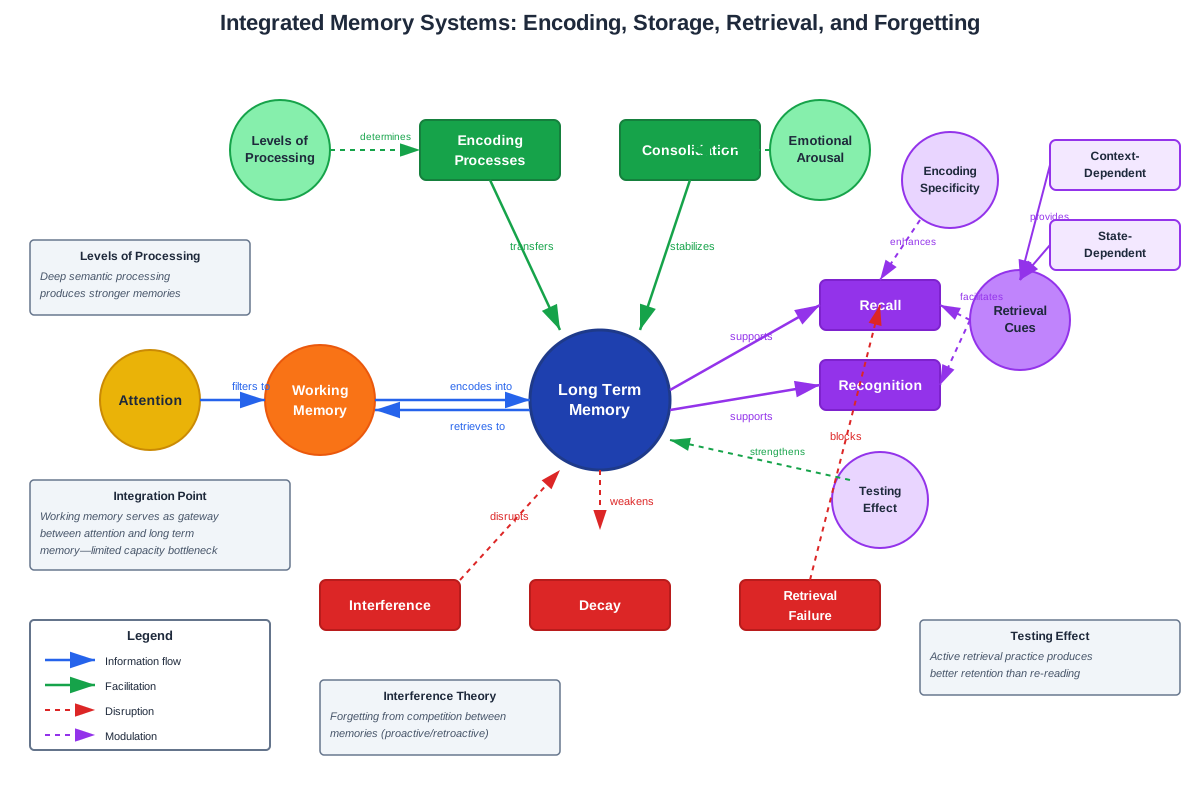
The concepts within long term memory form an integrated system where encoding processes determine what information enters consolidation pathways, which in turn establish either explicit or implicit memory traces depending on the nature of the information and the brain systems engaged during learning. The relationship can be mapped as follows:
Attention and Encoding → Working Memory Processing → Consolidation (Synaptic → Systems) → Long Term Storage → Retrieval (with appropriate cues) → Behavior/Performance
Within long term memory itself, the explicit and implicit systems operate in parallel but interact in important ways. For example, learning to drive a car initially involves explicit memory for rules and procedures (semantic memory) and conscious attention to specific driving episodes (episodic memory), but with practice, the motor skills become proceduralized (procedural memory) and execute automatically without conscious awareness. This demonstrates how explicit knowledge can transition to implicit performance through practice.
The relationship between episodic and semantic memory is particularly important: semantic memories often originate from episodic experiences through a process of decontextualization, where repeated exposure to information across multiple episodes extracts the common semantic content while losing the specific episodic details. This explains why adults typically cannot remember the specific episodes in which they learned most semantic knowledge (like the capital of France or the meaning of common words).
Long term memory connects to prerequisite topics through the information processing pathway: sensory memory provides the initial input, attention determines what receives further processing, working memory serves as the workspace for encoding operations, and long term memory represents the final storage destination. The effectiveness of encoding (elaborative rehearsal, depth of processing, organization) directly determines the strength and accessibility of long term memory traces.
Long term memory also connects forward to topics like forgetting (interference theory, decay, retrieval failure), memory distortion (false memories, source monitoring errors), and cognitive aging (differential effects on episodic versus semantic memory). Understanding the neural substrates of long term memory systems provides the foundation for comprehending neurological conditions affecting memory, including Alzheimer's disease, Korsakoff's syndrome, and various forms of amnesia.
Quick check — test yourself on Long term memory so far.
Try Flashcards →High-Yield Facts
⭐ Long term memory has essentially unlimited capacity and can store information from hours to a lifetime, unlike short-term memory which has severe capacity limitations (7±2 items) and brief duration (seconds to minutes).
⭐ Explicit (declarative) memory includes episodic memory (personal events with context) and semantic memory (general knowledge/facts), both requiring conscious recollection and initially involving the hippocampus.
⭐ Implicit (non-declarative) memory includes procedural memory (skills/habits), priming, and classical conditioning—all operating without conscious awareness and remaining intact in hippocampal amnesia.
⭐ The hippocampus is critical for forming new explicit memories (especially episodic) but not for implicit memory; damage causes anterograde amnesia for explicit information while sparing procedural learning.
⭐ Procedural memory depends on the basal ganglia (for habits and sequences) and cerebellum (for motor skills and timing), explaining why patients with hippocampal damage can still learn new motor skills.
- The encoding specificity principle states that retrieval is most effective when retrieval conditions match encoding conditions, explaining context-dependent and state-dependent memory effects.
- Consolidation occurs in two phases: synaptic consolidation (hours, involving LTP and protein synthesis) and systems consolidation (weeks to years, involving hippocampal-to-cortical transfer).
- Semantic memory becomes increasingly independent of the hippocampus over time and is distributed across neocortical regions, particularly lateral temporal cortex, while episodic memory may always require some hippocampal involvement.
- The temporal gradient of retrograde amnesia (recent memories more impaired than remote memories after hippocampal damage) reflects the time-dependent nature of systems consolidation.
- Recognition memory is generally easier than recall because recognition provides external retrieval cues, whereas recall requires self-generated retrieval cues.
- Priming can occur without conscious awareness of the priming stimulus and remains intact in amnesia, demonstrating the independence of implicit memory from explicit memory systems.
- The amygdala plays a crucial role in emotional memory consolidation, explaining why emotionally arousing events are often better remembered than neutral events.
Common Misconceptions
Misconception: Long term memory is a single, unified system located in one brain region.
Correction: Long term memory comprises multiple distinct subsystems (episodic, semantic, procedural, priming, conditioning) with different characteristics, neural substrates, and functional properties. No single brain region stores all long term memories; instead, memories are distributed across multiple cortical and subcortical structures depending on memory type.
Misconception: The hippocampus is where long term memories are permanently stored.
Correction: The hippocampus is critical for encoding and consolidating new explicit memories and for retrieving recent memories, but it is not the permanent storage site. Through systems consolidation, memories gradually become represented in neocortical networks and increasingly independent of the hippocampus, though episodic memories may retain some hippocampal dependence even when remote.
Misconception: Patients with amnesia cannot form any new long term memories.
Correction: Patients with hippocampal damage and anterograde amnesia cannot form new explicit (declarative) memories but retain the ability to form new implicit memories, including procedural skills, priming effects, and conditioned responses. This dissociation demonstrates the independence of implicit memory systems from hippocampal-dependent explicit memory.
Misconception: Semantic and episodic memory are the same thing because both involve conscious recollection.
Correction: While both are explicit memory types requiring conscious recollection, they differ fundamentally in content and characteristics. Episodic memory stores personally experienced events with specific spatiotemporal context and involves autonoetic consciousness (mental time travel), while semantic memory stores decontextualized general knowledge without reference to specific learning episodes and involves noetic consciousness (knowing without re-experiencing).
Misconception: Information in long term memory is permanent and never truly forgotten; forgetting only reflects retrieval failure.
Correction: While some forgetting results from retrieval failure (cue-dependent forgetting), evidence suggests that memory traces can also decay, be overwritten, or be disrupted by interference. Additionally, reconsolidation research shows that retrieved memories become temporarily labile and can be modified or disrupted, indicating that stored memories are not immutable.
Misconception: Consolidation is complete within minutes after learning.
Correction: Consolidation is a time-dependent process occurring on multiple timescales. Synaptic consolidation requires hours and involves molecular changes at synapses, while systems consolidation continues for weeks, months, or even years as memories are gradually reorganized from hippocampal-dependent to cortical-dependent representations.
Misconception: Recognition is always easier than recall because it's a simpler cognitive process.
Correction: While recognition is typically easier than recall because it provides external retrieval cues, recognition still involves complex cognitive processes. Recognition can be based on familiarity (a relatively automatic process) or recollection (retrieving specific contextual details), and under certain conditions (such as when many similar items create interference), recognition can be quite difficult.
Worked Examples
Example 1: Distinguishing Memory Systems in a Clinical Case
Vignette: A 58-year-old patient suffered bilateral hippocampal damage following cardiac arrest and subsequent hypoxia. Neuropsychological testing reveals the following: (1) He cannot recall what he ate for breakfast 30 minutes ago; (2) He cannot remember meeting his new doctor despite three previous appointments; (3) He can learn to trace a star pattern while looking in a mirror, showing improvement across trials, but denies having done the task before; (4) He retains knowledge of historical facts learned before his injury; (5) He shows faster identification of words presented in a previous testing session, even though he doesn't remember the session.
Question: Which memory systems are impaired and which are intact? Explain the neural basis for this pattern.
Solution:
Step 1: Identify impaired memory functions.
- Cannot recall recent breakfast (episodic memory impairment)
- Cannot remember meeting doctor (episodic memory impairment)
- Both indicate anterograde amnesia for new explicit memories
Step 2: Identify intact memory functions.
- Learns mirror-tracing task with improvement (procedural memory intact)
- Retains pre-injury historical facts (remote semantic memory intact)
- Shows priming effects for previously presented words (priming intact)
Step 3: Connect to neural substrates.
The bilateral hippocampal damage explains the selective impairment pattern:
- Hippocampus is critical for encoding new episodic memories, explaining why the patient cannot form new memories of personal experiences (breakfast, meeting doctor)
- Procedural memory depends on basal ganglia and cerebellum, not hippocampus, explaining why motor skill learning (mirror tracing) remains intact despite hippocampal damage
- Remote semantic memories have undergone systems consolidation and are now stored in neocortical networks independent of the hippocampus, explaining preservation of pre-injury knowledge
- Priming involves changes in cortical processing efficiency in sensory and perceptual regions, independent of hippocampal function, explaining intact priming despite amnesia
Step 4: Synthesize the pattern.
This patient demonstrates the classic dissociation between explicit and implicit memory systems. The hippocampus is necessary for conscious, declarative memory formation but not for unconscious, non-declarative memory. This pattern is consistent with famous cases like patient H.M. and illustrates that "memory" is not a unitary function but comprises multiple independent systems with distinct neural substrates.
MCAT Connection: This example addresses learning objectives about distinguishing memory types, identifying neural substrates, and analyzing clinical cases. MCAT passages frequently present similar clinical vignettes requiring students to predict which memory functions would be impaired or preserved given specific brain damage.
Example 2: Applying Encoding Specificity to Experimental Design
Vignette: Researchers conduct an experiment to test the encoding specificity principle. Participants study a list of words in one of two conditions: (A) in a quiet library, or (B) in a noisy cafeteria. Later, participants are tested for recall in either a quiet or noisy environment, creating four groups: quiet-quiet, quiet-noisy, noisy-quiet, and noisy-noisy.
Question: Based on the encoding specificity principle, predict the pattern of recall performance across the four groups and explain the underlying mechanism.
Solution:
Step 1: Apply the encoding specificity principle.
The encoding specificity principle states that retrieval is most effective when conditions at retrieval match conditions at encoding. This predicts that context-matching groups should outperform context-mismatching groups.
Step 2: Generate specific predictions.
- Quiet-Quiet group: Encoding and retrieval contexts match → HIGH recall performance
- Noisy-Noisy group: Encoding and retrieval contexts match → HIGH recall performance
- Quiet-Noisy group: Encoding and retrieval contexts mismatch → LOWER recall performance
- Noisy-Quiet group: Encoding and retrieval contexts mismatch → LOWER recall performance
Step 3: Explain the mechanism.
During encoding, environmental context features (ambient noise level, background sounds) become associated with the target information (word list) through incidental encoding. These contextual features serve as retrieval cues during the memory test. When the retrieval environment matches the encoding environment, these contextual cues are present and facilitate access to the target memories. When contexts mismatch, the contextual cues present during encoding are absent during retrieval, reducing retrieval effectiveness.
Step 4: Connect to broader principles.
This demonstrates context-dependent memory, a specific application of encoding specificity. The same principle explains:
- State-dependent memory: Internal physiological states serve as retrieval cues
- Transfer-appropriate processing: cognitive processes during encoding serve as retrieval cues
- Cue-dependent forgetting: apparent forgetting results from absence of appropriate retrieval cues rather than loss of stored information
Step 5: Identify potential confounds and controls.
A well-designed study would control for:
- Potential differences in encoding quality between quiet and noisy conditions (noisy environment might impair initial encoding)
- Order effects (counterbalancing which environment comes first)
- Individual differences in distractibility or noise sensitivity
MCAT Connection: This example demonstrates how to analyze experimental designs testing memory principles, predict results based on theoretical principles, and identify potential confounds—all common requirements in MCAT passage-based questions. Understanding encoding specificity helps answer questions about study strategies, eyewitness testimony reliability, and factors affecting memory performance.
Exam Strategy
When approaching MCAT questions on long term memory, employ these strategic approaches:
Trigger Word Recognition: Certain phrases signal specific memory systems or concepts:
- "Consciously recalled," "verbally described," "intentionally remembered" → Explicit/declarative memory
- "Without awareness," "automatically," "improved performance without recollection" → Implicit/non-declarative memory
- "Personal experience," "specific event," "when and where" → Episodic memory
- "General knowledge," "facts," "concepts" → Semantic memory
- "Motor skill," "habit," "procedure" → Procedural memory
- "Hippocampal damage," "medial temporal lobe lesion" → Impaired explicit memory, intact implicit memory
- "Basal ganglia damage" → Impaired procedural memory
- "Matching conditions," "context effects" → Encoding specificity principle
Question Type Strategies:
For definitional questions asking you to identify memory types:
- First determine explicit vs. implicit (conscious vs. unconscious)
- If explicit, determine episodic (personal event with context) vs. semantic (decontextualized knowledge)
- If implicit, determine procedural (skill/habit) vs. priming (facilitated processing) vs. conditioning
For neuroanatomical questions linking brain regions to memory functions:
- Hippocampus → explicit memory formation (especially episodic)
- Basal ganglia → procedural memory (habits, sequences)
- Cerebellum → procedural memory (motor skills, timing)
- Amygdala → emotional memory enhancement
- Lateral temporal cortex → semantic memory storage
- Remember: implicit memory systems do NOT require hippocampus
For clinical vignette questions describing patients with brain damage:
- Identify the damaged brain region
- Predict which memory systems would be impaired based on that region
- Predict which memory systems would remain intact
- Match predictions to the patient's described symptoms
- Eliminate answer choices inconsistent with the damage pattern
For experimental design questions:
- Identify the independent variable (what's being manipulated)
- Identify the dependent variable (what's being measured)
- Apply relevant memory principles (encoding specificity, consolidation, etc.)
- Predict results based on theory
- Consider potential confounds that might affect interpretation
Process of Elimination Tips:
- Eliminate options that confuse explicit and implicit memory (e.g., claiming hippocampal damage impairs procedural memory)
- Eliminate options that confuse episodic and semantic memory (e.g., claiming semantic memory includes spatiotemporal context)
- Eliminate options that misattribute functions to brain regions (e.g., claiming basal ganglia are essential for episodic memory)
- Eliminate options that violate encoding specificity (e.g., claiming context never affects retrieval)
Time Allocation: Long term memory questions typically require 60-90 seconds for discrete questions and 90-120 seconds for passage-based questions. If a question requires more time, flag it and return later. Don't get bogged down trying to remember obscure details; focus on the major distinctions (explicit vs. implicit, episodic vs. semantic, hippocampus vs. basal ganglia).
Exam Tip: When uncertain between answer choices, ask yourself: "Does this memory involve conscious awareness?" This single question eliminates half the options by distinguishing explicit from implicit memory systems.
Memory Techniques
Mnemonic for Explicit Memory Subtypes: "E-S" (Episodic-Semantic)
- Episodic = Events (personal experiences with context)
- Semantic = School knowledge (facts and concepts)
Mnemonic for Implicit Memory Subtypes: "PPC" (Procedural, Priming, Conditioning)
- Procedural = Practice makes perfect (skills and habits)
- Priming = Previous exposure (facilitated processing)
- Conditioning = Classical associations
Acronym for Hippocampal Functions: "HEED"
- Hippocampus
- Encodes
- Explicit (especially)
- Declarative memories
Visualization Strategy for Memory Systems:
Picture a library (representing long term memory):
- Front desk (hippocampus): Where new books (explicit memories) are checked in and cataloged
- Biography section (episodic memory): Personal stories with specific times and places
- Encyclopedia section (semantic memory): General knowledge without personal context
- Skills workshop in basement (procedural memory): Where you practice skills without conscious thought
- Automatic doors (priming): Open faster after you've used them before, even if you don't remember using them
Mnemonic for Brain Regions and Memory Types: "HABS"
- Hippocampus → Explicit memory
- Amygdala → Emotional memory
- Basal ganglia → Procedural memory (habits)
- Sensory cortices → Priming
Encoding Specificity Reminder: "Match to Catch"
- Retrieval conditions must Match encoding conditions to Catch (retrieve) memories effectively
Consolidation Timeline: "Hours to Years"
- Hours: Synaptic consolidation (LTP, protein synthesis)
- Years: Systems consolidation (hippocampus → cortex)
Summary
Long term memory represents the vast storage system that maintains information from hours to a lifetime with essentially unlimited capacity, comprising multiple distinct subsystems with different characteristics and neural substrates. The fundamental distinction separates explicit (declarative) memory—conscious recollection of facts and events—from implicit (non-declarative) memory—unconscious influences on behavior and performance. Explicit memory divides into episodic memory (personal experiences with spatiotemporal context, dependent on the hippocampus) and semantic memory (general knowledge without context, distributed across neocortex). Implicit memory includes procedural memory (skills and habits dependent on basal ganglia and cerebellum), priming (facilitated processing in sensory cortices), and classical conditioning (associations involving amygdala and cerebellum). Memory consolidation occurs through synaptic processes (hours) and systems-level reorganization (weeks to years), with the hippocampus initially critical for explicit memories but becoming less necessary as memories consolidate into cortical networks. The encoding specificity principle explains how retrieval effectiveness depends on matching between encoding and retrieval conditions, encompassing context-dependent and state-dependent memory phenomena. Understanding these distinctions is essential for analyzing clinical cases of amnesia, interpreting memory research, and predicting how different types of brain damage affect memory function—all high-yield topics for MCAT examination.
Key Takeaways
- Long term memory comprises multiple independent systems: explicit (episodic and semantic) and implicit (procedural, priming, conditioning), each with distinct neural substrates and characteristics
- The hippocampus is critical for forming new explicit memories but not implicit memories, explaining why hippocampal damage causes selective amnesia for declarative information while sparing procedural learning
- Episodic memory stores personal events with spatiotemporal context, while semantic memory stores decontextualized general knowledge; both require conscious recollection but differ in content and characteristics
- Procedural memory depends on basal ganglia and cerebellum, operates without conscious awareness, and is expressed through improved performance rather than explicit recall
- Consolidation is time-dependent, occurring through synaptic changes (hours) and systems-level reorganization (weeks to years), with memories gradually becoming independent of the hippocampus
- The encoding specificity principle states that retrieval is most effective when retrieval conditions match encoding conditions, explaining context-dependent and state-dependent memory effects
- Understanding the dissociation between memory systems is essential for analyzing clinical cases, interpreting research findings, and predicting memory performance under various conditions
Related Topics
Working Memory and Executive Function: Understanding the relationship between working memory (temporary maintenance and manipulation of information) and long term memory (permanent storage) is essential for comprehending how information flows through the memory system and how executive processes control encoding and retrieval operations.
Forgetting and Memory Distortion: Building on long term memory foundations, this topic explores why memories fail (decay, interference, retrieval failure) and how memories can be distorted (false memories, source monitoring errors, misinformation effect), with important implications for eyewitness testimony and clinical practice.
Neuroplasticity and Learning: Long term memory formation depends on neuroplastic changes, including long-term potentiation, synaptogenesis, and cortical reorganization. Understanding these mechanisms connects memory to broader principles of neural adaptation and learning.
Cognitive Aging and Dementia: Different long term memory systems show differential vulnerability to aging and disease, with episodic memory particularly affected in normal aging and Alzheimer's disease while semantic and procedural memory remain relatively preserved until later stages.
Emotion and Memory: The amygdala's role in emotional memory enhancement connects long term memory to affective neuroscience, explaining why emotionally arousing events are often better remembered and how stress hormones modulate consolidation.
Practice CTA
Now that you've mastered the core concepts of long term memory, it's time to solidify your understanding through active practice. Complete the practice questions and flashcards associated with this topic to test your ability to distinguish between memory systems, identify neural substrates, and apply memory principles to clinical and experimental scenarios. Remember that MCAT success requires not just passive reading but active retrieval practice—the very principle of encoding specificity you've just learned! Each practice question you attempt strengthens the neural pathways encoding this material, making it more accessible during your actual exam. You've built a strong foundation; now reinforce it through deliberate practice.
Sign up free to keep reading
Create a free AnvayaPrep account to finish this MCAT guide on Long term memory — plus flashcards and practice questions.