Overview
Long-term potentiation (LTP) represents one of the most fundamental mechanisms underlying learning and memory at the cellular level. This neurobiological process describes the persistent strengthening of synaptic connections between neurons following repeated stimulation, resulting in enhanced signal transmission that can last from hours to years. Understanding LTP is crucial for MCAT success because it bridges multiple disciplines tested on the exam—integrating neuroscience, psychology, and biochemistry while explaining how experiences physically alter brain structure to encode memories.
For the MCAT Psychology/Sociology section, LTP serves as the biological foundation for understanding how learning occurs at the molecular level. The exam frequently tests students' ability to connect macroscopic psychological phenomena (such as classical conditioning, skill acquisition, or memory formation) to their underlying neurological mechanisms. LTP provides this critical link, explaining how repeated experiences—whether studying for an exam, learning to play an instrument, or forming emotional associations—create lasting changes in neural circuitry. Questions may present experimental scenarios involving synaptic plasticity, ask students to predict outcomes of manipulating specific neurotransmitter systems, or require interpretation of data showing changes in synaptic strength.
Within the broader context of Learning and Memory psychology, LTP represents the cellular mechanism that enables various forms of learning, including declarative memory formation in the hippocampus and procedural learning in motor cortices. This topic connects directly to neurotransmitter systems (particularly glutamate signaling), neuroanatomy (especially hippocampal structures), and behavioral psychology concepts like habituation and sensitization. Mastering LTP enables students to approach MCAT questions with a mechanistic understanding rather than mere memorization, allowing for better reasoning through novel scenarios and passage-based questions.
Learning Objectives
- [ ] Define Long-term potentiation using accurate Psychology terminology
- [ ] Explain why Long-term potentiation matters for the MCAT
- [ ] Apply Long-term potentiation to exam-style questions
- [ ] Identify common mistakes related to Long-term potentiation
- [ ] Connect Long-term potentiation to related Psychology concepts
- [ ] Describe the molecular mechanisms underlying LTP induction and maintenance
- [ ] Distinguish between early-phase and late-phase LTP and their characteristics
- [ ] Analyze experimental data demonstrating synaptic plasticity changes
- [ ] Predict how pharmacological interventions would affect LTP and subsequent learning
Prerequisites
- Basic neuronal structure and function: Understanding of presynaptic terminals, postsynaptic receptors, and synaptic transmission is essential for comprehending how LTP strengthens these connections
- Neurotransmitter systems: Familiarity with glutamate, GABA, and their receptors provides the foundation for understanding the specific molecular players in LTP
- Action potentials and membrane potentials: Knowledge of depolarization, ion channels, and electrical signaling explains how repeated stimulation triggers LTP mechanisms
- Hippocampal anatomy: Basic awareness of hippocampal structure helps contextualize where LTP is most studied and its role in memory formation
- Types of memory: Understanding declarative vs. procedural memory and short-term vs. long-term memory provides context for LTP's functional significance
Why This Topic Matters
Long-term potentiation represents a cornerstone concept in neuroscience with profound clinical and real-world implications. LTP mechanisms are disrupted in numerous neurological and psychiatric conditions, including Alzheimer's disease (where synaptic dysfunction precedes neuronal death), schizophrenia (involving NMDA receptor abnormalities), and various learning disabilities. Understanding LTP helps explain why certain therapeutic interventions work—for example, why cognitive training can improve memory function in aging populations or how certain drugs enhance learning and memory consolidation. The discovery of LTP fundamentally changed how scientists understand memory, shifting from viewing the brain as a static organ to recognizing its remarkable plasticity throughout life.
On the MCAT, LTP appears with moderate to high frequency, particularly in Psychology/Sociology passages but also in Biological and Biochemical Foundations sections. Exam statistics suggest that 2-4 questions per exam directly or indirectly test LTP concepts. Questions typically appear in three formats: (1) experimental passages describing synaptic plasticity research requiring interpretation of electrophysiological data, (2) discrete questions linking cellular mechanisms to behavioral outcomes, and (3) pseudo-discrete questions embedded in passages about learning, memory disorders, or drug effects on cognition.
Common exam presentations include passages describing hippocampal slice experiments measuring synaptic responses before and after high-frequency stimulation, clinical vignettes about patients with memory impairments linked to specific brain regions or neurotransmitter systems, and behavioral studies examining how learning paradigms correlate with synaptic changes. The MCAT particularly favors questions requiring students to connect molecular mechanisms (receptor activation, protein synthesis) to psychological outcomes (improved recall, skill acquisition), testing the interdisciplinary reasoning that distinguishes high-scoring candidates.
Core Concepts
Definition and Basic Mechanism
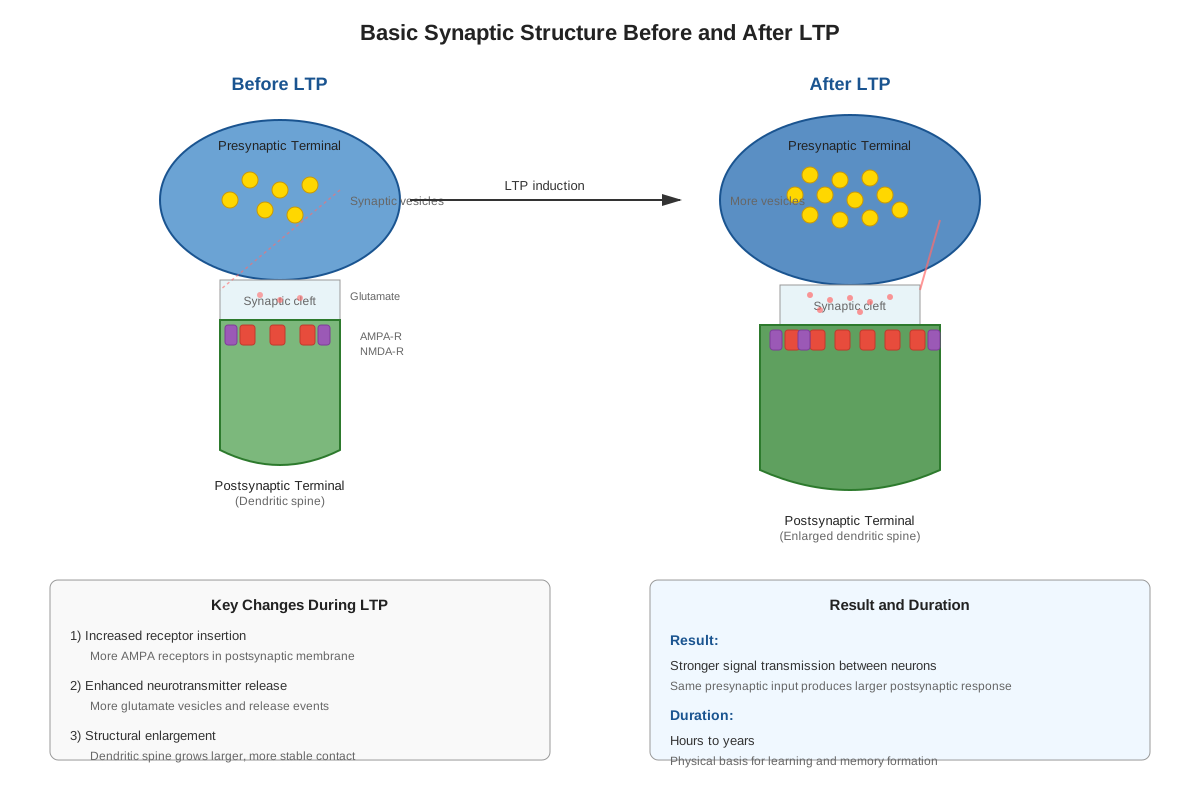
Long-term potentiation (LTP) is a persistent increase in synaptic strength following high-frequency stimulation of a chemical synapse. More specifically, LTP describes the phenomenon where repeated activation of a synapse leads to a long-lasting enhancement in the magnitude of the postsynaptic response to subsequent stimuli. This process is considered the primary cellular mechanism underlying learning and memory formation in the mammalian brain.
The fundamental principle of LTP can be summarized by the phrase "neurons that fire together, wire together," often called Hebbian learning after neuroscientist Donald Hebb. When a presynaptic neuron repeatedly stimulates a postsynaptic neuron, the connection between them strengthens, making future transmission more efficient. This strengthening manifests as either increased neurotransmitter release from the presynaptic terminal, enhanced postsynaptic receptor sensitivity, or both.
Molecular Mechanisms of LTP Induction
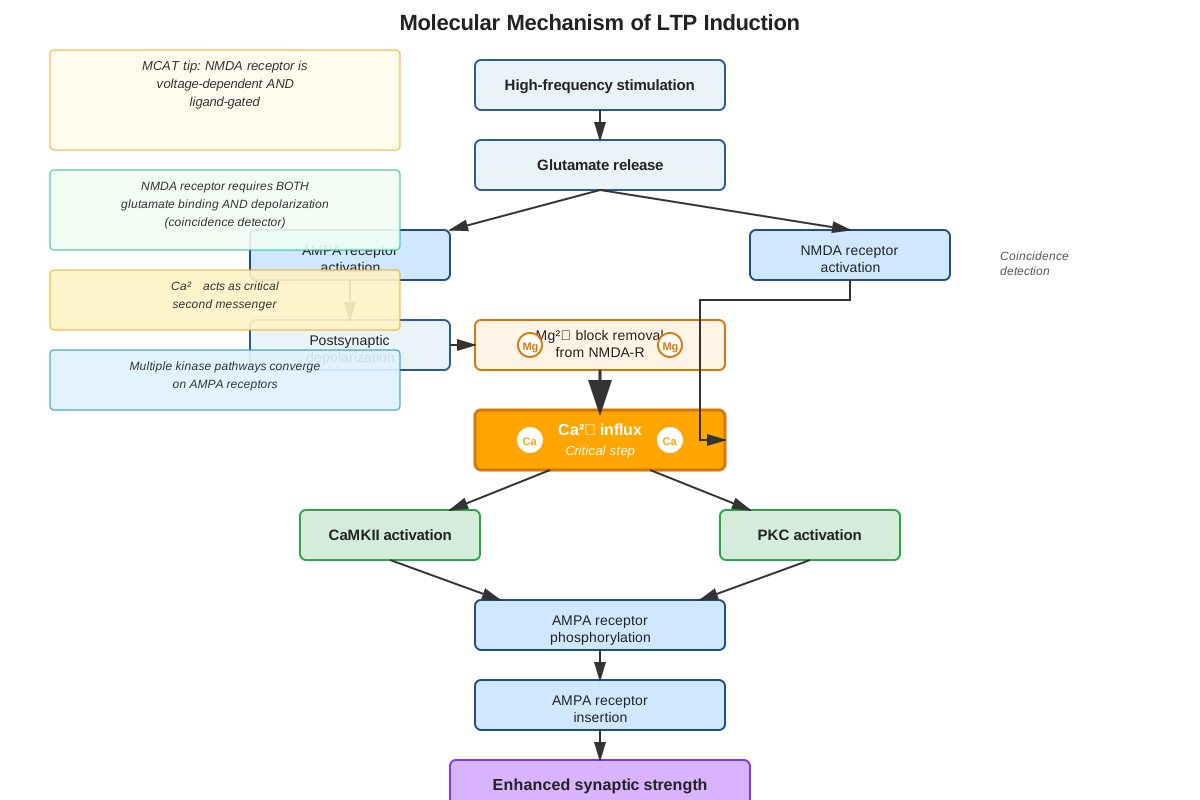
The induction of long-term potentiation involves a cascade of molecular events, with the most well-characterized form occurring at glutamatergic synapses in the hippocampus. The process begins with the release of glutamate from the presynaptic terminal, which binds to two types of receptors on the postsynaptic membrane: AMPA receptors and NMDA receptors.
AMPA receptors (α-amino-3-hydroxy-5-methyl-4-isoxazolepropionic acid receptors) are ionotropic glutamate receptors that open in response to glutamate binding, allowing sodium ions to enter the postsynaptic cell and causing depolarization. Under normal conditions, AMPA receptors mediate most routine synaptic transmission.
NMDA receptors (N-methyl-D-aspartate receptors) are unique ionotropic receptors that require two conditions for activation: (1) glutamate binding and (2) postsynaptic membrane depolarization. At resting membrane potential, NMDA receptors are blocked by magnesium ions (Mg²⁺) that physically occlude the channel pore. Only when the postsynaptic membrane depolarizes sufficiently (typically through AMPA receptor activation) does the magnesium block get expelled, allowing the NMDA receptor to open.
When NMDA receptors open, they permit calcium ions (Ca²⁺) to flow into the postsynaptic cell. This calcium influx serves as the critical trigger for LTP induction. The elevated intracellular calcium activates several signaling cascades:
- Calcium/calmodulin-dependent protein kinase II (CaMKII) becomes activated and phosphorylates existing AMPA receptors, increasing their conductance
- Protein kinase C (PKC) and other kinases trigger insertion of additional AMPA receptors into the postsynaptic membrane
- Retrograde messengers (such as nitric oxide) may be released to enhance presynaptic neurotransmitter release
Early-Phase vs. Late-Phase LTP
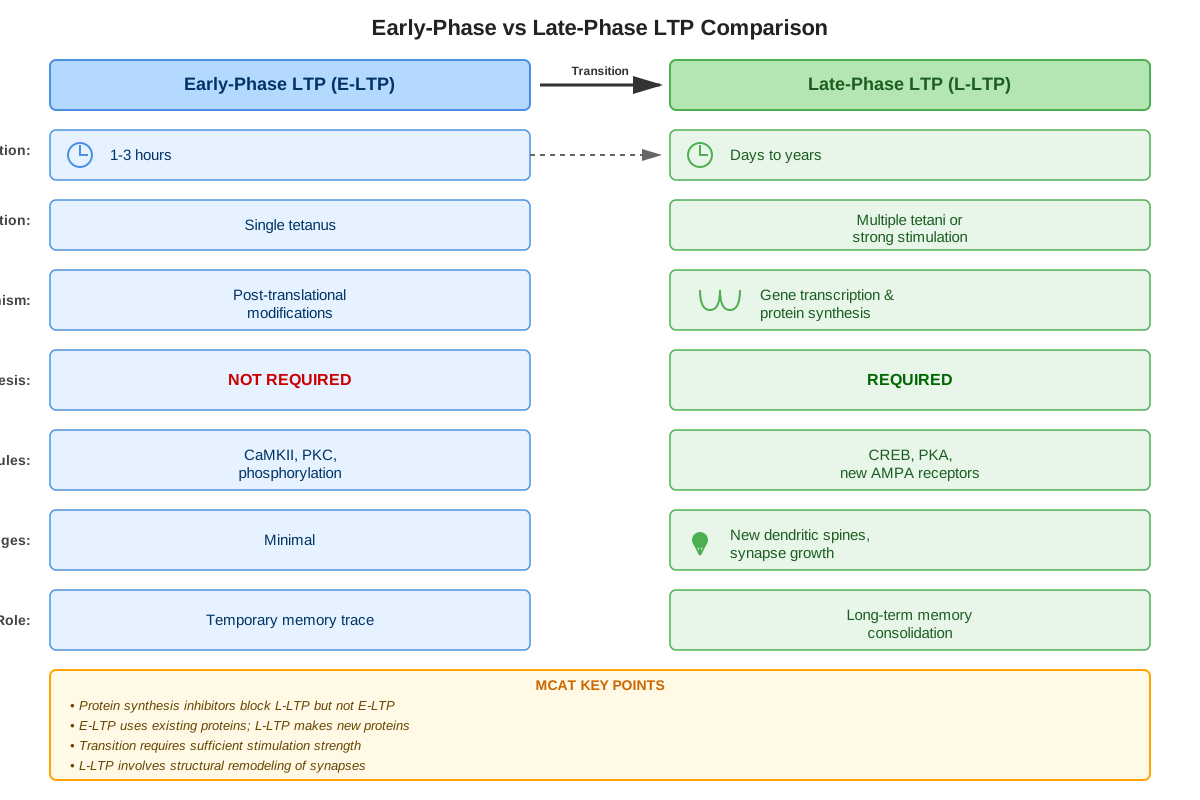
LTP exists in two temporally distinct phases with different molecular requirements:
| Feature | Early-Phase LTP (E-LTP) | Late-Phase LTP (L-LTP) |
|---|---|---|
| Duration | 1-3 hours | Hours to days/weeks |
| Protein synthesis required | No | Yes |
| Gene transcription required | No | Yes |
| Mechanisms | Post-translational modifications, receptor trafficking | New protein synthesis, structural changes |
| Stimulation required | Single high-frequency train | Multiple trains or stronger stimulation |
| Reversibility | More easily reversed | Highly stable |
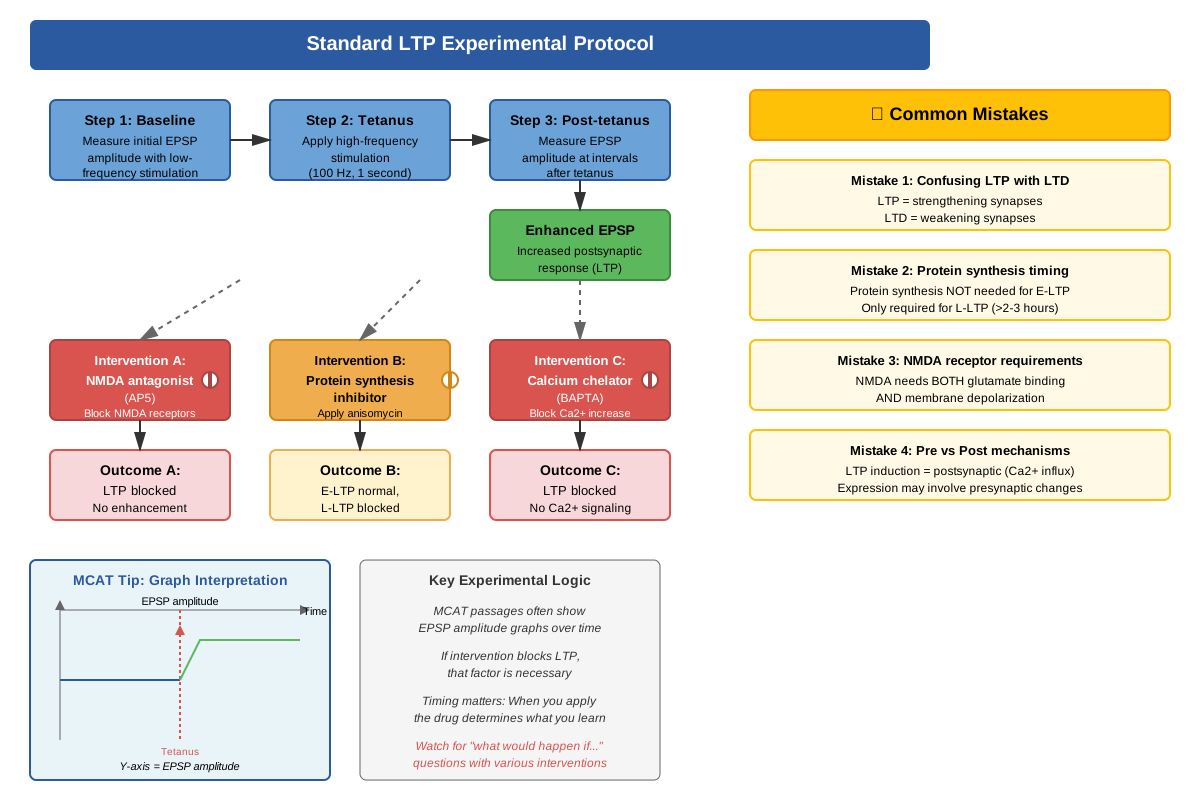
Early-phase LTP relies on post-translational modifications of existing proteins—primarily phosphorylation of AMPA receptors and insertion of additional receptors from intracellular stores. This phase does not require new protein synthesis and can be induced with relatively brief high-frequency stimulation (typically 100 Hz for 1 second).
Late-phase LTP requires gene transcription and protein synthesis, involving activation of transcription factors like CREB (cAMP response element-binding protein). This phase includes structural modifications such as enlargement of dendritic spines, formation of new synaptic contacts, and synthesis of new receptors and scaffolding proteins. L-LTP represents the more permanent form of synaptic modification underlying long-term memory storage.
Properties of LTP
Several key properties characterize long-term potentiation and distinguish it from other forms of synaptic plasticity:
Cooperativity: Multiple presynaptic inputs must be activated simultaneously or in close temporal proximity to induce LTP. Weak stimulation of a single input is insufficient; cooperative activation of multiple inputs is required to depolarize the postsynaptic membrane enough to relieve the NMDA receptor magnesium block.
Associativity: A weakly stimulated input can undergo LTP if it is activated simultaneously with a strongly stimulated input to the same postsynaptic neuron. This property provides a cellular mechanism for classical conditioning, where a weak stimulus (conditioned stimulus) becomes associated with a strong stimulus (unconditioned stimulus).
Input specificity: LTP is synapse-specific, occurring only at synapses that were activated during the inducing stimulation. Neighboring inactive synapses on the same postsynaptic neuron do not undergo potentiation, allowing for precise encoding of specific information.
Persistence: Once induced, LTP can last from hours to weeks or even longer, providing a mechanism for long-term information storage. The duration depends on whether early-phase or late-phase LTP is induced.
Brain Regions and LTP
While LTP has been demonstrated in numerous brain regions, certain areas are particularly well-studied:
Hippocampus: The most extensively researched site for LTP, particularly in the CA1 region and the dentate gyrus. Hippocampal LTP is strongly associated with spatial learning and declarative memory formation. The Schaffer collateral pathway (CA3 to CA1) represents the classic experimental model for studying LTP mechanisms.
Amygdala: LTP in the amygdala underlies emotional learning and fear conditioning. The lateral amygdala shows robust LTP that correlates with the acquisition of conditioned fear responses.
Cortex: Cortical LTP, though more difficult to induce experimentally, contributes to perceptual learning, skill acquisition, and working memory. Different cortical regions show varying LTP properties depending on their specific functions.
Cerebellum: LTP in cerebellar circuits contributes to motor learning and coordination. Cerebellar LTP involves different molecular mechanisms than hippocampal LTP, often relying more heavily on presynaptic changes.
Long-Term Depression (LTD)
Understanding LTP requires awareness of its counterpart, long-term depression (LTD), which represents a persistent weakening of synaptic strength. LTD typically results from prolonged low-frequency stimulation (1-5 Hz) and involves calcium influx through NMDA receptors, but at lower concentrations than those triggering LTP. This lower calcium level activates phosphatases rather than kinases, leading to AMPA receptor dephosphorylation and internalization. LTD provides a mechanism for synaptic refinement, preventing saturation of potentiation and allowing for bidirectional modification of synaptic strength.
Concept Relationships
Long-term potentiation serves as a central hub connecting multiple concepts within neuroscience and psychology. At the molecular level, LTP depends on neurotransmitter systems (particularly glutamate signaling) → which activate specific receptor types (AMPA and NMDA receptors) → leading to calcium influx → triggering intracellular signaling cascades (CaMKII, PKC) → resulting in both immediate changes (receptor phosphorylation and trafficking) and long-term changes (gene transcription and protein synthesis).
The relationship between LTP phases follows a temporal progression: high-frequency stimulation → NMDA receptor activation → calcium influx → early-phase LTP (post-translational modifications) → if stimulation is sufficient → late-phase LTP (gene transcription and protein synthesis) → structural synaptic changes → persistent memory storage.
LTP connects to prerequisite knowledge through several pathways. Understanding action potentials and membrane depolarization is essential because postsynaptic depolarization removes the magnesium block from NMDA receptors, enabling LTP induction. Knowledge of neurotransmitter systems explains why glutamate serves as the primary mediator and why drugs affecting glutamate signaling impact learning and memory.
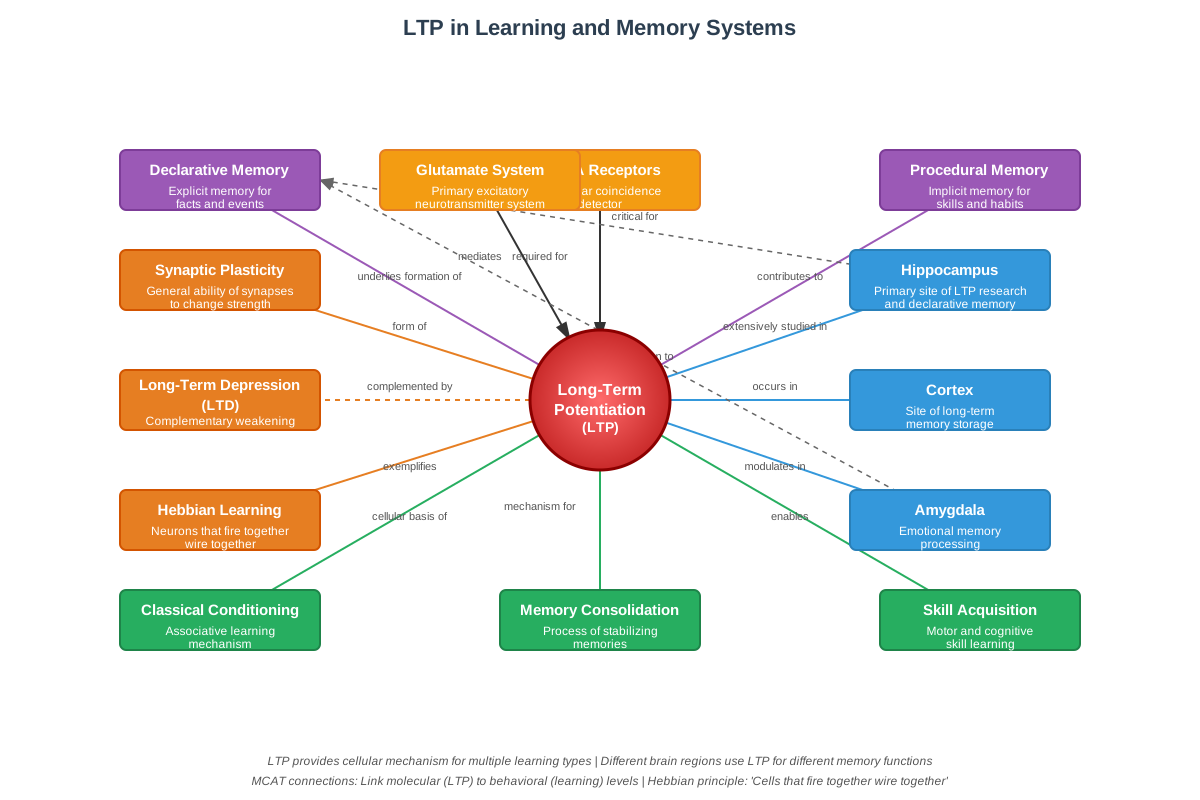
Within the broader context of learning and memory psychology, LTP provides the cellular mechanism for various learning types. Classical conditioning relies on LTP's associativity property, where a weak stimulus becomes associated with a strong stimulus through coincident activation. Spatial learning depends on hippocampal LTP, explaining why hippocampal damage impairs navigation and spatial memory. Skill learning involves LTP in motor cortices and cerebellum, accounting for how practice leads to improved performance.
LTP also connects to related concepts like neuroplasticity (LTP represents a specific form of synaptic plasticity), memory consolidation (late-phase LTP corresponds to the transition from short-term to long-term memory), and critical periods in development (when LTP mechanisms are particularly active, enabling rapid learning).
The relationship between LTP and its counterpart LTD creates a bidirectional plasticity system: LTP strengthens important connections while LTD weakens unused connections, together enabling the brain to refine neural circuits based on experience. This balance prevents synaptic saturation and maintains the dynamic range necessary for continued learning throughout life.
High-Yield Facts
⭐ Long-term potentiation is the persistent strengthening of synaptic connections following high-frequency stimulation, serving as the primary cellular mechanism for learning and memory formation.
⭐ NMDA receptors require both glutamate binding AND postsynaptic depolarization to open, making them coincidence detectors that enable associative learning.
⭐ Calcium influx through NMDA receptors triggers the molecular cascade that induces LTP, with calcium serving as the critical second messenger.
⭐ Early-phase LTP (lasting 1-3 hours) does not require protein synthesis, while late-phase LTP (lasting days to weeks) requires gene transcription and new protein synthesis.
⭐ LTP exhibits three key properties: cooperativity (multiple inputs needed), associativity (weak input potentiated if paired with strong input), and input specificity (only activated synapses are potentiated).
- CaMKII (calcium/calmodulin-dependent protein kinase II) is a critical enzyme activated by calcium influx that phosphorylates AMPA receptors and triggers their insertion into the postsynaptic membrane.
- The hippocampus, particularly the CA1 region, is the most studied brain area for LTP and is crucial for declarative and spatial memory formation.
- LTP follows Hebbian learning principles: "neurons that fire together, wire together," meaning coincident activation strengthens synaptic connections.
- Long-term depression (LTD) is the opposite of LTP, involving persistent weakening of synapses through low-frequency stimulation and lower calcium concentrations.
- AMPA receptor trafficking—both phosphorylation of existing receptors and insertion of new receptors—represents a key mechanism by which LTP increases synaptic strength.
- Blocking NMDA receptors with antagonists (like AP5) prevents LTP induction, demonstrating their essential role in the process.
- LTP can be induced artificially in experimental settings using high-frequency stimulation (typically 100 Hz), mimicking the natural patterns that occur during learning.
Quick check — test yourself on Long term potentiation so far.
Try Flashcards →Common Misconceptions
Misconception: LTP only occurs in the hippocampus and is only relevant for memory formation.
Correction: While hippocampal LTP is most studied, LTP occurs throughout the brain including cortex, amygdala, cerebellum, and other regions. It underlies various forms of learning including motor skills, emotional conditioning, and perceptual learning, not just declarative memory.
Misconception: NMDA receptors are the only receptors involved in LTP.
Correction: While NMDA receptors are critical for LTP induction (serving as the trigger), AMPA receptors mediate the actual strengthened synaptic response. LTP involves coordinated action of both receptor types, with AMPA receptors providing the enhanced transmission and NMDA receptors detecting coincident activity.
Misconception: LTP is permanent and irreversible once induced.
Correction: LTP exists on a spectrum of stability. Early-phase LTP is relatively transient and can be reversed. Even late-phase LTP, while more stable, can decay over time or be reversed through specific patterns of activity (depotentiation) or through LTD-inducing stimulation. The permanence depends on continued consolidation and the absence of interfering factors.
Misconception: Calcium influx always leads to LTP regardless of concentration or timing.
Correction: The magnitude and duration of calcium influx determine the outcome. High calcium concentrations activate kinases leading to LTP, while moderate calcium concentrations activate phosphatases leading to LTD. This calcium concentration hypothesis explains how the same ion can produce opposite effects on synaptic strength.
Misconception: LTP requires changes only in the postsynaptic neuron.
Correction: While many LTP mechanisms involve postsynaptic changes (receptor modifications, spine enlargement), evidence suggests presynaptic contributions including increased neurotransmitter release probability. Retrograde messengers like nitric oxide can travel from postsynaptic to presynaptic terminals, coordinating changes on both sides of the synapse.
Misconception: All forms of learning and memory depend on LTP.
Correction: While LTP is a major mechanism for many types of learning, other plasticity mechanisms exist including LTD, homeostatic plasticity, structural remodeling, and neurogenesis. Some forms of learning may rely on non-LTP mechanisms, and LTP is best viewed as one important mechanism among several that enable learning and memory.
Worked Examples
Example 1: Interpreting an LTP Experiment
Scenario: Researchers record from a hippocampal CA1 neuron while stimulating Schaffer collateral inputs. They measure the excitatory postsynaptic potential (EPSP) amplitude before and after delivering high-frequency stimulation (100 Hz for 1 second). The baseline EPSP amplitude is 2 mV. Immediately after stimulation, the EPSP amplitude increases to 4 mV and remains elevated at 3.8 mV when measured 2 hours later. When the experiment is repeated in the presence of AP5 (an NMDA receptor antagonist), the EPSP amplitude remains at 2 mV throughout.
Question: Explain these results in terms of LTP mechanisms and predict what would happen if protein synthesis inhibitors were added.
Solution:
Step 1: Identify the phenomenon. The persistent increase in EPSP amplitude (from 2 mV to 3.8 mV lasting 2+ hours) represents long-term potentiation. The high-frequency stimulation (100 Hz) provided the inducing stimulus.
Step 2: Explain the molecular mechanism. The high-frequency stimulation caused repeated glutamate release, activating AMPA receptors and depolarizing the postsynaptic membrane. This depolarization expelled the magnesium block from NMDA receptors, allowing calcium influx when glutamate bound. The calcium influx activated CaMKII and other kinases, which phosphorylated AMPA receptors and triggered insertion of additional AMPA receptors, increasing the postsynaptic response to subsequent stimuli.
Step 3: Interpret the AP5 result. AP5 blocks NMDA receptors, preventing calcium influx even when the postsynaptic membrane depolarizes. Without calcium influx, the signaling cascade cannot be triggered, and LTP cannot be induced. This demonstrates that NMDA receptor activation is necessary for LTP induction, consistent with the established mechanism.
Step 4: Predict protein synthesis inhibitor effects. Since the measurement at 2 hours shows sustained potentiation, this represents early-phase LTP, which does not require protein synthesis. Therefore, protein synthesis inhibitors would likely not affect the potentiation observed at 2 hours. However, if measurements were taken at 24 hours, protein synthesis inhibitors would prevent the transition to late-phase LTP, and the EPSP amplitude would likely return toward baseline. Without new protein synthesis, the structural changes necessary for persistent LTP cannot occur.
Key takeaway: This example demonstrates how experimental manipulations (receptor antagonists, protein synthesis inhibitors) can dissect LTP mechanisms and distinguish between early and late phases, a common MCAT question format.
Example 2: Clinical Application to Memory Disorders
Scenario: A 68-year-old patient presents with progressive memory impairment, particularly difficulty forming new declarative memories while procedural memory remains relatively intact. Neuroimaging reveals hippocampal atrophy. Post-mortem studies of similar patients show reduced expression of NMDA receptors and decreased levels of CaMKII in hippocampal neurons.
Question: Explain how these molecular changes could account for the patient's memory deficits, and predict which types of learning tasks would be most impaired.
Solution:
Step 1: Connect molecular changes to LTP. Reduced NMDA receptor expression would impair LTP induction because these receptors serve as the critical trigger for the calcium influx that initiates the LTP cascade. Decreased CaMKII levels would further impair LTP because even if calcium enters through remaining NMDA receptors, there would be insufficient CaMKII to phosphorylate AMPA receptors and trigger their insertion into the membrane.
Step 2: Link LTP impairment to memory deficits. The hippocampus relies heavily on LTP for encoding new declarative memories (facts, events, spatial information). Impaired hippocampal LTP would prevent the synaptic strengthening necessary to consolidate new experiences into long-term memory. This explains why the patient has difficulty forming new declarative memories—the cellular mechanism for encoding these memories is compromised.
Step 3: Explain the preserved procedural memory. Procedural memory (motor skills, habits) relies more on basal ganglia, cerebellum, and motor cortices than on the hippocampus. Since the pathology is localized to the hippocampus, the LTP mechanisms in these other brain regions remain functional, allowing procedural learning to continue relatively normally.
Step 4: Predict impaired tasks. The patient would show greatest impairment on tasks requiring hippocampal function:
- Spatial navigation and learning new routes (hippocampal spatial maps)
- Episodic memory formation (remembering recent events)
- Fact learning (semantic memory acquisition)
- Associative learning tasks requiring hippocampal processing
Tasks that would be relatively preserved:
- Motor skill learning (riding a bike, using tools)
- Habit formation
- Priming effects
- Classical conditioning of simple reflexes (non-hippocampal circuits)
Key takeaway: This example illustrates how understanding LTP mechanisms enables prediction of cognitive deficits from molecular pathology, connecting cellular neuroscience to clinical psychology—a high-yield MCAT skill.
Exam Strategy
When approaching MCAT questions on long-term potentiation, employ a systematic strategy that leverages the mechanistic nature of this topic:
Trigger words to recognize LTP questions: Watch for terms like "synaptic strengthening," "repeated stimulation," "enhanced synaptic transmission," "hippocampal plasticity," "NMDA receptors," "memory consolidation," or descriptions of experiments measuring synaptic responses before and after stimulation protocols. Passages describing learning paradigms with cellular correlates often test LTP concepts.
Mechanistic reasoning approach: LTP questions reward understanding the causal chain rather than isolated facts. When encountering a question, mentally trace the pathway: stimulation → glutamate release → AMPA activation → depolarization → NMDA activation → calcium influx → kinase activation → receptor modification → enhanced transmission. Identify which step in the pathway is being tested or manipulated.
Experimental passage strategy: LTP frequently appears in research passages presenting electrophysiological data. When analyzing these passages:
- Identify the baseline measurement (pre-stimulation synaptic response)
- Note the stimulation protocol (frequency, duration)
- Observe the post-stimulation response and time course
- Look for experimental manipulations (drug additions, genetic modifications)
- Connect changes in synaptic response to specific molecular mechanisms
Process of elimination tips:
- Eliminate answers suggesting LTP occurs without calcium influx (calcium is always required)
- Eliminate answers confusing AMPA and NMDA receptor roles (NMDA triggers, AMPA mediates)
- Eliminate answers suggesting LTP requires only presynaptic changes (postsynaptic modifications are essential)
- Be suspicious of answers claiming LTP is completely permanent or completely transient (the truth lies between these extremes)
Time allocation: LTP questions often appear in passages requiring integration of multiple concepts. Allocate 1.5-2 minutes per question, spending extra time on questions requiring interpretation of experimental data or graphs. Discrete LTP questions typically require less time (1-1.5 minutes) as they test more straightforward conceptual knowledge.
Common question formats:
- "Which manipulation would prevent LTP induction?" → Focus on NMDA receptors and calcium
- "The data in Figure 1 best supports which conclusion?" → Compare baseline vs. post-stimulation responses
- "A patient with damage to structure X would most likely show impairment in..." → Connect brain region to LTP-dependent learning type
- "Which property of LTP explains this phenomenon?" → Match scenario to cooperativity, associativity, or specificity
Integration with other topics: LTP questions often require connecting to neurotransmitter systems, brain anatomy, memory types, or learning theories. Be prepared to integrate knowledge across these domains rather than treating LTP in isolation.
Memory Techniques
NMDA receptor activation mnemonic - "GLAD":
- Glutamate binding required
- Ligand-gated (ionotropic receptor)
- Activation needs depolarization
- Depolarization removes magnesium block
LTP properties mnemonic - "CAIP":
- Cooperativity (multiple inputs needed)
- Associativity (weak + strong inputs)
- Input specificity (only activated synapses)
- Persistence (long-lasting changes)
Early vs. Late LTP mnemonic - "PEST":
- Protein synthesis: Early = NO, Late = YES
- Early = short (hours)
- Strong stimulation needed for Late
- Transcription: Early = NO, Late = YES
Visualization strategy for LTP mechanism:
Picture a door (synapse) that becomes easier to open with repeated use. Initially, the door is stiff (baseline synaptic strength). High-frequency stimulation is like repeatedly pushing the door, which triggers maintenance workers (calcium and kinases) to oil the hinges (phosphorylate receptors) and install additional handles (insert new AMPA receptors). The door now opens more easily with less force (enhanced synaptic transmission). If the door is used frequently enough, the maintenance crew installs a completely new, better door (late-phase LTP with structural changes).
Acronym for calcium's role - "CATS":
- Calcium influx through NMDA receptors
- Activates kinases (CaMKII, PKC)
- Triggers AMPA receptor changes
- Second messenger for LTP induction
Memory palace technique:
Imagine walking through a house where each room represents a step in LTP:
- Entrance: Glutamate arrives (neurotransmitter release)
- Living room: AMPA receptors let you in (initial depolarization)
- Hallway: Depolarization travels (membrane potential change)
- Locked door: NMDA receptor with magnesium block
- Key: Depolarization removes magnesium
- Treasure room: Calcium floods in
- Workshop: Kinases activate and modify receptors
- Storage room: New AMPA receptors inserted
- Upstairs: Gene transcription for late-phase LTP
Summary
Long-term potentiation represents the fundamental cellular mechanism by which learning and memory are encoded in the brain through persistent strengthening of synaptic connections. The process begins when high-frequency stimulation causes repeated glutamate release, activating AMPA receptors to depolarize the postsynaptic membrane. This depolarization removes the magnesium block from NMDA receptors, allowing calcium influx when glutamate binds. The calcium surge activates kinases like CaMKII that phosphorylate existing AMPA receptors and trigger insertion of additional receptors, enhancing synaptic transmission. Early-phase LTP, lasting hours, relies on these post-translational modifications, while late-phase LTP, lasting days to weeks, requires gene transcription and protein synthesis to produce structural synaptic changes. LTP exhibits three critical properties—cooperativity, associativity, and input specificity—that enable precise encoding of information and provide cellular mechanisms for various learning types. Understanding LTP is essential for MCAT success because it connects molecular neuroscience to psychological phenomena, explaining how experiences physically alter brain circuits to create lasting memories.
Key Takeaways
- Long-term potentiation is the persistent strengthening of synapses following high-frequency stimulation, serving as the primary mechanism for learning and memory at the cellular level
- NMDA receptors function as coincidence detectors requiring both glutamate binding and postsynaptic depolarization, with calcium influx through these receptors triggering the LTP cascade
- LTP exists in two phases: early-phase (hours, no protein synthesis required) and late-phase (days to weeks, requires gene transcription and protein synthesis)
- The three key properties of LTP—cooperativity, associativity, and input specificity—enable precise information encoding and provide mechanisms for associative learning
- CaMKII activation and AMPA receptor modifications (phosphorylation and insertion) represent the core molecular mechanisms by which LTP enhances synaptic strength
- Hippocampal LTP underlies declarative and spatial memory formation, while LTP in other brain regions supports different learning types (emotional, motor, perceptual)
- Understanding LTP mechanisms enables prediction of how pharmacological interventions, genetic modifications, or pathological conditions affect learning and memory—a high-yield MCAT skill
Related Topics
Synaptic Plasticity and Long-Term Depression (LTD): Understanding LTD as the counterpart to LTP provides a complete picture of bidirectional synaptic modification. LTD involves synaptic weakening through low-frequency stimulation and lower calcium concentrations, enabling synaptic refinement and preventing saturation. Mastering both LTP and LTD enables understanding of how neural circuits are sculpted by experience.
Memory Consolidation and Systems Consolidation: LTP provides the cellular mechanism for memory consolidation, but understanding how memories transition from hippocampal-dependent to cortical storage (systems consolidation) requires integrating LTP with broader memory systems. This connection explains why hippocampal damage affects recent but not remote memories.
Classical and Operant Conditioning: The associativity property of LTP provides a cellular mechanism for classical conditioning, where neutral stimuli become associated with meaningful stimuli. Understanding this connection bridges cellular neuroscience and behavioral psychology, a frequent MCAT integration point.
Neurotransmitter Systems and Receptor Pharmacology: Deep knowledge of glutamate receptors, their subtypes, and drugs affecting them enables sophisticated reasoning about LTP manipulation. This includes understanding how NMDA receptor antagonists, AMPA receptor modulators, and calcium channel blockers affect learning and memory.
Neuroplasticity Across the Lifespan: LTP represents one form of neuroplasticity, but understanding developmental critical periods, adult neurogenesis, and age-related changes in plasticity provides broader context for how the brain adapts to experience throughout life.
Practice CTA
Now that you've mastered the core concepts of long-term potentiation, it's time to solidify your understanding through active practice. Challenge yourself with MCAT-style practice questions that test your ability to apply LTP mechanisms to experimental scenarios, clinical vignettes, and novel situations. Use flashcards to reinforce the molecular cascade, receptor types, and key properties until you can recall them instantly. Remember, understanding LTP at a mechanistic level—not just memorizing facts—will enable you to reason through any question the MCAT presents. Your investment in mastering this foundational topic will pay dividends across multiple sections of the exam, from Psychology/Sociology to Biological and Biochemical Foundations. You've built a strong foundation—now strengthen it through deliberate practice!
Sign up free to keep reading
Create a free AnvayaPrep account to finish this MCAT guide on Long term potentiation — plus flashcards and practice questions.