Overview
Spontaneous recovery is a fundamental phenomenon in the field of Learning and Memory that demonstrates the temporary nature of extinction in both classical and operant conditioning. When a previously extinguished conditioned response reappears after a rest period without any additional conditioning trials, spontaneous recovery has occurred. This concept reveals that extinction does not permanently erase learned associations; instead, it suppresses them, and these associations can resurface under specific conditions.
For MCAT preparation, understanding spontaneous recovery is essential because it frequently appears in Psychology passages involving behavioral modification, therapy outcomes, addiction relapse, and learning paradigms. The MCAT tests not only the definition of spontaneous recovery but also the ability to distinguish it from related phenomena such as acquisition, extinction, and generalization. Questions often present experimental scenarios or clinical vignettes where students must identify when spontaneous recovery is occurring versus other learning processes.
Spontaneous recovery MCAT questions typically integrate this concept with broader themes in behavioral psychology, neuroscience, and even social psychology. The phenomenon connects directly to classical conditioning (Pavlov's work), operant conditioning (Skinner's research), and has practical implications for understanding why learned behaviors—both adaptive and maladaptive—can unexpectedly return after appearing to be eliminated. Mastering this topic provides a foundation for understanding more complex concepts like context-dependent learning, state-dependent memory, and the neurobiological basis of habit formation and relapse.
Learning Objectives
- [ ] Define Spontaneous recovery using accurate Psychology terminology
- [ ] Explain why Spontaneous recovery matters for the MCAT
- [ ] Apply Spontaneous recovery to exam-style questions
- [ ] Identify common mistakes related to Spontaneous recovery
- [ ] Connect Spontaneous recovery to related Psychology concepts
- [ ] Distinguish spontaneous recovery from acquisition, extinction, and other conditioning phenomena
- [ ] Predict when spontaneous recovery is most likely to occur based on experimental parameters
- [ ] Analyze clinical scenarios involving relapse and identify the role of spontaneous recovery
Prerequisites
- Classical Conditioning: Understanding acquisition, extinction, and the relationship between conditioned and unconditioned stimuli is necessary because spontaneous recovery occurs within this framework
- Operant Conditioning: Knowledge of reinforcement, punishment, and extinction in operant paradigms provides context for how spontaneous recovery applies beyond classical conditioning
- Basic Learning Theory: Familiarity with how associations form and weaken allows students to appreciate why spontaneous recovery represents incomplete extinction rather than new learning
- Experimental Design: Understanding control groups, independent/dependent variables, and time-course studies helps interpret research demonstrating spontaneous recovery
Why This Topic Matters
Clinical and Real-World Significance
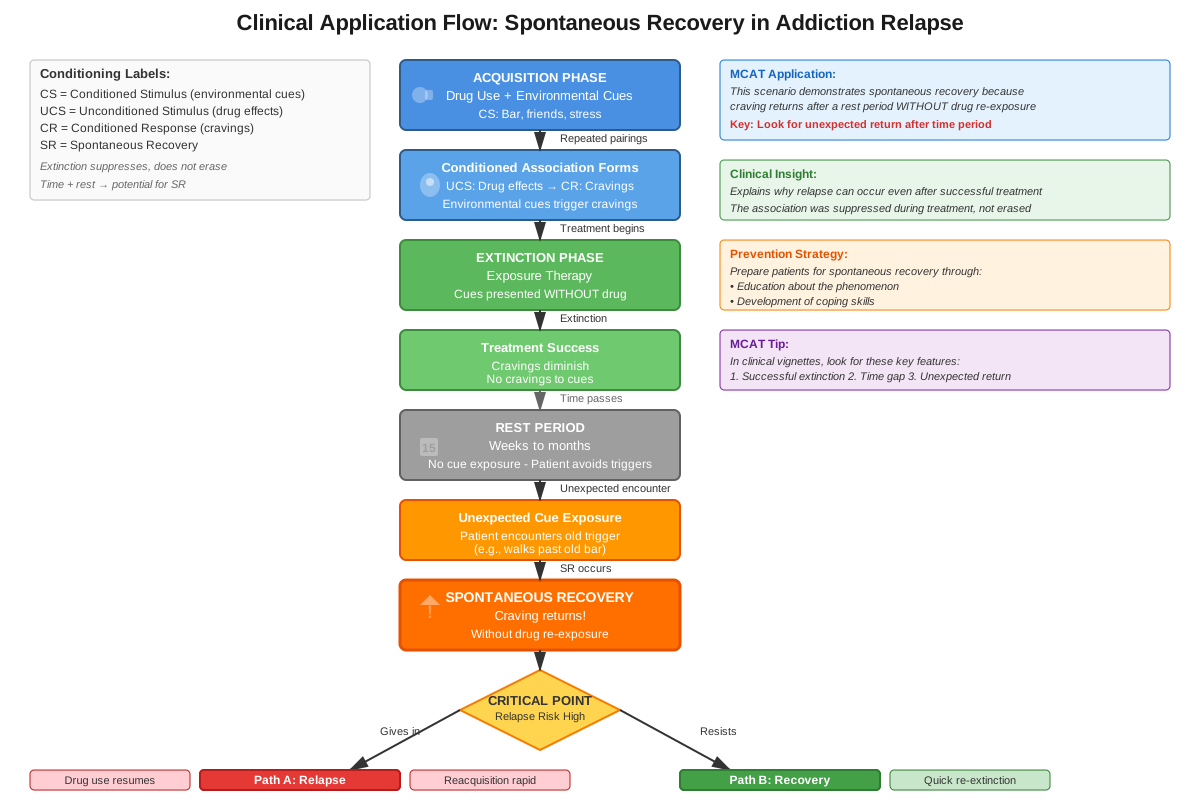
Spontaneous recovery has profound implications for clinical psychology and behavioral medicine. When treating phobias, addictions, or anxiety disorders through exposure therapy or extinction-based interventions, clinicians must anticipate that extinguished responses may spontaneously recover. For example, a patient successfully treated for alcohol addiction through conditioning-based therapy may experience unexpected cravings months later without re-exposure to alcohol—this represents spontaneous recovery of the conditioned response. Understanding this phenomenon helps clinicians prepare patients for potential setbacks and design maintenance strategies.
In educational settings, spontaneous recovery explains why previously "forgotten" information can resurface during exams after a break from studying. In animal training, it accounts for why unwanted behaviors may reappear after seemingly successful extinction training. These real-world applications make spontaneous recovery a high-yield topic that bridges theoretical psychology with practical applications.
MCAT Exam Statistics and Question Types
Spontaneous recovery appears in approximately 3-5% of Psychology/Sociology section questions, either as the primary focus or as part of a broader learning and memory passage. The MCAT typically presents this concept through:
- Experimental passage questions: Describing a conditioning experiment and asking students to identify which phase demonstrates spontaneous recovery
- Clinical vignette questions: Presenting a therapy scenario and asking why a previously extinguished behavior has returned
- Graph interpretation questions: Showing response strength over time and asking students to identify the spontaneous recovery phase
- Discrete questions: Testing direct knowledge of the definition and distinguishing it from related concepts
Questions often require students to integrate spontaneous recovery with other concepts like context effects, renewal effects, or the difference between extinction and forgetting.
Core Concepts
Definition and Basic Mechanism
Spontaneous recovery is the reappearance of a previously extinguished conditioned response after a period of rest, without any additional pairing of the conditioned stimulus (CS) with the unconditioned stimulus (US). This phenomenon occurs in both classical and operant conditioning paradigms and demonstrates that extinction does not eliminate the original learned association but rather creates a new, competing memory that suppresses the original response.
The key characteristics of spontaneous recovery include:
- Occurs after a rest period or time delay following extinction
- The recovered response is typically weaker than the original conditioned response
- Does not require re-pairing of CS and US (or reinforcement in operant conditioning)
- Can be re-extinguished more quickly than the original extinction
- Demonstrates that the original learning remains stored in memory
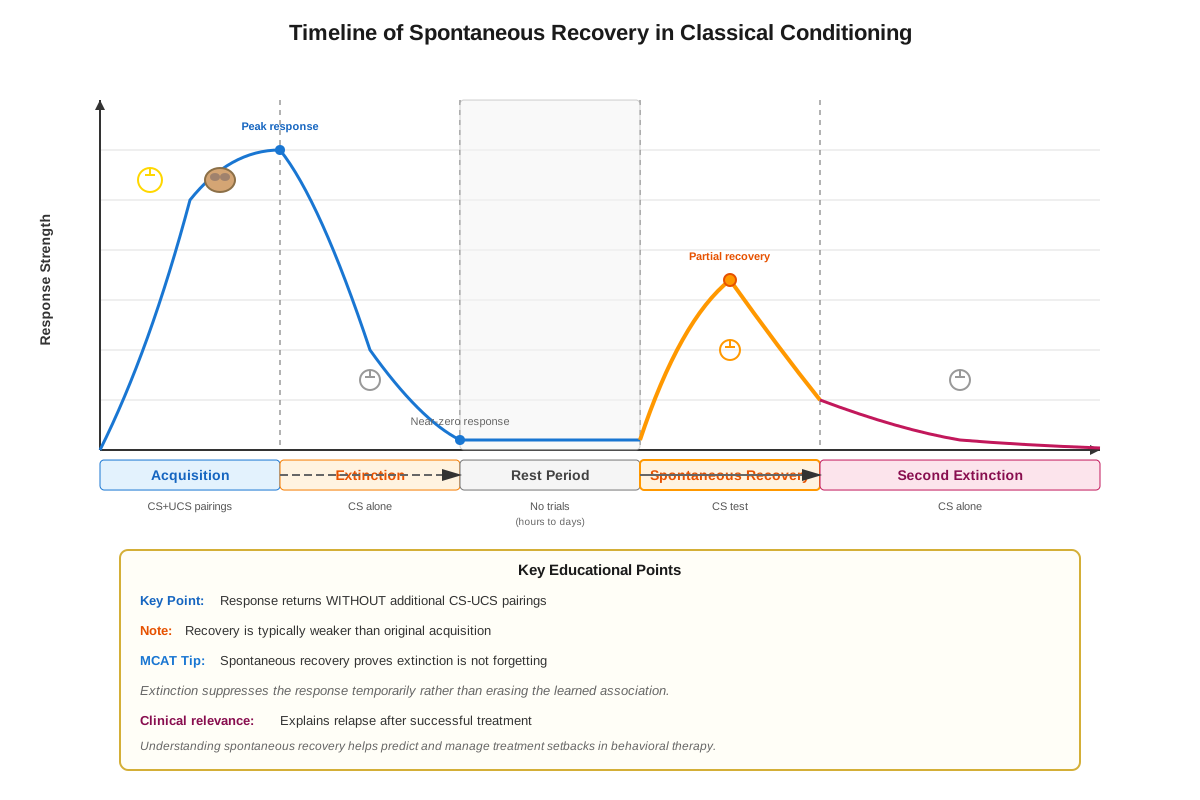
The Extinction-Recovery Cycle
Understanding spontaneous recovery requires knowledge of the complete learning cycle:
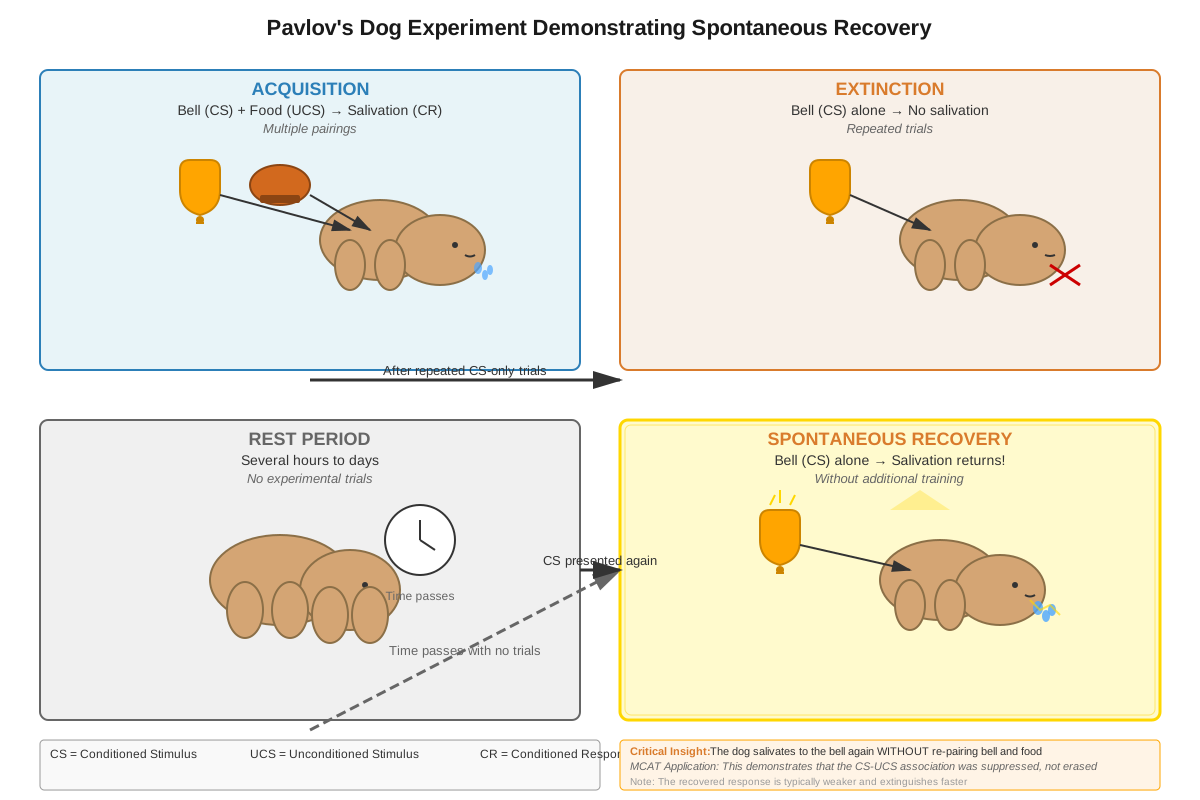
- Acquisition Phase: CS is repeatedly paired with US, establishing a conditioned response (CR)
- Extinction Phase: CS is presented without US, leading to gradual decrease in CR
- Rest Period: Time passes with no presentation of CS
- Spontaneous Recovery: CS is presented again, and CR reappears at reduced strength
- Re-extinction: Continued presentation of CS without US leads to faster extinction than original
| Phase | CS-US Pairing | Response Strength | Duration |
|---|---|---|---|
| Acquisition | Yes | Increasing | Multiple trials |
| Extinction | No | Decreasing | Multiple trials |
| Rest | None | N/A | Minutes to months |
| Spontaneous Recovery | No | Moderate (sudden increase) | Brief |
| Re-extinction | No | Decreasing (rapid) | Fewer trials than original |
Classical Conditioning Context
In Pavlov's original experiments, dogs that had learned to salivate to a bell (CS) underwent extinction training where the bell was presented without food (US). After the salivation response was extinguished, Pavlov observed that if the dogs were given a rest period and then presented with the bell again, they would resume salivating—though less intensely than during initial conditioning. This demonstrated that the CS-US association was not erased but merely suppressed.
Example: A person develops a fear of dogs (CR) after being bitten (US) by a dog (CS). Through exposure therapy, the fear response is extinguished. Six months later, upon encountering a dog unexpectedly, the person experiences a brief return of fear—this is spontaneous recovery. The fear is less intense than originally and can be quickly re-extinguished with continued exposure.
Operant Conditioning Context
Spontaneous recovery also occurs in operant conditioning. When a behavior that was previously reinforced undergoes extinction (reinforcement is withheld), the behavior decreases. After a rest period, the organism may spontaneously resume the previously reinforced behavior, even without receiving reinforcement.
Example: A rat learns to press a lever for food pellets. When the food dispenser is disconnected (extinction), lever pressing gradually stops. After being removed from the chamber for several days, when the rat is returned, it spontaneously begins pressing the lever again before the behavior re-extinguishes.
Neurobiological Basis
Modern neuroscience research reveals that spontaneous recovery reflects the brain's retention of multiple memory traces. During extinction, new inhibitory learning occurs in the prefrontal cortex and hippocampus that suppresses—but does not erase—the original excitatory associations stored in the amygdala and other structures. The passage of time can weaken the inhibitory memory trace more than the original excitatory trace, allowing the original response to resurface.
Key neural mechanisms include:
- Dual-process theory: Original learning and extinction learning coexist as separate memory traces
- Context-dependent retrieval: The rest period may change the internal or external context, favoring retrieval of the original association
- Synaptic consolidation: Original associations may be more strongly consolidated than extinction learning
- Prefrontal cortex involvement: Executive control over response inhibition may weaken over time
Factors Affecting Spontaneous Recovery
Several variables influence the strength and likelihood of spontaneous recovery:
- Length of rest period: Longer rest periods generally produce stronger spontaneous recovery (up to a point)
- Strength of original conditioning: More robust initial learning produces stronger spontaneous recovery
- Completeness of extinction: Partial extinction leads to stronger spontaneous recovery
- Number of extinction sessions: Multiple extinction sessions across different contexts reduce spontaneous recovery
- Context changes: Returning to the original conditioning context enhances spontaneous recovery
Distinction from Related Phenomena
Understanding what spontaneous recovery is NOT is crucial for MCAT success:
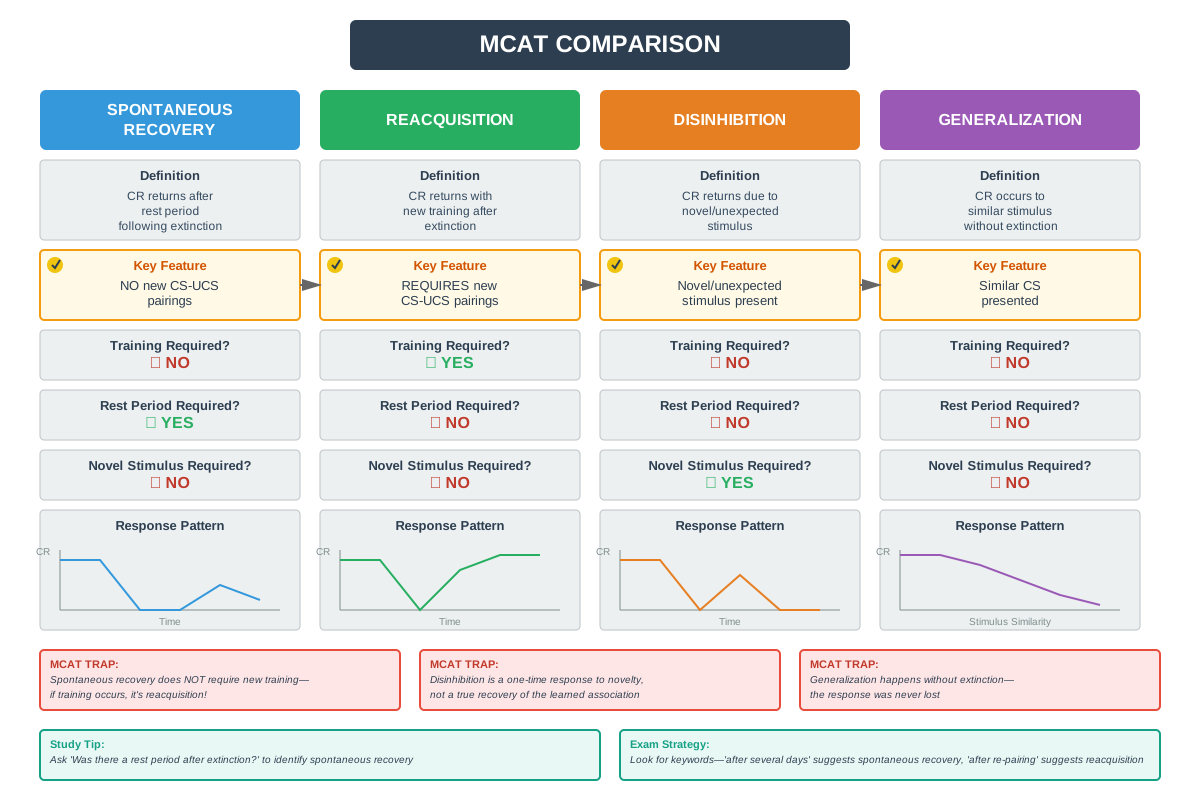
Spontaneous Recovery vs. Reacquisition: Spontaneous recovery occurs without re-pairing CS and US, while reacquisition requires renewed CS-US pairings and produces faster learning than original acquisition.
Spontaneous Recovery vs. Disinhibition: Disinhibition is the temporary recovery of an extinguished response due to presentation of a novel stimulus, while spontaneous recovery occurs due to time passage alone.
Spontaneous Recovery vs. Renewal: Renewal is the return of an extinguished response when the organism is returned to the original conditioning context, while spontaneous recovery can occur in the same context where extinction occurred.
Spontaneous Recovery vs. Reinstatement: Reinstatement occurs when the US is presented alone after extinction, causing the CR to return, while spontaneous recovery requires no stimulus presentation during the rest period.
Concept Relationships
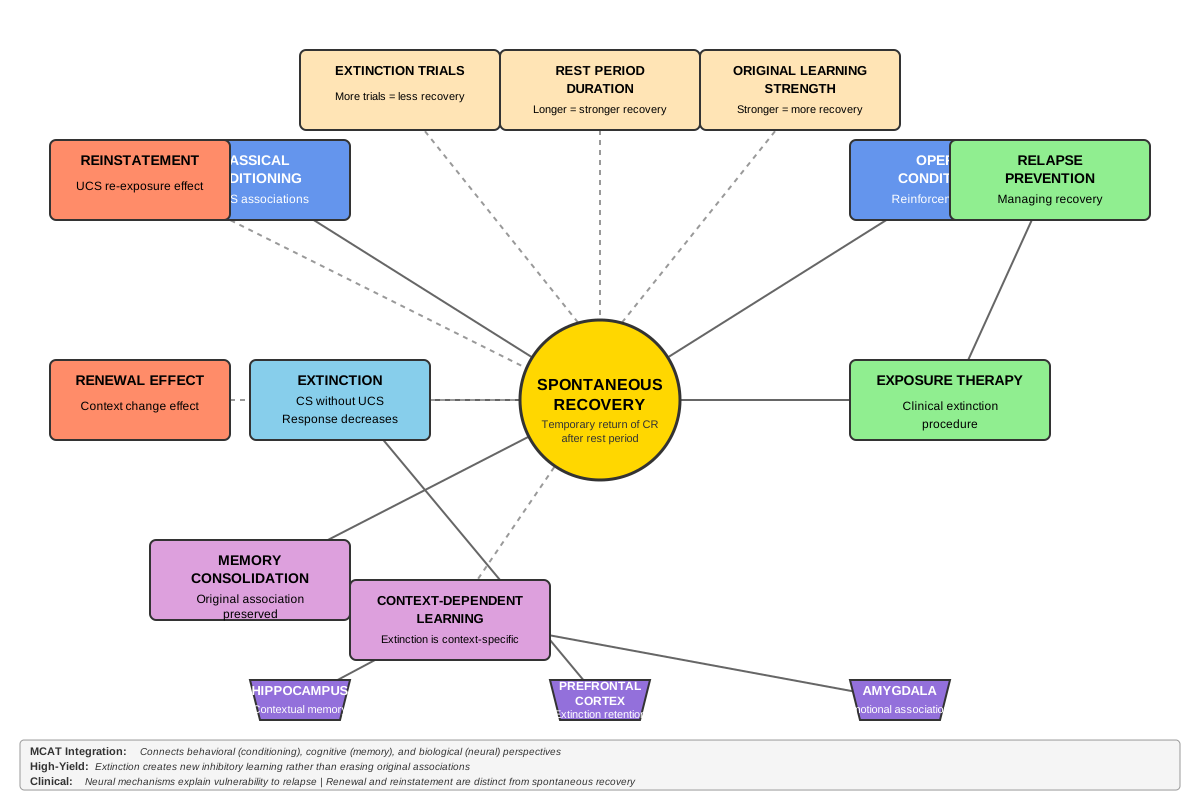
Spontaneous recovery sits at the intersection of multiple learning and memory concepts, forming a network of related phenomena:
Acquisition → Extinction → Spontaneous Recovery: This represents the temporal sequence, where spontaneous recovery demonstrates that extinction is not the reverse of acquisition but rather new inhibitory learning.
Spontaneous Recovery ↔ Memory Consolidation: The phenomenon reveals that consolidated memories persist even after behavioral extinction, connecting to broader memory storage principles.
Context Effects → Spontaneous Recovery: Changes in temporal context (time passage) can trigger spontaneous recovery, linking to context-dependent memory and state-dependent learning.
Spontaneous Recovery → Clinical Relapse: Understanding spontaneous recovery helps explain relapse in addiction treatment, phobia therapy, and behavioral interventions, connecting basic research to applied psychology.
Inhibitory Learning Theory ← Spontaneous Recovery: The existence of spontaneous recovery supports theories that extinction involves new learning rather than unlearning, influencing contemporary models of conditioning.
The concept also connects forward to more advanced topics like reconsolidation theory, which suggests that retrieved memories become temporarily labile and can be modified, offering potential therapeutic interventions to prevent spontaneous recovery.
Quick check — test yourself on Spontaneous recovery so far.
Try Flashcards →High-Yield Facts
⭐ Spontaneous recovery is the reappearance of an extinguished conditioned response after a rest period without any additional CS-US pairings
⭐ The recovered response is typically weaker than the original conditioned response and stronger than the final extinction level
⭐ Spontaneous recovery demonstrates that extinction does not erase the original learning but creates competing inhibitory learning
⭐ The phenomenon occurs in both classical and operant conditioning paradigms
⭐ Re-extinction after spontaneous recovery occurs more rapidly than the original extinction
- Spontaneous recovery can occur multiple times with repeated rest periods, though each recovery is typically weaker
- The length of the rest period influences the strength of spontaneous recovery, with moderate delays producing the strongest effects
- Spontaneous recovery is distinct from renewal, reinstatement, and disinhibition, though all involve return of extinguished responses
- Multiple extinction sessions conducted in varied contexts reduce the likelihood and strength of spontaneous recovery
- The prefrontal cortex and hippocampus play key roles in maintaining extinction learning that suppresses spontaneous recovery
- Spontaneous recovery has important implications for relapse prevention in clinical settings
- The phenomenon supports dual-process theories of extinction rather than unlearning theories
- Context changes during the rest period can enhance spontaneous recovery effects
- Spontaneous recovery can be observed across species, from invertebrates to humans
- Understanding spontaneous recovery is essential for designing effective behavioral interventions and exposure therapies
Common Misconceptions
Misconception: Spontaneous recovery means the organism has been re-exposed to the unconditioned stimulus during the rest period.
Correction: Spontaneous recovery occurs without any re-exposure to the US or reinforcement. It happens simply due to the passage of time after extinction. If the US were presented again, this would be reinstatement, not spontaneous recovery.
Misconception: Spontaneous recovery indicates that extinction failed or was incomplete.
Correction: Spontaneous recovery is a normal part of the extinction process and actually demonstrates that extinction was successful in suppressing (not erasing) the response. Even complete behavioral extinction can show spontaneous recovery because the original memory trace remains intact.
Misconception: The spontaneously recovered response is as strong as the original conditioned response.
Correction: The recovered response is consistently weaker than the peak conditioned response achieved during acquisition. It represents partial, not complete, return of the original learning.
Misconception: Spontaneous recovery and reacquisition are the same phenomenon.
Correction: Spontaneous recovery occurs without any new CS-US pairings, while reacquisition requires renewed pairing of CS and US. Reacquisition is faster than original acquisition, but it is a distinct process from spontaneous recovery.
Misconception: Once a response is re-extinguished after spontaneous recovery, it will not recover again.
Correction: Spontaneous recovery can occur multiple times following repeated rest periods, though each successive recovery is typically weaker. The original association can persist for extended periods.
Misconception: Spontaneous recovery only occurs in classical conditioning, not operant conditioning.
Correction: Spontaneous recovery occurs in both classical and operant conditioning paradigms. Any learned response that has been extinguished can show spontaneous recovery after a rest period.
Misconception: A longer rest period always produces stronger spontaneous recovery.
Correction: While moderate rest periods enhance spontaneous recovery, extremely long delays may actually reduce it as both the original and extinction memories decay. The relationship is not strictly linear.
Worked Examples
Example 1: Classical Conditioning Experiment
Scenario: Researchers conduct a fear conditioning experiment with rats. In Phase 1 (Acquisition), a tone (CS) is paired with a mild foot shock (US) for 20 trials, and rats develop a freezing response (CR) to the tone. In Phase 2 (Extinction), the tone is presented 30 times without the shock, and freezing decreases to near-zero levels. In Phase 3, rats are returned to their home cages for 7 days with no experimental procedures. In Phase 4, rats are returned to the experimental chamber and presented with the tone once. The rats show moderate freezing behavior.
Question: Which phase demonstrates spontaneous recovery, and what evidence supports this identification?
Analysis:
- Phase 1 shows acquisition (CS-US pairing establishing CR)
- Phase 2 shows extinction (CS alone, CR decreases)
- Phase 3 is the rest period (no experimental manipulation)
- Phase 4 shows the return of the CR without any CS-US re-pairing
Answer: Phase 4 demonstrates spontaneous recovery. The evidence includes: (1) the freezing response reappeared after extinction, (2) the rest period preceded the response return, (3) no shock (US) was presented to cause the return, and (4) the response was weaker than during initial acquisition but stronger than at the end of extinction. This pattern precisely matches the definition of spontaneous recovery.
Connection to Learning Objectives: This example demonstrates the ability to identify spontaneous recovery in experimental contexts and distinguish it from acquisition and extinction phases, directly addressing the application of the concept to exam-style questions.
Example 2: Clinical Vignette
Scenario: A 28-year-old patient with social anxiety disorder completes 12 weeks of exposure therapy. By the end of treatment, she can comfortably give presentations at work without experiencing anxiety symptoms. She reports complete resolution of her public speaking anxiety. Six months later, she is asked to give a presentation at a conference. Upon arriving at the venue, she experiences moderate anxiety symptoms including increased heart rate and sweating, though less severe than before therapy. After giving two more presentations over the following weeks, her anxiety again diminishes to minimal levels.
Question: Explain this patient's experience using principles of learning and memory, specifically addressing why the anxiety returned and why it diminished again quickly.
Analysis:
- Initial therapy = extinction of conditioned anxiety response to public speaking
- Six-month period = rest period with no exposure to the conditioned stimulus
- Return of moderate anxiety = spontaneous recovery of the extinguished response
- Quick reduction with additional presentations = rapid re-extinction
Answer: The patient experienced spontaneous recovery of her conditioned anxiety response. During exposure therapy, her anxiety was extinguished through repeated exposure to public speaking (CS) without the feared negative outcome (US). The six-month period without public speaking served as a rest period. When she encountered the CS again (conference presentation), the previously extinguished anxiety response spontaneously recovered, though at reduced intensity compared to pre-treatment levels. The rapid reduction in anxiety with subsequent presentations represents re-extinction, which occurs faster than original extinction—a characteristic feature of the spontaneous recovery phenomenon. This case illustrates why maintenance sessions and relapse prevention strategies are important components of exposure-based therapies.
Connection to Learning Objectives: This example connects spontaneous recovery to clinical applications, demonstrates the ability to apply the concept to real-world scenarios, and shows how the phenomenon relates to treatment outcomes—all high-yield for MCAT passages involving clinical psychology.
Exam Strategy
Approaching MCAT Questions on Spontaneous Recovery
When encountering questions about spontaneous recovery, follow this systematic approach:
- Identify the timeline: Look for a sequence involving acquisition → extinction → rest period → response return
- Check for re-exposure: Confirm that no US (or reinforcement) was presented during or after the rest period
- Assess response strength: Verify that the returned response is weaker than the original but stronger than the extinction baseline
- Rule out alternatives: Eliminate renewal (context change), reinstatement (US presentation), and disinhibition (novel stimulus)
Trigger Words and Phrases
Watch for these key phrases that signal spontaneous recovery:
- "After a period of time/rest/delay"
- "Without any additional pairing/reinforcement"
- "The response reappeared/returned"
- "Following extinction"
- "Temporary return of the behavior"
- "Several days/weeks/months later"
- "Re-extinguished more quickly"
Phrases that suggest OTHER phenomena:
- "When returned to the original room" → Renewal
- "After presenting the shock alone" → Reinstatement
- "Following a loud noise" → Disinhibition
- "After re-pairing the stimuli" → Reacquisition
Process-of-Elimination Tips
When answer choices include multiple conditioning phenomena:
- Eliminate reacquisition if no new CS-US pairings occurred
- Eliminate renewal if the context remained constant
- Eliminate generalization if the same CS (not a similar one) was presented
- Eliminate savings if the question asks about response return rather than learning speed
- Choose spontaneous recovery if time passed, no new learning occurred, and the response returned
Time Allocation Advice
Spontaneous recovery questions typically require 60-90 seconds:
- 20-30 seconds: Read and identify the experimental phases or clinical timeline
- 20-30 seconds: Determine what phenomenon is being described
- 20-30 seconds: Eliminate wrong answers and confirm the correct choice
For passage-based questions, first identify where in the passage spontaneous recovery is described, then use that information to answer related questions efficiently.
Memory Techniques
Acronym: SPARE
Spontaneous recovery occurs Spontaneously (without new CS-US pairing)
Period of rest precedes it
Appears weaker than original response
Re-extinction occurs rapidly
Extinction doesn't erase, just suppresses
Visualization Strategy
Picture a bouncing ball representing the conditioned response:
- Acquisition: Ball bounces higher and higher (response strengthens)
- Extinction: Ball bounces lower and lower until it stops (response weakens)
- Rest: Ball sits still on the ground (no stimuli presented)
- Spontaneous Recovery: Ball suddenly bounces once, but not as high as before (response returns at reduced strength)
- Re-extinction: Ball quickly stops bouncing again (rapid re-extinction)
Mnemonic for Distinguishing Related Concepts
"Time Brings Back Responses" = Spontaneous recovery (Time alone)
"Context Brings Back Responses" = Renewal (Context change)
"Shock Brings Back Responses" = Reinstatement (US presentation)
"Noise Brings Back Responses" = Disinhibition (Novel stimulus)
Memory Palace Technique
Place spontaneous recovery in a "waiting room" in your memory palace:
- The room represents the rest period
- A patient enters after extinction (response is gone)
- While waiting (time passes), the patient's symptoms partially return
- This visual links the concept to both experimental and clinical contexts
Summary
Spontaneous recovery is a fundamental phenomenon in learning and memory where a previously extinguished conditioned response reappears after a rest period without any additional conditioning trials. This concept demonstrates that extinction creates new inhibitory learning that suppresses, rather than erases, the original association. The recovered response is characteristically weaker than the original conditioned response and can be re-extinguished more rapidly than the initial extinction. Spontaneous recovery occurs in both classical and operant conditioning paradigms and has significant implications for understanding behavioral persistence, clinical relapse, and the neurobiology of memory. For MCAT success, students must be able to identify spontaneous recovery in experimental and clinical scenarios, distinguish it from related phenomena like renewal, reinstatement, and reacquisition, and understand its theoretical implications for dual-process models of extinction. The concept frequently appears in Psychology/Sociology passages involving learning paradigms, therapy outcomes, and behavioral modification, making it a high-yield topic that bridges basic research with clinical applications.
Key Takeaways
- Spontaneous recovery is the reappearance of an extinguished response after a rest period without re-pairing CS and US
- The phenomenon proves that extinction suppresses rather than erases original learning
- Recovered responses are weaker than original responses but stronger than extinction baseline
- Re-extinction after spontaneous recovery occurs more rapidly than original extinction
- Spontaneous recovery occurs in both classical and operant conditioning
- The concept is distinct from renewal (context change), reinstatement (US presentation), and reacquisition (new CS-US pairings)
- Clinical applications include understanding relapse in addiction, anxiety disorders, and behavioral therapies
Related Topics
Extinction: The process by which a conditioned response decreases when the CS is presented without the US; understanding extinction is essential for grasping why spontaneous recovery is significant.
Renewal Effect: The return of an extinguished response when the organism is placed back in the original conditioning context; complements spontaneous recovery in explaining response return.
Memory Consolidation: The process by which memories become stable over time; explains why original associations persist despite extinction and can spontaneously recover.
Reconsolidation: The process by which retrieved memories become temporarily modifiable; represents a potential mechanism for preventing spontaneous recovery in clinical settings.
Behavioral Therapies: Clinical applications including exposure therapy and systematic desensitization; understanding spontaneous recovery is crucial for predicting and managing treatment outcomes.
Habit Formation and Relapse: The neurobiological basis of persistent behaviors; spontaneous recovery provides a model for understanding why maladaptive behaviors return after successful intervention.
Practice CTA
Now that you have mastered the core concepts of spontaneous recovery, it's time to test your understanding with practice questions and flashcards. Focus on distinguishing spontaneous recovery from related phenomena and applying the concept to both experimental and clinical scenarios. Remember that the MCAT rewards not just memorization but the ability to analyze novel situations using fundamental principles. Your understanding of spontaneous recovery will serve as a foundation for more advanced topics in learning, memory, and clinical psychology. Challenge yourself with timed practice questions to build both accuracy and speed—you're building the expertise needed for test day success!
Sign up free to keep reading
Create a free AnvayaPrep account to finish this MCAT guide on Spontaneous recovery — plus flashcards and practice questions.