Overview
Color vision is a fundamental component of visual perception that enables organisms to discriminate between different wavelengths of light within the visible spectrum. This sophisticated sensory process involves the transduction of electromagnetic radiation into neural signals that the brain interprets as distinct colors. Within the context of Psychology and the MCAT, understanding color vision requires integrating knowledge from multiple domains: the anatomy and physiology of photoreceptors, neural processing pathways, perceptual theories, and the psychological experience of color.
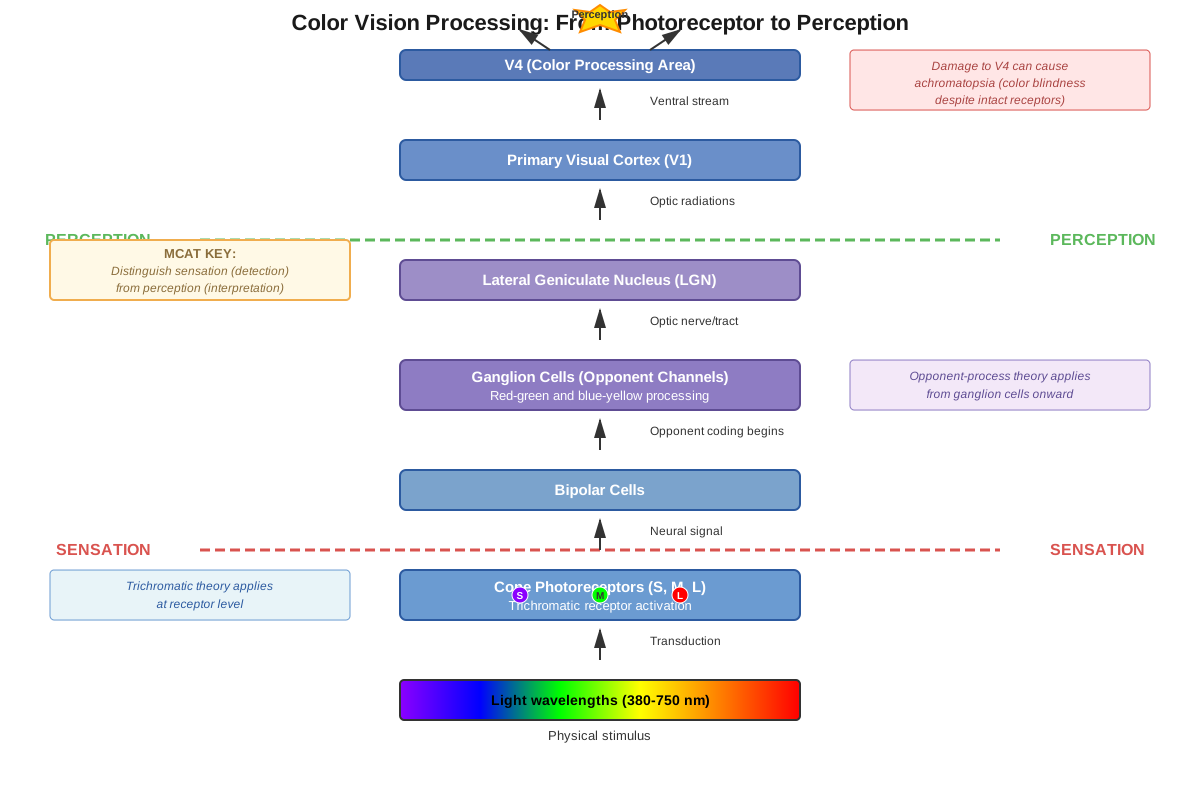
The study of color vision bridges biological and cognitive psychology, making it a high-yield topic for the MCAT. Questions frequently test students' understanding of how physical stimuli (light wavelengths) are transformed into subjective perceptual experiences. The MCAT emphasizes the distinction between sensation (the physical detection of light by photoreceptors) and perception (the brain's interpretation of those signals as color). Students must understand both the trichromatic theory of color vision at the receptor level and the opponent-process theory at the neural processing level, as these complementary frameworks explain different aspects of how humans perceive color.
Within the broader context of Sensation and Perception, color vision exemplifies key principles that apply across sensory modalities: transduction, coding, adaptation, and the relationship between physical stimuli and psychological experience. Mastering color vision provides a foundation for understanding other perceptual phenomena, including visual illusions, perceptual constancies, and the role of top-down processing in shaping sensory experience. This topic frequently appears in MCAT passages that integrate biological and psychological perspectives, making it essential for achieving a competitive score.
Learning Objectives
- [ ] Define color vision using accurate Psychology terminology
- [ ] Explain why color vision matters for the MCAT
- [ ] Apply color vision to exam-style questions
- [ ] Identify common mistakes related to color vision
- [ ] Connect color vision to related Psychology concepts
- [ ] Distinguish between trichromatic theory and opponent-process theory and explain how they complement each other
- [ ] Describe the anatomical basis of color vision, including the role of cones and their distribution in the retina
- [ ] Analyze color vision deficiencies and their underlying mechanisms
- [ ] Predict perceptual outcomes based on wavelength combinations and neural processing principles
Prerequisites
- Basic eye anatomy: Understanding the structure of the retina, including photoreceptors (rods and cones), is essential for comprehending where and how color vision begins
- Neural signal transduction: Knowledge of how sensory receptors convert physical stimuli into action potentials provides the foundation for understanding color coding
- Visual pathway anatomy: Familiarity with the path from retina through the lateral geniculate nucleus (LGN) to the visual cortex helps explain where color processing occurs
- Electromagnetic spectrum: Understanding that visible light represents a narrow band of wavelengths (approximately 380-750 nm) is necessary for discussing color perception
- Basic neuroanatomy: Knowledge of neural pathways and brain regions involved in sensory processing supports understanding of higher-order color perception
Why This Topic Matters
Color vision has profound clinical and real-world significance. Color vision deficiencies affect approximately 8% of males and 0.5% of females of Northern European descent, with varying prevalence across populations. These deficiencies can impact occupational choices, safety (such as interpreting traffic signals), and quality of life. Understanding the mechanisms underlying color blindness enables healthcare providers to counsel patients appropriately and recognize when genetic testing or occupational accommodations may be necessary.
From an MCAT perspective, color vision appears with moderate frequency across multiple question formats. Approximately 3-5% of Psychology/Sociology section questions directly or indirectly test color vision concepts. The topic most commonly appears in passage-based questions that present experimental data about color perception, visual processing, or sensory adaptation. Discrete questions may test knowledge of specific theories, photoreceptor types, or color vision deficiencies. The MCAT particularly favors questions that require students to integrate biological mechanisms with psychological theories, making color vision an ideal testing ground for interdisciplinary reasoning.
Common MCAT passage contexts include: research studies examining color perception across cultures, experiments investigating afterimages and adaptation, clinical vignettes describing patients with color vision deficiencies, evolutionary perspectives on color vision development, and neuroimaging studies of visual cortex activation during color processing. Questions often require students to interpret graphs showing spectral sensitivity curves, analyze inheritance patterns of color blindness, or predict perceptual outcomes based on opponent-process mechanisms.
Core Concepts
The Nature of Color and Light
Color vision refers to the ability to discriminate between different wavelengths of electromagnetic radiation in the visible spectrum and to perceive these differences as distinct hues. Color itself is not an inherent property of objects but rather a psychological experience generated by the brain in response to specific patterns of wavelength stimulation. The visible spectrum for humans ranges from approximately 380 nanometers (perceived as violet) to 750 nanometers (perceived as red), with intermediate wavelengths corresponding to blue, green, yellow, and orange.
Light can be characterized by three physical properties that correspond to psychological dimensions of color experience: wavelength (hue), intensity (brightness), and purity (saturation). Hue refers to the qualitative aspect of color—what we commonly call "color" in everyday language (red, blue, green, etc.). Brightness corresponds to the perceived intensity of light, ranging from dim to bright. Saturation refers to the purity or richness of a color, with highly saturated colors appearing vivid and desaturated colors appearing washed out or grayish.
Photoreceptors and the Retinal Basis of Color Vision
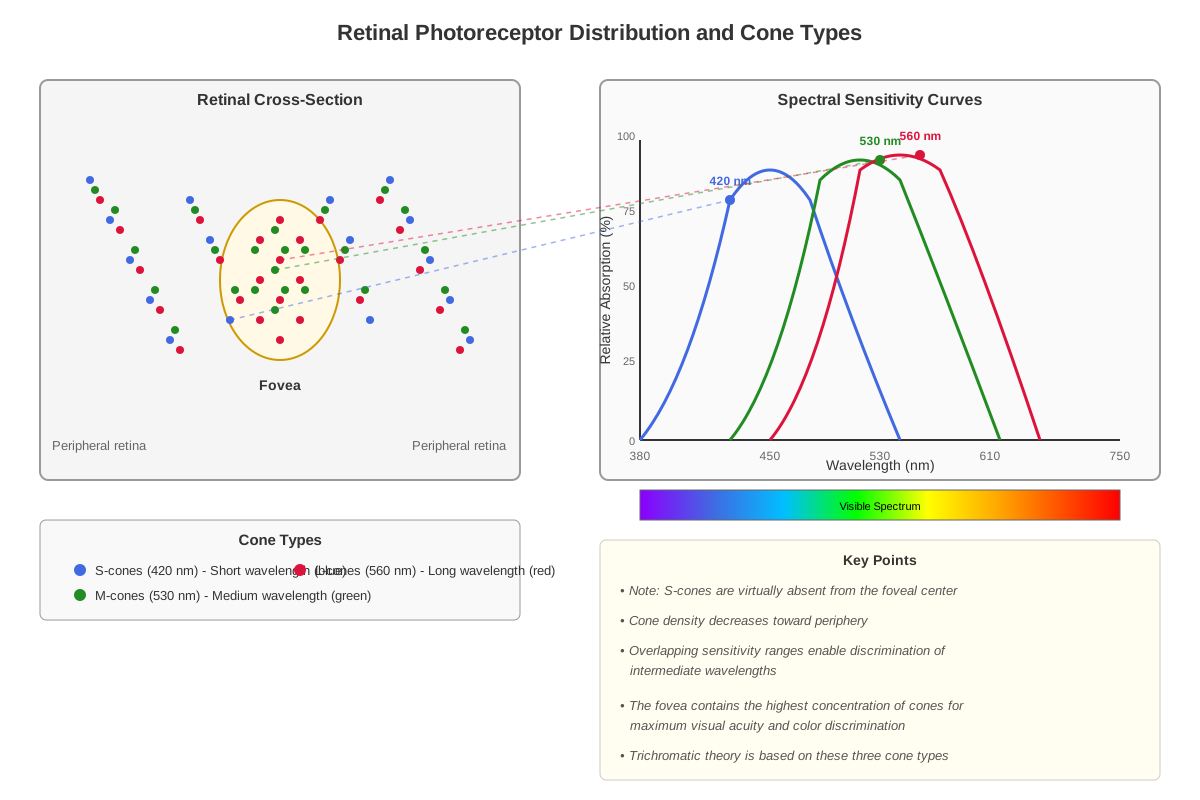
The retina contains two types of photoreceptors: rods and cones. While rods are responsible for scotopic (low-light) vision and do not contribute to color perception, cones are the photoreceptors that enable color vision under photopic (well-lit) conditions. Humans possess three types of cones, each containing a different photopigment that responds maximally to different wavelengths of light:
| Cone Type | Peak Sensitivity | Wavelength Range | Perceived Color |
|---|---|---|---|
| S-cones (short) | ~420 nm | 400-500 nm | Blue/Violet |
| M-cones (medium) | ~530 nm | 450-630 nm | Green/Yellow |
| L-cones (long) | ~560 nm | 500-700 nm | Red/Yellow |
The distribution of cones across the retina is not uniform. The fovea, the central region of the retina responsible for high-acuity vision, contains a high concentration of cones with very few rods. Interestingly, S-cones are relatively sparse in the fovea compared to M- and L-cones, which explains why fine blue details are harder to resolve than red or green details. As distance from the fovea increases, cone density decreases while rod density increases, which is why peripheral vision has reduced color sensitivity.
Trichromatic Theory
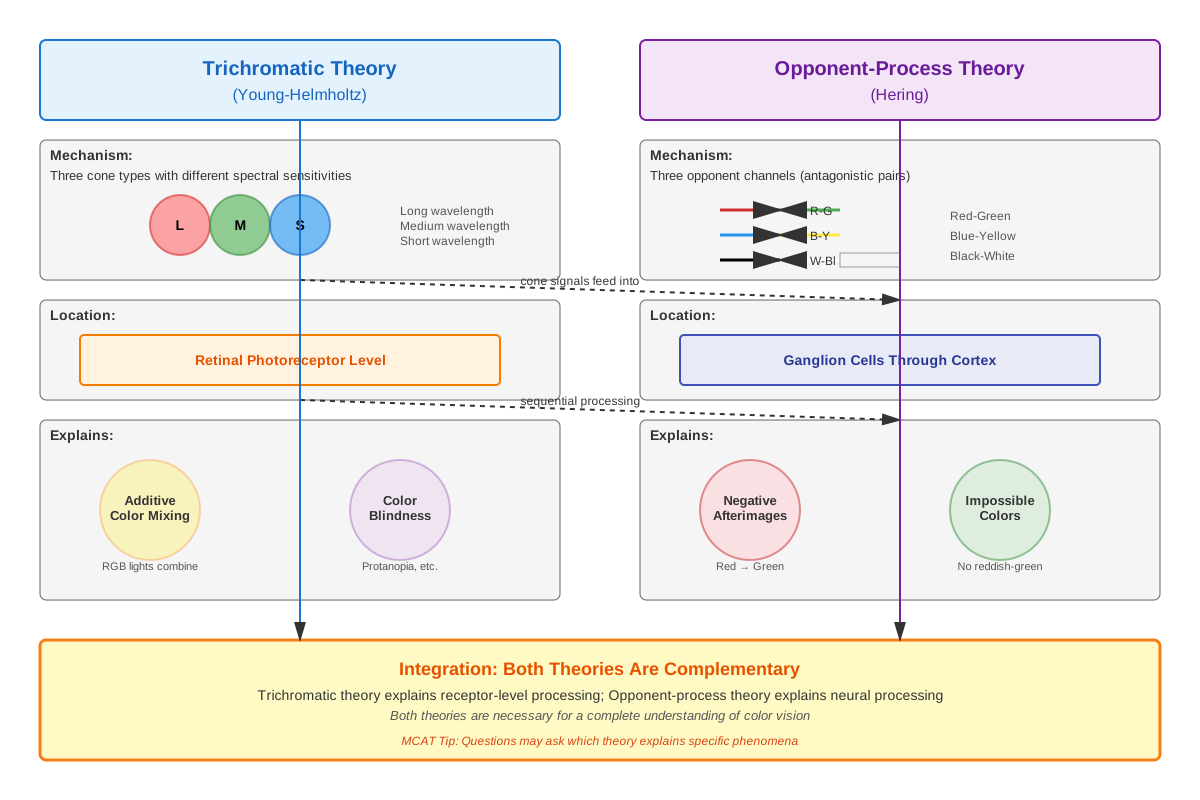
The trichromatic theory (also called the Young-Helmholtz theory) proposes that color vision results from the combined activity of three types of color receptors, each sensitive to different portions of the visible spectrum. According to this theory, any color can be created by combining different intensities of three primary colors. The theory accurately explains color vision at the receptor level—the pattern of activation across the three cone types determines which color is perceived.
For example, when light of 580 nm (yellow) strikes the retina, it stimulates both M-cones and L-cones moderately while producing minimal S-cone activation. The brain interprets this specific pattern of activation as yellow. Pure red light (700 nm) primarily activates L-cones, while pure blue light (450 nm) primarily activates S-cones. The trichromatic theory successfully explains color matching experiments, where observers can match any color by adjusting the intensities of three primary lights, and it accounts for the existence of three types of cone photopigments.
However, trichromatic theory alone cannot explain certain perceptual phenomena, such as afterimages and the existence of opponent color pairs (colors that cannot be perceived simultaneously, such as reddish-green or bluish-yellow).
Opponent-Process Theory
The opponent-process theory, developed by Ewald Hering, proposes that color vision is organized around three opponent channels: red-green, blue-yellow, and black-white (luminance). According to this theory, these channels operate in an antagonistic manner—activation of one member of a pair inhibits the other. This organization occurs at the neural processing level, beginning with retinal ganglion cells and continuing through the lateral geniculate nucleus (LGN) and visual cortex.
The three opponent channels are:
- Red-Green channel: Neurons in this channel are excited by red wavelengths and inhibited by green wavelengths (or vice versa)
- Blue-Yellow channel: Neurons are excited by blue wavelengths and inhibited by yellow wavelengths (or vice versa)
- Black-White channel: Neurons respond to luminance differences, with some excited by light increments and others by light decrements
Opponent-process theory elegantly explains several phenomena that trichromatic theory cannot. Negative afterimages occur when prolonged exposure to a color fatigues one side of an opponent channel, causing the opposite color to dominate when viewing a neutral surface. For example, staring at a red stimulus fatigues the "red" response in red-green opponent cells, so when viewing a white surface afterward, the "green" response dominates, producing a green afterimage. The theory also explains why certain color combinations (like reddish-green) are impossible to perceive—the opponent organization prevents simultaneous activation of both sides of a channel.
Integration of Theories
Modern understanding recognizes that trichromatic theory and opponent-process theory are not competing explanations but rather describe color vision at different stages of processing. Trichromatic mechanisms operate at the photoreceptor level, where three cone types respond to different wavelength ranges. Opponent-process mechanisms emerge at subsequent neural stages, where signals from cones are combined and recoded into opponent channels.
Specifically, retinal ganglion cells receive input from multiple cones and compute opponent signals. For example, a red-green opponent cell might receive excitatory input from L-cones and inhibitory input from M-cones (or vice versa). This neural recoding transforms the trichromatic code at the receptor level into an opponent code that is transmitted to the brain. Both theories are necessary for a complete understanding of color vision, and MCAT questions frequently test whether students recognize this complementary relationship.
Color Vision Deficiencies
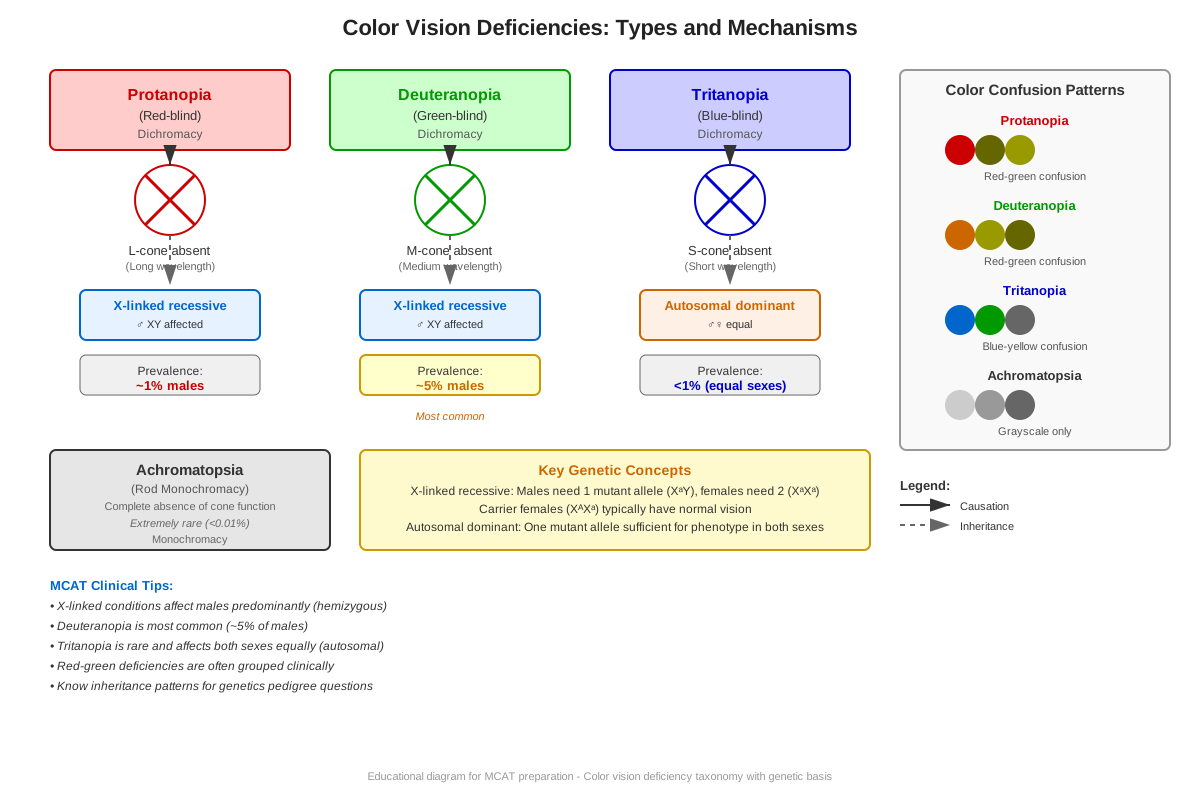
Color vision deficiencies (commonly called color blindness, though complete absence of color vision is rare) result from absent or malfunctioning cone photopigments. These conditions are typically genetic and X-linked, explaining their higher prevalence in males. The most common types include:
Dichromacy refers to conditions where one cone type is absent:
- Protanopia: Absence of L-cones (red-sensitive), causing difficulty discriminating red from green
- Deuteranopia: Absence of M-cones (green-sensitive), also causing red-green confusion
- Tritanopia: Absence of S-cones (blue-sensitive), causing blue-yellow confusion (very rare)
Anomalous trichromacy refers to conditions where all three cone types are present but one has altered spectral sensitivity:
- Protanomaly: Altered L-cone sensitivity
- Deuteranomaly: Altered M-cone sensitivity (most common form of color vision deficiency)
- Tritanomaly: Altered S-cone sensitivity
Monochromacy (complete color blindness) is extremely rare and results from having only one functional cone type or only rods. Individuals with rod monochromacy see only in shades of gray and have very poor visual acuity in bright light.
Understanding the genetic basis and perceptual consequences of these deficiencies is important for MCAT questions involving inheritance patterns, sensory processing, and clinical applications.
Color Constancy
Color constancy is the perceptual phenomenon whereby the perceived color of an object remains relatively stable despite changes in illumination. For example, a red apple appears red whether viewed in bright sunlight, indoor lighting, or shade, even though the wavelength composition of light reflected from the apple varies considerably across these conditions. This constancy demonstrates that color perception involves more than simple wavelength detection—it requires complex neural computations that account for the illumination context.
Color constancy involves both bottom-up processing (analyzing the wavelength composition of light from the object and surrounding context) and top-down processing (using knowledge and expectations about object colors). The visual system appears to "discount the illuminant" by comparing the light reflected from an object to the light reflected from surrounding surfaces, extracting information about the object's surface reflectance properties independent of lighting conditions.
Concept Relationships
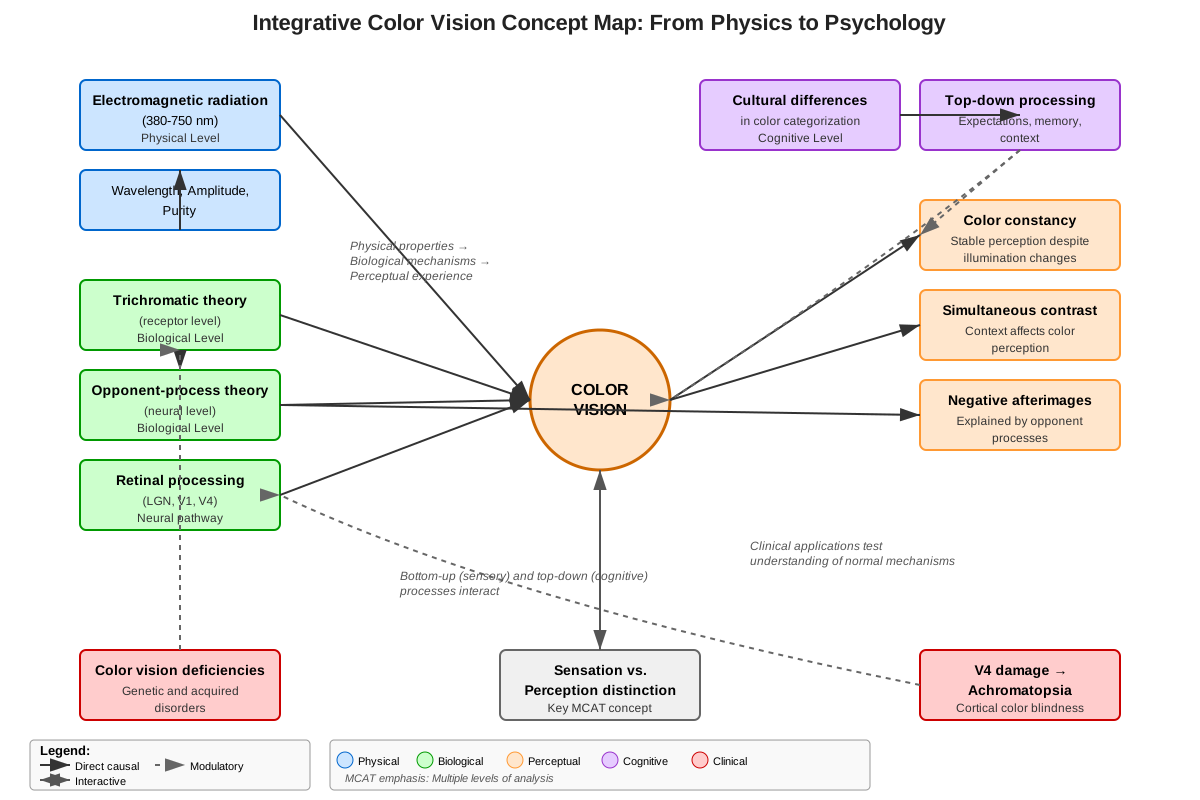
The concepts within color vision form an integrated system that spans multiple levels of analysis. At the foundation, photoreceptors (specifically cones) transduce electromagnetic energy into neural signals, with the three cone types providing the basis for trichromatic theory. This receptor-level coding is then transformed through neural processing into opponent-process channels, demonstrating how the same sensory information can be recoded at different stages of the visual pathway.
Color vision deficiencies provide evidence for both theories: the genetic absence of specific cone types supports trichromatic theory, while the specific patterns of color confusion (red-green vs. blue-yellow) align with opponent-process organization. Afterimages and color constancy phenomena further illustrate how color perception emerges from complex neural computations rather than simple wavelength detection.
The relationship map can be visualized as:
Light wavelengths → Cone photoreceptors (trichromatic coding) → Retinal ganglion cells (opponent-process recoding) → LGN → Visual cortex → Color perception
This processing hierarchy connects to prerequisite knowledge of neural transduction and visual pathways, while also relating to broader concepts in sensation and perception such as sensory adaptation, perceptual constancies, and the distinction between sensation and perception. Color vision also connects to evolutionary psychology (explaining why trichromatic vision evolved in primates) and cultural psychology (examining how color categories and naming vary across cultures).
Quick check — test yourself on Color vision so far.
Try Flashcards →High-Yield Facts
⭐ Humans have three types of cones (S, M, L) with peak sensitivities around 420 nm, 530 nm, and 560 nm respectively, forming the basis of trichromatic color vision
⭐ Trichromatic theory explains color vision at the receptor level, while opponent-process theory explains neural processing at subsequent stages—both theories are correct and complementary
⭐ Opponent-process theory organizes color vision into three channels: red-green, blue-yellow, and black-white (luminance)
⭐ The most common color vision deficiency is deuteranomaly (altered M-cone sensitivity), which is X-linked and therefore more prevalent in males
⭐ Negative afterimages result from adaptation in opponent-process channels—staring at red produces a green afterimage because the red response fatigues
- S-cones are relatively sparse in the fovea, which is why fine blue details are harder to resolve than red or green details
- Color constancy demonstrates that color perception involves complex neural computations that account for illumination context, not just wavelength detection
- Dichromacy refers to having only two functional cone types, while anomalous trichromacy refers to having altered spectral sensitivity in one cone type
- Protanopia and deuteranopia both cause red-green color confusion but result from different cone deficiencies (L-cones vs. M-cones)
- The visible spectrum for humans ranges from approximately 380 nm (violet) to 750 nm (red)
- Rods do not contribute to color vision; they function in low-light conditions and provide only achromatic (black-white) information
- Color can be described by three dimensions: hue (wavelength), brightness (intensity), and saturation (purity)
Common Misconceptions
Misconception: Color is an inherent property of objects that exists independent of perception
Correction: Color is a psychological experience generated by the brain in response to wavelength information. Objects reflect certain wavelengths, but "color" as we experience it is constructed by neural processing. This is why color perception can be altered by context, adaptation, and individual differences in photoreceptors.
Misconception: Trichromatic theory and opponent-process theory are competing explanations, and only one can be correct
Correction: Both theories are correct and describe color vision at different stages of processing. Trichromatic mechanisms operate at the photoreceptor level (three cone types), while opponent-process mechanisms emerge at the neural processing level (retinal ganglion cells and beyond). Understanding their complementary relationship is essential for MCAT questions.
Misconception: People with color blindness see the world in black and white
Correction: Most color vision deficiencies involve difficulty discriminating certain color pairs (typically red-green or blue-yellow) but not complete absence of color vision. Only individuals with monochromacy (extremely rare) see exclusively in shades of gray. Dichromats still perceive color, just with reduced dimensionality.
Misconception: The three cone types are maximally sensitive to red, green, and blue wavelengths
Correction: While this is a common simplification, the actual peak sensitivities are approximately 420 nm (blue-violet), 530 nm (green-yellow), and 560 nm (yellow-orange). The L-cones are often called "red" cones, but they are actually most sensitive to yellow-orange wavelengths. Red perception requires comparing L-cone and M-cone responses, not just L-cone activation alone.
Misconception: Afterimages occur because photoreceptors become fatigued
Correction: While photoreceptor adaptation contributes to some visual phenomena, negative afterimages are primarily explained by opponent-process mechanisms at the neural level. Prolonged viewing of a color fatigues one side of an opponent channel, causing the opposite color to dominate when viewing a neutral surface. This is a neural, not photoreceptor, phenomenon.
Misconception: Color vision deficiencies can be acquired through eye damage or disease
Correction: While this is technically possible (acquired color vision deficiencies can result from certain diseases, medications, or neural damage), the vast majority of color vision deficiencies are congenital and genetic. MCAT questions typically focus on inherited forms, particularly X-linked red-green deficiencies. Be careful to distinguish between congenital and acquired forms when analyzing clinical vignettes.
Worked Examples
Example 1: Integrating Trichromatic and Opponent-Process Theories
Question: A researcher presents participants with a light stimulus of 580 nm wavelength. Participants report seeing yellow. The researcher then asks participants to stare at this yellow stimulus for 60 seconds before looking at a white surface. Participants report seeing a blue afterimage. Explain these observations using both trichromatic theory and opponent-process theory.
Solution:
Step 1: Analyze the initial perception using trichromatic theory
Light at 580 nm falls between the peak sensitivities of M-cones (~530 nm) and L-cones (~560 nm). This wavelength will stimulate both M-cones and L-cones moderately, with minimal S-cone activation. According to trichromatic theory, the specific pattern of activation across the three cone types (moderate M, moderate L, minimal S) is interpreted by the brain as yellow.
Step 2: Explain why yellow appears as a distinct hue
The combined activation of M-cones and L-cones without S-cone activation produces the perception of yellow. This demonstrates that yellow is not detected by a "yellow receptor" but rather emerges from the pattern of activation across multiple cone types.
Step 3: Analyze the afterimage using opponent-process theory
According to opponent-process theory, yellow and blue are opponent colors processed by the blue-yellow channel. Neurons in this channel are excited by one color and inhibited by the other. Prolonged exposure to yellow stimulates the "yellow" side of the blue-yellow opponent channel continuously for 60 seconds.
Step 4: Explain the mechanism of the afterimage
This prolonged stimulation causes adaptation (fatigue) of the neurons responding to yellow. When the participant then views a white surface (which normally activates both sides of the opponent channel equally), the fatigued "yellow" response is weakened. The "blue" response is now relatively stronger, producing the perception of blue even though the physical stimulus is white.
Step 5: Connect the theories
This example demonstrates how trichromatic theory explains the initial color perception at the receptor level (pattern of cone activation), while opponent-process theory explains the afterimage phenomenon at the neural processing level (adaptation in opponent channels). Both theories are necessary for a complete explanation.
Key takeaway: MCAT questions often require integrating both theories. Trichromatic theory explains what happens at photoreceptors; opponent-process theory explains neural processing and phenomena like afterimages.
Example 2: Analyzing Color Vision Deficiency Inheritance
Question: A woman with normal color vision has a father with deuteranopia (absence of M-cones). She marries a man with normal color vision. What is the probability that their son will have deuteranopia? What is the probability that their daughter will have deuteranopia? Explain the genetic basis.
Solution:
Step 1: Identify the inheritance pattern
Deuteranopia is an X-linked recessive condition. The gene for M-cone photopigment is located on the X chromosome. Males (XY) need only one copy of the defective allele to express the condition, while females (XX) need two copies.
Step 2: Determine the woman's genotype
The woman has normal color vision but her father has deuteranopia. Since fathers pass their X chromosome to all daughters, she must have inherited one X chromosome carrying the deuteranopia allele from her father. However, she has normal color vision, so she must have inherited a normal X chromosome from her mother. Therefore, the woman is a carrier (heterozygous): X^D X^d (where X^D = normal allele, X^d = deuteranopia allele).
Step 3: Determine the man's genotype
The man has normal color vision, so his genotype is X^D Y.
Step 4: Construct a Punnett square
           X^D (father)    Y (father)
X^D (mother)   X^D X^D      X^D Y
X^d (mother)   X^D X^d      X^d Y
Step 5: Calculate probabilities for sons
Sons receive the Y chromosome from their father and one X chromosome from their mother. There is a 50% chance the mother passes X^d, resulting in X^d Y (deuteranopia), and a 50% chance she passes X^D, resulting in X^D Y (normal vision).
Probability that son has deuteranopia = 50%
Step 6: Calculate probabilities for daughters
Daughters receive one X chromosome from each parent. The father can only pass X^D (normal). The mother passes either X^D or X^d with equal probability. Possible daughter genotypes are X^D X^D (50%) or X^D X^d (50%). Both genotypes result in normal color vision because the condition is recessive.
Probability that daughter has deuteranopia = 0%
However, there is a 50% probability the daughter will be a carrier (X^D X^d).
Key takeaway: Understanding X-linked inheritance patterns is crucial for MCAT genetics questions. Males are more frequently affected by X-linked recessive conditions because they have only one X chromosome. Carrier females have normal phenotypes but can pass the condition to their sons.
Exam Strategy
When approaching MCAT questions on color vision, first identify whether the question is testing receptor-level mechanisms (trichromatic theory) or neural processing mechanisms (opponent-process theory). Questions about cone types, wavelength sensitivity, or color matching typically invoke trichromatic theory. Questions about afterimages, opponent colors, or perceptual phenomena typically invoke opponent-process theory.
Trigger words and phrases to watch for:
- "Wavelength" or "nanometers" → Think about which cone types are activated
- "Afterimage" → Opponent-process theory and adaptation
- "Color blindness" or "color vision deficiency" → Consider which cone type is affected and whether it's X-linked
- "Color constancy" → Higher-order perceptual processing, not just wavelength detection
- "Three types of cones" → Trichromatic theory
- "Red-green" or "blue-yellow" → Opponent-process channels
Process-of-elimination strategies:
- Eliminate answer choices that confuse trichromatic and opponent-process mechanisms
- Eliminate choices that claim color blindness means seeing in black and white (unless specifically about monochromacy)
- Eliminate choices that suggest color is an inherent property of objects rather than a perceptual experience
- For genetics questions, eliminate choices that don't follow X-linked inheritance patterns for common color vision deficiencies
Time allocation advice:
Color vision questions are typically straightforward if you understand the core theories. Spend 60-90 seconds on discrete questions and 90-120 seconds per question in passages. Don't overthink—the MCAT usually tests whether you can distinguish between the two theories and apply them appropriately. If a question seems complex, break it down into stages: What happens at the photoreceptors? What happens during neural processing? What is the final perceptual outcome?
For passage-based questions, quickly identify whether the passage describes an experiment about color perception, a clinical case of color vision deficiency, or a theoretical discussion. Underline key information about wavelengths, cone types, or perceptual outcomes. Many passages will present data in graphs showing spectral sensitivity curves—practice interpreting these before test day.
Memory Techniques
Mnemonic for cone types and wavelengths: "Short Sees Sky (blue), Medium Meets Meadow (green), Long Loves Lava (red-orange)"
- S-cones: Short wavelengths, see blue/violet (~420 nm)
- M-cones: Medium wavelengths, see green/yellow (~530 nm)
- L-cones: Long wavelengths, see yellow/red (~560 nm)
Mnemonic for opponent channels: "RGB computers, RG-BY-BW vision"
- Red-Green channel
- Blue-Yellow channel
- Black-White (luminance) channel
Visualization for afterimages: Imagine a seesaw. When you stare at red, the "red" side of the red-green seesaw gets pushed down (fatigued). When you look away, the "green" side bounces up, creating a green afterimage. This physical metaphor helps remember that opponent channels work in antagonistic pairs.
Acronym for color vision deficiency types: "People Don't Trust Poor Drivers Totally"
- Protanopia (no L-cones)
- Deuteranopia (no M-cones)
- Tritanopia (no S-cones)
- Protanomaly (altered L-cones)
- Deuteranomaly (altered M-cones) - most common
- Tritanomaly (altered S-cones)
Memory aid for theory integration: "Cones Come First, Opponents Organize"
- Trichromatic theory describes what happens first (at the cone level)
- Opponent-process theory describes how signals are organized later (neural processing)
Summary
Color vision is the ability to discriminate between different wavelengths of visible light and perceive them as distinct hues. This complex process involves both trichromatic mechanisms at the photoreceptor level and opponent-process mechanisms at the neural processing level. Three types of cones (S, M, and L) with different spectral sensitivities provide the foundation for trichromatic color vision, with any perceived color resulting from the pattern of activation across these three receptor types. Signals from cones are then recoded into three opponent channels (red-green, blue-yellow, black-white) by retinal ganglion cells and subsequent neural structures. Both theories are correct and complementary, describing different stages of color processing. Color vision deficiencies result from absent or malfunctioning cone photopigments and are typically X-linked genetic conditions, with deuteranomaly being most common. Understanding color vision requires integrating knowledge of photoreceptor anatomy, neural processing, perceptual phenomena like afterimages and color constancy, and the genetic basis of color vision deficiencies. For the MCAT, students must be able to distinguish between trichromatic and opponent-process mechanisms, apply both theories to explain perceptual phenomena, and analyze inheritance patterns of color vision deficiencies.
Key Takeaways
- Color vision involves three types of cones (S, M, L) with peak sensitivities around 420 nm, 530 nm, and 560 nm, forming the basis of trichromatic theory
- Trichromatic theory and opponent-process theory are complementary, not competing—trichromatic mechanisms operate at the receptor level while opponent-process mechanisms operate at the neural processing level
- Opponent-process theory organizes color vision into three antagonistic channels: red-green, blue-yellow, and black-white (luminance)
- Negative afterimages result from adaptation in opponent-process channels, where prolonged viewing of one color fatigues that response, causing the opponent color to dominate
- The most common color vision deficiency is deuteranomaly (altered M-cone sensitivity), which is X-linked recessive and therefore more prevalent in males
- Color constancy demonstrates that color perception involves complex neural computations accounting for illumination context, not just simple wavelength detection
- Understanding both the biological mechanisms (photoreceptors, neural pathways) and psychological theories (trichromatic, opponent-process) is essential for MCAT success on color vision questions
Related Topics
Visual processing pathways: Understanding how visual information travels from the retina through the lateral geniculate nucleus to the visual cortex provides context for where color processing occurs and how it integrates with other visual features like motion and form.
Sensory adaptation: Color vision demonstrates adaptation principles that apply across sensory modalities, including how prolonged exposure to stimuli reduces neural response and how this affects perception.
Perceptual constancies: Color constancy is one example of how the perceptual system maintains stable object perception despite changing sensory input, connecting to size constancy, shape constancy, and other perceptual phenomena.
Evolutionary psychology: The evolution of trichromatic color vision in primates relates to foraging behavior and social signaling, providing an evolutionary perspective on sensory systems.
Genetics and inheritance: Color vision deficiencies provide clear examples of X-linked recessive inheritance, connecting to broader genetics topics tested on the MCAT.
Mastering color vision provides a strong foundation for understanding these related topics and demonstrates the integration of biological and psychological perspectives that the MCAT emphasizes.
Practice CTA
Now that you've completed this comprehensive guide on color vision, test your understanding with practice questions and flashcards. Focus on questions that require you to distinguish between trichromatic and opponent-process mechanisms, analyze inheritance patterns of color vision deficiencies, and explain perceptual phenomena like afterimages. The more you practice applying these concepts to MCAT-style questions, the more confident and efficient you'll become on test day. Remember: understanding color vision demonstrates your ability to integrate biological mechanisms with psychological theories—a skill that will serve you well throughout the Psychology/Sociology section. You've got this!
Sign up free to keep reading
Create a free AnvayaPrep account to finish this MCAT guide on Color vision — plus flashcards and practice questions.