Overview
Sensory adaptation is a fundamental process in which sensory receptors become less responsive to constant or unchanging stimuli over time. This phenomenon represents a critical mechanism by which the nervous system filters environmental information, allowing organisms to detect novel or changing stimuli while ignoring stable background conditions. In the context of Sensation and Perception, sensory adaptation demonstrates how the brain prioritizes dynamic information that may signal threats, opportunities, or changes requiring behavioral responses.
For the MCAT, understanding sensory adaptation Psychology concepts is essential because this topic bridges multiple disciplines tested on the exam. Questions frequently integrate sensory adaptation with neurobiology (receptor physiology), behavioral science (attention and awareness), and evolutionary psychology (adaptive significance). The MCAT commonly presents scenarios requiring students to distinguish between sensory adaptation and related phenomena such as habituation, perceptual constancy, or sensory fatigue. Additionally, passages may explore clinical applications, such as how adaptation affects pain perception or why certain sensory deficits go unnoticed by patients.
The broader significance of sensory adaptation MCAT content extends to understanding how humans interact with their environment. This process explains everyday experiences—why we stop noticing the feeling of clothing on our skin, why a constant background noise becomes imperceptible, or why we adapt to temperature changes. From an evolutionary perspective, sensory adaptation conserves neural resources and enhances survival by maintaining sensitivity to novel stimuli that might represent danger or opportunity. Mastering this topic provides foundational knowledge for understanding more complex perceptual processes, including selective attention, signal detection theory, and the distinction between bottom-up and top-down processing in Psychology.
Learning Objectives
- [ ] Define Sensory adaptation using accurate Psychology terminology
- [ ] Explain why Sensory adaptation matters for the MCAT
- [ ] Apply Sensory adaptation to exam-style questions
- [ ] Identify common mistakes related to Sensory adaptation
- [ ] Connect Sensory adaptation to related Psychology concepts
- [ ] Distinguish sensory adaptation from habituation and neural fatigue at the mechanistic level
- [ ] Predict which sensory modalities demonstrate the most and least adaptation
- [ ] Analyze experimental designs that measure sensory adaptation rates across different receptor types
Prerequisites
- Basic neuroanatomy of sensory systems: Understanding receptor types, sensory pathways, and primary sensory cortices provides the structural foundation for comprehending where and how adaptation occurs
- Action potential physiology: Knowledge of depolarization, threshold potentials, and firing rates is necessary to understand the cellular mechanisms underlying reduced receptor responsiveness
- Distinction between sensation and perception: Recognizing that sensation involves receptor activation while perception involves cortical interpretation helps localize adaptation as primarily a receptor-level phenomenon
- Absolute and difference thresholds: Familiarity with psychophysical concepts enables understanding of how adaptation shifts detection thresholds over time
Why This Topic Matters
Clinical and Real-World Significance
Sensory adaptation has profound implications for clinical practice and daily functioning. Patients with chronic pain conditions may experience reduced adaptation in nociceptors, leading to persistent pain perception that would normally diminish. Conversely, individuals working in environments with constant noxious stimuli (strong odors, loud machinery) rely on adaptation to maintain function. Understanding adaptation helps clinicians recognize why patients may not notice gradual changes in vision, hearing, or proprioception—potentially delaying diagnosis of progressive conditions. The phenomenon also explains why home-based health monitoring requires objective measurements rather than subjective patient reports, as patients adapt to gradual physiological changes.
MCAT Examination Statistics
Sensory adaptation appears in approximately 3-5% of Psychology/Sociology section questions, typically integrated within passages about sensory systems, perception, or neuroscience. Questions most commonly take three forms: (1) discrete questions asking students to identify examples of adaptation versus other phenomena, (2) passage-based questions requiring application of adaptation principles to experimental designs measuring sensory thresholds, and (3) pseudo-discrete questions connecting adaptation to evolutionary or cognitive psychology concepts. The topic frequently appears alongside related concepts like Weber's Law, signal detection theory, or attention, requiring students to differentiate between these related but distinct processes.
Common Exam Presentation Formats
MCAT passages often present sensory adaptation through experimental scenarios measuring detection thresholds before and after prolonged stimulus exposure. Classic paradigms include olfactory adaptation studies (perfume detection after continuous exposure), tactile adaptation experiments (pressure sensitivity following sustained contact), or visual adaptation research (brightness perception after dark adaptation). Passages may also present clinical vignettes describing patients who fail to notice gradual sensory changes, requiring students to apply adaptation concepts to explain the phenomenon. Additionally, questions may embed adaptation within broader discussions of attention, asking students to distinguish between reduced receptor firing (adaptation) and reduced cognitive processing (habituation or inattention).
Core Concepts
Definition and Mechanism of Sensory Adaptation
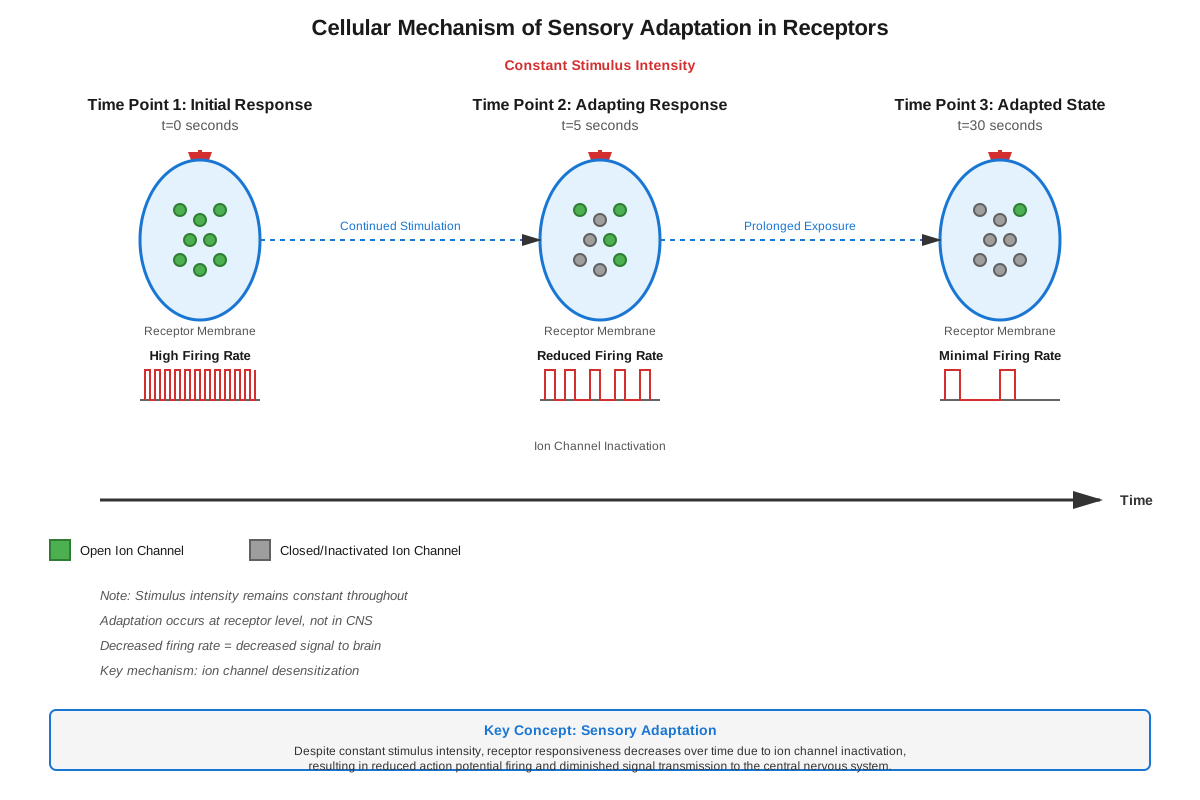
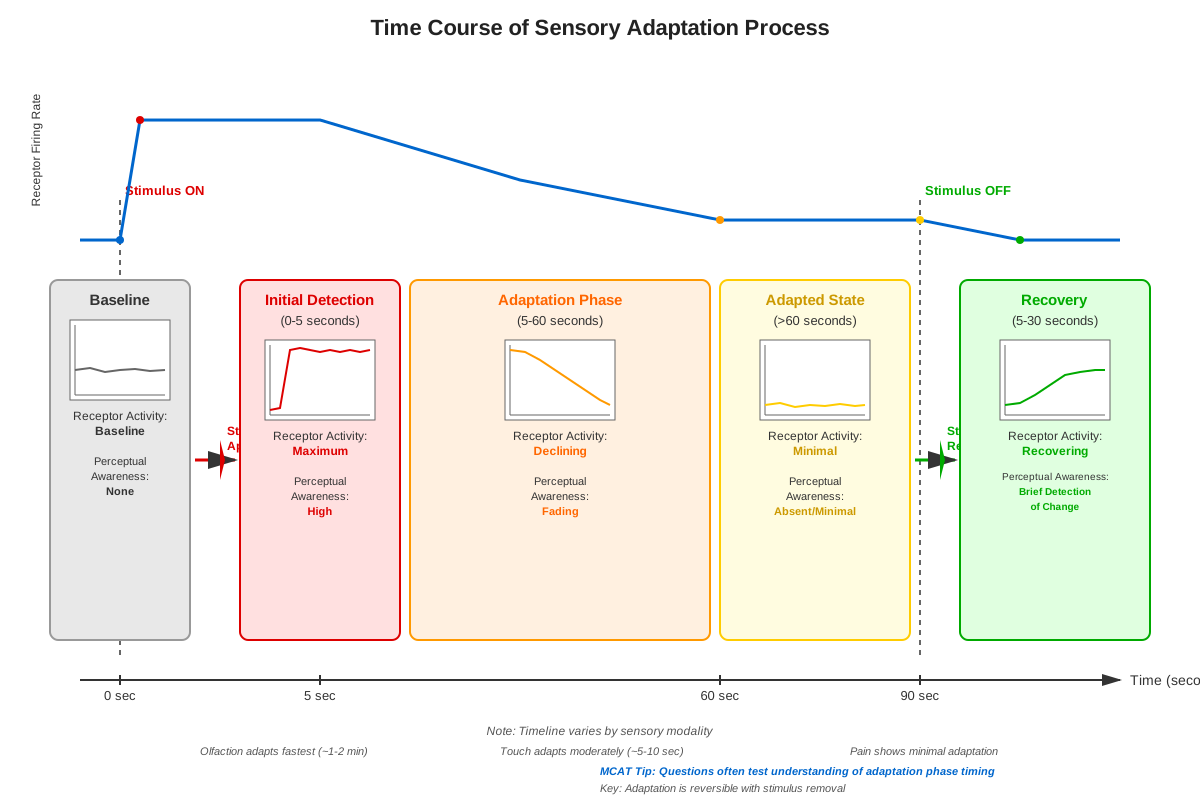
Sensory adaptation refers to the decreased responsiveness of sensory receptors to constant stimulation over time, resulting in reduced perception of unchanging stimuli. This process occurs primarily at the receptor level, where continuous activation leads to decreased firing rates despite ongoing stimulus presence. The mechanism involves several physiological changes: receptor proteins may become temporarily inactivated or internalized, ion channels may enter refractory states, or neurotransmitter depletion may occur at the first synapse in sensory pathways.
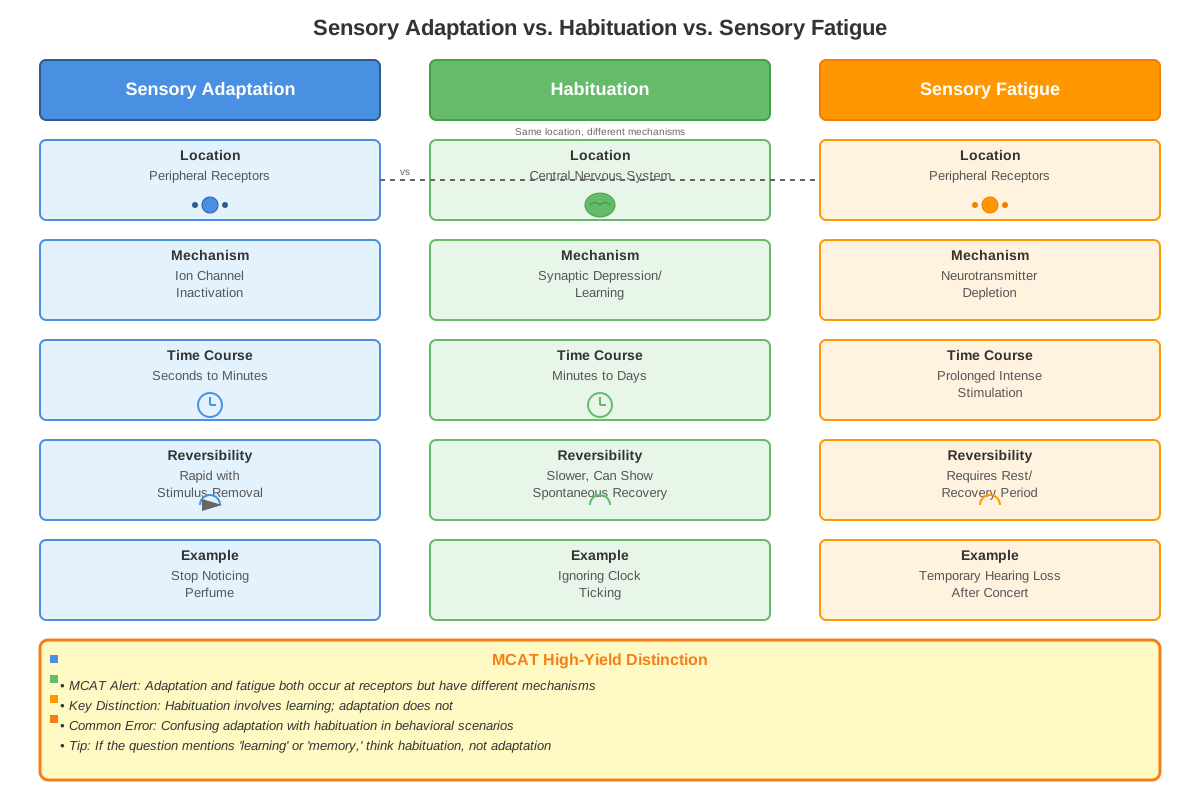
At the cellular level, adaptation represents a form of neural efficiency. When a stimulus remains constant, the information it provides becomes less relevant for behavioral decision-making. By reducing firing rates in response to unchanging stimuli, the nervous system conserves metabolic resources and maintains sensitivity to novel or changing stimuli that may require immediate response. This process differs from neural fatigue (depletion of cellular resources preventing any response) and habituation (a central nervous system process involving learned decreased response to repeated stimuli).
Types of Sensory Receptors and Adaptation Rates
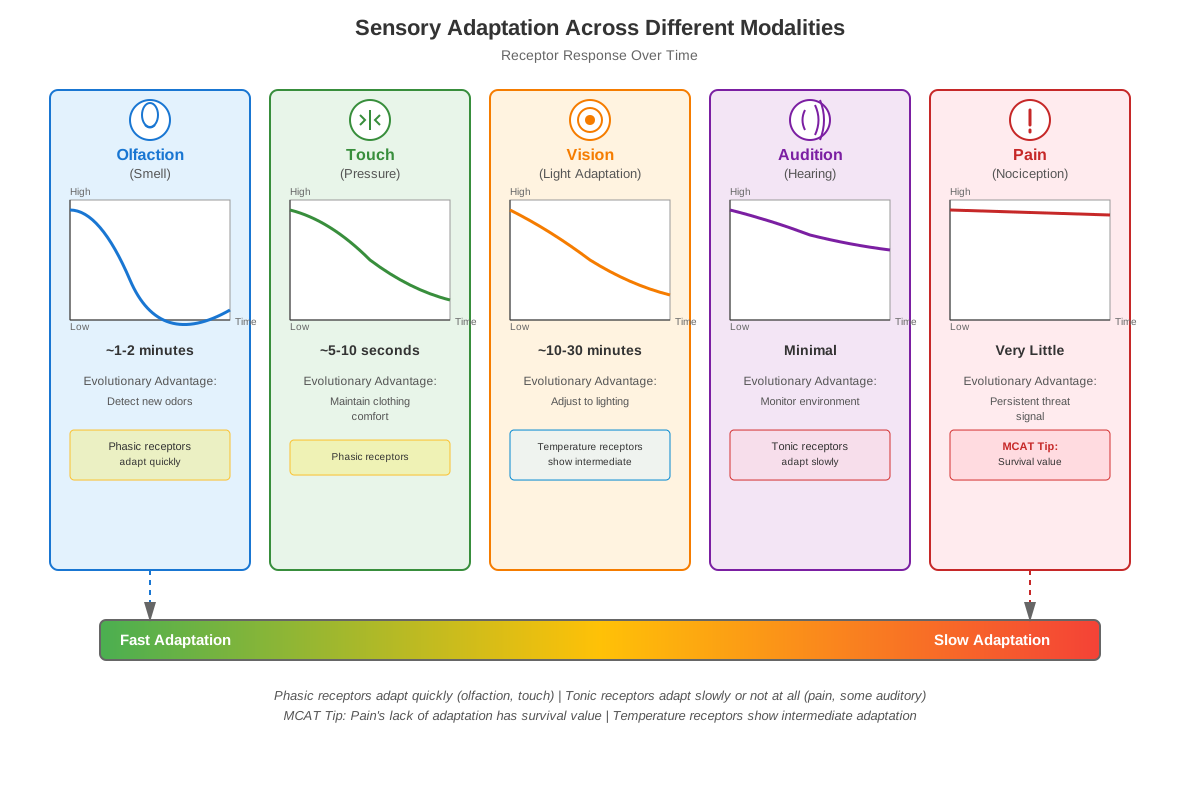
Sensory receptors demonstrate varying adaptation rates based on their functional roles. Phasic receptors (rapidly adapting receptors) respond strongly to stimulus onset but quickly decrease firing even if the stimulus continues. These receptors are specialized for detecting changes and include Pacinian corpuscles (detecting vibration), Meissner's corpuscles (light touch), and olfactory receptors. The rapid adaptation of phasic receptors explains why we quickly stop noticing constant pressure from clothing or why a continuous odor becomes imperceptible within minutes.
Tonic receptors (slowly adapting receptors) maintain relatively constant firing rates during sustained stimulation, providing continuous information about stimulus intensity. These receptors include Merkel's discs (sustained pressure and texture), Ruffini endings (skin stretch), muscle spindles (muscle length), and nociceptors (pain). The slow adaptation of tonic receptors serves critical functions: proprioceptors must continuously signal body position for motor control, and pain receptors must maintain awareness of potentially damaging stimuli.
| Receptor Type | Adaptation Rate | Primary Function | Examples | Adaptive Significance |
|---|---|---|---|---|
| Phasic (Rapidly Adapting) | Seconds to minutes | Detect changes and stimulus onset/offset | Pacinian corpuscles, Meissner's corpuscles, olfactory receptors | Conserve resources; maintain sensitivity to novel stimuli |
| Tonic (Slowly Adapting) | Hours to days (minimal) | Provide continuous information | Merkel's discs, muscle spindles, nociceptors, photoreceptors | Maintain awareness of critical ongoing conditions |
Sensory Modality-Specific Adaptation
Different sensory systems exhibit characteristic adaptation patterns reflecting their ecological importance. Olfactory adaptation occurs most rapidly, with complete adaptation to constant odors within 1-2 minutes. This rapid adaptation makes evolutionary sense: once an odor source is identified, continuous monitoring provides diminishing returns, while maintaining sensitivity to new odors enables detection of changing environmental conditions (smoke, food, predators).
Tactile adaptation varies by receptor type and stimulus location. Light touch receptors (Meissner's corpuscles) adapt within seconds, explaining why we don't continuously feel our clothing. Pressure receptors (Merkel's discs) adapt more slowly, maintaining awareness of sustained contact. Temperature receptors demonstrate intermediate adaptation—we quickly adapt to water temperature when entering a pool, but extreme temperatures maintain some perception to prevent tissue damage.
Visual adaptation involves multiple processes operating on different timescales. Dark adaptation (increased sensitivity in low light) occurs over 20-30 minutes as rhodopsin regenerates in rod photoreceptors. Light adaptation (decreased sensitivity in bright light) occurs more rapidly (5-10 minutes) as photopigments bleach and pupillary constriction reduces light entry. Importantly, photoreceptors never completely adapt—we continue seeing constant visual scenes because of constant eye movements (microsaccades) that create changing retinal stimulation patterns.
Auditory adaptation is minimal for most sounds, as the auditory system prioritizes continuous monitoring of the acoustic environment. However, temporary threshold shifts occur after exposure to loud sounds, representing a protective mechanism rather than true adaptation. Pain adaptation is highly variable and often incomplete—acute pain may show some adaptation, but chronic pain conditions often involve sensitization (increased sensitivity) rather than adaptation.
Adaptive Significance and Evolutionary Context
Sensory adaptation represents an evolutionary optimization balancing sensitivity and efficiency. Organisms with limited neural processing capacity benefit from filtering redundant information, allocating resources to detecting changes that may signal threats or opportunities. An animal that continues responding maximally to constant background stimuli wastes energy and may miss novel predator cues or food sources. Adaptation thus enhances survival by maintaining a "fresh" perspective on the environment.
The differential adaptation rates across sensory modalities reflect evolutionary priorities. Rapid olfactory adaptation makes sense for terrestrial animals where odor sources are typically stationary—once identified, continuous monitoring is unnecessary. Minimal pain adaptation protects against tissue damage by maintaining awareness of harmful stimuli. Intermediate tactile adaptation balances awareness of body-environment interactions with the need to detect new contacts. This functional variation demonstrates how natural selection has fine-tuned sensory systems to match ecological demands.
Distinguishing Adaptation from Related Phenomena
Students must carefully distinguish sensory adaptation from several related concepts. Habituation is a form of non-associative learning occurring in the central nervous system, where repeated stimulus exposure leads to decreased behavioral response despite maintained sensory input. Unlike adaptation (receptor-level), habituation involves synaptic changes in neural circuits processing the stimulus. Example: A person stops startling to a repeated loud noise (habituation) even though auditory receptors continue firing normally.
Sensory fatigue involves temporary inability of receptors or neurons to respond due to resource depletion (neurotransmitter exhaustion, metabolic substrate depletion). Unlike adaptation (a regulatory process maintaining some function), fatigue represents a failure state requiring recovery time. Example: Muscle spindle fatigue after extreme exertion temporarily impairs proprioception.
Perceptual constancy refers to stable perception of object properties despite changing sensory input (size constancy, color constancy). This is a cognitive process involving top-down interpretation, not receptor-level changes. Selective attention involves cognitive filtering of sensory information, where stimuli reach consciousness but are not processed due to attentional limitations—distinct from adaptation where receptor firing itself decreases.
Concept Relationships
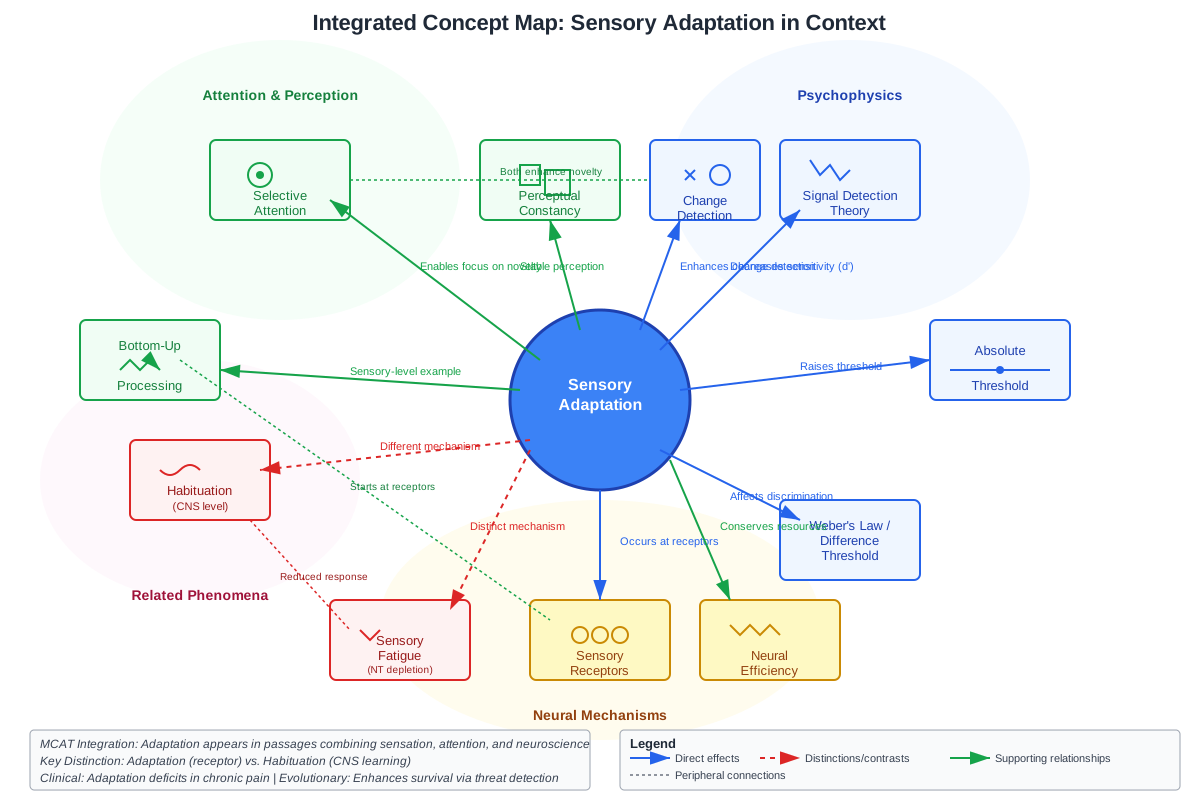
Sensory adaptation connects intimately with multiple concepts within sensation and perception. The process begins with receptor activation (transduction), where physical stimuli generate neural signals. Adaptation modifies this initial stage by altering receptor responsiveness over time. This adapted signal then travels through sensory pathways to primary sensory cortices, where perception occurs. Understanding this flow—transduction → adaptation → transmission → perception—clarifies that adaptation primarily affects the sensation stage rather than perceptual interpretation.
Adaptation relates closely to psychophysical concepts including absolute threshold (minimum detectable stimulus) and difference threshold (just noticeable difference). Adaptation effectively raises absolute thresholds for constant stimuli—a continuously present stimulus that was initially detectable may fall below threshold after adaptation. This connection explains why Weber's Law (the relationship between stimulus intensity and difference threshold) must account for adaptation state when measuring discrimination abilities.
The relationship between adaptation and attention is complex but distinct. While both processes reduce awareness of certain stimuli, adaptation operates automatically at the receptor level, whereas attention involves voluntary or involuntary cognitive filtering. However, these processes interact: adapted stimuli require less attentional resources to ignore, and attended stimuli may show reduced adaptation rates due to top-down modulation of sensory processing.
Relationship Map:
Environmental Stimulus → Receptor Activation (Transduction) → Sensory Adaptation (decreased firing with constant stimulation) → Neural Transmission → Perceptual Processing → Conscious Awareness (or lack thereof for adapted stimuli) ← Attention (top-down modulation) ← Habituation (learned decreased response)
High-Yield Facts
⭐ Sensory adaptation occurs primarily at the receptor level, involving decreased firing rates of sensory neurons despite continued stimulus presence
⭐ Phasic (rapidly adapting) receptors respond to stimulus changes and onset/offset, while tonic (slowly adapting) receptors provide continuous information about stimulus intensity
⭐ Olfactory receptors demonstrate the most rapid and complete adaptation (1-2 minutes), while pain receptors (nociceptors) show minimal adaptation
⭐ Adaptation differs from habituation: adaptation is a receptor-level process, while habituation is a central nervous system learning process
⭐ Visual adaptation includes both dark adaptation (20-30 minutes for full rod sensitivity) and light adaptation (5-10 minutes), with photoreceptors never completely adapting due to constant eye movements
- Adaptation conserves neural resources by filtering redundant information, allowing the nervous system to prioritize novel or changing stimuli
- Temperature receptors demonstrate intermediate adaptation rates, explaining why we quickly adjust to water temperature but maintain some awareness of extreme temperatures
- Proprioceptive receptors (muscle spindles, Golgi tendon organs) are tonic receptors that adapt slowly, maintaining continuous awareness of body position necessary for motor control
- Adaptation rates reflect evolutionary priorities: rapidly adapting systems monitor for changes (olfaction, light touch), while slowly adapting systems maintain awareness of critical ongoing conditions (pain, proprioception)
- Sensory fatigue differs from adaptation in that fatigue represents temporary inability to respond due to resource depletion, requiring recovery time before normal function resumes
- Microsaccades (small involuntary eye movements) prevent complete visual adaptation by continuously changing the pattern of retinal stimulation
- Adaptation can be demonstrated experimentally by measuring detection thresholds before and after prolonged stimulus exposure, with adapted stimuli showing elevated thresholds
Quick check — test yourself on Sensory adaptation so far.
Try Flashcards →Common Misconceptions
Misconception: Sensory adaptation and habituation are the same process
Correction: Sensory adaptation occurs at the receptor level with decreased sensory neuron firing, while habituation is a form of learning occurring in the central nervous system where behavioral responses decrease despite maintained sensory input. A habituated person still receives full sensory information but chooses not to respond; an adapted person receives reduced sensory information at the receptor level.
Misconception: All sensory receptors adapt at the same rate
Correction: Adaptation rates vary dramatically across receptor types based on functional requirements. Olfactory receptors adapt within 1-2 minutes, tactile receptors adapt within seconds to minutes depending on type, while pain receptors and proprioceptors show minimal adaptation to maintain awareness of critical information.
Misconception: Complete sensory adaptation means receptors stop firing entirely
Correction: Even with maximal adaptation, most receptors maintain some baseline firing rate. Adaptation represents decreased firing compared to initial response, not complete cessation. This maintained baseline allows rapid detection if the stimulus changes or intensifies.
Misconception: Visual adaptation means we stop seeing constant scenes
Correction: We continue seeing stable visual scenes because constant microsaccades (involuntary eye movements) create changing patterns of retinal stimulation, preventing complete adaptation. When eye movements are experimentally eliminated, visual perception does fade, demonstrating that photoreceptors would adapt to truly constant stimulation.
Misconception: Sensory adaptation is a malfunction or deficiency of the sensory system
Correction: Adaptation is an adaptive evolutionary feature that enhances survival by conserving neural resources and maintaining sensitivity to novel stimuli. Rather than a deficiency, adaptation represents sophisticated neural optimization that prioritizes behaviorally relevant information.
Misconception: Adaptation and sensory fatigue are interchangeable terms
Correction: Sensory fatigue involves temporary inability to respond due to resource depletion (neurotransmitter exhaustion, metabolic failure), representing a pathological or extreme state. Adaptation is a normal regulatory process that maintains some receptor function while reducing responsiveness to constant stimuli. Fatigued receptors require recovery time; adapted receptors respond immediately to stimulus changes.
Worked Examples
Example 1: Olfactory Adaptation Scenario
Question: A researcher conducts an experiment where participants enter a room with a strong vanilla scent. Initially, all participants rate the odor intensity as 8/10. After 5 minutes, participants rate the intensity as 2/10, though objective measurements confirm the vanilla concentration remains constant. After leaving the room for 2 minutes and returning, participants again rate the intensity as 7/10. Which process best explains these findings, and what is the underlying mechanism?
Analysis:
This scenario requires distinguishing between sensory adaptation and alternative explanations while identifying the mechanism.
Step 1: Identify the key features
- Decreased perception despite constant stimulus (8/10 → 2/10)
- Rapid time course (5 minutes)
- Recovery after stimulus removal (returns to 7/10)
- Olfactory modality
Step 2: Consider possible explanations
- Sensory adaptation: Receptor-level decreased responsiveness
- Habituation: Central learning process
- Sensory fatigue: Resource depletion
- Attention shift: Cognitive filtering
Step 3: Apply knowledge of olfactory system
Olfactory receptors are phasic (rapidly adapting) receptors that demonstrate complete adaptation within 1-2 minutes. The 5-minute timeframe and olfactory modality strongly suggest sensory adaptation.
Step 4: Evaluate recovery pattern
The rapid recovery (2 minutes) after stimulus removal indicates receptor-level adaptation rather than habituation (which would show slower recovery) or fatigue (which might require longer recovery). Adapted receptors quickly regain sensitivity when the adapting stimulus is removed.
Answer: This scenario demonstrates sensory adaptation of olfactory receptors. The mechanism involves decreased firing rates of olfactory receptor neurons despite continued presence of vanilla molecules. At the cellular level, olfactory receptor proteins may become temporarily inactivated or internalized, reducing transduction efficiency. The rapid recovery after leaving the room confirms this is receptor-level adaptation rather than central habituation, as receptors quickly regain normal sensitivity when the adapting stimulus is removed. This represents normal function of phasic receptors specialized for detecting novel odors rather than monitoring constant scents.
Example 2: Distinguishing Adaptation from Habituation
Question: Two students discuss their experiences in a psychology lab. Student A says, "I stopped feeling the electrodes on my arm after about 30 seconds, even though they stayed attached for 10 minutes." Student B says, "I stopped jumping when the loud tone played after hearing it five times, but I could still hear it perfectly." A third student claims both experiences represent the same phenomenon. Evaluate this claim and explain the distinct processes occurring in each case.
Analysis:
This question requires distinguishing between sensory adaptation and habituation based on phenomenological descriptions.
Step 1: Analyze Student A's experience
- Tactile stimulus (electrodes)
- Decreased perception ("stopped feeling")
- Time course: 30 seconds
- Implies reduced sensory awareness
Step 2: Analyze Student B's experience
- Auditory stimulus (loud tone)
- Decreased behavioral response ("stopped jumping")
- Maintained perception ("could still hear it perfectly")
- Implies intact sensation with changed response
Step 3: Apply definitions
Student A describes sensory adaptation: The tactile receptors (likely Meissner's corpuscles, which are phasic receptors) decreased their firing rates in response to constant electrode contact. The student genuinely stopped receiving sensory information about the electrodes at the receptor level.
Student B describes habituation: The auditory receptors continued firing normally (evidenced by maintained hearing), but the central nervous system learned to suppress the startle response through repeated exposure. This is a form of non-associative learning, not receptor-level adaptation.
Step 4: Evaluate the claim
The third student's claim is incorrect. These represent distinct processes occurring at different levels of the nervous system.
Answer: The claim is incorrect—these experiences represent different phenomena. Student A experienced sensory adaptation, a receptor-level process where tactile mechanoreceptors decreased firing rates in response to constant stimulation, resulting in genuinely reduced sensory input to the brain. This occurred because the electrodes activated phasic receptors (rapidly adapting) that respond to stimulus onset but quickly decrease firing with sustained contact.
Student B experienced habituation, a central nervous system learning process where repeated stimulus exposure leads to decreased behavioral response despite maintained sensory input. The auditory receptors continued firing normally (confirmed by maintained hearing), but neural circuits controlling the startle response underwent synaptic changes that reduced the motor output. The key distinction: adaptation involves reduced receptor firing (decreased sensation), while habituation involves reduced behavioral response despite normal receptor firing (intact sensation, changed response). This difference has important implications for understanding where in the nervous system different forms of sensory filtering occur.
Exam Strategy
Approaching MCAT Questions on Sensory Adaptation
When encountering sensory adaptation questions, first identify whether the question asks about the mechanism (receptor-level changes), the phenomenon (decreased perception), or distinctions from related concepts. Read carefully for clues about the level of the nervous system involved—receptor, pathway, or cortical processing. Questions often hinge on recognizing that adaptation is a peripheral (receptor-level) process, not a central cognitive process.
Trigger Words and Phrases
Watch for these key phrases that signal sensory adaptation:
- "Decreased perception despite constant stimulus"
- "Initially detected but no longer perceived"
- "Receptors show reduced firing rates"
- "Rapid recovery after stimulus removal"
- "Phasic receptors" or "rapidly adapting"
- "Background stimuli become imperceptible"
Phrases suggesting alternative processes:
- "Learned to ignore" → suggests habituation
- "Stopped responding but still aware" → suggests habituation
- "Temporary inability to detect" → suggests fatigue
- "Cognitive filtering" → suggests attention
Process of Elimination Tips
When distinguishing between adaptation and related phenomena:
- Check the time course: Adaptation occurs within seconds to minutes; habituation may require multiple trials; fatigue suggests prolonged extreme stimulation
- Assess recovery pattern: Rapid recovery (seconds to minutes) suggests adaptation; slower recovery suggests habituation or fatigue
- Identify the level: If the question mentions receptor firing rates or peripheral nervous system, choose adaptation; if it mentions learning or behavioral responses, consider habituation
- Consider the modality: Olfactory questions strongly favor adaptation (most rapid); pain questions often involve minimal adaptation or sensitization
- Look for maintained awareness: If perception is maintained but response changes, eliminate adaptation and consider habituation
Time Allocation Advice
Sensory adaptation questions typically require 60-90 seconds. Spend 20-30 seconds carefully reading the question stem and identifying key features (modality, time course, level of nervous system). Use 30-40 seconds evaluating answer choices by systematically eliminating options that confuse adaptation with habituation, fatigue, or attention. Reserve 10-20 seconds to confirm your answer addresses the specific question asked (mechanism vs. phenomenon vs. distinction).
Exam Tip: If a question describes decreased perception of a constant stimulus with rapid recovery after removal, sensory adaptation is almost always correct. If it describes decreased behavioral response with maintained perception, habituation is likely correct.
Memory Techniques
Mnemonic for Adaptation vs. Habituation
"RARE" distinguishes adaptation from habituation:
- Receptor-level (adaptation occurs at receptors)
- Automatic (adaptation is automatic, not learned)
- Rapid recovery (adaptation recovers quickly when stimulus removed)
- Eliminated perception (adaptation reduces actual sensory input)
Habituation is "CENTRAL":
- Central nervous system process
- Experience-dependent (learned)
- Normal sensation maintained
- Trials required (multiple exposures)
- Response changes (behavior changes, not sensation)
- Awareness persists
- Learning-based
Visualization Strategy for Receptor Types
Visualize phasic receptors as "sprint runners" who burst out of the starting blocks (strong initial response) but quickly tire during a constant-pace run (rapid adaptation). They're designed for detecting the starting gun (stimulus onset), not maintaining a steady pace.
Visualize tonic receptors as "marathon runners" who maintain steady pace throughout (sustained firing). They're designed for long-duration monitoring, not explosive starts.
Acronym for Rapidly Adapting Senses
"MOST" senses adapt rapidly:
- Meissner's corpuscles (light touch)
- Olfactory receptors (smell)
- Skin temperature receptors
- Tactile phasic receptors
Pain, proprioception, and photoreceptors adapt slowly or minimally (remember: "PPP = Persistent Perception Preserved")
Memory Palace Technique
Create a mental walk through your home to remember adaptation rates:
- Front door (first contact): Rapidly adapting touch receptors (you stop feeling the doorknob immediately)
- Kitchen (cooking smells): Rapidly adapting olfactory receptors (you stop smelling your cooking)
- Living room (sitting): Slowly adapting pressure receptors (you continue feeling the chair)
- Bedroom (sleeping position): Slowly adapting proprioceptors (you maintain body position awareness)
Summary
Sensory adaptation represents a fundamental process by which sensory receptors decrease their firing rates in response to constant stimulation, resulting in reduced perception of unchanging stimuli. This receptor-level phenomenon serves critical adaptive functions by conserving neural resources and maintaining sensitivity to novel or changing environmental features that may require behavioral responses. The process varies dramatically across sensory modalities and receptor types: phasic (rapidly adapting) receptors like olfactory receptors and Meissner's corpuscles adapt within seconds to minutes, while tonic (slowly adapting) receptors like nociceptors and proprioceptors maintain relatively constant firing to provide continuous information about critical conditions. For MCAT success, students must distinguish sensory adaptation from related phenomena including habituation (central learning process), sensory fatigue (resource depletion), and selective attention (cognitive filtering). Understanding the mechanistic basis, functional significance, and modality-specific patterns of sensory adaptation enables students to analyze experimental designs, interpret clinical scenarios, and answer questions integrating sensation, perception, and neurobiology concepts.
Key Takeaways
- Sensory adaptation is a receptor-level process involving decreased firing rates of sensory neurons in response to constant stimulation, distinct from central processes like habituation or attention
- Phasic receptors adapt rapidly (seconds to minutes) and detect stimulus changes, while tonic receptors adapt slowly (minimally) and provide continuous information about stimulus intensity
- Olfactory adaptation is most rapid and complete (1-2 minutes), while pain and proprioceptive adaptation is minimal, reflecting evolutionary priorities for detecting novel odors versus maintaining awareness of tissue damage and body position
- Adaptation differs from habituation: adaptation reduces receptor firing (peripheral), while habituation reduces behavioral response despite normal receptor firing (central learning)
- Visual adaptation involves multiple processes including dark adaptation (20-30 minutes) and light adaptation (5-10 minutes), with photoreceptors prevented from complete adaptation by constant microsaccades
- Adaptation serves adaptive functions by filtering redundant information, conserving metabolic resources, and maintaining sensitivity to behaviorally relevant novel stimuli
- MCAT questions frequently test the ability to distinguish adaptation from habituation, identify receptor types by adaptation rate, and apply adaptation concepts to experimental designs measuring sensory thresholds
Related Topics
Weber's Law and Psychophysics: Understanding how sensory adaptation affects difference thresholds and just noticeable differences provides deeper insight into the relationship between physical stimulus intensity and perceptual experience. Adaptation state influences psychophysical measurements.
Signal Detection Theory: This framework for understanding sensory decision-making under uncertainty connects to adaptation by explaining how adaptation-induced threshold changes affect hit rates, false alarms, and overall detection sensitivity.
Attention and Selective Perception: While distinct from adaptation, attention interacts with sensory adaptation to determine which stimuli reach conscious awareness. Understanding both processes clarifies how the nervous system filters information at multiple levels.
Habituation and Sensitization: These non-associative learning processes complement understanding of adaptation by explaining how the central nervous system modifies responses to repeated stimuli through synaptic plasticity rather than receptor changes.
Sensory Transduction Mechanisms: Deeper knowledge of how receptors convert physical stimuli into neural signals provides mechanistic understanding of how adaptation occurs at the molecular level through receptor desensitization and ion channel inactivation.
Practice CTA
Now that you've mastered the core concepts of sensory adaptation, it's time to solidify your understanding through active practice. Challenge yourself with MCAT-style practice questions that require you to distinguish adaptation from related phenomena, analyze experimental designs, and apply these concepts to clinical scenarios. Use flashcards to drill the key distinctions between phasic and tonic receptors, adaptation rates across sensory modalities, and the mechanistic differences between adaptation and habituation. Remember: understanding sensory adaptation not only prepares you for direct questions on this topic but also strengthens your foundation for more complex questions integrating sensation, perception, attention, and neurobiology. Your ability to quickly identify adaptation scenarios and eliminate incorrect alternatives will serve you well on test day. Keep pushing forward—mastery comes through deliberate practice and application!
Sign up free to keep reading
Create a free AnvayaPrep account to finish this MCAT guide on Sensory adaptation — plus flashcards and practice questions.