Overview
Depth perception is the visual ability to perceive the world in three dimensions and to judge the distance of objects from the observer. This fundamental aspect of visual processing allows humans and other organisms to navigate their environment, reach for objects accurately, and avoid obstacles. In the context of Psychology and the study of Sensation and Perception, depth perception represents a critical bridge between raw sensory input (the two-dimensional images projected onto each retina) and the rich, three-dimensional perceptual experience of the world.
For the MCAT, depth perception is a medium-yield topic that appears regularly in the Psychological, Social, and Biological Foundations of Behavior section. Questions may test understanding of the physiological mechanisms underlying depth perception, the distinction between monocular and binocular cues, or the application of these concepts to real-world scenarios and experimental designs. The topic integrates seamlessly with broader themes in sensation and perception, including visual processing pathways, perceptual constancies, and the constructive nature of perception. Understanding depth perception also connects to developmental psychology (how depth perception emerges in infancy) and neuropsychology (what happens when depth perception is impaired).
The study of depth perception exemplifies a core principle in psychology: that perception is not a passive recording of sensory information but an active construction by the brain. The visual system uses multiple sources of information—some requiring both eyes (binocular cues) and others available to a single eye (monocular cues)—to infer the three-dimensional structure of the environment from two-dimensional retinal images. This computational achievement demonstrates the sophisticated information-processing capabilities of the human nervous system and illustrates how evolution has shaped perceptual systems to solve ecologically important problems.
Learning Objectives
- [ ] Define depth perception using accurate Psychology terminology
- [ ] Explain why depth perception matters for the MCAT
- [ ] Apply depth perception to exam-style questions
- [ ] Identify common mistakes related to depth perception
- [ ] Connect depth perception to related Psychology concepts
- [ ] Distinguish between monocular and binocular depth cues with specific examples of each
- [ ] Explain the physiological basis of binocular depth perception, including retinal disparity and convergence
- [ ] Analyze experimental scenarios to identify which depth cues are available and how they contribute to depth judgments
Prerequisites
- Basic visual anatomy: Understanding the structure of the eye, retina, and basic visual pathways is essential because depth perception depends on how visual information is captured and initially processed
- Neural processing fundamentals: Knowledge of how neurons transmit and integrate information helps explain how the brain combines multiple depth cues
- Perceptual organization principles: Familiarity with Gestalt principles and figure-ground relationships provides context for how depth cues contribute to organizing visual scenes
- Binocular vision basics: Understanding that humans have two forward-facing eyes with overlapping visual fields is necessary to grasp binocular depth cues
Why This Topic Matters
Depth perception has profound clinical and real-world significance. Individuals with impaired depth perception—whether from eye injuries, neurological damage, or developmental conditions—experience substantial difficulties with everyday tasks such as driving, pouring liquids, and navigating stairs. Occupational therapists and rehabilitation specialists work extensively with patients to compensate for depth perception deficits. In aviation, military operations, and surgery, accurate depth perception can be literally life-or-death, making it a topic of ongoing research in applied psychology and human factors engineering.
On the MCAT, depth perception appears in approximately 2-4% of Psychology/Sociology section questions, making it a medium-yield topic that students cannot afford to ignore. Questions typically fall into several categories: (1) identifying which depth cues are present in a described scenario, (2) predicting how perception would change if certain cues were eliminated, (3) interpreting experimental results related to depth perception, and (4) connecting depth perception to broader themes like perceptual development or neural processing. The topic frequently appears in passage-based questions where students must apply their knowledge to novel experimental designs or clinical cases.
Common exam presentations include passages describing visual illusions that exploit depth cues, experiments testing depth perception in infants (such as the visual cliff paradigm), neuroimaging studies of depth processing, or clinical vignettes involving patients with visual deficits. Discrete questions may present images or scenarios and ask students to identify which depth cues are operative. Understanding depth perception also enables students to answer questions about related topics such as size constancy, the moon illusion, and the relationship between perception and action.
Core Concepts
Definition and Fundamental Principles
Depth perception is the visual ability to perceive the three-dimensional structure of the environment and judge the distance of objects from the observer. This capacity is remarkable because the retinal image—the actual sensory input to the visual system—is fundamentally two-dimensional. Each retina is a curved surface that captures a flat projection of the three-dimensional world, yet the brain constructs a vivid experience of depth, distance, and spatial relationships. This transformation from 2D input to 3D perception relies on multiple sources of information called depth cues.
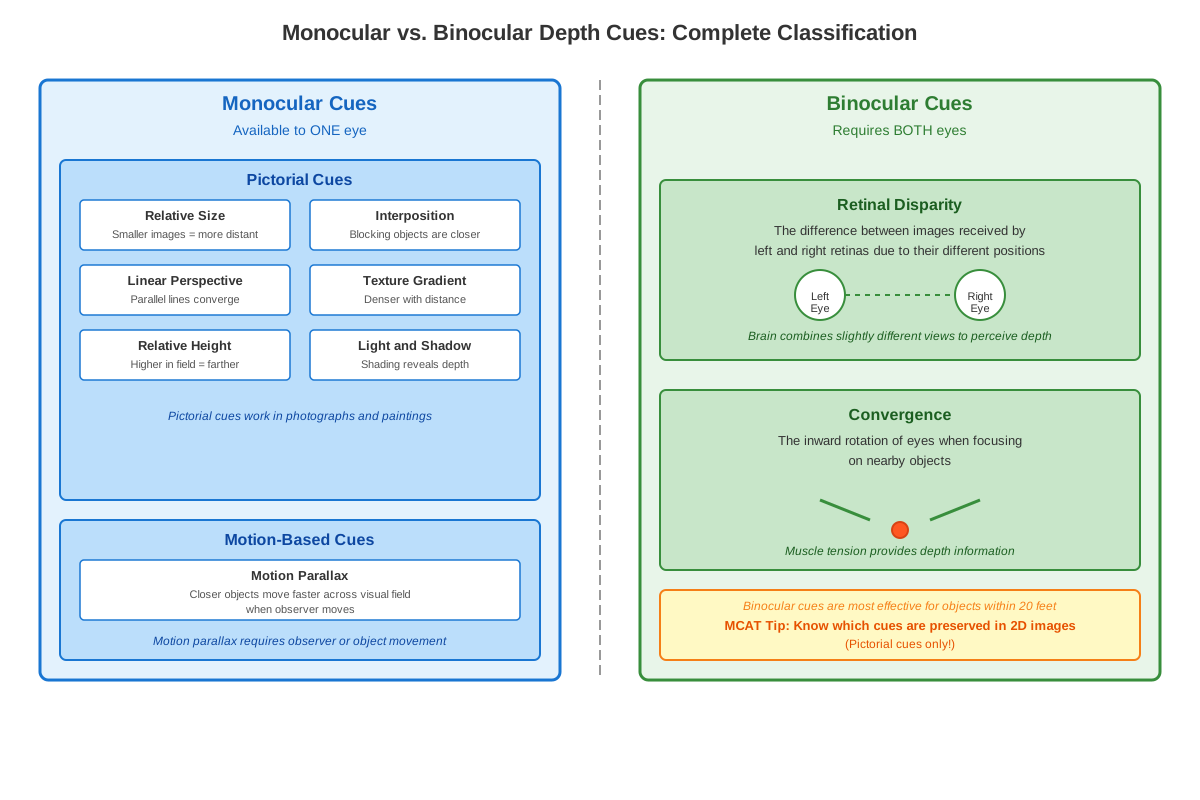
The visual system employs two broad categories of depth cues: monocular cues (available to one eye alone) and binocular cues (requiring both eyes). This redundancy serves an important adaptive function—even if one eye is lost or covered, substantial depth perception remains possible through monocular cues. However, binocular cues provide particularly precise information about the distance of nearby objects, making them crucial for fine motor tasks like threading a needle or catching a ball.
Monocular Depth Cues
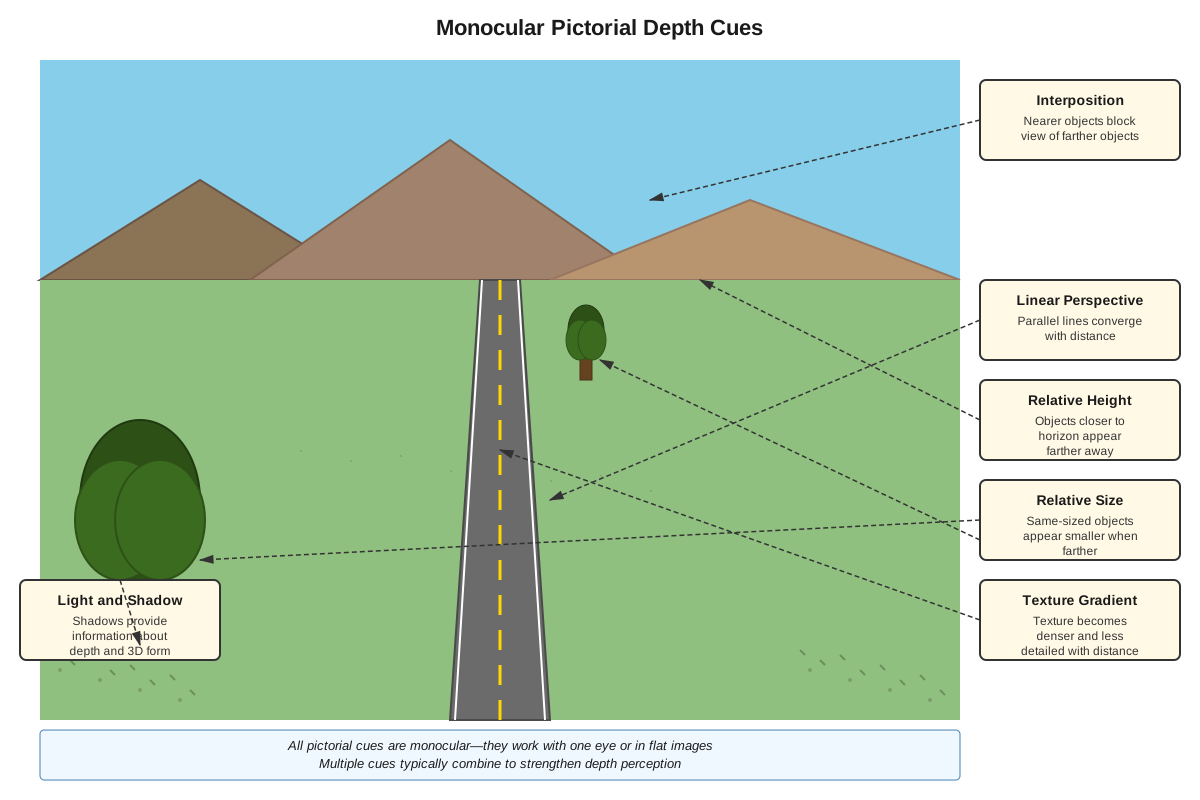
Monocular depth cues are sources of depth information available to a single eye. These cues are sometimes called "pictorial cues" because they can be represented in two-dimensional images like paintings or photographs, yet still convey depth information. Artists have exploited these cues for centuries to create the illusion of three-dimensionality on flat canvases.
Relative Size
When two objects are known to be similar in actual size, the object that produces a larger retinal image is perceived as closer. Conversely, smaller retinal images suggest greater distance. This cue is particularly powerful when the objects are familiar (like people or cars) because the visual system has stored knowledge about their typical sizes. For example, if two cars appear in a scene and one subtends a much smaller visual angle, it is perceived as farther away.
Interposition (Occlusion)
When one object partially blocks the view of another, the blocking object is perceived as closer. This is one of the most reliable depth cues because it provides unambiguous ordinal information about relative depth (which object is in front), though it doesn't specify exact distances. Interposition works even with unfamiliar objects and is processed very early in visual analysis.
Linear Perspective
Parallel lines appear to converge as they recede into the distance, eventually meeting at a vanishing point on the horizon. This linear perspective is the principle that underlies much of Renaissance art and architectural drawing. Railroad tracks, roads, and hallways all demonstrate this cue. The degree of convergence provides information about distance—greater convergence indicates greater depth.
Texture Gradient
The texture of surfaces appears denser and finer as distance increases. A gravel road, grassy field, or tiled floor shows progressively smaller and more tightly packed texture elements with increasing distance. This texture gradient provides continuous information about the slant and distance of surfaces. The rate of change in texture density is particularly informative about surface orientation.
Relative Height
Objects located higher in the visual field (closer to the horizon) are typically perceived as more distant. This cue, called relative height or height in plane, works because of the typical structure of terrestrial environments where the ground plane extends away from the observer. Objects on the ground that are farther away do indeed appear higher in the visual field (closer to the horizon line).
Atmospheric Perspective (Aerial Perspective)
Distant objects appear hazier, less distinct, and more blue-shifted than near objects due to light scattering by the atmosphere. This atmospheric perspective is particularly noticeable when viewing mountains or landscapes over long distances. The effect increases with distance, providing a graded depth cue. Artists use this technique by painting distant objects with less detail and cooler colors.
Motion Parallax
When an observer moves, objects at different distances appear to move at different rates and in different directions. Nearby objects appear to move quickly in the direction opposite to the observer's movement, while distant objects move slowly in the same direction as the observer. This motion parallax is an extremely powerful depth cue that becomes available during self-motion. Looking out a car window demonstrates this effect vividly—nearby fence posts whiz by while distant mountains barely seem to move.
Accommodation
The lens of the eye changes shape (becomes more curved for near objects, flatter for distant objects) to maintain focus. This accommodation process is controlled by the ciliary muscles, and the brain can use feedback from these muscles as a depth cue. However, accommodation is only effective for relatively close objects (within about 2 meters) and is considered a weak depth cue compared to others.
Binocular Depth Cues
Binocular depth cues require both eyes and exploit the fact that the two eyes view the world from slightly different positions (separated by about 6-7 cm in adults). These cues are particularly important for fine depth discrimination at close range.
Retinal Disparity (Binocular Disparity)
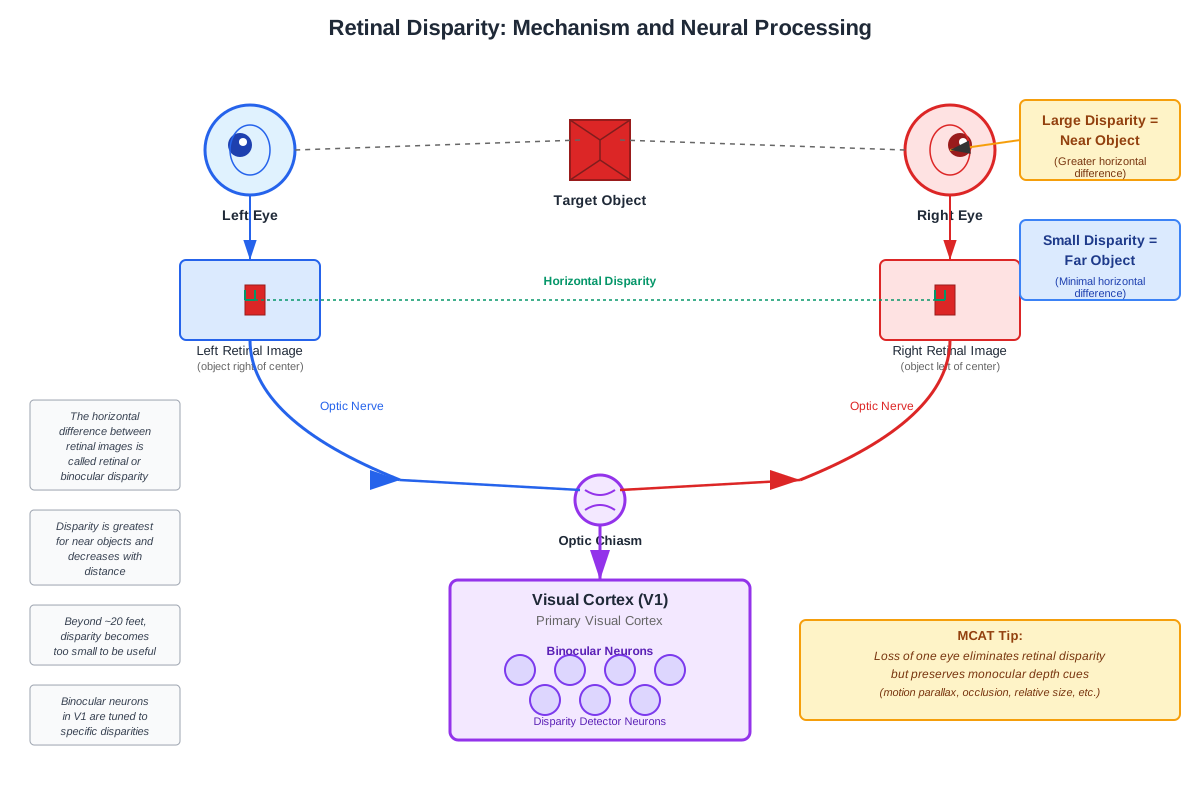
Because the two eyes are in different positions, they receive slightly different images of the same scene. This difference between the two retinal images is called retinal disparity or binocular disparity. The brain contains specialized neurons (particularly in visual cortex area V1) that detect these disparities and use them to compute depth. Objects closer than the point of fixation produce "crossed" disparity (the image is displaced toward the nose in each eye), while objects farther than fixation produce "uncrossed" disparity (displaced toward the temples). The magnitude of disparity is directly related to the distance of the object from the fixation point.
Stereopsis is the perception of depth that results from binocular disparity. It produces a vivid, qualitatively distinct sense of three-dimensionality. Stereoscopic 3D movies and ViewMaster toys exploit this principle by presenting slightly different images to each eye. Retinal disparity is most effective for objects within about 10 meters; beyond that distance, the disparity becomes too small to be useful.
Convergence
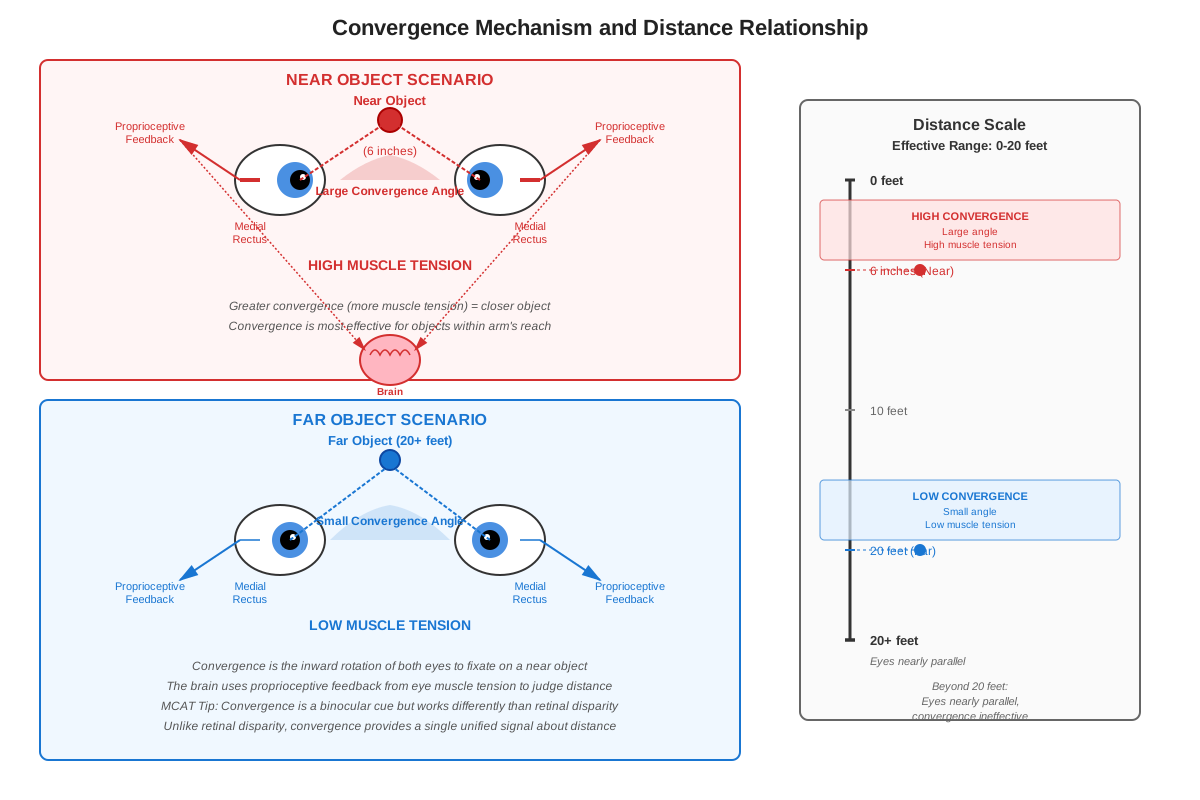
To fixate on a nearby object, the eyes must rotate inward (converge). For distant objects, the eyes are nearly parallel. The degree of convergence is controlled by the extraocular muscles, and the brain can use proprioceptive feedback from these muscles as a depth cue. Like accommodation, convergence is only effective for relatively nearby objects (within a few meters) and provides relatively coarse depth information. However, it operates even in completely dark environments when fixating on a single light source, unlike retinal disparity which requires structured visual input.
Comparison of Depth Cues
| Depth Cue | Type | Effective Range | Requires Motion | Requires Both Eyes | Relative Strength |
|---|---|---|---|---|---|
| Retinal Disparity | Binocular | 0-10 meters | No | Yes | Very Strong |
| Convergence | Binocular | 0-2 meters | No | Yes | Moderate |
| Motion Parallax | Monocular | All distances | Yes | No | Very Strong |
| Interposition | Monocular | All distances | No | No | Strong |
| Linear Perspective | Monocular | Medium-far | No | No | Strong |
| Texture Gradient | Monocular | All distances | No | No | Strong |
| Relative Size | Monocular | All distances | No | No | Moderate |
| Relative Height | Monocular | Medium-far | No | No | Moderate |
| Atmospheric Perspective | Monocular | Far distances | No | No | Weak-Moderate |
| Accommodation | Monocular | 0-2 meters | No | No | Weak |
Integration of Multiple Cues
In natural viewing conditions, multiple depth cues are typically available simultaneously. The visual system integrates these cues through a process that weights each cue according to its reliability in the current context. This cue combination follows principles of optimal integration—cues that are more reliable in a given situation receive greater weight in the final depth percept. For example, when viewing nearby objects, binocular disparity and motion parallax dominate, while atmospheric perspective becomes more important for distant scenes.
Conflicts between depth cues can produce visual illusions. The Ames room illusion, for instance, creates a distorted room where monocular cues (linear perspective, texture gradient) suggest a normal rectangular room, but the actual geometry is trapezoidal. When people stand in different corners, they appear dramatically different in size because the brain interprets the depth cues as indicating equal distance, when in fact one person is much closer than the other.
Concept Relationships
The concepts within depth perception form an integrated system for extracting three-dimensional information from two-dimensional retinal images. At the foundation lies the distinction between monocular cues (available to one eye) and binocular cues (requiring both eyes). This fundamental division reflects both the evolutionary history of vision and the practical constraints of the visual system.
Within monocular cues, there is a further distinction between static cues (interposition, linear perspective, texture gradient, relative size, relative height, atmospheric perspective) that are available in a single frozen moment, and dynamic cues (motion parallax) that require movement of either the observer or objects in the scene. Static monocular cues are sufficient for depth perception in photographs and paintings, while motion parallax becomes available during natural behavior.
The binocular cues—retinal disparity and convergence—both exploit the separation between the two eyes but operate through different mechanisms. Retinal disparity is a sensory cue based on differences in the images received by the two retinas, while convergence is a motor cue based on the muscular effort required to align the eyes. These cues are complementary, with retinal disparity providing more precise information but requiring structured visual input, while convergence operates even with minimal visual information.
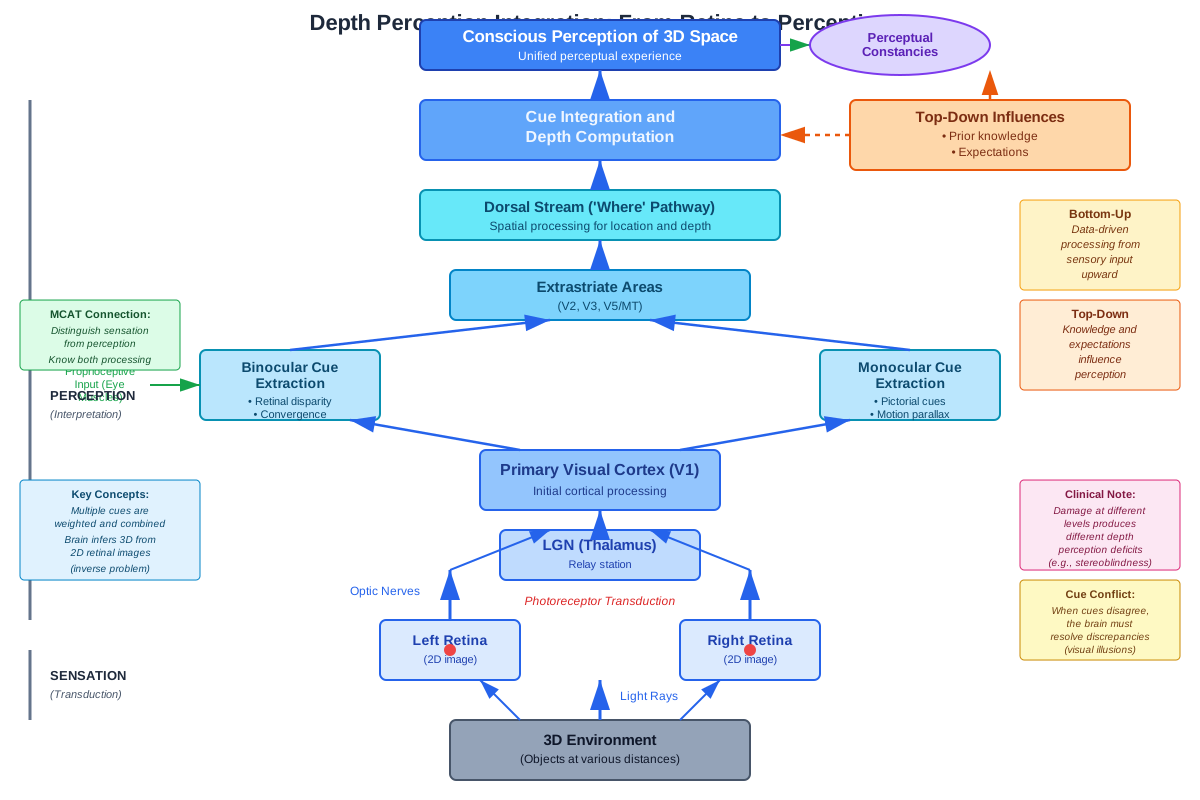
Depth perception connects to prerequisite knowledge of visual anatomy and neural processing. The retina captures the initial 2D images, the optic nerves transmit this information to the brain, and specialized neurons in the visual cortex (particularly V1 and V2) detect binocular disparities. This processing exemplifies the broader principle that perception involves active construction by the brain rather than passive reception of sensory data.
The topic also connects forward to related concepts in Sensation and Perception. Size constancy—the tendency to perceive objects as maintaining constant size despite changes in retinal image size—depends critically on depth perception. The brain uses depth information to "scale" the retinal image size, inferring that a small retinal image of a distant object corresponds to a larger actual object. Similarly, shape constancy relies on depth perception to interpret the slanted or rotated orientation of objects. The moon illusion (the moon appearing larger on the horizon than overhead) is explained partly by depth cues suggesting the horizon moon is farther away, yet it subtends the same visual angle, leading to a size-distance scaling error.
Relationship map:
- Visual anatomy → enables → Capture of 2D retinal images
- 2D retinal images → require → Depth cues for 3D interpretation
- Depth cues → divide into → Monocular cues + Binocular cues
- Monocular cues → subdivide into → Static cues + Motion parallax
- Binocular cues → include → Retinal disparity + Convergence
- Multiple depth cues → integrate via → Cue combination process
- Depth perception → enables → Size constancy + Shape constancy
- Depth perception → connects to → Perceptual development (visual cliff studies)
- Depth perception → relates to → Neuropsychology (deficits from brain damage)
High-Yield Facts
⭐ Depth perception is the ability to perceive three-dimensional structure and judge distances from two-dimensional retinal images using multiple depth cues.
⭐ Monocular depth cues (interposition, linear perspective, texture gradient, relative size, relative height, atmospheric perspective, motion parallax, accommodation) are available to one eye and can be depicted in flat images.
⭐ Binocular depth cues (retinal disparity and convergence) require both eyes and are particularly important for fine depth discrimination at close range (within 10 meters).
⭐ Retinal disparity (binocular disparity) is the difference between the images received by the two eyes; it is the basis for stereopsis and is processed by specialized neurons in visual cortex.
⭐ Motion parallax is the monocular cue in which nearby objects appear to move faster and in the opposite direction to observer motion, while distant objects move slowly in the same direction.
- Interposition (occlusion) occurs when one object blocks another, providing unambiguous ordinal depth information (which is closer) but not precise distance.
- Linear perspective is the convergence of parallel lines toward a vanishing point, with greater convergence indicating greater depth.
- Texture gradient refers to the increasing density and fineness of surface texture with distance, providing continuous depth information.
- Convergence is the inward rotation of the eyes to fixate on near objects; the brain uses proprioceptive feedback from eye muscles as a depth cue for objects within about 2 meters.
- Stereopsis is the vivid perception of depth resulting from binocular disparity; it is absent in individuals with only one functional eye or misaligned eyes (strabismus).
- The visual system integrates multiple depth cues through cue combination, weighting each cue according to its reliability in the current context.
- Relative size is effective only when objects are familiar or known to be similar in actual size; unfamiliar objects of unknown size provide ambiguous depth information.
Quick check — test yourself on Depth perception so far.
Try Flashcards →Common Misconceptions
Misconception: Depth perception requires both eyes, so people with one eye cannot perceive depth.
Correction: While binocular cues (retinal disparity and convergence) require both eyes, numerous monocular cues provide substantial depth information. People with one eye retain most depth perception abilities, though they may have difficulty with tasks requiring fine depth discrimination at close range, such as threading a needle or catching a ball. Monocular cues like interposition, motion parallax, and linear perspective remain fully functional.
Misconception: All depth cues work equally well at all distances.
Correction: Different depth cues have different effective ranges. Binocular disparity works best within 10 meters and becomes ineffective beyond that. Convergence and accommodation are only useful within about 2 meters. Atmospheric perspective is most noticeable at long distances (hundreds of meters to kilometers). Motion parallax and most pictorial cues (interposition, linear perspective, texture gradient) work across a wide range of distances. The visual system adaptively weights cues based on viewing distance.
Misconception: Depth perception is innate and fully functional at birth.
Correction: While some depth perception abilities appear early in development, the system continues to mature throughout infancy and early childhood. The classic visual cliff experiment (Gibson & Walk, 1960) demonstrated that infants as young as 6 months avoid crawling over an apparent drop-off, suggesting functional depth perception. However, the ability to use binocular disparity develops over the first several months of life and requires normal visual experience during a critical period. Individuals deprived of binocular vision during early development (due to strabismus or cataracts) may never develop normal stereopsis even if vision is later corrected.
Misconception: Retinal disparity and convergence are the same thing.
Correction: These are distinct binocular cues operating through different mechanisms. Retinal disparity is a sensory cue based on the difference between the images received by the two retinas; it requires structured visual input and is processed by neurons that compare inputs from corresponding retinal locations. Convergence is a motor/proprioceptive cue based on feedback from the extraocular muscles about the degree of inward eye rotation; it can operate even with minimal visual structure (like a single point of light in darkness). Retinal disparity provides more precise depth information, while convergence is relatively coarse.
Misconception: Monocular cues are called "pictorial cues," so they only work in pictures, not in real-world viewing.
Correction: The term "pictorial cues" refers to the fact that these monocular cues can be depicted in two-dimensional images like paintings or photographs and still convey depth information. However, these same cues are fully operative and extremely important in natural three-dimensional viewing. In fact, monocular cues often dominate depth perception for distant objects and large-scale spaces where binocular cues become ineffective. The term "pictorial" describes a property of these cues (they can be represented in pictures), not a limitation on where they function.
Misconception: Depth perception is purely visual and doesn't involve other senses or cognitive processes.
Correction: While depth perception is primarily visual, it involves integration with other sensory systems and cognitive knowledge. Proprioceptive feedback from eye muscles contributes to convergence and accommodation cues. Prior knowledge about object sizes influences the effectiveness of relative size cues. Experience and learning shape how the brain interprets ambiguous depth information. Depth perception exemplifies the constructive nature of perception—the brain actively interprets sensory data using both bottom-up (sensory) and top-down (cognitive) processes.
Worked Examples
Example 1: Identifying Depth Cues in a Scenario
Question: A researcher shows participants a photograph of a long, straight highway extending into the distance. The highway has painted lane markings, and several cars are visible at various distances. Telephone poles line the road, and distant mountains appear hazy and bluish. Which depth cues are available in this photograph, and which are not?
Solution:
Step 1: Identify the viewing conditions
The stimulus is a photograph—a static, two-dimensional image viewed with both eyes. This means binocular cues will not provide depth information about the scene depicted (though they might provide information about the photograph itself as a flat object). Motion parallax is also unavailable because the image is static.
Step 2: Systematically consider monocular cues
Available cues:
- Linear perspective: The highway edges and lane markings are parallel in reality but converge toward a vanishing point in the image, strongly indicating depth
- Relative size: The cars appear smaller as they are farther away; if viewers know the typical size of cars, this provides distance information
- Texture gradient: The road surface texture becomes denser and finer with distance
- Relative height: More distant cars and telephone poles appear higher in the visual field (closer to the horizon)
- Interposition: If any cars or poles partially block others, the blocking objects are perceived as closer
- Atmospheric perspective: The distant mountains appear hazy and blue-shifted due to atmospheric scattering
Unavailable cues:
- Retinal disparity: Not available because the photograph presents the same image to both eyes (no binocular disparity in the depicted scene)
- Convergence: Not useful for depth in the depicted scene (though eyes converge on the photograph itself)
- Motion parallax: Not available because the image is static
- Accommodation: Not useful for depth in the depicted scene (though the lens accommodates to focus on the photograph)
Step 3: Connect to learning objectives
This example demonstrates the distinction between monocular and binocular cues and illustrates why monocular cues are sometimes called "pictorial cues"—they can convey depth even in flat images. It also shows that multiple monocular cues typically operate simultaneously in natural scenes.
Answer: The photograph contains multiple monocular depth cues (linear perspective, relative size, texture gradient, relative height, interposition, and atmospheric perspective) but lacks binocular cues (retinal disparity and convergence) and the dynamic monocular cue of motion parallax. This is why photographs can convey a strong sense of depth despite being flat, two-dimensional objects.
Example 2: Predicting Effects of Cue Elimination
Question: A patient has suffered damage to the visual cortex that eliminates the ability to process binocular disparity, but all other visual functions remain intact. How would this affect the patient's depth perception in the following situations: (A) reaching for a coffee cup on a desk 30 cm away, (B) judging the distance to a car 50 meters away while crossing a street, and (C) appreciating the three-dimensional structure of a sculpture in a museum?
Solution:
Step 1: Identify which depth cues are affected
The patient has lost the ability to process retinal disparity (binocular disparity), which eliminates stereopsis. However, all monocular cues remain functional, as does the binocular cue of convergence (which depends on proprioceptive feedback from eye muscles, not cortical disparity processing).
Step 2: Analyze situation A (reaching for a nearby cup)
At 30 cm distance, multiple depth cues are available:
- Retinal disparity: LOST—this would normally be very effective at this close range
- Convergence: INTACT—eyes still converge on the cup, providing some depth information
- Motion parallax: INTACT—as the patient moves their head or hand, relative motion provides depth information
- Monocular cues: INTACT—interposition (cup in front of desk), relative size, texture gradient
Prediction: The patient would experience some difficulty with fine depth discrimination for this task. Reaching might be slightly less accurate, requiring more visual feedback and correction. However, the task would still be possible using convergence, motion parallax, and monocular cues. Performance would be noticeably worse than normal but far from impossible.
Step 3: Analyze situation B (judging distance to a car 50 meters away)
At 50 meters, binocular disparity is already ineffective even in normal vision (beyond the useful range of about 10 meters). The patient would rely on:
- Monocular cues: INTACT—relative size (knowing typical car size), relative height, interposition, linear perspective (road markings), texture gradient
- Motion parallax: INTACT—if the patient or car is moving
Prediction: The patient would show minimal or no impairment for this task. Binocular disparity contributes little to depth perception at this distance even in normal individuals. Monocular cues dominate distance judgments for objects beyond 10 meters.
Step 4: Analyze situation C (appreciating sculpture structure)
Viewing a sculpture in a museum involves:
- Retinal disparity: LOST—this would normally provide vivid stereoscopic depth
- Motion parallax: INTACT—as the patient walks around the sculpture, this provides powerful depth information
- Monocular cues: INTACT—interposition, shading, texture, relative size of sculpture parts
Prediction: The patient would lack the vivid, "pop-out" quality of stereoscopic depth perception. The sculpture might appear somewhat flatter or less three-dimensional when viewed from a stationary position. However, walking around the sculpture would generate motion parallax, which would largely compensate and provide strong depth information. The overall experience would be degraded but not eliminated.
Step 5: General conclusion
Loss of binocular disparity processing most significantly affects fine depth discrimination at close range (within arm's reach), where stereopsis normally dominates. Effects are minimal for distant objects and can be substantially compensated by motion parallax (head movement) for objects at any distance.
Answer: (A) Moderate impairment—reaching accuracy would decrease but remain functional using convergence, motion parallax, and monocular cues. (B) Minimal impairment—binocular disparity is ineffective at 50 meters anyway; monocular cues would be sufficient. (C) Moderate impairment when stationary—loss of stereoscopic "pop-out" quality; minimal impairment when moving—motion parallax would compensate effectively.
Exam Strategy
When approaching MCAT questions on depth perception, begin by identifying whether the question asks about (1) which cues are available in a described situation, (2) how perception would change if certain cues were eliminated, (3) the physiological basis of depth perception, or (4) developmental or clinical aspects. This categorization helps activate the relevant knowledge.
Trigger words and phrases to watch for include:
- "Monocular" or "one eye" → signals that only monocular cues are available; binocular cues are eliminated
- "Photograph," "painting," or "static image" → indicates that motion parallax is unavailable and binocular disparity doesn't provide depth information about the depicted scene
- "Nearby" or "close range" → suggests binocular cues (especially retinal disparity) are most important
- "Distant" or "far away" → indicates monocular cues dominate; binocular cues are ineffective
- "Moving" or "motion" → signals that motion parallax is available and likely important
- "Stereoscopic" or "3D movie" → specifically refers to retinal disparity and stereopsis
- "Converge" or "convergence" → refers to the specific binocular cue involving eye rotation, not retinal disparity
Process-of-elimination strategies:
- Eliminate answers that confuse monocular and binocular cues: If a question describes viewing with one eye or a flat image, eliminate answers that invoke retinal disparity or stereopsis as explanations. Conversely, if the question emphasizes the importance of having two eyes, eliminate answers that only mention monocular cues.
- Consider the effective range: If a question involves distant objects (beyond 10 meters), eliminate answers that emphasize binocular disparity or convergence as primary cues—these are ineffective at long range. For very close objects (within arm's reach), binocular cues should be prominent in the correct answer.
- Watch for motion requirements: If the scenario describes a static observer viewing a static scene, eliminate answers that invoke motion parallax. This cue requires relative motion between observer and environment.
- Check for physiological plausibility: Some wrong answers may describe mechanisms that don't exist (e.g., "the brain measures the time delay between when each eye sees an object"). Eliminate answers with implausible or non-existent mechanisms.
Time allocation: Depth perception questions are typically straightforward if you've mastered the distinction between monocular and binocular cues and know the specific examples of each. Allocate about 60-90 seconds for discrete questions. For passage-based questions, spend time carefully reading the experimental setup to identify which cues are present or manipulated, then answer questions should take 60-90 seconds each. Don't overthink—these questions usually test straightforward application of the core concepts rather than subtle distinctions.
Exam Tip: If a question asks about depth perception in a photograph or painting, immediately recognize that binocular disparity is NOT providing depth information about the scene depicted (though it might provide information about the flatness of the photograph itself). This eliminates several potential wrong answers.
Exam Tip: When a question describes an experimental manipulation (e.g., "participants view the scene with one eye covered"), systematically list which cues remain available and which are eliminated. This structured approach prevents errors and often leads directly to the correct answer.
Memory Techniques
Mnemonic for Monocular Cues: "ILT RRMA"
- Interposition
- Linear perspective
- Texture gradient
- Relative size
- Relative height
- Motion parallax
- Atmospheric perspective
- (Accommodation is often omitted from mnemonics because it's weak and has limited range)
Mnemonic for Binocular Cues: "RC" (Retinal disparity and Convergence)
- Think: "RC" = "Requires Cooperation" (of both eyes)
Visualization Strategy for Retinal Disparity:
Hold your finger about 6 inches in front of your nose. Close your left eye and note your finger's position relative to the background. Now close your right eye (open the left) and note how your finger appears to "jump" to a different position. This jump is retinal disparity—the difference between what each eye sees. Your brain uses this difference to compute that your finger is close. Now move your finger to arm's length and repeat—the jump is smaller, indicating less disparity and greater distance. This hands-on experience creates a memorable anchor for understanding the concept.
Visualization Strategy for Motion Parallax:
Imagine looking out the side window of a moving car. Fence posts right next to the road whiz by in a blur, moving backward relative to your motion. Trees in the middle distance move backward more slowly. Distant mountains barely seem to move at all, and they move in the same direction you're traveling. This differential motion—fast and backward for near objects, slow and forward for far objects—is motion parallax. Creating this vivid mental movie helps remember both the concept and its power as a depth cue.
Conceptual Anchor for Binocular vs. Monocular:
Think of binocular cues as "precision tools" that work best up close (like using both hands for delicate work), while monocular cues are "general purpose tools" that work at all distances (like using one hand for most tasks). This analogy helps remember that binocular cues are specialized for close-range fine discrimination, while monocular cues are versatile and work across all distances.
Memory Palace Technique:
Imagine walking down a long hallway (linear perspective—the walls converge). The floor tiles get smaller and more densely packed as you look ahead (texture gradient). Pictures on the wall partially block each other (interposition). A person at the far end looks tiny (relative size) and appears near the ceiling (relative height). Through a window, distant mountains look hazy and blue (atmospheric perspective). As you walk, nearby doorways whiz past while the far end approaches slowly (motion parallax). This integrated scene incorporates multiple monocular cues in a memorable spatial context.
Summary
Depth perception is the visual system's remarkable ability to construct three-dimensional spatial understanding from two-dimensional retinal images. This capacity relies on multiple depth cues that fall into two categories: monocular cues (available to one eye, including interposition, linear perspective, texture gradient, relative size, relative height, atmospheric perspective, motion parallax, and accommodation) and binocular cues (requiring both eyes, including retinal disparity and convergence). Monocular cues are versatile and operate across all distances, with some (like interposition and linear perspective) being so powerful they can create depth perception even in flat photographs. Binocular cues, particularly retinal disparity, provide precise depth information for nearby objects (within about 10 meters) by exploiting the slightly different views from the two eyes. The brain integrates multiple cues through optimal combination, weighting each according to its reliability in the current context. Understanding depth perception is essential for the MCAT because it exemplifies core principles in Sensation and Perception—that perception is constructive, that the brain uses multiple information sources, and that perceptual abilities have both innate and learned components. Mastery requires distinguishing between cue types, knowing their effective ranges, and applying this knowledge to predict perceptual outcomes in various scenarios.
Key Takeaways
- Depth perception transforms 2D retinal images into 3D spatial understanding using multiple depth cues that the brain integrates optimally
- Monocular cues (interposition, linear perspective, texture gradient, relative size, relative height, atmospheric perspective, motion parallax, accommodation) work with one eye and across various distances
- Binocular cues (retinal disparity and convergence) require both eyes and are most effective for close objects (within 10 meters)
- Retinal disparity—the difference between the two eyes' images—is the basis for stereopsis and provides the most precise depth information at close range
- Motion parallax—the differential motion of near vs. far objects during observer movement—is an extremely powerful monocular cue available during natural behavior
- Different cues have different effective ranges: binocular disparity works within ~10 meters, convergence and accommodation within ~2 meters, while most monocular cues work at all distances
- The visual system weights and combines multiple cues based on their reliability in each situation, demonstrating the constructive and adaptive nature of perception
Related Topics
Size Constancy and Shape Constancy: These perceptual constancies depend critically on depth perception—the brain uses depth information to "scale" retinal image size and interpret object orientation, maintaining stable perception despite changing viewing conditions. Mastering depth perception provides the foundation for understanding these higher-level perceptual phenomena.
Visual Illusions: Many classic illusions (Ames room, Ponzo illusion, moon illusion) exploit depth cues to create misperceptions. Understanding depth perception enables analysis of how these illusions work and what they reveal about perceptual processing.
Perceptual Development: The development of depth perception in infancy, including classic studies like the visual cliff experiment, demonstrates how perceptual abilities emerge through maturation and experience. This connects depth perception to developmental psychology.
Visual Pathways and Cortical Processing: The neural mechanisms underlying depth perception, including binocular disparity detectors in V1 and higher-level processing in dorsal stream areas, connect this topic to neuroanatomy and the biological bases of behavior.
Attention and Perception: How attention influences depth perception and how depth information guides attention connects this topic to cognitive psychology and the interaction between perceptual and cognitive processes.
Practice CTA
Now that you've mastered the core concepts of depth perception, it's time to test your understanding and reinforce your learning. Work through the practice questions to apply these concepts to MCAT-style scenarios, and use the flashcards to ensure rapid recall of key facts and distinctions. Remember, depth perception questions on the MCAT reward systematic thinking—identify which cues are available, consider their effective ranges, and apply the principles methodically. You've built a strong foundation; now strengthen it through active practice. Your ability to quickly distinguish monocular from binocular cues and predict perceptual outcomes will serve you well not only on test day but in understanding the remarkable computational achievements of the human visual system.
Sign up free to keep reading
Create a free AnvayaPrep account to finish this MCAT guide on Depth perception — plus flashcards and practice questions.