Overview
Attention is a fundamental cognitive process that allows individuals to selectively concentrate on specific stimuli while filtering out irrelevant information from the environment. Within the framework of Cognition and Consciousness, attention serves as the gateway through which sensory information enters conscious awareness and working memory for further processing. Understanding attention is crucial for the MCAT because it underpins numerous psychological phenomena, from perception and memory formation to decision-making and problem-solving. The Psychology section of the MCAT frequently tests attention through experimental design passages, clinical vignettes involving attentional disorders, and questions about how cognitive resources are allocated during complex tasks.
The study of Attention Psychology encompasses multiple theoretical models and practical applications that appear regularly on standardized examinations. Questions may present research scenarios examining selective attention in dichotic listening tasks, divided attention during multitasking, or sustained attention in vigilance studies. The MCAT expects students to distinguish between different types of attention, understand the neural substrates involved, and apply these concepts to real-world situations such as driving while distracted or studying in noisy environments.
Attention connects intimately with other psychological domains tested on the MCAT, including sensation and perception (how attention modulates sensory processing), memory (how attention determines what information enters long-term storage), consciousness (the relationship between attention and awareness), and even social psychology (how attention influences person perception and stereotyping). Mastering attention provides a foundation for understanding more complex cognitive phenomena and interpreting experimental passages that form the backbone of MCAT Psychology/Sociology questions.
Learning Objectives
- [ ] Define Attention using accurate Psychology terminology
- [ ] Explain why Attention matters for the MCAT
- [ ] Apply Attention to exam-style questions
- [ ] Identify common mistakes related to Attention
- [ ] Connect Attention to related Psychology concepts
- [ ] Distinguish between selective, divided, and sustained attention with specific examples
- [ ] Analyze experimental paradigms used to study attention (dichotic listening, Stroop task, visual search)
- [ ] Evaluate the role of attention in information processing models and working memory capacity
Prerequisites
- Basic neuroanatomy: Understanding brain regions (frontal lobe, parietal lobe, reticular activating system) is necessary because attention involves specific neural networks and pathways
- Sensation and perception fundamentals: Knowledge of how sensory information is detected and processed provides context for understanding how attention selects among competing stimuli
- Working memory concepts: Familiarity with short-term memory systems helps explain why attention serves as a bottleneck for information processing
- Consciousness basics: Understanding levels of awareness is essential because attention represents a key component of conscious experience
Why This Topic Matters
Clinical and Real-World Significance
Attention deficits represent some of the most common cognitive complaints in clinical practice. Attention-Deficit/Hyperactivity Disorder (ADHD) affects approximately 5-10% of children and persists into adulthood for many individuals, impacting academic performance, occupational functioning, and quality of life. Traumatic brain injuries, stroke, dementia, and various psychiatric conditions frequently impair attentional processes, making assessment and rehabilitation of attention critical components of neuropsychological practice. Understanding attention also has profound implications for everyday safety—distracted driving accounts for thousands of deaths annually, and workplace accidents often result from lapses in sustained attention during monitoring tasks.
MCAT Examination Statistics
Attention appears in approximately 3-5% of Psychology/Sociology section questions on the MCAT, making it a medium-yield topic that students cannot afford to ignore. Questions typically appear in two formats: (1) research-based passages describing experimental manipulations of attention with accompanying data interpretation questions, and (2) discrete questions testing conceptual understanding of attentional processes in applied contexts. The MCAT particularly favors questions that require students to distinguish between types of attention, identify independent and dependent variables in attention research, or apply attentional concepts to novel scenarios.
Common Exam Passage Contexts
MCAT passages frequently present attention within these frameworks: dichotic listening experiments examining selective attention and the cocktail party effect; dual-task paradigms assessing divided attention and cognitive load; Stroop task variations testing interference and automatic processing; visual search studies exploring feature integration theory; and clinical vignettes describing patients with hemispatial neglect or other attention disorders following neurological damage. Students should be prepared to interpret graphs showing reaction times, accuracy rates, or brain imaging data related to attentional manipulations.
Core Concepts
Definition and Fundamental Nature of Attention
Attention refers to the cognitive process of selectively concentrating on discrete aspects of information while ignoring other perceivable stimuli. This definition encompasses three critical components: selectivity (choosing what to focus on), capacity limitations (finite cognitive resources), and active processing (attention requires mental effort). Attention functions as a filter or spotlight that enhances processing of attended information while suppressing unattended stimuli. The Attention MCAT framework emphasizes understanding attention not as a single unified process but as a collection of related mechanisms that operate across different timescales and modalities.
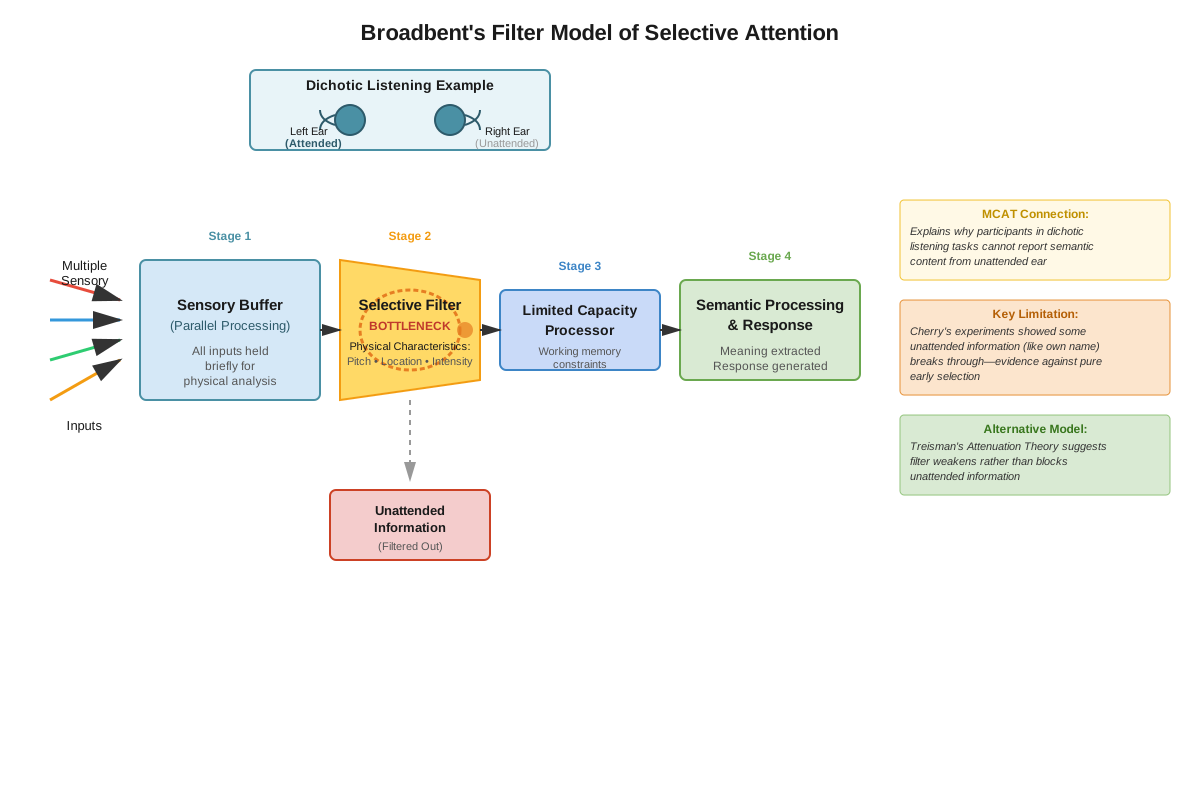
Early attention theorists debated whether attention operates as an "early selection" filter (blocking unattended information before perceptual analysis) or "late selection" filter (after perceptual processing but before conscious awareness). Modern models suggest attention operates at multiple stages, with both early sensory enhancement and late decisional selection contributing to attentional effects. The Cognition and Consciousness relationship becomes apparent when considering that attention determines which sensory inputs reach conscious awareness—we remain largely unaware of unattended stimuli even when they impinge on our sensory receptors.
Types of Attention
Selective Attention
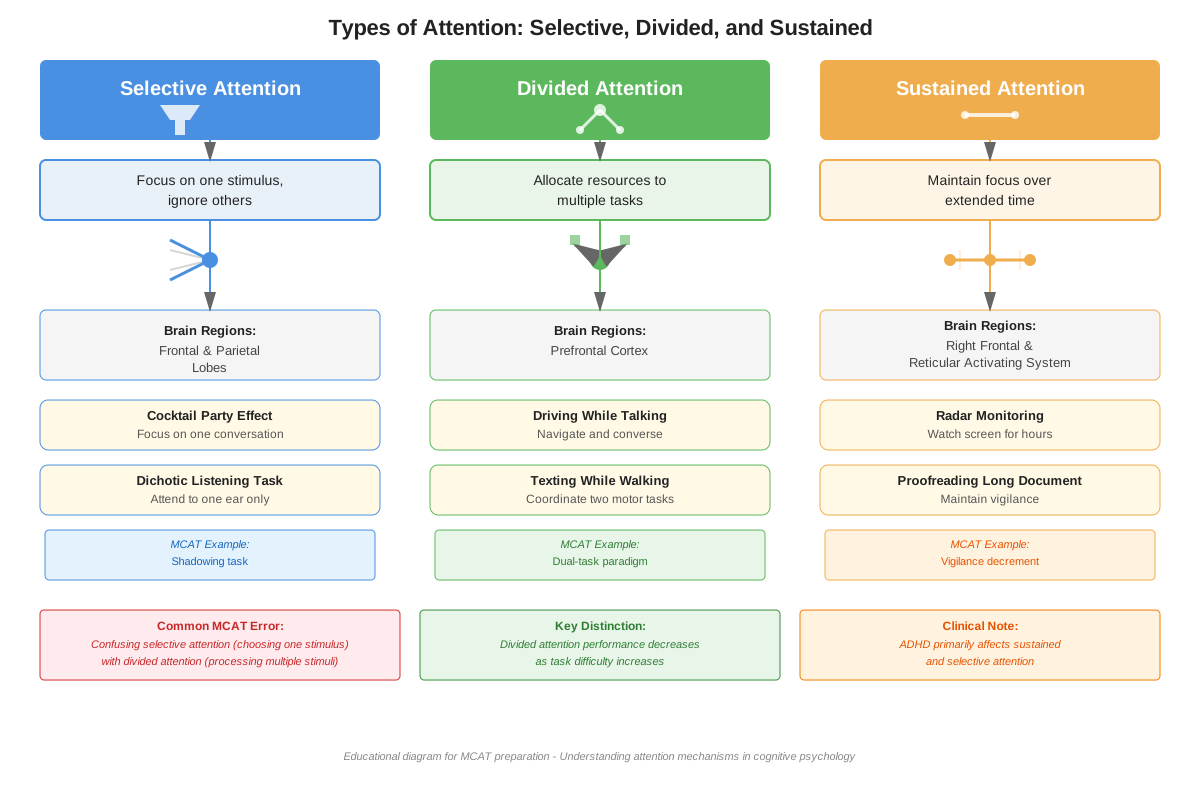
Selective attention involves focusing on one particular stimulus or task while ignoring competing distractors. The classic demonstration comes from dichotic listening experiments where participants wear headphones presenting different messages to each ear and must "shadow" (repeat aloud) the message from one ear while ignoring the other. Results show that people successfully shadow the attended message but recall almost nothing about the unattended message except basic physical characteristics (e.g., whether the speaker was male or female). This phenomenon illustrates the cocktail party effect—the ability to focus on a single conversation in a noisy environment while filtering out other conversations.
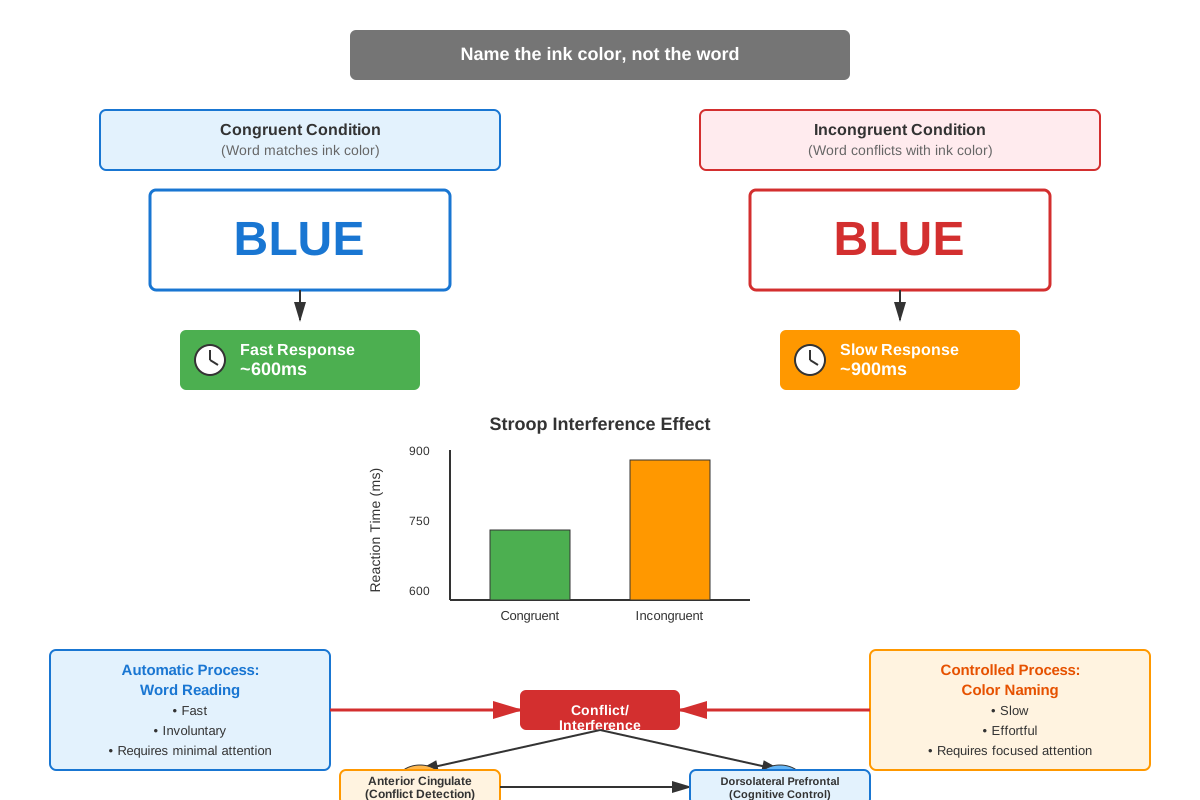
The Stroop task provides another powerful demonstration of selective attention. Participants view color words (e.g., "RED," "BLUE") printed in either congruent ink colors (the word "RED" in red ink) or incongruent colors (the word "RED" in blue ink). When asked to name the ink color while ignoring the word, participants show significantly slower reaction times and more errors for incongruent trials. This Stroop interference occurs because reading is an automatic process that captures attention involuntarily, making it difficult to selectively attend to ink color while suppressing word reading.
Divided Attention
Divided attention refers to the ability to process multiple sources of information or perform multiple tasks simultaneously. Unlike selective attention, which involves focusing on one thing, divided attention requires distributing limited cognitive resources across competing demands. Performance on dual-task paradigms depends on several factors: task difficulty (easier tasks allow better division of attention), practice (automaticity reduces attentional demands), and similarity (tasks using different modalities or processing systems interfere less with each other).
The concept of automaticity becomes crucial for understanding divided attention. With extensive practice, some tasks become automatic—requiring minimal attentional resources and occurring without conscious awareness or intention. Automatic processes are fast, parallel, and difficult to inhibit, whereas controlled processes are slow, serial, require attention, and are flexible. For example, experienced drivers can navigate familiar routes while conversing (automatic driving), but novice drivers find conversation highly distracting because driving still requires controlled processing.
Sustained Attention
Sustained attention (also called vigilance) involves maintaining focus on a task over extended periods, typically in situations requiring detection of infrequent signals. Vigilance tasks reveal that sustained attention is effortful and performance typically declines over time—a phenomenon called the vigilance decrement. Air traffic controllers, radiologists examining medical images, and quality control inspectors all rely on sustained attention, and lapses can have serious consequences.
Research identifies several factors affecting sustained attention: task duration (performance declines after 20-30 minutes), signal frequency (rare targets are missed more often), environmental conditions (noise, temperature, time of day), and individual differences (age, fatigue, motivation). The reticular activating system in the brainstem plays a crucial role in maintaining arousal and alertness necessary for sustained attention.
Attentional Capacity and Resource Theories
Capacity theories propose that attention operates like a limited resource that can be allocated flexibly across tasks. Kahneman's capacity model suggests a single pool of attentional resources that can be divided among concurrent activities, with total demand sometimes exceeding available capacity. When combined task demands exceed capacity, performance suffers on one or both tasks. This explains why difficult tasks interfere more with each other than easy tasks—they compete for the same limited resource pool.
Alternative multiple resource theories propose that attention comprises several independent resource pools corresponding to different processing stages (perceptual vs. response), modalities (visual vs. auditory), or codes (spatial vs. verbal). Tasks drawing on different resource pools interfere less with each other than tasks competing for the same pool. For example, a visual tracking task interferes less with auditory comprehension than with visual reading because they use different perceptual resources.
Neural Substrates of Attention
Attention involves distributed neural networks rather than a single brain region. The dorsal attention network (including superior parietal cortex and frontal eye fields) controls voluntary, goal-directed attention—the "top-down" system. The ventral attention network (including temporoparietal junction and ventral frontal cortex) responds to unexpected, salient stimuli—the "bottom-up" system. These networks interact to balance goal-directed focus with responsiveness to important environmental changes.
The prefrontal cortex plays an executive role in attention, maintaining task goals and biasing processing toward task-relevant information. The parietal cortex contributes to spatial attention and disengaging from current focus. The thalamus acts as a relay station, with the reticular nucleus regulating information flow to cortex. Damage to these regions produces characteristic attention deficits: right parietal damage often causes hemispatial neglect (failure to attend to the left side of space), while frontal damage impairs sustained attention and resistance to distraction.
Feature Integration Theory
Feature Integration Theory (FIT), proposed by Anne Treisman, explains how attention binds separate features (color, shape, orientation) into unified object representations. According to FIT, early visual processing automatically registers basic features in parallel across the visual field, creating separate "feature maps." However, correctly combining features to identify objects requires focused attention to specific locations. Without attention, features may be incorrectly combined, producing illusory conjunctions (e.g., perceiving a red X and blue O as a red O).
Visual search experiments support FIT: searching for a target defined by a single feature (e.g., finding a red item among blue items) occurs rapidly regardless of the number of distractors—a parallel search. However, searching for a target defined by a conjunction of features (e.g., finding a red X among red Os and blue Xs) requires serial attention to each item, with search time increasing linearly with the number of distractors—a serial search. This distinction has important implications for understanding how attention operates in complex visual environments.
Attention and Information Processing Models
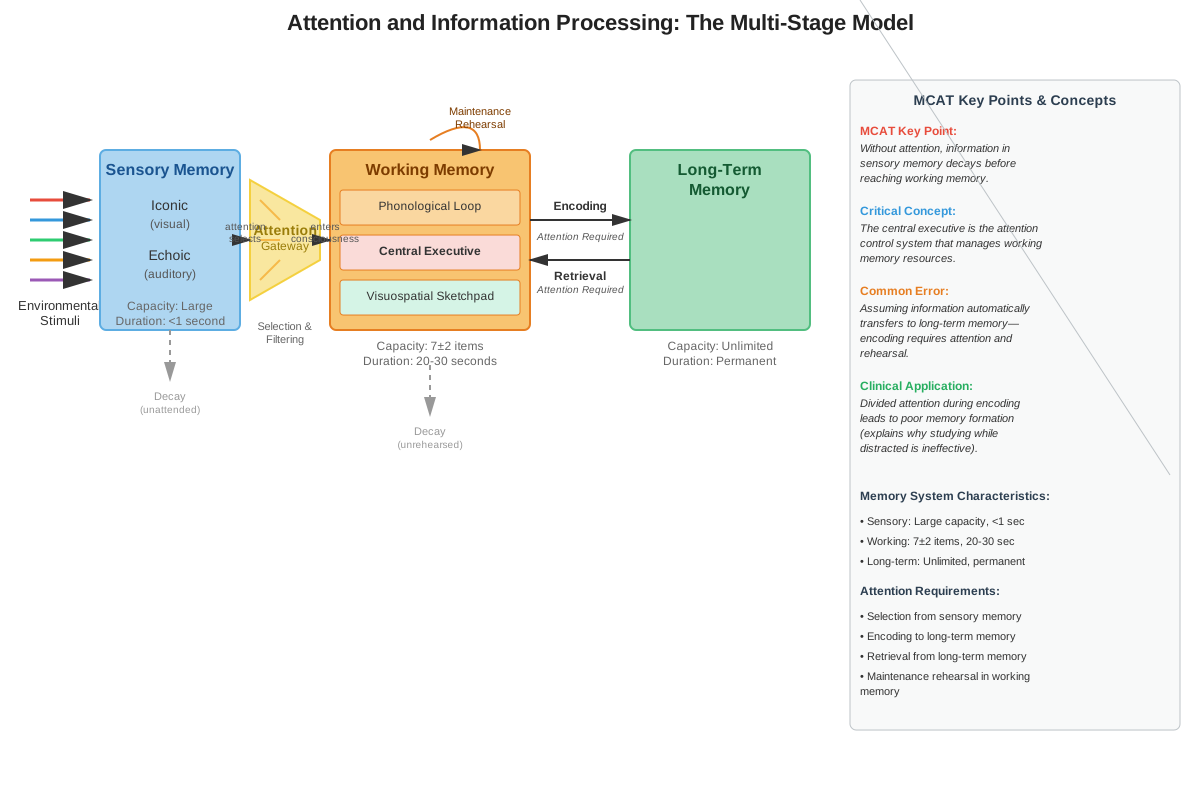
Information processing models position attention as a critical bottleneck determining what information progresses through the cognitive system. In the modal model of memory, attention serves as the gateway from sensory memory to short-term/working memory. Unattended information in sensory memory decays rapidly (within seconds) without entering conscious awareness, while attended information receives further processing and potential encoding into long-term memory.
Working memory models emphasize attention's role in maintaining and manipulating information. Baddeley's working memory model includes a central executive component that functions as an attentional controller, directing focus between the phonological loop (verbal information) and visuospatial sketchpad (visual/spatial information). Working memory capacity limitations reflect attentional constraints—we can only actively maintain a limited amount of information (approximately 4 chunks) because attention cannot be divided indefinitely.
| Attention Type | Key Characteristics | Classic Paradigm | Real-World Example |
|---|---|---|---|
| Selective | Focus on one stimulus while ignoring others | Dichotic listening, Stroop task | Following one conversation at a party |
| Divided | Processing multiple stimuli simultaneously | Dual-task performance | Driving while talking |
| Sustained | Maintaining focus over extended time | Vigilance tasks | Air traffic control monitoring |
Concept Relationships
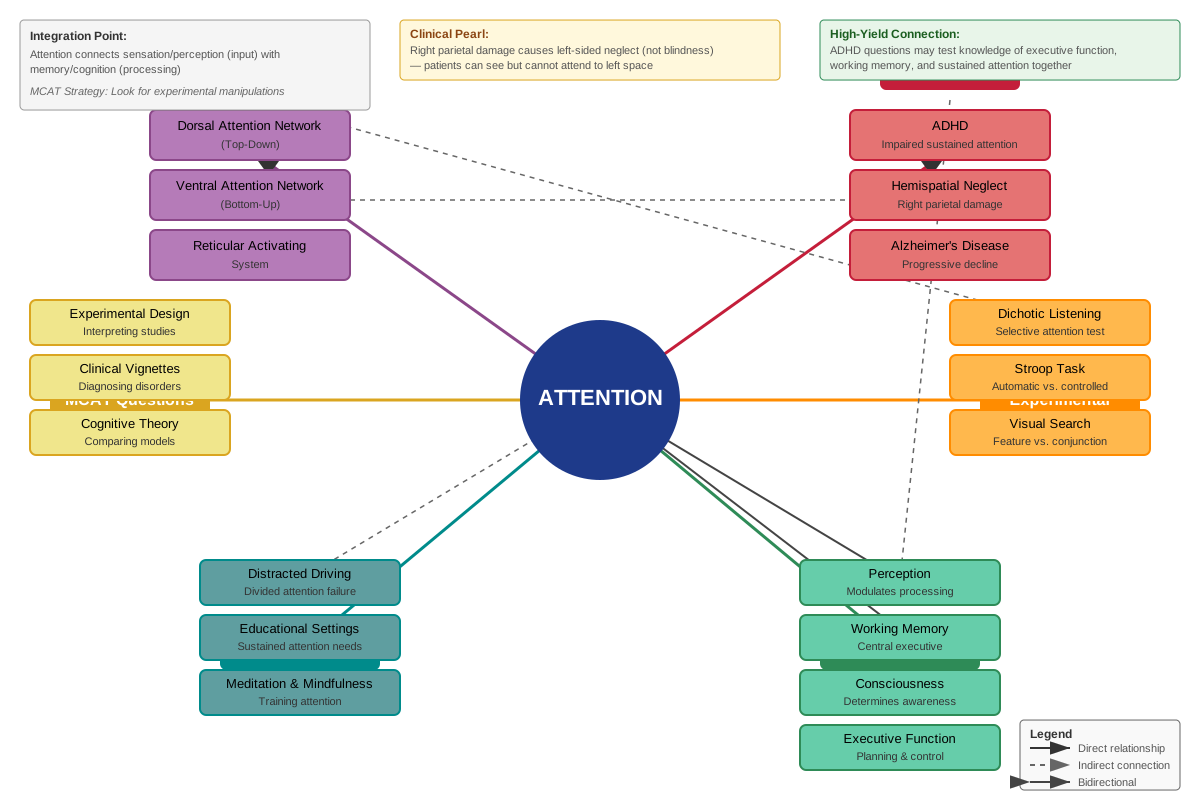
The various aspects of attention form an interconnected system within cognitive psychology. Selective attention serves as the foundation, determining which stimuli receive processing resources, which then influences what information enters working memory through the attentional gateway. The capacity to engage in divided attention depends on whether tasks have become automatic through practice, reducing their demands on limited attentional resources. Sustained attention represents the temporal dimension, describing how selective or divided attention can be maintained over time despite the vigilance decrement.
Feature Integration Theory connects attention to perception, explaining how attention binds perceptual features into coherent object representations. This links to consciousness because attended, integrated objects enter conscious awareness while unattended features remain in preconscious sensory memory. The neural substrates of attention (dorsal and ventral attention networks, prefrontal cortex, parietal cortex) connect to neuroanatomy and provide the biological basis for attentional phenomena.
Attention also connects forward to more complex topics: memory encoding depends on attention (the encoding specificity principle suggests that attended information is better remembered), decision-making requires attention to weigh options, language processing involves attending to relevant phonemes and words while ignoring background noise, and social cognition depends on where attention is directed during social interactions (e.g., attention to faces, emotional expressions, or social cues).
Relationship Map:
Sensory Input → Selective Attention (filter) → Working Memory (limited capacity) → Encoding → Long-term Memory
Parallel pathway: Automatic Processing (bypasses attention) → Direct behavioral response
Modulating factors: Arousal/Alertness (reticular activating system) → Attention Capacity ← Task Demands (difficulty, similarity)
Quick check — test yourself on Attention so far.
Try Flashcards →High-Yield Facts
⭐ Selective attention allows focusing on one stimulus while filtering out others, demonstrated by dichotic listening experiments where participants recall little about unattended messages except basic physical features.
⭐ The Stroop effect demonstrates interference when automatic processes (reading) conflict with controlled processes (color naming), showing that automatic processes capture attention involuntarily.
⭐ Divided attention performance depends on task difficulty, practice (automaticity), and whether tasks use similar or different processing resources (modalities, codes).
⭐ Automatic processes are fast, parallel, require minimal attention, and are difficult to inhibit, while controlled processes are slow, serial, require attention, and are flexible.
⭐ Feature Integration Theory proposes that attention is necessary to bind separate features (color, shape, orientation) into unified object representations; without attention, illusory conjunctions may occur.
- Sustained attention (vigilance) shows a performance decrement over time, typically declining after 20-30 minutes on monitoring tasks.
- The cocktail party effect describes the ability to selectively attend to one conversation in a noisy environment while filtering out others, though highly salient stimuli (like one's name) can capture attention from the unattended channel.
- The dorsal attention network controls voluntary, goal-directed (top-down) attention, while the ventral attention network responds to unexpected, salient (bottom-up) stimuli.
- Hemispatial neglect, typically following right parietal damage, causes failure to attend to stimuli on the left side of space, demonstrating the neural basis of spatial attention.
- Working memory capacity limitations reflect attentional constraints, with the central executive functioning as an attentional controller directing resources between verbal and visuospatial subsystems.
- Visual search for single features occurs in parallel (pop-out effect), while search for feature conjunctions requires serial attention to each item, with search time increasing with the number of distractors.
- The reticular activating system maintains arousal and alertness necessary for attention, with damage causing reduced consciousness and attentional capacity.
Common Misconceptions
Misconception: Attention is a single, unified cognitive process.
Correction: Attention comprises multiple distinct processes (selective, divided, sustained) operating at different stages of information processing, supported by different neural networks. The MCAT may present scenarios requiring students to identify which type of attention is being tested.
Misconception: People can effectively multitask by dividing attention equally between complex tasks.
Correction: Divided attention has severe limitations, especially for tasks requiring controlled processing. What appears to be multitasking often involves rapid switching between tasks (task switching) rather than true parallel processing, resulting in performance decrements and increased errors. Only highly practiced, automatic tasks can be performed simultaneously without interference.
Misconception: Unattended information receives no processing whatsoever.
Correction: Unattended stimuli receive some degree of perceptual processing (evidenced by the cocktail party effect where one's name captures attention from an unattended channel), but this processing is limited and typically does not reach conscious awareness. The debate between early and late selection models reflects this nuance.
Misconception: The Stroop effect occurs because people are "bad at" ignoring words.
Correction: Stroop interference demonstrates that reading is an automatic process that occurs involuntarily for literate individuals. The effect illustrates the difficulty of inhibiting automatic processes, not a general failure of selective attention. This automaticity develops through extensive practice and cannot be easily suppressed.
Misconception: Attention capacity is fixed and cannot be improved.
Correction: While attention has inherent capacity limitations, practice can reduce the attentional demands of specific tasks through automaticity, effectively freeing resources for other activities. Additionally, strategies like chunking can increase the effective capacity of working memory by organizing information more efficiently.
Misconception: Sustained attention failures indicate lack of motivation or effort.
Correction: The vigilance decrement reflects genuine cognitive limitations in maintaining attention over time, not simply motivational factors. Neurophysiological changes (reduced arousal, habituation) contribute to declining performance on sustained attention tasks, though motivation can modulate the magnitude of the decrement.
Worked Examples
Example 1: Dichotic Listening Experiment Analysis
Scenario: Researchers conduct a dichotic listening experiment where participants wear headphones presenting different prose passages to each ear simultaneously. Participants are instructed to shadow (repeat aloud) the message presented to the right ear while ignoring the left ear message. After the task, participants are asked to recall information from both messages.
Question: Based on selective attention research, what pattern of results would be expected, and what would this demonstrate about attentional processing?
Solution:
Step 1: Identify the type of attention being tested. This is a selective attention paradigm, specifically dichotic listening, which examines the ability to focus on one auditory channel while filtering out another.
Step 2: Apply knowledge of selective attention findings. Classic research (Cherry, 1953; Moray, 1959) demonstrates that participants successfully shadow the attended message with high accuracy but recall almost nothing about the unattended message's semantic content.
Step 3: Consider what information from the unattended channel is processed. Participants typically notice basic physical characteristics of the unattended message (e.g., whether the voice was male or female, whether it contained tones vs. speech) but not semantic content (what was actually said).
Step 4: Explain the exception—the cocktail party effect. If the unattended message contains highly salient personal information (like the participant's name), it may capture attention, demonstrating that unattended stimuli receive some level of processing.
Expected Results: Participants would show (1) high accuracy shadowing the attended right-ear message, (2) excellent recall of the attended message content, (3) poor recall of unattended left-ear message semantic content, (4) some awareness of physical characteristics of the unattended message, and (5) possible attention capture if personally relevant information appeared in the unattended channel.
Demonstration: These results demonstrate that selective attention operates as a filter, with attended information receiving full processing and entering conscious awareness/memory, while unattended information receives limited processing (basic physical features) but typically does not reach conscious awareness. This supports early selection theories while acknowledging some processing of unattended stimuli (consistent with late selection theories), suggesting attention operates at multiple stages.
Example 2: Dual-Task Performance and Automaticity
Scenario: A study examines how practice affects divided attention by having participants perform two tasks simultaneously: (1) tracking a moving target on a screen with a joystick, and (2) listening to words and pressing a button whenever an animal name is heard. The study compares performance across three groups: novices (no practice), intermediate (10 hours practice), and experts (100 hours practice). Dependent variables include tracking accuracy and word detection accuracy.
Question: Predict the pattern of results across the three groups and explain the cognitive mechanisms underlying any changes in dual-task performance.
Solution:
Step 1: Identify relevant concepts. This scenario tests divided attention and the role of automaticity in reducing attentional demands through practice.
Step 2: Apply capacity theory. Initially, both tasks require controlled processing, demanding significant attentional resources. When combined task demands exceed available capacity, performance suffers on one or both tasks. Novices should show poor performance on both tasks when performed simultaneously compared to performing each task alone.
Step 3: Consider the effect of practice. With practice, tasks can become automatic, requiring minimal attentional resources. Automatic processes are fast, parallel, and occur without conscious attention. As tracking becomes more automatic with practice, it should demand fewer resources, leaving more capacity available for the word detection task.
Step 4: Predict specific patterns.
- Novices: Significant dual-task interference; both tracking accuracy and word detection accuracy substantially lower than single-task performance
- Intermediate: Moderate improvement; tracking becoming more automatic, reducing interference with word detection
- Experts: Minimal dual-task interference; tracking highly automatic, allowing near-normal word detection performance
Step 5: Consider alternative explanations. Performance improvements could also reflect better task coordination strategies or more efficient resource allocation rather than pure automaticity. However, the magnitude of improvement and the specific pattern (tracking improving more than word detection, since tracking receives more practice) supports automaticity as the primary mechanism.
Predicted Results: A graph would show dual-task costs (difference between single-task and dual-task performance) decreasing as practice increases, with experts showing minimal interference. This demonstrates that automaticity, developed through extensive practice, reduces attentional demands and improves divided attention performance.
Cognitive Mechanisms: The transition from controlled to automatic processing involves changes in neural efficiency, with practiced tasks requiring less prefrontal cortex activation and more efficient, specialized processing in relevant sensory and motor areas. This neurological efficiency translates to reduced demands on limited attentional capacity.
Exam Strategy
Approaching MCAT Attention Questions
When encountering attention questions on the MCAT, first identify which type of attention the question addresses (selective, divided, or sustained). Passage-based questions typically present experimental manipulations, so identify the independent variable (what researchers manipulated) and dependent variable (what they measured). Common independent variables include attended vs. unattended conditions, single-task vs. dual-task conditions, or time on task. Dependent variables typically involve accuracy, reaction time, or recall performance.
Trigger Words and Phrases
Watch for these key phrases that signal specific attention concepts:
- "Shadow the message" or "dichotic listening" → selective attention paradigm
- "Perform two tasks simultaneously" or "dual-task" → divided attention
- "Name the ink color" or "word-color interference" → Stroop task
- "Monitoring for rare signals" or "vigilance" → sustained attention
- "With practice" or "after extensive training" → automaticity
- "Feature conjunction" or "binding problem" → Feature Integration Theory
- "Right parietal damage" or "left-sided neglect" → hemispatial neglect
Process of Elimination Tips
When evaluating answer choices:
- Eliminate options confusing attention types: If a question describes selective attention, eliminate answers discussing divided attention or sustained attention
- Eliminate options reversing automatic vs. controlled: Automatic processes are fast and parallel; controlled processes are slow and serial—answers reversing these characteristics are incorrect
- Eliminate options suggesting unlimited capacity: Attention has inherent capacity limitations; answers suggesting people can divide attention indefinitely without performance costs are incorrect
- Eliminate options ignoring practice effects: When questions mention extensive practice, eliminate answers that don't account for automaticity reducing attentional demands
- Watch for neural localization errors: Right parietal damage causes left-sided neglect (not right-sided); prefrontal damage impairs executive attention (not basic sensory processing)
Time Allocation
Attention questions typically require 60-90 seconds. Discrete questions testing definitions or basic concepts should take 60 seconds or less. Passage-based questions requiring interpretation of experimental results or graphs may take 90 seconds. If a question requires more than 90 seconds, flag it and return later—you may be overcomplicating the question or missing a key insight.
Exam Tip: MCAT attention questions often test the ability to distinguish between similar concepts (selective vs. divided attention, automatic vs. controlled processing). Create a mental comparison table before the exam to quickly differentiate these concepts under time pressure.
Memory Techniques
Mnemonics for Attention Types
"SDS" - Selective, Divided, Sustained
- Selective = Spotlight (focusing on one thing)
- Divided = Distributed (spreading across multiple things)
- Sustained = Steady (maintaining over time)
Automatic vs. Controlled Processing
"FAST CAR" for Automatic Processing:
- Fast
- Attention-free
- Simultaneous (parallel)
- Tough to inhibit
Controlled
Attention-demanding
Requires effort
Stroop Task Memory Aid
"Read RED in BLUE" - Remember that the Stroop task involves naming ink colors while ignoring word meanings, with interference occurring when they mismatch. The phrase itself creates the conflict, making it memorable.
Feature Integration Theory
"Features Float, Attention Attaches" - Individual features are processed automatically in parallel (float freely), but attention is required to bind them together (attach them) into unified objects.
Neural Networks
"Dorsal = Deliberate, Ventral = Vigilant"
- Dorsal attention network = Deliberate, goal-directed (top-down)
- Ventral attention network = Vigilant for unexpected stimuli (bottom-up)
Visualization Strategy
Visualize attention as a spotlight with adjustable beam width: narrow beam = selective attention (intense focus on one thing), wide beam = divided attention (diffuse coverage of multiple things), and steady beam = sustained attention (maintaining focus over time). The spotlight has limited power (capacity), so widening the beam reduces intensity at any single point.
Summary
Attention represents a fundamental cognitive process involving selective concentration on specific stimuli while filtering irrelevant information, serving as the gateway determining what information enters conscious awareness and working memory. The MCAT tests three primary types: selective attention (focusing on one stimulus while ignoring others, demonstrated by dichotic listening and Stroop tasks), divided attention (processing multiple stimuli simultaneously, with performance depending on task difficulty, practice, and resource overlap), and sustained attention (maintaining focus over time, showing vigilance decrements). Critical concepts include the distinction between automatic processes (fast, parallel, attention-free) and controlled processes (slow, serial, attention-demanding), Feature Integration Theory explaining how attention binds features into unified objects, and the neural substrates involving dorsal (goal-directed) and ventral (stimulus-driven) attention networks. Capacity theories explain attention as a limited resource that can be flexibly allocated, with practice reducing demands through automaticity. Understanding these concepts enables students to analyze experimental paradigms, interpret clinical presentations of attention disorders, and apply attentional principles to real-world scenarios commonly tested on the MCAT.
Key Takeaways
- Attention functions as a selective filter with limited capacity, determining which sensory information receives further processing and enters conscious awareness
- Three primary types of attention (selective, divided, sustained) represent distinct but related processes, each with characteristic experimental paradigms and real-world applications
- Automatic processes (fast, parallel, attention-free) develop through extensive practice and reduce attentional demands, enabling better divided attention performance
- Feature Integration Theory explains that attention is necessary to bind separate perceptual features into unified object representations, preventing illusory conjunctions
- Neural substrates include dorsal attention networks (goal-directed, top-down) and ventral attention networks (stimulus-driven, bottom-up), with specific deficits following damage to parietal or frontal regions
- Classic paradigms (dichotic listening, Stroop task, dual-task performance, visual search) provide the experimental foundation for understanding attentional mechanisms tested on the MCAT
- Attention connects to multiple cognitive domains, serving as the gateway to working memory, influencing encoding into long-term memory, and modulating perceptual processing
Related Topics
Working Memory and Short-Term Memory: Attention serves as the gateway to working memory, with the central executive component functioning as an attentional controller. Mastering attention provides the foundation for understanding working memory capacity limitations and the role of rehearsal in maintaining information.
Consciousness and Awareness: Attention determines what information enters conscious awareness, making it essential for understanding the relationship between conscious and unconscious processing, levels of consciousness, and disorders of consciousness.
Perception and Sensation: Attention modulates perceptual processing, enhancing attended stimuli and suppressing unattended information. Understanding attention clarifies how top-down factors influence bottom-up sensory processing.
Memory Encoding and Retrieval: The encoding specificity principle suggests that attended information is better encoded into long-term memory. Attention during encoding influences later retrieval success, connecting attentional processes to memory formation.
Executive Functions: Attention represents one component of executive functions (along with working memory, inhibitory control, and cognitive flexibility), all controlled by prefrontal cortex. Understanding attention enables progression to more complex executive function topics.
Cognitive Development: Attentional capacities develop throughout childhood and decline in aging, with implications for understanding developmental psychology and lifespan changes in cognitive abilities.
Practice CTA
Now that you have mastered the core concepts of attention, test your understanding with practice questions and flashcards. Focus on distinguishing between attention types, analyzing experimental paradigms, and applying attentional concepts to novel scenarios. Remember that the MCAT rewards not just memorization but the ability to apply concepts flexibly to unfamiliar situations. Challenge yourself with passage-based questions requiring integration of attention with other cognitive processes. Your thorough understanding of attention will serve as a foundation for mastering related topics in cognition and consciousness. Stay focused, practice deliberately, and watch your confidence grow as you tackle increasingly complex questions!
Sign up free to keep reading
Create a free AnvayaPrep account to finish this MCAT guide on Attention — plus flashcards and practice questions.