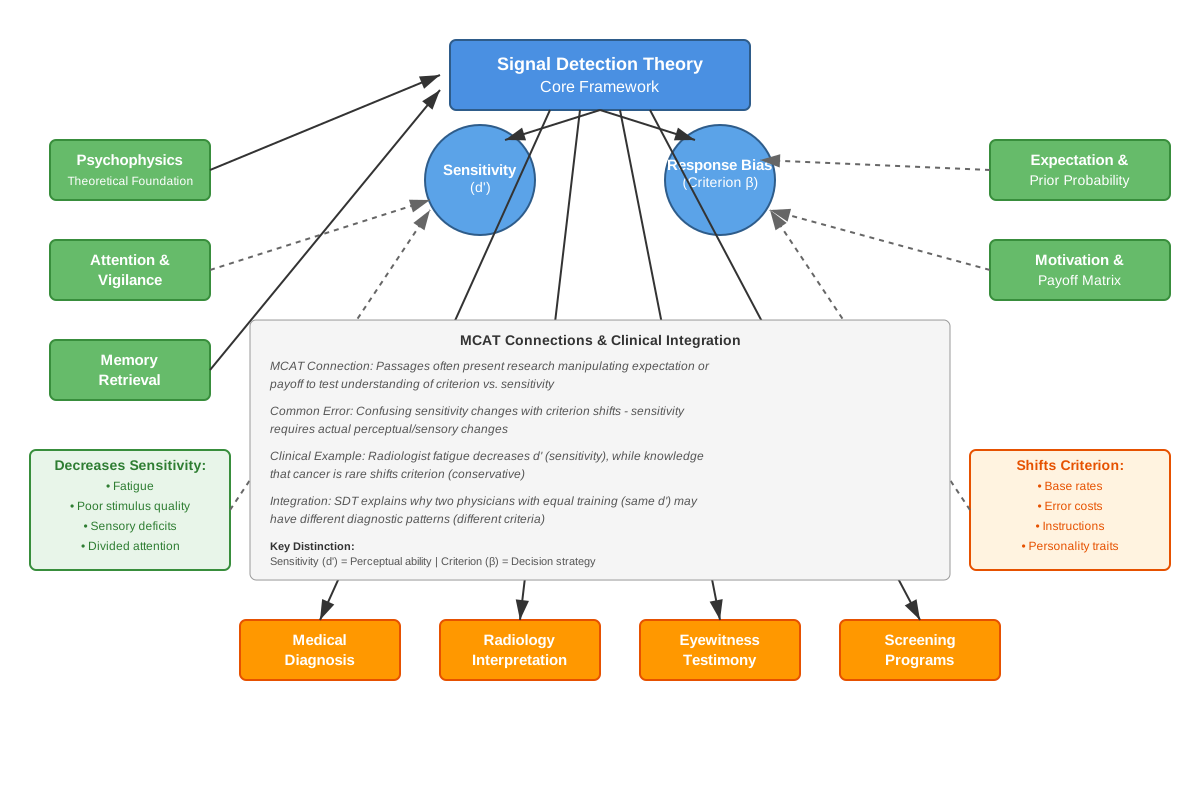
Overview
Signal detection theory is a fundamental framework in Psychology that explains how individuals make decisions under conditions of uncertainty, particularly when distinguishing meaningful signals from background noise. Originally developed during World War II to improve radar operator performance, this theory has become essential for understanding Sensation and Perception processes and decision-making in medical contexts. The theory recognizes that detecting a stimulus is not purely a sensory process but involves both sensory sensitivity and decision-making criteria influenced by expectations, motivations, and consequences.
For the MCAT, signal detection theory represents a critical intersection between biological sensation, cognitive processing, and behavioral response. The theory explains why two individuals with identical sensory capabilities might respond differently to the same stimulus—a concept that appears frequently in both Psychology/Sociology and Biological Sciences passages. Understanding this framework enables test-takers to analyze experimental designs, interpret data about diagnostic accuracy, and evaluate clinical decision-making scenarios.
Signal detection theory Psychology connects to broader themes including psychophysics, attention, memory retrieval, and medical diagnosis. The theory's emphasis on the interplay between sensitivity and bias makes it particularly relevant for understanding how physicians make diagnostic decisions, how witnesses identify suspects, and how quality control inspectors detect defects. This topic typically appears in 2-4 questions per MCAT administration, often embedded within research passages examining perceptual thresholds, diagnostic testing, or eyewitness testimony reliability.
Learning Objectives
- [ ] Define Signal detection theory using accurate Psychology terminology
- [ ] Explain why Signal detection theory matters for the MCAT
- [ ] Apply Signal detection theory to exam-style questions
- [ ] Identify common mistakes related to Signal detection theory
- [ ] Connect Signal detection theory to related Psychology concepts
- [ ] Construct and interpret a signal detection theory matrix with all four outcome categories
- [ ] Differentiate between sensitivity (d') and response bias (criterion) in detection tasks
- [ ] Analyze how payoff matrices and prior probabilities influence detection criteria
- [ ] Evaluate receiver operating characteristic (ROC) curves to assess detection performance
Prerequisites
- Absolute threshold: The minimum stimulus intensity required for detection 50% of the time; signal detection theory extends this concept by acknowledging that detection involves decision-making, not just sensory limits
- Difference threshold (just noticeable difference): The smallest change in stimulus intensity that can be detected; provides foundation for understanding how signal detection theory measures sensitivity to stimulus differences
- Psychophysics: The study of relationships between physical stimuli and psychological experiences; signal detection theory represents a major psychophysical framework
- Basic probability concepts: Understanding of conditional probability and outcome frequencies; essential for interpreting hit rates, false alarm rates, and calculating sensitivity measures
- Experimental design fundamentals: Knowledge of independent and dependent variables; necessary for analyzing signal detection experiments in MCAT passages
Why This Topic Matters
Signal detection theory has profound clinical significance in medical practice. Physicians constantly face signal detection scenarios: Is this chest X-ray abnormality cancer or a benign artifact? Does this patient's symptom pattern indicate serious pathology or normal variation? The theory explains why conservative physicians (high criterion) might miss some diseases but avoid unnecessary treatments, while aggressive physicians (low criterion) catch more diseases but subject patients to more false-positive interventions. Understanding this framework helps future physicians recognize that diagnostic accuracy depends not only on test sensitivity but also on decision thresholds influenced by disease prevalence, treatment risks, and patient values.
On the MCAT, signal detection theory appears in approximately 3-5% of Psychology/Sociology questions, typically in medium-to-difficult items that require application rather than simple recall. The topic most commonly appears in three contexts: (1) research passages describing perceptual experiments where participants must detect faint stimuli, (2) clinical vignettes examining diagnostic decision-making and screening test performance, and (3) social psychology passages exploring eyewitness identification accuracy. Questions often present data in matrix format and ask students to identify outcome types, calculate rates, or predict how changing criteria affects performance.
The MCAT particularly favors questions that integrate signal detection theory with other concepts. For example, passages might combine signal detection with sensory adaptation (how does adaptation affect sensitivity?), attention (how does divided attention influence false alarm rates?), or memory (how does signal detection apply to recognition memory tasks?). The theory's mathematical precision makes it ideal for data-based questions requiring graph interpretation or quantitative reasoning, skills the MCAT explicitly tests in the Psychological, Social, and Biological Foundations section.
Core Concepts
Fundamental Principles of Signal Detection Theory
Signal detection theory (SDT) posits that detecting a stimulus involves two independent components: sensory sensitivity (the ability to discriminate signal from noise) and response criterion (the threshold of evidence required to report detecting a signal). This separation represents SDT's revolutionary insight—that perceptual performance reflects both sensory capability and decision strategy. Unlike classical threshold theory, which assumed detection was an all-or-nothing process determined solely by stimulus intensity, SDT recognizes that observers make probabilistic judgments under uncertainty.
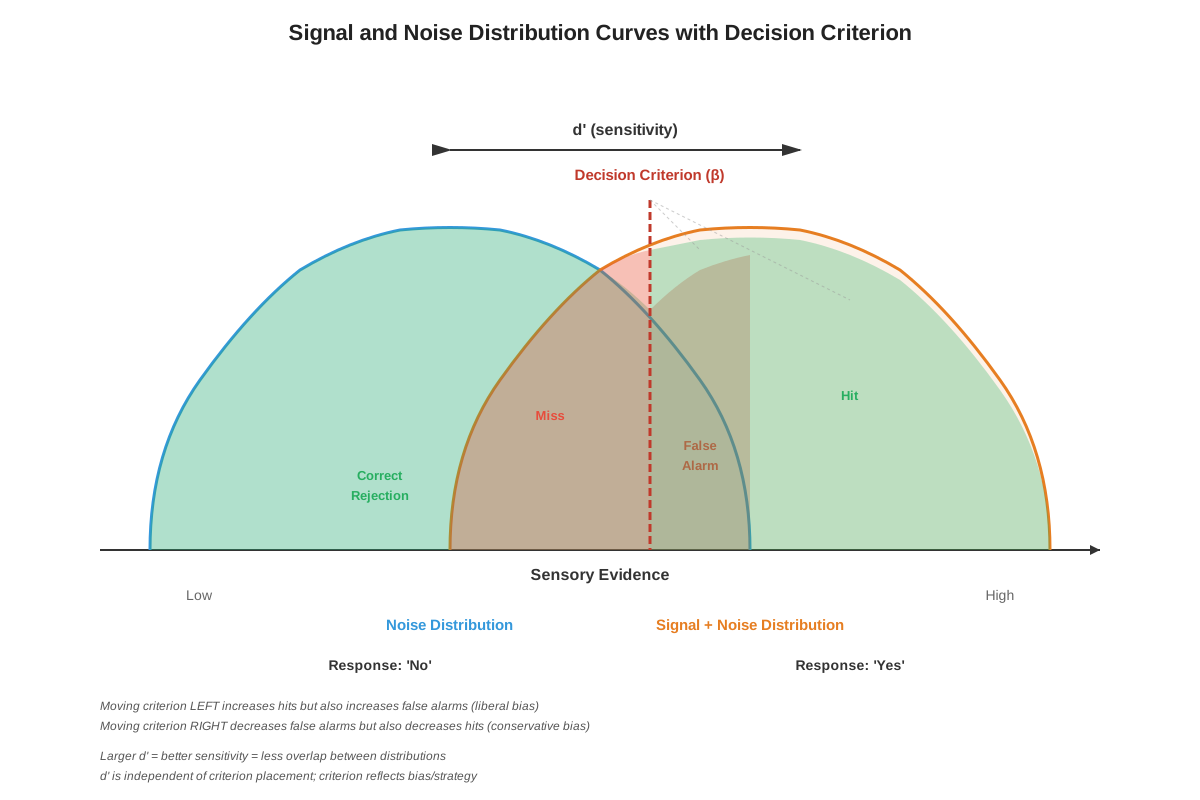
The theory models detection scenarios as involving two overlapping probability distributions: one representing noise (trials without the signal) and one representing signal + noise (trials with the signal present). Because these distributions overlap, no criterion perfectly separates signal from noise trials. Observers must set a decision criterion—a point along the evidence continuum where they decide to respond "yes, signal present." Moving this criterion changes the pattern of correct and incorrect responses but doesn't change the underlying sensory sensitivity.
The Signal Detection Matrix
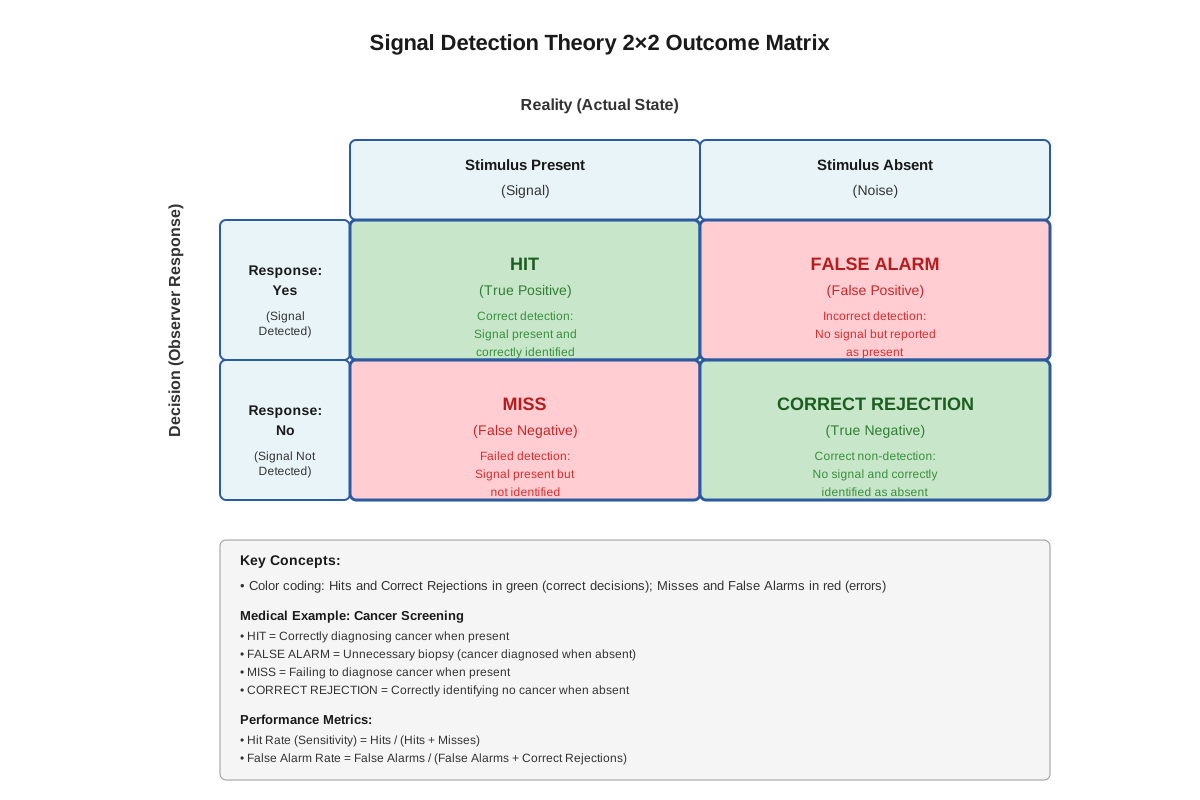
Every detection trial produces one of four outcomes, organized in a 2×2 matrix:
| Signal Present | Signal Absent | |
|---|---|---|
| Response: "Yes" | Hit (True Positive) | False Alarm (False Positive) |
| Response: "No" | Miss (False Negative) | Correct Rejection (True Negative) |
A hit occurs when the signal is present and correctly detected—the ideal outcome demonstrating both adequate sensitivity and appropriate criterion placement. A false alarm happens when the observer reports detecting a signal that wasn't present, indicating the criterion may be too liberal (low) or that random noise exceeded the decision threshold. A miss represents a failure to detect a present signal, suggesting either insufficient sensitivity or an overly conservative (high) criterion. A correct rejection occurs when no signal is present and the observer correctly reports its absence.
The relative frequencies of these outcomes reveal both sensitivity and bias. An observer with high sensitivity produces many hits and few false alarms regardless of criterion placement. Response bias appears in the ratio of "yes" to "no" responses: liberal responders (low criterion) produce many hits but also many false alarms, while conservative responders (high criterion) produce few false alarms but also miss many signals.
Sensitivity (d-prime)
Sensitivity, denoted as d' (d-prime), quantifies the observer's ability to discriminate signal from noise independent of response bias. Mathematically, d' represents the distance between the signal and noise distributions measured in standard deviation units. Higher d' values indicate greater separation between distributions, meaning the observer can more reliably distinguish signal from noise.
An observer with d' = 0 cannot discriminate signal from noise at all—their performance equals chance guessing. As d' increases (d' = 1, 2, 3, etc.), discrimination ability improves. Importantly, d' remains constant regardless of where the observer places their criterion. Two observers with identical d' have equal sensory sensitivity even if one adopts a liberal criterion (many hits and false alarms) while the other uses a conservative criterion (few hits and false alarms).
Factors affecting sensitivity include stimulus intensity, sensory system integrity, attention allocation, and practice. In medical contexts, test sensitivity (the diagnostic equivalent of hit rate) depends on the test's d'—how well it discriminates diseased from healthy patients. Superior diagnostic tests have higher d' values, producing clear separation between patient populations.
Response Criterion and Bias
The response criterion (also called beta or c) represents the decision threshold an observer adopts. This criterion reflects the observer's bias toward responding "yes" or "no" and can shift based on expectations, motivations, and consequences without changing underlying sensitivity.
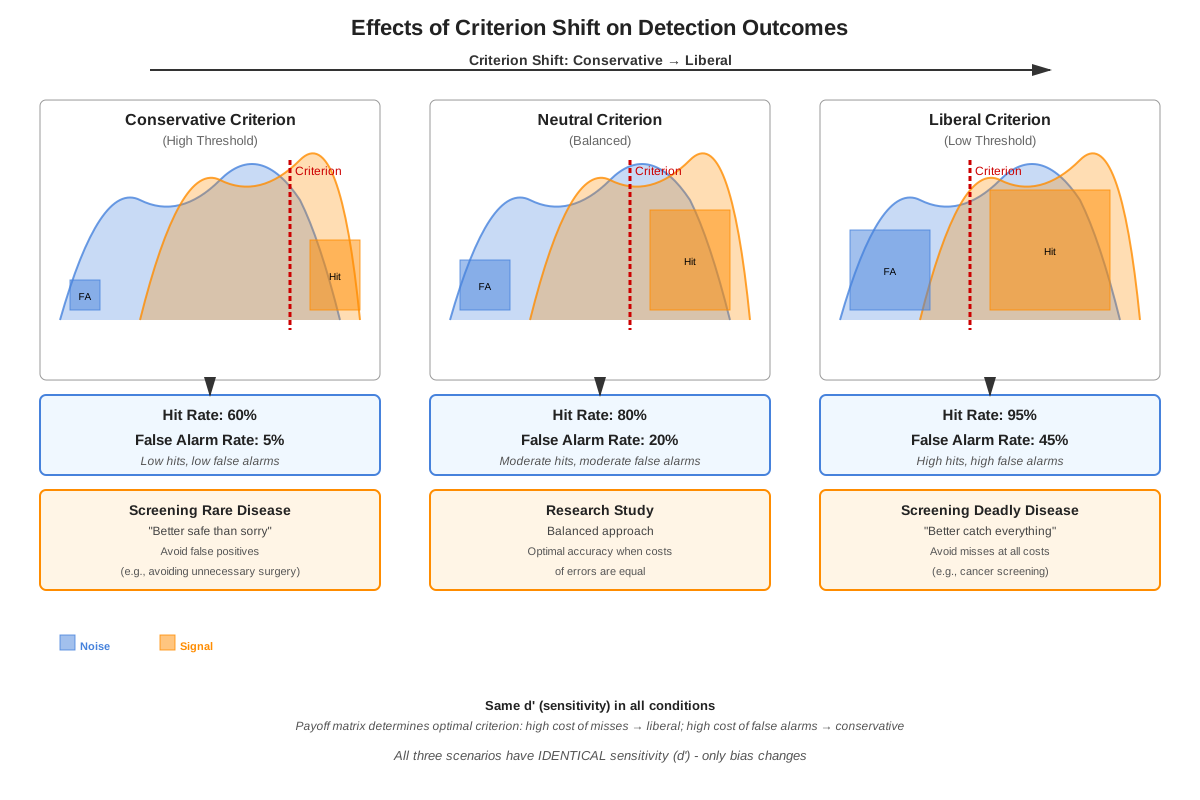
Liberal criterion (low threshold): The observer requires minimal evidence to report signal presence, producing high hit rates but also high false alarm rates. This strategy suits situations where misses carry severe consequences. For example, airport security screeners adopt liberal criteria because missing a weapon (a miss) has catastrophic consequences, even though this produces many false alarms (innocent passengers flagged for additional screening).
Conservative criterion (high threshold): The observer requires substantial evidence before reporting signal presence, producing low false alarm rates but also low hit rates. This strategy suits situations where false alarms carry severe consequences. For example, judges setting bail adopt conservative criteria for predicting dangerousness because false alarms (unnecessarily detaining safe defendants) violate civil liberties.
Neutral criterion: The observer places the criterion at the point where the signal and noise distributions intersect, balancing hits and false alarms. This strategy maximizes overall accuracy when signals and noise occur equally often and errors carry equal costs.
Factors Influencing Criterion Placement
Several factors systematically shift response criteria:
Payoff matrix: The costs and benefits associated with each outcome type. When hits are rewarded or misses are punished, observers adopt more liberal criteria. When false alarms are punished or correct rejections are rewarded, observers adopt more conservative criteria. Medical screening programs illustrate this principle—screening for serious, treatable diseases uses liberal criteria (better to over-refer than miss cases), while screening for conditions with harmful treatments uses conservative criteria.
Prior probability (base rate): The likelihood that a signal is present on any given trial. When signals are common, observers rationally adopt more liberal criteria because "yes" responses are more likely to be correct. When signals are rare, observers adopt more conservative criteria. Radiologists examining chest X-rays from high-risk populations (high disease prevalence) use more liberal criteria than when examining low-risk populations.
Observer motivation and personality: Individual differences in risk tolerance, conscientiousness, and anxiety influence criterion placement. Anxious individuals tend toward liberal criteria (better safe than sorry), while risk-tolerant individuals may adopt more conservative criteria.
Receiver Operating Characteristic (ROC) Curves
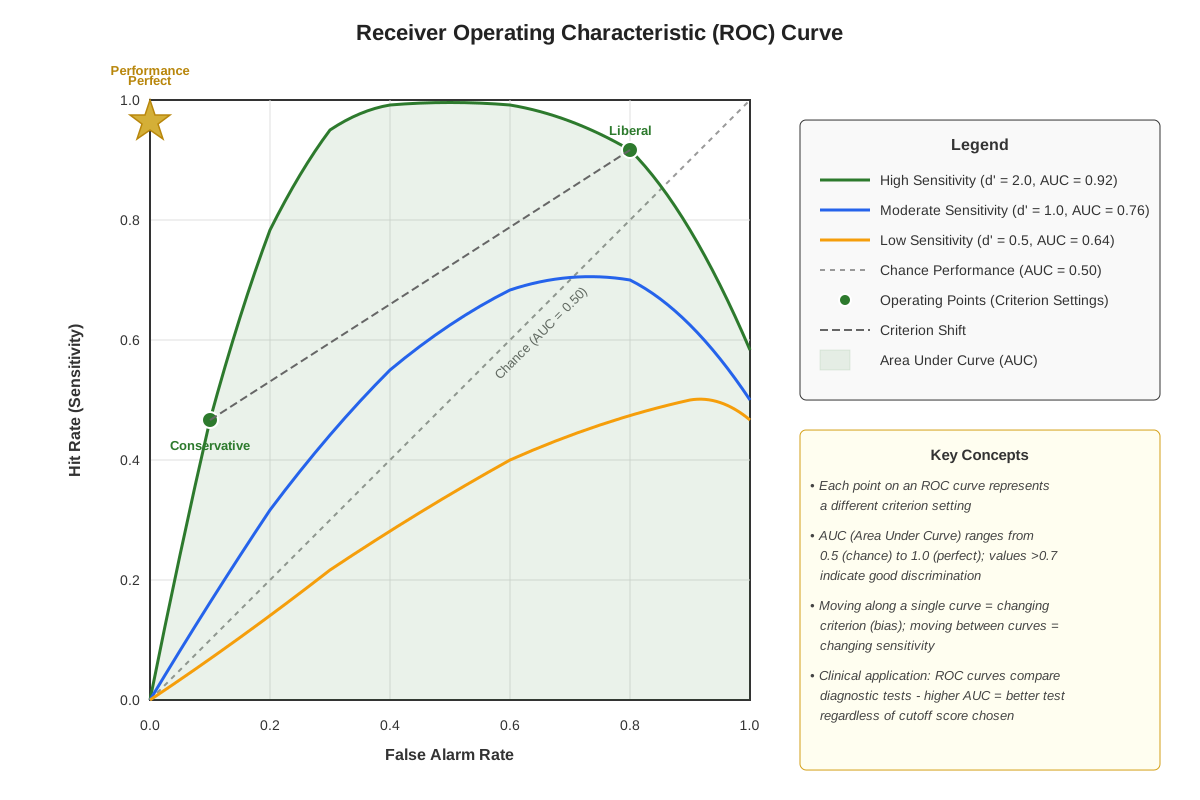
ROC curves graphically represent signal detection performance by plotting hit rate (sensitivity) against false alarm rate (1 - specificity) across all possible criterion placements. Each point on an ROC curve represents a different criterion setting for the same observer with constant d'.
The curve's shape reveals sensitivity: curves bowing toward the upper-left corner indicate high d' (good discrimination), while curves approaching the diagonal indicate d' near zero (chance performance). The area under the ROC curve (AUC) provides a single-number summary of sensitivity, ranging from 0.5 (chance) to 1.0 (perfect discrimination).
ROC analysis is ubiquitous in medical research for evaluating diagnostic tests. A test with AUC = 0.90 correctly discriminates diseased from healthy patients 90% of the time when randomly selecting one patient from each group. Clinicians use ROC curves to select optimal cutoff values (criteria) that balance sensitivity and specificity based on clinical priorities.
Concept Relationships
Signal detection theory integrates multiple psychological processes into a unified framework. At its foundation, SDT depends on sensation—the transduction of physical energy into neural signals. However, SDT demonstrates that sensation alone doesn't determine perceptual reports; decision-making processes overlay sensory input. This sensation → decision-making pathway represents SDT's core insight.
Within SDT itself, sensitivity (d') and criterion operate independently: d' → reflects sensory capability, while criterion → reflects decision strategy. These components combine to produce the four outcome types: hits, false alarms, misses, and correct rejections. The outcome pattern → reveals both sensitivity and bias, allowing researchers to decompose performance into sensory and decisional components.
SDT connects to attention through the principle that attention allocation affects sensitivity. Divided attention → reduces d' by decreasing signal-to-noise ratio, while focused attention → enhances d' by amplifying relevant signals. This relationship explains why distracted radiologists miss more abnormalities (reduced sensitivity) even when maintaining the same criterion.
The theory links to memory through recognition paradigms. Recognition memory tasks → are signal detection problems where "old" items are signals and "new" items are noise. Memory strength → determines d', while response bias → determines criterion. Conservative responders require strong familiarity before claiming recognition (few false alarms, many misses), while liberal responders claim recognition based on weak familiarity (many hits, many false alarms).
SDT relates to psychophysics as a modern alternative to classical threshold theory. Where threshold theory → assumed fixed detection points, SDT → acknowledges probabilistic detection influenced by both sensory and decisional factors. This evolution represents a paradigm shift in understanding perception.
In clinical contexts, SDT connects to diagnostic reasoning. Disease prevalence → influences criterion placement (base rate effect), while test characteristics → determine d'. The combination → produces diagnostic accuracy, explaining why the same test performs differently in different populations.
Quick check — test yourself on Signal detection theory so far.
Try Flashcards →High-Yield Facts
⭐ Signal detection theory separates sensory sensitivity (d') from response bias (criterion), recognizing that detection involves both sensation and decision-making.
⭐ The four outcomes in signal detection are: hit (signal present, detected), false alarm (signal absent, reported present), miss (signal present, not detected), and correct rejection (signal absent, correctly reported absent).
⭐ Sensitivity (d') measures the ability to discriminate signal from noise and remains constant regardless of criterion placement; higher d' indicates better discrimination.
⭐ Liberal criteria produce high hit rates and high false alarm rates; conservative criteria produce low false alarm rates and low hit rates.
⭐ ROC curves plot hit rate against false alarm rate across all criterion placements; curves closer to the upper-left corner indicate higher sensitivity.
- Response criterion shifts based on payoff matrices (costs/benefits of outcomes), prior probabilities (base rates), and individual differences in risk tolerance.
- A neutral criterion is placed where signal and noise distributions intersect, maximizing accuracy when signals and noise are equally likely and errors are equally costly.
- Area under the ROC curve (AUC) quantifies overall discrimination ability, ranging from 0.5 (chance) to 1.0 (perfect discrimination).
- In medical screening, liberal criteria are appropriate for serious, treatable diseases (prioritize catching cases), while conservative criteria suit conditions where false positives cause significant harm.
- Signal detection theory applies to recognition memory, where "old" items are signals, "new" items are noise, and familiarity strength determines d'.
- Attention, arousal, and practice can increase sensitivity (d'), while fatigue, distraction, and sensory impairment decrease sensitivity.
- Two observers with identical sensitivity can show dramatically different performance patterns if they adopt different response criteria.
Common Misconceptions
Misconception: Signal detection theory only applies to detecting faint sensory stimuli like lights or sounds. → Correction: SDT is a general framework for any decision under uncertainty, including memory recognition, medical diagnosis, quality control inspection, lie detection, and eyewitness identification. Any situation requiring discrimination between two overlapping categories can be analyzed using SDT.
Misconception: High hit rate always indicates good detection performance. → Correction: Hit rate alone is insufficient for evaluating performance because it can be artificially inflated by adopting an extremely liberal criterion that also produces many false alarms. Complete evaluation requires examining both hit rate and false alarm rate, or calculating d' to assess sensitivity independent of bias.
Misconception: Sensitivity (d') and criterion are related—improving sensitivity requires changing criterion. → Correction: Sensitivity and criterion are mathematically and conceptually independent. Sensitivity reflects the separation between signal and noise distributions (a sensory property), while criterion reflects decision strategy (a cognitive property). Changing criterion shifts the balance between hits and false alarms but doesn't change d'.
Misconception: Conservative responders have better sensory abilities than liberal responders. → Correction: Criterion placement reflects decision strategy, not sensory capability. A conservative responder and a liberal responder can have identical sensitivity (d') but different criteria. The conservative responder simply requires more evidence before reporting signal presence, producing fewer false alarms but also fewer hits.
Misconception: In medical testing, sensitivity and specificity are fixed properties of a test. → Correction: While d' (the test's ability to discriminate) is fixed, sensitivity (hit rate) and specificity (correct rejection rate) vary depending on where the diagnostic criterion (cutoff value) is placed. Lowering the cutoff increases sensitivity but decreases specificity; raising the cutoff does the opposite. Clinicians choose cutoffs based on the relative costs of false positives versus false negatives.
Misconception: An ROC curve on the diagonal (AUC = 0.5) means the test is useless. → Correction: While AUC = 0.5 indicates the test cannot discriminate better than chance, the interpretation depends on context. For a completely novel test, this might indicate failure. However, for a control condition or baseline comparison, chance performance is expected and validates the experimental manipulation.
Worked Examples
Example 1: Radiologist Detection Task
Scenario: A radiologist reviews 200 chest X-rays, 50 of which contain lung nodules (signal present) and 150 of which are normal (signal absent). The radiologist identifies nodules in 40 of the 50 abnormal X-rays and incorrectly identifies nodules in 30 of the 150 normal X-rays. Construct the signal detection matrix, calculate hit rate and false alarm rate, and interpret the radiologist's performance.
Solution:
First, organize the data into the signal detection matrix:
| Signal Present (50 X-rays) | Signal Absent (150 X-rays) | |
|---|---|---|
| Response: "Yes" | 40 Hits | 30 False Alarms |
| Response: "No" | 10 Misses | 120 Correct Rejections |
Calculate rates:
- Hit Rate = Hits / (Hits + Misses) = 40 / 50 = 0.80 or 80%
- False Alarm Rate = False Alarms / (False Alarms + Correct Rejections) = 30 / 150 = 0.20 or 20%
Interpretation: The radiologist demonstrates reasonably good sensitivity, detecting 80% of actual nodules. However, the 20% false alarm rate indicates that one in five normal X-rays is incorrectly flagged as abnormal. This pattern suggests a moderately liberal criterion—the radiologist requires relatively little evidence to report nodule presence, prioritizing catching true cases (high hit rate) at the cost of some false positives. This criterion placement is clinically appropriate for cancer screening, where missing a cancer (a miss) has more severe consequences than unnecessary follow-up testing (a false alarm).
If the hospital wanted to reduce false alarms (perhaps to decrease patient anxiety and healthcare costs), the radiologist could adopt a more conservative criterion, requiring stronger evidence before reporting nodules. This would reduce false alarms but also reduce hits, missing some actual cancers. The optimal criterion depends on the relative costs of misses versus false alarms in this clinical context.
Example 2: Comparing Two Observers
Scenario: Two security screeners, Alex and Jordan, monitor airport baggage X-rays for weapons. Over 1,000 bags, 100 contain weapons (signal present) and 900 are safe (signal absent). Alex detects 90 weapons and produces 180 false alarms. Jordan detects 70 weapons and produces 90 false alarms. Who has better sensitivity? Who uses a more liberal criterion?
Solution:
Construct matrices for both screeners:
Alex:
| Signal Present (100) | Signal Absent (900) | |
|---|---|---|
| Response: "Yes" | 90 Hits | 180 False Alarms |
| Response: "No" | 10 Misses | 720 Correct Rejections |
- Hit Rate = 90/100 = 0.90
- False Alarm Rate = 180/900 = 0.20
Jordan:
| Signal Present (100) | Signal Absent (900) | |
|---|---|---|
| Response: "Yes" | 70 Hits | 90 False Alarms |
| Response: "No" | 30 Misses | 810 Correct Rejections |
- Hit Rate = 70/100 = 0.70
- False Alarm Rate = 90/900 = 0.10
Analysis:
To assess sensitivity, examine both hit rate and false alarm rate together. Alex has both a higher hit rate (0.90 vs. 0.70) and a higher false alarm rate (0.20 vs. 0.10). This pattern suggests Alex uses a more liberal criterion than Jordan—Alex requires less evidence to report weapon presence, producing more hits but also more false alarms.
To determine who has better sensitivity (d'), we need to consider whether the performance differences reflect criterion placement or actual discrimination ability. If we could plot ROC curves for both screeners, the screener with the curve closer to the upper-left corner would have better sensitivity. Based on the limited data, we cannot definitively determine relative sensitivity without additional information about performance at other criterion placements.
However, if forced to estimate: Alex's hit rate is 20 percentage points higher than Jordan's, while Alex's false alarm rate is only 10 percentage points higher. This suggests Alex may have slightly better sensitivity in addition to using a more liberal criterion. A screener with purely criterion differences (equal sensitivity) would show proportional increases in both rates.
Practical implication: For airport security, Alex's liberal criterion is probably more appropriate because missing a weapon (a miss) has catastrophic consequences, while false alarms merely cause inconvenience. Jordan's conservative criterion might miss too many threats despite producing fewer false alarms.
Exam Strategy
When approaching signal detection theory MCAT questions, first identify whether the question asks about sensitivity (d') or criterion (bias). Questions about factors that improve discrimination ability (practice, attention, stimulus intensity) concern sensitivity, while questions about decision strategies, motivations, or payoffs concern criterion. This distinction immediately narrows answer choices.
Trigger words for sensitivity: "ability to discriminate," "detection accuracy," "perceptual capability," "sensory system," "attention," "practice effects," "stimulus intensity." When you see these phrases, think about d' and factors that change the separation between signal and noise distributions.
Trigger words for criterion: "decision strategy," "bias," "liberal/conservative," "costs and benefits," "payoff," "base rate," "prior probability," "motivation," "personality." These phrases indicate questions about where observers place their decision threshold.
For matrix-based questions, immediately draw the 2×2 table and label rows (response: yes/no) and columns (signal: present/absent). Fill in given values, then calculate missing cells using row and column totals. Remember that hit rate uses only the signal-present column (hits divided by hits plus misses), while false alarm rate uses only the signal-absent column (false alarms divided by false alarms plus correct rejections). Students often incorrectly calculate rates using row totals instead of column totals.
When questions present ROC curves, remember that curves closer to the upper-left corner indicate better sensitivity. The diagonal represents chance performance (d' = 0). If asked to predict how changing criterion affects performance, remember that moving along a single ROC curve (changing criterion) trades off hits and false alarms without changing sensitivity. Moving to a different ROC curve (changing sensitivity) requires altering the underlying discrimination ability.
For questions about medical screening or diagnostic testing, map medical terminology to SDT concepts: sensitivity (medical) = hit rate, specificity = correct rejection rate, positive predictive value depends on both sensitivity and base rate. Questions often ask how changing disease prevalence (base rate) affects test performance—remember that prevalence affects predictive values but not sensitivity or specificity (which depend only on the test's d' and chosen criterion).
Time allocation: Signal detection questions typically require 90-120 seconds. Spend 20-30 seconds identifying whether the question concerns sensitivity or criterion, 30-40 seconds organizing given information (drawing matrices or interpreting graphs), and 30-50 seconds calculating or reasoning to the answer. If a question requires extensive calculation, flag it and return if time permits—SDT questions often have conceptual shortcuts that avoid calculation.
Process of elimination: Eliminate answers that confuse sensitivity with criterion (e.g., claiming that adopting a liberal criterion improves discrimination ability). Eliminate answers that ignore base rates when discussing predictive values. Eliminate answers suggesting that high hit rate alone indicates good performance without considering false alarm rate.
Memory Techniques
Matrix Mnemonic - "HFMC": Organize the four outcomes clockwise from upper-left: Hit, False alarm, Correct rejection, Miss. This helps quickly reconstruct the matrix during exams.
Criterion Direction - "Liberal Left, Conservative Careful": Liberal criteria sit to the left (low on the evidence continuum), requiring little evidence to say "yes." Conservative criteria require careful consideration (high evidence requirement). Visualize a political spectrum where liberals act quickly with less evidence, conservatives act cautiously requiring more proof.
Sensitivity Visualization: Picture two bell curves (signal and noise distributions) on a number line. High d' means curves are far apart (easy discrimination), low d' means curves overlap heavily (difficult discrimination). The criterion is a vertical line you can slide left (liberal) or right (conservative) without changing curve separation.
ROC Curve Memory - "Upper-Left is Best": The perfect detector lives in the upper-left corner (100% hits, 0% false alarms). The worst detector sits on the diagonal (hits equal false alarms, chance performance). Better detectors bow toward upper-left.
Medical Screening Acronym - "SNOUT and SPIN":
- SNout: High SeNsitivity rules OUT disease (few false negatives, so negative result reliably excludes disease)
- SPin: High SPecificity rules IN disease (few false positives, so positive result reliably confirms disease)
Payoff Matrix Decision - "Punish False Alarms, Push Right": When false alarms are punished, observers push their criterion to the right (become more conservative). When misses are punished, they push left (become more liberal). Visualize pushing the criterion line along the evidence continuum.
Summary
Signal detection theory provides a comprehensive framework for understanding how organisms make decisions under uncertainty by separating sensory sensitivity from response bias. The theory recognizes that detection performance depends on two independent factors: d' (sensitivity), which reflects the ability to discriminate signal from noise based on sensory capability, and criterion (bias), which reflects the decision threshold influenced by expectations, motivations, and consequences. Every detection trial produces one of four outcomes—hits, false alarms, misses, or correct rejections—whose relative frequencies reveal both sensitivity and bias. Liberal criteria produce many hits but also many false alarms, while conservative criteria produce few false alarms but also miss many signals. ROC curves graphically represent detection performance across all criterion placements, with curves bowing toward the upper-left corner indicating superior sensitivity. The theory applies broadly to sensation, perception, memory, and decision-making, making it essential for understanding clinical diagnosis, eyewitness testimony, quality control, and any situation requiring discrimination between overlapping categories. For the MCAT, mastering signal detection theory enables analysis of experimental designs, interpretation of diagnostic test performance, and evaluation of factors influencing perceptual and cognitive judgments.
Key Takeaways
- Signal detection theory separates sensory sensitivity (d') from response bias (criterion), recognizing that detection involves both sensation and decision-making processes
- The four detection outcomes—hits, false alarms, misses, and correct rejections—form a 2×2 matrix that reveals both sensitivity and bias patterns
- Sensitivity (d') measures discrimination ability independent of criterion and increases with stimulus intensity, attention, and practice
- Response criterion shifts based on payoff matrices, base rates, and individual differences, with liberal criteria producing more hits and false alarms, conservative criteria producing fewer of both
- ROC curves plot hit rate against false alarm rate across all criteria, with area under the curve quantifying overall discrimination ability
- Signal detection theory applies to medical diagnosis, memory recognition, eyewitness identification, and any decision under uncertainty
- Understanding the independence of sensitivity and criterion is crucial for correctly analyzing MCAT questions about detection performance
Related Topics
Psychophysics and Threshold Theory: Classical absolute and difference thresholds provide the historical foundation for signal detection theory; understanding how SDT evolved from and improved upon threshold theory deepens comprehension of modern perceptual measurement.
Attention and Selective Perception: Attention allocation directly affects signal detection sensitivity by modulating signal-to-noise ratios; exploring attention mechanisms explains why divided attention reduces d' while focused attention enhances it.
Memory Recognition and Familiarity: Recognition memory tasks are signal detection problems where memory strength determines d' and response bias determines criterion; this connection bridges perception and memory domains.
Medical Decision-Making and Diagnostic Reasoning: Clinical diagnosis exemplifies signal detection in high-stakes contexts; understanding how physicians balance sensitivity and specificity based on disease prevalence and treatment risks applies SDT to real-world medical practice.
Bayesian Reasoning and Base Rates: Base rate effects on criterion placement connect signal detection theory to probability reasoning; mastering both topics enables sophisticated analysis of diagnostic accuracy and predictive values.
Practice CTA
Now that you've mastered the core concepts of signal detection theory, challenge yourself with practice questions that require applying this framework to novel scenarios. Focus on questions that present data matrices requiring calculation of hit rates and false alarm rates, passages describing experimental manipulations of criterion or sensitivity, and clinical vignettes examining diagnostic test performance. Work through flashcards covering the four outcome types, factors influencing sensitivity versus criterion, and ROC curve interpretation. Remember that signal detection theory questions reward careful analysis of whether sensitivity or bias is at issue—practice distinguishing these components until the distinction becomes automatic. Your ability to rapidly construct detection matrices and reason about criterion placement will serve you well not only on the MCAT but throughout medical training as you evaluate diagnostic tests and make clinical decisions under uncertainty. Keep pushing your understanding deeper, and you'll find that signal detection theory provides a powerful lens for analyzing countless psychological and medical phenomena.
Sign up free to keep reading
Create a free AnvayaPrep account to finish this MCAT guide on Signal detection theory — plus flashcards and practice questions.