Overview
Correlation is a fundamental statistical concept that measures the strength and direction of the relationship between two variables. In the context of Sociology and Research Methods and Statistics, correlation serves as one of the most frequently tested concepts on the MCAT, particularly in the Psychological, Social, and Biological Foundations of Behavior section. Understanding correlation enables students to interpret research findings, evaluate study designs, and critically analyze data presented in experimental passages.
The concept of Correlation extends beyond simple mathematical relationships—it represents a cornerstone of empirical research in the social sciences. When sociologists investigate phenomena such as the relationship between socioeconomic status and health outcomes, or between education level and social mobility, they rely heavily on correlational analyses. The MCAT tests not only the ability to calculate and interpret correlation coefficients but also the critical thinking skills necessary to distinguish between correlation and causation, recognize confounding variables, and evaluate the validity of research conclusions drawn from correlational data.
Mastering correlation is essential for success on the MCAT because it connects to broader themes in sociology including research design, data interpretation, and the scientific method. This topic frequently appears in passage-based questions where students must analyze graphs, interpret statistical findings, and evaluate researchers' conclusions. Furthermore, correlation serves as a gateway concept to understanding more complex statistical relationships, regression analysis, and the limitations inherent in observational research designs that dominate much of sociological inquiry.
Learning Objectives
- [ ] Define Correlation using accurate Sociology terminology
- [ ] Explain why Correlation matters for the MCAT
- [ ] Apply Correlation to exam-style questions
- [ ] Identify common mistakes related to Correlation
- [ ] Connect Correlation to related Sociology concepts
- [ ] Distinguish between positive, negative, and zero correlations with specific examples
- [ ] Calculate and interpret correlation coefficients (Pearson's r) from data sets
- [ ] Evaluate the difference between correlation and causation in research contexts
- [ ] Analyze scatterplots to determine correlation strength and direction
Prerequisites
- Basic statistical concepts: Understanding of variables, data types, and descriptive statistics is necessary to grasp how correlation measures relationships between variables
- Graph interpretation skills: Ability to read and analyze scatterplots and line graphs is essential for visualizing correlational relationships
- Research design fundamentals: Knowledge of independent and dependent variables helps distinguish correlational studies from experimental designs
- Basic algebra: Familiarity with mathematical relationships and coordinate systems aids in understanding correlation coefficients and their interpretation
Why This Topic Matters
Clinical and Real-World Significance
Correlation analysis underpins much of the research that informs public health policy, medical interventions, and social programs. Epidemiologists use correlational studies to identify risk factors for diseases before conducting expensive experimental trials. For example, the initial link between smoking and lung cancer was established through correlational research that showed strong positive associations between cigarette consumption and cancer rates across populations. Social scientists employ correlation to understand relationships between variables that cannot be ethically or practically manipulated, such as the association between childhood poverty and adult health outcomes, or between social support networks and mental health recovery rates.
Exam Statistics and Question Types
Correlation appears in approximately 15-20% of MCAT questions in the Psychological, Social, and Biological Foundations section, making it a medium-to-high yield topic. Questions typically present in three formats: (1) passage-based questions requiring interpretation of correlational data from research studies, (2) discrete questions testing conceptual understanding of correlation versus causation, and (3) data interpretation questions involving scatterplots or correlation coefficients. The MCAT frequently tests students' ability to recognize when researchers inappropriately infer causation from correlational data, making this a critical reasoning skill.
Common Exam Passage Contexts
Correlation appears in MCAT passages describing observational studies, epidemiological research, survey-based investigations, and longitudinal cohort studies. Typical scenarios include: sociological research examining relationships between demographic variables and health behaviors; psychological studies correlating personality traits with academic performance; public health investigations linking environmental factors to disease prevalence; and neuroscience research showing associations between brain structure measurements and cognitive abilities. Students must be prepared to evaluate correlation coefficients presented in tables, interpret scatterplots embedded in passages, and critically assess researchers' conclusions about the relationships they observe.
Core Concepts
Definition and Fundamental Properties
Correlation is a statistical measure that describes the degree to which two variables change together in a predictable pattern. More precisely, correlation quantifies both the strength and direction of a linear relationship between two continuous variables. The correlation coefficient, typically denoted as r (Pearson's correlation coefficient), ranges from -1.0 to +1.0, where the absolute value indicates strength and the sign indicates direction.
A correlation exists when changes in one variable are systematically associated with changes in another variable. This relationship can be visualized using a scatterplot, where each data point represents an individual's scores on both variables. The pattern formed by these points reveals the nature of the correlation: points clustering tightly along a line indicate strong correlation, while scattered points suggest weak or no correlation.
Types of Correlation
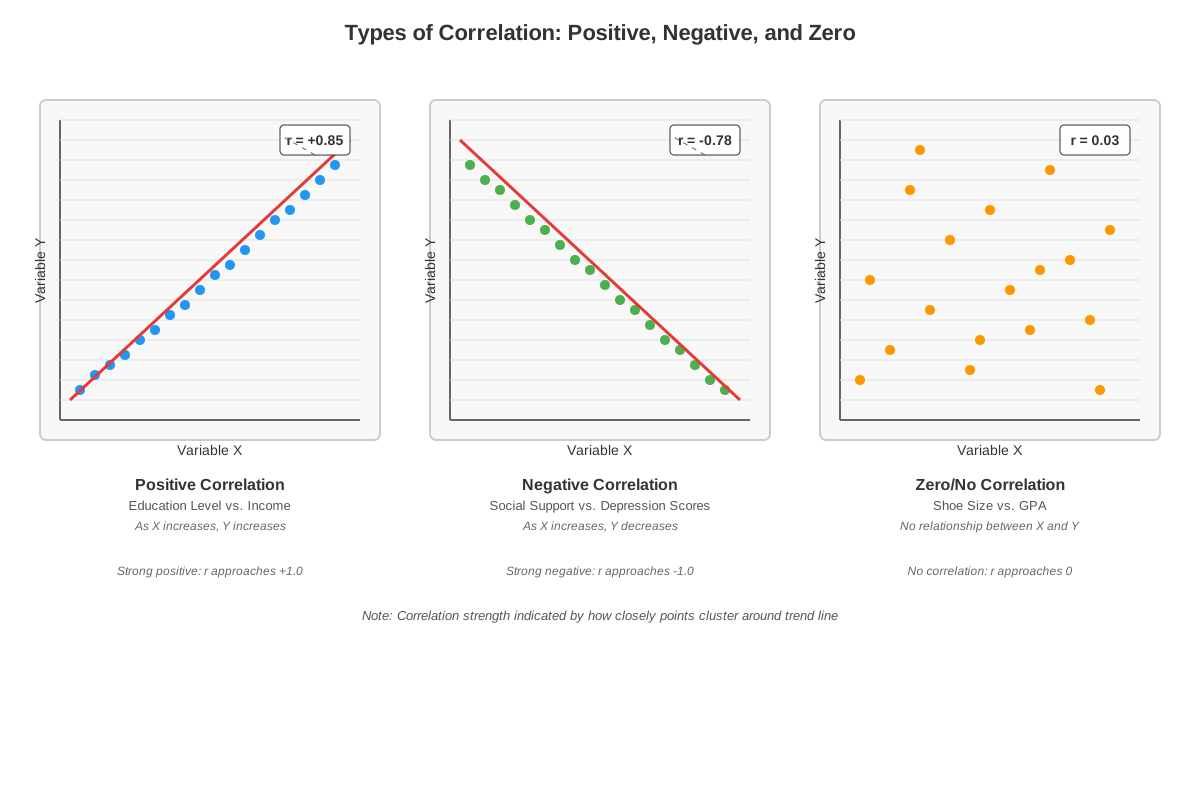
Positive correlation occurs when both variables increase together or decrease together. As one variable rises, the other tends to rise as well. For example, there is a positive correlation between hours spent studying and exam scores—students who study more hours generally achieve higher scores. The correlation coefficient for positive relationships ranges from 0 to +1.0, with +1.0 representing a perfect positive correlation where all points fall exactly on an upward-sloping line.
Negative correlation (also called inverse correlation) occurs when one variable increases as the other decreases. For instance, there is typically a negative correlation between stress levels and immune system function—as stress increases, immune function tends to decrease. Negative correlation coefficients range from 0 to -1.0, with -1.0 representing a perfect negative correlation where all points fall exactly on a downward-sloping line.
Zero correlation indicates no systematic linear relationship between variables. When r = 0, knowing the value of one variable provides no information about the other variable. For example, there is likely zero correlation between shoe size and intelligence—these variables vary independently. It is crucial to note that zero correlation means no linear relationship; non-linear relationships may still exist.
Correlation Strength Interpretation
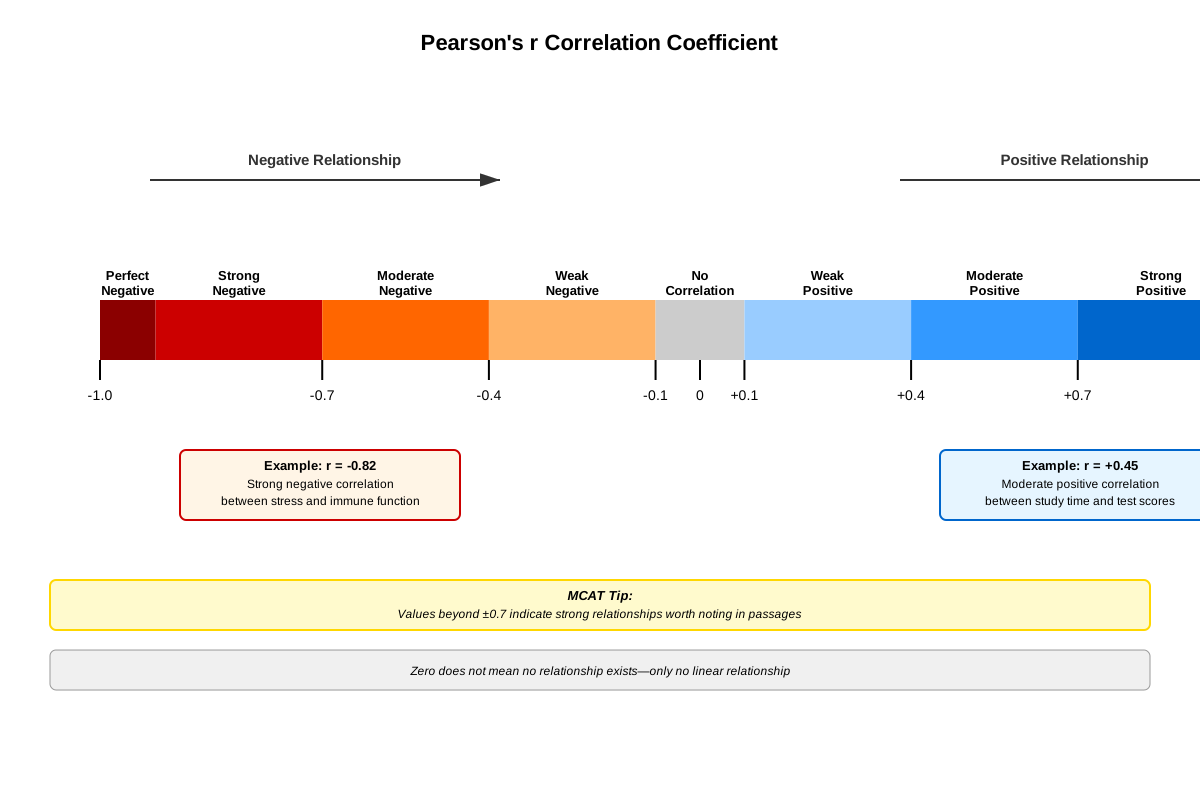
| Correlation Coefficient (r) | Strength | Interpretation |
|---|---|---|
| 0.00 to ±0.19 | Very weak | Negligible relationship |
| ±0.20 to ±0.39 | Weak | Small relationship |
| ±0.40 to ±0.59 | Moderate | Medium relationship |
| ±0.60 to ±0.79 | Strong | Large relationship |
| ±0.80 to ±1.00 | Very strong | Very large relationship |
These interpretations provide general guidelines, though the significance of a correlation depends on the research context. In some fields, correlations of 0.30 are considered meaningful, while in others, only correlations above 0.70 are deemed substantial.
Correlation Versus Causation
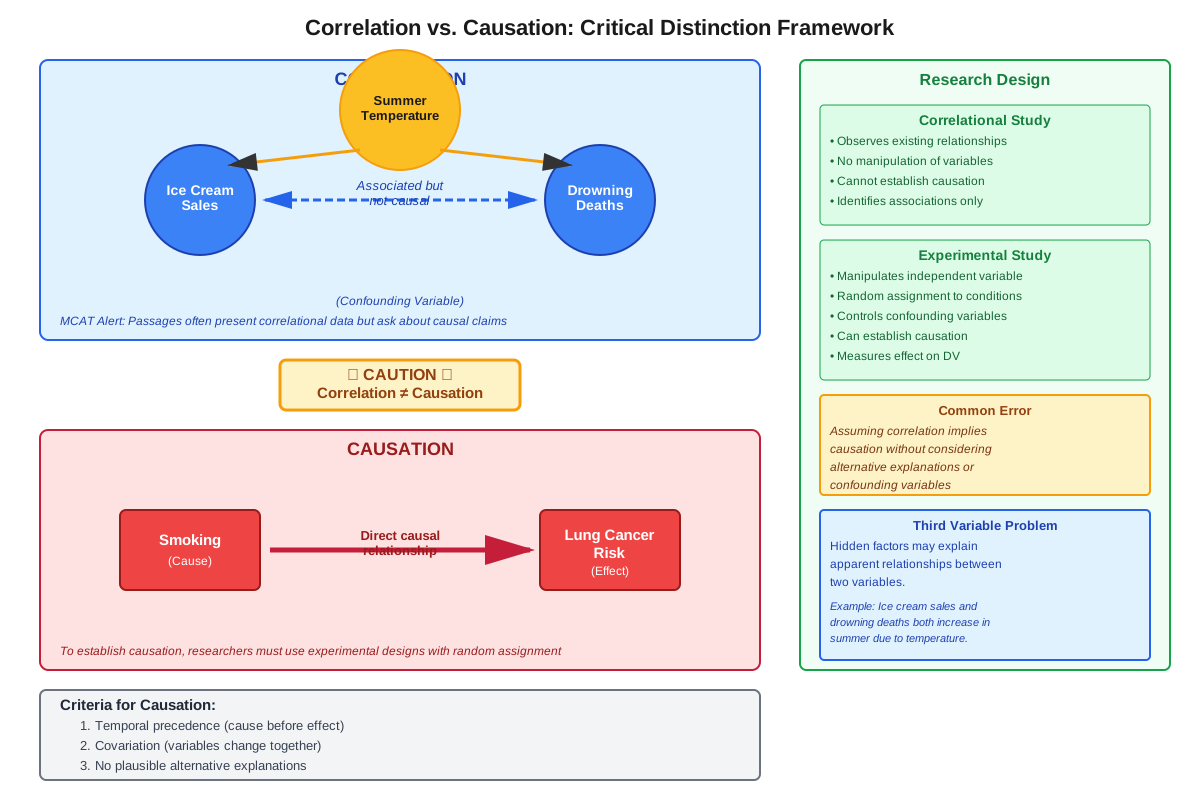
The most critical concept for MCAT success is understanding that correlation does not imply causation. This principle means that even when two variables are strongly correlated, we cannot conclude that changes in one variable cause changes in the other. Three possible explanations exist for any observed correlation:
- Variable A causes Variable B: The first variable directly influences the second
- Variable B causes Variable A: The second variable directly influences the first (reverse causation)
- Variable C causes both A and B: A third variable (confounding variable) influences both observed variables
For example, research shows a positive correlation between ice cream sales and drowning deaths. However, ice cream consumption does not cause drowning. Instead, a third variable—warm weather—causes both increased ice cream sales and increased swimming activity (which leads to more drowning incidents). This illustrates how confounding variables can create spurious correlations.
Establishing causation requires experimental research with random assignment, manipulation of independent variables, and control of extraneous variables. Correlational studies, by contrast, involve observation without manipulation, making causal inferences inappropriate.
Pearson's Correlation Coefficient
Pearson's r is the most common correlation coefficient, measuring the strength of linear relationships between two continuous variables. The formula considers how much each variable deviates from its mean and whether these deviations occur together:
r = Σ[(X - X̄)(Y - Ȳ)] / √[Σ(X - X̄)² × Σ(Y - Ȳ)²]While the MCAT rarely requires manual calculation, understanding the formula's logic is valuable: Pearson's r essentially measures whether high scores on one variable tend to pair with high (or low) scores on the other variable, standardized by the variability in each variable.
Factors Affecting Correlation
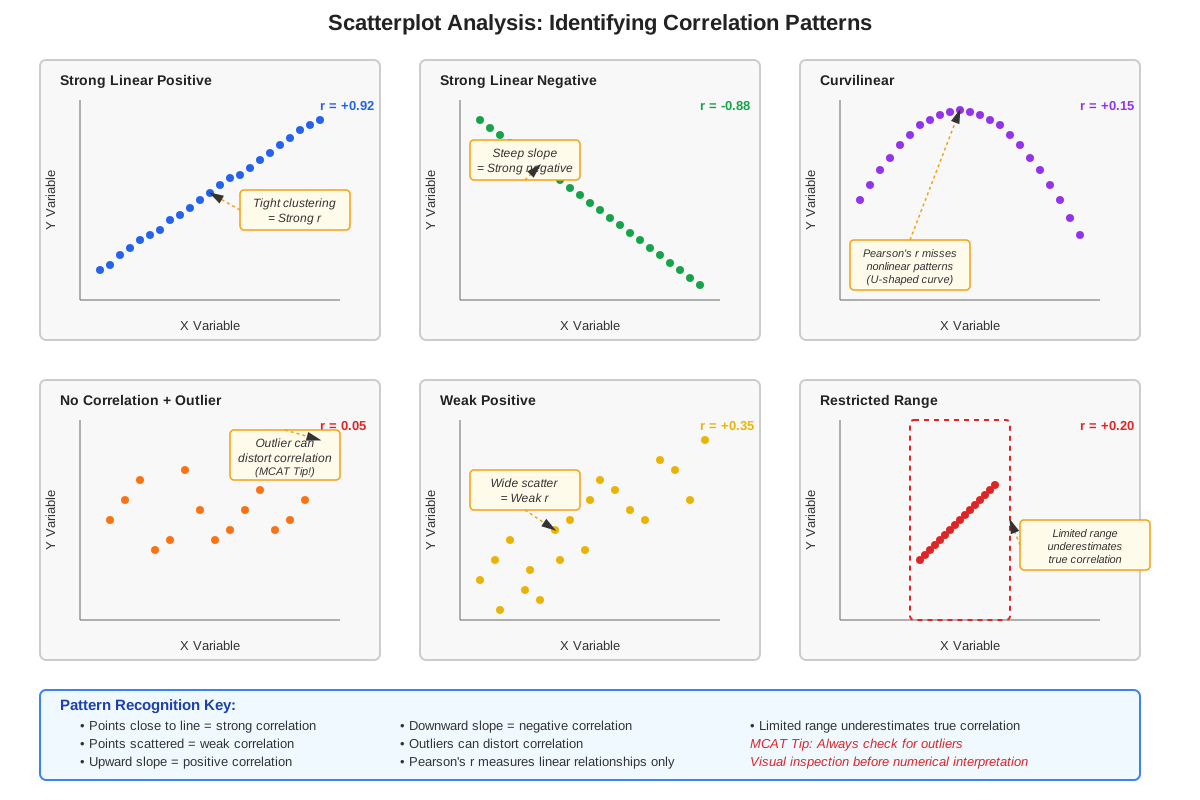
Restriction of range occurs when the sample includes only a limited portion of the possible score range, which typically reduces the observed correlation. For example, if researchers study the relationship between SAT scores and college GPA using only students at elite universities (who all have high SAT scores), they will observe a weaker correlation than exists in the general population.
Outliers are extreme data points that can dramatically influence correlation coefficients, especially in small samples. A single outlier can create the appearance of correlation where none exists, or mask a true correlation. Researchers must identify and appropriately handle outliers to ensure accurate correlation estimates.
Non-linear relationships are not captured by Pearson's r, which measures only linear associations. Variables may have strong curvilinear relationships (U-shaped or inverted U-shaped patterns) that produce correlation coefficients near zero. For instance, the relationship between arousal and performance follows an inverted U-shape (Yerkes-Dodson law), but Pearson's r would not adequately capture this relationship.
Statistical Significance of Correlations
A correlation coefficient's statistical significance indicates whether the observed relationship is likely to reflect a true population relationship or merely sampling error. Larger sample sizes increase the likelihood that even small correlations will be statistically significant. However, statistical significance does not equal practical importance—a correlation of r = 0.15 might be statistically significant in a sample of 1,000 participants but explain only 2.25% of the variance (r²), making it practically trivial.
The coefficient of determination (r²) represents the proportion of variance in one variable that is predictable from the other variable. For example, if r = 0.60 between study time and exam scores, then r² = 0.36, meaning 36% of the variance in exam scores can be explained by study time, while 64% is due to other factors.
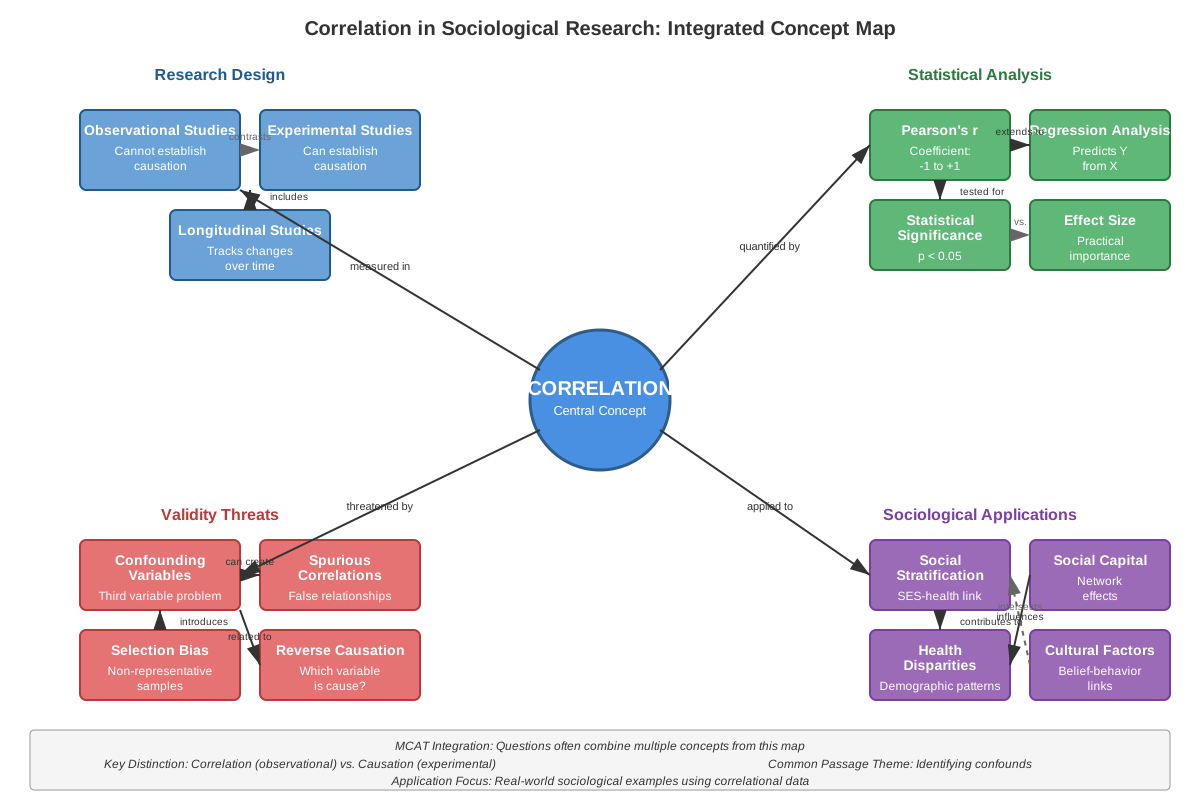
Concept Relationships
Correlation serves as a bridge between descriptive statistics and inferential statistics within Research Methods and Statistics. The concept builds directly on understanding variables (independent, dependent, and confounding) and extends into more complex analyses like regression and multivariate statistics.
The relationship flow operates as follows: Variable identification → Data collection → Correlation analysis → Interpretation → Theory development. Researchers first identify variables of interest, collect observational data, calculate correlation coefficients, interpret the strength and direction of relationships, and finally develop theories that may be tested through experimental research.
Correlation connects intimately with research design concepts. Correlational studies represent one major category of research design, contrasting with experimental designs. While experiments manipulate independent variables and randomly assign participants to establish causation, correlational studies observe naturally occurring relationships without manipulation. This distinction is crucial for MCAT questions that ask students to evaluate what conclusions can be drawn from different study types.
Within Sociology, correlation relates to concepts of social stratification, demographic analysis, and social epidemiology. Sociologists frequently examine correlations between social class and health outcomes, education and income, or social capital and community well-being. Understanding correlation enables critical evaluation of sociological research claims and recognition of when additional evidence is needed to support causal assertions.
The concept also connects to validity and reliability in research. Correlational analyses help establish criterion validity (whether a measure correlates with relevant outcomes) and test-retest reliability (whether measurements correlate across time). These applications demonstrate how correlation serves as a tool for evaluating measurement quality, not just for describing relationships between substantive variables.
Quick check — test yourself on Correlation so far.
Try Flashcards →High-Yield Facts
⭐ Correlation coefficients range from -1.0 to +1.0, with the sign indicating direction (positive or negative) and the absolute value indicating strength (0 = no relationship, 1 = perfect relationship)
⭐ Correlation does not imply causation—even strong correlations may result from confounding variables rather than direct causal relationships
⭐ Positive correlation means both variables increase together or decrease together, while negative correlation means one variable increases as the other decreases
⭐ Pearson's r measures only linear relationships—variables with strong curvilinear relationships may show correlation coefficients near zero
⭐ Establishing causation requires experimental research with random assignment and manipulation of variables, not merely observational correlational studies
- The coefficient of determination (r²) represents the proportion of variance in one variable explained by the other variable
- Restriction of range typically reduces observed correlation coefficients by limiting the variability in the sample
- Outliers can dramatically influence correlation coefficients, especially in small samples, potentially creating spurious relationships
- Statistical significance of a correlation depends on both the correlation coefficient's magnitude and the sample size
- Zero correlation indicates no linear relationship but does not rule out non-linear relationships between variables
- Scatterplots provide visual representation of correlations, with point clustering indicating strength and slope direction indicating positive or negative relationships
- Third variables (confounding variables) can create spurious correlations between two variables that have no direct relationship
Common Misconceptions
Misconception: A correlation coefficient of r = 0.50 means that one variable causes 50% of the change in the other variable.
Correction: The correlation coefficient indicates the strength of the relationship, not the percentage of causation. To determine explained variance, square the correlation coefficient (r² = 0.25, meaning 25% of variance is shared). Moreover, correlation never establishes causation regardless of its magnitude.
Misconception: If two variables are not correlated, they are completely unrelated.
Correction: Zero correlation indicates no linear relationship, but variables may have strong non-linear (curvilinear) relationships. For example, the relationship between anxiety and performance often follows an inverted U-shape, which would produce a correlation near zero despite a clear relationship.
Misconception: Negative correlation means there is no relationship or a weak relationship between variables.
Correction: Negative correlation indicates an inverse relationship where one variable increases as the other decreases. A correlation of r = -0.80 represents a very strong relationship, just as strong as r = +0.80. The negative sign indicates direction, not weakness.
Misconception: A statistically significant correlation is always practically important.
Correction: Statistical significance depends heavily on sample size. With very large samples, even trivial correlations (r = 0.10) can be statistically significant but explain less than 1% of variance (r² = 0.01), making them practically meaningless for prediction or understanding.
Misconception: If Variable A is correlated with Variable B, and Variable B is correlated with Variable C, then Variable A must be correlated with Variable C.
Correction: Correlations are not transitive. Three variables can have complex interrelationships where some pairs correlate while others do not. For example, height correlates with weight, and weight correlates with blood pressure, but height may not correlate strongly with blood pressure when weight is controlled.
Misconception: Correlation coefficients can exceed 1.0 if the relationship is extremely strong.
Correction: Pearson's r is mathematically bounded between -1.0 and +1.0 by its formula. Any calculation yielding a value outside this range indicates a computational error. A correlation of 1.0 already represents a perfect relationship where all points fall exactly on a line.
Worked Examples
Example 1: Interpreting Correlational Research
Scenario: A sociological study examines 500 adults and finds a correlation of r = -0.65 between hours spent watching television per week and self-reported physical health scores. The researchers conclude that watching television causes poor health and recommend limiting TV viewing to improve public health.
Analysis Steps:
- Identify the correlation type and strength: The correlation coefficient of r = -0.65 indicates a strong negative correlation. This means that as television viewing hours increase, physical health scores tend to decrease.
- Calculate explained variance: r² = (-0.65)² = 0.42, meaning 42% of the variance in health scores is associated with television viewing time, while 58% is due to other factors.
- Evaluate the causal claim: The researchers' conclusion that television causes poor health is inappropriate. This is a correlational study without manipulation or random assignment, so causation cannot be established.
- Consider alternative explanations:
- Reverse causation: People with poor health may watch more television because they have limited mobility or energy for other activities
- Third variable: Socioeconomic status could be a confounding variable—lower income individuals may have less access to recreational facilities and healthcare while having more exposure to television
- Third variable: Depression could cause both increased television viewing (as a passive activity) and poor health behaviors
- Appropriate conclusion: There is a strong negative association between television viewing and physical health, but the direction of causality cannot be determined from this correlational data. Experimental research would be needed to establish whether reducing television viewing improves health.
MCAT Application: This example demonstrates the critical distinction between correlation and causation that appears frequently on the exam. Students must recognize when researchers overreach in their conclusions and identify plausible confounding variables.
Example 2: Scatterplot Interpretation
Scenario: An MCAT passage presents a scatterplot showing the relationship between years of education (x-axis, ranging from 8 to 20 years) and annual income (y-axis, ranging from $20,000 to $150,000) for 200 participants. The points form a clear upward pattern with moderate scatter. The passage states r = 0.52, p < 0.001.
Analysis Steps:
- Determine correlation direction: The upward pattern indicates a positive correlation—as education increases, income tends to increase. This matches the positive correlation coefficient.
- Assess correlation strength: r = 0.52 falls in the moderate range (0.40-0.59), consistent with the visible scatter in the plot. Points cluster around an upward trend but with considerable variability.
- Interpret statistical significance: p < 0.001 indicates the correlation is statistically significant—the probability of observing this correlation by chance if no true relationship exists is less than 0.1%. With 200 participants, this sample size provides adequate power to detect moderate correlations.
- Calculate practical significance: r² = (0.52)² = 0.27, meaning education level explains approximately 27% of the variance in income. While statistically significant, 73% of income variance is due to other factors (occupation type, geographic location, work experience, industry, etc.).
- Identify potential confounding variables: Family socioeconomic status could be a confounding variable—individuals from wealthier families may have both more educational opportunities and better job connections, creating a spurious correlation between education and income.
- Consider restriction of range: If the study only included college graduates (12-20 years of education), the correlation might be weaker than in the general population, which would include individuals with 0-20 years of education.
MCAT Application: Passage-based questions frequently require students to interpret scatterplots and correlation coefficients together, evaluate statistical versus practical significance, and identify limitations in correlational research designs.
Exam Strategy
Question Recognition and Approach
When encountering correlation questions on the MCAT, first identify whether the question asks about (1) interpretation of correlation coefficients or scatterplots, (2) distinction between correlation and causation, or (3) evaluation of research conclusions. Each question type requires a different approach.
For interpretation questions, focus on the correlation coefficient's sign and magnitude. Immediately classify the strength (weak, moderate, strong) and direction (positive, negative, zero). If a scatterplot is provided, verify that the visual pattern matches the stated correlation coefficient—inconsistencies may indicate a trap answer.
For causation questions, adopt a skeptical stance toward any causal claims based on correlational data. Actively search for alternative explanations including reverse causation and confounding variables. The correct answer often involves recognizing that causation cannot be established or identifying a plausible third variable.
Trigger Words and Phrases
Watch for these correlation indicators in passages and questions:
- "Associated with," "related to," "linked to" → suggest correlational relationships
- "Predicts," "explains variance in" → indicate correlational analysis
- "Observational study," "survey research" → signal correlational design
- "Causes," "leads to," "results in" → red flags for inappropriate causal claims from correlational data
Causation indicators that should trigger critical evaluation:
- "Due to," "because of," "produces" → require experimental evidence
- "Increases/decreases" (when implying causation) → need manipulation and control
- "Prevents," "protects against" → require experimental or strong longitudinal evidence
Process of Elimination Strategies
When evaluating answer choices about correlation:
- Eliminate answers that confuse correlation with causation: If the study is correlational but an answer choice makes causal claims, eliminate it immediately unless the question specifically asks about an inappropriate conclusion.
- Eliminate answers that misinterpret the sign: If the correlation is negative but an answer describes a positive relationship (or vice versa), eliminate it.
- Eliminate answers that exaggerate strength: If r = 0.30 (weak correlation) but an answer describes a "strong relationship" or "high predictive power," eliminate it.
- Eliminate answers that ignore confounding variables: When asked about limitations or alternative explanations, answers that fail to consider third variables are often incorrect.
Time Allocation
Correlation questions typically require 60-90 seconds for discrete questions and 90-120 seconds for passage-based questions. Allocate time as follows:
- 15-20 seconds: Read and understand what the question asks
- 20-30 seconds: Analyze the data (correlation coefficient, scatterplot, or research description)
- 20-30 seconds: Evaluate answer choices using process of elimination
- 10-15 seconds: Verify the selected answer and move forward
Do not spend excessive time calculating exact r² values unless specifically required. Rough estimates (e.g., r = 0.50 means r² ≈ 0.25) suffice for most questions.
Memory Techniques
Correlation Strength Mnemonic
"Very Weak Students Make Strong Varsity" helps remember correlation strength categories:
- Very weak: 0.00-0.19
- Weak: 0.20-0.39
- Students = Small/moderate: 0.40-0.59
- Make = Moderate/strong: 0.60-0.79
- Strong = Strong/very strong: 0.80-1.00
- Varsity = Very strong (reinforces the 0.80-1.00 range)
Correlation vs. Causation Reminder
"Correlation is NOT Causation" → "CNC" → Think of "CNC machine" (computer numerical control)
Just as a CNC machine follows programmed patterns without understanding why, correlation shows patterns without explaining why. This visualization helps remember that correlation describes "what" (the pattern) but not "why" (the cause).
Three Explanations Mnemonic
When seeing correlation, remember "ABC":
- A causes B
- B causes A (reverse causation)
- C causes both A and B (confounding variable)
Positive vs. Negative Correlation
Positive = "Partners": Both variables move together as partners (both up or both down)
Negative = "Opponents": Variables move in opposite directions like opponents (one up, one down)
Scatterplot Visualization
"Tight cluster = Strong relationship": Visualize points being held tightly together by a strong rope (strong correlation) versus points scattered loosely (weak correlation). The tighter the cluster around a line, the stronger the correlation.
Summary
Correlation represents a fundamental statistical concept measuring the strength and direction of relationships between two variables, with correlation coefficients ranging from -1.0 (perfect negative correlation) to +1.0 (perfect positive correlation). Positive correlations indicate variables that increase or decrease together, while negative correlations indicate inverse relationships where one variable increases as the other decreases. The magnitude of the correlation coefficient reflects relationship strength, with values near zero indicating weak relationships and values near ±1.0 indicating strong relationships. Critically, correlation does not establish causation—observed correlations may result from direct causal relationships, reverse causation, or confounding third variables. Establishing causation requires experimental research with manipulation and random assignment, not merely observational correlational studies. For MCAT success, students must interpret correlation coefficients and scatterplots accurately, distinguish between correlation and causation, identify confounding variables, and evaluate the appropriateness of researchers' conclusions. Understanding that statistical significance differs from practical importance, recognizing how restriction of range and outliers affect correlations, and appreciating that Pearson's r captures only linear relationships are essential for answering exam questions correctly.
Key Takeaways
- Correlation coefficients (r) range from -1.0 to +1.0, with the sign indicating direction and absolute value indicating strength of the linear relationship between two variables
- Correlation never establishes causation—even strong correlations may result from confounding variables rather than direct causal relationships
- Positive correlation means variables change together in the same direction; negative correlation means variables change in opposite directions
- Pearson's r measures only linear relationships, so zero correlation does not rule out non-linear relationships between variables
- Three possible explanations exist for any correlation: A causes B, B causes A (reverse causation), or C causes both A and B (confounding variable)
- The coefficient of determination (r²) indicates the proportion of variance in one variable explained by the other variable
- Establishing causation requires experimental research with random assignment and manipulation, not observational correlational studies
Related Topics
Regression Analysis: Building on correlation, regression allows prediction of one variable from another and quantifies the specific nature of relationships. Mastering correlation provides the foundation for understanding simple and multiple regression.
Experimental Design: Understanding correlation clarifies why experimental designs with random assignment and manipulation are necessary to establish causation, contrasting with the limitations of correlational observational studies.
Confounding Variables and Control: The concept of confounding variables that create spurious correlations connects directly to research design strategies for controlling extraneous variables through matching, statistical control, or experimental manipulation.
Validity and Reliability: Correlational analyses establish criterion validity (correlation with relevant outcomes) and test-retest reliability (correlation across time), demonstrating how correlation serves as a tool for evaluating measurement quality.
Statistical Significance and Effect Size: Understanding that correlation coefficients can be statistically significant yet practically trivial connects to broader concepts of hypothesis testing, p-values, and the distinction between statistical and practical significance.
Practice CTA
Now that you have mastered the core concepts of correlation, including the critical distinction between correlation and causation, you are prepared to tackle MCAT practice questions on this topic. Challenge yourself with practice questions that require interpreting correlation coefficients, analyzing scatterplots, identifying confounding variables, and evaluating researchers' conclusions from correlational data. Work through flashcards to reinforce the correlation strength categories, memorize the range of correlation coefficients, and practice distinguishing appropriate from inappropriate causal claims. Remember that correlation appears frequently in MCAT passages, so developing fluency with this concept will serve you well across multiple questions. Your ability to quickly recognize correlational research designs and critically evaluate conclusions will set you apart on test day. Keep practicing, stay skeptical of causal claims from correlational data, and trust your understanding of these fundamental principles!
Sign up free to keep reading
Create a free AnvayaPrep account to finish this MCAT guide on Correlation — plus flashcards and practice questions.