Overview
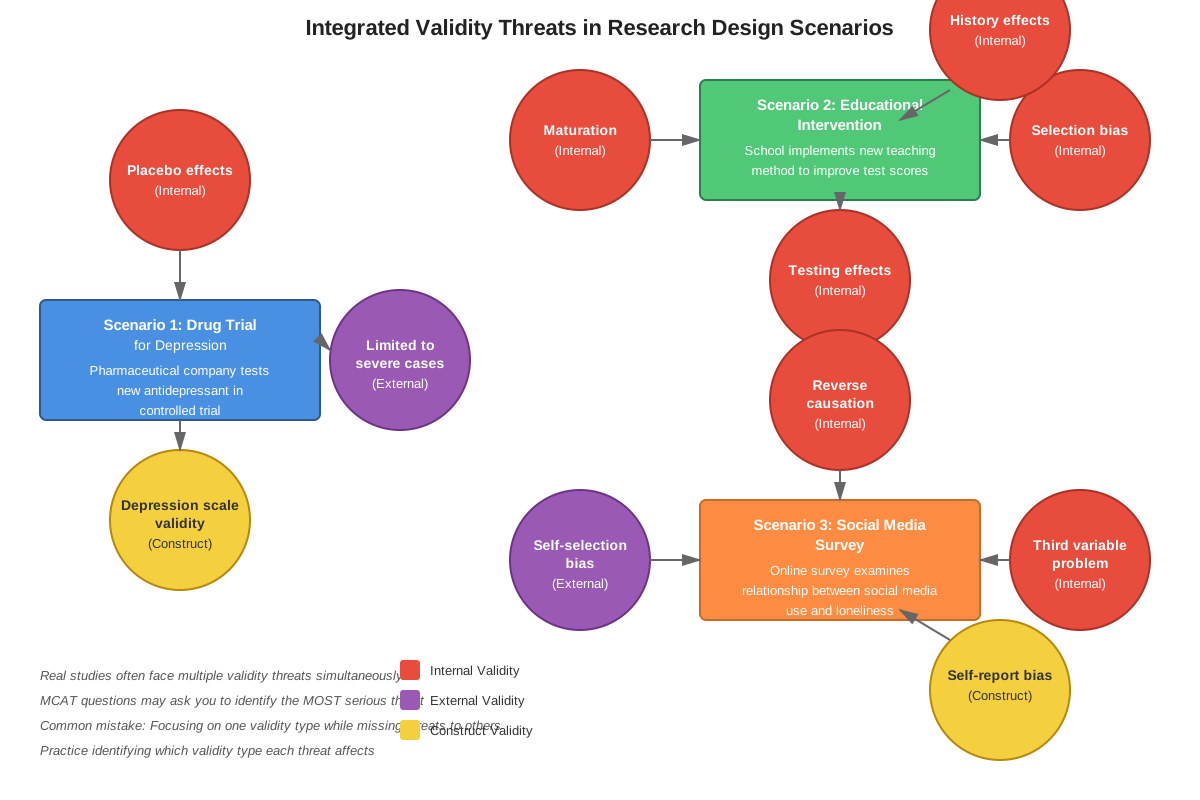
Validity is a cornerstone concept in Research Methods and Statistics within Sociology and represents one of the most frequently tested topics on the MCAT. At its core, validity addresses a fundamental question that underlies all scientific research: Are we actually measuring what we think we're measuring? This concept extends beyond simple accuracy to encompass the appropriateness, meaningfulness, and utility of the inferences researchers draw from their measurements and study designs. Understanding validity is essential not only for evaluating research studies presented in MCAT passages but also for critically analyzing the strength of conclusions drawn from empirical data.
The MCAT frequently presents research scenarios where students must identify threats to validity, distinguish between different types of validity, or evaluate whether a study's conclusions are justified based on its design. Questions may appear in both the Psychological, Social, and Biological Foundations of Behavior section and occasionally in passages that integrate biological and social sciences. The ability to quickly recognize validity issues separates high-scoring students from those who struggle with research-based passages, as these questions test both conceptual understanding and applied critical thinking skills.
Validity connects intimately with other research methodology concepts including reliability, research design, sampling methods, and statistical analysis. While reliability asks whether measurements are consistent, validity asks whether they're meaningful. A study can be reliable without being valid, but it cannot be truly valid without some degree of reliability. This relationship, along with validity's connections to experimental design, confounding variables, and generalizability, makes it a central organizing principle for understanding the entire research process tested on the MCAT.
Learning Objectives
- [ ] Define Validity using accurate Sociology terminology
- [ ] Explain why Validity matters for the MCAT
- [ ] Apply Validity to exam-style questions
- [ ] Identify common mistakes related to Validity
- [ ] Connect Validity to related Sociology concepts
- [ ] Distinguish between the four major types of validity (construct, internal, external, and statistical conclusion validity)
- [ ] Analyze research scenarios to identify specific threats to different types of validity
- [ ] Evaluate whether conclusions drawn from research studies are justified based on validity considerations
Prerequisites
- Basic research design principles: Understanding experimental vs. observational studies provides the foundation for recognizing how validity issues manifest differently across study types
- Independent and dependent variables: Identifying these variables is essential for assessing whether a study truly measures the intended relationships
- Confounding variables: Recognizing confounds is critical for understanding threats to internal validity
- Sampling methods: Knowledge of how samples are selected relates directly to external validity and generalizability
- Basic statistical concepts: Understanding correlation, causation, and statistical significance connects to statistical conclusion validity
Why This Topic Matters
In clinical and real-world research contexts, validity determines whether study findings can be trusted and applied to improve health outcomes. A medication trial with poor internal validity might incorrectly attribute health improvements to a drug when they actually result from placebo effects or natural disease progression. Similarly, a psychological intervention study with limited external validity might show promising results in controlled laboratory settings but fail when implemented in diverse community settings. Healthcare professionals must constantly evaluate the validity of research to make evidence-based decisions that affect patient care.
On the MCAT, validity appears in approximately 3-5 questions per exam, making it a medium-yield but highly predictable topic. Questions typically present research scenarios in passage format, requiring students to identify validity threats, evaluate study conclusions, or select the most appropriate interpretation of findings. The MCAT particularly favors questions that test the distinction between internal and external validity, the relationship between validity and reliability, and the identification of confounding variables that threaten internal validity. Discrete questions may ask students to define validity types or identify which validity concern is most relevant to a described scenario.
Common MCAT passage presentations include: (1) describing a study with methodological flaws and asking which type of validity is compromised, (2) presenting research findings and asking whether conclusions are justified, (3) comparing two studies and asking which has stronger validity, or (4) describing an intervention and asking how to improve the study's validity. The exam frequently integrates validity with other research concepts, requiring students to simultaneously consider sampling bias, confounding variables, and generalizability within a single question.
Core Concepts
Definition of Validity
Validity refers to the degree to which a study, measurement, or test accurately measures what it claims to measure and the extent to which conclusions drawn from that measurement are appropriate, meaningful, and useful. In Sociology and research methodology, validity encompasses both the accuracy of measurements themselves and the legitimacy of inferences made from those measurements. Unlike reliability, which concerns consistency and reproducibility, validity addresses truthfulness and appropriateness.
The concept of validity operates at multiple levels within research. At the measurement level, it asks whether an operational definition truly captures the theoretical construct of interest. At the design level, it questions whether the study structure allows for appropriate causal inferences. At the generalization level, it examines whether findings apply beyond the specific study context. This multi-layered nature makes validity one of the most comprehensive quality indicators in research evaluation.
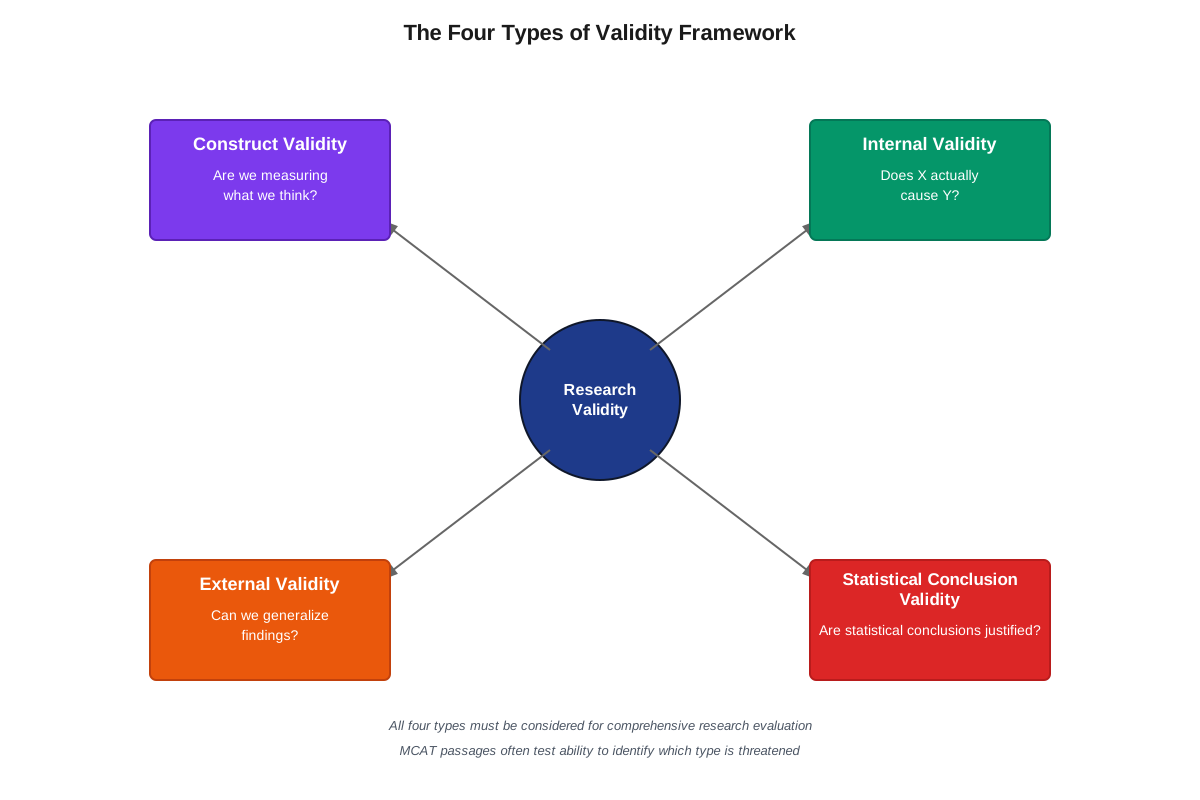
The Four Major Types of Validity
Research methodologists recognize four primary categories of validity, each addressing different aspects of research quality:
| Validity Type | Central Question | Primary Concern |
|---|---|---|
| Construct Validity | Are we measuring the right thing? | Measurement accuracy of theoretical concepts |
| Internal Validity | Can we establish causation? | Confidence that the independent variable caused observed changes |
| External Validity | Do findings generalize? | Applicability of results to other populations, settings, and times |
| Statistical Conclusion Validity | Are statistical inferences correct? | Appropriate use and interpretation of statistical tests |
Construct Validity
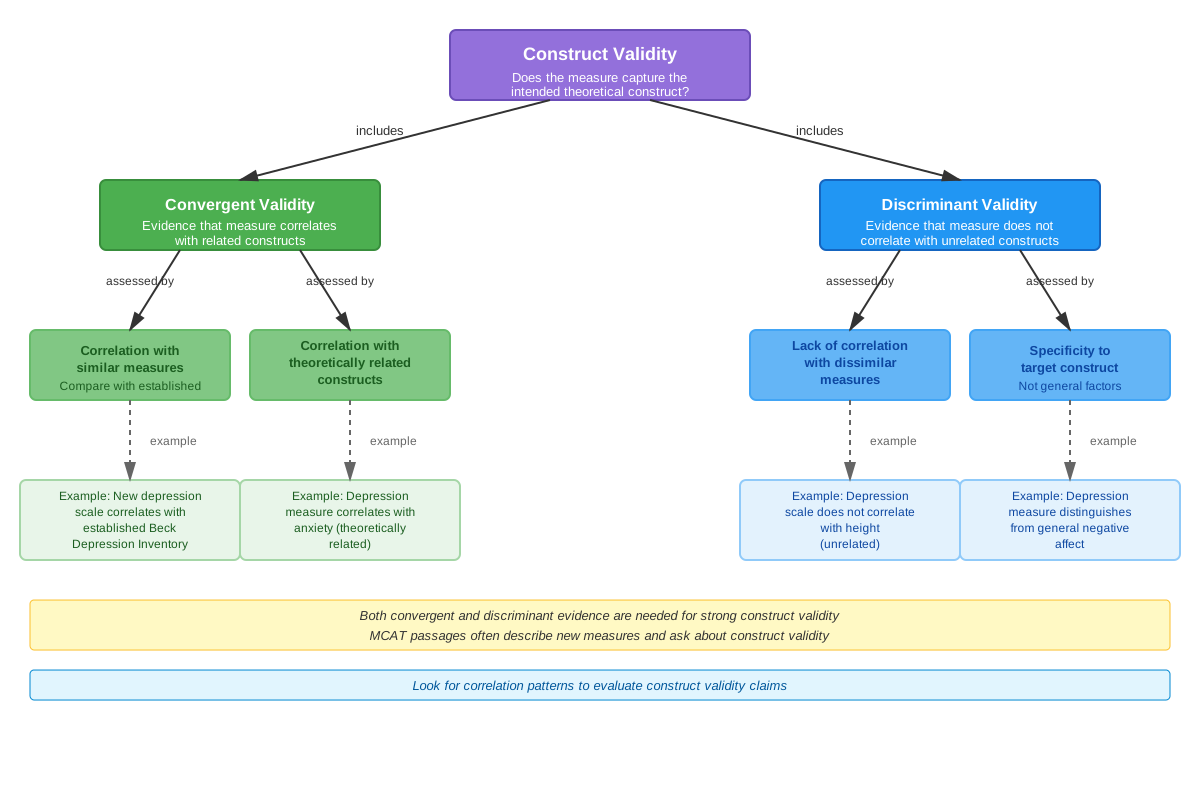
Construct validity addresses whether a measurement tool or operational definition actually captures the theoretical construct it purports to measure. For example, does an IQ test truly measure intelligence, or does it measure test-taking ability, cultural knowledge, or educational exposure? This type of validity is particularly important in sociology and psychology, where many concepts of interest (like "social capital," "self-esteem," or "prejudice") are abstract and cannot be directly observed.
Construct validity includes several subtypes:
- Face validity: Does the measure appear, on its surface, to assess what it claims to measure? (Note: This is the weakest form of validity)
- Content validity: Does the measure adequately sample all relevant aspects of the construct?
- Convergent validity: Does the measure correlate with other measures of the same construct?
- Discriminant validity: Does the measure NOT correlate with measures of different constructs?
Threats to construct validity include inadequate operational definitions, mono-operation bias (using only one measure of a construct), and confounding constructs (measuring multiple things simultaneously without distinguishing them).
Internal Validity
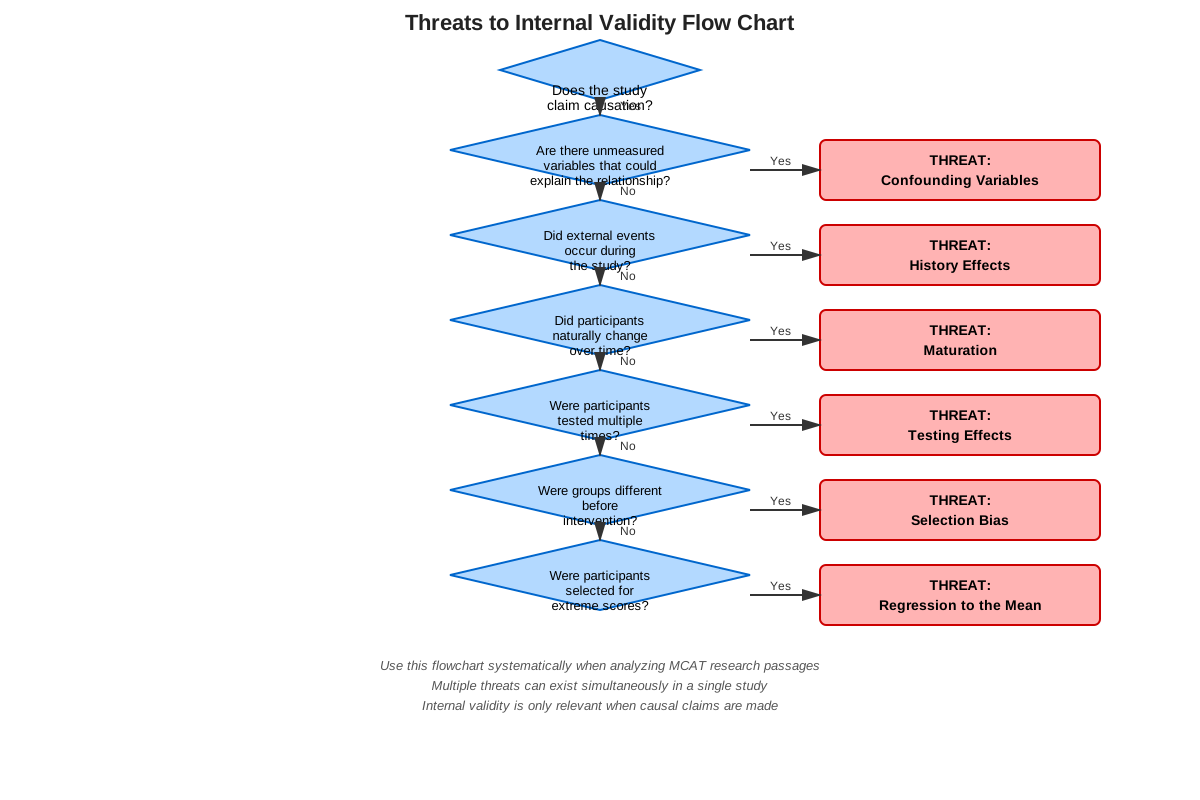
Internal validity represents the degree to which a study can establish a causal relationship between the independent and dependent variables, free from the influence of confounding variables. A study with high internal validity allows researchers to confidently conclude that changes in the independent variable caused observed changes in the dependent variable, rather than some alternative explanation.
Common threats to internal validity include:
- History: External events occurring during the study that affect the outcome
- Maturation: Natural changes in participants over time (aging, learning, fatigue)
- Testing effects: The act of measurement itself influencing subsequent measurements
- Instrumentation: Changes in measurement tools or procedures during the study
- Selection bias: Systematic differences between comparison groups at baseline
- Attrition: Differential dropout rates between groups
- Regression to the mean: Extreme scores naturally moving toward the average on retesting
- Diffusion: Control group participants receiving elements of the treatment
Experimental designs with random assignment and control groups generally have stronger internal validity than observational studies because randomization distributes confounding variables equally across groups. However, even well-designed experiments can suffer from internal validity threats if not carefully implemented.
External Validity
External validity concerns the generalizability of research findings to other populations, settings, times, and operational definitions beyond those in the original study. A study might have excellent internal validity (clearly establishing causation within the study sample) but poor external validity (findings don't apply to anyone outside that specific sample).
Key dimensions of external validity include:
- Population validity: Do findings generalize to other demographic groups, cultures, or populations?
- Ecological validity: Do findings apply in real-world settings beyond the research environment?
- Temporal validity: Do findings remain true across different time periods?
The tension between internal and external validity represents a fundamental challenge in research design. Highly controlled laboratory experiments maximize internal validity by eliminating confounds but may sacrifice external validity by creating artificial conditions. Conversely, naturalistic field studies enhance external validity but often struggle with internal validity due to uncontrolled confounding variables.
Threats to external validity include using non-representative samples (e.g., college students for research meant to apply to all adults), artificial laboratory settings that don't reflect real-world conditions, and unique historical or cultural contexts that limit temporal or cross-cultural generalizability.
Statistical Conclusion Validity
Statistical conclusion validity addresses whether conclusions about relationships between variables based on statistical tests are correct. This type of validity concerns both Type I errors (concluding a relationship exists when it doesn't) and Type II errors (failing to detect a relationship that actually exists).
Threats to statistical conclusion validity include:
- Low statistical power: Insufficient sample size leading to Type II errors
- Violation of statistical assumptions: Using tests inappropriately for the data type
- Fishing and error rate problems: Conducting multiple tests without correction, inflating Type I error rates
- Unreliability of measures: Measurement error reducing the ability to detect true relationships
- Restriction of range: Limited variability in variables reducing correlation magnitudes
Validity vs. Reliability
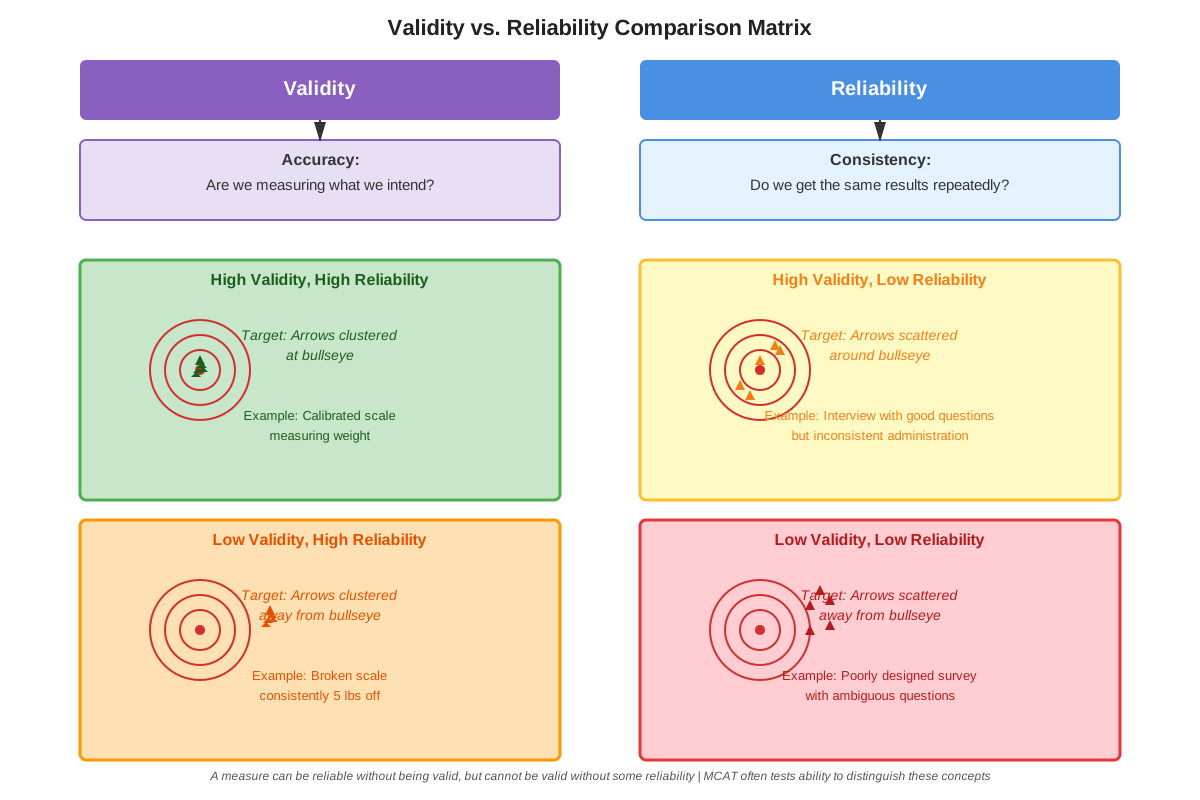
Understanding the distinction between validity and reliability is crucial for MCAT success. Reliability refers to consistency and reproducibility—whether a measure produces similar results under consistent conditions. Validity refers to accuracy and appropriateness—whether a measure captures what it should.
The relationship follows this principle: A measure can be reliable without being valid, but cannot be valid without being at least somewhat reliable. For example, a bathroom scale that consistently reads 10 pounds too heavy is reliable (consistent) but not valid (inaccurate). Conversely, a scale that gives random readings is neither reliable nor valid.
This relationship can be visualized using a target analogy:
- High reliability, high validity: Arrows clustered tightly around the bullseye
- High reliability, low validity: Arrows clustered tightly but away from the bullseye
- Low reliability, low validity: Arrows scattered randomly across the target
- Low reliability, high validity: Not possible—scattered arrows cannot consistently hit the bullseye
Concept Relationships
The four types of validity form an interconnected framework for evaluating research quality. Construct validity serves as the foundation—if measurements don't capture intended constructs, other validity types become meaningless. Statistical conclusion validity builds on construct validity by ensuring that statistical relationships between validly measured constructs are correctly identified. Internal validity then determines whether these statistical relationships represent true causal connections. Finally, external validity addresses whether these causal relationships apply beyond the specific study context.
Validity connects to prerequisite concepts through multiple pathways. Confounding variables directly threaten internal validity by providing alternative explanations for observed relationships. Sampling methods determine external validity—random sampling from a population enhances generalizability, while convenience sampling limits it. Research design choices (experimental vs. observational, laboratory vs. field) create inherent trade-offs between internal and external validity.
The relationship between validity and reliability forms a hierarchical dependency: Reliability → Validity → Meaningful Conclusions. Without reliability, validity cannot exist. Without validity, conclusions lack meaning regardless of statistical significance or sample size.
Validity also connects forward to more advanced research concepts. Understanding validity threats informs research ethics (invalid studies waste resources and potentially harm participants), evidence-based practice (clinicians must evaluate validity before applying research findings), and meta-analysis (combining studies requires assessing their relative validity).
High-Yield Facts
⭐ Validity asks "Are we measuring what we think we're measuring?" while reliability asks "Are we measuring consistently?"
⭐ A study can be reliable without being valid, but cannot be valid without some degree of reliability.
⭐ Internal validity concerns causation within the study; external validity concerns generalization beyond the study.
⭐ Random assignment to groups strengthens internal validity; random sampling from a population strengthens external validity.
⭐ Confounding variables are the primary threat to internal validity in observational studies.
- Construct validity addresses whether operational definitions accurately capture theoretical constructs.
- Face validity is the weakest form of validity because it relies only on superficial appearance.
- Selection bias occurs when comparison groups differ systematically at baseline, threatening internal validity.
- Ecological validity refers to whether findings generalize from laboratory to real-world settings.
- Statistical conclusion validity concerns whether statistical inferences about relationships are correct.
- Attrition (differential dropout) threatens internal validity when participants leaving the study differ systematically between groups.
- Regression to the mean threatens internal validity when participants are selected based on extreme scores.
- The tension between internal and external validity represents a fundamental research trade-off: controlled conditions enhance internal validity but may reduce external validity.
Quick check — test yourself on Validity so far.
Try Flashcards →Common Misconceptions
Misconception: Validity and reliability are the same thing. → Correction: Validity concerns accuracy and appropriateness (measuring what you intend to measure), while reliability concerns consistency and reproducibility (getting the same result repeatedly). A measure can be consistently wrong (reliable but not valid).
Misconception: A large sample size automatically ensures validity. → Correction: Sample size primarily affects statistical power and precision, not validity. A large sample of college students still has limited external validity for generalizing to all adults, and no sample size can fix a poorly designed study with confounding variables threatening internal validity.
Misconception: Random assignment and random sampling are the same thing. → Correction: Random assignment (randomly placing participants into experimental groups) strengthens internal validity by distributing confounds equally across groups. Random sampling (randomly selecting participants from a population) strengthens external validity by ensuring the sample represents the population.
Misconception: External validity is always more important than internal validity. → Correction: Both types serve different purposes. Internal validity is prerequisite for establishing causation—if you can't determine whether X causes Y in your study, it doesn't matter whether findings generalize. The relative importance depends on research goals: basic mechanism research prioritizes internal validity, while applied intervention research prioritizes external validity.
Misconception: Face validity is sufficient for research purposes. → Correction: Face validity (whether a measure appears to assess what it claims) is the weakest form of validity and insufficient alone. A depression questionnaire might have face validity because questions seem related to depression, but without empirical evidence that it correlates with clinical diagnoses (convergent validity) and doesn't just measure anxiety (discriminant validity), it lacks adequate construct validity.
Misconception: Observational studies cannot have internal validity. → Correction: While observational studies face more threats to internal validity than randomized experiments, careful design (matching, statistical control for confounds, longitudinal designs) can strengthen causal inferences. The key is identifying and addressing potential confounding variables.
Misconception: If a study has high internal validity, it automatically has high external validity. → Correction: These validity types often trade off against each other. Highly controlled laboratory experiments maximize internal validity by eliminating confounds but may create artificial conditions that limit external validity. Researchers must balance these competing demands based on study goals.
Worked Examples
Example 1: Identifying Validity Threats
Scenario: A researcher wants to test whether a new cognitive training program improves memory in older adults. She recruits 100 volunteers aged 65-75 from a local senior center, all of whom expressed interest in memory improvement. She administers a memory test, provides the 8-week training program to all participants, then administers the same memory test again. Results show significant improvement in memory scores.
Question: What are the primary validity concerns with this study design?
Analysis:
Construct Validity Concerns: The study uses the same memory test before and after training. This raises questions about whether improvements reflect actual memory enhancement or simply practice effects (participants becoming familiar with the test format). The operational definition of "memory improvement" may not capture the construct adequately.
Internal Validity Concerns (most significant):
- No control group: Without a comparison group that doesn't receive training, we cannot determine whether improvements resulted from the training or from alternative explanations.
- Testing effects: Taking the same test twice likely improves scores regardless of training.
- Maturation: Over 8 weeks, participants might naturally improve through other activities or experiences.
- History: External events during the 8-week period (participants starting other cognitive activities, medication changes) could explain improvements.
- Regression to the mean: If participants volunteered due to memory concerns, their baseline scores might be temporarily low, with natural improvement over time.
External Validity Concerns:
- The sample consists entirely of volunteers from one senior center who expressed interest in memory improvement, limiting generalizability to older adults who aren't motivated to improve memory or who live in different settings.
- Results may not generalize to younger or older age groups, different cultural contexts, or individuals with cognitive impairment.
Statistical Conclusion Validity: Without a control group, statistical tests comparing pre-post changes don't address whether the training caused improvements.
Conclusion: The most critical flaw is the lack of internal validity due to the absence of a control group. The study cannot establish causation. To improve the design, the researcher should randomly assign participants to training vs. control groups and use alternate forms of the memory test to reduce practice effects.
Example 2: Comparing Validity Across Studies
Scenario: Two studies examine the effect of social support on depression:
Study A: Researchers randomly assign 200 college students diagnosed with mild depression to either a peer support group intervention or a waitlist control group. Depression is measured using a validated clinical scale at baseline and 6 weeks later in a university counseling center. Results show the support group has significantly lower depression scores.
Study B: Researchers survey 2,000 adults from diverse backgrounds across the United States, measuring perceived social support and depression symptoms using validated questionnaires. Statistical analysis controls for age, income, and health status. Results show a significant negative correlation between social support and depression.
Question: Compare the internal and external validity of these two studies.
Analysis:
Study A - Internal Validity: Strong
- Random assignment distributes confounding variables equally between groups
- Control group accounts for natural changes over time, placebo effects, and regression to the mean
- Standardized measurement in controlled setting reduces instrumentation threats
- Primary threat: Attrition (if dropout rates differ between groups) and potential diffusion (if control group participants seek informal support)
Study A - External Validity: Moderate to Weak
- Sample limited to college students with mild depression—findings may not generalize to non-students, different age groups, or individuals with severe depression
- University counseling center setting may not reflect real-world contexts
- Specific peer support intervention may not represent all forms of social support
- Temporal validity limited to 6-week timeframe
Study B - Internal Validity: Weak to Moderate
- Correlational design cannot establish causation (Does social support reduce depression, or does depression reduce social support? Or does a third variable cause both?)
- No random assignment means confounding variables may explain the relationship
- Statistical controls help but cannot eliminate all confounds
- Cross-sectional design (single time point) prevents determining temporal sequence
Study B - External Validity: Strong
- Large, diverse national sample enhances population validity
- Natural settings (participants' real lives) enhance ecological validity
- Broad measurement of social support captures real-world variability
- Results likely generalize across demographic groups and settings
Conclusion: Study A can establish causation (social support reduces depression) but only for college students in controlled settings. Study B demonstrates that social support and depression are related in the general population but cannot determine causation. Together, these studies complement each other—Study A provides causal evidence with limited generalizability, while Study B provides correlational evidence with broad generalizability. This illustrates the classic trade-off between internal and external validity.
Exam Strategy
When approaching MCAT questions about validity, follow this systematic process:
Step 1: Identify the validity type being tested. Look for trigger words:
- "Causation," "confounding," "alternative explanation" → Internal validity
- "Generalize," "apply to other populations," "real-world settings" → External validity
- "Measuring what it claims," "operational definition," "construct" → Construct validity
- "Statistical test," "Type I/II error," "sample size" → Statistical conclusion validity
Step 2: For internal validity questions, systematically consider threats:
- Is there a control group? (If no, internal validity is severely compromised)
- Was there random assignment? (If no, selection bias is a concern)
- Could external events explain results? (History)
- Could natural changes over time explain results? (Maturation)
- Could measurement itself affect results? (Testing effects)
- Did participants drop out differentially? (Attrition)
Step 3: For external validity questions, assess generalizability:
- Who is the sample? (Age, demographics, culture)
- Where was the study conducted? (Laboratory vs. field)
- When was the study conducted? (Historical context)
- How were variables operationalized? (Specific vs. general)
Step 4: Distinguish between validity and reliability:
- If the question asks about consistency, reproducibility, or test-retest → Reliability
- If the question asks about accuracy, appropriateness, or causation → Validity
Process of Elimination Tips:
- Eliminate options that confuse validity with reliability
- Eliminate options that confuse internal with external validity
- For "which validity is threatened" questions, eliminate options that describe study strengths rather than weaknesses
- For "how to improve validity" questions, eliminate options that would actually introduce new threats
Time Allocation:
Validity questions typically require 60-90 seconds. Spend 20-30 seconds identifying the validity type and specific threat, then 30-60 seconds evaluating answer choices. Don't overthink—MCAT validity questions usually have one clear best answer once you correctly identify the validity type being tested.
Exam Tip: When a passage describes a study, immediately note: (1) Is there random assignment? (2) Is there a control group? (3) What is the sample? These three pieces of information allow you to quickly assess internal and external validity for any subsequent questions.
Memory Techniques
Mnemonic for Internal Validity Threats - "HIST MARS":
- History (external events)
- Instrumentation (measurement changes)
- Selection bias (group differences at baseline)
- Testing effects (measurement influences outcomes)
- Maturation (natural changes over time)
- Attrition (differential dropout)
- Regression to the mean (extreme scores normalize)
- Selection-maturation interaction (groups mature differently)
Mnemonic for Validity Types - "CISE":
- Construct (measuring the right thing)
- Internal (establishing causation)
- Statistical conclusion (correct statistical inferences)
- External (generalization)
Visualization for Validity vs. Reliability:
Picture a target with a bullseye:
- Reliable and Valid: Arrows tightly clustered in the bullseye (consistent and accurate)
- Reliable but Invalid: Arrows tightly clustered but off-target (consistent but inaccurate)
- Unreliable and Invalid: Arrows scattered randomly (neither consistent nor accurate)
Acronym for Random Assignment vs. Random Sampling - "RAIN":
- Random Assignment → Internal validity (causation)
- Random sAmpling → National/population generalization (external validity)
Memory Aid for Construct Validity Subtypes:
"Faces Can't Convince Doctors" (weakest to strongest evidence):
- Face validity (appears to measure construct)
- Content validity (covers all aspects)
- Convergent validity (correlates with similar measures)
- Discriminant validity (doesn't correlate with different measures)
Summary
Validity represents the cornerstone of research quality, addressing whether studies measure what they claim to measure and whether conclusions drawn from those measurements are justified. The four major types—construct, internal, external, and statistical conclusion validity—each address different aspects of research quality, from measurement accuracy to causal inference to generalizability. Internal validity, strengthened by random assignment and control groups, determines whether causal conclusions are warranted within a study. External validity, enhanced by representative sampling and naturalistic settings, determines whether findings generalize beyond the specific study context. The fundamental distinction between validity (accuracy) and reliability (consistency) is essential: measures can be reliable without being valid, but cannot be valid without some reliability. Common threats to internal validity include confounding variables, selection bias, maturation, and testing effects, while external validity is threatened by non-representative samples and artificial laboratory conditions. For MCAT success, students must quickly identify validity types, recognize specific threats, and evaluate whether study designs support the conclusions researchers draw.
Key Takeaways
- Validity concerns accuracy and appropriateness (measuring what you intend); reliability concerns consistency (measuring the same way repeatedly)
- The four validity types—construct, internal, external, and statistical conclusion—address different aspects of research quality and must all be considered when evaluating studies
- Internal validity (causation) is strengthened by random assignment and control groups; external validity (generalization) is strengthened by random sampling and naturalistic settings
- Confounding variables represent the primary threat to internal validity in observational studies, providing alternative explanations for observed relationships
- The tension between internal and external validity creates a fundamental research trade-off: highly controlled experiments maximize internal validity but may sacrifice external validity
- A measure can be reliable without being valid (consistently wrong), but cannot be valid without being at least somewhat reliable
- On the MCAT, quickly identify which validity type is being tested by looking for trigger words like "causation" (internal), "generalize" (external), "measuring construct" (construct), or "statistical inference" (statistical conclusion)
Related Topics
- Reliability: Understanding test-retest, inter-rater, and internal consistency reliability complements validity knowledge and frequently appears alongside validity in MCAT questions
- Experimental Design: Random assignment, control groups, and blinding procedures directly impact internal validity
- Sampling Methods: Random, stratified, and convenience sampling techniques determine external validity and generalizability
- Confounding Variables: Identifying and controlling confounds is essential for establishing internal validity
- Research Ethics: Invalid studies raise ethical concerns about wasting resources and potentially harming participants
- Bias in Research: Selection bias, measurement bias, and reporting bias all threaten various types of validity
- Statistical Power: Sample size and effect size considerations relate directly to statistical conclusion validity
Mastering validity provides the foundation for critically evaluating any research study, a skill essential not only for MCAT success but for evidence-based practice throughout medical training and clinical careers.
Practice CTA
Now that you've mastered the core concepts of validity, it's time to cement your understanding through active practice. Attempt the practice questions and flashcards associated with this topic, focusing on distinguishing between validity types, identifying specific threats, and evaluating research designs. Remember that validity questions reward systematic thinking—develop a consistent approach for analyzing study designs, and you'll find these questions become increasingly straightforward. Each practice question you complete strengthens your ability to quickly recognize validity issues in MCAT passages, bringing you one step closer to your target score. You've built the foundation; now apply it!
Sign up free to keep reading
Create a free AnvayaPrep account to finish this MCAT guide on Validity — plus flashcards and practice questions.