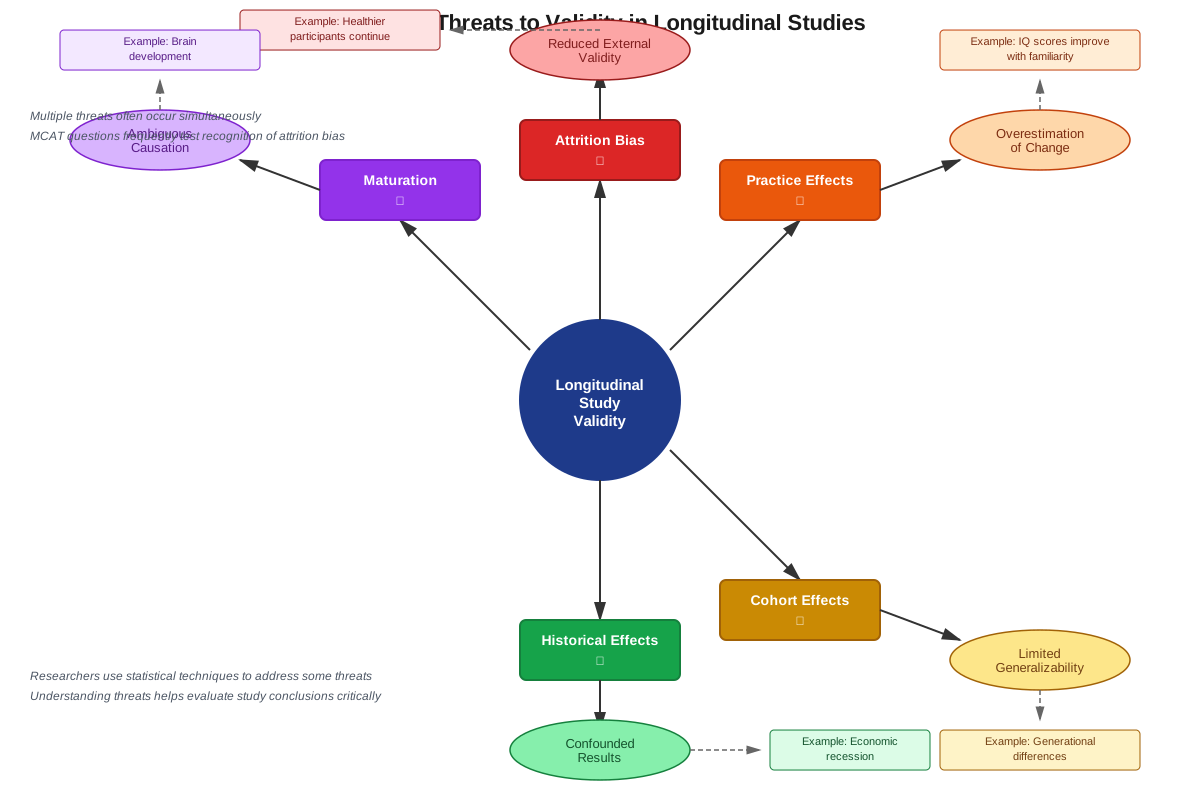
Overview
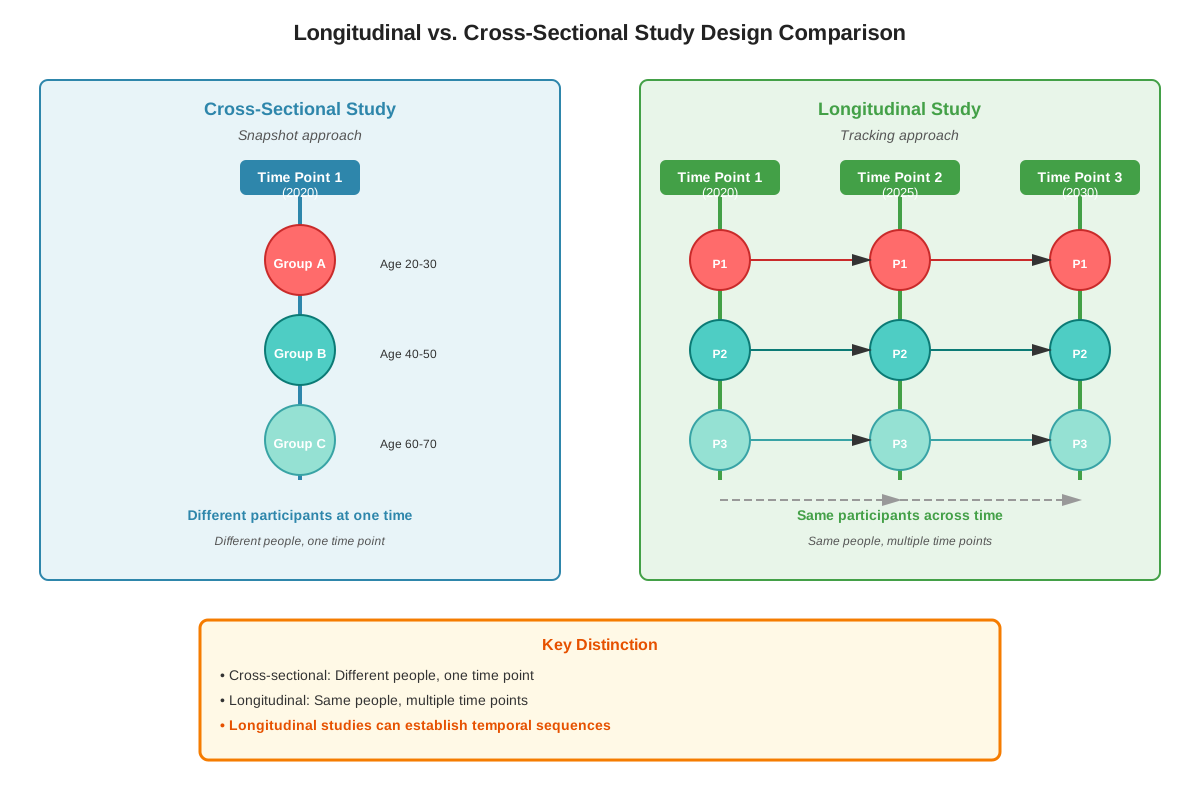
Longitudinal studies represent a cornerstone research design in Sociology and the broader social sciences, involving the repeated observation of the same variables over extended periods of time. Unlike cross-sectional studies that capture a single snapshot, longitudinal research tracks changes, developments, and trends within the same subjects across months, years, or even decades. This temporal dimension makes longitudinal studies uniquely powerful for establishing temporal sequences, identifying causal relationships, and understanding developmental trajectories in human behavior, health outcomes, and social phenomena. For the MCAT, understanding longitudinal study design is essential because these studies frequently appear in Psychological, Social, and Biological Foundations passages, particularly when examining questions about aging, disease progression, behavioral change, and the effectiveness of interventions over time.
The MCAT emphasizes Research Methods and Statistics as a critical component of scientific reasoning, and longitudinal studies exemplify sophisticated research design that balances internal validity with real-world applicability. Test-takers must be able to identify longitudinal designs in passage-based questions, distinguish them from other research methods, recognize their strengths and limitations, and interpret findings appropriately. The ability to critically evaluate longitudinal research connects directly to broader MCAT competencies in experimental design, data interpretation, and understanding how researchers establish causality in social and behavioral sciences.
Within the broader landscape of Sociology research methods, longitudinal studies occupy a unique position between purely observational research and experimental designs. They share characteristics with cohort studies in epidemiology, panel studies in economics, and developmental research in psychology, making them interdisciplinary tools that appear across multiple MCAT content areas. Understanding longitudinal methodology provides the foundation for comprehending how researchers track social mobility, health disparities, educational outcomes, and the long-term effects of social policies—all high-yield topics for the MCAT's social sciences section.
Learning Objectives
- [ ] Define longitudinal studies using accurate Sociology terminology
- [ ] Explain why longitudinal studies matters for the MCAT
- [ ] Apply longitudinal studies to exam-style questions
- [ ] Identify common mistakes related to longitudinal studies
- [ ] Connect longitudinal studies to related Sociology concepts
- [ ] Distinguish between different types of longitudinal designs (panel, cohort, and retrospective)
- [ ] Evaluate the advantages and limitations of longitudinal studies compared to cross-sectional and experimental designs
- [ ] Analyze how attrition and cohort effects influence longitudinal study validity
Prerequisites
- Basic research design principles: Understanding independent and dependent variables, control groups, and the concept of causality is essential for appreciating how longitudinal studies establish temporal relationships
- Cross-sectional study design: Familiarity with single-timepoint research provides the contrast needed to understand longitudinal studies' unique temporal dimension
- Sampling methods: Knowledge of how researchers select participants helps in understanding cohort selection and representativeness in longitudinal research
- Basic statistical concepts: Understanding correlation, causation, and confounding variables enables proper interpretation of longitudinal findings
- Observational vs. experimental studies: Recognizing this fundamental distinction clarifies where longitudinal studies fit in the research design spectrum
Why This Topic Matters
Longitudinal studies provide the gold standard for understanding change over time in medical and social research. In clinical contexts, longitudinal designs track disease progression, evaluate long-term treatment outcomes, and identify risk factors that emerge across the lifespan. The famous Framingham Heart Study, which has followed participants since 1948, exemplifies how longitudinal research has revolutionized our understanding of cardiovascular disease risk factors. Similarly, longitudinal studies examining childhood development, educational interventions, and social determinants of health provide evidence that shapes public health policy and clinical practice.
For the MCAT, longitudinal studies appear with moderate frequency but high importance in the Psychological, Social, and Biological Foundations section. Approximately 5-8% of research methods questions involve identifying or interpreting longitudinal designs. These questions typically appear in passage-based formats where students must analyze a described study, identify its design, recognize potential confounds, or interpret findings appropriately. The MCAT particularly favors questions that require distinguishing longitudinal from cross-sectional designs, identifying threats to validity specific to longitudinal research (especially attrition), and understanding how temporal sequence relates to causal inference.
Common MCAT passage scenarios involving longitudinal studies include: tracking health outcomes in aging populations, following children through developmental stages, evaluating educational interventions over academic years, examining career trajectories and social mobility, assessing the long-term effects of early-life exposures, and monitoring behavioral changes following interventions. Questions often present data tables showing measurements at multiple time points and ask students to identify trends, recognize confounding variables, or evaluate the appropriateness of causal conclusions. Understanding longitudinal methodology is also essential for interpreting graphs showing change over time and for recognizing when researchers can legitimately claim that one variable preceded and potentially caused another.
Core Concepts
Definition and Fundamental Characteristics
Longitudinal studies are research designs that involve repeated observations or measurements of the same variables in the same subjects over an extended period. The defining feature is the temporal dimension—researchers collect data at multiple time points (T1, T2, T3, etc.) from the same individuals or groups. This repeated-measures approach allows researchers to track changes within individuals over time, rather than simply comparing different groups at a single moment. The duration of longitudinal studies varies widely, from months to decades, depending on the research question and the phenomena under investigation.
The key distinguishing features of longitudinal studies include: within-subject comparisons (each participant serves as their own control), temporal ordering (establishing which variables change first), trajectory analysis (examining patterns of change), and individual variation (understanding how different people change differently). Unlike cross-sectional studies that compare different people at one time point, longitudinal designs follow the same people across time, providing more powerful evidence for developmental processes and causal relationships.
Types of Longitudinal Studies
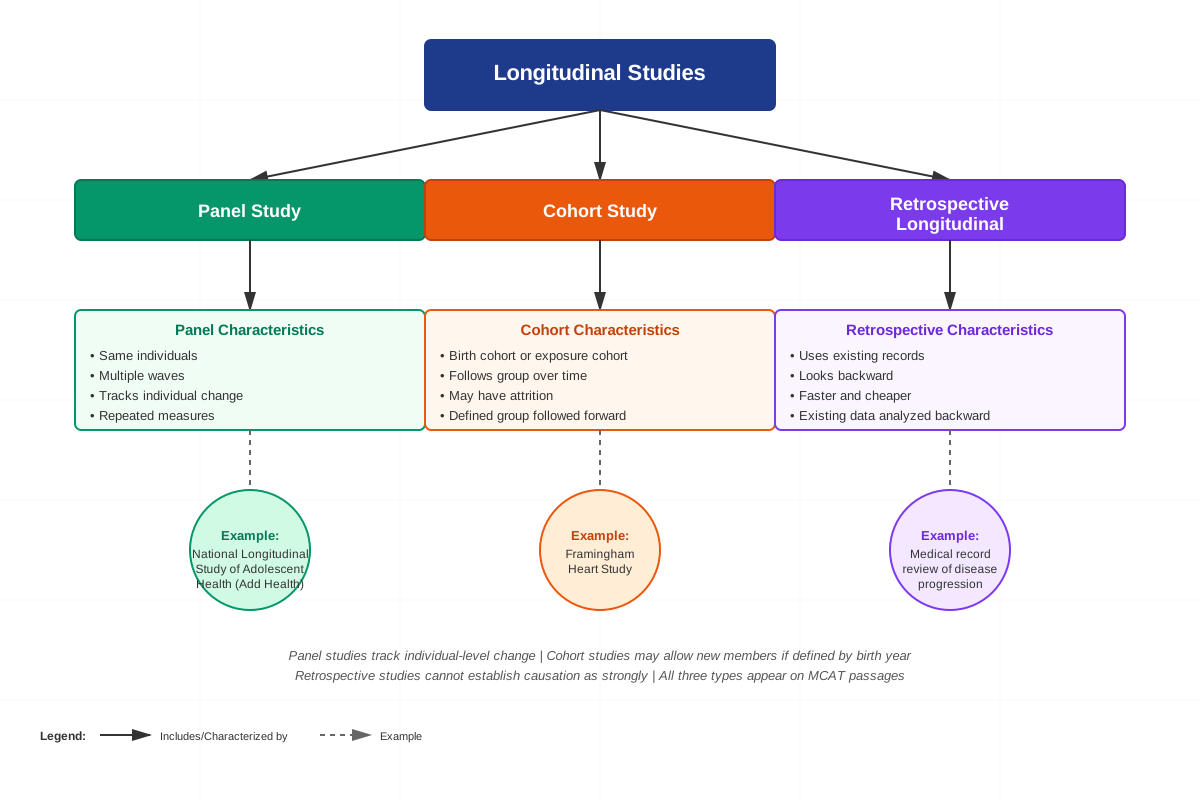
Panel studies represent the most common longitudinal design, where researchers select a specific group of participants (the panel) and measure them repeatedly at predetermined intervals. The same individuals are tracked throughout the study period, allowing for precise within-person change analysis. Examples include the Panel Study of Income Dynamics, which has followed American families since 1968, tracking economic mobility across generations.
Cohort studies follow a group of people who share a common characteristic or experience during a particular time period. Birth cohorts (all people born in a specific year) are particularly common in developmental research. The cohort is identified at baseline and followed forward in time (prospectively). For example, a study might follow all children born in 2010 to examine how early childhood education affects later academic achievement. Cohort studies are especially valuable in epidemiology for identifying risk factors and disease incidence.
Retrospective longitudinal studies work backward in time, using existing records or participant recall to reconstruct past exposures and outcomes. While technically examining data across time, these studies collect information retrospectively rather than prospectively. They are faster and less expensive than prospective designs but suffer from recall bias and incomplete records.
Advantages of Longitudinal Studies
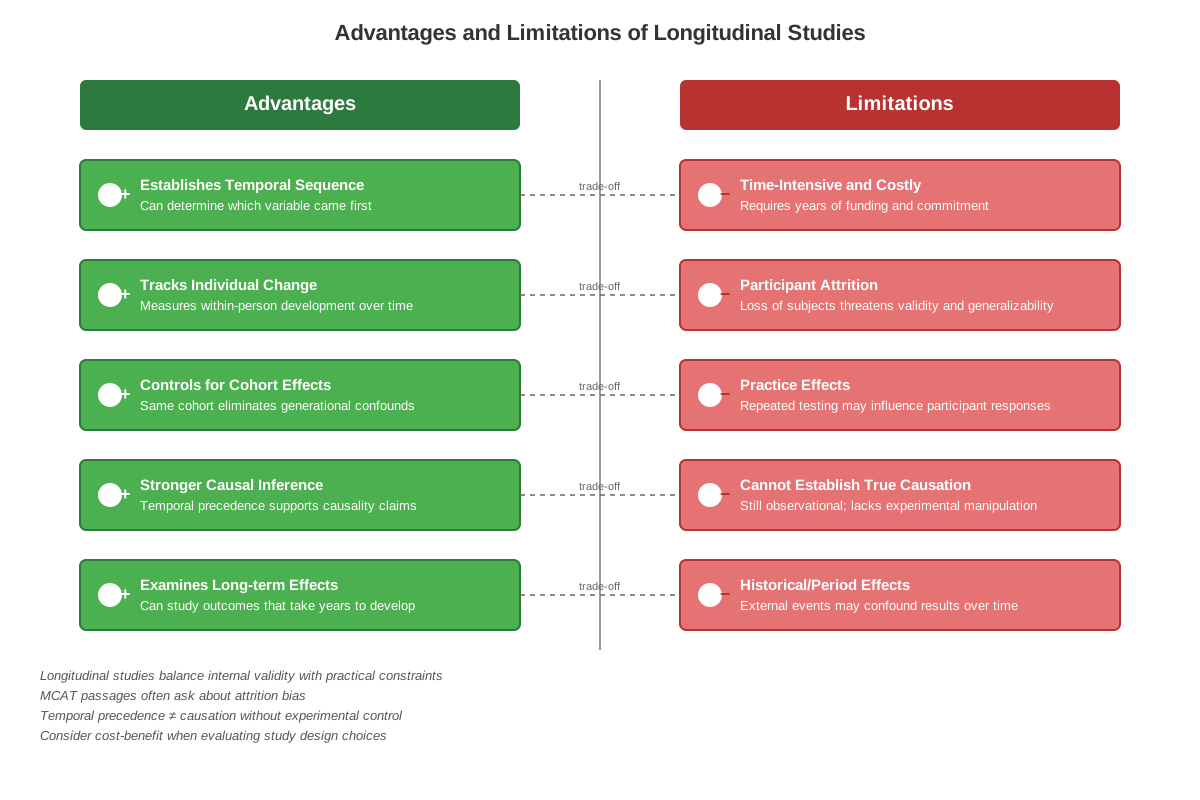
Longitudinal designs offer several critical advantages for research. First, they establish temporal precedence, a necessary condition for causality. By documenting that Variable A changed before Variable B, researchers can rule out reverse causation. Second, they reveal patterns of change that cross-sectional studies cannot detect, including growth trajectories, developmental stages, and the timing of transitions. Third, they allow for within-subject comparisons, which control for stable individual differences and increase statistical power. Fourth, they can identify cumulative effects of exposures over time and distinguish between age effects, period effects, and cohort effects.
Limitations and Challenges
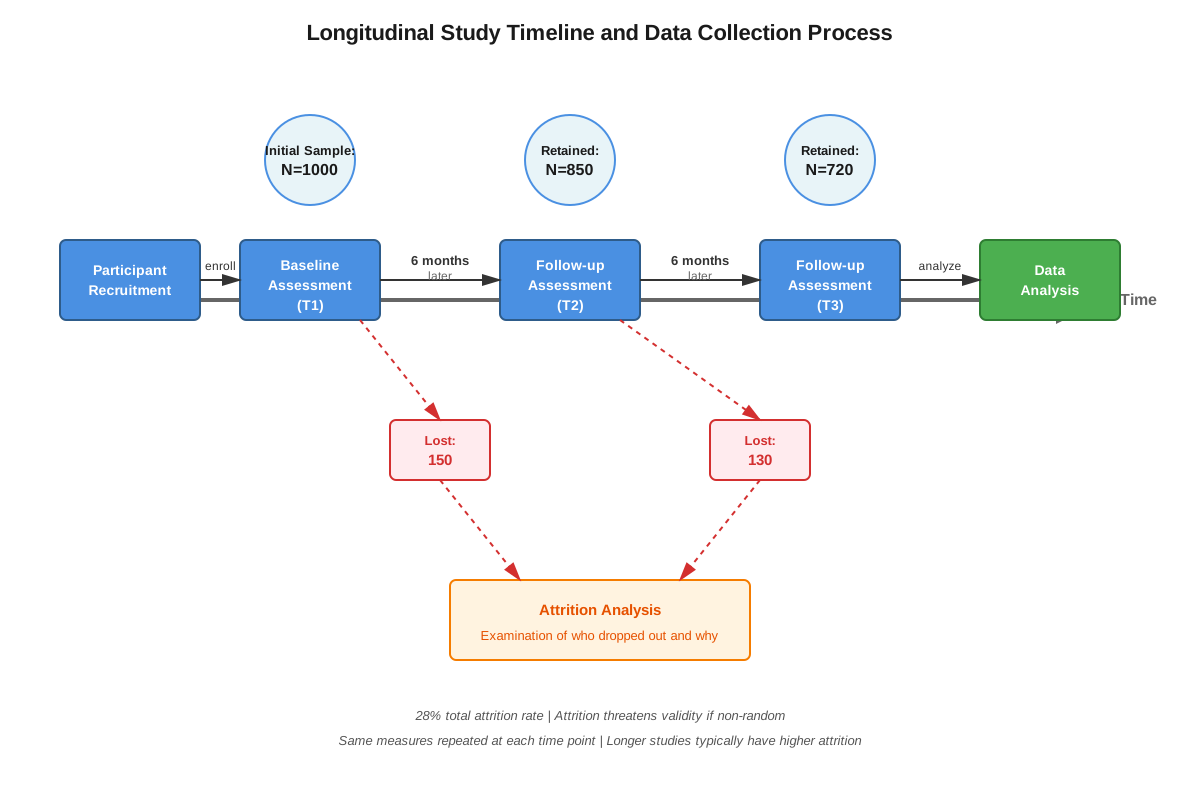
Despite their strengths, longitudinal studies face significant challenges. Attrition (participant dropout) is perhaps the most serious threat to validity. As studies extend over time, participants move, lose interest, become ill, or die. If attrition is non-random (systematic), it creates selection bias that threatens the study's validity. For example, if healthier participants are more likely to remain in a health study, findings may overestimate population health.
Practice effects occur when repeated testing influences participant responses. Taking the same cognitive test multiple times may improve scores due to familiarity rather than genuine cognitive improvement. Cohort effects confound age-related changes with generational differences. For instance, cognitive decline observed in a cohort born in 1940 might reflect their specific educational experiences rather than universal aging processes.
Time and cost represent practical limitations. Longitudinal studies require sustained funding, institutional stability, and researcher commitment over years or decades. Measurement issues arise when instruments become outdated or when researchers need to maintain consistency while incorporating improved measurement techniques.
Comparison with Other Research Designs
| Feature | Longitudinal | Cross-Sectional | Experimental |
|---|---|---|---|
| Time points | Multiple | Single | Multiple (pre/post) |
| Same participants | Yes | No | Yes (within groups) |
| Temporal sequence | Established | Cannot establish | Controlled |
| Causality | Suggestive | Weak | Strong |
| Attrition risk | High | None | Moderate |
| Cost/Duration | High/Long | Low/Short | Moderate/Moderate |
| Manipulation | No | No | Yes |
| Real-world validity | High | Moderate | Variable |
Data Analysis Considerations
Longitudinal data require specialized statistical approaches. Growth curve modeling examines individual trajectories of change and identifies factors that predict different patterns. Time-series analysis examines temporal patterns and autocorrelation (the tendency for measurements close in time to be more similar). Survival analysis examines time until an event occurs, accounting for censored data (participants who haven't experienced the event by study end).
Researchers must account for missing data through techniques like multiple imputation or maximum likelihood estimation. They must also consider whether to analyze absolute change (raw difference between time points), relative change (percentage change), or rate of change (slope of trajectory).
Concept Relationships
Longitudinal studies connect intimately with multiple research methodology concepts. They represent an extension of observational research that adds the temporal dimension, positioning them between simple cross-sectional observation and fully controlled experiments. The relationship flows: Cross-sectional design → Longitudinal design → Experimental design, representing increasing ability to establish causality but also increasing cost and complexity.
Within longitudinal studies themselves, the concepts interconnect hierarchically: The fundamental definition (repeated measures over time) → leads to → specific types (panel, cohort, retrospective) → which determine → particular advantages (temporal precedence, within-subject comparison) → but also create → specific challenges (attrition, practice effects, cohort effects) → requiring → specialized analytical approaches (growth curve modeling, survival analysis).
Longitudinal studies connect to sampling methods through cohort selection and representativeness concerns. They relate to validity concepts through threats like attrition (internal validity) and generalizability across cohorts (external validity). They link to epidemiological concepts through prospective cohort designs that track disease incidence. They connect to developmental psychology through their ability to track age-related changes and critical periods. Finally, they relate to causal inference by establishing temporal precedence while acknowledging they cannot control for all confounds like true experiments can.
The relationship map: Longitudinal design → establishes temporal sequence → strengthens causal inference → but cannot eliminate all confounds → therefore provides stronger evidence than cross-sectional → but weaker than experimental → while offering higher ecological validity → making it ideal for phenomena that cannot be experimentally manipulated.
Quick check — test yourself on Longitudinal studies so far.
Try Flashcards →High-Yield Facts
⭐ Longitudinal studies involve repeated measurements of the same variables in the same subjects over time, distinguishing them from cross-sectional designs that measure different people once.
⭐ The primary advantage of longitudinal studies is establishing temporal precedence—documenting that one variable changed before another, which is necessary (but not sufficient) for establishing causality.
⭐ Attrition (participant dropout) is the most serious threat to longitudinal study validity, especially when dropout is systematic rather than random.
⭐ Longitudinal studies can distinguish between age effects (changes due to getting older), period effects (changes affecting everyone at a particular time), and cohort effects (differences between generational groups).
⭐ Panel studies follow the same specific individuals over time, while cohort studies follow a group defined by a shared characteristic or experience during a particular period.
- Practice effects occur when repeated testing influences participant performance, potentially confounding true developmental changes with familiarity effects.
- Longitudinal studies require within-subject statistical analyses that account for the non-independence of repeated measures from the same individuals.
- Retrospective longitudinal studies reconstruct past exposures from records or memory, offering speed and cost savings but suffering from recall bias.
- Longitudinal designs have higher ecological validity than laboratory experiments because they track real-world changes in natural contexts over extended periods.
- The Framingham Heart Study (begun 1948) exemplifies how longitudinal research can identify risk factors (like cholesterol, smoking, and hypertension) that emerge over decades.
- Longitudinal studies are particularly valuable for examining cumulative effects of exposures that only manifest after prolonged duration.
Common Misconceptions
Misconception: Longitudinal studies prove causation because they establish temporal sequence.
Correction: While longitudinal studies establish that one variable changed before another (temporal precedence), they cannot control for all confounding variables like true experiments can. They provide stronger evidence for causation than cross-sectional studies but cannot definitively prove causation without experimental manipulation. Unmeasured confounds may still explain observed relationships.
Misconception: Any study that collects data at multiple time points is longitudinal.
Correction: True longitudinal studies must follow the same individuals over time. A study that surveys different random samples of college students each year is repeated cross-sectional, not longitudinal, because it doesn't track the same people. The defining feature is within-subject repeated measures, not merely multiple data collection points.
Misconception: Attrition only matters if a large percentage of participants drop out.
Correction: Even modest attrition can severely bias results if dropout is systematic (non-random). If healthier, wealthier, or more motivated participants are more likely to remain, findings will not represent the original sample. The pattern of attrition matters more than the amount. Researchers must analyze whether those who dropped out differ systematically from those who remained.
Misconception: Longitudinal studies are always better than cross-sectional studies.
Correction: Each design has appropriate uses. Cross-sectional studies are more efficient for examining prevalence at a single time point, testing multiple age groups simultaneously, or when resources are limited. Longitudinal studies are superior for examining change, development, and temporal relationships but require more time, money, and commitment. The research question should determine the design choice.
Misconception: Observing that two variables change together over time in a longitudinal study proves one causes the other.
Correction: Correlation over time, even with established temporal sequence, does not prove causation. A third variable might cause both observed changes, or the relationship might be spurious. For example, if both depression and social isolation increase together over time, either could cause the other, both could result from declining health, or the relationship could involve bidirectional causation.
Worked Examples
Example 1: Identifying Study Design and Evaluating Validity
Passage: Researchers interested in the effects of early childhood education recruited 500 children entering kindergarten in 2015. They assessed cognitive abilities, social skills, and academic achievement at ages 5, 7, 9, and 11. By age 11, 320 children remained in the study. Analysis showed that children who attended preschool had higher reading scores at all time points. The researchers concluded that preschool attendance causes improved reading outcomes.
Question: What type of study design is this, and what is the primary threat to the validity of the causal conclusion?
Analysis:
- Identify the design: The study follows the same children (same subjects) across multiple time points (ages 5, 7, 9, 11), making this a longitudinal cohort study. Specifically, it's a prospective cohort defined by kindergarten entry in 2015.
- Evaluate temporal sequence: The study establishes that preschool attendance preceded higher reading scores, satisfying temporal precedence for causality.
- Identify threats to validity:
- Attrition: 180 children (36%) dropped out. If dropout was systematic (e.g., families with fewer resources more likely to drop out), this creates selection bias.
- Confounding: The study is observational, not experimental. Families who send children to preschool likely differ in socioeconomic status, parental education, and home literacy environment—all potential confounds.
- Lack of random assignment: Without randomization, pre-existing differences between preschool and non-preschool groups cannot be ruled out as explanations.
- Primary threat: The most serious threat is confounding by socioeconomic factors. The observed relationship might reflect family resources and parental education rather than preschool attendance itself. The causal conclusion is not justified without controlling for these confounds.
Answer: This is a longitudinal prospective cohort study. The primary threat to the causal conclusion is confounding—families who send children to preschool likely differ systematically from those who don't in ways (SES, parental education) that independently affect reading outcomes. Without random assignment or statistical control for confounds, the causal claim is not supported.
Example 2: Distinguishing Age, Period, and Cohort Effects
Passage: A research team examined depression rates using three approaches: (1) They surveyed different random samples of adults every five years from 1990-2020, finding increasing depression rates in each successive survey. (2) They followed a cohort born in 1980 from age 20 to age 40, finding depression rates peaked at age 30. (3) They compared cohorts born in 1960, 1970, and 1980 at age 30, finding the 1980 cohort had the highest depression rates.
Question: Distinguish between age effects, period effects, and cohort effects using this data.
Analysis:
- Age effect (Approach 2): Following the 1980 cohort from age 20-40 and observing peak depression at age 30 suggests an age-related pattern. This within-cohort change over time indicates that depression risk varies with developmental stage or life circumstances associated with age. This is a true longitudinal finding showing within-person change.
- Period effect (Approach 1): The repeated cross-sectional surveys showing increasing depression in each successive survey (1990, 1995, 2000, etc.) suggest a period effect—something about the time period itself (economic conditions, social media emergence, cultural changes) affecting everyone regardless of age. This is NOT a longitudinal design because different people were surveyed each time.
- Cohort effect (Approach 3): Comparing different birth cohorts at the same age (30) and finding the 1980 cohort has higher rates than 1960 or 1970 cohorts suggests generational differences. People born in 1980 experienced different formative experiences (technology, economic conditions, parenting styles) than earlier cohorts, creating lasting differences.
- Integration: The challenge in longitudinal research is disentangling these effects. When following a single cohort over time, observed changes could reflect aging (age effect) or historical events affecting everyone (period effect). Comparing multiple cohorts helps separate these influences.
Answer: Age effects are developmental changes within individuals as they age (depression peaking at 30 in the 1980 cohort). Period effects are time-specific influences affecting all ages simultaneously (increasing depression across all surveys from 1990-2020). Cohort effects are generational differences between groups born at different times (1980 cohort having higher depression than earlier cohorts at the same age). Longitudinal studies can identify age effects through within-person change but need multiple cohorts to distinguish period and cohort effects.
Exam Strategy
When approaching MCAT questions on longitudinal studies, first identify whether the passage describes a true longitudinal design by confirming that the same subjects are measured at multiple time points. Watch for trigger phrases like "followed over time," "tracked participants," "repeated measures," "at baseline and follow-up," or specific age progressions ("at ages 5, 10, and 15"). Distinguish these from cross-sectional designs that use phrases like "compared different age groups" or "surveyed a random sample."
For questions asking about study design identification, use a systematic elimination approach. Rule out experimental designs if there's no random assignment or manipulation. Rule out cross-sectional if there are multiple time points with the same subjects. Distinguish longitudinal from other repeated-measures designs by confirming extended time periods (not just pre-test/post-test).
When questions address validity threats, immediately consider attrition for any longitudinal study, especially if the passage mentions participant dropout or provides different sample sizes at different time points. Look for information about whether dropout was random or systematic. For causal inference questions, recognize that longitudinal studies establish temporal precedence but cannot eliminate confounding without experimental control. The correct answer often acknowledges both the strength (temporal sequence) and limitation (potential confounds) of longitudinal designs.
For data interpretation questions with longitudinal results, carefully track which variables changed first and whether changes occurred within individuals or between groups. Questions may present graphs showing trajectories over time—practice reading these to identify individual variation, average trends, and critical periods of change.
Time allocation: Spend 30-45 seconds identifying the study design from passage details, then apply that knowledge to specific questions. Don't get bogged down in complex statistical details unless the question specifically asks about analysis methods. Focus on the conceptual understanding of what longitudinal designs can and cannot demonstrate.
Memory Techniques
LONG-TIME mnemonic for longitudinal study characteristics:
- Lasting duration (extended time period)
- Observe repeatedly (multiple measurements)
- No manipulation (observational, not experimental)
- Group stays same (same subjects throughout)
- Temporal sequence (establishes what came first)
- Individual trajectories (within-person change)
- Measures repeated (same variables assessed)
- Expensive and time-consuming (major limitation)
Attrition visualization: Picture a marathon where runners drop out along the route. If only the fastest, healthiest runners finish, the finish-line data doesn't represent all runners who started. Similarly, if only the healthiest, most motivated participants remain in a longitudinal study, final results are biased.
Cohort vs. Panel distinction: Remember "Panel = People" (specific individuals) and "Cohort = Characteristic" (group defined by shared trait). A panel follows John, Mary, and Sarah specifically. A cohort follows "everyone born in 2000" (whoever they are).
Three effects acronym - APC: Age effects (getting older), Period effects (historical time), Cohort effects (generational). Visualize three overlapping circles to remember these can interact and must be disentangled.
Summary
Longitudinal studies represent a powerful research design that tracks the same individuals across multiple time points, enabling researchers to examine change, establish temporal sequences, and identify developmental trajectories. Distinguished from cross-sectional designs by their repeated measurement of the same subjects, longitudinal studies include panel studies (following specific individuals), cohort studies (following groups with shared characteristics), and retrospective designs (reconstructing past data). Their primary strength lies in establishing temporal precedence—documenting which variables changed first—which strengthens causal inference beyond what cross-sectional studies can achieve. However, longitudinal studies face significant challenges, particularly attrition (participant dropout), which threatens validity when systematic, and the inability to control confounding variables like true experiments. They also struggle with practice effects, cohort effects, and the practical demands of sustained time and funding. For the MCAT, students must recognize longitudinal designs in passages, distinguish them from other research methods, evaluate their validity threats, and understand that while they provide stronger evidence for causation than cross-sectional studies, they cannot definitively prove causation without experimental manipulation. Understanding longitudinal methodology is essential for interpreting research on aging, development, disease progression, and long-term intervention effects.
Key Takeaways
- Longitudinal studies follow the same subjects across multiple time points, distinguishing them from cross-sectional designs that measure different people once
- The primary advantage is establishing temporal precedence (which variable changed first), strengthening but not proving causal relationships
- Attrition (systematic participant dropout) represents the most serious threat to longitudinal study validity and must be evaluated in any long-term research
- Longitudinal designs cannot control confounding variables like experiments can, limiting their ability to definitively establish causation despite temporal advantages
- Different types include panel studies (specific individuals), cohort studies (groups with shared characteristics), and retrospective studies (reconstructing past data)
- Longitudinal studies must distinguish between age effects (developmental changes), period effects (historical influences), and cohort effects (generational differences)
- For MCAT passages, identify longitudinal designs by confirming same subjects measured repeatedly over extended time periods
Related Topics
Cross-sectional studies: Understanding the single-timepoint design that longitudinal studies extend provides essential contrast for recognizing each design's appropriate applications and limitations.
Experimental research designs: Mastering true experiments with random assignment and manipulation clarifies what longitudinal studies can and cannot achieve regarding causal inference.
Cohort studies in epidemiology: Exploring prospective cohort designs in disease research deepens understanding of how longitudinal methods identify risk factors and calculate incidence rates.
Developmental psychology: Examining stage theories and critical periods connects longitudinal methodology to the substantive findings these designs have enabled.
Validity and reliability: Understanding internal and external validity, along with threats to each, provides the framework for evaluating longitudinal study quality and interpreting findings appropriately.
Statistical analysis of repeated measures: Learning about growth curve modeling, time-series analysis, and handling missing data extends understanding of how longitudinal data are analyzed.
Practice CTA
Now that you've mastered the fundamentals of longitudinal studies, test your understanding with practice questions that simulate MCAT passage-based scenarios. Focus on identifying study designs from passage descriptions, evaluating validity threats, and distinguishing what conclusions are justified from longitudinal data. The flashcards will reinforce key distinctions between longitudinal and other research designs, helping you quickly recognize these studies under exam time pressure. Remember: longitudinal studies appear regularly on the MCAT, and your ability to analyze them critically will directly impact your score. You've built the foundation—now apply it to realistic practice materials to cement your mastery and boost your confidence for test day!
Sign up free to keep reading
Create a free AnvayaPrep account to finish this MCAT guide on Longitudinal studies — plus flashcards and practice questions.