Overview
Research design is the blueprint that guides how a study is structured, conducted, and analyzed. In the context of Sociology and the MCAT, research design encompasses the systematic planning of investigations that examine human behavior, social structures, and population health outcomes. Understanding research design is fundamental to critically evaluating scientific literature, interpreting study findings, and recognizing the strengths and limitations of different methodological approaches.
For the MCAT, particularly within the Psychological, Social, and Biological Foundations of Behavior section, research design questions assess your ability to analyze experimental setups, identify confounding variables, distinguish between correlation and causation, and evaluate the validity of conclusions drawn from data. The exam frequently presents passages describing research studies where you must identify the research design employed, recognize potential biases, and determine what conclusions can legitimately be drawn from the presented evidence. This topic bridges multiple disciplines—sociology, psychology, and biology—making it a high-yield area that appears across various question types.
Research design connects intimately with other core Research Methods and Statistics concepts, including sampling techniques, data collection methods, statistical analysis, and ethical considerations. Mastery of research design provides the foundation for understanding how sociological theories are tested empirically and how evidence-based conclusions about social phenomena are established. This knowledge enables you to think critically about the scientific method as applied to human populations and social systems, a skill that extends beyond the MCAT into medical practice where evidence-based medicine relies on rigorous research methodology.
Learning Objectives
- [ ] Define Research design using accurate Sociology terminology
- [ ] Explain why Research design matters for the MCAT
- [ ] Apply Research design to exam-style questions
- [ ] Identify common mistakes related to Research design
- [ ] Connect Research design to related Sociology concepts
- [ ] Distinguish between experimental, quasi-experimental, and non-experimental research designs
- [ ] Evaluate the internal and external validity of different research designs
- [ ] Analyze how research design choices affect the types of conclusions that can be drawn from study results
Prerequisites
- Basic scientific method: Understanding hypothesis formation, data collection, and conclusion drawing is essential for recognizing how research designs operationalize these steps
- Variables and operational definitions: Familiarity with independent variables, dependent variables, and confounding variables enables recognition of how research designs control or account for these elements
- Basic statistical concepts: Knowledge of descriptive statistics, correlation, and probability provides the foundation for understanding how different designs generate analyzable data
- Ethical principles in research: Awareness of informed consent, beneficence, and justice helps explain why certain research designs are chosen over others in human subjects research
Why This Topic Matters
Research design is clinically and practically significant because it determines the quality of evidence that informs medical practice, public health policy, and social interventions. Physicians must regularly evaluate research literature to make evidence-based treatment decisions, and understanding research design enables critical appraisal of study quality. For instance, recognizing that a cross-sectional study cannot establish causation prevents inappropriate clinical conclusions, while understanding randomized controlled trial design helps identify the gold standard for treatment efficacy evidence.
On the MCAT, research design appears in approximately 15-20% of questions in the Psychological, Social, and Biological Foundations of Behavior section. Questions typically present research scenarios in passage format, requiring students to identify the design type, recognize limitations, evaluate validity, or determine appropriate conclusions. The exam also includes discrete questions testing knowledge of specific design features, such as the difference between longitudinal and cross-sectional studies or the purpose of random assignment.
Common MCAT presentations include: passages describing a study protocol where you must identify confounding variables; questions asking which conclusion is supported by correlational data; scenarios requiring you to distinguish between experimental and observational designs; and questions testing understanding of how design choices affect generalizability. The exam particularly emphasizes the relationship between research design and the strength of causal inferences, making this a critical area for achieving competitive scores.
Core Concepts
Defining Research Design
Research design refers to the overall strategy and structure chosen to integrate different components of a study in a coherent and logical manner, ensuring that the research problem is effectively addressed. It constitutes the blueprint for data collection, measurement, and analysis, specifying how participants are selected, how variables are manipulated or measured, and how data will be analyzed to answer research questions. In Sociology and related social sciences, research design must balance scientific rigor with practical and ethical constraints inherent in studying human populations.
The fundamental purpose of research design is to provide a framework that maximizes the validity and reliability of findings while minimizing bias and confounding. A well-constructed research design enables researchers to draw appropriate conclusions about relationships between variables, whether those relationships are causal, correlational, or descriptive.
Major Categories of Research Design
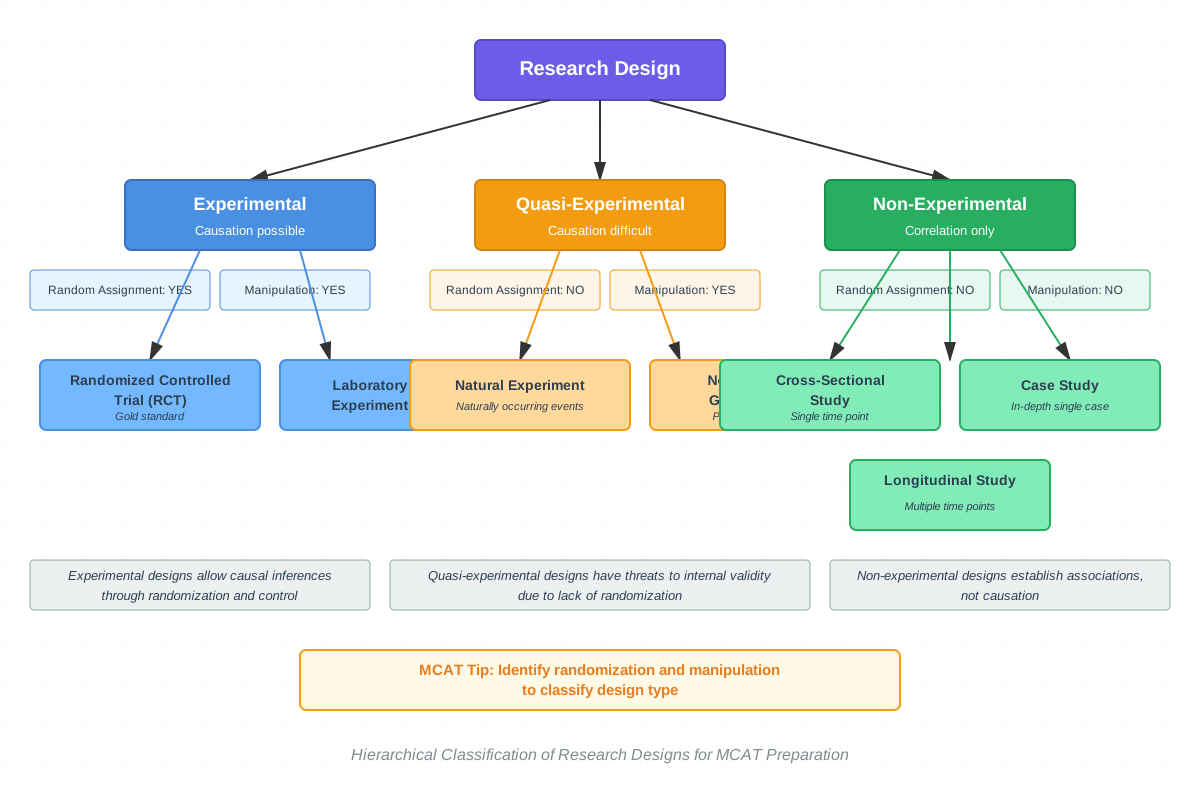
Research designs can be classified along multiple dimensions, but the most fundamental distinction for the MCAT involves three primary categories:
Experimental Research Design
Experimental research design involves the deliberate manipulation of one or more independent variables while controlling other factors to observe effects on dependent variables. This design is characterized by three essential features: manipulation, control, and random assignment. The researcher actively intervenes by assigning participants to different conditions, typically including at least one experimental group and one control group.
Random assignment (randomization) is the hallmark of true experimental design, where participants have an equal probability of being assigned to any condition. This process distributes both known and unknown confounding variables equally across groups, enabling causal inferences. For example, a study testing whether a new educational intervention improves health literacy would randomly assign participants to either receive the intervention or serve as controls, then measure health literacy outcomes in both groups.
The primary strength of experimental design is internal validity—the ability to establish cause-and-effect relationships with confidence. By controlling extraneous variables and using randomization, researchers can reasonably conclude that observed differences in the dependent variable result from manipulation of the independent variable rather than from confounding factors.
Quasi-Experimental Research Design
Quasi-experimental research design resembles experimental design in that researchers manipulate independent variables, but lacks random assignment to conditions. This design is often employed when randomization is impractical, unethical, or impossible. Common quasi-experimental approaches include comparing pre-existing groups (such as patients who choose different treatments) or using pre-post designs without control groups.
A typical quasi-experimental scenario involves comparing outcomes between two hospital units where one implements a new protocol while the other continues standard care. Because patients weren't randomly assigned to units, pre-existing differences between groups might confound results. Quasi-experimental designs attempt to address this through statistical controls, matching techniques, or comparison of pre-intervention baseline measurements.
The key limitation of quasi-experimental design is reduced internal validity compared to true experiments. Without randomization, alternative explanations for observed effects cannot be ruled out as confidently. However, quasi-experimental designs often have greater external validity (generalizability) because they occur in naturalistic settings with fewer artificial constraints.
Non-Experimental (Observational) Research Design
Non-experimental research design, also called observational research, involves studying variables without manipulation or intervention. Researchers observe, measure, and analyze naturally occurring phenomena without attempting to influence them. This category includes several important subtypes:
Cross-sectional studies collect data from participants at a single point in time, providing a "snapshot" of variables and their relationships. For example, surveying college students about stress levels and academic performance during finals week represents a cross-sectional design. These studies efficiently describe prevalence and associations but cannot establish temporal sequence or causation.
Longitudinal studies follow the same participants over extended periods, collecting data at multiple time points. This design enables examination of changes over time and can suggest temporal relationships between variables. Longitudinal studies include cohort studies (following a group sharing common characteristics), panel studies (repeatedly measuring the same variables in the same individuals), and trend studies (examining changes in a population over time, though not necessarily the same individuals).
Case-control studies retrospectively compare individuals with a particular outcome (cases) to similar individuals without that outcome (controls), examining past exposures or characteristics that might explain the difference. This design is particularly useful for studying rare outcomes or diseases with long latency periods.
Correlational studies examine relationships between variables without manipulation, determining whether variables covary systematically. While correlational designs can identify associations and predict outcomes, they cannot establish causation due to the "third variable problem"—the possibility that an unmeasured variable causes both observed variables.
Key Design Features and Considerations
| Design Feature | Purpose | Impact on Validity |
|---|---|---|
| Random assignment | Distribute confounding variables equally across groups | Increases internal validity |
| Control group | Provide comparison baseline | Enables causal inference |
| Blinding/masking | Reduce expectancy effects and bias | Increases internal validity |
| Randomization of participants | Enhance sample representativeness | Increases external validity |
| Standardized procedures | Ensure consistency across conditions | Increases reliability |
| Longitudinal measurement | Establish temporal sequence | Enables examination of causation |
Validity in Research Design
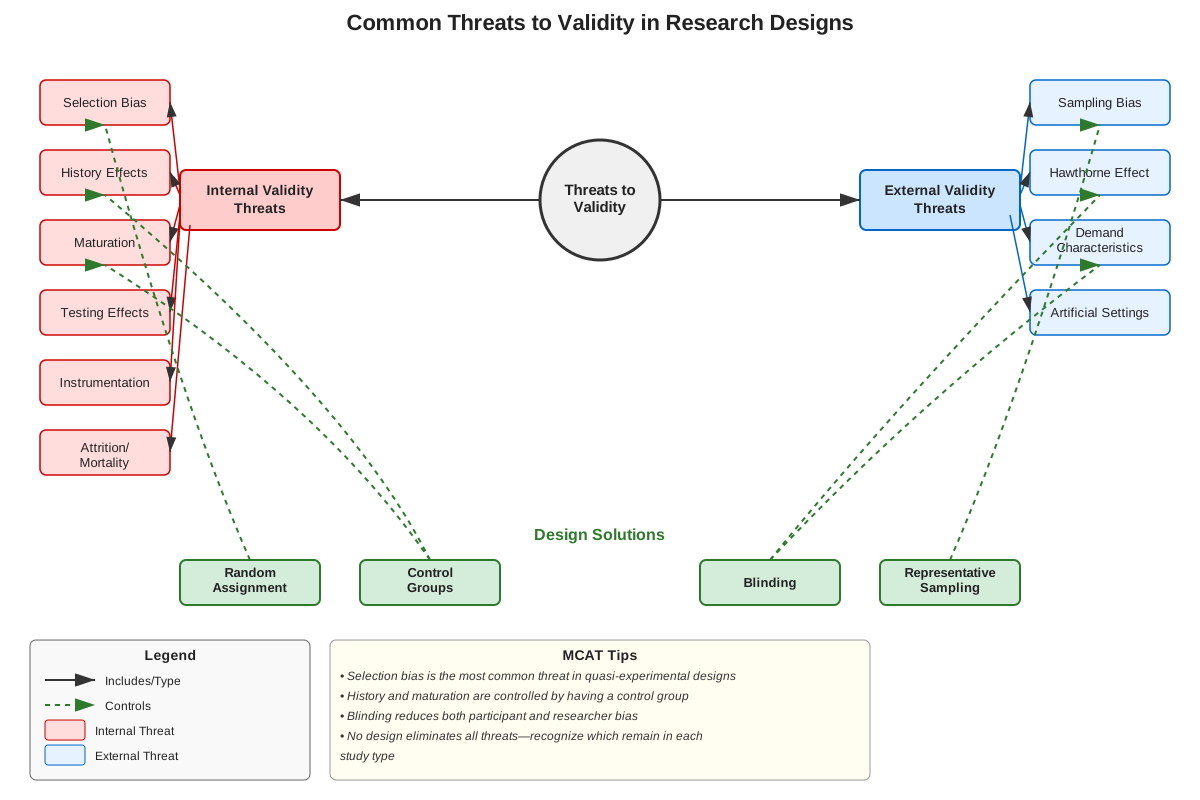
Internal validity refers to the degree to which a study establishes a trustworthy cause-and-effect relationship between variables. Threats to internal validity include selection bias (systematic differences between groups), history effects (external events occurring during the study), maturation (natural changes in participants over time), testing effects (changes due to repeated measurement), and instrumentation changes (modifications in measurement tools).
External validity concerns the generalizability of findings beyond the specific study context to other populations, settings, and times. Factors affecting external validity include sample representativeness, ecological validity (similarity of study conditions to real-world settings), and temporal validity (whether findings remain true over time).
Research design involves inherent trade-offs between internal and external validity. Highly controlled laboratory experiments maximize internal validity but may sacrifice realism and generalizability. Naturalistic observational studies enhance external validity but introduce more confounding variables that threaten internal validity.
Temporal Dimensions in Research Design
The temporal aspect of research design significantly affects what conclusions can be drawn:
Retrospective designs look backward, examining past events, exposures, or characteristics. These designs are efficient and useful for rare outcomes but are vulnerable to recall bias and cannot establish causation definitively.
Prospective designs follow participants forward in time from exposure or baseline measurement to outcome. These designs better establish temporal sequence and reduce recall bias but require longer timeframes and greater resources.
Cross-sectional designs assess variables simultaneously at one time point, making them unable to determine which variable preceded the other—a critical limitation for causal inference.
Concept Relationships
Research design serves as the foundational framework that determines how all other research methods components are implemented. The choice of research design directly influences sampling strategies: experimental designs often use convenience sampling with random assignment, while epidemiological observational studies require representative probability sampling to enhance generalizability.
The relationship flows as follows: Research question → Research design selection → Sampling method → Data collection approach → Statistical analysis method → Interpretation of results. Each decision constrains and informs subsequent choices. For instance, selecting an experimental design necessitates random assignment and manipulation of variables, which then determines that inferential statistics comparing groups will be appropriate for analysis.
Research design connects to measurement concepts through operational definitions—how abstract constructs are translated into measurable variables. The design must specify precisely how variables will be measured, whether through surveys, behavioral observations, physiological measures, or archival data. The reliability and validity of these measurements directly impact the overall study quality.
Ethical considerations in research intersect with design choices. Some theoretically ideal designs (such as randomly assigning patients to receive no treatment for a serious condition) are ethically prohibited, necessitating quasi-experimental or observational alternatives. The principle of equipoise (genuine uncertainty about which treatment is superior) justifies randomized controlled trials, while vulnerable populations may require special design considerations.
Statistical analysis methods are determined by research design. Experimental designs with random assignment typically employ t-tests, ANOVA, or regression to compare groups. Correlational designs use correlation coefficients and regression analysis. Longitudinal designs require repeated-measures or mixed-effects models. Understanding this connection helps predict what statistical conclusions are appropriate for different designs.
Quick check — test yourself on Research design so far.
Try Flashcards →High-Yield Facts
⭐ Experimental designs with random assignment are the only designs that can establish causation with confidence because randomization distributes confounding variables equally across groups.
⭐ Correlation does not imply causation—observational and correlational studies can identify associations but cannot determine whether one variable causes another due to potential confounding variables and inability to establish temporal sequence.
⭐ Cross-sectional studies cannot establish temporal relationships because all variables are measured simultaneously, making it impossible to determine which came first.
⭐ Longitudinal studies follow the same participants over time, enabling examination of changes and temporal sequences, while cross-sectional studies measure different participants at one time point.
⭐ Internal validity concerns whether the study establishes a valid cause-effect relationship, while external validity concerns whether findings generalize to other populations and settings.
- Quasi-experimental designs lack random assignment, limiting their ability to establish causation compared to true experiments.
- Case-control studies work backward from outcome to exposure, making them efficient for rare diseases but vulnerable to recall bias.
- Cohort studies follow groups with shared characteristics forward in time, establishing temporal sequence better than cross-sectional designs.
- Blinding (masking) reduces bias by preventing participants, researchers, or both from knowing group assignments.
- Random assignment differs from random sampling: random assignment distributes participants to conditions (affects internal validity), while random sampling selects participants from a population (affects external validity).
- Prospective designs follow participants forward from exposure to outcome, while retrospective designs look backward from outcome to past exposures.
- Control groups provide a comparison baseline that enables researchers to determine whether the intervention caused observed changes.
Common Misconceptions
Misconception: Random sampling and random assignment are the same thing.
Correction: Random sampling refers to selecting participants from a population where each member has an equal probability of selection (affects external validity and generalizability). Random assignment refers to distributing selected participants to different experimental conditions with equal probability (affects internal validity and causal inference). A study can have one, both, or neither.
Misconception: Longitudinal studies always establish causation because they measure variables over time.
Correction: While longitudinal designs establish temporal sequence (a necessary condition for causation), they do not establish causation unless they also include manipulation and control of variables. Observational longitudinal studies can show that one variable precedes another but cannot rule out confounding variables that might cause both.
Misconception: Larger sample sizes automatically make a study better and more valid.
Correction: Sample size affects statistical power and precision but does not address fundamental design flaws. A large correlational study still cannot establish causation, and a large sample with selection bias remains unrepresentative. Design quality and sample size both matter, but they address different validity concerns.
Misconception: Quasi-experimental designs are failed experiments that should be avoided.
Correction: Quasi-experimental designs are often the most appropriate or only ethical option for research questions involving human subjects. They represent pragmatic approaches that balance scientific rigor with practical and ethical constraints. When properly designed with appropriate statistical controls, quasi-experiments provide valuable evidence.
Misconception: If two variables are correlated, one must cause the other.
Correction: Correlation indicates that variables covary systematically but does not establish causation. Three possibilities exist: A causes B, B causes A, or a third variable C causes both A and B. Additionally, the correlation might be spurious (coincidental). Only experimental manipulation with proper controls can establish causation.
Misconception: Cross-sectional studies are always inferior to longitudinal studies.
Correction: Cross-sectional studies are more efficient, less expensive, and better for describing prevalence and associations at a specific time. They are ideal for certain research questions and provide valuable descriptive data. The choice between cross-sectional and longitudinal designs depends on the research question—neither is universally superior.
Worked Examples
Example 1: Identifying Research Design and Limitations
Scenario: Researchers want to examine whether meditation practice reduces stress among college students. They recruit 200 students and measure their current stress levels using a validated questionnaire. They then ask students whether they currently practice meditation regularly. The researchers compare stress levels between students who meditate (n=80) and those who don't (n=120), finding that meditators report significantly lower stress.
Question: What type of research design is this, and what is the primary limitation for drawing causal conclusions?
Analysis:
Step 1: Identify whether manipulation occurred. The researchers did not assign students to meditate or not meditate; they simply measured existing meditation practices. This indicates a non-experimental (observational) design.
Step 2: Determine the temporal dimension. All measurements occurred at a single time point—current stress levels and current meditation practice. This is a cross-sectional design.
Step 3: Identify the specific design type. This is a cross-sectional correlational study comparing two naturally occurring groups.
Step 4: Evaluate limitations for causal inference. Multiple limitations prevent causal conclusions:
- No random assignment means groups may differ systematically in ways other than meditation practice
- Cross-sectional measurement prevents determining whether meditation preceded stress reduction or whether less-stressed students are more likely to start meditating
- Potential confounding variables (personality traits, socioeconomic status, time management skills) might cause both meditation practice and lower stress
Answer: This is a cross-sectional correlational (non-experimental) design. The primary limitation is the inability to establish causation because: (1) lack of random assignment means pre-existing differences between groups might explain stress differences, (2) temporal sequence cannot be established from simultaneous measurement, and (3) unmeasured confounding variables might cause both meditation practice and lower stress levels. The researchers can only conclude that meditation practice is associated with lower stress, not that meditation causes stress reduction.
Example 2: Improving Research Design
Scenario: Based on the previous study's limitations, researchers want to design a follow-up study that can better establish whether meditation causes stress reduction in college students.
Question: Describe an improved research design that would enable stronger causal inferences, explaining the key features that address the original study's limitations.
Analysis:
Step 1: Identify what design features enable causal inference. To establish causation, the design needs: (1) manipulation of the independent variable (meditation practice), (2) random assignment to distribute confounding variables equally, (3) control group for comparison, and (4) temporal sequence showing meditation precedes stress changes.
Step 2: Design the improved study. A randomized controlled trial (experimental design) would work as follows:
- Recruit 200 college students and measure baseline stress levels for all participants
- Randomly assign participants to either: (a) meditation intervention group (receives 8-week meditation training program with guided practice), or (b) control group (continues normal activities or receives attention-control intervention)
- Measure stress levels again after the 8-week intervention period
- Compare stress changes between groups
Step 3: Explain how each feature addresses original limitations:
- Random assignment distributes potential confounding variables (personality, initial stress levels, coping skills) equally across groups
- Manipulation ensures the intervention (meditation) precedes outcome measurement (stress)
- Control group provides baseline for comparison, showing what happens without meditation
- Pre-post measurement establishes temporal sequence and allows examination of changes over time
Step 4: Consider additional design enhancements:
- Blinding: Use attention-control group (e.g., health education sessions) so both groups receive equal attention, reducing placebo effects
- Follow-up measurement: Add 3-month post-intervention assessment to examine lasting effects
- Standardization: Use structured meditation protocol to ensure consistency
Answer: An improved design would be a randomized controlled trial with pre-post measurement. Key features: (1) randomly assign students to meditation intervention or control group, (2) measure stress before and after an 8-week period, (3) provide standardized meditation training to the intervention group, (4) include attention-control group receiving equivalent contact time. This experimental design enables causal inference because random assignment controls for confounding variables, manipulation establishes that meditation precedes stress changes, and the control group demonstrates what happens without intervention. The pre-post measurement establishes temporal sequence and quantifies change over time.
Exam Strategy
When approaching MCAT questions about research design, follow this systematic process:
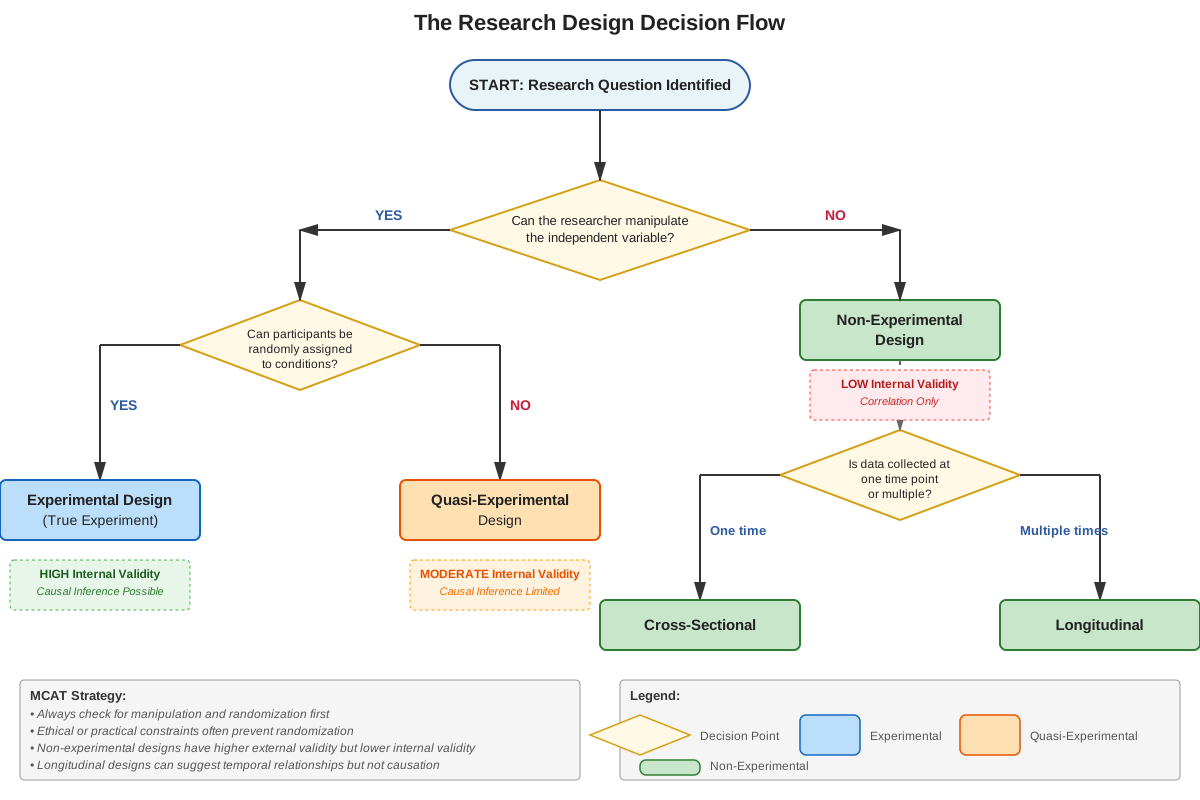
Step 1: Identify the design type quickly by asking three questions:
- Was there manipulation of variables? (Yes = experimental or quasi-experimental; No = observational)
- Was there random assignment? (Yes = true experimental; No = quasi-experimental or observational)
- What is the temporal dimension? (One time point = cross-sectional; multiple time points = longitudinal; backward-looking = retrospective; forward-looking = prospective)
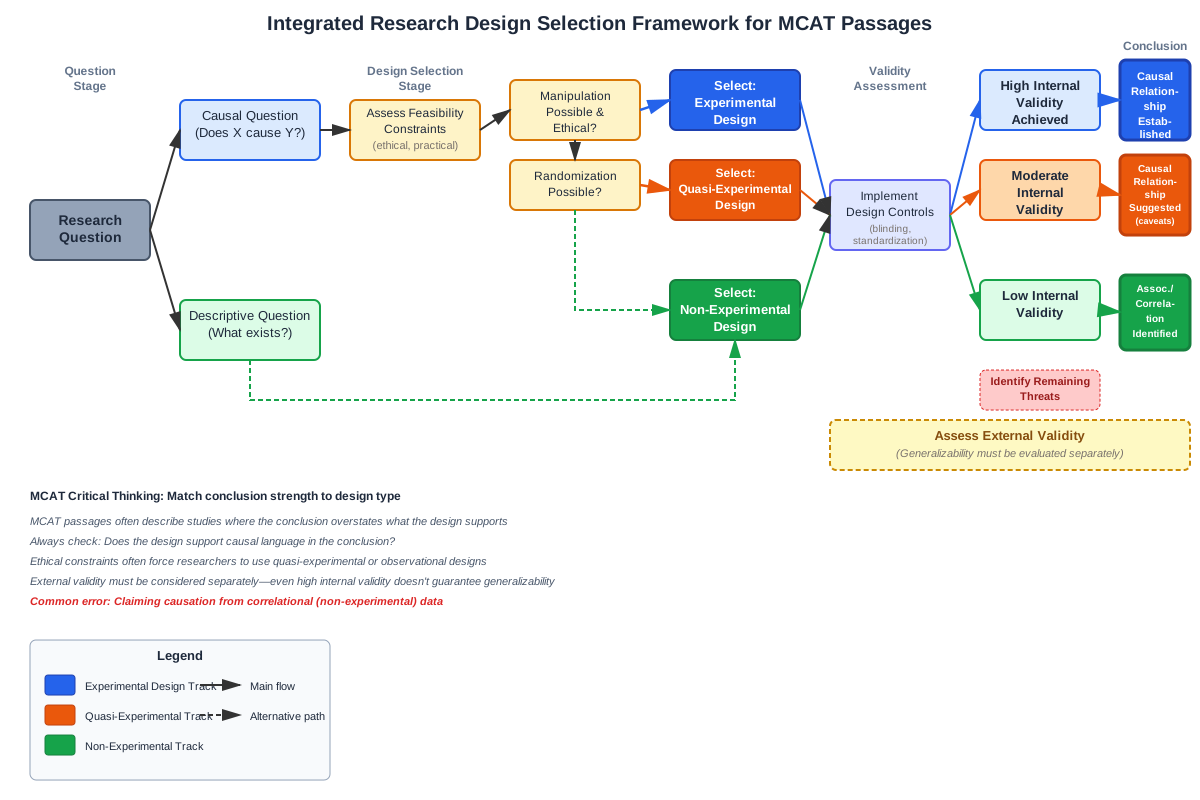
Step 2: Match design to appropriate conclusions. Create a mental hierarchy of causal inference strength:
- Strongest: Randomized controlled trials (can establish causation)
- Moderate: Quasi-experimental designs (suggest causation with caveats)
- Weaker: Longitudinal observational (establish temporal sequence and association)
- Weakest: Cross-sectional correlational (establish association only)
Trigger words to watch for:
- "Randomly assigned" or "randomized" → experimental design, causation possible
- "Compared groups" without mentioning assignment → likely quasi-experimental or observational
- "Measured at one time point" or "surveyed" → cross-sectional, no causation
- "Followed over time" → longitudinal, temporal sequence established
- "Associated with" or "correlated with" → observational, no causation
- "Caused" or "resulted in" → check if design supports this claim
Process of elimination tips:
- Eliminate answer choices claiming causation if the design is observational or correlational
- Eliminate choices about temporal sequence if the design is cross-sectional
- Eliminate choices about generalizability if the sample is not representative
- Be suspicious of absolute language ("proves," "definitively shows") unless the design is experimental with strong controls
Time allocation: Research design questions often appear in passages. Spend 30-45 seconds identifying the design type while reading the passage, then reference this identification when answering related questions. For discrete questions, spend 60-90 seconds maximum—these questions test straightforward design knowledge.
Exam Tip: If a question asks what conclusion is supported by the data, the answer must match the design's capabilities. Correlational designs support "associated with" conclusions, not "caused by" conclusions, regardless of how strong the correlation is.
Memory Techniques
Mnemonic for Experimental Design Requirements: "MRC"
- Manipulation of independent variable
- Random assignment to conditions
- Control group for comparison
Mnemonic for Validity Types: "IN-EX"
- INternal validity = INside the study (cause-effect relationship)
- EXternal validity = EXtending beyond the study (generalizability)
Visualization for Design Types:
Picture a ladder of causal inference strength:
- Top rung: Randomized controlled trial (gold standard)
- Middle rung: Quasi-experimental (silver standard)
- Lower rung: Longitudinal observational (bronze standard)
- Bottom rung: Cross-sectional correlational (participation ribbon)
Acronym for Cross-Sectional Limitations: "SNAP"
- Snapshot in time (single time point)
- No temporal sequence
- Association only (not causation)
- Potential confounding variables
Memory aid for Longitudinal vs. Cross-sectional:
- Longitudinal = Long-term, following the same people over time (both have "ng")
- Cross-sectional = Cross section of different people at one time (like cutting across a tree trunk shows one moment)
Mnemonic for Random Assignment vs. Random Sampling: "ASIG"
- Assignment = Internal validity (both have "i")
- Sampling = Generalizability/external validity (both have "g")
Summary
Research design constitutes the fundamental blueprint determining how studies are structured, conducted, and analyzed in sociology and related social sciences. The three major categories—experimental, quasi-experimental, and non-experimental (observational)—differ primarily in whether variables are manipulated and whether random assignment is used, with these features determining the strength of causal inferences possible. Experimental designs with random assignment represent the gold standard for establishing causation, while observational designs including cross-sectional and longitudinal approaches can identify associations and temporal sequences but cannot definitively establish cause-and-effect relationships. Understanding the distinction between internal validity (establishing valid cause-effect relationships within the study) and external validity (generalizing findings beyond the study) is crucial for evaluating research quality. For the MCAT, recognizing design types from study descriptions, matching appropriate conclusions to design capabilities, and identifying limitations that prevent causal inference are essential skills. The fundamental principle to remember is that correlation does not imply causation—only properly controlled experimental designs with random assignment can establish causal relationships with confidence.
Key Takeaways
- Research design determines what types of conclusions can legitimately be drawn from study results, with experimental designs enabling causal inference while observational designs establish only associations
- Random assignment (distributing participants to conditions) differs from random sampling (selecting participants from populations) and affects internal validity rather than external validity
- Cross-sectional studies measure variables at one time point and cannot establish temporal sequence or causation, while longitudinal studies follow participants over time to examine changes
- Correlation never implies causation in observational studies due to potential confounding variables and inability to establish that one variable preceded the other
- Internal validity concerns whether a study establishes valid cause-effect relationships, while external validity concerns whether findings generalize to other populations and settings
- Quasi-experimental designs lack random assignment but may be the most appropriate or ethical option for many research questions involving human subjects
- The hierarchy of causal inference strength progresses from randomized controlled trials (strongest) through quasi-experimental and longitudinal observational designs to cross-sectional correlational studies (weakest)
Related Topics
Sampling Methods: Understanding probability and non-probability sampling techniques builds directly on research design knowledge, as design choices determine appropriate sampling strategies and affect generalizability of findings.
Confounding Variables and Bias: Deeper exploration of threats to validity, including selection bias, measurement bias, and confounding, extends understanding of why certain research designs are more robust than others.
Statistical Analysis Methods: Different research designs require different statistical approaches—mastering design enables prediction of appropriate analyses and interpretation of statistical results.
Ethical Considerations in Research: Understanding why certain designs are chosen over theoretically superior alternatives requires knowledge of ethical principles including informed consent, beneficence, and justice.
Epidemiological Study Designs: Advanced study of cohort studies, case-control studies, and clinical trials builds on foundational research design concepts with specific application to disease and health outcomes.
Practice CTA
Now that you've mastered the fundamentals of research design, reinforce your learning by attempting the practice questions and flashcards. These resources will help you apply design concepts to MCAT-style scenarios, identify design types quickly, and avoid common traps in exam questions. Remember that research design questions reward systematic thinking—use the identification framework from this guide to approach each question methodically. Your ability to recognize design types and match them to appropriate conclusions will directly translate to points on test day. Stay focused on the core principle: design determines what conclusions are justified. You've got this!
Sign up free to keep reading
Create a free AnvayaPrep account to finish this MCAT guide on Research design — plus flashcards and practice questions.