Overview
Sampling is a fundamental methodological concept in Sociology and Research Methods and Statistics that involves selecting a subset of individuals from a larger population to participate in a research study. Rather than studying every single member of a population—which is often impractical, expensive, or impossible—researchers use systematic sampling techniques to select representative groups that allow them to draw valid conclusions about the entire population. The quality and appropriateness of sampling methods directly impact the validity, reliability, and generalizability of research findings, making this concept essential for evaluating the strength of sociological studies.
For the MCAT, understanding Sampling is critical because the exam frequently presents research scenarios in both the Psychological, Social, and Biological Foundations of Behavior section and passages that require students to evaluate study design, identify methodological flaws, and assess the validity of conclusions. Questions may ask students to identify the type of sampling method used, recognize sources of bias, determine whether findings can be generalized to broader populations, or critique the appropriateness of sampling techniques for specific research questions. The MCAT expects test-takers to not only recognize different sampling methods but also understand their strengths, limitations, and appropriate applications in sociological research.
Sampling connects to broader themes in sociology including research design, statistical inference, population demographics, and the scientific method. It serves as the foundation for understanding how sociological knowledge is generated and validated, linking directly to concepts such as bias, validity, reliability, and generalizability. Mastery of sampling enables students to critically evaluate research claims, understand the limitations of sociological studies, and recognize how methodological choices affect the conclusions researchers can legitimately draw from their data.
Learning Objectives
- [ ] Define Sampling using accurate Sociology terminology
- [ ] Explain why Sampling matters for the MCAT
- [ ] Apply Sampling to exam-style questions
- [ ] Identify common mistakes related to Sampling
- [ ] Connect Sampling to related Sociology concepts
- [ ] Distinguish between probability and non-probability sampling methods and their appropriate applications
- [ ] Evaluate the representativeness of a sample and identify potential sources of sampling bias
- [ ] Calculate and interpret basic sampling parameters including sample size and sampling error
Prerequisites
- Basic statistical concepts: Understanding of populations, variables, and descriptive statistics is necessary to grasp how samples relate to larger populations and how data from samples is analyzed
- Research design fundamentals: Knowledge of independent/dependent variables, experimental vs. observational studies, and the scientific method provides context for why and how sampling is implemented
- Validity and reliability: Familiarity with these measurement concepts helps students understand how sampling choices affect the quality and trustworthiness of research findings
Why This Topic Matters
In real-world research and clinical practice, sampling determines whether findings from a study of hundreds can be applied to millions. Public health interventions, medical treatment guidelines, and social policies are all based on research that relies on proper sampling techniques. When a study claims that a new intervention reduces disease risk or that a social program improves educational outcomes, the validity of these claims depends fundamentally on whether the sample accurately represents the target population. Poor sampling can lead to ineffective policies, wasted resources, and interventions that fail to help—or even harm—the populations they're intended to serve.
On the MCAT, sampling appears in approximately 3-5 questions per exam, typically integrated into research-based passages in the Psychological, Social, and Biological Foundations of Behavior section. Questions commonly present a study description and ask students to identify the sampling method used, recognize limitations that affect generalizability, or select the most appropriate sampling technique for a given research scenario. The exam also tests sampling indirectly through questions about study validity, bias, and the appropriateness of researchers' conclusions based on their sample characteristics.
Sampling questions typically appear in three formats: (1) identification questions asking students to name the sampling method described in a passage, (2) evaluation questions requiring assessment of whether a sample is representative or biased, and (3) application questions asking students to select the most appropriate sampling method for a hypothetical research scenario. Understanding sampling is also essential for interpreting data tables and graphs that present sample characteristics, which frequently appear in MCAT passages.
Core Concepts
Definition and Purpose of Sampling
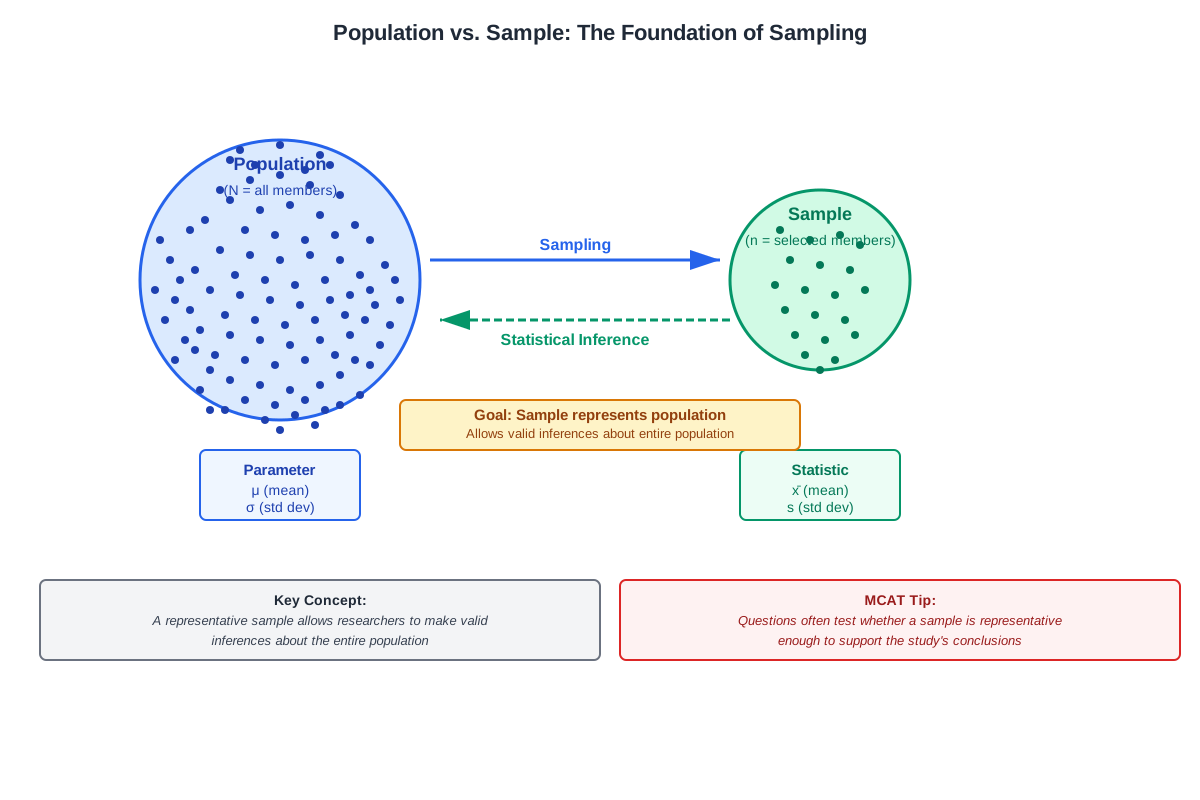
Sampling refers to the systematic process of selecting a subset of individuals (the sample) from a larger group (the population) for the purpose of conducting research. The population represents the entire group about which researchers want to draw conclusions, while the sample is the smaller group actually studied. The fundamental goal of sampling is to obtain a sample that is representative—meaning it accurately reflects the characteristics, diversity, and distribution of the population from which it was drawn.
A representative sample contains the same proportions of relevant characteristics (age, gender, socioeconomic status, ethnicity, etc.) as the population, allowing researchers to make valid generalizations from sample findings to the broader population. The degree to which findings from a sample can be applied to the population is called generalizability or external validity. Proper sampling techniques maximize generalizability while minimizing sampling bias—systematic errors that occur when certain population members are more or less likely to be selected than others.
Probability Sampling Methods
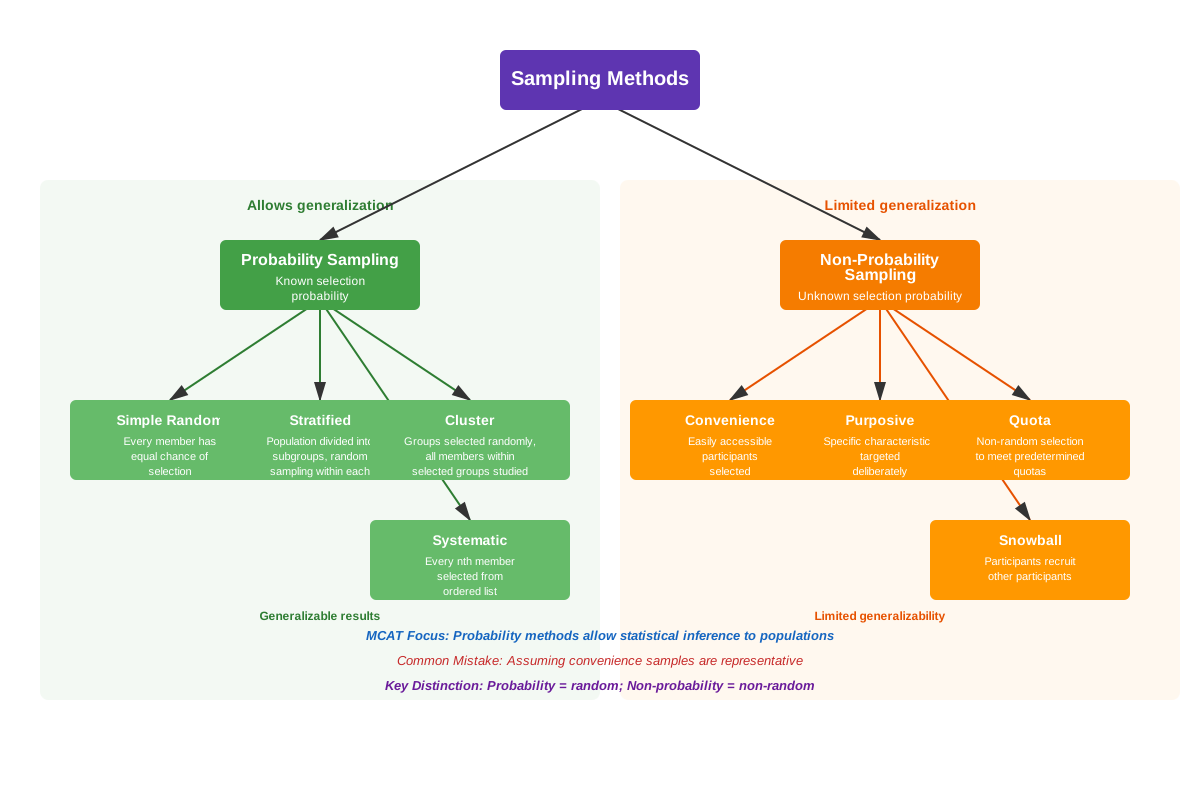
Probability sampling methods are techniques in which every member of the population has a known, non-zero probability of being selected for the sample. These methods are considered the gold standard in research because they minimize bias and allow researchers to use statistical theory to estimate sampling error and calculate confidence intervals.
Simple random sampling is the most basic probability method, where every member of the population has an equal chance of selection. Researchers might use a random number generator or draw names from a hat. For example, selecting 100 students from a university by assigning each student a number and using a computer to randomly select 100 numbers creates a simple random sample. This method is straightforward and unbiased but requires a complete list of all population members (called a sampling frame) and may not ensure adequate representation of small subgroups.
Systematic sampling involves selecting every nth member from a list of the population after a random starting point. For instance, if a researcher has a list of 10,000 patients and wants a sample of 1,000, they would select every 10th patient after randomly choosing a starting point between 1 and 10. This method is simpler and more practical than simple random sampling but can introduce bias if there's a hidden pattern in the list that coincides with the sampling interval.
Stratified sampling divides the population into homogeneous subgroups called strata based on important characteristics (such as age groups, income levels, or geographic regions), then randomly samples from each stratum. The number selected from each stratum can be proportional to its size in the population (proportionate stratified sampling) or equal across strata (disproportionate stratified sampling). For example, if studying health behaviors across income levels, a researcher might divide the population into low, middle, and high-income strata, then randomly sample from each. This method ensures representation of important subgroups and often produces more precise estimates than simple random sampling.
Cluster sampling involves dividing the population into groups called clusters (often based on geography or naturally occurring groups), randomly selecting some clusters, then studying all members within selected clusters or sampling within them. For instance, a researcher studying school children might randomly select 20 schools (clusters) from a district, then survey all students in those schools. This method is cost-effective and practical when populations are geographically dispersed, but members within clusters tend to be more similar to each other than to the general population, potentially reducing sample diversity.
Non-Probability Sampling Methods
Non-probability sampling methods do not give all population members a known chance of selection. While these methods are often more practical and less expensive than probability sampling, they introduce greater potential for bias and limit generalizability.
Convenience sampling involves selecting participants who are easily accessible to the researcher. Examples include surveying students in a researcher's own class, recruiting participants from a single hospital, or interviewing people at a shopping mall. This is the most common sampling method in practice due to its ease and low cost, but it typically produces highly biased samples that cannot be generalized to broader populations.
Purposive sampling (also called judgmental sampling) involves deliberately selecting participants who meet specific criteria or who the researcher believes will provide valuable information. A researcher studying experiences of rare disease patients might purposively select participants from a patient advocacy group. While this method is useful for exploratory research and studying specific populations, findings cannot be generalized beyond the sample.
Quota sampling involves selecting participants to fill predetermined quotas for certain characteristics, similar to stratified sampling but without random selection. A researcher might decide to interview 50 men and 50 women, selecting participants non-randomly until each quota is filled. This method ensures certain groups are represented but introduces bias through non-random selection within quotas.
Snowball sampling involves asking initial participants to refer other potential participants, who then refer others, creating a growing sample like a snowball rolling downhill. This method is particularly useful for studying hard-to-reach or hidden populations (such as undocumented immigrants or people with stigmatized conditions) but produces samples that are not representative and may be highly interconnected.
Sample Size and Sampling Error
Sample size refers to the number of individuals included in a sample, typically denoted as "n" in statistical notation. Larger samples generally provide more accurate estimates of population parameters and greater statistical power to detect true effects. However, the relationship between sample size and accuracy follows the law of diminishing returns—doubling the sample size does not double the accuracy.
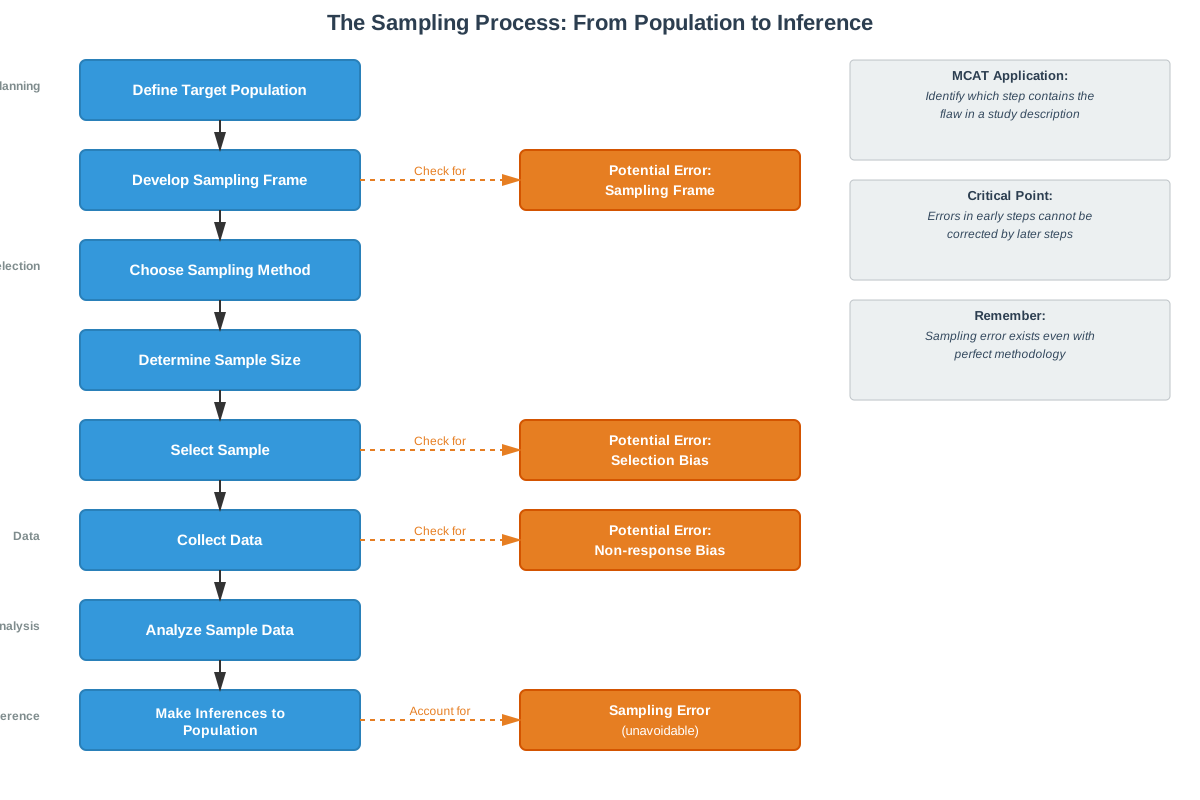
Sampling error is the difference between a sample statistic (such as the sample mean) and the true population parameter it estimates. Some sampling error is inevitable because samples are subsets of populations, but probability sampling methods allow researchers to estimate and quantify this error. The standard error measures the variability of sample statistics and decreases as sample size increases, following the formula where standard error is inversely proportional to the square root of sample size.
Sampling bias differs from sampling error in that it represents systematic rather than random deviation from population values. While increasing sample size reduces sampling error, it does not eliminate sampling bias—a biased sampling method will produce biased results regardless of sample size. For example, surveying 10,000 people through an online platform still excludes those without internet access, maintaining bias despite the large sample.
Representativeness and Generalizability
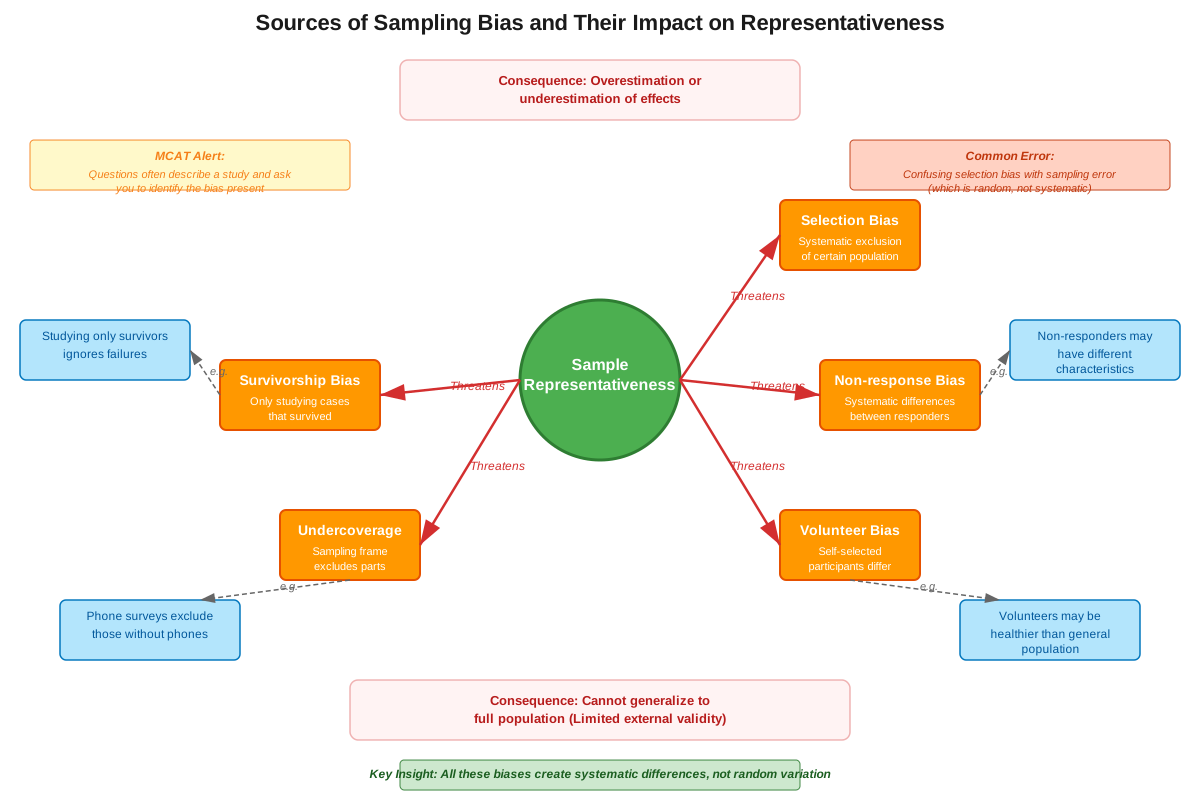
A sample's representativeness determines the extent to which research findings can be generalized to the broader population. Several factors affect representativeness beyond sampling method, including response rate (the percentage of selected individuals who actually participate), attrition (loss of participants during longitudinal studies), and selection bias (systematic differences between those who participate and those who don't).
Response bias occurs when certain types of people are more or less likely to respond to recruitment efforts, even in probability samples. For instance, people with strong opinions about a topic may be more likely to complete surveys about that topic, creating a sample that doesn't represent the full range of population views. Volunteer bias is a specific type of response bias where volunteers differ systematically from non-volunteers in ways that affect study outcomes.
The target population is the group about which researchers want to draw conclusions, while the accessible population is the group from which the sample can realistically be drawn. Generalizability is strongest when the accessible population closely matches the target population. For example, if the target population is "all adults in the United States" but the accessible population is "adults with landline telephones," the gap between these populations limits generalizability.
Concept Relationships
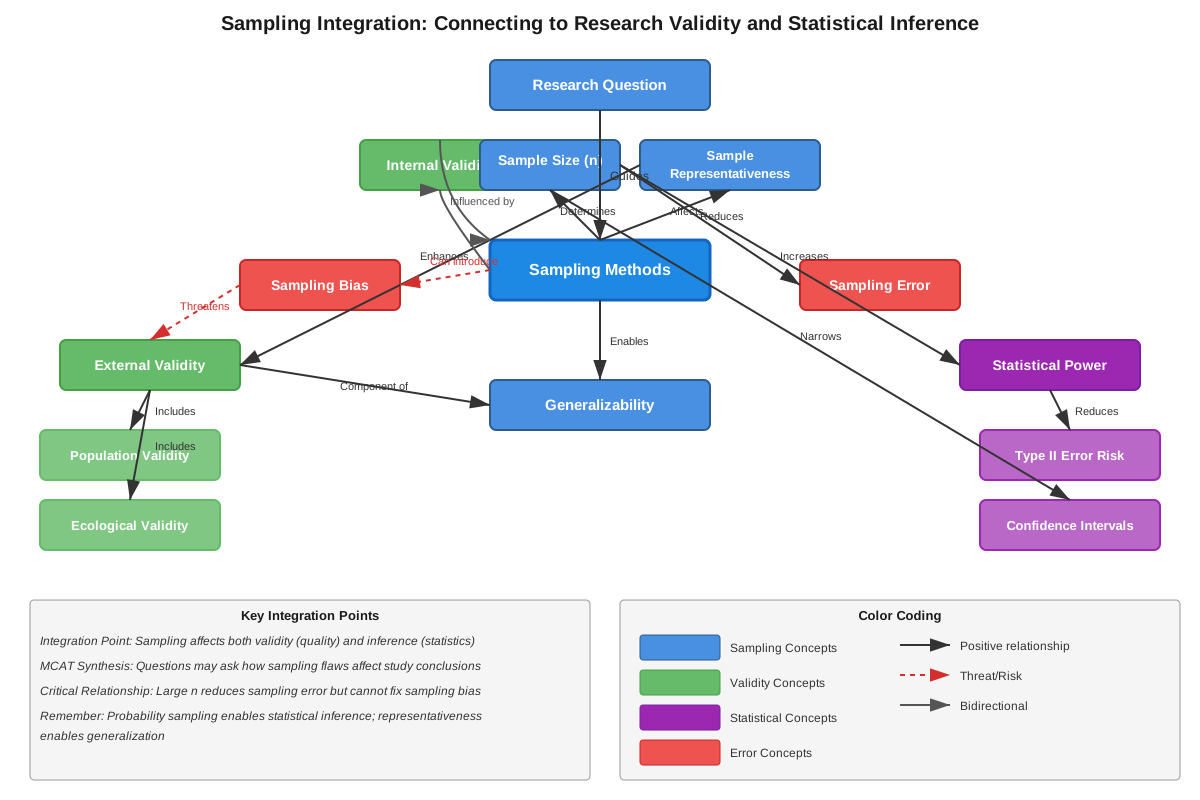
Sampling serves as the bridge between theoretical populations and practical research, connecting directly to fundamental concepts in research methodology and statistics. The choice of sampling method → determines sample representativeness → which affects external validity → which determines generalizability of findings. This chain of relationships means that sampling decisions made at the study's beginning have cascading effects on the value and applicability of research conclusions.
Probability sampling methods → enable use of inferential statistics → which allow researchers to calculate confidence intervals and p-values → providing quantitative measures of uncertainty. Non-probability sampling methods → limit statistical inference → requiring researchers to use caution when interpreting results → and restricting claims to the specific sample studied rather than broader populations.
Sample size → affects statistical power → which determines ability to detect true effects → influencing whether studies produce statistically significant results. Larger samples → reduce sampling error → increase precision of estimates → but also increase research costs → requiring researchers to balance statistical ideal with practical constraints.
Sampling connects to bias in multiple ways: selection bias affects who enters the sample, response bias affects who provides data, and measurement bias affects data quality. These forms of bias → compound each other → threatening both internal and external validity → requiring researchers to implement multiple safeguards throughout the research process.
The relationship between sampling and research design is bidirectional: research questions → influence appropriate sampling methods → while sampling constraints → shape feasible research designs. Experimental studies typically require probability sampling for maximum validity, while exploratory qualitative research may appropriately use purposive or snowball sampling to access specific populations or perspectives.
Quick check — test yourself on Sampling so far.
Try Flashcards →High-Yield Facts
⭐ Probability sampling methods (simple random, systematic, stratified, cluster) allow every population member a known chance of selection and enable statistical inference, while non-probability methods (convenience, purposive, quota, snowball) do not.
⭐ Stratified sampling divides the population into homogeneous subgroups before sampling, ensuring representation of important characteristics and often providing more precise estimates than simple random sampling.
⭐ Sampling bias is systematic error in sample selection that cannot be reduced by increasing sample size, unlike sampling error, which is random variation that decreases with larger samples.
⭐ Generalizability (external validity) depends on sample representativeness—findings from representative samples can be applied to the broader population, while biased samples limit conclusions to the sample itself.
⭐ Convenience sampling is the most commonly used but least rigorous method, selecting easily accessible participants and typically producing non-representative samples with limited generalizability.
- Cluster sampling is cost-effective for geographically dispersed populations but may reduce sample diversity because members within clusters tend to be more similar to each other.
- Response rate (percentage of selected individuals who participate) affects representativeness even in probability samples, with low response rates increasing potential for response bias.
- Snowball sampling is particularly useful for hard-to-reach or hidden populations but produces interconnected samples that cannot be generalized to broader populations.
- Sample size affects statistical power and precision of estimates, with larger samples providing more accurate population estimates but following diminishing returns.
- The sampling frame (complete list of population members) is required for probability sampling methods but may be unavailable or incomplete, forcing researchers to use alternative approaches.
- Volunteer bias occurs when volunteers differ systematically from non-volunteers, potentially affecting study outcomes even when recruitment is theoretically open to all.
Common Misconceptions
Misconception: Larger samples are always better and automatically produce valid results. → Correction: While larger samples reduce sampling error and increase statistical power, they do not eliminate sampling bias. A biased sampling method produces biased results regardless of sample size—surveying 10,000 college students still doesn't represent the general adult population. Sample quality (representativeness) matters more than sample quantity for generalizability.
Misconception: Random sampling and random assignment are the same thing. → Correction: Random sampling refers to how participants are selected from a population (affecting external validity and generalizability), while random assignment refers to how participants are allocated to experimental conditions within a study (affecting internal validity and causal inference). A study can have one, both, or neither—they serve different methodological purposes.
Misconception: Convenience sampling is acceptable as long as the sample is large. → Correction: Convenience sampling introduces systematic bias that cannot be overcome by increasing sample size. While convenience samples may be appropriate for exploratory research or pilot studies, they fundamentally limit generalizability regardless of size. The sampling method's systematic bias persists even with thousands of participants.
Misconception: Stratified sampling and quota sampling are equivalent methods. → Correction: While both methods ensure representation of specific subgroups, stratified sampling uses random selection within strata (making it a probability method), while quota sampling uses non-random selection to fill quotas (making it a non-probability method). This distinction critically affects the sample's representativeness and the validity of statistical inference.
Misconception: If a sample matches the population on one or two key demographics, it is representative. → Correction: Representativeness requires that the sample reflects the population across all characteristics relevant to the research question, not just obvious demographics. A sample that matches population age and gender distributions might still be biased on education, health status, geographic location, or other factors that affect study outcomes.
Misconception: Sampling error and sampling bias are interchangeable terms. → Correction: Sampling error is random variation between sample statistics and population parameters that occurs by chance and decreases with larger samples. Sampling bias is systematic deviation caused by flawed sampling methods that persists regardless of sample size. Sampling error is quantifiable and expected; sampling bias threatens validity and should be minimized through proper sampling design.
Worked Examples
Example 1: Identifying Sampling Methods and Evaluating Representativeness
Scenario: A researcher wants to study stress levels among healthcare workers during a pandemic. She obtains a list of all 5,000 healthcare workers at a large hospital system, divides them into four groups (physicians, nurses, administrative staff, and support staff), then uses a random number generator to select 50 individuals from each group for a total sample of 200 participants.
Question: What sampling method is being used, and what are its strengths and limitations for this research question?
Solution:
Step 1: Identify the sampling method by analyzing the selection process. The researcher (a) has a complete list of the population, (b) divides the population into subgroups based on job category, (c) uses random selection within each subgroup, and (d) selects equal numbers from each group. This describes stratified sampling, specifically disproportionate stratified sampling because equal numbers are selected from each stratum regardless of stratum size.
Step 2: Evaluate strengths. Stratified sampling ensures representation of all job categories, which is important because stress levels likely vary by role. Random selection within strata minimizes bias and allows statistical inference. The method guarantees that smaller groups (like physicians) are adequately represented rather than being overwhelmed by larger groups (like nurses) as might occur with simple random sampling.
Step 3: Identify limitations. Using equal numbers from each stratum (disproportionate sampling) means the sample doesn't reflect the actual proportions of job categories in the hospital system. If nurses comprise 60% of healthcare workers but only 25% of the sample (50 of 200), overall stress estimates will be weighted differently than the actual workforce composition. The researcher would need to apply statistical weights during analysis to produce population estimates. Additionally, the sample is limited to one hospital system, potentially limiting generalizability to healthcare workers in different settings or regions.
Step 4: Consider alternative approaches. Proportionate stratified sampling (selecting numbers from each stratum proportional to their population size) would produce a sample that directly reflects workforce composition without requiring statistical weighting. However, the disproportionate approach ensures adequate sample sizes in smaller strata for subgroup analyses.
Key takeaway: Recognizing that this is stratified sampling (not simple random or quota sampling) is essential. Understanding the difference between proportionate and disproportionate stratified sampling and their implications for data analysis demonstrates mastery of sampling concepts.
Example 2: Evaluating Sampling Bias and Generalizability
Scenario: Researchers investigating the relationship between social media use and depression recruit participants by posting advertisements on Facebook and Instagram. They receive 2,500 responses and select all respondents who complete the full survey. The researchers find a strong positive correlation between daily social media use and depression scores. They conclude that "social media use causes increased depression in the general population."
Question: Identify potential sources of bias in this sampling approach and evaluate whether the researchers' conclusion is justified.
Solution:
Step 1: Identify the sampling method. Participants self-select by responding to online advertisements, making this convenience sampling combined with volunteer bias. There is no random selection, and not all population members have a known chance of being included.
Step 2: Identify specific sources of sampling bias. (a) Platform bias: Recruiting exclusively through social media platforms means the sample includes only social media users, excluding non-users entirely. This is problematic when studying social media's effects because non-users may differ systematically in mental health. (b) Volunteer bias: People who respond to research advertisements about social media and mental health may have stronger opinions or experiences with these topics than non-responders. Those experiencing depression related to social media use might be particularly motivated to participate. (c) Self-selection bias: Requiring completion of the full survey means only those with sufficient time, motivation, and attention complete the study, potentially excluding those with severe depression who lack energy to complete surveys.
Step 3: Evaluate generalizability. The sample cannot represent "the general population" because it systematically excludes non-social media users and over-represents engaged social media users willing to participate in research. Findings can only be generalized to social media users similar to those who responded—likely active users interested in the topic.
Step 4: Assess the causal claim. Beyond sampling issues, the researchers claim causation ("causes increased depression") from correlational data. Even if the sample were representative, correlation does not establish causation—depression might cause increased social media use, or third variables might influence both. The sampling bias compounds this problem because the biased sample may show stronger correlations than exist in the general population.
Step 5: Suggest improvements. A more rigorous approach would use probability sampling from a defined population (such as stratified random sampling from a representative panel), include both social media users and non-users, and employ longitudinal or experimental designs to assess causation rather than relying on cross-sectional correlational data from a convenience sample.
Key takeaway: MCAT questions often present flawed research designs and ask students to identify methodological problems. Recognizing multiple sources of sampling bias and understanding how they limit generalizability and threaten validity demonstrates critical evaluation skills essential for the exam.
Exam Strategy
When approaching MCAT questions about sampling, first identify whether the question asks about (1) naming/identifying a sampling method, (2) evaluating representativeness or bias, or (3) selecting an appropriate method for a scenario. Each question type requires a different approach.
For identification questions, systematically check for key features: Is there random selection? (If no, it's non-probability sampling.) Is the population divided into subgroups before sampling? (Suggests stratified or cluster sampling.) Are participants selected based on accessibility? (Convenience sampling.) Do participants refer others? (Snowball sampling.) Create a mental checklist of defining features for each sampling method and match the scenario to these features.
Trigger words that signal specific sampling methods include: "randomly selected" or "random number generator" (probability sampling), "divided into groups based on" followed by random selection (stratified sampling), "selected schools/neighborhoods/clinics then studied all members" (cluster sampling), "easily accessible" or "recruited from researcher's own" (convenience sampling), "participants referred others" (snowball sampling), and "selected to fill quotas" (quota sampling).
For evaluation questions about bias and representativeness, identify the gap between the target population (who the researchers want to understand) and the actual sample (who was studied). Ask: Who is systematically excluded? Who is over-represented? What characteristics might differ between participants and non-participants? Common sources of bias include geographic limitations (studying only one region), platform bias (recruiting through specific channels), volunteer bias (self-selection), and response bias (low response rates).
When questions ask about generalizability, remember that findings can only be generalized to populations similar to the sample. If a study samples only college students, findings cannot be generalized to all adults. If recruitment occurs only online, findings cannot be generalized to those without internet access. Match the sample characteristics to the population claim being made.
For application questions asking which sampling method is most appropriate, consider the research goals and constraints. If the goal is maximum generalizability and resources are available, probability sampling (especially stratified) is ideal. If studying rare or hidden populations, snowball or purposive sampling may be necessary. If resources are extremely limited or the study is exploratory, convenience sampling might be acceptable despite limitations. The "best" answer often balances methodological rigor with practical feasibility.
Process of elimination is particularly effective for sampling questions. Eliminate options that describe the wrong category (probability vs. non-probability). Eliminate methods that don't match key features described in the passage (e.g., if there's no random selection, eliminate all probability methods). Eliminate conclusions that overstate generalizability beyond what the sampling method supports.
Time management: Sampling questions typically require 60-90 seconds. Spend 20-30 seconds identifying the sampling method or key issue, 20-30 seconds evaluating each answer choice, and 10-20 seconds confirming your selection. Don't overthink—MCAT sampling questions test straightforward application of definitions and concepts rather than subtle distinctions.
Memory Techniques
Mnemonic for probability sampling methods: "Simple Systematic Strategies Create Success" (Simple random, Systematic, Stratified, Cluster) reminds you of the four main probability sampling methods.
Mnemonic for non-probability sampling methods: "Can't Promise Quality Samples" (Convenience, Purposive, Quota, Snowball) helps recall non-probability methods and reminds you they can't promise representative samples.
Visualization for stratified vs. cluster sampling: Picture a layered cake for stratified sampling—you divide the population into distinct layers (strata) then take a slice from each layer. Picture grapes in bunches for cluster sampling—you randomly select whole bunches (clusters) rather than individual grapes.
Memory aid for sampling bias vs. sampling error: "BIAS = Bad In All Sizes" (sampling bias persists regardless of sample size), while "ERROR = Eventually Reduced with Robust Observations Recorded" (sampling error decreases with larger samples).
Acronym for evaluating representativeness: "GRAPE" - Generalizability depends on Representativeness, which requires Appropriate sampling methods, Probability selection when possible, and Eliminating systematic bias.
Visual memory for random sampling vs. random assignment: Picture selecting people from a crowd (random sampling—who enters the study) vs. sorting people already in a room into groups (random assignment—which condition they receive). The first affects external validity, the second affects internal validity.
Summary
Sampling is the systematic process of selecting a subset of individuals from a population for research purposes, with the goal of obtaining a representative sample that allows valid generalization of findings. Probability sampling methods (simple random, systematic, stratified, and cluster) give all population members a known chance of selection and enable statistical inference, while non-probability methods (convenience, purposive, quota, and snowball) are more practical but introduce greater bias and limit generalizability. Sample representativeness depends on sampling method, sample size, response rate, and the relationship between the accessible and target populations. Sampling bias represents systematic deviation that persists regardless of sample size, while sampling error is random variation that decreases with larger samples. For the MCAT, students must identify sampling methods from research descriptions, evaluate whether samples support researchers' conclusions, recognize sources of bias that limit generalizability, and select appropriate sampling methods for specific research scenarios. Understanding sampling is essential for critically evaluating sociological research and recognizing the methodological foundations that determine whether research findings can legitimately be applied to broader populations.
Key Takeaways
- Probability sampling methods enable statistical inference and generalization, while non-probability methods are more practical but limit the validity of population-level conclusions
- Stratified sampling ensures representation of important subgroups by dividing the population into strata before random sampling, often providing more precise estimates than simple random sampling
- Sampling bias is systematic error that cannot be eliminated by increasing sample size, fundamentally threatening external validity and generalizability
- Representativeness determines whether findings can be generalized from sample to population, depending on sampling method, response rate, and alignment between accessible and target populations
- Convenience sampling is the most common but least rigorous method, producing samples that typically cannot be generalized beyond the specific participants studied
- Sample size affects sampling error and statistical power but does not eliminate bias—sample quality matters more than quantity for valid generalization
- MCAT questions test ability to identify sampling methods, recognize sources of bias, evaluate generalizability claims, and select appropriate methods for research scenarios
Related Topics
- Research Design and Validity: Understanding internal and external validity provides context for how sampling choices affect overall study quality and the types of conclusions researchers can draw
- Statistical Inference: Probability sampling enables inferential statistics, including hypothesis testing, confidence intervals, and p-values that quantify uncertainty in sample-based estimates
- Bias in Research: Sampling bias is one of multiple forms of bias (including selection bias, response bias, and measurement bias) that threaten research validity
- Survey Research Methods: Sampling is particularly critical in survey research, where response rates, question wording, and survey administration methods interact with sampling to affect data quality
- Experimental Design: The relationship between random sampling (affecting external validity) and random assignment (affecting internal validity) is fundamental to understanding experimental research
- Qualitative Research Methods: Non-probability sampling methods like purposive and snowball sampling are often appropriate and necessary in qualitative research with different goals than quantitative studies
Practice CTA
Now that you've mastered the core concepts of sampling, test your understanding with practice questions and flashcards. Focus on identifying sampling methods from research descriptions, evaluating whether samples support generalization claims, and recognizing sources of bias that limit validity. Remember that sampling questions reward systematic analysis—work through the features of each method and match them to the scenario rather than relying on intuition. Your ability to critically evaluate sampling will serve you not only on the MCAT but throughout your medical career as you assess research evidence to inform clinical decisions. You've got this!
Sign up free to keep reading
Create a free AnvayaPrep account to finish this MCAT guide on Sampling — plus flashcards and practice questions.