Overview
Sentence boundaries represent one of the most frequently tested concepts in the SAT Reading and Writing (RW) section. This topic focuses on the proper punctuation and structure needed to separate independent clauses and avoid common errors like run-on sentences, comma splices, and sentence fragments. Understanding sentence boundaries is crucial because approximately 15-20% of SAT Writing questions directly test a student's ability to recognize where one complete thought ends and another begins.
Mastering sat sentence boundaries requires recognizing the difference between independent clauses (complete sentences that can stand alone) and dependent clauses (incomplete thoughts that rely on independent clauses). The SAT tests whether students can identify when two independent clauses are incorrectly joined, when a sentence fragment masquerades as a complete sentence, or when punctuation is misused to separate or connect clauses. These questions appear consistently across all SAT administrations and are considered "high-yield" because they follow predictable patterns that students can learn to recognize quickly.
Within the broader context of RW skills, sentence boundaries connect directly to other grammar concepts including comma usage, semicolon and colon application, coordinating and subordinating conjunctions, and overall sentence structure. A strong foundation in sentence boundaries enables students to tackle more complex questions about transitions, logical flow, and rhetorical effectiveness. This topic serves as a gateway skill—once mastered, it improves performance across multiple question types and helps students develop an intuitive sense for grammatically correct prose.
Learning Objectives
- [ ] Identify key features of sentence boundaries
- [ ] Explain how sentence boundaries appears on the SAT
- [ ] Apply sentence boundaries to answer SAT-style questions
- [ ] Distinguish between independent and dependent clauses in complex sentences
- [ ] Recognize and correct run-on sentences and comma splices
- [ ] Evaluate multiple punctuation options to determine the grammatically correct sentence boundary
- [ ] Analyze sentence structure to identify fragments and incomplete thoughts
Prerequisites
- Basic clause structure: Understanding what makes a complete sentence (subject + verb + complete thought) is essential for recognizing when boundaries are needed
- Parts of speech: Identifying conjunctions, verbs, and subjects helps determine clause independence and proper punctuation placement
- Fundamental punctuation rules: Familiarity with periods, commas, semicolons, and colons provides the toolkit for marking sentence boundaries correctly
Why This Topic Matters
Sentence boundaries matter beyond standardized testing because they represent the fundamental building blocks of clear written communication. In academic writing, professional correspondence, and everyday digital communication, the ability to separate thoughts appropriately ensures that readers understand intended meanings without confusion. Misplaced boundaries create ambiguity, change emphasis, and can completely alter a message's interpretation.
On the SAT specifically, sentence boundary questions appear in approximately 3-5 questions per test, making them one of the most reliable question types students will encounter. These questions typically present four answer choices that differ only in punctuation or conjunction usage, requiring students to identify which option correctly separates or connects clauses. The College Board consistently includes these questions because they assess a core writing competency that predicts college readiness.
Common manifestations in SAT passages include: sentences where two independent clauses are joined only by a comma (comma splice), sentences where independent clauses run together without any punctuation (run-on), answer choices that create sentence fragments by incorrectly separating dependent clauses, and questions testing whether a semicolon, period, comma with conjunction, or no punctuation is appropriate. The predictability of these patterns makes sentence boundaries one of the most "learnable" topics on the entire exam.
Core Concepts
Independent vs. Dependent Clauses
An independent clause contains a subject and a verb and expresses a complete thought that can stand alone as a sentence. For example: "The scientist conducted the experiment" is independent because it has a subject (scientist), a verb (conducted), and completes a thought. A dependent clause also contains a subject and verb but cannot stand alone because it begins with a subordinating word that creates incompleteness. For example: "Because the scientist conducted the experiment" leaves readers waiting for more information.
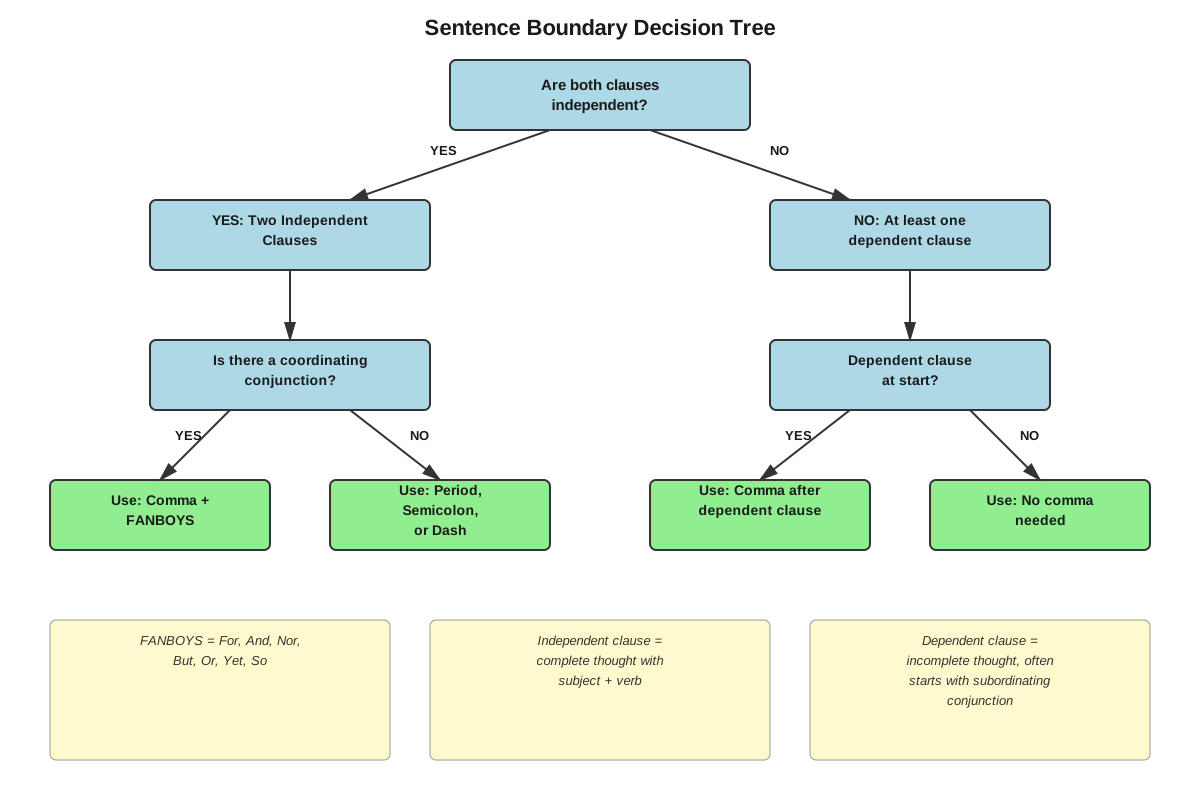
The distinction between these clause types is foundational to sentence boundaries because the rules for separating them differ completely. Two independent clauses require strong punctuation (period, semicolon, or comma with coordinating conjunction) to separate them. An independent clause followed by a dependent clause typically needs only a comma or no punctuation at all, depending on the order and the subordinating word used.
Run-On Sentences
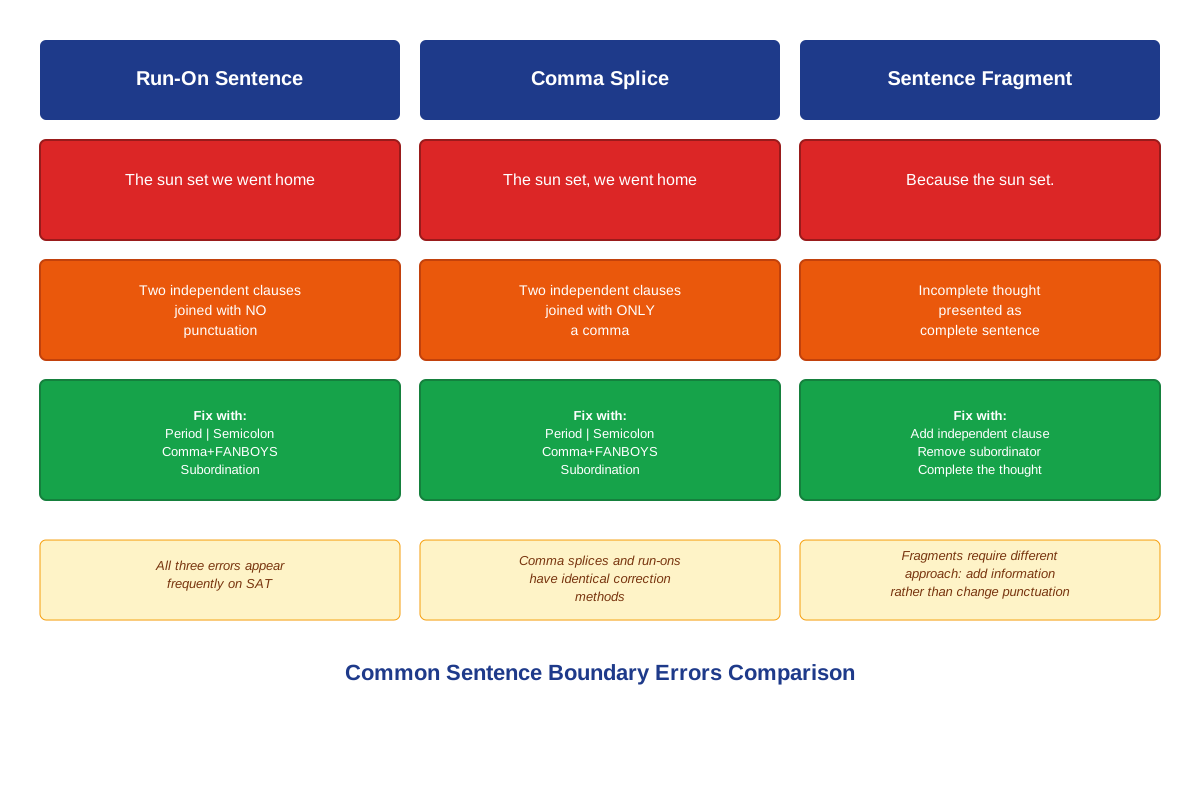
A run-on sentence occurs when two or more independent clauses are joined without appropriate punctuation or conjunctions. The most common type is the fused sentence, where independent clauses simply run together: "The experiment failed the scientist tried again." This creates confusion because readers cannot identify where one complete thought ends and another begins.
Run-ons appear frequently on the SAT because they test whether students recognize that independent clauses require separation. The correct fixes include: (1) using a period to create two sentences, (2) using a semicolon to show close relationship, (3) using a comma with a coordinating conjunction (for, and, nor, but, or, yet, so—remembered by the acronym FANBOYS), or (4) restructuring one clause to make it dependent.
Comma Splices
A comma splice represents a specific type of run-on where two independent clauses are joined by only a comma without a coordinating conjunction: "The experiment failed, the scientist tried again." This is one of the most frequently tested errors on the SAT because it appears grammatically correct to many students—the comma seems to provide separation, but it's insufficient for joining independent clauses.
The SAT often presents comma splices in the original sentence and tests whether students can identify that stronger punctuation is needed. Correct solutions include replacing the comma with a semicolon, adding a coordinating conjunction after the comma, replacing the comma with a period, or restructuring one clause to make it dependent by adding a subordinating conjunction.
Sentence Fragments
A sentence fragment is an incomplete sentence punctuated as if it were complete. Fragments typically lack a subject, lack a verb, or are dependent clauses standing alone: "Because the experiment failed." This fragment has a subject (experiment) and verb (failed) but cannot stand alone due to the subordinating conjunction "because."
On the SAT, fragments often appear when answer choices incorrectly separate a dependent clause from its independent clause. For example, changing "The scientist tried again because the experiment failed" to "The scientist tried again. Because the experiment failed." creates a fragment. Recognizing fragments requires identifying dependent clause markers (subordinating conjunctions like although, because, since, when, while, if, unless) and ensuring these clauses remain attached to independent clauses.
Punctuation Options for Sentence Boundaries
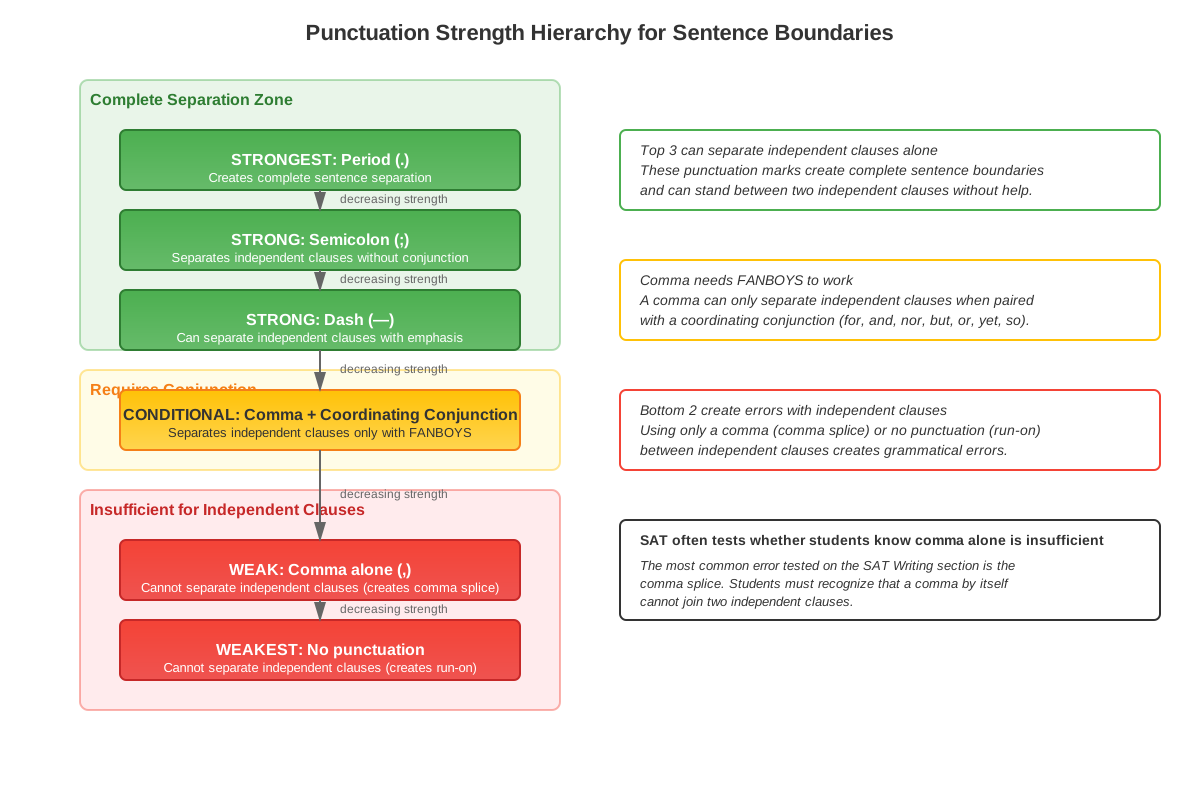
| Punctuation | Usage | Example |
|---|---|---|
| Period | Separates two independent clauses into distinct sentences | "The data was collected. The analysis began." |
| Semicolon | Joins two closely related independent clauses | "The data was collected; the analysis began immediately." |
| Comma + Coordinating Conjunction | Joins two independent clauses with a relationship word | "The data was collected, and the analysis began." |
| Colon | Introduces explanation, list, or elaboration after independent clause | "The process had two stages: collection and analysis." |
| Dash | Emphasizes or sets off information (less common for boundaries) | "The process was clear—collect data, then analyze." |
| No punctuation | Used when clauses are not independent or when dependent follows independent | "The analysis began when the data was collected." |
Coordinating vs. Subordinating Conjunctions
Coordinating conjunctions (FANBOYS: for, and, nor, but, or, yet, so) join elements of equal grammatical rank, including independent clauses. When a coordinating conjunction joins two independent clauses, a comma must precede it: "The hypothesis was tested, and the results were recorded." Without the comma, this becomes a run-on; without the conjunction, it becomes a comma splice.
Subordinating conjunctions (although, because, since, when, while, if, unless, after, before, until, as, though) create dependent clauses by subordinating one idea to another. These conjunctions change the punctuation rules entirely: "Although the hypothesis was tested, the results were inconclusive" requires a comma after the introductory dependent clause, but "The results were inconclusive although the hypothesis was tested" typically needs no comma because the dependent clause follows the independent clause.
Concept Relationships
The concepts within sentence boundaries form a hierarchical relationship: understanding independent and dependent clauses serves as the foundation → this knowledge enables recognition of run-on sentences and comma splices (which occur when independent clauses are improperly joined) → simultaneously, clause knowledge helps identify sentence fragments (which occur when dependent clauses are improperly separated) → mastery of these error types requires understanding punctuation options → which depends on recognizing coordinating versus subordinating conjunctions that determine punctuation rules.
Sentence boundaries connect to prerequisite knowledge of basic sentence structure by building on the subject-verb-complete thought framework. They extend to related topics like comma usage (since commas play a crucial role in boundaries), semicolon and colon application (alternative boundary markers), and transition words (which often appear at sentence boundaries to show logical relationships). Understanding boundaries also supports rhetorical skills questions, where students must evaluate whether combining or separating sentences improves clarity, emphasis, or flow.
The relationship map flows: Clause identification → Error recognition (run-ons, splices, fragments) → Punctuation selection → Conjunction application → Correct boundary formation. Each step depends on the previous one, making clause identification the critical first skill to master.
High-Yield Facts
- ⭐ A comma alone cannot join two independent clauses—this creates a comma splice, one of the most frequently tested errors
- ⭐ A semicolon can only join two independent clauses; it cannot separate an independent clause from a dependent clause
- ⭐ The seven coordinating conjunctions (FANBOYS) require a comma before them when joining independent clauses
- ⭐ Dependent clauses beginning with subordinating conjunctions cannot stand alone as complete sentences
- ⭐ A period and a semicolon are grammatically interchangeable when separating two independent clauses (though they differ in rhetorical effect)
- Run-on sentences can occur even in short sentences if two independent clauses lack proper separation
- Subordinating conjunctions at the beginning of a clause signal that the clause is dependent and needs an independent clause
- A colon can follow an independent clause to introduce an explanation, but what follows the colon doesn't need to be independent
- Conjunctive adverbs (however, therefore, moreover, nevertheless) cannot join independent clauses with only a comma—they require a semicolon before them or a period
- The word "and" can join subjects, verbs, or objects without creating a new independent clause—only when it joins two subject-verb combinations does it join clauses
- Relative pronouns (who, which, that) create dependent clauses that modify nouns and cannot stand alone
Quick check — test yourself on Sentence boundaries so far.
Try Flashcards →Common Misconceptions
Misconception: Any sentence with a comma is correctly punctuated. → Correction: Commas serve many functions, but they cannot join two independent clauses without a coordinating conjunction. A comma alone between independent clauses creates a comma splice, which is grammatically incorrect.
Misconception: Semicolons and commas are interchangeable. → Correction: Semicolons join independent clauses or separate complex list items, while commas have numerous functions but cannot join independent clauses alone. Using a comma where a semicolon is needed creates a comma splice; using a semicolon where a comma is needed creates awkward or incorrect punctuation.
Misconception: Long sentences are always run-ons, and short sentences are always correct. → Correction: Sentence length doesn't determine correctness. "The scientist worked the assistant recorded" is a short run-on, while a 30-word sentence with proper punctuation and conjunctions can be perfectly correct. The issue is clause boundaries, not length.
Misconception: Starting a sentence with "because" or "although" is always wrong. → Correction: Sentences can begin with subordinating conjunctions as long as they include an independent clause: "Because the experiment failed, the scientist redesigned the protocol" is correct. The error occurs when the dependent clause stands alone: "Because the experiment failed."
Misconception: Adding "however" or "therefore" between two clauses with commas is correct. → Correction: Conjunctive adverbs like "however" and "therefore" are not coordinating conjunctions and cannot join independent clauses with only commas. Correct punctuation requires a semicolon before the conjunctive adverb: "The experiment failed; however, the scientist tried again."
Misconception: If you can pause while reading, you need a comma. → Correction: Commas follow grammatical rules, not speech patterns. While pauses sometimes align with commas, many pauses don't require punctuation, and some commas appear where speakers don't pause. Relying on "pauses" leads to comma splices and incorrect boundaries.
Misconception: A semicolon is just a fancy comma that makes writing look sophisticated. → Correction: Semicolons have specific grammatical functions—primarily joining independent clauses or separating complex list items. Using them incorrectly (like separating an independent from a dependent clause) creates errors, not sophistication.
Worked Examples
Example 1: Identifying and Correcting a Comma Splice
Original sentence: "The research team collected data from three continents, their findings challenged previous assumptions about climate patterns."
Analysis: First, identify the clauses. "The research team collected data from three continents" has a subject (team), verb (collected), and complete thought—it's independent. "Their findings challenged previous assumptions about climate patterns" also has a subject (findings), verb (challenged), and complete thought—also independent. Two independent clauses joined by only a comma creates a comma splice.
Evaluation of corrections:
- Option A (period): "The research team collected data from three continents. Their findings challenged previous assumptions about climate patterns." ✓ Correct—creates two complete sentences.
- Option B (semicolon): "The research team collected data from three continents; their findings challenged previous assumptions about climate patterns." ✓ Correct—semicolon properly joins related independent clauses.
- Option C (comma + and): "The research team collected data from three continents, and their findings challenged previous assumptions about climate patterns." ✓ Correct—coordinating conjunction with comma properly joins independent clauses.
- Option D (subordinating): "The research team collected data from three continents, which challenged previous assumptions about climate patterns." ✓ Correct—restructures the second clause to make it dependent.
SAT application: On the SAT, you would see these as answer choices differing only in punctuation. All grammatically correct options would be acceptable unless the question asks for a specific rhetorical effect (like emphasis or brevity). This example demonstrates that multiple solutions can fix a comma splice, and recognizing the error is the critical first step.
Example 2: Fragment vs. Complete Sentence
Passage context: "The archaeologists discovered artifacts dating back millennia. [1] Although the items were fragile and required careful preservation. [2] The team documented each find meticulously."
Analysis: Sentence [1] appears between two complete sentences but is itself a fragment. "Although the items were fragile and required careful preservation" contains a subject (items), compound verb (were, required), but begins with the subordinating conjunction "although," making it dependent. A dependent clause cannot stand alone.
Evaluation of corrections:
- Option A (keep as is): Leaves the fragment error. ✗ Incorrect.
- Option B (remove "Although"): "The items were fragile and required careful preservation." ✓ Correct—removes the subordinating conjunction, making the clause independent.
- Option C (attach to previous sentence): "The archaeologists discovered artifacts dating back millennia, although the items were fragile and required careful preservation." ✓ Correct—attaches the dependent clause to an independent clause with appropriate comma.
- Option D (attach to following sentence): "Although the items were fragile and required careful preservation, the team documented each find meticulously." ✓ Correct—places the dependent clause before the independent clause with appropriate comma.
SAT application: Fragment questions often present the fragment as the underlined portion, with answer choices that either maintain the fragment, remove the subordinating word, or attach the clause to an adjacent sentence. Recognizing the subordinating conjunction "although" immediately signals that this clause needs an independent clause partner. This connects to learning objective: identifying key features of sentence boundaries by recognizing dependent clause markers.
Exam Strategy
When approaching sentence boundary questions on the SAT, follow this systematic process:
Step 1: Identify the clauses. Read the sentence and locate each subject-verb combination. Determine whether each clause can stand alone (independent) or requires additional information (dependent). Look specifically for subordinating conjunctions (because, although, when, if, since, while) that signal dependent clauses.
Step 2: Check the punctuation between clauses. If two independent clauses are present, verify that they're separated by a period, semicolon, or comma with coordinating conjunction. If you see only a comma or no punctuation between independent clauses, you've found an error. If you see a semicolon or period separating an independent clause from a dependent clause, that's also incorrect.
Step 3: Evaluate answer choices systematically. SAT sentence boundary questions typically present four punctuation options. Eliminate choices that create comma splices (comma alone between independent clauses) or fragments (dependent clauses standing alone). Then choose between remaining options based on grammatical correctness first, rhetorical effectiveness second.
Trigger words and phrases to watch for:
- Comma + "however," "therefore," "moreover," "nevertheless": These conjunctive adverbs cannot join independent clauses with only a comma—they need a semicolon before them
- "And," "but," "or," "so" without a comma: When these coordinating conjunctions join independent clauses, they require a comma before them
- "Because," "although," "since," "when" starting a sentence: Verify that an independent clause follows the dependent clause
- Two subject-verb combinations with only a comma between: Likely a comma splice unless a coordinating conjunction is present
Process-of-elimination tips:
- Immediately eliminate any choice that creates a comma splice (comma alone between independent clauses)
- Eliminate choices that create fragments (dependent clauses standing alone)
- Between grammatically correct options, choose based on context: periods create stronger separation, semicolons show close relationship, conjunctions specify the relationship type
Time allocation: Sentence boundary questions should take 20-30 seconds each. They're among the fastest question types because they follow predictable patterns. If you're spending more than 45 seconds, you're likely overthinking—return to the basic clause identification process.
Memory Techniques
FANBOYS acronym: Remember the seven coordinating conjunctions that can join independent clauses with a comma: For, And, Nor, But, Or, Yet, So. When you see these words between clauses, check whether a comma precedes them.
The "Can it stand alone?" test: When evaluating whether punctuation is correct, cover everything after the punctuation mark and ask, "Is this a complete sentence?" Then cover everything before the punctuation and ask the same question. If both parts can stand alone, you have two independent clauses that need strong punctuation (period, semicolon, or comma + coordinating conjunction).
Subordinating conjunction visualization: Picture subordinating conjunctions (because, although, since, when, while, if) as "hooks" that attach dependent clauses to independent clauses. A hook without something to attach to (a dependent clause standing alone) creates a fragment. This visual helps remember that dependent clauses need independent partners.
Semicolon = Period test: Remember that semicolons and periods are grammatically interchangeable when separating independent clauses. If you can replace a semicolon with a period and both resulting sentences are complete, the semicolon is correct. If replacing it with a period creates a fragment, the semicolon is wrong.
Comma splice rhyme: "Comma alone won't do, independent clauses need two"—meaning two elements (comma + conjunction, or semicolon which counts as both separator and connector).
Summary
Sentence boundaries represent the fundamental skill of properly separating and connecting independent and dependent clauses using appropriate punctuation and conjunctions. The SAT tests this concept by presenting sentences with comma splices (two independent clauses joined by only a comma), run-ons (independent clauses with no separation), and fragments (dependent clauses standing alone). Mastery requires distinguishing independent clauses (which can stand alone) from dependent clauses (which cannot), then applying the correct punctuation: periods or semicolons separate independent clauses, commas with coordinating conjunctions join them, and dependent clauses must attach to independent clauses. The most common errors involve using commas alone between independent clauses or separating dependent clauses from their independent partners. Success on these questions comes from systematically identifying clause types, checking punctuation against grammatical rules, and eliminating choices that create splices or fragments. Because sentence boundary questions follow predictable patterns and appear consistently on every SAT, they represent high-yield study material where focused practice translates directly to score improvement.
Key Takeaways
- Two independent clauses cannot be joined by a comma alone—this creates a comma splice, one of the most frequently tested errors on the SAT
- Independent clauses require strong punctuation (period, semicolon, or comma + coordinating conjunction) to separate them properly
- Dependent clauses beginning with subordinating conjunctions (because, although, when, if, since) cannot stand alone as complete sentences
- Semicolons can only join two independent clauses; they cannot separate independent from dependent clauses
- The FANBOYS coordinating conjunctions (for, and, nor, but, or, yet, so) require a comma before them when joining independent clauses
- Identifying whether clauses are independent or dependent is the critical first step in evaluating sentence boundaries
- Sentence boundary questions are highly predictable and learnable, making them excellent opportunities for score improvement through focused practice
Related Topics
Comma Usage: Understanding sentence boundaries provides the foundation for mastering comma rules, particularly when commas separate introductory elements, join clauses, or set off non-essential information. Many comma questions involve boundaries between clauses.
Semicolon and Colon Application: These punctuation marks serve specific boundary functions—semicolons join independent clauses, while colons introduce explanations or lists after independent clauses. Mastering boundaries enables correct application of these marks.
Transition Words and Phrases: Transitions often appear at sentence boundaries to show logical relationships between ideas. Understanding boundaries helps determine whether transitions should begin new sentences or connect within sentences.
Sentence Structure and Variety: Once boundaries are mastered, students can manipulate sentence structure for rhetorical effect—combining or separating clauses to create emphasis, improve flow, or enhance clarity.
Parallel Structure: Proper boundaries enable recognition of parallel elements within sentences, as students must distinguish between multiple independent clauses (which need separation) and parallel phrases (which don't).
Practice CTA
Now that you've mastered the core concepts of sentence boundaries, it's time to cement your understanding through active practice. The practice questions and flashcards will challenge you to identify comma splices, run-ons, and fragments in realistic SAT contexts, building the pattern recognition that leads to automatic, confident responses on test day. Remember: sentence boundary questions are among the most predictable and learnable on the entire SAT—every minute you invest in practice translates directly to points on your score. You've built the foundation; now apply it to achieve mastery!
Sign up free to keep reading
Create a free AnvayaPrep account to finish this SAT guide on Sentence boundaries — plus flashcards and practice questions.