Overview
Implied information refers to details, meanings, or conclusions that are suggested or indicated by a text without being directly stated. On the SAT Reading and Writing (RW) section, students must frequently read between the lines to understand what an author is communicating indirectly through context clues, tone, word choice, and logical relationships. Unlike explicit information that appears word-for-word in a passage, implied information requires inference—the cognitive process of drawing reasonable conclusions based on textual evidence combined with background knowledge.
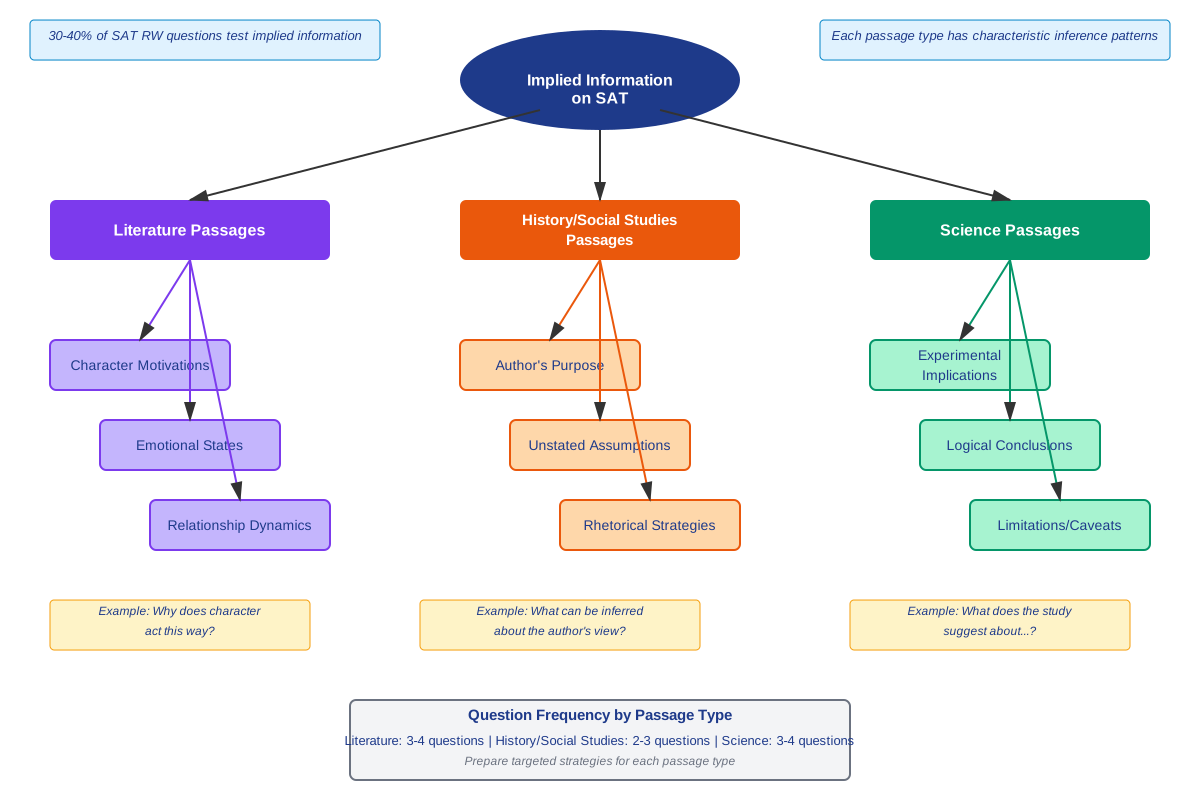
Mastering implied information is essential for SAT success because approximately 30-40% of Reading and Writing questions require some level of inferential thinking. These questions assess whether students can move beyond surface-level comprehension to grasp deeper meanings, understand character motivations in literature passages, identify unstated assumptions in argumentative texts, or recognize logical connections between ideas. The College Board designs these questions to evaluate college-readiness skills: the ability to synthesize information, think critically, and understand nuanced communication—all crucial for academic success.
Within the broader framework of Central Ideas and Details, implied information connects directly to other reading comprehension skills. While some questions ask students to identify explicitly stated main ideas or supporting details, implied information questions require students to use those explicit details as evidence to reach unstated conclusions. This skill also relates closely to understanding author's purpose, tone, and rhetorical strategies, as writers often communicate their most important messages through implication rather than direct statement. Developing proficiency with implied information strengthens overall reading comprehension and prepares students for the sophisticated textual analysis required in college coursework.
Learning Objectives
- [ ] Identify key features of implied information in SAT passages
- [ ] Explain how implied information appears on the SAT Reading and Writing section
- [ ] Apply implied information strategies to answer SAT-style questions accurately
- [ ] Distinguish between reasonable inferences and unsupported assumptions
- [ ] Locate and synthesize textual evidence that supports implied meanings
- [ ] Recognize common question stems that signal implied information questions
- [ ] Evaluate answer choices to identify those that go beyond or contradict textual support
Prerequisites
- Basic reading comprehension: Understanding literal meanings of sentences and paragraphs is necessary before attempting to identify implied meanings
- Vocabulary knowledge: Recognizing connotations and nuances of word choice helps identify what authors suggest indirectly
- Understanding of main ideas and supporting details: Implied information builds upon explicit textual evidence, so students must first identify what is directly stated
- Logical reasoning skills: Drawing valid inferences requires understanding cause-and-effect relationships and logical connections between ideas
Why This Topic Matters
Implied information questions appear consistently across all passage types on the SAT—literature, history/social studies, and science. Research indicates that 8-12 questions per test directly assess inferential comprehension, making this one of the highest-yield topics for score improvement. Beyond frequency, these questions often differentiate between mid-range and high-scoring students, as they require deeper analytical thinking than simple recall questions.
In real-world contexts, the ability to understand implied information is fundamental to effective communication. Professional emails, academic articles, legal documents, and literary works all rely heavily on implication. Readers must interpret tone, recognize unstated assumptions, understand euphemisms, and grasp what writers deliberately leave unsaid. This skill enables students to detect bias in news articles, understand subtext in interpersonal communication, and engage critically with complex texts across disciplines.
On the SAT, implied information appears in several predictable formats. Questions may ask what can be "reasonably inferred," what a passage "suggests," or what is "most likely true" based on the text. These questions commonly appear after literature passages where students must infer character emotions, motivations, or relationships. In science and social studies passages, students might need to infer the implications of research findings, understand unstated assumptions in arguments, or recognize logical consequences of described phenomena. The key distinction is that while the answer isn't explicitly stated, it must be firmly supported by textual evidence—not speculation or outside knowledge.
Core Concepts
What Constitutes Implied Information
Implied information is any meaning, detail, or conclusion that a reader can logically derive from a text without that information being explicitly stated. This differs fundamentally from explicit information, which appears directly in the passage using clear, unambiguous language. When authors use implication, they provide clues through various textual elements—word choice, tone, juxtaposition of ideas, descriptive details, or logical relationships—that allow careful readers to understand unstated meanings.
The critical feature of valid implied information on the SAT is that it must be firmly grounded in textual evidence. Students cannot simply make educated guesses based on general knowledge or personal experience. Instead, they must identify specific words, phrases, or passages that support the inference. This distinguishes SAT-style inference from speculation: a valid inference has a clear logical pathway from evidence to conclusion, while speculation lacks sufficient textual support.
Types of Implied Information on the SAT
The SAT tests several distinct categories of implied information, each requiring slightly different analytical approaches:
Character emotions and motivations: In literature passages, authors rarely state directly that a character feels angry, jealous, or conflicted. Instead, they show these emotions through dialogue, actions, body language, or internal thoughts. Students must infer emotional states from descriptive details like "she clenched her fists" or "he turned away without responding."
Causal relationships: Science and social studies passages often describe phenomena without explicitly stating cause-and-effect connections. Students must recognize that when Event A is described, then Event B follows, there's an implied causal relationship even if the passage doesn't use words like "therefore" or "as a result."
Author's attitude or perspective: Writers communicate their viewpoints through word choice (connotation), selection of details, and tone rather than stating "I believe X is wrong." Students must detect subtle indicators of approval, skepticism, enthusiasm, or criticism.
Logical consequences or implications: When a passage describes a situation, policy, or discovery, students may need to infer what this suggests about related matters. For example, if a passage states that a species thrives only in specific temperature ranges, students can infer that climate change affecting those temperatures would impact the species.
Comparative relationships: Passages may describe two subjects without explicitly comparing them, yet the juxtaposition implies similarities or differences that students must recognize.
The Inference Process
Drawing valid inferences follows a systematic process that students can apply consistently:
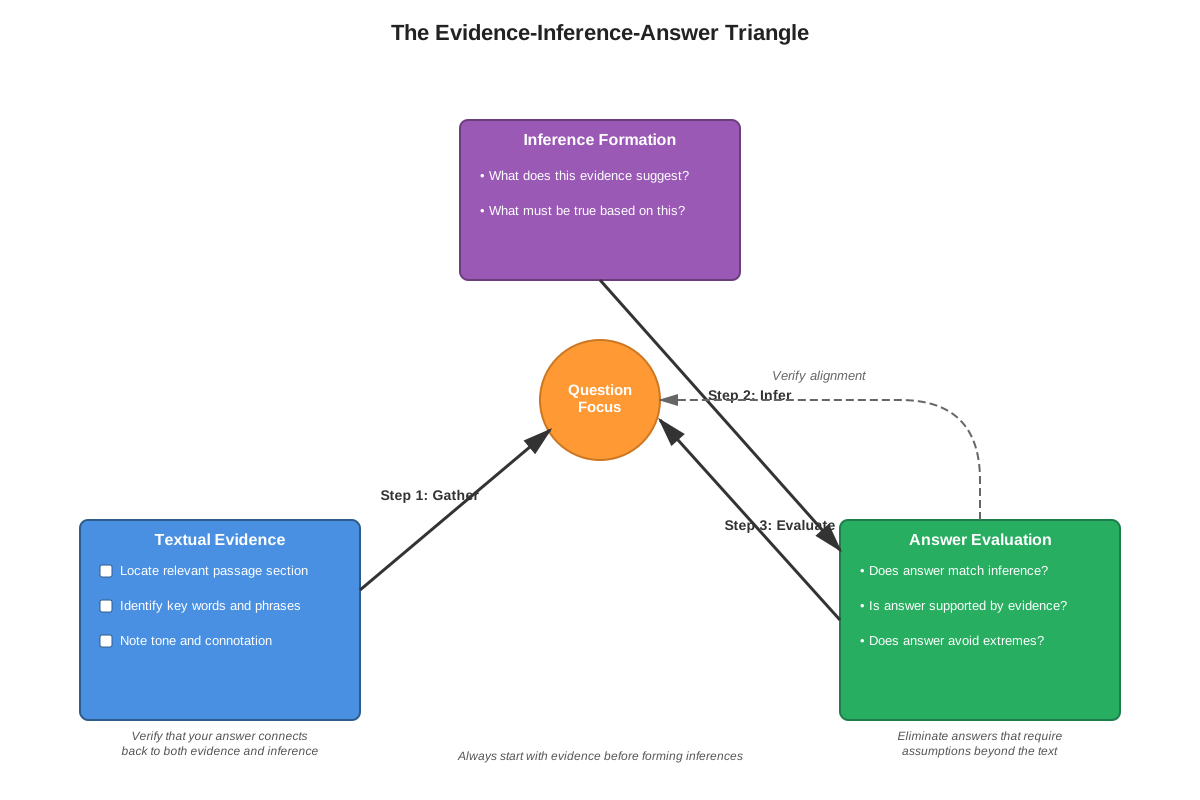
- Identify the question focus: Determine exactly what the question asks you to infer (character motivation, causal relationship, author's view, etc.)
- Locate relevant textual evidence: Find the specific passage section that relates to the question. Often, line references or content clues guide you to the right area.
- Analyze the evidence closely: Examine word choice, tone, details, and context. Ask: "What does this language suggest? What's the logical connection between these ideas?"
- Formulate the inference: Based on evidence, determine what can reasonably be concluded. The inference should feel like a small logical step from the evidence, not a leap.
- Verify against the text: Check that your inference doesn't contradict any other passage information and that it's supported by specific textual details.
- Evaluate answer choices: Select the choice that best matches your inference and is most strongly supported by evidence. Eliminate choices that go too far beyond the text, contradict passage information, or lack textual support.
Textual Clues That Signal Implied Information
Skilled readers recognize specific textual elements that typically carry implied meanings:
| Textual Element | What It May Imply | Example |
|---|---|---|
| Connotative word choice | Author's attitude, emotional tone | Using "scheme" vs. "plan" implies negative judgment |
| Descriptive details | Character emotions, atmosphere, significance | "The room fell silent" implies tension or shock |
| Juxtaposition | Contrast, comparison, irony | Describing luxury then poverty implies inequality |
| Dialogue and actions | Character personality, relationships, motivations | "She smiled but said nothing" implies discomfort or secrecy |
| Sentence structure | Emphasis, relationships between ideas | Subordinate clauses can imply lesser importance |
| Transitional logic | Causal relationships, consequences | "Subsequently" implies temporal and possibly causal connection |
Distinguishing Valid Inferences from Overreach
The most challenging aspect of implied information questions is determining which inferences are valid versus which go too far. The SAT specifically designs wrong answer choices that represent common inference errors:
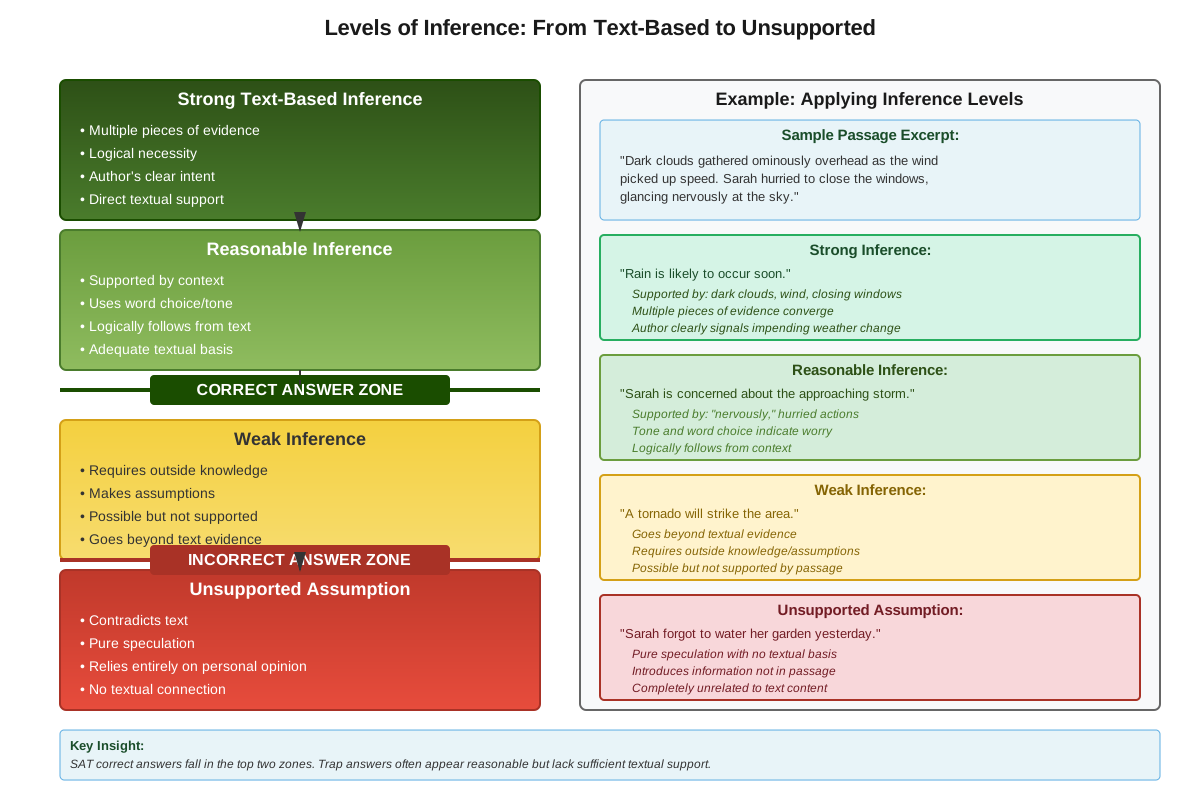
Valid inferences require only a small logical step from evidence to conclusion. They feel inevitable given the textual support—any careful reader would reach the same conclusion. They don't contradict any passage information and align with the passage's overall meaning and tone.
Invalid inferences (overreach) make claims that are possible but not sufficiently supported, require multiple logical leaps, introduce information not suggested by the text, contradict other passage details, or rely on outside knowledge rather than textual evidence. For example, if a passage states that a scientist conducted experiments for five years, a valid inference might be that the research required patience and dedication. An invalid inference would be that the scientist had no other professional responsibilities during that time—this goes beyond what the text supports.
Concept Relationships
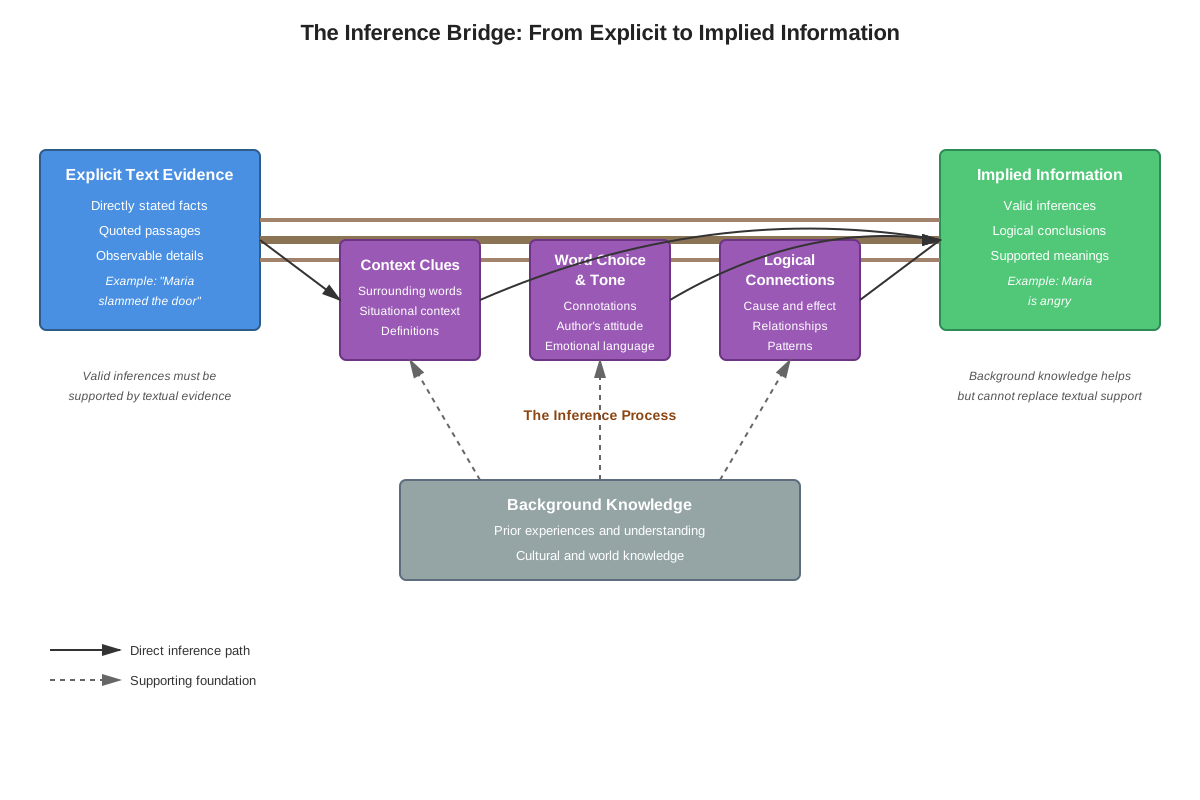
The concepts within implied information form an interconnected system. Understanding what constitutes implied information provides the foundation for recognizing the types of implied information that appear on the SAT. These types then inform the inference process, which is the systematic approach students use to answer questions. Throughout this process, students must recognize textual clues that signal implied meanings while simultaneously distinguishing valid inferences from overreach to avoid common traps.
This topic connects directly to prerequisite knowledge of main ideas and supporting details. Students must first identify explicit information (supporting details) before using that evidence to determine implied information. The relationship flows: explicit details → textual clues → inference process → implied conclusion. Similarly, vocabulary knowledge enables students to recognize connotations and subtle word choices that carry implied meanings.
Implied information also connects forward to more advanced RW skills. Understanding author's purpose requires inferring why writers make specific choices. Analyzing rhetorical strategies involves recognizing how authors use implication to persuade. Synthesizing information across multiple texts requires inferring connections that aren't explicitly stated. Thus, mastering implied information creates a foundation for virtually all higher-order reading comprehension skills tested on the SAT.
Relationship map: Explicit textual evidence → Recognition of textual clues → Application of inference process → Valid implied conclusion → Elimination of overreach answers → Correct answer selection
High-Yield Facts
- ⭐ Implied information must always be supported by specific textual evidence—it's never based solely on outside knowledge or general assumptions
- ⭐ Valid inferences require only a small logical step from evidence to conclusion—if reasoning requires multiple leaps, the inference likely goes too far
- ⭐ Approximately 30-40% of SAT Reading and Writing questions test inferential comprehension in some form
- ⭐ Wrong answer choices often represent overreach—they state something that's possible but not sufficiently supported by the passage
- ⭐ Connotative word choice is one of the strongest indicators of implied meaning, especially for author's attitude questions
- Character emotions in literature passages are almost always implied through actions, dialogue, and descriptions rather than stated directly
- Causal relationships in science passages are frequently implied through sequential description without explicit causal language
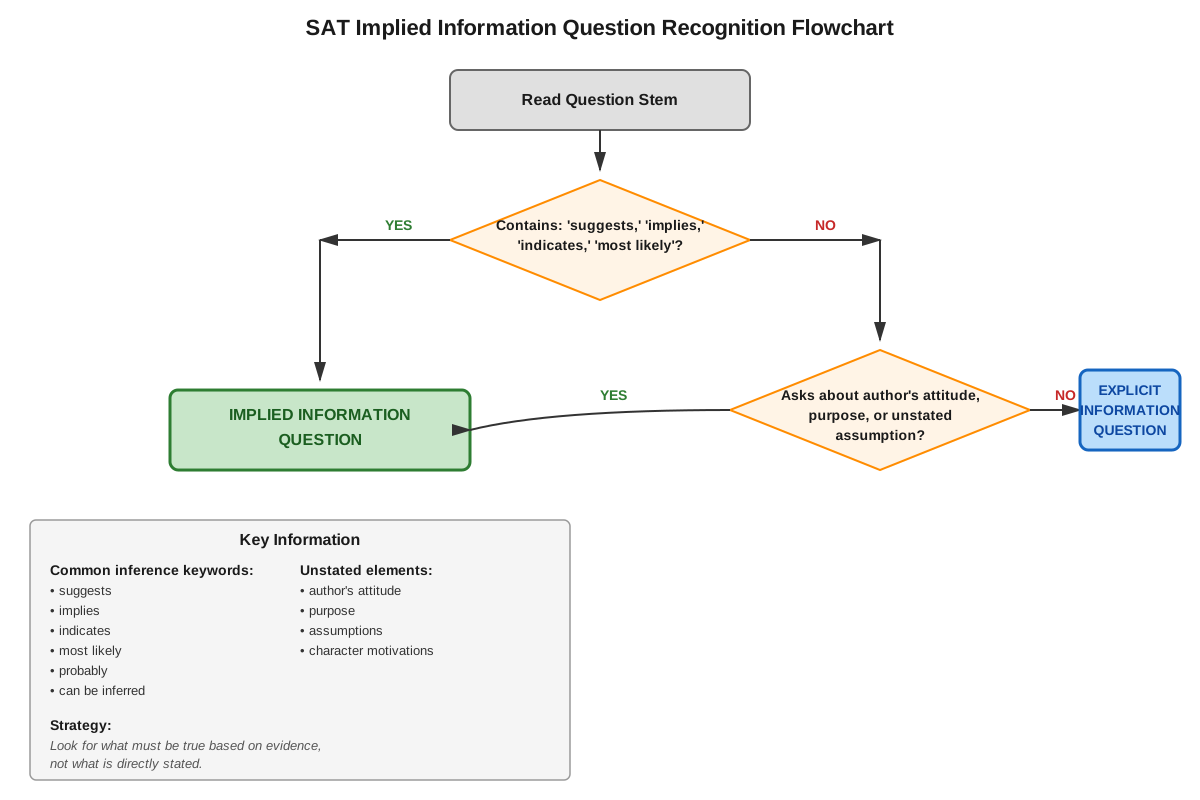
- The phrase "most likely" in a question stem signals that you're looking for implied rather than explicit information
- Valid inferences never contradict any information stated elsewhere in the passage
- Implied information questions often include wrong answers that are true in the real world but unsupported by the specific passage
- Descriptive details in passages are rarely random—they typically serve to imply something significant about character, setting, or theme
- When two ideas are juxtaposed in a passage, the author usually intends readers to infer a relationship between them
Quick check — test yourself on Implied information so far.
Try Flashcards →Common Misconceptions
Misconception: Implied information means making educated guesses based on what seems reasonable in real life.
Correction: On the SAT, implied information must be firmly supported by specific textual evidence. Real-world knowledge is only relevant when combined with clear textual support. The passage itself must provide the foundation for any inference.
Misconception: If something could possibly be true based on the passage, it's a valid inference.
Correction: Possibility isn't sufficient—the inference must be strongly supported and feel like the most logical conclusion from the evidence. Many wrong answers represent possibilities that lack strong textual support.
Misconception: Longer or more complex answer choices are more likely to be correct for inference questions.
Correction: Answer length and complexity don't correlate with correctness. In fact, overly complex answers often represent overreach—making claims that go beyond what the passage supports.
Misconception: You should look for answers that restate passage information in different words.
Correction: While some questions reward recognizing paraphrases, implied information questions specifically test what isn't directly stated. The correct answer will go beyond explicit information while remaining grounded in textual evidence.
Misconception: If you can't find the exact answer in the passage, you should skip the question.
Correction: Implied information questions are designed so the answer isn't explicitly stated. Instead of looking for direct statements, identify relevant evidence and determine what it logically suggests.
Misconception: Personal interpretation and reading between the lines means there can be multiple correct answers.
Correction: The SAT is designed so that only one answer choice is fully supported by the passage. While interpretation is involved, it must be objective interpretation based on textual evidence, not subjective personal response.
Misconception: Implied information questions are inherently harder than explicit information questions.
Correction: While they require deeper analysis, implied information questions follow predictable patterns. With systematic practice of the inference process, students can answer these questions as reliably as explicit information questions.
Worked Examples
Example 1: Literature Passage
Passage excerpt:
"Margaret set down her teacup with deliberate care, the porcelain meeting the saucer without a sound. 'How thoughtful of you to visit,' she said, her smile fixed as she smoothed invisible wrinkles from her skirt. Through the window, her sister's carriage remained in the drive, the horses stamping impatiently. 'I'm certain you have other engagements,' Margaret continued, rising from her chair."
Question: The passage most strongly suggests that Margaret:
A) Is grateful for her sister's unexpected visit
B) Wishes her sister would leave soon
C) Feels nervous about drinking tea
D) Plans to accompany her sister when she departs
Solution Process:
- Identify question focus: We need to infer Margaret's feelings or desires regarding her sister's visit.
- Locate textual evidence: Several details provide clues:
- "deliberate care" and "without a sound" suggest controlled, careful behavior
- "her smile fixed" implies the smile is forced, not genuine
- "smoothing invisible wrinkles" suggests nervous or uncomfortable behavior
- "I'm certain you have other engagements" is a polite way of suggesting someone should leave
- Margaret "rising from her chair" indicates she's preparing to end the visit
- Analyze evidence: The combination of forced politeness ("How thoughtful"), physical signs of discomfort (smoothing invisible wrinkles), and subtle suggestions that the sister should leave ("other engagements") all point to Margaret wanting the visit to end.
- Formulate inference: Margaret is being polite but wants her sister to leave.
- Evaluate choices:
- A) Contradicts the evidence—"fixed smile" and suggesting "other engagements" don't indicate genuine gratitude
- B) ✓ Strongly supported by multiple textual clues
- C) Overreach—her careful handling of the teacup shows control, not nervousness about tea specifically
- D) Unsupported—no evidence suggests she plans to go with her sister
Answer: B
This example demonstrates how multiple textual clues (word choice, actions, dialogue) combine to imply a character's emotional state that's never explicitly stated.
Example 2: Science Passage
Passage excerpt:
"The research team observed that coral reefs in waters with temperatures consistently above 30°C showed significant bleaching, with symbiotic algae populations declining by 60-80%. In contrast, reefs in waters maintaining temperatures between 26-29°C demonstrated robust algae populations and vibrant coloration. The study documented these patterns across fifteen reef systems over a three-year period."
Question: Based on the passage, which of the following can most reasonably be inferred?
A) Coral reefs cannot survive in any water above 30°C
B) Temperature plays a role in the health of coral reef ecosystems
C) Symbiotic algae cause coral bleaching when water is too cold
D) The research team studied only fifteen coral reefs total
Solution Process:
- Identify question focus: We need to infer a conclusion about coral reefs based on the research findings.
- Locate textual evidence:
- High temperatures (above 30°C) correlate with bleaching and algae decline
- Moderate temperatures (26-29°C) correlate with healthy algae and vibrant color
- This pattern was consistent across multiple reefs over time
- Analyze evidence: The passage establishes a clear correlation between water temperature and reef health indicators (algae populations, coloration). While it doesn't explicitly state causation, the consistent pattern strongly suggests temperature affects reef health.
- Formulate inference: Temperature appears to be an important factor in coral reef health.
- Evaluate choices:
- A) Overreach—the passage shows bleaching above 30°C but doesn't claim reefs "cannot survive" at all
- B) ✓ Supported by the correlation between temperature ranges and reef health indicators
- C) Contradicts the passage—bleaching occurred in warm water, not cold, and algae decline is an effect, not a cause
- D) Misreads explicit information—"fifteen reef systems" were studied, but the passage doesn't limit the total number of reefs within those systems
Answer: B
This example shows how scientific data implies relationships (temperature affecting reef health) without stating them explicitly, and how wrong answers often represent overreach (A) or misreading (C, D).
Exam Strategy
When approaching implied information questions on the SAT, follow this strategic framework:
Recognize the question type immediately: Watch for trigger phrases that signal inference questions: "suggests," "implies," "most likely," "can reasonably be inferred," "based on the passage," "the author would probably agree," or "it can be concluded." These phrases indicate you're looking for information that isn't explicitly stated.
Return to the passage before evaluating answers: Resist the temptation to answer from memory. Locate the relevant section (using line references or content clues) and reread carefully. Fresh engagement with the text prevents memory errors and helps you notice subtle details.
Identify specific evidence first: Before formulating your inference, pinpoint the exact words, phrases, or sentences that provide clues. Underline or mentally note these textual elements. This evidence-first approach prevents speculation and keeps your reasoning grounded.
Apply the "one small step" rule: Valid inferences require only a single logical step from evidence to conclusion. If your reasoning requires multiple steps or feels like a stretch, reconsider. The correct answer should feel almost inevitable given the textual support.
Use process of elimination strategically:
- Eliminate answers that contradict passage information
- Eliminate answers that require outside knowledge not suggested by the text
- Eliminate answers that go too far (overreach) beyond what evidence supports
- Eliminate answers that are too narrow or miss the question's focus
Verify your answer against the text: Before finalizing your choice, confirm that you can point to specific textual evidence supporting it. If asked to justify your answer, you should be able to cite particular words or passages.
Time allocation: Spend 45-60 seconds on implied information questions—slightly more than explicit information questions. The additional time for careful analysis prevents careless errors and improves accuracy significantly. However, if you're stuck after eliminating to two choices, make your best selection and move forward rather than overthinking.
Watch for extreme language in answer choices: Words like "always," "never," "only," "must," or "cannot" often signal overreach. The SAT rarely rewards absolute statements in inference questions because implied information typically involves nuance and probability rather than certainty.
Memory Techniques
CITE mnemonic for the inference process:
- Clues: Identify textual clues (word choice, details, tone)
- Infer: Draw a logical conclusion based on those clues
- Text: Verify your inference against the passage text
- Eliminate: Remove answer choices that contradict, overreach, or lack support
The "Evidence Sandwich" visualization: Picture your inference as the filling between two slices of bread. The bottom slice is the explicit textual evidence, the top slice is the conclusion you're drawing, and the filling is the small logical step connecting them. If the sandwich feels too thick (requiring multiple logical steps), the inference probably goes too far.
PASS acronym for evaluating answer choices:
- Possible but unsupported? Eliminate.
- Against passage information? Eliminate.
- Specific textual support? Keep.
- Small logical step from evidence? Keep.
The "Reporter Test": Imagine you're a journalist who must justify every claim with evidence. If you can't point to specific passage text supporting an answer choice, it's likely wrong. This mental framework prevents speculation and keeps reasoning objective.
Connotation Color Coding: When reading passages, mentally assign colors to word choices: positive connotations (green), negative connotations (red), neutral (yellow). This visualization helps track author's attitude and tone, which frequently carry implied meanings.
Summary
Implied information represents one of the most critical skills tested on the SAT Reading and Writing section, appearing in approximately 30-40% of questions across all passage types. Unlike explicit information that's directly stated, implied information requires students to draw logical conclusions based on textual evidence—analyzing word choice, descriptive details, tone, and logical relationships to understand what authors suggest without stating directly. Success with these questions depends on systematic application of the inference process: identifying relevant evidence, analyzing textual clues, formulating reasonable conclusions, and verifying that inferences require only small logical steps from evidence. Students must distinguish valid inferences firmly grounded in textual support from overreach that goes beyond what the passage justifies. Common question stems include "suggests," "implies," "most likely," and "can reasonably be inferred." The key to mastery is maintaining objectivity—basing all conclusions on specific textual evidence rather than outside knowledge or speculation—while recognizing the predictable patterns through which authors communicate implied meanings in literature, science, and social studies passages.
Key Takeaways
- Implied information must always be supported by specific textual evidence—never rely on outside knowledge or general assumptions alone
- Valid inferences require only one small logical step from evidence to conclusion—multiple leaps indicate overreach
- Recognize question stems that signal inference questions: "suggests," "implies," "most likely," "can reasonably be inferred"
- Textual clues carrying implied meaning include connotative word choice, descriptive details, juxtaposition, dialogue, and tone
- Wrong answers typically represent overreach (going too far), contradiction (opposing passage information), or lack of support (possible but not textually justified)
- Apply the CITE process systematically: identify Clues, draw Inference, verify against Text, Eliminate unsupported answers
- Approximately 30-40% of SAT RW questions test inferential comprehension, making this a high-yield topic for score improvement
Related Topics
Author's Purpose and Point of View: Understanding why authors write and what perspectives they hold requires inferring intentions and attitudes that are often implied rather than stated. Mastering implied information provides the foundation for analyzing authorial choices.
Rhetorical Analysis: Identifying how authors use language to achieve effects involves recognizing implied meanings in word choice, tone, and structure. The inference skills developed through implied information study transfer directly to rhetorical analysis.
Synthesis Across Multiple Texts: When comparing or connecting ideas from different passages, students must often infer relationships and connections not explicitly stated. Strong implied information skills enable effective synthesis.
Command of Evidence: Questions asking students to identify which passage excerpt best supports a claim require understanding both explicit and implied meanings within potential evidence choices.
Vocabulary in Context: Understanding how word choice creates implied meanings through connotation connects directly to vocabulary questions that test nuanced word usage.
Practice CTA
Now that you've mastered the core concepts of implied information, it's time to apply these skills! Work through the practice questions to test your ability to identify textual clues, draw valid inferences, and distinguish supported conclusions from overreach. Use the flashcards to reinforce key concepts and trigger phrases. Remember: every practice question you complete strengthens your inference skills and builds the pattern recognition that leads to faster, more accurate performance on test day. The systematic approach you've learned here—identifying evidence, taking small logical steps, and verifying against the text—will serve you across all SAT Reading and Writing passages. You've got this!
Sign up free to keep reading
Create a free AnvayaPrep account to finish this SAT guide on Implied information — plus flashcards and practice questions.