Overview
Purpose-based revision is a critical skill tested in the SAT Reading and Writing section that requires students to evaluate and select the most appropriate revision to a text based on a specific rhetorical goal or communicative purpose. Unlike simple grammar correction or style improvement, purpose-based revision questions ask students to consider what a writer is trying to accomplish and then choose the option that best achieves that stated objective. This skill bridges mechanical writing knowledge with rhetorical awareness, demanding that test-takers understand not just what makes writing correct, but what makes it effective for a particular audience and purpose.
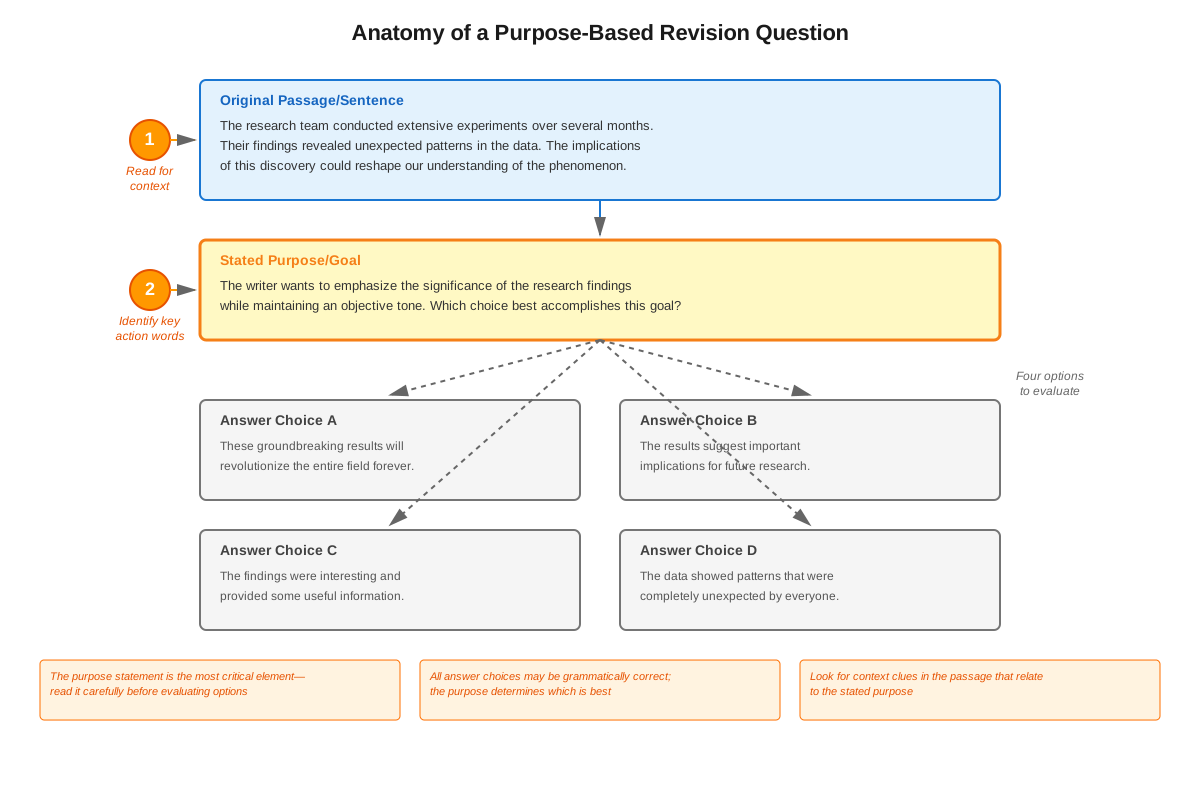
On the SAT RW section, purpose-based revision questions typically present a passage or sentence followed by a specific goal the writer wants to achieve. Students must then select from four options the revision that best fulfills that purpose. These questions assess whether students can distinguish between technically correct options and strategically optimal ones—a distinction that separates competent writers from sophisticated communicators. The ability to revise with purpose in mind reflects real-world writing demands where clarity, persuasiveness, and audience awareness determine success.
This topic sits at the intersection of rhetorical analysis and practical composition within the broader Rhetorical Synthesis unit. While other Reading and Writing concepts focus on identifying errors or understanding existing text, sat purpose-based revision requires active decision-making about how to improve or alter text to meet specific communicative objectives. Mastering this skill enhances performance across multiple question types, as it develops the meta-cognitive awareness of how language choices create meaning and achieve effects—a foundational principle underlying the entire SAT Reading and Writing section.
Learning Objectives
- [ ] Identify key features of Purpose-based revision
- [ ] Explain how Purpose-based revision appears on the SAT
- [ ] Apply Purpose-based revision to answer SAT-style questions
- [ ] Distinguish between revisions that are grammatically correct versus rhetorically effective
- [ ] Analyze stated purposes to determine which textual features would best achieve them
- [ ] Evaluate multiple revision options by matching them against specific rhetorical goals
- [ ] Recognize common purpose categories (emphasis, clarity, tone, transition, evidence support)
Prerequisites
- Basic sentence structure and grammar: Understanding subject-verb agreement, modifiers, and clause types enables recognition of grammatically sound options before evaluating rhetorical effectiveness
- Reading comprehension skills: The ability to understand passage context and main ideas is essential for determining which revision aligns with the writer's broader argument
- Vocabulary knowledge: Recognizing connotations and precise word meanings helps distinguish between options with subtle differences in tone or emphasis
- Understanding of rhetorical devices: Familiarity with techniques like parallelism, repetition, and figurative language aids in identifying how revisions create specific effects
Why This Topic Matters
Purpose-based revision questions appear with high frequency on the SAT, typically comprising 3-5 questions per test administration. These questions carry significant weight because they assess multiple competencies simultaneously: reading comprehension, rhetorical awareness, and strategic thinking. Unlike purely mechanical grammar questions, purpose-based revision items require synthesis of information across sentences or paragraphs, making them more cognitively demanding and thus more discriminating between score levels.
In real-world contexts, the ability to revise writing based on purpose is fundamental to academic and professional success. Whether crafting a persuasive essay, writing a research report, or composing professional correspondence, writers must constantly make choices about how to present information to achieve specific goals. College-level writing demands this kind of purposeful revision, as students must adapt their writing to different disciplines, audiences, and rhetorical situations. The SAT tests this skill because it predicts college readiness more accurately than rote grammar knowledge alone.
On the exam, purpose-based revision questions commonly appear in passages discussing scientific research, historical events, literary analysis, or social phenomena. The stated purposes vary widely: a question might ask students to select a revision that "emphasizes the significance of the finding," "provides a smooth transition between ideas," "maintains the formal tone of the passage," or "offers specific evidence to support the claim." This variety means students must be flexible thinkers who can quickly identify what type of revision a particular purpose demands.
Core Concepts
Understanding Rhetorical Purpose
Every piece of writing aims to accomplish something—to inform, persuade, entertain, or some combination thereof. Within these broad purposes exist more specific goals: to emphasize a particular point, to establish credibility, to create emotional resonance, to clarify a complex idea, or to connect disparate concepts. Purpose-based revision requires recognizing these specific goals and understanding how different language choices advance or hinder them.
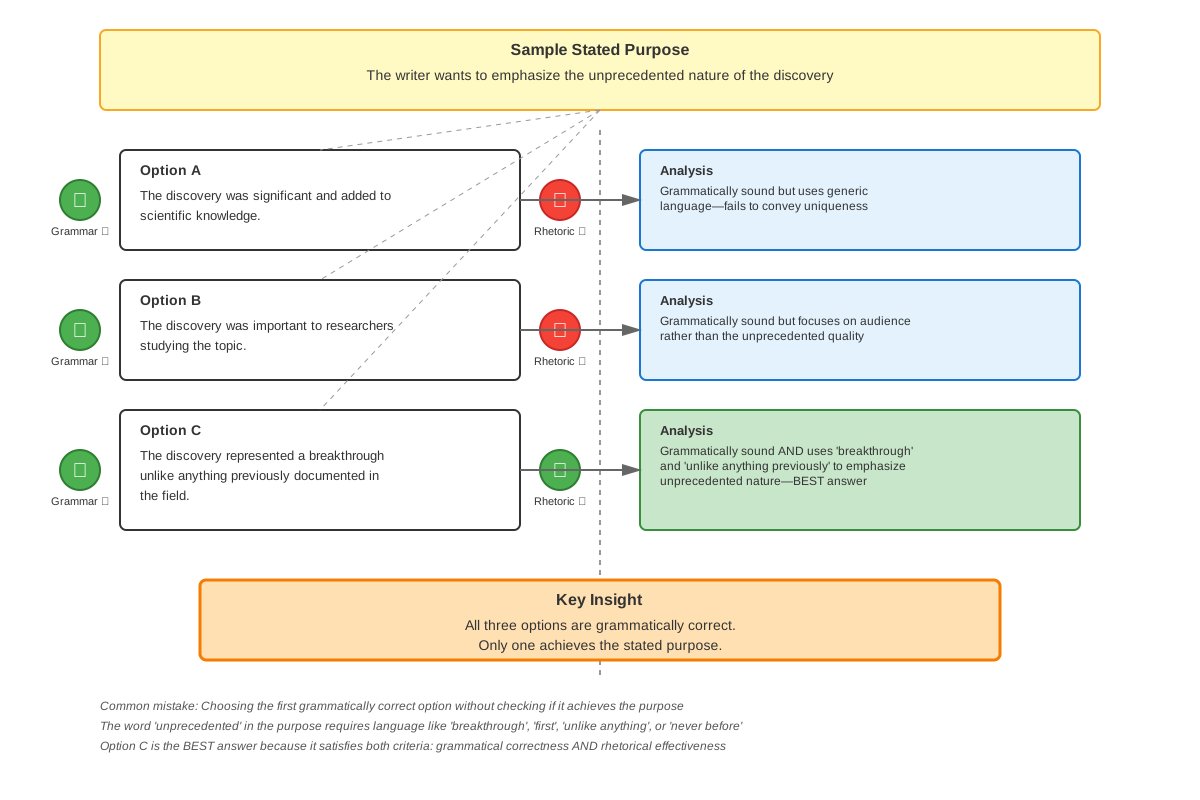
The SAT tests this understanding by explicitly stating the purpose and asking which revision best achieves it. This format removes ambiguity about what the writer wants to accomplish, focusing the question entirely on matching means to ends. Students must develop a mental framework that connects purposes with the textual features that typically serve them. For example, if the purpose is to "emphasize the unprecedented nature of the discovery," students should look for revisions that use superlatives, contrast with previous knowledge, or employ emphatic syntax.
Categories of Common Purposes
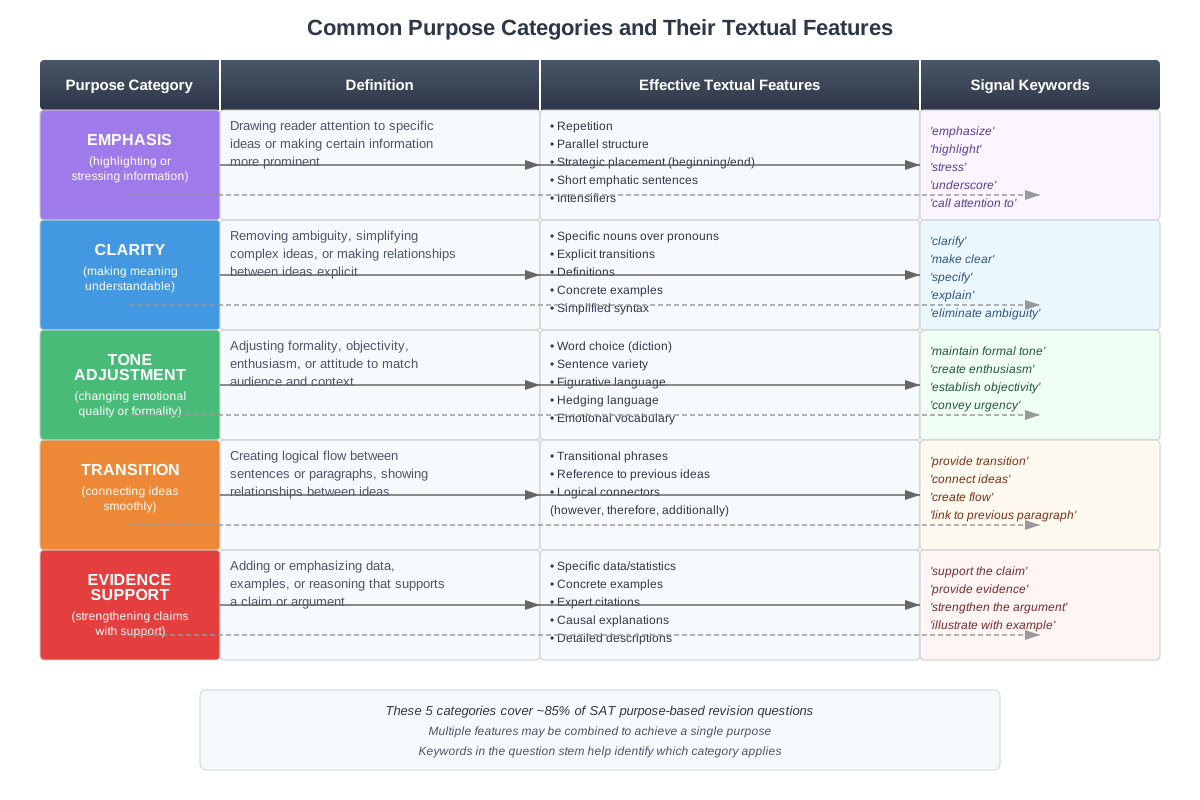
Purpose-based revision questions on the SAT typically fall into several recurring categories, each requiring different revision strategies:
| Purpose Category | What It Requires | Textual Features to Look For |
|---|---|---|
| Emphasis | Highlighting importance or significance | Strong word choice, positioning key information prominently, repetition, superlatives |
| Clarity | Making ideas easier to understand | Concrete examples, definitions, simpler syntax, explicit connections |
| Tone | Maintaining or establishing a particular attitude | Formal vs. informal diction, objective vs. subjective language, technical vs. accessible vocabulary |
| Transition | Connecting ideas smoothly | Transitional phrases, logical connectors, reference to previous content |
| Evidence | Supporting claims with specific information | Data, examples, quotations, concrete details |
| Concision | Expressing ideas efficiently | Elimination of redundancy, direct phrasing, active voice |
Understanding these categories allows students to quickly identify what type of revision a question demands. When a purpose statement includes words like "emphasize," "highlight," or "underscore," the question belongs to the emphasis category. When it mentions "clarify," "explain," or "make clear," it's a clarity question. This categorization enables strategic, efficient question-solving.
Evaluating Revision Options
Once students understand the stated purpose, they must evaluate four revision options. All options may be grammatically correct, but only one optimally achieves the purpose. This evaluation requires systematic comparison:
- Eliminate options that contradict the purpose: If the purpose is to emphasize significance, eliminate options that downplay or minimize
- Identify the specific mechanism each option uses: Does it add detail? Change word choice? Alter sentence structure? Provide an example?
- Match mechanisms to purposes: Determine which mechanism most directly serves the stated goal
- Consider context: Ensure the revision fits logically within the surrounding passage
This process transforms what might seem like a subjective judgment into a systematic analysis. Students should avoid choosing options based on what "sounds better" and instead focus on functional effectiveness—does this revision do what the purpose requires?
The Role of Context
Purpose-based revision questions never exist in isolation. The surrounding passage provides crucial context that constrains which revisions are appropriate. A revision might theoretically achieve a purpose but clash with the passage's established tone, contradict information presented elsewhere, or disrupt the logical flow of ideas. Strong test-takers read the full context carefully, noting:
- The passage's overall tone (formal academic, conversational, technical, etc.)
- The main argument or thesis being developed
- The relationship between the sentence in question and surrounding sentences
- Any constraints mentioned in the purpose statement (e.g., "while maintaining the formal tone")
Context awareness prevents students from selecting revisions that achieve the stated purpose in isolation but fail when integrated into the passage. This holistic evaluation distinguishes sophisticated readers from those who focus narrowly on individual sentences.
Distinguishing Correctness from Effectiveness
A critical insight for purpose-based revision is that grammatical correctness does not equal rhetorical effectiveness. All four answer options on SAT questions are typically grammatically acceptable; the question tests whether students can identify which correct option best serves the purpose. This distinction requires moving beyond error-detection mode into strategic evaluation mode.
For example, consider these three grammatically correct ways to express an idea:
- "The experiment produced interesting results."
- "The experiment yielded groundbreaking findings that challenged existing theories."
- "The experiment generated data."
If the purpose is to "emphasize the significance of the experiment's outcome," the second option is superior despite all three being grammatically sound. Purpose-based revision questions test this higher-order thinking about language use.
Concept Relationships
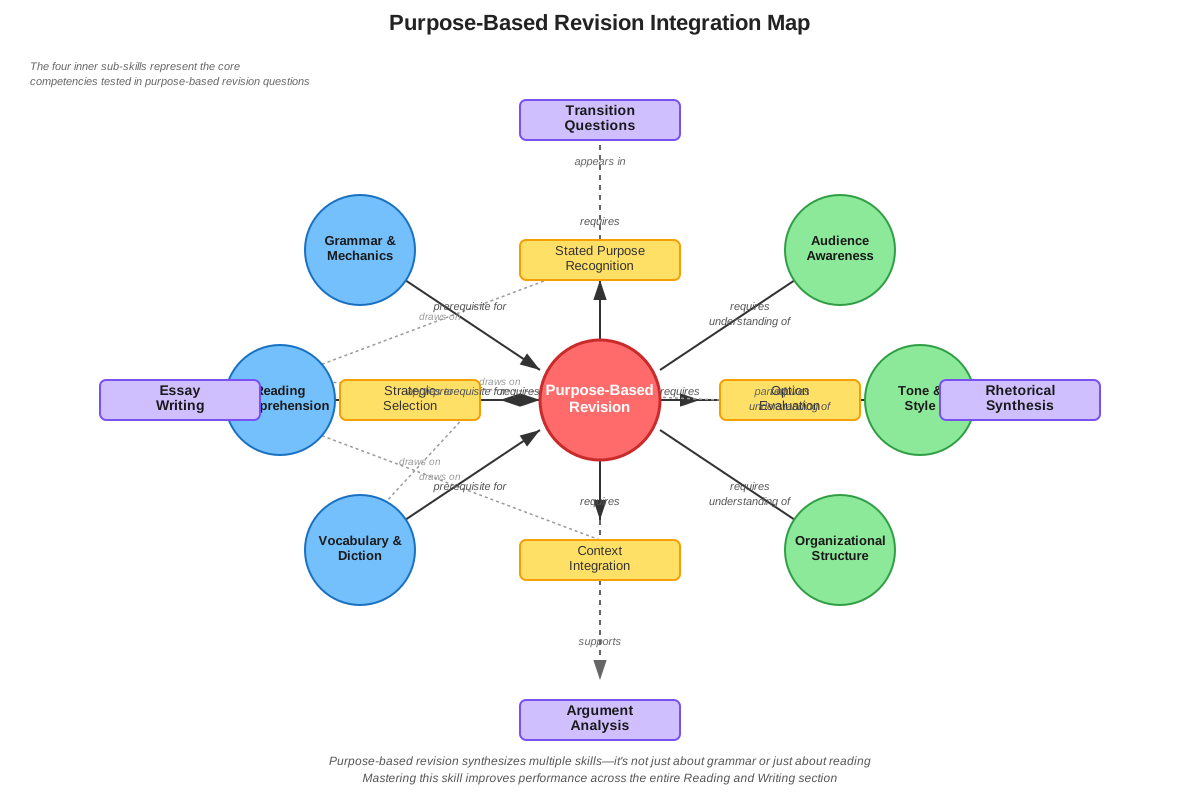
Purpose-based revision integrates multiple Reading and Writing skills into a unified task. At its foundation lies reading comprehension—students must understand the passage content and context before evaluating revisions. This comprehension feeds into rhetorical analysis, where students identify the writer's goals and strategies. The stated purpose in the question prompt serves as a bridge between these analytical skills and the evaluative judgment required to select the best revision.
The relationship flows as follows: Passage Context → Comprehension → Purpose Identification → Strategy Selection → Option Evaluation → Answer Choice. Each step depends on the previous one, making purpose-based revision a cumulative skill that draws on the full range of reading and writing competencies.
Within the Rhetorical Synthesis unit, purpose-based revision connects closely to other revision-focused skills. It shares with grammar revision questions the need to evaluate multiple options, but adds the layer of rhetorical purpose. It relates to transition questions by requiring awareness of how sentences connect, but expands beyond transitions to encompass all types of rhetorical goals. Understanding these connections helps students recognize that SAT Reading and Writing questions, while varied in format, all assess the fundamental ability to make strategic choices about language use.
High-Yield Facts
⭐ Purpose-based revision questions always include an explicitly stated goal that the revision should achieve—read this purpose statement carefully before evaluating options.
⭐ All four answer choices are typically grammatically correct—the question tests rhetorical effectiveness, not error identification.
⭐ The surrounding passage context constrains which revisions are appropriate—a revision must fit the established tone, argument, and logical flow.
⭐ Common purpose categories include emphasis, clarity, tone maintenance, transition, and evidence provision—recognizing the category helps identify what textual features to look for.
⭐ Emphasis purposes require strong word choice, strategic positioning, or explicit statements of significance—look for superlatives, emphatic syntax, or direct assertions of importance.
- Clarity purposes are best served by concrete examples, definitions, simpler syntax, or explicit explanations of complex ideas.
- Tone maintenance requires consistency in diction level (formal vs. informal), objectivity, and vocabulary sophistication.
- Transition purposes need logical connectors, references to previous content, or phrases that signal relationships between ideas.
- Evidence purposes demand specific details, data, examples, or quotations rather than general statements.
- The most effective revision achieves the stated purpose while maintaining coherence with the passage's overall argument and style.
- Purpose statements often include constraining phrases like "while maintaining the formal tone" or "without contradicting the previous sentence"—these constraints eliminate options that might otherwise achieve the purpose.
- When two options seem equally effective, the more concise option is typically preferred unless the purpose specifically requires elaboration.
Quick check — test yourself on Purpose-based revision so far.
Try Flashcards →Common Misconceptions
Misconception: The longest or most detailed option is always best for achieving emphasis.
Correction: Emphasis can be achieved through strong word choice, strategic positioning, or concise powerful statements. Sometimes a short, punchy revision emphasizes more effectively than a lengthy one. The key is whether the revision makes the significance explicit and prominent, not whether it uses more words.
Misconception: Purpose-based revision questions are asking which option "sounds best" or is most stylistically pleasing.
Correction: These questions have objectively correct answers based on how well each option achieves the stated purpose. Students should evaluate options functionally—does this revision do what the purpose requires?—rather than aesthetically. Personal preference is irrelevant; functional effectiveness is everything.
Misconception: If an option is grammatically correct and relates to the topic, it's a viable answer.
Correction: Viability depends on whether the option achieves the specific stated purpose. An option might be correct, relevant, and well-written but still wrong if it doesn't accomplish what the question asks for. Always return to the purpose statement when evaluating options.
Misconception: The passage context doesn't matter much since the question focuses on one specific sentence or phrase.
Correction: Context is crucial for determining whether a revision fits appropriately. A revision might achieve the stated purpose in isolation but clash with the passage's tone, contradict other information, or disrupt logical flow. Always consider how the revision functions within the broader passage.
Misconception: Adding more specific details or examples always improves a revision.
Correction: Specificity is valuable when the purpose involves providing evidence, clarifying, or illustrating, but it's irrelevant or even counterproductive for other purposes. If the purpose is to maintain concision or create a smooth transition, adding details would be inappropriate. Match the revision strategy to the specific purpose.
Misconception: Formal, academic language is always preferable on the SAT.
Correction: The appropriate tone depends on the passage's established style. Some passages use conversational or accessible language, and revisions must maintain that tone. If the purpose statement includes "while maintaining the passage's tone," students must match the existing style rather than defaulting to formal academic language.
Worked Examples
Example 1: Emphasis Purpose
Passage Context: "Marine biologists studying coral reefs in the Caribbean have observed significant changes in ecosystem composition over the past two decades. The decline in coral coverage has been documented across multiple sites. [Revision point] This trend has important implications for marine biodiversity."
Question: The writer wants to emphasize the severity of the coral decline. Which choice best accomplishes this goal?
A) This trend has important implications for marine biodiversity.
B) This alarming trend threatens to devastate marine biodiversity throughout the region.
C) This trend relates to marine biodiversity in various ways.
D) This trend, which concerns marine biodiversity, has been noted by researchers.
Analysis:
The stated purpose is to "emphasize the severity of the coral decline." This is an emphasis question requiring strong word choice and explicit statements of significance.
- Option A (original): Uses neutral language ("important implications") that acknowledges significance but doesn't emphasize severity. The word "important" is relatively weak for emphasis purposes.
- Option B: Uses strong, emphatic language ("alarming," "threatens to devastate") that directly conveys severity. The verb "devastate" is particularly powerful, and "throughout the region" expands the scope, increasing the sense of severity.
- Option C: Actually weakens emphasis by using vague language ("relates to...in various ways"). This is the opposite of what the purpose requires.
- Option D: Focuses on the fact that researchers noted the trend rather than on the severity itself. The phrase "has been noted" is passive and doesn't emphasize severity.
Answer: B
This revision achieves the purpose through multiple mechanisms: strong adjectives ("alarming"), powerful verbs ("threatens to devastate"), and expanded scope ("throughout the region"). It makes the severity explicit and prominent, fulfilling the emphasis purpose effectively.
Example 2: Clarity Purpose
Passage Context: "Photosynthesis allows plants to convert light energy into chemical energy. The process involves multiple stages. [Revision point] The light-dependent reactions occur first."
Question: The writer wants to clarify the relationship between the sentence and the previous one. Which choice best accomplishes this goal?
A) The light-dependent reactions occur first.
B) Interestingly, the light-dependent reactions occur first.
C) These stages begin with the light-dependent reactions.
D) The light-dependent reactions, which are fascinating, occur first.
Analysis:
The purpose is to "clarify the relationship between the sentence and the previous one." The previous sentence mentions "multiple stages," so the revision should explicitly connect to this concept.
- Option A (original): Introduces "light-dependent reactions" without connecting them to the "multiple stages" mentioned previously. The relationship is implicit but not clarified.
- Option B: Adds "interestingly," which provides emphasis or tone but doesn't clarify the relationship between sentences. The connection to "multiple stages" remains unclear.
- Option C: Explicitly references "these stages" (connecting to the previous sentence) and uses "begin with" to clarify that light-dependent reactions are the first of those stages. This creates a clear, explicit relationship.
- Option D: Adds a subjective evaluation ("fascinating") but doesn't clarify the relationship to the previous sentence about multiple stages.
Answer: C
This revision achieves the clarity purpose by explicitly referencing the previous sentence ("these stages") and clearly indicating the relationship (light-dependent reactions are the first stage). It transforms an implicit connection into an explicit one, which is exactly what clarity purposes require.
Exam Strategy
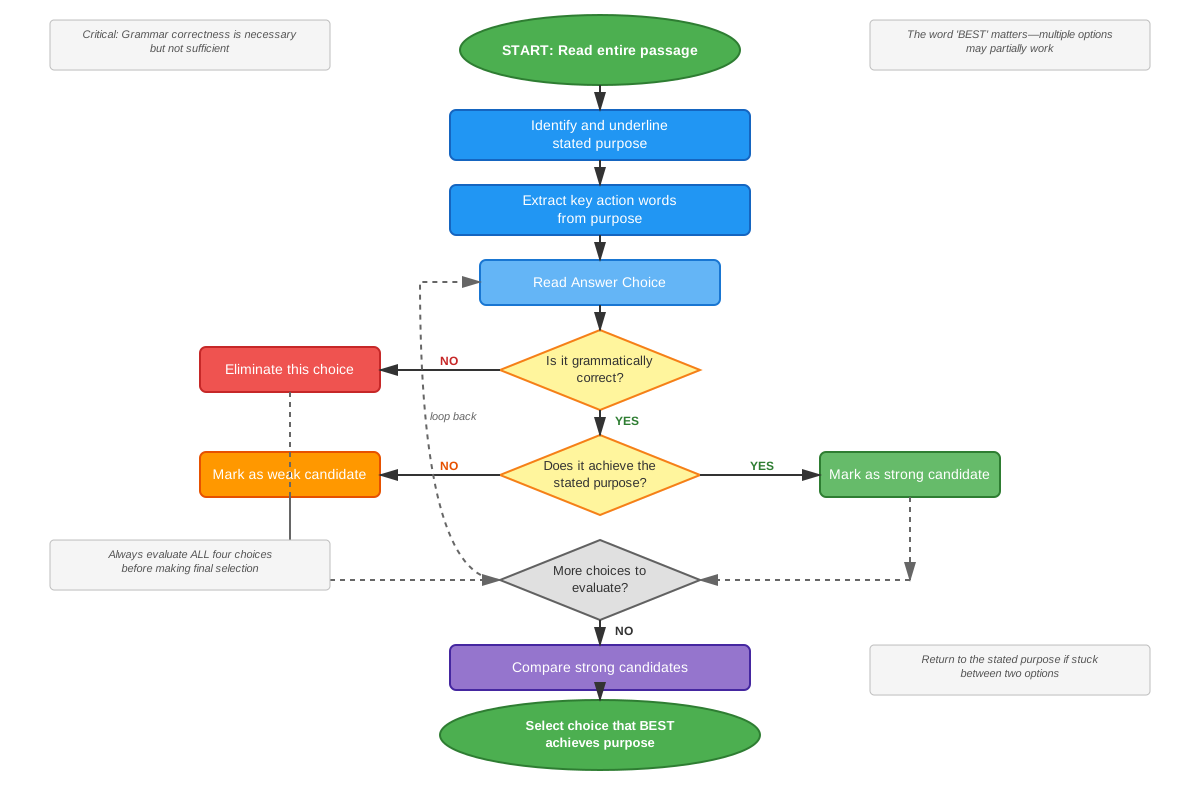
When approaching purpose-based revision questions on the SAT, follow this systematic process:
Step 1: Read the full context carefully (15-20 seconds). Don't jump immediately to the revision point. Understand the passage's main idea, tone, and the logical flow of the paragraph. Note any key terms or concepts that appear repeatedly.
Step 2: Read the purpose statement twice (5 seconds). Identify the specific goal and any constraints mentioned. Underline or mentally note key words in the purpose statement: "emphasize," "clarify," "maintain tone," "provide evidence," etc. If the purpose includes phrases like "while maintaining" or "without contradicting," these are crucial constraints.
Step 3: Categorize the purpose (3 seconds). Quickly determine whether this is an emphasis, clarity, tone, transition, evidence, or other type of question. This categorization tells you what textual features to look for in the options.
Step 4: Predict what an effective revision might include (5 seconds). Before reading the options, briefly consider what kind of revision would achieve this purpose. If it's emphasis, you'll need strong language. If it's clarity, you'll need explicit connections or examples. This prediction prevents you from being swayed by attractive but ineffective options.
Step 5: Evaluate each option against the purpose (20-25 seconds). Systematically check each option:
- Does it achieve the stated purpose?
- Does it fit the passage context and tone?
- Does it respect any stated constraints?
- Is it grammatically correct?
Step 6: Use process of elimination (10 seconds). Eliminate options that clearly don't achieve the purpose or that violate constraints. Often you can eliminate two options quickly, leaving a choice between two plausible answers.
Step 7: Compare remaining options directly (10 seconds). If two options both seem to achieve the purpose, identify the specific difference between them. Usually one will achieve the purpose more directly, more completely, or with better fit to the passage context.
Exam Tip: Watch for trigger words in purpose statements. "Emphasize" requires strong language. "Clarify" requires explicit connections or explanations. "Maintain tone" requires matching existing diction level. "Provide evidence" requires specific details or examples. These trigger words tell you exactly what to look for.
Time Management: Allocate approximately 60-75 seconds per purpose-based revision question. These questions require more time than simple grammar corrections because they demand contextual reading and rhetorical evaluation. Don't rush—these questions reward careful, systematic thinking.
Process of Elimination Tips:
- Eliminate options that contradict the purpose (e.g., if the purpose is emphasis, eliminate options with weak or neutral language)
- Eliminate options that clash with the passage's established tone
- Eliminate options that introduce information contradicting other parts of the passage
- When stuck between two options, choose the one that achieves the purpose more directly and explicitly
Memory Techniques
PACE Acronym for Evaluation Process:
- Purpose: What is the stated goal?
- Analyze: What category of purpose is this (emphasis, clarity, etc.)?
- Context: How does each option fit the passage?
- Effectiveness: Which option most directly achieves the purpose?
The "TONE CHECK" for Tone-Related Purposes:
- Technical vocabulary level—does it match?
- Objectivity vs. subjectivity—is it consistent?
- Neutral or emotional language—which does the passage use?
- Elevated or accessible diction—what's the passage's level?
Visualization Strategy: Picture purpose-based revision as archery. The stated purpose is the target, and each revision option is an arrow. Some arrows miss entirely (don't achieve the purpose), some land near the target (partially achieve it), and one hits the bullseye (achieves it most effectively). Your job is to identify the bullseye shot.
The "Three C's" for Clarity Purposes:
- Connect: Does it link explicitly to previous content?
- Concrete: Does it provide specific examples or details?
- Clear: Does it use straightforward language and syntax?
Emphasis Memory Device: "EMPHASIS = EXPLICIT + STRONG"
- Emphasis requires making significance EXPLICIT (stated directly, not implied)
- Emphasis requires STRONG language (powerful verbs, emphatic adjectives, superlatives)
Summary
Purpose-based revision is a high-frequency, high-value SAT Reading and Writing skill that tests whether students can select revisions that achieve specific rhetorical goals. Unlike grammar correction questions, these items present multiple grammatically correct options and ask students to identify which one best accomplishes a stated purpose such as emphasizing significance, clarifying relationships, maintaining tone, providing evidence, or creating smooth transitions. Success requires systematic evaluation: carefully reading the passage context, precisely understanding the stated purpose, categorizing the type of purpose, and then evaluating each option based on how effectively it achieves that goal while fitting the passage's tone and logical flow. The key insight is that correctness and effectiveness are different standards—all options may be correct, but only one is optimally effective for the stated purpose. Students must move beyond asking "what sounds good?" to asking "what accomplishes the specific goal?" This functional, purpose-driven approach to revision reflects real-world writing demands and predicts college readiness, making it a central component of the SAT's assessment of writing proficiency.
Key Takeaways
- Purpose-based revision questions explicitly state a rhetorical goal and ask which revision best achieves it—always read this purpose statement carefully before evaluating options
- All answer choices are typically grammatically correct; the question tests rhetorical effectiveness, not error identification
- Common purpose categories include emphasis (requiring strong language), clarity (requiring explicit connections or examples), tone maintenance (requiring consistent diction), transitions (requiring logical connectors), and evidence (requiring specific details)
- Passage context is crucial—revisions must fit the established tone, support the main argument, and maintain logical flow
- Systematic evaluation using the PACE framework (Purpose, Analyze, Context, Effectiveness) prevents errors and improves efficiency
- The most effective revision achieves the stated purpose directly and explicitly while respecting any constraints mentioned in the question
- When comparing similar options, choose the one that achieves the purpose more completely, more directly, or with better contextual fit
Related Topics
Transition and Cohesion: Building on purpose-based revision skills, this topic focuses specifically on how to create smooth connections between ideas using transitional phrases, logical connectors, and structural devices. Mastering purpose-based revision provides the foundation for understanding how individual sentences contribute to overall coherence.
Rhetorical Analysis: This advanced skill involves identifying and analyzing rhetorical strategies authors use to achieve their purposes. Purpose-based revision applies these analytical insights in reverse—using understanding of rhetorical strategies to create effective revisions.
Tone and Style Analysis: Closely related to purpose-based revision, this topic examines how word choice, syntax, and other language features create and maintain tone. Understanding tone analysis enhances the ability to select revisions that maintain consistency with passage style.
Evidence and Support: Many purpose-based revision questions ask students to select revisions that provide evidence or support claims. This related topic explores in depth how different types of evidence function rhetorically and how to evaluate evidence quality.
Practice CTA
Now that you've mastered the core concepts of purpose-based revision, it's time to apply this knowledge to authentic SAT-style questions. The practice questions and flashcards will reinforce your understanding of how to identify purposes, categorize question types, and systematically evaluate revision options. Remember: purpose-based revision is a skill that improves dramatically with deliberate practice. Each question you work through strengthens your ability to think strategically about language choices and rhetorical effectiveness. Approach the practice with confidence—you now have the framework and strategies to excel on these high-value questions. Your investment in mastering this topic will pay dividends across the entire Reading and Writing section!
Sign up free to keep reading
Create a free AnvayaPrep account to finish this SAT guide on Purpose-based revision — plus flashcards and practice questions.