Overview
Chronological structure is one of the most fundamental organizational patterns tested in the SAT Reading and Writing (RW) section. This text structure arranges information, events, or ideas in the order they occur in time, moving from earliest to latest or following a sequential progression. Understanding chronological structure is essential for SAT success because it appears frequently across multiple question types, including questions about text organization, author's purpose, and logical flow.
On the SAT, recognizing chronological structure helps students quickly comprehend passages, predict what information comes next, and identify how authors develop their arguments or narratives over time. This organizational pattern appears in historical accounts, biographical sketches, scientific process descriptions, and narrative passages. The ability to identify temporal markers, sequence indicators, and time-based transitions enables students to navigate complex passages efficiently and answer questions about how information is presented and why authors choose specific organizational strategies.
Mastering chronological structure connects directly to broader Reading and Writing skills tested on the SAT, including understanding text purpose, analyzing rhetorical choices, and evaluating logical coherence. This topic serves as a foundation for understanding more complex organizational patterns, such as cause-and-effect relationships embedded within timelines, comparative structures that track parallel developments, and argumentative texts that build claims through historical evidence. Students who excel at identifying chronological structure gain a significant advantage in comprehension speed and accuracy across the entire Reading and Writing section.
Learning Objectives
- [ ] Identify key features of chronological structure in SAT passages
- [ ] Explain how chronological structure appears on the SAT
- [ ] Apply chronological structure to answer SAT-style questions
- [ ] Recognize temporal markers and transition words that signal chronological organization
- [ ] Distinguish chronological structure from other organizational patterns (cause-effect, comparison, problem-solution)
- [ ] Analyze why authors choose chronological structure for specific purposes
- [ ] Evaluate the effectiveness of chronological organization in different passage types
Prerequisites
- Basic reading comprehension skills: Understanding main ideas and supporting details forms the foundation for recognizing how those ideas are organized
- Familiarity with transition words: Knowledge of connecting words helps identify the signals that mark chronological progression
- Understanding of text purpose: Recognizing why authors write (to inform, persuade, narrate) helps predict when chronological structure will be used
- Ability to identify main ideas: Distinguishing between major events and minor details is essential for tracking chronological progression
Why This Topic Matters
Chronological structure appears in approximately 15-20% of SAT Reading and Writing passages, making it one of the most frequently tested organizational patterns. Questions about text structure account for a significant portion of the Craft and Structure question category, which comprises roughly one-third of all Reading and Writing questions. Students who can quickly identify chronological organization save valuable time during the exam and answer related questions with greater accuracy.
In real-world contexts, chronological structure is the backbone of historical writing, scientific process descriptions, biographical accounts, news reporting, and instructional texts. Understanding this organizational pattern develops critical thinking skills applicable to college coursework across disciplines, from analyzing historical developments in humanities courses to following experimental procedures in science labs. Professional contexts—from project timelines to case reports—rely heavily on chronological organization.
On the SAT, chronological structure commonly appears in passages about historical events, scientific discoveries, biographical sketches of notable figures, descriptions of artistic or cultural movements, and explanations of processes or developments. Questions may ask students to identify the organizational pattern, explain why the author chose this structure, determine where specific information would logically fit, or analyze how the chronological arrangement supports the author's purpose. The Digital SAT format presents these passages in shorter, more focused segments, making pattern recognition even more valuable for efficient comprehension.
Core Concepts
Definition and Characteristics of Chronological Structure
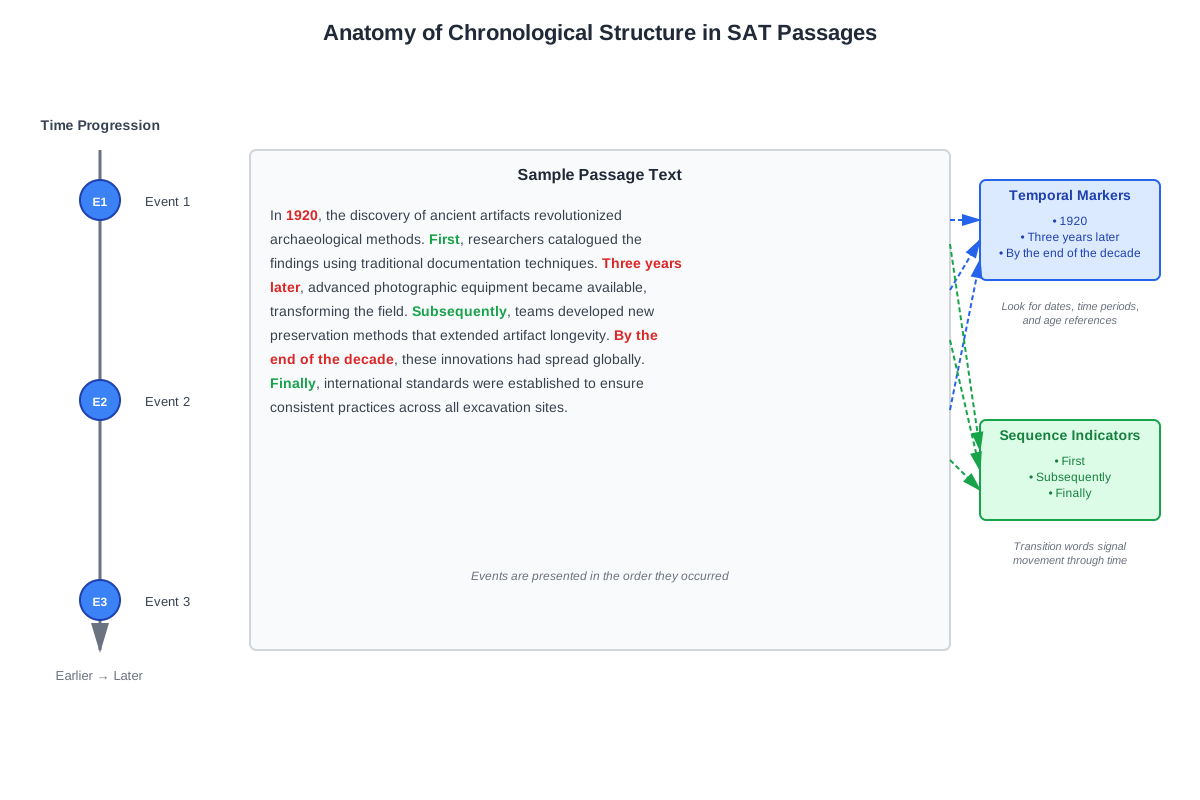
Chronological structure organizes information according to time sequence, presenting events, steps, or developments in the order they occurred or should occur. This organizational pattern follows a linear timeline, moving from earlier to later points. The structure can span vast historical periods (centuries of development) or brief moments (steps in a scientific procedure), but the defining characteristic remains temporal ordering.
Key features that identify chronological structure include:
- Temporal markers: Specific dates, times, or time periods (1776, the 1920s, during the Renaissance)
- Sequential indicators: Words showing order (first, next, then, finally, subsequently)
- Time-based transitions: Phrases marking temporal relationships (after this, before the war, following the discovery, meanwhile)
- Progressive development: Information building upon previous events or steps
- Clear beginning and ending points: Defined starting and concluding moments in the timeline
Types of Chronological Structure on the SAT
The SAT presents several variations of chronological organization, each serving different purposes:
| Type | Purpose | Common Passage Topics | Key Indicators |
|---|---|---|---|
| Historical Narrative | Recount events over time | Wars, movements, political developments | Dates, era names, "during," "throughout" |
| Biographical Sequence | Trace a person's life or career | Scientists, artists, leaders | Birth/death dates, age markers, life stages |
| Process Description | Explain steps in order | Scientific methods, artistic techniques | "First," "next," "then," numbered steps |
| Developmental Timeline | Show evolution or change | Scientific theories, cultural shifts | "Initially," "evolved," "eventually," "by the time" |
| Cause-Effect Chain | Link events through time | Discoveries leading to innovations | "Led to," "resulted in," "consequently" (with time element) |
Temporal Markers and Transition Words
Recognizing temporal markers is crucial for identifying chronological structure quickly. These linguistic signals guide readers through the timeline:
Explicit time markers:
- Specific dates and years (1865, March 15, the 21st century)
- Historical periods (the Industrial Revolution, the Baroque era, the Cold War)
- Age or duration indicators (at age 25, after three years, within a decade)
Sequential transition words:
- Beginning: initially, first, originally, at the outset, to begin with
- Middle: next, then, subsequently, afterward, following this, meanwhile, simultaneously
- End: finally, ultimately, eventually, in the end, by the conclusion
Temporal relationship phrases:
- Before/after relationships: prior to, preceding, following, in the wake of
- During relationships: while, as, throughout, amid, in the midst of
- Progressive relationships: gradually, progressively, over time, as time passed
How Authors Use Chronological Structure
Authors select chronological structure for specific rhetorical purposes that SAT questions frequently address:
- To establish causation: Showing events in sequence helps readers understand cause-and-effect relationships
- To demonstrate development: Tracking changes over time reveals evolution, progress, or decline
- To create narrative coherence: Temporal order provides natural flow in storytelling
- To explain processes: Step-by-step sequences ensure clarity in instructional or explanatory texts
- To build arguments: Historical evidence arranged chronologically can support claims about trends or patterns
Variations and Modifications
While pure chronological structure follows strict temporal order, SAT passages sometimes employ variations:
Flashback structure: Begins at a later point, then returns to earlier events before resuming forward progression. Markers include "earlier," "previously," "years before," or "looking back."
Parallel timelines: Presents two or more chronological sequences simultaneously, often comparing developments in different locations or fields. Markers include "meanwhile," "at the same time," "while this occurred," or "simultaneously."
Reverse chronological: Moves from most recent to earliest events, common in passages analyzing current situations by examining their historical roots. Markers include "before this," "earlier," "previously," or "tracing back."
Concept Relationships
Chronological structure serves as a foundational organizational pattern that connects to multiple other text structure concepts. Understanding these relationships enhances comprehension and question-answering ability.
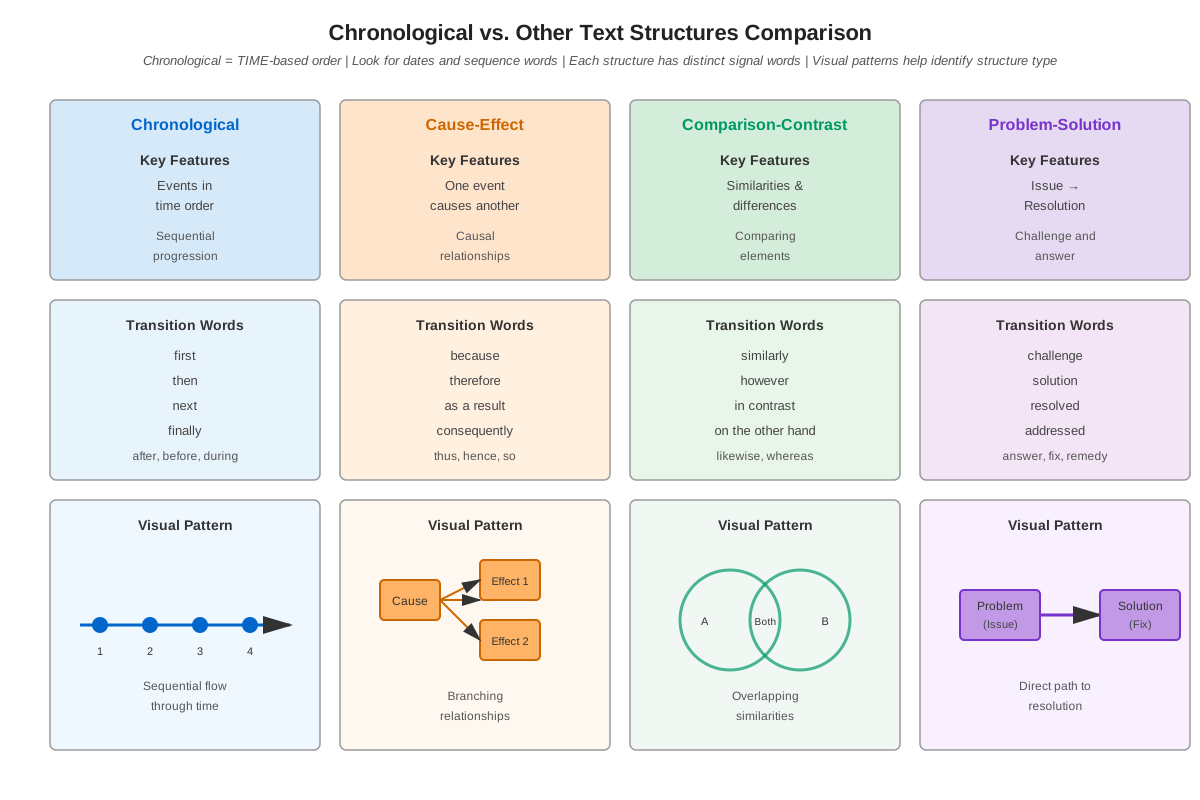
Chronological structure → Cause-and-effect structure: Temporal sequence often reveals causal relationships. When events are presented chronologically, readers can identify which events caused subsequent developments. Many SAT passages combine these structures, using chronological order to establish causation.
Chronological structure → Problem-solution structure: Historical passages frequently present problems chronologically (when they emerged) followed by solutions (when they were implemented). The chronological framework provides context for understanding why specific solutions were developed.
Chronological structure → Compare-contrast structure: Parallel chronological timelines enable comparison between simultaneous developments in different contexts. For example, a passage might chronologically trace scientific advances in two countries during the same period.
Text purpose → Chronological structure choice: Authors writing to inform about historical events, explain processes, or narrate experiences naturally select chronological organization. Understanding author's purpose helps predict organizational structure.
Temporal markers → Comprehension efficiency: Recognizing time-based transitions allows readers to quickly map the passage's organization, improving reading speed and retention. This skill connects to broader transition word knowledge.
Chronological structure → Supporting evidence analysis: In argumentative passages, chronologically arranged evidence helps readers evaluate the strength and relevance of historical examples supporting claims.
High-Yield Facts
⭐ Chronological structure organizes information in time order, from earliest to latest events or steps
⭐ Temporal markers (dates, time periods, sequential words) are the primary signals of chronological organization
⭐ SAT passages use chronological structure for historical accounts, biographical sketches, process descriptions, and developmental timelines
⭐ Questions about chronological structure often ask why the author chose this organization or where information would logically fit
⭐ Transition words like "first," "then," "subsequently," "finally," and "eventually" indicate chronological progression
- Chronological structure can be combined with other organizational patterns, particularly cause-effect relationships
- Flashback structure temporarily interrupts chronological order but returns to forward temporal progression
- Parallel chronological timelines present simultaneous developments in different contexts
- Authors choose chronological structure to establish causation, demonstrate development, or explain processes clearly
- Recognizing chronological structure improves reading speed by helping readers predict what information comes next
- The Digital SAT presents shorter passages where quick pattern recognition is especially valuable
- Biographical passages almost always use chronological structure, at least partially
- Scientific process descriptions rely on chronological structure to ensure clarity and replicability
- Historical passages may use reverse chronological structure when analyzing current situations through past events
- Understanding chronological structure helps students eliminate incorrect answer choices about text organization
Common Misconceptions
Misconception: Any passage mentioning dates or time periods uses chronological structure → Correction: Chronological structure requires information to be organized primarily by temporal sequence. A passage might mention various dates while organizing information by topic, comparison, or argument rather than time order. The overall organizational principle, not merely the presence of dates, determines the structure.
Misconception: Chronological structure only appears in history passages → Correction: While historical accounts frequently use chronological organization, this structure appears across diverse passage types including scientific process descriptions, biographical sketches, explanations of artistic or cultural developments, and even some argumentative texts that build claims through temporal evidence. Any passage explaining how something developed, changed, or occurred over time may use chronological structure.
Misconception: Chronological structure always moves from past to present → Correction: While forward chronological progression is most common, passages may use reverse chronological structure (present to past), flashback structure (later point, then earlier, then resuming forward), or parallel timelines (simultaneous developments). The key feature is temporal organization, not necessarily forward movement.
Misconception: If a passage has one flashback, it doesn't use chronological structure → Correction: Brief departures from strict chronological order don't negate the overall organizational pattern. Many chronologically structured passages include short flashbacks, background information, or contextual asides before returning to the main timeline. The predominant organizational principle determines the structure.
Misconception: Chronological structure is the simplest and least sophisticated organizational pattern → Correction: Chronological structure can be highly sophisticated, especially when authors use temporal organization to reveal complex causal relationships, demonstrate nuanced developments, or build intricate arguments through historical evidence. The effectiveness of any organizational pattern depends on how well it serves the author's purpose, not its perceived complexity.
Misconception: All biographical passages follow strict birth-to-death chronological order → Correction: While biographical passages often use chronological structure, they may focus on specific periods, organize by themes or achievements rather than strict timeline, or use modified chronological approaches that emphasize certain life phases over others. SAT biographical passages frequently highlight particular accomplishments or contributions rather than comprehensive life narratives.
Quick check — test yourself on Chronological structure so far.
Try Flashcards →Worked Examples
Example 1: Identifying Chronological Structure
Passage:
"Marie Curie's groundbreaking research began in 1891 when she enrolled at the University of Paris to study physics and mathematics. By 1895, she had met and married Pierre Curie, with whom she would conduct revolutionary experiments on radioactivity. In 1898, the couple discovered two new elements, polonium and radium, fundamentally changing scientific understanding of atomic structure. Following Pierre's tragic death in 1906, Marie continued their research alone, becoming the first woman to win a Nobel Prize in 1903 and the first person to win Nobel Prizes in two different sciences when she received her second award in 1911. Throughout World War I, from 1914 to 1918, Curie developed mobile X-ray units to assist battlefield surgeons. She spent her final years, until her death in 1934, advocating for scientific research and training the next generation of physicists."
Question: The passage is primarily organized by:
A) Comparing Curie's achievements to those of her contemporaries
B) Presenting Curie's life and work in chronological order
C) Explaining the causes and effects of Curie's discoveries
D) Contrasting Curie's early and later career phases
Solution:
Step 1: Identify organizational signals in the passage. The passage contains numerous temporal markers: "began in 1891," "By 1895," "In 1898," "Following Pierre's tragic death in 1906," "from 1914 to 1918," "until her death in 1934."
Step 2: Trace the information flow. The passage moves systematically from Curie's university enrollment (1891) through her marriage (1895), discoveries (1898), Nobel Prizes (1903, 1911), wartime work (1914-1918), and final years (until 1934). Each piece of information follows temporal sequence.
Step 3: Evaluate answer choices:
- Choice A: No comparisons to contemporaries appear in the passage
- Choice B: The passage follows Curie's life from 1891 to 1934 in time order—this matches the organizational pattern
- Choice C: While causes and effects are mentioned, they're not the organizing principle; time order is
- Choice D: The passage doesn't emphasize contrast between career phases; it presents continuous chronological development
Step 4: Confirm the answer. The predominant organizational pattern is temporal sequence, with explicit dates marking progression through Curie's life and career.
Answer: B
Connection to learning objectives: This example demonstrates identifying key features of chronological structure (temporal markers, sequential progression) and applying this knowledge to answer SAT-style questions about text organization.
Example 2: Analyzing Purpose of Chronological Structure
Passage:
"The development of photography transformed artistic representation throughout the 19th century. Initially, in the 1820s, Joseph Nicéphore Niépce created the first permanent photograph using a camera obscura and light-sensitive materials, though the exposure required eight hours. By the 1830s, Louis Daguerre had refined the process, reducing exposure time to mere minutes and producing sharper images called daguerreotypes. Subsequently, in 1841, William Henry Fox Talbot introduced the negative-positive process, enabling multiple copies of a single image for the first time. As the century progressed, technological improvements continued: collodion wet plates in the 1850s offered greater detail, while dry plates in the 1870s finally made photography practical for widespread use. By the 1880s, George Eastman's introduction of flexible film and the Kodak camera democratized photography, transforming it from a specialized craft into a popular hobby. This progressive refinement of photographic technology ultimately challenged painters to reconsider their artistic purposes, contributing to the emergence of Impressionism and other modern art movements."
Question: The author organizes the passage chronologically primarily to:
A) Argue that photography is superior to traditional painting
B) Demonstrate how sequential innovations made photography increasingly accessible
C) Compare the contributions of different inventors
D) Explain why modern art movements emerged
Solution:
Step 1: Confirm the organizational structure. The passage clearly uses chronological structure, moving from the 1820s through the 1880s with explicit temporal markers.
Step 2: Identify the author's purpose. The passage traces how photography evolved from requiring eight-hour exposures to becoming a "popular hobby," emphasizing progressive improvements in accessibility and practicality.
Step 3: Analyze how chronological structure serves this purpose. By presenting innovations in time order, the author shows cumulative progress: each development built upon previous ones, gradually making photography more practical and accessible.
Step 4: Evaluate answer choices:
- Choice A: The passage doesn't argue for photography's superiority; it describes its development
- Choice B: The chronological structure directly supports showing how sequential innovations (shorter exposures → multiple copies → greater detail → widespread practicality) increased accessibility—this matches the passage's purpose
- Choice C: While different inventors are mentioned, comparison isn't the primary purpose; their contributions are presented as sequential steps in a larger development
- Choice D: Modern art movements are mentioned only in the final sentence as a consequence, not as the main focus
Step 5: Connect structure to purpose. The chronological organization enables readers to see the progressive refinement and increasing accessibility of photography over time.
Answer: B
Connection to learning objectives: This example demonstrates explaining how chronological structure appears on the SAT and analyzing why authors choose this organizational pattern for specific rhetorical purposes.
Exam Strategy
Approaching Chronological Structure Questions
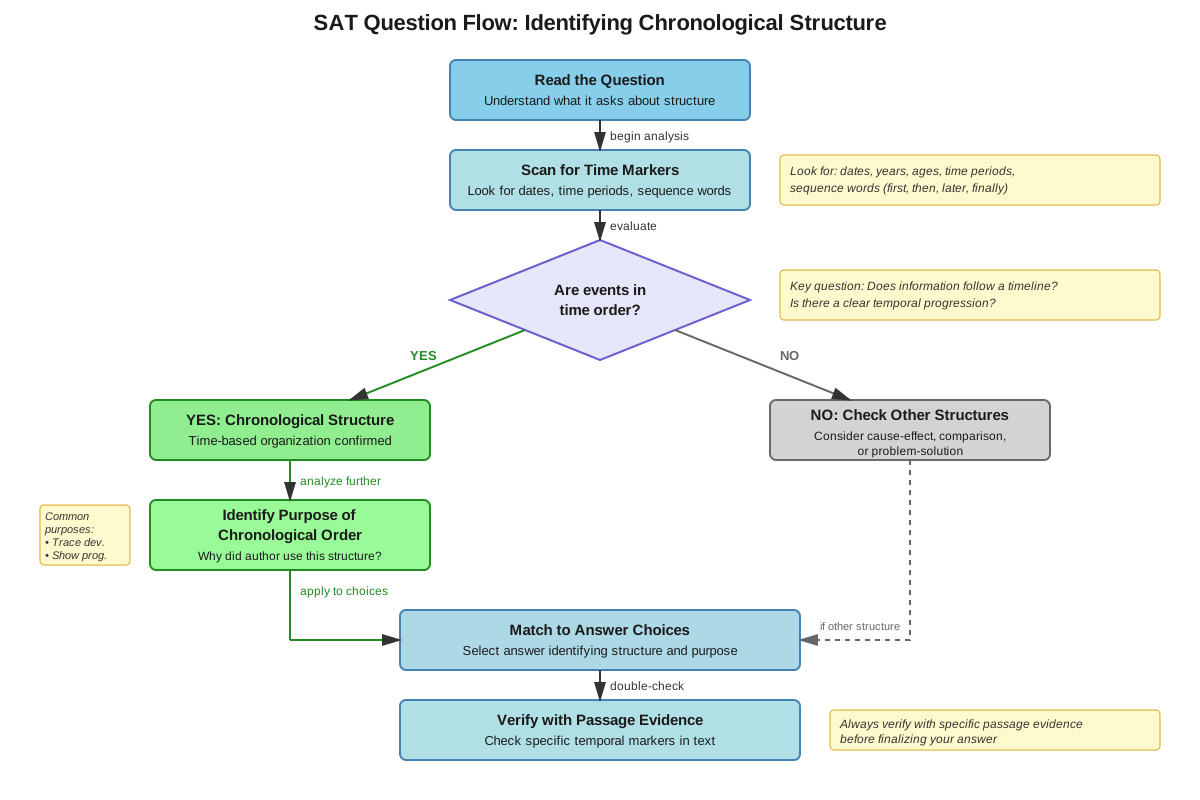
When encountering SAT questions about text organization, follow this systematic approach:
- Scan for temporal markers first: Before reading the entire passage, quickly identify dates, time periods, and sequential transition words. This 10-second scan often reveals the organizational pattern immediately.
- Map the information flow: As you read, mentally note or briefly jot down the sequence of main points. For chronological passages, this creates a timeline that helps answer questions about where information fits or why the author chose this organization.
- Distinguish structure from content: Remember that chronological structure describes how information is organized, not what the passage is about. A passage about scientific discoveries might be organized chronologically, thematically, or by cause-effect—the topic doesn't determine the structure.
Trigger Words and Phrases
Watch for these high-yield signals that indicate chronological structure:
Absolute indicators (almost always signal chronological organization):
- Specific dates and years
- "First... then... finally" sequences
- "Initially... subsequently... eventually" progressions
- "Throughout [time period]"
- "By [date/time]"
Strong indicators (frequently signal chronological organization):
- "Began," "started," "originated"
- "Developed," "evolved," "progressed"
- "Following," "after," "before," "during"
- "Meanwhile," "simultaneously," "at the same time"
- Life stage markers (childhood, adolescence, later years)
Context-dependent indicators (may signal chronological or other structures):
- "Led to," "resulted in" (could be cause-effect or chronological)
- "Changed," "transformed" (could be comparison or chronological)
- "Process," "development" (usually chronological but verify)
Process-of-Elimination Tips
When answering questions about chronological structure:
Eliminate answers that describe other organizational patterns:
- Comparison/contrast language: "similarities and differences," "unlike," "in contrast"
- Problem-solution language: "challenge," "solution," "resolved"
- Cause-effect language (without temporal element): "because," "therefore," "as a result"
- Thematic organization: "aspects," "categories," "types"
Eliminate answers that misidentify the author's purpose:
- If the passage traces development over time, eliminate answers suggesting the author's main purpose is comparison or argumentation
- If the passage explains a process, eliminate answers suggesting the primary purpose is persuasion
Confirm your answer by checking:
- Does the passage predominantly move through time?
- Are the main points organized by when they occurred rather than by topic, importance, or logical argument?
- Would rearranging the information by time significantly change the passage's coherence?
Time Allocation Advice
For questions about chronological structure on the Digital SAT:
- Spend 5-10 seconds scanning for temporal markers before reading the full passage
- Invest 30-45 seconds reading chronologically organized passages (they're often easier to follow than argumentative texts)
- Allocate 20-30 seconds per structure question, as they typically require less re-reading than detail questions
- Use chronological structure recognition to speed up other question types: knowing the organizational pattern helps you locate specific information quickly
Exam Tip: If a question asks where a sentence would logically fit in a chronologically organized passage, immediately check for temporal markers in the sentence and match them to the timeline established in the passage. This strategy often leads directly to the correct answer without extensive re-reading.
Memory Techniques
Acronym for Chronological Structure Features
TIME-S helps remember key features to identify chronological structure:
- Temporal markers (dates, time periods)
- Indicators of sequence (first, next, then, finally)
- Movement through time (progression from earlier to later)
- Events or steps in order
- Signals of temporal relationships (before, after, during, meanwhile)
Visualization Strategy
Picture chronological structure as a timeline road: The passage is a journey along a road where each mile marker represents a temporal marker (date, time period, or sequential indicator). As you read, visualize yourself traveling along this road, passing each marker in order. This mental image helps you:
- Recognize when information is out of chronological order (you've "gone backward" on the road)
- Identify where new information would fit (which mile markers it falls between)
- Remember the sequence of events (the order of markers along your journey)
Mnemonic for Common Temporal Transitions
"First Bears Then Finally Sleep" represents the most common chronological transition sequence:
- First (beginning markers: initially, originally, at the outset)
- Bears (continuing markers: before, after, during)
- Then (middle markers: then, next, subsequently, afterward)
- Finally (ending markers: finally, ultimately, eventually, in the end)
- Sleep (simultaneous markers: simultaneously, meanwhile, at the same time)
Pattern Recognition Shortcut
Remember the "3-Date Rule": If a passage contains three or more specific dates or time periods distributed throughout the text, chronological structure is highly likely. This quick check helps you identify the organizational pattern within seconds of beginning to read.
Summary
Chronological structure organizes information according to temporal sequence, presenting events, steps, or developments in the order they occurred. This organizational pattern is one of the most frequently tested on the SAT Reading and Writing section, appearing in approximately 15-20% of passages across diverse topics including historical accounts, biographical sketches, scientific processes, and cultural developments. Recognizing chronological structure requires identifying temporal markers (specific dates, time periods), sequential indicators (first, next, then, finally), and time-based transitions (before, after, during, meanwhile). The SAT tests chronological structure through questions about text organization, author's purpose, logical placement of information, and rhetorical effectiveness. Authors choose chronological structure to establish causation, demonstrate development over time, create narrative coherence, explain processes clearly, or build arguments through historical evidence. Mastering this topic enables students to comprehend passages more efficiently, predict information flow, and answer structure-related questions accurately, providing a significant advantage across the entire Reading and Writing section.
Key Takeaways
- Chronological structure organizes information by time sequence, using temporal markers, sequential indicators, and time-based transitions as primary signals
- Temporal markers include specific dates, time periods, and sequential words like "first," "then," "subsequently," and "finally"
- SAT passages use chronological structure for historical accounts, biographical sketches, process descriptions, and developmental timelines, making it one of the most frequently tested organizational patterns
- Questions about chronological structure ask about text organization, author's purpose, logical information placement, and rhetorical effectiveness
- Authors choose chronological structure to establish causation, demonstrate development, explain processes, or build historical arguments
- Quick recognition of chronological structure improves reading speed and comprehension by helping students predict information flow and locate specific details efficiently
- Chronological structure can be modified through flashbacks, parallel timelines, or reverse chronological order while maintaining temporal organization as the primary principle
Related Topics
Cause-and-Effect Structure: Understanding how events lead to consequences builds directly on chronological structure, as temporal sequence often reveals causal relationships. Mastering chronological organization provides the foundation for analyzing more complex cause-effect chains.
Compare-and-Contrast Structure: Parallel chronological timelines enable comparison between simultaneous developments in different contexts. Students who understand chronological structure can more easily recognize when authors use temporal organization to facilitate comparison.
Problem-Solution Structure: Many passages present problems and solutions chronologically, showing when issues emerged and when solutions were implemented. Chronological structure knowledge helps students recognize this combined organizational approach.
Author's Purpose and Rhetorical Choices: Understanding why authors choose specific organizational patterns, including chronological structure, connects to broader analysis of rhetorical effectiveness and text purpose—essential skills for SAT Reading and Writing success.
Transition Words and Cohesion: Temporal transitions are one category within the broader topic of how authors create coherent, well-connected texts. Mastering chronological structure deepens understanding of how transition words function across different organizational patterns.
Practice CTA
Now that you've mastered the core concepts of chronological structure, it's time to apply your knowledge! Complete the practice questions to test your ability to identify chronological organization, analyze temporal markers, and answer SAT-style questions about text structure. Use the flashcards to reinforce key terminology and features of chronological structure. Remember, recognizing organizational patterns quickly is a skill that improves with practice—each question you work through strengthens your pattern recognition abilities and builds confidence for test day. You've built a strong foundation; now demonstrate your mastery through focused practice!
Sign up free to keep reading
Create a free AnvayaPrep account to finish this SAT guide on Chronological structure — plus flashcards and practice questions.