Overview
Verb mood is a grammatical concept that indicates the attitude or intent behind a verb's action. On the ACT English test, understanding verb mood is crucial for identifying and correcting errors in sentence construction, particularly when dealing with conditional statements, commands, wishes, and hypothetical situations. The three primary moods in English—indicative, imperative, and subjunctive—each serve distinct communicative purposes, and the ACT frequently tests whether students can recognize when the wrong mood has been used or when a shift in mood creates inconsistency within a sentence or passage.
The ACT English section places significant emphasis on verb mood because it directly affects clarity and grammatical correctness. Questions testing ACT verb mood typically appear 2-4 times per test, often embedded within longer passages where students must identify subtle errors in conditional constructions or hypothetical statements. These questions assess not just recognition of grammatical rules but also the ability to understand how mood affects meaning and tone. Mastering verb mood enables students to distinguish between statements of fact, commands, and contrary-to-fact situations—a skill that extends beyond test-taking into effective written communication.
Verb mood connects intimately with other grammar concepts tested on the ACT, including verb tense, subject-verb agreement, and parallel structure. While verb tense indicates when an action occurs, verb mood reveals the speaker's attitude toward that action. Understanding this distinction helps students avoid confusion when encountering complex sentences that combine multiple verb forms. Additionally, maintaining consistent mood throughout parallel structures is a common testing point, making verb mood knowledge essential for achieving a top score on the ACT English section.
Learning Objectives
- [ ] Identify when verb mood is being tested in ACT English questions
- [ ] Explain the core rule or strategy behind verb mood usage
- [ ] Apply verb mood concepts to ACT-style questions accurately
- [ ] Distinguish between indicative, imperative, and subjunctive moods in context
- [ ] Recognize and correct inappropriate mood shifts within sentences and passages
- [ ] Construct grammatically correct conditional statements using appropriate verb moods
- [ ] Evaluate whether subjunctive mood is required in contrary-to-fact or hypothetical situations
Prerequisites
- Basic verb conjugation: Understanding how verbs change form is essential because mood often requires specific verb forms, particularly in subjunctive constructions.
- Subject-verb agreement: Recognizing proper agreement helps distinguish when unusual verb forms (like subjunctive) are intentionally used versus when they represent errors.
- Sentence structure fundamentals: Identifying independent and dependent clauses enables recognition of where mood shifts appropriately occur.
- Conditional sentence patterns: Familiarity with "if-then" constructions provides context for understanding when subjunctive mood is required.
Why This Topic Matters
Verb mood represents a sophisticated grammatical concept that separates competent writers from exceptional ones. In professional and academic writing, proper mood usage ensures precision in expressing facts, commands, recommendations, and hypothetical scenarios. Misusing verb mood can create ambiguity about whether a statement describes reality or possibility, potentially changing the entire meaning of a sentence. For instance, the difference between "If she was here" (indicative, suggesting uncertainty about a past fact) and "If she were here" (subjunctive, expressing a contrary-to-fact condition) fundamentally alters the sentence's meaning.
On the ACT English test, verb mood questions appear with moderate frequency but carry significant weight because they often combine with other grammatical concepts. Approximately 2-4 questions per test directly assess verb mood, typically appearing in passages that include recommendations, hypothetical situations, or formal proposals. These questions frequently test the subjunctive mood in particular, as it represents the most commonly misused mood in contemporary English. Students who master verb mood gain an advantage not only on direct mood questions but also on questions involving parallel structure, where maintaining consistent mood is essential.
The ACT presents verb mood questions in several characteristic ways: within formal proposals or recommendations ("The committee recommends that the policy be revised"), in contrary-to-fact conditional statements ("If I were wealthy, I would travel"), in expressions of wishes or demands ("She insisted that he arrive early"), and in parallel constructions where mood consistency must be maintained. Recognizing these patterns enables students to quickly identify when verb mood is being tested and apply the appropriate rules with confidence.
Core Concepts
The Three Primary Verb Moods
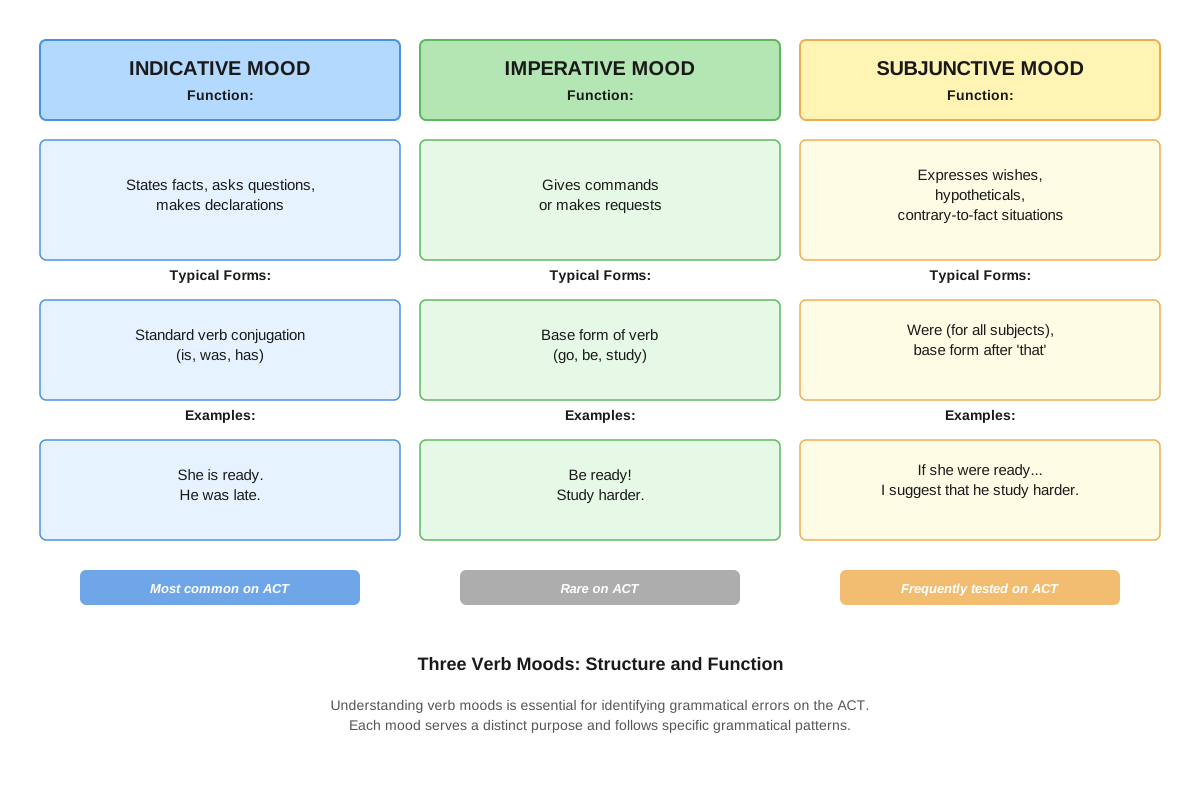
English employs three primary verb moods, each serving a distinct grammatical and communicative function. The indicative mood expresses statements of fact, opinions, or questions about reality. It represents the default mood used in most everyday communication. The imperative mood issues commands, requests, or instructions, typically with an implied subject "you." The subjunctive mood expresses wishes, hypothetical situations, recommendations, demands, or conditions contrary to fact. Understanding when each mood is appropriate forms the foundation of ACT verb mood mastery.
Indicative Mood
The indicative mood is the most common verb mood, used for stating facts, describing reality, and asking questions about actual situations. In indicative mood, verbs follow standard conjugation patterns and agree with their subjects in number and person. Examples include: "She walks to school every day" (present indicative), "They completed the assignment" (past indicative), and "Will you attend the meeting?" (future indicative question). On the ACT, the indicative mood itself rarely presents problems; instead, questions test whether students incorrectly use indicative when subjunctive is required.
Imperative Mood
The imperative mood issues commands, makes requests, or gives instructions. Imperative sentences typically omit the subject "you," which is understood. The verb appears in its base form: "Close the door," "Please submit your application by Friday," "Consider the implications carefully." The imperative mood appears less frequently in ACT testing than subjunctive mood, but students must recognize it to avoid confusion when analyzing sentence structure. Imperative mood can sometimes be mistaken for subjunctive because both use the base verb form, but context distinguishes them—imperatives directly address someone, while subjunctive appears in dependent clauses.
Subjunctive Mood: The ACT's Primary Focus
The subjunctive mood receives the most attention on the ACT because it follows specific rules that differ from standard verb conjugation. The subjunctive appears in several distinct contexts:
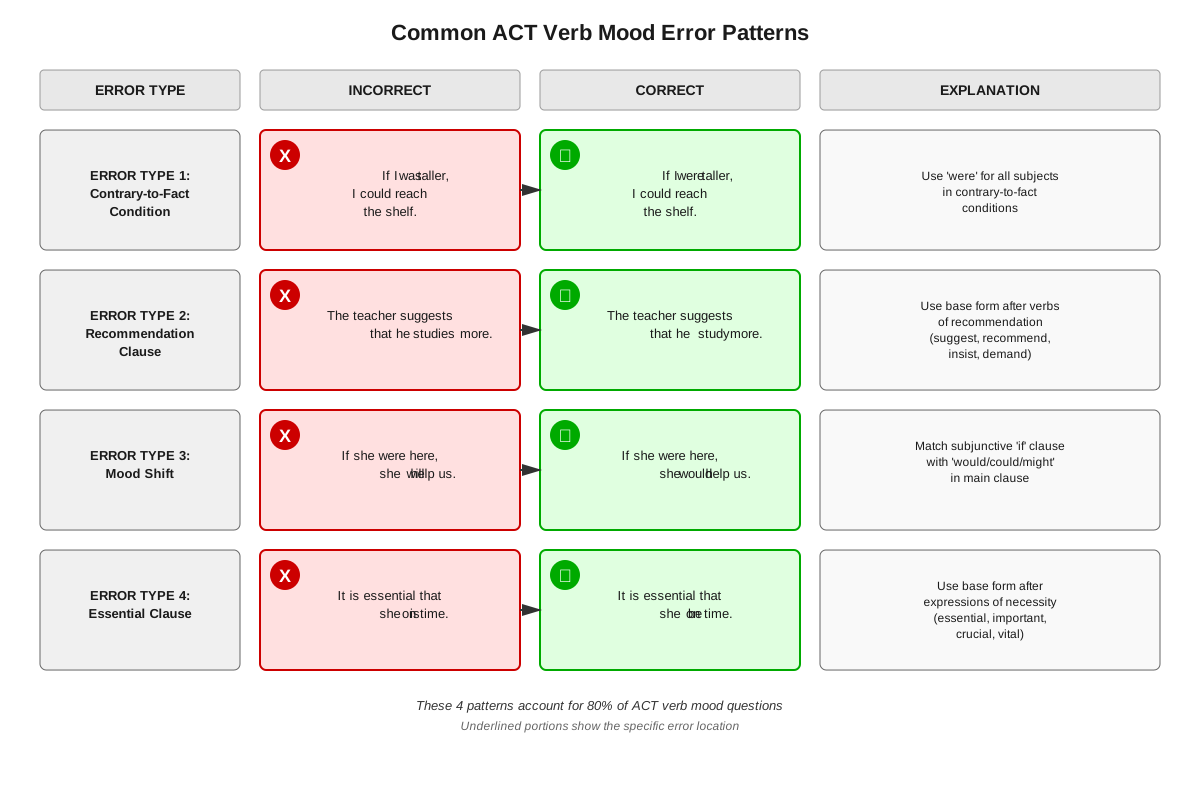
1. Contrary-to-fact conditions: When describing hypothetical situations that are not true or are unlikely, use subjunctive mood in the "if" clause. The key indicator is the verb "were" used with singular subjects: "If I were president" (not "was"), "If she were available" (not "was"). This construction signals that the condition is contrary to current reality.
2. Wishes and hypothetical desires: Expressions beginning with "wish," "as if," or "as though" require subjunctive mood: "I wish I were taller," "He acts as if he were the boss," "She speaks as though she were an expert."
3. Recommendations, demands, and requirements: After verbs expressing necessity, urgency, or importance (recommend, suggest, insist, demand, require, request, propose, urge, mandate), use subjunctive mood in the dependent clause. The verb appears in its base form without "s" for third-person singular: "The doctor recommends that she take the medication" (not "takes"), "The policy requires that each student submit a form" (not "submits"), "I insist that he be present" (not "is").
4. Formal proposals and resolutions: In official or formal contexts, subjunctive mood appears in "that" clauses following expressions of necessity: "It is essential that the meeting begin on time" (not "begins"), "It is crucial that he understand the risks" (not "understands").
Subjunctive Mood Formation
| Context | Subjunctive Form | Example |
|---|---|---|
| Present subjunctive (all persons) | Base form of verb | "I suggest that he go" (not "goes") |
| Past subjunctive (to be) | "were" for all persons | "If I were rich" (not "was") |
| Past subjunctive (other verbs) | Same as past indicative | "If she knew the answer" |
| Perfect subjunctive | "had" + past participle | "If I had known earlier" |
Mood Consistency and Parallel Structure
The ACT frequently tests whether students maintain consistent mood within parallel structures. When a sentence contains multiple verbs in a series or parallel clauses, they should maintain the same mood unless meaning requires a shift. Incorrect: "The instructions say to preheat the oven, grease the pan, and you should mix the ingredients." Correct: "The instructions say to preheat the oven, grease the pan, and mix the ingredients" (all imperative). Similarly, when listing recommendations, all dependent clauses should use subjunctive: "The committee recommends that fees be reduced, that services be expanded, and that hours be extended" (not "are extended").
Recognizing Trigger Words and Phrases
Certain words and phrases signal that subjunctive mood is required. Memorizing these triggers helps students quickly identify when to apply subjunctive rules:
- Verbs of recommendation/demand: recommend, suggest, propose, insist, demand, require, request, urge, mandate, ask, command, order
- Expressions of necessity: it is essential, it is crucial, it is important, it is necessary, it is vital, it is imperative
- Contrary-to-fact indicators: if + were, wish, as if, as though, would that
- Hypothetical conditions: if (in certain contexts), suppose, imagine
Concept Relationships
Verb mood connects to multiple grammatical concepts tested on the ACT. Verb tense and verb mood work together but serve different functions—tense indicates when an action occurs (past, present, future), while mood indicates the speaker's attitude toward the action (fact, command, hypothesis). Understanding this distinction prevents confusion when encountering sentences like "If I were there yesterday" where past time reference ("yesterday") combines with subjunctive mood ("were").
Subject-verb agreement interacts with verb mood because subjunctive mood intentionally violates standard agreement rules. In indicative mood, "he goes" follows agreement rules, but in subjunctive mood, "I recommend that he go" uses the base form regardless of the subject. Recognizing when this apparent disagreement is actually correct subjunctive usage is crucial for ACT success.
Parallel structure requires mood consistency when multiple verbs appear in a series. The relationship flows: identify parallel elements → determine appropriate mood for context → ensure all parallel verbs use the same mood. For example, in a list of recommendations, all dependent clauses must use subjunctive mood.
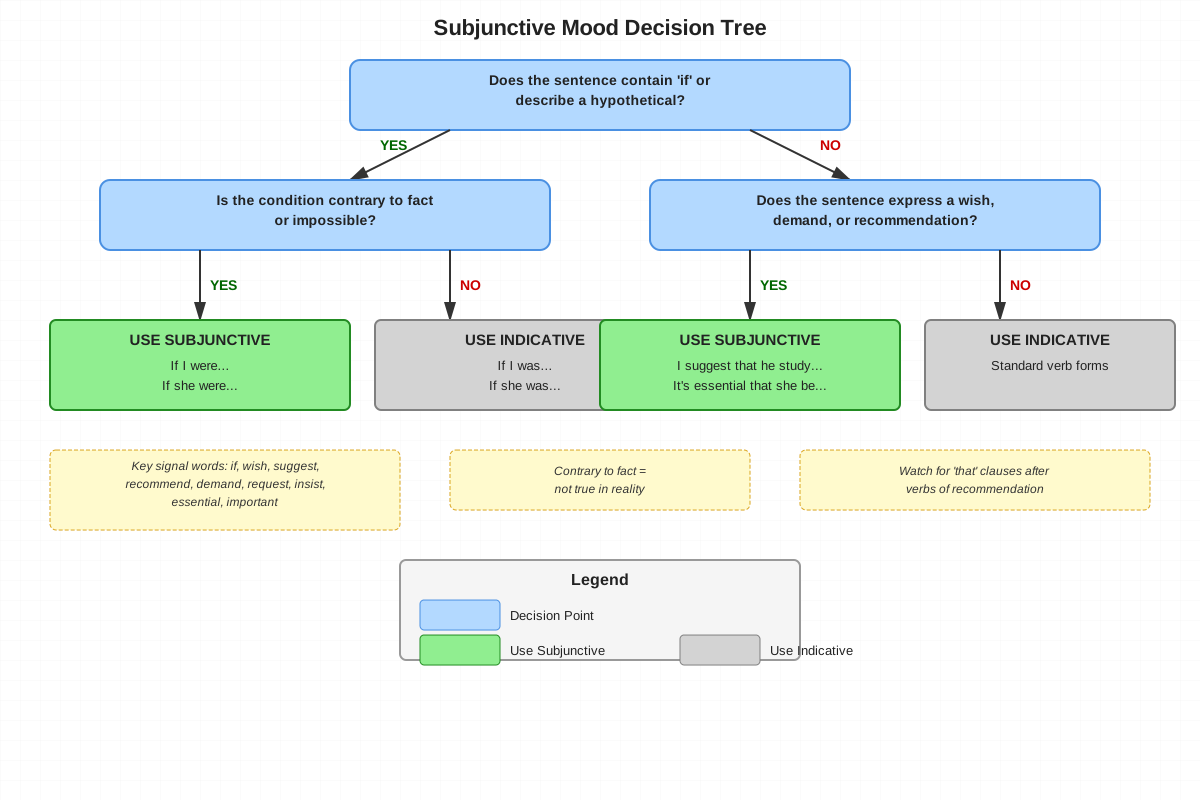
Conditional sentences represent the most common context where mood matters. The relationship follows this pattern: identify conditional construction → determine if condition is factual or contrary-to-fact → apply indicative mood for factual conditions or subjunctive mood for contrary-to-fact conditions. This decision tree helps students systematically approach conditional sentences on the ACT.
The conceptual flow for mastering verb mood proceeds: understand the three moods → recognize trigger words → identify context (fact, command, or hypothesis) → apply appropriate mood → check for consistency in parallel structures. Each step builds on the previous one, creating a systematic approach to verb mood questions.
Quick check — test yourself on Verb mood so far.
Try Flashcards →High-Yield Facts
⭐ The subjunctive mood uses "were" for all persons when expressing contrary-to-fact conditions: "If I were," "If he were," "If they were" (never "was" in subjunctive).
⭐ After verbs of recommendation or demand, the dependent clause uses the base form of the verb: "She insists that he go" (not "goes"), "They require that it be submitted" (not "is submitted").
⭐ Subjunctive mood does not add "s" to third-person singular verbs: "The rule mandates that each student complete the form" (not "completes").
⭐ "If I was" is indicative (uncertainty about past fact); "If I were" is subjunctive (contrary-to-fact condition): Context determines which is correct.
⭐ Expressions like "as if," "as though," and "wish" trigger subjunctive mood: "She acts as if she were the owner" (not "was").
- The imperative mood uses the base form of the verb and typically omits the subject "you": "Submit your application by Friday."
- Parallel structures must maintain consistent mood unless meaning requires a shift: all recommendations in a series should use subjunctive.
- The indicative mood is used for statements of fact, opinions, and questions about reality—it represents the default mood.
- Subjunctive mood appears in formal proposals and resolutions: "It is essential that the policy be reviewed" (not "is reviewed").
- Modern English has largely abandoned subjunctive mood in informal speech, but it remains standard in formal writing and on the ACT.
- The past perfect subjunctive uses "had" + past participle for hypothetical past conditions: "If I had known, I would have acted differently."
- Mood shifts within a sentence should be intentional and logical, not accidental or inconsistent.
- The subjunctive mood does not use helping verbs like "should" or "would" in the dependent clause after verbs of recommendation: "I suggest that he go" (not "should go").
Common Misconceptions
Misconception: "Was" and "were" are interchangeable in conditional statements. → Correction: "Was" is indicative mood (expressing uncertainty about a past fact), while "were" is subjunctive mood (expressing a contrary-to-fact condition). "If I was unclear" suggests possible past unclarity, while "If I were unclear" expresses a hypothetical condition.
Misconception: After verbs like "recommend" or "suggest," the dependent clause should use "should" + base verb. → Correction: Correct subjunctive mood uses only the base form of the verb without "should": "I recommend that she take the course" (not "should take"). While "should" is acceptable in informal speech, formal written English and the ACT prefer the pure subjunctive form.
Misconception: Third-person singular verbs always add "s" in present tense. → Correction: In subjunctive mood, the base form is used for all persons, including third-person singular: "The policy requires that he submit a report" (not "submits"). This apparent violation of subject-verb agreement is actually correct subjunctive usage.
Misconception: Subjunctive mood is outdated and no longer used in modern English. → Correction: While subjunctive mood has declined in informal speech, it remains standard in formal writing, academic contexts, and professional communication—exactly the register tested on the ACT. Mastering subjunctive mood is essential for formal written English.
Misconception: All "if" clauses require subjunctive mood. → Correction: Only contrary-to-fact or hypothetical "if" clauses use subjunctive mood. Factual or possible conditions use indicative mood: "If it is raining, bring an umbrella" (indicative—possible condition) versus "If it were summer, we could swim" (subjunctive—contrary to current fact).
Misconception: Imperative and subjunctive moods are the same because both use the base verb form. → Correction: While both use base forms, imperative mood issues direct commands to an implied "you" subject, while subjunctive mood appears in dependent clauses expressing hypothetical situations, recommendations, or contrary-to-fact conditions. Context and sentence structure distinguish them.
Worked Examples
Example 1: Identifying and Correcting Subjunctive Mood Errors
Original sentence: "The committee recommends that each member submits their proposal by Friday and that attendance is mandatory at the next meeting."
Analysis: This sentence contains two subjunctive mood errors. The verb "recommends" triggers subjunctive mood in the dependent clauses that follow. Let's examine each clause:
- "that each member submits their proposal" - The verb "submits" is in indicative mood (third-person singular with "s"), but subjunctive mood requires the base form "submit" after the recommendation verb.
- "that attendance is mandatory" - The verb "is" is indicative mood, but subjunctive mood requires the base form "be" after the recommendation verb.
Additionally, the sentence contains a pronoun agreement error ("their" with singular "member"), but focusing on mood, we need to correct the verb forms.
Corrected sentence: "The committee recommends that each member submit their proposal by Friday and that attendance be mandatory at the next meeting."
Key learning objective addressed: This example demonstrates how to identify when verb mood is being tested (trigger word "recommends") and apply the core rule (use base form in subjunctive mood after recommendation verbs). The parallel structure requires both dependent clauses to maintain subjunctive mood.
Example 2: Distinguishing Between Indicative and Subjunctive in Conditional Statements
Question: Which sentence is correct?
A) "If the weather was nice tomorrow, we would have a picnic."
B) "If the weather were nice tomorrow, we would have a picnic."
C) "If the weather is nice tomorrow, we would have a picnic."
D) "If the weather will be nice tomorrow, we would have a picnic."
Analysis: This question tests understanding of conditional statements and appropriate mood selection. Let's evaluate each option:
Option A: "If the weather was nice tomorrow" - This uses past indicative mood ("was"), but "tomorrow" indicates future time. This combination is illogical and grammatically incorrect. "Was" would only be appropriate when expressing uncertainty about a past fact: "If the weather was nice yesterday, I didn't notice."
Option B: "If the weather were nice tomorrow, we would have a picnic." - This correctly uses subjunctive mood ("were") to express a hypothetical future condition. The subjunctive "were" combined with "would" in the main clause creates a proper contrary-to-fact or hypothetical conditional statement. This is the correct answer.
Option C: "If the weather is nice tomorrow, we would have a picnic." - This mixes indicative mood ("is") in the if-clause with conditional mood ("would") in the main clause. When using present indicative in the if-clause, the main clause should use future indicative: "If the weather is nice tomorrow, we will have a picnic." The combination of "is" and "would" is inconsistent.
Option D: "If the weather will be nice tomorrow, we would have a picnic." - Future tense ("will be") is not used in if-clauses in standard English. This construction is grammatically incorrect.
Correct answer: B
Key learning objective addressed: This example demonstrates how to distinguish between factual conditions (requiring indicative mood) and hypothetical conditions (requiring subjunctive mood), and how to apply this knowledge to ACT-style multiple-choice questions. The presence of "would" in the main clause signals that the if-clause should use subjunctive mood.
Exam Strategy
When approaching ACT verb mood questions, follow this systematic process:
Step 1: Identify trigger words and phrases. Scan the sentence for recommendation verbs (recommend, suggest, insist, require), expressions of necessity (it is essential, it is crucial), contrary-to-fact indicators (if + were, wish, as if), or formal proposal language. These triggers signal that subjunctive mood may be required.
Step 2: Locate the verb in question. Once you've identified a trigger, find the verb in the dependent clause that follows. This is where mood errors typically occur. Check whether the verb is in base form (subjunctive) or conjugated form (indicative).
Step 3: Determine the appropriate mood. Ask yourself: Is this expressing a fact, a command, or a hypothesis/recommendation? Facts use indicative, commands use imperative, and hypotheses/recommendations use subjunctive. For conditional statements, determine whether the condition is factual/possible (indicative) or contrary-to-fact/hypothetical (subjunctive).
Step 4: Check for consistency in parallel structures. If the sentence contains multiple verbs in a series or parallel clauses, ensure they all maintain the same mood unless meaning requires a shift. This is especially important in lists of recommendations or requirements.
Exam Tip: The ACT rarely tests imperative mood directly. Focus your attention on distinguishing between indicative and subjunctive moods, particularly in conditional statements and after recommendation verbs.
Process of elimination strategies:
- Eliminate any option that uses "should" or "would" in a dependent clause after recommendation verbs—correct subjunctive uses only the base form.
- In contrary-to-fact conditionals, eliminate options using "was" with singular subjects—subjunctive requires "were" for all persons.
- When you see third-person singular subjects in dependent clauses after recommendation verbs, eliminate options where the verb ends in "s"—subjunctive uses the base form.
- If parallel structures show inconsistent mood (some verbs in base form, others conjugated), eliminate that option.
Time allocation: Verb mood questions typically require 20-30 seconds each. They're usually straightforward once you identify the trigger words and apply the rules. Don't overthink these questions—if you've identified a recommendation verb or contrary-to-fact condition, apply the subjunctive mood rules confidently and move on.
Watch for these specific trigger phrases on the ACT:
- "recommends that," "suggests that," "insists that," "requires that"
- "it is essential that," "it is important that," "it is necessary that"
- "if I were," "if he were," "as if she were"
- "wish that," "as though"
Memory Techniques
RIDS Mnemonic for Subjunctive Triggers: Remember verbs that require subjunctive mood with RIDS:
- Recommend, Request, Require
- Insist, Insist upon
- Demand
- Suggest, Stipulate
"Were-Wolf" Visualization: Imagine a werewolf transformation to remember contrary-to-fact subjunctive. Just as a werewolf represents something that isn't real (a person who becomes a wolf), "were" signals a condition that isn't real: "If I were a werewolf" (I'm not). This helps distinguish "were" (subjunctive, not real) from "was" (indicative, possibly real).
"Base-ic Recommendations" Rule: After recommendation verbs, use the "base-ic" (basic/base) form of the verb. This pun helps remember that subjunctive mood after recommendations uses the base form without any conjugation.
The "No S" Rule: In subjunctive mood, there's "no S" for success—meaning don't add "s" to third-person singular verbs. "She suggests that he go" (no "s" on "go") ensures success on the ACT.
Conditional Mood Rhyme:
"If it's real or might be true, indicative is right for you.
If it's false or just pretend, subjunctive mood you should extend."
This rhyme helps distinguish when to use indicative versus subjunctive in conditional statements.
Summary
Verb mood represents a sophisticated grammatical concept that the ACT tests through questions involving conditional statements, recommendations, and hypothetical situations. The three primary moods—indicative (facts), imperative (commands), and subjunctive (hypotheses, recommendations, contrary-to-fact conditions)—each serve distinct purposes in English grammar. The ACT focuses primarily on subjunctive mood, testing whether students recognize when it's required and can apply its specific rules: using "were" for all persons in contrary-to-fact conditions, using base verb forms after recommendation verbs, and maintaining mood consistency in parallel structures. Success on verb mood questions requires memorizing trigger words (recommend, suggest, insist, require, if + were, wish, as if), understanding the distinction between factual and hypothetical conditions, and recognizing that subjunctive mood intentionally violates standard conjugation patterns. By systematically identifying triggers, determining appropriate mood based on context, and checking for consistency, students can confidently approach verb mood questions and secure these high-value points on the ACT English section.
Key Takeaways
- Verb mood indicates the speaker's attitude toward an action: indicative for facts, imperative for commands, and subjunctive for hypotheses, recommendations, and contrary-to-fact conditions.
- Subjunctive mood uses "were" for all persons in contrary-to-fact conditionals: "If I were," "If she were" (never "was" in these contexts).
- After recommendation verbs (recommend, suggest, insist, require), use the base form of the verb in the dependent clause without adding "s" for third-person singular.
- Distinguish between "If I was" (indicative—uncertainty about past fact) and "If I were" (subjunctive—contrary-to-fact condition) based on context.
- Maintain consistent mood in parallel structures unless meaning requires a shift; all recommendations in a series should use subjunctive mood.
- Trigger words signal subjunctive mood: recommendation verbs, expressions of necessity (it is essential that), contrary-to-fact indicators (as if, wish), and formal proposal language.
- The ACT tests verb mood 2-4 times per test, making it a high-yield topic that rewards focused study and pattern recognition.
Related Topics
Verb Tense Consistency: While verb mood indicates attitude toward an action, verb tense indicates when the action occurs. Mastering mood enables better understanding of how tense and mood work together in complex sentences, particularly in conditional statements where past subjunctive combines with conditional tense.
Subject-Verb Agreement: Understanding verb mood clarifies why certain constructions that appear to violate agreement rules are actually correct. Subjunctive mood intentionally uses base forms that don't agree with third-person singular subjects, distinguishing intentional subjunctive from actual agreement errors.
Parallel Structure: Mood consistency is essential in parallel constructions. Mastering verb mood enables students to recognize when parallel verbs should maintain the same mood and when shifts are appropriate, improving performance on complex parallelism questions.
Conditional Sentences: Verb mood is fundamental to constructing correct conditional statements. Understanding mood distinctions enables mastery of various conditional types (real, unreal, past unreal) and their appropriate verb forms.
Practice CTA
Now that you've mastered the core concepts of verb mood, it's time to reinforce your learning through active practice. Complete the practice questions to test your ability to identify mood errors, distinguish between indicative and subjunctive constructions, and apply mood rules to ACT-style questions. Use the flashcards to memorize trigger words and key rules until they become automatic. Remember, verb mood questions represent high-value points on the ACT—students who master this topic consistently outperform those who don't. Your investment in understanding these concepts will pay dividends not only on test day but in all your future formal writing. Approach each practice question systematically, identify the triggers, apply the rules, and build the confidence that comes from true mastery!
Sign up free to keep reading
Create a free AnvayaPrep account to finish this ACT guide on Verb mood — plus flashcards and practice questions.