Overview
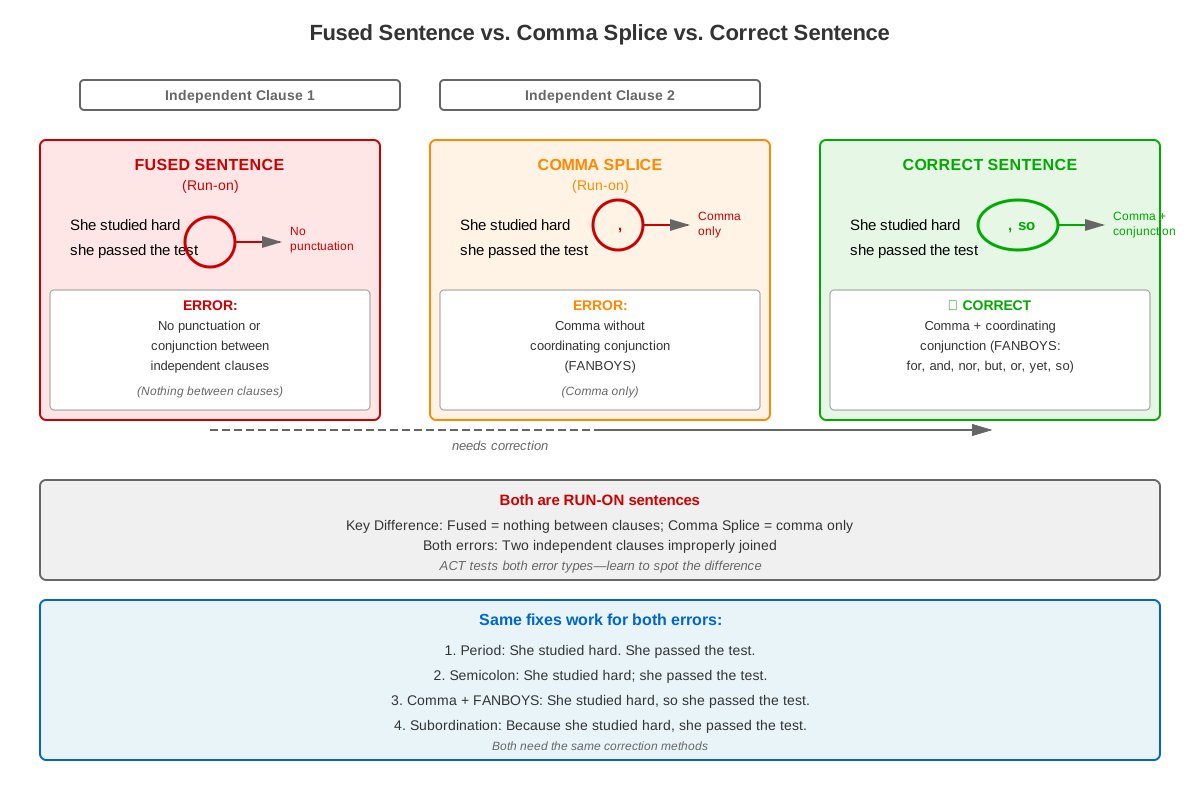
Fused sentences represent one of the most frequently tested sentence structure errors on the ACT English section. A fused sentence occurs when two independent clauses are joined together without any punctuation or coordinating conjunction between them, creating a run-on sentence that violates standard written English conventions. This error is also commonly known as a "run-on sentence," though technically all fused sentences are run-ons, but not all run-ons are fused sentences (comma splices are another type of run-on).
Understanding how to identify and correct ACT fused sentences is crucial for achieving a high score on the English section because these errors appear in approximately 10-15% of all sentence structure questions. The ACT tests this concept because the ability to recognize proper sentence boundaries demonstrates mastery of fundamental writing mechanics that are essential for college-level composition. Students who can quickly spot fused sentences and select the appropriate correction method will save valuable time and avoid losing easy points on test day.
Fused sentences connect directly to broader concepts in sentence structure, including independent and dependent clauses, coordination and subordination, and punctuation rules. Mastering this topic requires understanding what makes a clause independent, recognizing when two complete thoughts have been improperly joined, and knowing the four standard methods for correcting the error. This knowledge forms the foundation for more advanced sentence structure skills and contributes to overall writing clarity and effectiveness.
Learning Objectives
- [ ] Identify when fused sentences are being tested in ACT English passages
- [ ] Explain the core rule or strategy behind recognizing and correcting fused sentences
- [ ] Apply fused sentence correction strategies to ACT-style questions accurately
- [ ] Distinguish between fused sentences and other sentence structure errors (comma splices, fragments)
- [ ] Evaluate multiple correction options and select the most effective solution based on context
- [ ] Recognize the four standard methods for correcting fused sentences and determine when each is most appropriate
Prerequisites
- Independent clauses: Understanding what constitutes a complete sentence with a subject and predicate is essential for recognizing when two independent clauses have been improperly fused together
- Dependent clauses: Knowing the difference between independent and dependent clauses helps identify whether a sentence structure error exists or whether subordination has been properly used
- Basic punctuation rules: Familiarity with periods, semicolons, commas, and coordinating conjunctions provides the foundation for understanding correction methods
- Subject-verb agreement: Recognizing subjects and verbs within clauses enables accurate identification of clause boundaries
Why This Topic Matters
In real-world writing, fused sentences create confusion and impede communication. Professional writing, academic papers, business correspondence, and published works all require proper sentence boundaries to convey ideas clearly. Readers expect sentences to follow conventional patterns, and fused sentences disrupt reading flow, forcing readers to reread passages to determine where one thought ends and another begins.
On the ACT English section, fused sentence questions appear with high frequency—typically 2-4 questions per test. These questions usually present an underlined portion containing two independent clauses joined without proper punctuation or conjunction. The answer choices will offer various correction methods, including adding punctuation, inserting coordinating or subordinating conjunctions, or restructuring the sentence entirely. Some questions may also test whether the original version (with the fused sentence) should remain unchanged, requiring students to recognize that a correction is necessary.
The ACT commonly embeds fused sentences in passages where the error might seem natural in casual speech but violates written English conventions. For example, a passage might describe a sequence of events or present related ideas in quick succession, making the fused sentence feel conversational. However, the test consistently requires adherence to formal written standards, making it essential to identify these errors regardless of how natural they might sound when read aloud.
Core Concepts
Definition of Fused Sentences
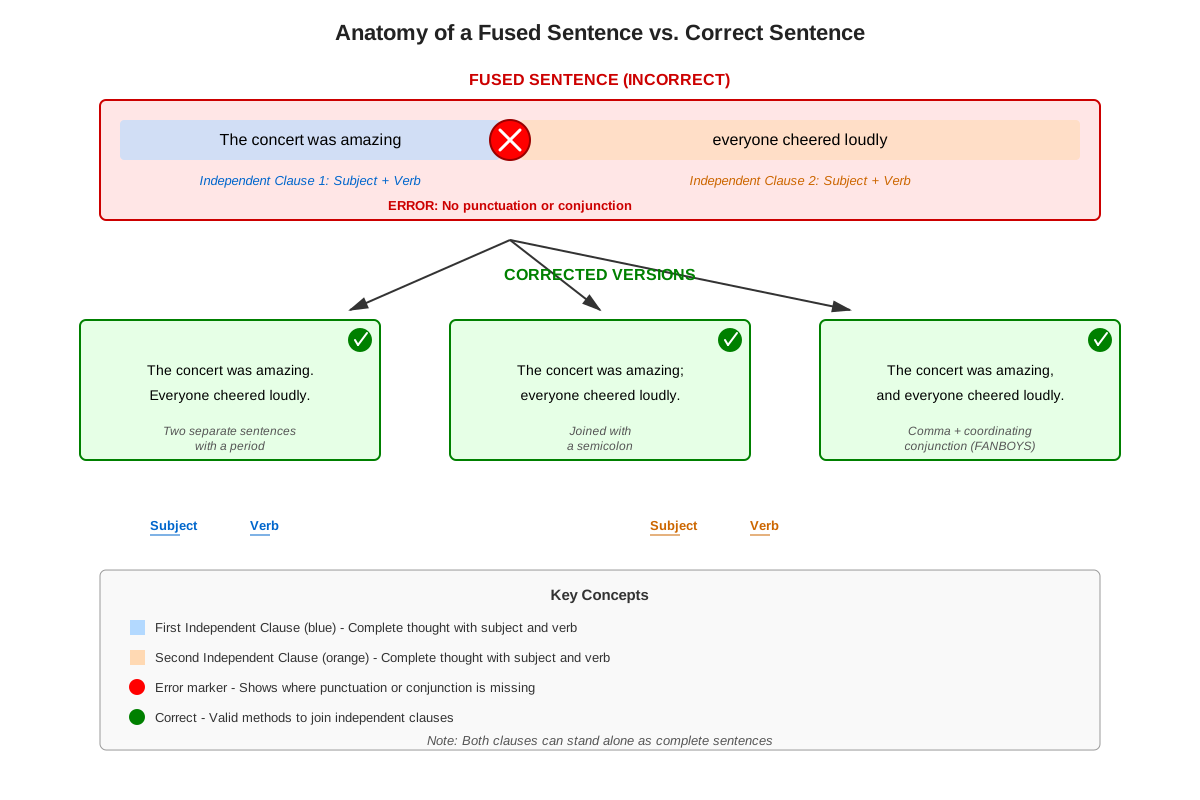
A fused sentence occurs when two or more independent clauses are joined together with no punctuation or coordinating conjunction separating them. Each independent clause contains a subject and a predicate and could stand alone as a complete sentence. When these clauses are "fused" together without proper connection, the result violates standard English grammar rules.
Example of a fused sentence:
The concert started at eight we arrived at seven thirty.
This sentence contains two independent clauses:
- "The concert started at eight" (subject: concert; verb: started)
- "We arrived at seven thirty" (subject: we; verb: arrived)
These clauses are fused together with no punctuation or conjunction between them, creating an error that must be corrected.
Identifying Independent Clauses
To recognize fused sentences, students must first identify independent clauses. An independent clause must contain:
- A subject (who or what the sentence is about)
- A predicate (verb and any associated information)
- A complete thought that can stand alone
When reading an ACT passage, mentally test whether each part of a potentially problematic sentence could stand alone. If two sections could each be separate sentences, and they're joined without proper punctuation or conjunction, a fused sentence exists.
The Four Standard Correction Methods
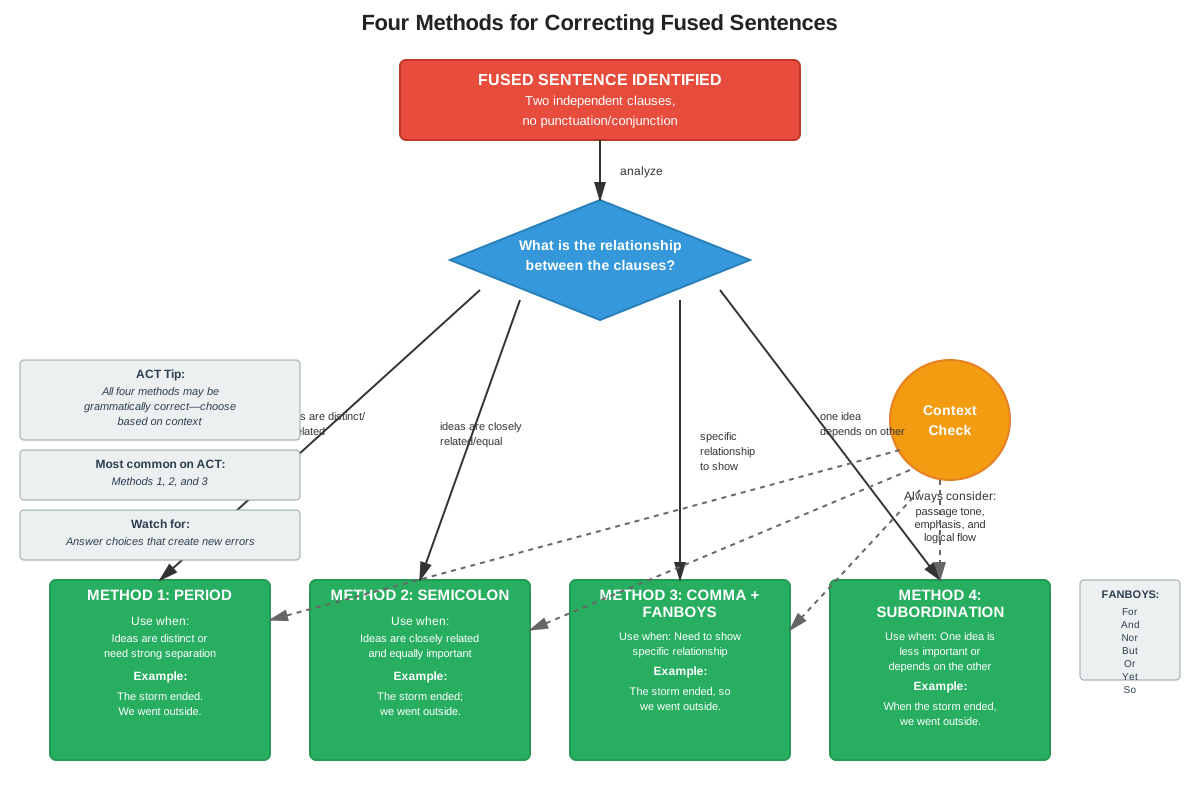
The ACT expects students to recognize four acceptable ways to correct fused sentences:
| Method | Example | When to Use |
|---|---|---|
| Period (or semicolon) | The concert started at eight. We arrived at seven thirty. | When the ideas are closely related but can stand independently |
| Comma + coordinating conjunction | The concert started at eight, so we arrived at seven thirty. | When showing a logical relationship between equal ideas (FANBOYS: for, and, nor, but, or, yet, so) |
| Subordinating conjunction | Because the concert started at eight, we arrived at seven thirty. | When one idea depends on or supports the other |
| Restructuring | We arrived at seven thirty for the eight o'clock concert. | When combining ideas more concisely improves clarity |
Semicolons as Connectors
Semicolons serve as powerful tools for correcting fused sentences when the independent clauses are closely related in meaning. The semicolon signals to readers that the ideas are connected but maintains the independence of each clause.
Corrected example:
The concert started at eight; we arrived at seven thirty.
The ACT frequently tests whether students understand that semicolons can only join independent clauses. If one clause is dependent, a semicolon creates an error rather than correcting one.
Coordinating Conjunctions with Commas
The seven coordinating conjunctions (for, and, nor, but, or, yet, so) can join independent clauses when preceded by a comma. This method is particularly useful when the relationship between clauses needs clarification.
Each coordinating conjunction signals a specific relationship:
- For: reason or cause
- And: addition
- Nor: negative addition
- But: contrast
- Or: alternative
- Yet: contrast
- So: result or effect
Corrected example:
The concert started at eight, so we arrived at seven thirty.
Subordination as a Solution
Converting one independent clause into a dependent clause through subordination creates a more sophisticated sentence structure. Subordinating conjunctions (because, although, while, since, if, when, etc.) establish hierarchical relationships between ideas.
Corrected example:
Since the concert started at eight, we arrived at seven thirty.
This method works particularly well when one idea provides context, reason, or condition for the other. The ACT often includes subordination options among answer choices to test whether students can recognize appropriate logical relationships.
Common Fused Sentence Patterns on the ACT
Certain patterns appear repeatedly in ACT fused sentence questions:
- Sequential actions: She opened the door she walked inside (two actions in sequence)
- Cause and effect: The storm approached quickly we sought shelter (one event causes another)
- Contrasting ideas: The movie was long it was entertaining (two opposing observations)
- Explanatory statements: The restaurant was closed it was a holiday (second clause explains first)
Recognizing these patterns helps students anticipate fused sentences and select appropriate correction methods based on the logical relationship between clauses.
Concept Relationships
Fused sentences connect directly to several other sentence structure concepts. Understanding independent clauses is the foundational prerequisite—without recognizing what makes a clause independent, identifying fused sentences becomes impossible. This knowledge leads directly to understanding comma splices, which are closely related errors where two independent clauses are joined with only a comma (no coordinating conjunction).
The correction methods for fused sentences require knowledge of coordination (using coordinating conjunctions to join equal clauses) and subordination (using subordinating conjunctions to create dependent clauses). These concepts form a hierarchy: Clause identification → Fused sentence recognition → Correction method selection → Coordination or subordination application.
Additionally, fused sentences relate to punctuation rules, particularly the proper use of periods, semicolons, and commas. Mastering fused sentences strengthens overall understanding of sentence boundaries, which connects to sentence fragments (the opposite error, where incomplete thoughts are punctuated as sentences) and parallelism (maintaining consistent structure within and between clauses).
The relationship map flows as follows:
Independent Clause Recognition → Fused Sentence Identification → Correction Method Selection → (branches to) Punctuation Application OR Conjunction Addition OR Subordination OR Restructuring → Improved Sentence Clarity
High-Yield Facts
⭐ A fused sentence contains two or more independent clauses joined without punctuation or coordinating conjunction
⭐ Every fused sentence can be corrected using at least four methods: period/semicolon, comma + coordinating conjunction, subordination, or restructuring
⭐ Semicolons can only join independent clauses; using a semicolon before a dependent clause creates an error
⭐ A comma alone cannot join two independent clauses—this creates a comma splice, not a correction
⭐ The seven coordinating conjunctions (FANBOYS) require a comma before them when joining independent clauses
- Fused sentences are also called run-on sentences, though the terms are not perfectly synonymous
- Reading a sentence aloud does not reliably reveal fused sentences because they often sound natural in speech
- The ACT typically presents 2-4 fused sentence questions per English section
- Subordinating conjunctions (because, although, since, while, if, when) convert independent clauses into dependent clauses
- The most common fused sentence pattern on the ACT involves sequential actions or cause-and-effect relationships
Quick check — test yourself on Fused sentences so far.
Try Flashcards →Common Misconceptions
Misconception: Long sentences are always fused sentences, and short sentences cannot be fused sentences.
Correction: Sentence length does not determine whether a fused sentence exists. A very short sentence like "I ran she walked" is fused, while a long sentence with proper punctuation and conjunctions is correct. The issue is clause structure and connection, not length.
Misconception: Adding a comma between two independent clauses corrects a fused sentence.
Correction: Adding only a comma creates a comma splice, which is another type of error. To use a comma, you must also add a coordinating conjunction (for, and, nor, but, or, yet, so) after the comma.
Misconception: Fused sentences are acceptable in informal writing, so they might be correct on the ACT if the passage has a casual tone.
Correction: The ACT always tests standard written English conventions, regardless of passage tone. Fused sentences are never acceptable on the test, even in passages with conversational or informal content.
Misconception: Any two clauses joined without a conjunction are fused sentences.
Correction: If one clause is dependent (begins with a subordinating conjunction or is a relative clause), no fused sentence exists. Fused sentences specifically involve two or more independent clauses improperly joined.
Misconception: The best correction for a fused sentence is always to split it into two separate sentences with a period.
Correction: While adding a period always corrects the grammatical error, the best answer depends on context, logical relationships between ideas, and stylistic considerations. The ACT often rewards more sophisticated solutions like subordination or appropriate conjunction use.
Worked Examples
Example 1: Identifying and Correcting a Basic Fused Sentence
Original passage excerpt:
The museum opened its new exhibit last month visitors have been arriving in record numbers.
Analysis:
First, identify the clauses:
- Clause 1: "The museum opened its new exhibit last month" (subject: museum; verb: opened; complete thought)
- Clause 2: "visitors have been arriving in record numbers" (subject: visitors; verb: have been arriving; complete thought)
Both clauses are independent and could stand alone as sentences. They are joined with no punctuation or conjunction, creating a fused sentence.
Answer choices might include:
A. NO CHANGE (keeps the fused sentence)
B. month, visitors (comma splice—still incorrect)
C. month; visitors (semicolon correctly joins independent clauses)
D. month, and visitors (comma + coordinating conjunction correctly joins independent clauses)
Correct answers: Both C and D are grammatically correct. If both appear as options, choose based on meaning. The semicolon (C) suggests the ideas are closely related but independent. The comma + "and" (D) suggests addition or sequence. Given the context (cause and effect relationship), option D might be slightly preferred, though both are acceptable corrections.
Connection to learning objectives: This example demonstrates identification of fused sentences (objective 1), application of correction strategies (objective 3), and evaluation of multiple correction options (objective 5).
Example 2: Distinguishing Fused Sentences from Correct Subordination
Original passage excerpt:
Although the weather forecast predicted rain the outdoor ceremony proceeded as planned.
Analysis:
This sentence might initially appear to be a fused sentence because it contains two clauses:
- Clause 1: "Although the weather forecast predicted rain"
- Clause 2: "the outdoor ceremony proceeded as planned"
However, the first clause begins with the subordinating conjunction "although," making it a dependent clause. A dependent clause followed by an independent clause does not create a fused sentence—this is proper subordination.
The only error here is the missing comma after the introductory dependent clause. The corrected version should read:
Although the weather forecast predicted rain, the outdoor ceremony proceeded as planned.
Answer choices might include:
A. NO CHANGE (missing comma after introductory clause)
B. rain, the outdoor (correctly adds comma after dependent clause)
C. rain; the outdoor (semicolon incorrectly follows dependent clause)
D. rain. The outdoor (period incorrectly separates dependent from independent clause)
Correct answer: B
Connection to learning objectives: This example demonstrates the importance of distinguishing fused sentences from other sentence structure issues (objective 4) and understanding when subordination has been properly applied versus when independent clauses have been improperly fused.
Exam Strategy
When approaching potential fused sentence questions on the ACT, follow this systematic process:
Step 1: Identify the underlined portion and read the complete sentence. Fused sentences often occur at the boundary between clauses, so the underline typically appears where two clauses meet.
Step 2: Test for independent clauses. Ask yourself: "Could the part before the underline stand alone as a sentence? Could the part after the underline stand alone as a sentence?" If both answers are yes, and there's no punctuation or coordinating conjunction between them, you've found a fused sentence.
Step 3: Eliminate answer choices that maintain the error. Any choice that keeps two independent clauses joined without proper punctuation or conjunction is incorrect. Also eliminate choices that create comma splices (comma without coordinating conjunction).
Step 4: Evaluate remaining options based on meaning and context. Consider:
- What logical relationship exists between the clauses? (cause-effect, contrast, sequence, etc.)
- Which correction method best conveys this relationship?
- Does the passage style favor concise or more elaborate constructions?
Exam Tip: Watch for trigger phrases like "NO CHANGE" as option A when you spot two independent clauses joined without punctuation. The ACT frequently makes the original version incorrect in fused sentence questions.
Time allocation: Spend no more than 30-45 seconds on fused sentence questions. These are mechanical errors with clear right and wrong answers, so avoid overthinking. If you can identify the independent clauses, you can solve the problem quickly.
Common trigger words to watch for:
- Pronouns beginning the second clause (he, she, it, they, we) often signal a new independent clause
- Time markers (then, now, later, yesterday) frequently begin second clauses in fused sentences
- Transition words without proper punctuation (however, therefore, moreover) may indicate fused sentences or comma splices
Memory Techniques
FUSED Acronym for Identification:
- Find the clauses
- Understand if both are independent
- Search for punctuation or conjunctions
- Eliminate incorrect answers
- Decide on the best correction method
The "Period Test" Mnemonic: When in doubt, mentally insert a period where you suspect the fused sentence occurs. If both resulting sentences make complete sense independently, you've found a fused sentence that needs correction.
FANBOYS Visualization: Picture a fan with seven blades, each labeled with a coordinating conjunction (For, And, Nor, But, Or, Yet, So). When you need to join independent clauses with a comma, one of these seven must appear after the comma.
The "Two Captains" Rule: Think of independent clauses as ship captains—each can command their own vessel (sentence). When two captains try to command the same ship without proper coordination, chaos results (fused sentence). They need either separate ships (period), a formal agreement (semicolon), a partnership with clear terms (comma + coordinating conjunction), or one must become first mate (subordination).
Semicolon = Period Substitute: Remember that semicolons function as "strong commas" or "weak periods." If you could use a period, you can use a semicolon. If you couldn't use a period (because one clause is dependent), you can't use a semicolon either.
Summary
Fused sentences represent a high-yield, frequently tested concept on the ACT English section that students must master to achieve top scores. These errors occur when two or more independent clauses are joined without proper punctuation or coordinating conjunctions, violating standard written English conventions. Successful identification requires recognizing independent clauses—complete thoughts with subjects and predicates that could stand alone as sentences. The ACT tests fused sentences through four primary correction methods: separating clauses with periods or semicolons, joining them with commas plus coordinating conjunctions, converting one clause to dependent status through subordination, or restructuring the sentence entirely. Students must distinguish fused sentences from related errors like comma splices and sentence fragments while selecting correction methods that preserve logical relationships between ideas. Mastery of this topic requires systematic analysis of clause structure, understanding of punctuation rules, and strategic evaluation of answer choices based on both grammatical correctness and contextual appropriateness.
Key Takeaways
- Fused sentences contain two or more independent clauses joined without punctuation or coordinating conjunctions, creating run-on sentences that violate ACT standards
- Identifying fused sentences requires testing whether sections before and after potential problem areas could stand alone as complete sentences
- Four correction methods exist: period/semicolon separation, comma + coordinating conjunction, subordination, and restructuring
- Semicolons can only join independent clauses; commas alone create comma splices and do not correct fused sentences
- The ACT typically includes 2-4 fused sentence questions per test, making this a high-yield topic worth thorough preparation
- Context and logical relationships between clauses should guide selection among grammatically correct answer choices
- Systematic analysis using the "Period Test" and FANBOYS acronym enables quick, accurate identification and correction of fused sentences
Related Topics
Comma Splices: Closely related to fused sentences, comma splices occur when two independent clauses are joined with only a comma (no coordinating conjunction). Mastering fused sentences provides the foundation for understanding and correcting comma splices, as both involve improper joining of independent clauses.
Sentence Fragments: The opposite error from fused sentences, fragments occur when incomplete thoughts are punctuated as sentences. Understanding what makes clauses independent (necessary for identifying fused sentences) directly enables recognition of fragments.
Coordination and Subordination: These advanced sentence structure concepts build directly on fused sentence knowledge. Coordination involves joining equal clauses with coordinating conjunctions, while subordination creates hierarchical relationships between clauses—both are correction methods for fused sentences.
Punctuation Rules: Mastering semicolons, commas, and periods in the context of fused sentences strengthens overall punctuation skills tested throughout the ACT English section.
Parallelism: Once sentence boundaries are properly established through fused sentence correction, parallelism ensures that elements within and between sentences maintain consistent grammatical structure.
Practice CTA
Now that you've mastered the core concepts of fused sentences, it's time to cement your knowledge through active practice. Complete the practice questions to test your ability to identify fused sentences quickly and select the most effective corrections under timed conditions. Use the flashcards to reinforce the four correction methods and the FANBOYS coordinating conjunctions until they become automatic. Remember: fused sentence questions represent easy points on the ACT when you know what to look for—don't leave these points on the table! With focused practice, you'll develop the pattern recognition skills needed to spot and correct these errors in seconds, giving you more time for challenging questions elsewhere on the test.
Sign up free to keep reading
Create a free AnvayaPrep account to finish this ACT guide on Fused sentences — plus flashcards and practice questions.