Overview
Figurative language is one of the most frequently tested elements within the Craft and Structure domain of the ACT Reading test. This literary device encompasses any language that deviates from literal meaning to create more vivid, imaginative, or emotionally resonant expression. On the ACT, students encounter figurative language across all passage types—literary narrative, social science, humanities, and natural science—though it appears most prominently in prose fiction and humanities passages.
Understanding figurative language is essential for ACT success because approximately 15-20% of Reading questions directly or indirectly assess the ability to interpret non-literal language. These questions test whether students can move beyond surface-level comprehension to grasp the deeper meanings, emotional tones, and authorial intentions embedded in metaphors, similes, personification, and other figurative devices. The ACT specifically evaluates how well students can identify what an author means versus what the text literally says, making this skill crucial for achieving scores in the upper ranges (28-36).
ACT figurative language questions connect intimately with other Reading concepts, particularly tone, mood, author's purpose, and characterization. When authors employ figurative language, they simultaneously reveal character traits, establish atmospheric elements, and advance thematic development. Mastering figurative language interpretation therefore strengthens overall passage comprehension and enables students to answer multiple question types more effectively, creating a multiplier effect on test performance.
Learning Objectives
By the end of this study guide, students will be able to:
- [ ] Identify when Figurative language is being tested in ACT Reading questions
- [ ] Explain the core rule or strategy behind Figurative language interpretation
- [ ] Apply Figurative language analysis to ACT-style questions accurately
- [ ] Distinguish between different types of figurative devices (metaphor, simile, personification, hyperbole, etc.)
- [ ] Determine the intended meaning and effect of figurative language within passage context
- [ ] Evaluate how figurative language contributes to tone, characterization, and theme
- [ ] Recognize common ACT question stems that signal figurative language assessment
Prerequisites
Students should have foundational knowledge in the following areas:
- Literal vs. non-literal meaning: Understanding the difference between what words denote directly and what they suggest indirectly is fundamental to recognizing when language becomes figurative
- Basic literary terminology: Familiarity with terms like "comparison," "description," and "imagery" provides the vocabulary framework for discussing figurative devices
- Context clues: The ability to use surrounding text to determine meaning is essential since figurative language interpretation always depends on context
- Author's purpose: Recognizing why authors make specific word choices helps students understand the function of figurative language beyond mere decoration
Why This Topic Matters
Figurative language serves as the bridge between basic comprehension and sophisticated literary analysis. In real-world contexts, the ability to interpret non-literal language enables deeper engagement with literature, poetry, journalism, speeches, and even everyday communication where metaphors and analogies clarify complex ideas. Professional fields from law to medicine to business rely on figurative language to make abstract concepts accessible and memorable.
On the ACT Reading test, figurative language appears in approximately 3-5 questions per test, representing roughly 8-13% of the total Reading score. These questions typically take several forms: direct identification questions ("The phrase 'X' most nearly means..."), function questions ("The author uses the metaphor in lines X-Y primarily to..."), and inference questions that require understanding figurative meaning to answer correctly. The test makers consistently include at least one passage—usually the literary narrative—that features rich figurative language requiring interpretation.
Common manifestations in ACT passages include: extended metaphors that structure entire paragraphs, similes that characterize people or settings, personification that brings abstract concepts to life, hyperbole that reveals emotional states, and symbolic language that carries thematic significance. Natural science passages occasionally employ analogies as figurative devices to explain complex phenomena, while humanities passages frequently use figurative language when discussing artistic movements or philosophical concepts.
Core Concepts
What Is Figurative Language?
Figurative language refers to any expression that uses words in non-literal ways to achieve particular effects, create vivid imagery, or convey meanings beyond dictionary definitions. Unlike literal language, which means exactly what it says, figurative language requires readers to interpret intended meanings through comparison, exaggeration, or symbolic association. The ACT tests whether students can decode these non-literal expressions within the context of complete passages.
The fundamental principle underlying all figurative language is comparison or deviation from expected meaning. Authors employ figurative devices to accomplish specific rhetorical goals: making abstract ideas concrete, creating memorable images, evoking emotional responses, revealing character psychology, or establishing thematic connections. On the ACT, recognizing that language is figurative represents only the first step; students must also determine what the figurative expression means and why the author chose it.
Major Types of Figurative Language on the ACT
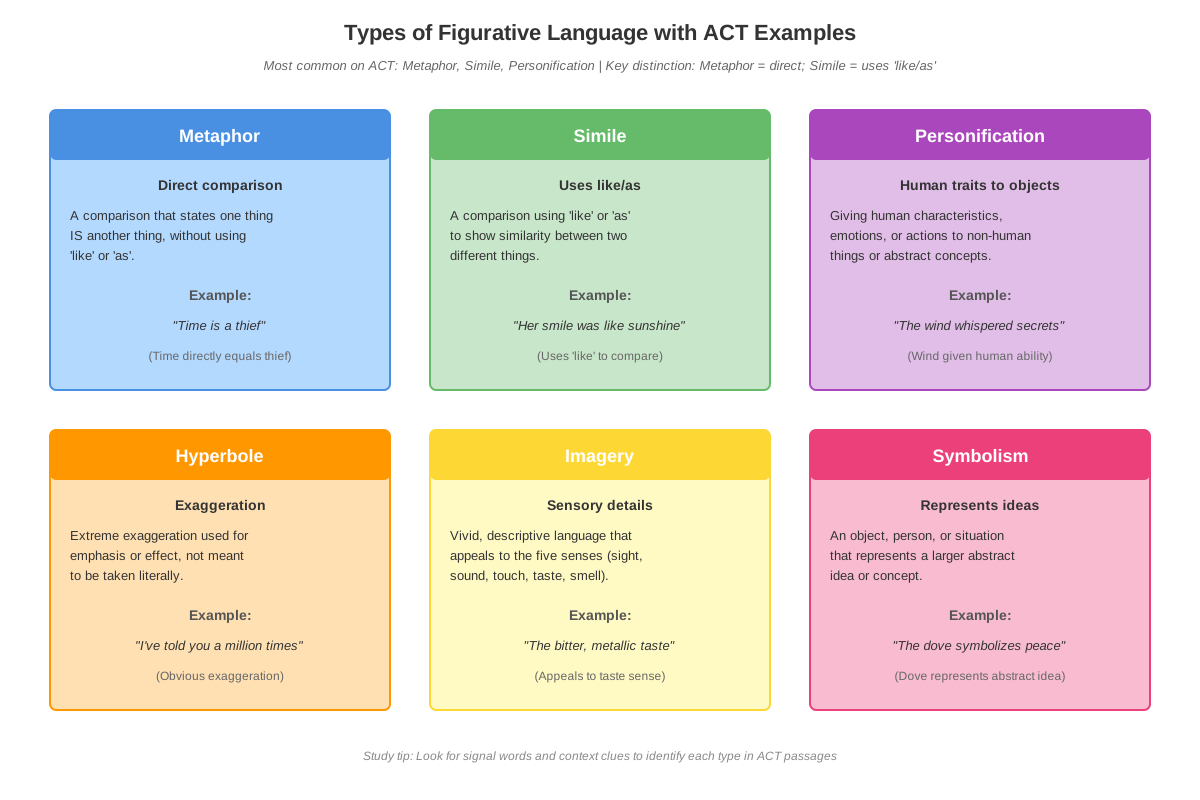
Metaphor
A metaphor directly equates two unlike things without using "like" or "as," asserting that one thing is another. Metaphors create meaning by transferring qualities from one concept to another. For example, "Time is a thief" suggests that time steals moments from our lives, though time is not literally a criminal. On the ACT, metaphors often appear in questions asking what a phrase "most nearly means" or what the author suggests through a particular comparison.
Extended metaphors develop a single comparison across multiple sentences or paragraphs, creating a sustained parallel between two concepts. ACT passages may use extended metaphors to structure entire arguments or characterizations, requiring students to track the comparison throughout the text.
Simile
A simile explicitly compares two unlike things using "like," "as," or similar comparative words. While similes function similarly to metaphors, their explicit comparison markers make them slightly easier to identify. "Her mind worked like a computer" compares mental processing to computational operations. ACT questions about similes typically focus on what quality or characteristic the comparison highlights.
Personification
Personification attributes human characteristics, emotions, or actions to non-human entities—animals, objects, ideas, or natural phenomena. "The wind whispered through the trees" gives the wind the human ability to whisper. On the ACT, personification often appears in literary narratives and humanities passages, with questions asking about the effect or purpose of treating something non-human as if it were human.
Hyperbole
Hyperbole involves deliberate exaggeration for emphasis or effect, not intended to be taken literally. "I've told you a million times" doesn't mean exactly one million instances but emphasizes repetition. ACT questions about hyperbole typically ask students to recognize that language is exaggerated and to identify what the exaggeration emphasizes or reveals about a character's emotional state.
Symbolism
Symbolism occurs when an object, character, or event represents something beyond its literal meaning, often an abstract idea or theme. A storm might symbolize internal turmoil; a journey might represent personal growth. ACT questions about symbolism ask what something "represents" or "suggests" beyond its literal presence in the passage.
Idiom
An idiom is a phrase whose figurative meaning differs from the literal meaning of its individual words. "Raining cats and dogs" means heavy rain, not actual falling animals. While less commonly tested than other devices, idioms appear occasionally in ACT passages, particularly in dialogue or informal prose.
Comparison Table of Common Figurative Devices
| Device | Definition | Comparison Marker | Example | ACT Question Focus |
|---|---|---|---|---|
| Metaphor | Direct equation of unlike things | None (implicit) | "Her words were daggers" | What the comparison suggests |
| Simile | Explicit comparison | "like," "as," "than" | "Brave as a lion" | What quality is highlighted |
| Personification | Human traits to non-human | None | "The sun smiled down" | Effect or purpose of humanization |
| Hyperbole | Deliberate exaggeration | None | "Waited forever" | What is emphasized |
| Symbolism | Represents abstract meaning | None | Storm = conflict | What something represents |
Context-Dependent Interpretation
The meaning of figurative language always depends on context—the surrounding sentences, the passage's overall tone, the character speaking, and the author's purpose. The same metaphor can carry different meanings in different contexts. "She was a rock" might suggest strength and reliability in one passage but emotional coldness in another. ACT questions test whether students can use context clues to determine the specific intended meaning rather than applying generic interpretations.
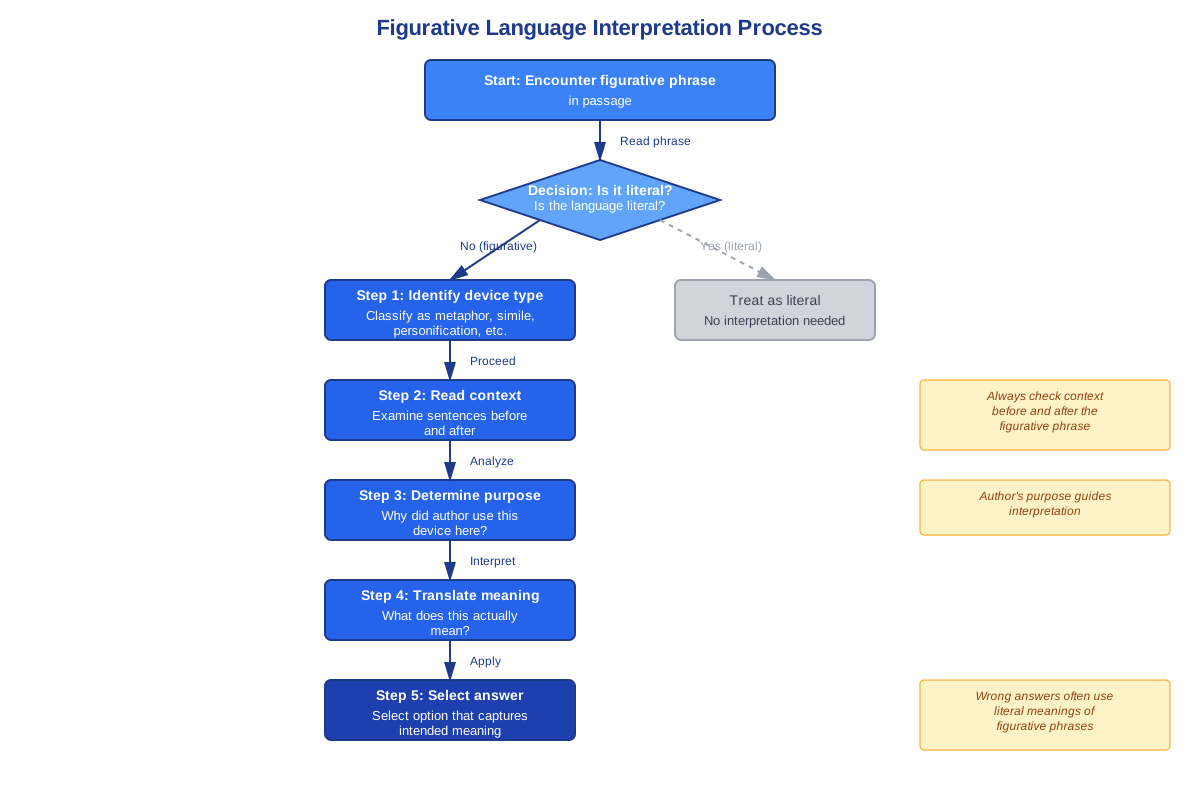
Effective interpretation follows a three-step process:
- Identify that language is figurative (recognizing deviation from literal meaning)
- Analyze what is being compared or how meaning deviates from literal
- Interpret what the figurative language suggests within the specific passage context
Function and Effect
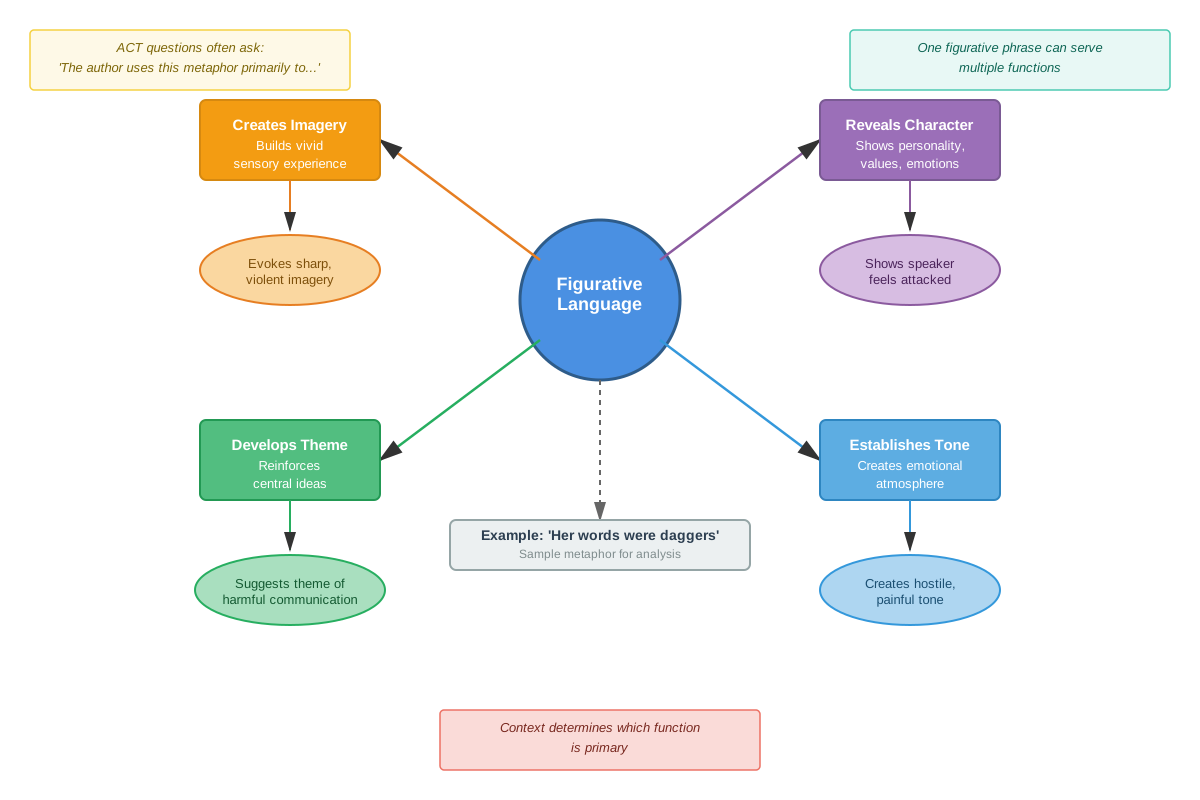
Beyond identifying and interpreting figurative language, ACT questions frequently ask about its function—why the author uses it. Common functions include:
- Characterization: Revealing personality traits, emotional states, or perspectives
- Tone establishment: Creating atmosphere or emotional coloring
- Theme development: Reinforcing central ideas through symbolic patterns
- Clarification: Making abstract concepts more concrete and understandable
- Emphasis: Drawing attention to important ideas or moments
- Imagery creation: Helping readers visualize scenes or experiences
Concept Relationships
Figurative language interpretation connects directly to literal comprehension as its foundation—students must understand what the text literally says before determining how meaning deviates from literal. This relationship flows in one direction: literal understanding → figurative interpretation.
Within the topic itself, different figurative devices relate hierarchically. Metaphor serves as the umbrella concept under which many other devices fall, since most figurative language involves some form of comparison or substitution. Simile represents an explicit subset of metaphorical thinking, while personification constitutes a specific type of metaphor that compares non-human things to humans.
Figurative language interpretation enables and enhances several related Reading skills:
- Tone analysis: Figurative language choices directly create and reveal tone (figurative language → tone)
- Characterization: How characters use or are described through figurative language reveals personality (figurative language → character understanding)
- Theme identification: Patterns of figurative language often signal thematic concerns (figurative language patterns → theme)
- Author's purpose: The choice to use figurative language reflects authorial intentions (figurative language → purpose)
The relationship map flows as follows:
Context clues → Figurative language identification → Interpretation of intended meaning → Understanding of function/effect → Enhanced comprehension of tone, character, and theme
High-Yield Facts
⭐ Figurative language appears in 3-5 questions per ACT Reading test, making it one of the most consistently tested Craft and Structure elements.
⭐ Context always determines the specific meaning of figurative language; the same device can mean different things in different passages.
⭐ Question stems containing "most nearly means," "suggests," or "represents" frequently signal figurative language interpretation.
⭐ Metaphors and similes are the most commonly tested figurative devices on the ACT, appearing more frequently than personification or hyperbole.
⭐ The ACT never asks students to simply name the device (e.g., "This is a metaphor"); instead, questions focus on meaning, function, or effect.
- Figurative language in natural science passages typically appears as analogies that explain complex processes through familiar comparisons.
- Extended metaphors that span multiple paragraphs require tracking the comparison throughout to answer questions correctly.
- Personification questions often ask about the effect of treating something as human rather than just identifying the device.
- Symbolic language typically connects to the passage's central theme or the character's internal state.
- Hyperbole questions focus on what the exaggeration reveals about emotion or emphasis rather than the exaggeration itself.
- When figurative language appears in dialogue, it often serves characterization purposes, revealing how a character thinks or feels.
- Idioms are less commonly tested but appear occasionally, particularly in contemporary fiction passages.
Quick check — test yourself on Figurative language so far.
Try Flashcards →Common Misconceptions
Misconception: Figurative language only appears in literary fiction passages.
Correction: While most common in prose fiction, figurative language appears across all passage types. Humanities passages frequently contain figurative language when discussing art or philosophy, and natural science passages use analogies and metaphors to explain complex concepts. Students must be prepared to interpret figurative language in any passage type.
Misconception: The correct answer will use the same words as the figurative phrase in the passage.
Correction: ACT answer choices for figurative language questions typically rephrase the meaning in different words. Students must focus on the underlying meaning rather than looking for word matches. The correct answer expresses what the figurative language means, not what it literally says.
Misconception: Figurative language always makes writing more positive or beautiful.
Correction: Figurative language serves many purposes beyond beautification. Authors use it to create negative imagery, reveal character flaws, establish ominous tones, or emphasize unpleasant realities. The effect depends entirely on context and authorial purpose.
Misconception: Students need to memorize definitions of all figurative devices to succeed.
Correction: The ACT never asks students to identify devices by name (e.g., "This is personification"). Instead, questions assess whether students understand what the figurative language means and why the author uses it. Functional understanding matters more than terminology.
Misconception: Figurative language has one "correct" interpretation that applies universally.
Correction: The same figurative expression can carry different meanings in different contexts. "Cold as ice" might describe temperature, emotional distance, or unwavering determination depending on context. Students must use passage-specific context clues rather than applying generic interpretations.
Misconception: If language seems unusual or poetic, it must be figurative.
Correction: Not all vivid or unusual language is figurative. Descriptive language can be entirely literal while still being evocative. Figurative language specifically involves comparison, exaggeration, symbolism, or other deviations from literal meaning—not just creative word choice.
Worked Examples
Example 1: Metaphor Interpretation
Passage excerpt: "Marcus approached the college application process as a general approaches battle—with strategic planning, careful reconnaissance of enemy territory, and an unwavering commitment to victory. Each essay became a tactical maneuver, each recommendation letter a crucial alliance."
Question: The comparison in lines X-Y primarily serves to emphasize Marcus's:
A) aggressive and combative personality
B) methodical and determined approach
C) fear of the application process
D) competitive relationship with other applicants
Solution Process:
Step 1 - Identify the figurative language: The passage uses an extended metaphor comparing college applications to military battle. Key phrases include "general approaches battle," "strategic planning," "reconnaissance," "tactical maneuver," and "crucial alliance."
Step 2 - Analyze what qualities transfer: The metaphor transfers military/strategic qualities to Marcus's approach. The comparison emphasizes: planning, strategy, reconnaissance (research), tactical thinking, and commitment to success.
Step 3 - Evaluate answer choices using context:
- Choice A focuses on "aggressive and combative," but the passage emphasizes planning and strategy, not aggression. The metaphor highlights how Marcus approaches the task (methodically), not personality traits like combativeness. Eliminate.
- Choice B captures "methodical" (strategic planning, tactical maneuvers) and "determined" (unwavering commitment to victory). This aligns with the transferred qualities. Strong candidate.
- Choice C suggests fear, but the passage presents Marcus as confident and in control—like a general, not a fearful person. The metaphor emphasizes competence, not anxiety. Eliminate.
- Choice D mentions competition with others, but the passage focuses on Marcus's individual approach to the process, not relationships with other applicants. The "enemy territory" refers to the challenging process itself, not other students. Eliminate.
Answer: B
Connection to learning objectives: This example demonstrates identifying figurative language (extended metaphor), interpreting its meaning (strategic, methodical approach), and applying that understanding to select the correct answer that captures the metaphor's function (emphasizing Marcus's approach characteristics).
Example 2: Personification and Symbolism
Passage excerpt: "The old house seemed to sigh as the family drove away for the last time, its windows dark and empty like closed eyes. For three generations it had sheltered the Johnsons, absorbing their laughter, their arguments, their quiet moments. Now it would stand alone, a silent witness to memories that would fade like photographs left too long in sunlight."
Question: The description of the house in lines X-Y suggests that the narrator views the house as:
F) a structure requiring maintenance and repair
G) an entity with awareness and emotional capacity
H) a valuable financial asset for the family
J) a burden the family is relieved to leave behind
Solution Process:
Step 1 - Identify figurative language: The passage uses personification extensively—the house "seemed to sigh," has "windows...like closed eyes," "had sheltered," "absorbing," and serves as a "silent witness." These phrases attribute human qualities (sighing, having eyes, sheltering, absorbing experiences, witnessing) to the inanimate house.
Step 2 - Determine the effect: The personification creates the impression that the house has consciousness, emotions, and memory. It's treated as a family member or living entity that experiences the departure emotionally and holds memories.
Step 3 - Evaluate choices:
- Choice F treats the house literally as a structure needing maintenance. Nothing in the passage discusses repairs or physical condition. The figurative language emphasizes emotional/experiential qualities, not practical concerns. Eliminate.
- Choice G directly captures the personification's effect—the house is described as having "awareness" (silent witness, absorbing experiences) and "emotional capacity" (sighing, the melancholy tone). This matches the figurative language's function. Strong candidate.
- Choice H focuses on financial value, which the passage never addresses. The emphasis is on emotional and memorial significance, not monetary worth. Eliminate.
- Choice J suggests relief and burden, but the tone is nostalgic and melancholy, not relieved. The personification creates sympathy for the house being left behind, not relief at leaving it. Eliminate.
Answer: G
Connection to learning objectives: This example shows identifying personification, interpreting its effect (creating the impression of consciousness and emotion), and recognizing how figurative language reveals the narrator's perspective—a common ACT question type.
Exam Strategy
Recognizing Figurative Language Questions
ACT questions testing figurative language typically use specific trigger phrases:
- "most nearly means"
- "suggests that"
- "primarily serves to"
- "the comparison emphasizes"
- "the author uses [phrase] to"
- "represents"
- "the effect of describing X as Y"
When encountering these phrases, immediately recognize that the question likely tests figurative language interpretation rather than literal comprehension.
Step-by-Step Approach
- Locate and read the referenced lines plus 2-3 sentences before and after for context. Figurative language meaning depends on surrounding context.
- Identify what type of figurative language appears (metaphor, simile, personification, etc.), though remember the ACT won't ask you to name it.
- Determine what is being compared or how meaning deviates from literal. Ask: "What does this really mean? What is the author actually saying?"
- Consider the function: Why did the author choose this figurative expression? What does it emphasize, reveal, or create?
- Eliminate answers that are too literal or that ignore the figurative meaning. Also eliminate answers that go beyond what the passage supports.
- Select the answer that captures the intended meaning within context, not a generic interpretation of the figurative device.
Process of Elimination Tips
Eliminate answers that:
- Take figurative language literally (if the passage says "time crawled," eliminate answers about actual crawling)
- Focus on irrelevant details rather than the main point of the comparison
- Introduce ideas not supported by the passage context
- Contradict the passage's tone (don't choose negative interpretations for positive figurative language)
- Are too extreme or absolute when the figurative language suggests something more moderate
Favor answers that:
- Rephrase the figurative meaning in more literal terms
- Connect to the passage's main ideas or themes
- Match the emotional tone of the surrounding context
- Focus on what the figurative language emphasizes or reveals
Time Management
Figurative language questions typically require 45-60 seconds to answer—slightly more than detail questions but less than inference questions. The time investment includes:
- 15-20 seconds: Locating and reading the relevant passage section with context
- 15-20 seconds: Interpreting the figurative meaning
- 15-20 seconds: Evaluating answer choices
Don't rush these questions. Misinterpreting figurative language often leads to confident wrong answers. The extra 10-15 seconds spent carefully considering context usually pays off in accuracy.
Memory Techniques
The COMPARE Method for Figurative Language
Context: Read surrounding sentences for context clues
Observe: Notice when language deviates from literal meaning
Meaning: Determine what the figurative language actually means
Purpose: Consider why the author chose this expression
Answer: Select the choice that captures meaning and function
Recheck: Verify your answer matches the passage tone and context
Eliminate: Remove literal interpretations and unsupported ideas
Visualization Strategy
When encountering figurative language, create a mental image of both the literal meaning and the intended meaning. For "Her words were daggers," visualize actual daggers (sharp, piercing, causing pain) then transfer those qualities to words (sharp criticism, piercing remarks, causing emotional pain). This dual visualization helps clarify what qualities transfer through the comparison.
The "What's Really Happening?" Question
For any figurative expression, ask: "What's really happening here?" This simple question cuts through figurative language to reveal intended meaning:
- "Time crawled" → What's really happening? Time passed very slowly
- "The city swallowed him whole" → What's really happening? He became lost or absorbed in the city
- "Her smile was sunshine" → What's really happening? Her smile was warm, bright, and uplifting
Function Acronym: EFFECT
Remember common functions of figurative language with EFFECT:
Emphasize important ideas
Form vivid imagery
Foster emotional response
Express abstract concepts concretely
Characterize people or settings
Theme development
Summary
Figurative language represents a high-yield ACT Reading topic that appears consistently across passage types, particularly in literary narrative and humanities selections. Success requires moving beyond literal interpretation to understand how authors use comparison, exaggeration, personification, and symbolism to create meaning, establish tone, develop characters, and reinforce themes. The ACT tests not whether students can name figurative devices but whether they can interpret what figurative expressions mean within specific contexts and understand why authors employ them. Effective interpretation follows a systematic process: identifying that language is figurative, analyzing what is being compared or how meaning deviates from literal, and determining the intended meaning using context clues. Questions typically use trigger phrases like "most nearly means," "suggests," or "primarily serves to," signaling the need for figurative interpretation. Students must avoid common pitfalls including taking figurative language literally, applying generic interpretations without considering context, and selecting answers that introduce unsupported ideas. Mastering figurative language interpretation enhances overall Reading comprehension and enables students to answer multiple question types more effectively, making it essential for achieving top-tier scores.
Key Takeaways
- Figurative language questions appear 3-5 times per ACT Reading test, making this a high-priority topic for score improvement
- Context always determines meaning—the same figurative device can mean different things in different passages, so always use surrounding sentences to interpret
- The ACT tests interpretation and function, never device identification—focus on what figurative language means and why authors use it, not on naming devices
- Trigger phrases like "most nearly means," "suggests," and "primarily serves to" signal figurative language questions requiring non-literal interpretation
- Eliminate answers that are too literal or that ignore context—correct answers rephrase figurative meaning in clearer terms while staying true to passage context
- Figurative language serves multiple functions including characterization, tone establishment, theme development, and making abstract ideas concrete
- Systematic interpretation using the COMPARE method (Context, Observe, Meaning, Purpose, Answer, Recheck, Eliminate) increases accuracy and efficiency
Related Topics
Tone and Mood Analysis: Figurative language choices directly create and reveal tone. Mastering figurative language interpretation strengthens the ability to identify how authors establish emotional atmosphere through word choice.
Author's Purpose and Point of View: Understanding why authors choose figurative expressions connects to broader questions about authorial intent and perspective. Figurative language often reveals what authors value or emphasize.
Characterization Techniques: Authors frequently use figurative language to reveal character traits, emotional states, and perspectives. Advanced characterization analysis builds on figurative language interpretation skills.
Theme Identification: Patterns of figurative language—repeated metaphors, symbolic objects, or extended comparisons—often signal thematic concerns. Theme questions sometimes require understanding figurative language first.
Rhetorical Strategies: Figurative language represents one category of rhetorical devices authors use to achieve effects. Studying broader rhetorical analysis extends figurative language skills to other persuasive and expressive techniques.
Practice CTA
Now that you've mastered the core concepts of figurative language interpretation, it's time to apply these strategies to ACT-style practice questions. The practice set includes passages with various figurative devices and questions that mirror actual test formats. As you work through the questions, consciously apply the COMPARE method and focus on context-dependent interpretation rather than generic meanings. Review the flashcards to reinforce key concepts and common figurative devices. Remember: figurative language mastery doesn't come from memorizing definitions but from practicing interpretation in context. Each practice question you complete strengthens your ability to decode non-literal language quickly and accurately under test conditions. You've built the foundation—now build the skill through deliberate practice!
Sign up free to keep reading
Create a free AnvayaPrep account to finish this ACT guide on Figurative language — plus flashcards and practice questions.