Overview
In persuasive writing and argumentation, the ability to acknowledge opposing viewpoints while maintaining your position is a sophisticated rhetorical strategy that the ACT Writing test frequently assesses. Concession is the practice of recognizing the validity or merit of an opposing argument before refuting it or explaining why your position remains stronger despite that acknowledgment. This technique demonstrates intellectual maturity, fairness, and comprehensive understanding of complex issues—qualities that ACT graders specifically look for in high-scoring essays.
The ACT concession strategy is not about weakening your argument; rather, it strengthens your position by showing you've considered multiple perspectives and can address potential objections. When you make a concession, you temporarily acknowledge a point that might support the opposing side, then pivot to explain why your thesis still holds true. This approach makes your argument more credible and persuasive because it demonstrates critical thinking rather than one-sided advocacy. On the ACT Writing test, effective use of concession can be the difference between a score of 8 and a score of 10-12, as it directly addresses the "Development and Support" and "Organization" domains of the scoring rubric.
Understanding concession is essential because it connects to broader concepts in argument development, including counterargument, refutation, and thesis defense. While counterargument involves presenting opposing views, concession specifically involves admitting certain merits of those views before explaining why they don't undermine your position. This nuanced approach reflects the kind of sophisticated reasoning that distinguishes exceptional ACT essays from merely competent ones.
Learning Objectives
- [ ] Identify when Concession is being tested in ACT Writing prompts and essay tasks
- [ ] Explain the core rule or strategy behind Concession and its role in argumentative writing
- [ ] Apply Concession to ACT-style questions accurately in timed essay conditions
- [ ] Distinguish between concession, counterargument, and refutation in argumentative contexts
- [ ] Construct effective concession statements that strengthen rather than weaken thesis positions
- [ ] Recognize the structural placement and transitional language that signals concession in model essays
- [ ] Evaluate the effectiveness of concession usage in sample ACT essays
Prerequisites
- Basic argumentative essay structure: Understanding thesis statements, body paragraphs, and conclusions is necessary because concession functions as a component within this larger framework
- Thesis development: The ability to craft and maintain a clear position is essential because concession involves temporarily acknowledging opposing views while defending your thesis
- Paragraph organization: Knowledge of topic sentences and supporting evidence is required because concession typically appears in dedicated paragraphs or sections with specific structural patterns
- Transitional language: Familiarity with connecting words and phrases helps because concession relies on specific transitions to signal the shift between acknowledging and refuting opposing points
Why This Topic Matters
Concession represents one of the most sophisticated rhetorical moves available to writers, and its presence in an ACT essay signals advanced thinking to graders. In real-world contexts, the ability to acknowledge opposing viewpoints while maintaining your position is crucial for professional communication, academic discourse, legal argumentation, and civic engagement. Leaders, scholars, and professionals regularly use concession to build credibility, demonstrate fairness, and ultimately persuade audiences who might initially disagree with them.
On the ACT Writing test, concession appears with high frequency and carries significant weight in scoring. According to ACT scoring guidelines, essays that "examine different perspectives" and "develop a nuanced position" consistently score in the 10-12 range, while essays that ignore or dismiss opposing views typically score 8 or below. Approximately 60-70% of ACT Writing prompts explicitly ask students to consider multiple perspectives on an issue, making concession not just useful but often necessary for addressing the prompt fully.
Common manifestations of concession testing on the ACT include prompts that present three distinct perspectives on a controversial issue, requiring students to evaluate each perspective's merits before defending their own position. The test may also present scenarios where reasonable people disagree, implicitly requiring acknowledgment that opposing views have some validity. Graders specifically look for phrases like "while it is true that," "admittedly," "although some argue," and similar concession markers that indicate sophisticated engagement with complexity rather than simplistic either-or thinking.
Core Concepts
Definition and Function of Concession
Concession is a rhetorical strategy in which a writer acknowledges a valid point, limitation, or merit in an opposing argument before explaining why their own position remains superior or more compelling. The term derives from the Latin "concedere," meaning "to yield" or "to grant." In argumentative writing, concession serves multiple strategic purposes: it establishes the writer's credibility by demonstrating fairness and thorough consideration of the issue, it preemptively addresses objections that readers might raise, and it creates opportunities for more sophisticated refutation.
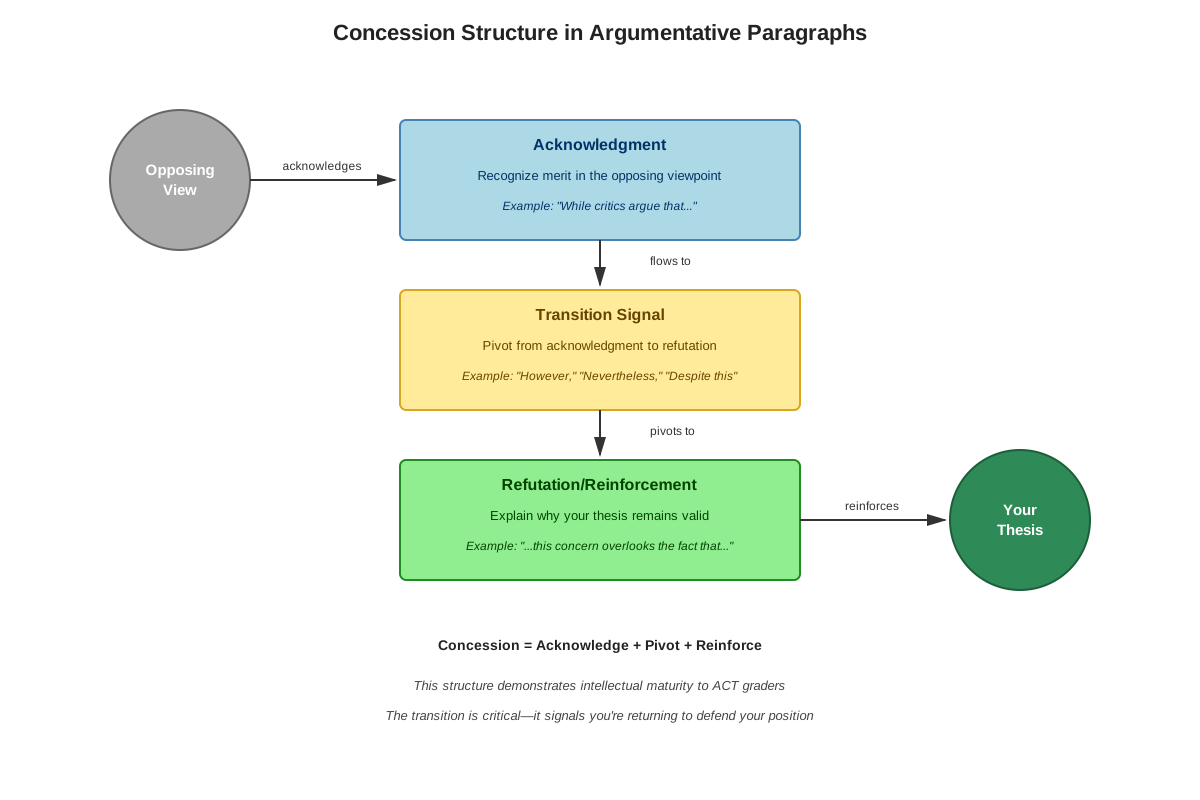
The fundamental structure of concession follows a predictable pattern: acknowledge → pivot → refute or contextualize. First, the writer genuinely recognizes something valid about the opposing view. Second, the writer uses transitional language to signal a shift back to their position. Third, the writer explains why, despite the conceded point, their thesis remains stronger. This three-part movement distinguishes concession from simple counterargument presentation, where opposing views are stated but not necessarily granted any validity.
Concession vs. Counterargument vs. Refutation
Understanding the distinctions between these related concepts is crucial for ACT success:
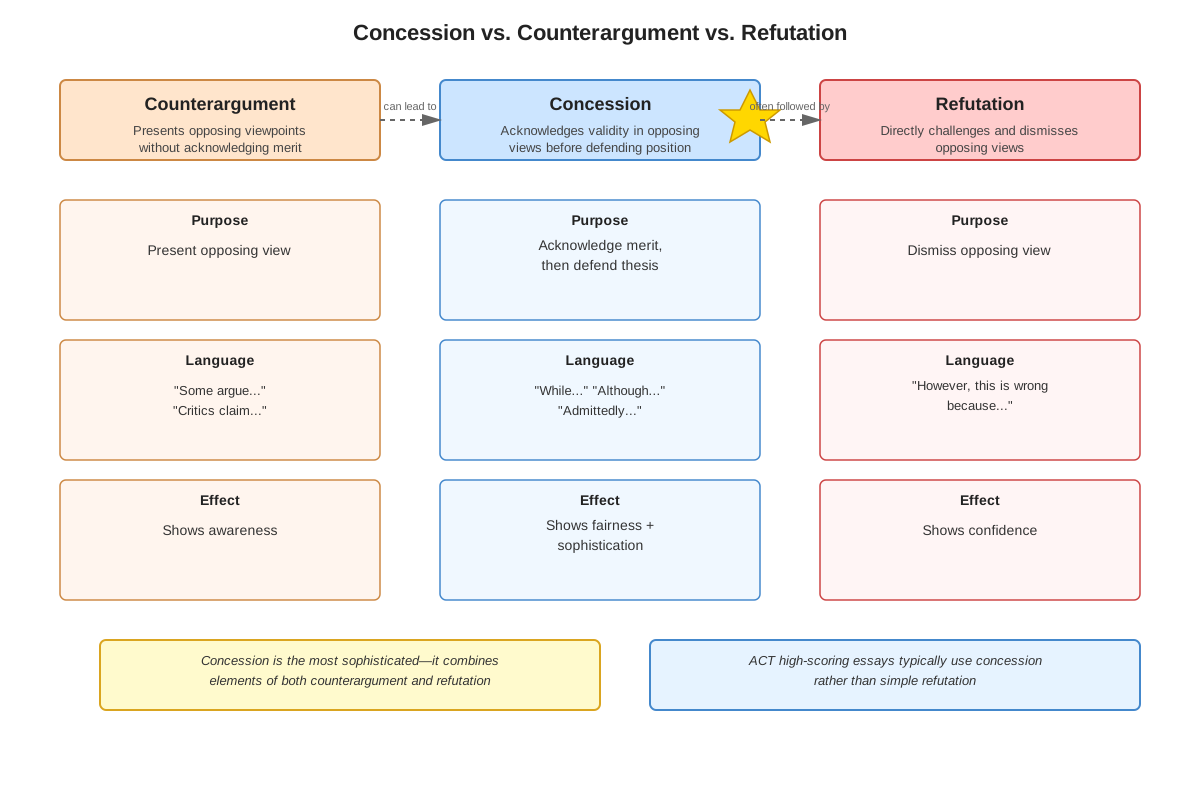
| Strategy | Definition | Purpose | Example Transition |
|---|---|---|---|
| Counterargument | Presenting an opposing viewpoint | To show awareness of other perspectives | "Some argue that..." |
| Concession | Acknowledging merit in opposing view | To demonstrate fairness and build credibility | "While it is true that..." |
| Refutation | Explaining why opposing view is wrong/insufficient | To defend your thesis | "However, this overlooks..." |
Concession occupies a middle ground: it goes beyond merely stating what opponents believe (counterargument) but stops short of completely dismissing those beliefs (pure refutation). Instead, concession grants partial validity before explaining why the writer's position ultimately prevails. This nuanced approach is precisely what ACT graders seek in high-scoring essays.
Structural Placement of Concession
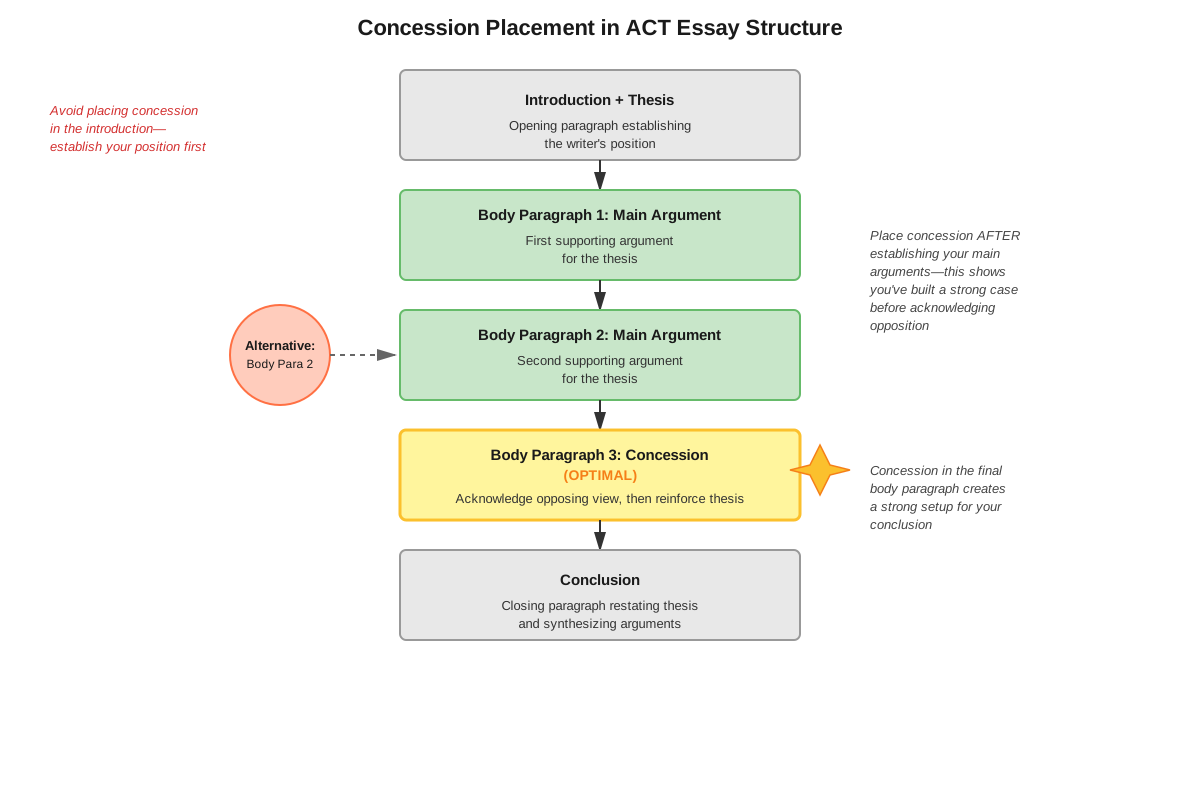
Effective concession can appear in multiple locations within an ACT essay, each with strategic advantages:
Early placement (after introduction): Addressing the strongest opposing argument early demonstrates confidence and allows the rest of the essay to build your case without the opposing view hanging over it. This approach works well when you have strong refutation points.
Middle placement (between supporting paragraphs): Positioning concession in the middle creates a balanced structure and can serve as a transition between different aspects of your argument. This placement acknowledges complexity while maintaining forward momentum.
Late placement (before conclusion): Addressing concession near the end allows you to build your case fully before acknowledging limitations, then end with a strong reaffirmation of your thesis. This approach works when your supporting evidence is particularly compelling.
Regardless of placement, concession paragraphs typically follow this internal structure:
- Topic sentence signaling concession
- Explanation of the opposing point's validity
- Transition indicating shift back to your position
- Explanation of why your thesis remains stronger
- Concluding sentence reinforcing your stance
Transitional Language for Concession
Specific phrases signal concession to both readers and ACT graders. Mastering these transitions is essential for clear communication:
Concession openers:
- "While it is true that..."
- "Admittedly..."
- "Although some argue..."
- "Granted..."
- "It must be acknowledged that..."
- "Certainly..."
- "One cannot deny that..."
Pivot transitions (shifting back to your position):
- "However..."
- "Nevertheless..."
- "Even so..."
- "That said..."
- "Despite this..."
- "Yet..."
- "Still..."
The combination of these transitions creates the characteristic concession pattern: "While it is true that [opposing point], nevertheless [your position remains stronger because...]."
Types of Concession
Different situations call for different concession approaches:
Partial concession: Acknowledging that an opposing argument is valid in limited circumstances or to a certain degree, but not universally. Example: "While increased technology use may improve efficiency in some workplaces, it cannot replace human judgment in fields requiring empathy and ethical reasoning."
Conditional concession: Granting that an opposing view would be correct if certain conditions were met, then explaining why those conditions don't apply. Example: "If cost were the only consideration, the opposing perspective would be compelling; however, long-term sustainability requires examining environmental and social impacts as well."
Temporal concession: Acknowledging that an opposing view may have been valid in the past or might become valid in the future, but explaining why current circumstances favor your position. Example: "Although this approach succeeded in previous decades, changing demographics and technological advances have created new challenges that require different solutions."
Concept Relationships
Concession functions as a bridge concept connecting multiple elements of argumentative writing. At its foundation, concession depends on thesis development—you cannot effectively concede points to opposing views unless you have a clear position to defend. The relationship flows: strong thesis → identification of opposing views → strategic concession → reinforced thesis.
Concession also connects intimately with counterargument. The relationship is sequential: counterargument (stating what opponents believe) → concession (acknowledging merit in that belief) → refutation (explaining why your position prevails). This three-step sequence represents sophisticated argumentation that ACT graders reward.
Within the broader framework of argument development, concession serves as evidence of comprehensive thinking. The relationship map looks like this:
Issue complexity → requires → Multiple perspectives → leads to → Counterargument presentation → enables → Concession → strengthens → Thesis credibility → results in → Persuasive argument
Concession also relates to paragraph organization and transitions. Effective concession paragraphs follow predictable internal structures, and the transitions that signal concession help readers navigate between competing ideas. This organizational clarity directly impacts the "Organization" domain of ACT Writing scoring.
Finally, concession connects to audience awareness. Writers use concession strategically based on their understanding of what objections readers might raise. This awareness of audience skepticism drives the decision about which opposing points to concede and how to refute them.
High-Yield Facts
⭐ Concession involves acknowledging merit in opposing arguments before explaining why your position remains stronger, not simply stating what opponents believe.
⭐ ACT essays that include effective concession consistently score higher (10-12 range) than essays that ignore or dismiss opposing perspectives.
⭐ The standard concession structure follows: acknowledge → pivot → refute or contextualize.
⭐ Concession strengthens rather than weakens arguments by demonstrating fairness, credibility, and comprehensive thinking.
⭐ Key concession transitions include "while it is true that," "admittedly," "although," "granted," and "certainly."
- Concession differs from counterargument in that concession grants validity to opposing points, while counterargument merely presents them.
- Effective concession paragraphs typically appear after the introduction, between body paragraphs, or before the conclusion.
- Partial concession acknowledges limited validity of opposing views rather than complete agreement.
- The pivot transition (however, nevertheless, yet) is crucial for shifting back to your position after making a concession.
- ACT Writing prompts that present multiple perspectives explicitly require concession for full credit.
- Concession demonstrates the "nuanced position" that ACT scoring rubrics specifically mention as characteristic of high-scoring essays.
- Writers should concede the strongest opposing argument rather than weak strawman versions to maintain credibility.
- Temporal concession acknowledges that opposing views may have been valid in different time periods or contexts.
Quick check — test yourself on Concession so far.
Try Flashcards →Common Misconceptions
Misconception: Concession weakens your argument by admitting the other side has valid points.
Correction: Concession actually strengthens arguments by demonstrating intellectual honesty and comprehensive thinking. Acknowledging opposing merits before refuting them makes your position more credible and persuasive because it shows you've considered all angles rather than ignoring inconvenient facts.
Misconception: Concession and counterargument are the same thing.
Correction: Counterargument involves presenting what opponents believe, while concession specifically involves granting that those beliefs have some merit or validity. Concession goes a step further than counterargument by acknowledging truth in opposing views before explaining why your position ultimately prevails.
Misconception: You should concede weak opposing arguments to make them easier to refute.
Correction: Effective concession involves acknowledging the strongest opposing arguments, not weak strawman versions. Conceding weak points that no one seriously argues makes your essay seem dishonest or unaware of the real debate. Graders recognize and reward engagement with genuinely challenging opposing views.
Misconception: Concession means you're uncertain about your position.
Correction: Concession demonstrates confidence in your position by showing you can acknowledge opposing merits and still defend your thesis. Refusing to concede any validity to opposing views often signals insecurity or simplistic thinking, while strategic concession indicates sophisticated understanding of complex issues.
Misconception: Concession paragraphs should be brief to minimize attention to opposing views.
Correction: Concession paragraphs should be substantive and well-developed, typically 4-6 sentences. Superficial concession that quickly dismisses opposing views fails to demonstrate the comprehensive engagement that ACT graders seek. The key is not brevity but effective pivoting back to your position after genuine acknowledgment.
Worked Examples
Example 1: Technology in Education Prompt
Prompt: "As schools increasingly adopt technology in classrooms, educators debate its impact on learning. Some argue technology enhances engagement and prepares students for modern careers. Others contend it distracts from deep learning and reduces face-to-face interaction. Still others believe technology's impact depends entirely on implementation quality. Evaluate these perspectives and develop your own position."
Worked Concession Paragraph:
"While it is true that technology can distract students from deep learning and reduce meaningful face-to-face interaction, these concerns reflect poor implementation rather than inherent flaws in educational technology itself. Admittedly, students who spend class time on social media or who rely on superficial internet searches instead of careful reading do experience the negative effects critics describe. Research from the University of Michigan confirms that multitasking with devices during lectures significantly reduces retention and comprehension. However, these problems emerge from allowing unrestricted technology use without pedagogical structure, not from technology's presence in classrooms. When schools implement technology with clear learning objectives—using collaborative platforms for peer feedback, adaptive software for personalized instruction, or multimedia tools for creative expression—students demonstrate both higher engagement and deeper learning than in traditional classrooms. The solution is not rejecting technology but using it strategically, just as we wouldn't abandon textbooks because some students doodle in margins instead of reading."
Analysis: This paragraph demonstrates effective concession by:
- Opening with "While it is true that" to signal concession
- Genuinely acknowledging the validity of distraction concerns with specific evidence
- Using "However" to pivot back to the writer's position
- Explaining why the conceded problem doesn't undermine the thesis (implementation vs. inherent flaws)
- Providing evidence for the writer's position
- Ending with an analogy that reinforces the thesis
Example 2: Environmental Policy Prompt
Prompt: "Communities face difficult decisions about balancing economic development with environmental protection. Evaluate different perspectives on this issue and develop your own position."
Worked Concession Paragraph:
"Granted, strict environmental regulations can increase costs for businesses and potentially slow economic growth in the short term. Manufacturing companies facing new emissions standards must invest in cleaner technology, and developers must conduct extensive environmental impact studies before breaking ground on projects. These requirements undeniably create financial burdens and delays that concern business owners and workers whose livelihoods depend on economic activity. Nevertheless, this short-term economic friction must be weighed against the long-term costs of environmental degradation. Communities that prioritize immediate development over environmental protection face expensive consequences: contaminated water supplies requiring costly treatment systems, health problems generating increased medical expenses, and degraded natural resources that undermine tourism and quality of life. Furthermore, the clean technology sector itself creates new economic opportunities—solar installation jobs, environmental consulting firms, and green building industries—that can offset losses in polluting industries. The question is not whether environmental protection has costs, but whether those costs are smaller than the price of environmental destruction."
Analysis: This paragraph demonstrates sophisticated concession by:
- Using "Granted" to signal acknowledgment
- Providing specific, concrete examples of economic costs
- Acknowledging the legitimacy of business and worker concerns
- Using "Nevertheless" to pivot effectively
- Comparing short-term costs to long-term consequences
- Providing multiple supporting points for the thesis position
- Ending with a reframing that reinforces the writer's perspective
Exam Strategy
When approaching ACT Writing prompts that require concession, follow this strategic process:
Step 1: Identify your thesis position clearly before attempting concession. You cannot effectively concede points to opposing views unless you know exactly what you're arguing. Spend 2-3 minutes in planning to establish your clear position.
Step 2: Identify the strongest opposing argument from the perspectives provided in the prompt. Look for the opposing view that has the most merit or that readers would find most compelling. This is what you should concede, not weak strawman arguments.
Step 3: Determine optimal placement for your concession paragraph. If you have strong refutation points, place concession early. If your supporting evidence is particularly compelling, build your case first and place concession later.
Step 4: Use explicit concession transitions to signal your rhetorical move to graders. Don't assume graders will recognize concession without clear markers like "while it is true that," "admittedly," or "granted."
Trigger words and phrases to watch for in ACT Writing prompts:
- "Evaluate these perspectives" (requires engaging with multiple views)
- "Consider different viewpoints" (signals need for concession)
- "Some argue... others contend... still others believe" (presents multiple perspectives requiring acknowledgment)
- "Develop a nuanced position" (explicitly calls for sophisticated engagement with complexity)
Process-of-elimination tips: When evaluating sample essays or planning your own, eliminate approaches that:
- Completely ignore opposing perspectives
- Dismiss opposing views without acknowledging any merit
- Present only weak versions of opposing arguments
- Fail to pivot back to the thesis after concession
- Make concessions without explaining why the thesis still prevails
Time allocation: In the 40-minute ACT Writing test, allocate approximately:
- 8-10 minutes: Planning (including identifying concession strategy)
- 25-28 minutes: Writing (including 4-6 minutes on concession paragraph)
- 3-5 minutes: Revision (checking that concession is clear and effective)
Exam Tip: If you're running short on time, a well-developed concession paragraph is more valuable than a third supporting paragraph that simply adds more evidence for your position. Concession demonstrates the sophisticated thinking that distinguishes high-scoring essays.
Memory Techniques
The "ACT" Acronym for Concession Structure:
- Acknowledge: Recognize the merit in the opposing view
- Contrast: Use pivot transitions to shift back to your position
- Triumph: Explain why your thesis ultimately prevails
The "WHAM" Mnemonic for Concession Transitions:
- While it is true that...
- However...
- Admittedly...
- Moreover (for adding additional support after pivoting)
Visualization Strategy: Picture concession as a bridge. You start on your side (your thesis), walk partway across to acknowledge the other side's valid points (concession), then walk back to your side with greater credibility (refutation). The bridge doesn't collapse your position—it strengthens it by showing you've explored both sides.
The "Boomerang" Mental Model: Think of concession as throwing a boomerang. You release your argument temporarily to acknowledge opposing views (the boomerang flies away), but it curves back to your position with added force (the boomerang returns). The temporary departure strengthens the return.
Sentence Template to Memorize:
"While it is true that [opposing point], [pivot transition] [your position] because [reason 1] and [reason 2]."
This template ensures you include all essential concession elements even under time pressure.
Summary
Concession is a sophisticated rhetorical strategy essential for high-scoring ACT Writing essays, involving the acknowledgment of merit in opposing arguments before explaining why your thesis position remains stronger. Unlike simple counterargument presentation, concession grants validity to opposing views, demonstrating intellectual fairness and comprehensive thinking that ACT graders specifically reward. The standard concession structure follows a three-part pattern: acknowledge opposing merits using transitions like "while it is true that" or "admittedly," pivot back to your position using transitions like "however" or "nevertheless," and explain why your thesis ultimately prevails despite the conceded point. Effective concession strengthens rather than weakens arguments by building credibility, preemptively addressing reader objections, and demonstrating nuanced understanding of complex issues. Strategic placement of concession paragraphs—whether early, middle, or late in the essay—depends on the strength of your refutation points and supporting evidence. Mastering concession is crucial because ACT Writing prompts frequently present multiple perspectives requiring sophisticated engagement, and essays that effectively use concession consistently score in the 10-12 range while those that ignore or dismiss opposing views typically score 8 or below.
Key Takeaways
- Concession acknowledges merit in opposing arguments before refuting them, demonstrating sophisticated thinking that ACT graders reward with higher scores
- The essential concession structure is: acknowledge → pivot → refute, using specific transitions to signal each move
- Concession strengthens arguments by building credibility and showing comprehensive consideration of complex issues
- Effective concession addresses the strongest opposing arguments, not weak strawman versions
- Key concession transitions include "while it is true that," "admittedly," "granted," followed by pivot words like "however" and "nevertheless"
- Concession differs from counterargument by granting validity to opposing views rather than merely stating them
- Strategic concession placement depends on your argument's strengths, but substantive development is more important than brevity
Related Topics
Counterargument Development: Understanding how to present opposing viewpoints comprehensively provides the foundation for effective concession. Mastering concession enables progression to more sophisticated counterargument strategies.
Refutation Techniques: Learning various methods for addressing opposing arguments after concession strengthens overall argumentative writing. Concession mastery makes refutation more credible and persuasive.
Thesis Refinement: Developing nuanced thesis statements that acknowledge complexity prepares writers for sophisticated concession. Strong concession skills enable more ambitious, nuanced thesis positions.
Rhetorical Appeals (Ethos, Pathos, Logos): Understanding how concession builds ethos (credibility) connects to broader persuasive strategies. Concession mastery enhances overall rhetorical effectiveness.
Paragraph Organization and Transitions: Studying advanced paragraph structures and transitional strategies builds on concession skills. Mastering concession provides a model for other complex paragraph types.
Practice CTA
Now that you understand the sophisticated strategy of concession and its crucial role in ACT Writing success, it's time to apply these concepts through deliberate practice. Attempt the practice questions to identify concession in sample essays and construct your own effective concession paragraphs. Use the flashcards to reinforce key transitions and structural patterns until they become automatic. Remember: concession is not a weakness but a strength that distinguishes exceptional essays from merely competent ones. Every minute you invest in mastering this high-yield strategy directly translates to higher scores on test day. Your ability to acknowledge opposing merits while defending your position demonstrates the intellectual maturity and comprehensive thinking that ACT graders seek in top-scoring essays.
Sign up free to keep reading
Create a free AnvayaPrep account to finish this ACT guide on Concession — plus flashcards and practice questions.