Overview
Both speakers agree questions represent a unique and frequently tested category within LSAT Logical Reasoning sections. Unlike the more common point at issue and disagreement questions that ask test-takers to identify where two speakers diverge in their views, "both speakers agree" questions require identifying statements that both parties would accept as true based on their expressed positions. This question type tests a student's ability to carefully parse argumentative statements, distinguish between what is explicitly stated versus implied, and recognize common ground even when speakers appear to be in conflict.
These questions are essential for LSAT success because they assess critical reading comprehension skills that extend beyond surface-level understanding. Students must demonstrate the ability to extract commitments from each speaker's argument, recognize logical implications, and avoid the trap of selecting answer choices that only one speaker would support or that go beyond what either speaker has committed to. The LSAT frequently uses these questions to test whether students can maintain precision in their reasoning and avoid making unwarranted inferences—skills that are fundamental to legal analysis.
Within the broader landscape of Logical Reasoning, "both speakers agree" questions connect directly to argument structure analysis, inference recognition, and the ability to distinguish between necessary and sufficient conditions. They require the same careful attention to language and logical relationships that characterizes all high-level LSAT performance, while adding the additional complexity of tracking multiple perspectives simultaneously and identifying their intersection.
Learning Objectives
- [ ] Identify how Both speakers agree appears in LSAT questions
- [ ] Explain the reasoning pattern behind Both speakers agree
- [ ] Apply Both speakers agree to solve LSAT-style problems accurately
- [ ] Distinguish between explicit statements and unwarranted inferences when determining agreement
- [ ] Recognize common trap answers that only one speaker would support
- [ ] Evaluate answer choices systematically by testing each against both speakers' commitments
- [ ] Identify implicit agreements that follow necessarily from each speaker's stated position
Prerequisites
- Basic argument structure: Understanding premises, conclusions, and how arguments are constructed is essential because "both speakers agree" questions require parsing each speaker's position into its component claims.
- Inference skills: The ability to recognize what must be true based on given statements is necessary because agreement often exists at the level of logical implications rather than explicit statements.
- Conditional reasoning fundamentals: Understanding if-then relationships helps identify what each speaker is committed to accepting, even when not directly stated.
- Distinguishing fact from opinion: Recognizing the difference between what speakers claim as fact versus their evaluative judgments is crucial for identifying genuine points of agreement.
Why This Topic Matters
In legal practice, identifying areas of agreement between opposing parties is fundamental to negotiation, mediation, and case analysis. Attorneys must accurately assess what facts or principles all parties accept to build effective arguments and find resolution pathways. The "both speakers agree" question type directly tests this real-world skill by requiring precise analysis of multiple perspectives.
On the LSAT, these questions appear with significant frequency—typically 1-3 times per Logical Reasoning section, making them a high-yield topic for focused study. They most commonly appear in the lsat both speakers agree format where two speakers present brief arguments (usually 2-4 sentences each) followed by a question stem asking what both would accept or agree upon. Less frequently, they appear as inference questions within longer passages where multiple viewpoints are presented.
The LSAT uses this question type to differentiate between students who read carefully and those who make assumptions. Because these questions reward precision and punish hasty reasoning, they serve as excellent discriminators of test-taking ability. Students who master this topic gain not only points on these specific questions but also develop the careful reading habits that improve performance across all Logical Reasoning question types. The skills developed here—tracking multiple perspectives, avoiding overinference, and maintaining logical precision—transfer directly to Reading Comprehension and even Analytical Reasoning sections.
Core Concepts
The Structure of Both Speakers Agree Questions
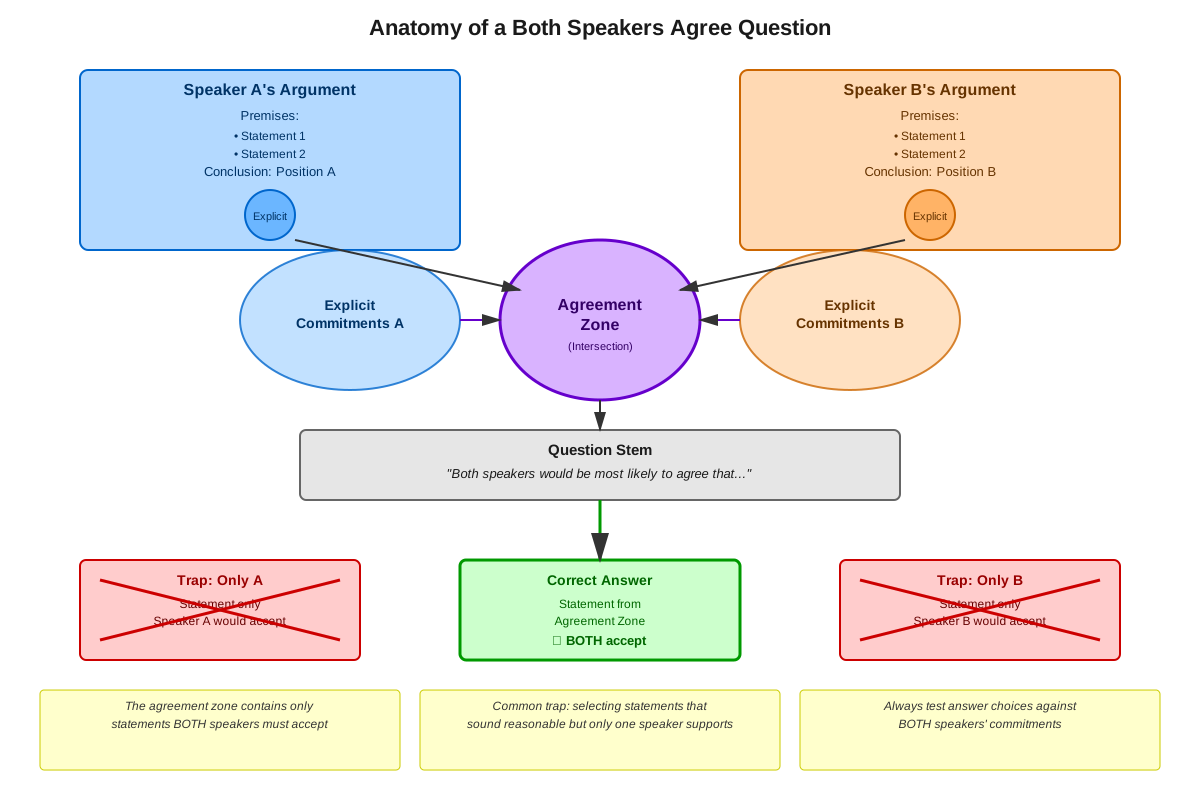
Both speakers agree questions follow a predictable format that students must recognize immediately. The stimulus presents two speakers, typically labeled "Speaker A" and "Speaker B" (or given names like "Maria" and "James"), each offering a brief argument or position on a topic. These positions often appear contradictory or at least divergent on the surface. The question stem then asks: "The dialogue provides the most support for the claim that the two speakers agree about which one of the following?" or variations such as "The speakers' statements commit them to agreeing about which one of the following?"
The key structural element is that each speaker makes specific claims, and the correct answer must be something that follows necessarily from what both speakers have said. This requires understanding not just what each speaker explicitly states, but what their statements logically commit them to accepting. The LSAT tests whether students can identify the logical intersection of two positions.
Explicit vs. Implicit Agreement
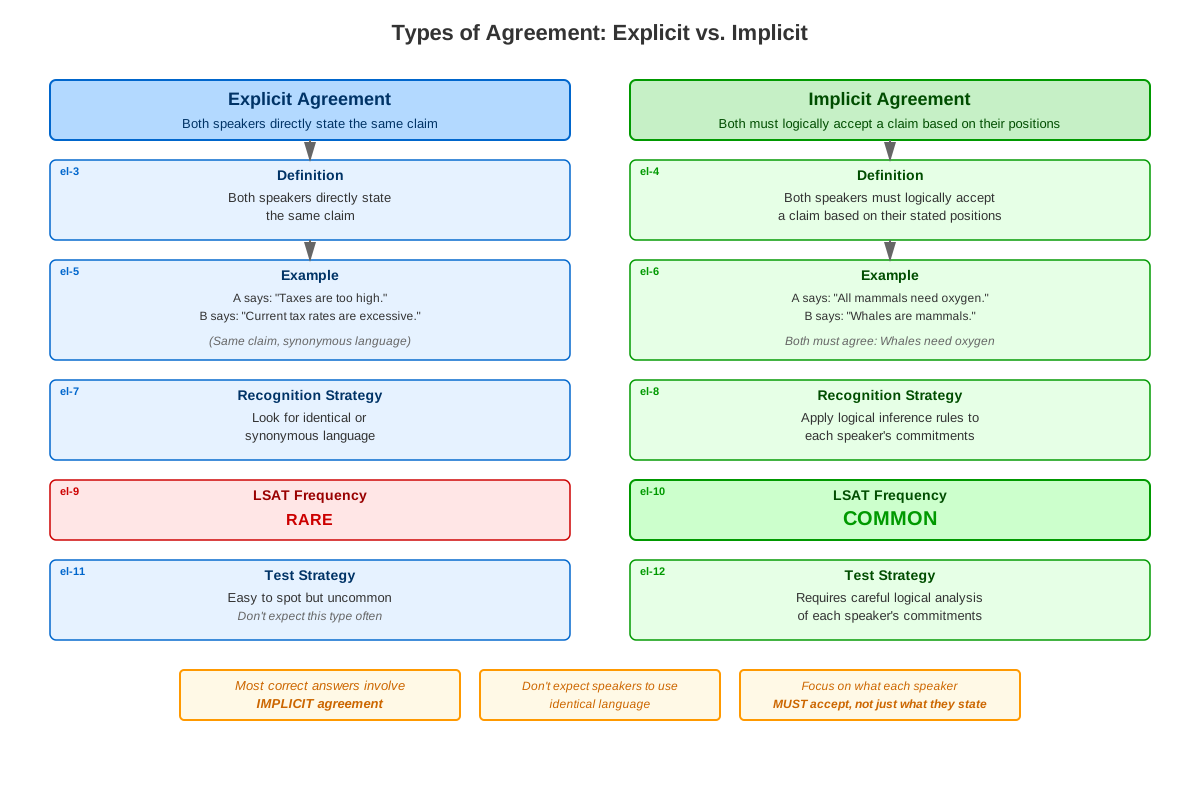
A critical distinction in these questions is between explicit agreement (where both speakers directly state the same thing) and implicit agreement (where both speakers' positions logically require accepting a particular claim, even if neither directly states it). The LSAT more frequently tests implicit agreement because it requires deeper analytical thinking.
For explicit agreement, both speakers might say something nearly identical: Speaker A states "Exercise improves cardiovascular health" and Speaker B states "Physical activity benefits heart function." The agreement is direct and obvious.
For implicit agreement, the connection is more subtle. Speaker A might argue "All effective medications must undergo clinical trials" while Speaker B argues "We should not approve this drug because it hasn't been tested in clinical trials." Both speakers implicitly agree that clinical trials are relevant to medication approval, even though neither explicitly states this shared assumption.
The Commitment Test
To determine what speakers agree upon, apply the commitment test: For each answer choice, ask "Based on what this speaker said, would they be logically committed to accepting this statement?" A speaker is committed to a statement if:
- They explicitly stated it
- It follows necessarily from what they stated
- Denying it would contradict their stated position
This test must be applied to both speakers. Only when both speakers pass the commitment test for an answer choice is it correct. This systematic approach prevents the common error of selecting answers that only one speaker would support.
Common Agreement Patterns
Several patterns of agreement appear repeatedly on the LSAT:
Shared factual assumptions: Both speakers accept certain facts as true, even while disagreeing about their significance or implications. Speaker A might argue "Since crime rates have fallen 20%, we should reduce police funding" while Speaker B argues "Despite crime rates falling 20%, we should maintain police funding." Both agree crime rates have fallen 20%.
Shared values or principles: Both speakers accept the same underlying principle but apply it differently. Both might agree "Public safety is paramount" while disagreeing about which policy best achieves it.
Shared problem recognition: Both speakers acknowledge the same problem exists, even while proposing different solutions. Both might agree "Current education outcomes are inadequate" while disagreeing about causes or remedies.
Shared rejections: Both speakers reject the same claim or position, even if for different reasons. Both might disagree with a third party's proposal, though their objections differ.
The Scope Limitation Principle
A crucial concept for these questions is recognizing scope limitations. The correct answer must fall within the scope of what both speakers addressed. If Speaker A discusses environmental policy and Speaker B discusses economic policy, they cannot agree about matters outside both domains unless there's logical overlap.
Students must also recognize degree limitations. If Speaker A says "Some pollution regulations are excessive" and Speaker B says "All pollution regulations are necessary," they do NOT agree that "pollution regulations exist" in any meaningful way that would make this a correct answer, even though both acknowledge regulations exist. The agreement must be substantive, not merely acknowledging that a topic exists.
Distinguishing Agreement from Non-Disagreement
A sophisticated trap the LSAT employs is the difference between agreement and mere non-disagreement. If Speaker A discusses topic X and Speaker B discusses topic Y, they don't disagree about Z—but they also don't agree about Z in any meaningful sense. True agreement requires that both speakers have taken positions that logically commit them to the same claim.
For example, if Speaker A argues "We should invest in solar energy" and Speaker B argues "We should invest in wind energy," they don't necessarily disagree about whether renewable energy is important (they might both agree on this), but neither has explicitly committed to this broader claim. The correct answer must be something both have actually committed to, not merely something neither has denied.
Concept Relationships
The concepts within "both speakers agree" questions form an interconnected analytical framework. The structure of both speakers agree questions provides the foundation, establishing the format students will encounter. This structure necessitates understanding explicit vs. implicit agreement because the LSAT tests both types. The distinction between explicit and implicit agreement requires applying the commitment test, which serves as the methodological tool for evaluating answer choices systematically.
The commitment test, in turn, depends on recognizing common agreement patterns because these patterns help students quickly identify where to look for agreement. Understanding these patterns prevents wasted time analyzing impossible agreements. All of these concepts must operate within the scope limitation principle, which acts as a boundary condition—no matter how well an answer seems to fit a pattern, it fails if it exceeds what both speakers addressed.
Finally, distinguishing agreement from non-disagreement represents the highest level of sophistication, integrating all previous concepts to avoid subtle traps. This distinction requires simultaneously applying the commitment test, recognizing scope limitations, and understanding what constitutes genuine agreement versus mere absence of explicit contradiction.
The relationship to prerequisite topics is direct: basic argument structure enables parsing each speaker's position into analyzable components; inference skills allow recognition of implicit agreements; conditional reasoning helps identify logical commitments; and distinguishing fact from opinion prevents confusing subjective evaluations with objective agreements.
Connection to related topics: Mastering "both speakers agree" directly enhances performance on point at issue questions (by understanding the inverse relationship), strengthening and weakening questions (by recognizing what assumptions speakers share), and inference questions generally (by developing precision in determining what must be true).
High-Yield Facts
⭐ The correct answer must be something BOTH speakers are logically committed to accepting based on their stated positions.
⭐ Implicit agreement (what both speakers' positions logically require) is tested more frequently than explicit agreement (what both directly state).
⭐ If an answer choice goes beyond what either speaker addressed, it cannot be correct, even if it seems reasonable.
⭐ Both speakers can agree on factual claims while disagreeing about their significance, implications, or what should be done about them.
⭐ The commitment test requires asking: "Would denying this statement contradict what the speaker said?" for both speakers.
- Agreement questions typically appear 1-3 times per Logical Reasoning section, making them high-yield for focused preparation.
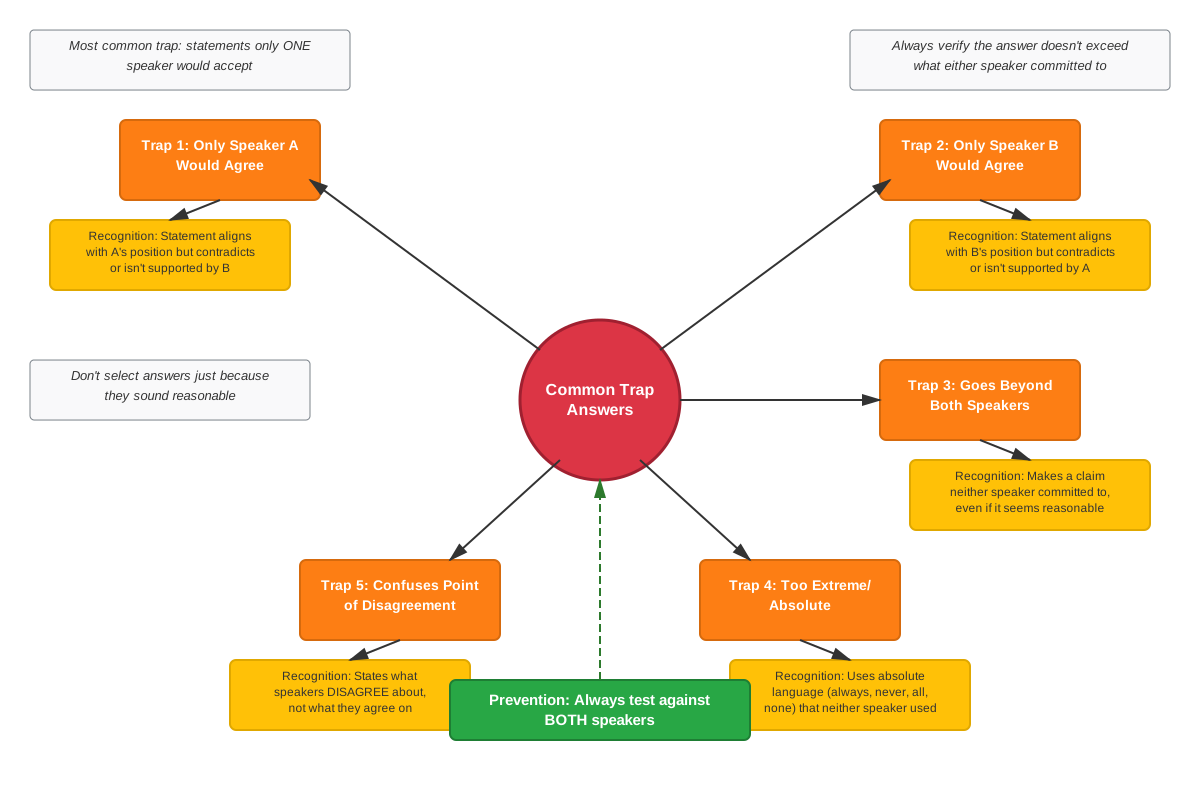
- Common wrong answers include statements that only one speaker would accept, statements neither speaker addressed, and statements that go beyond what either speaker committed to.
- Speakers can agree on underlying assumptions or principles even when their conclusions directly contradict each other.
- The phrase "the dialogue provides the most support for" indicates you should select what both speakers are most clearly committed to, not what might possibly be true.
- Extreme language in answer choices (all, none, never, always) is often incorrect unless both speakers used similarly extreme language.
- Both speakers agreeing that a problem exists does NOT mean they agree about its cause, severity, or solution.
- Temporal scope matters: if Speaker A discusses past events and Speaker B discusses future predictions, their agreement must span both timeframes or neither.
- Conditional statements create commitments: if a speaker says "If X, then Y," they're committed to accepting that Y follows from X, even if they don't believe X is actually true.
Quick check — test yourself on Both speakers agree so far.
Try Flashcards →Common Misconceptions
Misconception: If both speakers discuss the same topic, they must agree about something substantive related to that topic.
Correction: Merely discussing the same topic doesn't create agreement. Both speakers must be logically committed to accepting the same claim. They could discuss the same topic while making entirely incompatible claims that share no common ground.
Misconception: If neither speaker explicitly contradicts a statement, they both agree with it.
Correction: Agreement requires positive commitment, not mere absence of contradiction. Both speakers must have said something that logically commits them to accepting the statement. Silence or non-contradiction is not agreement.
Misconception: The correct answer will be something that resolves or bridges the speakers' disagreement.
Correction: The correct answer identifies what both speakers already agree upon based on their stated positions. It doesn't need to resolve their disagreement or represent a compromise position. Often, the agreement exists at a more fundamental level than their disagreement.
Misconception: If both speakers would likely agree with something in real life, it's the correct answer.
Correction: The correct answer must be supported by what the speakers actually said in the stimulus, not by what reasonable people would generally believe. The LSAT tests logical analysis of the given text, not real-world plausibility.
Misconception: Stronger statements are better answers because they show more definite agreement.
Correction: The correct answer must match the strength of commitment from both speakers. If both speakers made qualified, limited claims, the correct answer will also be qualified and limited. Overly strong answers that exceed what either speaker committed to are incorrect.
Misconception: If Speaker A states X and Speaker B's argument depends on X being true, they agree about X.
Correction: This is only true if Speaker B's argument actually commits them to accepting X. Sometimes Speaker B might be arguing hypothetically ("even if X were true...") without actually accepting X. The commitment must be genuine, not hypothetical.
Worked Examples
Example 1: Implicit Agreement Through Shared Assumptions
Stimulus:
Maria: The city's new parking regulations are too restrictive. Many local businesses have reported decreased customer traffic since the regulations took effect, which will ultimately harm the local economy.
James: I disagree that the regulations are too restrictive. The decrease in traffic is temporary, and the long-term benefits of reduced congestion will actually help businesses by making the downtown area more accessible.
Question: The dialogue provides the most support for the claim that Maria and James agree about which one of the following?
Answer Choices:
(A) The new parking regulations will harm the local economy.
(B) Reduced congestion would benefit downtown businesses.
(C) The parking regulations have led to decreased customer traffic.
(D) The parking regulations should be modified.
(E) Long-term effects are more important than short-term effects.
Analysis:
Let's apply the commitment test to each answer choice for both speakers:
(A) Maria explicitly states this, but James explicitly disagrees, saying long-term benefits will help businesses. Fails for James.
(B) James explicitly states this, but Maria never addresses whether reduced congestion would be beneficial—she only discusses the harm from decreased traffic. Fails for Maria.
(C) Maria explicitly states that businesses have reported decreased customer traffic since the regulations took effect. James acknowledges "the decrease in traffic" in his response, accepting this as a fact even while arguing it's temporary. Both speakers are committed to this. This is the correct answer.
(D) Maria implies this through her criticism, but James explicitly disagrees that they're too restrictive, suggesting he doesn't think modification is needed. Fails for James.
(E) James's argument suggests this, but Maria never addresses the relative importance of long-term versus short-term effects. Fails for Maria.
Key Lesson: The correct answer (C) represents a factual claim that both speakers accept as true, even though they disagree about its significance and implications. Maria uses it as evidence that regulations are harmful; James acknowledges it but argues the effect is temporary. This demonstrates how speakers can agree on facts while disagreeing on interpretations.
Example 2: Agreement on Underlying Principles
Stimulus:
Dr. Chen: Medical schools should increase admission of students from disadvantaged backgrounds, even if it means accepting some students with slightly lower test scores. Diversity in medical education leads to better health outcomes for underserved communities.
Dr. Patel: Medical schools should maintain current admission standards that prioritize test scores above other factors. Patient safety requires that we train only the most academically qualified physicians, regardless of their backgrounds.
Question: The statements above commit Dr. Chen and Dr. Patel to agreeing about which one of the following?
Answer Choices:
(A) Test scores are the best predictor of physician competence.
(B) Medical schools should prioritize diversity in admissions.
(C) The quality of physicians affects patient outcomes.
(D) Students from disadvantaged backgrounds typically have lower test scores.
(E) Current admission standards are appropriate.
Analysis:
(A) Dr. Patel's position suggests this, but Dr. Chen argues for considering factors beyond test scores, implicitly questioning whether test scores alone are the best predictor. Fails for Dr. Chen.
(B) Dr. Chen explicitly argues for this, but Dr. Patel explicitly argues against prioritizing diversity. Fails for Dr. Patel.
(C) Dr. Chen argues that diversity leads to "better health outcomes," implicitly accepting that physician characteristics affect patient outcomes. Dr. Patel argues that academic qualification is necessary for "patient safety," explicitly accepting that physician quality affects patient outcomes. Both speakers are committed to this principle. This is the correct answer.
(D) Dr. Chen's argument assumes this ("even if it means accepting some students with slightly lower test scores"), but Dr. Patel never addresses the relationship between background and test scores. Fails for Dr. Patel.
(E) Dr. Patel supports current standards, but Dr. Chen explicitly argues for changing them. Fails for Dr. Chen.
Key Lesson: The correct answer (C) identifies an underlying principle that both speakers' arguments depend upon, even though they reach opposite conclusions. Both accept that physician characteristics matter for patient outcomes—they simply disagree about which characteristics matter most. This demonstrates how agreement often exists at a more fundamental level than the speakers' explicit disagreement.
Exam Strategy
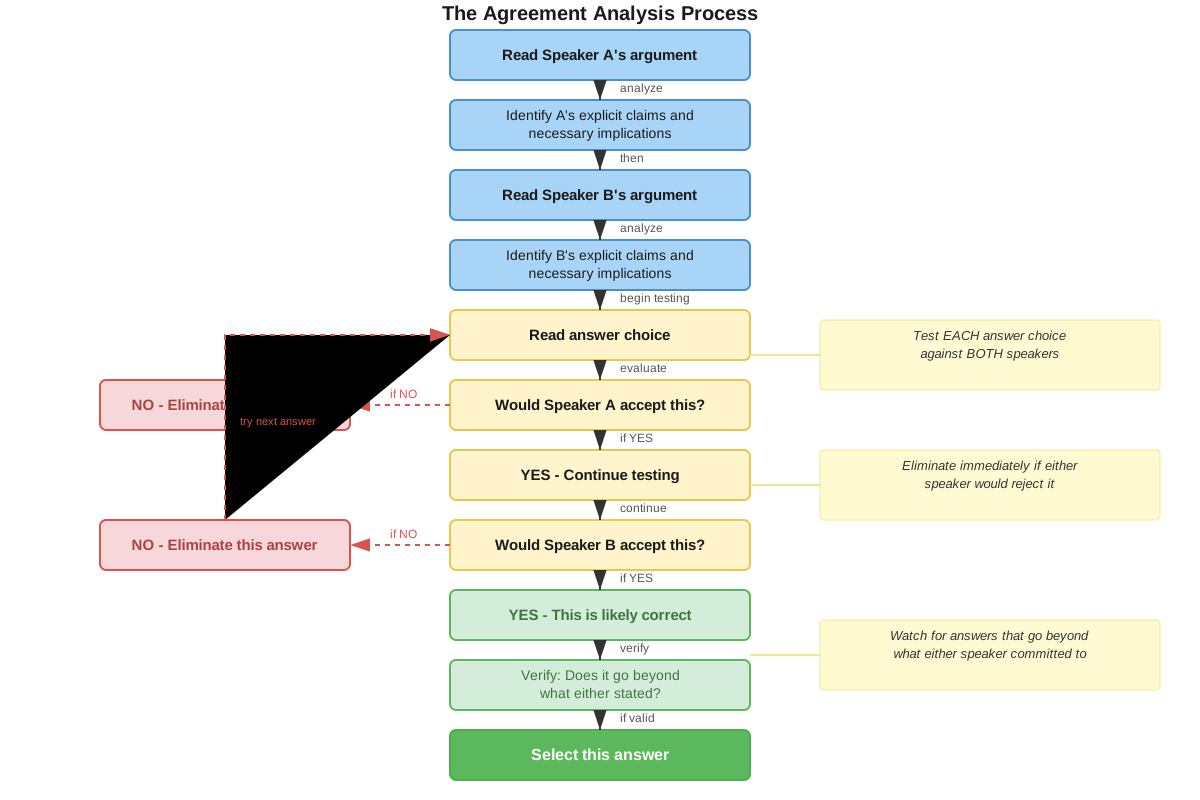
When approaching both speakers agree questions on the LSAT, implement a systematic process to maximize accuracy and efficiency:
Step 1: Identify the question type immediately. Look for trigger phrases like "both speakers agree," "the dialogue provides the most support for the claim that the speakers agree," or "the statements commit both speakers to agreeing." Recognition allows you to activate the appropriate analytical framework.
Step 2: Read each speaker's statement carefully, noting explicit claims. As you read, mentally catalog what each speaker directly states. Underline or mark key factual claims, value statements, and conclusions. Don't yet worry about what they agree on—first understand each position independently.
Step 3: Identify the apparent point of disagreement. Understanding where speakers diverge helps you recognize where they might share common ground. Often, agreement exists in the assumptions underlying their disagreement.
Step 4: Before looking at answer choices, predict possible areas of agreement. Ask yourself: What facts do both speakers accept? What assumptions do both positions depend on? What problem or issue do both acknowledge? This prediction prevents you from being led astray by attractive wrong answers.
Step 5: Evaluate each answer choice using the commitment test. For each option, explicitly ask: "Is Speaker A committed to accepting this?" and "Is Speaker B committed to accepting this?" Both answers must be "yes." If you're uncertain about either speaker, that answer choice is wrong.
Step 6: Eliminate answers that only one speaker would accept. These are the most common wrong answers. Often, they're statements that one speaker explicitly made but the other never addressed or would reject.
Step 7: Eliminate answers that go beyond what either speaker addressed. Even if an answer seems reasonable or likely true, if neither speaker's statement commits them to it, it's wrong. Stay within the scope of what was actually said.
Step 8: Watch for scope and degree mismatches. If Speaker A makes a limited claim ("some X are Y") and Speaker B makes a broad claim ("most X are Y"), they don't agree that "all X are Y." The correct answer must match the scope and degree that both speakers committed to.
Exam Tip: If you're stuck between two answers, ask which one both speakers would more readily accept based solely on what they said. The correct answer should feel almost obvious once you've properly applied the commitment test to both speakers.
Time allocation: These questions typically warrant 1:15-1:30 minutes. They require careful reading but shouldn't consume excessive time. If you're spending more than 1:45, you're likely overanalyzing. Trust the commitment test and move forward.
Trigger words to watch for in answer choices:
- "Should" statements (normative claims) require that both speakers made value judgments
- Causal language ("causes," "leads to," "results in") requires both speakers accepted the causal relationship
- Quantifiers ("all," "some," "most," "many") must match what both speakers committed to
- Temporal markers ("will," "has," "currently") must align with both speakers' timeframes
Memory Techniques
The BOTH Acronym for evaluating answer choices:
- Based on what was stated (not assumptions)
- Obvious commitment from each speaker
- Test each speaker separately
- Has to be accepted by both
The "Two Yeses" Rule: Visualize two checkboxes next to each answer choice, one for each speaker. Only when both boxes can be checked with confidence is the answer correct. If even one box remains uncertain, eliminate that choice.
The Intersection Visualization: Picture two overlapping circles (a Venn diagram). Each speaker's commitments fill one circle. The correct answer must fall in the overlapping section—the intersection of both speakers' commitments. This mental image helps maintain focus on finding common ground rather than getting distracted by each speaker's unique claims.
The "Would They Sign It?" Test: For each answer choice, imagine presenting it as a statement for both speakers to sign. Would both speakers sign it based on what they said? If either would refuse or hesitate, it's wrong.
The Scope Boundary Mnemonic - "SAID":
- Stated explicitly or
- Assumed necessarily or
- Implied logically or
- Denial would contradict
If an answer choice doesn't meet at least one of these criteria for both speakers, eliminate it.
Summary
Both speakers agree questions test the ability to identify common ground between two positions by recognizing what both speakers are logically committed to accepting. Success requires distinguishing between explicit statements and implicit commitments, applying the commitment test systematically to both speakers, and avoiding the trap of selecting answers that only one speaker would support or that exceed the scope of what either addressed. The most frequently tested pattern involves implicit agreement on factual assumptions, underlying principles, or problem recognition, even when speakers reach contradictory conclusions. Students must maintain precision in their analysis, recognizing that agreement requires positive commitment from both speakers, not merely absence of contradiction. The key to mastering these questions lies in systematic evaluation of each answer choice against both speakers' stated positions, staying strictly within the scope of what the stimulus supports, and understanding that speakers often agree at a more fundamental level than their surface disagreement suggests.
Key Takeaways
- Apply the commitment test to both speakers for every answer choice—both must be logically committed to accepting the statement based on what they said
- Implicit agreement (what both positions logically require) appears more frequently than explicit agreement (what both directly state)
- Common ground often exists in shared factual assumptions, underlying principles, or problem recognition, even when conclusions differ
- Eliminate answers that only one speaker would accept, that neither speaker addressed, or that go beyond what either committed to
- Agreement requires positive commitment from both speakers, not merely absence of contradiction or non-disagreement
- Stay within the scope and degree of what both speakers actually stated—don't select answers based on what seems reasonable in general
- The correct answer will feel almost obvious once you've properly identified what both speakers are genuinely committed to accepting
Related Topics
Point at Issue Questions: The inverse of both speakers agree questions, these ask what speakers disagree about. Mastering agreement questions develops the analytical skills needed to identify disagreement precisely, as both require careful parsing of each speaker's commitments.
Inference Questions: Both speakers agree questions are essentially inference questions applied to multiple speakers. The skills developed here—determining what must be true based on given statements—transfer directly to single-passage inference questions.
Assumption Questions: Recognizing what both speakers agree upon often involves identifying shared assumptions underlying their arguments. This connection helps students understand how assumptions function in arguments generally.
Parallel Reasoning: Identifying agreement patterns helps develop the ability to recognize structural similarities between arguments, a key skill for parallel reasoning questions.
Principle Questions: Both speakers may agree on underlying principles even while disagreeing on applications. Understanding this relationship enhances performance on principle-based questions throughout Logical Reasoning.
Practice CTA
Now that you've mastered the core concepts of both speakers agree questions, it's time to put your knowledge into practice. Work through the practice questions systematically, applying the commitment test to each answer choice and both speakers. Use the flashcards to reinforce the key patterns and common traps you'll encounter. Remember: these questions reward precision and systematic analysis. Each practice question you complete strengthens your ability to identify common ground quickly and accurately, building the skills that will earn you points on test day. You've learned the framework—now make it automatic through deliberate practice.
Sign up free to keep reading
Create a free AnvayaPrep account to finish this LSAT guide on Both speakers agree — plus flashcards and practice questions.