Overview
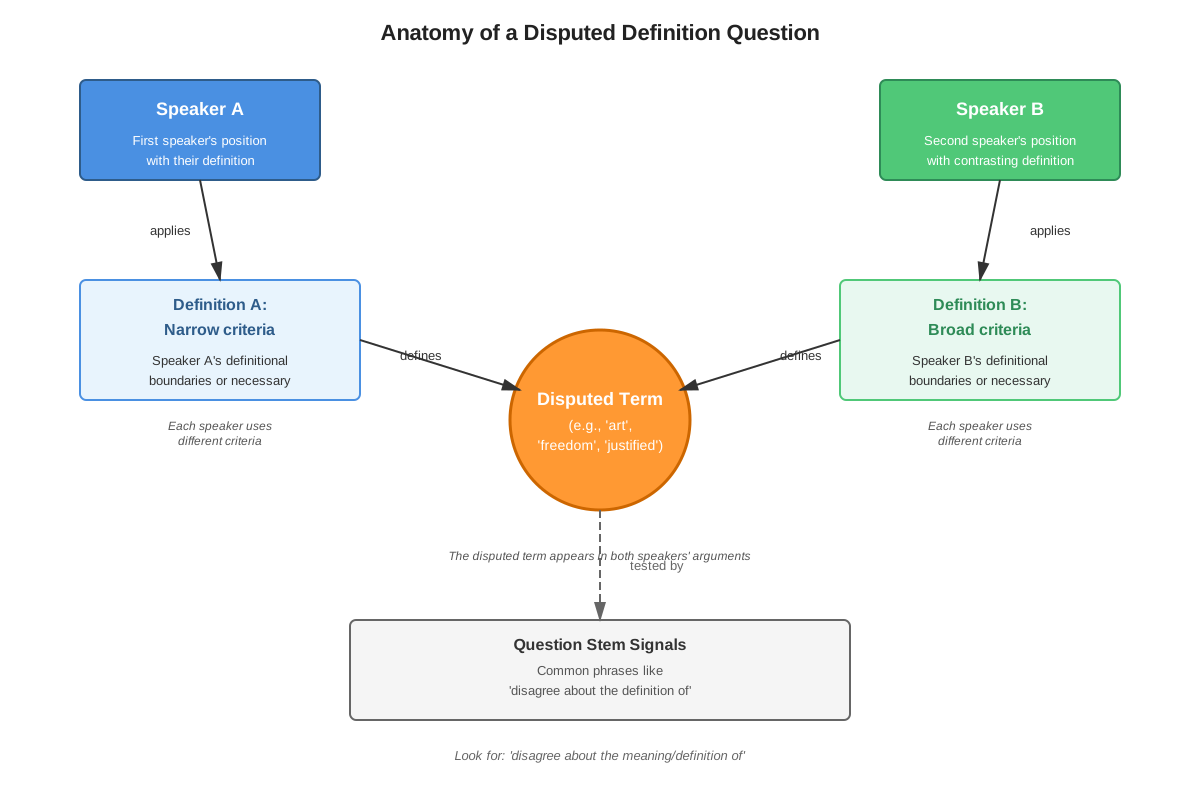
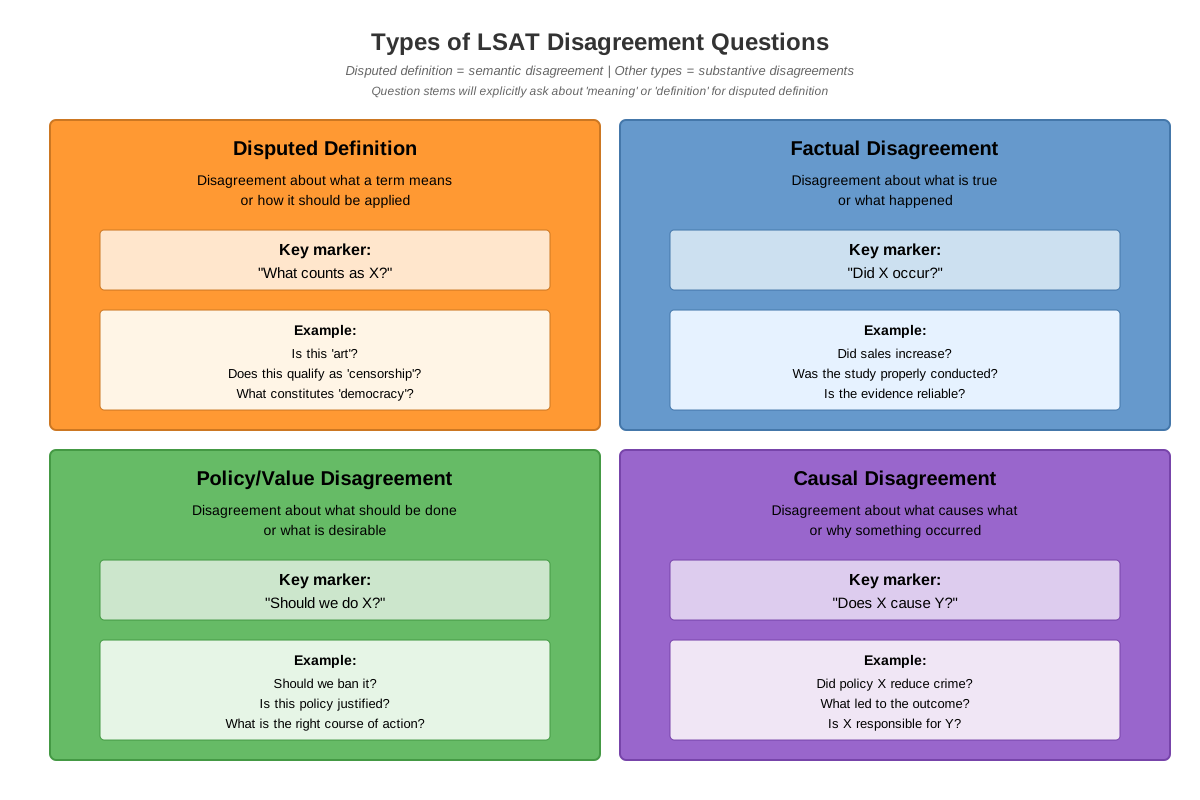
Disputed definition questions represent a specialized category within LSAT Logical Reasoning that tests a student's ability to identify when two speakers fundamentally disagree about the meaning or proper application of a key term or concept. Unlike broader point at issue and disagreement questions where speakers may disagree about facts, policies, or conclusions, disputed definition questions specifically focus on semantic disagreements—situations where the core conflict centers on how a word, phrase, or concept should be defined or understood.
These questions are particularly important for the LSAT because they require precise analytical reading skills and the ability to distinguish between surface-level disagreements and deeper conceptual conflicts. When two speakers appear to be arguing about a topic, they may actually be talking past each other because they're operating with different definitions of crucial terms. Recognizing this pattern is essential not only for answering these specific question types but also for developing the broader critical thinking skills that permeate the entire Logical Reasoning section.
Within the larger framework of lsat disputed definition questions and point-at-issue reasoning, disputed definition problems occupy a unique position. They bridge the gap between pure comprehension questions and complex argument analysis, requiring students to simultaneously understand what each speaker is saying and identify the precise conceptual fault line between their positions. Mastering this topic strengthens overall performance on disagreement questions, strengthens questions, and even helps with flaw identification, as many flawed arguments rest on ambiguous or shifting definitions.
Learning Objectives
- [ ] Identify how Disputed definition appears in LSAT questions
- [ ] Explain the reasoning pattern behind Disputed definition
- [ ] Apply Disputed definition to solve LSAT-style problems accurately
- [ ] Distinguish disputed definition questions from other point-at-issue question types
- [ ] Recognize common linguistic markers that signal definitional disagreements
- [ ] Evaluate answer choices to eliminate options that describe factual rather than definitional disputes
- [ ] Construct a systematic approach for mapping definitional boundaries between two speakers
Prerequisites
- Basic argument structure recognition: Understanding premises, conclusions, and how arguments are constructed is essential because disputed definition questions still involve analyzing argumentative discourse between speakers.
- Point-at-issue question fundamentals: Students should be comfortable with the general format of disagreement questions, including how to identify what two speakers are actually discussing versus what they merely mention.
- Conditional reasoning basics: Many definitional disputes involve necessary versus sufficient conditions for category membership (e.g., "What must be true for X to count as Y?").
- Reading comprehension skills: The ability to parse complex sentences and identify subtle distinctions in meaning is crucial for detecting when speakers are using terms differently.
Why This Topic Matters
Disputed definition questions appear regularly on the LSAT, typically comprising 2-4 questions per test across both Logical Reasoning sections. While this may seem modest, these questions are strategically important because they're highly predictable once you recognize the pattern, making them excellent candidates for reliable points. Furthermore, the analytical skills developed through mastering disputed definitions transfer directly to other high-value question types, including Method of Reasoning, Flaw, and Parallel Reasoning questions.
In real-world legal practice, definitional disputes are ubiquitous. Attorneys constantly argue about whether particular facts satisfy legal definitions: Is this action "negligence"? Does this agreement constitute a "contract"? Is this speech "defamatory"? The LSAT tests this skill because legal reasoning fundamentally depends on precise application of defined terms to specific circumstances. Courts spend considerable time resolving disputes about statutory interpretation, regulatory definitions, and the scope of legal concepts—exactly the type of reasoning tested in disputed definition questions.
On the exam, these questions typically appear with stems like "The dialogue provides the most support for the claim that Maria and John disagree about whether..." or "On the basis of their statements, Chen and Rodriguez are committed to disagreeing about which one of the following?" The key distinguishing feature is that the correct answer will identify a definitional boundary—a question about what counts as, qualifies as, or properly falls under a particular category or concept—rather than a factual claim or policy recommendation.
Core Concepts
The Nature of Definitional Disagreements
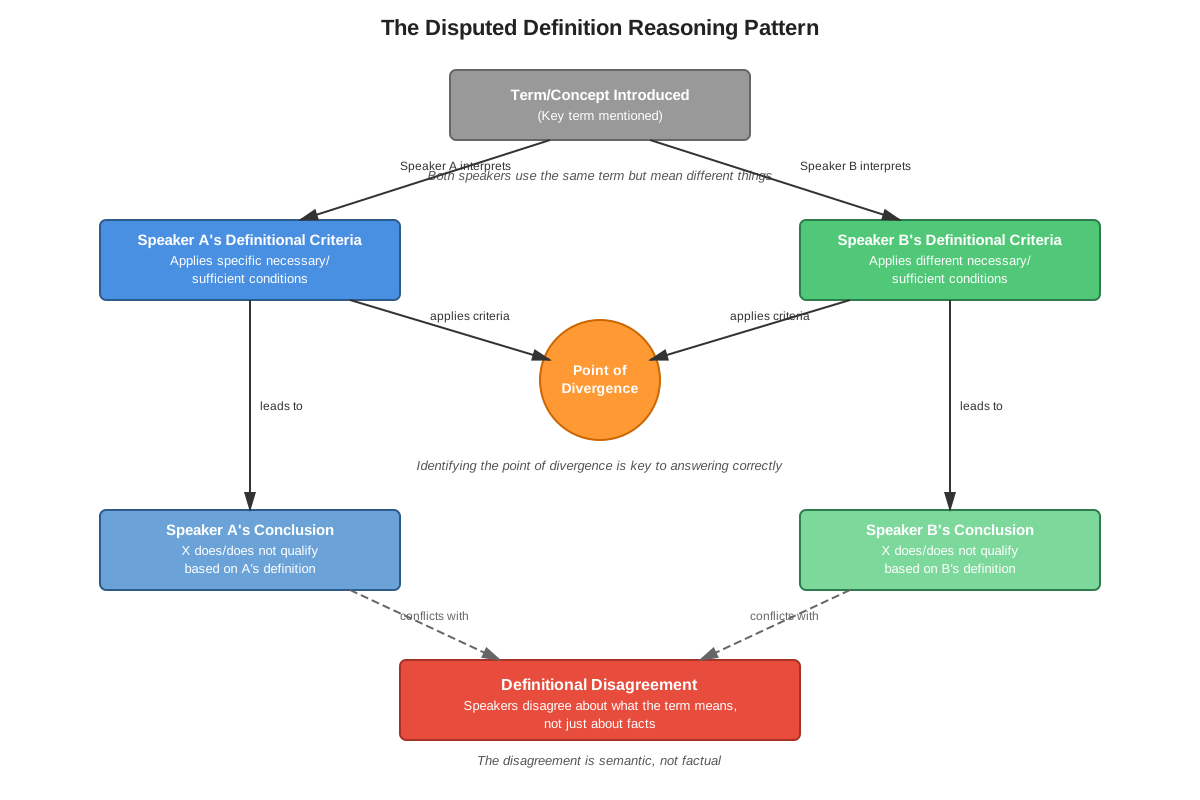
A disputed definition occurs when two speakers use the same term but apply different criteria for what falls under that term, or when they explicitly disagree about whether something meets the definition of a concept. This is fundamentally different from disagreeing about facts or values. For example, two people might agree on all the facts about a particular action but disagree about whether those facts make the action "unethical"—they're disputing the definition or application criteria for "unethical."
The key insight is that definitional disagreements are metalinguistic—they're disagreements about language and concepts themselves, not merely about the world those concepts describe. When Speaker A says "Modern art requires technical skill" and Speaker B says "Modern art can be created without any traditional technical training," they're not disagreeing about any particular artist or artwork; they're disagreeing about what the concept "modern art" properly includes or requires.
Necessary vs. Sufficient Conditions in Definitions
Many disputed definition questions hinge on whether speakers disagree about the necessary conditions (what must be present) or sufficient conditions (what is enough) for something to qualify under a definition. Consider this pattern:
Speaker A: "To be considered a democracy, a country must hold regular elections."
Speaker B: "Holding elections isn't enough to make a country a democracy; citizens must also have genuine freedom of speech."
Speaker A is asserting a necessary condition (elections are required), while Speaker B is arguing that this condition isn't sufficient (elections alone aren't enough). They disagree about what conditions are necessary and/or sufficient for the definition of "democracy."
| Type of Condition | What It Means | Example in Disputed Definition |
|---|---|---|
| Necessary | Must be present; without it, the definition doesn't apply | "Art must involve creativity" (no creativity = not art) |
| Sufficient | Enough by itself; if present, the definition applies | "Any intentional deception is lying" (intentional deception = lying) |
| Neither necessary nor sufficient | Can be present but isn't required and doesn't guarantee | "Art often involves paint" (paint neither required nor sufficient) |
Scope and Boundary Disputes
Another common pattern involves disagreement about the scope or boundaries of a concept—what falls inside versus outside a category. These disputes often involve:
- Borderline cases: Speaker A thinks X is a clear example of concept C; Speaker B thinks X falls outside C
- Overlapping categories: Disagreement about whether one category is a subset of another
- Exclusivity: Whether two categories are mutually exclusive or can overlap
For example:
Speaker A: "Civil disobedience is always illegal by definition."
Speaker B: "Some acts of civil disobedience are legally protected forms of protest."
They disagree about whether the category "civil disobedience" necessarily falls outside the category "legal actions" or whether these categories can overlap.
Implicit vs. Explicit Definitional Disputes
Disputed definition questions can present disagreements in two ways:
Explicit disputes occur when speakers directly discuss what a term means or should mean:
- "The term 'planet' should only apply to bodies that have cleared their orbital path."
- "No, 'planet' should apply to any spherical body orbiting a star."
Implicit disputes occur when speakers use a term differently without explicitly discussing its definition:
- Speaker A describes several actions as "censorship" (applying a broad definition)
- Speaker B says those same actions aren't "censorship" but rather "editorial discretion" (applying a narrow definition)
The LSAT frequently tests implicit disputes because they require more careful analysis to detect. Students must infer from how speakers use terms that they're operating with different underlying definitions.
The Commitment Test
To determine whether speakers truly disagree about a definition, apply the commitment test: Based on what each speaker has said, are they committed to opposite answers to a question about what counts as, qualifies as, or falls under a particular concept?
This test has three steps:
- Identify the concept or term that might be disputed
- Formulate a yes/no question about whether something meets that definition
- Determine whether the speakers would give opposite answers based on their statements
If both speakers would answer "yes" or both would answer "no," there's no genuine disagreement on that point. Only when they're committed to opposite answers does a true disputed definition exist.
Concept Relationships
The relationships among concepts within disputed definition questions flow logically:
Definitional Disagreement (core concept) → manifests through → Necessary/Sufficient Condition Disputes OR Scope/Boundary Disputes → which can be → Explicit OR Implicit → detected via → The Commitment Test
Disputed definition questions connect to prerequisite knowledge in several ways. Understanding basic argument structure allows students to separate the speakers' definitional claims from their supporting evidence or conclusions. Knowledge of conditional reasoning directly enables analysis of necessary and sufficient conditions within definitions. Familiarity with general point-at-issue questions provides the framework for identifying disagreements, which disputed definition questions then specialize.
Looking forward, mastering disputed definitions strengthens performance on Flaw questions (many flaws involve equivocation or shifting definitions), Method of Reasoning questions (which may ask about definitional strategies), and Parallel Reasoning questions (where matching definitional structures is crucial). The skill of precisely identifying conceptual boundaries also transfers to Must Be True questions and Inference questions, where definitional precision determines what can be validly concluded.
High-Yield Facts
⭐ Disputed definition questions specifically ask about disagreements over what counts as, qualifies as, or falls under a particular concept or term.
⭐ The correct answer will identify a definitional question to which the speakers are committed to giving opposite answers, not merely a topic they both discuss.
⭐ Speakers can agree on all the facts but still have a disputed definition if they disagree about whether those facts satisfy a particular concept.
⭐ Common wrong answers describe factual disagreements, policy disagreements, or topics the speakers merely mention without taking opposite positions.
⭐ Look for metalinguistic markers like "counts as," "qualifies as," "is properly considered," "meets the definition of," or "is really" in both the stimulus and answer choices.
- Disputed definition questions often involve one speaker asserting a necessary condition while the other denies it's necessary or claims it's insufficient.
- Implicit definitional disputes require inferring different definitions from how speakers use terms, not just from explicit definitional statements.
- The commitment test is the most reliable method for eliminating wrong answers: ask whether each speaker would give opposite answers to the question posed.
- Scope disputes (what falls inside/outside a category) are more common than disputes about the complete definition of a term.
- Many disputed definition questions involve evaluative terms (ethical, fair, justified, art, democracy) rather than purely descriptive terms.
- When speakers use different terms for the same phenomenon, they often implicitly disagree about which definitional category properly applies.
- The correct answer often uses conditional language: "whether X is necessary for Y" or "whether Z is sufficient to qualify as W."
Quick check — test yourself on Disputed definition so far.
Try Flashcards →Common Misconceptions
Misconception: If two speakers discuss the same topic, they must disagree about something related to that topic.
Correction: Speakers can mention the same topic without taking opposite positions. Disputed definition questions require that speakers be committed to opposite answers about a definitional question, not merely that they discuss related concepts. Many wrong answers exploit this by presenting topics both speakers mention without genuine disagreement.
Misconception: A disputed definition exists whenever speakers use a term differently in their arguments.
Correction: Merely using a term in different contexts or with different emphases doesn't create a disputed definition. There must be a genuine disagreement about what meets the definition—a case where one speaker would say "X counts as Y" and the other would say "X doesn't count as Y" for the same X and Y.
Misconception: The correct answer should capture the main point or conclusion of each speaker's argument.
Correction: Disputed definition questions ask specifically about definitional disagreements, which may be subsidiary to the speakers' main points. The correct answer identifies the definitional fault line, even if both speakers are primarily arguing about something else. Focus on the conceptual boundary they dispute, not their overall conclusions.
Misconception: If speakers disagree about whether something is good or bad, they have a disputed definition.
Correction: Disagreeing about evaluation (whether X is good/bad, should/shouldn't be done) is different from disagreeing about definition (whether X counts as Y). Speakers might agree on definitions but disagree on values, or vice versa. The question stem will specify whether it's asking about definitional disputes specifically.
Misconception: Explicit definitional language in the stimulus means the answer must use the same term.
Correction: The disputed definition might involve related concepts or the application of a definition rather than the term explicitly discussed. If Speaker A defines "freedom" one way and Speaker B applies that concept differently when discussing "liberty," they may be having a definitional dispute about the underlying concept even if they use different words.
Misconception: Both speakers must explicitly state their definition for a disputed definition to exist.
Correction: Most LSAT disputed definition questions involve implicit definitional commitments inferred from how speakers use terms or what they claim about category membership. Explicit definitions are less common and often easier to spot; the challenging questions require inferring definitional boundaries from usage patterns.
Worked Examples
Example 1: Implicit Definitional Dispute
Stimulus:
Keiko: The new building on campus is not true architecture. It's merely a functional structure designed to house offices efficiently. Architecture requires aesthetic vision and artistic intent, not just engineering competence.
Raj: That's absurd. The building was carefully designed with attention to form, materials, and spatial relationships. Any designed structure that serves human needs and shapes our built environment is architecture. The building clearly qualifies.
Question: Keiko and Raj disagree about whether
Answer Choices:
(A) the new building was designed with attention to aesthetic considerations
(B) engineering competence is sufficient to create architecture
(C) the new building serves human needs effectively
(D) functional structures can qualify as architecture
(E) the new building required artistic intent in its design
Analysis:
First, identify what each speaker claims about the building:
- Keiko: The building is NOT architecture (definitional claim) because it lacks aesthetic vision and artistic intent
- Raj: The building IS architecture (opposite definitional claim) because it was designed with attention to form and serves human needs
Now apply the commitment test to each answer:
(A) the new building was designed with attention to aesthetic considerations
- Keiko: Would say NO (she claims it's "merely functional")
- Raj: Would say YES (he explicitly states it "was carefully designed with attention to form")
- This is a factual disagreement about the building, not a definitional one about what counts as architecture.
(B) engineering competence is sufficient to create architecture
- Keiko: Would say NO (she says architecture "requires aesthetic vision and artistic intent, not just engineering competence")
- Raj: Unclear—he doesn't address whether engineering alone is sufficient
- Raj isn't committed to a position on this, so it's not their disagreement.
(C) the new building serves human needs effectively
- Keiko: Doesn't address this
- Raj: Would say YES
- No disagreement—Keiko doesn't dispute this factual claim.
(D) functional structures can qualify as architecture
- Keiko: Would say NO (she says the building is "merely a functional structure" and "not true architecture," implying functional structures don't qualify)
- Raj: Would say YES (he says "any designed structure that serves human needs...is architecture," which would include functional structures)
- This is the disputed definition—they disagree about whether functionality alone (or primarily functional structures) can meet the definition of architecture.
(E) the new building required artistic intent in its design
- Keiko: Would say NO (she claims it lacks artistic intent)
- Raj: Unclear—he doesn't specifically address artistic intent
- This is closer to a factual disagreement about the building's design process.
Correct Answer: (D)
This question illustrates how disputed definitions often involve scope boundaries—here, whether the category "architecture" includes or excludes "functional structures." Notice that (A) was tempting because it's something they clearly disagree about, but it's a factual disagreement about the building, not a definitional disagreement about what counts as architecture.
Example 2: Necessary vs. Sufficient Conditions
Stimulus:
Chen: Any action taken with the intent to deceive another person is a lie. Therefore, when the magician performs tricks that create illusions, the magician is lying to the audience.
Rodriguez: No, lying requires not just intent to deceive but also a violation of trust or an expectation of truthfulness. The audience at a magic show expects to be deceived as part of the entertainment, so there's no violation of trust and thus no lying.
Question: The dialogue provides the most support for the claim that Chen and Rodriguez disagree about whether
Answer Choices:
(A) magicians intend to deceive their audiences
(B) intent to deceive is sufficient for an action to be considered lying
(C) audiences at magic shows expect to be deceived
(D) lying always involves a violation of trust
(E) magic tricks create illusions
Analysis:
Identify each speaker's definitional position:
- Chen: Intent to deceive is SUFFICIENT for lying (if intent to deceive → lying)
- Rodriguez: Intent to deceive is NOT sufficient; lying also requires violation of trust/expectation of truthfulness
Apply the commitment test:
(A) magicians intend to deceive their audiences
- Chen: YES (explicitly states this)
- Rodriguez: YES (doesn't dispute this; says "expects to be deceived")
- No disagreement—both accept this fact.
(B) intent to deceive is sufficient for an action to be considered lying
- Chen: YES (says "any action taken with the intent to deceive...is a lie")
- Rodriguez: NO (says lying "requires not just intent to deceive but also a violation of trust")
- This is their disputed definition—they disagree about whether intent to deceive alone is enough to meet the definition of lying.
(C) audiences at magic shows expect to be deceived
- Chen: Doesn't address this
- Rodriguez: YES
- No disagreement—Chen doesn't take a position on this.
(D) lying always involves a violation of trust
- Chen: Would say NO (his definition doesn't include this requirement)
- Rodriguez: Would say YES (explicitly includes this in his definition)
- This is tempting, but it's asking about a necessary condition for lying. While they do disagree about this, answer choice (B) more precisely captures their dispute because Chen's position is specifically about sufficiency ("any action...is a lie"), which Rodriguez directly challenges.
(E) magic tricks create illusions
- Both would agree with this factual claim.
Correct Answer: (B)
This example demonstrates how disputed definitions often center on necessary versus sufficient conditions. Chen asserts a sufficient condition (intent to deceive is enough), while Rodriguez argues this condition is insufficient (you need intent to deceive PLUS violation of trust). Answer choice (D) is close but less precise because it asks about what lying "always involves" (necessary condition) rather than what's "sufficient," which is the specific logical structure of their disagreement.
Exam Strategy
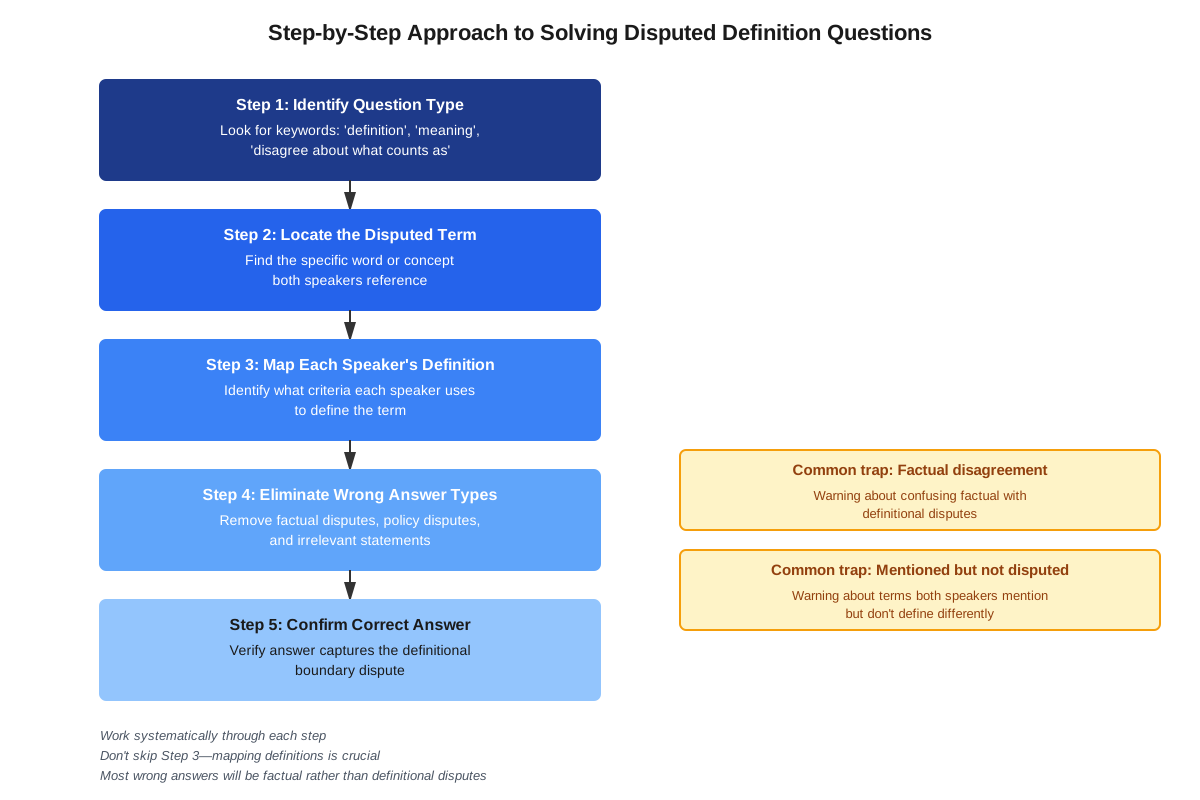
When approaching disputed definition questions on the LSAT, follow this systematic process:
Step 1: Identify the question type
Look for stems containing:
- "disagree about whether"
- "committed to disagreeing about"
- "their dialogue provides support for the claim that they disagree"
- Specifically watch for definitional language: "counts as," "qualifies as," "is properly considered," "meets the definition"
Step 2: Map each speaker's position
Create a quick mental or written note:
- What definitional claim does Speaker A make (explicit or implicit)?
- What definitional claim does Speaker B make?
- What term or concept is potentially disputed?
Step 3: Predict the answer
Before looking at choices, formulate the disagreement: "They disagree about whether [X] counts as/qualifies as [Y]" or "They disagree about whether [condition] is necessary/sufficient for [concept]."
Step 4: Apply the commitment test to each answer
For each answer choice, ask:
- Would Speaker A answer YES or NO to this question?
- Would Speaker B answer YES or NO to this question?
- Are they committed to opposite answers?
If both would answer the same way, or if either speaker hasn't taken a position, eliminate that choice.
Step 5: Eliminate common wrong answer types
| Wrong Answer Type | How to Recognize | Why It's Wrong |
|---|---|---|
| Factual disagreement | Asks about what is true about a specific case | Not about definition, but about facts |
| Topic mention | Both speakers discuss X | Discussing ≠ disagreeing |
| One-sided claim | Only one speaker addresses this | Need opposite commitments |
| Conclusion disagreement | About what should be done or what follows | Not about what counts as what |
| Degree disagreement | About how much or how important | Not about definitional boundaries |
Exam Tip: Disputed definition questions are typically more time-consuming than other point-at-issue questions because they require careful analysis of implicit commitments. Budget 90-120 seconds for these questions, but they're worth the investment because they're highly predictable once you identify the pattern.
Trigger words in stimuli:
- "is really," "is actually," "truly is"
- "counts as," "qualifies as," "constitutes"
- "by definition," "the definition of"
- "necessary for," "sufficient for," "requires"
- "properly considered," "correctly described as"
Trigger words in answer choices:
- "whether X is/counts as/qualifies as Y"
- "whether [condition] is necessary/sufficient for [concept]"
- "whether [category A] can include [category B]"
Memory Techniques
C-O-D-E Acronym for Disputed Definitions:
- Commitment test: Do speakers give opposite answers?
- Opposite positions: Must be committed to contradictory views
- Definitional, not factual: About what counts as, not what is true
- Explicit or implicit: Can be stated or inferred from usage
The "Counts As" Visualization:
Picture two speakers standing on opposite sides of a boundary line, with one pointing at something and saying "This counts as X" while the other says "This doesn't count as X." The disputed definition is always about where that boundary line should be drawn.
N-S-S for Condition Types:
- Necessary: "Must have it" (No X without it)
- Sufficient: "Enough alone" (If you have it, you have X)
- Scope: "What's included" (Does Y fall inside category X?)
The "Same Facts, Different Labels" Rule:
When speakers agree on all the facts but use different category labels, you've found a disputed definition. Memorize: "Facts agree, labels disagree = definition at play."
Summary
Disputed definition questions test the ability to identify when two speakers fundamentally disagree about what counts as, qualifies as, or falls under a particular concept or term. Unlike broader disagreement questions, these specifically focus on definitional or conceptual boundaries rather than factual claims or policy positions. The core skill involves distinguishing between surface-level disagreements and deeper semantic disputes about how terms should be applied. Success requires applying the commitment test—determining whether speakers would give opposite answers to a definitional question—and recognizing common patterns including necessary versus sufficient condition disputes, scope and boundary disagreements, and both explicit and implicit definitional conflicts. The most common trap answers present factual disagreements or topics both speakers mention without genuine definitional opposition. Mastering this question type requires careful attention to metalinguistic markers, systematic application of the commitment test, and the ability to infer definitional commitments from how speakers use terms even when they don't explicitly state definitions.
Key Takeaways
- Disputed definition questions specifically ask about disagreements over conceptual boundaries—what counts as or qualifies as a particular concept—not factual or policy disagreements
- Apply the commitment test to every answer choice: speakers must be committed to opposite answers (YES vs. NO) to a definitional question for a genuine dispute to exist
- The correct answer often involves necessary/sufficient conditions ("whether X is necessary for Y" or "whether Z is sufficient to qualify as W")
- Common wrong answers describe factual disagreements, topics both speakers mention, or claims only one speaker addresses
- Definitional disputes can be implicit—inferred from how speakers use terms—not just explicit statements about what words mean
- Look for metalinguistic markers like "counts as," "qualifies as," "by definition," "requires," and "is properly considered" in both stimuli and answer choices
- Budget extra time for these questions (90-120 seconds) but recognize they're highly predictable and worth mastering for reliable points
Related Topics
Flaw Questions - Equivocation: Understanding disputed definitions directly enables recognition of equivocation flaws, where an argument shifts between different meanings of a key term. Mastering definitional precision helps identify when arguments exploit ambiguous terms.
Method of Reasoning Questions: These questions sometimes ask about definitional strategies speakers employ, such as "proceeds by offering a counterexample to a proposed definition" or "challenges the opponent's use of a key term." Disputed definition skills transfer directly to analyzing these argumentative methods.
Strengthen/Weaken Questions with Definitional Elements: Some strengthen and weaken questions hinge on definitional issues—whether something meets a particular definition affects whether evidence supports or undermines a conclusion. Recognizing definitional boundaries helps evaluate argument strength.
Parallel Reasoning with Definitional Structures: Parallel reasoning questions may require matching definitional argument structures, such as arguments that dispute whether something meets necessary or sufficient conditions for a category. Understanding disputed definitions aids in recognizing these structural parallels.
Practice CTA
Now that you've mastered the core concepts of disputed definition questions, it's time to put your knowledge into practice. Work through the practice questions to reinforce your ability to identify definitional disagreements, apply the commitment test, and distinguish between definitional and factual disputes. Use the flashcards to memorize key patterns and trigger words. Remember: disputed definition questions are among the most predictable on the LSAT once you recognize the pattern—they're an excellent opportunity to build confidence and secure reliable points. Each practice question you complete strengthens your pattern recognition and speeds up your analysis for test day. You've got this!
Sign up free to keep reading
Create a free AnvayaPrep account to finish this LSAT guide on Disputed definition — plus flashcards and practice questions.