Overview
The purpose of definitions is a critical analytical skill in LSAT reading comprehension that requires test-takers to understand why authors introduce and explain specific terms within their passages. Rather than simply recognizing that a definition exists, successful LSAT candidates must discern the strategic function that definition serves in advancing the author's argument, clarifying a complex concept, or establishing necessary groundwork for subsequent reasoning. This skill sits at the intersection of structural analysis and authorial intent, requiring students to think beyond surface-level content to the underlying architecture of persuasive and expository writing.
On the LSAT, definitions rarely appear merely for informational purposes. Authors use definitions strategically to resolve ambiguity, distinguish between similar concepts, introduce technical terminology essential to their argument, or establish a framework that enables more sophisticated analysis. Understanding these strategic purposes allows test-takers to predict what will follow in a passage, identify the author's priorities, and correctly answer questions about passage structure, authorial intent, and the function of specific textual elements. This skill is particularly valuable because it applies across all passage types—from scientific and legal texts to humanities and social science discussions.
Mastering the purpose of definitions within passage fundamentals provides a foundation for more advanced reading comprehension skills, including identifying main ideas, understanding passage organization, and recognizing how authors build and support arguments. This topic connects directly to questions about why authors include specific information, how passages are structured, and what role particular sentences or paragraphs play in the overall text. Students who excel at identifying definitional purposes gain a significant advantage in both speed and accuracy on LSAT reading comprehension sections.
Learning Objectives
- [ ] Identify how Purpose of definitions appears in LSAT questions
- [ ] Explain the reasoning pattern behind Purpose of definitions
- [ ] Apply Purpose of definitions to solve LSAT-style problems accurately
- [ ] Distinguish between different strategic purposes for which authors provide definitions
- [ ] Predict subsequent passage content based on the purpose of a given definition
- [ ] Evaluate whether a definition serves a clarifying, distinguishing, or foundational function
- [ ] Connect definitional purposes to broader passage structure and authorial intent
Prerequisites
- Basic passage structure recognition: Understanding how passages are organized into introduction, body, and conclusion helps identify where definitions typically appear and why
- Authorial intent awareness: Recognizing that authors make deliberate choices about what to include enables analysis of why specific definitions are provided
- Vocabulary comprehension: Sufficient reading level to understand both the terms being defined and the language used in definitions themselves
- Argument structure fundamentals: Basic understanding of how claims are supported allows recognition of when definitions serve as foundational premises
Why This Topic Matters
In professional contexts, the ability to recognize why definitions are provided is essential for legal reasoning, scientific communication, policy analysis, and any field requiring precise language. Lawyers must understand how statutory definitions shape legal arguments; scientists must grasp how operational definitions enable research; policy analysts must recognize how definitional choices frame debates. The LSAT tests this skill because it reflects the analytical precision required for success in law school and legal practice.
On the LSAT, questions related to the purpose of definitions appear with high frequency across all reading comprehension passages. Approximately 15-20% of reading comprehension questions directly or indirectly test understanding of why authors define terms, making this one of the highest-yield topics for focused study. These questions appear in multiple formats: direct function questions ("The author defines X in order to..."), structural questions ("The primary purpose of the second paragraph is to..."), and inference questions that require understanding definitional groundwork.
Common manifestations in LSAT passages include: technical terms in scientific passages that require definition before the author can explain research findings; legal or philosophical concepts that must be distinguished from similar ideas; everyday terms used in specialized ways that differ from common usage; and theoretical frameworks that need explicit articulation before application. Recognizing these patterns allows test-takers to anticipate question types and prepare strategic responses.
Core Concepts
Strategic Functions of Definitions
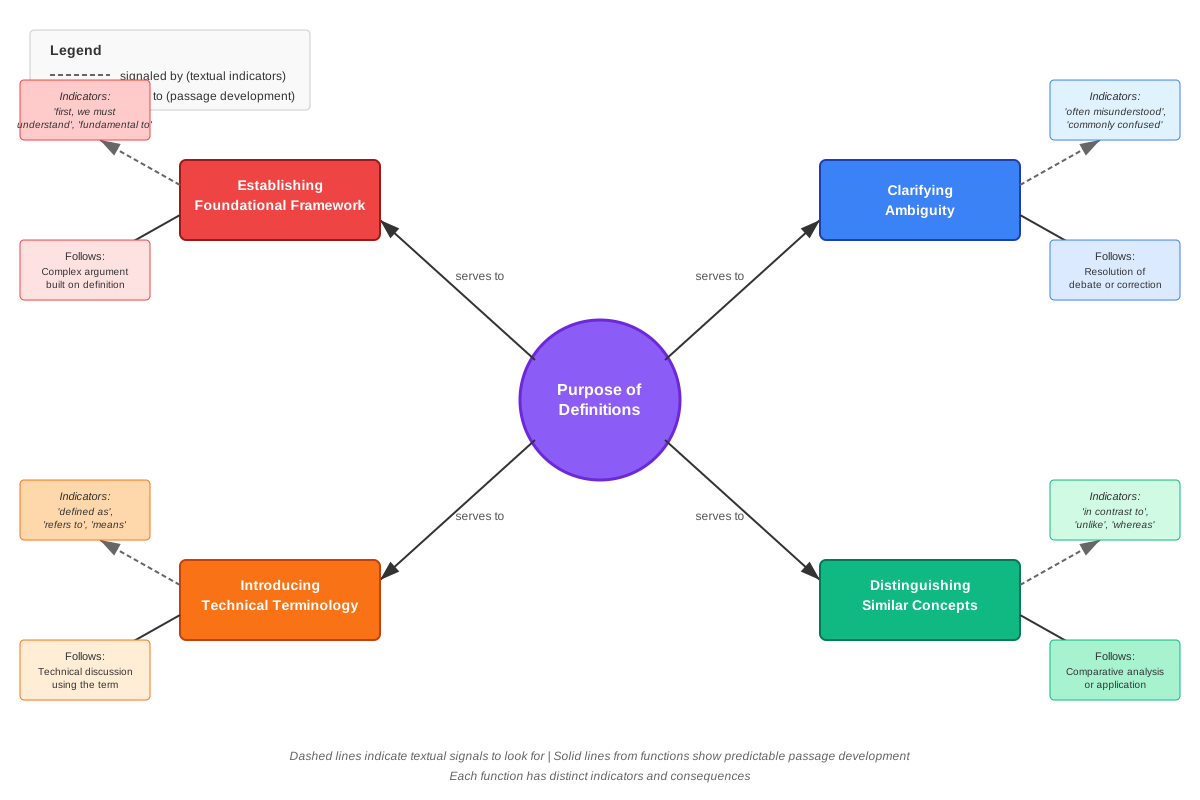
The purpose of definitions in LSAT passages extends far beyond simple vocabulary instruction. Authors employ definitions strategically to accomplish specific rhetorical and argumentative goals. Understanding these strategic functions is essential for correctly answering questions about passage structure and authorial intent.
Clarification of ambiguous or technical terms represents the most straightforward definitional purpose. When authors introduce specialized vocabulary or use common words in uncommon ways, they provide definitions to ensure reader comprehension. For example, a passage about quantum mechanics might define "superposition" because most readers lack physics expertise. Similarly, a legal passage might define "standing" because this term has a specific legal meaning distinct from everyday usage. The key recognition here is that the author anticipates reader unfamiliarity and proactively addresses it.
Distinction between similar concepts serves a more sophisticated purpose. Authors often define terms specifically to differentiate them from related but distinct ideas. A philosophy passage might carefully define "ethics" and "morality" to establish that these terms, though often used interchangeably, represent different domains of inquiry in the author's framework. This type of definition prevents confusion and enables more precise subsequent analysis. LSAT questions frequently test whether students recognize that a definition's purpose is comparative or contrastive rather than merely informative.
Establishment of argumentative foundations represents perhaps the most critical definitional purpose on the LSAT. Authors frequently define terms as necessary groundwork for arguments that follow. If an author will argue that certain corporate practices constitute "predatory pricing," they must first define what "predatory pricing" means within their analytical framework. The definition itself isn't the argument—it's the foundation that makes the argument possible. Recognizing this foundational purpose helps predict passage development and understand overall structure.
Resolution of theoretical disputes occurs when authors enter ongoing debates by proposing specific definitions. In academic and professional discourse, disagreements often hinge on definitional questions. A passage might discuss competing definitions of "consciousness" in cognitive science, with the author ultimately endorsing or proposing a particular definition. Here, the definition serves a positioning function—it places the author within a scholarly conversation and signals their theoretical commitments.
Identifying Definitional Markers
LSAT passages employ consistent linguistic markers that signal definitional content. Recognizing these markers enables rapid identification of definitions and their purposes.
Explicit definitional language includes phrases like "defined as," "refers to," "means," "is understood as," "can be characterized as," and "consists of." These direct signals make definitions easy to spot. However, the LSAT often tests whether students understand the purpose behind these explicit definitions rather than just recognizing their presence.
Implicit definitional structures appear when authors explain concepts without using explicit definitional language. Phrases like "in other words," "that is," "specifically," and "namely" often introduce clarifying explanations that function as definitions. Additionally, authors may use appositive constructions (e.g., "Hegemony, the dominance of one group over others, shapes...") that embed definitions within sentence structure.
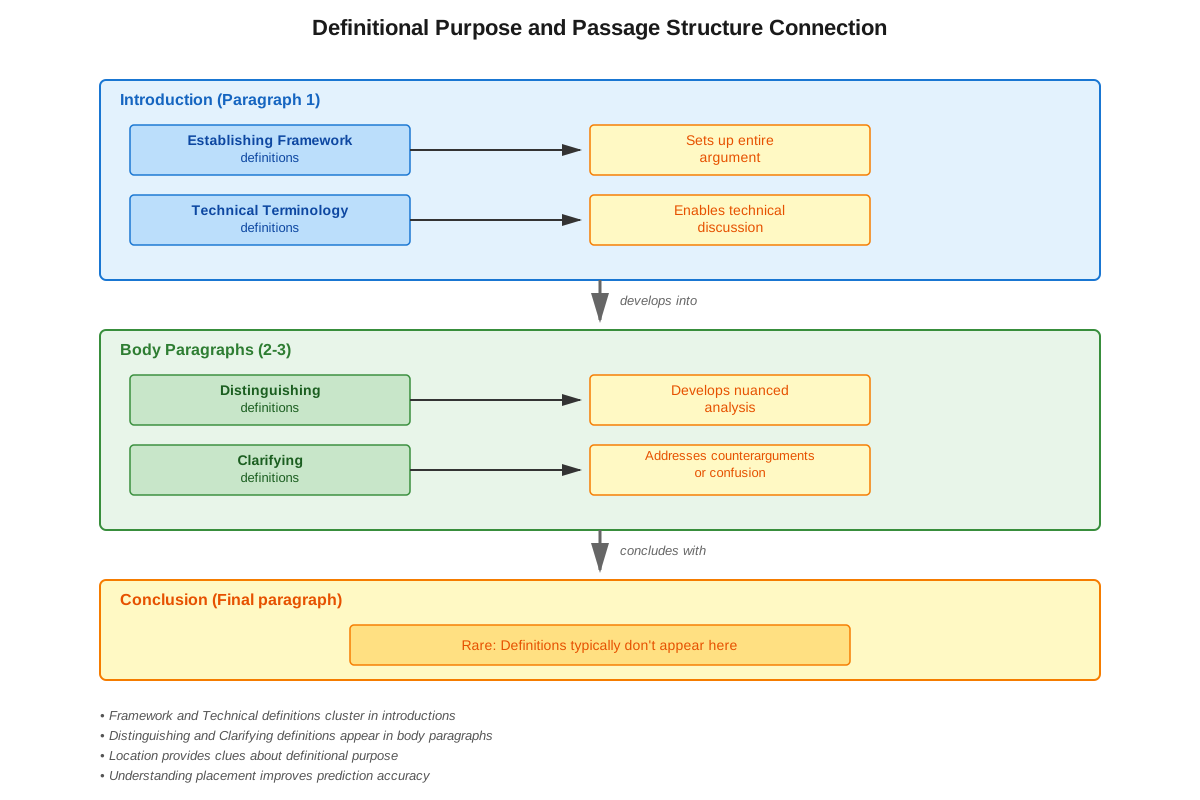
Contextual clues help identify when definitions serve particular purposes. Definitions appearing early in passages typically establish foundations; those appearing mid-passage often clarify terms just introduced or distinguish concepts; those appearing near conclusions may synthesize or refine earlier ideas. The position of a definition within passage structure provides insight into its purpose.
Common Definitional Purposes in LSAT Passages
| Purpose | Characteristics | Typical Location | Question Types |
|---|---|---|---|
| Clarification | Explains unfamiliar or technical terms | Early paragraphs | "The author defines X in order to..." |
| Distinction | Differentiates similar concepts | After introducing multiple related ideas | "The passage distinguishes between..." |
| Foundation | Establishes basis for subsequent argument | Before main argumentative claims | "The primary purpose of paragraph 2..." |
| Resolution | Addresses definitional disputes | Within discussion of competing views | "The author's definition serves to..." |
| Refinement | Narrows or specifies earlier concepts | Later paragraphs | "The author qualifies the definition..." |
Connecting Definitions to Passage Structure
Understanding how definitions function within overall passage fundamentals enhances both comprehension and question-answering efficiency. Definitions rarely stand alone; they serve structural purposes that shape entire passages.
Foundational definitions typically appear in opening paragraphs and enable everything that follows. When a passage begins by defining "biodiversity," this signals that the entire passage will discuss this concept, and the specific definition provided will frame that discussion. Questions about main idea, primary purpose, or passage organization often hinge on recognizing how opening definitions establish scope and direction.
Transitional definitions appear at structural pivot points, often when authors shift from describing one concept to analyzing another or from presenting background to advancing arguments. These definitions mark important structural boundaries and help readers navigate complex passages. Recognizing a transitional definition helps predict that new material is coming and understand how it relates to what preceded it.
Cumulative definitions build throughout passages, with authors progressively refining or expanding initial definitions. A passage might begin with a basic definition, then add nuances, qualifications, or applications in subsequent paragraphs. Tracking this cumulative development is essential for answering questions about how the author's understanding evolves or how later paragraphs relate to earlier ones.
Concept Relationships
The purpose of definitions connects intimately with multiple aspects of reading comprehension and passage fundamentals. Understanding these relationships creates a comprehensive analytical framework.
Definitions → Argument Structure: Definitional purposes directly shape how arguments develop. When an author defines terms to establish foundations, subsequent paragraphs build arguments on those foundations. When definitions distinguish concepts, following paragraphs often explore implications of those distinctions. Recognizing definitional purpose enables prediction of argumentative direction.
Passage Organization → Definitional Placement: The structural position of definitions reflects their purpose. Opening definitions typically clarify or establish foundations; mid-passage definitions often distinguish or refine; concluding definitions may synthesize or resolve disputes. This bidirectional relationship means that understanding passage organization helps identify definitional purposes, while recognizing definitional purposes illuminates organizational logic.
Authorial Intent → Definitional Choice: Authors choose which terms to define and how to define them based on their broader communicative goals. An author arguing for policy change might define terms to highlight problems; an author explaining scientific research might define terms to enable technical discussion. The definitional choices reflect and reveal authorial intent, making this a crucial connection for inference questions.
Main Idea ↔ Key Definitions: Passages' main ideas often center on or depend upon specific definitions. A passage arguing that certain practices constitute exploitation must define "exploitation." A passage explaining a scientific phenomenon must define technical terms. The relationship is reciprocal: main ideas depend on definitions, and identifying key definitions helps determine main ideas.
Question Types ← Definitional Understanding: Multiple LSAT question types draw on understanding definitional purposes: function questions directly ask why definitions appear; structure questions require recognizing how definitions organize passages; inference questions often depend on definitional groundwork; application questions may require applying defined concepts to new situations.
High-Yield Facts
⭐ Definitions in LSAT passages almost always serve strategic purposes beyond simple vocabulary instruction—they clarify ambiguity, distinguish concepts, establish argumentative foundations, or resolve theoretical disputes.
⭐ The location of a definition within passage structure provides crucial clues about its purpose: opening definitions typically establish foundations; mid-passage definitions often distinguish or clarify; later definitions may refine or synthesize.
⭐ Authors define terms when they anticipate reader confusion, need to use terms in specialized ways, or must establish precise meanings for subsequent arguments—recognizing which motivation applies helps predict passage development.
⭐ Distinguishing definitions (those that differentiate similar concepts) are particularly high-yield because they often appear in questions asking how the author differentiates between ideas or what distinguishes one concept from another.
⭐ Foundational definitions (those establishing groundwork for arguments) frequently connect to main idea and primary purpose questions because they reveal the author's central analytical framework.
- Explicit definitional markers include "defined as," "refers to," "means," and "is understood as," while implicit markers include "in other words," "that is," and appositive constructions.
- Questions asking "The author defines X in order to..." directly test understanding of definitional purpose and require identifying the strategic function rather than restating the definition itself.
- Definitions appearing in scientific and technical passages typically serve clarifying purposes, while those in philosophical and theoretical passages more often serve distinguishing or foundational purposes.
- When multiple definitions appear in a passage, they often work together systematically—establishing a conceptual framework, differentiating its components, and enabling sophisticated analysis.
- The specificity of a definition often signals its importance: highly detailed, carefully qualified definitions typically play crucial roles in the author's argument or analysis.
- Definitional disputes (when authors discuss competing definitions) signal theoretical debates and often connect to questions about different viewpoints or schools of thought.
- Recognizing when a definition serves a contrastive purpose (distinguishing X from Y) helps answer questions about what the author considers similar to or different from a given concept.
Quick check — test yourself on Purpose of definitions so far.
Try Flashcards →Common Misconceptions
Misconception: Definitions always appear at the beginning of passages. → Correction: While foundational definitions often appear early, definitions can appear anywhere in a passage depending on their purpose. Distinguishing definitions may appear mid-passage when introducing a second concept; refining definitions may appear later after initial concepts are established. Location correlates with purpose but doesn't determine it.
Misconception: The purpose of a definition is simply to explain what a word means. → Correction: On the LSAT, definitions serve strategic rhetorical and argumentative functions. They clarify ambiguity, distinguish similar concepts, establish argumentative foundations, resolve disputes, or enable subsequent analysis. Understanding these strategic purposes is essential for answering questions correctly.
Misconception: If the author defines a term, questions will ask about the definition itself. → Correction: Questions rarely ask students to restate definitions. Instead, they test understanding of why the definition was provided, how it functions in passage structure, what it enables the author to do, or how it relates to the author's main argument. The focus is on purpose and function, not content.
Misconception: Technical passages contain more definitions than humanities passages. → Correction: While technical passages may define more specialized vocabulary, humanities passages frequently define terms to establish precise meanings, distinguish philosophical concepts, or resolve theoretical debates. Both passage types use definitions strategically, though for somewhat different purposes.
Misconception: Once a term is defined, its meaning remains constant throughout the passage. → Correction: Authors sometimes refine, qualify, or expand definitions as passages progress. Recognizing this cumulative development is important for understanding passage structure and answering questions about how the author's treatment of a concept evolves. Always consider whether later paragraphs modify or build upon initial definitions.
Misconception: Definitions are neutral, objective statements. → Correction: Definitional choices reflect authorial perspective and theoretical commitments. How an author defines a term can reveal their position in scholarly debates, their analytical framework, or their argumentative goals. Recognizing the non-neutrality of definitions is crucial for understanding authorial intent and perspective.
Misconception: If a passage defines multiple terms, they're all equally important. → Correction: Some definitions play central roles in the passage's argument or structure, while others provide minor clarifications. Identifying which definitions are most crucial—typically those that establish foundations for main arguments or distinguish key concepts—helps prioritize attention and predict question focus.
Worked Examples
Example 1: Distinguishing Definition
Passage Excerpt: "Legal scholars often conflate two distinct concepts: legal positivism and legal formalism. Legal positivism, properly understood, is the view that law's validity depends on social facts rather than moral considerations. Legal formalism, by contrast, refers to the interpretive approach that emphasizes textual analysis and logical deduction from established rules. While both reject certain forms of moral reasoning in legal analysis, they address fundamentally different questions—positivism concerns law's nature and validity, while formalism concerns interpretive methodology."
Question: The author defines "legal positivism" and "legal formalism" primarily in order to:
(A) Explain technical terminology that general readers may not understand
(B) Establish foundations for a subsequent argument about legal interpretation
(C) Correct a common error of treating distinct concepts as equivalent
(D) Demonstrate the complexity of contemporary legal philosophy
(E) Introduce competing schools of thought in legal theory
Analysis:
Step 1: Identify the definitional markers. The passage uses "properly understood" and "by contrast," signaling that definitions are being provided with a specific comparative purpose.
Step 2: Determine the definitional purpose. The opening sentence explicitly states that scholars "conflate" these concepts, meaning they incorrectly treat them as the same. The definitions that follow serve to distinguish them.
Step 3: Evaluate answer choices against the identified purpose.
(A) is incorrect because while the definitions do explain terminology, the passage's emphasis on "conflate" and "distinct concepts" indicates the primary purpose is corrective/distinguishing rather than merely clarifying.
(B) is incorrect because no subsequent argument is previewed; the passage focuses on the distinction itself.
(C) is correct because it directly captures the corrective, distinguishing purpose signaled by "conflate" and the contrastive structure of the definitions.
(D) is incorrect because demonstrating complexity isn't the primary purpose; correcting confusion is.
(E) is incorrect because the passage doesn't present these as competing schools but as distinct concepts that address different questions.
Connection to Learning Objectives: This example demonstrates how to identify definitional purpose (distinguishing), explain the reasoning pattern (corrective distinction between conflated concepts), and apply this understanding to select the correct answer.
Example 2: Foundational Definition
Passage Excerpt: "To understand the significance of recent discoveries in epigenetics, one must first grasp what epigenetic mechanisms are. Epigenetic mechanisms are processes that affect gene expression without altering the underlying DNA sequence itself. These mechanisms—including DNA methylation and histone modification—act as molecular switches that turn genes on or off in response to environmental factors. This definition is crucial because it distinguishes epigenetic changes from genetic mutations and explains how organisms can respond to environmental pressures without evolutionary timescales. The implications of this distinction are profound for our understanding of inheritance, development, and disease."
Question: The author's definition of "epigenetic mechanisms" serves primarily to:
(A) Resolve a dispute among biologists about the nature of gene expression
(B) Provide necessary background for understanding subsequent discussion of research implications
(C) Distinguish epigenetics from the more familiar field of genetics
(D) Explain why recent discoveries have generated scientific excitement
(E) Introduce technical terminology that appears throughout the passage
Analysis:
Step 1: Identify structural position and markers. The definition appears in the second sentence, immediately after stating that understanding it is necessary ("one must first grasp"). The phrase "This definition is crucial because" explicitly signals the definition's purpose.
Step 2: Determine the definitional purpose. The passage explicitly states the definition is "crucial" for understanding what follows and that it "explains" something important. The phrase "implications of this distinction are profound" indicates the definition establishes groundwork for subsequent discussion.
Step 3: Evaluate answer choices.
(A) is incorrect because no dispute is mentioned; the passage presents the definition as established knowledge.
(B) is correct because the passage explicitly frames the definition as necessary for understanding significance and implications, and the final sentence previews subsequent discussion of those implications.
(C) is tempting because the passage does distinguish epigenetic changes from mutations, but this distinction serves the larger purpose of establishing foundations for discussing implications, making (B) more complete.
(D) is incorrect because while the definition relates to why discoveries matter, the primary purpose is providing foundational understanding, not explaining excitement.
(E) is incorrect because while the term may appear throughout, the passage emphasizes the definition's role in enabling understanding of implications, not merely introducing vocabulary.
Connection to Learning Objectives: This example illustrates how to recognize foundational definitions through structural markers ("must first grasp," "crucial because"), predict subsequent content based on definitional purpose, and distinguish between primary and secondary purposes when multiple purposes are present.
Exam Strategy
Approaching Purpose of Definition Questions
When encountering questions about why authors define terms, follow this systematic approach:
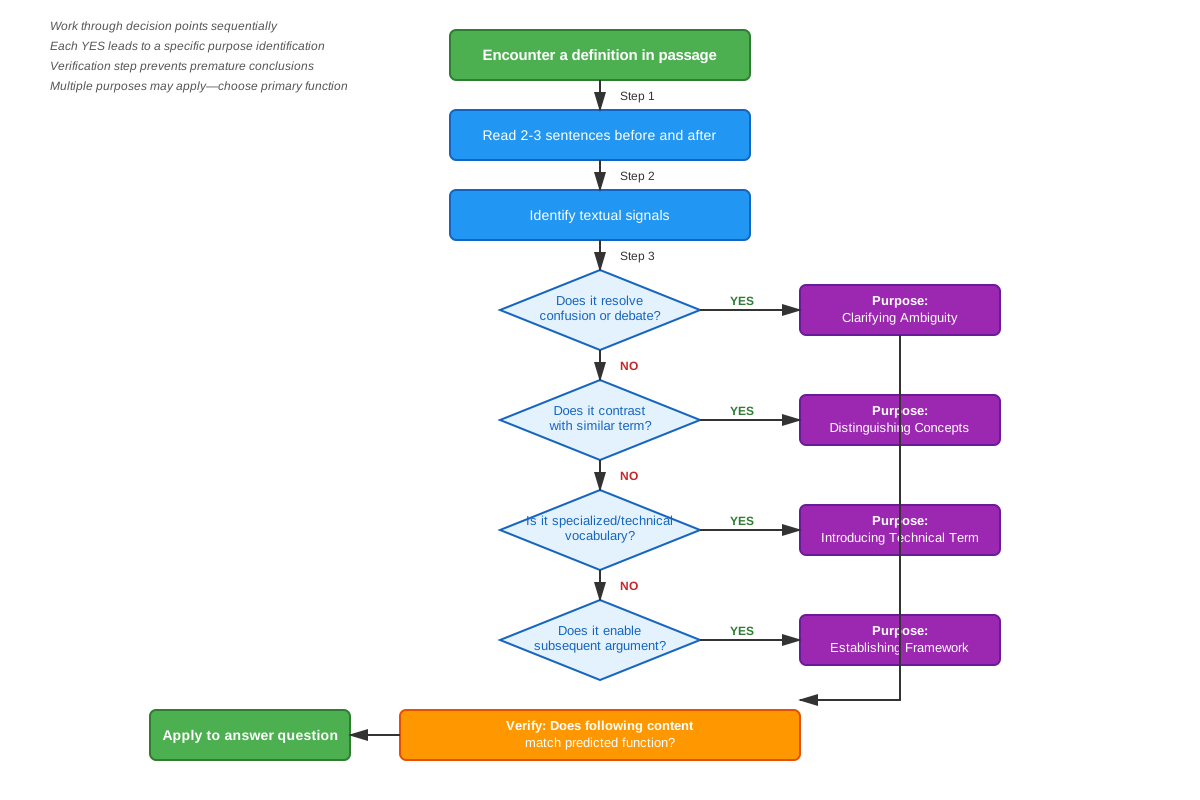
Step 1: Locate the definition and read surrounding context. Don't just read the definitional sentence itself; read the sentence before and after to understand how the definition fits into the passage's flow. Look for explicit purpose markers like "in order to," "because," or "this distinction enables."
Step 2: Identify the definitional type. Determine whether the definition clarifies unfamiliar terms, distinguishes similar concepts, establishes argumentative foundations, resolves disputes, or refines earlier ideas. This categorization immediately narrows answer choices.
Step 3: Consider structural position. Early definitions typically establish foundations; mid-passage definitions often distinguish or clarify; later definitions may synthesize or refine. Position provides strong clues about purpose.
Step 4: Look for explicit purpose statements. Authors often directly state why they're defining terms: "To understand X, we must first define Y" signals foundational purpose; "These terms are often confused, but..." signals distinguishing purpose; "For purposes of this analysis, X means..." signals framework establishment.
Trigger Words and Phrases
Watch for these high-yield indicators of definitional purpose:
Clarifying purposes: "unfamiliar," "technical," "specialized," "may not be aware," "requires explanation"
Distinguishing purposes: "often conflated," "confused with," "distinct from," "by contrast," "whereas," "unlike," "should not be confused with"
Foundational purposes: "must first understand," "necessary to grasp," "before examining," "establishes the framework," "provides the basis"
Resolving purposes: "competing definitions," "scholars disagree," "various interpretations," "properly understood," "more accurate definition"
Refining purposes: "more precisely," "to be more specific," "qualifying this definition," "with the caveat that"
Process of Elimination Tips
Eliminate answers that confuse content with purpose. If an answer choice restates what the definition says rather than why it's provided, eliminate it. The question asks about purpose/function, not content.
Eliminate answers that identify secondary rather than primary purposes. Definitions may serve multiple purposes, but questions ask for the primary purpose. If a definition both clarifies terminology and establishes argumentative foundations, the primary purpose is likely foundational if the passage emphasizes subsequent implications.
Eliminate answers that are too narrow or too broad. If an answer captures only part of the definition's purpose or overgeneralizes beyond what the passage supports, eliminate it. The correct answer should match the scope of the definition's actual function.
Eliminate answers inconsistent with passage structure. If an answer suggests the definition establishes foundations for an argument that never appears, or distinguishes concepts that aren't actually compared, eliminate it based on structural evidence.
Time Allocation
Purpose of definition questions typically require 45-60 seconds once you've read the passage. If you've actively identified definitional purposes while reading (which you should), these questions become quick points. Don't spend excessive time re-reading; trust your initial structural analysis and use the systematic approach above to confirm your answer efficiently.
Exam Tip: During initial passage reading, mark definitions and quickly note their apparent purpose in the margin (e.g., "dist." for distinguishing, "found." for foundational). This investment of 5-10 seconds per definition saves significant time when questions appear and improves accuracy by forcing active engagement with definitional purposes.
Memory Techniques
The CRAFT Mnemonic
Remember the five primary definitional purposes with CRAFT:
- Clarify: Explain unfamiliar or technical terms
- Resolve: Address definitional disputes or competing views
- Argue: Establish foundations for subsequent arguments
- Frame: Set up analytical or theoretical frameworks
- Tease apart: Distinguish between similar or conflated concepts
Visualization Strategy
Picture definitions as different types of building materials in constructing a passage:
- Clarifying definitions are like windows—they let light in so readers can see clearly
- Distinguishing definitions are like dividing walls—they separate similar spaces
- Foundational definitions are like concrete foundations—everything else builds on them
- Resolving definitions are like repair materials—they fix problems in understanding
- Refining definitions are like finishing touches—they perfect earlier work
Position-Purpose Association
Create a mental map linking definition location to likely purpose:
Opening paragraphs → Think "FOUNDATION" → Definitions here typically establish groundwork
Middle paragraphs → Think "DISTINCTION" → Definitions here often differentiate concepts
Later paragraphs → Think "REFINEMENT" → Definitions here frequently qualify or synthesize
After introducing multiple concepts → Think "TEASING APART" → Definitions here likely distinguish
Before presenting arguments → Think "GROUNDWORK" → Definitions here enable what follows
Summary
The purpose of definitions in LSAT reading comprehension extends far beyond simple vocabulary instruction. Authors strategically employ definitions to clarify ambiguous terms, distinguish similar concepts, establish argumentative foundations, resolve theoretical disputes, and refine earlier ideas. Success on LSAT questions testing this skill requires recognizing not just that definitions appear, but why authors choose to define specific terms at specific moments within passage fundamentals. The location of definitions within passage structure provides crucial clues: opening definitions typically establish foundations, mid-passage definitions often distinguish concepts, and later definitions may refine or synthesize. Explicit markers like "defined as" and implicit markers like "in other words" signal definitional content, while phrases like "often conflated" or "must first understand" reveal definitional purpose. Questions about definitional purpose test whether students understand strategic function rather than definitional content, requiring analysis of how definitions serve broader argumentative and structural goals. Mastering this topic enables more accurate prediction of passage development, faster question answering, and deeper comprehension of authorial intent across all reading comprehension passage types.
Key Takeaways
- Definitions in LSAT passages serve strategic purposes: clarifying, distinguishing, establishing foundations, resolving disputes, or refining concepts—never merely providing vocabulary instruction
- The structural position of a definition strongly correlates with its purpose: early definitions establish foundations, mid-passage definitions distinguish concepts, later definitions refine or synthesize
- Questions about definitional purpose test understanding of function and strategy, not the ability to restate what terms mean
- Explicit purpose markers ("in order to," "because," "this enables") and implicit structural clues (what comes before and after) reveal why definitions appear
- Distinguishing definitions (those differentiating similar concepts) and foundational definitions (those establishing argumentative groundwork) are the highest-yield types for LSAT questions
- Active identification of definitional purposes during initial passage reading dramatically improves both speed and accuracy on related questions
- Understanding definitional purposes enables prediction of passage development and connects directly to questions about main idea, passage structure, and authorial intent
Related Topics
Passage Structure and Organization: Understanding how passages are organized into introduction, body, and conclusion builds directly on recognizing how definitions function structurally. Mastering definitional purposes provides insight into organizational logic and helps identify structural boundaries.
Authorial Intent and Perspective: Recognizing why authors define terms reveals their analytical priorities, theoretical commitments, and argumentative goals. This topic deepens understanding of how definitional choices reflect broader authorial perspectives.
Function Questions: A specific question type that directly tests understanding of why particular textual elements appear. Mastering definitional purposes provides a strong foundation for approaching all function questions, not just those about definitions.
Argument Structure and Reasoning: Understanding how definitions establish foundations for arguments connects to broader skills in analyzing how claims are supported and how reasoning develops. This progression enables more sophisticated argument analysis.
Comparative Reading: When passages present multiple perspectives, definitional differences often mark key points of disagreement. Understanding definitional purposes enhances ability to identify and analyze these comparative elements.
Practice CTA
Now that you've mastered the strategic purposes behind definitions in LSAT reading comprehension, it's time to apply this knowledge. Work through the practice questions to test your ability to identify definitional purposes in various passage contexts, and use the flashcards to reinforce the key distinctions between clarifying, distinguishing, foundational, resolving, and refining definitions. Remember: recognizing why authors define terms is one of the highest-yield skills for LSAT reading comprehension success. Each practice question you complete strengthens your ability to quickly identify definitional purposes and confidently answer related questions on test day. You've built the conceptual foundation—now build the practical skill through deliberate practice!
Sign up free to keep reading
Create a free AnvayaPrep account to finish this LSAT guide on Purpose of definitions — plus flashcards and practice questions.