Overview
Hemoglobin stands as one of the most clinically and biochemically significant proteins tested on the MCAT. This tetrameric oxygen-transport protein exemplifies nearly every major principle of protein structure and function, including quaternary structure, cooperative binding, allosteric regulation, and the relationship between protein structure and physiological function. Understanding hemoglobin requires integrating knowledge from multiple domains: amino acids and proteins, enzyme kinetics, acid-base chemistry, and physiological regulation. The molecule's elegant design—four polypeptide chains working in concert to efficiently load oxygen in the lungs and unload it in metabolically active tissues—demonstrates how evolution has optimized protein function for survival.
For the MCAT, hemoglobin biochemistry represents a high-yield topic that appears frequently across multiple sections. The Biological and Biochemical Foundations section tests structural understanding, cooperative binding mechanisms, and the molecular basis of hemoglobinopathies. The Chemical and Physical Foundations section examines oxygen-binding curves, equilibrium principles, and the Bohr effect. Passage-based questions often present clinical scenarios involving sickle cell disease, carbon monoxide poisoning, or altitude adaptation, requiring students to apply biochemical principles to physiological contexts. Mastery of hemoglobin provides a framework for understanding allosteric proteins generally, making it an essential foundation for topics like enzyme regulation and signal transduction.
The study of hemoglobin connects directly to broader biochemistry concepts including protein folding, post-translational modifications, and the relationship between primary structure mutations and disease phenotypes. This topic bridges molecular biochemistry with human physiology, making it an ideal vehicle for MCAT passages that integrate multiple disciplines. Students who thoroughly understand hemoglobin's structure-function relationships gain powerful analytical tools applicable to numerous exam questions beyond those explicitly about oxygen transport.
Learning Objectives
- [ ] Define Hemoglobin using accurate Biochemistry terminology
- [ ] Explain why Hemoglobin matters for the MCAT
- [ ] Apply Hemoglobin to exam-style questions
- [ ] Identify common mistakes related to Hemoglobin
- [ ] Connect Hemoglobin to related Biochemistry concepts
- [ ] Diagram and explain the quaternary structure of hemoglobin and its functional significance
- [ ] Quantitatively compare oxygen-binding curves for hemoglobin and myoglobin
- [ ] Predict how physiological conditions (pH, CO₂, 2,3-BPG, temperature) affect hemoglobin's oxygen affinity
- [ ] Analyze the molecular basis of hemoglobinopathies and their clinical manifestations
Prerequisites
- Protein structure hierarchy (primary, secondary, tertiary, quaternary): Essential for understanding how hemoglobin's four subunits assemble and function cooperatively
- Amino acid properties and classifications: Necessary to comprehend how specific amino acid substitutions cause diseases like sickle cell anemia
- Noncovalent interactions (hydrogen bonds, ionic interactions, hydrophobic effects): Critical for understanding conformational changes between T and R states
- Basic enzyme kinetics and binding curves: Provides framework for interpreting sigmoidal oxygen-binding curves and cooperative binding
- Acid-base chemistry and buffer systems: Required to understand the Bohr effect and hemoglobin's role in CO₂ transport
- Heme structure and iron coordination chemistry: Fundamental to oxygen binding mechanism at the prosthetic group
Why This Topic Matters
Hemoglobin serves as the paradigmatic example of an allosteric protein, making it clinically and pedagogically invaluable. In medicine, hemoglobinopathies affect millions worldwide—sickle cell disease alone impacts approximately 100,000 Americans and millions globally, while thalassemias represent the most common single-gene disorders. Understanding hemoglobin's structure-function relationships enables comprehension of how single amino acid substitutions (like Glu→Val in sickle cell) can cause devastating disease, illustrating the direct connection between molecular biochemistry and clinical medicine.
On the MCAT, hemoglobin appears with remarkable frequency. Analysis of released MCAT materials reveals that hemoglobin-related content appears in approximately 15-20% of biochemistry passages and serves as the basis for standalone questions testing cooperative binding, allosteric regulation, and structure-function relationships. Questions typically fall into several categories: (1) interpreting oxygen-binding curves and predicting shifts based on physiological conditions, (2) analyzing mutations and their structural/functional consequences, (3) comparing hemoglobin to myoglobin or other oxygen-binding proteins, and (4) applying Le Chatelier's principle to oxygen loading and unloading.
Passages commonly present hemoglobin in contexts including altitude physiology (decreased atmospheric pO₂), exercise physiology (increased tissue CO₂ and decreased pH), fetal-maternal oxygen exchange (comparing HbF and HbA), carbon monoxide poisoning (competitive inhibition of oxygen binding), and genetic disorders (structural variants and their clinical phenotypes). The topic's integrative nature makes it ideal for MCAT passages that span biochemistry, physiology, and clinical reasoning—exactly the type of multidisciplinary thinking the exam rewards.
Core Concepts
Structure of Hemoglobin
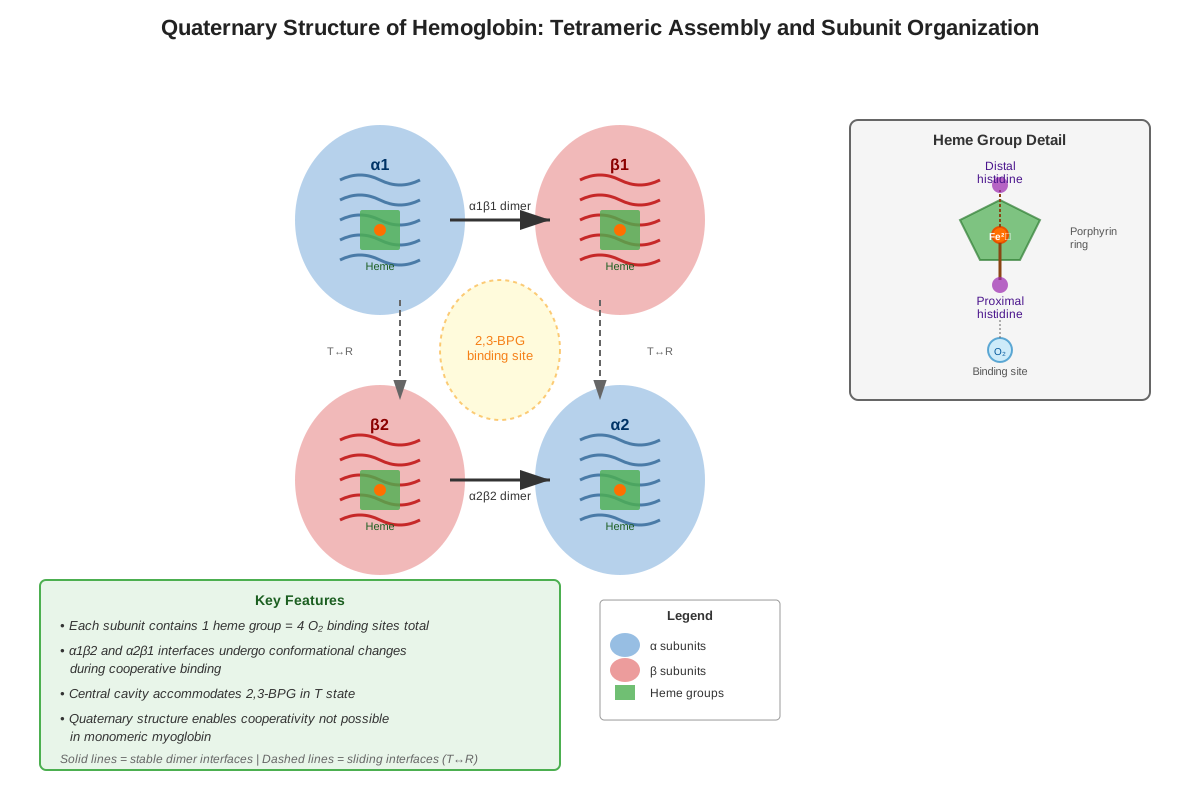
Hemoglobin is a heterotetrameric protein consisting of four polypeptide chains—two α-globin chains (141 amino acids each) and two β-globin chains (146 amino acids each)—arranged in a quaternary structure designated α₂β₂. Each subunit contains a heme prosthetic group, an iron-containing porphyrin ring that serves as the actual oxygen-binding site. The iron atom in heme exists in the Fe²⁺ (ferrous) oxidation state when functional; oxidation to Fe³⁺ (ferric) produces methemoglobin, which cannot bind oxygen.
The heme group consists of a protoporphyrin IX ring with a central iron atom coordinated by four nitrogen atoms from the porphyrin ring. The iron forms two additional coordination bonds perpendicular to the porphyrin plane: one to the proximal histidine (His F8) of the globin chain, and one available for oxygen binding. A distal histidine (His E7) positioned near the binding site stabilizes bound oxygen and prevents irreversible oxidation of the iron.
Each globin chain exhibits predominantly α-helical secondary structure (approximately 75% α-helix), with eight helical segments designated A through H. The tertiary structure creates a hydrophobic pocket that sequesters the heme group, protecting the iron from oxidation while allowing oxygen access. The quaternary structure features critical interfaces between subunits: α₁β₁ and α₂β₂ contacts remain stable, while α₁β₂ and α₂β₁ interfaces undergo conformational changes during oxygen binding, enabling cooperative behavior.
Cooperative Binding and Allostery
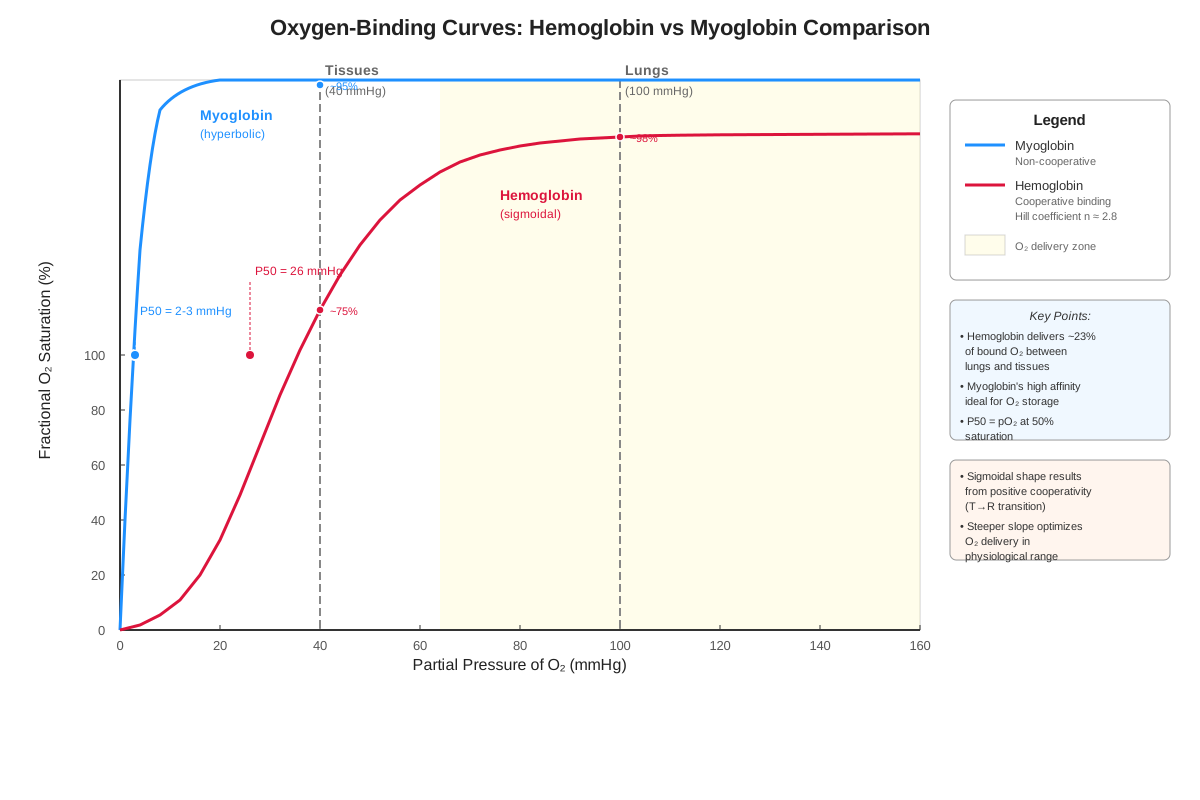
Hemoglobin exhibits cooperative binding, meaning that oxygen binding to one subunit increases the oxygen affinity of the remaining subunits. This cooperativity produces a sigmoidal (S-shaped) oxygen-binding curve, contrasting sharply with myoglobin's hyperbolic curve. The Hill coefficient (n) quantifies cooperativity; for hemoglobin, n ≈ 2.8, indicating strong positive cooperativity (n = 1 would indicate no cooperativity).
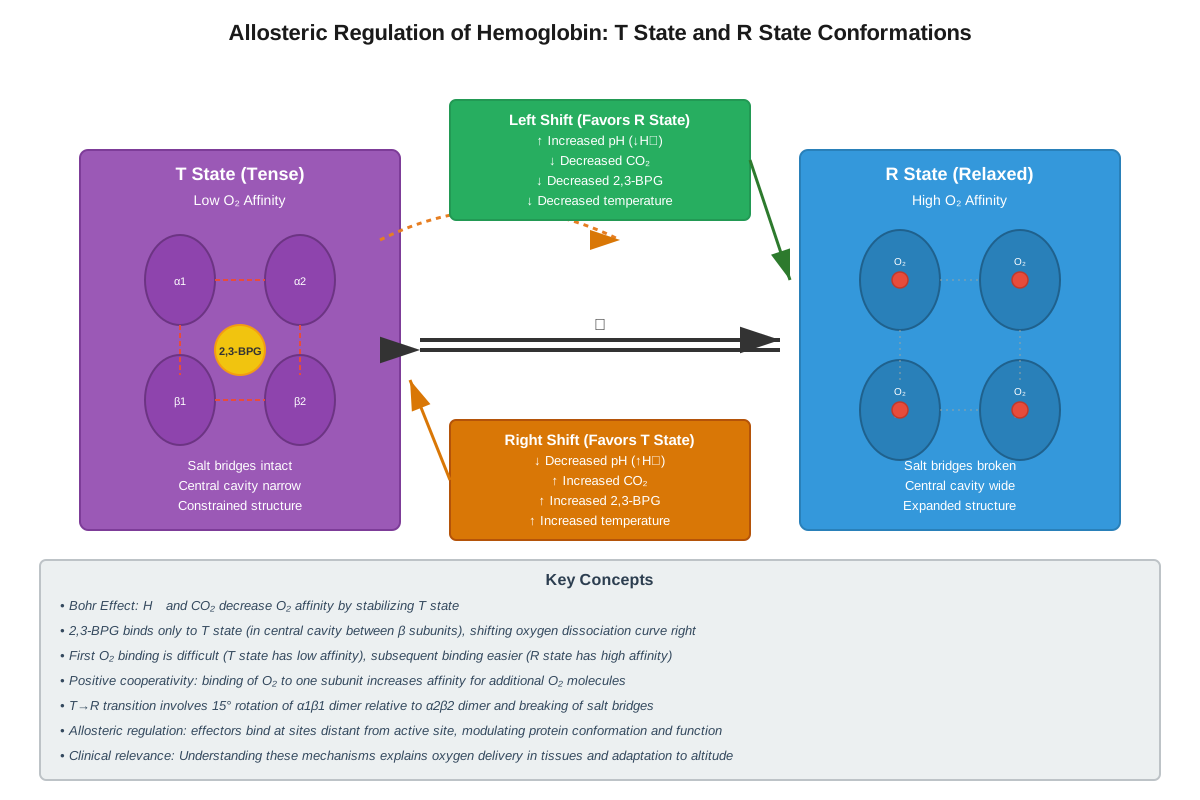
The molecular basis of cooperativity lies in hemoglobin's two conformational states: the T (tense) state and R (relaxed) state. The T state represents deoxygenated hemoglobin, characterized by more ionic interactions (salt bridges) between subunits, particularly at the α₁β₂ interface. These interactions constrain the structure, reducing oxygen affinity. The R state represents oxygenated hemoglobin, with fewer constraining interactions and higher oxygen affinity. The conformational change from T to R involves rotation of the α₁β₁ dimer relative to the α₂β₂ dimer by approximately 15 degrees.
When oxygen binds to a T-state subunit, it pulls the iron atom into the plane of the porphyrin ring (the iron sits slightly out of plane in deoxyhemoglobin). This movement displaces the proximal histidine and its attached F helix, triggering conformational changes that propagate through the subunit interfaces. As more oxygen molecules bind, the equilibrium shifts progressively toward the R state, explaining why the fourth oxygen binds with approximately 300-fold higher affinity than the first.
Allosteric Regulation and Physiological Modulators
Hemoglobin's oxygen affinity responds to multiple physiological signals, optimizing oxygen delivery to tissues. These allosteric effectors shift the oxygen-binding curve without directly competing for the oxygen-binding site.
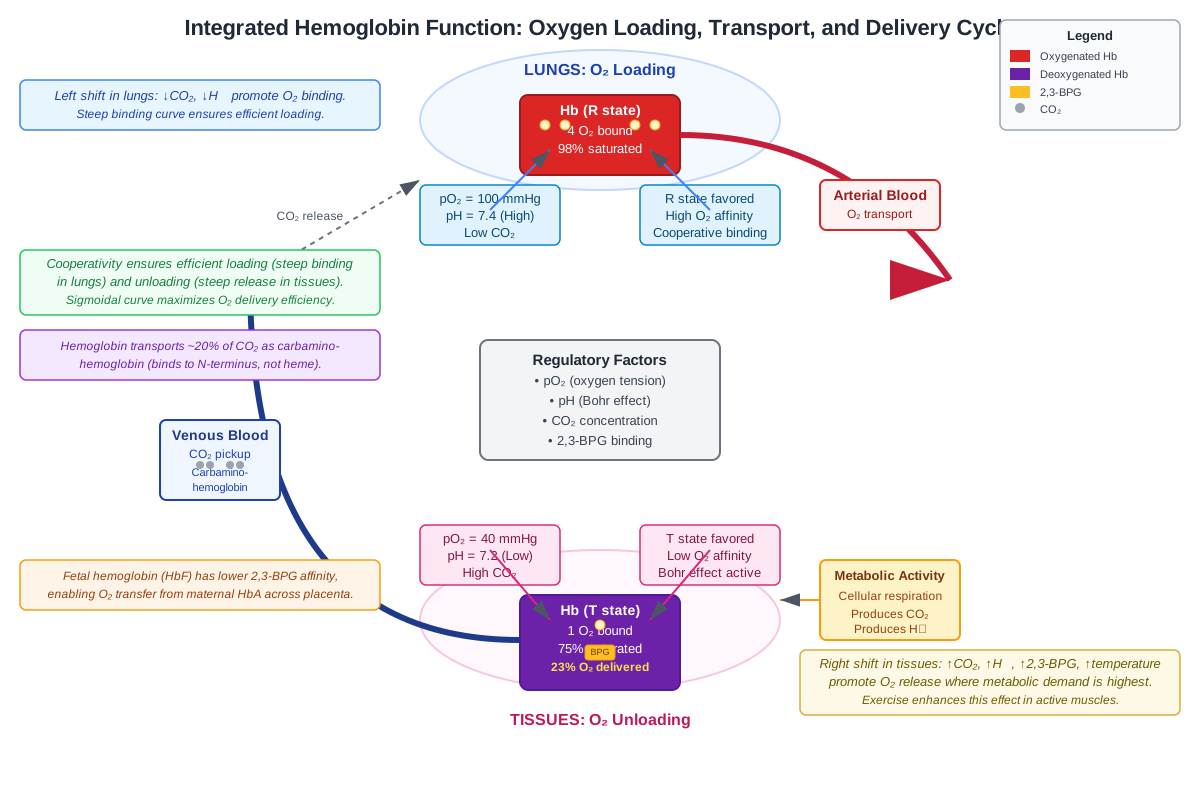
2,3-Bisphosphoglycerate (2,3-BPG), also called 2,3-diphosphoglycerate (2,3-DPG), is a glycolytic intermediate that binds in the central cavity between the four subunits of deoxyhemoglobin (T state). The binding site consists of positively charged amino acids (His, Lys) from both β chains. 2,3-BPG stabilizes the T state through ionic interactions, decreasing oxygen affinity and shifting the oxygen-binding curve rightward. This mechanism is physiologically crucial: at high altitude, increased 2,3-BPG production facilitates oxygen unloading to tissues despite reduced atmospheric oxygen. Fetal hemoglobin (HbF, α₂γ₂) has lower 2,3-BPG affinity because the γ chains have fewer positive charges in the binding pocket, giving HbF higher oxygen affinity than adult hemoglobin (HbA)—essential for oxygen transfer across the placenta.
The Bohr effect describes the inverse relationship between pH and oxygen affinity: decreased pH (increased H⁺) reduces oxygen affinity, shifting the curve rightward. Mechanistically, protons bind to specific histidine residues, stabilizing the T state through additional ionic interactions (salt bridges). This effect is physiologically elegant—metabolically active tissues produce CO₂, which forms carbonic acid, lowering pH and promoting oxygen release exactly where needed. Conversely, in the lungs where CO₂ is expelled and pH rises, oxygen affinity increases, facilitating oxygen loading.
Carbon dioxide affects hemoglobin through two mechanisms. First, CO₂ contributes to the Bohr effect by lowering pH through carbonic acid formation. Second, CO₂ directly binds to the N-terminal amino groups of globin chains, forming carbaminohemoglobin. This carbamylation stabilizes the T state, further decreasing oxygen affinity. Approximately 20% of CO₂ transport from tissues to lungs occurs via carbaminohemoglobin formation.
Temperature also modulates oxygen affinity: increased temperature decreases affinity (rightward shift), facilitating oxygen delivery to metabolically active, heat-generating tissues. This effect reflects the thermodynamic principle that higher temperatures favor dissociation of bound ligands.
Comparison with Myoglobin
| Property | Myoglobin | Hemoglobin |
|---|---|---|
| Quaternary structure | Monomer | Tetramer (α₂β₂) |
| Oxygen-binding curve | Hyperbolic | Sigmoidal |
| Cooperativity | None (Hill coefficient = 1) | Positive (Hill coefficient ≈ 2.8) |
| P₅₀ (partial pressure at 50% saturation) | ~2-3 mmHg | ~26 mmHg |
| Allosteric regulation | None | 2,3-BPG, H⁺, CO₂, temperature |
| Physiological role | Oxygen storage in muscle | Oxygen transport in blood |
| Oxygen affinity | High (loads at low pO₂) | Variable (responds to tissue needs) |
Myoglobin serves as an instructive comparison to hemoglobin. As a monomeric protein with a single heme group, myoglobin cannot exhibit cooperativity, producing a hyperbolic binding curve. Its much higher oxygen affinity (lower P₅₀) suits its function as an oxygen storage protein in muscle tissue—myoglobin only releases oxygen when muscle pO₂ drops very low during intense exercise. The lack of allosteric regulation in myoglobin reflects its simpler role compared to hemoglobin's sophisticated oxygen delivery system.
Hemoglobinopathies
Genetic mutations affecting hemoglobin structure produce hemoglobinopathies, among the most common inherited disorders worldwide. These conditions illustrate how primary structure determines function.
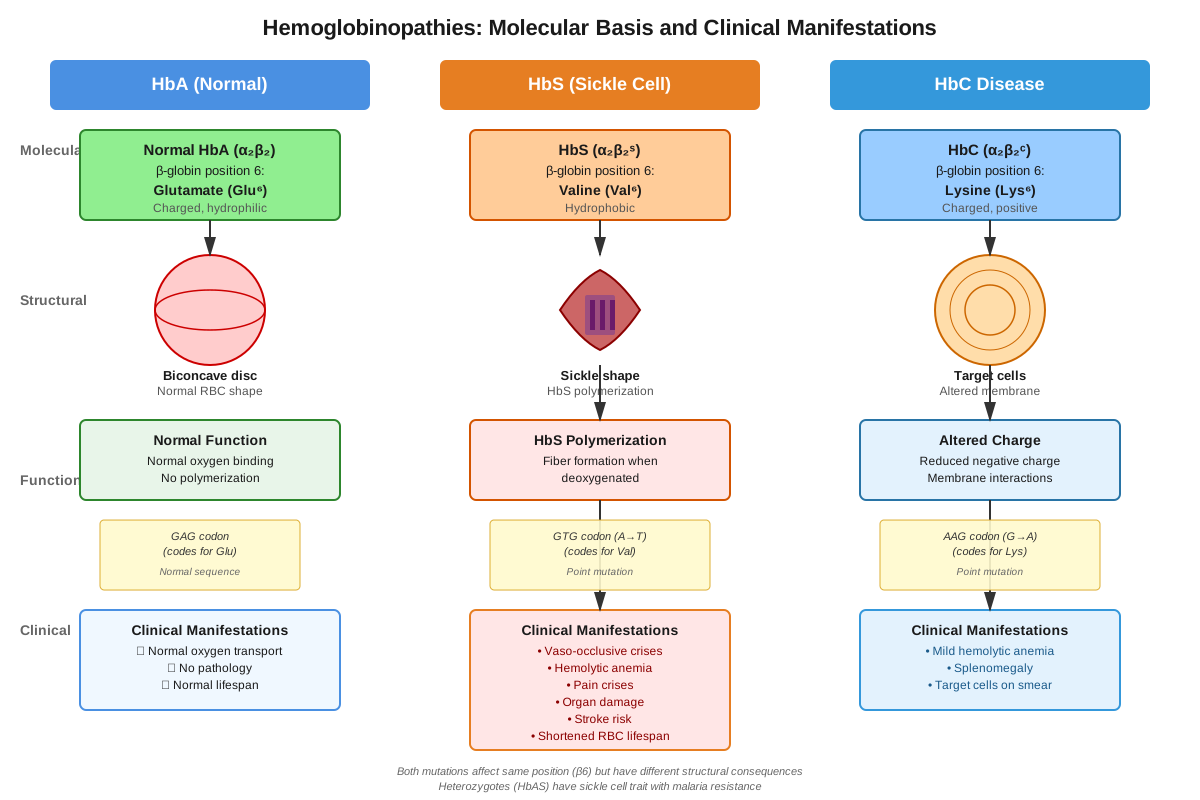
Sickle cell disease results from a single point mutation in the β-globin gene: GAG→GTG, causing Glu→Val substitution at position 6 (β6Glu→Val). This seemingly minor change—replacing a charged, hydrophilic amino acid with a nonpolar, hydrophobic one—has profound consequences. The valine creates a hydrophobic patch on the hemoglobin surface that, when deoxygenated, binds to a complementary hydrophobic pocket on an adjacent hemoglobin molecule. This interaction causes hemoglobin S (HbS) molecules to polymerize into rigid fibers, distorting red blood cells into characteristic sickle shapes. Sickled cells are fragile (causing hemolytic anemia), inflexible (causing vascular occlusion and pain crises), and have shortened lifespans. Importantly, sickling occurs primarily in the deoxygenated T state, explaining why crises are triggered by hypoxia, dehydration, or acidosis.
Thalassemias result from reduced synthesis of α or β chains, causing imbalanced globin chain production. β-thalassemia involves decreased β-chain synthesis, leading to excess α chains that precipitate and damage red blood cells. α-thalassemia involves decreased α-chain synthesis; severe forms (loss of all four α-globin genes) are incompatible with life. These conditions demonstrate that hemoglobin function requires not just correct structure but also balanced subunit stoichiometry.
Hemoglobin variants with altered oxygen affinity illustrate structure-function relationships. Some mutations increase oxygen affinity (leftward curve shift), causing tissue hypoxia and compensatory polycythemia. Others decrease affinity (rightward shift), potentially causing cyanosis but sometimes improving tissue oxygen delivery. Mutations affecting the 2,3-BPG binding site or the T-R equilibrium produce these phenotypes.
Oxygen-Binding Curves and Physiological Interpretation
The oxygen-binding curve plots hemoglobin saturation (Y-axis, 0-100%) against partial pressure of oxygen (X-axis, pO₂ in mmHg). The sigmoidal shape reflects cooperative binding. Key points on the curve include:
- Lungs (pO₂ ≈ 100 mmHg): Hemoglobin is approximately 98% saturated
- Tissues at rest (pO₂ ≈ 40 mmHg): Hemoglobin is approximately 75% saturated
- P₅₀ (pO₂ at 50% saturation): Approximately 26 mmHg for normal adult hemoglobin
The steep portion of the curve (pO₂ 20-60 mmHg) corresponds to physiological tissue oxygen pressures, meaning small changes in tissue pO₂ cause large changes in oxygen delivery—an efficient design.
Rightward shifts (increased P₅₀, decreased affinity) occur with:
- Increased 2,3-BPG
- Decreased pH (increased H⁺)
- Increased CO₂
- Increased temperature
Leftward shifts (decreased P₅₀, increased affinity) occur with opposite conditions. Fetal hemoglobin and carbon monoxide binding also cause leftward shifts, though through different mechanisms.
Concept Relationships
The concepts within hemoglobin biochemistry form an interconnected network centered on the structure-function paradigm. Quaternary structure enables cooperative binding, which produces the sigmoidal binding curve, which in turn allows efficient oxygen loading and unloading across physiological oxygen pressure ranges. Allosteric regulation by 2,3-BPG, H⁺, and CO₂ modulates this cooperative binding, linking hemoglobin function to metabolic state. The T-R conformational equilibrium provides the molecular mechanism underlying both cooperativity and allosteric regulation.
Connecting to prerequisite knowledge: Understanding protein structure hierarchy is essential because hemoglobin's function emerges from quaternary structure—individual subunits cannot exhibit cooperativity. Amino acid properties determine how mutations like β6Glu→Val cause disease by altering surface characteristics. Noncovalent interactions (salt bridges, hydrophobic interactions) stabilize the T and R states and mediate the conformational transition. Acid-base chemistry explains the Bohr effect's molecular basis and physiological significance.
Relationship map:
Primary structure (amino acid sequence) → Secondary/tertiary structure (individual globin folds) → Quaternary structure (α₂β₂ tetramer) → Cooperative binding (T-R equilibrium) → Sigmoidal binding curve → Efficient oxygen transport
Parallel pathway:
Allosteric effectors (2,3-BPG, H⁺, CO₂) → Stabilize T or R state → Shift binding curve → Optimize oxygen delivery to tissue needs
Clinical connection:
Mutations (primary structure changes) → Altered protein properties (surface hydrophobicity, subunit interactions) → Disease phenotypes (sickling, altered affinity, unstable hemoglobin)
Quick check — test yourself on Hemoglobin so far.
Try Flashcards →High-Yield Facts
⭐ Hemoglobin is a tetramer (α₂β₂) with four heme groups; each heme contains Fe²⁺ that binds one O₂ molecule
⭐ Cooperative binding produces a sigmoidal oxygen-binding curve with Hill coefficient ≈ 2.8
⭐ The T (tense) state has low oxygen affinity; the R (relaxed) state has high oxygen affinity; oxygen binding shifts equilibrium from T to R
⭐ 2,3-BPG binds in the central cavity of deoxyhemoglobin, stabilizing the T state and decreasing oxygen affinity (rightward shift)
⭐ The Bohr effect: decreased pH decreases oxygen affinity (rightward shift), facilitating oxygen delivery to metabolically active tissues
- Fetal hemoglobin (HbF, α₂γ₂) has higher oxygen affinity than adult hemoglobin (HbA, α₂β₂) due to lower 2,3-BPG binding
- Sickle cell disease results from β6Glu→Val mutation, causing HbS polymerization when deoxygenated
- Myoglobin is monomeric with hyperbolic binding curve and much higher oxygen affinity (P₅₀ ≈ 2-3 mmHg) than hemoglobin (P₅₀ ≈ 26 mmHg)
- Carbon monoxide binds hemoglobin with ~250-fold higher affinity than oxygen, causing leftward shift and tissue hypoxia
- Methemoglobin contains Fe³⁺ instead of Fe²⁺ and cannot bind oxygen
- Carbaminohemoglobin forms when CO₂ binds to N-terminal amino groups, contributing to CO₂ transport and stabilizing the T state
- Increased temperature, increased CO₂, increased H⁺, and increased 2,3-BPG all shift the oxygen-binding curve rightward (decreased affinity)
Common Misconceptions
Misconception: Hemoglobin's iron must be oxidized (Fe³⁺) to bind oxygen.
Correction: Functional hemoglobin contains Fe²⁺ (ferrous iron). Oxidation to Fe³⁺ produces methemoglobin, which cannot bind oxygen. Oxygen binding involves coordination, not oxidation-reduction.
Misconception: Each hemoglobin molecule can bind four oxygen molecules because it has four subunits, and this is simple additive binding.
Correction: While hemoglobin does bind four O₂ molecules (one per heme), the binding is cooperative, not independent. The first oxygen binds with low affinity, but each subsequent oxygen binds with progressively higher affinity due to conformational changes that shift the T-R equilibrium.
Misconception: 2,3-BPG increases oxygen affinity to help hemoglobin pick up more oxygen in the lungs.
Correction: 2,3-BPG decreases oxygen affinity by stabilizing the T state. This facilitates oxygen release to tissues, not oxygen uptake in lungs. At high altitude, increased 2,3-BPG helps compensate for reduced atmospheric oxygen by enhancing oxygen delivery to tissues.
Misconception: The Bohr effect means that CO₂ directly competes with O₂ for the heme binding site.
Correction: The Bohr effect involves pH-dependent changes in hemoglobin conformation, not direct competition. CO₂ lowers pH (via carbonic acid formation) and also binds to amino terminal groups (forming carbaminohemoglobin), both of which stabilize the T state and decrease oxygen affinity through allosteric mechanisms.
Misconception: Sickled red blood cells are always sickle-shaped.
Correction: Sickling occurs primarily when HbS is deoxygenated. Oxygenated HbS does not polymerize significantly, so cells can resume normal shape when reoxygenated. However, repeated sickling-unsickling cycles cause membrane damage, and some cells become irreversibly sickled.
Misconception: Fetal hemoglobin has higher oxygen affinity because it binds oxygen more tightly at the heme site.
Correction: The heme-oxygen interaction is essentially identical in HbF and HbA. HbF's higher affinity results from weaker 2,3-BPG binding (due to different amino acids in the γ chains compared to β chains), allowing HbF to remain more in the R state.
Misconception: Myoglobin and hemoglobin have the same oxygen affinity; they just differ in cooperativity.
Correction: Myoglobin has much higher oxygen affinity (lower P₅₀) than hemoglobin, in addition to lacking cooperativity. This difference is functional—myoglobin stores oxygen in muscle and only releases it at very low pO₂, while hemoglobin must both load and unload oxygen across physiological pressure ranges.
Worked Examples
Example 1: Interpreting Oxygen-Binding Curves
Question: A researcher compares oxygen-binding curves for normal adult hemoglobin (HbA) and a mutant hemoglobin variant (HbX). HbX shows a leftward-shifted curve with P₅₀ = 15 mmHg compared to HbA's P₅₀ = 26 mmHg. Both curves remain sigmoidal. A patient homozygous for HbX presents with fatigue and elevated red blood cell count. Explain the molecular basis and physiological consequences of this mutation.
Solution:
Step 1: Interpret the curve shift
A leftward shift with decreased P₅₀ indicates increased oxygen affinity. At any given pO₂, HbX is more saturated than HbA. The preserved sigmoidal shape indicates that cooperative binding remains intact, suggesting the mutation affects the T-R equilibrium rather than eliminating quaternary structure.
Step 2: Identify possible molecular mechanisms
Increased oxygen affinity could result from:
- Mutation stabilizing the R state
- Mutation destabilizing the T state
- Mutation affecting the 2,3-BPG binding site (reducing 2,3-BPG binding would decrease T state stabilization)
- Mutation at the α₁β₂ interface affecting the T-R transition
Step 3: Analyze physiological consequences
In the lungs (pO₂ ≈ 100 mmHg), both HbA and HbX are nearly 100% saturated—no significant difference. However, in tissues (pO₂ ≈ 40 mmHg), HbX remains more saturated than HbA, releasing less oxygen. This causes tissue hypoxia despite normal arterial oxygen content.
Step 4: Explain clinical presentation
The elevated red blood cell count (polycythemia) represents a compensatory response to tissue hypoxia. The kidneys sense inadequate oxygen delivery and increase erythropoietin production, stimulating red blood cell production. Fatigue results from chronic tissue hypoxia despite the polycythemia. This demonstrates how a molecular change (increased oxygen affinity) produces a cellular response (polycythemia) and clinical symptoms (fatigue).
Step 5: Connect to learning objectives
This example illustrates structure-function relationships (mutation → altered binding), physiological regulation (compensatory polycythemia), and the clinical relevance of hemoglobin biochemistry—all high-yield MCAT concepts.
Example 2: Altitude Adaptation
Question: A mountaineer rapidly ascends to 4,500 meters (≈15,000 feet) where atmospheric pO₂ is approximately 60 mmHg compared to 160 mmHg at sea level. Initially, she experiences fatigue and shortness of breath. After two weeks at altitude, her symptoms improve despite unchanged atmospheric conditions. Explain the biochemical adaptations that occur, referencing specific changes to hemoglobin function.
Solution:
Step 1: Analyze initial conditions
At altitude, alveolar pO₂ decreases to approximately 50-60 mmHg. Consulting the oxygen-binding curve, hemoglobin saturation at 60 mmHg is approximately 90% (compared to 98% at 100 mmHg). While this seems like a modest decrease, the reduced arterial oxygen content combined with unchanged tissue oxygen consumption creates relative tissue hypoxia.
Step 2: Identify acute responses
Immediately, the mountaineer hyperventilates (increased respiratory rate) to increase alveolar pO₂. Hyperventilation expels CO₂, raising blood pH (respiratory alkalosis). By the Bohr effect, increased pH shifts the oxygen-binding curve leftward, increasing hemoglobin's oxygen affinity. This helps maintain arterial oxygen saturation but impairs oxygen unloading to tissues—a partial compensation.
Step 3: Identify chronic adaptations
Over days to weeks, red blood cells increase 2,3-BPG synthesis (2-3 fold increase). Elevated 2,3-BPG binds in the central cavity of deoxyhemoglobin, stabilizing the T state and shifting the oxygen-binding curve rightward. This decreases oxygen affinity, facilitating oxygen release to tissues. The rightward shift partially counteracts the leftward shift from respiratory alkalosis.
Step 4: Explain improved symptoms
The increased 2,3-BPG optimizes the balance between oxygen loading in lungs and unloading in tissues. At 60 mmHg (lungs), hemoglobin still achieves reasonable saturation (the curve's plateau region), but at tissue pO₂ (40 mmHg), more oxygen is released due to the rightward shift. Additionally, increased red blood cell production (stimulated by erythropoietin) increases oxygen-carrying capacity. These adaptations improve tissue oxygen delivery, reducing symptoms.
Step 5: Quantitative consideration
The rightward shift increases P₅₀ from 26 mmHg to perhaps 30-32 mmHg. This means at tissue pO₂ of 40 mmHg, hemoglobin saturation decreases more (releasing more oxygen) compared to non-adapted hemoglobin. The steep portion of the sigmoidal curve means this shift significantly increases oxygen delivery.
Step 6: Connect to broader concepts
This example integrates hemoglobin biochemistry (2,3-BPG binding, T-R equilibrium), acid-base physiology (respiratory alkalosis, Bohr effect), and physiological regulation (erythropoietin response). It demonstrates how allosteric regulation allows hemoglobin to adapt to environmental challenges—a key MCAT theme about homeostasis and adaptation.
Exam Strategy
When approaching hemoglobin MCAT questions, first identify the question type: structural analysis, binding curve interpretation, allosteric regulation, or clinical application. Each requires a specific approach.
For binding curve questions: Always identify which direction the curve shifts and what this means functionally. Rightward shift = decreased affinity = easier oxygen release = better tissue delivery. Leftward shift = increased affinity = harder oxygen release = potential tissue hypoxia. Remember that conditions in metabolically active tissues (low pH, high CO₂, high temperature, high 2,3-BPG) all shift the curve rightward—this makes physiological sense because these tissues need oxygen.
Trigger words to watch for:
- "Cooperative binding" → think sigmoidal curve, T-R equilibrium, quaternary structure
- "Allosteric" → think effector binding at site distinct from active site, conformational change
- "P₅₀" → the pO₂ at 50% saturation; higher P₅₀ = lower affinity
- "Bohr effect" → pH-dependent oxygen affinity
- "2,3-BPG" or "2,3-DPG" → stabilizes T state, decreases affinity
- "Fetal hemoglobin" → higher affinity than adult, lower 2,3-BPG binding
- "Sickle cell" → β6Glu→Val, polymerization when deoxygenated
Process-of-elimination strategies:
- If a question asks about cooperative binding, eliminate answers suggesting independent binding or hyperbolic curves
- If comparing hemoglobin and myoglobin, eliminate answers suggesting myoglobin has lower affinity or cooperative binding
- For mutation questions, consider whether the change affects surface properties (like sickle cell), subunit interfaces (affecting cooperativity), or the heme pocket (affecting oxygen binding directly)
- When evaluating physiological scenarios, eliminate answers that contradict the direction of curve shifts (e.g., suggesting high altitude increases oxygen affinity without mentioning fetal hemoglobin or carbon monoxide)
Time allocation: Hemoglobin questions often appear in passages with graphs or clinical vignettes. Spend 30-45 seconds analyzing any oxygen-binding curves before reading questions—identify which curves represent which conditions and note the direction of shifts. For standalone questions, 60-90 seconds should suffice if you have solid conceptual understanding. Don't get bogged down in complex calculations; the MCAT rarely requires precise quantitative analysis of binding curves, focusing instead on qualitative interpretation.
Common question formats:
- Graph interpretation: "Which curve represents hemoglobin in the presence of increased 2,3-BPG?"
- Mutation analysis: "A mutation replacing a charged residue with a hydrophobic residue at the α₁β₂ interface would most likely..."
- Clinical reasoning: "A patient with carbon monoxide poisoning would exhibit..." (requires understanding that CO causes leftward shift and reduced oxygen delivery)
- Comparative analysis: "Compared to adult hemoglobin, fetal hemoglobin..." (requires knowing HbF has higher affinity)
Memory Techniques
Mnemonic for rightward shift conditions (decreased oxygen affinity): "CADET, face Right!"
- CO₂ increased
- Acid increased (decreased pH)
- DPG (2,3-BPG) increased
- Exercise (increases all of the above)
- Temperature increased
Mnemonic for hemoglobin structure: "Hemoglobin Has Four Hemes" (α₂β₂ = 4 subunits, 4 hemes, 4 O₂ binding sites)
Visualization for T-R transition: Picture hemoglobin as a spring-loaded trap. The T state is "tense"—tightly constrained by salt bridges (springs). When oxygen binds, it pulls the iron into the porphyrin plane, breaking the springs (salt bridges) and allowing the structure to "relax" into the R state. Each oxygen binding breaks more springs, making subsequent binding easier.
Acronym for sickle cell mutation: "β-SIX-GLU-VAL" (β6Glu→Val) - the "SIX" reminds you it's position 6, and the rhyme helps recall both amino acids.
Memory aid for Bohr effect: "Bohr" sounds like "bore" → think of a bored tissue that's working hard, producing CO₂ and acid, which makes hemoglobin "bored" with oxygen and releases it. (Silly but effective!)
Comparison table memory: Create a mental image of myoglobin as a solo performer (monomer) who plays one note consistently (hyperbolic curve), while hemoglobin is a quartet (tetramer) that builds to a crescendo (sigmoidal curve with cooperativity).
Summary
Hemoglobin represents the quintessential example of protein structure-function relationships and allosteric regulation in biochemistry. This tetrameric protein (α₂β₂) with four heme prosthetic groups efficiently transports oxygen from lungs to tissues through cooperative binding, producing a sigmoidal oxygen-binding curve. The molecular mechanism involves conformational transitions between the low-affinity T (tense) state and high-affinity R (relaxed) state, with oxygen binding shifting the equilibrium toward R. Allosteric effectors—2,3-BPG, H⁺, CO₂, and temperature—modulate oxygen affinity by stabilizing the T state, shifting the binding curve rightward and facilitating oxygen delivery to metabolically active tissues. This elegant system exemplifies how evolution has optimized protein function for physiological demands. Hemoglobinopathies like sickle cell disease demonstrate how single amino acid substitutions can profoundly alter protein properties and cause disease. For the MCAT, mastery of hemoglobin requires integrating structural biochemistry, binding kinetics, allosteric regulation, and clinical applications—skills that transfer to understanding numerous other proteins and physiological systems.
Key Takeaways
- Hemoglobin is a tetrameric protein (α₂β₂) exhibiting cooperative oxygen binding, producing a sigmoidal binding curve essential for efficient oxygen transport
- The T (tense) state has low oxygen affinity; the R (relaxed) state has high affinity; oxygen binding shifts the T-R equilibrium, explaining cooperativity
- Allosteric effectors (2,3-BPG, H⁺, CO₂, temperature) decrease oxygen affinity by stabilizing the T state, optimizing oxygen delivery to tissues
- The Bohr effect (decreased pH decreases oxygen affinity) and 2,3-BPG regulation allow hemoglobin to respond to metabolic demands
- Fetal hemoglobin (HbF) has higher oxygen affinity than adult hemoglobin (HbA) due to reduced 2,3-BPG binding, facilitating maternal-fetal oxygen transfer
- Sickle cell disease results from β6Glu→Val mutation, causing HbS polymerization when deoxygenated and producing characteristic clinical manifestations
- Myoglobin differs from hemoglobin in being monomeric, having hyperbolic binding, lacking cooperativity, and having much higher oxygen affinity (P₅₀ ≈ 2-3 vs. 26 mmHg)
Related Topics
Myoglobin structure and function: Understanding myoglobin's simpler structure and oxygen storage role provides context for appreciating hemoglobin's sophisticated transport function. Mastering hemoglobin makes myoglobin straightforward by comparison.
Enzyme kinetics and cooperativity: Hemoglobin's cooperative binding parallels cooperative enzyme kinetics. The mathematical and conceptual frameworks (Hill plots, sigmoidal curves) apply to both, making hemoglobin excellent preparation for enzyme regulation topics.
Allosteric enzyme regulation: Hemoglobin serves as the paradigm for allosteric regulation. Understanding how 2,3-BPG and H⁺ modulate hemoglobin prepares students for topics like phosphofructokinase regulation in glycolysis and aspartate transcarbamoylase in pyrimidine synthesis.
Protein structure and folding: Hemoglobin exemplifies all four levels of protein structure and demonstrates how quaternary structure enables emergent properties (cooperativity) not present in individual subunits.
Acid-base physiology and buffer systems: The Bohr effect connects hemoglobin biochemistry to acid-base balance, and hemoglobin itself functions as a blood buffer. This topic bridges biochemistry and physiology.
Genetic mutations and molecular disease: Sickle cell disease and thalassemias illustrate how genotype determines phenotype at the molecular level, preparing students for broader genetics and pathology topics.
Practice CTA
Now that you've mastered the biochemistry of hemoglobin, it's time to solidify your understanding through active practice. Challenge yourself with MCAT-style practice questions that test your ability to interpret oxygen-binding curves, predict the effects of mutations, and apply allosteric regulation principles to clinical scenarios. Use flashcards to drill high-yield facts like the conditions causing rightward shifts and the molecular basis of sickle cell disease. Remember, hemoglobin appears frequently on the MCAT precisely because it integrates so many fundamental biochemistry concepts—your investment in mastering this topic will pay dividends across multiple question types. You've built a strong foundation; now demonstrate your expertise through practice!
Sign up free to keep reading
Create a free AnvayaPrep account to finish this MCAT guide on Hemoglobin — plus flashcards and practice questions.