Overview
Amino acid general structure forms the foundational knowledge base for understanding all protein biochemistry tested on the MCAT. Every amino acid, regardless of its unique side chain properties, shares a common structural framework that dictates how these molecules behave in aqueous environments, link together to form peptides and proteins, and contribute to the three-dimensional architecture of biological macromolecules. Mastering this fundamental structure is not merely an exercise in memorization—it is the gateway to predicting protein behavior, understanding enzyme mechanisms, and solving complex passage-based questions that integrate biochemistry with biology and organic chemistry.
The MCAT consistently tests amino acid structure through direct recall questions, passage analysis requiring structural interpretation, and problem-solving scenarios that demand application of stereochemical principles. Questions may ask students to identify functional groups, predict ionization states at various pH values, recognize chiral centers, or explain how structural features enable peptide bond formation. The Amino Acids and Proteins unit represents one of the highest-yield areas in Biochemistry for the MCAT, with amino acid structure serving as the conceptual anchor for topics ranging from protein folding to enzyme kinetics.
Understanding amino acid general structure creates the framework for comprehending how 20 different amino acids can combine in countless ways to generate the remarkable diversity of protein function observed in living systems. This topic connects directly to acid-base chemistry, stereochemistry, organic functional group reactivity, and thermodynamics—making it a true integration point for multiple MCAT disciplines. Students who develop a robust mental model of amino acid structure gain significant advantages in both the Chemical and Physical Foundations of Biological Systems and the Biological and Biochemical Foundations of Living Systems sections.
Learning Objectives
- [ ] Define amino acid general structure using accurate Biochemistry terminology
- [ ] Explain why amino acid general structure matters for the MCAT
- [ ] Apply amino acid general structure to exam-style questions
- [ ] Identify common mistakes related to amino acid general structure
- [ ] Connect amino acid general structure to related Biochemistry concepts
- [ ] Predict the ionization state of amino acids at different pH values based on structural features
- [ ] Distinguish between L- and D-amino acid configurations using Fischer projections
- [ ] Analyze how the general structure enables peptide bond formation and protein polymerization
Prerequisites
- Basic organic chemistry functional groups: Recognition of carboxylic acids, amines, and their ionization behavior is essential for understanding amino acid reactivity
- Acid-base chemistry and pKa concepts: Amino acids function as zwitterions and buffers, requiring solid understanding of proton transfer equilibria
- Stereochemistry fundamentals: Chiral centers and absolute configuration (R/S, D/L nomenclature) are central to amino acid structure
- Covalent bonding principles: Understanding sigma and pi bonds, hybridization, and bond angles helps explain the geometry of amino acids
Why This Topic Matters
Clinical and Real-World Significance
Amino acids serve as the building blocks of all proteins in the human body, from structural components like collagen to functional molecules like hemoglobin and antibodies. Genetic mutations that alter even a single amino acid can lead to devastating diseases—sickle cell anemia results from a single glutamic acid to valine substitution in hemoglobin. Nutritional science distinguishes between essential and non-essential amino acids based on biosynthetic capabilities, directly impacting dietary recommendations. Pharmaceutical development frequently targets amino acid metabolism, and many drugs are designed as amino acid analogs that interfere with specific enzymatic pathways.
MCAT Exam Statistics
Amino acid general structure appears in approximately 15-20% of Biochemistry questions on the MCAT, either as the primary focus or as foundational knowledge required to answer higher-order questions. The topic appears across multiple question formats: discrete questions testing direct recall of structural features, passage-based questions requiring interpretation of experimental data involving amino acids, and integrated questions connecting amino acid chemistry to protein function. The AAMC consistently includes questions requiring students to predict amino acid behavior at different pH values, identify functional groups, and apply stereochemical principles.
Common Exam Contexts
This topic frequently appears in passages describing protein purification techniques (where understanding ionization states is crucial), enzyme mechanism studies (requiring knowledge of reactive functional groups), genetic mutations affecting protein structure, and experimental manipulations of peptide synthesis. Questions may present Fischer projections and ask students to identify configuration, provide titration curves requiring interpretation of ionization states, or describe scenarios where amino acid structure determines protein localization or function.
Core Concepts
The Universal Amino Acid Framework
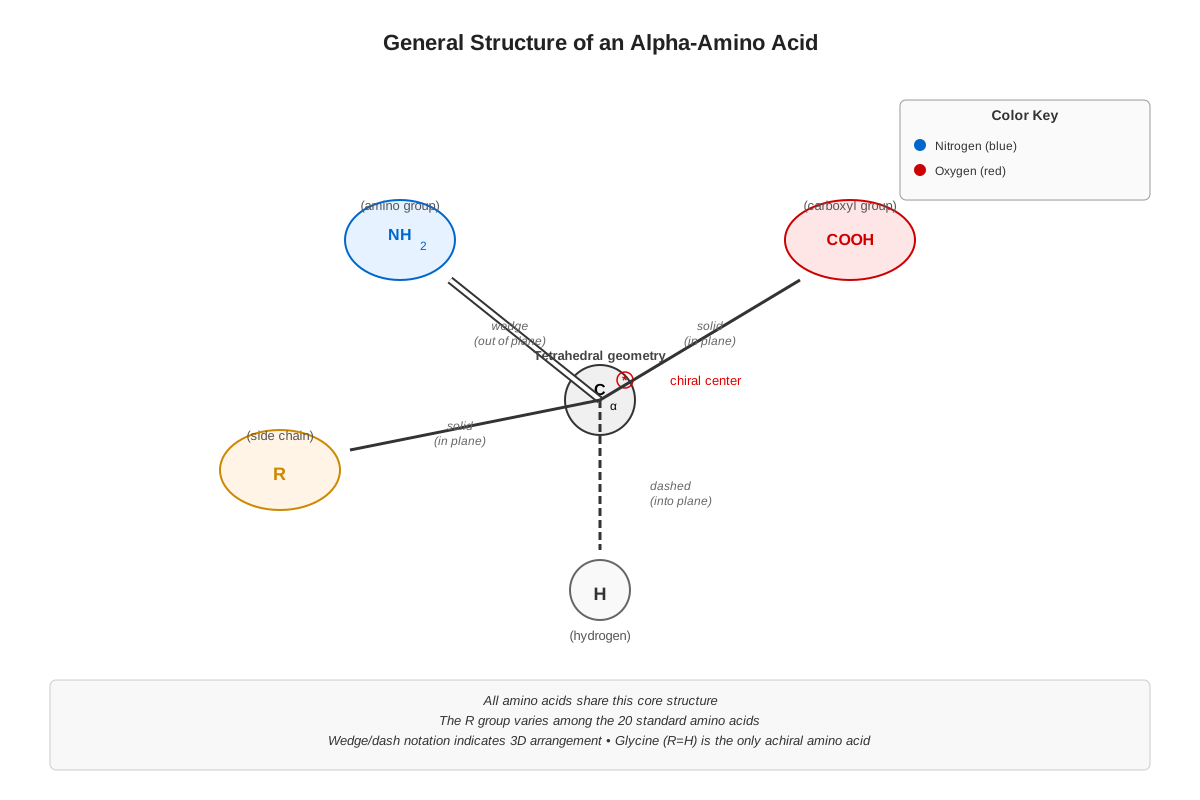
All amino acids share a common structural core consisting of a central alpha carbon (Cα) bonded to four distinct groups: an amino group (-NH₂), a carboxyl group (-COOH), a hydrogen atom (-H), and a variable side chain (R group). This tetrahedral arrangement around the alpha carbon creates the fundamental architecture that defines amino acid chemistry. The term "alpha" indicates that both the amino and carboxyl groups are attached to the carbon immediately adjacent to the carboxyl carbon, distinguishing these compounds from beta, gamma, or other amino acid isomers that are not incorporated into proteins.
The general formula can be represented as:
        NH₂
         |
    H — C — COOH
         |
         R
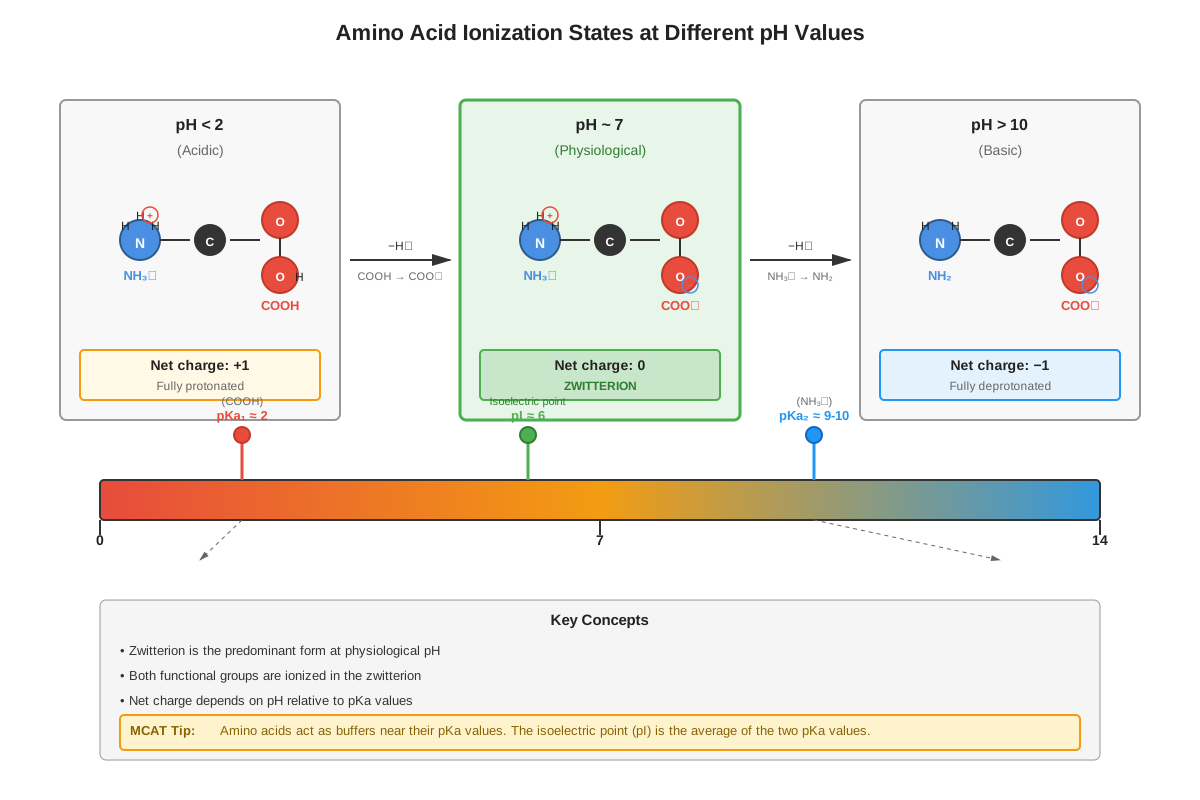
At physiological pH (~7.4), amino acids do not exist in this uncharged form. Instead, they exist predominantly as zwitterions—molecules carrying both positive and negative charges simultaneously. The carboxyl group loses a proton (becoming -COO⁻) while the amino group gains a proton (becoming -NH₃⁺), resulting in the structure:
        NH₃⁺
         |
    H — C — COO⁻
         |
         R
This zwitterionic character profoundly influences amino acid solubility, melting points, and behavior in electric fields. Zwitterions have significantly higher melting points than comparable uncharged molecules due to strong electrostatic interactions, and they are highly soluble in polar solvents like water.
Functional Group Chemistry
The carboxyl group (-COOH) functions as a weak acid with typical pKa values ranging from 1.8 to 2.9 for the alpha-carboxyl group in amino acids. This acidic functional group can donate a proton to solution, and at pH values above its pKa, it exists predominantly in the deprotonated carboxylate form (-COO⁻). The carboxyl group participates in peptide bond formation through condensation reactions, where the hydroxyl portion is eliminated as part of a water molecule.
The amino group (-NH₂) functions as a weak base with typical pKa values ranging from 8.8 to 10.8 for the alpha-amino group. At pH values below its pKa, the amino group exists predominantly in the protonated ammonium form (-NH₃⁺). This group serves as the nucleophile in peptide bond formation, attacking the carbonyl carbon of another amino acid's carboxyl group. The ability of the amino group to accept protons makes amino acids effective buffers in physiological pH ranges.
Stereochemistry and Chirality
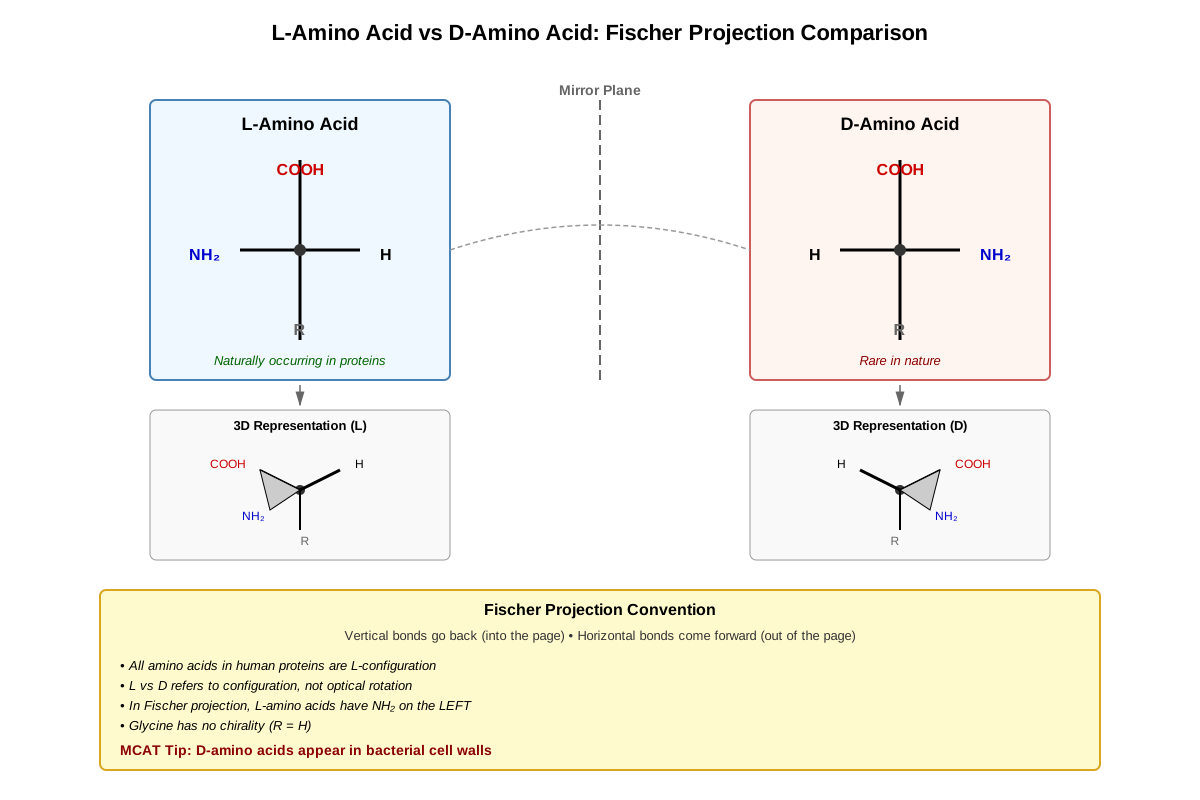
The alpha carbon in all amino acids except glycine is a chiral center—a carbon atom bonded to four different substituents. This chirality means amino acids can exist as non-superimposable mirror images called enantiomers. The two possible configurations are designated as L-amino acids and D-amino acids using the Fischer projection convention. In Fischer projections, the carboxyl group is placed at the top, and if the amino group appears on the left side, the molecule is an L-amino acid; if on the right, it is a D-amino acid.
Remarkably, nearly all amino acids incorporated into proteins in living organisms are L-amino acids. This homochirality is one of the fundamental characteristics of life on Earth. The L-configuration corresponds to the (S) absolute configuration in the Cahn-Ingold-Prelog system for all amino acids except cysteine, where the higher priority of the sulfur-containing side chain results in an (R) configuration despite being an L-amino acid.
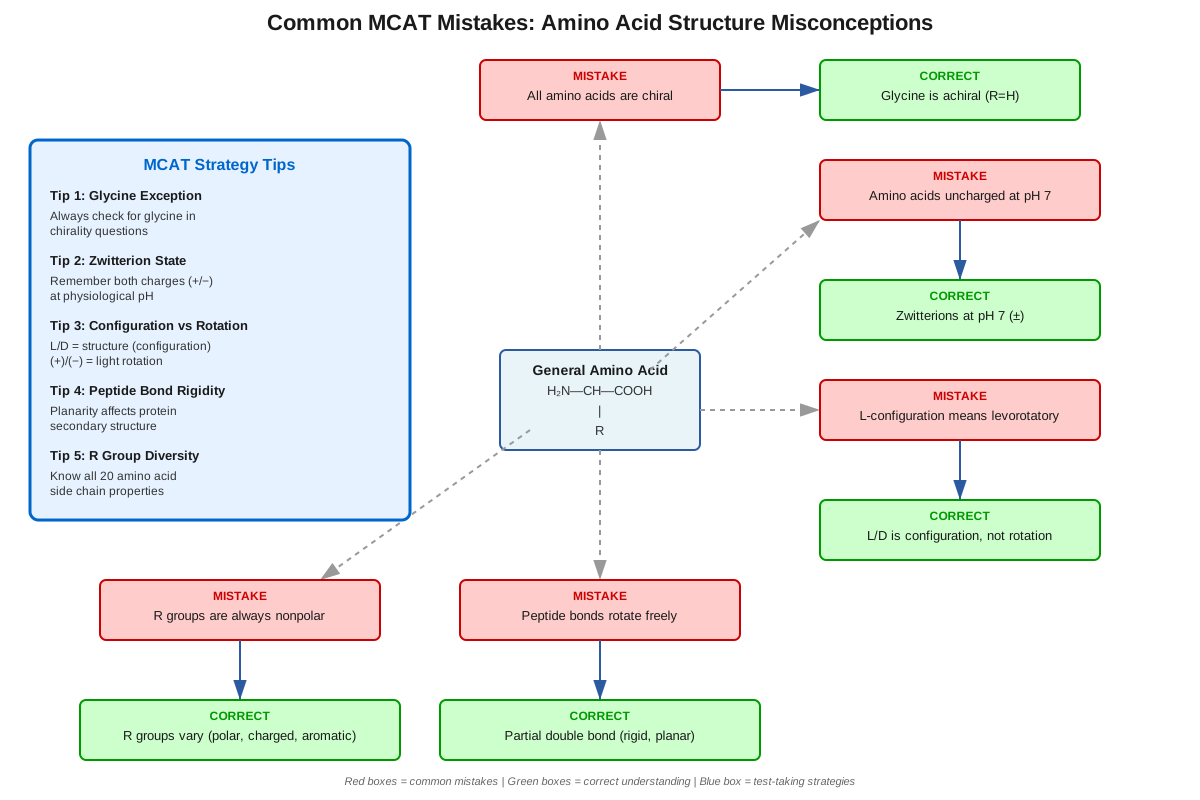
Glycine, with its R group being simply a hydrogen atom, has two hydrogen atoms bonded to the alpha carbon, making it achiral (not chiral). This unique property gives glycine special conformational flexibility in proteins, allowing it to fit into tight turns and irregular structures where other amino acids would create steric clashes.
Ionization States and pH Dependence
Amino acids exhibit different ionization states depending on the pH of their environment, a property critical for understanding protein behavior in biological systems. At very low pH (highly acidic conditions, pH < 1), both the carboxyl and amino groups are protonated, giving the amino acid a net positive charge:
        NH₃⁺
         |
    H — C — COOH
         |
         R
(net charge: +1)
As pH increases, the carboxyl group (with its lower pKa) loses its proton first, creating the zwitterionic form with no net charge at intermediate pH values:
        NH₃⁺
         |
    H — C — COO⁻
         |
         R
(net charge: 0)
At high pH (basic conditions, pH > 11), the amino group also loses its proton, resulting in a net negative charge:
        NH₂
         |
    H — C — COO⁻
         |
         R
(net charge: -1)
The isoelectric point (pI) is the pH at which an amino acid has no net charge—where it exists predominantly as a zwitterion. For amino acids with uncharged side chains, the pI is calculated as the average of the two pKa values: pI = (pKa₁ + pKa₂)/2. Understanding ionization states is crucial for predicting amino acid migration in electrophoresis, solubility in different solvents, and reactivity in biochemical reactions.
The Variable Side Chain (R Group)
While the backbone structure remains constant, the R group or side chain varies among the 20 standard amino acids, conferring unique chemical properties to each. The R group can be as simple as a single hydrogen atom (glycine) or as complex as an aromatic ring system with additional functional groups (tryptophan). Side chains are classified based on their chemical properties:
| Side Chain Type | Properties | Examples |
|---|---|---|
| Nonpolar, aliphatic | Hydrophobic, no charge | Glycine, alanine, valine, leucine, isoleucine |
| Aromatic | Hydrophobic, UV absorption | Phenylalanine, tyrosine, tryptophan |
| Polar, uncharged | Hydrophilic, can form H-bonds | Serine, threonine, cysteine, asparagine, glutamine |
| Positively charged | Basic, protonated at pH 7 | Lysine, arginine, histidine |
| Negatively charged | Acidic, deprotonated at pH 7 | Aspartate, glutamate |
The R group determines where an amino acid will be positioned in a folded protein structure—hydrophobic side chains typically cluster in the protein interior away from water, while hydrophilic side chains often appear on the protein surface where they can interact with the aqueous environment.
Peptide Bond Formation
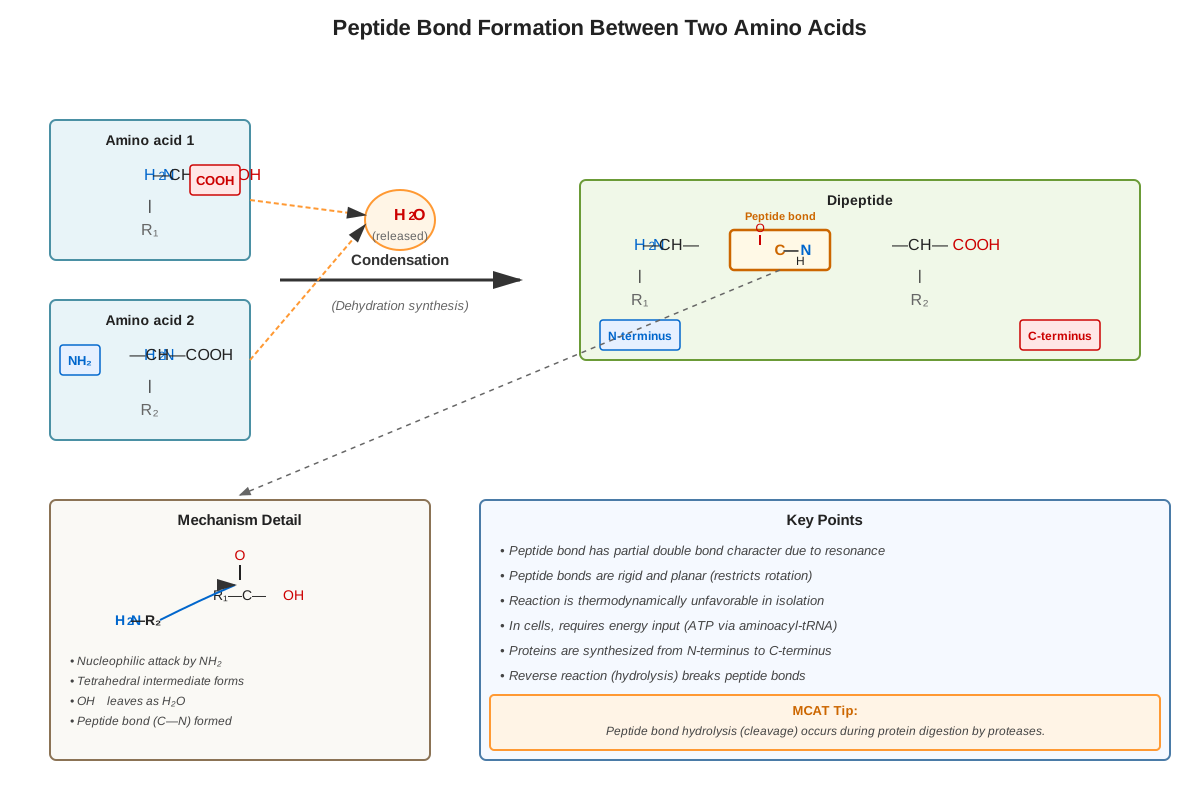
The general structure of amino acids enables their polymerization into peptides and proteins through peptide bond formation. This process involves a condensation reaction (also called dehydration synthesis) where the carboxyl group of one amino acid reacts with the amino group of another, releasing a water molecule:
R₁                    R₂                      R₁              R₂
|                     |                       |               |
H₂N-CH-COOH + H₂N-CH-COOH → H₂N-CH-CO-NH-CH-COOH + H₂O
The resulting peptide bond (also called an amide bond) has partial double-bond character due to resonance, restricting rotation around the C-N bond and creating a planar geometry. This structural constraint is fundamental to protein secondary structure formation. The peptide bond is written as -CO-NH- and represents the covalent linkage that creates the protein backbone.
In a peptide chain, the repeating unit of -N-Cα-C- forms the backbone, while the R groups project outward. The amino acid with the free amino group is called the N-terminus, and the amino acid with the free carboxyl group is called the C-terminus. By convention, peptide sequences are written from N-terminus to C-terminus, matching the direction of protein synthesis in cells.
Concept Relationships
The amino acid general structure serves as the foundational concept from which all protein biochemistry emerges. The tetrahedral geometry around the alpha carbon → determines stereochemical properties → which explains why only L-amino acids are incorporated into proteins → which influences protein folding patterns and biological activity.
The presence of both acidic (carboxyl) and basic (amino) functional groups → creates zwitterionic behavior → which determines solubility and ionization state → which affects protein charge distribution → which influences protein function, stability, and interactions with other molecules.
The variable R group → provides chemical diversity among amino acids → which enables specific side chain interactions → which drives protein folding and determines active site chemistry → which ultimately produces the vast functional repertoire of proteins.
The ability to form peptide bonds → enables polymerization of amino acids → which creates the primary structure of proteins → which serves as the template for secondary structure formation → which assembles into tertiary structure → which may combine into quaternary structure.
This topic connects backward to prerequisite knowledge of organic chemistry (functional groups, stereochemistry, acid-base chemistry) and forward to advanced topics including protein structure levels, enzyme mechanisms, protein purification techniques, and metabolic pathways involving amino acid synthesis and degradation. Understanding amino acid structure is essential for comprehending how mutations affect protein function, how pH affects enzyme activity, and how proteins can be separated using techniques like isoelectric focusing and chromatography.
Quick check — test yourself on Amino acid general structure so far.
Try Flashcards →High-Yield Facts
⭐ All amino acids except glycine have a chiral alpha carbon and exist as L-enantiomers in proteins
⭐ At physiological pH (~7.4), amino acids exist predominantly as zwitterions with -NH₃⁺ and -COO⁻ groups
⭐ The isoelectric point (pI) is the pH at which an amino acid has no net charge
⭐ Peptide bonds form through condensation reactions between the carboxyl group of one amino acid and the amino group of another, releasing water
⭐ The alpha carbon is the central carbon bonded to the amino group, carboxyl group, hydrogen, and R group
- The carboxyl group typically has a pKa between 1.8-2.9, while the amino group has a pKa between 8.8-10.8
- Glycine is the only achiral amino acid because its R group is a hydrogen atom
- Peptide bonds have partial double-bond character due to resonance, restricting rotation
- The general formula for an amino acid is H₂N-CHR-COOH in uncharged form
- Amino acids are amphoteric, meaning they can act as both acids and bases
Common Misconceptions
Misconception: Amino acids always exist in the uncharged form shown in textbook diagrams (H₂N-CHR-COOH).
Correction: At physiological pH, amino acids exist as zwitterions (⁺H₃N-CHR-COO⁻) with both charged groups. The uncharged form only predominates at extreme pH values that are not physiologically relevant.
Misconception: The alpha carbon is called "alpha" because it is the most important carbon in the molecule.
Correction: The "alpha" designation indicates positional relationship—the alpha carbon is the carbon immediately adjacent to (alpha to) the carboxyl carbon. This is standard organic chemistry nomenclature for describing carbon positions relative to functional groups.
Misconception: All amino acids have the same pKa values for their amino and carboxyl groups.
Correction: While the ranges are similar, each amino acid has slightly different pKa values depending on the electronic effects of the R group. Additionally, amino acids with ionizable side chains have additional pKa values that must be considered.
Misconception: D-amino acids and L-amino acids are different molecules with different names.
Correction: D and L refer to different stereoisomers (enantiomers) of the same amino acid. For example, D-alanine and L-alanine are both alanine, just mirror images of each other. Proteins in living organisms use L-amino acids almost exclusively.
Misconception: The peptide bond forms between the alpha carbons of two amino acids.
Correction: The peptide bond forms between the carboxyl carbon of one amino acid and the amino nitrogen of another amino acid. The alpha carbons are not directly involved in the bond formation, though they are part of the resulting peptide backbone structure.
Misconception: Glycine is not a "real" amino acid because it lacks chirality.
Correction: Glycine is absolutely a standard amino acid incorporated into proteins. Its lack of chirality (due to having hydrogen as its R group) is a unique property that gives it special conformational flexibility, making it functionally important in protein structures, particularly in tight turns and flexible regions.
Worked Examples
Example 1: Determining Ionization State at Different pH Values
Question: An amino acid with pKa₁ = 2.3 (carboxyl group) and pKa₂ = 9.7 (amino group) is dissolved in solutions at pH 1, pH 7, and pH 12. Describe the predominant ionization state and net charge at each pH.
Solution:
Step 1: Recall the Henderson-Hasselbalch principle—when pH < pKa, the protonated form predominates; when pH > pKa, the deprotonated form predominates.
At pH 1:
- pH (1) < pKa₁ (2.3): carboxyl group is protonated (-COOH)
- pH (1) < pKa₂ (9.7): amino group is protonated (-NH₃⁺)
- Structure: ⁺H₃N-CHR-COOH
- Net charge: +1 (one positive charge, no negative charges)
At pH 7:
- pH (7) > pKa₁ (2.3): carboxyl group is deprotonated (-COO⁻)
- pH (7) < pKa₂ (9.7): amino group is protonated (-NH₃⁺)
- Structure: ⁺H₃N-CHR-COO⁻ (zwitterion)
- Net charge: 0 (one positive and one negative charge cancel)
At pH 12:
- pH (12) > pKa₁ (2.3): carboxyl group is deprotonated (-COO⁻)
- pH (12) > pKa₂ (9.7): amino group is deprotonated (-NH₂)
- Structure: H₂N-CHR-COO⁻
- Net charge: -1 (no positive charges, one negative charge)
Key Insight: This example demonstrates how amino acids change their charge state with pH, which is fundamental to understanding protein behavior in different environments and techniques like electrophoresis. The isoelectric point for this amino acid would be (2.3 + 9.7)/2 = 6.0, the pH at which it has no net charge.
Example 2: Analyzing Peptide Bond Formation
Question: Two amino acids, alanine (R = -CH₃) and serine (R = -CH₂OH), undergo a condensation reaction to form a dipeptide. Draw the structure of the resulting dipeptide if alanine is at the N-terminus, identify the peptide bond, and calculate how many water molecules are released.
Solution:
Step 1: Write the zwitterionic structures of both amino acids:
Alanine: ⁺H₃N-CH(CH₃)-COO⁻
Serine: ⁺H₃N-CH(CH₂OH)-COO⁻
Step 2: Identify the reactive groups. The carboxyl group of alanine (N-terminal amino acid) will react with the amino group of serine (C-terminal amino acid).
Step 3: Form the peptide bond by removing -OH from alanine's carboxyl and -H from serine's amino group:
        CH₃                CH₂OH
         |                  |
⁺H₃N — CH — CO — NH — CH — COO⁻
              ↑
         peptide bond
Step 4: Count water molecules released. One condensation reaction releases one H₂O molecule (the -OH from the carboxyl and -H from the amino group combine to form water).
Answer: The dipeptide is alanyl-serine (Ala-Ser), with the peptide bond connecting the carbonyl carbon of alanine to the nitrogen of serine. One water molecule is released during formation.
Key Insight: This example illustrates the directionality of peptide synthesis (N-terminus to C-terminus) and the stoichiometry of peptide bond formation. For a protein with n amino acids, n-1 peptide bonds form, releasing n-1 water molecules. This concept connects to protein primary structure and the energetics of protein synthesis.
Exam Strategy
Question Recognition
MCAT questions on amino acid general structure often include trigger phrases such as "at physiological pH," "isoelectric point," "zwitterion," "peptide bond formation," "L-configuration," or "alpha carbon." Passages may present experimental data on protein purification, amino acid titrations, or structural modifications. When you see these triggers, immediately activate your mental model of the tetrahedral alpha carbon with its four substituents and consider ionization states.
Systematic Approach
- Identify the pH context: Always note the pH of the solution. Compare it to typical pKa values (carboxyl ~2-3, amino ~9-10) to determine ionization states.
- Draw the structure: For complex questions, quickly sketch the amino acid structure with correct charges. This prevents errors in reasoning about reactivity or charge.
- Consider stereochemistry: If the question involves configuration, draw or visualize a Fischer projection. Remember that L-amino acids have the amino group on the left in standard Fischer projection orientation.
- Track functional groups: Identify which functional groups are involved in the process being described (peptide bond formation, ionization, etc.).
Process of Elimination
- Eliminate answer choices showing amino acids with incorrect charges for the given pH
- Rule out options that place D-amino acids in natural proteins (with rare exceptions)
- Reject answers that show peptide bonds forming between incorrect atoms (e.g., between alpha carbons)
- Eliminate choices that violate tetrahedral geometry around the alpha carbon
- Discard options that show glycine as chiral or having an R group other than hydrogen
Time Management
Amino acid structure questions are typically quick points if you have the fundamentals mastered. Allocate 60-90 seconds for discrete questions and up to 2 minutes for passage-based questions requiring integration with experimental data. If a question asks you to predict behavior at multiple pH values, quickly jot down the ionization state at each pH rather than trying to hold all information mentally—this prevents errors and saves time on complex problems.
Exam Tip: When facing a question about amino acid charge or ionization, immediately write down the pKa values (~2 for carboxyl, ~9 for amino) and the given pH. This simple step prevents the most common errors on these high-yield questions.
Memory Techniques
The "CORN" Mnemonic for Chirality
To remember the four groups around the alpha carbon, use CORN:
- COOH (carboxyl group)
- Organic side chain (R group)
- R is also for R group (reinforcement)
- NH₂ (amino group)
- Plus the Hydrogen (making it CORNH, but CORN is easier to remember)
The "2-7-9" pH Rule
Remember 2-7-9 for amino acid ionization:
- At pH 2: carboxyl group is half-deprotonated (at its pKa)
- At pH 7: amino acid is zwitterionic (physiological pH)
- At pH 9: amino group is half-deprotonated (at its pKa)
This gives you reference points for predicting ionization states at any pH.
Zwitterion Visualization
Think of a zwitterion as a "molecular magnet" with positive and negative ends. This helps remember that zwitterions:
- Have high melting points (strong electrostatic interactions)
- Are very soluble in water (interact with polar solvent)
- Don't migrate in an electric field at their pI (no net charge)
L vs. D Configuration
"L"eft is "L"ife: In Fischer projections with COOH at the top, if the amino group is on the Left, it's an L-amino acid—the form found in Living organisms.
Peptide Bond Memory
"Can't Rotate": The peptide bond has partial double-bond character, so you Can't Rotate around it freely. This restriction is crucial for protein structure.
Summary
Amino acid general structure represents the fundamental architectural blueprint for all proteins, consisting of a central alpha carbon bonded to an amino group, a carboxyl group, a hydrogen atom, and a variable R group. At physiological pH, amino acids exist as zwitterions with both positive and negative charges, a property that profoundly influences their solubility, reactivity, and behavior in biological systems. All amino acids except glycine possess a chiral alpha carbon, and proteins exclusively incorporate L-amino acids, establishing the stereochemical foundation for protein structure. The ionization state of amino acids changes predictably with pH based on the pKa values of the carboxyl group (~2-3) and amino group (~9-10), with the isoelectric point representing the pH of zero net charge. Peptide bonds form through condensation reactions between the carboxyl group of one amino acid and the amino group of another, creating the covalent backbone of proteins while releasing water. This general structure enables the remarkable functional diversity of proteins while maintaining a consistent chemical framework that allows for polymerization and folding into complex three-dimensional structures essential for life.
Key Takeaways
- The amino acid general structure consists of a central alpha carbon bonded to -NH₂, -COOH, -H, and -R groups, with all except glycine being chiral
- At physiological pH (~7.4), amino acids exist as zwitterions (⁺H₃N-CHR-COO⁻) with no net charge
- L-amino acids, with the amino group on the left in Fischer projections, are the exclusive form in proteins
- Ionization state depends on pH relative to pKa values: carboxyl groups (pKa ~2-3) deprotonate before amino groups (pKa ~9-10)
- Peptide bonds form between the carboxyl carbon of one amino acid and the amino nitrogen of another, releasing water
- The isoelectric point (pI) is the pH at which an amino acid has no net charge, calculated as the average of relevant pKa values
- Understanding amino acid structure is essential for predicting protein behavior, enzyme mechanisms, and solving integrated MCAT questions
Related Topics
Amino Acid Classification: Building on general structure, this topic explores how different R groups create functional categories (nonpolar, polar, charged) that determine amino acid properties and protein behavior. Mastering general structure enables rapid classification and prediction of side chain chemistry.
Protein Primary Structure: The sequence of amino acids connected by peptide bonds constitutes primary structure. Understanding how individual amino acids link together through their general structural features is prerequisite to comprehending higher-order protein architecture.
Acid-Base Chemistry of Amino Acids: This advanced topic explores titration curves, buffering capacity, and the Henderson-Hasselbalch equation applied to amino acids. The general structure provides the foundation for understanding multiple ionization equilibria.
Protein Purification Techniques: Methods like isoelectric focusing, ion-exchange chromatography, and electrophoresis exploit the charge properties of amino acids. Knowledge of ionization states at different pH values is essential for understanding separation principles.
Stereochemistry in Biochemistry: The chirality of amino acids exemplifies broader principles of stereochemistry in biological molecules. This topic extends to carbohydrates, lipids, and drug design where stereochemical considerations are crucial.
Practice CTA
Now that you've mastered the foundational concepts of amino acid general structure, it's time to solidify your understanding through active practice. Challenge yourself with the practice questions and flashcards designed to test your ability to apply these concepts in exam-style scenarios. Focus on questions requiring you to predict ionization states, identify stereochemical configurations, and analyze peptide bond formation—these represent the highest-yield applications of this material on the MCAT. Remember, understanding amino acid structure is not just about memorizing a diagram; it's about developing the ability to predict molecular behavior and solve complex problems under time pressure. Your investment in mastering this foundational topic will pay dividends throughout your study of biochemistry and on test day. You've got this!
Sign up free to keep reading
Create a free AnvayaPrep account to finish this MCAT guide on Amino acid general structure — plus flashcards and practice questions.