Overview
Protein primary structure is the foundational level of protein organization and represents one of the most fundamental concepts in Biochemistry. It refers to the linear sequence of amino acids connected by peptide bonds in a polypeptide chain, reading from the N-terminus (amino terminus) to the C-terminus (carboxyl terminus). This seemingly simple concept carries profound implications: the primary structure directly determines all higher levels of protein organization (secondary, tertiary, and quaternary structures) and ultimately dictates protein function. A single amino acid substitution in the primary structure can lead to devastating diseases, as exemplified by sickle cell anemia, where a single glutamate-to-valine substitution in hemoglobin causes red blood cells to adopt an abnormal shape.
For the MCAT, understanding protein primary structure is absolutely essential because it serves as the conceptual foundation for all protein-related questions in the Biochemistry section. The exam frequently tests not only the definition and characteristics of primary structure but also how mutations affect protein function, how to interpret experimental data about protein sequencing, and how primary structure relates to protein stability and disease states. Questions may appear as discrete items testing fundamental knowledge or embedded within passages describing genetic mutations, protein purification techniques, or clinical scenarios involving protein dysfunction.
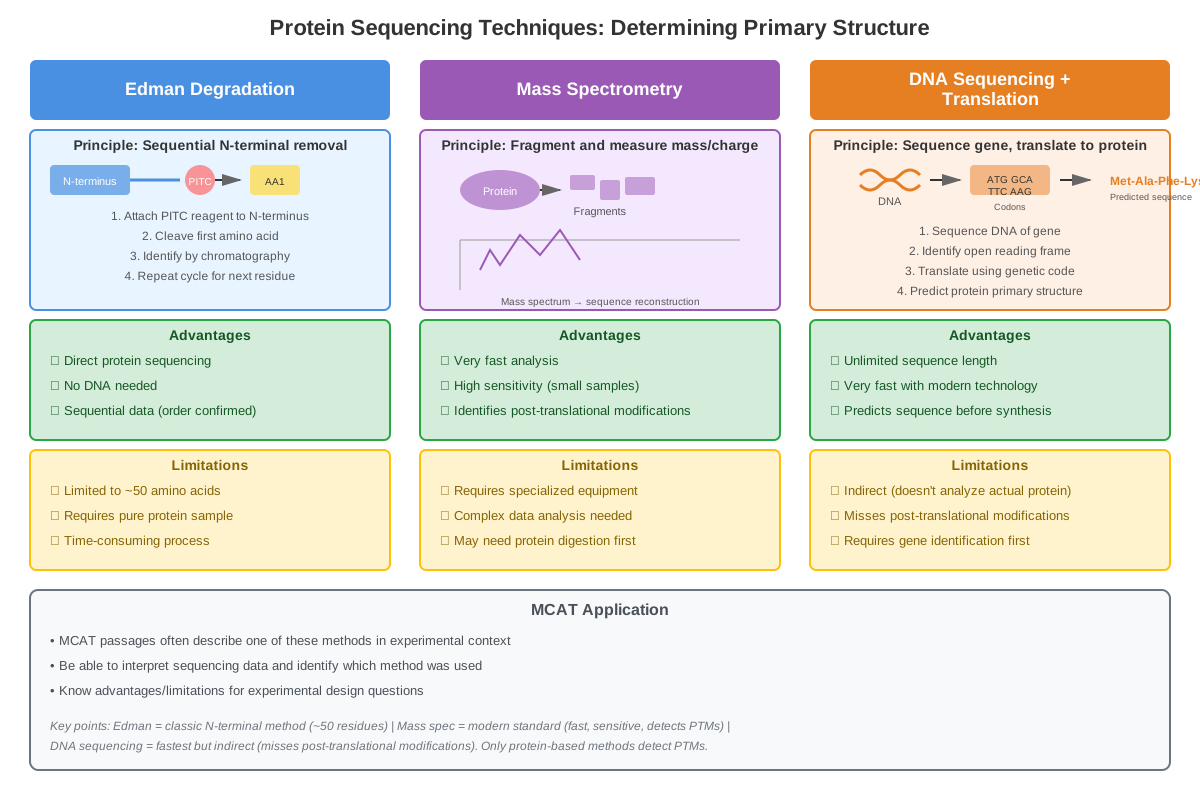
Within the broader context of Amino Acids and Proteins, primary structure represents the critical link between genetic information (DNA/RNA sequences) and functional proteins. The central dogma of molecular biology—DNA to RNA to protein—culminates in the synthesis of a polypeptide chain with a specific primary structure. This structure then spontaneously folds (or is assisted in folding) into its functional three-dimensional conformation. Understanding primary structure enables students to grasp how genetic mutations translate into phenotypic changes, how proteins are synthesized and processed, and how biochemical techniques like Edman degradation and mass spectrometry can determine amino acid sequences.
Learning Objectives
- [ ] Define Protein primary structure using accurate Biochemistry terminology
- [ ] Explain why Protein primary structure matters for the MCAT
- [ ] Apply Protein primary structure to exam-style questions
- [ ] Identify common mistakes related to Protein primary structure
- [ ] Connect Protein primary structure to related Biochemistry concepts
- [ ] Describe the chemical nature of peptide bonds and their role in stabilizing primary structure
- [ ] Predict the effects of specific amino acid substitutions on protein function based on chemical properties
- [ ] Interpret experimental data from protein sequencing techniques to determine primary structure
Prerequisites
- Amino acid structure and classification: Understanding the 20 standard amino acids, their side chain properties (polar, nonpolar, charged), and one/three-letter abbreviations is essential because primary structure is composed of these building blocks
- Peptide bond formation: Knowledge of condensation reactions between amino acids is necessary to understand how primary structure is assembled and why it has directionality
- Basic organic chemistry: Familiarity with carboxyl groups, amino groups, and amide bonds provides the chemical foundation for understanding peptide bond characteristics
- Central dogma of molecular biology: Understanding DNA → RNA → protein flow explains how primary structure is encoded genetically and synthesized through translation
Why This Topic Matters
Clinical and Real-World Significance
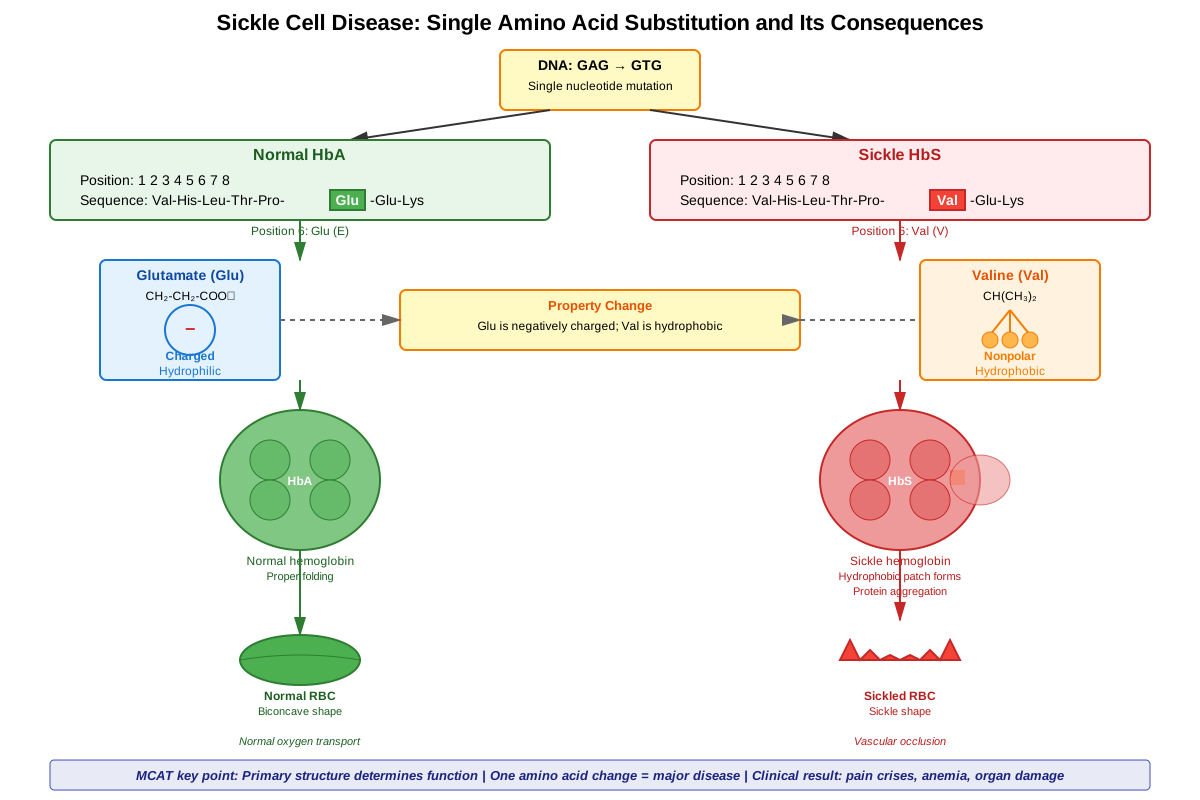
Protein primary structure has profound clinical implications that extend far beyond academic interest. Sickle cell disease, one of the most well-studied genetic disorders, results from a single nucleotide mutation that causes a single amino acid substitution (Glu6Val) in the β-globin chain of hemoglobin. This seemingly minor change in primary structure causes hemoglobin molecules to polymerize under low oxygen conditions, distorting red blood cells into a sickle shape and leading to vascular occlusion, pain crises, and organ damage. Similarly, cystic fibrosis often results from deletion of phenylalanine at position 508 (ΔF508) in the CFTR protein, disrupting protein folding and function. These examples demonstrate that primary structure is not merely a descriptive feature but a critical determinant of health and disease.
Pharmaceutical development heavily relies on understanding protein primary structure. Insulin, one of the first proteins to be sequenced (by Frederick Sanger, who won the Nobel Prize for this work), must maintain its precise primary structure to function properly. Recombinant DNA technology allows production of human insulin with the exact primary structure needed for therapeutic use. Additionally, understanding primary structure enables development of protease inhibitors (like those used in HIV treatment) that target specific amino acid sequences in viral proteins.
MCAT Exam Statistics and Question Types
Protein primary structure MCAT questions appear with high frequency across multiple question formats. Approximately 15-20% of Biochemistry questions involve protein structure, with primary structure serving as the foundation for many of these items. The topic appears in:
- Discrete questions testing definitions, peptide bond characteristics, and N-to-C directionality
- Passage-based questions involving genetic mutations and their effects on protein function
- Experimental passages describing protein sequencing techniques (Edman degradation, mass spectrometry)
- Clinical vignettes connecting amino acid substitutions to disease phenotypes
- Data interpretation questions requiring analysis of amino acid sequences or mutation effects
Common question stems include: "Which of the following best describes the primary structure of a protein?", "A mutation replacing amino acid X with amino acid Y would most likely affect...", and "The technique described in the passage determines protein structure by..."
Common Exam Passage Contexts
MCAT passages frequently embed primary structure concepts within:
- Genetic mutation studies examining single nucleotide polymorphisms (SNPs)
- Protein engineering experiments modifying specific amino acids
- Evolutionary biology passages comparing homologous proteins across species
- Biochemical technique descriptions for protein sequencing or identification
- Disease mechanism passages explaining how mutations cause pathology
Core Concepts
Definition and Chemical Basis
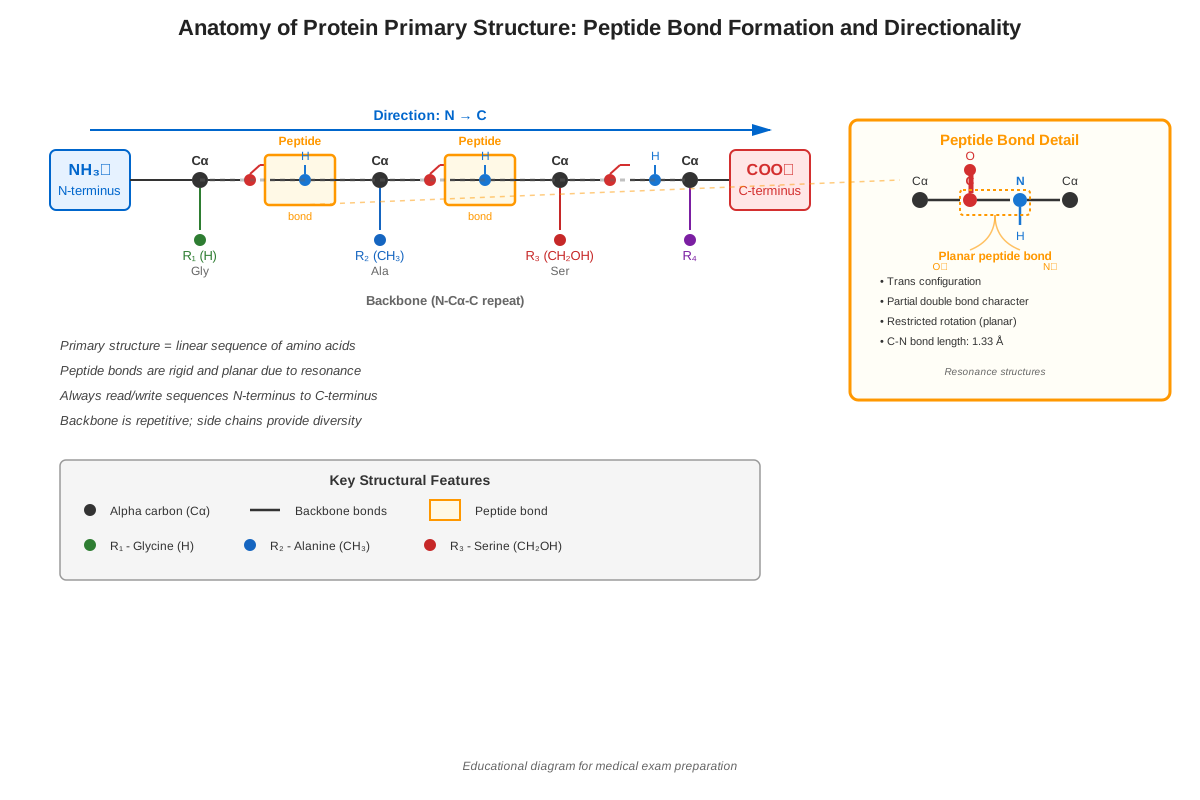
Protein primary structure is defined as the linear sequence of amino acids in a polypeptide chain, connected by peptide bonds, with a specific directionality from the N-terminus (amino-terminal end) to the C-terminus (carboxyl-terminal end). This structure represents the covalent backbone of the protein and is directly encoded by the genetic sequence in DNA.
The peptide bond itself is a specialized amide bond formed through a condensation reaction (dehydration synthesis) between the carboxyl group (-COOH) of one amino acid and the amino group (-NH₂) of another. This reaction releases one water molecule and creates a C-N bond with partial double-bond character due to resonance. The resonance structure restricts rotation around the peptide bond, keeping the C, O, N, and H atoms in a planar configuration. This planarity has important implications for protein folding and is a key structural feature tested on the MCAT.
Amino Acid 1 + Amino Acid 2 → Dipeptide + H₂O
R₁-CH(NH₂)-COOH + H-NH-CH(R₂)-COOH → R₁-CH(NH₂)-CO-NH-CH(R₂)-COOH + H₂O
Directionality: N-terminus to C-terminus
Every polypeptide chain has inherent directionality, which is crucial for both protein synthesis and function. By convention, protein sequences are always written and read from the N-terminus to the C-terminus. The N-terminus features a free amino group (or a modified amino group), while the C-terminus has a free carboxyl group (or modified carboxyl group).
This directionality matters because:
- Protein synthesis occurs in the N-to-C direction during translation at the ribosome
- Protein sequencing techniques like Edman degradation proceed from the N-terminus
- Functional domains are described by their position relative to the N- or C-terminus
- Post-translational modifications often occur at specific positions relative to the termini
On the MCAT, questions may test whether students understand that "Ala-Ser-Gly" is different from "Gly-Ser-Ala" because the order matters and the directionality is implied (N-to-C unless otherwise stated).
Peptide Bond Characteristics
The peptide bond possesses several distinctive characteristics that are frequently tested:
| Property | Description | MCAT Relevance |
|---|---|---|
| Partial double-bond character | Resonance between C=O and C-N creates ~40% double-bond character | Explains restricted rotation and planar configuration |
| Trans configuration | Most peptide bonds adopt trans configuration (except before proline) | Affects protein folding patterns |
| Planar geometry | Six atoms (Cα-C-O-N-H-Cα) lie in same plane | Limits conformational flexibility |
| Stability | Resistant to hydrolysis under physiological conditions | Explains why proteins are stable structures |
| Hydrolysis | Can be broken by proteases or harsh conditions (acid/base) | Relevant for protein digestion and degradation |
The partial double-bond character arises from resonance:
    O⁻           O
    ‖            ‖
-C-N-H  ↔  -C=N⁺-H
This resonance stabilizes the peptide bond and makes it shorter than a typical C-N single bond but longer than a C=N double bond.
Amino Acid Sequence Determines Everything
A fundamental principle in Biochemistry is that primary structure determines all higher levels of protein structure. This concept, established by Christian Anfinsen's famous ribonuclease refolding experiments, demonstrates that the amino acid sequence contains all the information necessary for a protein to fold into its native three-dimensional structure.
The sequence determines:
- Secondary structure: Certain amino acid sequences favor α-helix or β-sheet formation
- Tertiary structure: Hydrophobic residues cluster in the core; charged residues often appear on the surface
- Quaternary structure: Specific sequences enable subunit recognition and assembly
- Protein function: Active site residues must be positioned correctly through proper folding
- Protein stability: Distribution of stabilizing interactions (hydrogen bonds, disulfide bonds, ionic interactions)
This principle explains why genetic mutations affecting primary structure can have cascading effects on protein function. A single amino acid change can disrupt folding, destabilize the structure, or directly impair the active site.
Genetic Encoding of Primary Structure
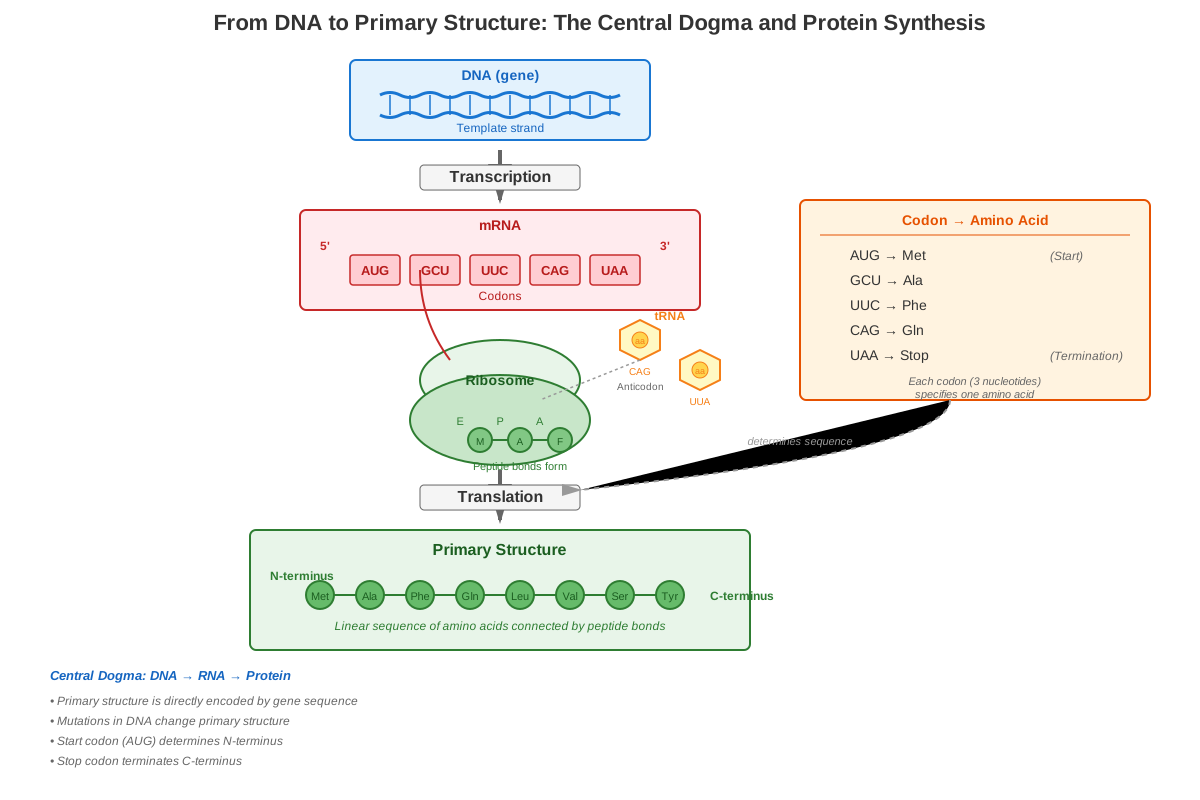
The primary structure is directly encoded in the genetic material through the sequence of codons in mRNA, which is transcribed from DNA. Each codon (three nucleotides) specifies one amino acid, and the linear sequence of codons determines the linear sequence of amino acids. This direct correspondence means:
- Point mutations (single nucleotide changes) can cause amino acid substitutions
- Frameshift mutations (insertions/deletions not divisible by 3) alter the entire downstream sequence
- Nonsense mutations (creating stop codons) truncate the protein
- Silent mutations (not changing the amino acid due to codon degeneracy) don't affect primary structure
For the MCAT, understanding this connection enables students to predict how genetic changes affect protein structure and function, a common question type in both Biochemistry and Biology sections.
Post-Translational Modifications
While primary structure refers to the sequence of amino acids as encoded genetically, many proteins undergo post-translational modifications (PTMs) that alter specific amino acids after translation. These modifications technically become part of the protein's primary structure in its mature, functional form:
- Phosphorylation: Addition of phosphate groups to serine, threonine, or tyrosine
- Glycosylation: Addition of carbohydrate groups to asparagine (N-linked) or serine/threonine (O-linked)
- Acetylation: Addition of acetyl groups, often to lysine residues
- Methylation: Addition of methyl groups to lysine or arginine
- Disulfide bond formation: Covalent bonds between cysteine residues (technically affects tertiary structure but involves primary structure residues)
- Proteolytic cleavage: Removal of signal sequences or activation of zymogens
These modifications can dramatically affect protein function, localization, and stability. For example, insulin is synthesized as preproinsulin, then processed through proteolytic cleavage to remove the signal peptide and C-peptide, yielding the mature two-chain insulin molecule connected by disulfide bonds.
Concept Relationships
The concepts within protein primary structure form an interconnected network of ideas. The amino acid sequence (primary structure) is established through peptide bond formation, which occurs during translation following the genetic code. This sequence has inherent directionality (N-to-C), which determines how the protein is synthesized and processed. The chemical properties of peptide bonds (planarity, stability, trans configuration) constrain how the polypeptide chain can fold, while the specific amino acids in the sequence determine the folding pattern through their chemical properties (hydrophobic, hydrophilic, charged, etc.).
The relationship map flows as follows:
DNA sequence → (transcription) → mRNA sequence → (translation) → Amino acid sequence (Primary Structure) → (spontaneous folding) → Secondary Structure → Tertiary Structure → Quaternary Structure → Functional Protein
Mutations in DNA alter the amino acid sequence, which can disrupt folding and function. Post-translational modifications add another layer of complexity, modifying the primary structure after initial synthesis.
Primary structure connects to prerequisite topics:
- Amino acid structure provides the building blocks that compose primary structure
- Peptide bond chemistry explains how amino acids link together
- Central dogma explains how primary structure is encoded and synthesized
Primary structure connects to related topics:
- Secondary structure (α-helices and β-sheets) forms from specific primary sequences
- Tertiary structure represents the three-dimensional folding determined by primary structure
- Protein folding is the process by which primary structure achieves its functional conformation
- Enzyme function depends on correct primary structure to form active sites
- Genetic mutations directly alter primary structure with functional consequences
Quick check — test yourself on Protein primary structure so far.
Try Flashcards →High-Yield Facts
⭐ Primary structure is the linear sequence of amino acids connected by peptide bonds, read from N-terminus to C-terminus
⭐ Peptide bonds have partial double-bond character due to resonance, restricting rotation and creating a planar configuration
⭐ Primary structure directly determines all higher levels of protein structure (secondary, tertiary, quaternary)
⭐ A single amino acid substitution can cause disease (e.g., Glu6Val in sickle cell anemia)
⭐ Protein synthesis proceeds in the N-to-C direction during translation
- The peptide bond is formed through condensation (dehydration synthesis), releasing one water molecule per bond
- Most peptide bonds adopt the trans configuration, except before proline residues which often adopt cis
- Edman degradation sequences proteins from the N-terminus, removing one amino acid at a time
- Disulfide bonds between cysteine residues can link different parts of the primary structure, stabilizing the folded protein
- Post-translational modifications (phosphorylation, glycosylation, acetylation) alter the primary structure after translation
- The genetic code's degeneracy means some mutations don't change primary structure (silent mutations)
- Proteolytic cleavage can activate proteins (e.g., trypsinogen → trypsin) or remove signal sequences
- Primary structure is stabilized by covalent peptide bonds, while higher structures rely on non-covalent interactions
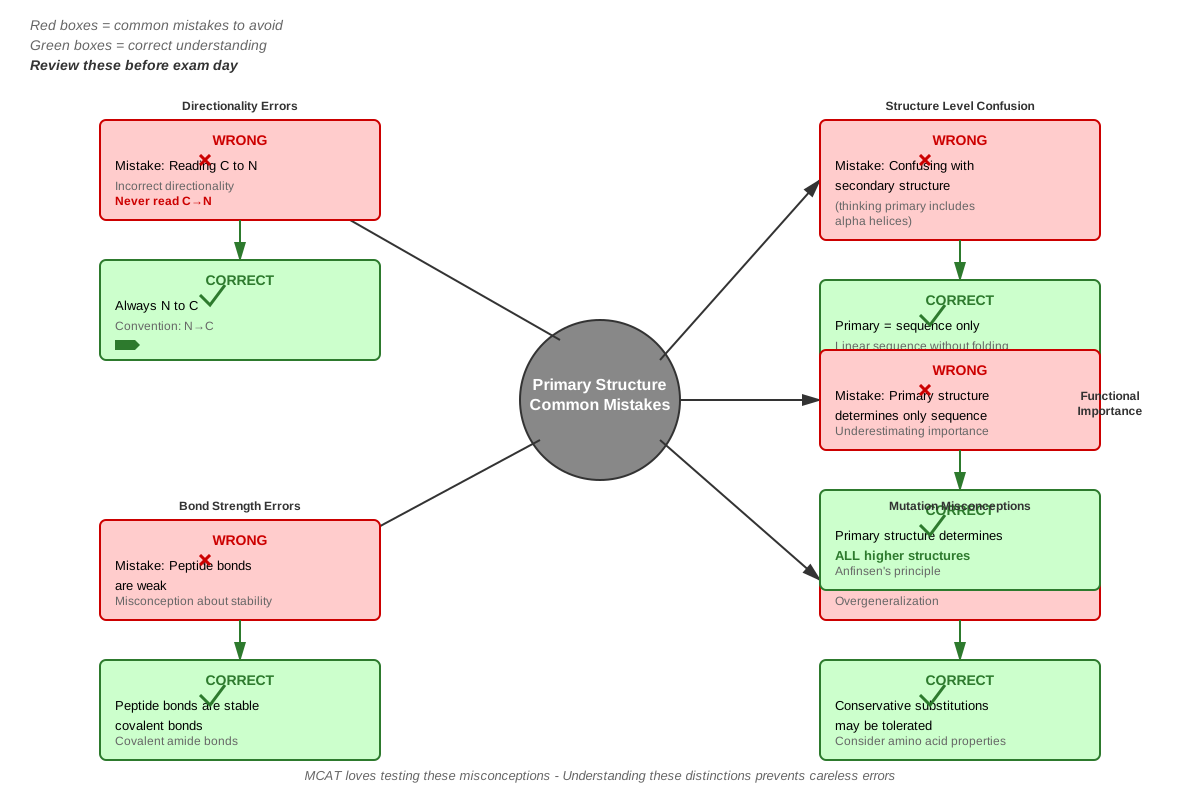
Common Misconceptions
Misconception: Primary structure includes hydrogen bonds between amino acids in the backbone
Correction: Primary structure refers only to the covalent peptide bonds linking amino acids in sequence. Hydrogen bonds between backbone atoms define secondary structure (α-helices and β-sheets), not primary structure. The only covalent bonds in primary structure are peptide bonds and disulfide bridges between cysteines.
Misconception: The sequence "Ala-Ser-Gly" is the same as "Gly-Ser-Ala"
Correction: These are completely different sequences because protein primary structure has directionality. "Ala-Ser-Gly" means Ala is at the N-terminus and Gly at the C-terminus, while "Gly-Ser-Ala" has the reverse orientation. This directionality is crucial for protein function and is always implied to be N-to-C unless explicitly stated otherwise.
Misconception: All amino acid substitutions in primary structure cause disease
Correction: Many amino acid substitutions are neutral or have minimal effects, especially when replacing one amino acid with another of similar chemical properties (conservative substitutions, like leucine for isoleucine). Disease-causing mutations typically involve substitutions that dramatically change chemical properties (charged for nonpolar, for example) or occur at functionally critical positions like active sites.
Misconception: Peptide bonds can freely rotate like single bonds
Correction: Peptide bonds have approximately 40% double-bond character due to resonance, which restricts rotation around the C-N bond. This creates a planar configuration for the six atoms in the peptide unit (Cα-C-O-N-H-Cα). Only the bonds to the α-carbon (phi and psi angles) can rotate freely, which is why Ramachandran plots are useful for analyzing allowed conformations.
Misconception: Primary structure is determined by protein folding
Correction: This reverses the actual relationship. Primary structure (amino acid sequence) determines how the protein folds, not the other way around. The sequence is encoded genetically and established during translation. Anfinsen's experiments demonstrated that denatured proteins can spontaneously refold into their native structure based solely on their primary structure, proving that the sequence contains all necessary folding information.
Misconception: Disulfide bonds are not part of primary structure
Correction: This is partially true but nuanced. The cysteine residues themselves are definitely part of the primary structure (the amino acid sequence). The disulfide bonds formed between cysteines are covalent modifications that some sources consider part of primary structure (as covalent bonds) while others classify them as tertiary structure features (as they connect distant parts of the chain). For the MCAT, recognize that disulfide bonds are covalent links between specific cysteines in the primary sequence.
Worked Examples
Example 1: Analyzing a Mutation's Effect on Primary Structure
Question: A genetic mutation changes codon 6 in the β-globin gene from GAG to GTG. This mutation is responsible for sickle cell disease. Which of the following best describes the effect of this mutation on the primary structure of β-globin?
A) The mutation changes glutamate (acidic) to valine (nonpolar), altering the primary structure
B) The mutation disrupts hydrogen bonding in the α-helix, affecting secondary structure only
C) The mutation prevents proper protein folding but doesn't change primary structure
D) The mutation creates a frameshift that alters all downstream amino acids
Solution:
Step 1: Identify what the mutation does at the DNA/RNA level
- GAG codes for glutamate (Glu, E)
- GTG codes for valine (Val, V)
- This is a point mutation (single nucleotide change) that changes one codon
Step 2: Determine the effect on primary structure
- Primary structure is the amino acid sequence
- Changing one codon changes one amino acid in the sequence
- This is a substitution: Glu6 → Val6
Step 3: Analyze the chemical nature of the change
- Glutamate is acidic (negatively charged at physiological pH)
- Valine is nonpolar and hydrophobic
- This represents a dramatic change in chemical properties
Step 4: Evaluate each answer choice
- A) Correct - accurately describes the amino acid substitution and notes it changes primary structure
- B) Incorrect - while secondary structure may be affected downstream, the primary change is to primary structure
- C) Incorrect - the mutation definitely changes primary structure (the sequence)
- D) Incorrect - this is a point mutation, not a frameshift (which requires insertion/deletion not divisible by 3)
Answer: A
Key Takeaway: Point mutations that change codons alter primary structure by substituting amino acids. The severity of functional effects depends on the chemical nature of the substitution and the location in the protein.
Example 2: Interpreting Protein Sequencing Data
Question: A researcher uses Edman degradation to sequence an unknown pentapeptide. The amino acids are released in the following order: Glycine, Alanine, Serine, Cysteine, Tyrosine. What is the correct primary structure of this peptide?
A) Tyr-Cys-Ser-Ala-Gly
B) Gly-Ala-Ser-Cys-Tyr
C) GASCY
D) Both B and C are correct
Solution:
Step 1: Understand Edman degradation
- Edman degradation sequences proteins from the N-terminus
- It removes and identifies one amino acid at a time, starting from the N-terminal end
- The order of release indicates the order from N-terminus to C-terminus
Step 2: Determine the sequence
- First released: Glycine (N-terminus)
- Second: Alanine
- Third: Serine
- Fourth: Cysteine
- Fifth: Tyrosine (C-terminus)
- Sequence: Gly-Ala-Ser-Cys-Tyr (N-to-C)
Step 3: Evaluate answer choices
- A) Incorrect - this is the reverse sequence (C-to-N)
- B) Correct - properly shows the sequence with three-letter codes and hyphens
- C) Correct - uses one-letter codes (G=Gly, A=Ala, S=Ser, C=Cys, Y=Tyr)
- D) Correct - both B and C represent the same sequence using different notation conventions
Answer: D
Key Takeaway: Edman degradation releases amino acids from the N-terminus sequentially. Protein sequences can be written with three-letter codes (Gly-Ala-Ser) or one-letter codes (GAS), both reading N-to-C. Understanding experimental techniques for determining primary structure is high-yield for the MCAT.
Exam Strategy
Approaching MCAT Questions on Primary Structure
When encountering protein primary structure MCAT questions, follow this systematic approach:
- Identify the question type: Is it asking about definition, mutation effects, sequencing techniques, or structure-function relationships?
- Check for directionality clues: Always assume N-to-C direction unless explicitly stated otherwise. Watch for questions that test whether you understand that sequence order matters.
- For mutation questions:
- Determine if it's a point mutation (substitution), insertion, deletion, or frameshift
- Consider the chemical properties of the original and substituted amino acids
- Assess whether the location is likely critical (active site, structural region)
- For technique questions:
- Edman degradation = N-terminal sequencing
- Mass spectrometry = molecular weight determination
- Proteolytic digestion = cutting at specific sequences
Trigger Words and Phrases
Watch for these high-yield trigger words that signal primary structure concepts:
- "Amino acid sequence" → directly refers to primary structure
- "Peptide bond" → the covalent linkage defining primary structure
- "N-terminus" or "C-terminus" → indicates directionality questions
- "Point mutation" or "substitution" → changes one amino acid in primary structure
- "Frameshift" → alters entire downstream primary structure
- "Edman degradation" → N-terminal sequencing technique
- "Conservative substitution" → replacing with similar amino acid (less likely to disrupt function)
- "Non-conservative substitution" → replacing with chemically different amino acid (more likely to disrupt)
Process of Elimination Tips
For primary structure questions, eliminate answers that:
- Confuse primary structure with secondary/tertiary structure (e.g., claiming hydrogen bonds define primary structure)
- Reverse the N-to-C directionality
- Claim all mutations are equally harmful (conservative vs. non-conservative matters)
- Suggest primary structure is determined by folding (it's the opposite)
- Confuse point mutations with frameshifts
Time Allocation
Primary structure questions are typically straightforward and should be answered quickly:
- Discrete questions: 30-45 seconds (definition and basic concept questions)
- Passage-based questions: 60-90 seconds (may require integrating passage information about mutations or techniques)
- If a question requires more than 90 seconds, flag it and return later—you may be overthinking
Memory Techniques
Mnemonics
"Never Cry" - Remember that protein sequences are written N-terminus to C-terminus (Never Cry = N to C)
"PEPTIDE = Planar, Except Proline, Trans Is Default, Inflexible Due to Electrons" - Remembers key peptide bond characteristics:
- Planar configuration
- Except before proline (can be cis)
- Trans is the default configuration
- Inflexible (restricted rotation)
- Due to resonance electrons
"Primary = Peptide bonds" - Both start with P, helping remember that primary structure is defined by peptide bonds only
Visualization Strategies
The Chain Analogy: Visualize primary structure as a chain of beads, where each bead is an amino acid and the string connecting them is the peptide bond. The chain has a beginning (N-terminus) and an end (C-terminus), and the order of beads matters. This helps remember that primary structure is linear and sequential.
The Recipe Analogy: Think of primary structure as a recipe's ingredient list. Just as "flour, eggs, sugar" produces a different result than "sugar, eggs, flour" even with the same ingredients, the order of amino acids determines the final protein product. This reinforces that sequence order is critical.
The Resonance Hybrid: Draw the resonance structures of the peptide bond multiple times until you can visualize the electron delocalization that creates partial double-bond character. This visual memory helps recall why peptide bonds are planar and rigid.
Acronyms
SICKLE - Remember the classic example of primary structure importance:
- Single amino acid change
- In β-globin
- Causes
- Kinked (sickled) red blood cells
- Leading to
- Erythrocyte dysfunction
Summary
Protein primary structure represents the foundational level of protein organization, defined as the linear sequence of amino acids connected by peptide bonds, reading from N-terminus to C-terminus. This structure is directly encoded by genetic information and established during translation at the ribosome. The peptide bonds linking amino acids possess partial double-bond character due to resonance, creating a planar, rigid configuration that constrains protein folding. Primary structure is unique in being the only level of protein structure stabilized by covalent bonds (peptide bonds and disulfide bridges), making it more stable than higher-order structures that rely on non-covalent interactions. The amino acid sequence contains all information necessary for proper protein folding, as demonstrated by Anfinsen's experiments, meaning that primary structure ultimately determines secondary, tertiary, and quaternary structures, and therefore protein function. Single amino acid substitutions can have profound effects on protein function and cause disease, as exemplified by sickle cell anemia. Understanding primary structure is essential for interpreting genetic mutations, protein sequencing data, and structure-function relationships—all high-yield topics for the MCAT.
Key Takeaways
- Primary structure is the linear amino acid sequence connected by peptide bonds, always read N-terminus to C-terminus
- Peptide bonds have partial double-bond character from resonance, creating planar geometry and restricted rotation
- Primary structure directly determines all higher levels of protein structure and ultimately protein function
- Single amino acid substitutions can cause disease when they alter critical residues or dramatically change chemical properties
- Protein synthesis and sequencing both proceed in the N-to-C direction
- Primary structure is encoded genetically, with each codon specifying one amino acid in the sequence
- Understanding primary structure enables prediction of mutation effects, interpretation of sequencing data, and analysis of structure-function relationships—all common MCAT question types
Related Topics
Secondary Structure (α-helices and β-sheets): After mastering primary structure, the next level involves understanding how the polypeptide backbone folds into regular, repeating patterns stabilized by hydrogen bonds. Secondary structure emerges from the primary sequence based on amino acid properties.
Tertiary Structure: The three-dimensional folding of the entire polypeptide chain, determined by interactions between amino acid side chains in the primary structure. This topic builds directly on understanding how primary structure dictates overall protein shape.
Protein Folding and Denaturation: Explores the process by which primary structure achieves its functional conformation and what happens when proteins lose their three-dimensional structure. Anfinsen's experiments on ribonuclease refolding are central to this topic.
Genetic Mutations and Disease: Examines how changes in DNA sequence alter primary structure and cause disease. Sickle cell anemia, cystic fibrosis, and other genetic disorders provide clinical context for primary structure concepts.
Protein Sequencing Techniques: Detailed study of Edman degradation, mass spectrometry, and other methods for determining primary structure. Understanding these techniques is valuable for passage-based questions.
Post-Translational Modifications: Explores how proteins are modified after translation through phosphorylation, glycosylation, proteolytic cleavage, and other processes that alter the mature protein's primary structure.
Practice CTA
Now that you've mastered the fundamentals of protein primary structure, it's time to reinforce your understanding through active practice. Complete the associated practice questions to test your ability to apply these concepts to MCAT-style scenarios. Work through the flashcards to solidify high-yield facts and ensure rapid recall on test day. Remember, understanding primary structure is not just about memorizing definitions—it's about recognizing how this foundational concept connects to protein function, genetic mutations, and disease mechanisms. Every question you practice strengthens your ability to think like a biochemist and approach MCAT passages with confidence. You've built a solid foundation; now apply it!
Sign up free to keep reading
Create a free AnvayaPrep account to finish this MCAT guide on Protein primary structure — plus flashcards and practice questions.