Overview
Amino acid one letter codes represent a standardized shorthand notation system used throughout Biochemistry to efficiently communicate amino acid sequences in proteins and peptides. This symbolic language assigns a single alphabetic character to each of the 20 standard amino acids, enabling scientists and medical professionals to write protein sequences compactly without spelling out full amino acid names. For MCAT preparation, mastering these codes is not merely an exercise in memorization—it represents a fundamental literacy requirement for interpreting experimental data, analyzing protein structures, and understanding biochemical passages that appear throughout the exam.
The MCAT frequently presents amino acid sequences using one-letter codes in passages describing protein structure, enzyme active sites, mutation effects, and experimental techniques like gel electrophoresis or mass spectrometry. Questions may ask students to identify amino acid properties based on sequences written in this notation, predict the effects of point mutations described by single-letter substitutions (e.g., "G12V mutation"), or interpret Western blot results showing protein size changes. Without fluency in this symbolic system, students waste precious exam time decoding sequences or may misinterpret critical information entirely.
Within the broader context of Amino Acids and Proteins, one-letter codes serve as the bridge between molecular structure and functional analysis. They connect foundational knowledge of amino acid chemistry—including side chain properties, charge states, and hydrophobicity—to higher-order concepts like protein folding, enzyme catalysis, and post-translational modifications. This topic integrates seamlessly with protein structure hierarchies, peptide bond formation, and the genetic code, making it a central node in the conceptual network of Biochemistry MCAT content.
Learning Objectives
- [ ] Define amino acid one letter codes using accurate Biochemistry terminology
- [ ] Explain why amino acid one letter codes matter for the MCAT
- [ ] Apply amino acid one letter codes to exam-style questions
- [ ] Identify common mistakes related to amino acid one letter codes
- [ ] Connect amino acid one letter codes to related Biochemistry concepts
- [ ] Rapidly convert between three-letter codes, one-letter codes, and full amino acid names for all 20 standard amino acids
- [ ] Categorize amino acids by chemical properties when presented in one-letter code format
- [ ] Interpret mutation nomenclature using one-letter codes (e.g., R117H) and predict biochemical consequences
Prerequisites
- Basic amino acid structure: Understanding of the general amino acid backbone (amino group, carboxyl group, alpha carbon, R group) provides the foundation for recognizing why different amino acids receive distinct codes
- Amino acid classification: Knowledge of grouping amino acids by side chain properties (nonpolar, polar, acidic, basic, aromatic) enables rapid property identification from one-letter codes
- Protein primary structure: Familiarity with peptide bonds and linear amino acid sequences establishes context for why compact notation systems are necessary
- The genetic code: Understanding codon-to-amino-acid translation helps explain some one-letter code assignments and connects protein sequences to DNA/RNA sequences
Why This Topic Matters
Clinical and Research Significance
In medical practice and biomedical research, one-letter amino acid codes appear ubiquitously in genetic testing reports, protein databases, and scientific literature. Clinicians encounter mutation nomenclature like "CFTR ΔF508" (deletion of phenylalanine at position 508 in cystic fibrosis) or "hemoglobin S E6V" (glutamic acid to valine substitution causing sickle cell disease). Pharmaceutical researchers use these codes to describe drug targets, design peptide therapeutics, and communicate structure-activity relationships. Bioinformatics tools, protein databases (UniProt, PDB), and sequence alignment software exclusively use one-letter codes for computational efficiency.
MCAT Exam Statistics
Amino acid one-letter codes appear in approximately 15-20% of Biochemistry passages on the MCAT, with direct or indirect testing in 8-12% of all Biological and Biochemical Foundations section questions. The AAMC consistently includes these codes in:
- Experimental passages describing site-directed mutagenesis experiments
- Protein structure questions showing partial sequences and asking about properties
- Genetics passages connecting DNA mutations to protein changes
- Enzyme mechanism questions identifying catalytic residues in active sites
- Discrete questions testing amino acid classification and properties
Common Exam Presentations
The MCAT presents one-letter codes in multiple formats: sequence alignments comparing wild-type and mutant proteins, figures showing protein domains with labeled residues, tables of experimental conditions listing amino acid substitutions, and passage text describing specific residues critical for protein function. Questions may require students to identify which amino acid in a sequence is most likely phosphorylated, determine the net charge of a peptide at physiological pH, or predict how a mutation affects protein stability—all requiring instant recognition of amino acid properties from single-letter codes.
Core Concepts
The Standard 20 Amino Acids and Their One-Letter Codes
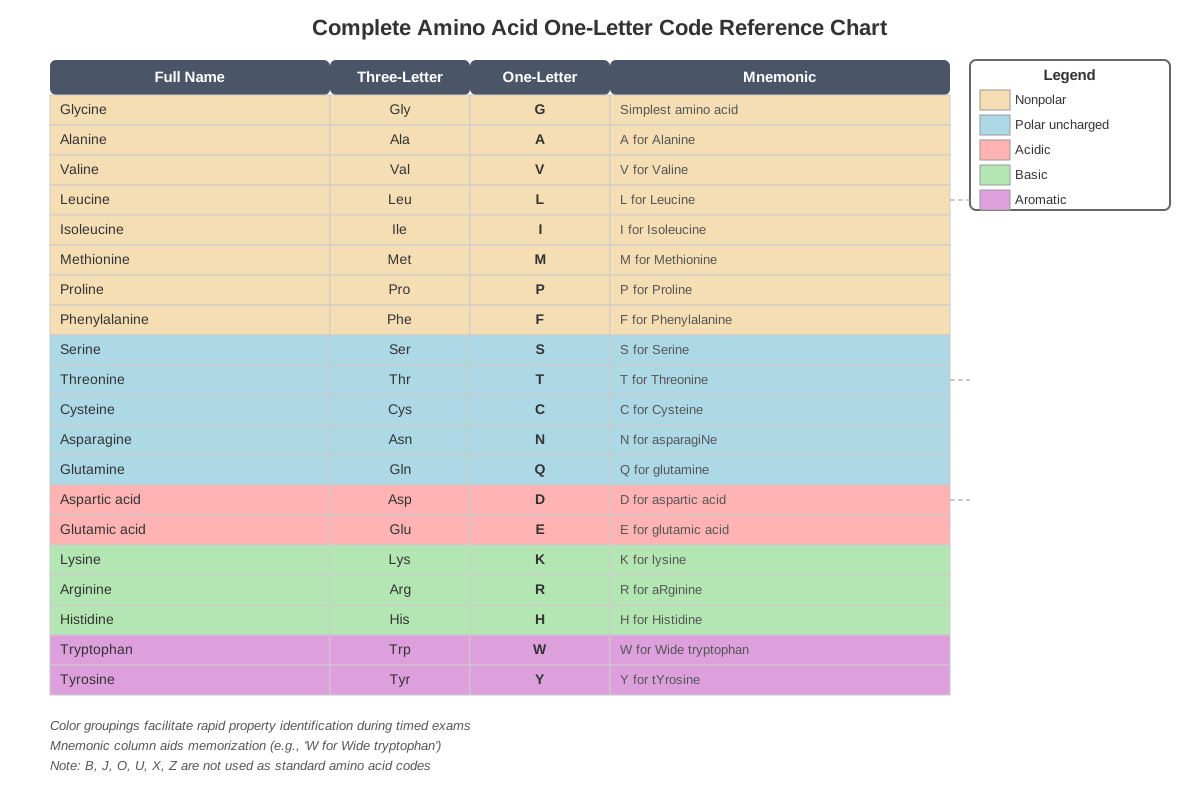
The amino acid one letter codes system assigns unique alphabetic characters to each of the 20 standard proteinogenic amino acids. This notation was standardized by the International Union of Pure and Applied Chemistry (IUPAC) and the International Union of Biochemistry and Molecular Biology (IUBMB) to facilitate efficient communication in scientific literature and databases.
| Amino Acid | Three-Letter Code | One-Letter Code | Key Property |
|---|---|---|---|
| Alanine | Ala | A | Small, nonpolar |
| Cysteine | Cys | C | Contains sulfur, forms disulfide bonds |
| Aspartic acid | Asp | D | Acidic, negatively charged |
| Glutamic acid | Glu | E | Acidic, negatively charged |
| Phenylalanine | Phe | F | Aromatic, nonpolar |
| Glycine | Gly | G | Smallest, most flexible |
| Histidine | His | H | Basic, can be charged or uncharged at pH 7 |
| Isoleucine | Ile | I | Branched, nonpolar |
| Lysine | Lys | K | Basic, positively charged |
| Leucine | Leu | L | Branched, nonpolar |
| Methionine | Met | M | Contains sulfur, nonpolar |
| Asparagine | Asn | N | Polar, uncharged (amide) |
| Proline | Pro | P | Cyclic, introduces kinks |
| Glutamine | Gln | Q | Polar, uncharged (amide) |
| Arginine | Arg | R | Basic, positively charged |
| Serine | Ser | S | Polar, hydroxyl group |
| Threonine | Thr | T | Polar, hydroxyl group |
| Valine | Val | V | Branched, nonpolar |
| Tryptophan | Trp | W | Aromatic, largest |
| Tyrosine | Tyr | Y | Aromatic, polar (hydroxyl) |
Logic Behind Code Assignments
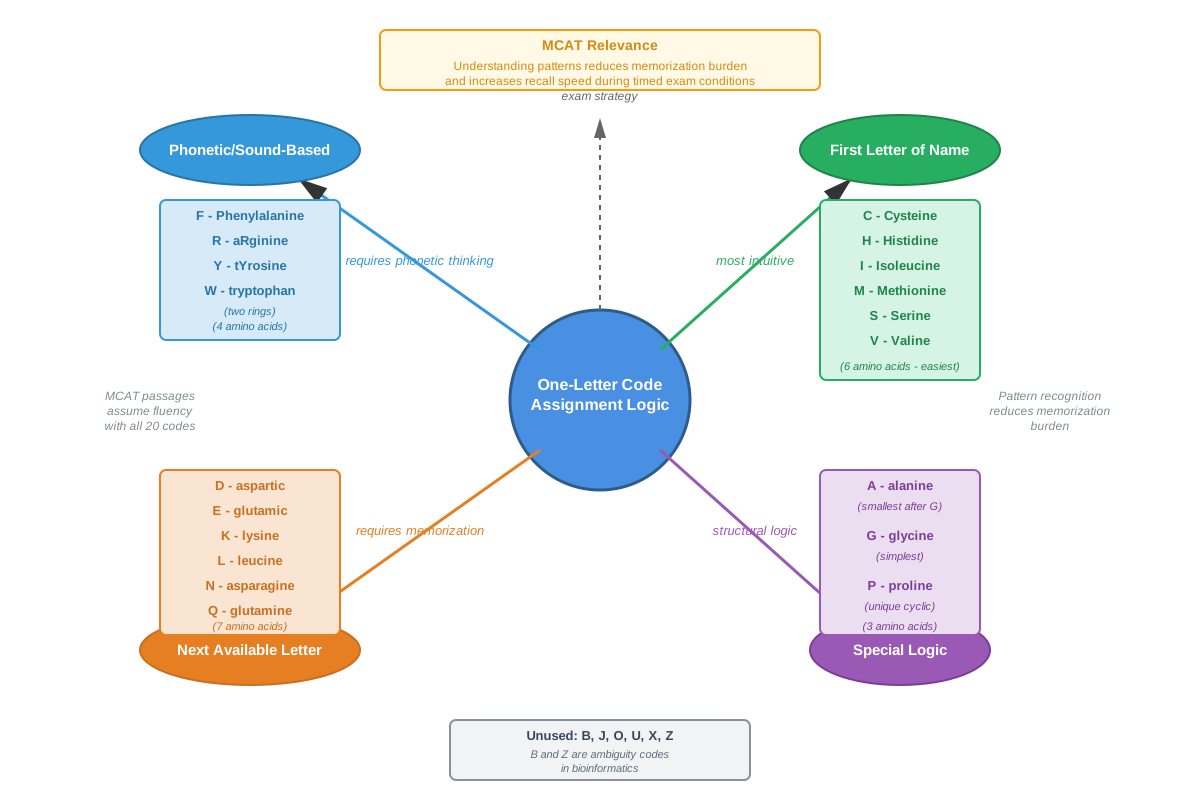
Most one-letter codes follow intuitive patterns: the first letter of the amino acid name (A for Alanine, G for Glycine, M for Methionine). When multiple amino acids share the same first letter, the system uses phonetic or chemical logic:
- K for Lysine (avoiding L, which goes to Leucine)
- W for Tryptophan (double-ring structure resembles "W")
- R for Arginine (contains multiple R sounds)
- Q for Glutamine (Q resembles O in the amide group)
- N for Asparagine (N for amide nitrogen)
- D for Aspartic acid (D for acidic)
- E for Glutamic acid (E follows D alphabetically)
Functional Groupings Using One-Letter Codes
Understanding amino acid properties through their codes enables rapid analysis of protein sequences:
Nonpolar/Hydrophobic (typically found in protein interiors):
- GAVLIMFPW - Glycine, Alanine, Valine, Leucine, Isoleucine, Methionine, Phenylalanine, Proline, Tryptophan
Polar/Uncharged (can be interior or surface):
- STNQCY - Serine, Threonine, Asparagine, Glutamine, Cysteine, Tyrosine
Positively Charged/Basic (pH 7):
- KRH - Lysine, Arginine, Histidine
Negatively Charged/Acidic (pH 7):
- DE - Aspartic acid, Glutamic acid
Aromatic (absorb UV light at 280 nm):
- FWY - Phenylalanine, Tryptophan, Tyrosine
Mutation Nomenclature in Biochemistry
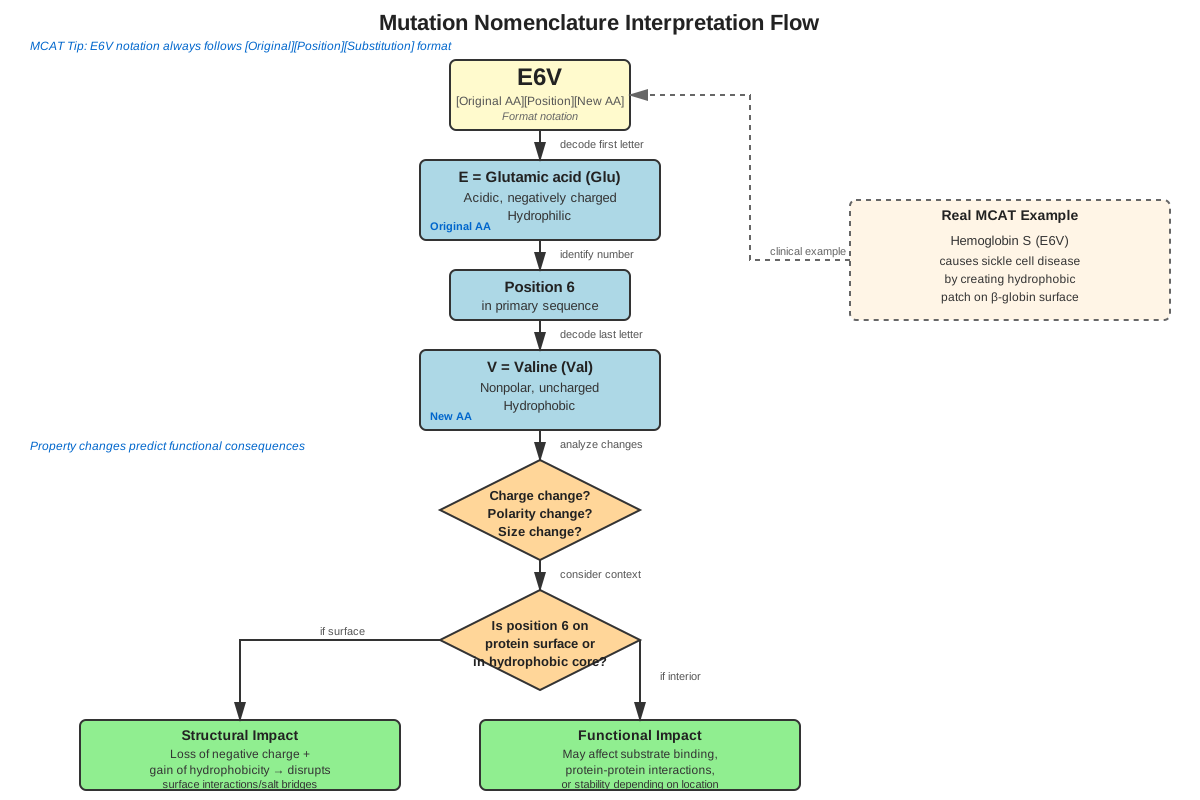
The one-letter code system enables concise description of genetic mutations affecting proteins. The standard format is: [Original amino acid][Position number][New amino acid]
Examples:
- E6V: Glutamic acid at position 6 replaced by Valine (sickle cell hemoglobin)
- G12V: Glycine at position 12 replaced by Valine (common in RAS oncogenes)
- R117H: Arginine at position 117 replaced by Histidine (CFTR mutation)
This notation appears extensively in MCAT passages describing disease mechanisms, experimental mutagenesis, and evolutionary comparisons.
Special Codes and Ambiguity Symbols
Beyond the 20 standard codes, biochemists use additional symbols for uncertain or modified amino acids:
- X: Unknown or any amino acid
- B: Aspartic acid (D) or Asparagine (N)
- Z: Glutamic acid (E) or Glutamine (Q)
- J: Leucine (L) or Isoleucine (I)
While less common on the MCAT, these may appear in bioinformatics or sequence analysis passages.
Integration with Protein Structure Analysis
One-letter codes facilitate discussion of protein structure at all levels:
- Primary structure: Linear sequence written as continuous string (e.g., MVHLTPEEK)
- Secondary structure: Identifying residues that favor α-helices (A, E, L) or β-sheets (V, I, Y, F)
- Tertiary structure: Locating hydrophobic residues (GAVLIMFPW) in protein cores
- Quaternary structure: Identifying interface residues in multi-subunit proteins
Reading Sequences and Determining Properties
When presented with a sequence in one-letter code, systematic analysis follows this approach:
- Identify charged residues (DEKR) to estimate net charge and isoelectric point
- Locate hydrophobic clusters (GAVLIMFPW) suggesting transmembrane regions or hydrophobic cores
- Find special residues: Cysteines (C) for potential disulfide bonds, Prolines (P) for structural kinks, Glycines (G) for flexibility
- Count aromatic residues (FWY) for UV absorption properties
- Identify modification sites: Serines/Threonines (ST) for phosphorylation, Lysines (K) for acetylation/ubiquitination
Concept Relationships
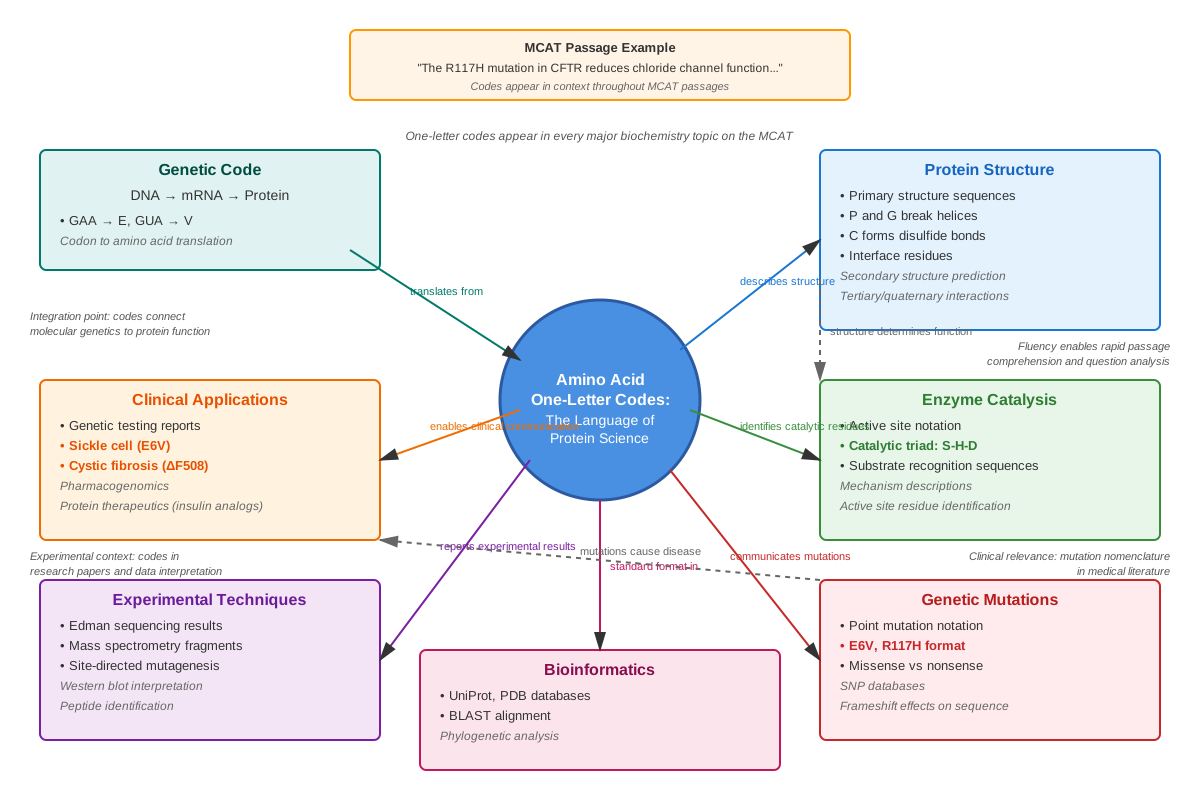
The mastery of amino acid one-letter codes serves as a central hub connecting multiple biochemistry concepts. Amino acid classification by chemical properties directly enables interpretation of sequences written in one-letter notation—recognizing that a sequence rich in GAVLIM suggests hydrophobic character requires both knowing the codes and understanding side chain chemistry. This relationship flows bidirectionally: learning codes reinforces property memorization, while understanding properties aids code retention.
Protein primary structure depends entirely on one-letter code literacy for efficient communication. The concept map flows: Genetic Code (DNA/RNA) → Translation → Amino Acid Sequence (written in one-letter codes) → Protein Folding → Function. Each arrow represents information transfer that relies on this symbolic system.
Enzyme active sites are typically described using one-letter codes to identify catalytic residues. For example, the serine protease catalytic triad "S195-H57-D102" uses one-letter codes with position numbers. Understanding this notation connects to enzyme mechanism, specificity, and inhibitor design.
Post-translational modifications are communicated through one-letter codes: phosphorylation targets (STY), glycosylation sites (NST in N-X-S/T motifs), and ubiquitination targets (K). This links amino acid codes to protein regulation, signal transduction, and cellular localization.
Genetic mutations and disease form another critical connection. The pathway: DNA mutation → Codon change → Amino acid substitution (described in one-letter code) → Protein dysfunction → Disease phenotype. Understanding codes enables rapid assessment of mutation severity (conservative vs. non-conservative substitutions).
Experimental techniques including site-directed mutagenesis, peptide synthesis, and protein sequencing all report results using one-letter codes. This connects the topic to research methodology questions common in MCAT passages.
High-Yield Facts
⭐ The six most commonly tested amino acids on the MCAT are C, G, P, H, D/E, and K/R due to their unique functional roles in proteins
⭐ Cysteine (C) is the only standard amino acid capable of forming covalent disulfide bonds, critical for protein stability
⭐ Glycine (G) is the smallest amino acid and provides maximum flexibility, often found in turns and loops
⭐ Proline (P) is the only cyclic amino acid and introduces kinks in α-helices, acting as a "helix breaker"
⭐ Histidine (H) has a pKa near physiological pH (~6.0), making it ideal for proton transfer in enzyme catalysis
- Aromatic amino acids F, W, and Y absorb UV light at 280 nm, enabling protein concentration determination
- Charged amino acids at pH 7 are K, R, H (positive) and D, E (negative), essential for calculating net charge
- Branched-chain amino acids (V, L, I) are exclusively nonpolar and commonly found in hydrophobic protein cores
- Serine (S) and Threonine (T) contain hydroxyl groups making them targets for phosphorylation in cell signaling
- Methionine (M) is always the first amino acid in newly synthesized proteins (though often removed post-translationally)
- Tryptophan (W) is the largest and rarest amino acid, often found in protein-membrane interfaces
- Asparagine (N) and Glutamine (Q) are amide derivatives of aspartic acid and glutamic acid respectively
Quick check — test yourself on Amino acid one letter codes so far.
Try Flashcards →Common Misconceptions
Misconception: All amino acids starting with the same letter use that letter as their one-letter code.
Correction: While many codes use the first letter (A for Alanine, G for Glycine), several do not. Lysine uses K (not L), Tryptophan uses W (not T), and Arginine uses R (not A). The system prioritizes avoiding ambiguity over alphabetical consistency.
Misconception: Histidine is always positively charged like Lysine and Arginine.
Correction: Histidine (H) has a side chain pKa of approximately 6.0, meaning it exists in both protonated (charged) and deprotonated (uncharged) forms at physiological pH 7.4. This unique property makes it ideal for enzyme catalysis but means it cannot be assumed to be charged in all contexts.
Misconception: The one-letter code "X" represents a specific amino acid.
Correction: X is used to denote an unknown or unspecified amino acid in sequence data, not a 21st amino acid. It appears in sequences where the identity could not be determined experimentally or where any amino acid could occupy that position.
Misconception: Tyrosine (Y) is nonpolar because it's aromatic.
Correction: While Tyrosine contains an aromatic ring like Phenylalanine (F) and Tryptophan (W), it also has a hydroxyl (-OH) group that makes it polar. This hydroxyl group can form hydrogen bonds and serves as a phosphorylation site, distinguishing Y from the purely hydrophobic F.
Misconception: Mutation notation "D508" means Aspartic acid is inserted at position 508.
Correction: The notation "ΔF508" (with the delta symbol) indicates deletion of Phenylalanine at position 508. Simple notation like "E6V" indicates substitution (Glutamic acid replaced by Valine), while "ΔF508" indicates deletion. Insertions are typically written as "ins" or with position ranges.
Misconception: Memorizing codes in alphabetical order is the most efficient learning strategy.
Correction: Grouping amino acids by chemical properties (nonpolar, polar, charged, aromatic) and learning codes within these functional groups is more effective for MCAT preparation, as questions test property-based reasoning rather than alphabetical recall.
Worked Examples
Example 1: Analyzing a Peptide Sequence for Properties
Question: A researcher synthesizes a peptide with the sequence GAVLIMFPW. At physiological pH, what are the expected properties of this peptide?
Solution:
Step 1: Decode each amino acid from one-letter code:
- G = Glycine
- A = Alanine
- V = Valine
- L = Leucine
- I = Isoleucine
- M = Methionine
- F = Phenylalanine
- P = Proline
- W = Tryptophan
Step 2: Classify each amino acid by chemical property:
- All nine amino acids are nonpolar/hydrophobic
- None are charged (no K, R, H, D, or E)
- Three are aromatic (F, W, and Y is absent)
- One is cyclic (P)
- One is the smallest (G)
Step 3: Predict peptide properties:
- Net charge at pH 7: Approximately 0 (only terminal amino and carboxyl groups contribute; +1 from N-terminus, -1 from C-terminus = 0)
- Solubility: Very poor in aqueous solution due to exclusively hydrophobic residues
- Location in proteins: This sequence would likely be found in a transmembrane domain or buried in a hydrophobic core
- UV absorption: Strong absorption at 280 nm due to F and W
- Flexibility: Moderate flexibility from G, but P introduces a kink
Key Insight: This example demonstrates how one-letter code fluency enables rapid property prediction, a common MCAT task when analyzing experimental peptides or protein domains.
Example 2: Interpreting Mutation Effects
Question: A passage describes a mutation in the CFTR protein: R117H. The wild-type protein functions as a chloride channel. Based on this mutation, predict the most likely biochemical consequence.
Solution:
Step 1: Decode the mutation notation:
- R117H means Arginine (R) at position 117 is replaced by Histidine (H)
Step 2: Analyze the chemical properties of each amino acid:
- Arginine (R): Positively charged at physiological pH (pKa ~12.5), long side chain with guanidinium group, strongly basic
- Histidine (H): Can be charged or uncharged at physiological pH (pKa ~6.0), imidazole side chain, weakly basic
Step 3: Predict functional consequences:
- Charge change: R is always positively charged at pH 7.4, while H is only ~10% protonated at pH 7.4
- Size change: R has a longer side chain than H
- Potential effects:
- If R117 normally participates in salt bridges for protein stability, replacing it with H (which is mostly uncharged) could destabilize the protein
- If R117 is in the channel pore and helps conduct chloride ions through electrostatic interactions, the mutation would reduce channel conductivity
- The mutation is non-conservative (changing charge properties)
Step 4: Connect to disease mechanism:
- CFTR mutations cause cystic fibrosis
- R117H is a known mild mutation that reduces but doesn't eliminate channel function
- This explains why some patients with R117H have milder disease phenotypes
Key Insight: Understanding one-letter codes enables interpretation of mutation nomenclature and prediction of biochemical consequences based on amino acid property changes—a high-yield MCAT skill connecting genetics, protein structure, and disease.
Exam Strategy
Approaching MCAT Questions on Amino Acid Codes
When encountering amino acid sequences in one-letter code format, follow this systematic approach:
- Quickly scan for charged residues (D, E, K, R, H) to assess electrostatic properties
- Identify special functional residues: C (disulfide bonds), P (structural kinks), G (flexibility)
- Look for patterns: Hydrophobic clusters, alternating charged residues, repeated motifs
- Consider the context: Is this an active site, transmembrane domain, or surface loop?
Trigger Words and Phrases
Watch for these exam signals that indicate one-letter code knowledge is being tested:
- "The sequence shown is..." followed by capital letters
- "A mutation from [letter] to [letter] at position [number]..."
- "Which residue in the sequence is most likely to..."
- "The peptide XXXXX would most likely..."
- "Site-directed mutagenesis replacing [letter] with [letter]..."
- "The catalytic triad consists of [letter]-[number], [letter]-[number], [letter]-[number]..."
Process of Elimination Tips
When unsure about a specific code:
- Eliminate based on properties: If the question asks about a positively charged residue, immediately eliminate all answer choices with A, G, V, L, I, M, F, P, W, S, T, N, Q, C, Y
- Use frequency logic: Common amino acids (A, L, S, G) appear more often than rare ones (W, C, M)
- Apply structural reasoning: If the question involves flexibility, consider G; for rigidity, consider P
- Remember the "special six": C, G, P, H, D/E, K/R have unique properties most often tested
Time Allocation Advice
- Do not spend time converting codes during the exam—this should be automatic
- Budget 10-15 seconds to analyze a short sequence (5-10 amino acids) for properties
- If a passage shows a long sequence, focus only on the region relevant to the question
- Practice speed recognition before test day: aim for <1 second per code conversion
Exam Tip: If you encounter an unfamiliar code or forget one during the exam, use the answer choices to work backwards. The question context usually provides enough information to deduce the correct amino acid properties even without perfect code recall.
Memory Techniques
Mnemonic for Positively Charged Amino Acids
"King Richard Has" = Kysine, Rrginine, Histidine
Mnemonic for Negatively Charged Amino Acids
"Aspartic and Glutamic are Definitely Energetically negative" = D and E
Mnemonic for Aromatic Amino Acids
"For Winning You" = Fhenylalanine, Wryptophan, Yyrosine (all absorb UV at 280 nm)
Mnemonic for Branched-Chain Amino Acids
"VILe" = Valine, Isoleucine, Leucine (all branched, all hydrophobic)
Mnemonic for Hydroxyl-Containing Amino Acids
"Some Thrilling Yoga" = Serine, Threonine, Yyrosine (all can be phosphorylated, though Y is less common)
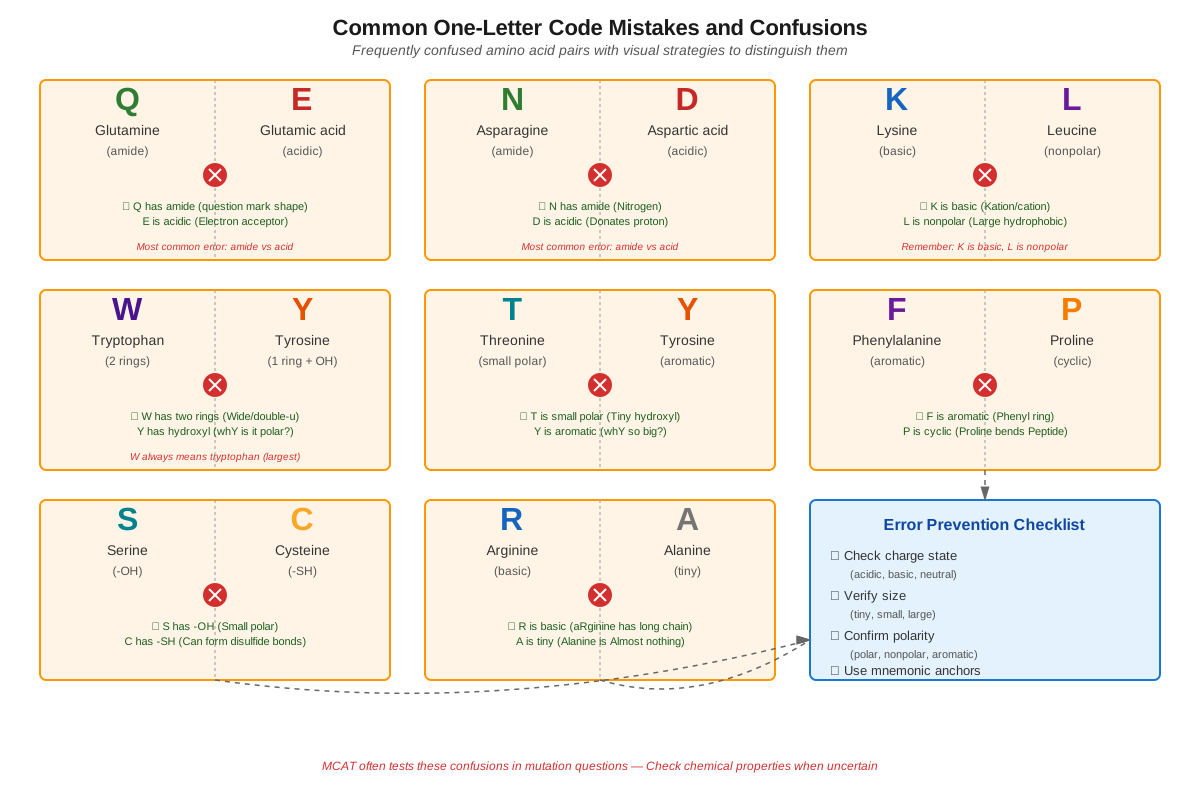
Visualization Strategy for Confusing Pairs
- K vs. R: Picture a King (Lysine) with a crown that has one point (one amino group), while Rarginine has a guanidinium group that looks like a three-pronged fork
- D vs. E: D comes before E alphabetically, and Aspartic acid (D) is shorter than Glutamic acid (E)—one carbon shorter in the side chain
- N vs. Q: Nsparagine is the amide of D (shorter), Qlutamine is the amide of E (longer)
Acronym for Nonpolar Amino Acids
"GAVLIM FPW" (pronounce as "gav-lim fip-wuh") = Glycine, Alanine, Valine, Leucine, Isoleucine, Methionine, Phenylalanine, Proline, Tryptophan
Memory Palace Technique
Create a mental journey through a familiar location, placing amino acids at specific spots:
- Entrance (A): Alanine—small and simple, like a welcome mat
- Kitchen (K): Kysine—positively charged like a battery powering appliances
- Bathroom (C): Cysteine—forms bonds like plumbing connections
- Bedroom (P): Proline—creates kinks like a bent pillow
Customize this technique with personally meaningful locations for maximum retention.
Summary
Amino acid one-letter codes represent an essential symbolic language in biochemistry, assigning unique alphabetic characters to each of the 20 standard amino acids for efficient communication of protein sequences. Mastery of this system is non-negotiable for MCAT success, as these codes appear throughout passages describing protein structure, enzyme mechanisms, genetic mutations, and experimental techniques. The codes follow logical patterns—most using the first letter of the amino acid name, with exceptions like K for Lysine, W for Tryptophan, and R for Arginine to avoid ambiguity. Beyond simple memorization, effective use requires integrating code knowledge with amino acid chemical properties: recognizing that GAVLIMFPW represents hydrophobic residues, KRH indicates positive charges, and DE signals negative charges. This fluency enables rapid analysis of sequences, interpretation of mutation nomenclature (e.g., E6V for sickle cell hemoglobin), and prediction of protein properties from primary structure. The topic connects fundamentally to protein folding, enzyme catalysis, post-translational modifications, and disease mechanisms, making it a central node in biochemistry understanding.
Key Takeaways
- Amino acid one-letter codes are standardized symbols (A-Y) representing the 20 standard amino acids, essential for interpreting MCAT biochemistry passages
- The codes follow logical patterns: most use the first letter, with exceptions (K, W, R, Q, N, D, E) designed to avoid ambiguity
- Rapid property identification from codes is critical: GAVLIMFPW (nonpolar), STNQCY (polar uncharged), KRH (positive), DE (negative), FWY (aromatic)
- Mutation nomenclature uses one-letter codes in the format [Original][Position][New] (e.g., R117H), enabling concise description of genetic variants
- Special amino acids with unique properties—C (disulfide bonds), G (flexibility), P (kinks), H (pH-dependent charge)—are disproportionately tested on the MCAT
- Integration with protein structure, enzyme function, and disease mechanisms makes this topic a high-yield connection point across biochemistry concepts
- Efficient memorization strategies group amino acids by chemical properties rather than alphabetical order, aligning with how the MCAT tests this knowledge
Related Topics
Amino Acid Structure and Classification: Deep dive into side chain chemistry, pKa values, and stereochemistry builds the foundation for understanding why certain codes correspond to specific functional properties. Mastering one-letter codes accelerates learning of amino acid properties.
Protein Primary Structure and Peptide Bonds: Understanding how amino acids link through peptide bonds and form polypeptide chains provides context for why compact notation systems are necessary. One-letter codes are the language of primary structure.
Protein Folding and Stability: Knowledge of how amino acid sequences (written in one-letter codes) determine three-dimensional structure through hydrophobic effects, hydrogen bonding, and disulfide bridges represents the next level of complexity after code mastery.
Enzyme Mechanisms and Active Sites: Catalytic residues are typically identified using one-letter codes with position numbers (e.g., S195 in serine proteases). Understanding codes enables analysis of how specific amino acids contribute to catalysis.
Post-Translational Modifications: Phosphorylation (STY), glycosylation (N in N-X-S/T motifs), acetylation (K), and other modifications are communicated through one-letter codes, connecting this topic to cell signaling and protein regulation.
Genetic Mutations and Disease: Interpreting mutation nomenclature (e.g., sickle cell's E6V, cystic fibrosis's ΔF508) requires code fluency and connects biochemistry to medical genetics and pathophysiology.
Practice CTA
Now that you've mastered the comprehensive framework of amino acid one-letter codes, it's time to solidify this knowledge through active practice. Challenge yourself with the accompanying practice questions that simulate real MCAT scenarios—from analyzing peptide sequences to interpreting mutation effects. Use the flashcards to build automatic recognition speed, aiming for instant recall of all 20 codes and their associated properties. Remember: on test day, this knowledge must be reflexive, not deliberative. Every minute spent decoding sequences is a minute stolen from higher-order analysis. Your investment in mastering this foundational topic will pay dividends across every biochemistry passage you encounter. You've got this!
Sign up free to keep reading
Create a free AnvayaPrep account to finish this MCAT guide on Amino acid one letter codes — plus flashcards and practice questions.