Overview
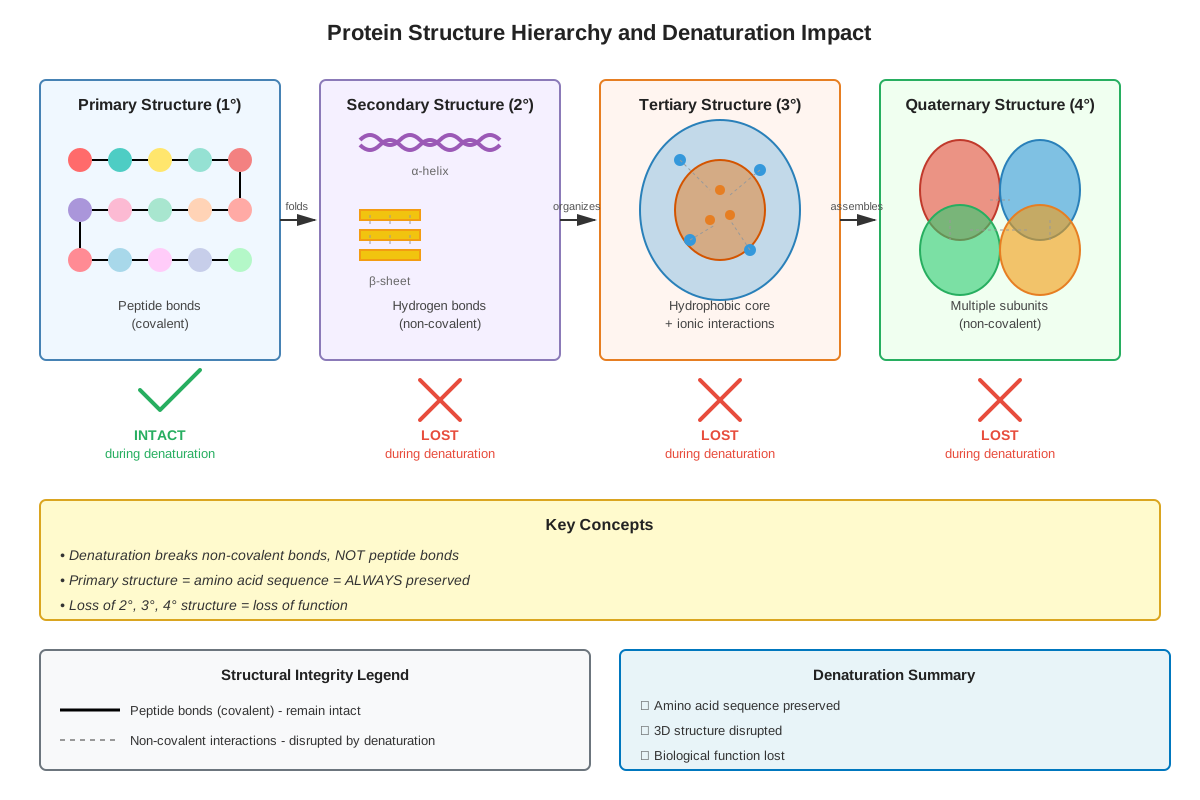
Protein denaturation is a fundamental concept in Biochemistry that describes the process by which proteins lose their native three-dimensional structure without breaking peptide bonds. This structural disruption occurs when the delicate balance of non-covalent interactions—hydrogen bonds, ionic interactions, hydrophobic effects, and van der Waals forces—that maintain protein folding is disturbed by environmental stressors such as heat, pH changes, chemical agents, or mechanical forces. While the primary structure (amino acid sequence) remains intact during denaturation, the loss of secondary, tertiary, and quaternary structures typically results in loss of biological function, making this a critical concept for understanding protein behavior in both physiological and pathological contexts.
For the MCAT, protein denaturation represents a high-yield topic that bridges multiple disciplines. Questions frequently test understanding of the molecular forces stabilizing protein structure, the conditions that disrupt these forces, and the functional consequences of structural loss. The topic appears regularly in both discrete questions and passage-based scenarios, often integrated with enzyme kinetics, thermodynamics, or clinical contexts such as fever, genetic mutations, or laboratory techniques. Mastery of protein denaturation requires understanding not just what happens during the process, but why it happens at the molecular level and how to predict outcomes under various conditions.
Within the broader framework of Amino Acids and Proteins, denaturation serves as the conceptual bridge between protein structure and function. It demonstrates that biological activity depends critically on three-dimensional architecture, reinforces the importance of environmental conditions for maintaining homeostasis, and provides insight into both disease mechanisms and biotechnology applications. Understanding denaturation also connects to thermodynamics (entropy and enthalpy changes), chemical kinetics (reversible versus irreversible processes), and cellular biology (protein quality control mechanisms like chaperones and the unfolded protein response).
Learning Objectives
- [ ] Define protein denaturation using accurate Biochemistry terminology
- [ ] Explain why protein denaturation matters for the MCAT
- [ ] Apply protein denaturation to exam-style questions
- [ ] Identify common mistakes related to protein denaturation
- [ ] Connect protein denaturation to related Biochemistry concepts
- [ ] Distinguish between reversible and irreversible denaturation and predict which will occur under specific conditions
- [ ] Analyze the molecular basis for how different denaturing agents (heat, pH, urea, detergents) disrupt specific types of non-covalent interactions
- [ ] Evaluate experimental scenarios to determine whether protein function will be retained, lost, or recovered after exposure to denaturing conditions
Prerequisites
- Protein structure hierarchy (primary, secondary, tertiary, quaternary): Essential for understanding which structural levels are affected during denaturation and which remain intact
- Non-covalent interactions (hydrogen bonds, ionic interactions, hydrophobic effects, van der Waals forces): These are the specific molecular forces disrupted during denaturation
- Amino acid properties (hydrophobic, hydrophilic, charged, polar): Determines how amino acid side chains contribute to protein stability and respond to denaturing conditions
- Basic thermodynamics (enthalpy, entropy, Gibbs free energy): Provides the energetic framework for understanding why proteins denature and whether the process is reversible
- Enzyme structure and function: Necessary for understanding why denaturation typically causes loss of catalytic activity
Why This Topic Matters
Clinical and Real-World Significance
Protein denaturation underlies numerous physiological and pathological processes. Fever-induced protein denaturation can impair enzyme function and cellular processes, explaining why extremely high body temperatures are life-threatening. Prion diseases like Creutzfeldt-Jakob disease involve proteins that misfold into pathological conformations, demonstrating that abnormal protein structures can have devastating consequences. In the laboratory and biotechnology industries, controlled denaturation is essential for techniques like SDS-PAGE (protein separation), Western blotting, and protein purification. Food preparation relies heavily on protein denaturation—cooking eggs denatures albumin, making it solid and digestible. Understanding denaturation also informs drug design, as pharmaceutical compounds must remain stable under storage conditions and within the body's varying pH and temperature environments.
MCAT Exam Statistics and Question Types
Protein denaturation appears in approximately 15-20% of MCAT Biochemistry questions, either as the primary focus or as a component of more complex scenarios. The topic most commonly appears in:
- Passage-based questions involving experimental manipulation of proteins (changing pH, temperature, or adding denaturants)
- Discrete questions testing understanding of which bonds break during denaturation
- Data interpretation questions showing enzyme activity curves at different temperatures or pH values
- Integrated questions connecting denaturation to thermodynamics, kinetics, or cellular stress responses
Questions frequently require students to predict outcomes, explain mechanisms, or interpret graphs showing protein stability under various conditions. The MCAT particularly favors questions that test conceptual understanding over memorization, such as asking why a protein denatures at high pH rather than simply asking what denatures proteins.
Common Exam Passage Contexts
- Experimental protocols describing protein purification or characterization
- Clinical vignettes involving fever, acidosis, or alkalosis
- Research scenarios testing protein stability or developing therapeutic proteins
- Comparative biology passages examining proteins from thermophilic organisms
- Laboratory technique descriptions (electrophoresis, chromatography, spectroscopy)
Core Concepts
Definition and Fundamental Characteristics
Protein denaturation is the process by which a protein loses its native secondary, tertiary, and/or quaternary structure due to disruption of the non-covalent interactions and disulfide bonds that stabilize its three-dimensional conformation, while the primary structure (peptide bonds) remains intact. This distinction is critical: denaturation is NOT protein degradation or hydrolysis. The covalent backbone stays connected, but the protein unfolds from its functional, folded state into a more random, disordered conformation.
The denatured state is characterized by increased conformational flexibility, exposure of hydrophobic residues that were previously buried in the protein core, loss of biological activity (for enzymes, this means loss of catalytic function), and often increased susceptibility to proteolytic degradation. Importantly, denaturation represents a transition from a highly ordered, low-entropy state to a more disordered, high-entropy state, which has significant thermodynamic implications.
Molecular Forces Disrupted During Denaturation
Understanding which specific interactions are disrupted by different denaturing agents is essential for MCAT success:
| Molecular Force | Normal Role in Protein Stability | Disrupted By | Mechanism of Disruption |
|---|---|---|---|
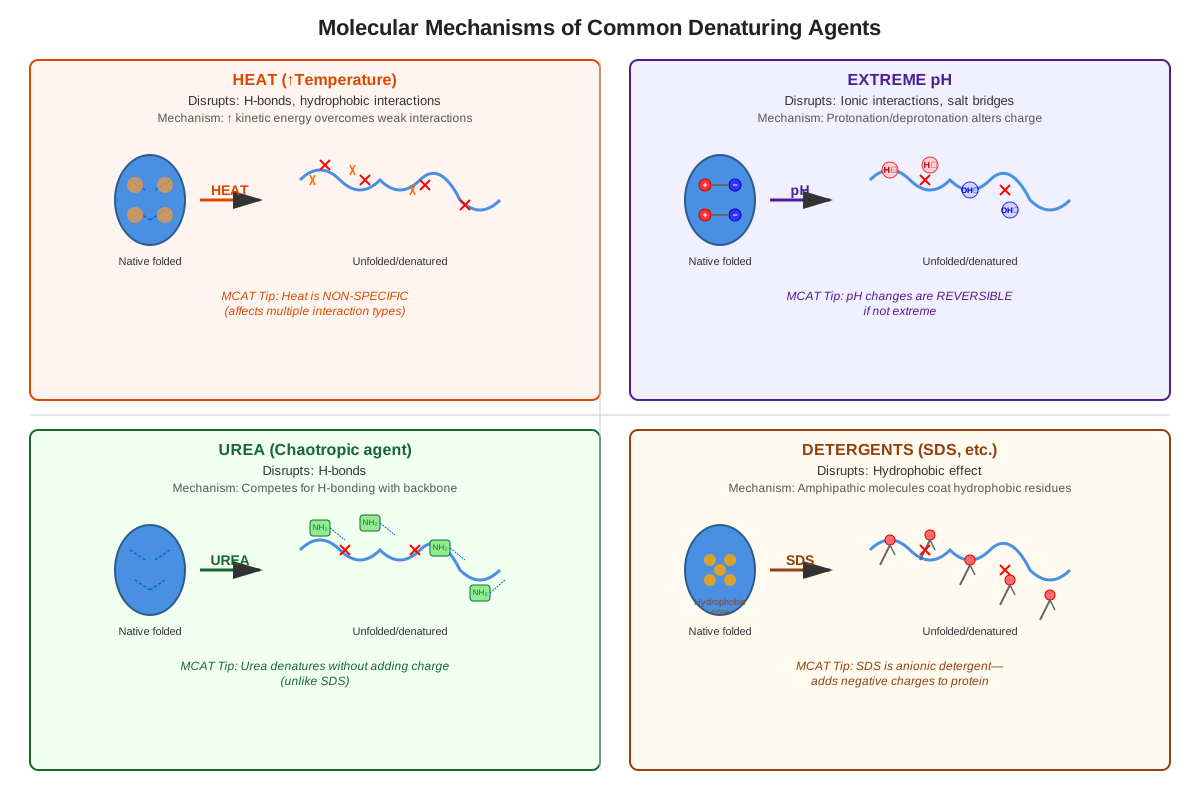
| Hydrogen bonds | Stabilize α-helices, β-sheets, and tertiary structure | Heat, pH extremes, urea | Increased molecular motion breaks bonds; protonation/deprotonation eliminates H-bond donors/acceptors; urea competes for H-bonding |
| Ionic interactions (salt bridges) | Stabilize tertiary/quaternary structure between charged residues | pH extremes, high salt concentration | Protonation/deprotonation neutralizes charges; ions shield electrostatic interactions |
| Hydrophobic interactions | Drive protein folding by burying nonpolar residues in core | Heat, organic solvents, detergents | Increased kinetic energy overcomes hydrophobic effect; solvents provide alternative nonpolar environment |
| Van der Waals forces | Contribute to overall stability through numerous weak contacts | Heat, mechanical stress | Increased molecular motion disrupts weak interactions |
| Disulfide bonds | Covalent cross-links between cysteine residues | Reducing agents (β-mercaptoethanol, DTT) | Chemical reduction breaks S-S bonds |
Denaturing Agents and Their Mechanisms
Heat (Thermal Denaturation)
Thermal denaturation is the most commonly encountered form in both biological systems and MCAT questions. As temperature increases, molecular kinetic energy increases, causing greater molecular motion that can overcome the stabilizing forces maintaining protein structure. Heat primarily disrupts hydrogen bonds and hydrophobic interactions. The melting temperature (Tm) is the temperature at which 50% of protein molecules are denatured and represents a characteristic property of each protein. Proteins from thermophilic organisms (heat-loving bacteria) have higher Tm values due to additional stabilizing interactions.
Exam Tip: When you see temperature-dependent enzyme activity graphs, remember that activity typically increases with temperature up to an optimal point, then drops sharply as denaturation occurs. The ascending portion reflects increased kinetic energy and reaction rates; the descending portion reflects progressive denaturation.
pH Changes
Extreme pH values (very acidic or very basic conditions) cause denaturation by altering the protonation state of ionizable amino acid side chains. At low pH, excess H⁺ ions protonate carboxyl groups (Asp, Glu) and even some nitrogen-containing groups, eliminating negative charges. At high pH, excess OH⁻ ions deprotonate amino groups (Lys, Arg) and other protonatable groups, eliminating positive charges. This disrupts ionic interactions (salt bridges) and can also affect hydrogen bonding patterns. Each protein has an optimal pH range where its native charge distribution maintains proper folding.
Chemical Denaturants
Urea and guanidinium chloride are chaotropic agents that disrupt the hydrogen bonding network of water surrounding the protein and compete for hydrogen bonds with the protein itself. These agents essentially make the aqueous environment more favorable for unfolded states by reducing the energetic penalty for exposing hydrophobic residues to solvent.
Detergents (such as sodium dodecyl sulfate, SDS) are amphipathic molecules with hydrophobic tails and hydrophilic heads. They denature proteins by inserting their hydrophobic portions into the protein's hydrophobic core, disrupting hydrophobic interactions and coating the protein with negative charges (in the case of SDS), which causes electrostatic repulsion that maintains the denatured state.
Organic solvents (ethanol, acetone) reduce the hydrophobic effect by providing a less polar environment, making it thermodynamically less favorable for proteins to maintain their folded state with buried hydrophobic cores.
Reducing agents (β-mercaptoethanol, dithiothreitol/DTT) specifically break disulfide bonds by reducing them to free sulfhydryl groups. This is particularly important for proteins that rely heavily on disulfide bonds for stability, such as extracellular proteins and antibodies.
Reversible vs. Irreversible Denaturation
A critical distinction for the MCAT is whether denaturation can be reversed:
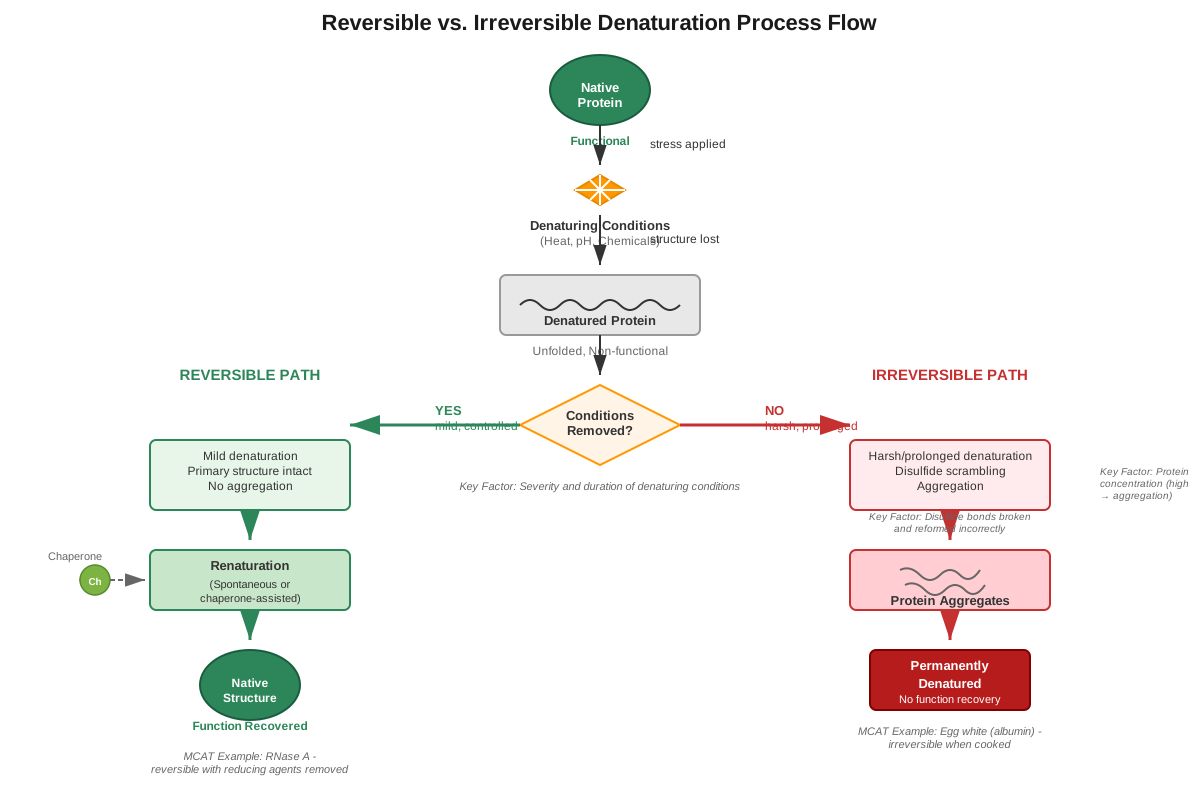
Reversible denaturation (also called renaturation or refolding) occurs when:
- The denaturing conditions are mild and brief
- The protein's primary structure contains all information needed for proper folding
- No covalent bonds (other than reversible disulfide bonds) are broken
- Aggregation does not occur during the unfolded state
The classic example is ribonuclease A, which Christian Anfinsen showed could be completely denatured with urea and β-mercaptoethanol, then fully renatured to active form when these agents were removed. This demonstrated that primary structure determines tertiary structure.
Irreversible denaturation occurs when:
- Denaturation is extensive or prolonged
- Proteins aggregate through exposed hydrophobic surfaces
- Covalent modifications occur (oxidation, hydrolysis)
- The protein requires chaperones for proper folding that are not present
The classic example is cooking an egg—once albumin is heat-denatured and aggregated, it cannot return to its native, soluble state.
High-Yield Concept: The MCAT loves to test whether students understand that denaturation doesn't break peptide bonds. If a question asks what remains intact during denaturation, the answer is primary structure.
Thermodynamics of Denaturation
Protein denaturation can be understood through the Gibbs free energy equation:
ΔG = ΔH - TΔSFor the native (folded) state to be stable, ΔG for the folding reaction must be negative. Denaturation occurs when ΔG becomes positive (or less negative than the unfolded state).
- ΔH (enthalpy): The folded state typically has favorable enthalpy due to numerous stabilizing interactions (hydrogen bonds, van der Waals forces, ionic interactions). Breaking these interactions requires energy input (positive ΔH for denaturation).
- ΔS (entropy): The unfolded state has much higher entropy due to increased conformational freedom. Denaturation increases entropy (positive ΔS).
- Temperature dependence: At low temperatures, the favorable enthalpy (negative ΔH) dominates, keeping proteins folded. At high temperatures, the TΔS term becomes large enough that the entropy gain from unfolding overcomes the enthalpy penalty, making ΔG positive and favoring denaturation.
This explains why proteins denature at high temperatures—the entropic driving force for disorder eventually overcomes the enthalpic stabilization of the folded state.
Functional Consequences
For most proteins, especially enzymes, denaturation results in complete loss of biological function. This occurs because:
- Active site geometry is destroyed: Enzymes require precise three-dimensional arrangement of catalytic residues
- Substrate binding is impaired: The binding pocket loses its specific shape
- Allosteric regulation is lost: Regulatory sites and conformational changes become impossible
- Cofactor binding is disrupted: Prosthetic groups or coenzymes may dissociate
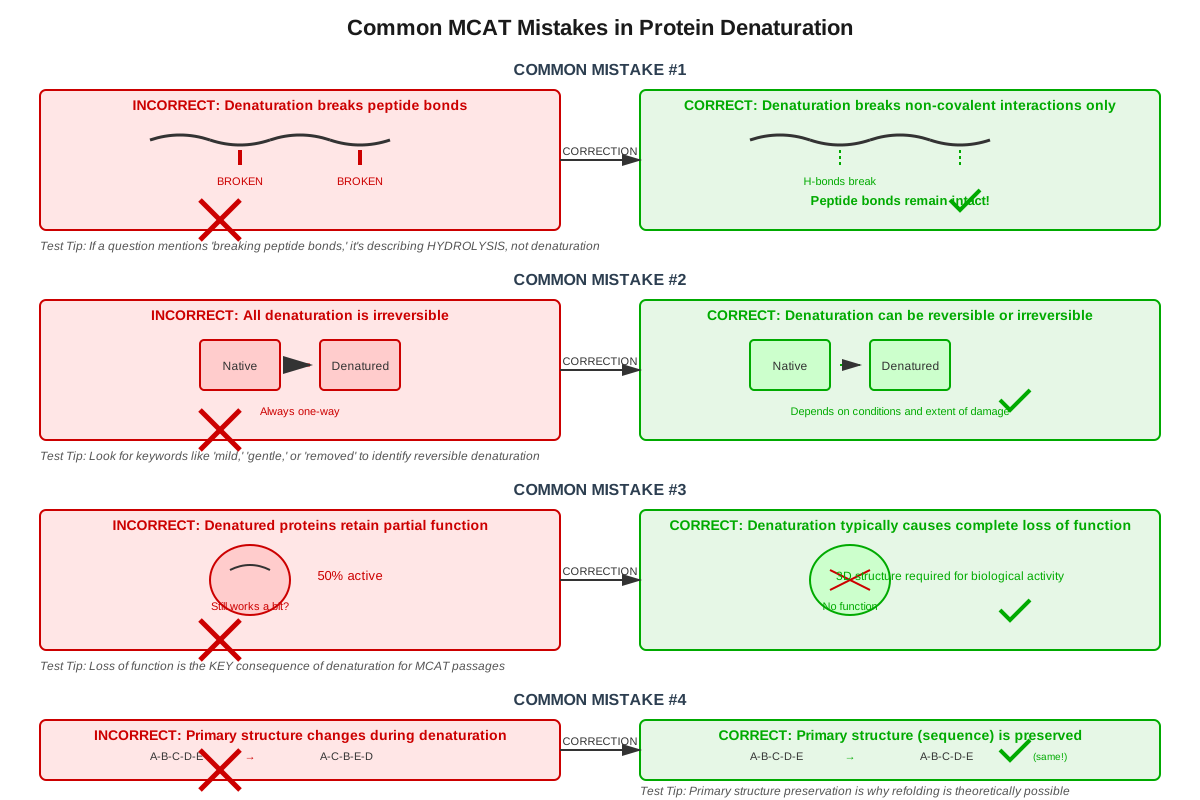
However, some proteins retain partial function even when partially denatured, and some denatured proteins can still perform non-specific functions (like SDS-coated proteins still migrating through gels based on size).
Concept Relationships
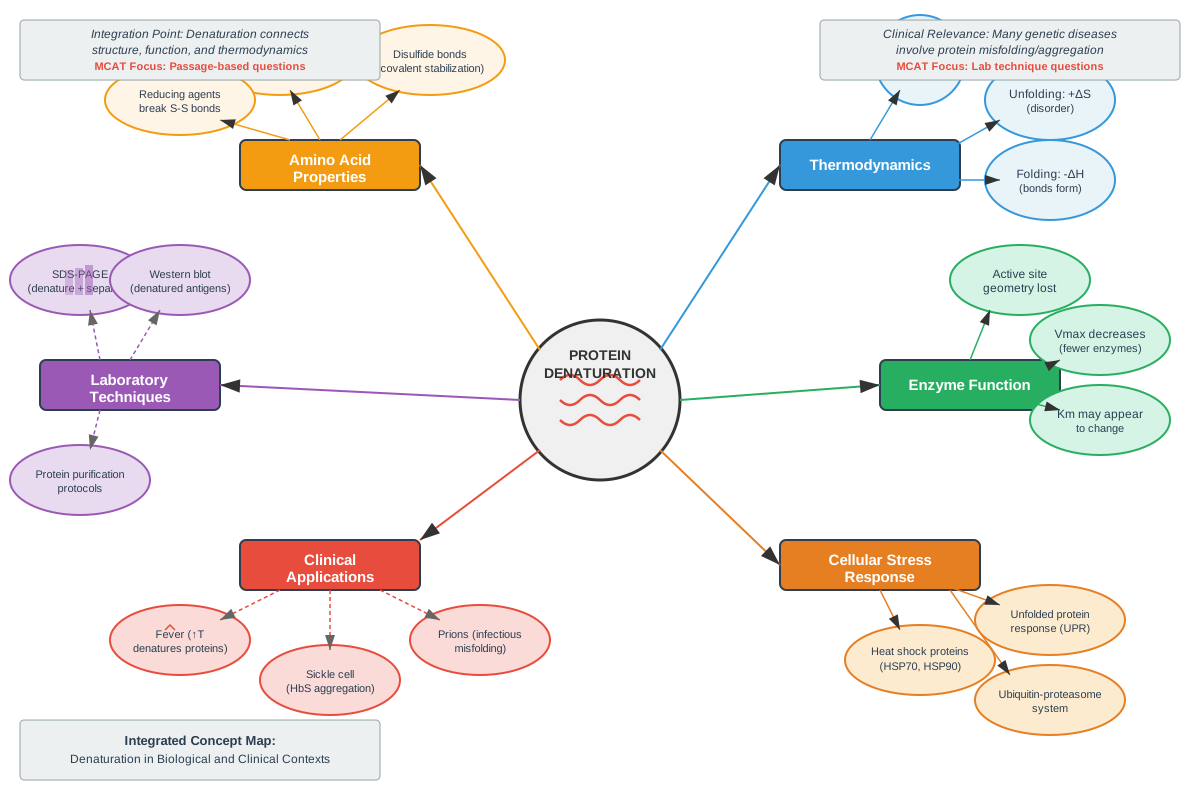
The concepts within protein denaturation are hierarchically connected: Primary structure (amino acid sequence) → determines → Native folded structure (secondary, tertiary, quaternary) → maintained by → Non-covalent interactions and disulfide bonds → disrupted by → Denaturing agents → resulting in → Loss of structure and function → which may be → Reversible or irreversible depending on conditions.
Protein denaturation connects backward to prerequisite topics: understanding amino acid properties explains why certain residues are more affected by pH changes; knowledge of non-covalent interactions explains the molecular mechanism of denaturation; familiarity with protein structure hierarchy clarifies which levels are affected; and thermodynamics provides the energetic framework for understanding stability and denaturation.
Forward connections include: enzyme kinetics (denaturation explains why enzymes have optimal temperature and pH ranges), protein folding and chaperones (cells have mechanisms to prevent or reverse denaturation), cellular stress responses (heat shock proteins respond to denaturation), disease mechanisms (misfolded proteins in Alzheimer's, Parkinson's, prion diseases), and biotechnology applications (protein purification, storage, and formulation).
The relationship map: Amino acid sequence → Folded protein ⇄ Unfolded protein (equilibrium shifted by denaturing conditions) → Aggregated protein (if irreversible) or → Refolded protein (if reversible with proper conditions/chaperones).
Quick check — test yourself on Protein denaturation so far.
Try Flashcards →High-Yield Facts
⭐ Protein denaturation disrupts secondary, tertiary, and quaternary structure while leaving primary structure (peptide bonds) intact.
⭐ Heat denatures proteins primarily by disrupting hydrogen bonds and hydrophobic interactions through increased molecular kinetic energy.
⭐ Extreme pH values denature proteins by altering the protonation state of ionizable amino acids, disrupting ionic interactions and hydrogen bonds.
⭐ Denaturation typically results in complete loss of biological function for enzymes because the precise three-dimensional active site geometry is destroyed.
⭐ Reversible denaturation (renaturation) is possible if the primary structure contains all folding information, conditions are mild, and aggregation doesn't occur.
- Urea and guanidinium chloride denature proteins by disrupting hydrogen bonding networks and competing for hydrogen bonds with the protein.
- SDS (sodium dodecyl sulfate) denatures proteins by inserting into hydrophobic cores and coating proteins with negative charges, causing electrostatic repulsion.
- Reducing agents like β-mercaptoethanol and DTT break disulfide bonds by reducing them to free sulfhydryl groups.
- The melting temperature (Tm) is the temperature at which 50% of protein molecules are denatured and is characteristic for each protein.
- Proteins from thermophilic organisms have higher Tm values due to additional stabilizing interactions like extra salt bridges and hydrophobic interactions.
- Chaperone proteins (like heat shock proteins) help prevent aggregation and assist in refolding of denatured proteins in cells.
- Prion diseases involve proteins that misfold into alternative stable conformations that are pathological and can template misfolding of normal proteins.
- Cooking denatures proteins irreversibly through heat-induced aggregation (like egg white albumin becoming solid).
- Protein denaturation is an endothermic process (requires heat input) but is driven at high temperatures by the large positive entropy change.
- The hydrophobic effect is weakened at high temperatures, contributing to thermal denaturation as hydrophobic residues become more willing to interact with water.
Common Misconceptions
Misconception: Protein denaturation breaks peptide bonds and destroys the amino acid sequence.
Correction: Denaturation disrupts only non-covalent interactions (and sometimes disulfide bonds with reducing agents) while leaving the covalent peptide backbone completely intact. The primary structure remains unchanged; only the three-dimensional folding is lost.
Misconception: All denatured proteins can be renatured by simply removing the denaturing agent.
Correction: Renaturation is only possible under specific conditions. Small, single-domain proteins with no disulfide bonds or simple disulfide patterns may refold spontaneously (like ribonuclease A), but many proteins require chaperones, and proteins that have aggregated through exposed hydrophobic surfaces cannot typically be renatured. Irreversible denaturation is common, especially with prolonged or extreme conditions.
Misconception: Denaturation and degradation are the same process.
Correction: Denaturation is the loss of three-dimensional structure with intact primary structure, while degradation (proteolysis) involves breaking peptide bonds and destroying the primary structure. Denatured proteins are often more susceptible to degradation by proteases, but the processes are distinct.
Misconception: Proteins denature only at very high temperatures far above physiological conditions.
Correction: While many proteins are stable at body temperature (37°C), some proteins have lower stability and can denature at modest temperature increases. Fever (40-41°C) can begin to denature some proteins, and different proteins have vastly different thermal stabilities. Some proteins denature at temperatures only slightly above their normal operating conditions.
Misconception: pH-induced denaturation only affects proteins at extremely acidic or basic pH values (like pH 1 or pH 14).
Correction: Many proteins denature at moderately acidic or basic conditions (pH 4-5 or pH 9-10) because even partial changes in protonation states can disrupt critical ionic interactions. The stomach's pH of ~2 denatures dietary proteins, but many proteins lose function at much less extreme pH values.
Misconception: All bonds in a protein are equally susceptible to denaturation.
Correction: Peptide bonds (primary structure) are very stable and not broken during typical denaturation. Disulfide bonds are covalent but can be broken by reducing agents. Non-covalent interactions vary in strength: ionic interactions are highly pH-sensitive, hydrogen bonds are temperature and pH-sensitive, and hydrophobic interactions are temperature and solvent-sensitive. Different denaturing agents target different types of bonds.
Misconception: Once a protein is denatured, it has no structure at all and is completely random.
Correction: Denatured proteins still have some residual structure and are not completely random coils. They may retain some secondary structure elements, have preferred conformations due to steric constraints, and show some degree of compaction. "Denatured" describes loss of native structure, not complete absence of any structure.
Worked Examples
Example 1: Experimental Analysis of Enzyme Denaturation
Question: A researcher studies an enzyme that catalyzes a metabolic reaction. She measures enzyme activity at different temperatures and obtains the following results: at 20°C, activity is 30% of maximum; at 30°C, 60%; at 37°C, 100%; at 45°C, 85%; at 55°C, 40%; at 65°C, 5%. Which of the following best explains the pattern of results?
A) The enzyme's substrate binding affinity increases continuously with temperature
B) Increased kinetic energy increases reaction rate until thermal denaturation begins to decrease the concentration of functional enzyme
C) The enzyme undergoes reversible denaturation at all temperatures above 37°C
D) Peptide bonds begin breaking at temperatures above 45°C
Worked Solution:
Step 1: Analyze the data pattern. Activity increases from 20°C to 37°C (optimal temperature), then decreases progressively at higher temperatures.
Step 2: Consider what happens at low temperatures. Below optimal temperature, the enzyme is properly folded but has lower activity due to reduced kinetic energy of molecules. This explains the increase from 20°C to 37°C—not denaturation, just kinetics.
Step 3: Consider what happens at high temperatures. Above 37°C, activity begins to decline. This cannot be explained by kinetics alone (higher temperature should increase reaction rates). The decline must be due to denaturation reducing the concentration of functional enzyme molecules.
Step 4: Evaluate each answer:
- A is incorrect: substrate binding affinity doesn't continuously increase with temperature, and this wouldn't explain the decline above 37°C
- B is correct: this explains both the increase (kinetic energy) and decrease (denaturation)
- C is incorrect: if denaturation were fully reversible, activity would return when temperature decreased, and the question doesn't indicate this. Also, some denaturation is likely irreversible at high temperatures
- D is incorrect: peptide bonds don't break during typical thermal denaturation; only non-covalent interactions are disrupted
Answer: B
Connection to Learning Objectives: This example demonstrates application of protein denaturation concepts to interpret experimental data, a common MCAT question type. It requires understanding that denaturation competes with normal kinetic effects of temperature and that functional enzyme concentration decreases as denaturation proceeds.
Example 2: Predicting Denaturation Outcomes
Question: A biochemist has four tubes containing the same purified protein. She treats each tube differently:
- Tube 1: Heated to 95°C for 10 minutes, then cooled to 25°C
- Tube 2: pH adjusted to 2.0 for 10 minutes, then neutralized to pH 7.0
- Tube 3: Urea added to 8M concentration for 10 minutes, then diluted to 0.1M
- Tube 4: β-mercaptoethanol added for 10 minutes, then removed by dialysis
The protein is a small, single-domain enzyme with two disulfide bonds that are essential for maintaining its active site geometry. After treatment, which tube is most likely to contain functional enzyme?
Worked Solution:
Step 1: Identify what each treatment does:
- Tube 1: Heat denatures by disrupting hydrogen bonds and hydrophobic interactions
- Tube 2: Extreme pH denatures by altering protonation states and disrupting ionic interactions
- Tube 3: Urea denatures by disrupting hydrogen bonds
- Tube 4: β-mercaptoethanol reduces disulfide bonds
Step 2: Consider reversibility for each:
- Tube 1: Heat denaturation can be reversible for small proteins IF aggregation doesn't occur, but 95°C is quite extreme and aggregation is likely
- Tube 2: pH denaturation can be reversible if neutralized before aggregation or covalent modifications occur
- Tube 3: Urea denaturation is often reversible because it only disrupts non-covalent interactions and can be removed by dilution
- Tube 4: The protein requires disulfide bonds for active site geometry. Even if the protein refolds after removing β-mercaptoethanol, the disulfide bonds may not reform correctly without proper oxidizing conditions and possibly chaperones
Step 3: Evaluate likelihood of renaturation:
- Tube 1: Unlikely—high temperature likely caused aggregation
- Tube 2: Possible—pH 2 is harsh but brief exposure may allow renaturation upon neutralization
- Tube 3: Most likely—urea denaturation is typically reversible for small proteins, and dilution removes the denaturant
- Tube 4: Unlikely—disulfide bonds are essential and may not reform correctly
Step 4: Consider that the protein is small and single-domain (favorable for refolding) but requires specific disulfide bonds (unfavorable for Tube 4).
Answer: Tube 3 is most likely to contain functional enzyme. Urea denaturation is generally reversible for small proteins, and removing the denaturant by dilution allows refolding. Tube 2 is second most likely, but extreme pH can cause irreversible modifications. Tubes 1 and 4 are unlikely because heat causes aggregation and disulfide bonds won't reform properly without oxidizing conditions.
Connection to Learning Objectives: This example requires distinguishing between reversible and irreversible denaturation, understanding how different denaturing agents work, and predicting outcomes based on protein characteristics—all key MCAT skills for protein denaturation questions.
Exam Strategy
Approaching MCAT Questions on Protein Denaturation
Step 1: Identify what's being asked
- Is the question asking about mechanism (how denaturation occurs)?
- Is it asking about prediction (what will happen under certain conditions)?
- Is it asking about interpretation (explaining experimental results)?
Step 2: Determine what structural level is affected
- Remember: primary structure is NEVER affected by denaturation (unless the question specifically mentions proteolysis or hydrolysis)
- Secondary, tertiary, and quaternary structures are all vulnerable
Step 3: Match the denaturing agent to the interactions it disrupts
- Heat → hydrogen bonds, hydrophobic interactions
- pH extremes → ionic interactions, hydrogen bonds
- Urea/guanidinium → hydrogen bonds
- Detergents → hydrophobic interactions
- Reducing agents → disulfide bonds specifically
Step 4: Consider reversibility
- Small proteins, mild conditions, brief exposure → likely reversible
- Large proteins, extreme conditions, prolonged exposure, aggregation → likely irreversible
- Proteins requiring disulfide bonds → need oxidizing conditions to refold
Trigger Words and Phrases
Watch for these terms that signal protein denaturation questions:
- "Loss of function," "inactive enzyme," "activity decreased"
- "Unfolding," "loss of structure," "disrupted conformation"
- Temperature changes, pH changes, "extreme conditions"
- "Reversible," "renaturation," "refolding"
- "Primary structure intact," "peptide bonds remain"
- "Aggregation," "precipitation"
- Specific agents: heat, acid, base, urea, SDS, β-mercaptoethanol, DTT
Process of Elimination Tips
Eliminate answers that:
- Claim peptide bonds are broken during denaturation (unless reducing agents and disulfide bonds are specifically mentioned)
- Confuse denaturation with degradation
- Suggest all denaturation is reversible or all is irreversible (context matters)
- Claim denaturation increases enzyme activity (it almost always decreases it)
- Misidentify which bonds are broken by which agents
Favor answers that:
- Correctly identify non-covalent interactions as the target of denaturation
- Recognize that primary structure remains intact
- Consider both thermodynamic and kinetic factors
- Account for the specific conditions and protein characteristics when predicting reversibility
Time Allocation
For discrete questions on protein denaturation: 60-90 seconds
- These are typically straightforward if you know the concepts
- Don't overthink—apply the basic principles
For passage-based questions: 90-120 seconds per question
- Spend time understanding the experimental setup in the passage
- Identify what's being manipulated (temperature, pH, chemical agents)
- Connect the passage information to your knowledge of denaturation mechanisms
Memory Techniques
Mnemonic for Non-Covalent Interactions Disrupted
"HIHV" - Hydrogen bonds, Ionic interactions, Hydrophobic interactions, Van der Waals forces
- These are the four main non-covalent forces disrupted during denaturation
- Remember: "High V" (high temperature) disrupts all of these
Mnemonic for Denaturing Agents
"HURD" - Heat, Urea, Reducing agents, Detergents
- The four main categories of denaturing agents tested on the MCAT
- Add "pH" to make "pH HURD" for complete coverage
Visualization Strategy for Reversible vs. Irreversible
Visualize a folded paper crane:
- Reversible denaturation: Gently unfold the crane—you can refold it back to its original shape
- Irreversible denaturation: Crumple the crane into a ball and throw it in water—it becomes a soggy mess that can't be restored
This analogy helps remember that gentle, controlled unfolding can be reversed, but aggressive treatment causing aggregation (the soggy mess) cannot.
Acronym for What Remains Intact
"PEP" - Primary structure, Each Peptide bond
- During denaturation, remember "PEP" stays intact
- Everything else (secondary, tertiary, quaternary) can be disrupted
Temperature-Activity Curve Memory Aid
"Up then Down" - Think of a mountain:
- Ascending slope: Increasing kinetic energy increases activity (not denaturation yet)
- Peak: Optimal temperature where enzyme is most active
- Descending slope: Denaturation begins, reducing functional enzyme concentration
- Valley: Extensive denaturation, minimal activity remains
Summary
Protein denaturation is the process by which proteins lose their native three-dimensional structure (secondary, tertiary, and quaternary levels) while maintaining their primary structure (amino acid sequence connected by peptide bonds). This structural disruption occurs when environmental stressors—including heat, extreme pH, chemical denaturants like urea or detergents, or reducing agents—overcome the non-covalent interactions (hydrogen bonds, ionic interactions, hydrophobic effects, van der Waals forces) and sometimes disulfide bonds that stabilize the folded state. The functional consequence is typically complete loss of biological activity, particularly for enzymes that require precise active site geometry. Denaturation may be reversible under mild conditions with small proteins, allowing renaturation when the denaturing agent is removed, or irreversible when aggregation occurs or conditions are extreme. Understanding the molecular mechanisms, thermodynamic basis, and conditions affecting reversibility is essential for MCAT success, as questions frequently test the ability to predict outcomes, interpret experimental data, and explain the relationship between protein structure and function.
Key Takeaways
- Protein denaturation disrupts secondary, tertiary, and quaternary structure while leaving primary structure (peptide bonds) completely intact
- Different denaturing agents target specific interactions: heat affects hydrogen bonds and hydrophobic interactions; pH extremes disrupt ionic interactions; urea disrupts hydrogen bonds; detergents disrupt hydrophobic interactions; reducing agents break disulfide bonds
- Denaturation typically causes complete loss of biological function because the precise three-dimensional active site geometry required for enzyme catalysis is destroyed
- Reversibility depends on protein size, structural complexity, severity and duration of denaturing conditions, and whether aggregation occurs—small proteins under mild conditions may renature, while aggregated proteins cannot
- The thermodynamic basis for thermal denaturation is that at high temperatures, the entropy gain (TΔS term) from increased conformational freedom overcomes the enthalpy penalty from breaking stabilizing interactions
- For MCAT questions, always remember that peptide bonds are NOT broken during denaturation—this is the most commonly tested distinction
- Temperature-activity curves show increasing activity until optimal temperature, then decreasing activity as denaturation reduces functional enzyme concentration—this pattern appears frequently in MCAT passages
Related Topics
Protein Folding and Chaperones: Understanding how proteins achieve their native structure naturally connects to understanding how that structure can be lost. Chaperone proteins like heat shock proteins (HSPs) prevent aggregation and assist refolding of denatured proteins, representing the cell's defense against denaturation.
Enzyme Kinetics and Regulation: Denaturation explains why enzymes have optimal temperature and pH ranges. Studying how environmental conditions affect enzyme activity requires understanding when conditions shift from affecting kinetics to causing denaturation.
Thermodynamics and Gibbs Free Energy: The energetic basis for protein stability and denaturation connects directly to thermodynamics. Understanding ΔG = ΔH - TΔS provides the framework for predicting when proteins will denature.
Protein Structure Determination: Laboratory techniques like X-ray crystallography, NMR, and circular dichroism measure protein structure. Many of these techniques involve controlled denaturation or measure structural changes during denaturation.
Protein Misfolding Diseases: Alzheimer's disease, Parkinson's disease, Huntington's disease, and prion diseases all involve protein misfolding. Understanding normal denaturation provides context for pathological misfolding.
Biotechnology Applications: Protein purification, storage, formulation of therapeutic proteins, and techniques like SDS-PAGE and Western blotting all rely on controlled denaturation and understanding protein stability.
Mastering protein denaturation provides the foundation for understanding these advanced topics and represents essential knowledge for both the MCAT Biochemistry section and future medical studies.
Practice CTA
Now that you've mastered the core concepts of protein denaturation, it's time to solidify your understanding through active practice. Challenge yourself with practice questions that test your ability to predict denaturation outcomes, interpret experimental data, and apply these concepts to novel scenarios. Use flashcards to reinforce the specific interactions disrupted by different denaturing agents and the conditions favoring reversible versus irreversible denaturation. Remember: understanding protein denaturation isn't just about memorizing facts—it's about developing the analytical skills to approach any protein stability question with confidence. The MCAT rewards deep conceptual understanding, and you've built that foundation. Now prove it through practice!
Sign up free to keep reading
Create a free AnvayaPrep account to finish this MCAT guide on Protein denaturation — plus flashcards and practice questions.