Overview
Disulfide bonds are covalent linkages formed between the sulfur atoms of two cysteine residues in proteins, representing one of the most critical post-translational modifications that stabilize protein tertiary and quaternary structure. These bonds, also known as disulfide bridges or S-S bonds, play an essential role in maintaining the three-dimensional architecture of proteins, particularly those secreted into extracellular environments or exposed to harsh conditions. Understanding disulfide bonds Biochemistry requires recognizing that these bonds form through oxidation reactions and can be broken through reduction, making them dynamic structural elements that respond to cellular redox conditions.
For the MCAT, disulfide bonds MCAT questions frequently appear in both the Biochemistry section and integrated passages that combine chemistry and biology concepts. The exam tests not only the basic formation and breaking of these bonds but also their functional significance in protein stability, enzyme regulation, and disease states. Questions may present experimental scenarios involving reducing agents like β-mercaptoethanol or dithiothreitol (DTT), ask students to predict protein behavior under oxidizing versus reducing conditions, or require analysis of how disulfide bond disruption affects protein function. The topic bridges fundamental Amino Acids and Proteins concepts with broader themes in cellular biology and molecular structure.
Within the broader context of Biochemistry, disulfide bonds connect to multiple high-yield topics including protein folding, enzyme kinetics, cellular compartmentalization, and redox chemistry. They exemplify how covalent modifications can dramatically alter protein properties without changing the primary amino acid sequence. Mastery of this topic enables deeper understanding of protein stability mechanisms, the role of the endoplasmic reticulum in protein processing, and the biochemical basis of various pathological conditions including cystic fibrosis and certain neurodegenerative diseases.
Learning Objectives
- [ ] Define disulfide bonds using accurate Biochemistry terminology
- [ ] Explain why disulfide bonds matters for the MCAT
- [ ] Apply disulfide bonds to exam-style questions
- [ ] Identify common mistakes related to disulfide bonds
- [ ] Connect disulfide bonds to related Biochemistry concepts
- [ ] Predict the location and stability of disulfide bonds based on cellular environment
- [ ] Analyze experimental data involving reducing and oxidizing agents
- [ ] Evaluate the functional consequences of disulfide bond formation or disruption in specific proteins
Prerequisites
- Amino acid structure and properties: Understanding cysteine's unique thiol (-SH) side chain is essential for comprehending how disulfide bonds form
- Oxidation-reduction reactions: Recognizing that disulfide bond formation is an oxidation reaction and breaking is a reduction reaction
- Protein structure levels: Knowledge of primary, secondary, tertiary, and quaternary structure provides context for where disulfide bonds function
- Basic organic chemistry: Familiarity with sulfur chemistry and covalent bond formation enables understanding of the bond's chemical nature
- Cellular compartments: Awareness of different cellular environments (cytoplasm vs. ER vs. extracellular space) explains where disulfide bonds typically form
Why This Topic Matters
Disulfide bonds represent a clinically significant topic with direct relevance to human health and disease. Many therapeutic proteins, including insulin and antibodies, rely on disulfide bonds for proper function. Mutations affecting cysteine residues can cause protein misfolding diseases, and the pharmaceutical industry specifically engineers disulfide bonds into drug molecules to enhance stability. In cystic fibrosis, abnormal disulfide bond formation in mucus proteins contributes to disease pathology. Understanding disulfide bond chemistry also underlies cosmetic treatments like permanent hair waving, which involves breaking and reforming these bonds in keratin proteins.
On the MCAT, disulfide bond questions appear with notable frequency, typically 2-4 times per exam across various question formats. They commonly appear in discrete questions testing basic concepts, but more frequently emerge in passage-based questions involving experimental biochemistry, protein purification techniques, or structural biology. The AAMC particularly favors questions that integrate disulfide bonds with other concepts such as protein denaturation, electrophoresis results, or enzyme mechanism analysis. Approximately 15-20% of protein structure questions on recent MCAT exams have included disulfide bond components.
Common exam passage scenarios include: (1) protein purification experiments using reducing agents to disrupt quaternary structure; (2) site-directed mutagenesis studies replacing cysteine residues; (3) analysis of protein stability under different pH or redox conditions; (4) structural biology passages describing X-ray crystallography or NMR data showing disulfide bond positions; and (5) enzyme mechanism passages where disulfide bonds participate in catalytic cycles or regulatory mechanisms. Recognizing these patterns helps students quickly identify the relevant concepts being tested.
Core Concepts
Chemical Nature and Formation
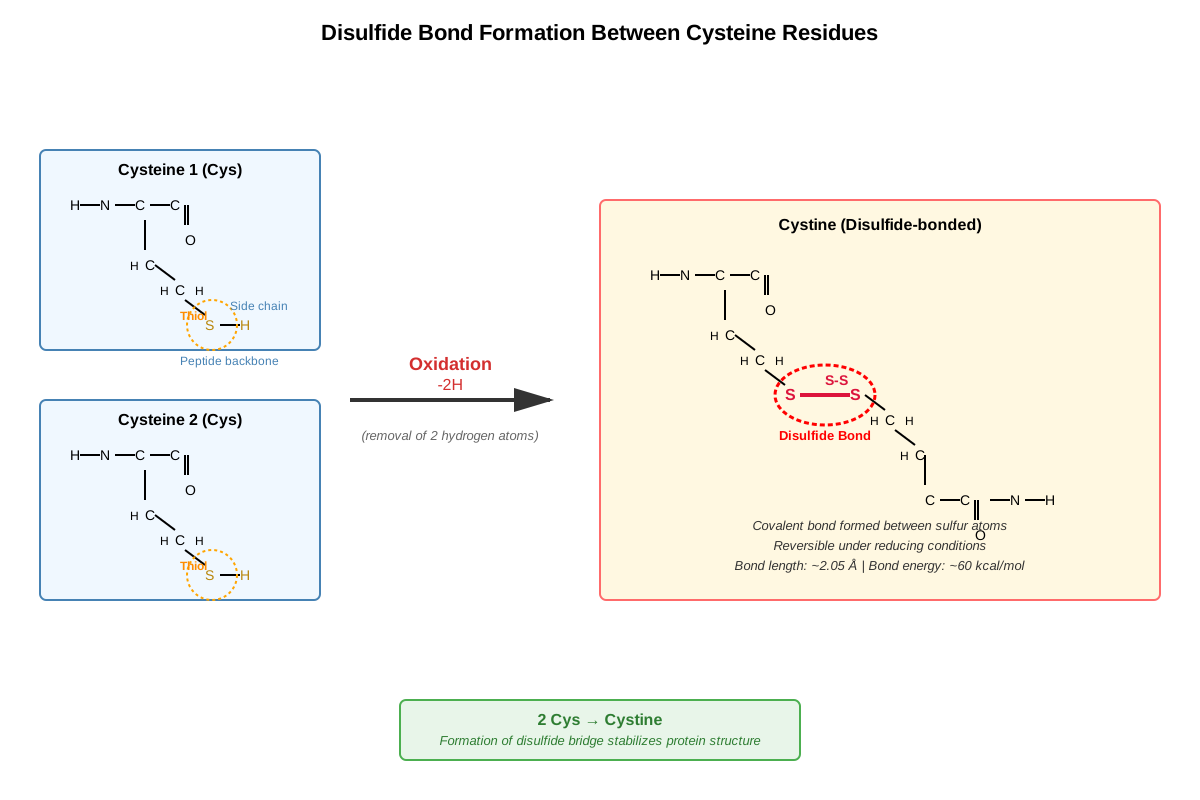
Disulfide bonds form through an oxidation reaction between two cysteine residues, creating a covalent linkage between their sulfur atoms. Each cysteine contains a thiol group (-SH) in its side chain, and when two cysteines undergo oxidation, they lose hydrogen atoms and form a disulfide bridge (-S-S-). This reaction can be represented as:
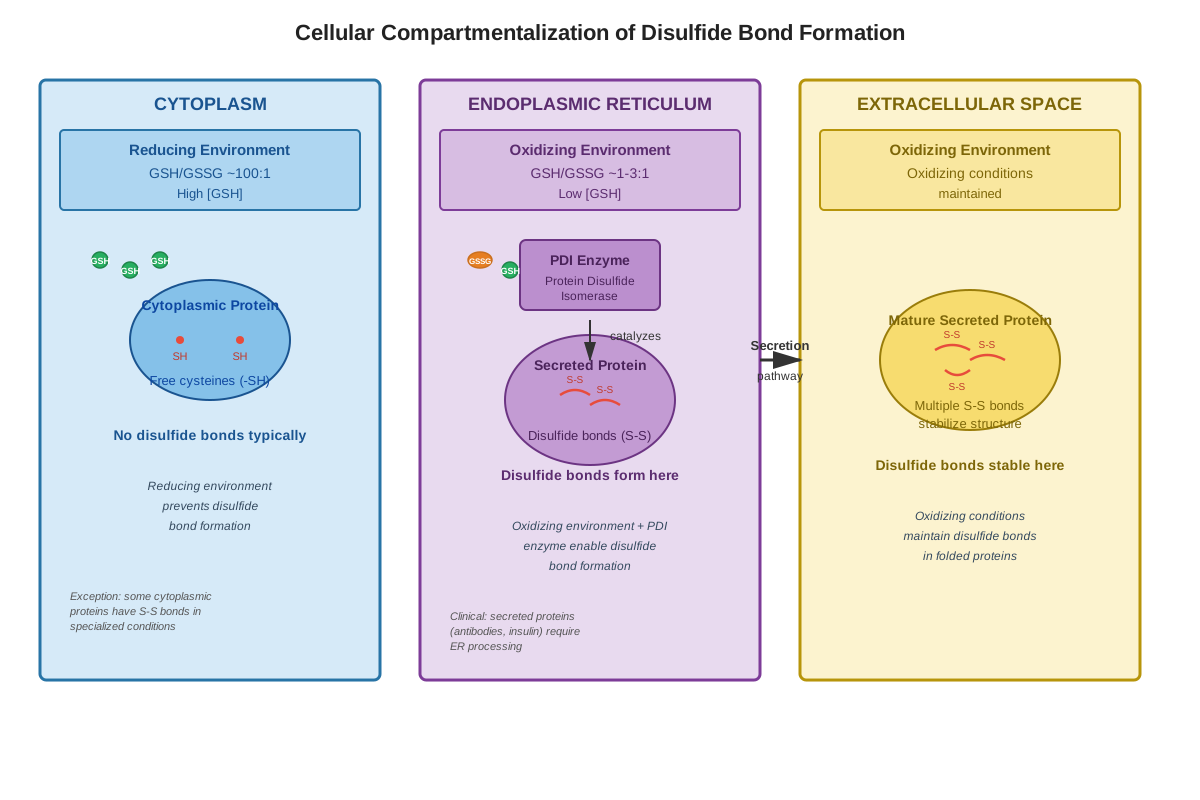
2 R-SH → R-S-S-R + 2H⁺ + 2e⁻The formation requires an oxidizing environment, which explains why disulfide bonds predominantly form in the endoplasmic reticulum (ER) and extracellular spaces rather than in the reducing environment of the cytoplasm. The enzyme protein disulfide isomerase (PDI) catalyzes both the formation and rearrangement of disulfide bonds in the ER, ensuring correct pairing of cysteine residues during protein folding. This enzymatic assistance is crucial because incorrect disulfide bond formation can trap proteins in non-functional conformations.
The bond energy of a disulfide bond is approximately 60 kcal/mol, making it significantly stronger than hydrogen bonds (1-5 kcal/mol) or ionic interactions (3-7 kcal/mol), though weaker than typical C-C bonds (83 kcal/mol). This intermediate strength provides stability while maintaining some reversibility under appropriate conditions.
Location and Environmental Dependence
The cellular location of proteins strongly predicts whether they contain disulfide bonds. The cytoplasm maintains a highly reducing environment (redox potential approximately -200 to -250 mV) due to high concentrations of reduced glutathione (GSH) and thioredoxin systems. This reducing environment keeps cysteine residues in their reduced thiol form, preventing disulfide bond formation. Consequently, most cytoplasmic proteins lack disulfide bonds, and those few that contain them typically use them for regulatory purposes rather than structural stability.
In contrast, the endoplasmic reticulum lumen provides an oxidizing environment (redox potential approximately -180 mV) that favors disulfide bond formation. Proteins destined for secretion or membrane insertion fold in the ER, where specialized machinery including PDI, ERO1 (ER oxidoreductin 1), and other chaperones facilitate proper disulfide bond formation. The extracellular space is even more oxidizing (redox potential approximately -150 to -100 mV), making disulfide bonds highly stable once proteins are secreted.
| Environment | Redox Potential | Disulfide Bond Stability | Typical Proteins |
|---|---|---|---|
| Cytoplasm | -200 to -250 mV | Unstable/Absent | Metabolic enzymes, structural proteins |
| ER Lumen | -180 mV | Forming | Secretory proteins during folding |
| Extracellular | -150 to -100 mV | Very Stable | Antibodies, hormones, extracellular matrix |
| Mitochondrial Matrix | -280 to -340 mV | Absent | Respiratory chain components |
Types of Disulfide Bonds
Disulfide bonds can be classified based on their structural role:
- Intramolecular (intrachain) disulfide bonds: Form between cysteine residues within the same polypeptide chain, stabilizing tertiary structure by bringing distant regions of the sequence into proximity. These bonds are critical for maintaining the folded conformation of single-chain proteins.
- Intermolecular (interchain) disulfide bonds: Form between cysteine residues on different polypeptide chains, stabilizing quaternary structure by covalently linking separate protein subunits. Antibodies provide a classic example, with heavy and light chains connected by interchain disulfide bonds.
- Regulatory disulfide bonds: Participate in protein function rather than just structure, often forming and breaking in response to cellular redox state. These bonds can act as molecular switches, activating or inactivating proteins based on oxidative conditions.
Breaking Disulfide Bonds
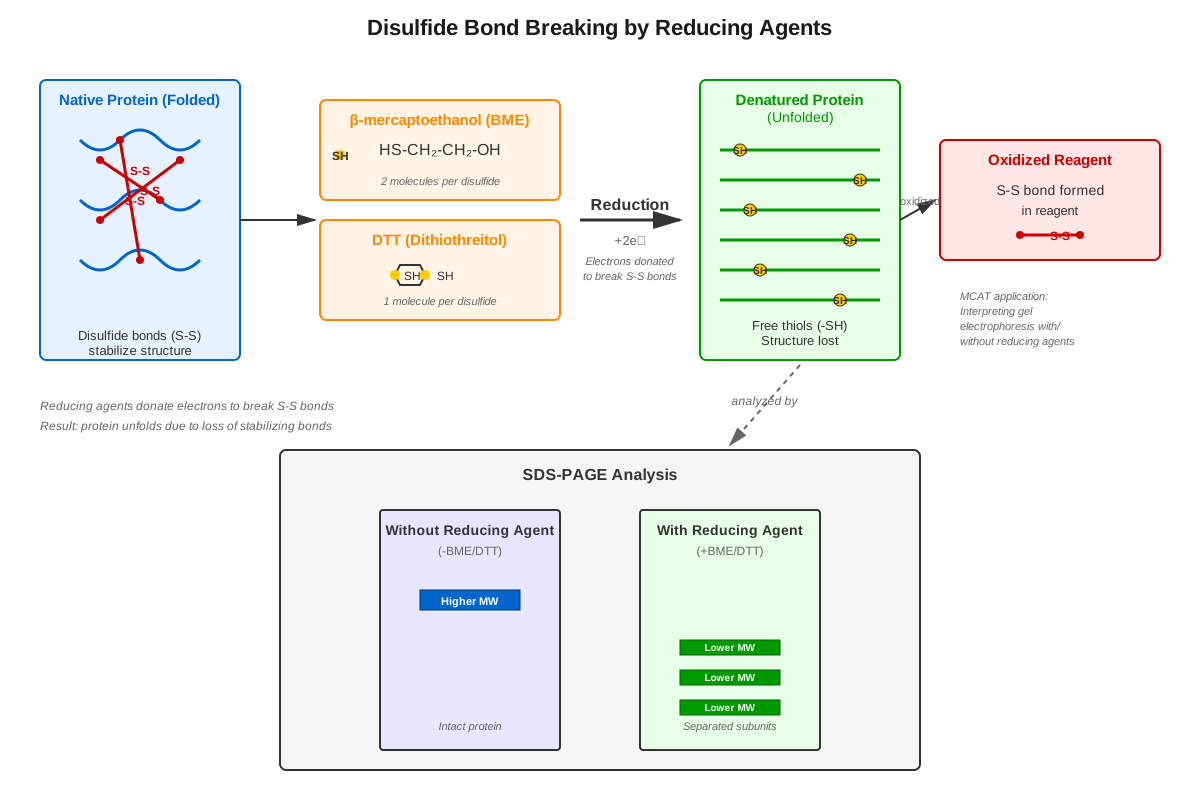
Disulfide bond cleavage occurs through reduction, requiring the addition of electrons and hydrogen atoms:
R-S-S-R + 2H⁺ + 2e⁻ → 2 R-SHSeveral reducing agents commonly break disulfide bonds in laboratory and clinical settings:
- β-mercaptoethanol (BME): Contains a thiol group that reduces disulfide bonds; commonly used at 5-10% concentration in protein denaturation experiments
- Dithiothreitol (DTT): A more powerful reducing agent with two thiol groups, making it more effective and less prone to re-oxidation
- Tris(2-carboxyethyl)phosphine (TCEP): A phosphine-based reducing agent that doesn't contain thiols, avoiding complications from thiol-disulfide exchange
- Glutathione (reduced form, GSH): The primary biological reducing agent in cells, maintaining the cytoplasmic reducing environment
In experimental contexts, reducing agents are frequently combined with denaturants like urea or SDS to fully unfold proteins. The combination disrupts both covalent (disulfide) and non-covalent (hydrogen bonds, hydrophobic interactions) stabilizing forces.
Functional Significance
Disulfide bonds serve multiple critical functions:
Structural Stability: Extracellular proteins face harsh conditions including pH variations, proteases, and mechanical stress. Disulfide bonds provide covalent reinforcement that maintains protein structure under these challenging conditions. Immunoglobulins, for example, contain multiple disulfide bonds that preserve antibody structure in diverse tissue environments.
Protein Folding: During protein synthesis, disulfide bonds help guide the folding process by constraining possible conformations. The formation of correct disulfide bonds is often rate-limiting in protein folding, and incorrect bonds must be broken and reformed until the native structure is achieved.
Allosteric Regulation: Some proteins use disulfide bond formation/breakage as a regulatory mechanism. The insulin receptor, for instance, undergoes conformational changes involving disulfide rearrangement during activation. Redox-sensitive transcription factors like OxyR respond to oxidative stress by forming disulfide bonds that alter their DNA-binding activity.
Toxin and Enzyme Mechanisms: Many bacterial toxins (diphtheria toxin, cholera toxin) contain disulfide bonds that must be reduced for the toxin to enter cells and exert effects. Some enzymes, particularly oxidoreductases, use disulfide bonds in their catalytic mechanisms, forming transient disulfide intermediates during substrate processing.
Concept Relationships
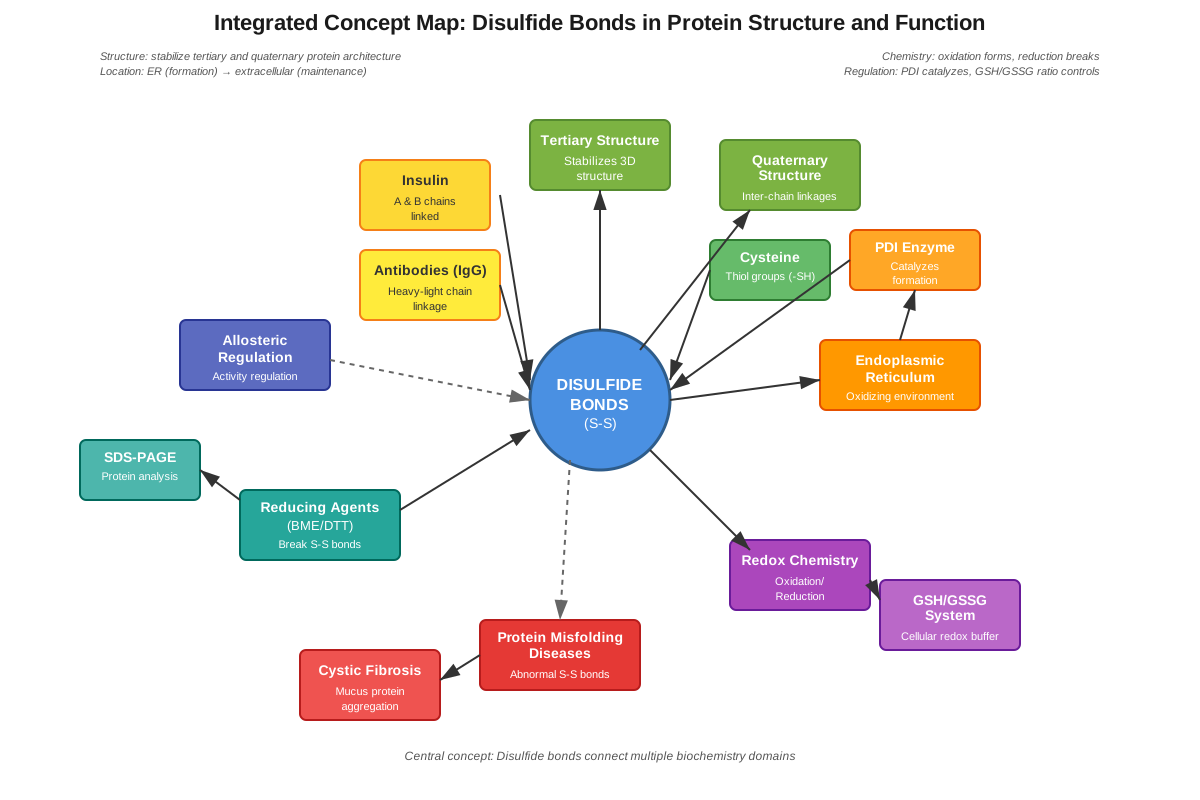
The formation of disulfide bonds directly depends on cysteine amino acid structure → which determines protein primary structure → which influences where cysteines can come into proximity during folding → enabling disulfide bond formation that stabilizes tertiary structure → which may connect multiple chains to establish quaternary structure.
Environmental redox conditions → determine whether disulfide bonds can form → which affects protein stability → which influences protein localization and function → which impacts cellular processes and disease states.
Protein disulfide isomerase activity → catalyzes disulfide bond formation and rearrangement → ensuring proper protein folding → preventing accumulation of misfolded proteins → maintaining ER homeostasis → connecting to the unfolded protein response when overwhelmed.
Reducing agents in experiments → break disulfide bonds → allowing protein denaturation → enabling techniques like SDS-PAGE analysis → revealing protein subunit composition → informing understanding of quaternary structure.
The topic connects backward to prerequisite knowledge of amino acid chemistry and protein structure levels, while connecting forward to advanced topics including protein folding diseases, post-translational modifications, enzyme mechanisms, and cellular redox regulation. Understanding disulfide bonds enables comprehension of how proteins achieve stability, how cells maintain different redox environments in different compartments, and how biochemical techniques exploit these bonds for protein analysis.
Quick check — test yourself on Disulfide bonds so far.
Try Flashcards →High-Yield Facts
⭐ Disulfide bonds form between cysteine residues through oxidation reactions in oxidizing environments (ER, extracellular space), not in the reducing cytoplasm
⭐ The enzyme protein disulfide isomerase (PDI) catalyzes disulfide bond formation and rearrangement in the endoplasmic reticulum
⭐ Reducing agents (β-mercaptoethanol, DTT) break disulfide bonds by providing electrons and hydrogen atoms
⭐ Intramolecular disulfide bonds stabilize tertiary structure within a single chain, while intermolecular bonds link separate chains in quaternary structure
⭐ Extracellular and secreted proteins typically contain disulfide bonds, while cytoplasmic proteins generally do not
- Disulfide bonds have bond energy of approximately 60 kcal/mol, stronger than non-covalent interactions but weaker than most covalent bonds
- The cytoplasm maintains a reducing environment (redox potential -200 to -250 mV) through glutathione and thioredoxin systems
- Incorrect disulfide bond formation can trap proteins in non-functional conformations, requiring PDI to break and reform bonds correctly
- SDS-PAGE under non-reducing conditions (without β-mercaptoethanol) preserves disulfide bonds, while reducing conditions break them
- Antibodies (immunoglobulins) contain both intrachain disulfide bonds within domains and interchain bonds connecting heavy and light chains
- Insulin is synthesized as proinsulin with disulfide bonds, then cleaved to produce mature insulin held together by disulfide bridges
- Hair permanent treatments work by breaking disulfide bonds in keratin with reducing agents, reshaping hair, then reforming bonds with oxidizing agents
Common Misconceptions
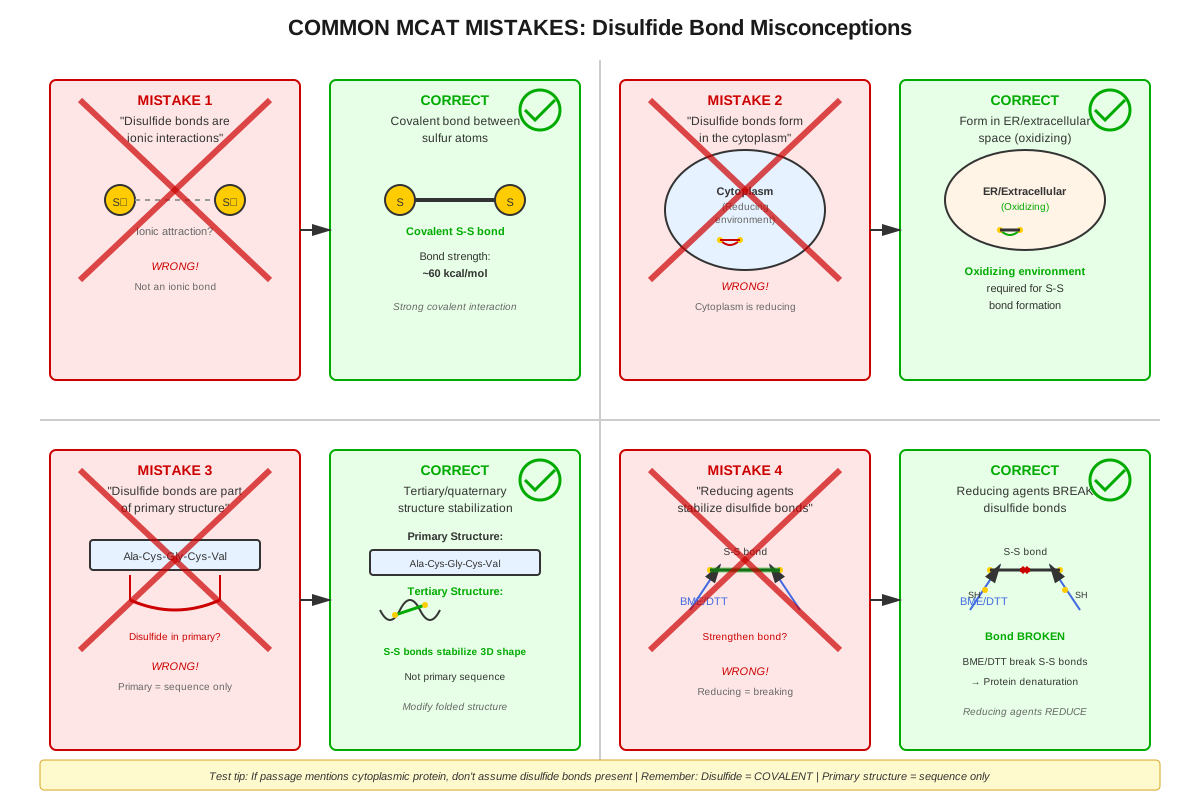
Misconception: All proteins contain disulfide bonds for stability.
Correction: Only proteins in oxidizing environments (ER, extracellular space) typically contain disulfide bonds. Cytoplasmic proteins rely on non-covalent interactions for stability because the cytoplasm's reducing environment prevents disulfide bond formation.
Misconception: Disulfide bonds are the strongest force stabilizing protein structure.
Correction: While disulfide bonds are the strongest single interaction (60 kcal/mol), the cumulative effect of numerous hydrogen bonds, ionic interactions, and hydrophobic effects typically contributes more to overall protein stability. Disulfide bonds provide additional reinforcement, particularly important in harsh extracellular environments.
Misconception: Breaking disulfide bonds always denatures proteins completely.
Correction: Breaking disulfide bonds alone may not fully denature a protein if other stabilizing forces remain intact. Complete denaturation typically requires both reducing agents (to break disulfide bonds) and denaturants like urea or heat (to disrupt non-covalent interactions). Some proteins retain partial structure even after disulfide bond reduction.
Misconception: Cysteine residues always form disulfide bonds when in proximity.
Correction: Proximity is necessary but not sufficient. The environment must be oxidizing, the cysteines must be properly oriented, and the formation must be thermodynamically favorable. Many proteins contain free cysteine residues that never form disulfide bonds due to structural constraints or environmental conditions.
Misconception: Disulfide bonds form spontaneously and randomly during protein folding.
Correction: While some disulfide bonds can form spontaneously in oxidizing conditions, protein disulfide isomerase actively catalyzes and proofreads disulfide bond formation in the ER. This enzymatic assistance ensures correct pairing and prevents kinetic trapping in incorrect conformations. Random disulfide bond formation would produce mostly misfolded proteins.
Misconception: All reducing agents work identically in breaking disulfide bonds.
Correction: Different reducing agents have varying potencies, mechanisms, and side effects. DTT is more effective than β-mercaptoethanol because it has two thiol groups and forms a stable six-membered ring upon oxidation. TCEP works through a different mechanism (phosphine reduction) and is irreversible, unlike thiol-based reducers that can re-oxidize.
Worked Examples
Example 1: Analyzing Protein Behavior Under Different Conditions
Question: A researcher studies a secreted enzyme with a molecular weight of 120 kDa. When analyzed by SDS-PAGE under non-reducing conditions (no β-mercaptoethanol), a single band appears at 120 kDa. Under reducing conditions (with β-mercaptoethanol), two bands appear at 70 kDa and 50 kDa. What can be concluded about this enzyme's structure?
Solution:
Step 1: Interpret the non-reducing condition results.
Under non-reducing conditions, disulfide bonds remain intact. The single 120 kDa band indicates the protein migrates as a single unit of this size, suggesting the native enzyme has this apparent molecular weight when disulfide bonds are preserved.
Step 2: Interpret the reducing condition results.
Under reducing conditions, β-mercaptoethanol breaks disulfide bonds. The appearance of two bands (70 kDa + 50 kDa = 120 kDa) indicates the enzyme consists of two separate polypeptide chains held together by disulfide bonds.
Step 3: Determine the structural organization.
The enzyme has quaternary structure consisting of two non-identical subunits (70 kDa and 50 kDa) connected by intermolecular disulfide bonds. This is a heterodimer held together covalently.
Step 4: Consider the biological context.
As a secreted enzyme, the presence of disulfide bonds makes sense—the oxidizing extracellular environment stabilizes these bonds, and they provide additional stability for the enzyme functioning outside cells.
Key Concept Connection: This example demonstrates how experimental manipulation of disulfide bonds reveals quaternary structure and illustrates the principle that intermolecular disulfide bonds link separate polypeptide chains.
Example 2: Predicting Protein Localization Based on Disulfide Content
Question: A newly discovered protein contains 8 cysteine residues, and structural analysis reveals 4 disulfide bonds. Based on this information alone, where is this protein most likely to function: (A) cytoplasm, (B) mitochondrial matrix, (C) nucleus, or (D) extracellular space?
Solution:
Step 1: Recall the redox environments of different cellular compartments.
- Cytoplasm: highly reducing (-200 to -250 mV), disulfide bonds unstable
- Mitochondrial matrix: extremely reducing (-280 to -340 mV), disulfide bonds very unstable
- Nucleus: reducing (similar to cytoplasm), disulfide bonds generally unstable
- Extracellular space: oxidizing (-150 to -100 mV), disulfide bonds stable
Step 2: Analyze the protein's disulfide bond content.
The protein contains 8 cysteines forming 4 disulfide bonds, meaning all cysteines are paired. This indicates extensive disulfide bonding that would require an oxidizing environment to form and maintain.
Step 3: Eliminate incompatible locations.
Options A, B, and C all represent reducing environments where disulfide bonds would be reduced to free thiols by cellular reducing systems (glutathione, thioredoxin). These locations are incompatible with stable disulfide bonds.
Step 4: Select the most likely location.
Option D (extracellular space) is correct. The oxidizing extracellular environment both allows disulfide bond formation and maintains their stability. Proteins with multiple disulfide bonds are characteristic of secreted and extracellular proteins.
Step 5: Consider additional supporting logic.
Proteins destined for the extracellular space are synthesized in the ER (also oxidizing), where protein disulfide isomerase facilitates proper disulfide bond formation before secretion. This pathway supports extracellular localization.
Key Concept Connection: This example reinforces the relationship between cellular redox environment and disulfide bond stability, demonstrating how structural features can predict protein localization—a common MCAT reasoning task.
Exam Strategy
When approaching MCAT questions on disulfide bonds, immediately identify whether the question involves formation or breaking of bonds, as this determines whether you're dealing with oxidation or reduction. Look for trigger words: "reducing agent," "β-mercaptoethanol," "DTT," or "reducing conditions" signal bond breaking, while "oxidizing environment," "ER," "secreted," or "extracellular" suggest bond formation.
For passage-based questions, quickly scan for experimental conditions. If SDS-PAGE or gel electrophoresis is mentioned, check whether reducing agents were used—this dramatically affects results interpretation. Non-reducing conditions preserve disulfide bonds and show native quaternary structure, while reducing conditions break them and reveal individual subunits. Many students miss this distinction and misinterpret gel results.
Process-of-elimination strategy: When evaluating answer choices about protein stability or localization, immediately eliminate options suggesting stable disulfide bonds in cytoplasmic proteins or unstable bonds in extracellular proteins. These violate fundamental principles. Similarly, eliminate choices that confuse oxidation with reduction or that suggest disulfide bonds form between amino acids other than cysteine.
Time allocation: Disulfide bond questions are typically straightforward if you know the core concepts, so don't overthink them. Spend 60-90 seconds on discrete questions, reserving more time for passage-based questions that require data interpretation. If a question seems complex, identify what's actually being asked—often it's testing a simple concept (like redox environment) disguised in experimental details.
Watch for questions that integrate disulfide bonds with other topics. Common combinations include: protein purification (using reducing agents to separate subunits), enzyme kinetics (disulfide bonds affecting activity), protein folding diseases (incorrect disulfide pairing), and molecular biology techniques (Western blots under reducing vs. non-reducing conditions). These integrated questions reward students who see connections between topics.
Memory Techniques
Mnemonic for disulfide bond locations: "Extracellular Environments Enable S-S bonds" (three E's for ER, Extracellular, and Enable)
Mnemonic for reducing agents: "Beta-mercaptoethanol DTT TCEP Breaks Disulfide Ties" (remembering the three common reducing agents)
Visualization strategy: Picture the cytoplasm as a "reducing sea" with glutathione molecules (GSH) swimming around, constantly breaking any disulfide bonds that try to form. In contrast, visualize the ER and extracellular space as "oxidizing zones" where disulfide bonds can form and remain stable, like bridges that stay intact in dry conditions but would rust away in the reducing sea.
Acronym for disulfide bond functions: "SAFE" - Stability (structural reinforcement), Allosteric regulation, Folding guidance, Enzyme mechanisms
Memory aid for SDS-PAGE interpretation: "Reducing conditions Reveal Real subunits" (three R's remind you that reducing conditions break disulfide bonds and show individual polypeptide chains)
Conceptual anchor: Link disulfide bonds to the familiar example of hair perming. When you think "disulfide bonds," immediately recall that hair treatments break these bonds in keratin (reduction), reshape the hair, then reform bonds (oxidation). This concrete example helps anchor abstract biochemical concepts.
Summary
Disulfide bonds are covalent linkages between cysteine residues that form through oxidation in oxidizing environments like the ER and extracellular space, providing crucial structural stability to secreted and extracellular proteins. These bonds, with energy of approximately 60 kcal/mol, can be intramolecular (stabilizing tertiary structure) or intermolecular (linking separate chains in quaternary structure). The reducing cytoplasmic environment prevents disulfide bond formation in intracellular proteins through glutathione and thioredoxin systems. Protein disulfide isomerase catalyzes proper disulfide bond formation and rearrangement in the ER, ensuring correct protein folding. Reducing agents like β-mercaptoethanol and DTT break disulfide bonds by providing electrons, a principle exploited in protein analysis techniques like SDS-PAGE. Understanding disulfide bonds requires integrating knowledge of amino acid chemistry, redox reactions, cellular compartmentalization, and protein structure levels—making this a high-yield topic that connects multiple MCAT biochemistry concepts.
Key Takeaways
- Disulfide bonds form between cysteine residues through oxidation reactions in oxidizing environments (ER, extracellular), not in the reducing cytoplasm
- Protein disulfide isomerase (PDI) catalyzes disulfide bond formation and rearrangement in the ER during protein folding
- Reducing agents (β-mercaptoethanol, DTT, TCEP) break disulfide bonds, revealing protein subunit composition in techniques like SDS-PAGE
- Intramolecular disulfide bonds stabilize tertiary structure within single chains; intermolecular bonds link separate chains in quaternary structure
- Extracellular and secreted proteins characteristically contain disulfide bonds for stability, while cytoplasmic proteins generally lack them
- The redox environment of cellular compartments determines disulfide bond stability: cytoplasm (-200 to -250 mV) is reducing; extracellular space (-150 to -100 mV) is oxidizing
- Disulfide bonds serve multiple functions including structural stability, protein folding guidance, allosteric regulation, and participation in enzyme mechanisms
Related Topics
Protein Folding and Chaperones: Understanding disulfide bonds provides foundation for studying how proteins achieve native conformations, the role of chaperones like BiP and calnexin in the ER, and the unfolded protein response when folding fails.
Post-Translational Modifications: Disulfide bond formation represents one type of post-translational modification; mastering this concept enables understanding of glycosylation, phosphorylation, and other modifications that occur after translation.
Redox Chemistry in Biochemistry: The oxidation-reduction principles underlying disulfide bonds extend to electron transport chains, antioxidant systems, and cellular signaling through reactive oxygen species.
Protein Purification and Analysis Techniques: Knowledge of disulfide bonds is essential for understanding SDS-PAGE, Western blotting, protein chromatography, and mass spectrometry approaches to studying protein structure.
Enzyme Mechanisms and Regulation: Many enzymes use disulfide bonds in catalytic mechanisms or regulatory processes, connecting this topic to enzyme kinetics and metabolic regulation.
Practice CTA
Now that you've mastered the core concepts of disulfide bonds, it's time to solidify your understanding through active practice. Challenge yourself with the practice questions and flashcards designed specifically for this topic—they'll help you identify any remaining gaps and build the rapid recall essential for MCAT success. Remember, understanding the concept is just the first step; applying it under timed conditions is what translates knowledge into points on test day. You've built a strong foundation—now reinforce it through deliberate practice!
Sign up free to keep reading
Create a free AnvayaPrep account to finish this MCAT guide on Disulfide bonds — plus flashcards and practice questions.