Overview
Essential amino acids represent a fundamental concept in Biochemistry that bridges nutritional science, protein synthesis, and metabolic pathways—all critical domains for MCAT success. These nine amino acids cannot be synthesized de novo by the human body and must be obtained through dietary sources, making them indispensable for maintaining nitrogen balance, supporting growth, and enabling countless physiological processes. Understanding essential amino acids requires mastery of their chemical structures, metabolic fates, and roles in protein synthesis, while also appreciating the clinical consequences of their deficiency.
For the MCAT, essential amino acids appear frequently across multiple contexts within the Biochemistry section and often bridge into biological sciences passages. Questions may test direct recall of which amino acids are essential, but more commonly, they embed this knowledge within complex scenarios involving protein synthesis, nutritional deficiencies, metabolic disorders, or enzyme function. The MCAT particularly favors questions that require students to apply their understanding of essential amino acid properties to predict outcomes in experimental or clinical settings, making superficial memorization insufficient for exam success.
Within the broader framework of Amino Acids and Proteins, essential amino acids serve as the building blocks that constrain and define protein synthesis capacity. Their availability directly limits the rate of translation and determines whether the body can maintain positive nitrogen balance. This topic connects intimately with protein structure, enzyme catalysis, metabolic pathways (particularly those involving branched-chain amino acids), and nutritional biochemistry. Mastering essential amino acids provides the foundation for understanding protein quality, complementary protein sources, and the biochemical basis of various deficiency diseases—all high-yield topics for standardized medical examinations.
Learning Objectives
- [ ] Define essential amino acids using accurate Biochemistry terminology
- [ ] Explain why essential amino acids matters for the MCAT
- [ ] Apply essential amino acids to exam-style questions
- [ ] Identify common mistakes related to essential amino acids
- [ ] Connect essential amino acids to related Biochemistry concepts
- [ ] Classify all twenty standard amino acids as essential, conditionally essential, or non-essential
- [ ] Predict the physiological consequences of essential amino acid deficiency in various clinical scenarios
- [ ] Analyze protein sources based on their essential amino acid composition and biological value
Prerequisites
- Basic amino acid structure: Understanding of the general amino acid structure (amino group, carboxyl group, α-carbon, R-group) is necessary to appreciate what distinguishes essential from non-essential amino acids beyond synthetic capability
- Protein synthesis fundamentals: Knowledge of transcription and translation processes helps contextualize why essential amino acid availability limits protein production
- Basic metabolic pathways: Familiarity with anabolic and catabolic processes provides context for understanding why certain amino acids cannot be synthesized from common metabolic intermediates
- Nitrogen balance concepts: Understanding nitrogen intake versus excretion is relevant because essential amino acids are the primary dietary nitrogen source that cannot be replaced through transamination
Why This Topic Matters
Clinical and Real-World Significance
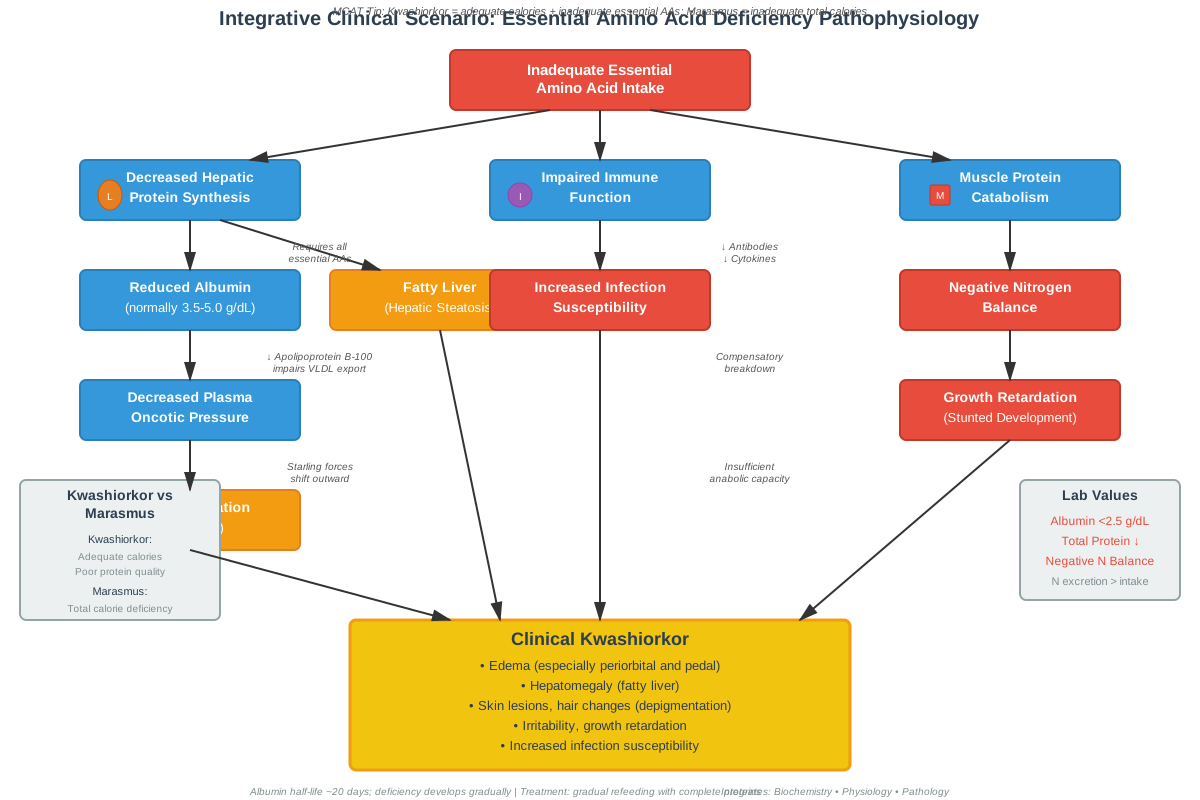
Essential amino acid deficiency manifests in numerous clinically significant conditions. Kwashiorkor, a protein-energy malnutrition disorder characterized by edema, hepatomegaly, and skin lesions, results primarily from inadequate essential amino acid intake despite sufficient caloric consumption. Patients with phenylketonuria (PKU) must carefully manage phenylalanine intake—an essential amino acid—demonstrating how even essential nutrients can become toxic when metabolic pathways are disrupted. Athletes and bodybuilders must understand essential amino acid requirements to optimize muscle protein synthesis, while vegetarians and vegans must combine complementary protein sources to ensure adequate intake of all essential amino acids.
In medical practice, parenteral nutrition formulations must contain all essential amino acids to prevent negative nitrogen balance in patients unable to consume food orally. Burn victims, trauma patients, and those recovering from major surgery have elevated essential amino acid requirements, making this knowledge critical for clinical nutrition management. The concept also underlies the development of protein quality metrics like the Protein Digestibility-Corrected Amino Acid Score (PDCAAS), which healthcare providers use to assess dietary adequacy.
MCAT Examination Statistics and Question Types
Essential amino acids appear in approximately 15-20% of Biochemistry passages on the MCAT, either as the primary focus or as supporting knowledge required to answer questions about protein metabolism, nutrition, or enzyme function. The MCAT tests this topic through several question formats:
- Direct recall questions: Identifying which amino acids are essential (typically 10-15% of amino acid questions)
- Application questions: Predicting outcomes of dietary deficiencies or analyzing experimental nutrition studies (40-50%)
- Passage-based reasoning: Interpreting data about protein quality, nitrogen balance studies, or metabolic disorders (30-40%)
Common passage contexts include nutritional studies comparing protein sources, metabolic pathway diagrams showing amino acid synthesis, clinical vignettes describing deficiency diseases, and biochemical experiments examining translation rates under various nutritional conditions. The MCAT particularly favors questions requiring students to integrate essential amino acid knowledge with concepts like limiting amino acids, protein complementation, and the relationship between amino acid availability and translation efficiency.
Core Concepts
Definition and Classification of Essential Amino Acids
Essential amino acids are amino acids that cannot be synthesized by human metabolic pathways in sufficient quantities to meet physiological demands and therefore must be obtained from dietary sources. The human body lacks the enzymatic machinery to create the carbon skeletons of these amino acids or to perform the necessary chemical modifications to produce them from other precursors. This biochemical limitation makes dietary intake of these amino acids obligatory for survival, growth, and maintenance of physiological function.
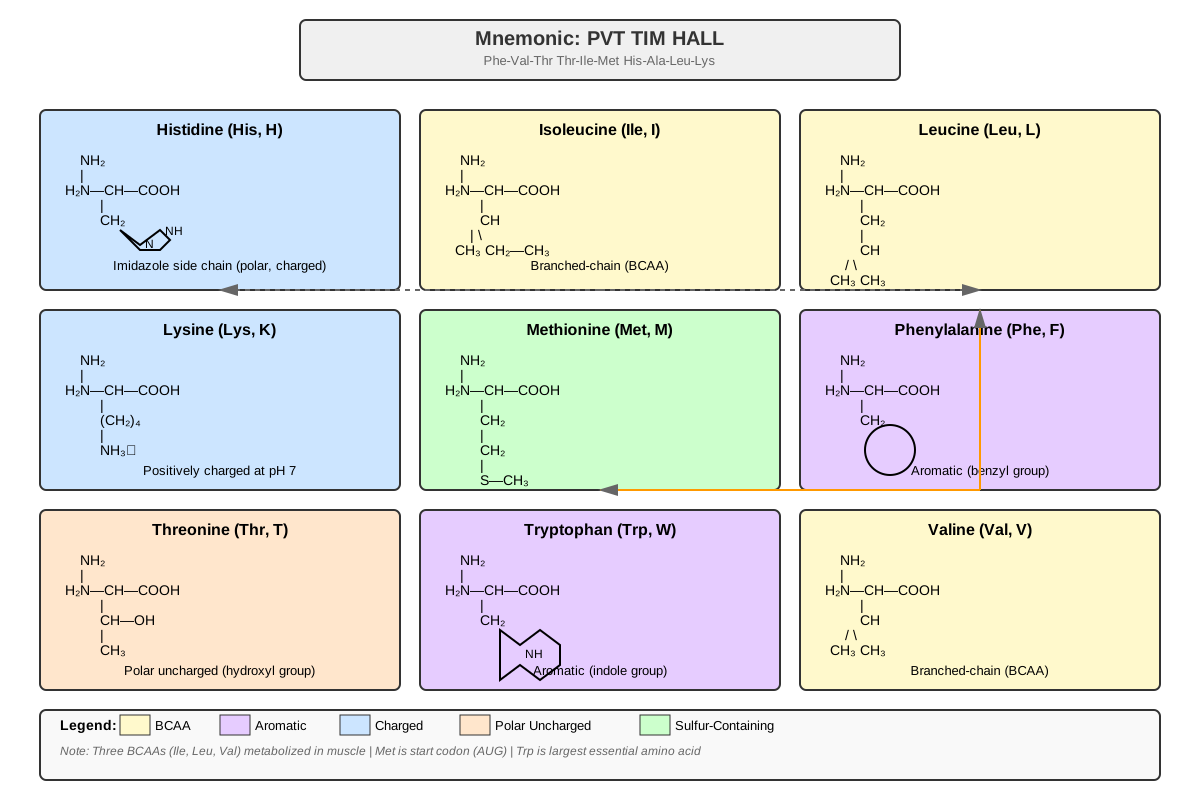
The nine essential amino acids for adult humans are:
| Amino Acid | Three-Letter Code | One-Letter Code | Key Structural Feature |
|---|---|---|---|
| Histidine | His | H | Imidazole side chain (aromatic, basic) |
| Isoleucine | Ile | I | Branched aliphatic chain |
| Leucine | Leu | L | Branched aliphatic chain |
| Lysine | Lys | K | Long aliphatic chain with terminal amino group |
| Methionine | Met | M | Contains sulfur; nonpolar |
| Phenylalanine | Phe | F | Aromatic benzene ring |
| Threonine | Thr | T | Contains hydroxyl group; polar uncharged |
| Tryptophan | Trp | W | Indole ring system; largest amino acid |
| Valine | Val | V | Branched aliphatic chain |
Biochemical Basis for Essentiality
The essentiality of these amino acids stems from specific enzymatic deficiencies in human metabolism. Humans lack the enzymes necessary to synthesize the carbon skeletons of branched-chain amino acids (valine, leucine, isoleucine) from common metabolic intermediates like pyruvate or α-ketoglutarate. Similarly, the aromatic amino acids (phenylalanine, tryptophan) require the shikimate pathway for synthesis—a pathway present in plants and microorganisms but absent in animals.
Non-essential amino acids, in contrast, can be synthesized through transamination reactions, where amino groups are transferred from one amino acid to a keto acid, or through other metabolic conversions. For example, alanine can be synthesized from pyruvate through transamination, and glutamate can be produced from α-ketoglutarate. The body can manufacture these amino acids as long as sufficient nitrogen (from any amino acid source) and the appropriate carbon skeleton precursors are available.
Conditionally Essential Amino Acids
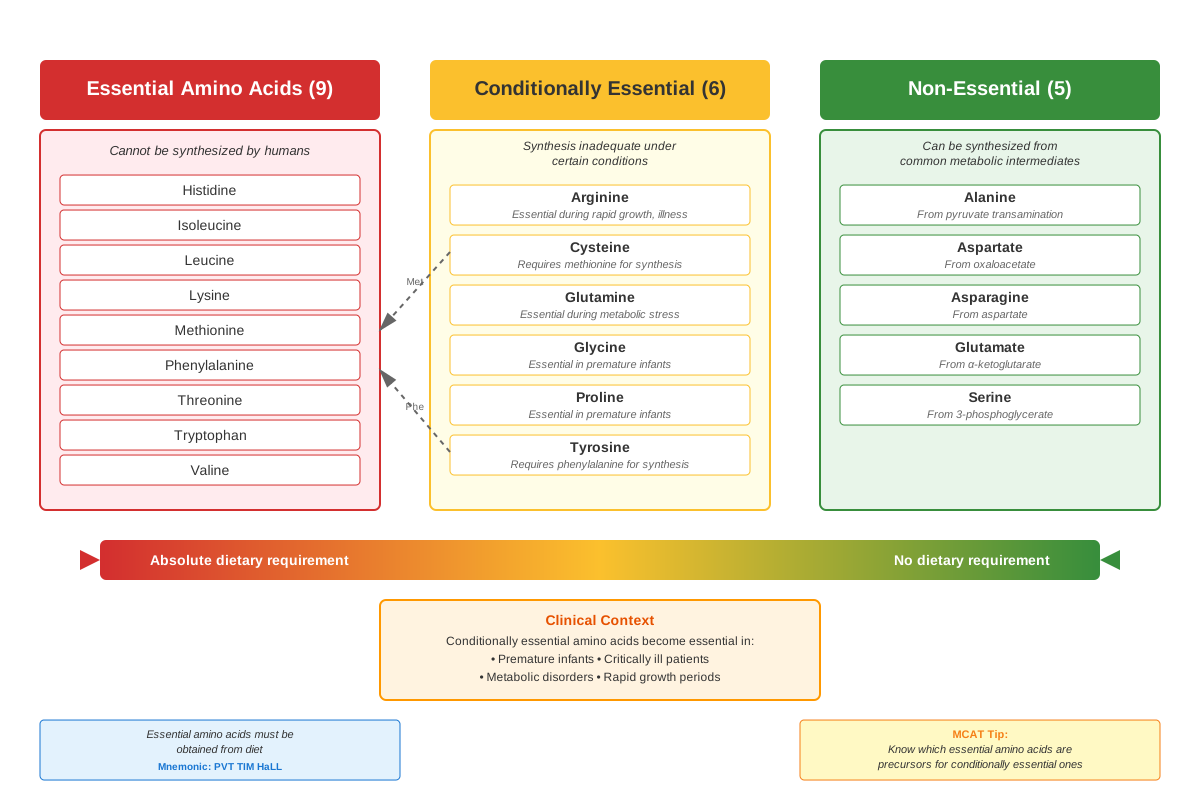
Several amino acids occupy an intermediate category: conditionally essential amino acids (also called semi-essential). These can be synthesized by the body but not always in sufficient quantities to meet physiological demands, particularly during periods of rapid growth, illness, or metabolic stress. The conditionally essential amino acids include:
- Arginine: Essential during periods of rapid growth (infancy, adolescence) and during illness; synthesized via the urea cycle but demand may exceed production
- Cysteine: Can be synthesized from methionine (an essential amino acid), but becomes conditionally essential when methionine is limited
- Glutamine: Normally non-essential but becomes essential during catabolic stress, sepsis, or intensive exercise
- Glycine: May become essential during rapid growth or when synthesizing large amounts of collagen
- Proline: Can be synthesized from glutamate but may be insufficient during wound healing
- Tyrosine: Synthesized from phenylalanine (essential), so becomes conditionally essential when phenylalanine is limited or in PKU patients
Metabolic Roles and Functional Significance
Each essential amino acid serves multiple metabolic functions beyond protein synthesis:
Branched-Chain Amino Acids (BCAAs): Leucine, isoleucine, and valine are unique among amino acids because they are primarily metabolized in skeletal muscle rather than the liver. Leucine particularly serves as a signaling molecule that activates the mTOR pathway, stimulating protein synthesis and inhibiting autophagy. BCAAs provide nitrogen for alanine and glutamine synthesis in muscle tissue and serve as gluconeogenic precursors during fasting states.
Aromatic Amino Acids: Phenylalanine serves as the precursor for tyrosine (which produces dopamine, norepinephrine, epinephrine, and thyroid hormones). Tryptophan is the sole precursor for serotonin and melatonin synthesis, making it critical for mood regulation and sleep-wake cycles. Both phenylalanine and tryptophan compete for the same transporter across the blood-brain barrier, creating a competitive relationship that affects neurotransmitter synthesis.
Methionine: This sulfur-containing amino acid serves as the methyl donor in one-carbon metabolism after conversion to S-adenosylmethionine (SAM). Methylation reactions are essential for DNA synthesis, gene expression regulation, neurotransmitter synthesis, and phospholipid production. Methionine also provides sulfur for cysteine synthesis through the transsulfuration pathway.
Lysine: This amino acid is crucial for collagen cross-linking (through hydroxylysine formation), carnitine synthesis (essential for fatty acid transport into mitochondria), and calcium absorption. Lysine is often the limiting amino acid in grain-based diets.
Threonine: Serves as a precursor for glycine and serine synthesis and is important for immune function, particularly in the production of immunoglobulins and antibodies.
Histidine: The imidazole side chain makes histidine critical for enzyme catalysis (as seen in the catalytic triad of serine proteases). Histidine is also the precursor for histamine synthesis and plays a role in metal ion coordination in proteins like hemoglobin.
Protein Quality and Limiting Amino Acids
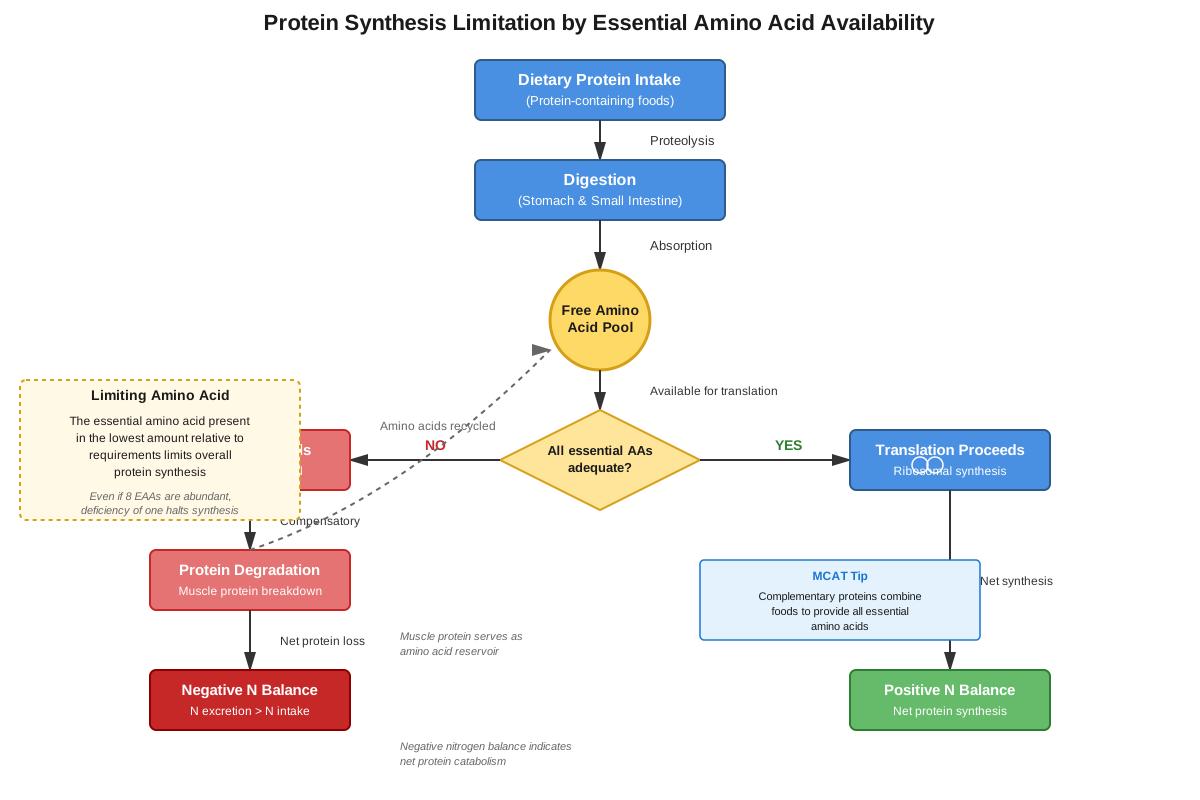
The concept of limiting amino acids is central to understanding protein nutrition. A limiting amino acid is the essential amino acid present in the lowest quantity relative to human requirements in a particular protein source. This amino acid limits the body's ability to utilize all other amino acids from that protein source for protein synthesis. Once the limiting amino acid is depleted, protein synthesis cannot continue even if other amino acids remain abundant—the excess amino acids are deaminated and used for energy or converted to fat.
Different protein sources have characteristic limiting amino acids:
- Grains (wheat, rice, corn): Lysine is typically limiting
- Legumes (beans, lentils): Methionine is typically limiting
- Corn specifically: Both lysine and tryptophan are limiting
- Animal proteins: Generally contain all essential amino acids in adequate proportions (complete proteins)
Protein complementation addresses limiting amino acids by combining protein sources with complementary amino acid profiles. For example, combining grains (low in lysine, adequate in methionine) with legumes (adequate in lysine, low in methionine) provides all essential amino acids in sufficient quantities. This principle is particularly important for individuals following plant-based diets.
Nitrogen Balance and Essential Amino Acid Requirements
Nitrogen balance represents the relationship between nitrogen intake (primarily from dietary protein) and nitrogen excretion (primarily as urea in urine). Essential amino acids are critical determinants of nitrogen balance because they cannot be replaced through metabolic interconversions:
- Positive nitrogen balance: Nitrogen intake exceeds excretion; occurs during growth, pregnancy, recovery from illness, or muscle building
- Neutral nitrogen balance: Intake equals excretion; typical of healthy adults in steady state
- Negative nitrogen balance: Excretion exceeds intake; occurs during starvation, illness, inadequate protein intake, or when essential amino acids are deficient
Even if total protein intake is adequate, deficiency of a single essential amino acid can cause negative nitrogen balance because protein synthesis cannot proceed without all necessary amino acids present simultaneously at the ribosome.
Concept Relationships
The essential amino acids concept integrates multiple biochemical domains into a cohesive framework. At the foundational level, amino acid structure determines chemical properties → which influences metabolic pathway participation → which determines whether the amino acid can be synthesized endogenously → which establishes essentiality status.
Essential amino acids connect directly to protein synthesis because translation requires simultaneous availability of all amino acids specified by the mRNA sequence. If an essential amino acid is absent, the ribosome stalls, and the incomplete polypeptide may be degraded. This relationship extends to gene expression because cells can sense amino acid availability through the GCN2 kinase pathway, which phosphorylates eIF2α and reduces global translation rates when essential amino acids are scarce.
The concept of limiting amino acids bridges essential amino acids to nutritional biochemistry and protein quality assessment. This connects further to complementary protein sources and dietary planning, particularly relevant for plant-based diets. The relationship flows: Essential amino acid composition of foods → Identification of limiting amino acid → Assessment of protein quality → Dietary planning strategies.
Metabolic pathways connect bidirectionally with essential amino acids. While essential amino acids cannot be synthesized, they serve as precursors for numerous metabolites: phenylalanine → tyrosine → catecholamines; tryptophan → serotonin → melatonin; methionine → SAM → methylation reactions. These pathways demonstrate that essentiality doesn't mean metabolic simplicity—essential amino acids participate in complex, branching metabolic networks.
The conditionally essential amino acids concept creates a bridge between essential and non-essential classifications, showing that metabolic context (growth, stress, disease) can shift amino acid requirements. This connects to clinical nutrition, where arginine supplementation may benefit wound healing, or glutamine may be critical during sepsis.
Finally, essential amino acids connect to enzyme function and protein structure. The specific chemical properties of essential amino acids (aromatic rings, branched chains, sulfur atoms) make them irreplaceable in certain protein contexts. For example, the hydrophobic branched-chain amino acids are critical for protein core stability, while aromatic amino acids enable specific binding interactions and electron transfer reactions.
Quick check — test yourself on Essential amino acids so far.
Try Flashcards →High-Yield Facts
⭐ The nine essential amino acids are: Histidine, Isoleucine, Leucine, Lysine, Methionine, Phenylalanine, Threonine, Tryptophan, and Valine (memorize using "PVT TIM HaLL" or similar mnemonic)
⭐ Lysine is the most common limiting amino acid in grain-based diets, while methionine is typically limiting in legume-based diets
⭐ Branched-chain amino acids (leucine, isoleucine, valine) are primarily metabolized in skeletal muscle rather than the liver, unlike most other amino acids
⭐ Leucine uniquely activates the mTOR pathway, serving as both a building block and a signaling molecule for protein synthesis
⭐ Phenylalanine is essential, but tyrosine is conditionally essential because tyrosine can be synthesized from phenylalanine via phenylalanine hydroxylase
- Tryptophan is the least abundant amino acid in most proteins and is the sole precursor for serotonin and melatonin synthesis
- Methionine is the only essential amino acid containing sulfur and serves as the universal methyl donor after conversion to SAM
- Histidine was the last amino acid to be definitively classified as essential (1975), and adults can maintain short-term nitrogen balance without it
- Complete proteins contain all essential amino acids in adequate proportions; animal proteins are typically complete, while most plant proteins are incomplete
- Kwashiorkor results from protein deficiency despite adequate caloric intake, characterized by edema, hepatomegaly, and skin changes due to inadequate essential amino acid intake
Common Misconceptions
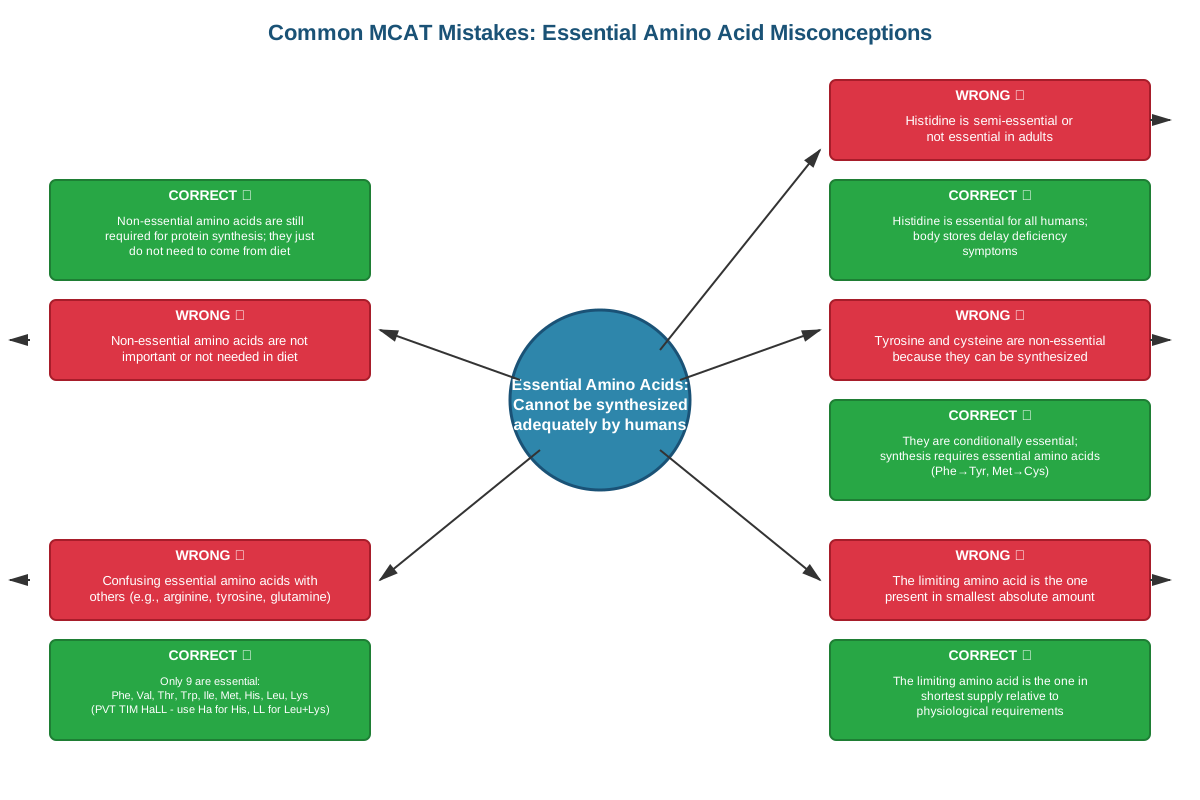
Misconception: All amino acids that cannot be synthesized by the body are essential.
Correction: Essentiality is defined by whether the body can synthesize sufficient quantities to meet physiological demands, not just whether synthesis is possible. Conditionally essential amino acids can be synthesized but not always in adequate amounts during growth, stress, or disease states.
Misconception: Essential amino acids are more important than non-essential amino acids for protein structure and function.
Correction: Both essential and non-essential amino acids are equally important for protein structure and function. Essentiality refers only to the requirement for dietary intake, not to functional importance. Glycine, a non-essential amino acid, is critical for collagen structure, while alanine is essential for glucose-alanine cycle function.
Misconception: Vegetarian diets cannot provide adequate essential amino acids.
Correction: Plant-based diets can provide all essential amino acids through protein complementation—combining foods with complementary amino acid profiles (e.g., grains with legumes). Additionally, some plant proteins like quinoa and soy are complete proteins containing all essential amino acids in adequate proportions.
Misconception: Essential amino acids must be consumed together in the same meal for effective protein synthesis.
Correction: While simultaneous availability at the ribosome is necessary, the body maintains free amino acid pools that buffer short-term variations. Consuming complementary proteins within the same day (rather than the same meal) is generally sufficient for adequate protein synthesis, though consuming them together may be slightly more efficient.
Misconception: Tyrosine is an essential amino acid because it's required for neurotransmitter synthesis.
Correction: Tyrosine is conditionally essential, not essential. It can be synthesized from phenylalanine (which is essential) via phenylalanine hydroxylase. Tyrosine only becomes essential when phenylalanine is limited or in individuals with phenylketonuria who cannot convert phenylalanine to tyrosine.
Misconception: The body stores excess essential amino acids for future use like it stores glucose as glycogen.
Correction: Unlike carbohydrates and fats, the body has no significant storage form for amino acids. Excess amino acids are deaminated, with the nitrogen excreted as urea and the carbon skeletons used for energy or converted to glucose or fat. This makes regular dietary intake of essential amino acids necessary.
Worked Examples
Example 1: Analyzing a Nutritional Study
Question: A research study examines two groups of growing children. Group A receives a diet with 60g of protein daily from mixed animal sources. Group B receives 60g of protein daily exclusively from wheat. After 6 months, Group B shows signs of growth retardation and negative nitrogen balance despite adequate caloric intake, while Group A shows normal growth. Explain the biochemical basis for these observations.
Solution:
Step 1: Identify the key difference between the protein sources.
- Animal proteins are complete proteins containing all essential amino acids in proportions that match human requirements
- Wheat protein is incomplete, with lysine as the limiting amino acid (wheat is particularly deficient in lysine relative to human needs)
Step 2: Apply the concept of limiting amino acids to protein synthesis.
- Protein synthesis requires simultaneous availability of all amino acids specified by the mRNA sequence
- When lysine (the limiting amino acid in wheat) is depleted, protein synthesis cannot continue even though other amino acids remain available
- The excess non-limiting amino acids cannot be stored and are deaminated, with nitrogen excreted as urea
Step 3: Connect to nitrogen balance and growth.
- Negative nitrogen balance occurs when nitrogen excretion exceeds intake
- In Group B, the limiting lysine prevents full utilization of dietary protein, causing increased amino acid catabolism and nitrogen excretion
- Growth requires positive nitrogen balance for tissue synthesis; the lysine deficiency prevents adequate protein synthesis for growth
- Group A maintains positive nitrogen balance because all essential amino acids are available in adequate proportions
Step 4: Relate to the clinical presentation.
- Growth retardation results from insufficient protein synthesis for tissue development
- This scenario resembles kwashiorkor, where protein deficiency occurs despite adequate calories
- The condition could be corrected by supplementing lysine or adding a complementary protein source (like legumes) that provides adequate lysine
Key Learning Point: This example demonstrates that total protein quantity is insufficient—protein quality (essential amino acid composition) determines whether dietary protein can support growth and maintain nitrogen balance.
Example 2: Metabolic Pathway Analysis
Question: A patient with phenylketonuria (PKU) must restrict dietary phenylalanine to prevent toxic accumulation. The patient's nutritionist is concerned about ensuring adequate intake of all essential nutrients. Which amino acid becomes conditionally essential in this patient, and what dietary modifications are necessary?
Solution:
Step 1: Recall the metabolic relationship between phenylalanine and tyrosine.
- Phenylalanine is an essential amino acid
- Tyrosine is normally conditionally essential because it can be synthesized from phenylalanine via phenylalanine hydroxylase
- In PKU, phenylalanine hydroxylase is deficient or absent, preventing conversion of phenylalanine to tyrosine
Step 2: Determine the essentiality status change.
- Because the patient cannot convert phenylalanine to tyrosine, tyrosine becomes fully essential (not just conditionally essential) for this patient
- The patient must restrict phenylalanine intake to prevent neurotoxicity, but this restriction limits the precursor for tyrosine synthesis
- Even if the enzyme were functional, the low phenylalanine intake would be insufficient to produce adequate tyrosine
Step 3: Identify the metabolic consequences of tyrosine deficiency.
- Tyrosine is the precursor for catecholamine synthesis (dopamine, norepinephrine, epinephrine)
- Tyrosine is also required for thyroid hormone synthesis (T3 and T4)
- Tyrosine is necessary for melanin production
- Inadequate tyrosine could impair neurotransmitter synthesis, thyroid function, and pigmentation
Step 4: Recommend dietary modifications.
- The patient requires direct dietary supplementation with tyrosine to meet requirements
- PKU medical foods and formulas are specifically designed to provide tyrosine while restricting phenylalanine
- The diet must include adequate tyrosine from low-phenylalanine protein sources or pure tyrosine supplements
- Regular monitoring of blood tyrosine levels ensures adequacy
Key Learning Point: This example illustrates how metabolic disorders can change amino acid essentiality status and demonstrates the interconnected nature of amino acid metabolism. It also shows that understanding biosynthetic pathways is crucial for predicting nutritional requirements in disease states.
Exam Strategy
Approaching MCAT Questions on Essential Amino Acids
When encountering essential amino acid questions on the MCAT, employ this systematic approach:
- Identify the question type: Determine whether the question asks for direct recall (which amino acids are essential), application (predicting outcomes of deficiency), or analysis (interpreting experimental data about protein quality)
- Activate relevant knowledge networks: Essential amino acid questions often connect to protein synthesis, nitrogen balance, nutritional biochemistry, or metabolic pathways—quickly recall which conceptual framework applies
- Watch for limiting amino acid scenarios: If a passage discusses protein sources or dietary studies, immediately consider which amino acid might be limiting and how this affects protein utilization
- Consider metabolic context: Questions about conditionally essential amino acids often involve special populations (infants, pregnant women, critically ill patients) or metabolic disorders—context determines essentiality
Trigger Words and Phrases
Recognize these high-yield trigger phrases that signal essential amino acid content:
- "Dietary requirement" or "must be obtained from diet": Direct indicators of essentiality
- "Limiting amino acid": Signals questions about protein quality and complementation
- "Nitrogen balance": Often connects to essential amino acid adequacy
- "Complete protein" vs. "incomplete protein": Indicates focus on essential amino acid composition
- "Protein complementation" or "complementary proteins": Signals plant-based protein scenarios
- "Branched-chain amino acids" or "BCAAs": Specifically refers to leucine, isoleucine, and valine
- "Growth retardation" or "failure to thrive": May indicate essential amino acid deficiency
- "Kwashiorkor": Classic protein deficiency disease related to inadequate essential amino acids
Process of Elimination Strategies
When uncertain about essential amino acid questions, use these elimination approaches:
- Structural analysis: Amino acids with complex structures (aromatic rings, branched chains, sulfur atoms) are more likely to be essential because they require elaborate synthetic pathways that humans lack
- Metabolic simplicity rule: Amino acids that can be easily synthesized through simple transamination (alanine from pyruvate, aspartate from oxaloacetate, glutamate from α-ketoglutarate) are non-essential—eliminate these from essential amino acid lists
- Precursor relationships: If an answer choice suggests an amino acid is essential but you know it can be synthesized from another amino acid (e.g., tyrosine from phenylalanine, cysteine from methionine), it's conditionally essential at most—eliminate it as a fully essential amino acid
- Plant vs. animal protein logic: In questions about protein sources, remember that animal proteins are typically complete while plant proteins are usually incomplete—use this to eliminate answer choices that contradict this pattern
Time Allocation Advice
- Direct recall questions (identifying essential amino acids): 30-45 seconds—these should be rapid if mnemonics are well-memorized
- Application questions (predicting deficiency outcomes): 60-90 seconds—requires connecting essentiality to physiological consequences
- Passage-based questions (analyzing experimental data): 90-120 seconds—must integrate passage information with background knowledge about essential amino acids
- Complex scenarios (metabolic disorders affecting essentiality): 90-120 seconds—requires multi-step reasoning about metabolic pathways
Exam Tip: If a question seems to require memorizing all 20 amino acids' essentiality status, focus on confidently knowing the 9 essential amino acids and 2-3 key conditionally essential ones (arginine, cysteine, tyrosine). This knowledge allows you to eliminate wrong answers efficiently.
Memory Techniques
Primary Mnemonic for Essential Amino Acids
"PVT TIM HaLL" - The most widely used mnemonic for the nine essential amino acids:
- Phenylalanine
- Valine
- Threonine
- Tryptophan
- Isoleucine
- Methionine
- Histidine (the "Ha" sound)
- Leucine
- Lysine (the second "L")
Alternative mnemonic: "If Learned, This Huge List May Prove Truly Valuable"
- Isoleucine, Leucine, Threonine, Histidine, Lysine, Methionine, Phenylalanine, Tryptophan, Valine
Visualization Strategy for Branched-Chain Amino Acids
Create a mental image of a tree with three branches to remember the BCAAs:
- Each branch represents a branched-chain amino acid
- Label the branches L-I-V (Leucine, Isoleucine, Valine)
- Visualize these branches in muscle tissue (since BCAAs are metabolized primarily in muscle)
- See the branches activating muscle growth (leucine's mTOR activation)
Limiting Amino Acid Memory Aid
"Grains Lack Lysine, Legumes Lack Methionine" - Remember the alliteration:
- Grains Lack Lysine (three L's)
- Legumes Lack Methionine (two L's, one M)
- This immediately tells you how to complement plant proteins: combine grains with legumes
Conditionally Essential Amino Acid Acronym
"CAT GP" for the main conditionally essential amino acids:
- Cysteine
- Arginine
- Tyrosine
- Glutamine
- Proline
Aromatic Amino Acid Visualization
Remember the two essential aromatic amino acids (Fenylalanine and Tryptophan) with the phrase:
"FT: Fancy Tryptophan" - Both have fancy aromatic ring structures
- Phenylalanine has a simple benzene ring (fancy but simple)
- Tryptophan has an indole ring (fancy and complex)
- Tyrosine (also aromatic) is NOT essential because it comes FROM phenylalanine
Sulfur-Containing Amino Acid Memory Device
"Meth-ionine has Sulfur, Cyst-eine has Sulfur" - Only two amino acids contain sulfur:
- Methionine (essential) - think "meth" sounds harsh, like sulfur smells harsh
- Cysteine (conditionally essential) - made FROM methionine
- Remember: The essential one (methionine) can make the conditionally essential one (cysteine), not vice versa
Summary
Essential amino acids represent a cornerstone concept in biochemistry that integrates protein synthesis, nutrition, and metabolism. The nine essential amino acids—histidine, isoleucine, leucine, lysine, methionine, phenylalanine, threonine, tryptophan, and valine—cannot be synthesized by human metabolic pathways and must be obtained through dietary sources. Understanding essentiality requires recognizing that humans lack specific enzymes for synthesizing certain carbon skeletons, particularly those of branched-chain and aromatic amino acids. The concept extends beyond simple memorization to encompass limiting amino acids, protein quality assessment, nitrogen balance, and the distinction between essential and conditionally essential amino acids. For MCAT success, students must apply this knowledge to predict outcomes of dietary deficiencies, analyze protein complementation strategies, and understand how metabolic disorders can alter amino acid essentiality status. The clinical significance spans from kwashiorkor and PKU to athletic nutrition and parenteral feeding formulations, making this topic both high-yield for examinations and foundational for medical practice.
Key Takeaways
- Nine amino acids are essential for adult humans: histidine, isoleucine, leucine, lysine, methionine, phenylalanine, threonine, tryptophan, and valine (memorize using "PVT TIM HaLL")
- Essentiality reflects enzymatic limitations: humans lack the metabolic pathways to synthesize these amino acids' carbon skeletons, not that these amino acids are functionally more important than non-essential ones
- Limiting amino acids constrain protein synthesis: the essential amino acid present in lowest quantity relative to requirements determines how effectively dietary protein can be utilized (lysine limits grains, methionine limits legumes)
- Protein complementation addresses limiting amino acids: combining protein sources with complementary amino acid profiles (grains + legumes) provides all essential amino acids in adequate proportions for plant-based diets
- Conditionally essential amino acids bridge categories: arginine, cysteine, tyrosine, glutamine, and proline can be synthesized but not always in sufficient quantities during growth, stress, or disease
- Branched-chain amino acids have unique metabolism: leucine, isoleucine, and valine are metabolized primarily in muscle tissue, with leucine serving as both a building block and an mTOR signaling molecule
- Nitrogen balance depends on essential amino acid adequacy: even with sufficient total protein intake, deficiency of a single essential amino acid can cause negative nitrogen balance and impaired growth
Related Topics
- Protein Structure and Folding: Understanding how essential amino acids contribute specific chemical properties (hydrophobicity, aromaticity, branching) that determine protein three-dimensional structure and stability
- Amino Acid Metabolism and Catabolism: Exploring the metabolic fates of essential amino acids, including transamination, deamination, and their roles as gluconeogenic or ketogenic precursors
- Nitrogen Balance and Urea Cycle: Examining how amino acid catabolism produces ammonia, which must be converted to urea for excretion, and how this relates to protein turnover and requirements
- Protein Synthesis and Translation: Investigating how essential amino acid availability affects ribosomal function, translation rates, and cellular responses to amino acid starvation (GCN2 pathway)
- Nutritional Biochemistry: Studying protein quality metrics (biological value, PDCAAS), dietary protein requirements across life stages, and the biochemical basis of protein-energy malnutrition
- Inborn Errors of Amino Acid Metabolism: Analyzing disorders like phenylketonuria, maple syrup urine disease, and homocystinuria that affect essential amino acid metabolism and alter nutritional requirements
Practice CTA
Now that you've mastered the essential amino acids concept, reinforce your understanding by attempting practice questions and flashcards specifically designed for this topic. Focus on questions that require you to apply your knowledge to novel scenarios—predicting outcomes of dietary manipulations, analyzing experimental data about protein quality, and solving clinical vignettes involving amino acid deficiencies. The MCAT rewards deep understanding over superficial memorization, so challenge yourself with questions that integrate essential amino acids with protein synthesis, metabolism, and nutrition. Your investment in truly mastering this foundational topic will pay dividends across multiple biochemistry domains and significantly strengthen your performance on test day. You've built a solid foundation—now apply it!
Sign up free to keep reading
Create a free AnvayaPrep account to finish this MCAT guide on Essential amino acids — plus flashcards and practice questions.