Overview
The isoelectric point (pI) is a fundamental concept in Biochemistry that describes the pH at which a molecule carries no net electrical charge. For amino acids and proteins, understanding the isoelectric point is crucial because these molecules contain both acidic and basic functional groups that can gain or lose protons depending on the pH of their environment. At the isoelectric point, the positive charges exactly balance the negative charges, resulting in a zwitterionic form with zero net charge. This property has profound implications for protein behavior, including solubility, migration in electric fields, and biological function.
Mastery of isoelectric point MCAT concepts is essential because this topic appears frequently on the exam in multiple contexts. Questions may ask students to calculate the pI of amino acids or peptides, predict protein behavior at different pH values, or interpret experimental techniques like isoelectric focusing and electrophoresis. The MCAT tests not only computational skills but also conceptual understanding of how pH affects the charge state of biomolecules and how this influences their physical and chemical properties.
The isoelectric point connects to broader themes in Biochemistry including acid-base chemistry, protein structure and function, and separation techniques. Understanding pI requires integration of knowledge about pKa values, the Henderson-Hasselbalch equation, and the ionization states of amino acid side chains. This topic serves as a bridge between general chemistry principles and the specialized behavior of biological macromolecules, making it a high-yield area for MCAT preparation.
Learning Objectives
- [ ] Define isoelectric point using accurate Biochemistry terminology
- [ ] Explain why isoelectric point matters for the MCAT
- [ ] Apply isoelectric point to exam-style questions
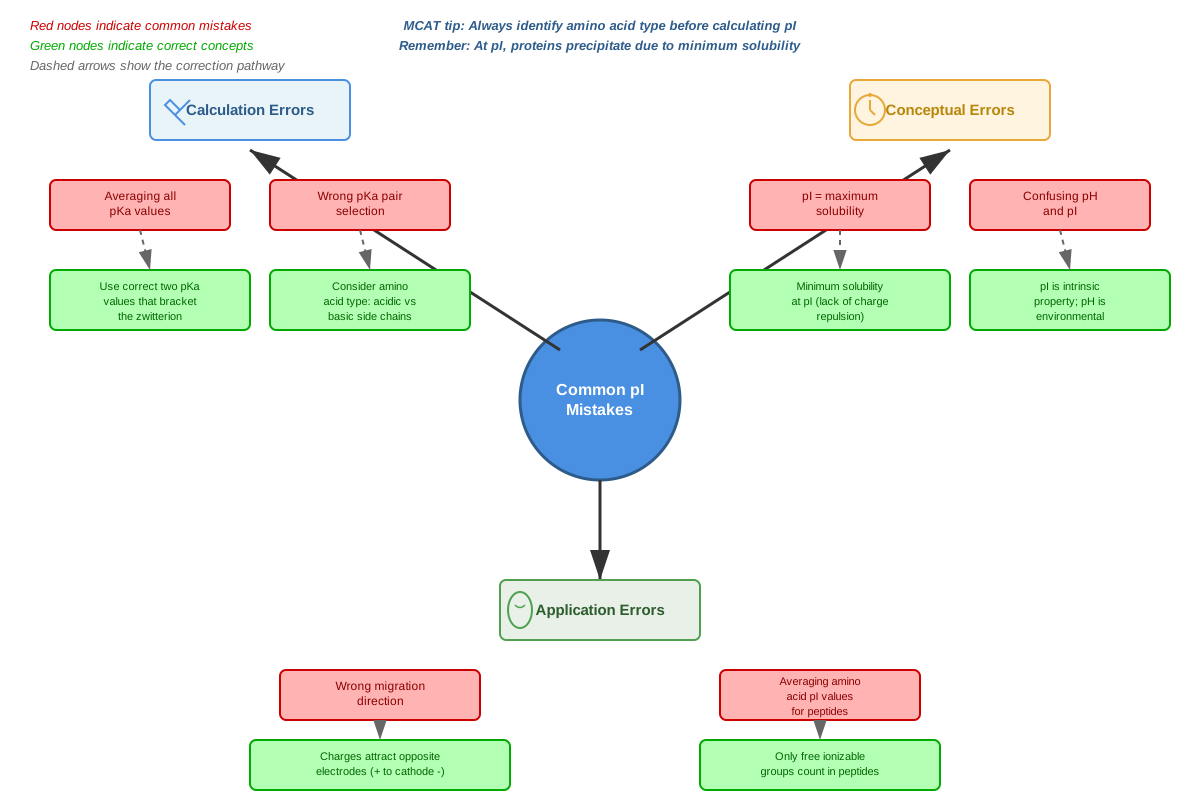
- [ ] Identify common mistakes related to isoelectric point
- [ ] Connect isoelectric point to related Biochemistry concepts
- [ ] Calculate the isoelectric point for amino acids with different ionizable groups
- [ ] Predict the net charge of amino acids and peptides at various pH values
- [ ] Interpret how changes in pH affect protein solubility and electrophoretic migration
- [ ] Apply isoelectric point principles to experimental separation techniques
Prerequisites
- Acid-base chemistry and pH: Understanding pH scale, pKa values, and the relationship between proton concentration and acidity is essential for predicting ionization states
- Henderson-Hasselbalch equation: This equation relates pH, pKa, and the ratio of protonated to deprotonated forms, which is fundamental to calculating charge states
- Amino acid structure: Knowledge of the general structure of amino acids, including the amino group, carboxyl group, and variable side chains, provides the foundation for understanding ionizable groups
- Functional group chemistry: Recognizing acidic (carboxyl, phosphate) and basic (amino, guanidinium) groups allows identification of ionizable sites
- Zwitterion concept: Understanding that molecules can simultaneously carry positive and negative charges is crucial for grasping the isoelectric point
Why This Topic Matters
The isoelectric point has significant clinical and real-world significance in biochemistry and medicine. Protein purification techniques, including isoelectric focusing, exploit differences in pI values to separate proteins from complex mixtures. Pharmaceutical formulations must consider the pI of protein drugs to optimize solubility and stability. In clinical diagnostics, serum protein electrophoresis separates proteins based on their charge properties at specific pH values, helping diagnose conditions like multiple myeloma and other protein disorders. Understanding pI also explains why proteins precipitate at certain pH values, which is relevant to kidney stone formation and protein aggregation diseases.
On the MCAT, isoelectric point questions appear with moderate to high frequency, particularly in the Biochemistry section. According to exam statistics, approximately 3-5% of Biochemistry questions directly test pI concepts, while many additional questions incorporate pI principles indirectly. Questions typically appear in several formats: standalone discrete questions asking for pI calculations, passage-based questions interpreting electrophoresis results, or experimental design questions involving protein separation techniques. The MCAT particularly favors questions that require students to integrate multiple concepts, such as predicting how pH changes affect both protein charge and structure.
Common exam passage contexts include: experimental descriptions of protein purification using chromatography or electrophoresis; clinical scenarios involving abnormal protein levels or kidney function; research passages describing novel protein characterization methods; and biochemical pathways where pH-dependent protein interactions are crucial. The MCAT often presents data in graphical form, showing protein migration patterns or titration curves, requiring students to interpret these visual representations using pI principles.
Core Concepts
Definition and Fundamental Principles
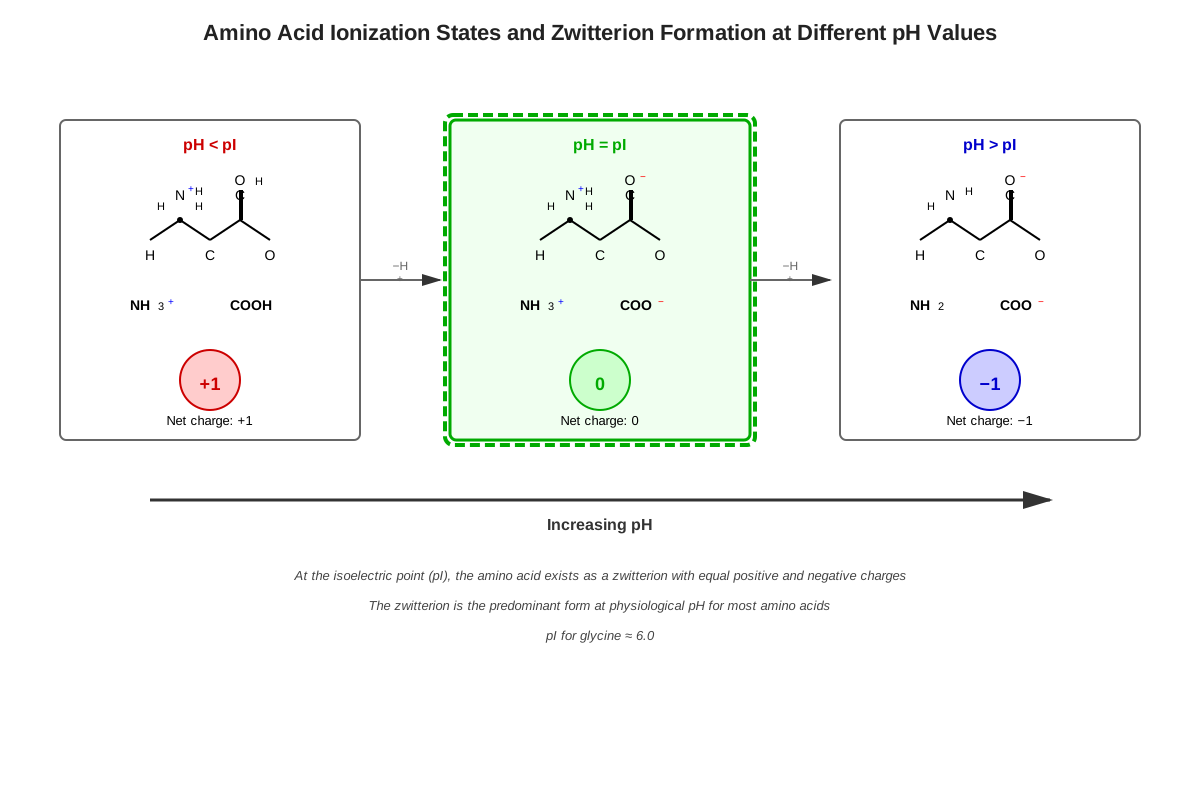
The isoelectric point (pI) is defined as the pH at which a molecule has a net charge of zero. For amino acids and proteins, this occurs when the sum of all positive charges equals the sum of all negative charges. At the pI, the molecule exists predominantly in its zwitterionic form—a dipolar ion with both positive and negative charges that cancel each other out. This concept is central to isoelectric point Biochemistry because it determines how molecules behave in solution and respond to electric fields.
The isoelectric point depends on the pKa values of all ionizable groups present in the molecule. For a simple amino acid with only two ionizable groups (the α-carboxyl and α-amino groups), the pI is calculated as the average of these two pKa values. However, for amino acids with ionizable side chains or for peptides and proteins with multiple ionizable groups, the calculation becomes more complex.
Ionization States of Amino Acids
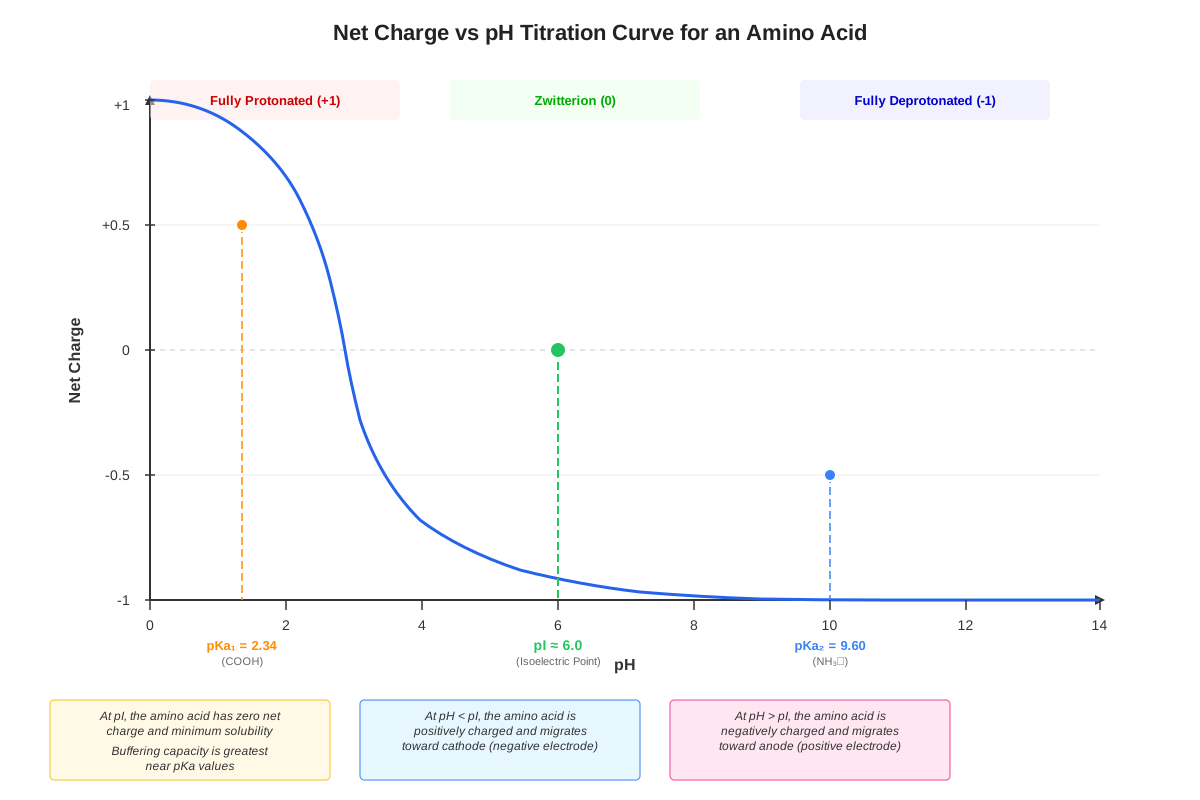
Amino acids contain at least two ionizable groups: the α-carboxyl group (typical pKa around 2) and the α-amino group (typical pKa around 9-10). At very low pH (highly acidic conditions), both groups are protonated, giving the amino acid a net positive charge (+1). As pH increases, the carboxyl group loses its proton first (because it has the lower pKa), creating the zwitterionic form with zero net charge. At even higher pH values, the amino group loses its proton, resulting in a net negative charge (-1).
Seven amino acids have ionizable side chains that must be considered when calculating pI:
- Aspartic acid (Asp, D): acidic side chain, pKa ≈ 3.9
- Glutamic acid (Glu, E): acidic side chain, pKa ≈ 4.3
- Histidine (His, H): basic side chain, pKa ≈ 6.0
- Cysteine (Cys, C): weakly acidic side chain, pKa ≈ 8.3
- Tyrosine (Tyr, Y): weakly acidic side chain, pKa ≈ 10.1
- Lysine (Lys, K): basic side chain, pKa ≈ 10.5
- Arginine (Arg, R): basic side chain, pKa ≈ 12.5
Calculating Isoelectric Point
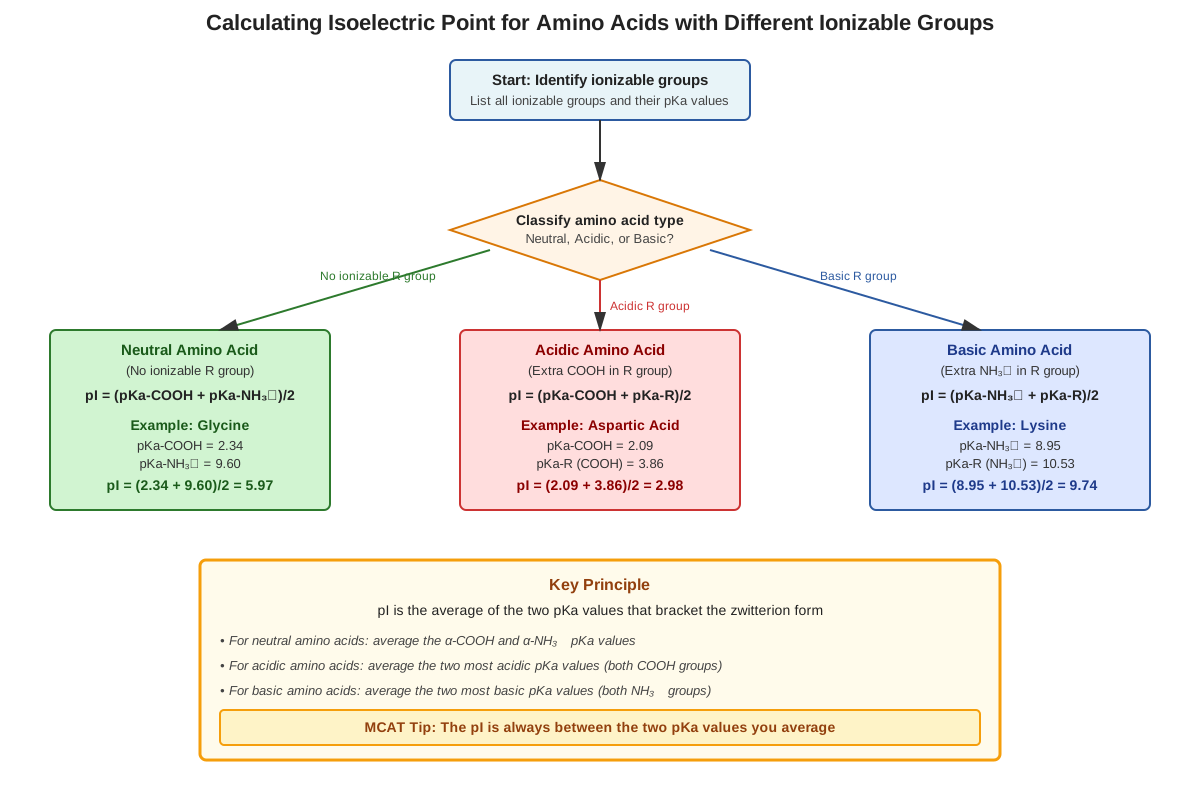
For neutral amino acids (those without ionizable side chains), the pI calculation is straightforward:
pI = (pKa₁ + pKa₂) / 2where pKa₁ is the α-carboxyl group pKa and pKa₂ is the α-amino group pKa.
For acidic amino acids (Asp, Glu), which have an extra carboxyl group, the pI is the average of the two lowest pKa values (the two acidic groups):
pI = (pKa_α-COOH + pKa_side chain) / 2For basic amino acids (Lys, Arg, His), which have an extra basic group, the pI is the average of the two highest pKa values (the α-amino group and the basic side chain):
pI = (pKa_α-NH₃⁺ + pKa_side chain) / 2The key principle is that pI is always the average of the two pKa values that bracket the zwitterionic form—the pKa values on either side of the neutral species.
Charge State Prediction
Understanding how to predict the net charge of an amino acid or peptide at any given pH is crucial for MCAT success. The general rules are:
- pH < pI: The molecule has a net positive charge (more protonated groups)
- pH = pI: The molecule has zero net charge (zwitterionic form predominates)
- pH > pI: The molecule has a net negative charge (more deprotonated groups)
To determine the exact charge, compare the pH to each pKa value:
- If pH < pKa, the group is predominantly protonated
- If pH > pKa, the group is predominantly deprotonated
For carboxyl groups: protonated form is neutral (-COOH), deprotonated form is negative (-COO⁻)
For amino groups: protonated form is positive (-NH₃⁺), deprotonated form is neutral (-NH₂)
Peptide Isoelectric Points
For peptides and proteins, calculating the exact pI becomes more complex because multiple ionizable groups are present. The pI of a peptide depends on:
- The N-terminal amino group
- The C-terminal carboxyl group
- All ionizable side chains in the sequence
A simplified approach for dipeptides involves identifying all ionizable groups, determining their pKa values, and finding the pH where positive and negative charges balance. For longer peptides, computational methods or titration curves are typically used.
Isoelectric Focusing
Isoelectric focusing (IEF) is a powerful separation technique that exploits differences in pI values. In IEF, proteins are placed in a pH gradient created by ampholytes (molecules with varying pI values). When an electric field is applied, each protein migrates until it reaches the pH zone equal to its pI, where it has zero net charge and stops moving. This technique can resolve proteins that differ in pI by as little as 0.01 pH units, making it extremely high-resolution.
Solubility and Precipitation
Proteins are least soluble at their isoelectric point because they have no net charge to interact favorably with water molecules. Without charge-charge repulsion between molecules, proteins can aggregate and precipitate. This principle is used in protein purification through isoelectric precipitation, where the pH is adjusted to the protein's pI to selectively precipitate it from solution while other proteins remain soluble.
Comparison Table of Amino Acid Categories
| Category | Examples | Side Chain Character | pI Range | Calculation Method |
|---|---|---|---|---|
| Neutral, nonpolar | Ala, Val, Leu, Ile, Met, Phe, Trp, Pro | No ionizable side chain | 5.5-6.3 | Average of α-COOH and α-NH₃⁺ pKa |
| Neutral, polar | Ser, Thr, Asn, Gln | No ionizable side chain | 5.5-6.3 | Average of α-COOH and α-NH₃⁺ pKa |
| Acidic | Asp, Glu | Extra carboxyl group | 2.8-3.2 | Average of two lowest pKa values |
| Basic | Lys, Arg, His | Extra basic group | 7.6-10.8 | Average of two highest pKa values |
| Special cases | Cys, Tyr | Weakly acidic side chain | 5.0-5.7 | Depends on whether side chain pKa is considered |
Concept Relationships
The isoelectric point concept integrates multiple fundamental principles in biochemistry. Acid-base chemistry provides the foundation, as pI calculations require understanding of pKa values and protonation states. The Henderson-Hasselbalch equation enables quantitative predictions of ionization states at different pH values, which directly determines the net charge and thus the relationship to pI.
Amino acid structure → determines number and type of ionizable groups → defines pKa values → allows pI calculation → predicts charge state at any pH → determines behavior in electric fields and solution
The concept of zwitterions is intimately connected to pI because the isoelectric point represents the pH where the zwitterionic form predominates. Understanding that amino acids exist as zwitterions at physiological pH (for most amino acids) helps explain their physical properties, including high melting points and water solubility.
Protein structure and function depend on pI because the charge state of amino acid residues affects electrostatic interactions, which stabilize secondary, tertiary, and quaternary structures. Changes in pH that alter the charge distribution can denature proteins or modulate their activity. This connects pI to enzyme kinetics, where pH-dependent activity often relates to the ionization states of active site residues.
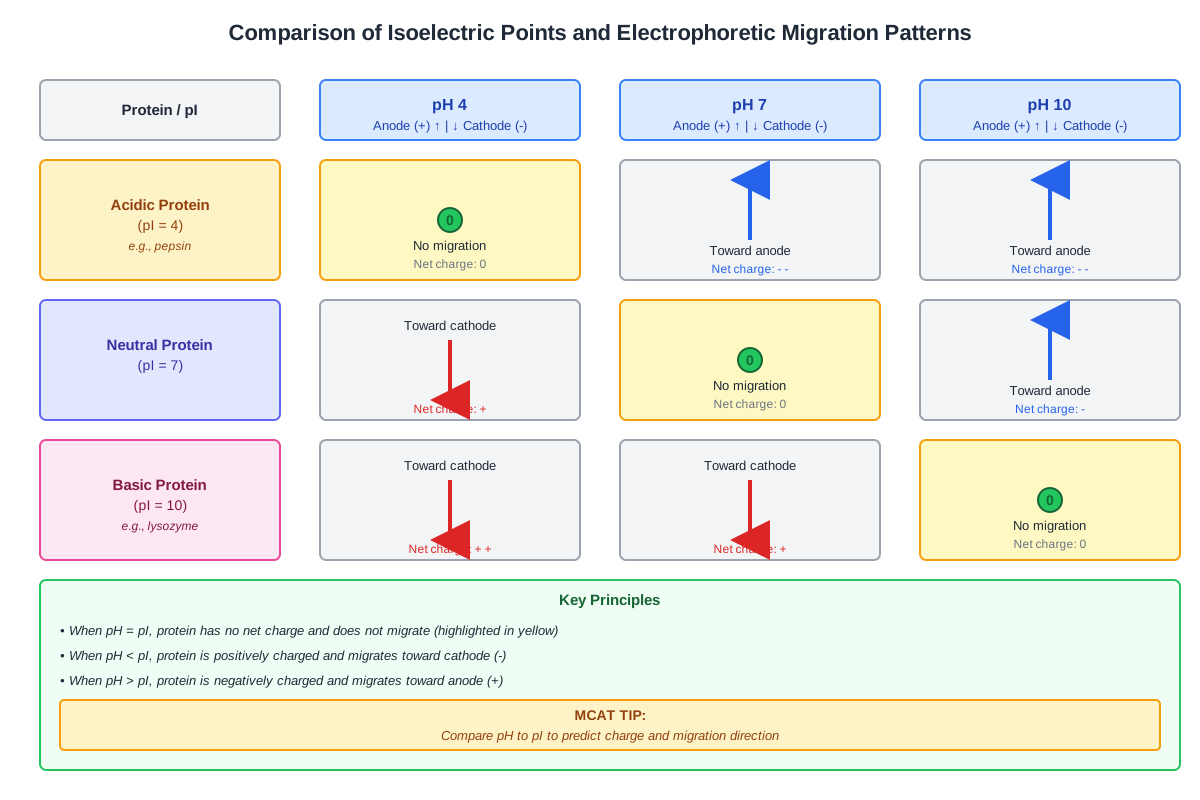
Separation techniques including electrophoresis, isoelectric focusing, and ion-exchange chromatography all exploit pI principles. In gel electrophoresis, proteins migrate toward the electrode of opposite charge, with migration rate depending on the difference between the solution pH and the protein's pI. In ion-exchange chromatography, proteins bind to charged resins based on their net charge at the buffer pH, which is determined by comparing the buffer pH to the protein's pI.
The relationship extends to buffer systems because maintaining pH near or far from a protein's pI affects its stability and solubility. This is crucial in protein purification strategies and pharmaceutical formulation, where buffer selection must consider the pI of the target protein.
Quick check — test yourself on Isoelectric point so far.
Try Flashcards →High-Yield Facts
⭐ The isoelectric point is the pH at which a molecule has zero net charge, existing predominantly as a zwitterion
⭐ For neutral amino acids, pI = (pKa of α-COOH + pKa of α-NH₃⁺) / 2, typically around 5.5-6.3
⭐ For acidic amino acids (Asp, Glu), pI is the average of the two lowest pKa values, resulting in pI < 3.5
⭐ For basic amino acids (Lys, Arg, His), pI is the average of the two highest pKa values, resulting in pI > 7.5
⭐ When pH < pI, the molecule carries a net positive charge; when pH > pI, the molecule carries a net negative charge
- Proteins are least soluble at their isoelectric point due to minimal charge-charge repulsion
- Isoelectric focusing separates proteins based on their pI values using a pH gradient and electric field
- The seven amino acids with ionizable side chains are Asp, Glu, His, Cys, Tyr, Lys, and Arg
- At physiological pH (7.4), acidic amino acids are negatively charged, basic amino acids are positively charged, and most neutral amino acids are near their pI
- Histidine has a side chain pKa near physiological pH (~6.0), making it important for pH-dependent protein functions
- In peptides, the N-terminus contributes a positive charge at low pH, and the C-terminus contributes a negative charge at high pH
- Glycine, the simplest amino acid, has a pI of approximately 6.0
- The pI of a protein can be estimated from its amino acid composition but is most accurately determined experimentally
- Changing a single amino acid in a protein can significantly alter its pI if the substitution involves charged residues
Common Misconceptions
Misconception: The isoelectric point is the pH where a molecule has no ionizable groups.
Correction: The isoelectric point is where the molecule has equal numbers of positive and negative charges, not where ionizable groups are absent. At the pI, ionizable groups are still present and ionized, but their charges balance to give zero net charge.
Misconception: All amino acids have a pI around 7 (neutral pH).
Correction: Amino acid pI values vary widely depending on their side chains. Neutral amino acids have pI around 5.5-6.3, acidic amino acids have pI around 3, and basic amino acids have pI ranging from 7.6 to 10.8. Only histidine has a pI very close to neutral (7.6).
Misconception: At the isoelectric point, amino acids carry no charges at all.
Correction: At the pI, amino acids exist as zwitterions with both positive and negative charges that cancel out. The molecule still has charged groups; they simply balance to give zero net charge. This is different from having no charges.
Misconception: The pI is always calculated by averaging all pKa values present in the molecule.
Correction: The pI is calculated by averaging only the two pKa values that bracket the zwitterionic (neutral) form—the pKa values immediately above and below the pH where net charge is zero. For neutral amino acids, this is the α-carboxyl and α-amino pKa values. For acidic amino acids, it's the two acidic pKa values. For basic amino acids, it's the two basic pKa values.
Misconception: Proteins migrate toward the positive electrode (anode) in electrophoresis when pH > pI.
Correction: When pH > pI, proteins have a net negative charge and migrate toward the positive electrode (anode). When pH < pI, proteins have a net positive charge and migrate toward the negative electrode (cathode). The direction of migration depends on the relationship between solution pH and protein pI.
Misconception: The isoelectric point of a peptide is simply the average of the pI values of its constituent amino acids.
Correction: The pI of a peptide must be calculated from the pKa values of all ionizable groups present (N-terminus, C-terminus, and all ionizable side chains), not from the pI values of individual amino acids. The pI of a peptide is usually different from the average pI of its amino acids.
Misconception: Changing the pH of a solution changes the pI of a protein.
Correction: The pI is an intrinsic property of the protein determined by its amino acid sequence and does not change with pH. What changes with pH is the net charge of the protein. The pI remains constant unless the protein's structure is chemically modified.
Worked Examples
Example 1: Calculating pI for Aspartic Acid
Question: Calculate the isoelectric point of aspartic acid given the following pKa values: α-COOH = 2.1, α-NH₃⁺ = 9.8, side chain COOH = 3.9.
Solution:
Step 1: Identify the type of amino acid. Aspartic acid is an acidic amino acid with an extra carboxyl group in its side chain.
Step 2: Determine the ionization sequence. As pH increases from very low values:
- At very low pH: all groups protonated, net charge = +1 (α-NH₃⁺, α-COOH, side chain COOH)
- First deprotonation (pKa = 2.1): α-COOH loses H⁺, net charge = 0 (α-NH₃⁺, α-COO⁻, side chain COOH)
- Second deprotonation (pKa = 3.9): side chain COOH loses H⁺, net charge = -1 (α-NH₃⁺, α-COO⁻, side chain COO⁻)
- Third deprotonation (pKa = 9.8): α-NH₃⁺ loses H⁺, net charge = -2 (α-NH₂, α-COO⁻, side chain COO⁻)
Step 3: Identify the zwitterionic form. The neutral species (charge = 0) exists between pKa₁ (2.1) and pKa₂ (3.9).
Step 4: Calculate pI as the average of the two pKa values that bracket the neutral form:
pI = (2.1 + 3.9) / 2 = 6.0 / 2 = 3.0Answer: The isoelectric point of aspartic acid is 3.0.
Key concept reinforced: For acidic amino acids, always average the two lowest pKa values (the two acidic groups) because the neutral form exists between these two deprotonation events.
Example 2: Predicting Charge and Migration in Electrophoresis
Question: A mixture contains three amino acids: lysine (pI = 9.7), alanine (pI = 6.0), and glutamic acid (pI = 3.2). The mixture is subjected to electrophoresis at pH 7.0. Predict the net charge of each amino acid and the direction each will migrate.
Solution:
Step 1: Apply the charge prediction rule for each amino acid by comparing pH to pI.
For lysine:
- pH (7.0) < pI (9.7)
- Therefore, lysine has a net positive charge at pH 7.0
- Positively charged molecules migrate toward the cathode (negative electrode)
For alanine:
- pH (7.0) > pI (6.0)
- Therefore, alanine has a net negative charge at pH 7.0
- Negatively charged molecules migrate toward the anode (positive electrode)
For glutamic acid:
- pH (7.0) > pI (3.2)
- Therefore, glutamic acid has a net negative charge at pH 7.0
- Negatively charged molecules migrate toward the anode (positive electrode)
Step 2: Compare relative charges to predict migration rates.
Glutamic acid has pH much greater than its pI (difference of 3.8 pH units), so it will be strongly negatively charged and migrate rapidly toward the anode.
Alanine has pH slightly greater than its pI (difference of 1.0 pH unit), so it will be weakly negatively charged and migrate slowly toward the anode.
Lysine has pH less than its pI (difference of 2.7 pH units), so it will be moderately positively charged and migrate toward the cathode.
Answer:
- Lysine: net positive charge, migrates toward cathode (negative electrode)
- Alanine: net negative charge, migrates slowly toward anode (positive electrode)
- Glutamic acid: net negative charge, migrates rapidly toward anode (positive electrode)
Key concept reinforced: The magnitude of charge (and thus migration rate) depends on how far the solution pH is from the molecule's pI. The further the pH from pI, the greater the net charge and the faster the migration.
Exam Strategy
When approaching isoelectric point MCAT questions, begin by identifying what type of question is being asked: calculation, charge prediction, or application to separation techniques. For calculation questions, immediately identify whether the amino acid or peptide is neutral, acidic, or basic, as this determines which pKa values to average.
Trigger words and phrases to watch for include:
- "Isoelectric point," "pI," or "isoelectric pH" → signals a calculation or charge prediction question
- "Net charge" or "predominant charge state" → compare pH to pI
- "Electrophoresis," "isoelectric focusing," or "migration" → apply charge prediction and consider direction of movement
- "Least soluble" or "precipitation" → think about conditions at pI
- "pH gradient" → likely referring to isoelectric focusing
- "Zwitterion" or "dipolar ion" → relates to the form at pI
Process-of-elimination strategies:
- For pI calculation questions, eliminate answers that don't make chemical sense. Acidic amino acids must have pI < 6, basic amino acids must have pI > 7, and neutral amino acids typically have pI between 5.5-6.3.
- For charge prediction questions, if pH < pI, eliminate any answer suggesting negative charge. If pH > pI, eliminate any answer suggesting positive charge.
- For electrophoresis questions, remember that molecules migrate toward the electrode of opposite charge. If a molecule is positively charged, it cannot migrate toward the anode (positive electrode).
- When comparing multiple amino acids or proteins, the one with pI closest to the solution pH will have the smallest net charge and migrate most slowly (or not at all if pH = pI).
Time allocation advice: Simple pI calculations for single amino acids should take 30-45 seconds. Charge prediction questions should take 20-30 seconds once you've identified the pI. More complex peptide questions or passage-based applications may require 60-90 seconds. If a calculation seems to require more than 2 minutes, you may be overcomplicating it—look for a conceptual shortcut or estimation approach.
Exam Tip: The MCAT rarely requires precise calculations beyond simple averaging. If you're doing complex algebra, reconsider your approach. Most questions test conceptual understanding rather than computational skill.
Memory Techniques
Mnemonic for amino acids with ionizable side chains: "Dear Ellen, How Can Tyler Keep Arguing?" represents D-Asp, E-Glu, H-His, C-Cys, T-Tyr, K-Lys, A-Arg (note: Tyr is sometimes remembered as Y).
Mnemonic for pI calculation rules: "Acids Average Low, Bases Average High" (Acidic amino acids average the two lowest pKa values; Basic amino acids average the two highest pKa values).
Visualization strategy for charge prediction: Picture a number line with pI marked in the center. If pH is to the left (lower) than pI, the molecule is positive (+). If pH is to the right (higher) than pI, the molecule is negative (-). This spatial representation helps avoid confusion.
Acronym for electrophoresis direction: "PAC" = Positive molecules go to Anode? Contrary! (Positive molecules go to the cathode, not the anode). This helps remember that opposites attract.
Memory aid for pI ranges:
- Acidic amino acids: pI around 3 (think "A-3-dic")
- Neutral amino acids: pI around 6 (think "neutral = middle")
- Basic amino acids: pI around 9-10 (think "B-10-sic")
Conceptual anchor: Remember that proteins are least soluble at their pI because they have no net charge. This single fact helps you remember that at pI, charge = 0, and connects to practical applications like protein precipitation.
Summary
The isoelectric point is the pH at which a molecule has zero net charge, existing as a zwitterion with equal positive and negative charges. For amino acids and proteins, the pI depends on the pKa values of all ionizable groups, including the α-carboxyl and α-amino groups and any ionizable side chains. Neutral amino acids have pI values around 5.5-6.3, calculated by averaging the pKa values of the α-carboxyl and α-amino groups. Acidic amino acids (Asp, Glu) have low pI values (around 3) calculated from the two lowest pKa values, while basic amino acids (Lys, Arg, His) have high pI values (7.6-10.8) calculated from the two highest pKa values. The relationship between solution pH and pI determines net charge: when pH < pI, the molecule is positively charged; when pH > pI, the molecule is negatively charged. This principle underlies important separation techniques including electrophoresis and isoelectric focusing, and explains why proteins are least soluble at their isoelectric point. Mastering pI concepts requires integrating acid-base chemistry, amino acid structure, and practical applications to experimental techniques.
Key Takeaways
- The isoelectric point (pI) is the pH where a molecule has zero net charge, existing as a zwitterion with balanced positive and negative charges
- Calculate pI by averaging the two pKa values that bracket the neutral form: for neutral amino acids, average α-COOH and α-NH₃⁺ pKa; for acidic amino acids, average the two lowest pKa; for basic amino acids, average the two highest pKa
- Charge prediction rule: pH < pI → positive charge; pH = pI → zero charge; pH > pI → negative charge
- Seven amino acids have ionizable side chains (Asp, Glu, His, Cys, Tyr, Lys, Arg) that affect their pI values
- Proteins are least soluble at their pI and migrate in electrophoresis toward the electrode of opposite charge
- Isoelectric focusing separates proteins based on pI using a pH gradient, with each protein stopping at the pH equal to its pI
- Understanding pI is essential for predicting protein behavior, interpreting separation techniques, and solving MCAT biochemistry questions
Related Topics
Amino Acid Structure and Classification: Mastering isoelectric point builds directly on understanding amino acid functional groups and side chain properties. Further study should include memorizing the structures and properties of all 20 standard amino acids.
Protein Structure and Folding: The charge states of amino acid residues, determined by pH relative to their pKa values, influence electrostatic interactions that stabilize protein structure. Understanding pI helps explain pH-dependent protein denaturation.
Electrophoresis Techniques: Including SDS-PAGE, native gel electrophoresis, and capillary electrophoresis. These separation methods exploit charge differences, making pI concepts directly applicable.
Chromatography Methods: Particularly ion-exchange chromatography, which separates molecules based on charge. Understanding how pH affects protein charge (via pI) is essential for predicting binding and elution.
Enzyme Kinetics and pH Effects: Many enzymes have pH optima related to the ionization states of active site residues. Understanding pI and pKa helps explain pH-activity profiles.
Buffer Systems: The relationship between pH, pKa, and the Henderson-Hasselbalch equation extends to understanding how buffers maintain pH and how pH affects biomolecule behavior.
Practice CTA
Now that you've mastered the core concepts of isoelectric point, it's time to reinforce your understanding through active practice. Attempt the practice questions to test your ability to calculate pI values, predict charge states, and apply these concepts to experimental scenarios. Use the flashcards to memorize key pI values for different amino acid categories and the rules for charge prediction. Remember, the MCAT rewards both conceptual understanding and rapid application—practice will build your speed and confidence. You've built a strong foundation in this high-yield topic; now solidify it through deliberate practice and you'll be well-prepared for any isoelectric point question the MCAT presents!
Sign up free to keep reading
Create a free AnvayaPrep account to finish this MCAT guide on Isoelectric point — plus flashcards and practice questions.