Overview
L amino acids represent one of the most fundamental concepts in Biochemistry and are essential building blocks of all proteins in living organisms. The "L" designation refers to the specific three-dimensional configuration of amino acids found in nature, distinguishing them from their mirror-image D-amino acid counterparts. Understanding L amino acids is critical for the MCAT because they form the foundation for protein structure, enzyme function, and countless biological processes tested across multiple sections of the exam.
The stereochemistry of amino acids connects directly to broader principles of organic chemistry, particularly chirality and optical activity, while simultaneously serving as the gateway to understanding protein folding, enzyme catalysis, and metabolic pathways. On the MCAT, questions involving L amino acids frequently appear in both passage-based and discrete questions, testing not only memorization of structures but also the ability to predict behavior based on stereochemical properties and apply these concepts to experimental scenarios.
Mastery of L amino acids within the Amino Acids and Proteins unit provides the conceptual framework necessary for understanding higher-order protein structures, post-translational modifications, and the relationship between amino acid sequence and protein function. This topic bridges organic chemistry principles with biological applications, making it a high-yield area that appears consistently across MCAT administrations in both the Chemical and Physical Foundations of Biological Systems and Biological and Biochemical Foundations of Living Systems sections.
Learning Objectives
- [ ] Define L amino acids using accurate Biochemistry terminology
- [ ] Explain why L amino acids matters for the MCAT
- [ ] Apply L amino acids to exam-style questions
- [ ] Identify common mistakes related to L amino acids
- [ ] Connect L amino acids to related Biochemistry concepts
- [ ] Distinguish between L and D amino acid configurations using Fischer projections and the Cahn-Ingold-Prelog priority system
- [ ] Predict the optical activity and behavior of L amino acids in polarized light
- [ ] Analyze experimental data involving amino acid stereochemistry to draw conclusions about protein structure and function
Prerequisites
- Chirality and stereoisomers: Understanding chiral centers and enantiomers is essential because amino acids (except glycine) are chiral molecules with specific stereochemical configurations
- Fischer projections: Familiarity with this representation system enables visualization and determination of L versus D configurations
- Optical activity: Knowledge of how chiral molecules rotate plane-polarized light provides context for understanding amino acid behavior in solution
- Basic amino acid structure: Recognition of the general amino acid structure (amino group, carboxyl group, α-carbon, R group) forms the foundation for understanding stereochemical differences
- Cahn-Ingold-Prelog priority rules: These rules allow systematic assignment of absolute configuration (R/S) which relates to L/D nomenclature
Why This Topic Matters
Clinical and Real-World Significance
The exclusive presence of L amino acids in human proteins represents one of biology's most fundamental asymmetries. This homochirality has profound implications for drug design, as pharmaceutical compounds must account for the stereospecificity of enzymes and receptors. D-amino acids, when present in the body, can signal bacterial infection (as bacterial cell walls contain D-amino acids) or indicate protein aging and degradation. Understanding L amino acid stereochemistry is crucial for developing therapeutic peptides, designing enzyme inhibitors, and comprehending how the body distinguishes "self" from "non-self" at the molecular level.
MCAT Exam Statistics
L amino acids and stereochemistry appear in approximately 8-12% of Biochemistry questions on the MCAT, making this a high-yield topic. Questions typically fall into three categories: (1) discrete questions testing direct knowledge of stereochemical configurations and nomenclature (15-20% of amino acid questions), (2) passage-based questions requiring interpretation of experimental data involving chiral amino acids or synthetic peptides (50-60%), and (3) questions integrating stereochemistry with protein structure and function (20-30%). The topic frequently appears in passages discussing protein synthesis, enzyme mechanisms, or pharmaceutical development.
Common Exam Appearances
On the MCAT, L amino acids commonly appear in passages describing: experimental synthesis of peptides with discussion of racemic mixtures versus enantiopure products; enzyme specificity experiments demonstrating that enzymes only recognize L amino acids; structural biology passages requiring understanding of how stereochemistry affects protein folding; and pharmaceutical passages discussing the development of peptide-based drugs. Questions often require students to identify which amino acid configuration would be recognized by human enzymes, predict the outcome of incorporating D-amino acids into peptides, or interpret polarimetry data from amino acid solutions.
Core Concepts
Definition and Nomenclature of L Amino Acids
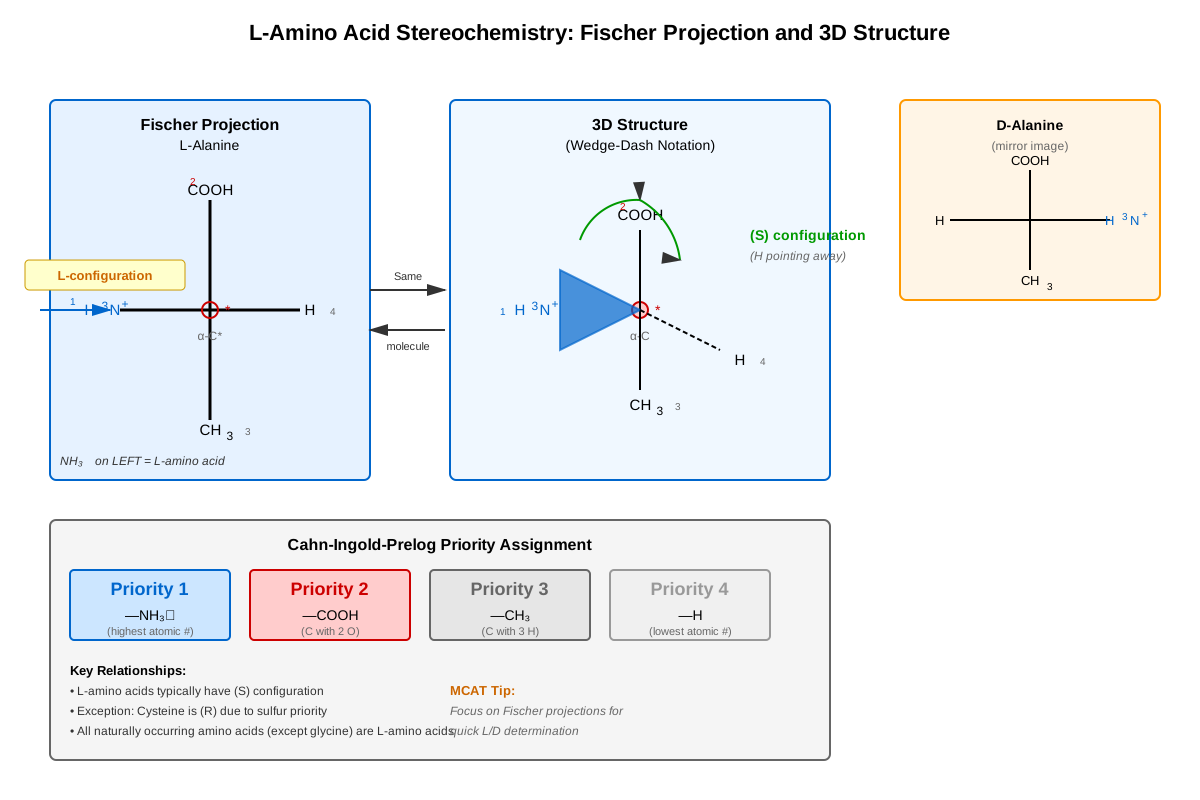
L amino acids are amino acids with a specific three-dimensional configuration at their α-carbon (the carbon adjacent to the carboxyl group). The "L" designation comes from the Fischer projection convention, where the amino group (-NH₃⁺ at physiological pH) is positioned on the left side when the molecule is drawn with the carboxyl group at the top and the R group at the bottom. This L/D nomenclature system, developed for sugars and extended to amino acids, is distinct from but related to the R/S system used in modern stereochemistry.
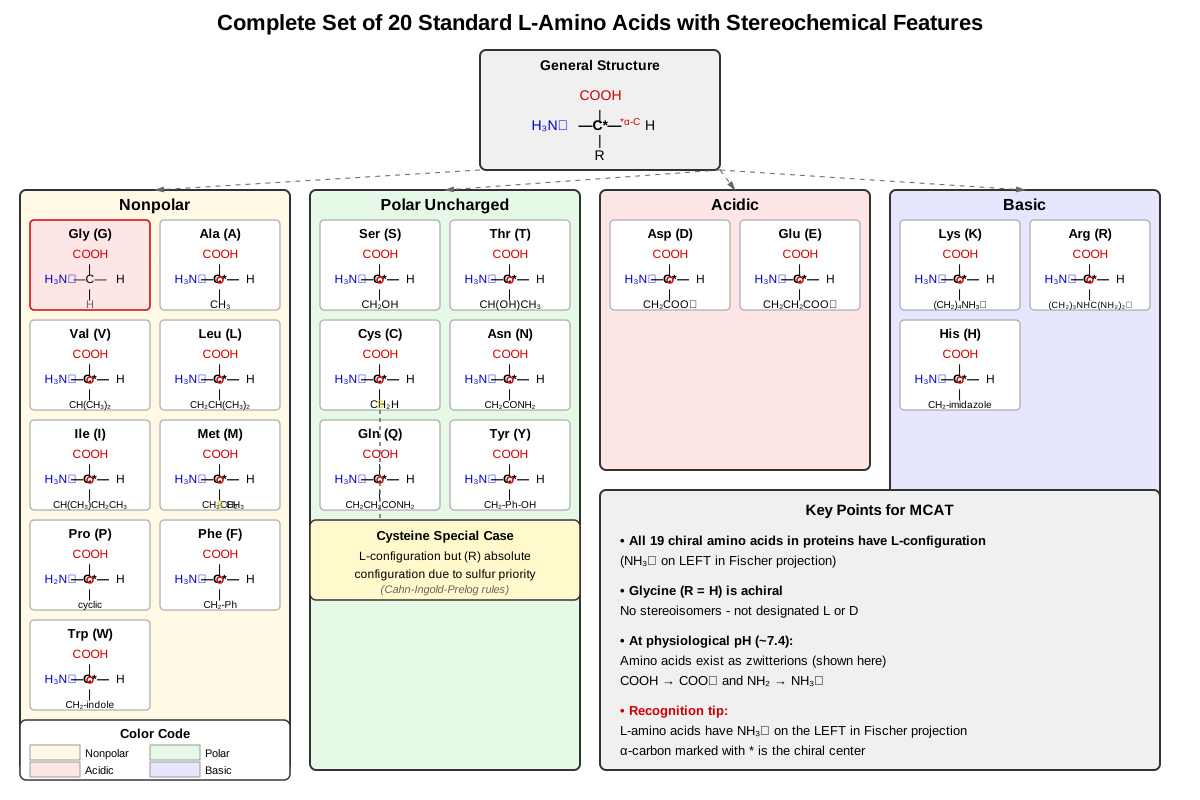
All L amino acids found in proteins share the same stereochemical configuration at the α-carbon, with the exception of glycine, which lacks a chiral center because its R group is simply a hydrogen atom. The absolute configuration of most L amino acids (again, excluding glycine) is S according to the Cahn-Ingold-Prelog priority system, though cysteine is an exception with an R configuration due to the high priority of its sulfur-containing side chain.
Stereochemistry and Fischer Projections
The stereochemical relationship between L and D amino acids represents enantiomerism—they are non-superimposable mirror images. In a Fischer projection of an L amino acid, the vertical line represents bonds going into the page, while the horizontal line represents bonds coming out of the page. The standard orientation places the most oxidized carbon (the carboxyl group) at the top:
        COOH
         |
H₂N — C — H
         |
         R
For L amino acids, the amino group appears on the left in this standard Fischer projection. This configuration is consistent across all proteinogenic L amino acids, creating the homochirality essential for proper protein folding and function. The mirror image, with the amino group on the right, would represent a D amino acid.
Optical Activity and Polarimetry
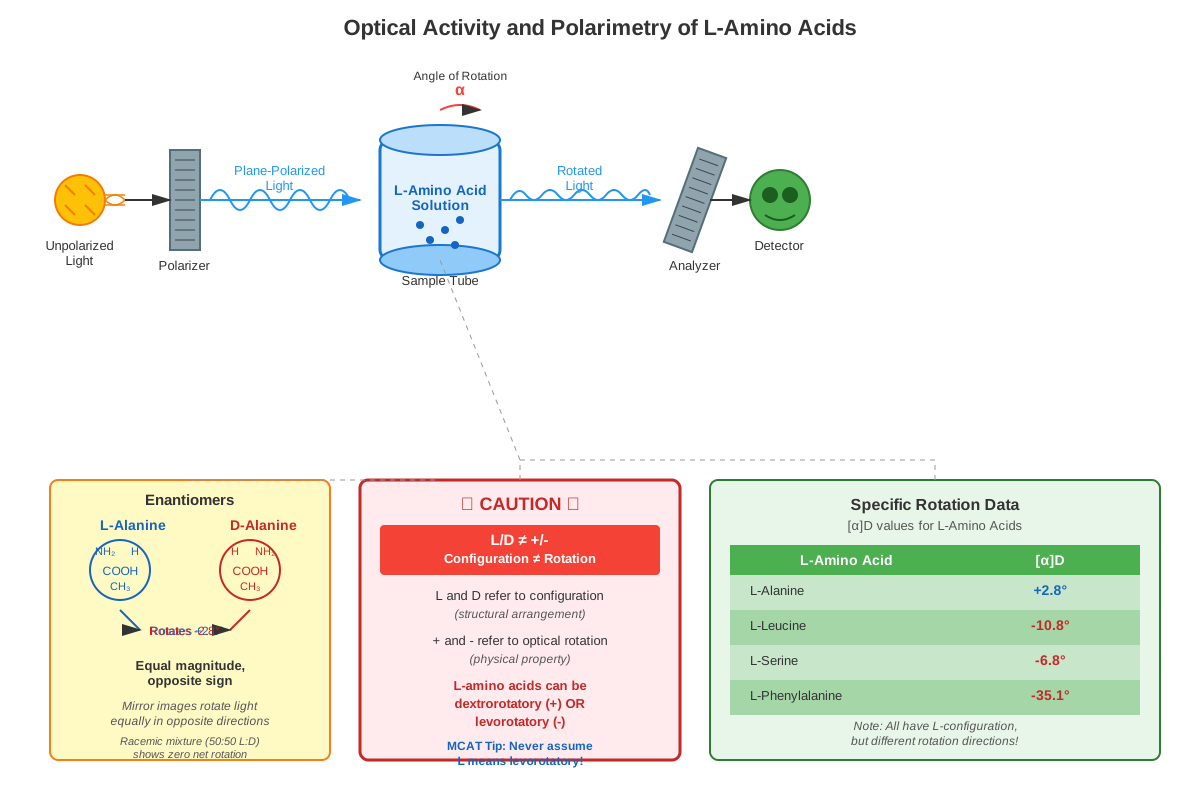
L amino acids are optically active, meaning they rotate plane-polarized light. However, the L/D designation does NOT directly indicate the direction of light rotation. An L amino acid may rotate light to the left (levorotatory, designated with a minus sign or "l") or to the right (dextrorotatory, designated with a plus sign or "d"). The direction and magnitude of rotation must be determined experimentally using a polarimeter.
For example, L-alanine is dextrorotatory (+), while L-cysteine is levorotatory (-). The specific rotation [α] is a physical property characteristic of each amino acid and depends on wavelength, temperature, solvent, and concentration. This property is useful for determining enantiomeric purity and identifying amino acids in laboratory settings.
Biological Significance of L Configuration
The exclusive use of L amino acids in protein biosynthesis represents a fundamental aspect of biochemical evolution. This homochirality is maintained by the stereospecificity of aminoacyl-tRNA synthetases, which attach only L amino acids to their corresponding tRNA molecules, and by the ribosome, which incorporates only L amino acid-charged tRNAs during translation.
The consequences of this stereochemical selectivity are profound:
- Protein folding: The consistent L configuration allows predictable backbone geometry, enabling α-helices and β-sheets to form with regular hydrogen bonding patterns
- Enzyme specificity: Active sites are shaped to accommodate only L amino acid substrates, preventing D amino acids from participating in normal metabolism
- Structural integrity: The uniform chirality prevents structural disruptions that would occur if D amino acids were randomly incorporated
- Evolutionary conservation: The universal use of L amino acids across all domains of life suggests this choice was established early in evolutionary history
Comparison of L and D Amino Acids
| Property | L Amino Acids | D Amino Acids |
|---|---|---|
| Natural occurrence | Predominant in proteins of all living organisms | Rare; found in bacterial cell walls, some antibiotics, aging proteins |
| Fischer projection | Amino group on left | Amino group on right |
| Biosynthesis | Synthesized by standard cellular machinery | Produced by specialized enzymes (racemases) in bacteria |
| Recognition by human enzymes | Recognized and processed | Generally not recognized; resistant to proteolysis |
| Optical activity | Can be (+) or (-) | Opposite rotation to corresponding L enantiomer |
| Absolute configuration | Usually S (except cysteine: R) | Usually R (except cysteine: S) |
| Biological function | Protein building blocks, neurotransmitters, metabolic intermediates | Bacterial cell wall components, some signaling molecules |
Relationship Between L/D and R/S Nomenclature
While L/D nomenclature is based on structural analogy to L-glyceraldehyde and uses Fischer projections, the R/S system assigns absolute configuration based on priority rules. For L amino acids:
- Most L amino acids have S configuration at the α-carbon
- The exception is L-cysteine, which has R configuration due to the sulfur atom's high atomic number giving the side chain higher priority
- The L/D system remains standard in biochemistry despite the R/S system being more systematic, largely due to historical convention and the biological relevance of the L/D distinction
To determine R/S configuration:
- Assign priorities to the four groups attached to the α-carbon based on atomic number
- Orient the molecule with the lowest priority group (usually H) pointing away
- Trace a path from priority 1 → 2 → 3
- Clockwise = R; counterclockwise = S
Racemization and Amino Acid Dating
Under certain conditions, L amino acids can slowly convert to D amino acids through racemization, a process that proceeds at a predictable rate. This phenomenon has applications in:
- Protein aging: Accumulation of D-aspartate in proteins like lens crystallins contributes to age-related changes
- Archaeological dating: The ratio of L to D amino acids in fossils can estimate age (amino acid racemization dating)
- Food science: Racemization during food processing can indicate heat treatment severity
- Forensics: Racemization rates in dental enamel can help estimate age at death
The rate of racemization varies by amino acid, with aspartate and serine racemizing relatively quickly, while others like leucine are more stable.
Concept Relationships
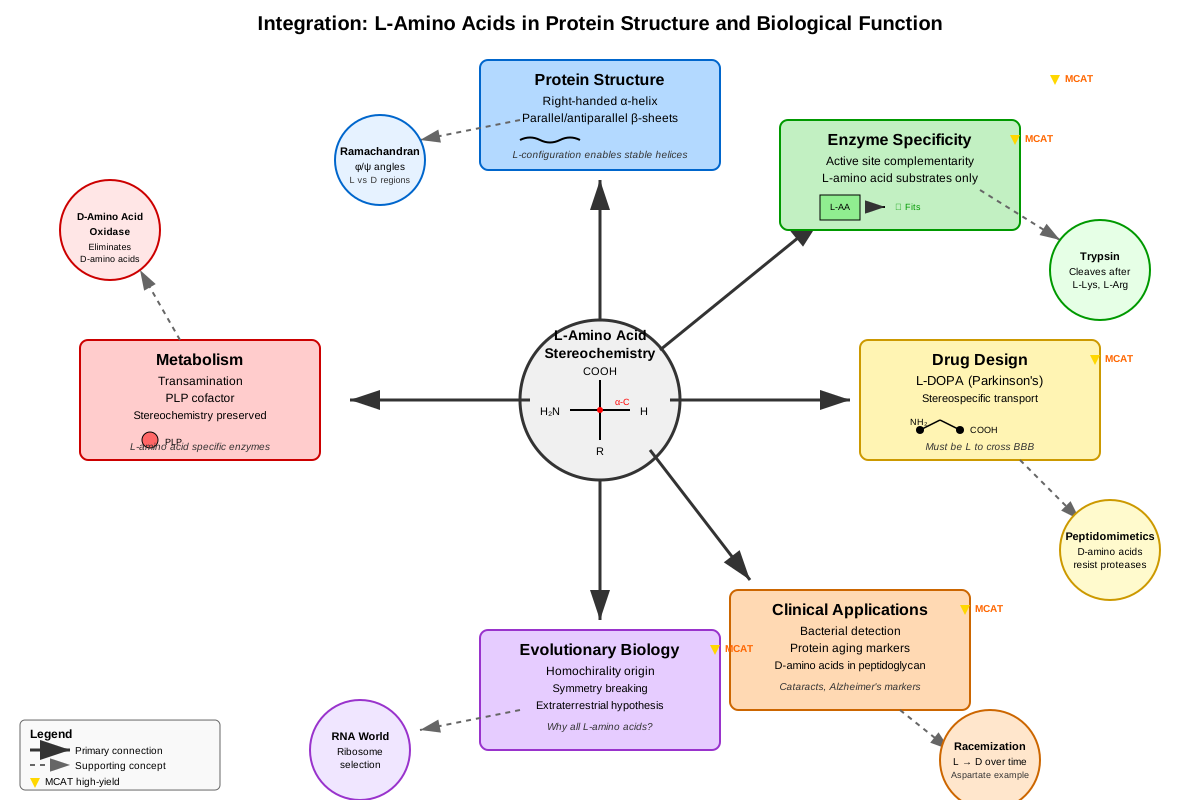
The stereochemistry of L amino acids serves as a central node connecting multiple biochemical concepts. At the foundational level, understanding of chirality and stereoisomerism from organic chemistry → enables recognition of L versus D configurations → which explains enzyme stereospecificity → leading to comprehension of why only L amino acids are incorporated into proteins.
The L configuration of amino acids → determines the geometry of the peptide backbone → which constrains possible secondary structures (α-helices, β-sheets) → ultimately influencing tertiary and quaternary protein structure. This relationship demonstrates how molecular-level stereochemistry scales up to determine macromolecular architecture.
L amino acids also connect to metabolic pathways: aminoacyl-tRNA synthetases recognize L amino acids → charge them onto tRNAs → enabling ribosomal protein synthesis. The stereospecificity of these enzymes → prevents D amino acid incorporation → maintaining protein structural integrity. When D amino acids are encountered (from bacterial sources or racemization) → specialized D-amino acid oxidases → convert them to α-keto acids → which can then be transaminated to L amino acids for use.
The concept extends to pharmaceutical applications: drug designers must consider L amino acid stereochemistry → when creating peptide-based therapeutics → because D amino acids resist proteolytic degradation → potentially increasing drug half-life but reducing receptor binding. This creates a trade-off between stability and biological activity that must be optimized for each therapeutic application.
Quick check — test yourself on L amino acids so far.
Try Flashcards →High-Yield Facts
⭐ All proteinogenic amino acids except glycine are L amino acids with a chiral α-carbon
⭐ In Fischer projections, L amino acids have the amino group on the left when the carboxyl group is at the top
⭐ The L/D designation does NOT indicate the direction of optical rotation; this must be determined experimentally
⭐ Most L amino acids have S absolute configuration, but L-cysteine has R configuration due to sulfur's high priority
⭐ Human enzymes are stereospecific for L amino acids; D amino acids are generally not recognized or metabolized by standard pathways
- L and D amino acids are enantiomers (non-superimposable mirror images), not diastereomers
- Glycine is achiral because its R group is hydrogen, making the α-carbon non-chiral
- D-amino acids in bacterial cell walls make them resistant to human proteases, contributing to bacterial survival
- Racemization of L amino acids to D amino acids occurs slowly over time and can be used for dating archaeological samples
- The homochirality of L amino acids in proteins is essential for proper protein folding and function
- Aminoacyl-tRNA synthetases have proofreading mechanisms to exclude D amino acids from protein synthesis
- Some antibiotics (like gramicidin) contain D amino acids, making them resistant to degradation
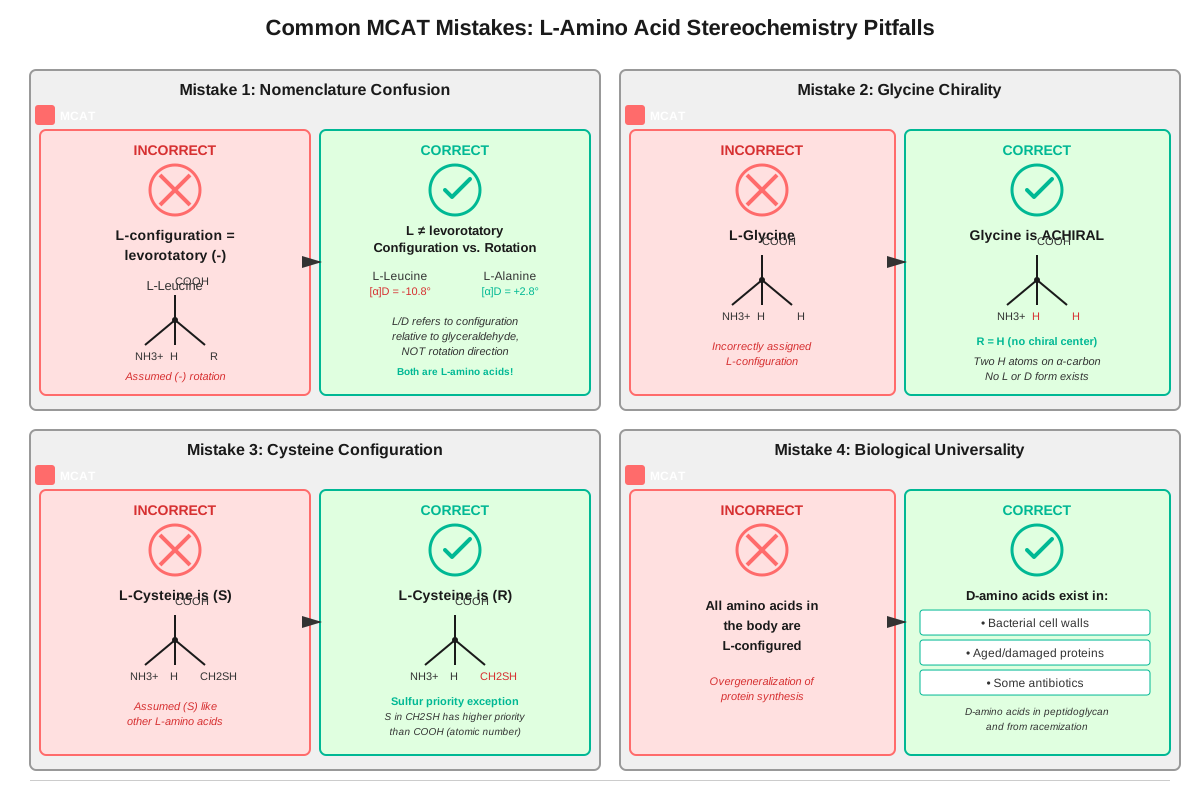
Common Misconceptions
Misconception: L amino acids always rotate plane-polarized light to the left (levorotatory).
Correction: The L designation refers to the Fischer projection configuration (amino group on the left), NOT the direction of optical rotation. L amino acids can be either dextrorotatory (+) or levorotatory (-). For example, L-alanine is dextrorotatory, while L-leucine is also dextrorotatory, but L-cysteine is levorotatory.
Misconception: L and D refer to the same thing as R and S configurations.
Correction: L/D and R/S are different nomenclature systems. L/D is based on structural analogy to glyceraldehyde using Fischer projections, while R/S uses the Cahn-Ingold-Prelog priority rules. Most L amino acids have S configuration, but L-cysteine has R configuration due to the high priority of its sulfur-containing side chain.
Misconception: D amino acids never occur in nature or in the human body.
Correction: While rare, D amino acids do occur naturally. They are found in bacterial cell walls, some antibiotics produced by bacteria, and accumulate in aging human proteins through slow racemization. D-serine functions as a neurotransmitter in the human brain. However, D amino acids are not incorporated during normal ribosomal protein synthesis.
Misconception: All amino acids are chiral and exist as L or D forms.
Correction: Glycine is achiral because its R group is simply a hydrogen atom, making the α-carbon attached to two identical groups (two hydrogens). Therefore, glycine has no L or D form and is not optically active. All other standard amino acids are chiral and exist as L amino acids in proteins.
Misconception: The body can easily convert D amino acids to L amino acids for use in protein synthesis.
Correction: While the body has D-amino acid oxidases that can convert D amino acids to α-keto acids, which can then be transaminated to L amino acids, this is not a direct conversion and is not efficient enough to support protein synthesis. The stereospecificity of aminoacyl-tRNA synthetases ensures that only L amino acids are used directly in translation.
Misconception: The L configuration of amino acids is arbitrary and has no functional significance.
Correction: The uniform L configuration is essential for proper protein structure and function. The consistent stereochemistry allows predictable backbone geometry necessary for α-helices and β-sheets, enables enzyme active sites to be stereospecific, and ensures proper protein folding. Incorporating even a single D amino acid into a protein can disrupt its structure and function.
Worked Examples
Example 1: Determining Configuration and Predicting Enzyme Recognition
Question: A researcher synthesizes a peptide using a racemic mixture of alanine (equal amounts of L and D forms). The peptide sequence is designed to be Ala-Gly-Ala-Ser. After synthesis, the mixture is treated with trypsin, a protease that cleaves peptide bonds. Which of the following best describes the expected outcome?
A) All peptides will be cleaved equally by trypsin
B) Only peptides containing all L-amino acids will be efficiently cleaved
C) Glycine's lack of chirality will prevent all cleavage
D) The D-alanine containing peptides will be cleaved faster due to reduced steric hindrance
Solution:
Step 1: Identify the key concept being tested—enzyme stereospecificity for L amino acids.
Step 2: Recognize that trypsin, like all human proteases, evolved to recognize and cleave peptide bonds between L amino acids. The active site geometry is complementary to L amino acid substrates.
Step 3: Consider the composition of the peptide mixture. Since racemic alanine was used at two positions, the mixture contains peptides with various combinations: L-Ala-Gly-L-Ala-Ser, D-Ala-Gly-L-Ala-Ser, L-Ala-Gly-D-Ala-Ser, and D-Ala-Gly-D-Ala-Ser.
Step 4: Evaluate each answer choice:
- Choice A is incorrect because D amino acids are not recognized by human enzymes
- Choice B is correct—only the all-L peptide will fit properly into trypsin's active site
- Choice C is incorrect; glycine's lack of chirality doesn't prevent cleavage
- Choice D is incorrect; D amino acids don't provide better substrate properties
Answer: B
This question demonstrates the practical consequence of L amino acid stereospecificity in enzyme function, a high-yield concept for the MCAT.
Example 2: Interpreting Polarimetry Data
Question: A biochemistry student isolates an amino acid from a protein hydrolysate and determines its structure to be alanine. Using a polarimeter, she measures that a solution of this amino acid rotates plane-polarized light +1.8° at 25°C. Based on this information, which of the following conclusions is most accurate?
A) The amino acid must be D-alanine because it is dextrorotatory
B) The amino acid is L-alanine, which is naturally dextrorotatory
C) The amino acid is a racemic mixture of L and D forms
D) The measurement is erroneous because amino acids from proteins cannot be optically active
Solution:
Step 1: Recall that amino acids from protein hydrolysates are L amino acids, as proteins contain only L amino acids.
Step 2: Remember that the L/D designation does NOT indicate the direction of optical rotation. L amino acids can be either (+) or (-).
Step 3: Recognize that L-alanine is indeed dextrorotatory (rotates light to the right, positive value), which is consistent with the measurement of +1.8°.
Step 4: Evaluate each answer:
- Choice A confuses L/D nomenclature with optical rotation direction
- Choice B correctly identifies that L-alanine is dextrorotatory
- Choice C is incorrect; a racemic mixture would show zero rotation
- Choice D is incorrect; amino acids are optically active (except glycine)
Answer: B
This example reinforces the critical distinction between stereochemical configuration (L/D) and optical activity (+/-), a common source of confusion that the MCAT frequently tests.
Exam Strategy
Approaching MCAT Questions on L Amino Acids
When encountering questions about L amino acids on the MCAT, begin by identifying whether the question tests: (1) nomenclature and configuration, (2) optical activity, (3) enzyme stereospecificity, or (4) biological significance. This categorization immediately narrows the relevant concepts and potential answer choices.
For nomenclature questions, quickly sketch a Fischer projection if needed, placing the carboxyl group at the top and checking whether the amino group is on the left (L) or right (D). Remember that this is independent of R/S configuration and optical rotation direction.
Trigger Words and Phrases
Watch for these high-yield trigger words that signal L amino acid concepts:
- "Stereospecific" or "enantioselective": Indicates enzyme recognition of only L amino acids
- "Racemic mixture": Signals equal amounts of L and D forms; expect discussion of enzyme selectivity or optical inactivity
- "Optical rotation" or "polarimetry": Tests understanding that L/D ≠ (+)/(-)
- "Fischer projection": Requires visualization of stereochemistry
- "Bacterial cell wall" or "peptidoglycan": Suggests presence of D amino acids
- "Protein hydrolysate": Implies L amino acids only (except for aged proteins)
- "Aminoacyl-tRNA synthetase": Indicates discussion of L amino acid selection during translation
Process of Elimination Tips
When using process of elimination on L amino acids questions:
- Immediately eliminate choices that confuse L/D with (+)/(-) or with R/S
- Eliminate answers suggesting D amino acids are common in human proteins
- Eliminate choices claiming glycine has L or D forms
- For enzyme questions, eliminate answers suggesting equal activity toward L and D substrates
- Eliminate answers that ignore the biological significance of homochirality
Time Allocation
For discrete questions on L amino acids, allocate 60-90 seconds. These typically test direct knowledge and can be answered quickly if the concepts are well-understood. For passage-based questions, allocate 1.5-2 minutes per question, as these require integration of the passage information with L amino acid concepts. If a question requires drawing a Fischer projection or determining R/S configuration, add 30 seconds to work through the systematic process rather than guessing.
Memory Techniques
Mnemonics for L Amino Acid Configuration
"CORN" for determining R/S configuration:
- COOH (carboxyl)
- OR (R group/side chain)
- NH₂ (amino group)
- H (hydrogen)
Arrange these in priority order (COOH highest, H lowest), orient with H away from you, and trace CORN. Clockwise = R, counterclockwise = S.
"Left is Life" for L amino acids:
In Fischer projections with COOH at top, the amino group on the Left represents the configuration found in Living organisms.
Visualization Strategy
Create a mental image of your left hand with fingers pointing up (representing the carbon chain with COOH at top). Your thumb pointing left represents the amino group position in L amino acids. This physical mnemonic helps quickly recall the Fischer projection orientation during the exam.
Acronym for Key Properties
LOSE - Key facts about L amino acids:
- Left in Fischer projection (amino group)
- Optical activity (except glycine)
- Stereospecific enzyme recognition
- Enantiomers with D forms
Remembering the Cysteine Exception
"Cysteine is Contrary": While most L amino acids have S configuration, L-cysteine has R configuration. Remember this exception by associating the "C" in Cysteine with "Contrary" and "R" (instead of the usual S).
Summary
L amino acids represent the exclusive stereochemical form of amino acids used in protein biosynthesis across all living organisms. Defined by their Fischer projection configuration with the amino group positioned on the left when the carboxyl group is at the top, L amino acids are chiral molecules (except glycine) that exhibit optical activity independent of their L designation. The distinction between L/D nomenclature, R/S absolute configuration, and (+)/(-) optical rotation is critical for MCAT success. The biological significance of L amino acid homochirality extends from enabling predictable protein folding patterns to ensuring enzyme stereospecificity, making this a high-yield topic that connects stereochemistry, protein structure, and metabolic function. Understanding that human enzymes exclusively recognize L amino acids, that D amino acids occur primarily in bacterial systems, and that the L configuration corresponds to S absolute configuration in most cases (except cysteine) provides the foundation for answering diverse question types on this topic.
Key Takeaways
- L amino acids have their amino group on the left in Fischer projections (COOH at top), representing the configuration found in all proteins
- The L/D designation is independent of optical rotation direction (+/-) and mostly independent of R/S configuration
- All standard amino acids except glycine are chiral; glycine lacks a chiral center due to its hydrogen R group
- Enzyme stereospecificity for L amino acids prevents D amino acids from being incorporated into proteins during translation
- Most L amino acids have S absolute configuration, but L-cysteine has R configuration due to sulfur's high priority
- D amino acids occur in bacterial cell walls and some antibiotics, making them resistant to human proteases
- The homochirality of L amino acids is essential for proper protein folding, enzyme function, and biological specificity
Related Topics
Protein Structure and Folding: Understanding L amino acid stereochemistry provides the foundation for comprehending how consistent chirality enables regular secondary structures (α-helices and β-sheets) and predictable tertiary structure formation. The uniform L configuration constrains backbone geometry, making protein folding more predictable.
Enzyme Kinetics and Specificity: The stereospecificity of enzymes for L amino acids exemplifies the lock-and-key and induced-fit models of enzyme-substrate interaction. This topic extends L amino acid concepts to quantitative analysis of enzyme activity and inhibition.
Peptide Bond Formation and Translation: The mechanism by which aminoacyl-tRNA synthetases select L amino acids and the ribosomal process of peptide bond formation both depend on stereochemical recognition, connecting L amino acid concepts to molecular biology.
Amino Acid Metabolism: Pathways for amino acid synthesis, degradation, and interconversion all involve stereospecific enzymes that recognize L amino acids, with specialized enzymes (D-amino acid oxidases) handling the rare D amino acids encountered.
Pharmaceutical Chemistry: Drug design involving peptide-based therapeutics must account for L amino acid stereochemistry, with strategic incorporation of D amino acids sometimes used to increase metabolic stability while potentially reducing biological activity.
Practice CTA
Now that you've mastered the core concepts of L amino acids, it's time to reinforce your understanding through active practice. Challenge yourself with MCAT-style practice questions that test your ability to apply stereochemical principles, interpret experimental data, and make predictions about enzyme behavior. Use flashcards to drill the key distinctions between L/D, R/S, and (+)/(-) nomenclature until these concepts become automatic. Remember, the MCAT rewards not just knowledge but the ability to apply concepts under time pressure—practice is what transforms understanding into test-day performance. You've built a strong foundation; now solidify it through deliberate practice!
Sign up free to keep reading
Create a free AnvayaPrep account to finish this MCAT guide on L amino acids — plus flashcards and practice questions.