Overview
Zwitterions are molecules that contain both a positive and negative charge but remain electrically neutral overall. This dual-charge characteristic is fundamental to understanding amino acid behavior in biological systems and represents one of the most testable concepts in Biochemistry on the MCAT. The term "zwitterion" derives from the German word "zwitter," meaning hybrid, reflecting the molecule's simultaneous possession of both acidic and basic functional groups in their ionized forms.
In the context of Amino Acids and Proteins, zwitterions are not merely a structural curiosity—they are the predominant form in which amino acids exist under physiological conditions. At neutral pH (approximately 7.4 in human blood), amino acids exist primarily as zwitterions, with the carboxyl group deprotonated (COO⁻) and the amino group protonated (NH₃⁺). This ionization state profoundly influences protein structure, enzyme function, buffer capacity, and electrophoretic behavior—all high-yield topics for the MCAT.
Understanding Zwitterions MCAT content is essential because questions frequently test the ability to predict amino acid charge states at different pH values, interpret titration curves, calculate isoelectric points, and explain protein behavior in electrophoresis. This topic bridges general chemistry concepts (acid-base equilibria, Henderson-Hasselbalch equation) with biochemistry applications, making it a favorite for passage-based questions that require integrated reasoning across multiple disciplines.
Learning Objectives
- [ ] Define Zwitterions using accurate Biochemistry terminology
- [ ] Explain why Zwitterions matters for the MCAT
- [ ] Apply Zwitterions to exam-style questions
- [ ] Identify common mistakes related to Zwitterions
- [ ] Connect Zwitterions to related Biochemistry concepts
- [ ] Predict the predominant ionization state of amino acids at any given pH
- [ ] Calculate and interpret the isoelectric point (pI) of amino acids and simple peptides
- [ ] Explain how zwitterionic properties affect protein separation techniques
Prerequisites
- Acid-Base Chemistry: Understanding protonation/deprotonation equilibria is essential for predicting when functional groups gain or lose protons
- Henderson-Hasselbalch Equation: This mathematical relationship allows calculation of pH, pKa, and ionization ratios needed for zwitterion problems
- Amino Acid Structure: Familiarity with the basic structure (amino group, carboxyl group, R-group) provides the foundation for understanding ionization states
- pKa Concept: Knowing that pKa represents the pH at which a functional group is 50% protonated enables prediction of charge states
- Electronegativity and Polarity: Understanding charge distribution helps explain why zwitterions form and their solubility properties
Why This Topic Matters
Clinical and Real-World Significance
Zwitterionic behavior is critical in pharmaceutical design, as drug molecules with zwitterionic character exhibit unique absorption, distribution, and excretion profiles. Many antibiotics (like ampicillin) and neurotransmitters (like GABA) exist as zwitterions at physiological pH, affecting their ability to cross cell membranes and interact with receptors. In clinical laboratories, protein electrophoresis—which separates proteins based on their charge at specific pH values—is used to diagnose multiple myeloma, sickle cell disease, and other protein disorders.
MCAT Exam Statistics
Zwitterion-related questions appear in approximately 15-20% of Biochemistry passages and discrete questions on the MCAT. The topic most commonly appears in:
- Passage-based questions involving amino acid titrations or protein purification techniques
- Discrete questions requiring calculation of isoelectric points
- Experimental analysis questions about electrophoresis or chromatography results
- Integrated questions connecting pH, buffer systems, and protein structure
Common Exam Presentations
The MCAT frequently presents zwitterion concepts through:
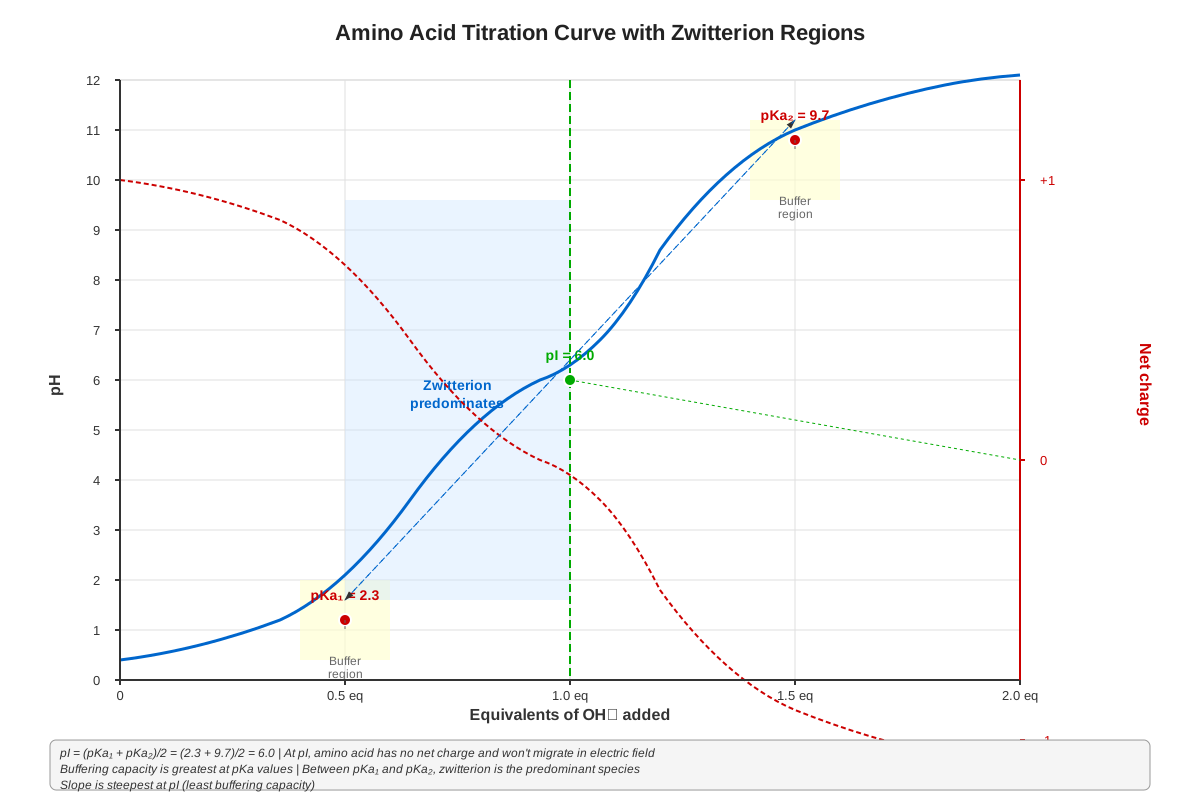
- Titration curves of amino acids with multiple ionizable groups
- Electrophoresis experiments separating proteins or peptides
- Buffer system questions involving amino acids
- Protein structure passages discussing salt bridges and ionic interactions
- Drug design passages exploring membrane permeability
Core Concepts
Definition and Structure of Zwitterions
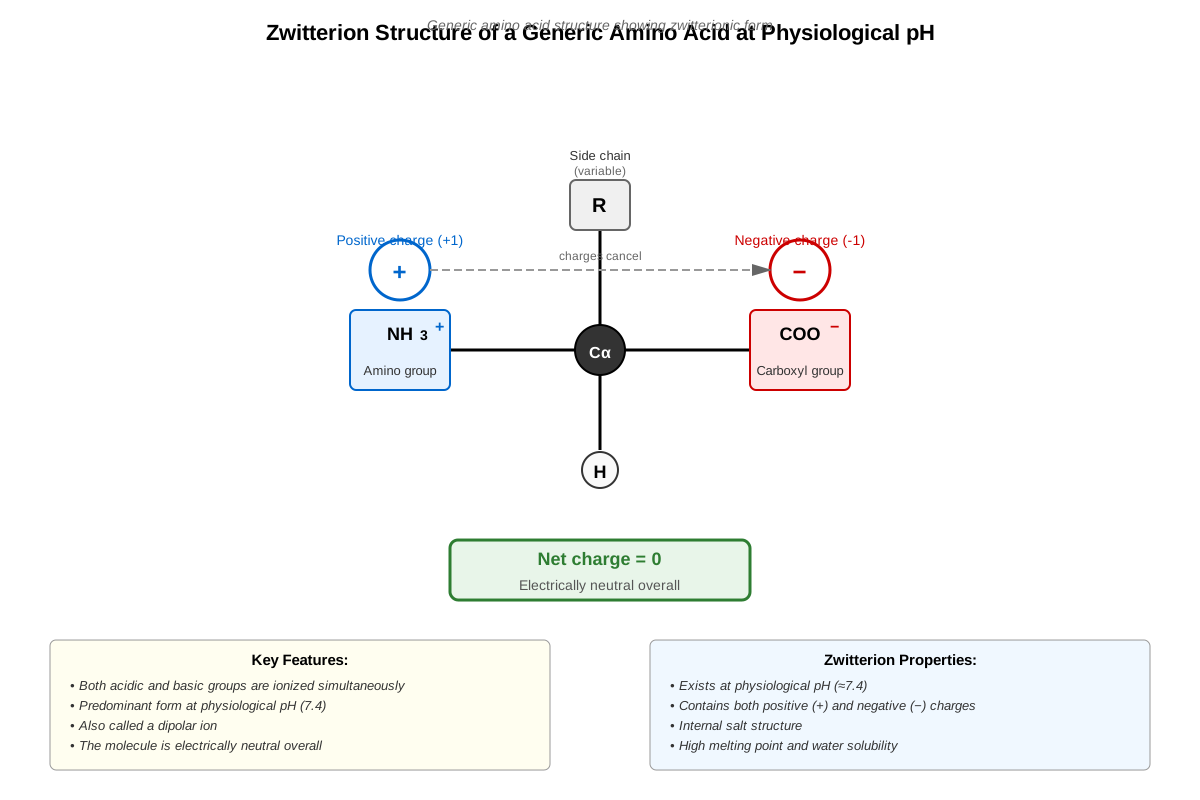
A zwitterion (also called a dipolar ion) is a molecule that contains an equal number of positively and negatively charged functional groups, resulting in a net charge of zero. In Zwitterions Biochemistry, the most important examples are amino acids, which possess at minimum one carboxyl group (-COOH) and one amino group (-NH₂).
At neutral pH (~7), the carboxyl group (pKa ~2) exists predominantly in its deprotonated form (COO⁻), while the amino group (pKa ~9) exists predominantly in its protonated form (NH₃⁺). This creates the zwitterionic structure: ⁺H₃N-CHR-COO⁻. The molecule carries both charges simultaneously but has a net charge of zero.
pH-Dependent Ionization States
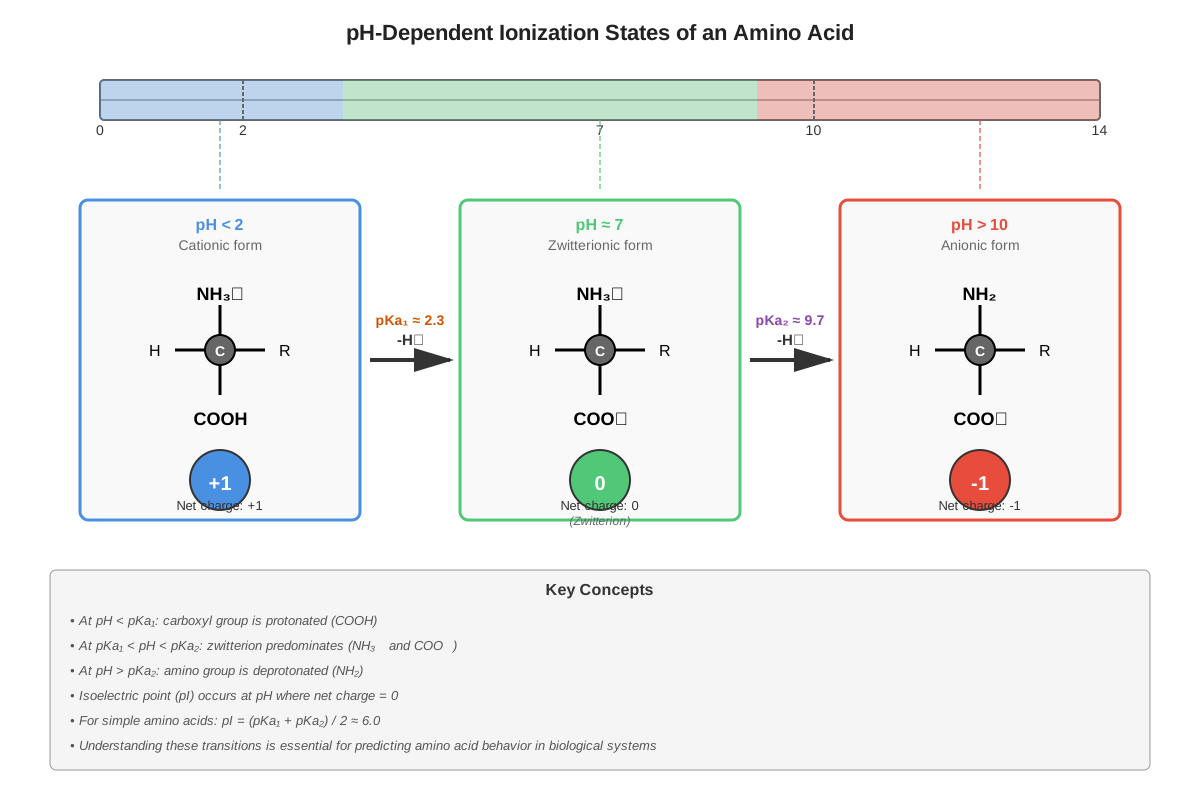
Amino acids exist in different ionization states depending on the pH of their environment. Understanding these states is crucial for Zwitterions MCAT questions:
At very low pH (pH < 2):
- Both carboxyl and amino groups are protonated
- Structure: H₃N⁺-CHR-COOH
- Net charge: +1 (cationic form)
At intermediate pH (pH 2-9):
- Carboxyl group is deprotonated; amino group is protonated
- Structure: H₃N⁺-CHR-COO⁻
- Net charge: 0 (zwitterionic form)
- This is the predominant form at physiological pH
At very high pH (pH > 9):
- Both groups are deprotonated
- Structure: H₂N-CHR-COO⁻
- Net charge: -1 (anionic form)
The Isoelectric Point (pI)
The isoelectric point (pI) is the pH at which a molecule has no net electrical charge—where it exists entirely as a zwitterion. For simple amino acids with only two ionizable groups (α-carboxyl and α-amino), the pI is calculated as:
pI = (pKa₁ + pKa₂) / 2Where pKa₁ is the pKa of the carboxyl group (~2) and pKa₂ is the pKa of the amino group (~9).
For amino acids with ionizable R-groups (like aspartic acid, lysine, or histidine), the calculation becomes more complex:
- Acidic amino acids (Asp, Glu): pI = (pKa₁ + pKa_R) / 2
- Basic amino acids (Lys, Arg, His): pI = (pKa₂ + pKa_R) / 2
The key principle: average the two pKa values that bracket the zwitterionic form.
Amino Acid Classification by pI
| Category | Examples | Approximate pI | Charge at pH 7.4 |
|---|---|---|---|
| Acidic | Aspartate, Glutamate | 3.0-3.2 | Negative |
| Neutral (nonpolar) | Glycine, Alanine, Valine | 5.5-6.3 | ~Neutral |
| Neutral (polar) | Serine, Threonine, Cysteine | 5.0-5.7 | ~Neutral |
| Basic | Lysine, Arginine | 9.5-10.8 | Positive |
| Basic (weakly) | Histidine | 7.6 | Slightly positive |
Zwitterions in Protein Structure
Within proteins, zwitterionic interactions contribute to:
- Salt bridges: Electrostatic attractions between oppositely charged amino acid side chains (e.g., lysine's NH₃⁺ and aspartate's COO⁻) that stabilize tertiary and quaternary structure
- pH-dependent conformational changes: Proteins can undergo structural changes when pH shifts alter ionization states
- Active site chemistry: Many enzyme mechanisms involve proton transfers between zwitterionic amino acids
- Protein solubility: The zwitterionic nature of surface amino acids enhances protein solubility in aqueous environments
Electrophoresis and Zwitterions
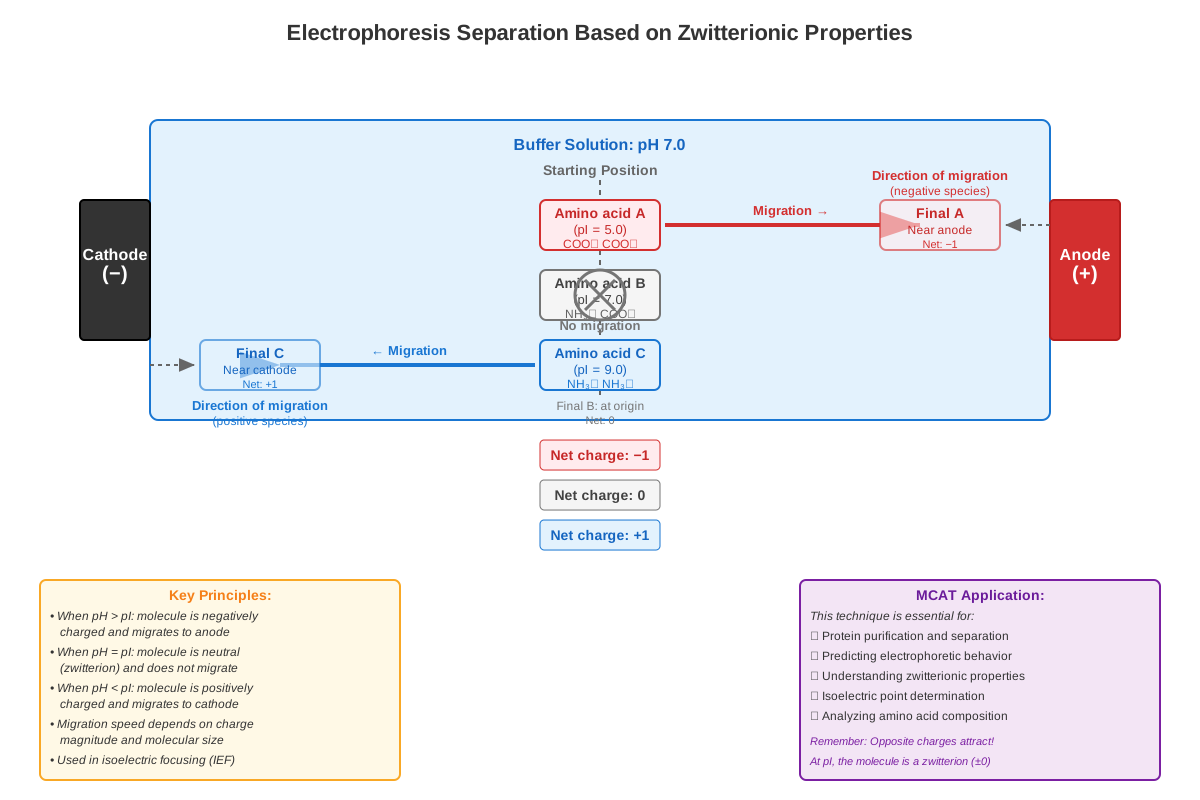
Electrophoresis is a separation technique that exploits charge differences. Understanding zwitterions is essential for predicting migration patterns:
- At pH < pI: molecule is positively charged → migrates toward cathode (negative electrode)
- At pH = pI: molecule is neutral → no net migration
- At pH > pI: molecule is negatively charged → migrates toward anode (positive electrode)
Isoelectric focusing is a specialized technique that separates proteins in a pH gradient. Each protein migrates until it reaches the pH equal to its pI, where it becomes neutral and stops moving.
Buffer Capacity of Amino Acids
Amino acids function as effective buffers near their pKa values. The zwitterionic form itself is not a buffer, but the equilibria between different ionization states provide buffering capacity:
- Near pKa₁ (~2): buffers against pH changes in acidic range
- Near pKa₂ (~9): buffers against pH changes in basic range
- Near pKa_R (for amino acids with ionizable side chains): provides additional buffering
This buffering capacity is why proteins and amino acids help maintain physiological pH homeostasis.
Concept Relationships
The understanding of zwitterions builds directly on acid-base equilibria from general chemistry. The pKa values of functional groups determine when protonation/deprotonation occurs, which in turn determines the zwitterionic state. This relationship can be mapped as:
pKa values → pH-dependent ionization → zwitterion formation → isoelectric point → electrophoretic behavior
Zwitterions connect to amino acid structure because the presence of both amino and carboxyl groups is what enables zwitterion formation. The specific R-groups on amino acids add complexity by introducing additional ionizable groups, which affects:
R-group identity → additional pKa values → modified pI calculation → altered charge at physiological pH
This topic also links forward to protein structure and function. The zwitterionic properties of individual amino acids aggregate to determine:
Individual amino acid charges → salt bridge formation → tertiary structure stabilization → protein function
Additionally, zwitterions connect to separation techniques used in biochemistry:
Zwitterionic properties → charge-based separation → electrophoresis, isoelectric focusing, ion-exchange chromatography
Understanding these relationships allows students to predict how changes in pH affect protein structure, enzyme activity, and experimental outcomes—all high-yield MCAT applications.
High-Yield Facts
⭐ At physiological pH (7.4), amino acids exist predominantly as zwitterions with NH₃⁺ and COO⁻ groups
⭐ The isoelectric point (pI) is calculated by averaging the two pKa values that bracket the zwitterionic form
⭐ At pH < pI, molecules are positively charged; at pH > pI, molecules are negatively charged
⭐ Acidic amino acids (Asp, Glu) have pI values around 3, making them negatively charged at physiological pH
⭐ Basic amino acids (Lys, Arg) have pI values around 10, making them positively charged at physiological pH
- Histidine has a pI of approximately 7.6, making it the only amino acid that can change charge state near physiological pH
- Zwitterions are highly soluble in water due to their charged nature but poorly soluble in nonpolar solvents
- The zwitterionic form of amino acids does not exist at extreme pH values (very acidic or very basic)
- In electrophoresis, molecules migrate toward the electrode of opposite charge unless they are at their pI
- Glycine, the simplest amino acid, has a pI of approximately 6.0, calculated as (2.34 + 9.60)/2
- Peptide bonds do not significantly alter the pI calculation for short peptides; focus on terminal groups and ionizable side chains
Quick check — test yourself on Zwitterions so far.
Try Flashcards →Common Misconceptions
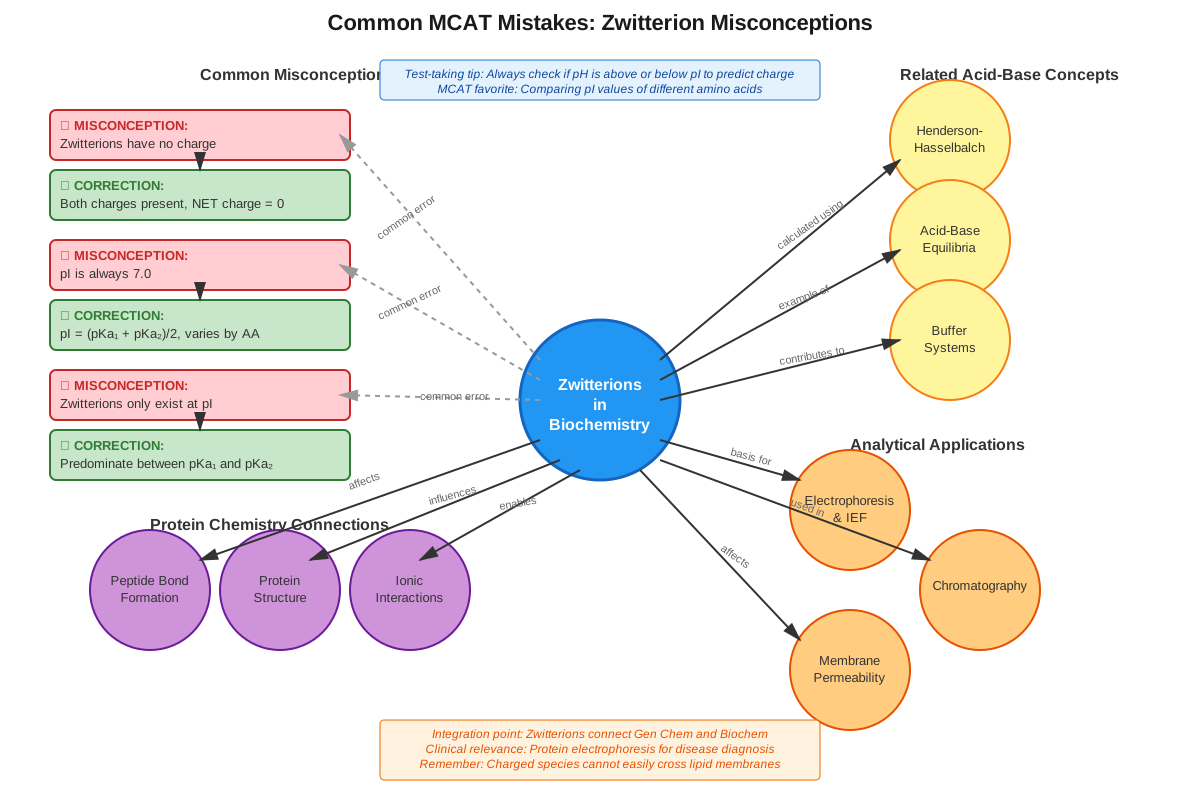
Misconception: Zwitterions have a net positive or negative charge.
Correction: By definition, zwitterions have equal numbers of positive and negative charges, resulting in a net charge of zero. The molecule is electrically neutral overall despite having charged regions.
Misconception: Amino acids are always zwitterions regardless of pH.
Correction: Amino acids exist as zwitterions only within a specific pH range (typically pH 2-9 for simple amino acids). At very low pH, they are fully protonated and positively charged; at very high pH, they are fully deprotonated and negatively charged.
Misconception: The pI is always calculated by averaging the α-carboxyl and α-amino pKa values.
Correction: This is only true for amino acids without ionizable R-groups. For amino acids with ionizable side chains, you must average the two pKa values that bracket the neutral (zwitterionic) form. For acidic amino acids, use pKa₁ and pKa_R; for basic amino acids, use pKa₂ and pKa_R.
Misconception: At the isoelectric point, amino acids have no charges at all.
Correction: At the pI, amino acids still have charges (NH₃⁺ and COO⁻), but the positive and negative charges are equal in number, resulting in zero net charge. The molecule is zwitterionic, not uncharged.
Misconception: Zwitterions cannot act as buffers because they are neutral.
Correction: While the zwitterionic form itself is neutral, amino acids can still buffer pH changes through the equilibria between their different ionization states. They are most effective as buffers when the pH is near one of their pKa values, not at their pI.
Misconception: In electrophoresis, molecules at their pI move toward the cathode.
Correction: Molecules at their pI have no net charge and therefore do not migrate toward either electrode. They remain stationary in the electric field, which is the principle behind isoelectric focusing.
Worked Examples
Example 1: Calculating pI and Predicting Charge
Question: Lysine has the following pKa values: α-COOH = 2.18, α-NH₃⁺ = 8.95, R-group NH₃⁺ = 10.53. Calculate the pI of lysine and determine its net charge at pH 7.4.
Solution:
Step 1: Identify the ionization states at different pH ranges.
- At very low pH: H₃N⁺-CHR-COOH with R = (CH₂)₄NH₃⁺ → net charge = +2
- At intermediate pH (2.18 < pH < 8.95): H₃N⁺-CHR-COO⁻ with R = (CH₂)₄NH₃⁺ → net charge = +1
- At higher pH (8.95 < pH < 10.53): H₂N-CHR-COO⁻ with R = (CH₂)₄NH₃⁺ → net charge = 0 (zwitterion)
- At very high pH: H₂N-CHR-COO⁻ with R = (CH₂)₄NH₂ → net charge = -1
Step 2: Identify which pKa values bracket the zwitterionic form.
The zwitterionic form (net charge = 0) exists between pH 8.95 and 10.53, so these are the two pKa values to average.
Step 3: Calculate pI.
pI = (8.95 + 10.53) / 2 = 19.48 / 2 = 9.74Step 4: Determine charge at pH 7.4.
Since pH 7.4 < pI 9.74, lysine is positively charged at physiological pH. Specifically, at pH 7.4, lysine exists primarily in the +1 charge state (both amino groups protonated, carboxyl group deprotonated).
Key Takeaway: For basic amino acids, always average the two highest pKa values to find the pI. At physiological pH, basic amino acids carry a positive charge.
Example 2: Electrophoresis Prediction
Question: A mixture of three amino acids—aspartic acid (pI = 2.77), alanine (pI = 6.00), and arginine (pI = 10.76)—is subjected to electrophoresis at pH 6.0. Predict the direction of migration for each amino acid.
Solution:
Step 1: Compare the pH of the buffer (6.0) to the pI of each amino acid.
For aspartic acid:
- pH 6.0 > pI 2.77
- At pH > pI, the molecule is negatively charged
- Negatively charged molecules migrate toward the anode (positive electrode)
For alanine:
- pH 6.0 = pI 6.00
- At pH = pI, the molecule has no net charge
- Neutral molecules do not migrate in an electric field
For arginine:
- pH 6.0 < pI 10.76
- At pH < pI, the molecule is positively charged
- Positively charged molecules migrate toward the cathode (negative electrode)
Step 2: Summarize the migration pattern.
- Aspartic acid → migrates toward anode (+)
- Alanine → remains stationary
- Arginine → migrates toward cathode (-)
Key Takeaway: The simple rule "pH < pI = positive charge; pH > pI = negative charge" allows rapid prediction of electrophoretic behavior. This is one of the most commonly tested applications of zwitterion concepts on the MCAT.
Exam Strategy
Approaching MCAT Questions on Zwitterions
- Identify the question type: Is it asking for pI calculation, charge prediction, or electrophoretic behavior?
- For pI calculations:
- List all pKa values provided
- Sketch the ionization states from low to high pH
- Identify the neutral (zwitterionic) form
- Average the two pKa values that bracket this form
- For charge predictions:
- Compare the given pH to the pI
- Apply the rule: pH < pI → positive; pH > pI → negative; pH = pI → neutral
- For electrophoresis questions:
- Determine the charge of each species at the buffer pH
- Remember: positive → cathode; negative → anode; neutral → no migration
Trigger Words and Phrases
Watch for these terms that signal zwitterion-related content:
- "Isoelectric point" or "pI"
- "Electrophoresis" or "isoelectric focusing"
- "Net charge at pH..."
- "Titration curve"
- "Buffering capacity"
- "Salt bridge"
- "Ionization state"
Process of Elimination Tips
- Eliminate answers that violate charge rules: If pH < pI, eliminate any answer suggesting negative charge
- Check pI calculation method: For amino acids with three pKa values, eliminate answers that simply average all three
- Verify charge at physiological pH: Acidic amino acids should be negative, basic should be positive at pH 7.4
- Migration direction: Eliminate answers that show neutral molecules migrating in electrophoresis
Time Allocation
- Discrete questions: 60-90 seconds (straightforward pI calculations or charge predictions)
- Passage-based questions: 90-120 seconds (may require interpreting experimental data or titration curves)
- Complex calculations: If a question requires multiple steps, quickly estimate first—exact calculations may not be necessary if answer choices are well-separated
Exam Tip: When in doubt about pI calculation for amino acids with ionizable R-groups, remember that the pI will be closer to the pKa values of the groups that are charged in the zwitterionic form. For acidic amino acids, pI is in the acidic range; for basic amino acids, pI is in the basic range.
Memory Techniques
Mnemonics
"PANZ" for Electrophoresis Direction:
- Positive charge → Anode? No! → Zips to cathode
- (Positive charges migrate to the cathode/negative electrode)
"Below is Positive, Above is Negative":
- pH below pI → molecule is positive
- pH above pI → molecule is negative
"Average the Brackets":
- To find pI, average the two pKa values that bracket the zwitterion
Visualization Strategy
Picture a pH number line from 0 to 14:
- Mark the pKa values as transition points
- Draw the structure and charge at each pH region
- The zwitterion exists in the middle region
- The pI is the midpoint of the zwitterionic region
Acronym for Amino Acid Categories
"ADEN" for Acidic Amino Acids:
- Aspartate
- Dehydrogenase (just kidding—D for aspartate's one-letter code)
- Elutamate
- Negatively charged at pH 7
"HARK" for Basic Amino Acids:
- Histidine
- Arginine
- R (arginine's one-letter code)
- K (lysine's one-letter code)
Summary
Zwitterions are molecules containing equal numbers of positive and negative charges, resulting in electrical neutrality. In biochemistry, amino acids exist predominantly as zwitterions at physiological pH, with protonated amino groups (NH₃⁺) and deprotonated carboxyl groups (COO⁻). The isoelectric point (pI) represents the pH at which a molecule exists entirely in its zwitterionic form and is calculated by averaging the two pKa values that bracket this neutral state. Understanding pH-dependent ionization states is crucial for predicting amino acid charge: molecules are positively charged when pH < pI and negatively charged when pH > pI. This charge behavior determines migration patterns in electrophoresis, buffer capacity, protein structure through salt bridge formation, and solubility properties. For MCAT success, students must master pI calculations for amino acids with ionizable R-groups, predict charges at any pH, and interpret electrophoretic separation experiments—all high-yield applications of zwitterion principles.
Key Takeaways
- Zwitterions are electrically neutral molecules with equal positive and negative charges, predominantly found in amino acids at physiological pH
- The isoelectric point (pI) is calculated by averaging the two pKa values that bracket the zwitterionic (neutral) form
- At pH < pI, molecules are positively charged; at pH > pI, molecules are negatively charged; at pH = pI, molecules are neutral
- Acidic amino acids (Asp, Glu) have low pI values (~3) and are negatively charged at pH 7.4
- Basic amino acids (Lys, Arg, His) have high pI values (7.6-10.8) and are positively charged at pH 7.4
- In electrophoresis, charged molecules migrate toward the oppositely charged electrode, while neutral molecules (at their pI) do not migrate
- Zwitterionic properties influence protein structure, enzyme function, buffer capacity, and separation techniques—all testable MCAT concepts
Related Topics
Amino Acid Structure and Classification: Understanding the 20 standard amino acids, their R-groups, and properties builds directly on zwitterion concepts and is essential for predicting pI values and charges.
Protein Structure: Salt bridges between zwitterionic amino acids stabilize tertiary and quaternary structure; mastering zwitterions enables deeper understanding of protein folding and stability.
Acid-Base Chemistry and Buffers: The Henderson-Hasselbalch equation and buffer systems connect directly to zwitterion behavior and pH-dependent ionization states.
Peptide Bonds and Protein Synthesis: Understanding how amino acids link together and how this affects overall charge and pI of peptides and proteins.
Chromatography and Separation Techniques: Ion-exchange chromatography and other separation methods exploit charge differences that depend on zwitterionic properties.
Enzyme Kinetics and Mechanism: Many enzyme active sites utilize zwitterionic amino acids for proton transfer and catalysis; understanding ionization states is crucial for mechanism questions.
Practice CTA
Now that you have mastered the core concepts of zwitterions, it's time to solidify your understanding through active practice. Attempt the practice questions and flashcards associated with this topic to test your ability to calculate isoelectric points, predict charges at various pH values, and interpret electrophoresis results. These skills are not just theoretical—they represent some of the highest-yield, most frequently tested concepts in MCAT Biochemistry. Each practice question you complete strengthens your pattern recognition and builds the confidence needed to tackle even the most challenging passage-based questions on test day. Your investment in mastering zwitterions will pay dividends across multiple biochemistry topics!
Sign up free to keep reading
Create a free AnvayaPrep account to finish this MCAT guide on Zwitterions — plus flashcards and practice questions.