Overview
Disaccharides are a fundamental class of carbohydrates composed of two monosaccharide units joined by a glycosidic bond. These molecules represent the simplest form of oligosaccharides and serve as critical energy sources, structural components, and metabolic intermediates in biological systems. Understanding disaccharides is essential for mastering biochemistry concepts tested on the MCAT, as they bridge the gap between simple sugars and complex polysaccharides while illustrating key principles of chemical bonding, enzyme specificity, and metabolic regulation.
For the MCAT, disaccharides appear frequently in both discrete questions and passage-based contexts, particularly within biochemistry and biological sciences sections. Test-makers favor disaccharides because they allow assessment of multiple competencies simultaneously: structural analysis, stereochemistry, enzyme kinetics, digestive physiology, and metabolic pathways. Questions may present clinical scenarios involving lactose intolerance, ask students to predict products of hydrolysis reactions, or require identification of glycosidic bond types from structural diagrams. The topic's moderate difficulty level makes it ideal for discriminating between average and high-performing test-takers.
Within the broader carbohydrates unit, disaccharides occupy a pivotal position. They demonstrate how monosaccharides combine through dehydration synthesis to form larger molecules, illustrating fundamental organic chemistry principles while introducing the concept of glycosidic linkages that become crucial when studying polysaccharides like starch, glycogen, and cellulose. Mastery of disaccharide structure and function provides the foundation for understanding complex carbohydrate metabolism, including glycolysis, gluconeogenesis, and the pentose phosphate pathway—all high-yield MCAT topics.
Learning Objectives
- [ ] Define disaccharides using accurate biochemistry terminology, including the nature of glycosidic bonds
- [ ] Explain why disaccharides matter for the MCAT, including their frequency and context in exam questions
- [ ] Apply disaccharides knowledge to exam-style questions involving structure, function, and metabolism
- [ ] Identify common mistakes related to disaccharides, particularly regarding bond nomenclature and reducing sugar properties
- [ ] Connect disaccharides to related biochemistry concepts, including monosaccharides, polysaccharides, and digestive enzymes
- [ ] Distinguish between α and β glycosidic linkages and predict their impact on molecular properties
- [ ] Analyze the structural differences between major dietary disaccharides and relate these to their biological functions
- [ ] Evaluate the reducing versus non-reducing properties of disaccharides based on their glycosidic bond configuration
Prerequisites
- Monosaccharide structure and nomenclature: Understanding glucose, fructose, and galactose structures is essential because these are the building blocks of all major disaccharides
- Basic organic chemistry: Familiarity with hydroxyl groups, hemiacetal/acetal formation, and dehydration reactions enables comprehension of glycosidic bond formation
- Stereochemistry fundamentals: Knowledge of α and β anomers, D/L configurations, and Fischer/Haworth projections is necessary for interpreting disaccharide structures
- Enzyme nomenclature: Basic understanding of how enzymes are named (substrate + -ase) helps predict which enzymes cleave specific disaccharides
- Redox chemistry basics: Recognizing oxidation-reduction reactions is important for understanding reducing sugar tests
Why This Topic Matters
Clinical and Real-World Significance
Disaccharides have profound clinical relevance that makes them attractive for MCAT passages. Lactose intolerance affects approximately 65% of the global population and results from deficiency of lactase, the enzyme that hydrolyzes lactose into glucose and galactose. This condition illustrates enzyme specificity, genetic regulation, and the consequences of impaired carbohydrate digestion. Similarly, sucrase-isomaltase deficiency represents a rare genetic disorder affecting sucrose and starch digestion, demonstrating the critical role of brush border enzymes in nutrient absorption.
Disaccharides also play essential roles in nutrition and metabolism. Sucrose (table sugar) represents the primary sweetener in Western diets and contributes significantly to metabolic disorders including obesity, diabetes, and cardiovascular disease. Understanding how dietary disaccharides are digested, absorbed, and metabolized provides insight into blood glucose regulation, insulin signaling, and energy homeostasis—all high-yield MCAT topics that integrate biochemistry with physiology.
MCAT Exam Statistics and Question Types
Disaccharides appear in approximately 3-5% of biochemistry questions on the MCAT, with higher frequency when considering integrated passages that combine carbohydrate chemistry with digestive physiology or metabolism. Questions typically fall into several categories:
- Structural identification: Given a structure, identify the disaccharide and glycosidic bond type
- Hydrolysis reactions: Predict products when specific enzymes act on disaccharides
- Reducing sugar properties: Determine whether a disaccharide will test positive in Benedict's or Fehling's test
- Clinical applications: Interpret experimental data or patient presentations involving disaccharide metabolism
- Comparative analysis: Distinguish between disaccharides based on composition, linkage, or properties
Passages frequently embed disaccharides within broader contexts such as carbohydrate metabolism experiments, digestive enzyme studies, or nutritional biochemistry investigations. The MCAT particularly favors questions requiring integration of multiple concepts—for example, connecting lactose structure to lactase specificity to clinical symptoms of lactose intolerance.
Core Concepts
Definition and General Structure
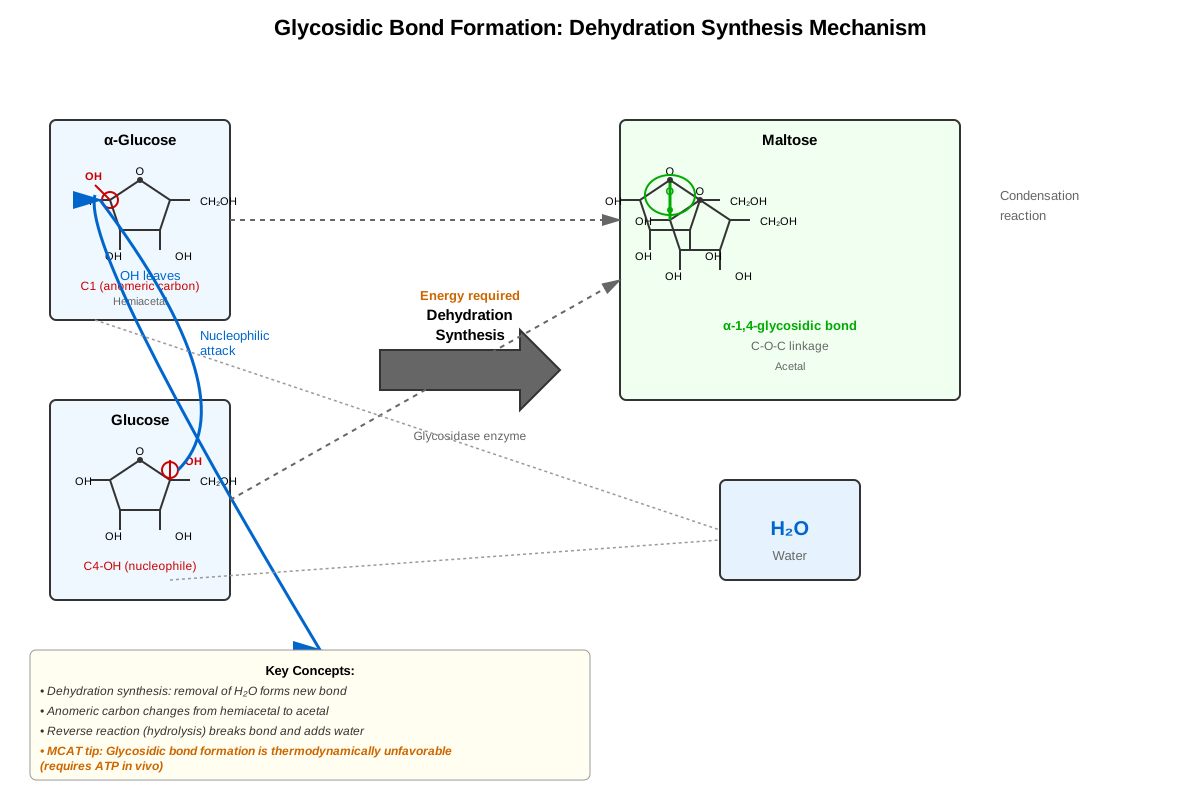
Disaccharides are carbohydrates formed by the condensation of two monosaccharide units through a glycosidic bond. This covalent bond forms between the anomeric carbon (C1 in aldoses, C2 in ketoses) of one monosaccharide and a hydroxyl group on another monosaccharide, releasing one water molecule in a dehydration synthesis reaction. The reverse process, hydrolysis, breaks the glycosidic bond by adding water, yielding two monosaccharides.
The general formula for most disaccharides is C₁₂H₂₂O₁₁, though this varies slightly depending on the specific monosaccharides involved. Disaccharides are classified as oligosaccharides (carbohydrates containing 2-10 monosaccharide units) and represent the simplest members of this group.
Glycosidic Bond Nomenclature
Understanding glycosidic bond nomenclature is crucial for MCAT success. The bond is named according to:
- Anomeric configuration (α or β) of the glycosidic carbon
- Carbon numbers involved in the linkage
- Directionality of the bond
For example, an α-1,4-glycosidic bond indicates that the α-anomer of the first sugar's C1 is bonded to the C4 of the second sugar. A β-1,4-glycosidic bond would involve the β-anomer instead. When both anomeric carbons participate in the bond (as in sucrose), the nomenclature becomes α-1,2 or similar, indicating both carbons involved.
The configuration (α vs. β) has profound implications for digestibility and biological function. Humans possess enzymes that efficiently cleave α-glycosidic bonds but lack enzymes for most β-glycosidic bonds, explaining why we can digest starch but not cellulose.
Major Dietary Disaccharides
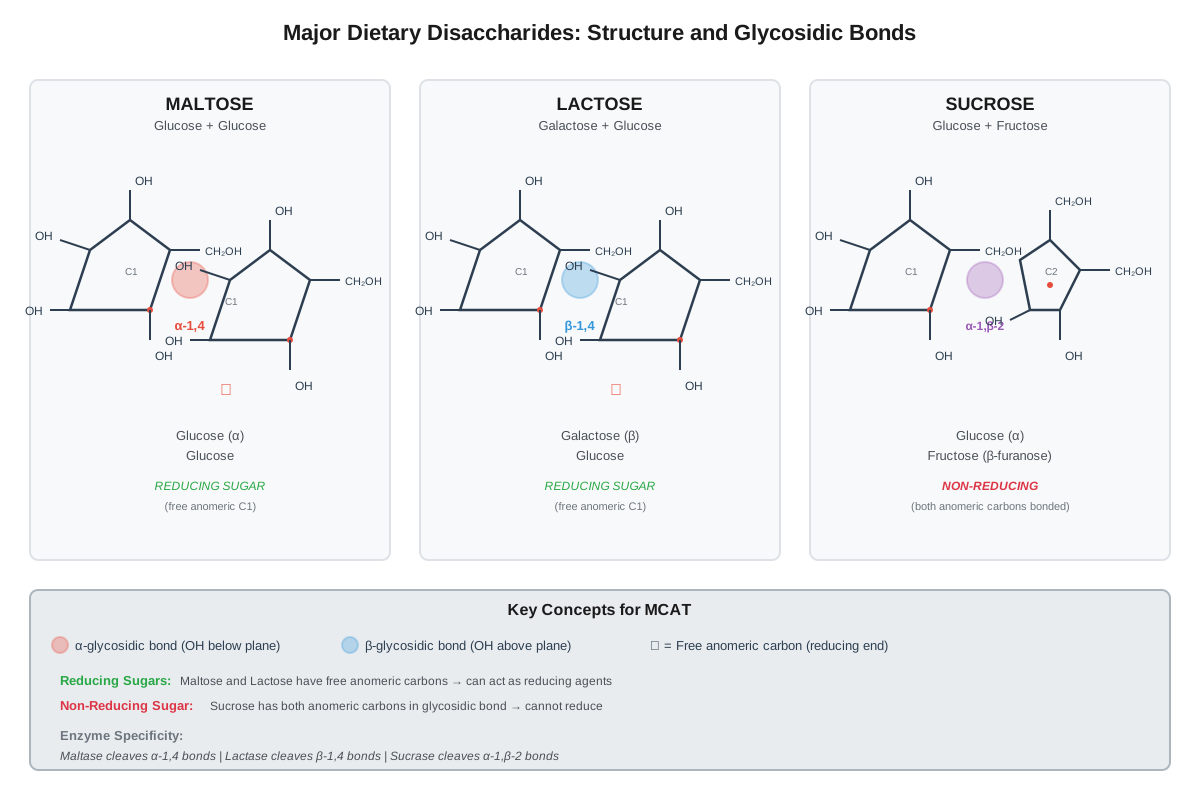
| Disaccharide | Composition | Glycosidic Bond | Source | Reducing Sugar? |
|---|---|---|---|---|
| Maltose | Glucose + Glucose | α-1,4 | Starch digestion, germinating grains | Yes |
| Lactose | Galactose + Glucose | β-1,4 | Milk and dairy products | Yes |
| Sucrose | Glucose + Fructose | α-1,2 | Table sugar, fruits, vegetables | No |
| Cellobiose | Glucose + Glucose | β-1,4 | Cellulose digestion (not by humans) | Yes |
| Trehalose | Glucose + Glucose | α-1,1 | Fungi, insects | No |
Maltose
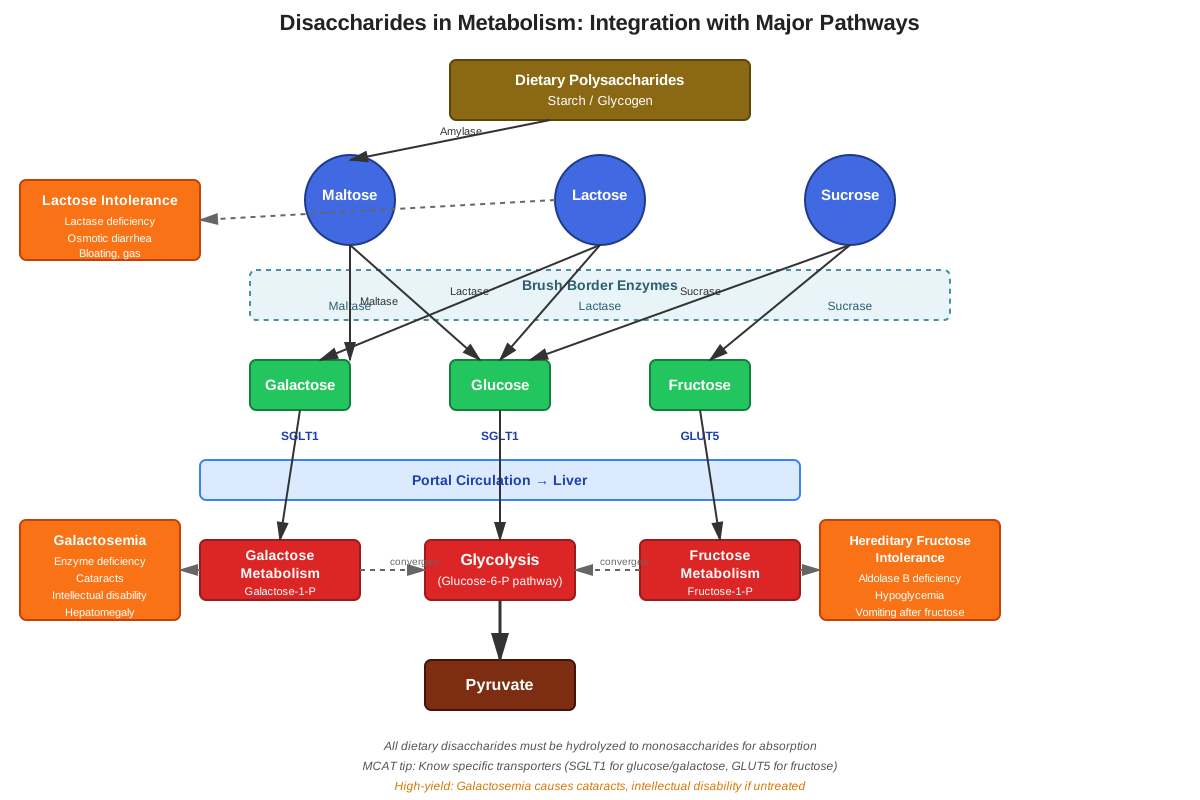
Maltose (malt sugar) consists of two glucose molecules joined by an α-1,4-glycosidic bond. It is produced during starch digestion by the enzyme amylase, which cleaves the α-1,4 bonds in amylose and amylopectin. Maltose is further hydrolyzed by maltase (also called α-glucosidase) in the small intestine brush border, yielding two glucose molecules that can be absorbed.
Maltose is a reducing sugar because one of the glucose units retains a free anomeric carbon that can exist in equilibrium between hemiacetal and open-chain aldehyde forms. This free aldehyde can reduce copper(II) ions in Benedict's or Fehling's reagent, producing a positive test result.
Lactose
Lactose (milk sugar) is composed of galactose and glucose joined by a β-1,4-glycosidic bond. It is the primary carbohydrate in mammalian milk, providing approximately 40% of an infant's caloric intake during breastfeeding. The enzyme lactase (β-galactosidase) hydrolyzes lactose in the small intestine brush border.
Lactose is also a reducing sugar because the glucose unit retains a free anomeric carbon. The β-configuration of the glycosidic bond makes lactose resistant to digestion by many adults who have decreased lactase expression after weaning, leading to lactose intolerance. Undigested lactose passes to the colon where bacterial fermentation produces gas, organic acids, and osmotic diarrhea.
Sucrose
Sucrose (table sugar) consists of glucose and fructose joined by an α-1,2-glycosidic bond (more precisely, α-D-glucose(1→2)β-D-fructose). This bond connects the anomeric carbons of both monosaccharides, making sucrose unique among common disaccharides.
Because both anomeric carbons participate in the glycosidic bond, sucrose is a non-reducing sugar—neither monosaccharide unit can exist in open-chain form with a free aldehyde or ketone group. Sucrose does not react with Benedict's or Fehling's reagent unless first hydrolyzed. The enzyme sucrase (also called invertase) cleaves sucrose into glucose and fructose, a mixture called invert sugar because the optical rotation changes from dextrorotatory (+66.5°) to levorotatory (-20°).
Cellobiose
Cellobiose is composed of two glucose molecules joined by a β-1,4-glycosidic bond. It is the repeating disaccharide unit in cellulose and is produced when cellulose undergoes partial hydrolysis. Humans lack cellulase enzymes capable of cleaving β-1,4 bonds, making cellobiose and cellulose indigestible dietary fiber.
Cellobiose is a reducing sugar with a free anomeric carbon on one glucose unit. Some ruminants and termites harbor symbiotic microorganisms that produce cellulase, enabling them to digest cellulose and derive energy from cellobiose.
Reducing vs. Non-Reducing Sugars
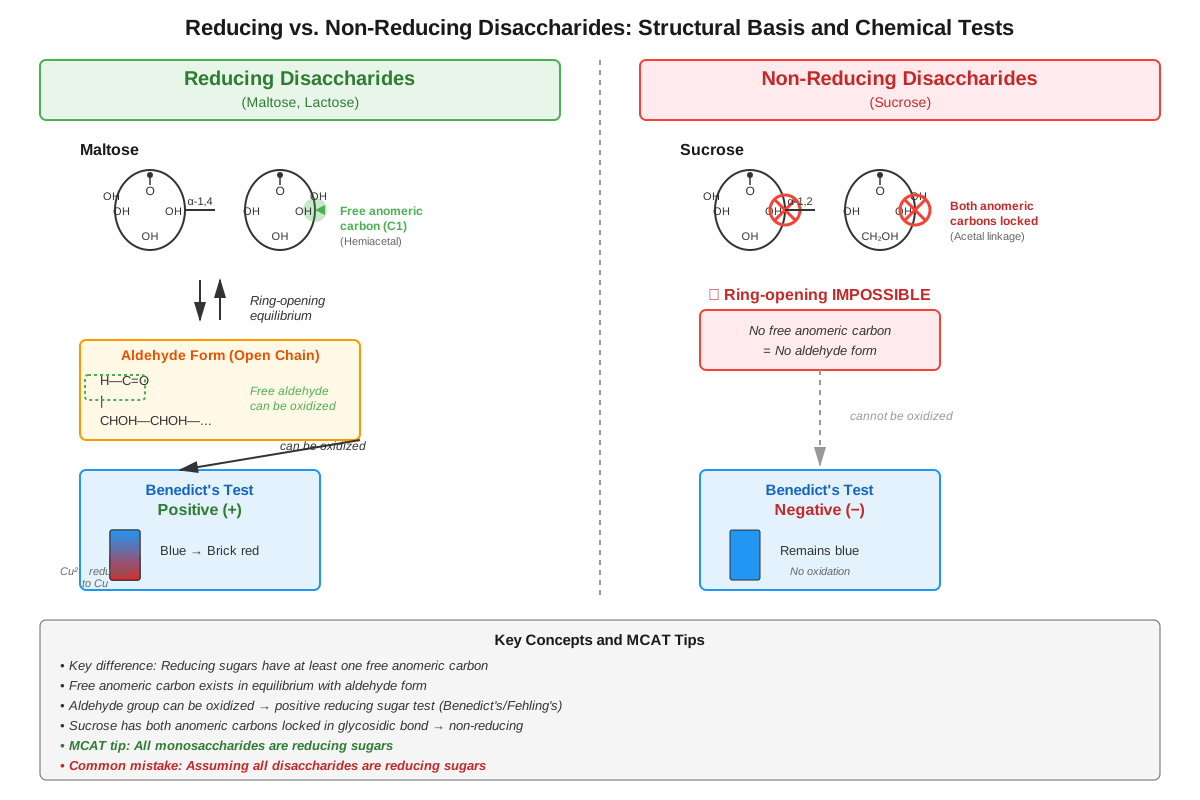
The distinction between reducing and non-reducing sugars is frequently tested on the MCAT. A reducing sugar contains a free anomeric carbon that can exist in equilibrium with an open-chain form containing an aldehyde or ketone group. This carbonyl group can reduce metal ions (particularly Cu²⁺ to Cu⁺), giving a positive result in Benedict's, Fehling's, or Tollens' tests.
Reducing disaccharides (maltose, lactose, cellobiose) have one anomeric carbon involved in the glycosidic bond and one free anomeric carbon. The free anomeric carbon can undergo mutarotation, interconverting between α and β anomers through the open-chain form.
Non-reducing disaccharides (sucrose, trehalose) have both anomeric carbons involved in the glycosidic bond, preventing formation of open-chain structures. These sugars do not react with reducing sugar tests unless the glycosidic bond is first hydrolyzed by acid or enzyme treatment.
Digestion and Absorption
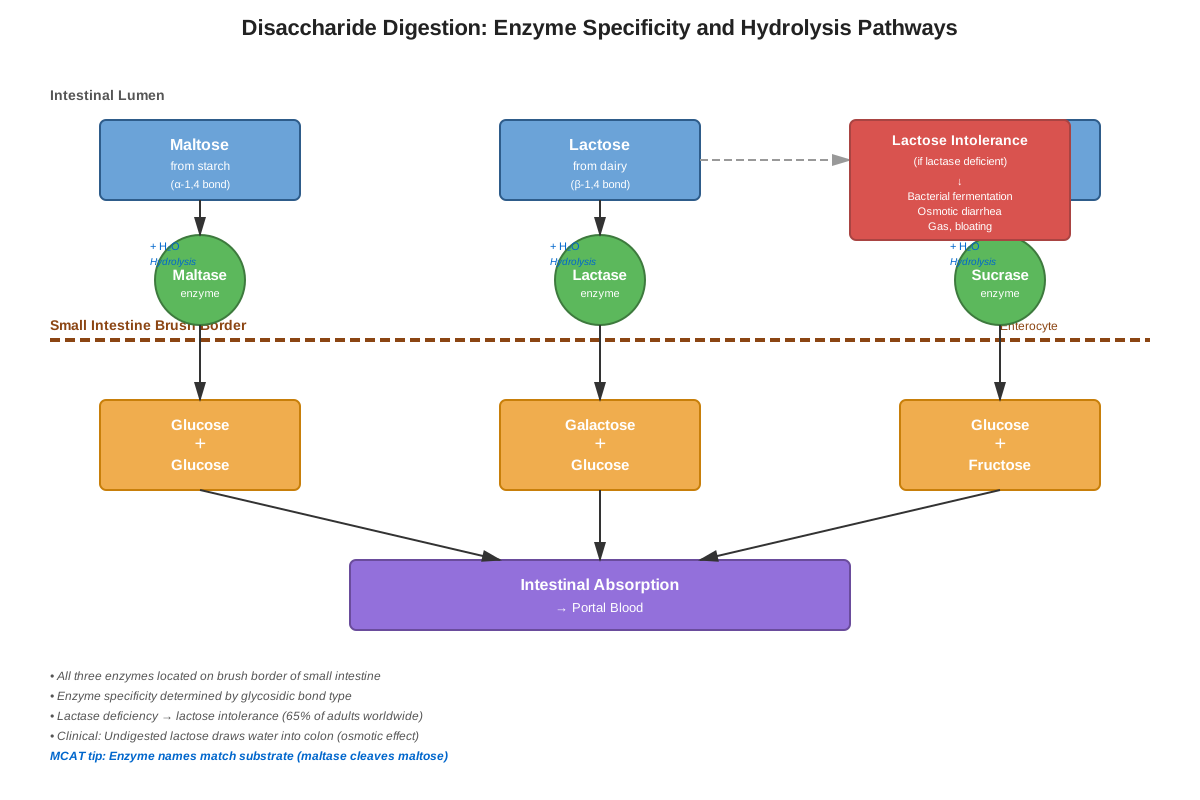
Disaccharide digestion occurs primarily at the brush border of the small intestine, where specific disaccharidases are embedded in the membrane of enterocytes. These enzymes include:
- Maltase (α-glucosidase): Hydrolyzes maltose → glucose + glucose
- Sucrase: Hydrolyzes sucrose → glucose + fructose
- Lactase (β-galactosidase): Hydrolyzes lactose → galactose + glucose
- Isomaltase: Hydrolyzes α-1,6 bonds in limit dextrins from starch digestion
The resulting monosaccharides are absorbed via specific transporters:
- Glucose and galactose: SGLT1 (sodium-glucose linked transporter 1) uses secondary active transport
- Fructose: GLUT5 (facilitated diffusion)
- All three monosaccharides exit enterocytes via GLUT2 into the bloodstream
Deficiencies in disaccharidases lead to malabsorption syndromes. Undigested disaccharides remain in the intestinal lumen, creating osmotic pressure that draws water into the gut (osmotic diarrhea) and providing substrate for bacterial fermentation (producing gas and short-chain fatty acids).
Formation and Hydrolysis Reactions
The formation of a glycosidic bond is a condensation reaction (dehydration synthesis):
Monosaccharide₁-OH + HO-Monosaccharide₂ → Monosaccharide₁-O-Monosaccharide₂ + H₂OThis reaction is thermodynamically unfavorable (ΔG > 0) and requires energy input. In cells, disaccharide synthesis uses activated sugar nucleotides (like UDP-glucose) to drive the reaction forward.
Hydrolysis is the reverse reaction, breaking the glycosidic bond:
Disaccharide + H₂O → Monosaccharide₁ + Monosaccharide₂Hydrolysis is thermodynamically favorable (ΔG < 0) but kinetically slow without catalysis. Enzymes (disaccharidases) or acid can catalyze hydrolysis. The MCAT may present questions about reaction conditions, enzyme specificity, or energy requirements for these processes.
Concept Relationships
Disaccharides serve as a conceptual bridge connecting multiple biochemistry topics. Understanding these relationships enhances retention and enables integration across MCAT questions.
Monosaccharides → Disaccharides → Polysaccharides: This progression illustrates increasing molecular complexity. Monosaccharides (glucose, fructose, galactose) combine to form disaccharides through glycosidic bonds. The same bonding principle extends to polysaccharides (starch, glycogen, cellulose), where hundreds to thousands of monosaccharides link together. The type of glycosidic bond (α vs. β, 1,4 vs. 1,6) determines the polysaccharide's structure and digestibility.
Disaccharide Structure → Enzyme Specificity: The three-dimensional configuration of glycosidic bonds determines which enzymes can cleave them. This exemplifies the lock-and-key or induced-fit models of enzyme action. Maltase specifically recognizes α-1,4 bonds between glucose units, while lactase recognizes β-1,4 bonds between galactose and glucose. This specificity explains lactose intolerance (lactase deficiency) and why humans cannot digest cellulose (lack of β-1,4-glucosidase).
Disaccharide Digestion → Monosaccharide Absorption → Glycolysis: This metabolic sequence connects carbohydrate digestion to energy production. Dietary disaccharides are hydrolyzed to monosaccharides, which are absorbed and enter glycolysis to generate ATP. Understanding this pathway integration is essential for MCAT metabolism questions.
Reducing Sugar Properties → Biochemical Assays: The ability of reducing sugars to undergo redox reactions connects disaccharide structure to laboratory techniques. Benedict's test, Fehling's test, and glucose oxidase assays all depend on the presence or absence of free anomeric carbons, linking structural biochemistry to experimental methodology.
Stereochemistry → Biological Function: The α vs. β configuration of glycosidic bonds, determined by stereochemistry at the anomeric carbon, profoundly affects biological properties. This relationship demonstrates how subtle structural differences create major functional consequences—a recurring MCAT theme.
Quick check — test yourself on Disaccharides so far.
Try Flashcards →High-Yield Facts
⭐ Maltose contains two glucose units joined by an α-1,4-glycosidic bond and is a reducing sugar
⭐ Lactose contains galactose and glucose joined by a β-1,4-glycosidic bond and is a reducing sugar
⭐ Sucrose contains glucose and fructose joined by an α-1,2-glycosidic bond and is a non-reducing sugar
⭐ Reducing sugars have at least one free anomeric carbon; non-reducing sugars have both anomeric carbons involved in the glycosidic bond
⭐ Disaccharidases (maltase, sucrase, lactase) are located in the brush border of small intestine enterocytes
- Cellobiose contains two glucose units joined by a β-1,4-glycosidic bond but is not digestible by humans
- Glycosidic bond formation is a dehydration synthesis reaction that releases one water molecule
- Lactose intolerance results from decreased lactase expression after weaning in most human populations
- Trehalose (α-1,1-linked glucose dimer) is a non-reducing sugar found in fungi and insects
- The enzyme invertase (sucrase) produces "invert sugar" by hydrolyzing sucrose, changing optical rotation from positive to negative
- All common dietary disaccharides have the molecular formula C₁₂H₂₂O₁₁
- Glucose and galactose from disaccharide digestion are absorbed via SGLT1 (secondary active transport), while fructose uses GLUT5 (facilitated diffusion)
Common Misconceptions
Misconception: All disaccharides are reducing sugars.
Correction: Only disaccharides with at least one free anomeric carbon are reducing sugars. Sucrose and trehalose are non-reducing because both anomeric carbons participate in the glycosidic bond, preventing formation of open-chain structures with free carbonyl groups.
Misconception: The α or β designation in glycosidic bonds refers to the configuration of both monosaccharides.
Correction: The α or β designation refers specifically to the configuration at the anomeric carbon forming the glycosidic bond. In maltose (α-1,4), the α indicates that the C1 of the first glucose is in the α configuration; the second glucose can still undergo mutarotation between α and β forms at its free anomeric carbon.
Misconception: Lactose intolerance is an allergy to milk.
Correction: Lactose intolerance is an enzyme deficiency (decreased lactase expression), not an immune-mediated allergy. It results in malabsorption and digestive symptoms but does not involve IgE antibodies or histamine release. Milk allergy involves immune reactions to milk proteins (casein, whey), not lactose.
Misconception: All disaccharides are digested in the stomach.
Correction: Disaccharide digestion occurs primarily at the brush border of the small intestine, not in the stomach. While salivary amylase begins starch breakdown to maltose in the mouth, and gastric acid can slowly hydrolyze some glycosidic bonds, specific disaccharidases (maltase, sucrase, lactase) are located on the intestinal brush border membrane.
Misconception: Sucrose is called "invert sugar."
Correction: Invert sugar is the mixture of glucose and fructose produced by sucrose hydrolysis, not sucrose itself. The term "invert" refers to the inversion of optical rotation from dextrorotatory (+66.5° for sucrose) to levorotatory (-20° for the glucose-fructose mixture) that occurs upon hydrolysis.
Misconception: β-glycosidic bonds are inherently weaker than α-glycosidic bonds.
Correction: Both α and β glycosidic bonds have similar bond energies and chemical stability. The difference lies in enzyme specificity: humans produce enzymes that cleave α-glycosidic bonds but lack enzymes for most β-glycosidic bonds. This is a biological distinction, not a chemical one.
Misconception: Disaccharides can be directly absorbed without digestion.
Correction: Disaccharides are too large to be absorbed by intestinal transporters and must first be hydrolyzed to monosaccharides. Only monosaccharides (glucose, galactose, fructose) can be absorbed via specific transporters (SGLT1, GLUT5). Undigested disaccharides remain in the intestinal lumen and cause osmotic effects.
Worked Examples
Example 1: Structural Analysis and Reducing Sugar Prediction
Question: A researcher isolates a disaccharide from a plant extract. Mass spectrometry reveals a molecular formula of C₁₂H₂₂O₁₁. Structural analysis shows the compound consists of two glucose molecules. When treated with Benedict's reagent, the solution turns brick red. When treated with the enzyme maltase, the compound is hydrolyzed into two glucose molecules, but treatment with lactase produces no reaction. What is the most likely structure of this disaccharide?
Step 1 - Analyze the composition: The molecular formula C₁₂H₂₂O₁₁ is consistent with a typical disaccharide. The compound contains two glucose molecules, eliminating lactose (galactose + glucose) and sucrose (glucose + fructose).
Step 2 - Interpret the Benedict's test: The positive Benedict's test (brick red color) indicates this is a reducing sugar with at least one free anomeric carbon. This eliminates trehalose (α-1,1 linkage, non-reducing) and confirms the disaccharide has only one anomeric carbon involved in the glycosidic bond.
Step 3 - Analyze enzyme specificity: Maltase (α-glucosidase) successfully hydrolyzes the compound, indicating an α-glycosidic bond between glucose units. Lactase (β-galactosidase) does not react, which is expected since the compound contains no galactose and no β-linkage.
Step 4 - Determine the structure: The compound is most likely maltose, with an α-1,4-glycosidic bond between two glucose molecules. This structure explains all observations: correct molecular formula, reducing sugar properties (free anomeric carbon on the second glucose), and susceptibility to maltase but not lactase.
Answer: The disaccharide is maltose (glucose-α-1,4-glucose).
Key Concept Connection: This example integrates disaccharide structure, reducing sugar properties, and enzyme specificity—all high-yield MCAT topics. It demonstrates how multiple pieces of experimental evidence can be combined to deduce molecular structure.
Example 2: Clinical Vignette - Lactose Intolerance
Question: A 25-year-old woman of East Asian descent reports experiencing bloating, abdominal cramping, and diarrhea approximately 30-60 minutes after consuming dairy products. A hydrogen breath test shows elevated hydrogen levels after lactose administration. Which of the following best explains the pathophysiology of her symptoms?
A) Immune-mediated destruction of intestinal lactase-producing cells
B) Decreased expression of lactase leading to bacterial fermentation of undigested lactose
C) Increased intestinal permeability allowing lactose to enter the bloodstream
D) Allergic reaction to milk proteins triggering histamine release
Step 1 - Identify the condition: The clinical presentation (symptoms after dairy consumption) and positive hydrogen breath test indicate lactose intolerance, not milk allergy.
Step 2 - Understand lactose digestion: Lactose (galactose-β-1,4-glucose) requires lactase (β-galactosidase) for hydrolysis in the small intestine brush border. Many adults, particularly those of East Asian, African, or Native American descent, experience decreased lactase expression after weaning (lactase non-persistence).
Step 3 - Trace the pathophysiology: Without sufficient lactase, lactose remains undigested in the small intestine. This unabsorbed disaccharide:
- Creates osmotic pressure, drawing water into the intestinal lumen (osmotic diarrhea)
- Passes to the colon where bacteria ferment it
- Bacterial fermentation produces hydrogen gas (detected in breath test), methane, and short-chain fatty acids
- Gas production causes bloating and cramping
Step 4 - Eliminate incorrect answers:
- Choice A describes an autoimmune process, not lactose intolerance
- Choice C is incorrect because disaccharides cannot be absorbed intact
- Choice D describes milk allergy (immune-mediated), not lactose intolerance (enzyme deficiency)
Answer: B - Decreased expression of lactase leading to bacterial fermentation of undigested lactose
Key Concept Connection: This example demonstrates how understanding disaccharide structure (lactose), enzyme specificity (lactase), and digestive physiology (brush border digestion, bacterial fermentation) enables analysis of clinical presentations. The MCAT frequently presents similar integrated scenarios requiring application of multiple biochemistry concepts.
Exam Strategy
Approaching MCAT Disaccharide Questions
Step 1 - Identify the question type: Quickly determine whether the question asks about structure, function, digestion, or clinical application. This guides your approach and helps you recall relevant information efficiently.
Step 2 - Draw or visualize structures: For structural questions, mentally sketch or recognize the disaccharide structure. Identify the monosaccharide components, the glycosidic bond type (α or β, carbon numbers), and whether anomeric carbons are free or involved in bonding.
Step 3 - Apply the reducing sugar rule: If asked about reducing properties, immediately check whether both anomeric carbons participate in the glycosidic bond. One free anomeric carbon = reducing sugar; both involved = non-reducing sugar.
Step 4 - Match enzymes to substrates: For digestion questions, use enzyme specificity rules. Maltase cleaves α-1,4 bonds in maltose, lactase cleaves β-1,4 bonds in lactose, and sucrase cleaves α-1,2 bonds in sucrose. Enzyme names often indicate their substrates.
Trigger Words and Phrases
Watch for these high-yield terms that signal disaccharide content:
- "Milk sugar" → lactose
- "Table sugar" → sucrose
- "Malt sugar" or "starch digestion product" → maltose
- "Reducing sugar" → check for free anomeric carbon (maltose, lactose, cellobiose)
- "Non-reducing sugar" → both anomeric carbons in bond (sucrose, trehalose)
- "Brush border" → location of disaccharidases
- "Lactose intolerance" → lactase deficiency, not allergy
- "Invert sugar" → glucose + fructose mixture from sucrose hydrolysis
- "Benedict's test" or "Fehling's test" → detecting reducing sugars
Process of Elimination Tips
For structure identification questions:
- Eliminate options with wrong monosaccharide composition first
- Then eliminate based on glycosidic bond type (α vs. β)
- Finally, check carbon numbers in the linkage
For reducing sugar questions:
- Immediately eliminate sucrose and trehalose (always non-reducing)
- Maltose, lactose, and cellobiose are always reducing
- If the question mentions "both anomeric carbons," the answer is non-reducing
For enzyme questions:
- Match enzyme names to substrates (maltase → maltose, lactase → lactose)
- Remember humans lack β-1,4-glucosidase (cellulase)
- Brush border location eliminates salivary or pancreatic enzymes
For clinical scenarios:
- Distinguish enzyme deficiency (lactose intolerance) from allergy (immune-mediated)
- Osmotic diarrhea + gas production = undigested disaccharide
- Ethnic background clues (East Asian, African) suggest lactase non-persistence
Time Allocation Advice
Disaccharide questions typically require 60-90 seconds for discrete questions and 90-120 seconds for passage-based questions. Allocate time as follows:
- 15-20 seconds: Read and identify question type
- 20-30 seconds: Recall relevant structures or concepts
- 20-30 seconds: Apply logic or eliminate wrong answers
- 10-15 seconds: Verify answer and mark
If a question requires drawing or complex structural analysis, budget an additional 20-30 seconds. Don't spend more than 2 minutes on any single disaccharide question—if stuck, flag it and return later.
Memory Techniques
Mnemonic for Major Disaccharides
"My Lovely Sister Cries Tears"
- Maltose: Glucose + Glucose, α-1,4, Reducing
- Lactose: Galactose + Glucose, β-1,4, Reducing
- Sucrose: Glucose + Fructose, α-1,2, Non-reducing
- Cellobiose: Glucose + Glucose, β-1,4, Reducing
- Trehalose: Glucose + Glucose, α-1,1, Non-reducing
Reducing Sugar Memory Aid
"Free to Reduce": If an anomeric carbon is free (not involved in the glycosidic bond), the sugar can reduce metal ions. Both carbons bonded = not free = non-reducing.
Enzyme Specificity Visualization
Picture enzymes as locks and disaccharides as keys:
- Maltase = α-lock (only fits α-1,4 keys)
- Lactase = β-lock (only fits β-1,4 keys with galactose)
- Sucrase = α-1,2-lock (only fits glucose-fructose keys)
Humans have α-locks but not β-locks for glucose-glucose bonds, explaining why we digest maltose but not cellobiose.
Lactose Intolerance vs. Milk Allergy
"Lactose intolerance = Enzyme deficiency" (both have "e")
"Milk allergy = Immune response" (both have "i")
This simple association helps distinguish between the two conditions on clinical vignettes.
Glycosidic Bond Nomenclature
"Alpha-Number-Number": The α or β comes first, followed by the two carbon numbers involved. Example: α-1,4 means α-configuration at C1, bonded to C4.
Remember: "Configuration-Carbon-Carbon"
Summary
Disaccharides are carbohydrates composed of two monosaccharides joined by glycosidic bonds formed through dehydration synthesis. The three major dietary disaccharides—maltose (glucose-α-1,4-glucose), lactose (galactose-β-1,4-glucose), and sucrose (glucose-α-1,2-fructose)—differ in composition, linkage type, and reducing properties. Maltose and lactose are reducing sugars with one free anomeric carbon, while sucrose is non-reducing with both anomeric carbons involved in bonding. Disaccharide digestion occurs at the small intestine brush border via specific disaccharidases (maltase, lactase, sucrase), producing monosaccharides that are absorbed through SGLT1 or GLUT5 transporters. The α versus β configuration of glycosidic bonds determines enzyme specificity and digestibility, explaining conditions like lactose intolerance and why humans cannot digest cellulose. Understanding disaccharide structure, function, and metabolism is essential for MCAT success, as these concepts integrate carbohydrate chemistry, enzyme kinetics, digestive physiology, and clinical applications.
Key Takeaways
- Disaccharides consist of two monosaccharides joined by glycosidic bonds; major types include maltose, lactose, and sucrose
- Reducing sugars (maltose, lactose) have at least one free anomeric carbon; non-reducing sugars (sucrose) have both anomeric carbons in the glycosidic bond
- Glycosidic bond nomenclature specifies configuration (α or β) and carbon numbers involved (e.g., α-1,4, β-1,4, α-1,2)
- Disaccharidases (maltase, lactase, sucrase) are brush border enzymes with specific substrate recognition based on bond type
- Lactose intolerance results from lactase deficiency, not immune-mediated allergy, causing osmotic diarrhea and bacterial fermentation
- Enzyme specificity for α versus β bonds explains why humans digest maltose and lactose but not cellobiose
- Understanding disaccharide structure enables prediction of reducing properties, enzyme susceptibility, and metabolic fate
Related Topics
Monosaccharides: Mastering glucose, fructose, and galactose structure provides the foundation for understanding how these units combine to form disaccharides. Focus on stereochemistry, anomeric configurations, and cyclic structures.
Polysaccharides: Disaccharide knowledge extends directly to polysaccharides (starch, glycogen, cellulose), which are polymers of monosaccharides joined by the same glycosidic bonds studied here. Understanding α-1,4 and α-1,6 linkages in disaccharides prepares you for polysaccharide structure.
Carbohydrate Metabolism: Disaccharide digestion products (glucose, fructose, galactose) enter glycolysis and other metabolic pathways. Understanding how dietary disaccharides become metabolic intermediates connects digestion to energy production.
Enzyme Kinetics and Specificity: Disaccharidases exemplify enzyme-substrate specificity, active site complementarity, and the lock-and-key model. These principles apply broadly across biochemistry.
Digestive Physiology: Disaccharide digestion illustrates brush border function, active transport mechanisms (SGLT1), and the consequences of enzyme deficiencies—concepts that extend to other nutrients.
Practice CTA
Now that you've mastered the core concepts of disaccharides, it's time to reinforce your understanding through active practice. Complete the associated practice questions to test your ability to apply these concepts in MCAT-style scenarios. Work through the flashcards to solidify high-yield facts and commit key structures to memory. Remember, understanding disaccharides provides the foundation for more complex carbohydrate topics and integrates with metabolism, physiology, and clinical medicine. Your investment in mastering this topic will pay dividends across multiple MCAT sections. Stay focused, practice deliberately, and watch your confidence grow!
Sign up free to keep reading
Create a free AnvayaPrep account to finish this MCAT guide on Disaccharides — plus flashcards and practice questions.