Overview
Polysaccharides represent one of the most structurally diverse and functionally important classes of biological macromolecules tested on the MCAT. These complex carbohydrates consist of long chains of monosaccharide units linked by glycosidic bonds, serving critical roles in energy storage, structural support, and cellular recognition. Understanding polysaccharides is essential for mastering Biochemistry concepts that appear throughout the MCAT, particularly in passages involving metabolism, cellular structure, and physiological regulation.
The MCAT frequently tests polysaccharides within the context of broader biochemical pathways and biological systems. Questions may require students to distinguish between storage and structural polysaccharides, understand the biochemical basis for their different properties, or apply knowledge of glycosidic bond types to predict molecular behavior. Polysaccharides Biochemistry connects directly to metabolism (glycogen breakdown and synthesis), cellular biology (cell wall structure), and even organic chemistry (understanding glycosidic linkages and their hydrolysis).
Mastery of Polysaccharides MCAT content requires more than memorization of structures—students must understand the relationship between molecular architecture and biological function. This topic bridges multiple MCAT disciplines: the organic chemistry of glycosidic bonds, the biochemistry of metabolic pathways, and the biological concepts of cellular structure and energy homeostasis. The ability to quickly identify polysaccharide types, predict their properties based on linkage patterns, and connect them to physiological processes represents a high-yield skill set for test day success.
Learning Objectives
- [ ] Define Polysaccharides using accurate Biochemistry terminology
- [ ] Explain why Polysaccharides matters for the MCAT
- [ ] Apply Polysaccharides to exam-style questions
- [ ] Identify common mistakes related to Polysaccharides
- [ ] Connect Polysaccharides to related Biochemistry concepts
- [ ] Distinguish between α and β glycosidic linkages and predict their functional consequences
- [ ] Compare and contrast the structures and functions of starch, glycogen, cellulose, and chitin
- [ ] Analyze how polysaccharide structure determines digestibility and biological function
- [ ] Evaluate the role of polysaccharides in energy metabolism and cellular architecture
Prerequisites
- Monosaccharide structure and stereochemistry: Understanding glucose, fructose, and other simple sugars is essential because polysaccharides are polymers of these building blocks
- Glycosidic bond formation: Knowledge of condensation reactions between hydroxyl groups enables comprehension of how monosaccharides link together
- Basic organic chemistry functional groups: Recognition of hydroxyl groups, acetals, and hemiacetals underlies understanding of carbohydrate chemistry
- Dehydration synthesis and hydrolysis: These fundamental reactions explain polysaccharide formation and breakdown
- Basic enzyme function: Understanding how enzymes catalyze specific reactions is necessary for comprehending polysaccharide metabolism
Why This Topic Matters
Clinical and Real-World Significance
Polysaccharides play indispensable roles in human health and disease. Glycogen storage diseases result from defects in enzymes that synthesize or break down glycogen, leading to hypoglycemia, muscle weakness, or liver enlargement. Dietary fiber, composed primarily of cellulose and other indigestible polysaccharides, influences gut health, cholesterol levels, and diabetes risk. Understanding polysaccharide structure explains why humans can digest starch but not cellulose, despite both being glucose polymers—a concept with direct nutritional implications.
MCAT Exam Statistics
Polysaccharides appear in approximately 3-5% of Biochemistry questions on the MCAT, with particular emphasis in passages involving metabolism, nutrition, or cellular structure. Questions typically test structural recognition, functional differences between polysaccharide types, and connections to metabolic pathways like glycogenolysis and glycogenesis. The topic frequently appears in discrete questions requiring quick structural analysis or in passage-based questions integrating polysaccharides with enzyme kinetics, metabolic regulation, or cellular biology.
Common Exam Contexts
The MCAT presents polysaccharides in several characteristic formats: passages describing metabolic disorders affecting glycogen metabolism, experimental passages investigating enzyme specificity for different glycosidic linkages, nutritional studies examining dietary carbohydrate effects, or structural biology passages exploring cell wall composition. Questions may ask students to predict the products of enzymatic hydrolysis, explain why certain polysaccharides resist digestion, or connect polysaccharide structure to physiological outcomes like blood glucose regulation.
Core Concepts
Definition and General Structure
Polysaccharides are complex carbohydrate polymers consisting of more than ten monosaccharide units joined by glycosidic bonds. These macromolecules can contain hundreds to thousands of sugar residues, creating molecules with molecular weights ranging from thousands to millions of daltons. The term "polysaccharide" derives from Greek roots meaning "many sugars," reflecting their polymeric nature.
Polysaccharides form through repeated dehydration synthesis reactions, where the hydroxyl group of one monosaccharide reacts with the anomeric carbon of another, releasing water and creating a glycosidic linkage. The specific hydroxyl groups involved determine the linkage type (α or β) and position (1→4, 1→6, etc.), which profoundly influences the polysaccharide's three-dimensional structure and biological properties.
Classification of Polysaccharides
Polysaccharides are classified based on composition and function:
Homopolysaccharides contain only one type of monosaccharide (e.g., starch contains only glucose), while heteropolysaccharides contain two or more different monosaccharides (e.g., hyaluronic acid contains glucuronic acid and N-acetylglucosamine).
Storage polysaccharides serve as energy reserves that can be mobilized when needed, while structural polysaccharides provide mechanical support and protection to cells and organisms.
Starch: Plant Energy Storage
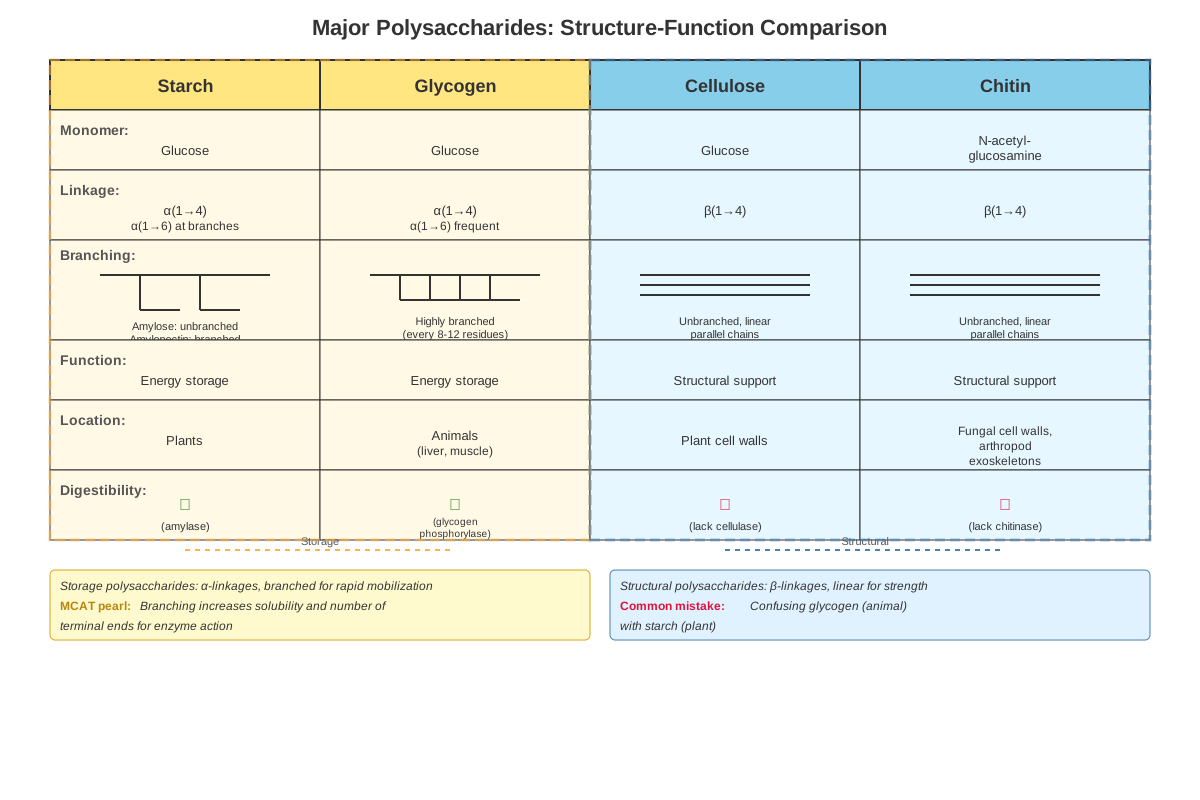
Starch represents the primary energy storage polysaccharide in plants, consisting entirely of glucose units linked by α-1,4-glycosidic bonds with occasional α-1,6-glycosidic bonds creating branch points. Starch exists in two forms:
Amylose (20-30% of starch) is an unbranched polymer of glucose with exclusively α-1,4 linkages, forming a helical structure that can trap iodine molecules (producing the characteristic blue-black color in iodine tests). The helical configuration results from the angular geometry of α-glycosidic bonds.
Amylopectin (70-80% of starch) contains the same α-1,4 backbone as amylose but includes α-1,6 branch points approximately every 24-30 glucose residues. This branching creates a more compact, highly branched structure with numerous non-reducing ends available for simultaneous enzymatic attack during digestion.
Glycogen: Animal Energy Storage
Glycogen serves as the primary glucose storage form in animals, particularly abundant in liver and muscle tissue. Structurally similar to amylopectin, glycogen contains α-1,4-linked glucose chains with α-1,6 branch points, but branches occur more frequently—approximately every 8-12 glucose residues. This extensive branching creates several functional advantages:
- Increased solubility: More branch points mean more hydroxyl groups exposed to the aqueous environment
- Rapid mobilization: More non-reducing ends allow simultaneous action of multiple glycogen phosphorylase enzymes
- Compact storage: Highly branched structure occupies less cellular space per glucose unit stored
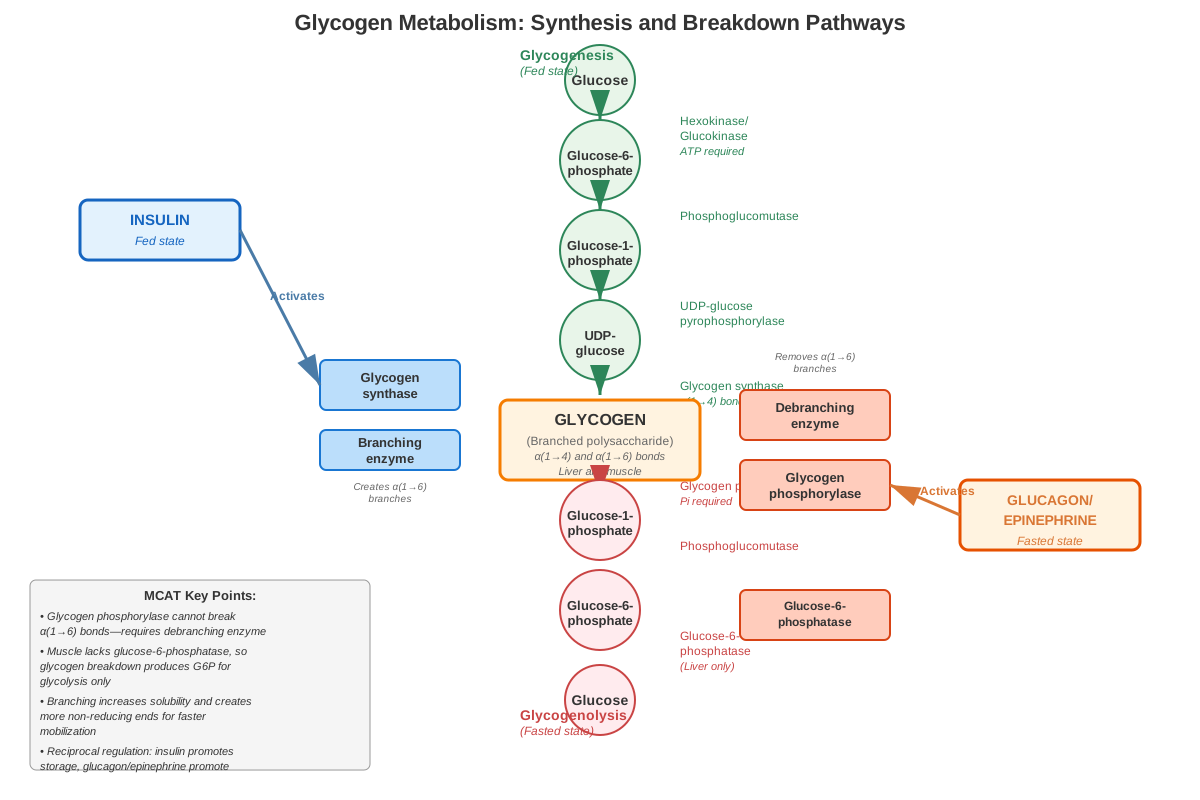
The liver stores glycogen primarily for blood glucose homeostasis, releasing glucose during fasting to maintain blood sugar levels. Muscle glycogen serves as a local energy reserve for muscle contraction and cannot directly contribute to blood glucose because muscle lacks glucose-6-phosphatase.
Cellulose: Structural Polysaccharide
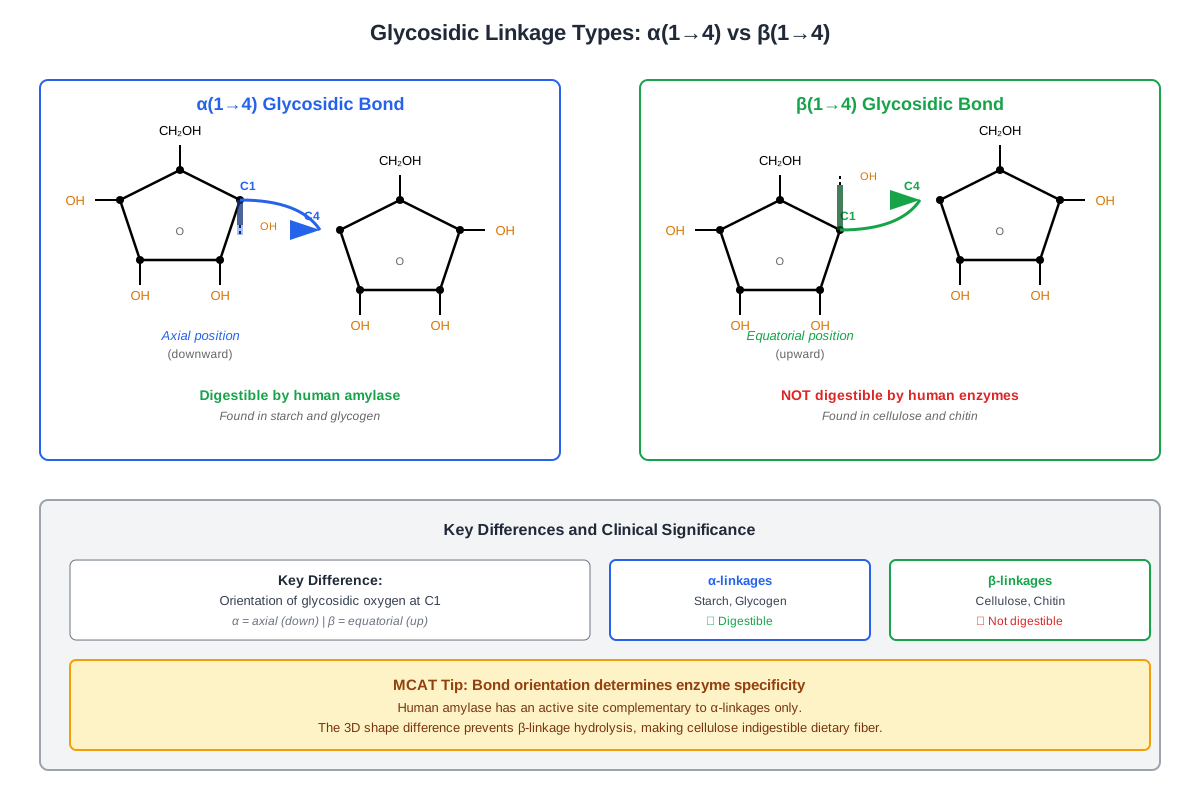
Cellulose is the most abundant organic molecule on Earth, serving as the primary structural component of plant cell walls. Like starch and glycogen, cellulose consists entirely of glucose units, but with a critical difference: glucose residues are joined by β-1,4-glycosidic bonds.
This seemingly minor change produces profound structural and functional consequences:
- Linear structure: β-linkages create a straight, extended chain rather than a helix
- Hydrogen bonding: Adjacent cellulose chains form extensive intermolecular hydrogen bonds, creating strong microfibrils
- Indigestibility: Humans lack cellulase enzymes to hydrolyze β-1,4 bonds, making cellulose indigestible dietary fiber
- Mechanical strength: Crystalline regions formed by hydrogen-bonded chains provide exceptional tensile strength
The inability of human digestive enzymes to cleave β-glycosidic bonds explains why cellulose passes through the digestive tract undigested, contributing to dietary fiber. Ruminant animals and termites harbor symbiotic microorganisms that produce cellulase, enabling them to derive nutrition from cellulose.
Chitin: Structural Support in Animals and Fungi
Chitin is a structural polysaccharide found in arthropod exoskeletons and fungal cell walls. Structurally similar to cellulose, chitin consists of N-acetylglucosamine units (glucose with an acetylated amino group at C-2) linked by β-1,4-glycosidic bonds. The presence of acetylated amino groups provides additional sites for hydrogen bonding, creating even stronger intermolecular interactions than cellulose.
Chitin's properties make it ideal for protective structures:
- High tensile strength from extensive hydrogen bonding
- Resistance to degradation by most enzymes
- Lightweight yet durable construction
- Biocompatibility (used in surgical sutures and wound dressings)
Glycosaminoglycans and Proteoglycans
Glycosaminoglycans (GAGs) are heteropolysaccharides composed of repeating disaccharide units, typically containing an amino sugar (N-acetylglucosamine or N-acetylgalactosamine) and a uronic acid (glucuronic acid or iduronic acid). Important GAGs include:
- Hyaluronic acid: Found in synovial fluid and extracellular matrix
- Chondroitin sulfate: Major component of cartilage
- Heparin: Anticoagulant found in mast cells
GAGs are highly negatively charged due to sulfate and carboxyl groups, attracting water and cations. This creates a hydrated gel-like matrix ideal for lubrication, shock absorption, and tissue hydration.
Proteoglycans consist of GAG chains covalently attached to core proteins, forming major components of the extracellular matrix and contributing to tissue structure and cell signaling.
Comparison Table
| Polysaccharide | Monomer | Linkage Type | Branching | Function | Digestible by Humans |
|---|---|---|---|---|---|
| Amylose | Glucose | α-1,4 | None | Energy storage (plants) | Yes |
| Amylopectin | Glucose | α-1,4 and α-1,6 | Moderate | Energy storage (plants) | Yes |
| Glycogen | Glucose | α-1,4 and α-1,6 | Extensive | Energy storage (animals) | Yes (own glycogen) |
| Cellulose | Glucose | β-1,4 | None | Structural (plants) | No |
| Chitin | N-acetylglucosamine | β-1,4 | None | Structural (animals/fungi) | No |
Concept Relationships
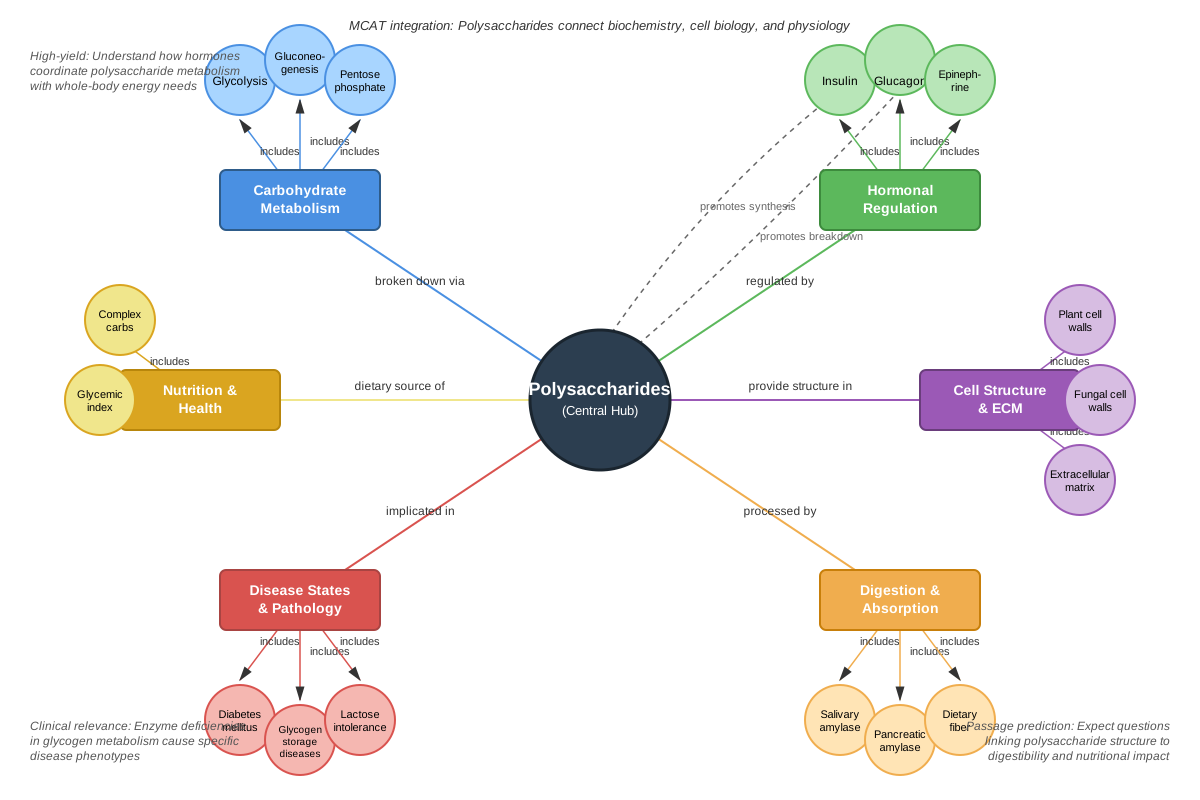
The study of polysaccharides integrates multiple biochemical concepts into a cohesive framework. At the foundation lies monosaccharide structure, which determines the types of glycosidic bonds that can form. The stereochemistry of the anomeric carbon (α or β configuration) directly influences whether the resulting polysaccharide serves storage or structural functions.
Glycosidic bond formation through dehydration synthesis → creates polysaccharide primary structure → determines three-dimensional conformation (helical vs. linear) → dictates biological function (storage vs. structural) → influences enzyme specificity (digestibility).
The branching pattern connects to metabolic efficiency: extensive branching in glycogen → multiple non-reducing ends → rapid simultaneous enzymatic attack → quick glucose mobilization during fight-or-flight response.
Polysaccharide metabolism links to broader metabolic pathways: glycogen breakdown (glycogenolysis) connects to gluconeogenesis and glycolysis, while glycogen synthesis (glycogenesis) relates to insulin signaling and fed-state metabolism. Understanding polysaccharides enables comprehension of blood glucose regulation, diabetes pathophysiology, and metabolic disorders.
The structural polysaccharides connect to cellular biology: cellulose relates to plant cell wall structure and turgor pressure, while chitin connects to arthropod physiology and fungal biology. Glycosaminoglycans bridge polysaccharide chemistry with extracellular matrix biology and tissue engineering.
High-Yield Facts
⭐ Starch and glycogen both contain α-glycosidic bonds and are digestible by human enzymes, while cellulose contains β-glycosidic bonds and is indigestible
⭐ Glycogen branches more frequently (every 8-12 residues) than amylopectin (every 24-30 residues), enabling faster glucose mobilization
⭐ All three major glucose polymers (starch, glycogen, cellulose) contain the same monomer but differ in glycosidic linkage type and branching pattern
⭐ Cellulose forms linear chains with extensive hydrogen bonding between chains, creating high tensile strength for structural support
⭐ Liver glycogen maintains blood glucose levels, while muscle glycogen serves as a local energy reserve and cannot directly contribute to blood glucose
- Amylose forms a helical structure that produces a blue-black color with iodine, useful for starch detection
- Branch points in polysaccharides involve α-1,6-glycosidic bonds, while the main chains use α-1,4 or β-1,4 bonds
- Chitin differs from cellulose by having N-acetylglucosamine instead of glucose as the monomer unit
- Glycosaminoglycans are highly negatively charged, attracting water and creating hydrated gel-like matrices
- Humans lack the enzyme cellulase, which is required to hydrolyze β-1,4-glycosidic bonds in cellulose
- Glycogen is stored primarily in liver (10% of liver mass) and skeletal muscle (1-2% of muscle mass)
- The reducing end of a polysaccharide has a free anomeric carbon, while non-reducing ends have the anomeric carbon involved in a glycosidic bond
Quick check — test yourself on Polysaccharides so far.
Try Flashcards →Common Misconceptions
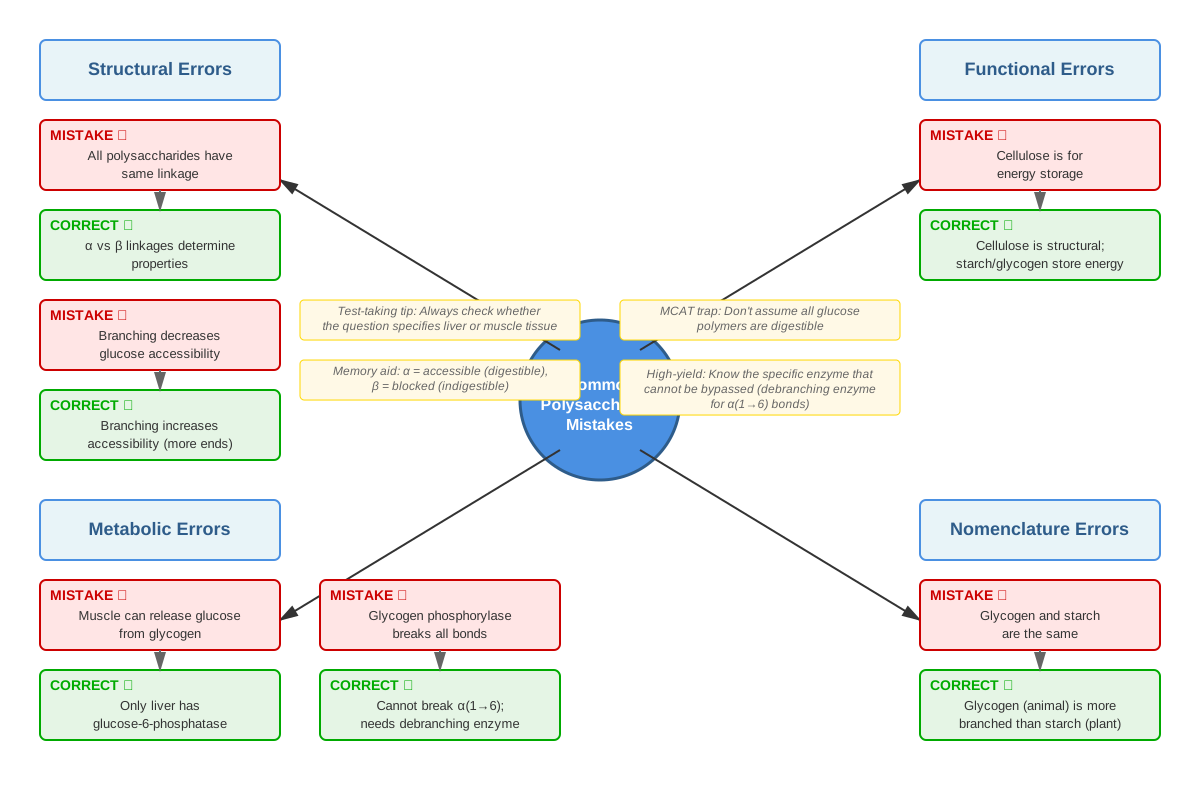
Misconception: All polysaccharides made of glucose have the same properties and functions.
Correction: While starch, glycogen, and cellulose all contain glucose, the type of glycosidic linkage (α vs. β) and branching pattern dramatically alter their three-dimensional structure, digestibility, and biological function. The α-linkages in starch and glycogen create digestible storage molecules, while β-linkages in cellulose create indigestible structural fibers.
Misconception: Cellulose is not nutritious because it contains no calories.
Correction: Cellulose does contain chemical energy in its glycosidic bonds, but humans lack the enzymes to access this energy through digestion. Organisms with cellulase enzymes (or symbiotic microorganisms that produce cellulase) can extract significant energy from cellulose. Cellulose still provides important health benefits as dietary fiber despite being indigestible.
Misconception: Glycogen and starch are identical molecules with different names in animals and plants.
Correction: While both are α-linked glucose polymers serving energy storage functions, glycogen has significantly more frequent branching (every 8-12 residues) compared to amylopectin in starch (every 24-30 residues). This structural difference reflects the need for rapid glucose mobilization in animals compared to plants.
Misconception: The branch points in glycogen and amylopectin use the same type of bond as the main chain.
Correction: The main chains of glycogen and amylopectin use α-1,4-glycosidic bonds, while branch points specifically use α-1,6-glycosidic bonds. This distinction is important because different enzymes act on these different linkages—amylase cleaves α-1,4 bonds, while debranching enzymes are required for α-1,6 bonds.
Misconception: Muscle glycogen can be broken down to release glucose into the bloodstream during fasting.
Correction: Muscle cells lack the enzyme glucose-6-phosphatase, which is required to convert glucose-6-phosphate to free glucose. Therefore, muscle glycogen can only be used locally for muscle contraction and cannot contribute directly to blood glucose levels. Only liver glycogen can maintain blood glucose homeostasis.
Misconception: Polysaccharides are always linear chains of monosaccharides.
Correction: Many polysaccharides, including glycogen and amylopectin, are highly branched structures. The degree and pattern of branching significantly affects the polysaccharide's properties, including solubility, compactness, and the rate at which it can be synthesized or degraded.
Misconception: All dietary carbohydrates are equally digestible and provide the same nutritional value.
Correction: Digestibility depends on glycosidic bond type and accessibility to enzymes. Humans can digest α-linked polysaccharides (starch) but not β-linked ones (cellulose). Even among digestible carbohydrates, factors like branching, crystallinity, and food processing affect digestion rate and glycemic response.
Worked Examples
Example 1: Structural Analysis and Functional Prediction
Question: A researcher isolates an unknown polysaccharide from a plant source. Chemical analysis reveals that it consists entirely of glucose units. Treatment with human salivary amylase produces no detectable products, but treatment with cellulase from a bacterial source yields glucose. The polysaccharide forms strong, fibrous structures. Based on this information, identify the polysaccharide and explain the biochemical basis for each observation.
Solution:
Step 1: Analyze the monomer composition
The polysaccharide contains only glucose, narrowing possibilities to starch (amylose/amylopectin), glycogen, or cellulose.
Step 2: Interpret the enzyme specificity data
- No digestion by human amylase indicates the absence of α-1,4-glycosidic bonds (which amylase cleaves)
- Digestion by cellulase indicates the presence of β-1,4-glycosidic bonds (cellulase substrate)
- This pattern is characteristic of cellulose
Step 3: Connect structure to physical properties
The fibrous, strong structure aligns with cellulose's properties:
- β-1,4 linkages create linear chains
- Linear chains align parallel to each other
- Extensive hydrogen bonding between chains creates crystalline regions
- These features produce high tensile strength
Step 4: Confirm the identification
All evidence points to cellulose:
- Glucose monomer ✓
- β-1,4-glycosidic bonds (cellulase-sensitive, amylase-resistant) ✓
- Plant source ✓
- Structural properties ✓
Conclusion: The unknown polysaccharide is cellulose. The resistance to amylase results from β-glycosidic bonds, which have a different stereochemistry than the α-bonds that amylase recognizes. The structural strength derives from extensive intermolecular hydrogen bonding between linear cellulose chains, a consequence of the extended conformation created by β-linkages.
Example 2: Metabolic Application
Question: A patient with McArdle disease (glycogen phosphorylase deficiency in muscle) experiences muscle cramps and fatigue during exercise but has normal fasting blood glucose levels. Explain these observations using your knowledge of glycogen structure, location, and metabolism.
Solution:
Step 1: Identify the relevant polysaccharide and its locations
Glycogen is stored in two main locations with different functions:
- Liver glycogen: maintains blood glucose during fasting
- Muscle glycogen: provides local energy for muscle contraction
Step 2: Analyze the enzyme deficiency
Glycogen phosphorylase catalyzes the rate-limiting step of glycogenolysis, cleaving α-1,4-glycosidic bonds to release glucose-1-phosphate. In McArdle disease, this enzyme is deficient specifically in muscle tissue.
Step 3: Explain the exercise intolerance
During exercise, muscles normally:
- Break down glycogen via phosphorylase
- Convert glucose-1-phosphate to glucose-6-phosphate
- Enter glucose-6-phosphate into glycolysis for ATP production
Without functional muscle phosphorylase, the patient cannot mobilize muscle glycogen stores. The extensive branching of glycogen (every 8-12 residues) normally allows rapid glucose mobilization from multiple non-reducing ends simultaneously, but this patient cannot access this energy reserve. This causes:
- Inadequate ATP production during exercise
- Muscle cramps from energy depletion
- Early fatigue
Step 4: Explain normal fasting blood glucose
Blood glucose maintenance depends on liver glycogen, not muscle glycogen. The patient has:
- Normal liver glycogen phosphorylase
- Normal liver glycogenolysis
- Normal glucose-6-phosphatase in liver (converts G6P to glucose)
Therefore, liver can release glucose into blood normally during fasting.
Step 5: Connect to polysaccharide structure
This case illustrates why glycogen's highly branched structure matters—it enables rapid mobilization when enzymes are functional. The multiple non-reducing ends created by frequent α-1,6 branch points allow simultaneous enzymatic attack, which is critical during the high energy demands of exercise.
Conclusion: The patient's symptoms reflect the tissue-specific role of glycogen. Muscle glycogen serves local energy needs (impaired in this patient), while liver glycogen maintains blood glucose (preserved in this patient). The inability to access the rapidly mobilizable energy stored in glycogen's branched structure causes exercise intolerance.
Exam Strategy
Question Recognition
MCAT questions on polysaccharides typically present in several formats:
Trigger phrases for structural questions: "glycosidic linkage," "branching pattern," "digestible by human enzymes," "structural vs. storage function"
Trigger phrases for metabolic questions: "glycogen breakdown," "blood glucose regulation," "liver vs. muscle," "fasting state," "glycogen storage disease"
Trigger phrases for comparative questions: "unlike cellulose," "similar to starch," "both contain glucose but differ in..."
Systematic Approach
When encountering polysaccharide questions:
- Identify the polysaccharide type (storage vs. structural, plant vs. animal)
- Determine the glycosidic linkage (α vs. β, 1→4 vs. 1→6)
- Consider the functional implications (digestibility, mechanical properties, metabolic role)
- Connect to relevant pathways (glycolysis, gluconeogenesis, blood glucose regulation)
Process of Elimination
For structure-function questions: Eliminate options that contradict the linkage-function relationship (e.g., β-linkages for storage molecules, α-linkages for structural molecules)
For digestibility questions: Remember that humans can digest α-glycosidic bonds but not β-glycosidic bonds—eliminate options that contradict this principle
For metabolic questions: Eliminate options that confuse liver and muscle glycogen functions (muscle cannot release glucose to blood)
For comparative questions: Focus on the specific structural difference mentioned (linkage type, branching frequency, monomer identity) and eliminate options that don't logically follow from that difference
Time Management
Polysaccharide questions are typically medium-difficulty and should take 60-90 seconds:
- Spend 15-20 seconds identifying the polysaccharide type and key structural features
- Spend 30-40 seconds analyzing the question stem and connecting to relevant concepts
- Spend 15-30 seconds eliminating wrong answers and confirming the correct choice
Exam Tip: If a passage describes an experiment with different enzymes acting on polysaccharides, create a quick mental table of enzyme specificity (amylase → α-1,4; debranching enzyme → α-1,6; cellulase → β-1,4) to rapidly analyze results.
Memory Techniques
Mnemonics
"Alpha Animals Store, Beta Builds": α-glycosidic bonds in animal storage polysaccharides (glycogen), β-glycosidic bonds in structural polysaccharides (cellulose, chitin)
"Glycogen's Got Great Branches": Glycogen has the Greatest (most frequent) Branching among glucose polymers, enabling rapid mobilization
"Cellulose Can't Cut": Cellulose Can't be Cut (digested) by human enzymes due to β-linkages
"Liver Liberates, Muscle Monopolizes": Liver glycogen Liberates glucose to blood; Muscle glycogen is Monopolized for local use only
Visualization Strategy
For linkage types: Visualize α-linkages as creating a "bent" or "kinked" chain (like a coiled spring), while β-linkages create a "straight" chain (like a ruler). This helps remember that α-linked polymers are more compact (storage) while β-linked polymers are linear (structural).
For branching patterns: Picture glycogen as a highly branched tree with many small branches (frequent branching), amylopectin as a tree with fewer, larger branches (moderate branching), and cellulose/amylose as a single trunk (no branching).
For enzyme specificity: Imagine enzymes as keys that only fit specific locks—amylase is an "α-key" that only opens "α-locks" (α-glycosidic bonds), while cellulase is a "β-key" for "β-locks."
Acronym
SCAG for the four major polysaccharides:
- Starch (plant storage, α-1,4 and α-1,6)
- Cellulose (plant structure, β-1,4)
- Amylose (unbranched starch component, α-1,4 only)
- Glycogen (animal storage, highly branched α-1,4 and α-1,6)
Summary
Polysaccharides represent complex carbohydrate polymers essential for energy storage and structural support across all domains of life. The fundamental distinction between α-glycosidic bonds (in storage polysaccharides like starch and glycogen) and β-glycosidic bonds (in structural polysaccharides like cellulose and chitin) determines digestibility, three-dimensional structure, and biological function. Glycogen's extensive branching enables rapid glucose mobilization in animals, while cellulose's linear chains with extensive hydrogen bonding provide mechanical strength in plants. Understanding the relationship between polysaccharide structure and function enables prediction of properties, explanation of metabolic processes, and analysis of physiological phenomena. For MCAT success, students must recognize polysaccharide types from structural clues, connect polysaccharides to metabolic pathways, and apply knowledge of glycosidic linkages to predict enzyme specificity and digestibility.
Key Takeaways
- Polysaccharides are polymers of monosaccharides linked by glycosidic bonds, classified as storage (starch, glycogen) or structural (cellulose, chitin) based on linkage type and function
- α-glycosidic bonds create digestible storage polysaccharides with compact structures, while β-glycosidic bonds create indigestible structural polysaccharides with linear, strong architectures
- Glycogen branches more frequently than starch (every 8-12 vs. 24-30 residues), enabling faster glucose mobilization critical for animal metabolism
- Humans can digest α-linked polysaccharides but lack cellulase to digest β-linked polysaccharides, explaining why cellulose serves as indigestible dietary fiber
- Liver glycogen maintains blood glucose homeostasis, while muscle glycogen provides local energy and cannot directly contribute to blood glucose due to absence of glucose-6-phosphatase
- The same monomer (glucose) produces functionally opposite molecules (storage vs. structural) based solely on glycosidic linkage stereochemistry—a key example of structure-function relationships
- Branch points use α-1,6-glycosidic bonds while main chains use α-1,4 or β-1,4 bonds, requiring different enzymes for complete polysaccharide degradation
Related Topics
Glycolysis and Gluconeogenesis: Understanding how glucose units from polysaccharide breakdown enter central metabolic pathways, and how glucose can be synthesized when polysaccharide stores are depleted
Metabolic Regulation: Hormonal control of glycogen synthesis and breakdown, including insulin and glucagon signaling pathways that regulate blood glucose homeostasis
Enzyme Kinetics and Specificity: How enzymes like amylase, glycogen phosphorylase, and debranching enzymes recognize specific glycosidic linkages and catalyze their hydrolysis
Carbohydrate Digestion: The complete pathway from dietary polysaccharides through enzymatic breakdown to monosaccharide absorption in the small intestine
Cell Structure and Function: How structural polysaccharides like cellulose and chitin contribute to cell walls, extracellular matrices, and tissue architecture
Practice CTA
Now that you've mastered the core concepts of polysaccharides, it's time to reinforce your understanding through active practice. Complete the associated practice questions to test your ability to apply these concepts in MCAT-style scenarios, and use the flashcards to solidify high-yield facts for rapid recall on test day. Remember: understanding the relationship between polysaccharide structure and function is not just about memorization—it's about developing the analytical skills to approach any carbohydrate question with confidence. Your investment in mastering this foundational biochemistry topic will pay dividends across multiple MCAT sections. Keep pushing forward!
Sign up free to keep reading
Create a free AnvayaPrep account to finish this MCAT guide on Polysaccharides — plus flashcards and practice questions.