Overview
Monosaccharides are the simplest form of carbohydrates, serving as the fundamental building blocks for all more complex sugars and polysaccharides. These single-unit sugars cannot be hydrolyzed into simpler carbohydrate structures, making them the elemental units of carbohydrate chemistry. For the MCAT, understanding monosaccharides is essential because they form the foundation for comprehending disaccharides, polysaccharides, glycolysis, gluconeogenesis, and numerous metabolic pathways that appear frequently in both the Biochemistry and Biological and Biochemical Foundations of Living Systems sections of the exam.
The study of monosaccharides encompasses their structural diversity, stereochemistry, chemical properties, and biological functions. Students must master the ability to recognize different monosaccharide structures in both Fischer and Haworth projections, understand their interconversions, and predict their behavior in various biochemical contexts. This knowledge directly connects to energy metabolism, cellular signaling, and the structural components of nucleic acids—all high-yield topics for the MCAT.
From an exam perspective, monosaccharides appear in discrete questions testing structural recognition and stereochemistry, as well as in passage-based questions involving metabolic pathways, enzyme mechanisms, and experimental biochemistry. The topic bridges organic chemistry concepts (stereochemistry, functional groups, ring formation) with biological applications, making it an integrative subject that tests multiple competencies simultaneously. Mastery of monosaccharides provides the conceptual framework necessary for understanding carbohydrate metabolism, one of the most frequently tested areas in Monosaccharides Biochemistry on the MCAT.
Learning Objectives
- [ ] Define Monosaccharides using accurate Biochemistry terminology
- [ ] Explain why Monosaccharides matters for the MCAT
- [ ] Apply Monosaccharides to exam-style questions
- [ ] Identify common mistakes related to Monosaccharides
- [ ] Connect Monosaccharides to related Biochemistry concepts
- [ ] Distinguish between aldoses and ketoses and predict their chemical reactivity
- [ ] Interconvert Fischer projections and Haworth projections for common monosaccharides
- [ ] Identify epimers and anomers and explain their biological significance
- [ ] Predict the products of monosaccharide reactions including oxidation, reduction, and glycoside formation
Prerequisites
- Organic Chemistry functional groups: Monosaccharides contain carbonyl (aldehyde or ketone) and hydroxyl groups whose reactivity determines sugar chemistry
- Stereochemistry and chirality: Understanding R/S configuration and enantiomers is essential for distinguishing between different monosaccharides
- Fischer projections: The standard representation system for monosaccharides requires familiarity with this notation
- Acid-base chemistry: Hemiacetal and acetal formation, critical for ring structure formation, depends on acid-base mechanisms
- Basic organic reactions: Oxidation, reduction, and nucleophilic addition reactions apply directly to monosaccharide transformations
Why This Topic Matters
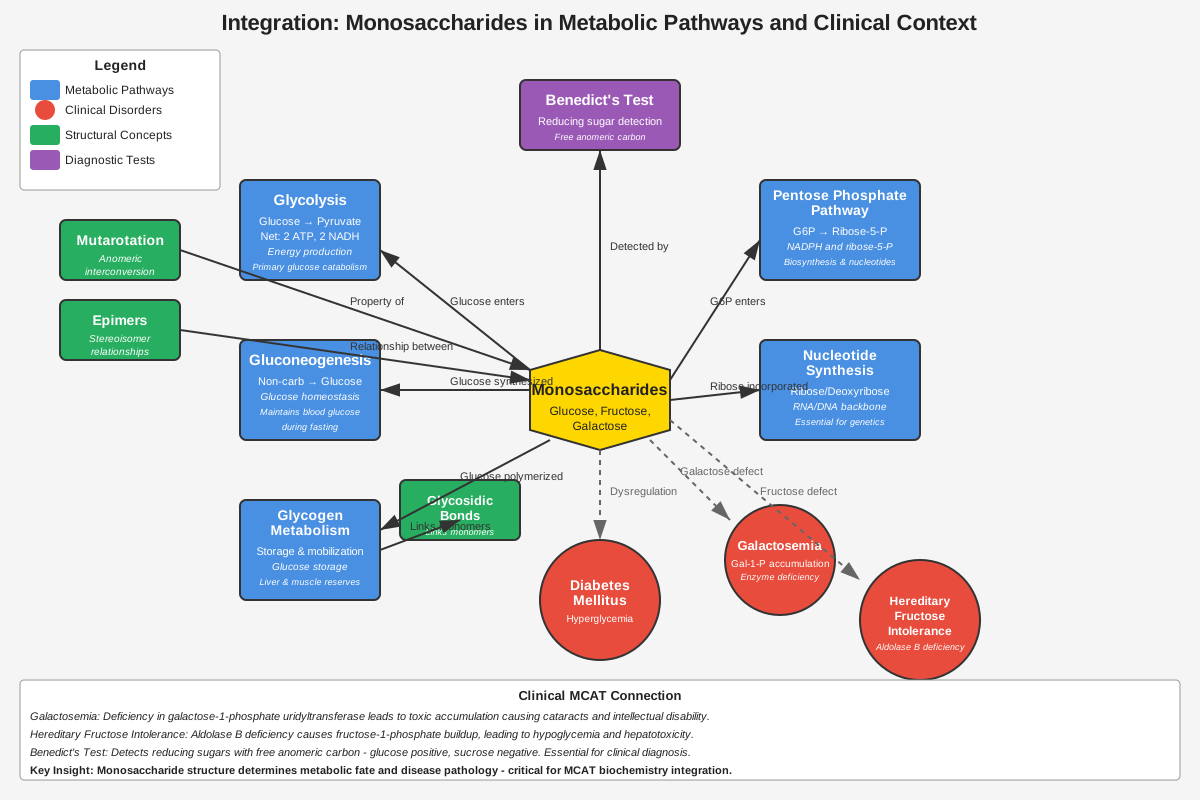
Monosaccharides represent one of the most clinically relevant topics in biochemistry. Glucose metabolism disorders, including diabetes mellitus, affect hundreds of millions of people worldwide and form the basis for numerous MCAT passages. Galactosemia, fructose intolerance, and glycogen storage diseases all stem from defects in monosaccharide metabolism or interconversion. Understanding monosaccharide structure enables comprehension of how cells generate ATP, how the body maintains blood glucose homeostasis, and how genetic mutations in carbohydrate-processing enzymes lead to disease.
On the MCAT, monosaccharides appear in approximately 3-5% of Biochemistry questions directly, but the concept underlies an additional 10-15% of questions involving glycolysis, gluconeogenesis, pentose phosphate pathway, and glycogen metabolism. Questions typically test structural recognition (identifying sugars from Fischer or Haworth projections), stereochemical relationships (epimers, anomers, enantiomers), and functional predictions (which sugars are reducing, which can form glycosidic bonds). Passage-based questions often present experimental data on enzyme kinetics with sugar substrates, carbohydrate analysis techniques, or metabolic disorders.
Common exam presentations include: (1) discrete questions showing sugar structures and asking for identification or classification; (2) passages describing enzymatic deficiencies affecting monosaccharide metabolism; (3) experimental passages involving sugar chemistry techniques like Benedict's test or mutarotation measurements; (4) metabolic pathway questions requiring knowledge of which monosaccharides enter specific pathways. The integrative nature of this topic—connecting organic chemistry, biochemistry, and physiology—makes it particularly valuable for demonstrating scientific reasoning skills.
Core Concepts
Definition and Classification of Monosaccharides
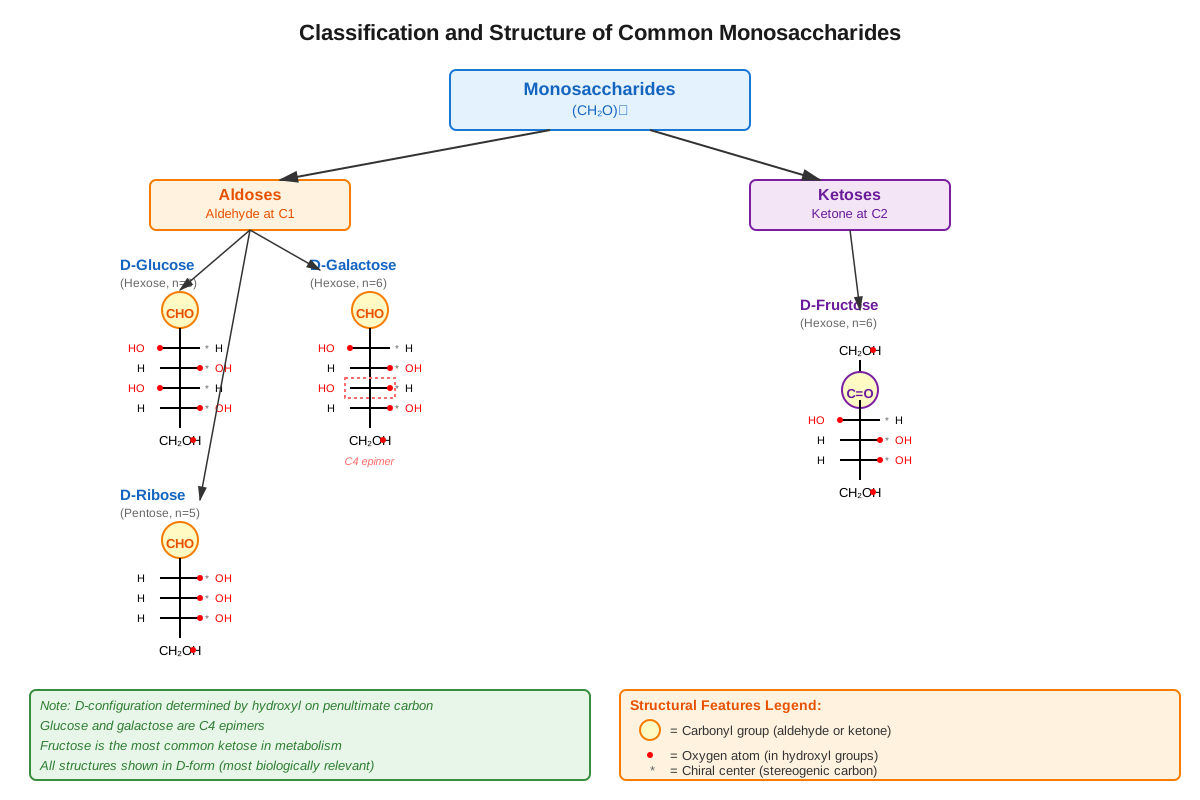
Monosaccharides are polyhydroxy aldehydes or polyhydroxy ketones with the general formula (CH₂O)ₙ where n ≥ 3. They represent the simplest carbohydrate units that cannot be hydrolyzed into smaller carbohydrate molecules. The classification system for monosaccharides uses two criteria: the number of carbon atoms and the type of carbonyl group present.
Based on carbon number, monosaccharides are named:
- Trioses (3 carbons): glyceraldehyde, dihydroxyacetone
- Tetroses (4 carbons): erythrose, threose
- Pentoses (5 carbons): ribose, xylose, arabinose
- Hexoses (6 carbons): glucose, fructose, galactose, mannose
Based on carbonyl group type:
- Aldoses: contain an aldehyde group (at C1 in Fischer projection)
- Ketoses: contain a ketone group (typically at C2 in Fischer projection)
These classifications combine to create specific descriptors: glucose is an aldohexose (6-carbon aldose), while fructose is a ketohexose (6-carbon ketose). For the MCAT, the most important monosaccharides are the hexoses glucose, fructose, and galactose, and the pentoses ribose and deoxyribose (components of nucleic acids).
Stereochemistry and D/L Configuration
Monosaccharides are highly stereochemically rich molecules. Each carbon bearing a hydroxyl group (except the carbonyl carbon) is a chiral center. A hexose with 4 chiral centers can theoretically exist as 2⁴ = 16 stereoisomers (8 pairs of enantiomers).
The D/L system for monosaccharides is based on the configuration of the chiral center farthest from the carbonyl group. In Fischer projection:
- D-sugars: the hydroxyl group on the highest-numbered chiral center points to the RIGHT
- L-sugars: the hydroxyl group on the highest-numbered chiral center points to the LEFT
Virtually all naturally occurring monosaccharides in human metabolism are D-sugars. This is a critical MCAT fact: when a question mentions "glucose" without specification, it refers to D-glucose.
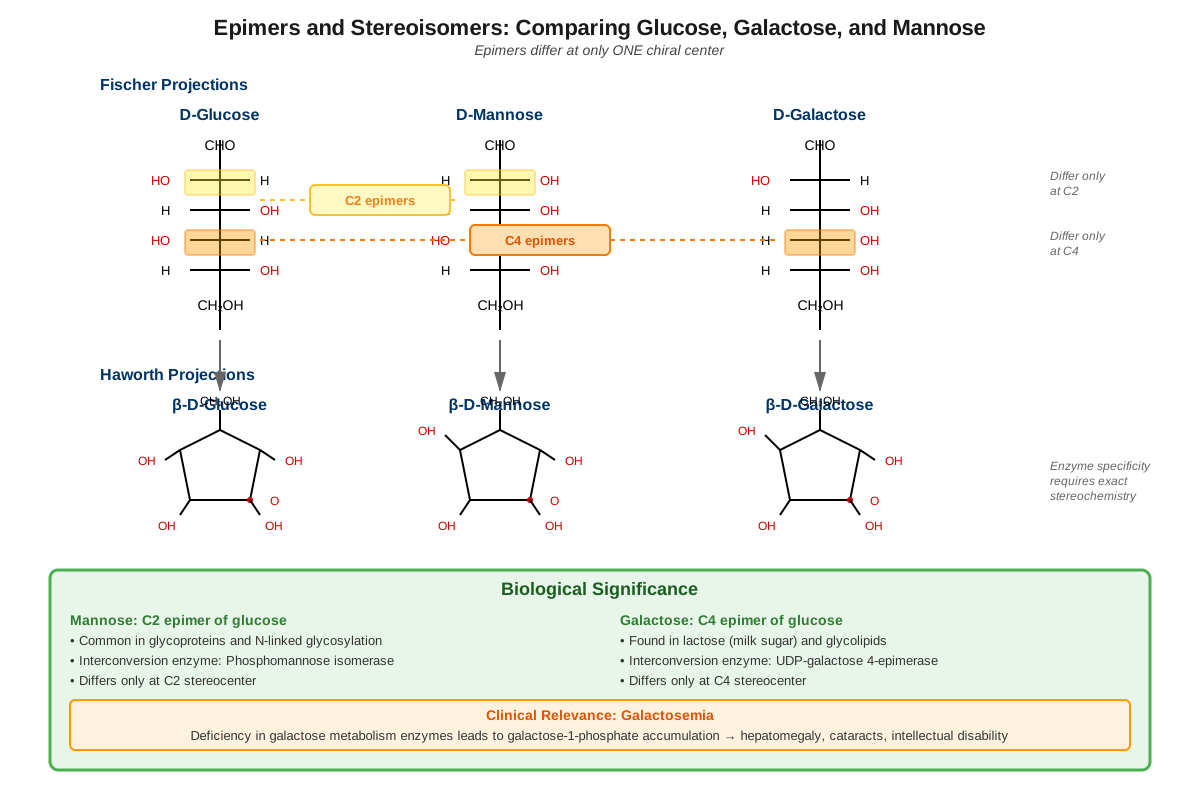
Enantiomers are non-superimposable mirror images (D-glucose and L-glucose). Diastereomers are stereoisomers that are not mirror images. A special class of diastereomers called epimers differ in configuration at only one chiral center. Important epimer pairs include:
- D-glucose and D-mannose (differ at C2)
- D-glucose and D-galactose (differ at C4)
- D-ribose and D-arabinose (differ at C2)
Cyclic Structures and Hemiacetal Formation
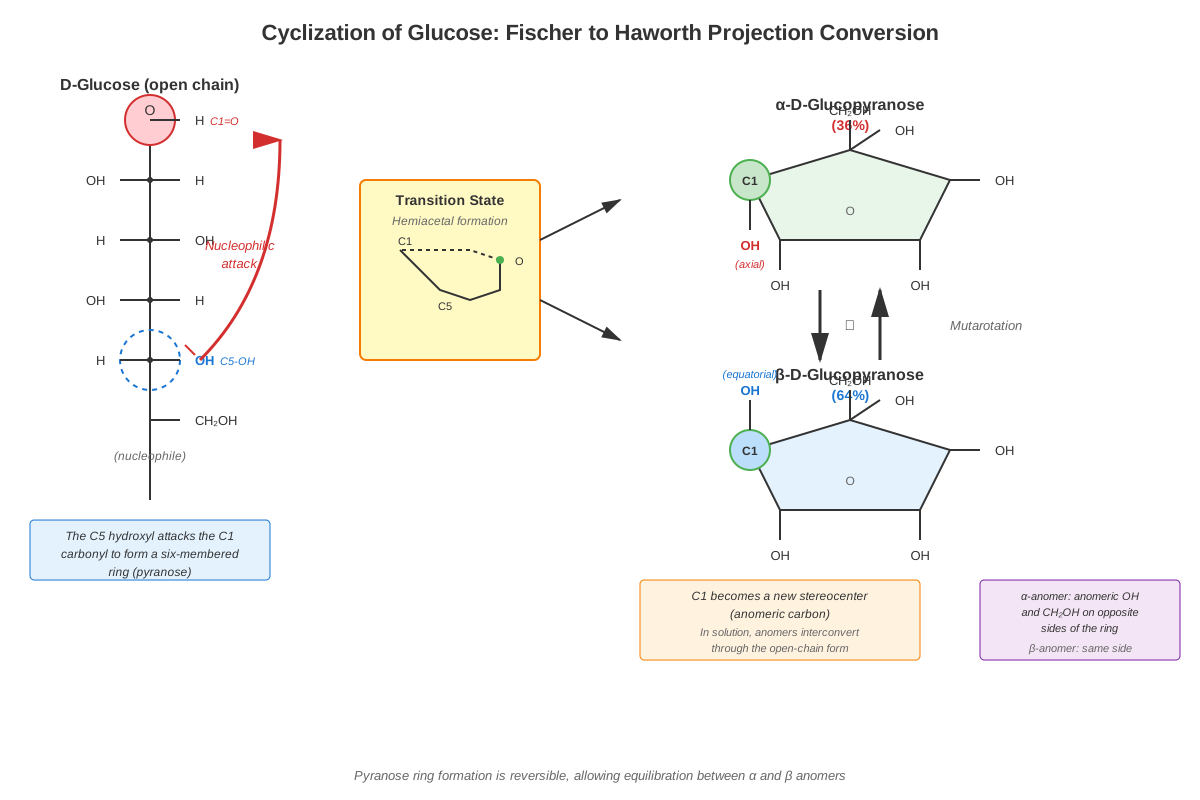
Although monosaccharides are often drawn as linear Fischer projections, in aqueous solution they exist predominantly as cyclic structures. The carbonyl group reacts intramolecularly with a hydroxyl group to form a hemiacetal (from aldoses) or hemiketal (from ketoses).
For hexoses:
- Pyranose forms: 6-membered rings (5 carbons + 1 oxygen) result from reaction between the carbonyl and the C5 hydroxyl
- Furanose forms: 5-membered rings (4 carbons + 1 oxygen) result from reaction between the carbonyl and the C4 hydroxyl
Glucose predominantly forms glucopyranose (>99% in solution), while fructose exists as both fructofuranose and fructopyranose, with the furanose form predominating in sucrose.
The cyclization process creates a new chiral center at the carbonyl carbon (now called the anomeric carbon). This produces two anomers:
- α-anomer: the hydroxyl group on the anomeric carbon is trans to the CH₂OH group (down in standard Haworth projection for D-sugars)
- β-anomer: the hydroxyl group on the anomeric carbon is cis to the CH₂OH group (up in standard Haworth projection for D-sugars)
In solution, monosaccharides undergo mutarotation—spontaneous interconversion between α and β anomers through the open-chain form. D-glucose in solution reaches equilibrium with approximately 36% α-D-glucopyranose, 64% β-D-glucopyranose, and <0.1% open-chain form.
Haworth Projections
Haworth projections represent the cyclic forms of monosaccharides as planar rings viewed from an angle. To convert Fischer projections to Haworth projections:
- Identify which hydroxyl will form the ring (C5-OH for pyranose)
- Number the carbons in the ring
- Groups on the RIGHT in Fischer projection point DOWN in Haworth
- Groups on the LEFT in Fischer projection point UP in Haworth
- The CH₂OH group (C6 in hexoses) points UP for D-sugars
- Determine α or β configuration for the anomeric hydroxyl
This conversion is frequently tested on the MCAT, often requiring students to identify a sugar from its Haworth projection or predict the product of a reaction.
Reducing and Non-Reducing Sugars
Reducing sugars are carbohydrates capable of acting as reducing agents because they possess a free or potentially free carbonyl group. All monosaccharides are reducing sugars because:
- The cyclic form can open to reveal the aldehyde or ketone
- The aldehyde/ketone can be oxidized while reducing other compounds
The reducing property is detected by:
- Benedict's test: Cu²⁺ (blue) is reduced to Cu₂O (brick red precipitate)
- Fehling's test: similar to Benedict's
- Tollens' test: Ag⁺ is reduced to metallic silver (silver mirror)
The anomeric carbon is the key to reducing sugar behavior. When the anomeric hydroxyl is free (not involved in a glycosidic bond), the sugar can open and close, exposing the carbonyl. When the anomeric carbon forms a glycosidic bond (as in sucrose or polysaccharides with no free anomeric carbon), the sugar becomes non-reducing.
Important Monosaccharides for the MCAT
| Monosaccharide | Type | Key Features | Biological Role |
|---|---|---|---|
| D-Glucose | Aldohexose | Most abundant; blood sugar | Primary cellular fuel; glycolysis substrate |
| D-Fructose | Ketohexose | Sweetest natural sugar | Fruit sugar; converted to glucose metabolites |
| D-Galactose | Aldohexose | C4 epimer of glucose | Lactose component; glycolipid/glycoprotein synthesis |
| D-Ribose | Aldopentose | 5-carbon sugar | RNA component; ATP, NADH structure |
| D-Deoxyribose | Modified aldopentose | Lacks 2'-OH | DNA component |
| D-Mannose | Aldohexose | C2 epimer of glucose | Glycoprotein synthesis |
Chemical Reactions of Monosaccharides
Oxidation reactions:
- Aldonic acids: oxidation of aldehyde (C1) produces acids like gluconic acid
- Uronic acids: oxidation of terminal CH₂OH (C6) produces acids like glucuronic acid (important for detoxification)
- Aldaric acids: oxidation of both ends produces acids like glucaric acid
Reduction reactions:
- Reduction of the carbonyl produces sugar alcohols (polyols)
- Glucose → sorbitol; galactose → galactitol; mannose → mannitol
- Accumulation of sorbitol in diabetic patients contributes to cataract formation and neuropathy
Glycoside formation:
- Reaction of the anomeric hydroxyl with an alcohol produces an acetal (glycoside)
- The bond formed is a glycosidic bond
- This reaction is the basis for disaccharide and polysaccharide formation
- Glycosides are non-reducing because the anomeric carbon is locked
Monosaccharide Derivatives
Several important biomolecules are modified monosaccharides:
Amino sugars: hydroxyl group replaced by amino group
- Glucosamine: component of chitin and glycosaminoglycans
- N-acetylglucosamine: found in bacterial cell walls and hyaluronic acid
Deoxy sugars: one or more hydroxyl groups replaced by hydrogen
- Deoxyribose: lacks 2'-OH; DNA component
- Fucose: 6-deoxygalactose; found in blood group antigens
Sugar phosphates: phosphate ester at one or more positions
- Glucose-6-phosphate: first intermediate in glycolysis
- Fructose-1,6-bisphosphate: key glycolysis intermediate
- Phosphorylation traps sugars inside cells (charged molecules cannot cross membranes)
Concept Relationships
The concepts within monosaccharide biochemistry form an interconnected network. Structural classification (aldose vs. ketose, number of carbons) determines chemical reactivity and metabolic fate. The stereochemistry of monosaccharides (D/L configuration, epimers) dictates which enzymes can recognize and process them, as enzymes exhibit strict stereospecificity. Cyclic structure formation through hemiacetal chemistry creates anomers and determines whether a sugar is reducing or non-reducing, which affects both chemical detection methods and biological function.
The relationship map flows as follows:
Linear structure (Fischer projection) → Cyclization → Cyclic structure (Haworth projection) → Anomer formation → Mutarotation equilibrium
Stereochemistry → Enzyme recognition → Metabolic pathway entry → Biological function
Free anomeric carbon → Reducing sugar → Positive Benedict's test → Can form glycosidic bonds
Glycosidic bond formation → Non-reducing sugar → Disaccharide/polysaccharide building
Connections to prerequisite topics include: organic chemistry stereochemistry provides the foundation for understanding D/L configuration and epimers; carbonyl chemistry explains hemiacetal formation and ring structures; acid-base chemistry underlies mutarotation mechanisms.
Connections to related biochemistry topics: monosaccharides are substrates for glycolysis (glucose metabolism), pentose phosphate pathway (ribose-5-phosphate production), and gluconeogenesis (glucose synthesis). They form the building blocks of disaccharides (lactose, sucrose, maltose) and polysaccharides (starch, glycogen, cellulose). Modified monosaccharides appear in nucleotides (ribose, deoxyribose), glycoproteins, and glycolipids. Understanding monosaccharide structure is essential for comprehending enzyme mechanisms in carbohydrate metabolism and metabolic regulation.
Quick check — test yourself on Monosaccharides so far.
Try Flashcards →High-Yield Facts
⭐ All naturally occurring monosaccharides in human metabolism are D-sugars; the D/L designation is based on the configuration of the chiral center farthest from the carbonyl group
⭐ Glucose and galactose are C4 epimers; glucose and mannose are C2 epimers; this single stereochemical difference requires different enzymes for metabolism
⭐ In aqueous solution, monosaccharides exist predominantly in cyclic form (>99% for glucose); the cyclic and linear forms interconvert through mutarotation
⭐ The α-anomer has the anomeric hydroxyl trans to the CH₂OH group (down in Haworth projection for D-sugars); the β-anomer has it cis (up in Haworth projection)
⭐ All monosaccharides are reducing sugars because they have a free or potentially free carbonyl group that can be oxidized
- Aldoses have the carbonyl at C1 (aldehyde); ketoses have the carbonyl at C2 (ketone)
- Hexoses form predominantly 6-membered pyranose rings; pentoses can form either 5-membered furanose or 6-membered pyranose rings
- Glycosidic bond formation locks the anomeric carbon, making the resulting structure non-reducing
- Phosphorylation of monosaccharides (e.g., glucose-6-phosphate) traps them inside cells because charged molecules cannot cross lipid membranes
- Fructose is the sweetest naturally occurring sugar, approximately 1.7 times sweeter than glucose
- Ribose (in RNA) has a 2'-OH that deoxyribose (in DNA) lacks; this difference affects nucleic acid stability and function
- Sorbitol accumulation in diabetic patients results from aldose reductase converting excess glucose to sorbitol, contributing to diabetic complications
- The Benedict's test detects reducing sugars by reducing Cu²⁺ (blue) to Cu₂O (brick-red precipitate)
- Uronic acids (like glucuronic acid) are produced by oxidizing C6 and are important for detoxification through glucuronidation
Common Misconceptions
Misconception: All sugars with the same molecular formula are identical.
Correction: Monosaccharides with the same molecular formula can be different compounds (stereoisomers). For example, glucose, galactose, and mannose are all C₆H₁₂O₆ but differ in stereochemistry at specific chiral centers, making them distinct molecules with different properties and requiring different enzymes for metabolism.
Misconception: The D/L designation indicates whether a sugar rotates plane-polarized light to the right (dextrorotatory) or left (levorotatory).
Correction: The D/L system is based solely on structural configuration (the orientation of the hydroxyl on the highest-numbered chiral center), not optical rotation. D-glucose happens to be dextrorotatory, but D-fructose is levorotatory. The terms D/L and d/l (or +/−) refer to different properties and should not be confused.
Misconception: Monosaccharides exist primarily in their linear form in solution.
Correction: In aqueous solution, monosaccharides exist predominantly (>99%) in cyclic forms. The linear form is a transient intermediate during mutarotation. This is why Fischer projections, while useful for showing stereochemistry, do not represent the actual structure of sugars in biological systems.
Misconception: α and β anomers are enantiomers.
Correction: α and β anomers are diastereomers (specifically, anomers), not enantiomers. They differ in configuration at only one carbon (the anomeric carbon) and are not mirror images. Enantiomers would differ at all chiral centers, like D-glucose and L-glucose.
Misconception: All carbohydrates are reducing sugars.
Correction: Only carbohydrates with a free or potentially free anomeric carbon are reducing sugars. When the anomeric carbon is involved in a glycosidic bond (as in sucrose, where both anomeric carbons are bonded), the sugar cannot open to reveal a carbonyl group and is therefore non-reducing.
Misconception: Fructose and glucose are metabolized identically because they're both hexoses.
Correction: Fructose (a ketohexose) and glucose (an aldohexose) enter metabolism through different pathways. Fructose bypasses the rate-limiting step of glycolysis (phosphofructokinase), which is why excessive fructose consumption can lead to increased lipogenesis and metabolic issues distinct from glucose metabolism.
Misconception: The numbering of carbons in cyclic sugars is arbitrary.
Correction: Carbon numbering follows strict rules: the anomeric carbon (the carbonyl carbon in the linear form) is always C1 in aldoses. In the cyclic form, numbering proceeds around the ring in the direction that gives the anomeric carbon the lowest number. This systematic numbering is essential for naming glycosidic bonds and understanding sugar chemistry.
Worked Examples
Example 1: Structural Identification and Stereochemistry
Question: A student is given the following information about an unknown monosaccharide: (1) it is a hexose, (2) it gives a positive Benedict's test, (3) it is the C4 epimer of D-glucose, and (4) it is a component of lactose. Identify the sugar and explain whether it would exist primarily as an α or β anomer in solution.
Solution:
Step 1: Identify the sugar from the clues.
- It's a hexose (6 carbons) that gives a positive Benedict's test, meaning it's a reducing sugar with a free anomeric carbon
- It's the C4 epimer of D-glucose, meaning it differs from glucose only at the C4 position
- It's a component of lactose
The C4 epimer of D-glucose is D-galactose. In D-glucose, the C4 hydroxyl points right in Fischer projection; in D-galactose, it points left. Galactose is indeed the monosaccharide component of lactose (along with glucose).
Step 2: Determine the predominant anomer.
In aqueous solution, monosaccharides undergo mutarotation and reach equilibrium between α and β anomers. For most aldohexoses, including galactose, the β-anomer predominates at equilibrium due to reduced steric interactions (the anomeric hydroxyl in the equatorial position in the chair conformation is more stable).
For D-galactose specifically, the equilibrium mixture contains approximately 64% β-D-galactopyranose and 36% α-D-galactopyranose, similar to glucose.
Answer: The unknown sugar is D-galactose, and it exists primarily as the β-anomer (β-D-galactopyranose) in solution.
Connection to learning objectives: This example demonstrates the application of monosaccharide concepts to problem-solving, requiring integration of structural knowledge (epimers), chemical properties (reducing sugars), and physical behavior (mutarotation equilibrium).
Example 2: Metabolic Pathway Analysis
Question: A patient with hereditary fructose intolerance lacks functional aldolase B enzyme. When this patient consumes fructose, fructose-1-phosphate accumulates in liver cells, depleting cellular phosphate and inhibiting gluconeogenesis and glycogenolysis. Explain: (a) Why fructose-1-phosphate accumulates, (b) Why this depletes cellular phosphate, (c) Why the patient experiences hypoglycemia after consuming fructose.
Solution:
(a) Why fructose-1-phosphate accumulates:
Fructose metabolism in the liver begins with phosphorylation by fructokinase to form fructose-1-phosphate. Normally, aldolase B cleaves fructose-1-phosphate into dihydroxyacetone phosphate (DHAP) and glyceraldehyde. In hereditary fructose intolerance, aldolase B is deficient or absent, so fructose-1-phosphate cannot be cleaved and accumulates in hepatocytes.
(b) Why this depletes cellular phosphate:
Fructokinase continues to phosphorylate incoming fructose, consuming ATP and inorganic phosphate (Pi) to form fructose-1-phosphate. Because aldolase B cannot break down fructose-1-phosphate, the phosphate becomes trapped in this metabolite. The accumulation of fructose-1-phosphate sequesters large amounts of cellular phosphate, reducing the free phosphate pool available for other essential processes like ATP synthesis.
(c) Why hypoglycemia occurs:
The depletion of cellular phosphate has two critical effects:
- Inhibition of gluconeogenesis: Several gluconeogenic enzymes require phosphate as a substrate or cofactor. Phosphate depletion impairs the liver's ability to produce glucose from non-carbohydrate precursors.
- Inhibition of glycogenolysis: Glycogen phosphorylase requires inorganic phosphate to break down glycogen into glucose-1-phosphate. Without adequate phosphate, glycogen breakdown is impaired.
Additionally, fructose-1-phosphate directly inhibits glucokinase and glucose-6-phosphatase, further impairing glucose homeostasis. The combination of blocked glucose production and blocked glycogen breakdown leads to severe hypoglycemia.
Clinical connection: This explains why patients with hereditary fructose intolerance must strictly avoid fructose, sucrose (which contains fructose), and sorbitol (which is converted to fructose). The condition demonstrates how a single enzyme deficiency in monosaccharide metabolism can have cascading effects on cellular energy metabolism.
Connection to learning objectives: This example connects monosaccharide structure and metabolism to clinical pathology, demonstrating how understanding monosaccharide chemistry is essential for comprehending metabolic diseases—a common MCAT passage theme.
Exam Strategy
When approaching MCAT questions on monosaccharides, employ these strategic approaches:
For structure identification questions:
- First, count carbons and identify the carbonyl type (aldose vs. ketose)
- Check the configuration of the highest-numbered chiral center to confirm D or L
- Compare to reference structures (glucose, fructose, galactose) to identify epimers
- For cyclic structures, identify the anomeric carbon and determine α or β configuration
Trigger words to watch for:
- "Reducing sugar" → look for free anomeric carbon
- "Epimer" → differs at ONE chiral center only
- "Anomer" → differs at the anomeric carbon specifically
- "Mutarotation" → interconversion between α and β forms through open-chain intermediate
- "Glycosidic bond" → involves the anomeric carbon; creates non-reducing structure
- "Positive Benedict's test" → reducing sugar present
Process of elimination tips:
- If a question asks about a non-reducing sugar, eliminate all monosaccharides (they're all reducing)
- If stereochemistry is specified (D-sugar), eliminate L-forms
- If the question mentions "sweetest," fructose is the answer among natural sugars
- If DNA is mentioned, look for deoxyribose; if RNA, look for ribose
- For metabolic questions, remember glucose is the primary metabolic fuel; other sugars are typically converted to glucose intermediates
Time allocation:
- Structure identification: 30-45 seconds for discrete questions
- Stereochemistry comparisons: 45-60 seconds
- Passage-based questions involving monosaccharides: 1-1.5 minutes per question
- Don't spend excessive time drawing structures; practice recognizing patterns quickly
Common question patterns:
- Structure recognition: Given a Haworth or Fischer projection, identify the sugar
- Stereochemical relationships: Identify epimers, anomers, or enantiomers from a set
- Chemical properties: Predict reactivity (reducing vs. non-reducing, products of oxidation/reduction)
- Metabolic integration: Passages describing enzyme deficiencies or metabolic pathways
- Experimental analysis: Interpret data from Benedict's test, mutarotation measurements, or chromatography
Exam Tip: When a passage presents an unfamiliar monosaccharide or derivative, focus on the functional groups and stereochemistry rather than memorizing the specific name. The MCAT tests reasoning about carbohydrate chemistry, not rote memorization of obscure sugars.
Memory Techniques
For remembering epimers of glucose:
"GAGA at 4, MAMA at 2"
- GAlactose is Glucose's epimer At carbon 4
- MAnnose is Metabolically Altered at carbon 2
For D/L configuration:
"D is Dexterous (Right-handed)"
- In Fischer projection, D-sugars have the OH on the highest-numbered chiral center pointing RIGHT
- Think of being right-handed (dexterous) as being on the "right" side
For α vs. β anomers in Haworth projections:
"β is UP, α is DOWN" (for D-sugars)
- β-anomer: anomeric OH points UP (same side as CH₂OH)
- α-anomer: anomeric OH points DOWN (opposite side from CH₂OH)
- Mnemonic: "Beta Bounces UP"
For aldose vs. ketose:
"ALDose has ALDehyde at the END (C1)"
"KETose has KETone in the MIDDLE (C2)"
For important hexoses:
"Good Friends Go Make Glucose"
- Glucose: most abundant, blood sugar
- Fructose: fruit sugar, sweetest
- Galactose: in milk (lactose)
- Mannose: in glycoproteins
- Glucose: primary metabolic fuel (reinforcement)
For reducing sugar test:
"Benedict's Brings Brick-Red"
- Benedict's test for reducing sugars produces a brick-red precipitate of Cu₂O
For pentoses in nucleic acids:
"RNA is Ribose, DNA is Deoxy"
- Visualize: RNA has an extra "O" (oxygen at 2' position)
- DNA is "deoxy" (missing the 2'-OH)
For sugar alcohol formation:
"Reduce the Carbonyl, Create an -ol"
- Glucose → Sorbitol
- Galactose → Galactitol
- Mannose → Mannitol
- Pattern: -ose → -itol (except glucose → sorbitol)
Summary
Monosaccharides are the fundamental building blocks of carbohydrate biochemistry, consisting of polyhydroxy aldehydes (aldoses) or ketones (ketoses) that cannot be hydrolyzed into simpler sugars. For the MCAT, mastery requires understanding their structural diversity (trioses through hexoses), stereochemistry (D/L configuration, epimers, anomers), and chemical behavior (reducing properties, cyclic structure formation, mutarotation). The most important monosaccharides—glucose, fructose, galactose, ribose, and deoxyribose—serve critical biological roles as metabolic fuels, structural components of nucleic acids, and precursors for complex carbohydrates. In aqueous solution, monosaccharides exist predominantly as cyclic hemiacetals or hemiketals, forming pyranose or furanose rings with α and β anomers that interconvert through mutarotation. All monosaccharides are reducing sugars due to their free or potentially free carbonyl groups, a property exploited in detection tests like Benedict's reagent. Understanding monosaccharide structure and reactivity provides the foundation for comprehending disaccharides, polysaccharides, glycolysis, gluconeogenesis, and numerous metabolic pathways that appear frequently on the MCAT.
Key Takeaways
- Monosaccharides are classified by carbon number (triose, pentose, hexose) and carbonyl type (aldose or ketose), with D-sugars predominating in human metabolism
- Epimers differ at one chiral center (glucose/galactose at C4, glucose/mannose at C2), while anomers differ only at the anomeric carbon (α vs. β)
- In solution, monosaccharides exist >99% in cyclic forms (pyranose or furanose) that interconvert through mutarotation between α and β anomers
- All monosaccharides are reducing sugars because they possess a free or potentially free carbonyl group that can be oxidized
- Fischer projections show linear structures with stereochemistry, while Haworth projections represent the biologically relevant cyclic forms
- Glucose is the primary metabolic fuel, fructose is the sweetest natural sugar, galactose is glucose's C4 epimer found in lactose, and ribose/deoxyribose are pentoses in nucleic acids
- Glycosidic bond formation at the anomeric carbon creates non-reducing disaccharides and polysaccharides, locking the ring structure
Related Topics
Disaccharides: Understanding monosaccharide structure is essential for comprehending how glycosidic bonds form between monosaccharides to create lactose, sucrose, and maltose, and why some disaccharides are reducing while others are not.
Glycolysis: Glucose metabolism through glycolysis requires knowledge of glucose structure, phosphorylation, and the interconversion between glucose and fructose intermediates.
Gluconeogenesis: The synthesis of glucose from non-carbohydrate precursors involves understanding monosaccharide structure and the enzymes that recognize specific stereochemical configurations.
Pentose Phosphate Pathway: This pathway generates ribose-5-phosphate for nucleotide synthesis and NADPH, requiring understanding of pentose structure and interconversion.
Glycogen Metabolism: The synthesis and breakdown of glycogen involves glucose units connected by glycosidic bonds, building directly on monosaccharide chemistry.
Nucleotides and Nucleic Acids: Ribose and deoxyribose are integral components of RNA and DNA, making monosaccharide knowledge essential for understanding nucleic acid structure.
Glycoproteins and Glycolipids: These molecules contain carbohydrate chains built from monosaccharides, important for cell recognition and signaling.
Practice CTA
Now that you've mastered the core concepts of monosaccharides, it's time to reinforce your understanding through active practice. Complete the associated practice questions to test your ability to identify structures, predict chemical behavior, and apply monosaccharide concepts to MCAT-style passages. Use the flashcards to drill high-yield facts, stereochemical relationships, and structural recognition until you can instantly identify glucose, fructose, galactose, and their derivatives in any representation. Remember: understanding monosaccharides isn't just about memorizing structures—it's about developing the chemical reasoning skills that will serve you throughout biochemistry and on test day. The more you practice applying these concepts, the more confident and efficient you'll become at tackling carbohydrate questions on the MCAT. You've got this!
Sign up free to keep reading
Create a free AnvayaPrep account to finish this MCAT guide on Monosaccharides — plus flashcards and practice questions.