Overview
Epimers are a specialized class of stereoisomers that differ in configuration at only one specific chiral carbon atom. This concept sits at the intersection of organic chemistry and biochemistry, making it a high-yield topic for the MCAT. Understanding epimers is essential for mastering carbohydrate structure and function, as many biologically important monosaccharides exist as epimeric pairs. For instance, glucose and galactose are epimers that differ only at the C-4 position, yet this single stereochemical difference has profound implications for their metabolism and biological roles.
The MCAT frequently tests epimers within the context of carbohydrates and stereochemistry, requiring students to identify structural relationships, predict biological consequences of stereochemical differences, and understand enzyme specificity. Questions may present Fischer projections or Haworth projections and ask students to identify epimeric relationships, or they may embed this concept within passage-based questions about metabolic pathways or genetic disorders affecting carbohydrate metabolism. The ability to rapidly recognize epimeric relationships and understand their functional significance distinguishes high-scoring students from average performers.
Within the broader landscape of biochemistry, epimers represent a crucial application of stereochemistry principles to biological molecules. This topic connects foundational organic chemistry concepts (chirality, stereoisomers, optical activity) to advanced biochemistry topics (enzyme specificity, metabolic pathways, glycobiology). Mastering epimers provides the foundation for understanding more complex carbohydrate structures, including disaccharides, polysaccharides, and glycoconjugates that appear throughout MCAT biochemistry passages.
Learning Objectives
- [ ] Define epimers using accurate biochemistry terminology
- [ ] Explain why epimers matter for the MCAT
- [ ] Apply epimers to exam-style questions
- [ ] Identify common mistakes related to epimers
- [ ] Connect epimers to related biochemistry concepts
- [ ] Distinguish epimers from other types of stereoisomers (enantiomers, diastereomers, anomers)
- [ ] Identify epimeric relationships in Fischer and Haworth projections of monosaccharides
- [ ] Predict the biological consequences of epimeric differences in carbohydrate metabolism
Prerequisites
- Chirality and chiral centers: Understanding that carbon atoms with four different substituents are chiral centers is essential for identifying where epimeric differences occur
- Stereoisomers: Knowledge of the broader category of stereoisomers (molecules with the same molecular formula and connectivity but different spatial arrangements) provides context for the specific definition of epimers
- Fischer projections: Familiarity with this two-dimensional representation of three-dimensional molecules is necessary for identifying and comparing carbohydrate structures
- Monosaccharide structure: Basic knowledge of aldoses and ketoses, including their numbering systems, enables identification of specific carbon positions where epimeric differences occur
- D and L nomenclature: Understanding how to assign D and L configurations based on the penultimate carbon is important for carbohydrate classification
Why This Topic Matters
Clinical and Real-World Significance: Epimeric differences have profound biological consequences. Galactosemia, a genetic disorder affecting the metabolism of galactose (an epimer of glucose), demonstrates how a single stereochemical difference can lead to serious health consequences including intellectual disability, cataracts, and liver damage if untreated. The enzyme lactase specifically cleaves lactose into glucose and galactose, but cannot process other disaccharides with different stereochemistry, illustrating the exquisite specificity of biological systems for particular epimers. Additionally, the pharmaceutical industry must carefully consider stereochemistry when designing drugs, as epimeric forms can have dramatically different biological activities.
Exam Statistics: Epimers appear on the MCAT with moderate frequency, typically in 1-2 questions per exam. These questions most commonly appear in biochemistry passages (60% of occurrences) but also show up in standalone questions (40%). The topic is frequently tested alongside enzyme specificity, metabolic pathways (especially glycolysis and galactose metabolism), and genetic disorders. According to AAMC data, questions involving stereoisomer identification, including epimers, have an average difficulty rating of 65%, meaning approximately 65% of test-takers answer them correctly.
Common Exam Presentations: The MCAT presents epimers in several characteristic ways. Passage-based questions may describe a metabolic disorder or enzyme deficiency and require students to identify which carbohydrate structures are affected. Standalone questions often show Fischer or Haworth projections and ask students to identify epimeric pairs or count the number of epimers for a given sugar. Some questions test understanding of enzyme specificity by asking why certain enzymes can process one epimer but not another. Occasionally, epimers appear in experimental passages describing carbohydrate chemistry research or analytical techniques for distinguishing stereoisomers.
Core Concepts
Definition and Fundamental Characteristics
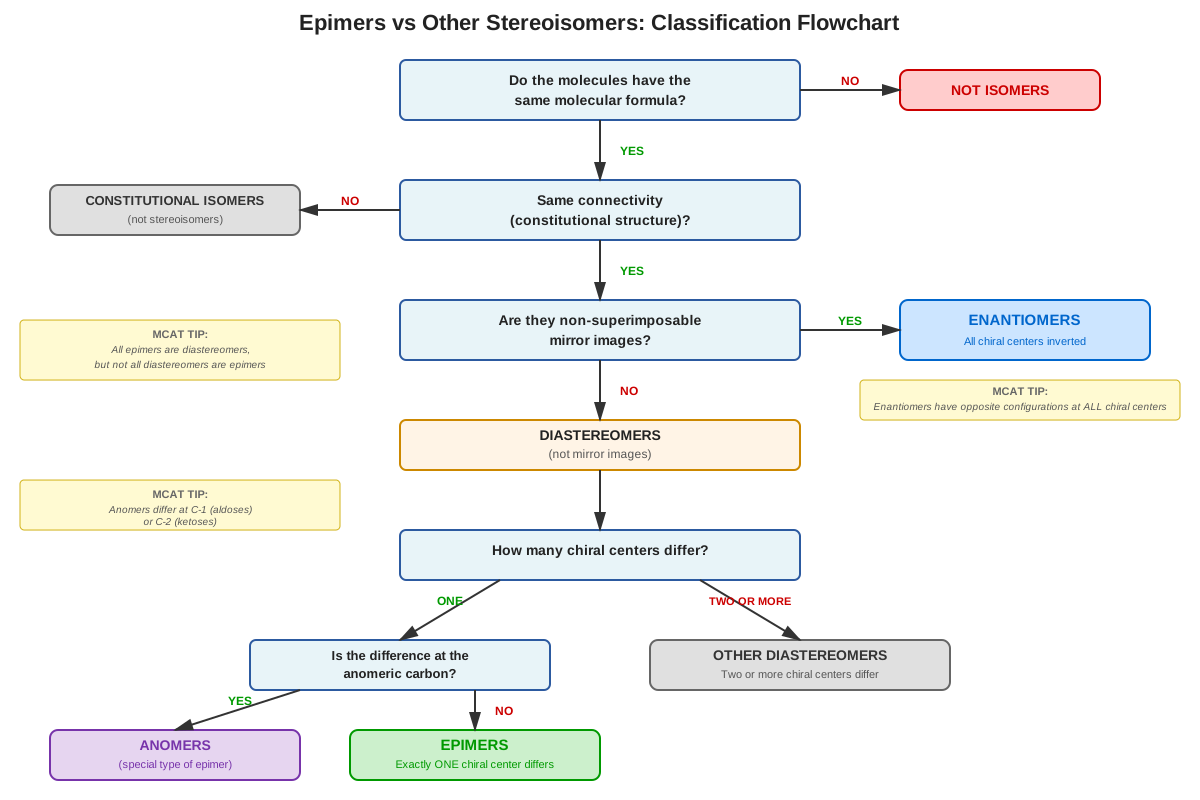
Epimers are stereoisomers that differ in configuration at exactly one chiral carbon atom while maintaining the same configuration at all other chiral centers. This precise definition distinguishes epimers from other stereoisomeric relationships. Epimers are a subset of diastereomers (stereoisomers that are not mirror images), but with the additional constraint that only one stereocenter differs between the two molecules.
In carbohydrates, which typically contain multiple chiral centers, the potential for epimeric relationships is substantial. For example, D-glucose contains four chiral centers (C-2, C-3, C-4, and C-5 in the open-chain form), meaning it has four possible epimers, each differing at one of these positions. The systematic naming of these epimers reflects which carbon differs: D-mannose is the C-2 epimer of D-glucose, D-allose is the C-3 epimer, and D-galactose is the C-4 epimer.
Structural Analysis in Fischer Projections
Fischer projections provide the standard method for representing and comparing monosaccharide structures on the MCAT. In these projections, the carbon chain is drawn vertically with the most oxidized carbon (typically the aldehyde in aldoses) at the top. Horizontal lines represent bonds projecting toward the viewer, while vertical lines represent bonds projecting away.
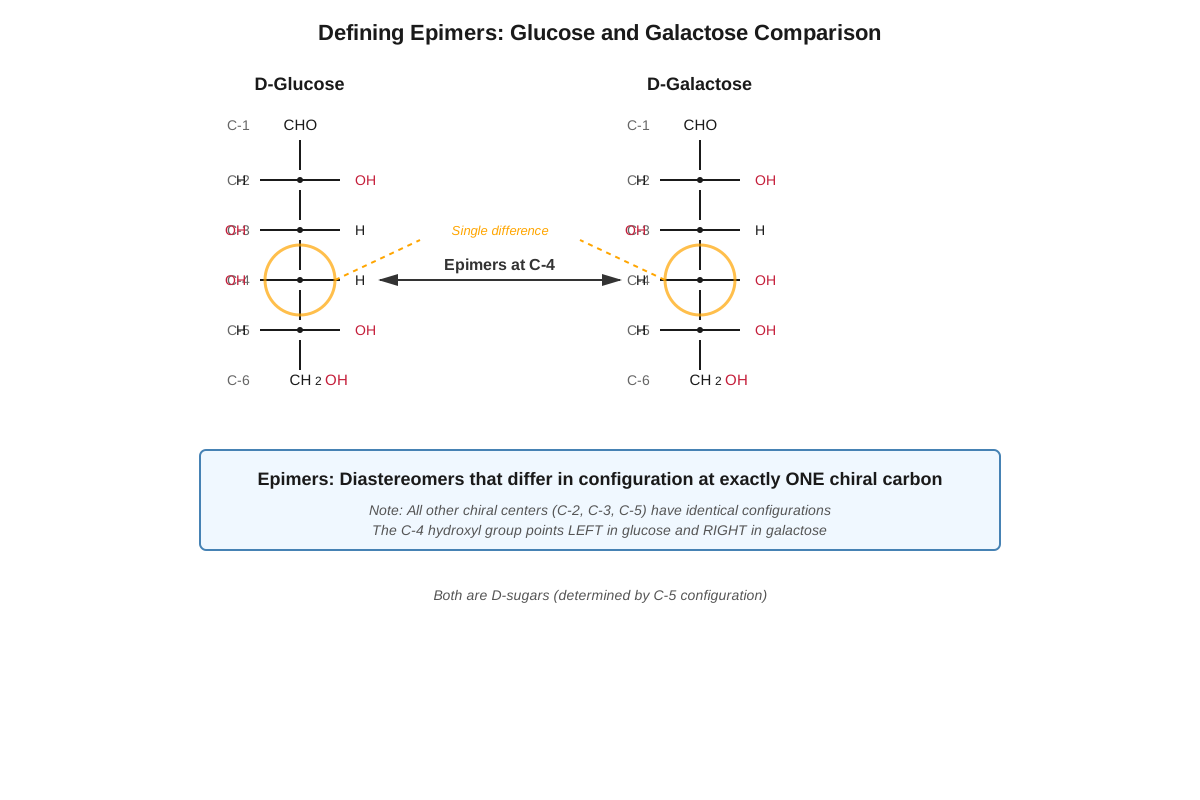
To identify epimers in Fischer projections, systematically compare the configuration at each chiral center. Epimers will have identical configurations at all but one position. For example, comparing D-glucose and D-galactose:
D-Glucose:          D-Galactose:
CHO                 CHO
|                   |
H—C—OH             H—C—OH
|                   |
HO—C—H             HO—C—H
|                   |
H—C—OH             HO—C—H  ← Different at C-4
|                   |
H—C—OH             H—C—OH
|                   |
CH₂OH              CH₂OH
The only difference occurs at C-4, where the hydroxyl group points right in glucose but left in galactose, making them C-4 epimers.
Common Epimeric Pairs in Biochemistry
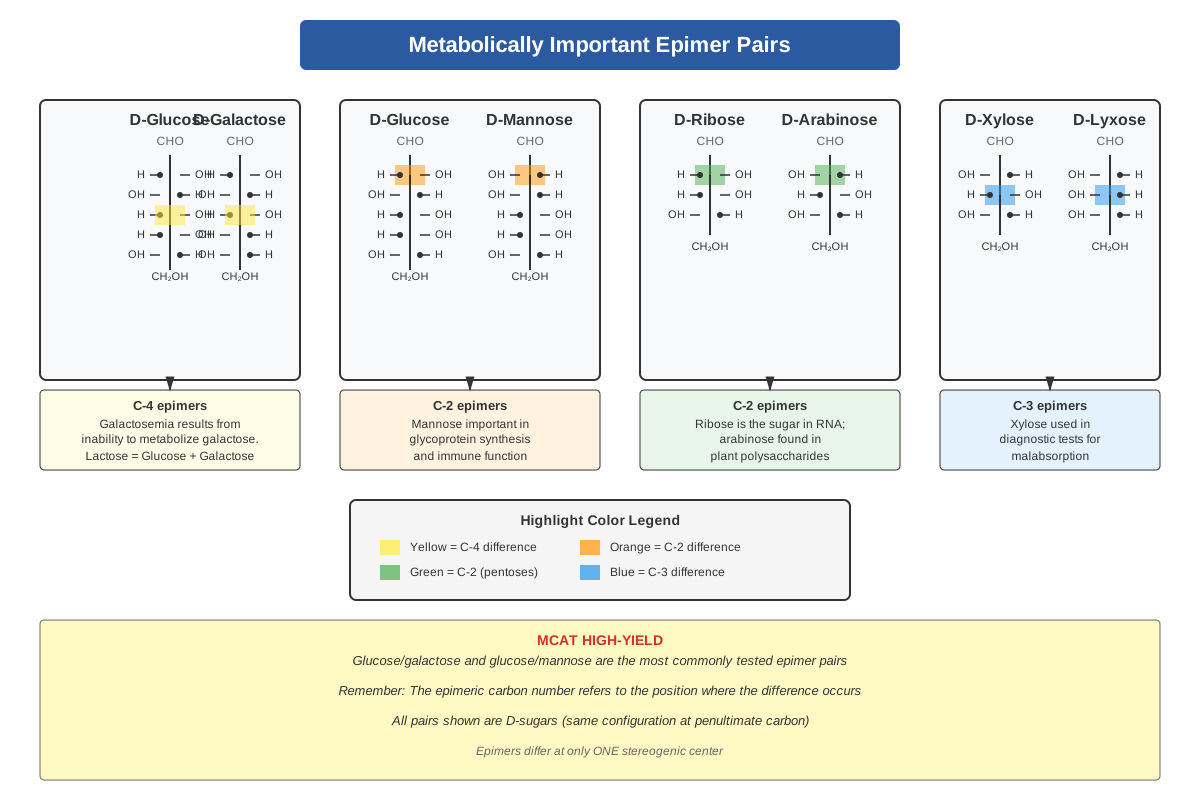
Several epimeric pairs appear repeatedly in biochemistry and on the MCAT:
| Epimeric Pair | Position of Difference | Biological Significance |
|---|---|---|
| D-Glucose / D-Mannose | C-2 | Mannose is important in glycoprotein synthesis |
| D-Glucose / D-Galactose | C-4 | Galactose is a component of lactose; galactosemia results from inability to metabolize galactose |
| D-Glucose / D-Allose | C-3 | Allose is rare in nature but important for understanding stereochemistry |
| D-Ribose / D-Arabinose | C-2 | Both are pentoses; ribose is crucial in RNA structure |
| D-Xylose / D-Lyxose | C-3 | Xylose appears in plant polysaccharides |
Distinction from Other Stereoisomeric Relationships
Understanding what epimers are NOT is equally important for MCAT success:
Epimers vs. Enantiomers: Enantiomers are mirror images that differ at ALL chiral centers. D-glucose and L-glucose are enantiomers, not epimers, because they differ at every chiral center (C-2, C-3, C-4, and C-5). Enantiomers have identical physical properties except for the direction of optical rotation, while epimers have different physical and chemical properties.
Epimers vs. Anomers: Anomers are a special type of epimer that differ specifically at the anomeric carbon (C-1 in aldoses, C-2 in ketoses) formed during cyclization. α-D-glucose and β-D-glucose are anomers, differing only at C-1. While all anomers are technically epimers, the term "epimer" in biochemistry typically refers to differences at non-anomeric carbons. The MCAT may test whether students recognize this distinction.
Epimers vs. General Diastereomers: All epimers are diastereomers, but not all diastereomers are epimers. Diastereomers differ at one or more (but not all) chiral centers. If two sugars differ at two or more non-anomeric positions, they are diastereomers but not epimers.
Biological Consequences of Epimeric Differences
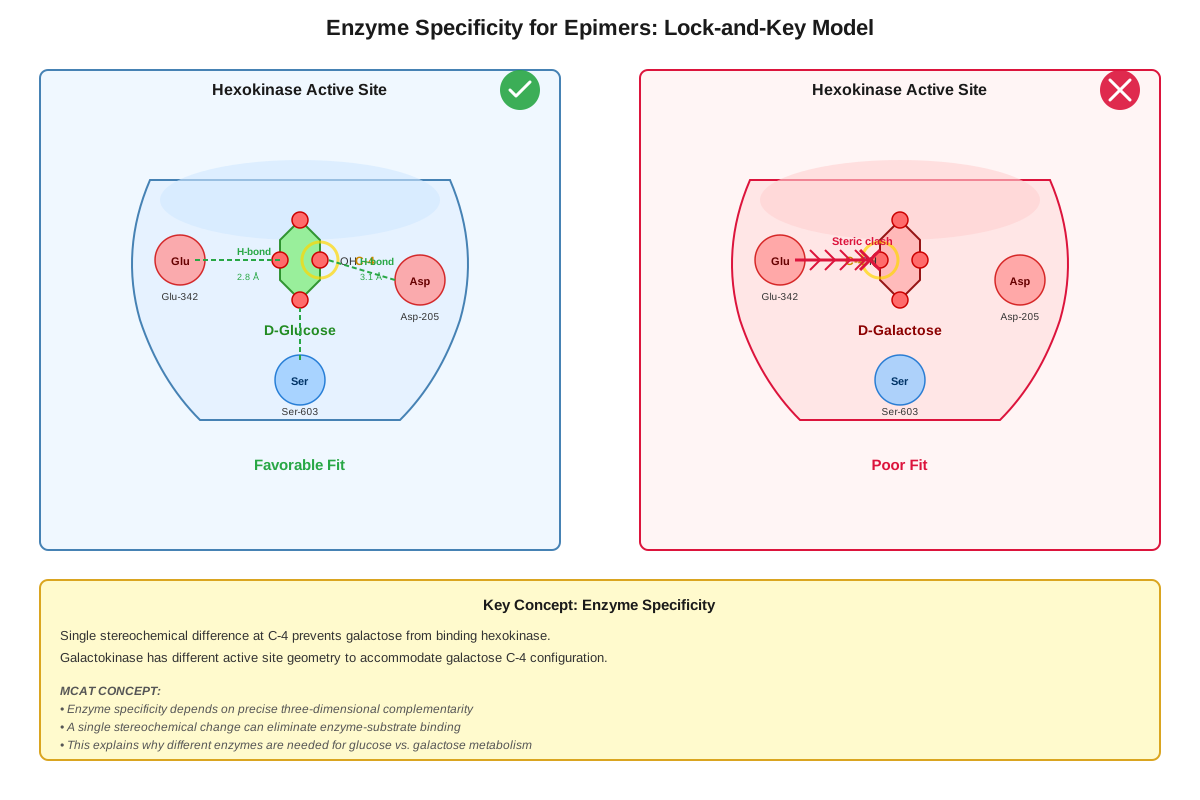
The single stereochemical difference between epimers has profound biological implications due to enzyme specificity. Enzymes recognize substrates through precise three-dimensional complementarity, often described by the "lock and key" or "induced fit" models. A change in configuration at even one carbon can prevent proper substrate binding.
Hexokinase, the first enzyme in glycolysis, phosphorylates glucose at the C-6 position. While hexokinase has relatively broad specificity and can phosphorylate several hexoses including glucose, mannose, and fructose, other glycolytic enzymes are more selective. The different metabolic fates of glucose and galactose illustrate this principle: galactose cannot proceed directly through glycolysis and must first be converted to glucose-1-phosphate through the Leloir pathway, requiring three specific enzymes (galactokinase, galactose-1-phosphate uridylyltransferase, and UDP-galactose-4-epimerase).
Epimerization Reactions
Epimerization is the process of converting one epimer into another through inversion of configuration at a single chiral center. In biological systems, specialized enzymes called epimerases catalyze these reactions. The most clinically relevant example is UDP-galactose-4-epimerase, which interconverts UDP-galactose and UDP-glucose, allowing galactose to enter central metabolic pathways.
Epimerases typically employ a mechanism involving oxidation-reduction at the carbon undergoing inversion. The enzyme oxidizes the hydroxyl group to a ketone (removing the chiral center temporarily), then reduces it back to a hydroxyl group with the opposite stereochemistry. This mechanism explains why epimerases require cofactors like NAD⁺.
Concept Relationships
The concept of epimers connects multiple levels of chemical and biological organization. At the foundation, chirality and stereoisomerism from organic chemistry provide the structural basis for understanding epimers. The specific definition of epimers (differing at exactly one chiral center) represents a refinement of the broader diastereomer category.
Moving upward in complexity, epimers → connect to → monosaccharide structure and nomenclature. Each common monosaccharide can be understood in terms of its epimeric relationships with other sugars, creating a network of structural relationships. This network → leads to → enzyme specificity, as the three-dimensional shape differences between epimers determine which enzymes can act on which substrates.
Enzyme specificity for particular epimers → drives → metabolic pathway organization. Different epimers follow different metabolic routes, exemplified by the distinct pathways for glucose (direct entry into glycolysis) versus galactose (Leloir pathway conversion before glycolysis). These pathway differences → result in → clinical manifestations when enzymes are deficient, such as galactosemia when galactose cannot be properly metabolized.
The concept also connects laterally to anomers (epimers at the anomeric carbon), glycosidic bonds (which lock anomeric configuration), and reducing sugars (which can interconvert anomers). Understanding epimers is prerequisite knowledge for advanced topics including disaccharide structure, glycoprotein synthesis, and carbohydrate recognition in cell signaling.
High-Yield Facts
⭐ Epimers differ in configuration at exactly one chiral carbon atom; if they differ at more than one position, they are diastereomers but not epimers
⭐ D-glucose and D-galactose are C-4 epimers; this is the most commonly tested epimeric pair on the MCAT
⭐ D-glucose and D-mannose are C-2 epimers; mannose is the C-2 epimer of glucose
⭐ Anomers (α and β forms) are special epimers that differ at the anomeric carbon formed during ring closure
⭐ Epimerases are enzymes that interconvert epimers, typically using NAD⁺ as a cofactor through an oxidation-reduction mechanism
- Epimers are a subset of diastereomers (stereoisomers that are not mirror images)
- All epimers have different physical properties (melting point, solubility, optical rotation) unlike enantiomers which have identical properties except optical rotation direction
- UDP-galactose-4-epimerase converts UDP-galactose to UDP-glucose, allowing galactose to enter central metabolism
- Galactosemia results from deficiency in enzymes of the Leloir pathway, preventing proper galactose metabolism
- The term "epimer" in biochemistry typically refers to non-anomeric differences, even though anomers technically fit the definition
- Each aldohexose has three non-anomeric epimers (differing at C-2, C-3, or C-4)
- Enzyme specificity for particular epimers explains why lactase can cleave lactose (glucose-β-1,4-galactose) but not other disaccharides with different stereochemistry
Quick check — test yourself on Epimers so far.
Try Flashcards →Common Misconceptions
Misconception: Epimers and enantiomers are the same thing because both involve stereochemistry. → Correction: Enantiomers are mirror images that differ at ALL chiral centers (like D-glucose and L-glucose), while epimers differ at exactly ONE chiral center (like D-glucose and D-galactose). Enantiomers have identical physical properties except optical rotation direction, while epimers have completely different physical and chemical properties.
Misconception: If two sugars look similar, they must be epimers. → Correction: Epimers must differ at exactly one chiral center. If two sugars differ at two or more positions, they are diastereomers but not epimers. For example, D-glucose and D-altrose differ at both C-2 and C-3, making them diastereomers but not epimers.
Misconception: Anomers are not epimers because they have a special name. → Correction: Anomers are technically a special type of epimer that differ specifically at the anomeric carbon. However, in biochemistry usage, "epimer" typically refers to differences at non-anomeric carbons to avoid confusion. On the MCAT, pay attention to context to determine whether the question considers anomers as a separate category.
Misconception: Epimers can be interconverted simply by rotating the molecule. → Correction: Epimers are distinct molecules with different configurations at a chiral center. Interconversion requires breaking and reforming bonds through chemical reactions (epimerization), typically catalyzed by epimerases in biological systems. Simply rotating a molecule does not change its stereochemistry.
Misconception: All hexoses are epimers of each other. → Correction: Only hexoses that differ at exactly one chiral center are epimers. For example, D-glucose has only three non-anomeric epimers: D-mannose (C-2), D-allose (C-3), and D-galactose (C-4). Other hexoses like D-talose or D-gulose differ at multiple positions and are diastereomers but not epimers of glucose.
Misconception: Epimeric differences don't matter much biologically since only one carbon is different. → Correction: Single stereochemical differences have profound biological consequences. Enzymes exhibit exquisite specificity for particular stereoisomers. The difference between glucose and galactose (C-4 epimers) requires a three-enzyme pathway to interconvert them, and deficiencies in this pathway cause galactosemia, a serious genetic disorder.
Worked Examples
Example 1: Identifying Epimeric Relationships
Question: Examine the following Fischer projections. Which pairs represent epimers?
    A: D-Glucose        B: D-Mannose       C: D-Allose
       CHO                 CHO                CHO
       |                   |                  |
    H—C—OH              HO—C—H             H—C—OH
       |                   |                  |
    HO—C—H              HO—C—H             H—C—OH
       |                   |                  |
    H—C—OH              H—C—OH             H—C—OH
       |                   |                  |
    H—C—OH              H—C—OH             H—C—OH
       |                   |                  |
CH₂OH CH₂OH CH₂OHSolution:
Step 1: Recall that epimers differ at exactly one chiral center. Compare each pair systematically, examining each chiral carbon (C-2, C-3, C-4, C-5).
Step 2: Compare A (D-Glucose) and B (D-Mannose):
- C-2: Glucose has H-C-OH (H on left), Mannose has HO-C-H (HO on left) → DIFFERENT
- C-3: Both have HO-C-H → SAME
- C-4: Both have H-C-OH → SAME
- C-5: Both have H-C-OH → SAME
They differ at only C-2, so glucose and mannose are C-2 epimers.
Step 3: Compare A (D-Glucose) and C (D-Allose):
- C-2: Both have H-C-OH → SAME
- C-3: Glucose has HO-C-H, Allose has H-C-OH → DIFFERENT
- C-4: Both have H-C-OH → SAME
- C-5: Both have H-C-OH → SAME
They differ at only C-3, so glucose and allose are C-3 epimers.
Step 4: Compare B (D-Mannose) and C (D-Allose):
- C-2: Mannose has HO-C-H, Allose has H-C-OH → DIFFERENT
- C-3: Mannose has HO-C-H, Allose has H-C-OH → DIFFERENT
- C-4: Both have H-C-OH → SAME
- C-5: Both have H-C-OH → SAME
They differ at two positions (C-2 and C-3), so mannose and allose are diastereomers but NOT epimers.
Answer: Glucose-Mannose and Glucose-Allose are epimeric pairs. Mannose-Allose are not epimers.
Connection to Learning Objectives: This example demonstrates the application of the epimer definition to structural analysis, a critical skill for MCAT questions involving carbohydrate identification.
Example 2: Clinical Application of Epimeric Differences
Question: A newborn develops cataracts, hepatomegaly, and failure to thrive after beginning milk feedings. Laboratory tests reveal elevated blood galactose and galactose-1-phosphate. The infant is diagnosed with classic galactosemia due to galactose-1-phosphate uridylyltransferase deficiency. Explain why this enzyme deficiency causes problems specifically with galactose metabolism but not glucose metabolism, given that galactose and glucose are C-4 epimers.
Solution:
Step 1: Recall the metabolic relationship between galactose and glucose. Although they are C-4 epimers (differing only at the C-4 position), they cannot be used interchangeably by metabolic enzymes due to enzyme specificity.
Step 2: Understand the Leloir pathway. Galactose must be converted to glucose-1-phosphate before entering glycolysis:
- Galactokinase phosphorylates galactose → galactose-1-phosphate
- Galactose-1-phosphate uridylyltransferase (GALT) converts galactose-1-phosphate + UDP-glucose → glucose-1-phosphate + UDP-galactose
- UDP-galactose-4-epimerase converts UDP-galactose → UDP-glucose
Step 3: Analyze the enzyme deficiency. Without functional GALT (step 2), galactose-1-phosphate accumulates because it cannot be converted to glucose-1-phosphate. This toxic accumulation damages the liver, brain, and lens.
Step 4: Explain the specificity. The single stereochemical difference at C-4 between galactose and glucose prevents galactose from being recognized by glycolytic enzymes. The three-dimensional shape of galactose doesn't fit the active sites of enzymes like glucose-6-phosphate isomerase or phosphofructokinase. Therefore, galactose requires its own specialized pathway (Leloir pathway) to be converted into a form that can enter central metabolism.
Step 5: Connect to enzyme specificity principle. Enzymes exhibit exquisite stereochemical specificity. Even though galactose and glucose differ at only one of six carbons, this 16.7% difference in chiral centers is sufficient to completely prevent galactose from being processed by glucose-specific enzymes. This demonstrates why epimeric differences, though seemingly small, have major biological consequences.
Answer: The C-4 epimeric difference between galactose and glucose prevents galactose from being recognized by glycolytic enzymes due to enzyme stereochemical specificity. Galactose requires conversion through the Leloir pathway to enter metabolism. When GALT is deficient, galactose-1-phosphate accumulates to toxic levels, causing the clinical manifestations of galactosemia. This illustrates how single stereochemical differences between epimers necessitate distinct metabolic pathways.
Connection to Learning Objectives: This example connects epimeric structure to clinical consequences, demonstrating why understanding epimers matters for medical practice and MCAT passages involving metabolic disorders.
Exam Strategy
Approaching MCAT Questions on Epimers:
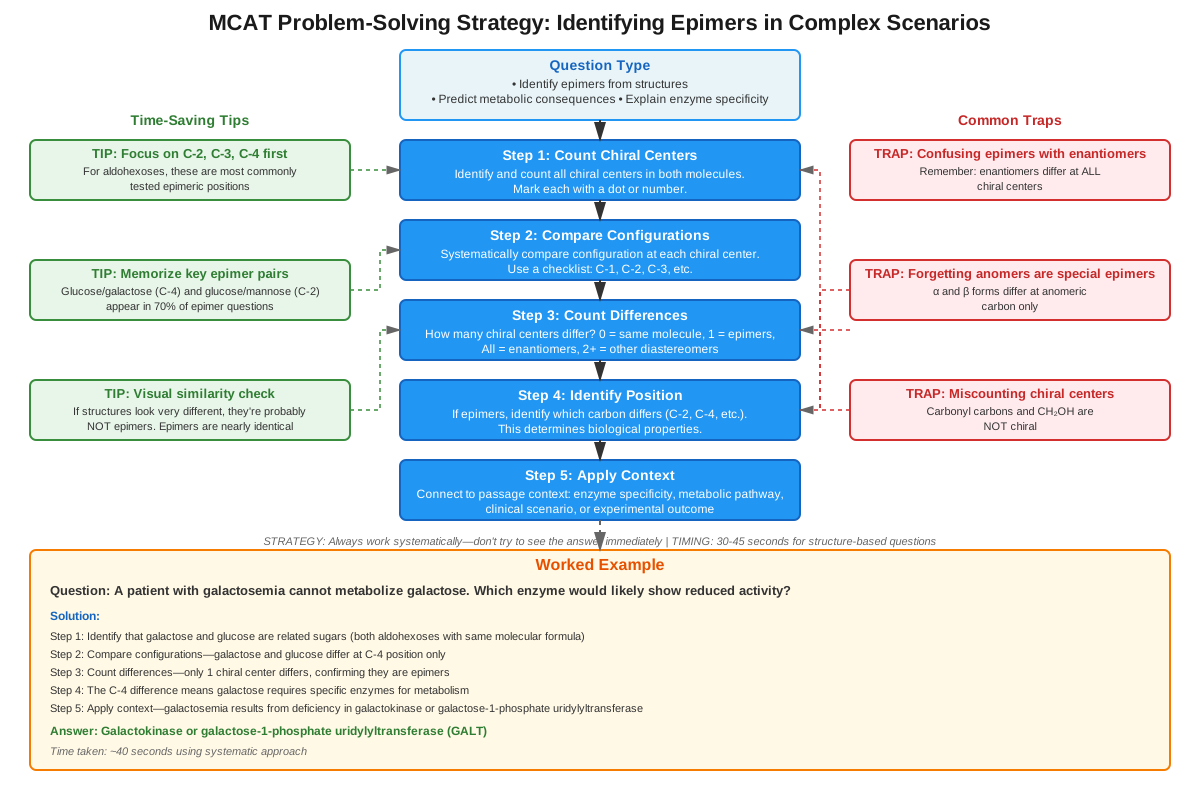
When encountering epimer questions, follow this systematic approach:
- Identify the question type: Is it asking you to identify epimers from structures, explain biological consequences, or apply knowledge to a clinical scenario?
- For structure-based questions: Count chiral centers systematically. Compare configurations at each position. If exactly one differs, they're epimers. If more than one differs, they're diastereomers but not epimers.
- For passage-based questions: Look for clues about enzyme specificity, metabolic pathways, or clinical disorders. Epimers often appear in contexts involving why certain enzymes work on one sugar but not another.
Trigger Words and Phrases:
Watch for these high-yield terms that signal epimer-related content:
- "Differ at one position"
- "C-2 epimer," "C-4 epimer" (specific position mentioned)
- "Stereoisomers that are not mirror images"
- "Enzyme specificity"
- "Galactosemia," "Leloir pathway"
- "UDP-galactose-4-epimerase"
- "Cannot be metabolized directly"
- Fischer projection comparisons
Process of Elimination Tips:
- Eliminate answer choices that confuse epimers with enantiomers (mirror images)
- Eliminate choices suggesting epimers have identical biological properties
- Eliminate options that claim epimers differ at multiple positions
- When comparing structures, eliminate pairs that differ at zero positions (identical) or more than one position (diastereomers but not epimers)
- For enzyme specificity questions, eliminate answers suggesting enzymes can't distinguish between epimers
Time Allocation:
Structure comparison questions typically require 60-90 seconds. Don't waste time drawing out full structures if you can compare Fischer projections directly. For passage-based questions, spend 30 seconds identifying the epimeric relationship, then 60 seconds connecting it to the biological context. If a question requires comparing multiple sugar structures, budget 2 minutes maximum and use systematic comparison rather than trying to visualize everything three-dimensionally.
Exam Tip: If you're unsure whether two sugars are epimers, count the differences. Exactly one difference = epimers. Zero differences = same molecule. More than one difference = diastereomers but not epimers. This simple counting strategy prevents confusion.
Memory Techniques
Mnemonic for Common Epimeric Pairs:
"Glucose Makes All Galactose" (GMAG)
- Glucose and Mannose are C-2 epimers
- Allose is the C-3 epimer of glucose
- Galactose is the C-4 epimer of glucose
Mnemonic for Epimer Definition:
"Exactly One Position Inverted Makes Epimers Real" (EOPIMER)
- Exactly
- One
- Position
- Inverted
- Makes
- Epimers
- Real
Visualization Strategy:
Picture epimers as "almost twins" - identical except for one feature (like twins where one has a birthmark on the left cheek and the other on the right cheek). This single difference is enough to make them distinguishable and functionally different, just as enzymes can distinguish epimers.
Acronym for Distinguishing Stereoisomers:
"DEAD" helps distinguish stereoisomer types:
- Different at all positions = Enantiomers
- Exactly one position = Epimers
- Anomeric carbon only = Anomers
- Different at multiple (but not all) = Diastereomers
Memory Palace Technique:
Imagine walking through a house where each room represents a carbon position:
- Room 2 (C-2): Mannose lives here (C-2 epimer of glucose)
- Room 3 (C-3): Allose lives here (C-3 epimer of glucose)
- Room 4 (C-4): Galactose lives here (C-4 epimer of glucose)
- Glucose is the homeowner who visits each room
This spatial organization helps recall which sugar is which epimer of glucose.
Summary
Epimers are stereoisomers that differ in configuration at exactly one chiral carbon atom, representing a crucial concept at the intersection of organic chemistry and biochemistry. This single stereochemical difference, though seemingly minor, has profound biological consequences due to enzyme specificity and determines distinct metabolic pathways. The most clinically relevant epimeric pair is D-glucose and D-galactose (C-4 epimers), whose metabolic differences underlie galactosemia when the Leloir pathway is disrupted. Understanding epimers requires distinguishing them from related concepts: enantiomers (mirror images differing at all chiral centers), anomers (epimers at the anomeric carbon), and general diastereomers (differing at multiple positions). For MCAT success, students must rapidly identify epimeric relationships in Fischer projections, explain biological consequences of epimeric differences, and apply this knowledge to passage-based questions involving enzyme specificity and metabolic disorders. Mastery of epimers provides essential foundation for understanding carbohydrate biochemistry and demonstrates the critical importance of stereochemistry in biological systems.
Key Takeaways
- Epimers differ at exactly one chiral carbon; this precise definition distinguishes them from enantiomers (all positions different) and general diastereomers (multiple positions different)
- D-glucose and D-galactose are C-4 epimers, the most commonly tested epimeric pair, with clinical relevance to galactosemia and lactose metabolism
- Enzyme specificity for particular epimers explains why stereochemically similar molecules follow different metabolic pathways and why single-carbon differences have major biological consequences
- Epimerases interconvert epimers through oxidation-reduction mechanisms, with UDP-galactose-4-epimerase being the most clinically relevant example
- Systematic comparison of Fischer projections at each chiral center is the most efficient strategy for identifying epimeric relationships on the MCAT
- Anomers are special epimers that differ at the anomeric carbon, though "epimer" in biochemistry typically refers to non-anomeric differences
- Clinical disorders like galactosemia demonstrate the real-world importance of epimeric differences and frequently appear in MCAT passages
Related Topics
Anomers and Mutarotation: Building on the concept of epimers, anomers represent the specific case of epimeric differences at the anomeric carbon formed during ring closure. Understanding anomers is essential for mastering reducing sugars, glycosidic bond formation, and carbohydrate reactivity.
Monosaccharide Metabolism: The distinct metabolic pathways for different epimers (glycolysis for glucose, Leloir pathway for galactose, phosphogluconate pathway for other hexoses) demonstrates how stereochemistry determines biochemical fate.
Enzyme Specificity and Kinetics: The ability of enzymes to distinguish between epimers exemplifies the lock-and-key and induced-fit models of enzyme action, connecting to broader concepts of catalysis and regulation.
Disaccharides and Glycosidic Bonds: Understanding epimers is prerequisite for analyzing disaccharide structure, as the identity of monosaccharide units (which may be epimers) determines disaccharide properties and biological function.
Stereochemistry in Drug Design: The principles of epimeric differences extend beyond carbohydrates to pharmaceutical development, where stereoisomers of drugs can have dramatically different efficacy and side effects.
Practice CTA
Now that you've mastered the core concepts of epimers, it's time to solidify your understanding through active practice. Challenge yourself with practice questions that require you to identify epimeric relationships in complex structures, analyze clinical scenarios involving metabolic disorders, and apply your knowledge to passage-based questions. Use flashcards to drill the common epimeric pairs and their biological significance. Remember: recognizing epimers quickly and accurately on test day can be the difference between a good score and a great score. The stereochemical precision required for this topic trains your mind for the detailed analytical thinking that characterizes top MCAT performers. You've got this!
Sign up free to keep reading
Create a free AnvayaPrep account to finish this MCAT guide on Epimers — plus flashcards and practice questions.