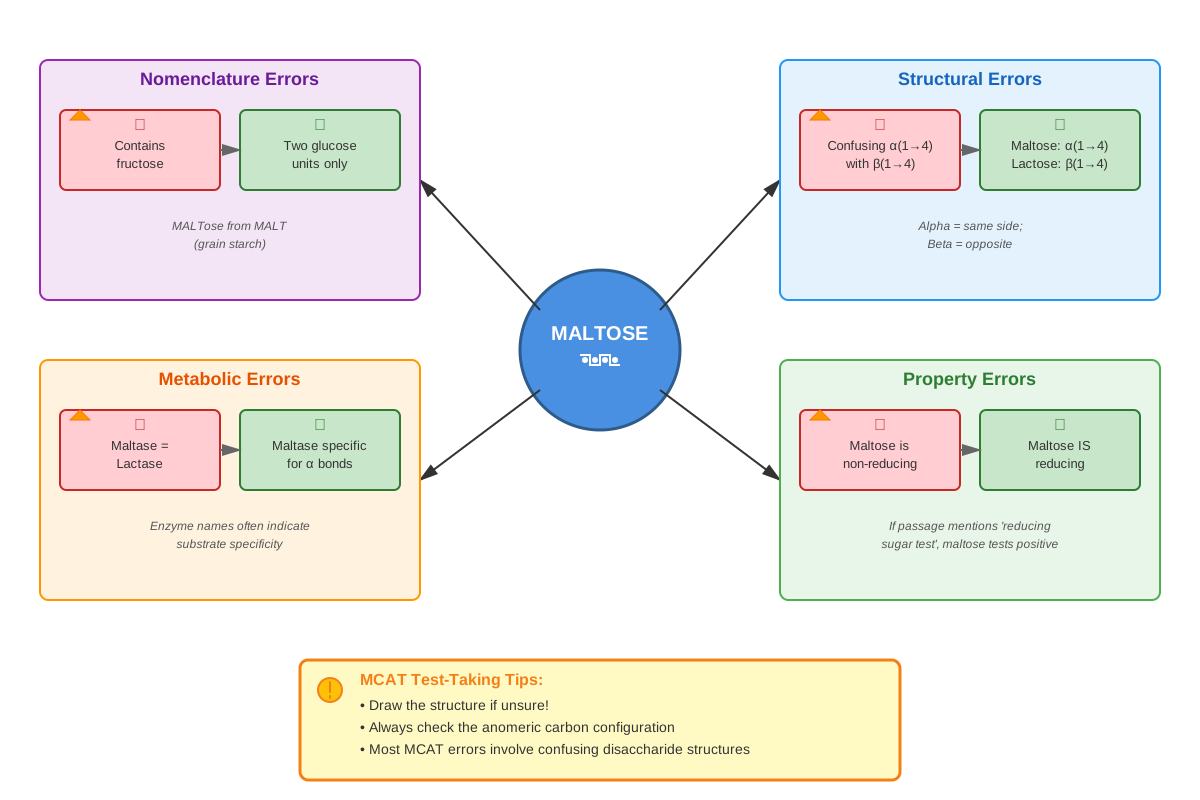
Overview
Maltose is a reducing disaccharide composed of two glucose molecules linked by an α(1→4) glycosidic bond. As a fundamental component of carbohydrates studied in Biochemistry, maltose represents a critical intermediate in the digestion of complex polysaccharides like starch and glycogen. Understanding maltose structure, formation, and metabolism is essential for MCAT success because it bridges the gap between simple monosaccharides and complex polysaccharides, appearing frequently in passages about digestion, enzyme kinetics, and metabolic pathways.
For the MCAT, maltose serves as an exemplar disaccharide that tests students' understanding of glycosidic bond formation, reducing sugar properties, and carbohydrate metabolism. Questions involving maltose often appear in biochemistry passages discussing digestive enzymes (particularly amylase and maltase), carbohydrate structure determination, or metabolic disorders. The topic integrates seamlessly with broader biochemistry concepts including enzyme specificity, hydrolysis reactions, and the structural differences between α and β glycosidic linkages.
Mastery of maltose biochemistry provides the foundation for understanding more complex carbohydrate structures and their biological roles. This knowledge directly connects to topics such as lactose intolerance, glycogen metabolism, and the biochemical basis of carbohydrate digestion—all high-yield areas for MCAT passages. The ability to quickly identify maltose structure, predict its chemical properties, and understand its metabolic fate will enhance performance on both discrete questions and passage-based items in the Biological and Biochemical Foundations section.
Learning Objectives
- [ ] Define Maltose using accurate Biochemistry terminology
- [ ] Explain why Maltose matters for the MCAT
- [ ] Apply Maltose to exam-style questions
- [ ] Identify common mistakes related to Maltose
- [ ] Connect Maltose to related Biochemistry concepts
- [ ] Draw and recognize the structure of maltose, including the α(1→4) glycosidic bond configuration
- [ ] Distinguish maltose from other disaccharides based on structural and functional properties
- [ ] Predict the products of maltose hydrolysis and identify the enzymes involved in its metabolism
- [ ] Explain the reducing properties of maltose and their biochemical significance
Prerequisites
- Monosaccharide structure: Understanding glucose structure in both linear and cyclic forms is essential because maltose consists of two glucose units
- Glycosidic bond formation: Knowledge of condensation reactions between hydroxyl groups enables comprehension of how maltose forms from glucose monomers
- Anomeric carbons and mutarotation: Recognition of α and β anomers is necessary to understand the specific α(1→4) linkage in maltose
- Reducing vs. non-reducing sugars: Familiarity with the concept of free anomeric carbons helps explain maltose's reducing properties
- Basic enzyme function: Understanding how enzymes catalyze hydrolysis reactions is required to grasp maltose digestion
Why This Topic Matters
Clinical and Real-World Significance
Maltose plays a crucial role in human nutrition and digestion. When humans consume starchy foods like bread, pasta, or potatoes, salivary and pancreatic amylases break down the starch into smaller fragments, with maltose being a primary product. Maltase enzymes in the small intestine then hydrolyze maltose into glucose molecules that can be absorbed into the bloodstream. Deficiencies in maltase activity, though rare, can lead to maltose intolerance with symptoms similar to lactose intolerance. Additionally, maltose is used extensively in the food industry, particularly in brewing and baking, where it serves as a fermentable sugar for yeast.
MCAT Exam Statistics
Maltose appears in approximately 3-5% of MCAT biochemistry questions, either as the primary focus or as part of broader carbohydrate metabolism passages. The topic most commonly appears in:
- Passage-based questions (70%): Typically embedded in passages about digestive enzymes, carbohydrate structure determination, or metabolic pathways
- Discrete questions (30%): Often testing structural recognition or comparison with other disaccharides
Common Exam Contexts
MCAT passages featuring maltose typically present scenarios involving:
- Enzyme kinetics experiments comparing maltase activity under different conditions
- Structural analysis using techniques like NMR or mass spectrometry to identify unknown disaccharides
- Digestive physiology passages describing the breakdown of complex carbohydrates
- Comparative biochemistry questions contrasting maltose with lactose, sucrose, or cellobiose
- Metabolic disorder case studies involving carbohydrate malabsorption
Core Concepts
Structure and Chemical Composition
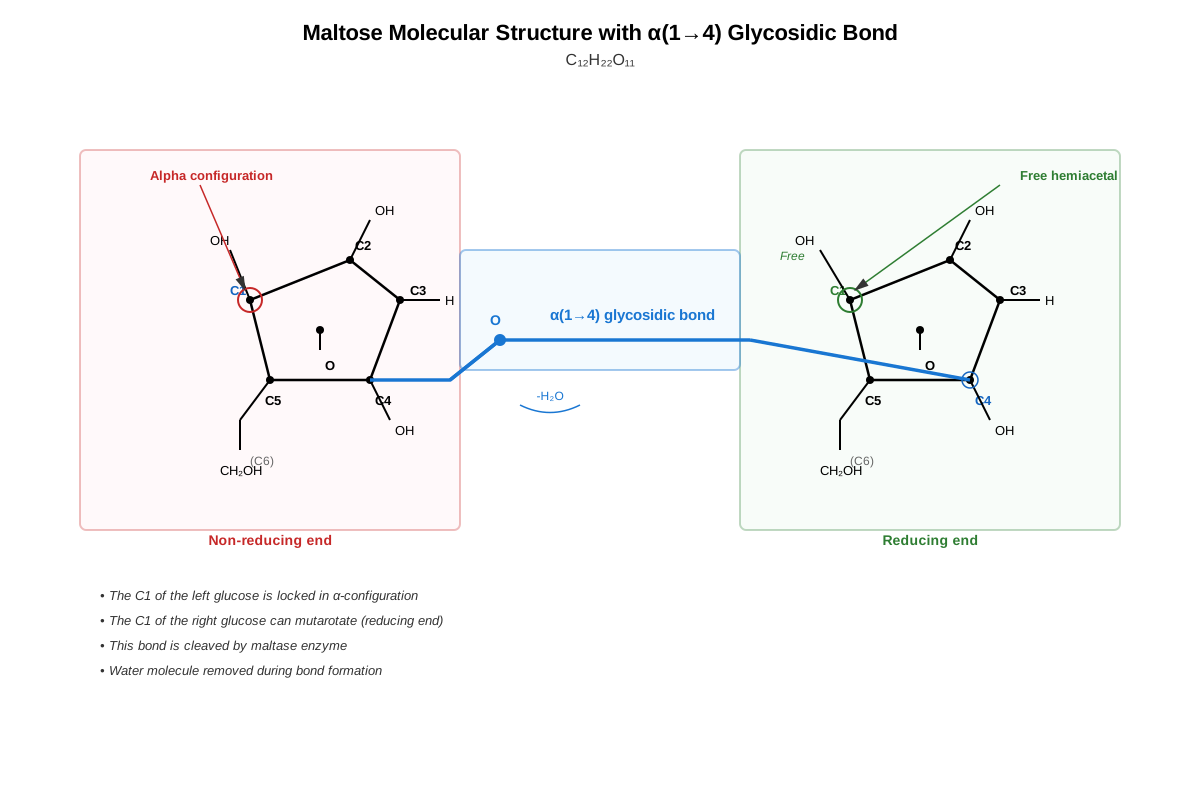
Maltose (also known as malt sugar) is a disaccharide with the molecular formula C₁₂H₂₂O₁₁. It consists of two D-glucose molecules joined by an α(1→4) glycosidic bond. This specific linkage forms between the anomeric carbon (C1) of one glucose molecule in the α configuration and the C4 hydroxyl group of the second glucose molecule.
The structural features of maltose include:
- Two pyranose (six-membered) ring structures
- An α-glycosidic linkage that positions the bond below the plane of the ring
- One free anomeric carbon on the second glucose unit, making maltose a reducing sugar
- The ability to exist in both α and β anomeric forms at the reducing end through mutarotation
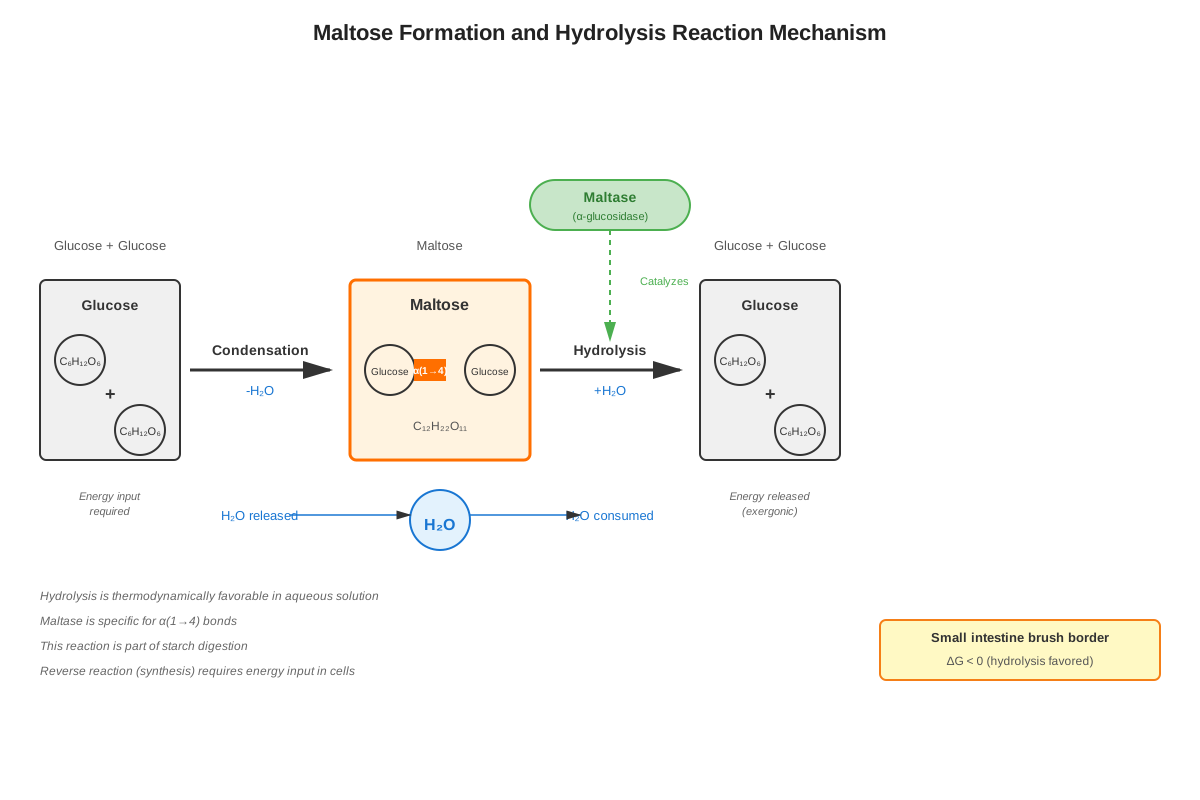
The formation of maltose from two glucose molecules is a condensation reaction (dehydration synthesis) that releases one water molecule:
Glucose + Glucose → Maltose + H₂O
C₆H₁₂O₆ + C₆H₁₂O₆ → C₁₂H₂₂O₁₁ + H₂O
Glycosidic Bond Characteristics
The α(1→4) glycosidic bond in maltose has several important characteristics that distinguish it from other disaccharides:
- Configuration: The α configuration means the glycosidic oxygen is positioned on the opposite side of the ring from the CH₂OH group at C6
- Digestibility: Human digestive enzymes (maltase, α-glucosidase) can hydrolyze α-glycosidic bonds, making maltose digestible
- Structural flexibility: The bond allows some rotation, giving maltose conformational flexibility
- Stability: The bond is stable under physiological pH but can be hydrolyzed by acids or specific enzymes
Reducing Sugar Properties
Maltose is classified as a reducing sugar because it possesses a free anomeric carbon on the second glucose unit. This free anomeric carbon can exist in equilibrium between the cyclic hemiacetal form and the open-chain aldehyde form. The aldehyde group can be oxidized, which is the basis for several chemical tests:
- Benedict's test: Maltose reduces Cu²⁺ (blue) to Cu₂O (brick red precipitate)
- Fehling's test: Similar copper reduction reaction
- Tollens' test: Maltose reduces Ag⁺ to metallic silver (silver mirror)
The reducing property distinguishes maltose from non-reducing disaccharides like sucrose and trehalose, which have both anomeric carbons involved in the glycosidic bond.
Biosynthesis and Metabolism
Formation of Maltose:
Maltose is not typically synthesized de novo in human metabolism but rather forms as an intermediate during the breakdown of larger polysaccharides:
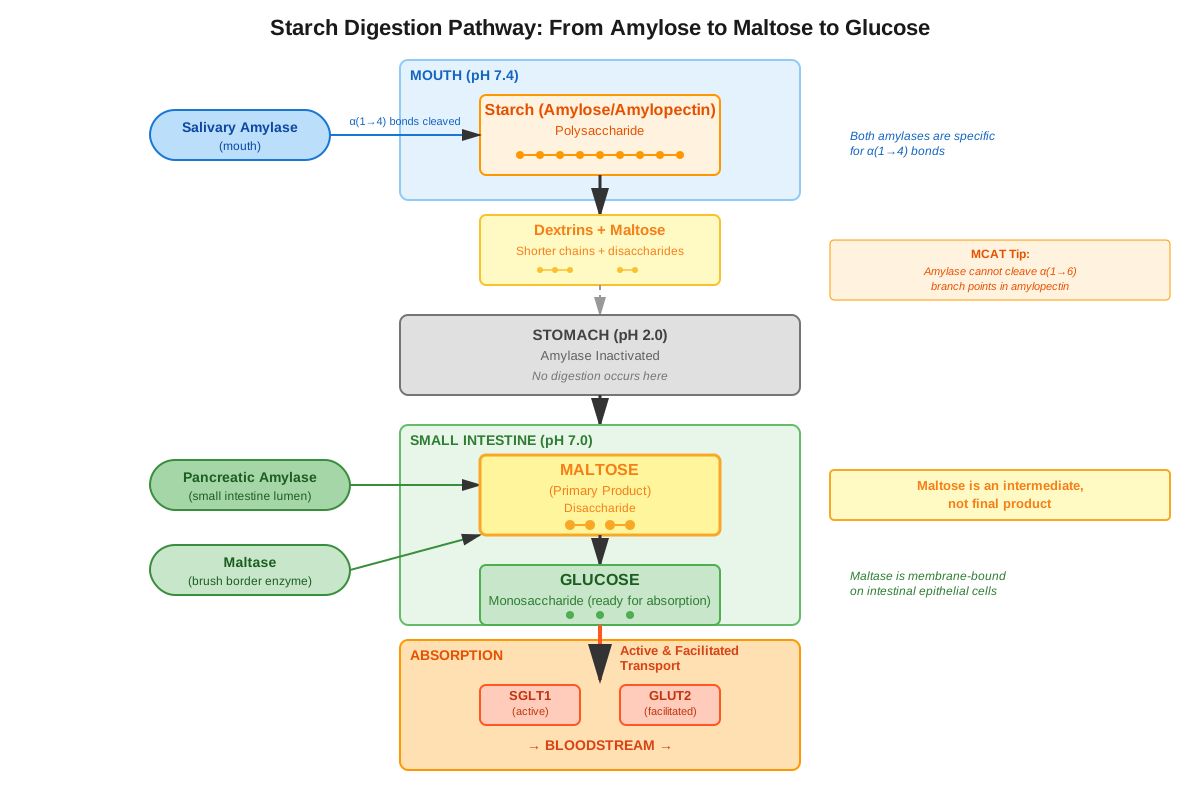
- Starch digestion: Salivary and pancreatic α-amylase hydrolyze α(1→4) glycosidic bonds in starch, producing maltose, maltotriose, and α-limit dextrins
- Glycogen breakdown: Although phosphorylase is the primary enzyme for glycogen degradation, debranching enzyme activity can produce some maltose
- Industrial production: Maltose is produced commercially through the enzymatic hydrolysis of starch
Hydrolysis of Maltose:
The enzyme maltase (also called α-glucosidase) catalyzes the hydrolysis of maltose into two glucose molecules:
Maltose + H₂O --maltase--> 2 GlucoseThis reaction occurs primarily in the brush border of the small intestine. The enzyme exhibits:
- High specificity for α(1→4) glycosidic bonds
- Optimal activity at pH 6.0-7.0
- Inhibition by glucose (product inhibition)
Comparison with Other Disaccharides
Understanding maltose requires distinguishing it from other common disaccharides:
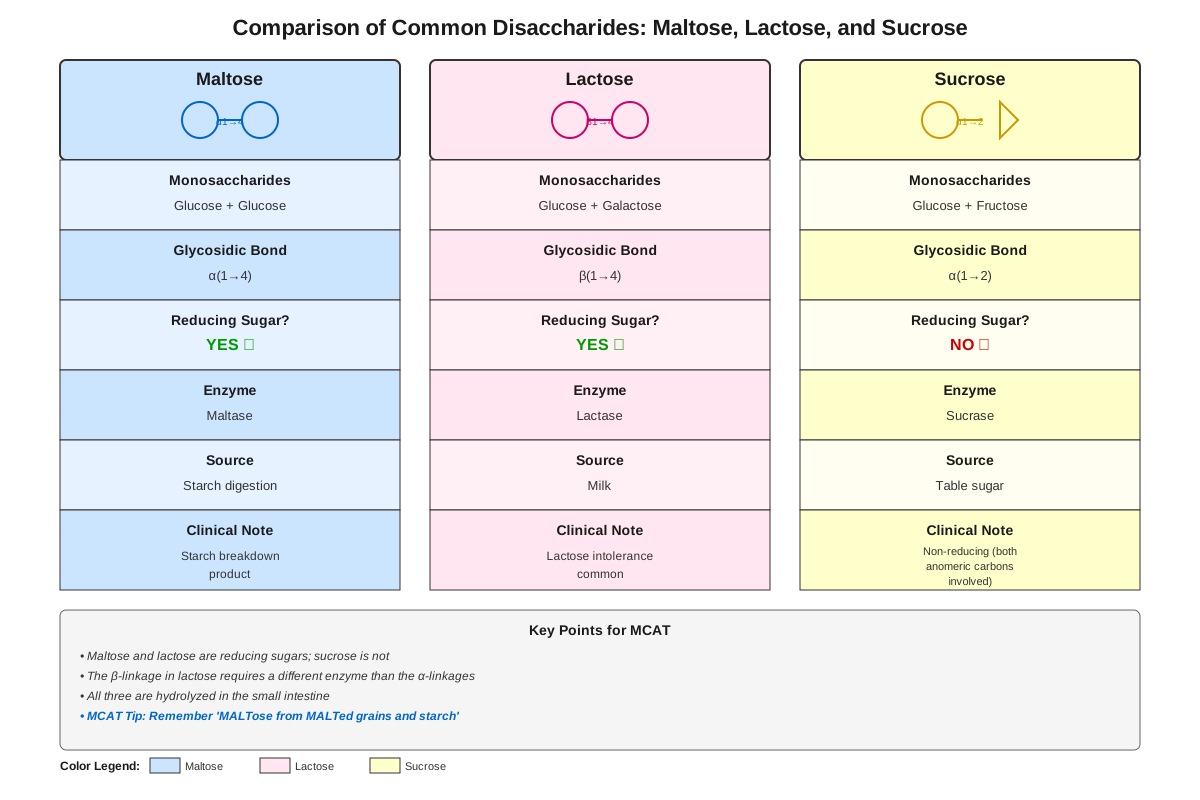
| Disaccharide | Monosaccharides | Glycosidic Bond | Reducing Sugar | Source |
|---|---|---|---|---|
| Maltose | Glucose + Glucose | α(1→4) | Yes | Starch digestion |
| Lactose | Glucose + Galactose | β(1→4) | Yes | Milk |
| Sucrose | Glucose + Fructose | α(1→2) | No | Table sugar |
| Cellobiose | Glucose + Glucose | β(1→4) | Yes | Cellulose digestion |
| Trehalose | Glucose + Glucose | α(1→1) | No | Fungi, insects |
The key distinguishing feature of maltose is that it contains two glucose units with an α(1→4) linkage and retains reducing properties.
Physical and Chemical Properties
Physical Properties:
- Molecular weight: 342.30 g/mol
- Appearance: White crystalline solid
- Solubility: Highly soluble in water due to multiple hydroxyl groups
- Sweetness: Approximately 30-60% as sweet as sucrose
- Melting point: 102-103°C (α-anomer)
Chemical Properties:
- Undergoes mutarotation in aqueous solution
- Can be oxidized to maltobionic acid
- Susceptible to acid hydrolysis at elevated temperatures
- Forms glycosides with alcohols under acidic conditions
- Participates in Maillard reactions during cooking (browning)
Stereochemistry and Nomenclature
The complete systematic name for maltose is 4-O-α-D-glucopyranosyl-D-glucopyranose, which describes:
- The 4-position of the second glucose where attachment occurs
- The α configuration of the glycosidic bond
- The D-stereochemistry of both glucose units
- The pyranose (six-membered ring) form of both sugars
Understanding this nomenclature helps in recognizing and distinguishing maltose from structural isomers and other disaccharides on the MCAT.
Concept Relationships
The understanding of maltose integrates multiple biochemical concepts in a hierarchical and interconnected manner:
Monosaccharides → Maltose → Polysaccharides: Maltose represents the intermediate level of carbohydrate complexity. Two glucose monomers condense to form maltose, and multiple maltose units (or similar linkages) extend to form starch and glycogen. This progression illustrates how biological macromolecules build from simple subunits.
Glycosidic Bond Formation → Maltose Structure → Digestibility: The specific α(1→4) glycosidic bond determines maltose's three-dimensional structure, which in turn determines enzyme specificity. Human maltase recognizes this specific bond geometry, enabling digestion. This contrasts with β(1→4) bonds in cellobiose, which humans cannot digest due to lack of cellulase.
Reducing Sugar Properties → Chemical Tests → Structural Determination: The free anomeric carbon in maltose leads to reducing properties, which enable Benedict's and Fehling's tests. These tests help distinguish maltose from non-reducing disaccharides in laboratory and exam scenarios.
Starch Digestion → Maltose Formation → Glucose Absorption → Energy Metabolism: Maltose serves as a critical intermediate in the pathway from dietary starch to cellular energy. Amylase breaks starch into maltose, maltase converts maltose to glucose, and glucose enters glycolysis and cellular respiration. This connection links carbohydrate structure to bioenergetics.
Enzyme Specificity → Maltase Activity → Metabolic Disorders: The lock-and-key relationship between maltase and maltose exemplifies enzyme specificity. Genetic defects affecting maltase lead to maltose intolerance, connecting molecular structure to clinical pathology.
Anomeric Configuration → α vs β Linkages → Biological Function: The α configuration in maltose versus β configuration in cellobiose demonstrates how subtle stereochemical differences create profound functional consequences—digestibility in humans versus structural roles in plants.
High-Yield Facts
⭐ Maltose consists of two glucose molecules linked by an α(1→4) glycosidic bond
⭐ Maltose is a reducing sugar because it has a free anomeric carbon on the second glucose unit
⭐ Maltase (α-glucosidase) hydrolyzes maltose into two glucose molecules in the small intestine
⭐ Maltose is produced during starch digestion by salivary and pancreatic α-amylase
⭐ The α(1→4) linkage in maltose is digestible by humans, unlike the β(1→4) linkage in cellobiose
- Maltose gives a positive result with Benedict's test, Fehling's test, and Tollens' test due to its reducing properties
- The molecular formula of maltose is C₁₂H₂₂O₁₁, formed by condensation of two C₆H₁₂O₆ glucose molecules
- Maltose differs from sucrose in that sucrose is non-reducing (both anomeric carbons involved in the glycosidic bond)
- Maltose can undergo mutarotation at its free anomeric carbon, existing in α and β forms in solution
- Lactose and maltose are both reducing disaccharides, but lactose contains galactose while maltose contains only glucose
- Maltose is approximately 30-60% as sweet as sucrose, making it less sweet than table sugar
- Acid hydrolysis of maltose yields two molecules of D-glucose, confirming its composition
Quick check — test yourself on Maltose so far.
Try Flashcards →Common Misconceptions
Misconception: Maltose and sucrose are both non-reducing sugars because they are disaccharides.
Correction: Maltose is a reducing sugar because one glucose unit has a free anomeric carbon that can open to reveal an aldehyde group. Sucrose is non-reducing because both anomeric carbons (glucose C1 and fructose C2) are involved in the α(1→2) glycosidic bond, leaving no free anomeric carbon.
Misconception: All disaccharides containing two glucose molecules are identical to maltose.
Correction: While maltose, cellobiose, and trehalose all contain two glucose units, they differ in their glycosidic linkages. Maltose has α(1→4), cellobiose has β(1→4), and trehalose has α(1→1). These structural differences result in different properties and biological functions.
Misconception: Maltose is directly absorbed from the intestine into the bloodstream.
Correction: Maltose must first be hydrolyzed by maltase into two glucose molecules before absorption. Only monosaccharides can be absorbed by intestinal epithelial cells through specific glucose transporters (SGLT1 and GLUT2).
Misconception: The α(1→4) bond in maltose is the same as the α(1→4) bond in amylose, so maltase can digest starch.
Correction: While both maltose and amylose contain α(1→4) glycosidic bonds, maltase specifically hydrolyzes the bond in maltose (a disaccharide). Amylase is required to break down the longer chains in starch into smaller fragments including maltose. Enzyme specificity depends on substrate size and accessibility, not just bond type.
Misconception: Since maltose is a reducing sugar, both glucose units can act as reducing agents.
Correction: Only the glucose unit with the free anomeric carbon (the second glucose in the chain) can act as a reducing agent. The first glucose has its anomeric carbon locked in the glycosidic bond and cannot open to reveal an aldehyde group.
Misconception: Maltose and lactose are interchangeable in metabolism because both are reducing disaccharides.
Correction: Maltose yields two glucose molecules upon hydrolysis, while lactose yields glucose and galactose. These require different enzymes (maltase vs. lactase) and have different metabolic fates. Galactose must be converted to glucose-1-phosphate through the galactose metabolism pathway before entering glycolysis.
Misconception: The sweetness of maltose indicates it has more energy than less sweet sugars.
Correction: Sweetness is determined by how well a molecule binds to taste receptors, not its caloric content. Maltose, lactose, and sucrose all provide approximately 4 kcal/gram despite having different sweetness levels. Maltose is less sweet than sucrose but has the same caloric value.
Worked Examples
Example 1: Structural Analysis and Property Prediction
Question: A biochemistry researcher isolates an unknown disaccharide from a sample. Analysis reveals the following: (1) The compound gives a positive Benedict's test, (2) Complete hydrolysis yields only D-glucose, (3) The glycosidic bond is cleaved by maltase but not by lactase, (4) Methylation analysis followed by hydrolysis shows that one glucose has methylated hydroxyl groups at positions 2, 3, and 6, while the other has methylated groups at positions 2, 3, 4, and 6. Identify the disaccharide and explain your reasoning.
Solution:
Step 1: Analyze the Benedict's test result.
A positive Benedict's test indicates the compound is a reducing sugar, meaning it has at least one free anomeric carbon. This eliminates non-reducing disaccharides like sucrose and trehalose.
Step 2: Consider the hydrolysis products.
Complete hydrolysis yields only D-glucose, indicating the disaccharide consists of two glucose units. This narrows possibilities to maltose, cellobiose, or isomaltose.
Step 3: Evaluate enzyme specificity.
The compound is cleaved by maltase but not lactase. Maltase specifically hydrolyzes α(1→4) glycosidic bonds between glucose units. Lactase cleaves β(1→4) bonds between glucose and galactose. This indicates an α(1→4) linkage, pointing toward maltose.
Step 4: Interpret methylation analysis.
The first glucose has free hydroxyl groups at positions 1 and 4 (since 2, 3, and 6 are methylated). The second glucose has a free hydroxyl group only at position 1 (since 2, 3, 4, and 6 are methylated). This indicates:
- The first glucose has its C1 involved in the glycosidic bond (no free OH at C1 after hydrolysis)
- The first glucose has its C4 free before methylation, meaning it's not involved in the bond
- Wait—reconsider: If C4 of the first glucose were free, it would be methylated. The absence of methylation at C4 means C4 is involved in the glycosidic bond.
Actually, the glucose with methylation at 2, 3, 6 (but not 4) has C4 involved in the glycosidic bond. The glucose with methylation at 2, 3, 4, 6 has only C1 involved in the bond (the anomeric carbon).
Step 5: Conclusion.
The disaccharide is maltose: glucose-α(1→4)-glucose. The first glucose has C1 in the glycosidic bond (α configuration), the second glucose has C4 in the glycosidic bond, and the second glucose retains a free C1 (explaining the reducing properties).
Connection to Learning Objectives: This example demonstrates how to apply knowledge of maltose structure, reducing properties, and enzyme specificity to identify an unknown compound—a common MCAT passage scenario.
Example 2: Metabolic Pathway Analysis
Question: A patient consumes a meal containing 100 grams of starch. Describe the biochemical pathway by which this starch is converted to maltose and then to glucose, including the enzymes involved, the locations where these reactions occur, and the final yield of glucose molecules. If the patient has a maltase deficiency, what would be the consequences?
Solution:
Step 1: Starch structure and initial digestion.
Starch consists of amylose (linear α(1→4) glucose chains) and amylopectin (branched chains with α(1→4) and α(1→6) bonds).
In the mouth: Salivary α-amylase begins hydrolyzing α(1→4) bonds randomly along the starch chains, producing shorter polysaccharides (dextrins), maltotriose, and maltose. This process continues briefly before the food is swallowed.
Step 2: Continued digestion in the small intestine.
In the duodenum: Pancreatic α-amylase continues the hydrolysis of α(1→4) bonds. The products include:
- Maltose (from linear segments)
- Maltotriose (three glucose units)
- α-limit dextrins (branched fragments with α(1→6) bonds)
Step 3: Final digestion at the brush border.
At the intestinal brush border: Multiple enzymes complete digestion:
- Maltase (α-glucosidase) hydrolyzes maltose → 2 glucose
- Isomaltase hydrolyzes α(1→6) bonds in limit dextrins
- Glucoamylase hydrolyzes maltotriose and other short oligosaccharides
Step 4: Calculate glucose yield.
Starch has the formula (C₆H₁₀O₅)ₙ, with an average molecular weight of ~162 g/mol per glucose unit.
100 g starch ÷ 162 g/mol ≈ 617 glucose units
Complete hydrolysis yields approximately 617 glucose molecules (or 617 moles if starting with 100 g-moles of starch).
Step 5: Consequences of maltase deficiency.
Without functional maltase:
- Maltose accumulates in the intestinal lumen
- Maltose cannot be absorbed (only monosaccharides are absorbed)
- Osmotic effect: Maltose draws water into the intestine → osmotic diarrhea
- Bacterial fermentation: Colonic bacteria ferment maltose → gas production (bloating, flatulence)
- Reduced glucose absorption → potential hypoglycemia if severe
- Symptoms similar to lactose intolerance: abdominal pain, diarrhea, gas after consuming starchy foods
Connection to Learning Objectives: This example connects maltose to the broader context of carbohydrate digestion, demonstrates the clinical significance of maltase, and shows how structural knowledge relates to physiological function—all high-yield for MCAT passages on digestive biochemistry.
Exam Strategy
Approaching MCAT Questions on Maltose
Pattern Recognition: When you see maltose mentioned in a passage or question, immediately activate your mental checklist:
- Two glucose units
- α(1→4) glycosidic bond
- Reducing sugar (free anomeric carbon)
- Product of starch digestion
- Substrate for maltase
Trigger Words and Phrases:
- "Starch digestion" or "amylase activity" → Think maltose as a product
- "Reducing sugar test" → Maltose will test positive
- "Disaccharide hydrolysis" → Maltose yields two glucose molecules
- "Brush border enzymes" → Maltase is located here
- "α-glycosidic bond" → Could be maltose, but verify it's (1→4) not (1→6)
Process of Elimination Strategies
When comparing disaccharides:
- First, identify if the sugar is reducing or non-reducing (eliminates sucrose, trehalose)
- Second, determine the monosaccharide composition (maltose = glucose + glucose; lactose = glucose + galactose)
- Third, identify the glycosidic bond type (α vs. β, and which carbons are involved)
For enzyme specificity questions:
- If the question asks which enzyme acts on maltose, eliminate any enzyme with "β" in its name (β-galactosidase, β-glucosidase)
- Remember that maltase = α-glucosidase (same enzyme, different names)
- Amylase produces maltose but doesn't hydrolyze maltose itself
For structure determination questions:
- If methylation analysis is mentioned, remember that unmethylated positions indicate where bonds were located
- If a compound is reducing but contains two glucose units, it's either maltose or cellobiose—enzyme specificity or bond configuration will distinguish them
Time Allocation Advice
Maltose questions typically appear as:
- Discrete questions (30 seconds): Quick recall of structure or properties
- Passage-based questions (60-90 seconds): Require integration with passage information
Time-saving tips:
- Don't draw out the full structure unless absolutely necessary—knowing the bond type (α(1→4)) is usually sufficient
- For reducing sugar questions, quickly check for free anomeric carbons rather than working through the entire mechanism
- If a passage describes starch digestion, anticipate that maltose will be mentioned and pre-activate relevant knowledge
Memory Techniques
Mnemonics
"MALT Makes Two Glucose"
- Maltose
- Alpha (1→4) linkage
- Liberates (through hydrolysis)
- Two glucose molecules
"Maltose is REAL"
- Reducing sugar
- Enzyme: maltase
- Alpha (1→4) bond
- Location: from starch
Visualization Strategy
The Maltose Memory Palace:
Imagine a malt shop (for maltose) where:
- Two identical glucose twins hold hands (two glucose units)
- They hold hands with their right hands in a specific way (α configuration)
- One twin has their left hand free to wave (free anomeric carbon = reducing)
- A scissor labeled "maltase" can cut between them (enzyme specificity)
- The shop is located on 4th Street (1→4 linkage)
Acronym for Disaccharide Comparison
"MLSC" for the four major disaccharides:
- Maltose: Glucose-Glucose, α(1→4), Reducing
- Lactose: Glucose-Galactose, β(1→4), Reducing
- Sucrose: Glucose-Fructose, α(1→2), Non-reducing
- Cellobiose: Glucose-Glucose, β(1→4), Reducing (not digestible)
Rhyme for Reducing Properties
"Maltose and lactose can reduce,
Their free anomers are the clue.
But sucrose locked at both C's,
Cannot reduce—remember these!"
Summary
Maltose is a reducing disaccharide composed of two D-glucose molecules joined by an α(1→4) glycosidic bond, making it a fundamental intermediate in carbohydrate metabolism and a high-yield topic for the MCAT. Its formation during starch digestion by α-amylase and subsequent hydrolysis by maltase into two glucose molecules represents a critical step in converting dietary polysaccharides into absorbable monosaccharides. The presence of a free anomeric carbon on the second glucose unit confers reducing properties, distinguishing maltose from non-reducing disaccharides like sucrose. Understanding maltose requires integrating knowledge of glycosidic bond stereochemistry, enzyme specificity, and the relationship between molecular structure and biological function. MCAT questions on maltose typically test structural recognition, comparison with other disaccharides, enzyme kinetics, and the biochemical pathway from starch to glucose. Mastery of maltose structure, properties, and metabolism provides essential foundation for understanding broader topics in carbohydrate biochemistry and digestive physiology.
Key Takeaways
- Maltose consists of two glucose molecules linked by an α(1→4) glycosidic bond, distinguishing it from other glucose-containing disaccharides by its specific linkage type
- Maltose is a reducing sugar due to its free anomeric carbon on the second glucose unit, giving positive results with Benedict's, Fehling's, and Tollens' tests
- α-Amylase produces maltose from starch, while maltase (α-glucosidase) hydrolyzes maltose into two glucose molecules in the small intestine brush border
- The α configuration of the glycosidic bond makes maltose digestible by humans, unlike the β(1→4) linkage in cellobiose which requires cellulase
- Maltose differs from lactose (glucose-galactose), sucrose (glucose-fructose, non-reducing), and cellobiose (glucose-glucose with β linkage)
- Maltase deficiency leads to maltose intolerance with symptoms including osmotic diarrhea, bloating, and abdominal discomfort after consuming starchy foods
- On the MCAT, maltose commonly appears in passages about digestive enzymes, carbohydrate structure determination, and metabolic pathways, requiring integration of structure, function, and clinical relevance
Related Topics
Lactose and Lactose Intolerance: Understanding maltose provides direct comparison to lactose, another reducing disaccharide. Lactose intolerance is more common and clinically significant than maltose intolerance, making it a higher-yield MCAT topic. The parallel structures and enzyme deficiencies create excellent comparison questions.
Starch and Glycogen Structure: Maltose represents the repeating unit in amylose (linear starch). Mastering maltose structure enables understanding of how α(1→4) linkages create the helical structure of amylose and the linear portions of amylopectin and glycogen.
Enzyme Kinetics and Specificity: Maltase serves as an excellent example for studying enzyme-substrate specificity, competitive inhibition, and Michaelis-Menten kinetics. The specificity of maltase for α(1→4) bonds illustrates the lock-and-key model.
Carbohydrate Digestion and Absorption: Maltose is central to understanding the complete pathway from dietary starch to blood glucose, including the roles of salivary amylase, pancreatic amylase, and brush border enzymes.
Reducing Sugar Chemistry: Maltose exemplifies reducing sugar behavior, connecting to topics like the Maillard reaction (browning in cooking), glycation of proteins (relevant to diabetes), and carbohydrate analysis techniques.
Practice CTA
Now that you've mastered the biochemistry of maltose, it's time to solidify your understanding through active practice. Challenge yourself with MCAT-style practice questions that test your ability to apply maltose concepts in passage-based scenarios and discrete questions. Work through flashcards focusing on maltose structure, properties, and comparisons with other disaccharides. Remember, the difference between passive recognition and active recall is what separates good MCAT scores from great ones. Your investment in understanding maltose will pay dividends not only in carbohydrate questions but also in passages involving digestive physiology, enzyme kinetics, and metabolic disorders. You've built a strong foundation—now strengthen it through deliberate practice!
Sign up free to keep reading
Create a free AnvayaPrep account to finish this MCAT guide on Maltose — plus flashcards and practice questions.