Overview
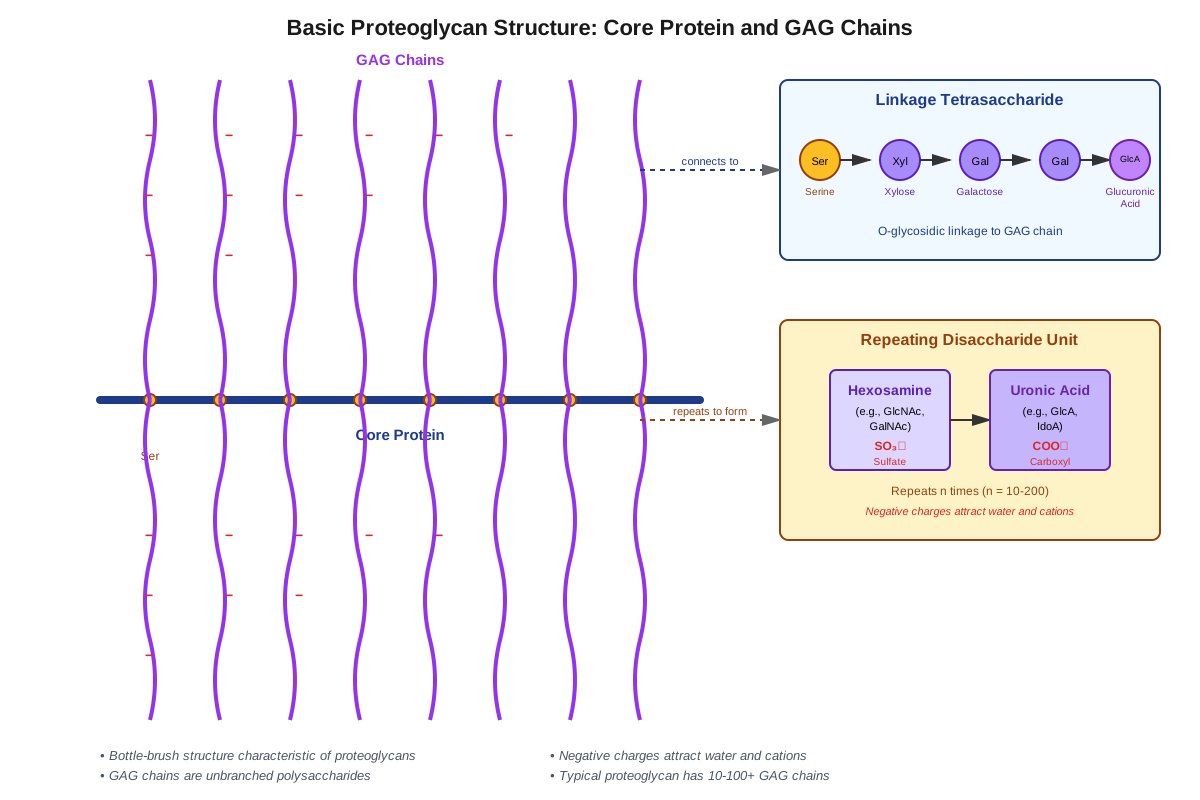
Proteoglycans represent a critical class of macromolecules that bridge the study of carbohydrates and proteins in biochemistry. These complex molecules consist of a core protein covalently attached to one or more glycosaminoglycan (GAG) chains—long, unbranched polysaccharides composed of repeating disaccharide units. Proteoglycans are abundant in the extracellular matrix (ECM) and on cell surfaces, where they perform essential structural and regulatory functions. Their highly negative charge, derived from sulfate and carboxyl groups on the GAG chains, allows them to attract water molecules and cations, creating a hydrated gel-like matrix that provides mechanical support, facilitates cell signaling, and regulates the movement of molecules through tissues.
For the MCAT, understanding proteoglycans is essential because they frequently appear in passages involving connective tissue structure, cell-cell communication, and disease processes affecting cartilage and bone. The exam tests not only the structural features of proteoglycans but also their functional roles in physiological and pathological contexts. Questions may require students to analyze experimental data about ECM composition, interpret clinical scenarios involving connective tissue disorders, or predict the consequences of enzymatic defects in GAG synthesis or degradation. Proteoglycans exemplify the integration of carbohydrate chemistry with protein structure and function—a recurring theme in MCAT biochemistry.
Within the broader biochemistry curriculum, proteoglycans connect multiple high-yield topics. They link carbohydrate structure and function to protein post-translational modifications, extracellular matrix biology, and cellular communication pathways. Understanding proteoglycans requires knowledge of glycosidic bonds, amino acid chemistry, and the principles of molecular interactions in aqueous environments. This topic also provides context for understanding lysosomal storage diseases, particularly mucopolysaccharidoses, which result from defective GAG degradation and represent a favorite MCAT topic for integrating biochemistry with genetics and pathology.
Learning Objectives
- [ ] Define proteoglycans using accurate biochemistry terminology
- [ ] Explain why proteoglycans matter for the MCAT
- [ ] Apply proteoglycans to exam-style questions
- [ ] Identify common mistakes related to proteoglycans
- [ ] Connect proteoglycans to related biochemistry concepts
- [ ] Distinguish between different types of glycosaminoglycans and their specific properties
- [ ] Analyze the structural features that enable proteoglycans to function in the extracellular matrix
- [ ] Predict the physiological consequences of defects in proteoglycan synthesis or degradation
Prerequisites
- Carbohydrate structure and nomenclature: Understanding monosaccharides, disaccharides, and glycosidic bonds is essential for comprehending GAG structure
- Amino acid and protein structure: Proteoglycans contain a protein core that requires knowledge of peptide bonds and protein folding
- Post-translational modifications: GAG attachment to proteins represents a specific type of glycosylation
- Extracellular matrix components: Basic familiarity with ECM organization helps contextualize proteoglycan function
- pH and charge interactions: The negative charge of proteoglycans and their interactions with cations require understanding of electrostatic principles
- Lysosomal function: Degradation of proteoglycans occurs in lysosomes, making this organelle's function relevant
Why This Topic Matters
Clinical and Real-World Significance
Proteoglycans play indispensable roles in human physiology and disease. In cartilage, aggrecan—a major proteoglycan—provides compressive resistance that allows joints to withstand mechanical stress. Degradation of cartilage proteoglycans contributes to osteoarthritis, one of the most common degenerative diseases. In blood vessels, proteoglycans regulate vascular permeability and interact with lipoproteins, influencing atherosclerosis development. Heparan sulfate proteoglycans on cell surfaces serve as co-receptors for growth factors, modulating critical signaling pathways in development and cancer.
Genetic defects in proteoglycan metabolism cause mucopolysaccharidoses (MPS), a group of lysosomal storage diseases characterized by accumulation of undegraded GAGs. These disorders present with skeletal abnormalities, organomegaly, and progressive neurological decline, illustrating the importance of proper proteoglycan turnover. Understanding proteoglycans also informs therapeutic strategies: heparin, a highly sulfated GAG, serves as a widely used anticoagulant, while hyaluronic acid injections treat joint pain.
MCAT Exam Statistics and Question Types
Proteoglycans appear in approximately 3-5% of MCAT biochemistry passages, typically integrated with topics such as connective tissue structure, cell signaling, or genetic disorders. Questions often present experimental scenarios requiring students to interpret data about ECM composition or predict the effects of enzyme deficiencies. Discrete questions may test knowledge of GAG structure, the distinction between proteoglycans and glycoproteins, or the functional consequences of proteoglycan charge properties.
Common passage contexts include: research studies examining cartilage degradation in arthritis models; clinical vignettes describing patients with mucopolysaccharidoses; experiments investigating cell-surface proteoglycans in growth factor signaling; and comparative analyses of ECM composition in different tissues. The MCAT favors questions that require application of proteoglycan properties to novel situations rather than simple recall of definitions.
Core Concepts
Definition and Basic Structure
Proteoglycans are macromolecules consisting of a core protein to which one or more glycosaminoglycan (GAG) chains are covalently attached. This distinguishes them from glycoproteins, which contain shorter, branched oligosaccharide chains. The defining feature of proteoglycans is the presence of GAGs—long, linear polysaccharides composed of repeating disaccharide units. Each disaccharide typically contains an amino sugar (N-acetylglucosamine or N-acetylgalactosamine) and either a uronic acid (glucuronic acid or iduronic acid) or galactose.
The attachment of GAG chains to the core protein occurs through specific linkage regions. For most proteoglycans, a tetrasaccharide linker (xylose-galactose-galactose-glucuronic acid) connects the GAG chain to serine residues on the protein core. This linkage forms during post-translational modification in the Golgi apparatus, where specialized glycosyltransferases sequentially add sugar residues. The resulting molecule can be enormous: aggrecan, for example, has a core protein of approximately 250 kDa with attached GAG chains that increase the total molecular weight to over 2,000 kDa.
Glycosaminoglycan Types and Properties
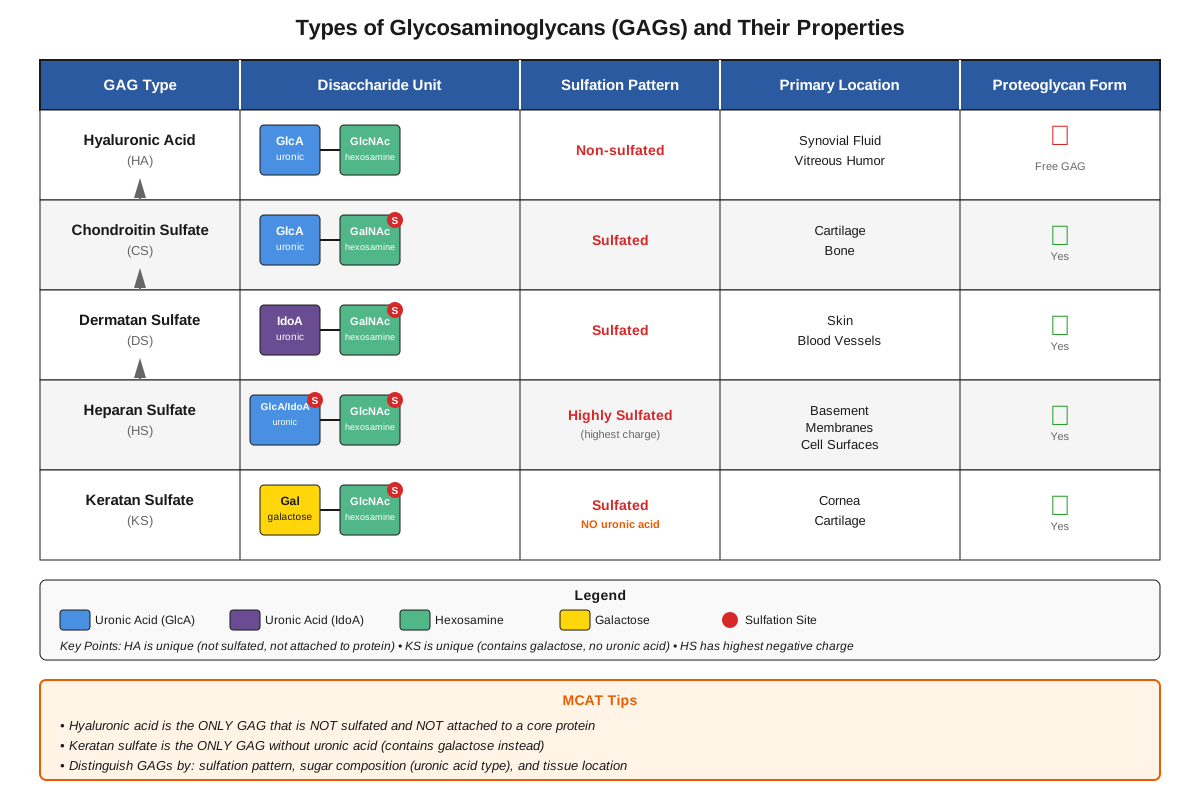
GAGs are classified into several types based on their disaccharide composition, sulfation pattern, and linkage to protein:
| GAG Type | Disaccharide Composition | Sulfation | Location | Key Functions |
|---|---|---|---|---|
| Hyaluronic acid | GlcUA-GlcNAc | None | ECM, synovial fluid | Hydration, lubrication, not attached to protein |
| Chondroitin sulfate | GlcUA-GalNAc | Variable | Cartilage, bone, skin | Compressive resistance, tissue hydration |
| Dermatan sulfate | IdoUA-GalNAc | Variable | Skin, blood vessels, heart valves | Structural support, wound healing |
| Heparan sulfate | GlcUA/IdoUA-GlcNAc | High | Cell surfaces, basement membranes | Cell signaling, growth factor binding |
| Heparin | IdoUA-GlcNAc | Very high | Mast cell granules | Anticoagulation |
| Keratan sulfate | Gal-GlcNAc | Variable | Cornea, cartilage | Corneal transparency, cartilage structure |
The sulfation of GAGs is critical for their function. Sulfate groups contribute negative charges that attract cations (particularly Na⁺ and Ca²⁺) and water molecules, creating osmotic pressure that resists compression. The degree and pattern of sulfation vary among GAG types and influence their specific interactions with proteins. Heparan sulfate and heparin are the most highly sulfated GAGs, with sulfate groups at multiple positions on the sugar rings, enabling their strong binding to proteins like antithrombin III.
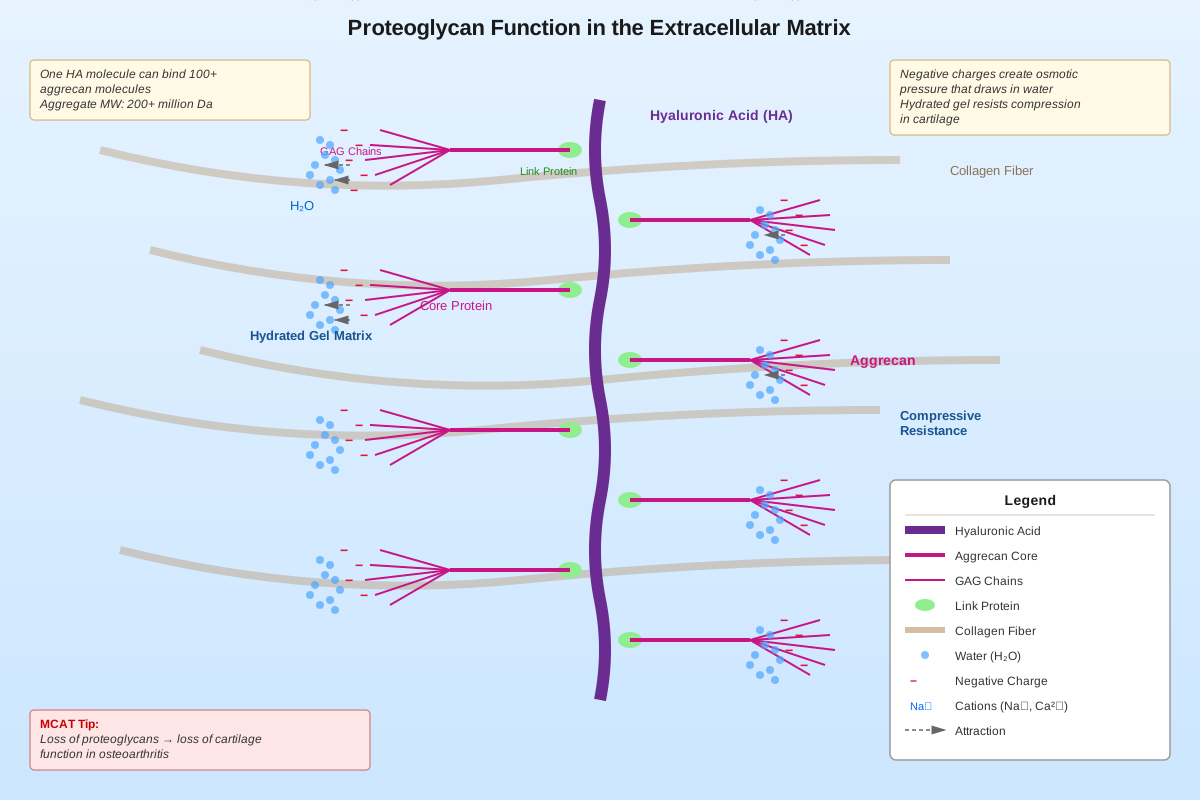
Hyaluronic acid (also called hyaluronan) is unique among GAGs because it is not sulfated and is not covalently attached to a protein core—technically making it not part of a proteoglycan when free. However, hyaluronic acid forms the backbone of large proteoglycan aggregates in cartilage, where multiple aggrecan molecules bind non-covalently to a single hyaluronic acid chain, stabilized by link proteins.
Major Proteoglycan Examples
Aggrecan is the predominant proteoglycan in cartilage, responsible for its compressive resilience. Its core protein contains three globular domains (G1, G2, and G3) and an extended region bearing approximately 100 chondroitin sulfate chains and 30 keratan sulfate chains. The G1 domain binds to hyaluronic acid, forming massive aggregates that can exceed 200 million Da. These aggregates trap water, creating a swollen gel that resists compression while allowing nutrients to diffuse through the tissue.
Decorin and biglycan are small leucine-rich proteoglycans found in various connective tissues. Decorin contains a single chondroitin sulfate or dermatan sulfate chain and binds to collagen fibrils, regulating fibril assembly and spacing. It also sequesters transforming growth factor-β (TGF-β), modulating cell proliferation and differentiation. Biglycan has two GAG chains and plays roles in bone formation and muscle development.
Perlecan is a large basement membrane proteoglycan with three heparan sulfate chains. It contributes to the filtration properties of basement membranes (such as the glomerular basement membrane in kidneys) and binds growth factors, regulating their availability to cells. Mutations in perlecan cause Schwartz-Jampel syndrome, characterized by skeletal abnormalities and muscle stiffness.
Syndecan and glypican families are cell-surface proteoglycans that function as co-receptors for growth factors and adhesion molecules. Syndecans are transmembrane proteins with heparan sulfate chains in their extracellular domains, while glypicans are attached to the cell membrane via glycosylphosphatidylinositol (GPI) anchors. These proteoglycans concentrate growth factors near their receptors, enhancing signaling efficiency.
Functional Roles in the Extracellular Matrix
Proteoglycans perform multiple functions in the ECM:
- Hydration and gel formation: The negative charges on GAG chains attract water and cations, creating a hydrated gel that fills spaces between cells and fibers
- Mechanical support: The swelling pressure generated by hydrated proteoglycans provides compressive resistance, particularly important in cartilage
- Molecular sieving: The dense network of GAG chains regulates the diffusion of molecules based on size and charge
- Protein binding and sequestration: Proteoglycans bind growth factors, cytokines, chemokines, and enzymes, controlling their distribution and activity
- Cell adhesion and migration: Cell-surface proteoglycans interact with ECM components and other cells, influencing adhesion and migration
- Tissue organization: Proteoglycans regulate collagen fibril assembly and spacing, contributing to tissue architecture
Synthesis and Degradation
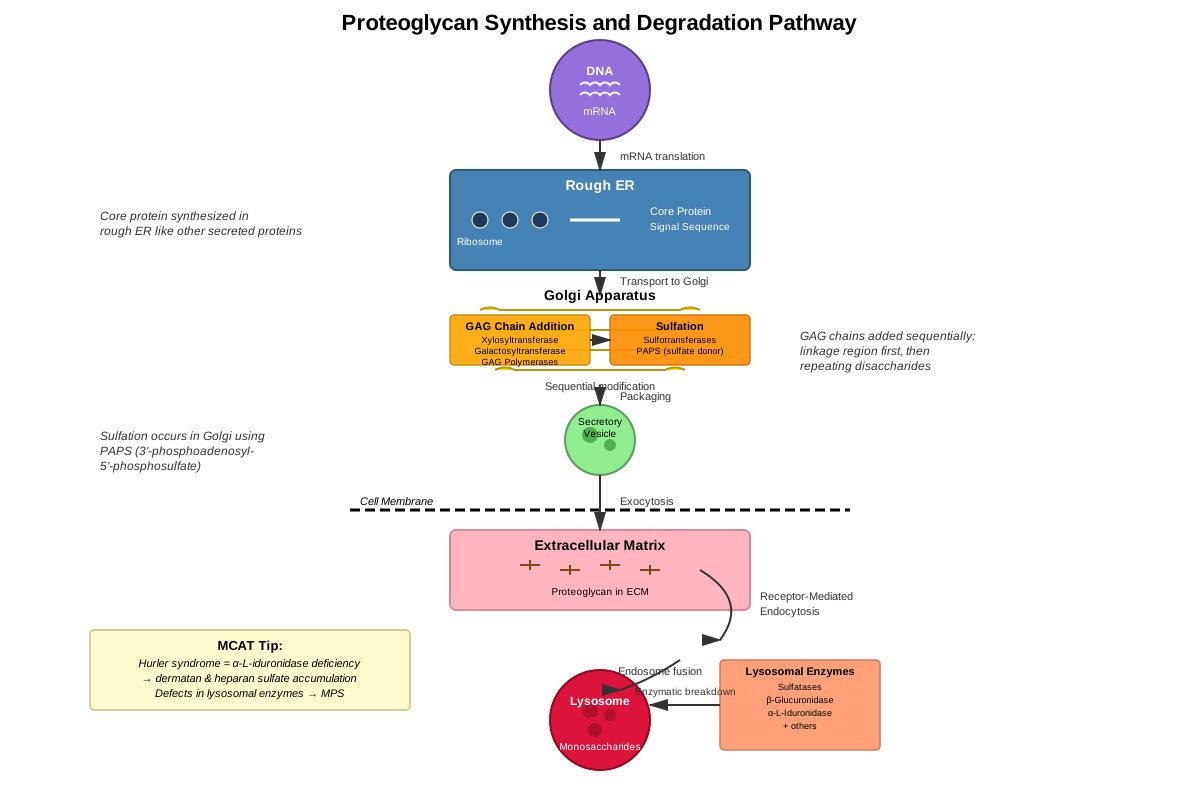
Proteoglycan synthesis occurs through coordinated processes in the endoplasmic reticulum and Golgi apparatus:
- Core protein synthesis on ribosomes and translocation into the ER
- Addition of the tetrasaccharide linker to serine residues in the Golgi
- Sequential addition of disaccharide units by glycosyltransferases
- Sulfation of specific positions by sulfotransferases
- Secretion or insertion into the cell membrane
Degradation occurs primarily in lysosomes through the action of multiple enzymes:
- Endoglycosidases cleave GAG chains into smaller fragments
- Exoglycosidases remove terminal sugar residues sequentially
- Sulfatases remove sulfate groups before glycosidases can act
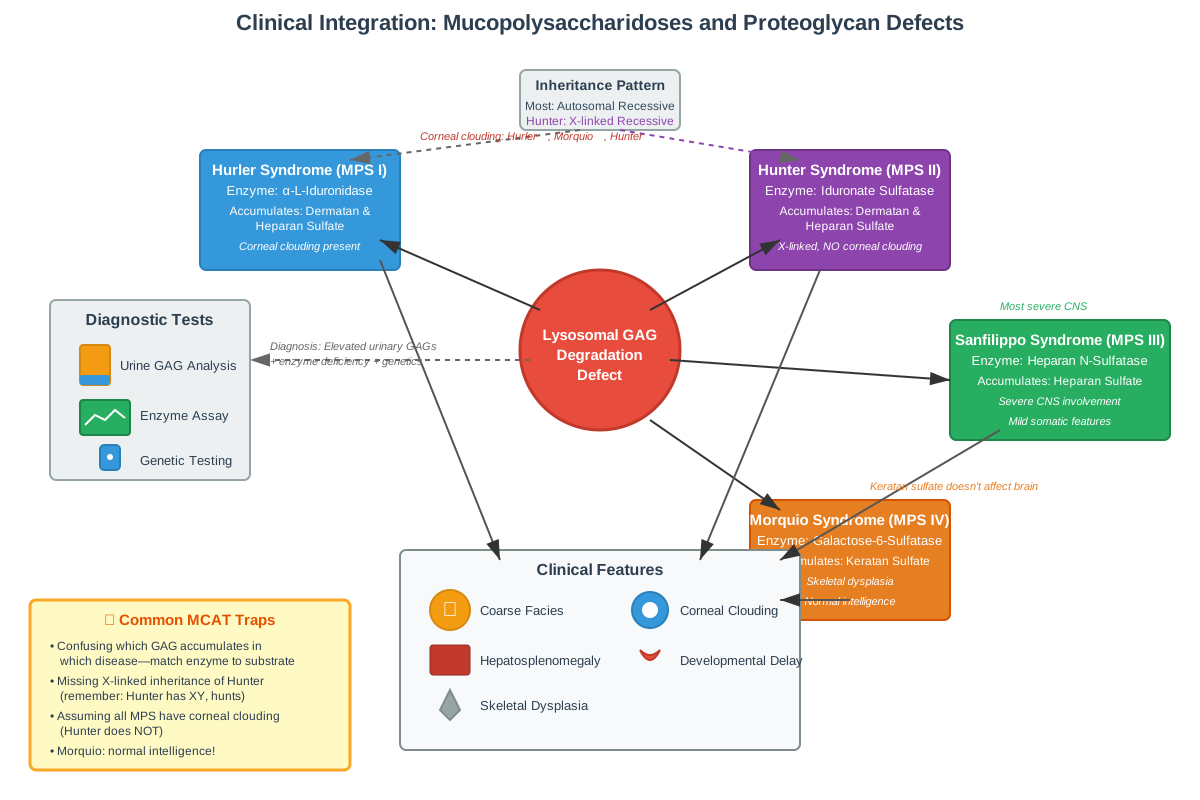
Deficiency of any lysosomal enzyme involved in GAG degradation causes accumulation of partially degraded GAGs, resulting in mucopolysaccharidoses. For example, Hurler syndrome results from α-L-iduronidase deficiency, preventing degradation of dermatan sulfate and heparan sulfate.
Charge Properties and Interactions
The high density of negative charges on proteoglycans (from sulfate and carboxyl groups) creates a polyanionic environment with several consequences:
- Cation binding: Proteoglycans bind Na⁺, K⁺, Ca²⁺, and other cations, influencing local ion concentrations
- Water attraction: The fixed negative charges create osmotic pressure, drawing water into the ECM
- Electrostatic interactions with proteins: Positively charged regions on proteins bind to GAG chains, as seen with growth factors binding heparan sulfate
- Repulsion between GAG chains: Negative charges cause GAG chains to extend away from each other, maximizing the volume occupied
These charge-based interactions are pH-dependent and can be disrupted by high salt concentrations, principles often tested in experimental passages on the MCAT.
Concept Relationships
The study of proteoglycans integrates multiple biochemistry concepts into a cohesive framework. Carbohydrate chemistry provides the foundation for understanding GAG structure, including glycosidic bond formation, sugar modifications (acetylation, sulfation), and the distinction between hexoses and uronic acids. The repeating disaccharide units of GAGs exemplify polysaccharide structure, contrasting with the branched structures of glycogen and the linear structure of cellulose.
Protein structure and post-translational modifications connect to proteoglycans through the core protein and the enzymatic addition of GAG chains. This glycosylation process parallels N-linked and O-linked glycosylation in glycoproteins but produces much longer carbohydrate chains. Understanding how serine residues serve as attachment sites requires knowledge of amino acid side chains and their reactivity.
Extracellular matrix biology provides the physiological context for proteoglycan function. Proteoglycans interact with collagen, elastin, fibronectin, and laminin to create the complex architecture of connective tissues. The relationship between proteoglycans and collagen is particularly important: decorin regulates collagen fibril diameter, while aggrecan fills spaces between collagen networks in cartilage.
Cell signaling connects to proteoglycans through their roles as co-receptors. Heparan sulfate proteoglycans bind fibroblast growth factors (FGFs), presenting them to FGF receptors and enhancing signal transduction. This illustrates how carbohydrate-protein interactions regulate cellular responses to external stimuli.
Lysosomal function and genetic disease link to proteoglycans through mucopolysaccharidoses. These disorders demonstrate the importance of proper GAG degradation and connect biochemistry to medical genetics and pathology. Understanding the sequential action of lysosomal enzymes in GAG breakdown reinforces concepts of enzyme specificity and metabolic pathways.
Relationship map: Monosaccharides → Disaccharide units → GAG chains → Proteoglycans → ECM structure → Tissue mechanical properties → Physiological function. Simultaneously: Proteoglycans → Cell-surface receptors → Growth factor signaling → Cellular responses. And: Proteoglycans → Lysosomal degradation → GAG fragments → Excretion (or accumulation in disease).
Quick check — test yourself on Proteoglycans so far.
Try Flashcards →High-Yield Facts
⭐ Proteoglycans consist of a core protein with one or more covalently attached glycosaminoglycan (GAG) chains, distinguishing them from glycoproteins which have shorter, branched oligosaccharides
⭐ GAGs are long, unbranched polysaccharides composed of repeating disaccharide units, typically containing an amino sugar and a uronic acid
⭐ The high negative charge density of proteoglycans (from sulfate and carboxyl groups) attracts water and cations, creating hydrated gels that resist compression
⭐ Hyaluronic acid is unique among GAGs because it is not sulfated and is not covalently attached to a protein core
⭐ Mucopolysaccharidoses result from lysosomal enzyme deficiencies that prevent GAG degradation, causing accumulation of undegraded GAGs
- Aggrecan is the major proteoglycan in cartilage, forming large aggregates with hyaluronic acid that provide compressive resistance
- Heparan sulfate proteoglycans on cell surfaces function as co-receptors for growth factors, enhancing signaling efficiency
- The tetrasaccharide linker (xylose-galactose-galactose-glucuronic acid) connects most GAG chains to serine residues on core proteins
- Chondroitin sulfate and dermatan sulfate differ in the stereochemistry of their uronic acid component (glucuronic vs. iduronic acid)
- Heparin, the most highly sulfated GAG, is found in mast cell granules and functions as an anticoagulant by binding antithrombin III
- Decorin regulates collagen fibril assembly and sequesters TGF-β, linking ECM structure to growth factor signaling
- Keratan sulfate is unique among GAGs because it contains galactose instead of a uronic acid in its disaccharide repeat
Common Misconceptions
Misconception: Proteoglycans and glycoproteins are the same thing because both contain protein and carbohydrate.
Correction: Proteoglycans have long, unbranched GAG chains (often >100 disaccharide units) attached to a core protein, while glycoproteins have shorter, branched oligosaccharide chains (typically <15 sugar residues). The carbohydrate content of proteoglycans is usually much higher (up to 95% by weight) compared to glycoproteins (typically <20%).
Misconception: All GAGs are covalently attached to proteins.
Correction: Hyaluronic acid (hyaluronan) is not covalently attached to a protein core and exists as a free polysaccharide in the ECM. However, it does interact non-covalently with proteoglycans like aggrecan to form large aggregates.
Misconception: The negative charge of proteoglycans comes primarily from the amino groups on amino sugars.
Correction: Amino groups on N-acetylglucosamine and N-acetylgalactosamine are acetylated and therefore neutral. The negative charges come from sulfate groups (added by sulfotransferases) and carboxyl groups on uronic acids (glucuronic acid and iduronic acid).
Misconception: Proteoglycans only provide structural support and have no role in cell signaling.
Correction: While proteoglycans do provide mechanical support, they also critically regulate cell signaling by binding growth factors, cytokines, and morphogens. Cell-surface proteoglycans like syndecans function as co-receptors that enhance signaling through receptor tyrosine kinases.
Misconception: Mucopolysaccharidoses result from defects in GAG synthesis.
Correction: Mucopolysaccharidoses result from defects in GAG degradation, not synthesis. Lysosomal enzyme deficiencies prevent the breakdown of GAGs, causing their accumulation in lysosomes and tissues. Synthesis proceeds normally, but degradation is impaired.
Misconception: All proteoglycans are located in the extracellular matrix.
Correction: While many proteoglycans are secreted into the ECM (like aggrecan and decorin), others are integral membrane proteins (syndecans) or attached to the cell surface via GPI anchors (glypicans). Some proteoglycans are even found intracellularly, such as serglycin in secretory granules.
Misconception: The compressive resistance of cartilage comes from collagen fibers.
Correction: Collagen fibers provide tensile strength to cartilage, resisting stretching forces. The compressive resistance comes from proteoglycans (primarily aggrecan), whose negative charges attract water, creating swelling pressure that resists compression. Both components are essential for cartilage function.
Worked Examples
Example 1: Interpreting Experimental Data on Cartilage Degradation
Scenario: Researchers treat cartilage samples with either hyaluronidase (which cleaves hyaluronic acid) or chondroitinase (which cleaves chondroitin sulfate chains). They measure the compressive stiffness and water content of the treated samples compared to controls.
Results:
- Hyaluronidase treatment: 30% decrease in compressive stiffness, 25% decrease in water content
- Chondroitinase treatment: 60% decrease in compressive stiffness, 50% decrease in water content
- Control: No change
Question: Explain these results in terms of proteoglycan structure and function.
Solution:
Step 1: Identify the key proteoglycan in cartilage and its structure. Aggrecan is the major proteoglycan, with approximately 100 chondroitin sulfate chains attached to its core protein. Multiple aggrecan molecules bind non-covalently to hyaluronic acid, forming large aggregates.
Step 2: Analyze the effect of hyaluronidase. This enzyme cleaves hyaluronic acid, disrupting the large proteoglycan aggregates. Individual aggrecan molecules remain intact with their chondroitin sulfate chains, but they are no longer organized into large aggregates. This causes moderate loss of water retention and compressive stiffness because the overall organization is disrupted, but the individual proteoglycans still retain some function.
Step 3: Analyze the effect of chondroitinase. This enzyme removes chondroitin sulfate chains from aggrecan, eliminating the GAG chains responsible for water attraction. Without these highly negatively charged chains, the tissue loses most of its ability to attract and retain water, resulting in greater loss of compressive stiffness (60% vs. 30%).
Step 4: Connect to mechanism. The negative charges on chondroitin sulfate chains create fixed charge density that attracts cations and water through osmotic pressure (Donnan effect). Removing these chains eliminates this mechanism, while disrupting aggregates only reduces its efficiency.
Key takeaway: This example demonstrates that the GAG chains themselves (not just their organization) are critical for proteoglycan function, and that experimental manipulation can distinguish between organizational and chemical contributions to tissue properties.
Example 2: Clinical Vignette on Mucopolysaccharidosis
Scenario: A 3-year-old boy presents with coarse facial features, hepatosplenomegaly, joint stiffness, and developmental delay. Urine analysis shows elevated levels of dermatan sulfate and heparan sulfate. Enzyme assay reveals deficiency of α-L-iduronidase activity.
Question: (A) What is the diagnosis? (B) Explain the biochemical basis for the clinical findings. (C) Why are both dermatan sulfate and heparan sulfate elevated?
Solution:
(A) Diagnosis: Hurler syndrome (Mucopolysaccharidosis Type I), an autosomal recessive lysosomal storage disease.
(B) Biochemical basis:
Step 1: Identify the enzyme defect. α-L-iduronidase cleaves iduronic acid residues from the non-reducing ends of GAG chains during lysosomal degradation. Without this enzyme, GAG degradation cannot proceed past iduronic acid-containing disaccharides.
Step 2: Explain accumulation. Proteoglycans are continuously synthesized and degraded. When degradation is blocked, partially degraded GAG fragments accumulate in lysosomes. These swollen lysosomes disrupt cellular function, particularly in tissues with high proteoglycan turnover.
Step 3: Connect to clinical features:
- Coarse facial features: GAG accumulation in facial tissues and bone
- Hepatosplenomegaly: Lysosomal accumulation in liver and spleen cells
- Joint stiffness: GAG accumulation in joint tissues and cartilage
- Developmental delay: Neuronal dysfunction from GAG accumulation in the CNS
Step 4: Explain urinary findings. Accumulated GAG fragments are eventually excreted in urine, where they can be detected and quantified. Elevated urinary GAGs are a diagnostic hallmark of mucopolysaccharidoses.
(C) Why both GAGs are elevated: α-L-iduronidase is required for degradation of both dermatan sulfate and heparan sulfate because both contain iduronic acid residues. Dermatan sulfate has the structure IdoUA-GalNAc, while heparan sulfate contains both GlcUA and IdoUA. The enzyme's specificity for iduronic acid means its deficiency affects multiple GAG types. In contrast, chondroitin sulfate (which contains only glucuronic acid, not iduronic acid) would not accumulate in this disorder.
Key takeaway: This example illustrates how enzyme specificity determines which substrates accumulate in lysosomal storage diseases, and how biochemical defects manifest as multi-system clinical phenotypes. Understanding the structure of different GAGs allows prediction of which will be affected by specific enzyme deficiencies.
Exam Strategy
Approaching MCAT Questions on Proteoglycans
When encountering proteoglycan questions, first determine whether the question focuses on structure, function, or pathology. Structure questions often require distinguishing proteoglycans from glycoproteins or identifying specific GAG types. Function questions typically involve predicting consequences of altered proteoglycan properties (charge, hydration, protein binding). Pathology questions usually center on mucopolysaccharidoses or tissue degradation.
Trigger words and phrases to watch for:
- "Glycosaminoglycan," "GAG," "repeating disaccharide" → Think about proteoglycan structure
- "Compressive resistance," "hydration," "swelling pressure" → Consider charge-based water attraction
- "Extracellular matrix," "cartilage," "basement membrane" → Identify location-specific proteoglycans
- "Lysosomal storage disease," "accumulated GAGs," "urinary excretion" → Mucopolysaccharidoses
- "Growth factor binding," "co-receptor," "cell signaling" → Cell-surface proteoglycans
- "Negative charge," "sulfation," "polyanionic" → Charge-dependent functions
Process-of-Elimination Tips
When distinguishing between answer choices:
- Proteoglycan vs. glycoprotein: If the question mentions long, unbranched carbohydrate chains or high carbohydrate content (>50%), choose proteoglycan. Short, branched chains indicate glycoprotein.
- GAG identification: Use the presence/absence of sulfation and uronic acid type:
- No sulfation → Hyaluronic acid
- Galactose instead of uronic acid → Keratan sulfate
- Iduronic acid → Dermatan sulfate, heparan sulfate, or heparin
- Very high sulfation → Heparin
- Function questions: Match the property to the function:
- Compression resistance → Aggrecan in cartilage
- Anticoagulation → Heparin
- Growth factor binding → Heparan sulfate proteoglycans
- Collagen organization → Decorin
- Disease questions: Match the accumulated GAG to the deficient enzyme:
- Dermatan sulfate + heparan sulfate → Enzyme that cleaves iduronic acid
- Chondroitin sulfate + dermatan sulfate → Enzyme specific to these GAGs
- Multiple GAGs → Enzyme acting early in degradation pathway
Time Allocation Advice
For discrete questions on proteoglycans, allocate 60-90 seconds. These typically test straightforward knowledge of structure, function, or disease associations. For passage-based questions, spend 2-3 minutes analyzing the experimental setup or clinical scenario, identifying which proteoglycan concepts are being tested, then 60-90 seconds per question. If a passage presents data on ECM composition or enzyme activity, create a quick mental map of which proteoglycans and GAGs are involved before attempting questions.
Exam Tip: If a question asks about the consequences of removing negative charges from proteoglycans, immediately think about loss of water attraction, decreased compressive resistance, and reduced protein binding. This principle applies across multiple question formats.
Memory Techniques
Mnemonics for GAG Types
"Happy Children Don't Have Killer Headaches" for the six major GAGs:
- Hyaluronic acid
- Chondroitin sulfate
- Dermatan sulfate
- Heparan sulfate
- Keratan sulfate
- Heparin
Mnemonic for Hyaluronic Acid's Unique Properties
"Hyaluronic acid is SNAP":
- Sulfate-free (not sulfated)
- Not attached to protein
- Aggregates with aggrecan
- Present in synovial fluid
Visualization Strategy for Proteoglycan Structure
Visualize a proteoglycan as a bottle brush: the core protein is the central wire, and the GAG chains are the bristles extending outward. The bristles (GAG chains) are negatively charged and repel each other, maximizing the volume occupied. Water molecules cluster around the bristles, attracted by the negative charges. This mental image helps remember that:
- GAG chains extend away from the core protein
- Negative charges prevent GAG chains from collapsing
- The structure traps water in the spaces between chains
- The overall molecule occupies a large hydrated volume
Acronym for Mucopolysaccharidosis Features
"HUGE JAMS" for clinical features of mucopolysaccharidoses:
- Hepatosplenomegaly
- Urinary GAG excretion
- Growth retardation
- Eye abnormalities (corneal clouding)
- Joint stiffness
- Airway obstruction
- Mental retardation (in some types)
- Skeletal dysplasia
Memory Aid for Aggrecan Function
"Aggrecan AGGREgates and AGGRAvates compression": This reminds you that aggrecan forms large aggregates with hyaluronic acid and resists compression in cartilage. The double meaning of "aggravates" (both "worsens" and "resists") helps cement the functional role.
Summary
Proteoglycans are complex macromolecules consisting of a core protein with covalently attached glycosaminoglycan chains—long, unbranched polysaccharides composed of repeating disaccharide units. The high density of negative charges from sulfate and carboxyl groups enables proteoglycans to attract water and cations, creating hydrated gels that provide compressive resistance in tissues like cartilage. Major proteoglycans include aggrecan (cartilage), decorin (collagen regulation), perlecan (basement membranes), and cell-surface proteoglycans like syndecans (growth factor co-receptors). GAG types differ in their disaccharide composition, sulfation pattern, and tissue distribution, with hyaluronic acid being unique as an unsulfated GAG not attached to protein. Proteoglycans function in mechanical support, molecular sieving, protein sequestration, and cell signaling. Defects in lysosomal GAG degradation cause mucopolysaccharidoses, characterized by accumulation of undegraded GAGs and multi-system clinical manifestations. For the MCAT, understanding proteoglycan structure-function relationships, distinguishing them from glycoproteins, and connecting them to disease processes is essential for success on biochemistry questions involving carbohydrates, extracellular matrix, and genetic disorders.
Key Takeaways
- Proteoglycans consist of a core protein with one or more GAG chains; they differ from glycoproteins in having longer, unbranched carbohydrate chains with higher overall carbohydrate content
- The negative charges on GAG chains (from sulfate and carboxyl groups) attract water and cations, creating swelling pressure that provides compressive resistance
- Hyaluronic acid is unique among GAGs because it lacks sulfation and is not covalently attached to a protein core
- Aggrecan forms large aggregates with hyaluronic acid in cartilage, providing the tissue's characteristic compressive resilience
- Cell-surface proteoglycans (syndecans, glypicans) function as co-receptors for growth factors, enhancing signaling efficiency
- Mucopolysaccharidoses result from lysosomal enzyme deficiencies that prevent GAG degradation, causing accumulation of undegraded GAGs in tissues and elevated urinary GAG excretion
- Different GAG types can be distinguished by their sulfation pattern, uronic acid type (glucuronic vs. iduronic), and disaccharide composition
Related Topics
Glycoproteins: Understanding the structural and functional differences between glycoproteins and proteoglycans is essential. Glycoproteins have shorter, branched oligosaccharide chains and different biological roles, including cell recognition and protein stability. Mastering proteoglycans provides a foundation for distinguishing these related but distinct classes of glycoconjugates.
Collagen structure and function: Proteoglycans interact extensively with collagen in the extracellular matrix. Decorin regulates collagen fibril assembly, while aggrecan fills spaces between collagen networks. Understanding both components is necessary for comprehending connective tissue organization.
Lysosomal storage diseases: Mucopolysaccharidoses represent one category of lysosomal storage diseases. Other categories include sphingolipidoses and glycogen storage diseases. Mastering proteoglycan degradation facilitates understanding the broader principles of lysosomal function and genetic metabolic disorders.
Growth factor signaling pathways: Cell-surface proteoglycans function as co-receptors for FGFs, TGF-β, and other growth factors. Understanding proteoglycans enhances comprehension of how cells integrate multiple signals to regulate proliferation, differentiation, and survival.
Extracellular matrix remodeling: Matrix metalloproteinases (MMPs) and other enzymes degrade proteoglycans during tissue remodeling, wound healing, and cancer metastasis. This topic connects proteoglycan biochemistry to cell biology and pathology.
Practice CTA
Now that you have mastered the core concepts of proteoglycans, it's time to reinforce your understanding through active practice. Attempt the practice questions and flashcards associated with this topic to test your ability to apply these concepts to MCAT-style scenarios. Focus particularly on distinguishing proteoglycans from glycoproteins, predicting functional consequences of structural changes, and analyzing clinical vignettes involving mucopolysaccharidoses. Remember that the MCAT rewards deep understanding and application rather than simple memorization—use these practice materials to develop the analytical skills that will serve you on test day. You've built a strong foundation; now strengthen it through deliberate practice!
Sign up free to keep reading
Create a free AnvayaPrep account to finish this MCAT guide on Proteoglycans — plus flashcards and practice questions.