Overview
Sucrose is a disaccharide carbohydrate composed of one glucose molecule and one fructose molecule joined by an α(1→2) glycosidic bond. As table sugar, sucrose represents one of the most abundant and biologically significant carbohydrates in human nutrition and metabolism. For the MCAT, understanding sucrose extends beyond simple memorization of its structure—students must grasp its unique chemical properties, enzymatic hydrolysis, metabolic fate, and how it differs from other disaccharides like lactose and maltose.
The Biochemistry of sucrose is particularly high-yield for the MCAT because it integrates multiple testable concepts: glycosidic bond formation and cleavage, reducing versus non-reducing sugar classification, enzyme specificity (sucrase/invertase), and the metabolic pathways that process its constituent monosaccharides. Questions involving sucrose frequently appear in passage-based formats that require students to analyze experimental data about carbohydrate digestion, interpret enzyme kinetics studies, or predict the products of hydrolysis reactions. Understanding sucrose also provides a foundation for comprehending more complex carbohydrates and polysaccharides.
Within the broader context of Biochemistry MCAT preparation, sucrose serves as an excellent model for understanding disaccharide chemistry and the principles governing carbohydrate structure-function relationships. Mastery of sucrose biochemistry enables students to tackle questions about carbohydrate metabolism, digestive physiology, and the chemical properties that distinguish different classes of sugars—all topics that appear regularly across multiple MCAT sections, including Biological and Biochemical Foundations of Living Systems.
Learning Objectives
- [ ] Define Sucrose using accurate Biochemistry terminology
- [ ] Explain why Sucrose matters for the MCAT
- [ ] Apply Sucrose to exam-style questions
- [ ] Identify common mistakes related to Sucrose
- [ ] Connect Sucrose to related Biochemistry concepts
- [ ] Distinguish between reducing and non-reducing sugars using sucrose as the primary example
- [ ] Predict the products of sucrose hydrolysis under acidic and enzymatic conditions
- [ ] Explain the metabolic fate of glucose and fructose derived from sucrose digestion
Prerequisites
- Monosaccharide structure and nomenclature: Understanding glucose and fructose structures is essential because sucrose is composed of these two monosaccharides
- Glycosidic bond formation: Knowledge of condensation reactions between hydroxyl groups enables comprehension of how sucrose forms and breaks down
- Basic enzyme function: Familiarity with enzyme-substrate specificity is necessary to understand sucrase activity
- Carbohydrate stereochemistry: Recognition of α and β anomeric configurations helps distinguish different glycosidic linkages
- Reducing sugar chemistry: Understanding aldehyde/ketone reactivity provides context for why sucrose behaves differently from other disaccharides
Why This Topic Matters
Clinical and Real-World Significance
Sucrose metabolism plays a central role in human nutrition and disease. Excessive sucrose consumption contributes to metabolic syndrome, type 2 diabetes, and dental caries. Rare genetic disorders like congenital sucrase-isomaltase deficiency cause gastrointestinal symptoms when patients consume sucrose. Understanding sucrose biochemistry also informs dietary recommendations and the development of artificial sweeteners designed to provide sweetness without the metabolic consequences of sucrose.
MCAT Exam Statistics
Sucrose appears in approximately 3-5% of MCAT Biochemistry questions, typically integrated into passages about carbohydrate digestion, enzyme kinetics, or metabolic pathways. Questions may present experimental data requiring students to identify sucrose based on its non-reducing properties, predict hydrolysis products, or analyze mutations affecting sucrase activity. The topic frequently appears in discrete questions testing fundamental carbohydrate knowledge and in passage-based questions requiring application of biochemical principles.
Common Exam Contexts
MCAT passages featuring sucrose often involve: (1) digestive enzyme studies comparing sucrase activity across different pH values or in the presence of inhibitors; (2) nutritional biochemistry scenarios examining the metabolic fate of dietary sugars; (3) experimental designs using Benedict's or Fehling's test to distinguish reducing from non-reducing sugars; (4) genetic studies of carbohydrate malabsorption disorders; and (5) comparative biochemistry questions contrasting sucrose with lactose, maltose, or other disaccharides.
Core Concepts
Molecular Structure and Nomenclature
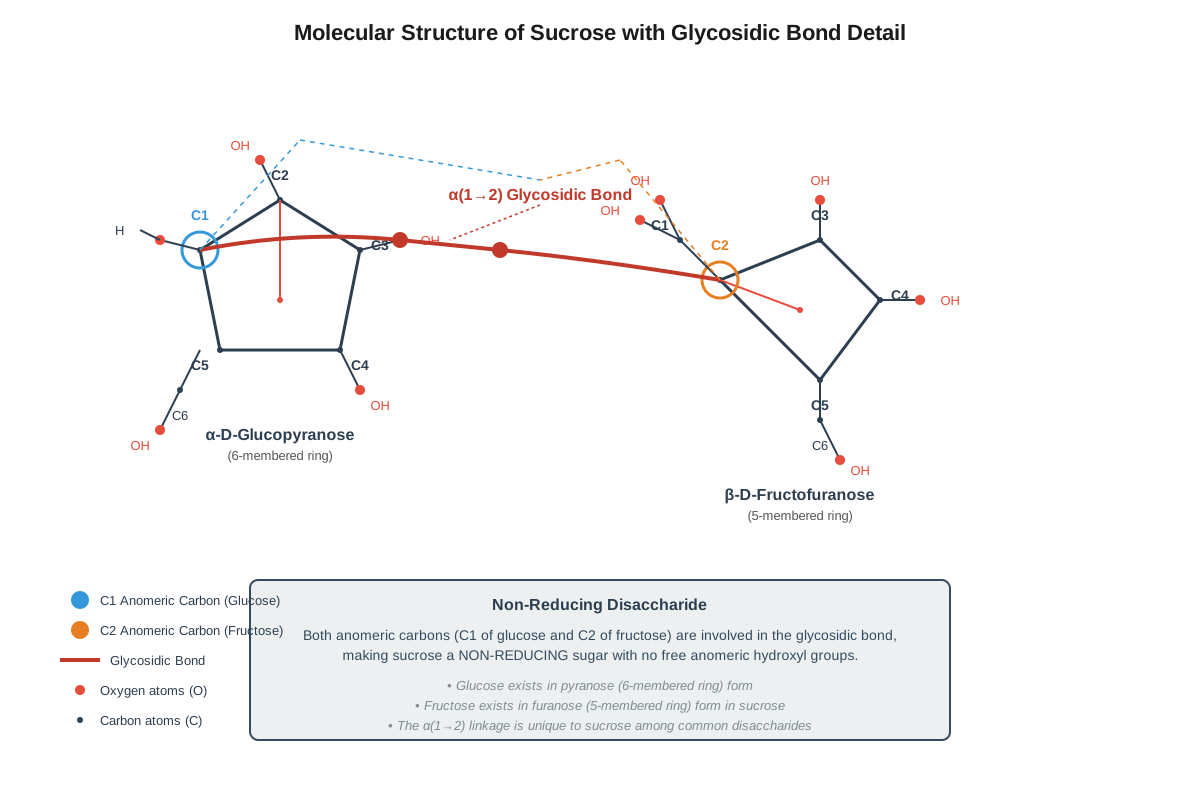
Sucrose (C₁₂H₂₂O₁₁) is a disaccharide formed by the condensation of α-D-glucose and β-D-fructose through an α(1→2) glycosidic bond. This specific linkage connects the anomeric carbon (C1) of glucose to the anomeric carbon (C2) of fructose, making sucrose unique among common disaccharides. The systematic name for sucrose is α-D-glucopyranosyl-(1→2)-β-D-fructofuranoside, which precisely describes the configuration and linkage.
The glucose component exists in its six-membered pyranose ring form, while fructose adopts its five-membered furanose ring configuration within the sucrose molecule. This structural arrangement has profound implications for sucrose's chemical properties. Because both anomeric carbons participate in the glycosidic bond, neither monosaccharide unit can exist in its open-chain form, which contains a free aldehyde (glucose) or ketone (fructose) group.
Non-Reducing Sugar Classification
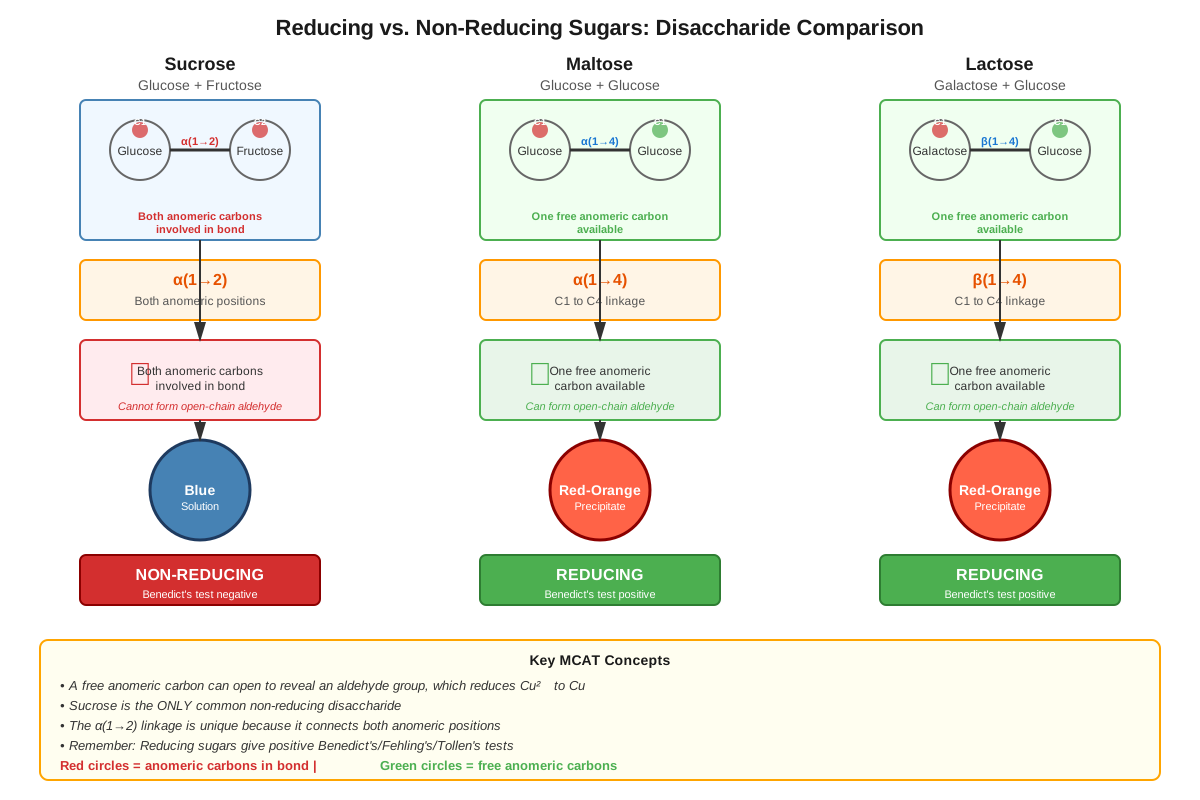
A critical concept for the MCAT is that sucrose is a non-reducing sugar. Reducing sugars contain a free or potentially free carbonyl group (aldehyde or ketone) that can be oxidized, allowing them to reduce copper(II) ions in Benedict's or Fehling's reagent, producing a colored precipitate. Because sucrose's glycosidic bond involves both anomeric carbons, no free carbonyl group exists, and sucrose cannot undergo ring-opening to expose one.
This property distinguishes sucrose from other common disaccharides:
| Disaccharide | Glycosidic Bond | Reducing Sugar? | Free Anomeric Carbon? |
|---|---|---|---|
| Sucrose | α(1→2) | No | Neither |
| Lactose | β(1→4) | Yes | Galactose C1 free |
| Maltose | α(1→4) | Yes | Glucose C1 free |
| Cellobiose | β(1→4) | Yes | Glucose C1 free |
The non-reducing nature of sucrose makes it more chemically stable than reducing sugars and serves as a diagnostic feature in laboratory tests and MCAT questions.
Enzymatic Hydrolysis
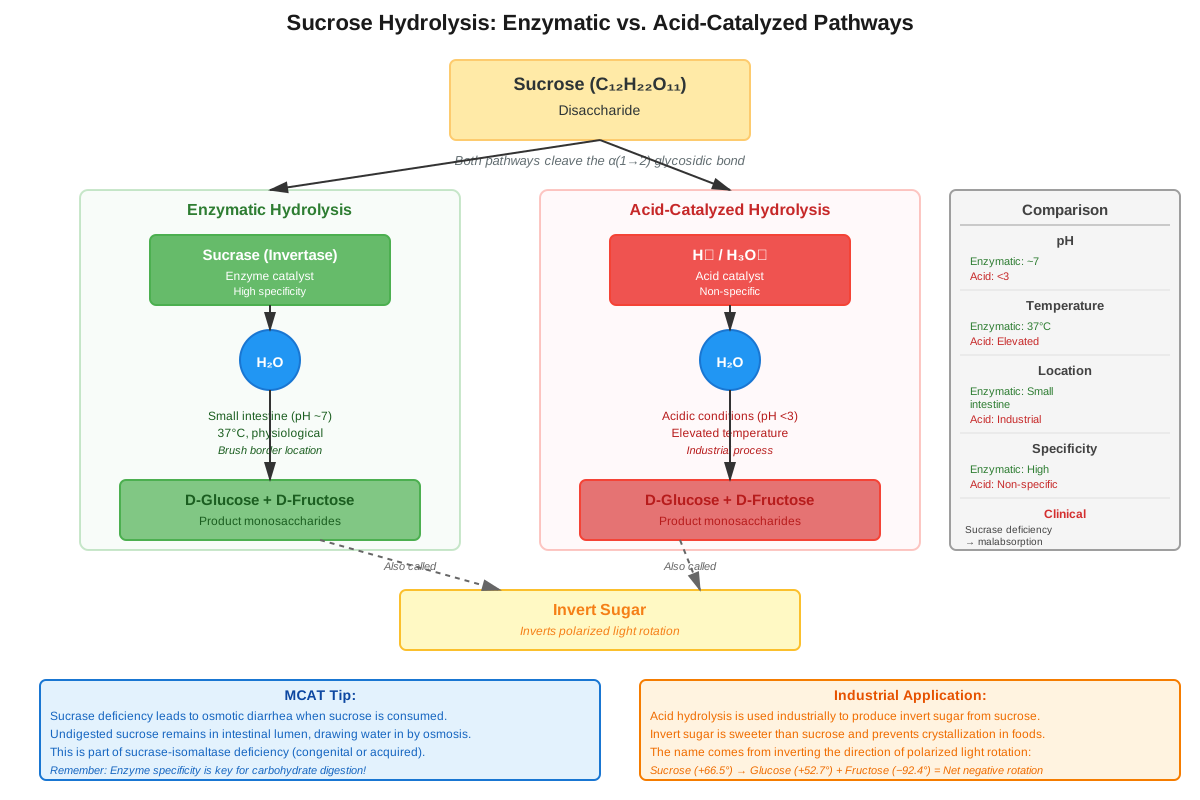
Sucrase (also called invertase) is the enzyme responsible for hydrolyzing sucrose into its constituent monosaccharides. This α-glucosidase enzyme is produced by intestinal epithelial cells and is located on the brush border membrane of the small intestine. The hydrolysis reaction can be represented as:
Sucrose + H₂O → Glucose + Fructose
(C₁₂H₂₂O₁₁)     (C₆H₁₂O₆)  (C₆H₁₂O₆)
The enzyme exhibits high specificity for the α(1→2) glycosidic bond and functions optimally at the slightly acidic to neutral pH found in the small intestine (pH 5.5-7.0). Sucrase activity can be measured experimentally by quantifying the production of glucose and fructose or by monitoring the change in optical rotation, as the mixture of products ("invert sugar") rotates plane-polarized light in the opposite direction compared to sucrose.
Acid-Catalyzed Hydrolysis
Sucrose can also undergo acid hydrolysis without enzymatic catalysis. When heated in the presence of dilute acid (such as HCl), the glycosidic bond breaks, yielding glucose and fructose. This process, called inversion, occurs because the optical rotation changes from dextrorotatory (+66.5°) for sucrose to levorotatory (-20°) for the equimolar mixture of glucose (+52.7°) and fructose (-92°). The resulting mixture is called invert sugar and is sweeter than sucrose because free fructose is the sweetest naturally occurring sugar.
Metabolic Fate
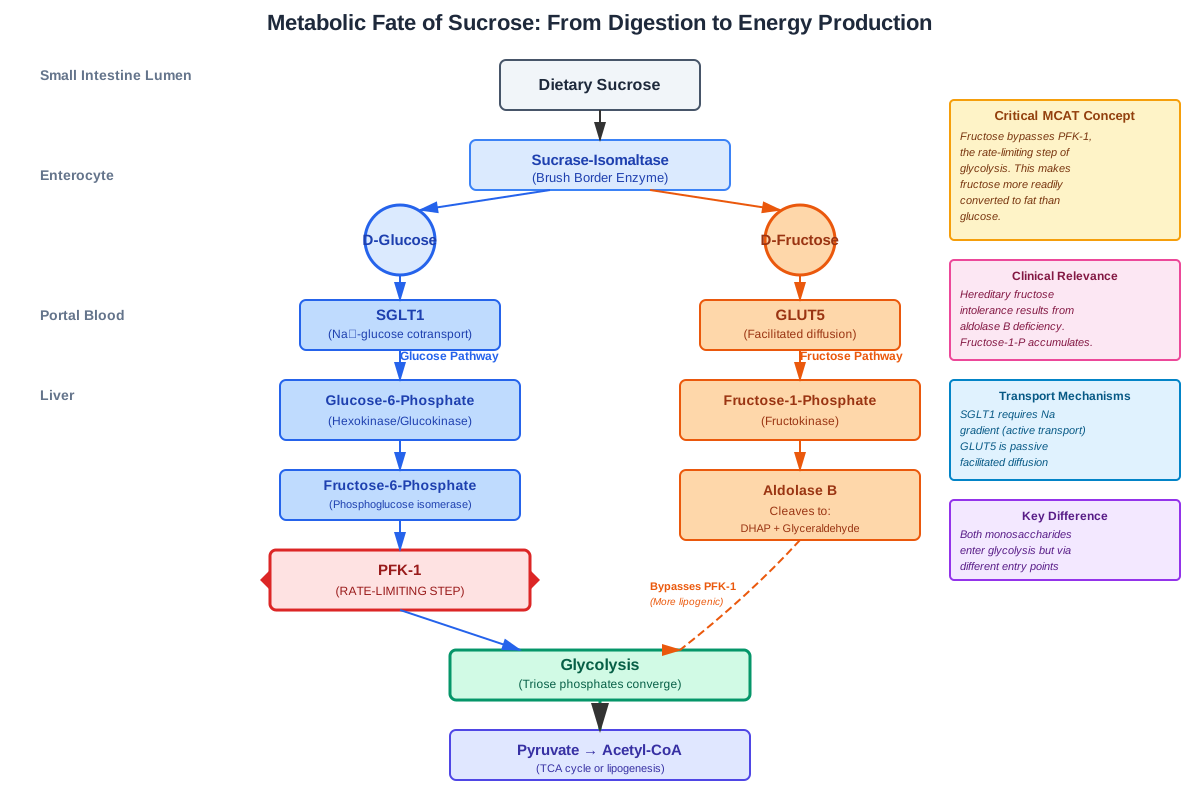
After sucrose hydrolysis in the small intestine, glucose and fructose follow distinct metabolic pathways:
Glucose metabolism:
- Absorbed via SGLT1 (sodium-glucose cotransporter) in intestinal epithelium
- Enters bloodstream and is distributed to tissues
- Undergoes glycolysis in the cytoplasm
- Can be stored as glycogen in liver and muscle
- Regulated by insulin and glucagon
Fructose metabolism:
- Absorbed via GLUT5 (facilitated diffusion) in intestinal epithelium
- Primarily metabolized in the liver
- Enters glycolysis via fructokinase pathway (bypasses phosphofructokinase regulation)
- Converted to fructose-1-phosphate, then to glyceraldehyde and dihydroxyacetone phosphate
- Not directly regulated by insulin
The differential metabolism of fructose has important implications for metabolic health, as fructose bypasses key regulatory steps in glycolysis and can contribute to increased lipogenesis and metabolic dysfunction when consumed in excess.
Physical and Chemical Properties
Sucrose exhibits several distinctive properties relevant to MCAT questions:
- Solubility: Highly soluble in water due to multiple hydroxyl groups capable of hydrogen bonding
- Optical activity: Dextrorotatory (+66.5° specific rotation)
- Melting point: 186°C (decomposes before melting)
- Sweetness: Serves as the reference standard (sweetness = 1.0) for comparing other sweeteners
- Stability: More stable than reducing sugars; does not undergo Maillard browning reactions
- Crystallization: Forms stable crystals, making it ideal for food preservation
Concept Relationships
The biochemistry of sucrose integrates multiple interconnected concepts. Monosaccharide structure (glucose and fructose) → forms the foundation for → disaccharide formation through condensation reactions → which creates → glycosidic bonds with specific stereochemistry → determining → reducing versus non-reducing sugar classification → which affects → chemical reactivity and detection methods.
Sucrose connects to broader carbohydrate metabolism through its hydrolysis products. Sucrase enzyme activity → produces → glucose and fructose → which enter → distinct metabolic pathways (glycolysis and fructose metabolism) → ultimately contributing to → cellular energy production and biosynthetic processes.
The topic also relates to enzyme biochemistry: enzyme specificity (sucrase for α(1→2) bonds) → exemplifies → lock-and-key or induced-fit models → and demonstrates → how enzyme structure determines function → which connects to → genetic disorders (sucrase-isomaltase deficiency) → illustrating → clinical consequences of enzyme defects.
Understanding sucrose's non-reducing nature requires knowledge of carbonyl chemistry → which explains → oxidation-reduction reactions → forming the basis for → Benedict's and Fehling's tests → which serve as → diagnostic tools in both laboratory and exam settings.
High-Yield Facts
⭐ Sucrose is a non-reducing sugar because both anomeric carbons (C1 of glucose and C2 of fructose) participate in the α(1→2) glycosidic bond, preventing ring-opening and exposure of free carbonyl groups.
⭐ Sucrase (invertase) hydrolyzes sucrose into glucose and fructose in the small intestine; this enzyme is located on the brush border membrane of intestinal epithelial cells.
⭐ The hydrolysis of sucrose is called "inversion" because the optical rotation changes from positive (dextrorotatory) to negative (levorotatory), producing "invert sugar."
⭐ Sucrose will NOT give a positive Benedict's or Fehling's test, unlike maltose and lactose, which are reducing sugars.
⭐ Fructose from sucrose hydrolysis bypasses phosphofructokinase regulation in glycolysis, entering the pathway downstream and potentially contributing to increased lipogenesis.
- Sucrose is composed of α-D-glucose in pyranose form and β-D-fructose in furanose form.
- The systematic name for sucrose is α-D-glucopyranosyl-(1→2)-β-D-fructofuranoside.
- Sucrose is the most abundant disaccharide in plants and serves as the primary form of carbohydrate transport in plant vascular systems.
- Congenital sucrase-isomaltase deficiency is an autosomal recessive disorder causing sucrose malabsorption and gastrointestinal symptoms.
- Glucose from sucrose is absorbed via active transport (SGLT1), while fructose is absorbed via facilitated diffusion (GLUT5).
- Sucrose does not participate in Maillard browning reactions because it lacks a free carbonyl group, making it more stable during cooking than reducing sugars.
- The sweetness of sucrose (relative sweetness = 1.0) is less than that of fructose (1.2-1.7) but greater than glucose (0.7).
Quick check — test yourself on Sucrose so far.
Try Flashcards →Common Misconceptions
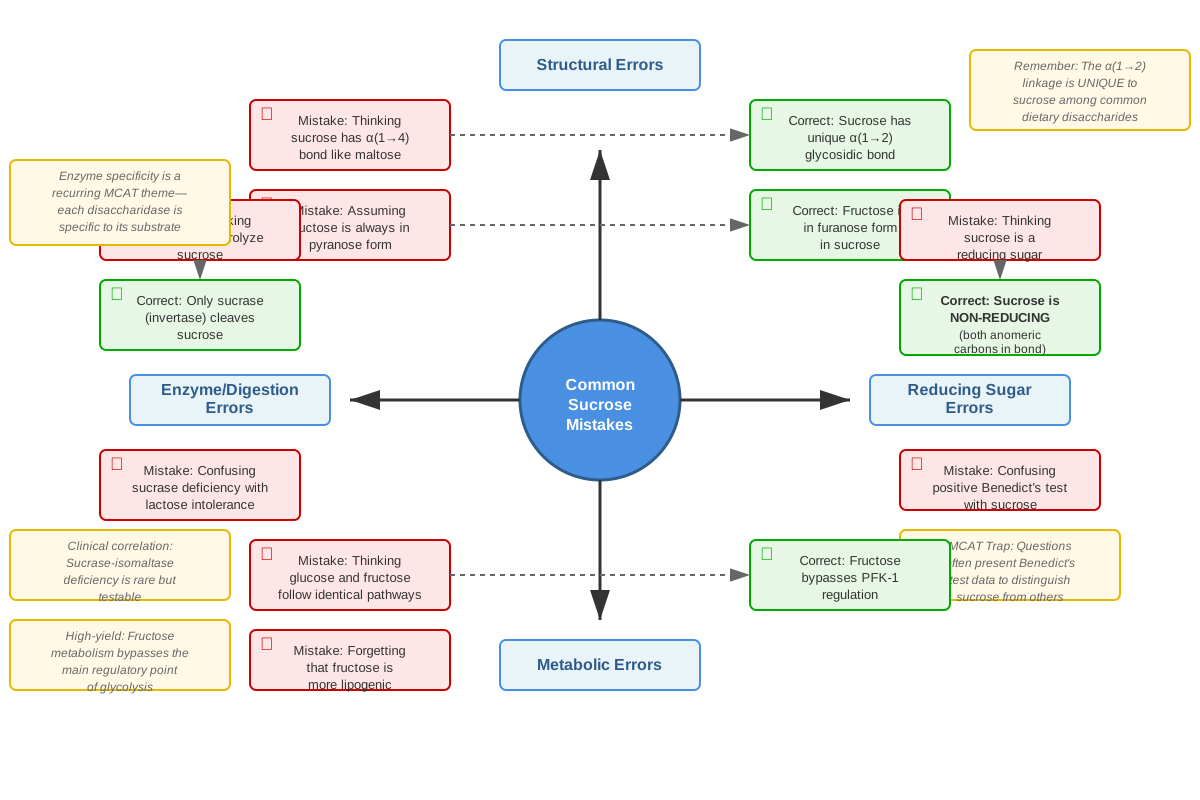
Misconception: Sucrose is a reducing sugar because it contains glucose, which is a reducing sugar.
Correction: Although glucose alone is a reducing sugar, when incorporated into sucrose through an α(1→2) glycosidic bond involving its anomeric carbon, the glucose unit can no longer open to expose its aldehyde group. Both anomeric carbons are locked in the glycosidic bond, making sucrose non-reducing.
Misconception: All disaccharides have the same type of glycosidic bond.
Correction: Disaccharides differ in their glycosidic linkages. Sucrose has an α(1→2) bond, maltose has an α(1→4) bond, lactose has a β(1→4) bond, and trehalose has an α(1→1) bond. These different linkages confer distinct properties and require different enzymes for hydrolysis.
Misconception: Sucrase and sucrose synthase perform the same function.
Correction: Sucrase (invertase) is a hydrolytic enzyme that breaks down sucrose into glucose and fructose. Sucrose synthase, found in plants, catalyzes the reversible synthesis of sucrose from UDP-glucose and fructose. These enzymes have opposite functions and operate in different biological contexts.
Misconception: Fructose and glucose from sucrose digestion are metabolized identically.
Correction: Glucose and fructose follow distinct metabolic pathways. Glucose enters glycolysis at the glucose-6-phosphate step and is tightly regulated by insulin. Fructose is primarily metabolized in the liver, enters glycolysis via fructose-1-phosphate (bypassing phosphofructokinase regulation), and is not directly insulin-dependent, leading to different metabolic consequences.
Misconception: The "invert sugar" produced from sucrose hydrolysis is less sweet than sucrose.
Correction: Invert sugar (equimolar mixture of glucose and fructose) is actually sweeter than sucrose because free fructose has a higher relative sweetness (1.2-1.7) than sucrose (1.0). This is why invert sugar is used in the food industry to enhance sweetness.
Misconception: Sucrose can be detected using Benedict's reagent just like other sugars.
Correction: Benedict's reagent specifically detects reducing sugars by oxidizing free or potentially free carbonyl groups. Since sucrose is a non-reducing sugar with no available carbonyl group, it will NOT produce a positive Benedict's test (no color change from blue to red/orange precipitate). This is a key distinguishing feature tested on the MCAT.
Worked Examples
Example 1: Identifying Reducing Sugars in a Laboratory Experiment
Question: A biochemistry student tests four different carbohydrate solutions with Benedict's reagent. Solution A contains glucose, Solution B contains sucrose, Solution C contains maltose, and Solution D contains fructose. After heating, which solutions will produce a positive test (red/orange precipitate)?
Step 1 - Recall the principle: Benedict's reagent detects reducing sugars by oxidizing free or potentially free carbonyl groups (aldehydes or ketones). The copper(II) ions in the reagent are reduced to copper(I) oxide, forming a colored precipitate.
Step 2 - Analyze each sugar:
- Glucose: Monosaccharide with a free anomeric carbon that can open to expose an aldehyde group → REDUCING SUGAR
- Sucrose: Disaccharide with α(1→2) glycosidic bond involving both anomeric carbons → NON-REDUCING SUGAR
- Maltose: Disaccharide with α(1→4) glycosidic bond; one anomeric carbon remains free → REDUCING SUGAR
- Fructose: Monosaccharide with a free anomeric carbon that can open to expose a ketone group → REDUCING SUGAR
Step 3 - Predict results:
- Solution A (glucose): Positive test ✓
- Solution B (sucrose): Negative test (remains blue) ✗
- Solution C (maltose): Positive test ✓
- Solution D (fructose): Positive test ✓
Answer: Solutions A, C, and D will produce positive Benedict's tests, while Solution B (sucrose) will remain blue, indicating no reducing sugar present.
Connection to learning objectives: This example demonstrates how to apply knowledge of sucrose's non-reducing nature to predict experimental outcomes, a common MCAT question format.
Example 2: Enzyme Kinetics and Sucrase Activity
Question: An experiment measures sucrase activity at different pH values. The enzyme shows maximum activity at pH 6.0, with activity decreasing at pH 3.0 and pH 9.0. After incubation with sucrose at optimal pH, the products are analyzed. What products are formed, and why does enzyme activity decrease at extreme pH values?
Step 1 - Identify the reaction: Sucrase catalyzes the hydrolysis of sucrose:
Sucrose + H₂O --sucrase--> Glucose + FructoseStep 2 - Determine products: The products are one molecule of α-D-glucose and one molecule of β-D-fructose. Both are monosaccharides that can be detected using methods like glucose oxidase assay (specific for glucose) or chromatography.
Step 3 - Explain pH effects:
- At pH 6.0 (optimal): The enzyme's active site amino acids are properly protonated/deprotonated for optimal catalysis. Critical residues (likely including acidic amino acids like glutamate or aspartate) are in the correct ionization state to facilitate glycosidic bond cleavage.
- At pH 3.0 (acidic): Excessive protonation of amino acid side chains disrupts the enzyme's tertiary structure and active site geometry. However, note that acid-catalyzed hydrolysis of sucrose can still occur non-enzymatically under these conditions.
- At pH 9.0 (basic): Deprotonation of critical amino acids alters the active site's charge distribution and hydrogen bonding network, reducing substrate binding affinity and catalytic efficiency.
Step 4 - Additional considerations: The decrease in enzyme activity at extreme pH values reflects changes in enzyme structure (potential denaturation) and the ionization state of catalytic residues. This is distinct from the enzyme's substrate specificity, which remains for the α(1→2) glycosidic bond regardless of pH (until complete denaturation occurs).
Answer: The products are glucose and fructose. Enzyme activity decreases at pH 3.0 and 9.0 because extreme pH values alter the ionization states of amino acid residues in the active site and can disrupt the enzyme's three-dimensional structure, reducing catalytic efficiency.
Connection to learning objectives: This example integrates sucrose biochemistry with enzyme kinetics, demonstrating how to analyze experimental data and connect molecular structure to function—key skills for MCAT passage-based questions.
Exam Strategy
Approaching MCAT Questions on Sucrose
When encountering sucrose-related questions, follow this systematic approach:
- Identify the question type: Is it asking about structure, properties, metabolism, or enzyme activity?
- Recall the key distinguishing feature: Sucrose is a NON-REDUCING sugar with an α(1→2) glycosidic bond
- Consider the context: Is this a digestion question, a laboratory test question, or a metabolic pathway question?
- Draw the structure if needed: Quickly sketch glucose-fructose linkage to visualize the anomeric carbons
Trigger Words and Phrases
Watch for these high-yield terms that signal sucrose-related content:
- "Non-reducing sugar" → Immediately think sucrose (and trehalose)
- "Invert sugar" or "inversion" → Refers to sucrose hydrolysis and optical rotation change
- "Table sugar" or "dietary disaccharide" → Likely referring to sucrose
- "Benedict's test negative" → Indicates non-reducing sugar, possibly sucrose
- "Brush border enzyme" → May refer to sucrase among other disaccharidases
- "α(1→2) glycosidic bond" → Unique to sucrose among common disaccharides
- "Glucose and fructose" → Products of sucrose hydrolysis
Process of Elimination Tips
When answering multiple-choice questions about sucrose:
- Eliminate options suggesting sucrose is a reducing sugar → This is always incorrect
- Eliminate options confusing sucrose with lactose or maltose → These have different structures and properties
- Eliminate options suggesting sucrose contains galactose → Sucrose contains only glucose and fructose
- Eliminate options indicating sucrose gives positive Benedict's test → Non-reducing sugars cannot reduce copper ions
- For enzyme questions, eliminate options suggesting sucrase cleaves β-glycosidic bonds → Sucrase is specific for α-linkages
Time Allocation Advice
Sucrose questions typically require 60-90 seconds for discrete questions and 90-120 seconds for passage-based questions. If a question asks you to compare multiple disaccharides, quickly create a mental or written table of their properties rather than trying to remember each individually. For questions involving experimental data about sucrose hydrolysis, focus on identifying the products (glucose + fructose) and the conditions (enzyme vs. acid catalysis) before analyzing the data.
Memory Techniques
Mnemonics
"Sue's Got Fructose" → Sucrose contains Glucose and Fructose
"No Free Ends = No Reducing" → Both anomeric carbons are involved in the glycosidic bond, so no free carbonyl groups exist, making sucrose non-reducing
"1-2 Punch" → Sucrose has an α(1→2) glycosidic bond (both anomeric carbons "punched" into the bond)
"INVERT: Inverted Negative Value Explains Rotation Transformation" → Helps remember that invert sugar has negative (levorotatory) optical rotation compared to sucrose's positive rotation
Visualization Strategies
Mental Image for Non-Reducing Property: Visualize two hands (representing glucose and fructose) shaking hands at their "pointer fingers" (anomeric carbons). Because both pointer fingers are locked in the handshake, neither hand can point (act as a free carbonyl). This represents why sucrose cannot be a reducing sugar.
Color-Coded Structure: When drawing sucrose, use one color for the glucose unit (six-membered ring) and another for the fructose unit (five-membered ring), with the glycosidic bond in a third color. This visual distinction helps remember that glucose is in pyranose form and fructose is in furanose form.
Benedict's Test Memory: Picture a traffic light: GREEN for reducing sugars (go ahead, positive test), RED for non-reducing sugars like sucrose (stop, negative test, stays blue). The irony is that Benedict's turns red/orange for reducing sugars, but this reverse association can help you remember that sucrose does NOT turn red.
Acronyms
SUGAR for remembering sucrose properties:
- Specific α(1→2) bond
- Unique non-reducing nature
- Glucose + fructose composition
- Absorbed after hydrolysis
- Rotation inverts upon hydrolysis
Summary
Sucrose is a non-reducing disaccharide composed of α-D-glucose and β-D-fructose joined by an α(1→2) glycosidic bond that involves both anomeric carbons. This unique structural feature prevents sucrose from exhibiting reducing properties, distinguishing it from other common disaccharides like maltose and lactose. For the MCAT, students must understand that sucrose requires enzymatic hydrolysis by sucrase (or acid-catalyzed hydrolysis) to yield its constituent monosaccharides, which then follow distinct metabolic pathways. The glucose component enters glycolysis under tight hormonal regulation, while fructose bypasses key regulatory steps and is primarily metabolized in the liver. Sucrose's non-reducing nature makes it undetectable by Benedict's or Fehling's reagent, a critical distinguishing feature frequently tested on the MCAT. Understanding sucrose biochemistry requires integrating knowledge of carbohydrate structure, enzyme specificity, metabolic pathways, and chemical properties—making it an excellent topic for comprehensive exam questions that assess multiple levels of biochemical understanding.
Key Takeaways
- Sucrose is a non-reducing disaccharide with an α(1→2) glycosidic bond connecting the anomeric carbons of both glucose and fructose, preventing free carbonyl group formation
- Sucrase (invertase) hydrolyzes sucrose in the small intestine to produce glucose and fructose, which follow distinct metabolic pathways with different regulatory mechanisms
- Sucrose will NOT give a positive Benedict's or Fehling's test, unlike reducing sugars such as maltose, lactose, glucose, and fructose
- The hydrolysis of sucrose is called "inversion" because the optical rotation changes from dextrorotatory (+) to levorotatory (-), producing invert sugar that is sweeter than sucrose
- Fructose from sucrose digestion bypasses phosphofructokinase regulation in glycolysis, entering the pathway downstream and potentially contributing to increased lipogenesis when consumed in excess
- Understanding sucrose structure and properties provides a foundation for distinguishing among disaccharides and predicting their chemical behavior in laboratory tests and metabolic pathways
- MCAT questions on sucrose frequently test the ability to distinguish reducing from non-reducing sugars, predict hydrolysis products, and analyze enzyme kinetics data
Related Topics
Monosaccharide Metabolism: Mastering sucrose provides direct entry into understanding how glucose and fructose are metabolized differently, including glycolysis, gluconeogenesis, and the unique fructose metabolic pathway in the liver.
Other Disaccharides (Lactose and Maltose): Understanding sucrose's structure and properties enables comparison with lactose (galactose-glucose) and maltose (glucose-glucose), highlighting how different glycosidic bonds confer different properties.
Enzyme Kinetics and Specificity: Sucrase serves as an excellent example for studying enzyme-substrate specificity, pH effects on enzyme activity, and genetic disorders affecting enzyme function.
Carbohydrate Digestion and Absorption: Sucrose digestion illustrates broader principles of how dietary carbohydrates are broken down and absorbed in the gastrointestinal tract, including the role of brush border enzymes.
Polysaccharides (Starch, Glycogen, Cellulose): Understanding disaccharide structure and glycosidic bonds provides the foundation for comprehending more complex polysaccharides and their biological functions.
Practice CTA
Now that you've mastered the biochemistry of sucrose, it's time to reinforce your understanding through active practice. Challenge yourself with MCAT-style practice questions that test your ability to apply these concepts in novel contexts, analyze experimental data, and distinguish sucrose from other carbohydrates. Use flashcards to drill the high-yield facts, especially the non-reducing nature of sucrose and the products of its hydrolysis. Remember: understanding why sucrose behaves differently from other sugars will give you a significant advantage on test day. The more you practice applying these concepts, the more automatic your recognition of sucrose-related questions will become, allowing you to answer quickly and confidently. You've got this!
Sign up free to keep reading
Create a free AnvayaPrep account to finish this MCAT guide on Sucrose — plus flashcards and practice questions.