Overview
Allosteric enzymes represent a sophisticated class of regulatory proteins that play a central role in metabolic control and cellular homeostasis. Unlike simple Michaelis-Menten enzymes that follow hyperbolic kinetics, allosteric enzymes exhibit sigmoidal (S-shaped) kinetics and possess multiple binding sites that allow for complex regulation. These enzymes contain at least one active site where substrate binding and catalysis occur, plus one or more allosteric sites (also called regulatory sites) located at positions distinct from the active site. When regulatory molecules bind to these allosteric sites, they induce conformational changes that propagate through the protein structure, either enhancing or inhibiting enzymatic activity.
The importance of allosteric enzymes in Biochemistry cannot be overstated—they serve as the primary control points in metabolic pathways, allowing cells to respond rapidly to changing conditions without requiring new protein synthesis. This regulatory mechanism enables feedback inhibition, feedforward activation, and coordinate control of branched pathways. For the MCAT, understanding allosteric regulation is essential because it integrates multiple high-yield concepts including enzyme kinetics, protein structure-function relationships, metabolic regulation, and cellular signaling. Questions frequently test the ability to interpret sigmoidal kinetic curves, predict the effects of allosteric modulators, and apply these principles to physiological scenarios.
Within the broader context of Enzymes and Biochemistry, allosteric regulation represents an elegant solution to the challenge of metabolic control. While covalent modification (such as phosphorylation) and competitive inhibition provide additional regulatory mechanisms, allosteric control offers rapid, reversible, and highly sensitive responses to cellular needs. This topic connects directly to major metabolic pathways including glycolysis, the citric acid cycle, and amino acid biosynthesis, where key regulatory enzymes are almost invariably allosteric. Mastering this concept provides the foundation for understanding how cells maintain metabolic homeostasis and respond to hormonal signals.
Learning Objectives
- [ ] Define allosteric enzymes using accurate Biochemistry terminology
- [ ] Explain why allosteric enzymes matter for the MCAT
- [ ] Apply allosteric enzymes concepts to exam-style questions
- [ ] Identify common mistakes related to allosteric enzymes
- [ ] Connect allosteric enzymes to related Biochemistry concepts
- [ ] Distinguish between positive and negative allosteric regulation and predict their effects on enzyme kinetics
- [ ] Interpret sigmoidal kinetic curves and explain the molecular basis for cooperativity
- [ ] Analyze how allosteric enzymes function as metabolic control points in major biochemical pathways
- [ ] Compare and contrast allosteric regulation with other forms of enzyme regulation (competitive inhibition, covalent modification)
Prerequisites
- Basic enzyme kinetics and Michaelis-Menten equation: Understanding hyperbolic kinetics provides the baseline for recognizing how allosteric enzymes deviate from simple kinetic behavior
- Protein structure (primary through quaternary): Allosteric regulation depends on conformational changes that require knowledge of how protein subunits interact
- Enzyme active sites and substrate binding: Recognizing the distinction between active sites and allosteric sites is fundamental
- Basic thermodynamics and equilibrium: Allosteric regulation shifts equilibrium between enzyme conformational states
- Feedback inhibition concept: Many allosteric enzymes function through end-product feedback mechanisms
Why This Topic Matters
Clinical and Real-World Significance
Allosteric regulation is fundamental to human physiology and disease. Hemoglobin, though not an enzyme, exemplifies allosteric behavior through cooperative oxygen binding—a concept directly analogous to allosteric enzyme regulation. Many genetic diseases result from mutations that disrupt allosteric regulation, leading to metabolic imbalances. For example, defects in phosphofructokinase-1 (PFK-1), a key allosteric enzyme in glycolysis, cause glycogen storage disease type VII. Pharmaceutical development heavily targets allosteric sites because allosteric modulators can fine-tune enzyme activity rather than completely blocking it, often resulting in fewer side effects than active-site inhibitors.
MCAT Exam Statistics and Question Types
Allosteric enzymes appear in approximately 15-20% of Biochemistry passages on the MCAT, making this a high-yield topic. Questions typically fall into several categories: (1) interpreting kinetic graphs showing sigmoidal versus hyperbolic curves, (2) predicting the effect of adding positive or negative modulators on reaction velocity, (3) identifying which enzyme in a metabolic pathway would most likely be allosterically regulated, and (4) explaining the molecular mechanism of cooperativity. The topic frequently appears in passages discussing metabolic regulation, particularly glycolysis, gluconeogenesis, and amino acid metabolism.
Common Exam Passage Contexts
MCAT passages often present allosteric enzymes within scenarios involving: metabolic pathway regulation (especially rate-limiting steps), experimental data showing kinetic curves with and without modulators, disease states resulting from dysregulated allosteric enzymes, drug development targeting allosteric sites, and comparative biochemistry examining how different organisms regulate similar pathways. Passages may provide graphs of velocity versus substrate concentration and ask students to identify the presence of allosteric regulation or determine whether a molecule acts as a positive or negative modulator.
Core Concepts
Definition and Structural Features of Allosteric Enzymes
Allosteric enzymes are regulatory proteins that possess multiple binding sites and exhibit altered catalytic activity when regulatory molecules (modulators or effectors) bind to sites distinct from the active site. The term "allosteric" derives from Greek roots meaning "other shape" or "other site," reflecting the fact that regulation occurs through binding at locations separate from where catalysis happens. These enzymes typically possess quaternary structure, consisting of multiple subunits (often two or more) that can exist in different conformational states.
The key structural feature distinguishing allosteric enzymes is the presence of at least two types of binding sites:
- Active site(s): Where substrate binds and catalysis occurs
- Allosteric site(s): Where regulatory molecules (modulators/effectors) bind
When a modulator binds to an allosteric site, it induces a conformational change that propagates through the protein structure, altering the shape and catalytic efficiency of the active site. This represents a form of non-covalent regulation that is rapidly reversible, allowing cells to respond quickly to changing metabolic conditions.
Sigmoidal Kinetics and Cooperativity
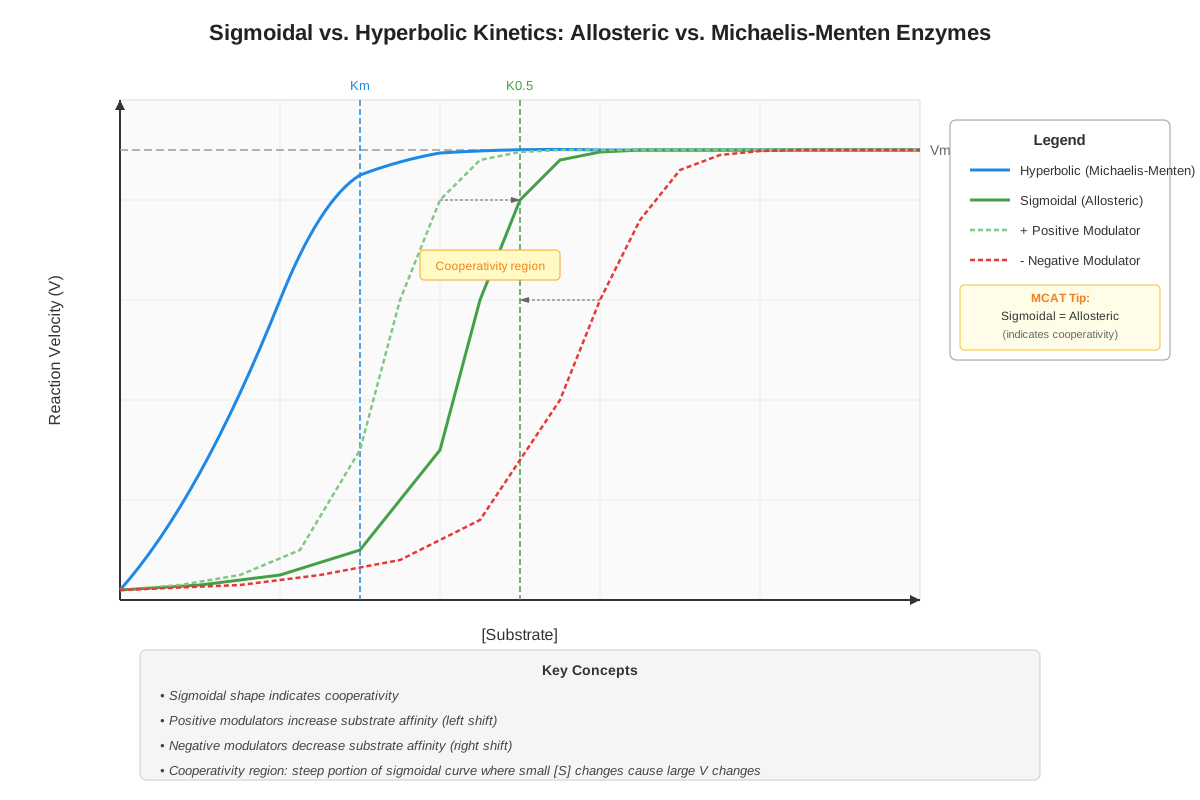
Unlike simple Michaelis-Menten enzymes that display hyperbolic kinetics (rectangular hyperbola when plotting velocity versus substrate concentration), allosteric enzymes typically exhibit sigmoidal (S-shaped) kinetics. This sigmoidal curve reflects cooperative binding, where the binding of one substrate molecule influences the binding affinity of subsequent substrate molecules at other active sites on the enzyme.
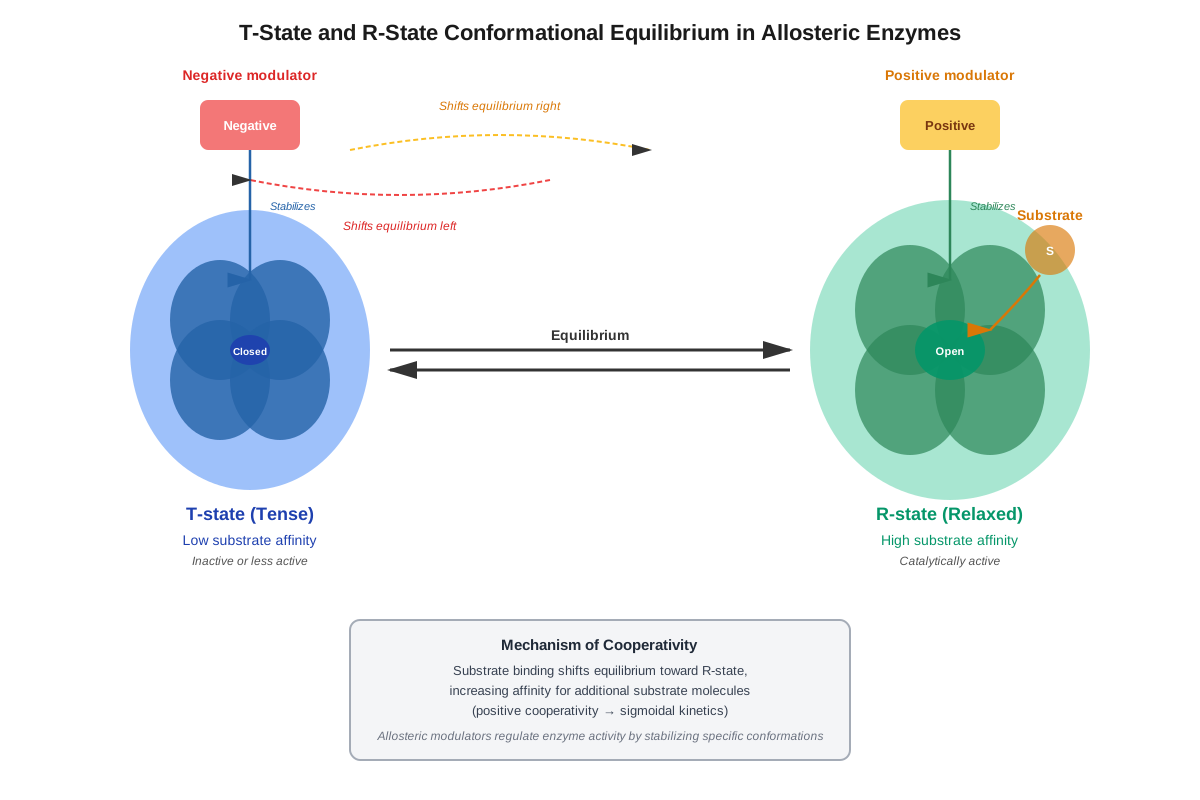
Cooperativity occurs through conformational changes transmitted between subunits. When substrate binds to one subunit, it stabilizes a conformational state (often called the R state or relaxed state) that has higher affinity for substrate. This conformational change propagates to other subunits, making it easier for additional substrate molecules to bind. The result is a steep increase in reaction velocity over a narrow range of substrate concentrations, providing sensitive metabolic control.
The mathematical description of cooperative binding uses the Hill equation rather than the Michaelis-Menten equation:
v = (Vmax × [S]^n) / (K0.5^n + [S]^n)Where:
- n = Hill coefficient (measure of cooperativity)
- K0.5 = substrate concentration at half-maximal velocity
- n > 1 indicates positive cooperativity
- n = 1 indicates no cooperativity (Michaelis-Menten behavior)
- n < 1 indicates negative cooperativity (rare)
Models of Allosteric Regulation
Two major models explain allosteric behavior at the molecular level:
1. Concerted Model (Symmetry Model or MWC Model)
Proposed by Monod, Wyman, and Changeux, this model states that:
- All subunits in an enzyme exist in the same conformational state at any given time
- Two states exist: T state (tense, low substrate affinity) and R state (relaxed, high substrate affinity)
- Substrate and positive modulators shift equilibrium toward R state
- Negative modulators shift equilibrium toward T state
- The enzyme oscillates between all-T and all-R states
2. Sequential Model (KNF Model)
Proposed by Koshland, Némethy, and Filmer, this model proposes that:
- Subunits can exist in different conformational states simultaneously
- Substrate binding induces conformational change in that specific subunit
- The conformational change in one subunit influences neighboring subunits
- Changes occur sequentially as substrate molecules bind
For MCAT purposes, understanding that both models explain how substrate binding to one site affects other sites is sufficient. The concerted model is more commonly referenced.
Types of Allosteric Regulation
| Type | Effect on Enzyme | Effect on Kinetics | Physiological Role |
|---|---|---|---|
| Positive (Activators) | Increases enzyme activity | Shifts sigmoidal curve left (decreases K0.5) | Feedforward activation; signals abundance of substrates |
| Negative (Inhibitors) | Decreases enzyme activity | Shifts sigmoidal curve right (increases K0.5) | Feedback inhibition; signals abundance of products |
| K-type regulation | Changes substrate affinity (Km) | Alters K0.5 without changing Vmax | Fine-tunes enzyme sensitivity |
| V-type regulation | Changes catalytic rate | Alters Vmax without changing K0.5 | Adjusts maximum capacity |
Homotropic regulation occurs when the substrate itself acts as the modulator (positive cooperativity with substrate). Heterotropic regulation occurs when molecules other than the substrate act as modulators.
Feedback Inhibition and Metabolic Control
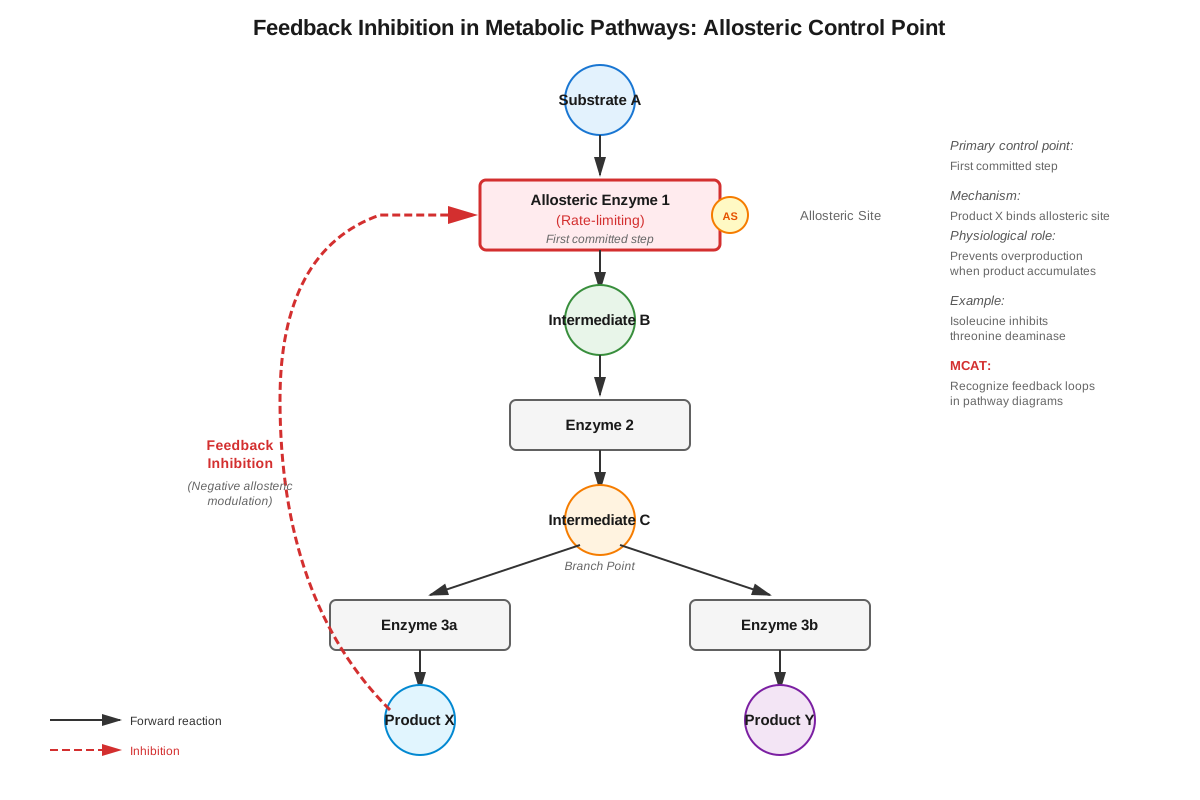
Allosteric enzymes typically catalyze the committed step (first irreversible step) of a metabolic pathway, making them ideal control points. Feedback inhibition (end-product inhibition) represents the most common regulatory pattern: the final product of a metabolic pathway acts as a negative allosteric modulator of the first committed enzyme in that pathway.
Example: In isoleucine biosynthesis, isoleucine (the end product) acts as a negative allosteric modulator of threonine deaminase (the first enzyme in the pathway). When isoleucine levels are high, the pathway shuts down; when levels drop, the pathway reactivates.
This creates a self-regulating system that prevents overproduction of metabolic products and conserves cellular resources. The sigmoidal kinetics of allosteric enzymes make them particularly effective switches—small changes in modulator concentration near the K0.5 produce large changes in enzyme activity.
Key Allosteric Enzymes in Metabolism
Several allosteric enzymes serve as high-yield examples for the MCAT:
Phosphofructokinase-1 (PFK-1) - Glycolysis
- Catalyzes: Fructose-6-phosphate → Fructose-1,6-bisphosphate
- Positive modulators: AMP, ADP, Fructose-2,6-bisphosphate
- Negative modulators: ATP, citrate, H+
- Represents the rate-limiting step and primary control point of glycolysis
Pyruvate kinase - Glycolysis
- Catalyzes: Phosphoenolpyruvate → Pyruvate
- Positive modulators: Fructose-1,6-bisphosphate (feedforward activation)
- Negative modulators: ATP, alanine, acetyl-CoA
- Also regulated by covalent modification (phosphorylation)
Aspartate transcarbamoylase (ATCase) - Pyrimidine synthesis
- Catalyzes the committed step in pyrimidine nucleotide synthesis
- Positive modulator: ATP (signals need for balanced nucleotide pools)
- Negative modulator: CTP (end-product feedback inhibition)
- Classic example used in biochemistry education
Glutamine synthetase - Nitrogen metabolism
- Highly complex regulation with multiple allosteric modulators
- Demonstrates cumulative feedback inhibition from multiple pathways
Distinguishing Allosteric Regulation from Other Regulatory Mechanisms
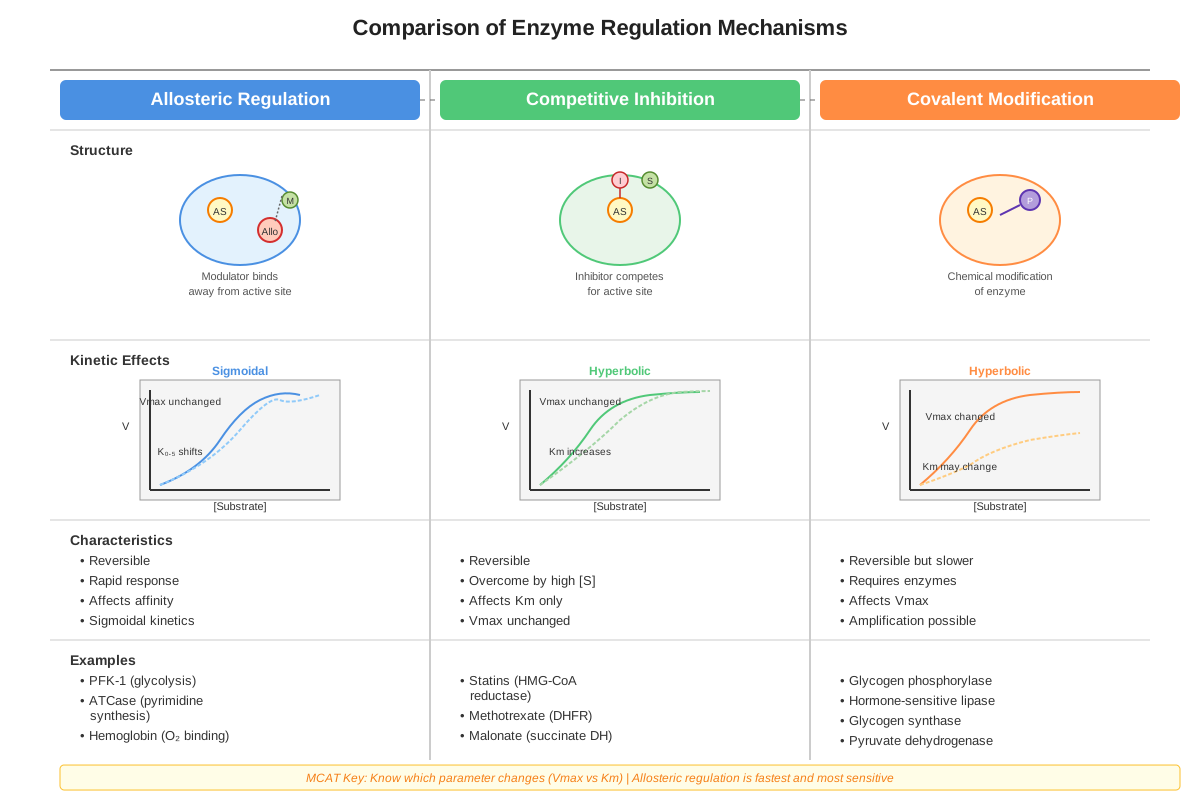
Understanding how allosteric regulation differs from other forms of enzyme control is crucial for MCAT questions:
Allosteric vs. Competitive Inhibition:
- Competitive inhibitors bind at the active site; allosteric modulators bind at separate sites
- Competitive inhibition can be overcome by increasing substrate concentration; allosteric inhibition cannot be overcome this way
- Competitive inhibitors increase apparent Km; allosteric inhibitors shift the entire sigmoidal curve
Allosteric vs. Covalent Modification:
- Allosteric regulation is non-covalent and rapidly reversible
- Covalent modification (phosphorylation, methylation) requires enzymes to add/remove groups
- Allosteric regulation responds immediately to modulator concentration changes
- Both mechanisms often work together on the same enzyme
Concept Relationships
The concepts within allosteric enzyme regulation form an interconnected network. Quaternary structure enables cooperativity, which produces sigmoidal kinetics. This sigmoidal behavior makes allosteric enzymes ideal for metabolic control points, particularly for feedback inhibition. The distinction between positive and negative modulators determines whether pathways are activated or inhibited, connecting directly to cellular energy status and metabolic needs.
Allosteric enzymes connect to prerequisite knowledge of protein structure because conformational changes between T and R states depend on subunit interactions. Understanding basic enzyme kinetics provides the baseline for recognizing how sigmoidal curves differ from hyperbolic curves. The concept links forward to metabolic pathway regulation, where nearly every major pathway contains at least one allosteric enzyme at its committed step.
The relationship map flows as follows:
Quaternary structure → enables → Multiple binding sites → allows → Allosteric regulation → produces → Sigmoidal kinetics → provides → Sensitive metabolic control → implements → Feedback inhibition → maintains → Metabolic homeostasis
Additionally: Substrate binding → induces → Conformational change → propagates through → Subunit interactions → affects → Other active sites → results in → Cooperativity
High-Yield Facts
⭐ Allosteric enzymes exhibit sigmoidal (S-shaped) kinetics rather than hyperbolic Michaelis-Menten kinetics
⭐ Positive allosteric modulators shift the sigmoidal curve to the left (decrease K0.5), while negative modulators shift it to the right (increase K0.5)
⭐ Allosteric enzymes typically catalyze the committed step (first irreversible step) of metabolic pathways
⭐ Feedback inhibition occurs when the end product of a pathway acts as a negative allosteric modulator of the first committed enzyme
⭐ Cooperativity results from conformational changes that propagate between subunits, making subsequent substrate binding easier (positive cooperativity) or harder (negative cooperativity)
- Allosteric sites are spatially distinct from active sites, allowing regulation without directly blocking substrate binding
- The Hill coefficient (n) quantifies cooperativity: n > 1 indicates positive cooperativity, n = 1 indicates no cooperativity
- Phosphofructokinase-1 (PFK-1) is the primary control point of glycolysis and is inhibited by ATP and citrate (signals of energy abundance)
- Homotropic regulation involves the substrate acting as a modulator; heterotropic regulation involves other molecules as modulators
- Allosteric regulation is non-covalent and rapidly reversible, allowing immediate responses to changing metabolic conditions
- The T state (tense) has low substrate affinity; the R state (relaxed) has high substrate affinity
- Fructose-2,6-bisphosphate is a potent positive allosteric modulator of PFK-1 and negative modulator of fructose-1,6-bisphosphatase, coordinating glycolysis and gluconeogenesis
- Aspartate transcarbamoylase (ATCase) demonstrates balanced regulation: ATP activates (need pyrimidines for RNA/DNA) while CTP inhibits (sufficient pyrimidines)
Quick check — test yourself on Allosteric enzymes so far.
Try Flashcards →Common Misconceptions
Misconception: Allosteric inhibitors work the same way as competitive inhibitors
Correction: Allosteric inhibitors bind at sites distinct from the active site and cannot be overcome by simply increasing substrate concentration. Competitive inhibitors bind at the active site and compete directly with substrate. Allosteric regulation changes the enzyme's conformation and affinity for substrate, while competitive inhibition physically blocks substrate access.
Misconception: All enzymes with multiple subunits are allosteric enzymes
Correction: While allosteric enzymes typically have quaternary structure, not all multi-subunit enzymes exhibit allosteric regulation. The defining feature is the presence of regulatory sites distinct from active sites and the resulting sigmoidal kinetics, not simply having multiple subunits.
Misconception: Positive allosteric modulators increase Vmax
Correction: Most positive allosteric modulators primarily decrease K0.5 (shift curve left), increasing the enzyme's affinity for substrate rather than increasing maximum velocity. This is K-type regulation. While some modulators can affect Vmax (V-type regulation), the predominant effect is on substrate affinity.
Misconception: Sigmoidal kinetics always indicate allosteric regulation
Correction: While sigmoidal kinetics strongly suggest allosteric behavior and cooperativity, they can occasionally result from other mechanisms. However, for MCAT purposes, sigmoidal kinetics in enzyme kinetics graphs should trigger consideration of allosteric regulation and cooperativity.
Misconception: Feedback inhibition requires the end product to completely shut down the enzyme
Correction: Feedback inhibition typically reduces but does not eliminate enzyme activity. Allosteric inhibition shifts the curve right, making the enzyme less sensitive to substrate, but the enzyme can still function. This allows for fine-tuned regulation rather than complete on/off switching.
Misconception: The Hill coefficient (n) equals the number of subunits in the enzyme
Correction: The Hill coefficient measures the degree of cooperativity, not the number of subunits. While related to subunit interactions, n represents the steepness of the sigmoidal curve and may not equal the actual number of binding sites or subunits.
Misconception: Allosteric enzymes cannot be regulated by other mechanisms simultaneously
Correction: Many allosteric enzymes are subject to multiple regulatory mechanisms simultaneously, including covalent modification (phosphorylation), competitive inhibition, and allosteric regulation. Pyruvate kinase, for example, is both allosterically regulated and controlled by phosphorylation.
Worked Examples
Example 1: Interpreting Kinetic Curves
Question: A researcher studies an enzyme and obtains the following data: In the absence of molecule X, the enzyme shows sigmoidal kinetics with K0.5 = 5 mM. When molecule X is added, the curve remains sigmoidal but K0.5 = 2 mM, while Vmax remains unchanged. What can be concluded about molecule X and this enzyme?
Solution:
Step 1: Identify the kinetic pattern
- Sigmoidal kinetics indicate this is an allosteric enzyme exhibiting cooperativity
- The enzyme likely has multiple subunits with interacting binding sites
Step 2: Analyze the effect of molecule X
- K0.5 decreased from 5 mM to 2 mM (curve shifted left)
- Vmax remained unchanged
- This indicates K-type regulation affecting substrate affinity, not catalytic rate
Step 3: Classify molecule X
- Decreased K0.5 means the enzyme reaches half-maximal velocity at lower substrate concentrations
- This indicates increased affinity for substrate
- Molecule X is a positive allosteric modulator (activator)
Step 4: Explain the mechanism
- Molecule X binds to an allosteric site (not the active site)
- This binding stabilizes the R state (relaxed, high-affinity conformation)
- The equilibrium shifts toward the R state, making substrate binding easier
- The enzyme becomes more sensitive to substrate without changing its maximum catalytic capacity
Conclusion: Molecule X is a positive allosteric modulator that increases the enzyme's affinity for substrate through K-type regulation. This type of regulation is typical of feedforward activation, where an upstream metabolite activates a downstream enzyme.
Example 2: Metabolic Pathway Regulation
Question: Consider a biosynthetic pathway: A → B → C → D → E, where E is the final product needed by the cell. The conversion of A to B is catalyzed by enzyme 1, which has multiple subunits and shows sigmoidal kinetics. Researchers discover that high concentrations of E inhibit enzyme 1, while this inhibition cannot be overcome by adding more substrate A. Additionally, intermediate C activates enzyme 1. Explain the regulatory mechanisms at work and their physiological significance.
Solution:
Step 1: Identify enzyme 1 characteristics
- Multiple subunits + sigmoidal kinetics = allosteric enzyme
- This is appropriate for the first step (committed step) of the pathway
- Allosteric enzymes at pathway entry points provide efficient metabolic control
Step 2: Analyze the effect of E (end product)
- E inhibits enzyme 1
- Inhibition cannot be overcome by adding more substrate A
- This rules out competitive inhibition (which can be overcome by excess substrate)
- This is negative allosteric regulation (feedback inhibition)
- E binds to an allosteric site, stabilizing the T state (low substrate affinity)
Step 3: Analyze the effect of C (intermediate)
- C activates enzyme 1
- This is positive allosteric regulation (feedforward activation)
- C signals that the pathway is active and downstream steps are functioning
- This ensures coordinated flux through the pathway
Step 4: Explain physiological significance
- Feedback inhibition by E: When the cell has sufficient E, the pathway shuts down, preventing wasteful overproduction and conserving resources (A and energy)
- Feedforward activation by C: When intermediate C accumulates, it signals that the pathway should continue, ensuring efficient conversion to the final product
- This dual regulation creates a sophisticated control system that responds to both product levels and pathway flux
Step 5: Connect to broader concepts
- This represents end-product inhibition, a universal regulatory strategy
- The allosteric nature allows rapid, reversible responses to changing cellular needs
- The sigmoidal kinetics provide sensitive switching behavior—small changes in E or C concentrations near K0.5 produce large changes in pathway flux
Conclusion: Enzyme 1 is an allosteric enzyme subject to both negative feedback inhibition (by end product E) and positive feedforward activation (by intermediate C). This dual regulation optimizes pathway efficiency by preventing overproduction while ensuring adequate flux when intermediates accumulate. The allosteric mechanism allows rapid, reversible control without requiring new protein synthesis.
Exam Strategy
Approaching MCAT Questions on Allosteric Enzymes
When encountering questions about allosteric enzymes, follow this systematic approach:
- Identify the enzyme type: Look for keywords like "sigmoidal kinetics," "multiple subunits," "regulatory site," or "cooperative binding"
- Determine the regulatory mechanism: Distinguish between allosteric regulation, competitive inhibition, and covalent modification based on:
- Where the modulator binds (allosteric site vs. active site)
- Whether inhibition can be overcome by excess substrate (no for allosteric, yes for competitive)
- Whether the effect is reversible without enzymatic action (yes for allosteric, no for covalent modification)
- Analyze kinetic graphs:
- Hyperbolic curve = Michaelis-Menten enzyme
- Sigmoidal curve = allosteric enzyme with cooperativity
- Left shift = positive modulator (decreased K0.5)
- Right shift = negative modulator (increased K0.5)
- Consider metabolic context: Allosteric enzymes typically appear at committed steps. Ask:
- Is this the first irreversible step in a pathway?
- Would the modulator make physiological sense (e.g., ATP inhibiting glycolysis when energy is abundant)?
Trigger Words and Phrases
Watch for these high-yield terms that signal allosteric regulation:
- "Sigmoidal kinetics" or "S-shaped curve"
- "Cooperative binding"
- "Regulatory site" or "allosteric site"
- "Feedback inhibition" or "end-product inhibition"
- "Cannot be overcome by increasing substrate"
- "Multiple subunits" or "quaternary structure"
- "Conformational change"
- "Committed step" or "rate-limiting step"
- "Modulator" or "effector"
Process-of-Elimination Tips
When evaluating answer choices:
Eliminate options that:
- Confuse competitive inhibition with allosteric regulation
- Suggest allosteric modulators bind at the active site
- Claim that increasing substrate can overcome allosteric inhibition
- State that all multi-subunit enzymes are allosteric
- Propose that positive modulators increase Vmax when the question shows only a left shift in K0.5
Favor options that:
- Correctly identify the location of modulator binding (allosteric site)
- Recognize sigmoidal kinetics as evidence of cooperativity
- Connect feedback inhibition to end products of metabolic pathways
- Explain effects in terms of conformational changes between T and R states
- Identify physiologically logical regulatory patterns (e.g., ATP inhibiting catabolic pathways)
Time Allocation Advice
For discrete questions on allosteric enzymes: allocate 60-90 seconds. These questions typically require recognizing patterns (sigmoidal curves, feedback inhibition) rather than complex calculations.
For passage-based questions: spend 2-3 minutes on the passage, focusing on:
- Identifying which enzymes are allosteric
- Understanding the experimental setup (what modulators were tested)
- Interpreting any kinetic graphs provided
- Then allocate 60-90 seconds per question
If a question requires interpreting a complex kinetic graph with multiple curves, budget an extra 30 seconds to carefully compare K0.5 and Vmax values between conditions.
Memory Techniques
Mnemonics
"ALLO-SITE" for remembering allosteric enzyme features:
- Activators shift curve Left
- Low affinity = T state
- Other site (not active site)
- Sigmoidal kinetics
- Inhibitors shift curve to the rIght
- Tense and relaxed states
- End-product feedback
"PFK Feels Energized" for PFK-1 regulation:
- Positive modulators: Fructose-2,6-bisphosphate, AMP, ADP
- K (negative modulators): ATP (sounds like "K"), citrate, H+
- Feedback from energy status
- Energy abundance inhibits
"COOP" for cooperativity:
- Conformational change
- One binding affects Others
- Propagates through subunits
Visualization Strategies
The Sigmoidal Switch: Visualize the sigmoidal curve as a light dimmer switch rather than an on/off switch. The steep middle portion represents the sensitive range where small changes in substrate (or modulator) concentration produce large changes in activity. This mental image helps remember that allosteric enzymes provide graded, sensitive control.
T and R States as Doors: Picture the T state as a closed door (tense, difficult for substrate to enter) and the R state as an open door (relaxed, easy substrate entry). Positive modulators "open the doors" while negative modulators "close the doors."
Feedback Loop Diagram: Mentally draw a circular pathway with the end product's arrow looping back to inhibit the first enzyme. This visual reinforces the concept of feedback inhibition and helps identify which enzyme in a pathway would be allosterically regulated.
Acronyms
SHIFT for analyzing kinetic curves:
- Sigmoidal = allosteric
- Hyperbolic = Michaelis-Menten
- Inhibitor shifts right
- Facilitator (activator) shifts left
- Tense/relaxed states explain mechanism
Summary
Allosteric enzymes represent sophisticated regulatory proteins that control metabolic flux through non-covalent, reversible mechanisms. Distinguished by their sigmoidal kinetics and multiple binding sites, these enzymes possess both active sites for catalysis and allosteric sites for regulation. When modulators bind to allosteric sites, conformational changes propagate through the protein structure, altering substrate affinity at active sites. Positive modulators shift the sigmoidal curve left (decreasing K0.5), while negative modulators shift it right (increasing K0.5). Cooperativity between subunits produces the characteristic S-shaped kinetic curve, making these enzymes exquisitely sensitive metabolic switches. Typically positioned at committed steps in metabolic pathways, allosteric enzymes implement feedback inhibition when end products accumulate and feedforward activation when intermediates signal active pathway flux. Understanding the distinction between allosteric regulation and other mechanisms (competitive inhibition, covalent modification) is essential for MCAT success, as is the ability to interpret kinetic graphs and predict physiologically appropriate regulatory patterns.
Key Takeaways
- Allosteric enzymes exhibit sigmoidal kinetics due to cooperative substrate binding between multiple subunits, contrasting with the hyperbolic kinetics of simple Michaelis-Menten enzymes
- Positive allosteric modulators decrease K0.5 (shift curve left), increasing substrate affinity, while negative modulators increase K0.5 (shift curve right), decreasing substrate affinity
- Allosteric regulation occurs through binding at sites distinct from the active site, causing conformational changes that cannot be overcome by increasing substrate concentration
- Feedback inhibition, where pathway end products negatively regulate the first committed enzyme, represents the most common and physiologically important pattern of allosteric regulation
- Key MCAT examples include phosphofructokinase-1 (PFK-1) in glycolysis, aspartate transcarbamoylase (ATCase) in pyrimidine synthesis, and the general principle that rate-limiting enzymes are typically allosteric
- The T state (tense, low affinity) and R state (relaxed, high affinity) represent the two major conformational states, with modulators shifting the equilibrium between them
- Distinguishing allosteric regulation from competitive inhibition and covalent modification is critical for correctly answering MCAT questions about enzyme regulation mechanisms
Related Topics
Hemoglobin and Cooperative Oxygen Binding: Though not an enzyme, hemoglobin demonstrates allosteric behavior and cooperativity, providing an excellent parallel example. Understanding hemoglobin's sigmoidal oxygen binding curve and the effects of 2,3-BPG, CO2, and H+ reinforces allosteric concepts.
Metabolic Pathway Regulation: Mastering allosteric enzymes enables deeper understanding of how glycolysis, gluconeogenesis, citric acid cycle, and biosynthetic pathways are coordinately controlled. Each major pathway contains key allosteric enzymes at regulatory points.
Enzyme Kinetics and Inhibition: Building on allosteric enzyme knowledge, explore the full spectrum of enzyme regulation including competitive, non-competitive, uncompetitive, and mixed inhibition patterns, as well as irreversible inhibition.
Signal Transduction and Second Messengers: Allosteric regulation connects to cellular signaling when molecules like cAMP, Ca2+, and other second messengers act as allosteric modulators, linking extracellular signals to metabolic responses.
Protein Structure and Function: Advanced understanding of how quaternary structure enables allosteric regulation deepens comprehension of structure-function relationships, a fundamental biochemistry principle tested throughout the MCAT.
Practice CTA
Now that you've mastered the core concepts of allosteric enzymes, it's time to reinforce your understanding through active practice. Work through the practice questions to test your ability to interpret kinetic curves, predict the effects of modulators, and apply these concepts to metabolic scenarios. Use the flashcards to drill high-yield facts until you can instantly recognize allosteric regulation patterns. Remember: understanding allosteric enzymes unlocks comprehension of metabolic regulation throughout biochemistry—this investment in mastery will pay dividends across multiple MCAT topics. You've built a strong foundation; now solidify it through deliberate practice!
Sign up free to keep reading
Create a free AnvayaPrep account to finish this MCAT guide on Allosteric enzymes — plus flashcards and practice questions.